A Cold Winter Settles In On The Rock Farm

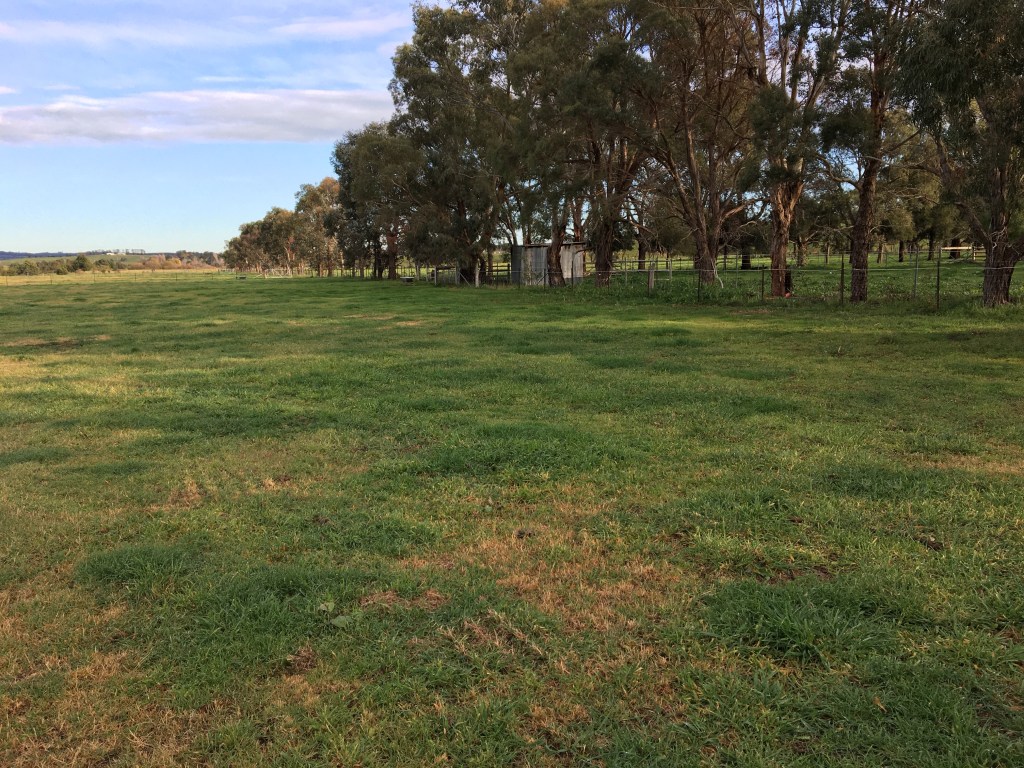
Life on the Rock Farm has well and truly settled into winter. With no meaningful pasture growth during autumn, we knew it was going to be a long season of feeding our cows. Sporadic rainfall hasn’t done much to improve the soil moisture profile around the district—and with a run of spectacularly beautiful, but bitterly cold frosts, whatever warmth remained in the soil has now disappeared. The grass may have turned green, but it’s yet to start growing.

Pastures in our district remain in the bottom 10th percentile for growth this year. (See: https://www.farmingforecaster.com.au/southeast).

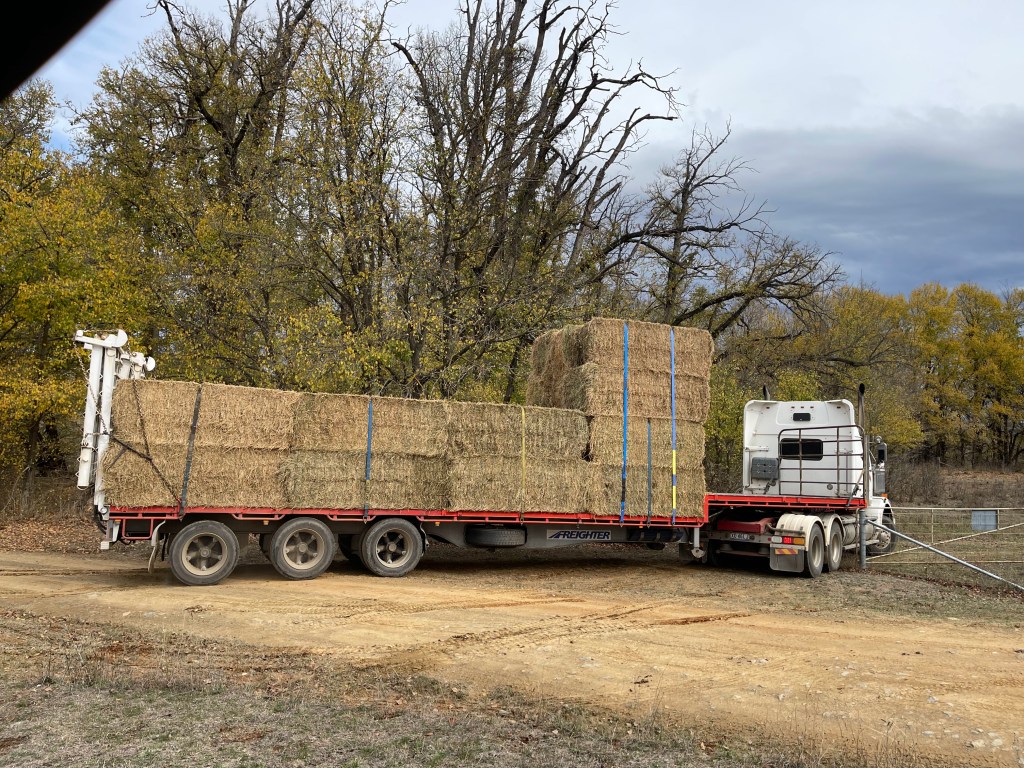
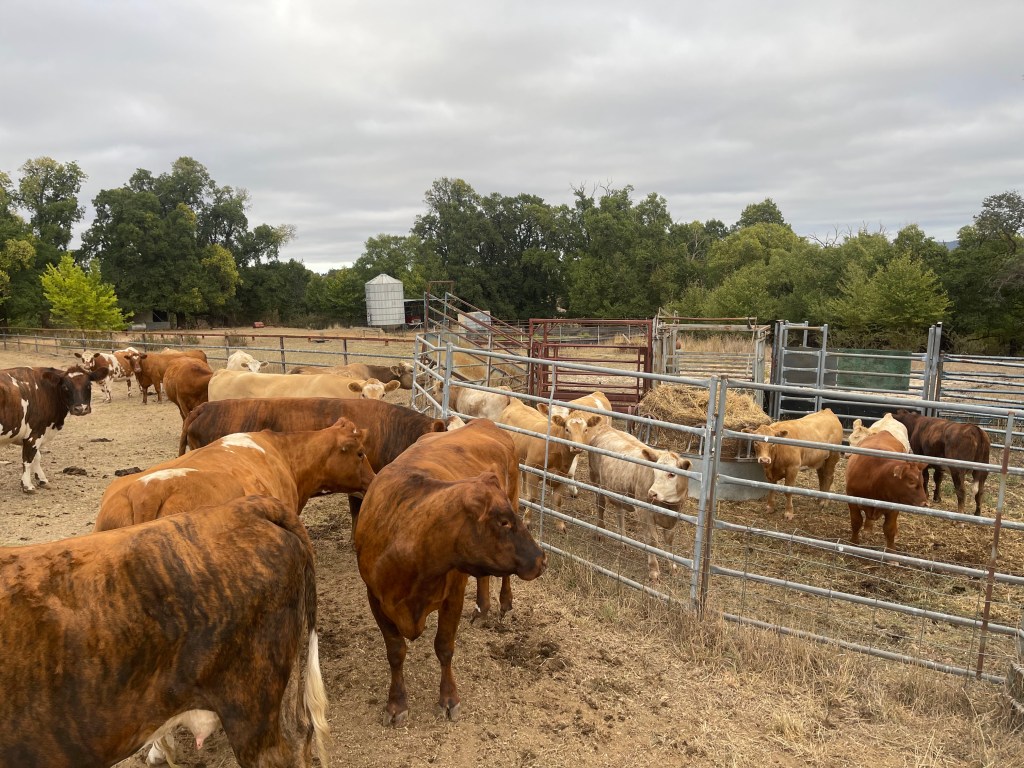
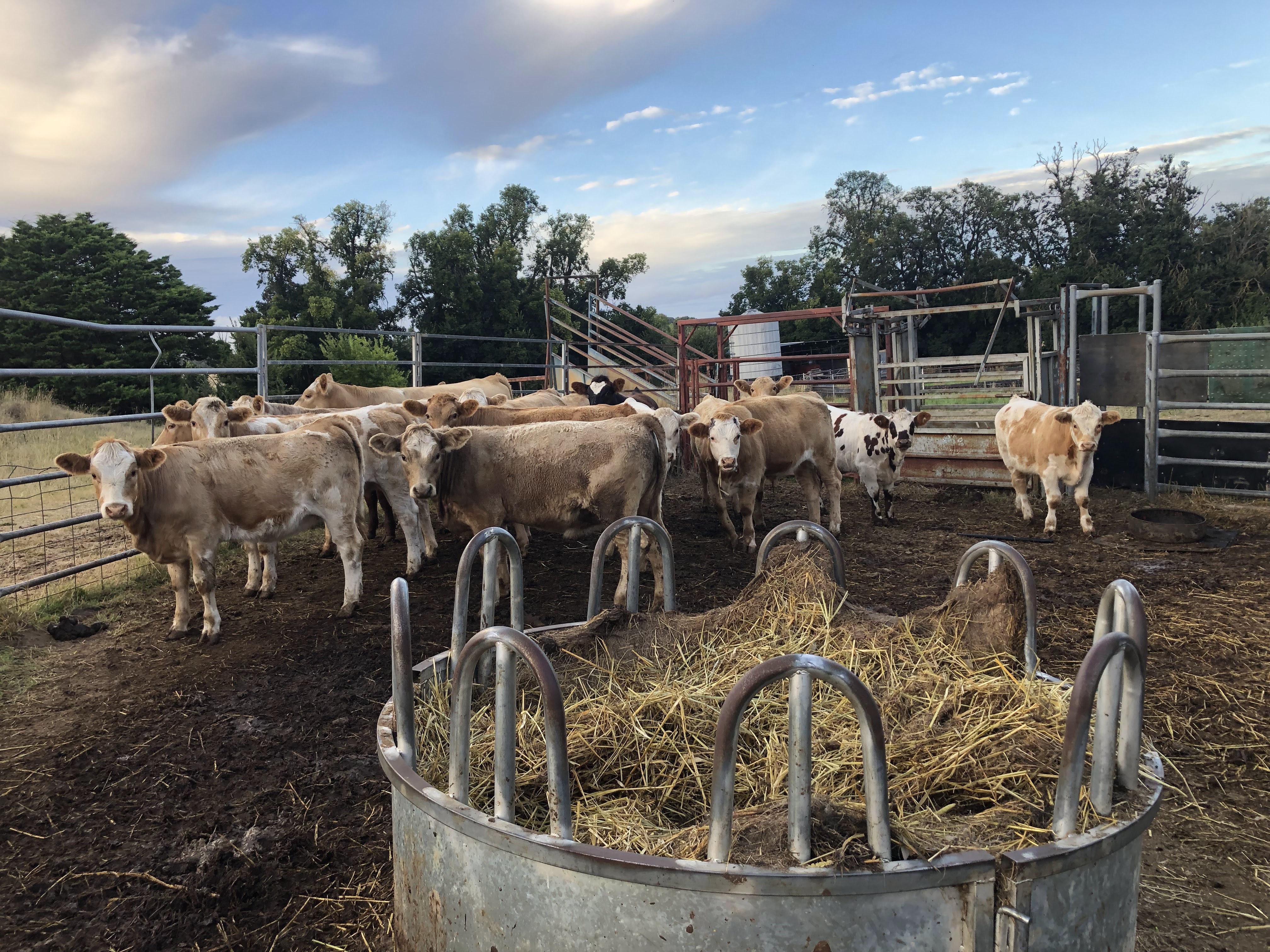
We quickly used up the last of our pasture hay and had to buy a truckload from irrigated country north of here. With our tractor still out of action at the time, our challenges mounted when the carrier also experienced mechanical breakdowns. On the very last day before we completely ran out, the new lucerne finally arrived—and our wonderful neighbours came to the rescue. A massive thank you to Jeff, who brought his tractor and saved the day!
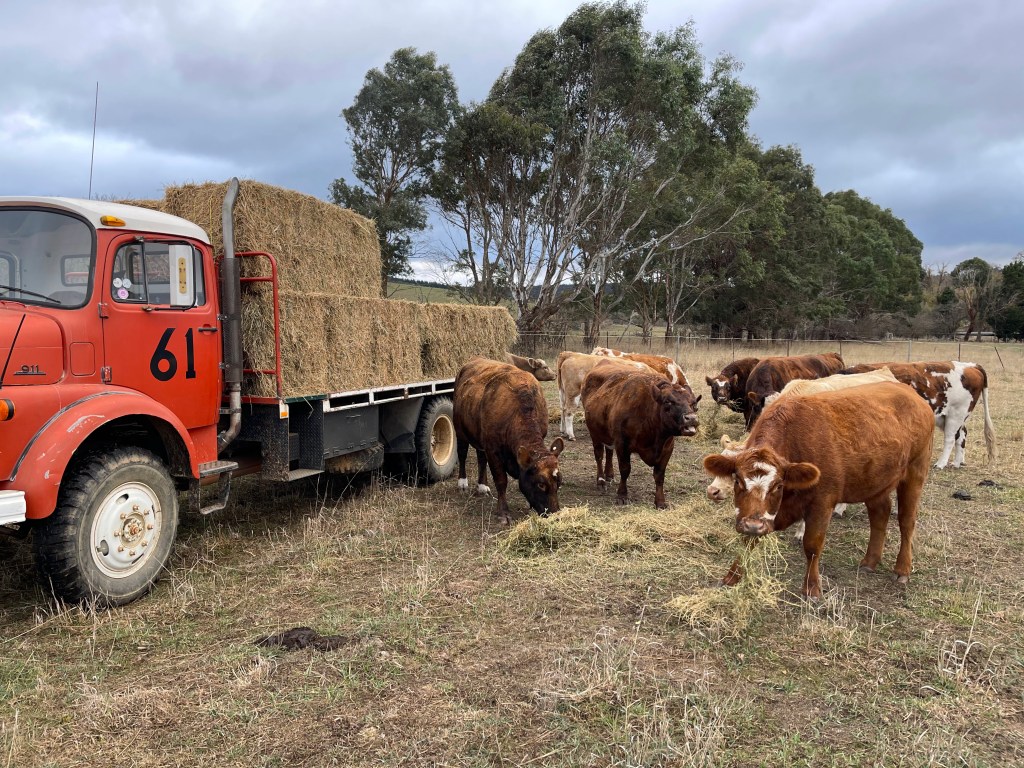
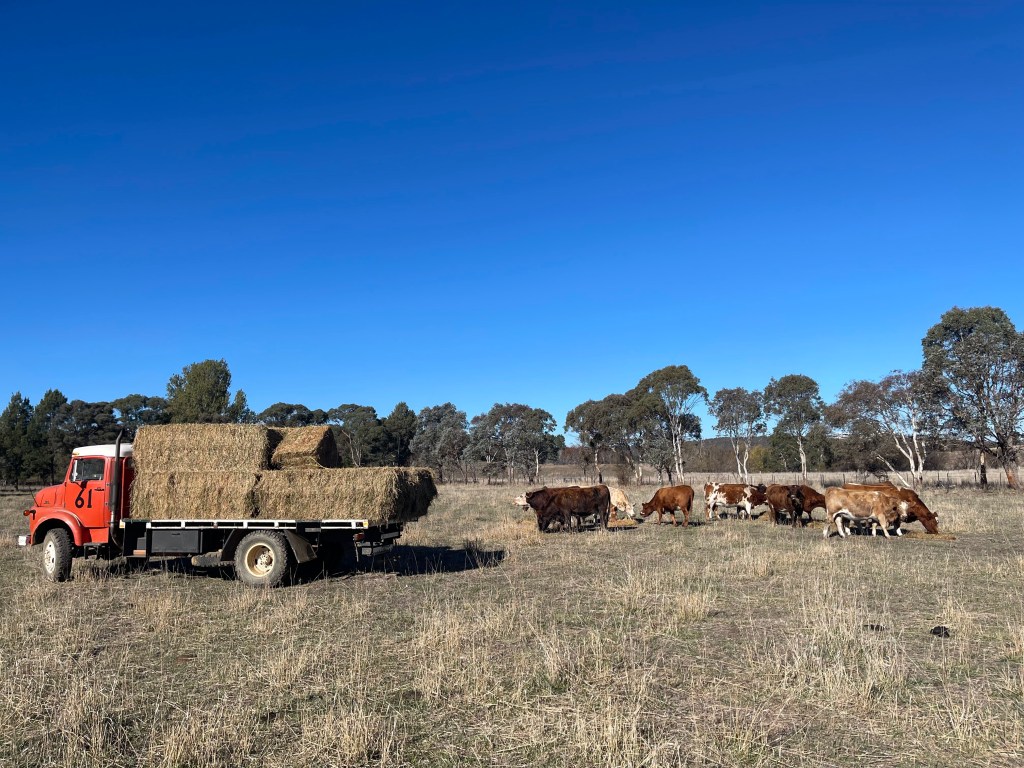
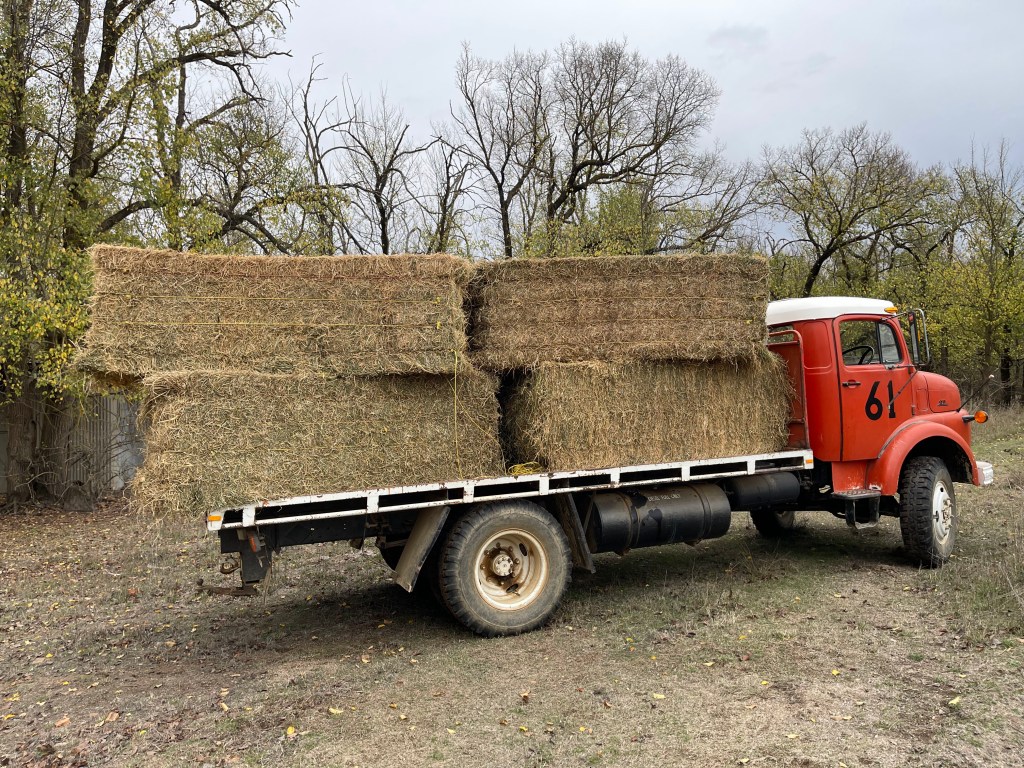
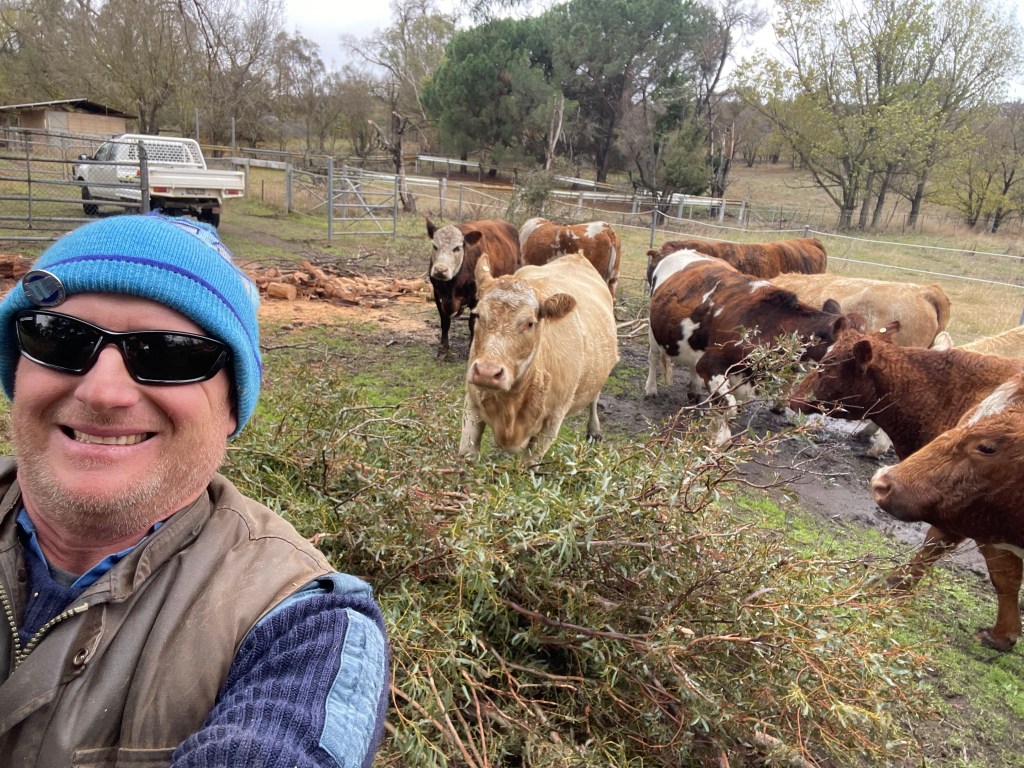
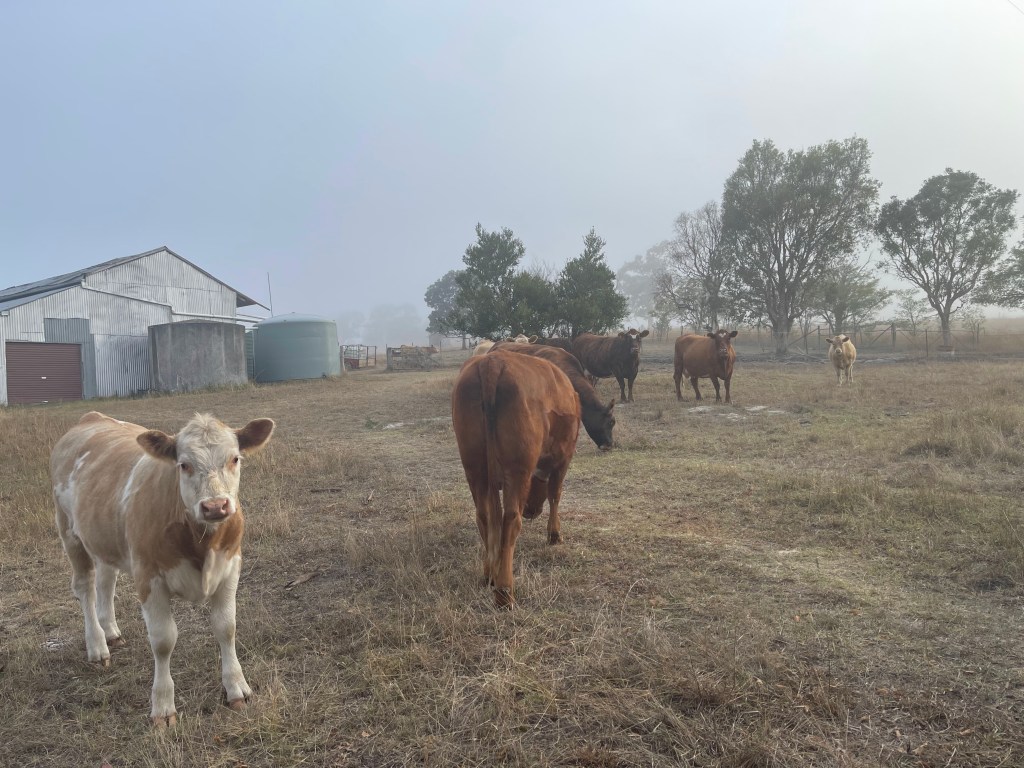
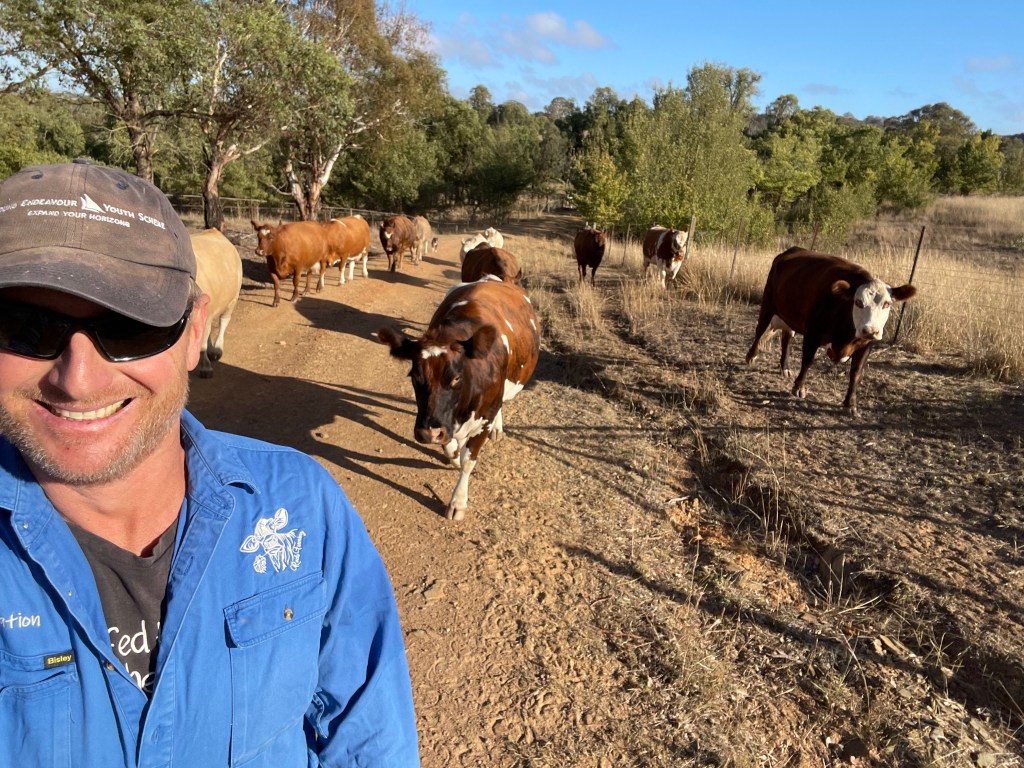
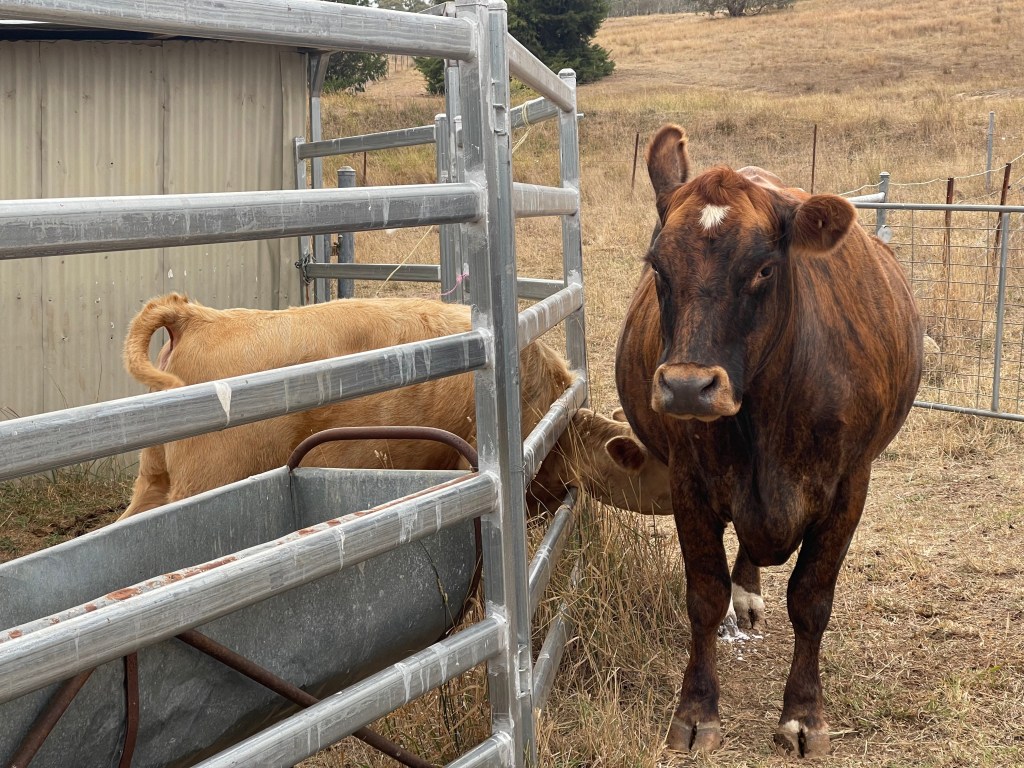
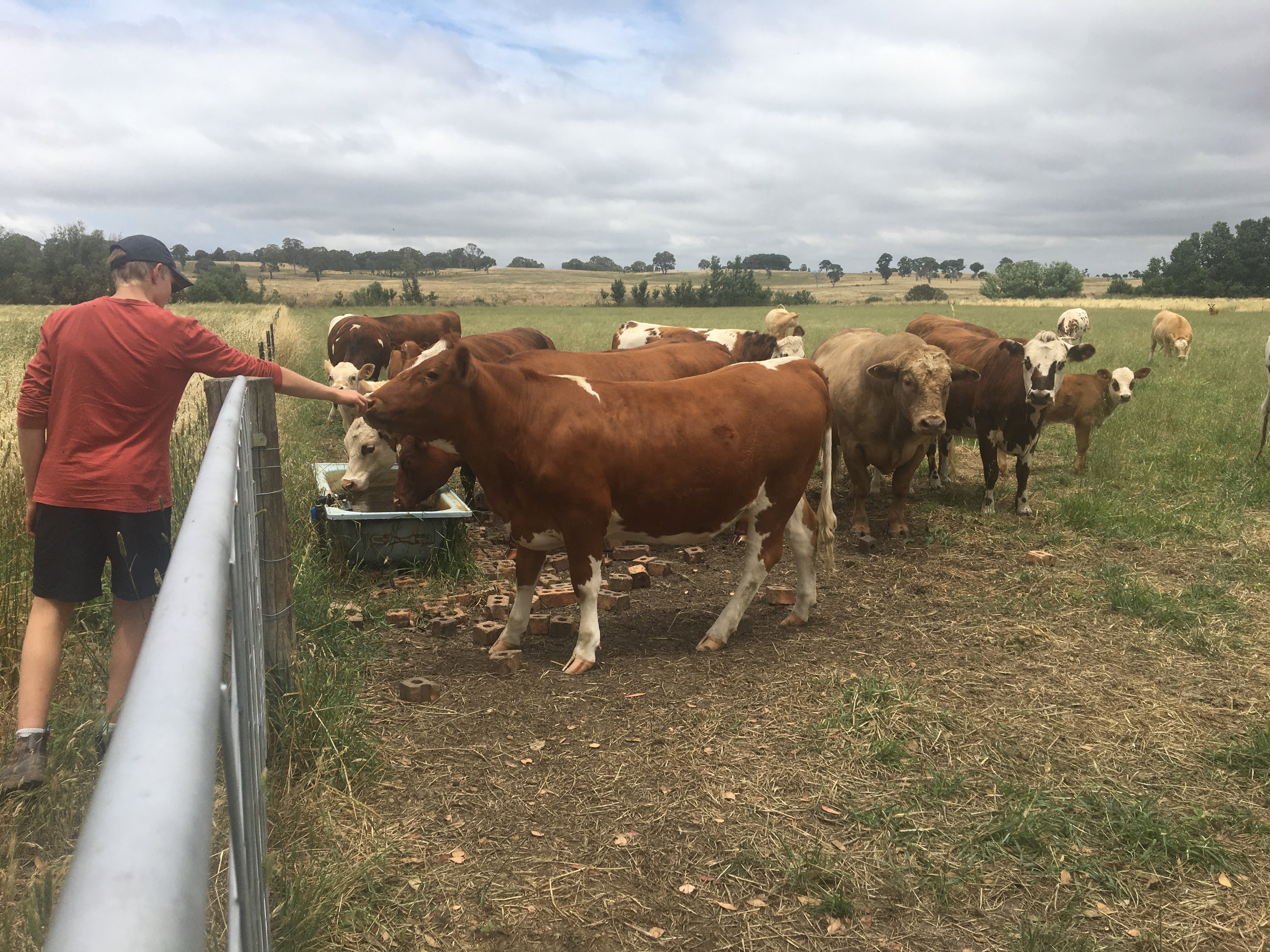
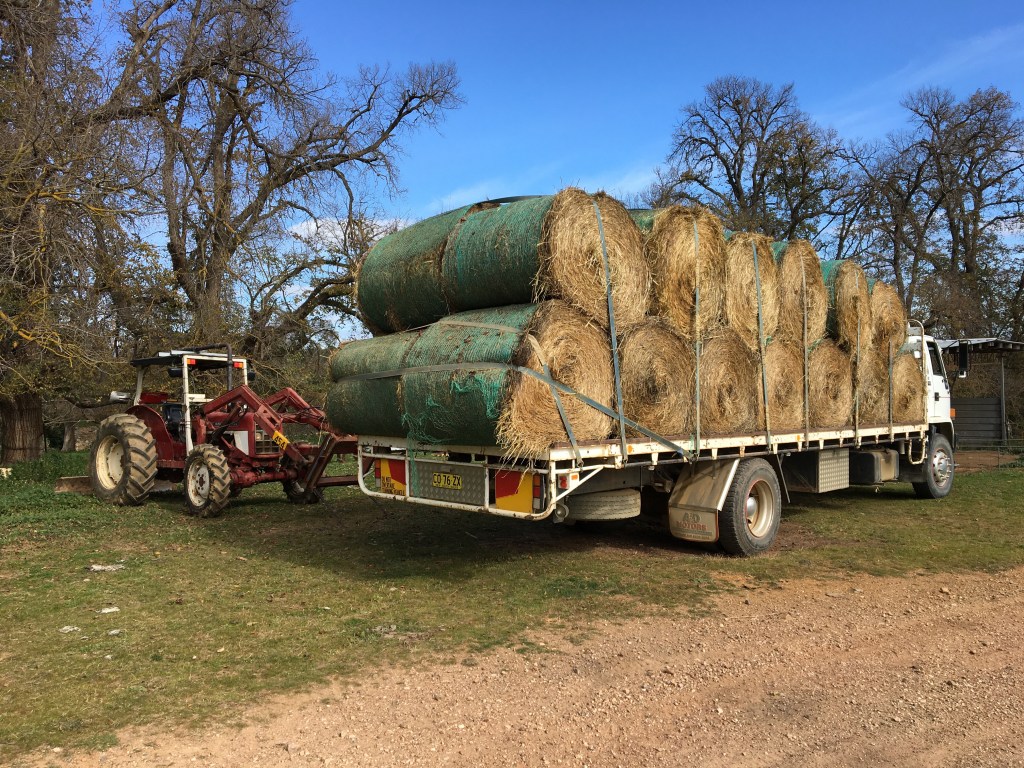
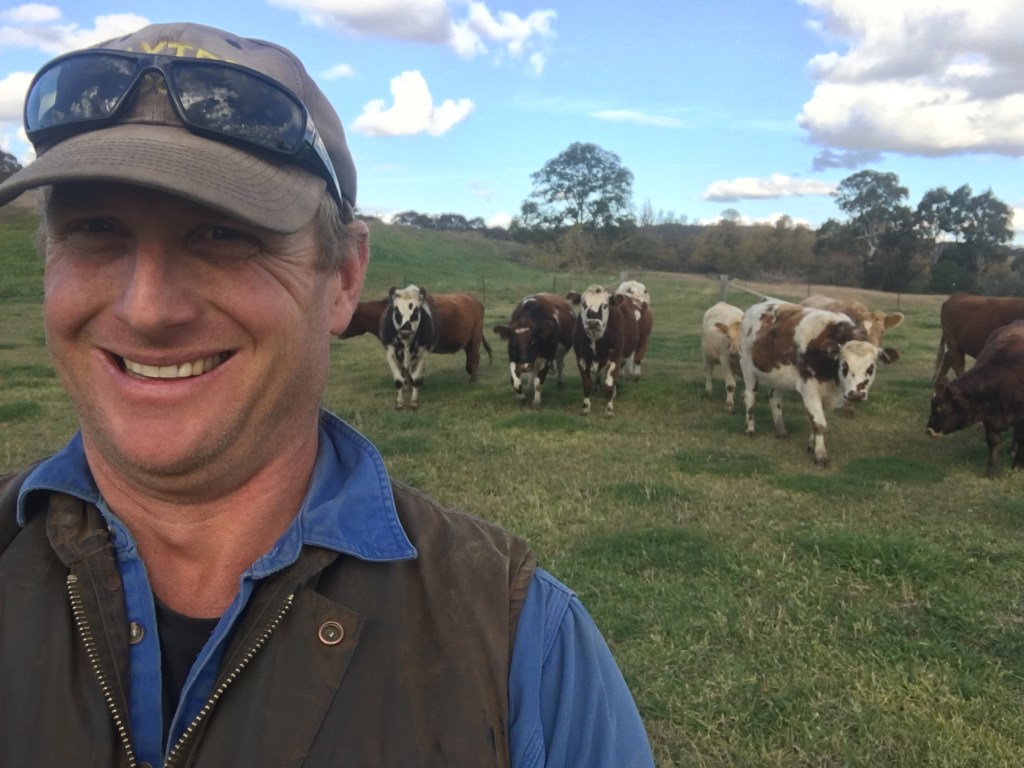
Jeff helped load a few of the large square bales onto the back of our BRT Myrtle, making it much easier to feed out. It didn’t take long for the cows to associate Myrtle with breakfast! I now have a new appreciation for how an ice-cream van driver must feel pulling up to a beach on a hot summer day—the cows come running, kicking their heels in the air at the sound of the truck.
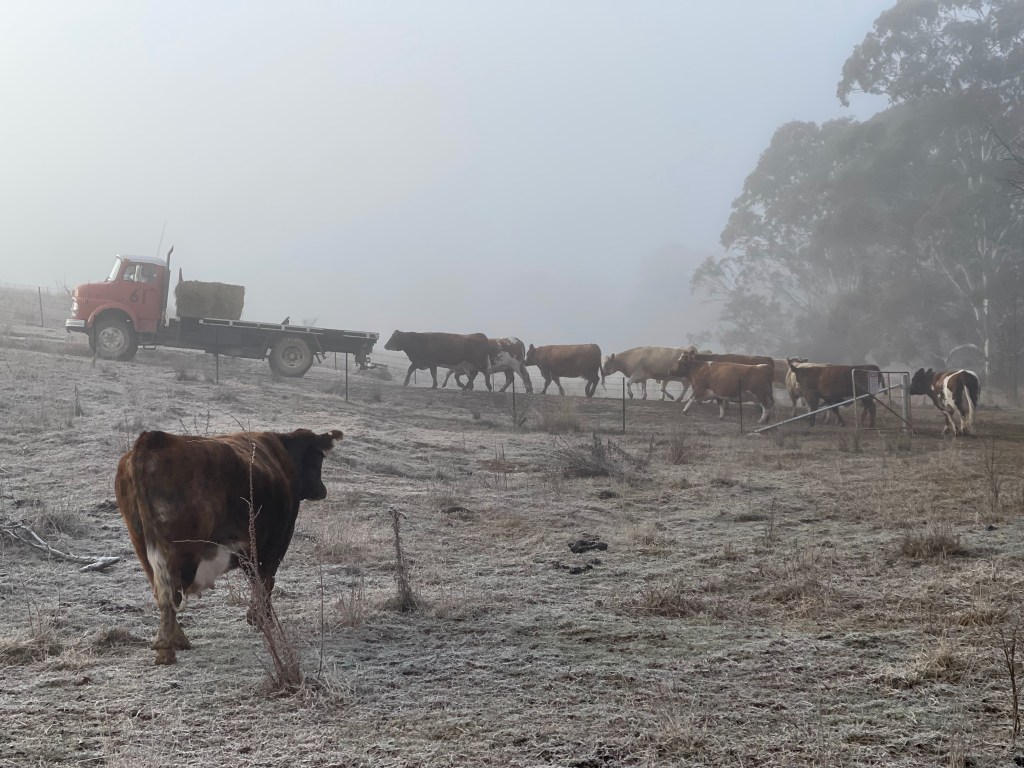
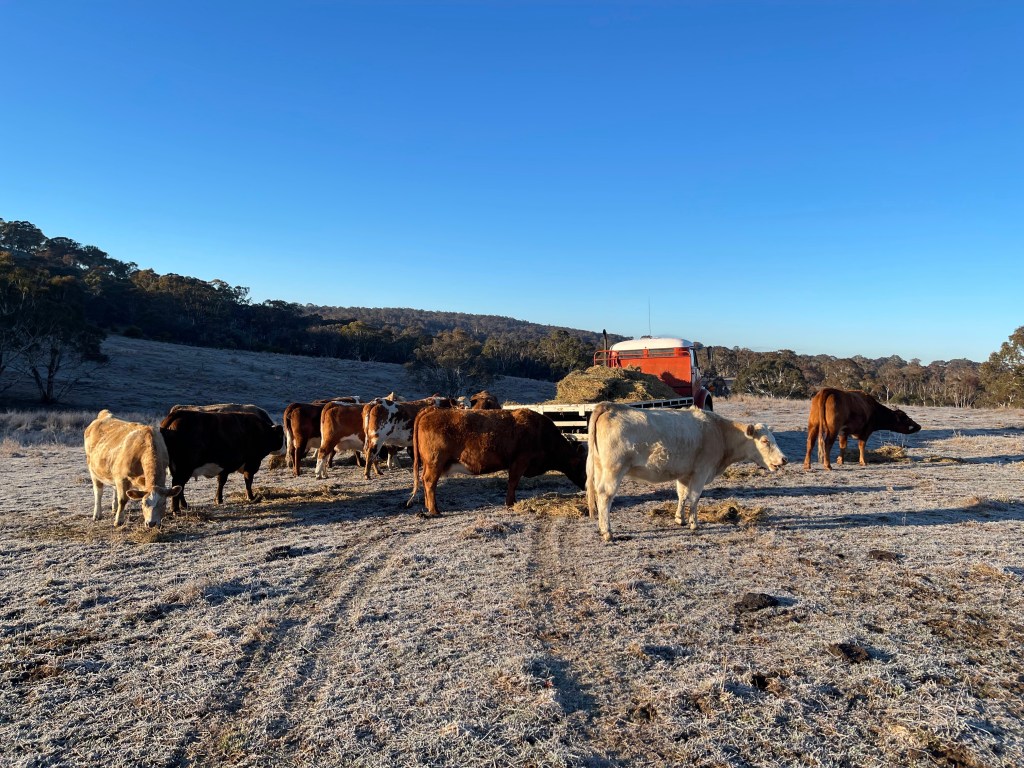
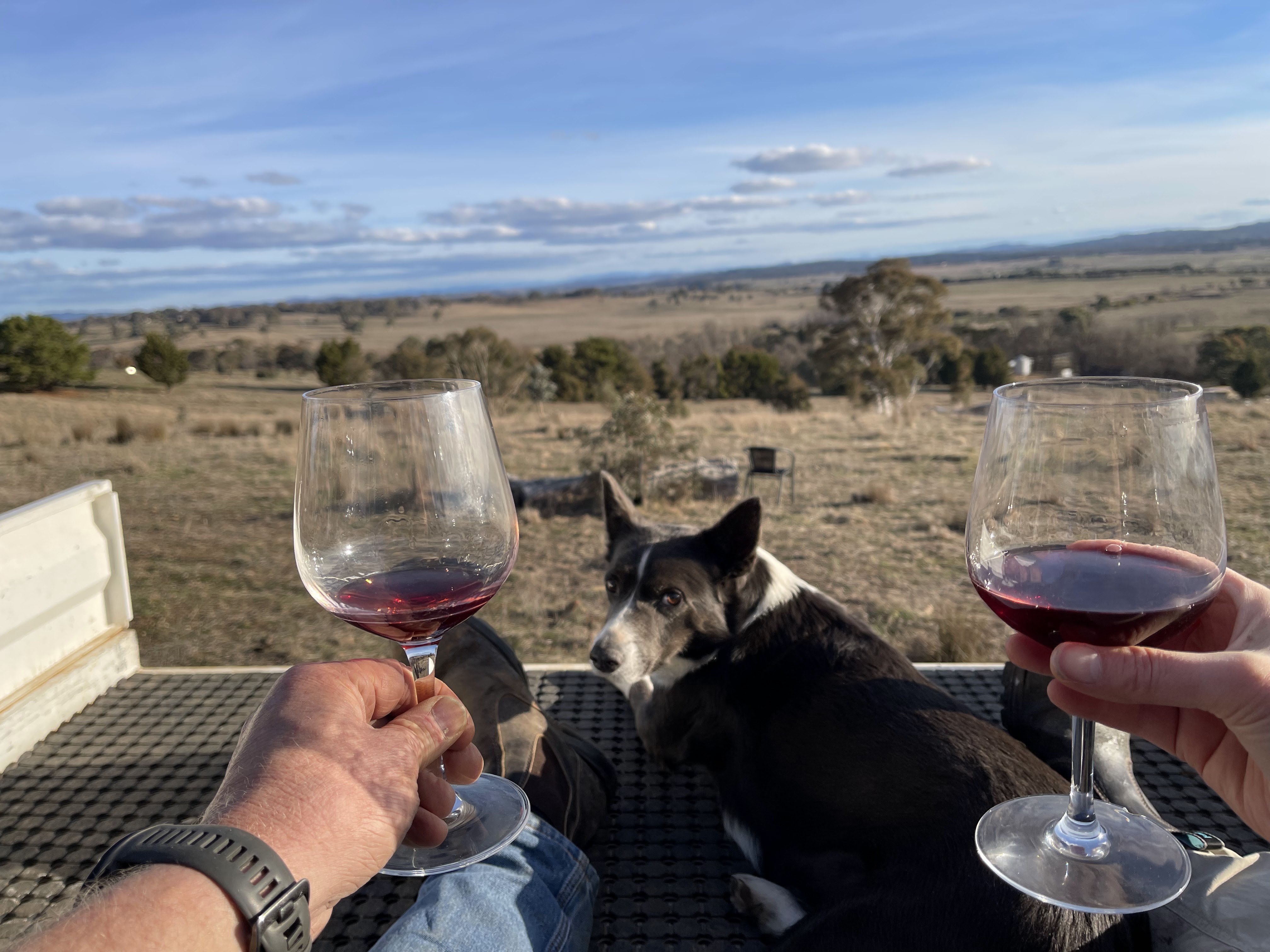
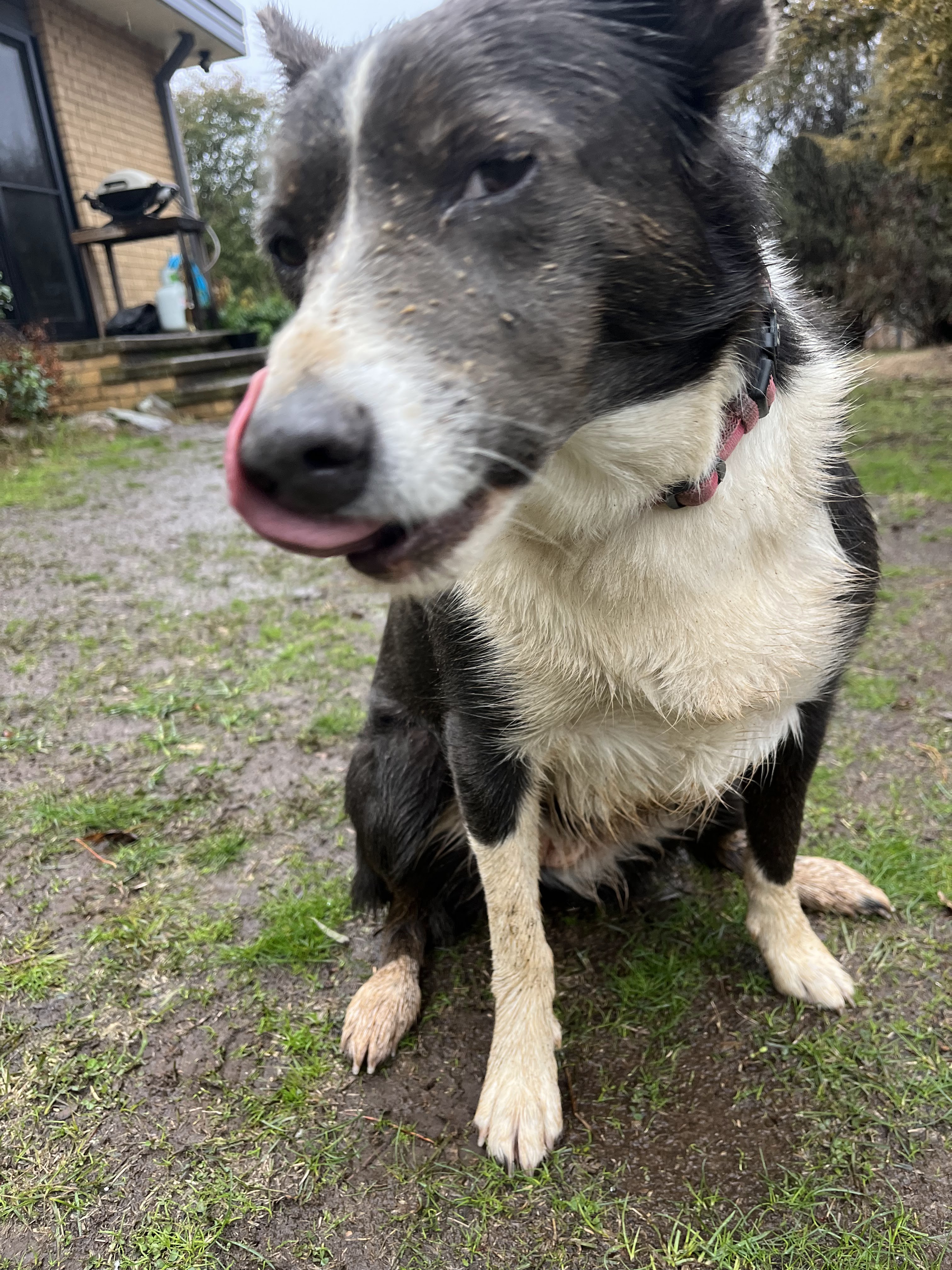
We’re now feeding daily, which has become a very early morning ritual, as I’m currently working regular Monday to Friday hours. It’s actually one of my favourite parts of the day—and the dog agrees, especially enjoying the early starts.

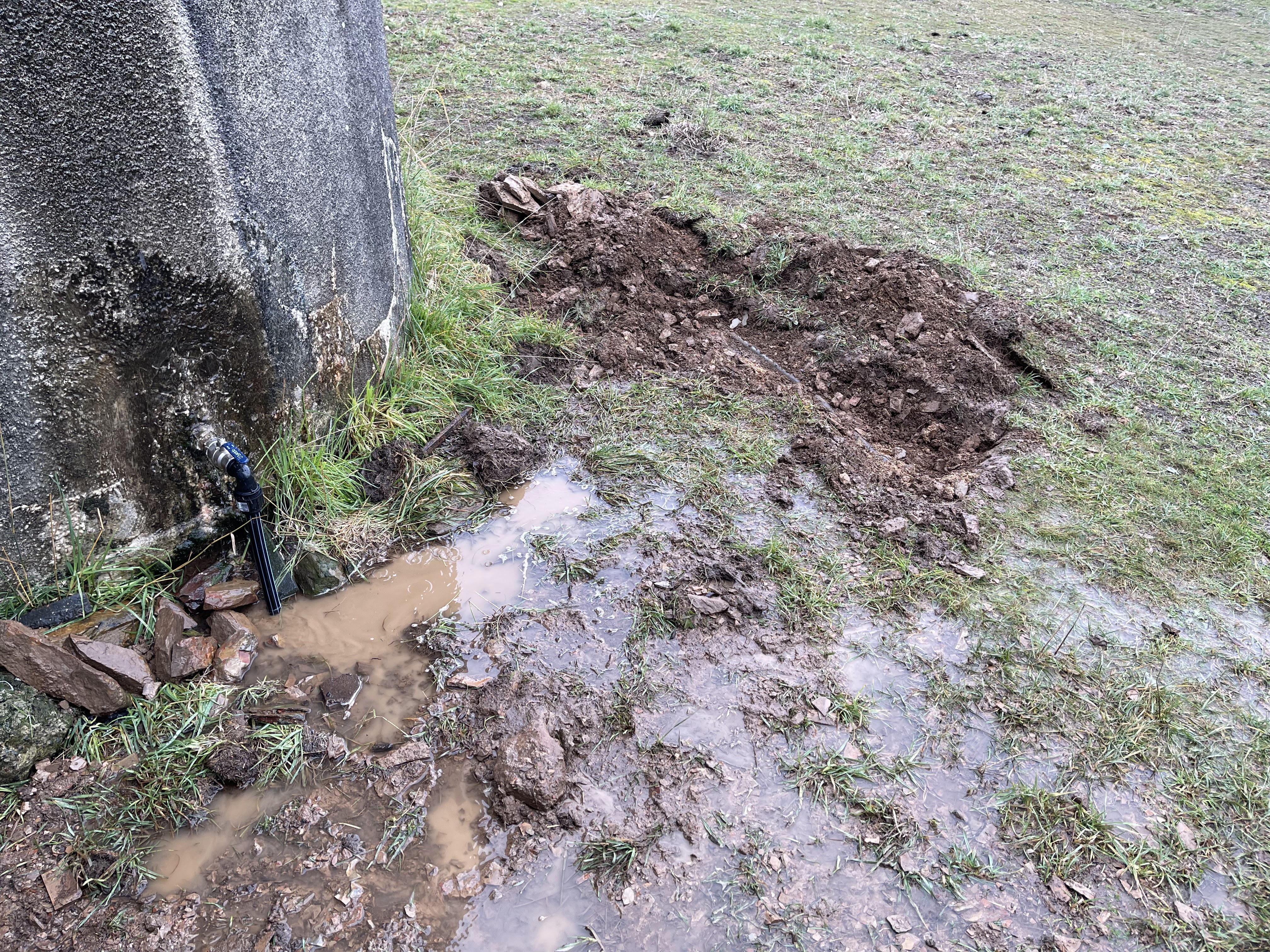
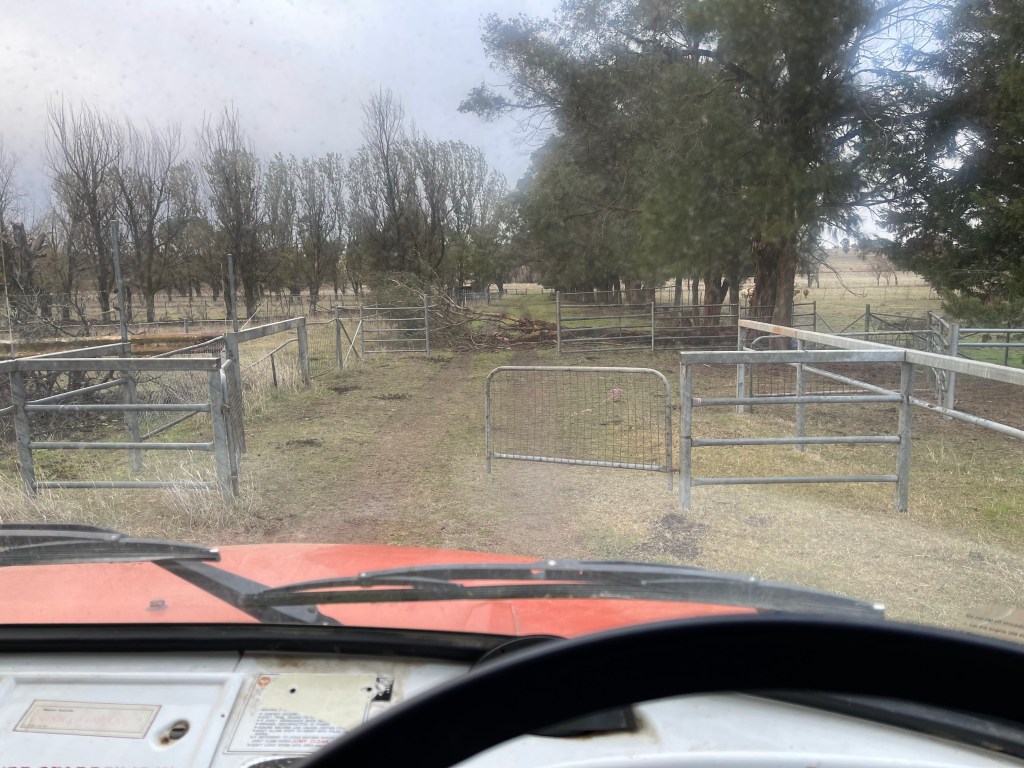
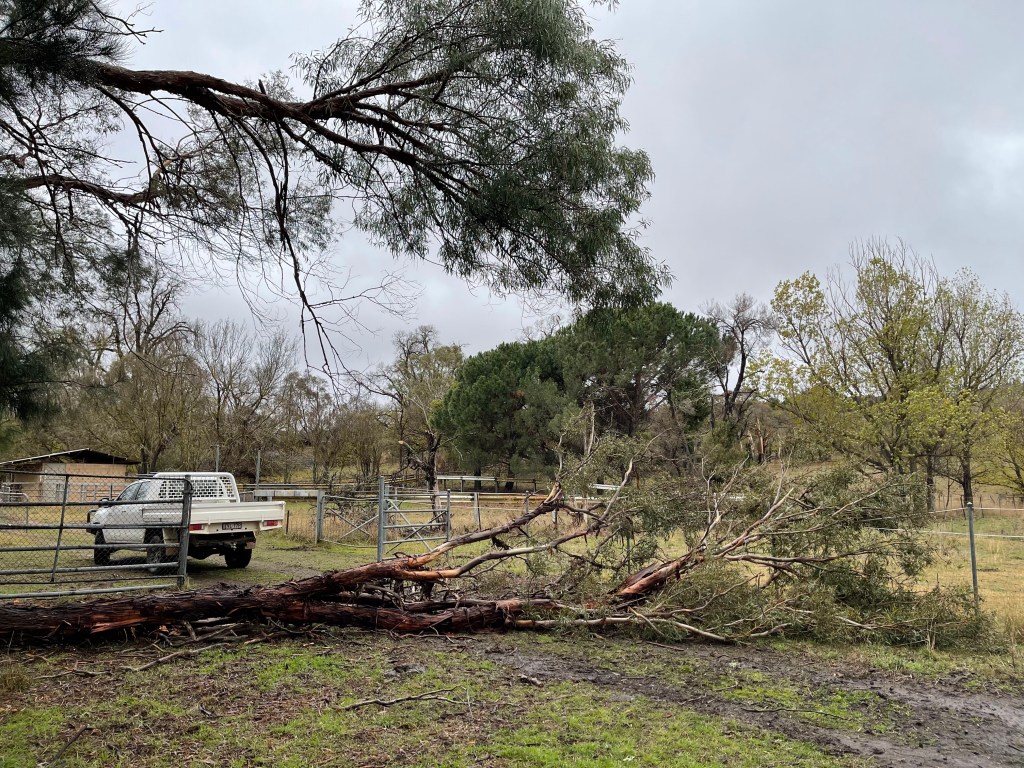
The Rock Farm has become part of the backdrop to a busy schedule. I’m reminded that some jobs must be done immediately, while others can wait. Leaks in the water trough system need urgent attention, as do trees fallen across tracks. Other tasks have taken a back seat—waiting either for warmer weather or for me to return to shift work.
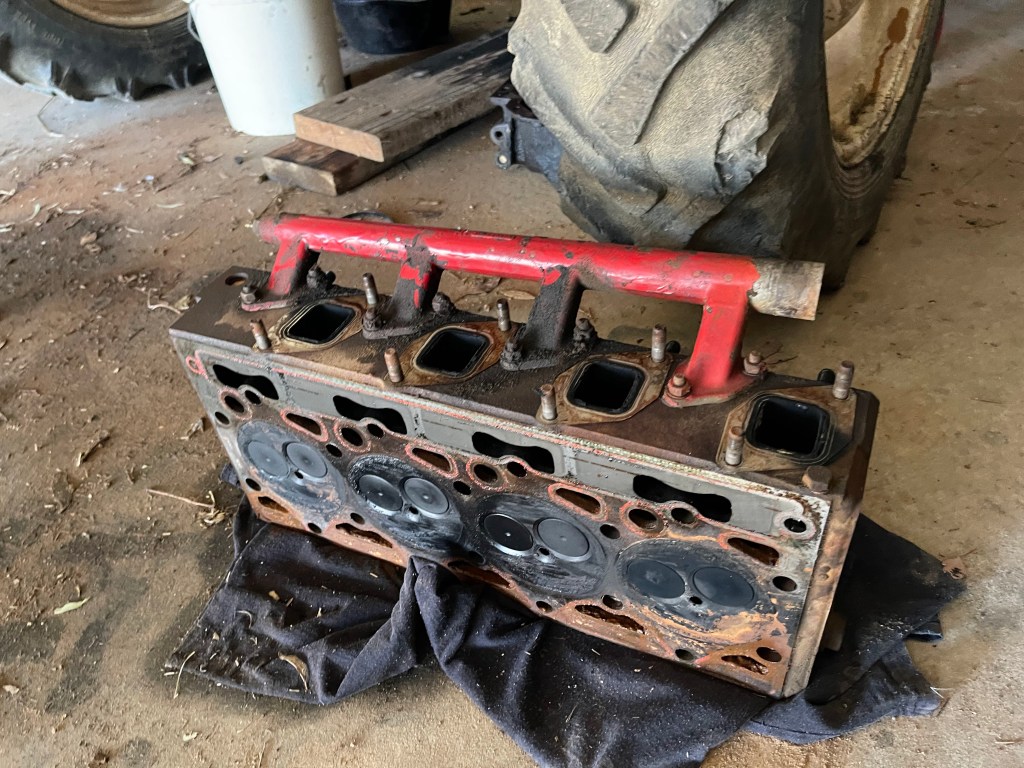
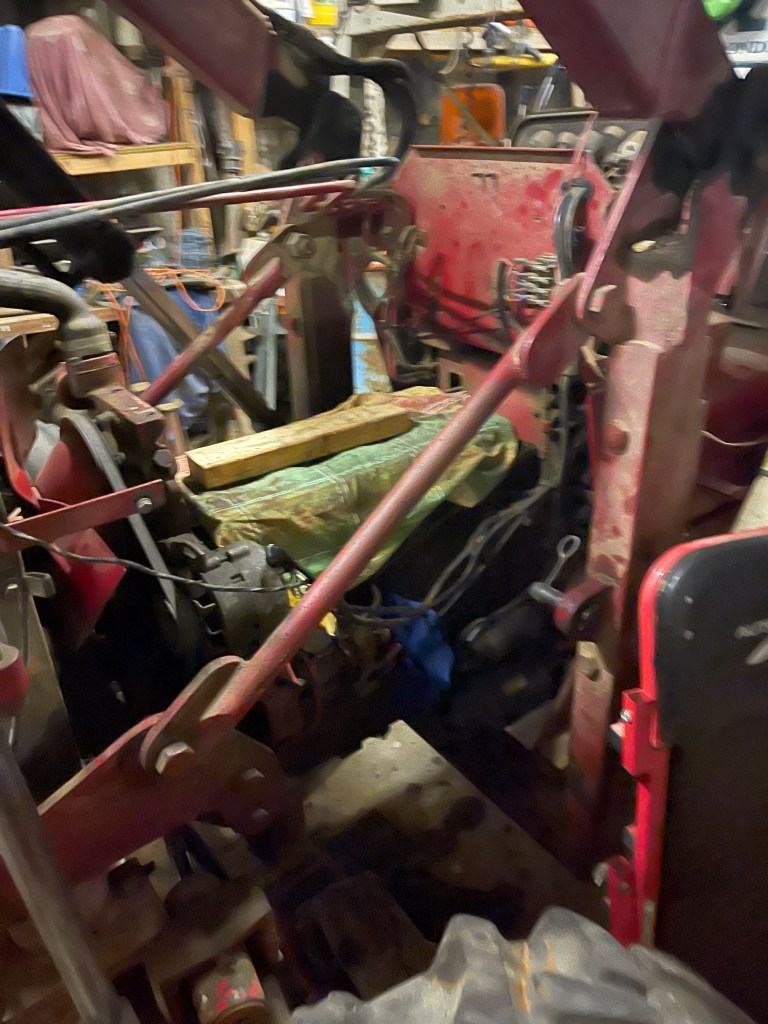
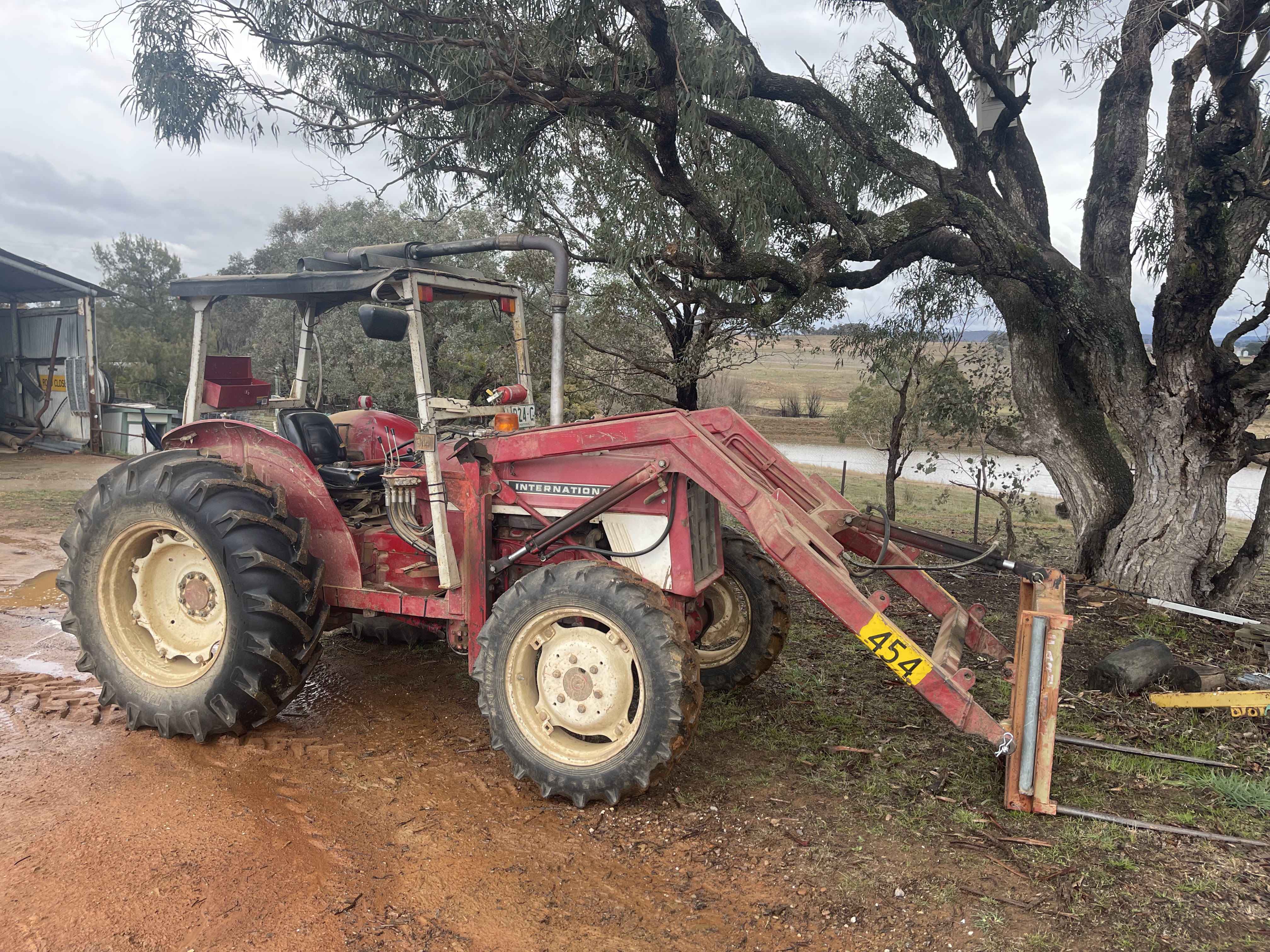
We’re thrilled to have our tractor back after a full engine rebuild. Dan from Direct Diesel Truck and Tractor Repair sourced a rebuild kit—including new pistons and liners—after the head gasket failure. It’s amazing how indispensable an old tractor can be. I hadn’t realised just how much I missed having it available until it was gone. Dan’s work was absolutely top-notch, and I couldn’t be happier.

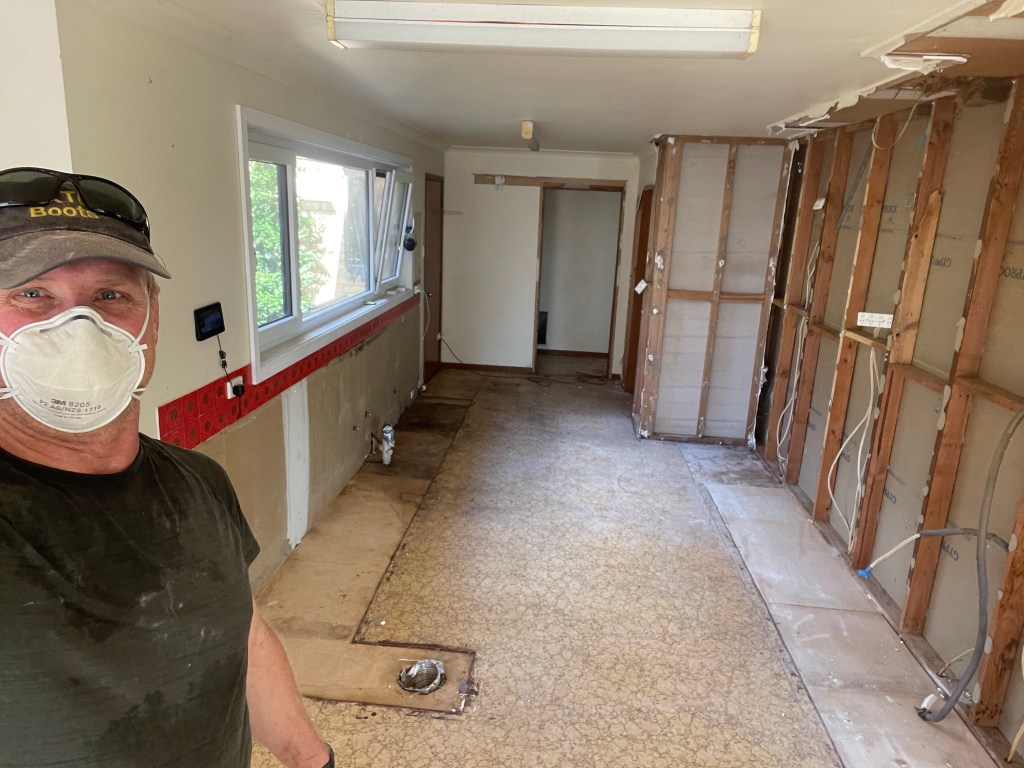
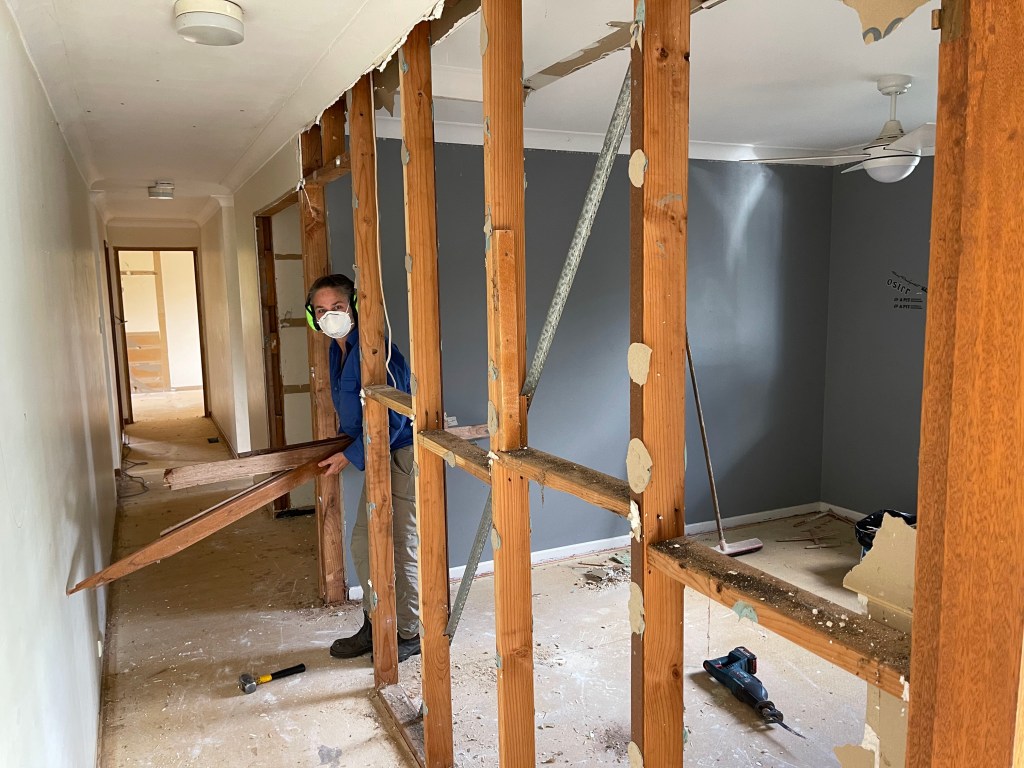
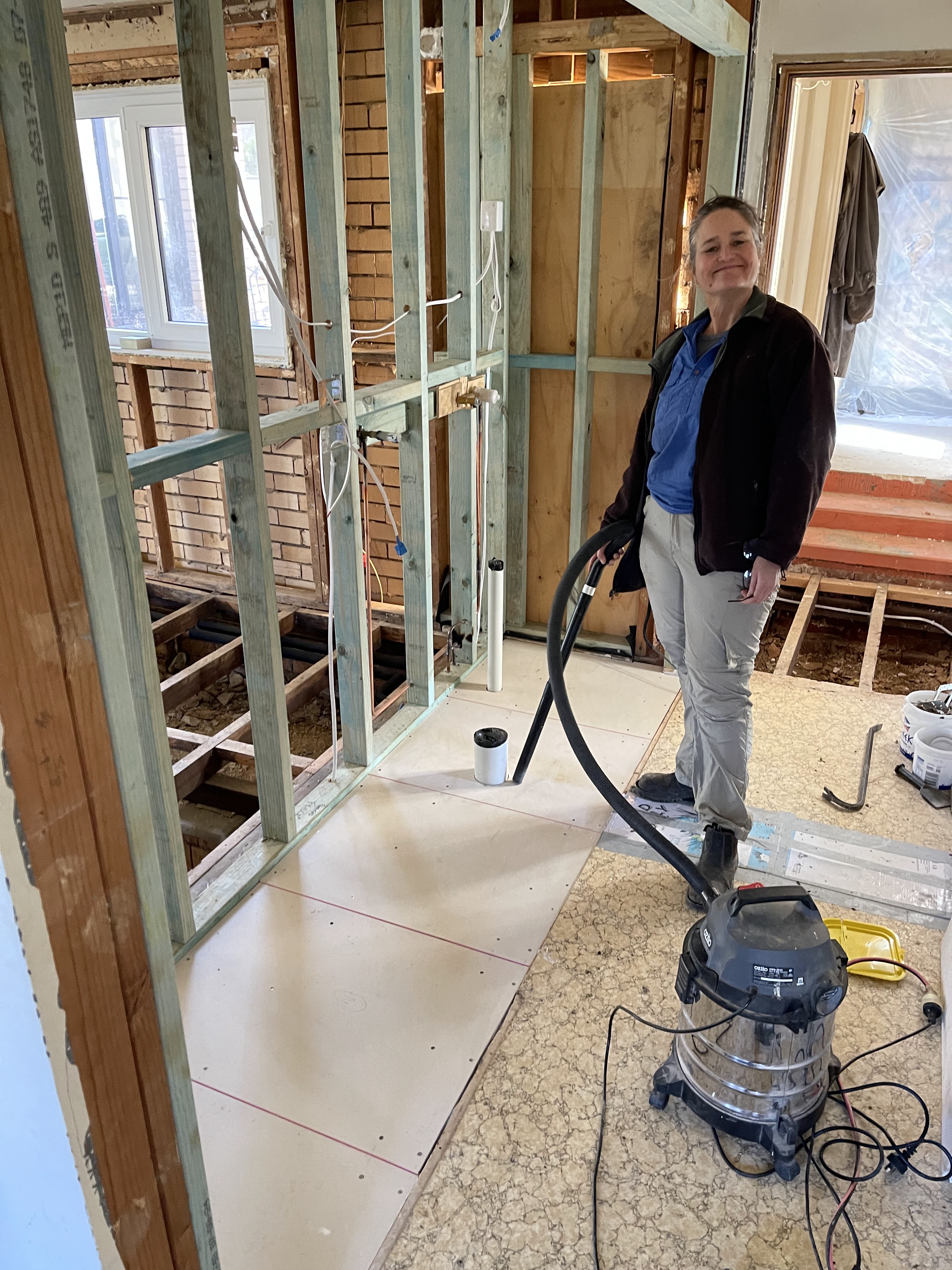
Meanwhile, our house renovation continues to inch forward. The support from local plumbing and electrical services has kept the momentum going. Huge shout-out to Sam from Prime Plumbing Yass and Andrew from APL Electrical, who’ve helped keep the build ticking along while I’ve been tied up with work.
As winter rolls on, we’re reminded that life on the land is full of challenges, but also full of community, resilience, and moments of quiet joy. Whether it’s the early morning feed runs, the clatter of hooves chasing Myrtle, or the steady progress on the house, there’s always something to be grateful for. With spring on the horizon, we’re looking forward to warmer days, greener paddocks, and whatever the next chapter brings for the Rock Farm.
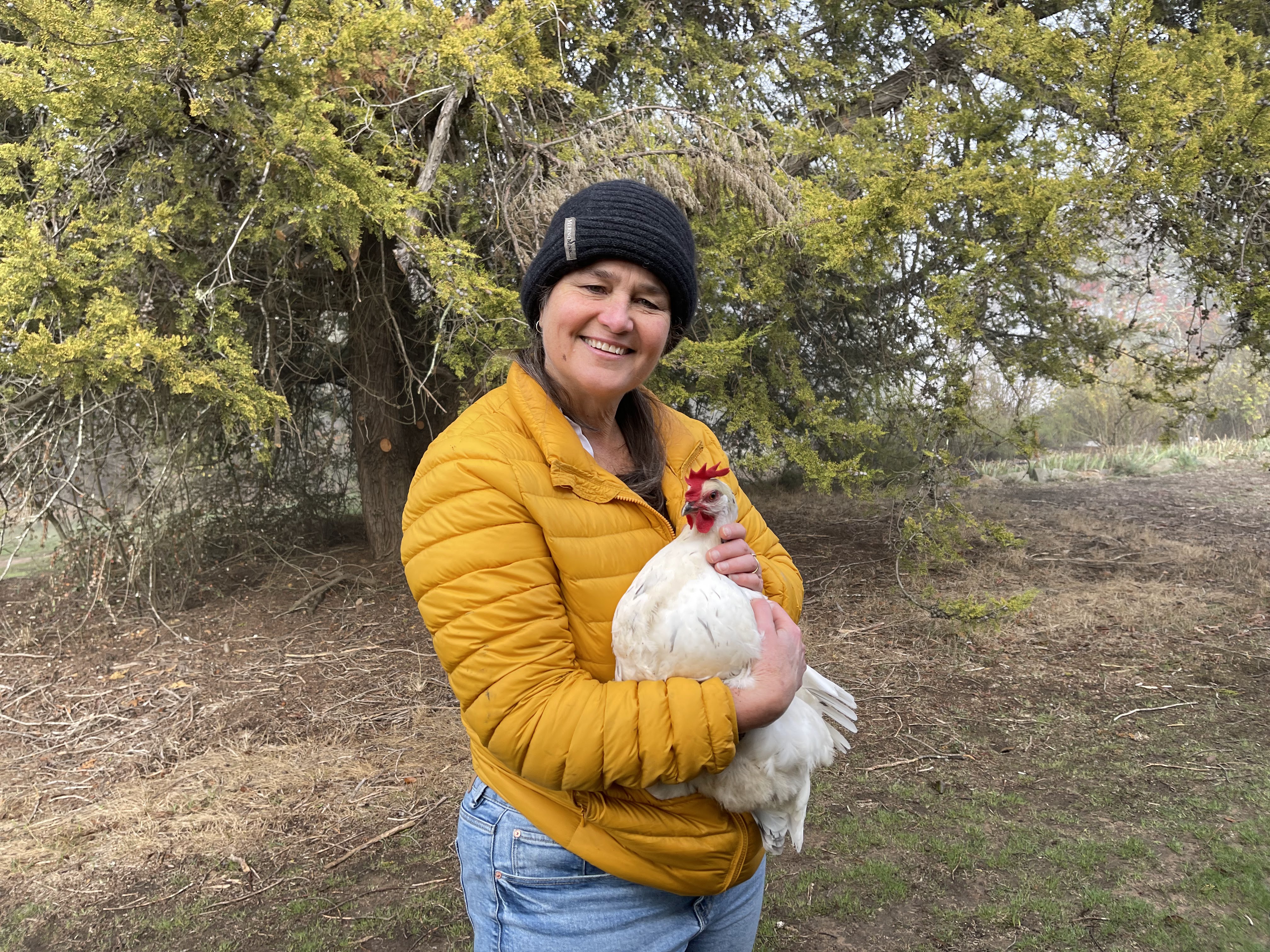
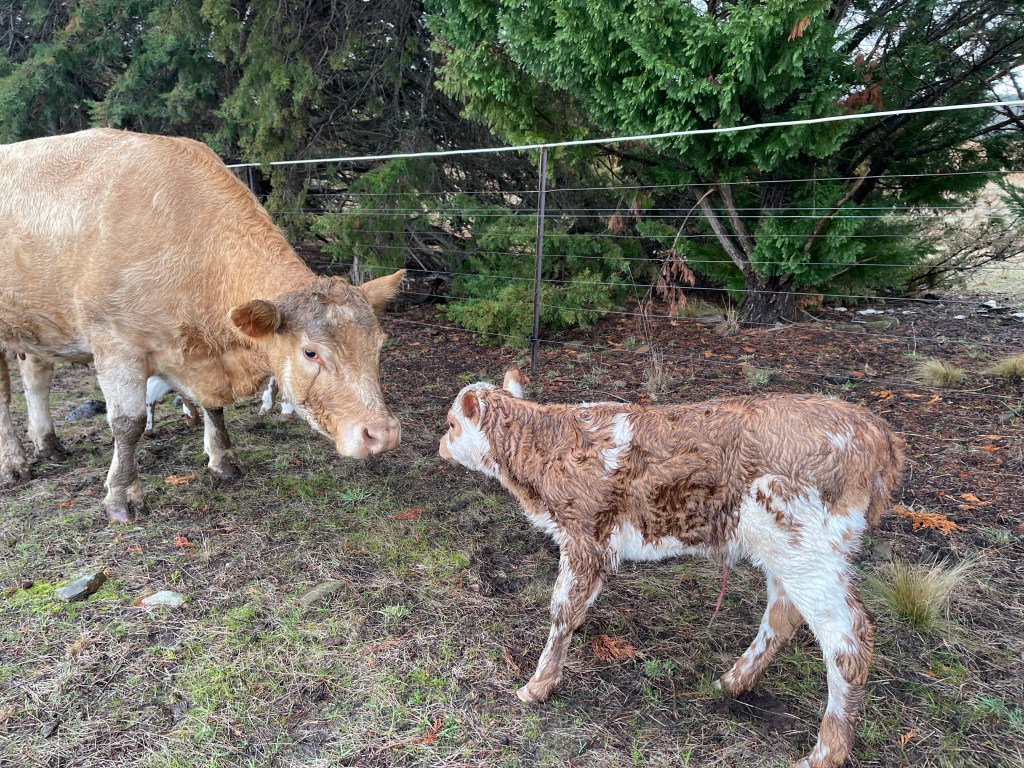
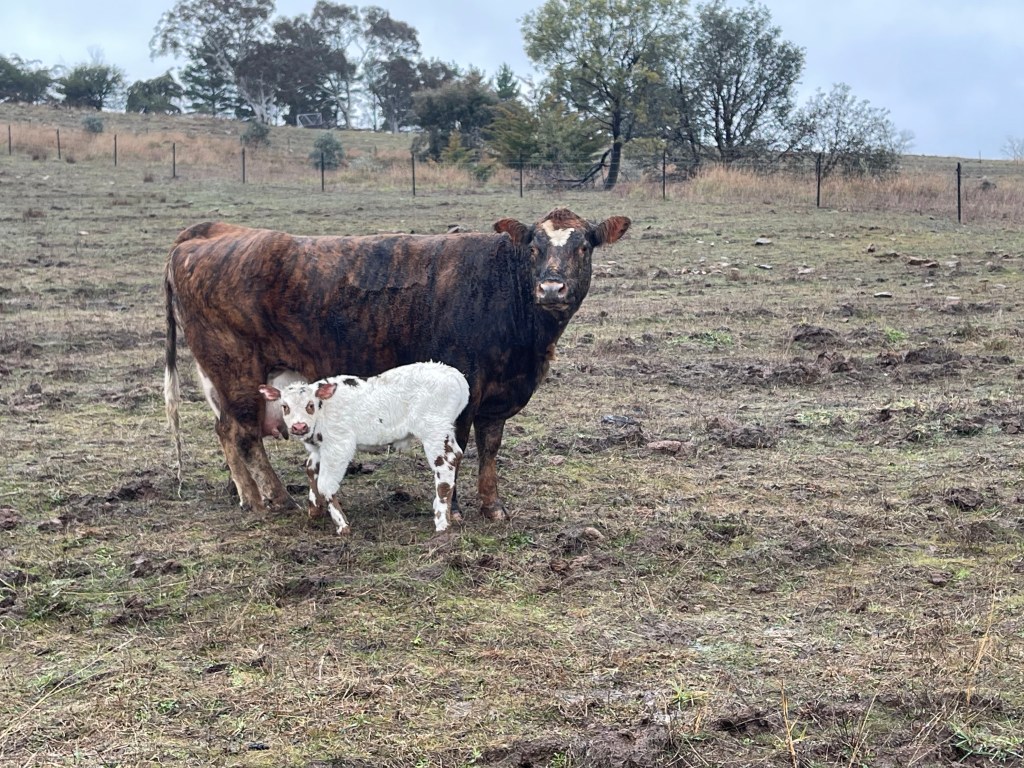
Oh and calves… hopefully lots of calves!
Thanks for following along with our journey — stay warm, and take care until next time.

Things dry out on the Rock Farm

In my last post, I was grateful that some summer storms had helped the pastures along. The Rock Farm was looking surprisingly green for Christmas—an exception rather than the norm in this part of the world. By the end of January, however, it was clear that things were drying out. So, like all good husbands, I packed up and went to sea for a couple of weeks, leaving the farm and livestock in Jo’s capable hands. Before I left I pre-positioned a couple of hay bales in the paddocks to ensure the cattle had feed ahead of them—but I wasn’t prepared for what I found when I got home.

It was a huge amount of fun to return to my old ship and sail north from Hobart back to Sydney. During the voyage we experienced all weathers, including a lively crossing of the infamous Bass Strait in 55-knot winds. As we battled large seas and rolls exceeding 50 degrees (past the limits of the inclinometer, known onboard as the “ooh-aah meter”), I was reminded of the oft-quoted words of John A. Shedd: “A ship is safest in the harbour, but that is not what it was built for.”

What struck me most on this voyage was the advancement in weather forecasting since my first voyages onboard. The ability to track conditions and predict wind changes down to the hour allowed for well-informed decisions, especially regarding the sail plan.

Back home, I returned to happy, well-cared-for stock, (thanks Jo), but even I was surprised by how much the landscape had changed. Paddocks that had been full of feed just weeks earlier were now eaten out. The absence of rain was becoming more apparent, with no fresh growth, and the cattle had begun reaching for anything green to chew.

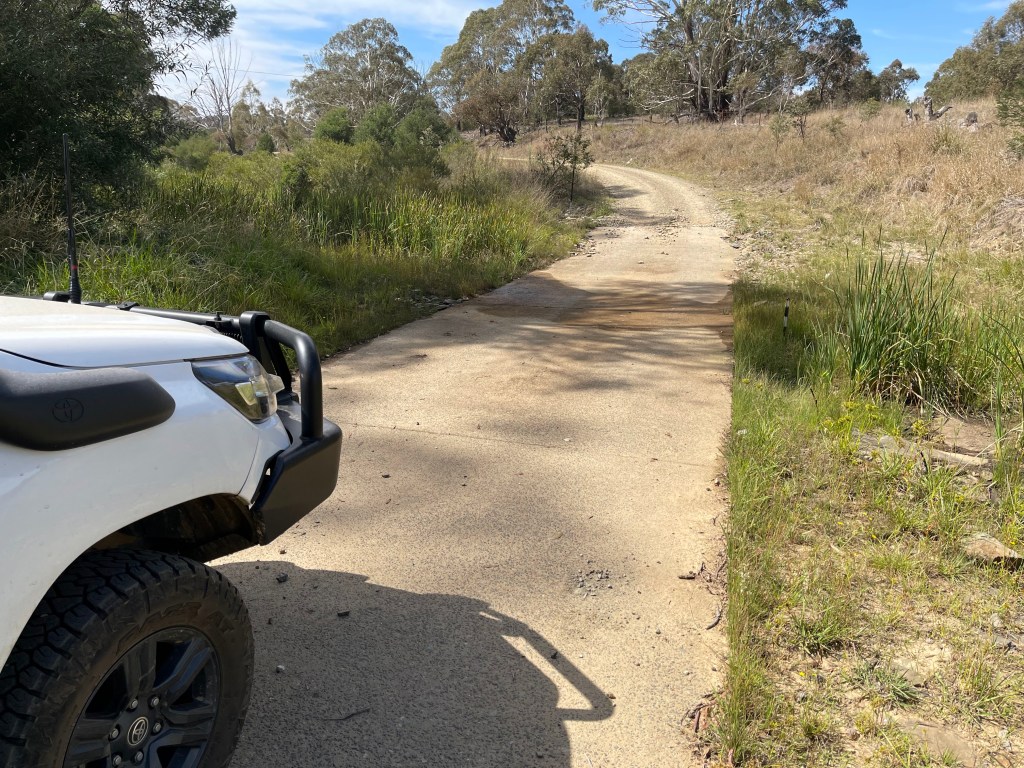
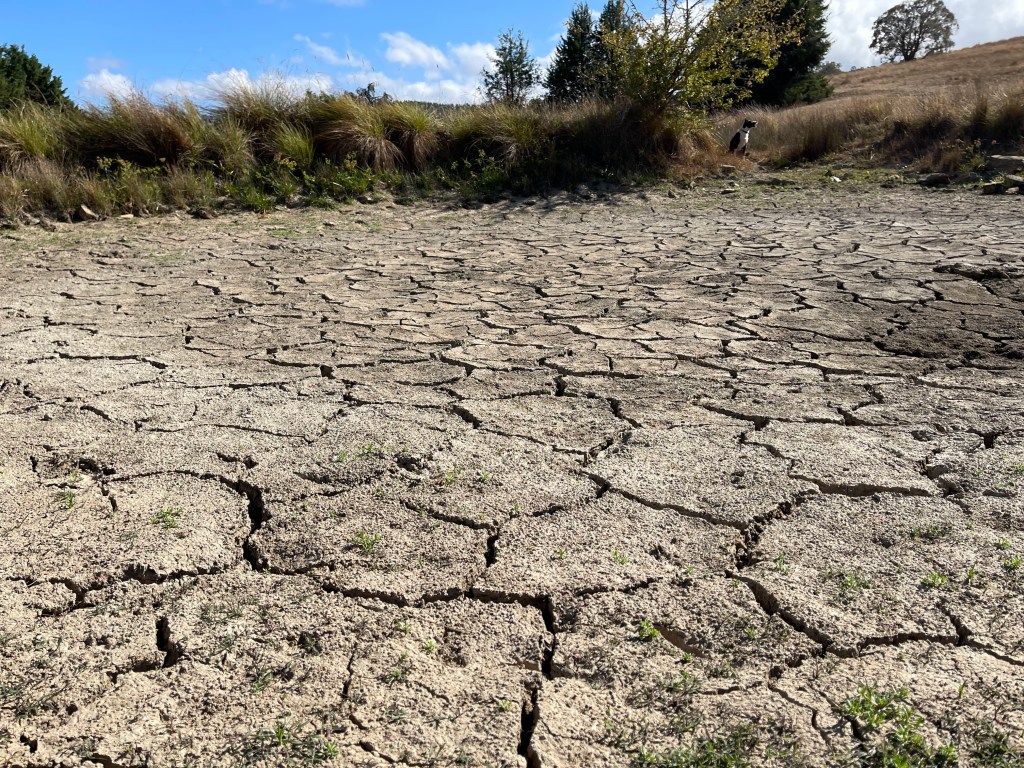
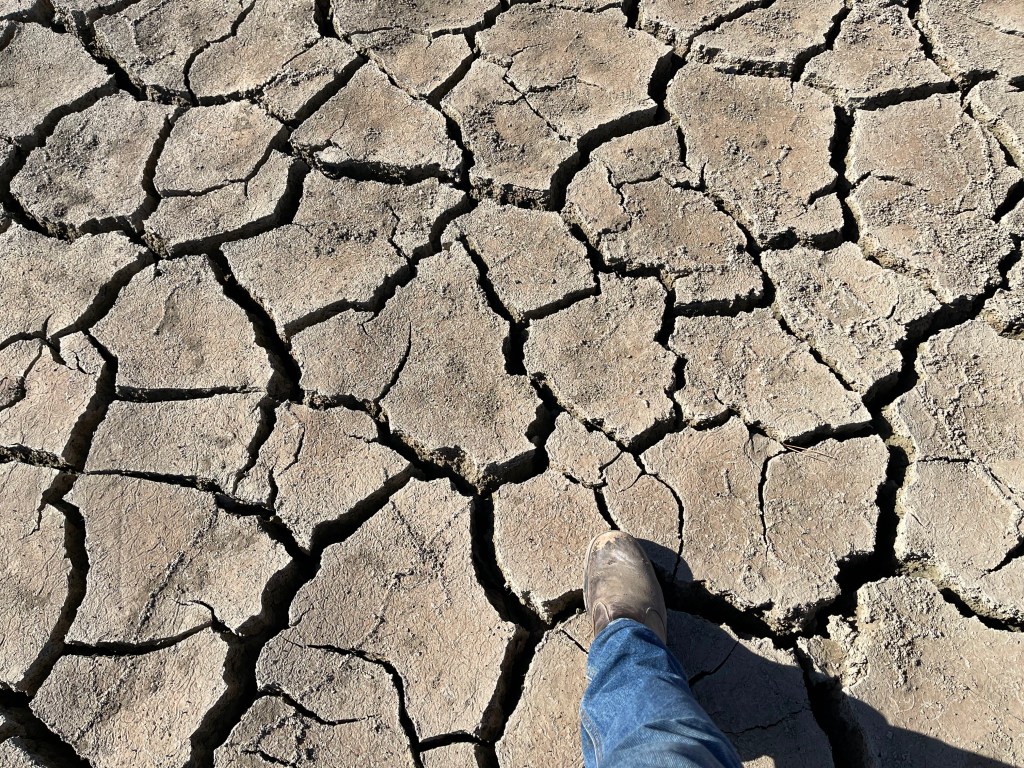
Then came the most telling sign of all. Last week, our creek—flowing continuously at our causeway since the drought broke in February 2020—slowed to a trickle and then finally stopped entirely. It’s a small but significant marker for us.

Looking back at photos from before that drought broke, the farm was in far worse condition than it is now. But the contrast is still striking. (See here: What a Difference a Day Can Make).

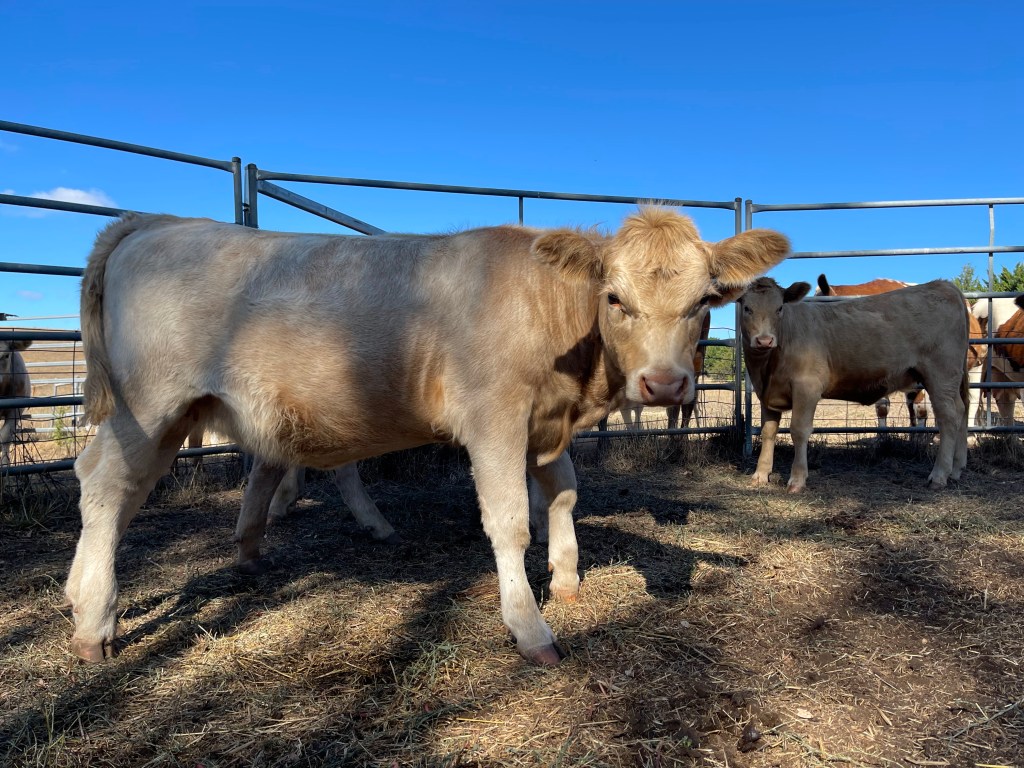
With the season deteriorating and Tropical Cyclone Alfred teasing us with the promise of rain that never arrived, we decided to bring forward the weaning of our heifers. These delightful young calves quickly settled into their new routine—though a couple managed to cheat the system and sneak the occasional drink from their mothers. After a few days, we moved the cows to the other end of the farm and let the calves graze in the “weaning paddock” near the yards.

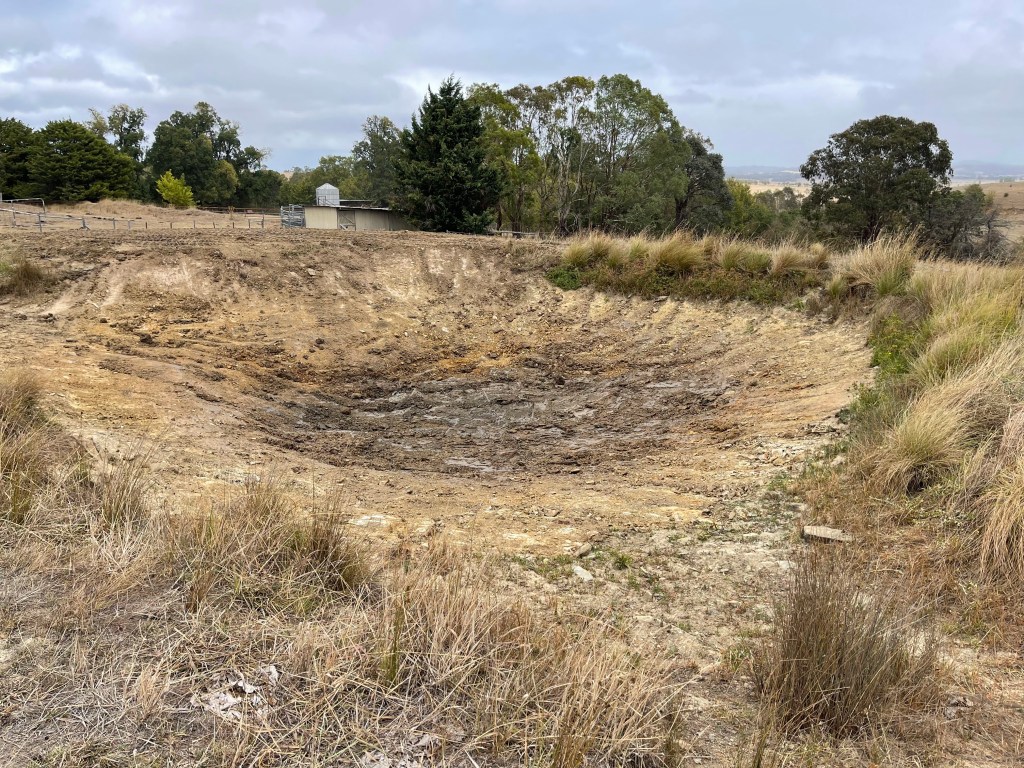
The dry conditions also presented some opportunities. A small silted-up dam had been on my radar for a while, dried out. Our neighbour and friendly earthworks operator, Lou, made short work of cleaning it out. Thanks, Lou!

Unfortunately, the news about the tractor isn’t as good. In my last post, I mentioned it was out of action. It had been running extremely rough, with no compression on at least two cylinders. While I was away, Dan—my fantastic mechanic who replaced the clutch in November 2023—pulled the head off and confirmed the head gasket had failed. Further inspection revealed scoring on cylinders #1 and #2, prompting him to remove the crankshaft as well. Full rebuild kits are available, so we’ve ordered new pistons, liners, and everything needed to get the tractor operational again soon.

And, of course, because we clearly don’t have enough going on, we decided to make the most of being empty nesters by starting renovations on our home. After seven years of waiting, we’re finally bringing the house into the modern age—and we’ve well and truly dived in.

The demolition phase is going well. Fortunately, we can stay in the small flat attached to the house while we work. Pulling up rotten carpets and ripping off gyprock gives the impression of great progress, though we know things will slow down as we move into the reconstruction phase. Still, it’s exciting to see the potential of our home coming to life.

As summer rolls on, the Rock Farm is once again adapting to the changing conditions—just as we are. While the return to dry weather brings its challenges, it also presents opportunities and is a regular feature of this area. We are enjoying the full spectrum of activities, from weaning the heifers tackling long-awaited renovations. With the tractor rebuild underway and the house taking shape, there’s plenty to keep us busy as we look ahead to whatever the next season brings.

Improving water infrastructure

You may recall that I recently spoke of the difficulties in leaving the Rock Farm for a few days. The preparations to depart on a holiday can be challenging – especially with livestock who have an uncanny ability to know when they’re unsupervised! I won’t continue the similarities with livestock and children, suffice to say they both seem to know when the adults are not around!

In January we managed to get away for a week. Our holiday was wonderful, but it wasn’t all good when we got home. The Cattle had managed to destroy the float valve in the old bathtub water trough in their paddock. Whilst the backup water supply in the dam held water, it was apparent I needed to upgrade the old bath tub to something more substantial.

With another family visit to Queensland on the cards at Easter, I knew it was time to make a significant change to our water situation. It was a two part solution. Reducing demand and improving the infrastructure.

The first stage was to reduce demand through the sale of our weaners. With special weaner sales at our local yards, we sold all our steers and some of our heifers. The young steers weighed a surprising 290kg average – far exceeding my 250kg estimate. We kept four heifers to add to our herd and sold the rest. This takes our breeding cows to 20. This is well within our soil fertility envelope (next blog entry) – but close to my comfortable maximum.

With the proceeds of the sale being, I moved to the second stage, infrastructure upgrade. My plan was to install a new concrete water trough to provide a more reliable water supply. I also wanted to move the trough down hill from the header tank – to provide better water pressure and improve reliability. I figured it would be easy to find the pipe… but how wrong I was.

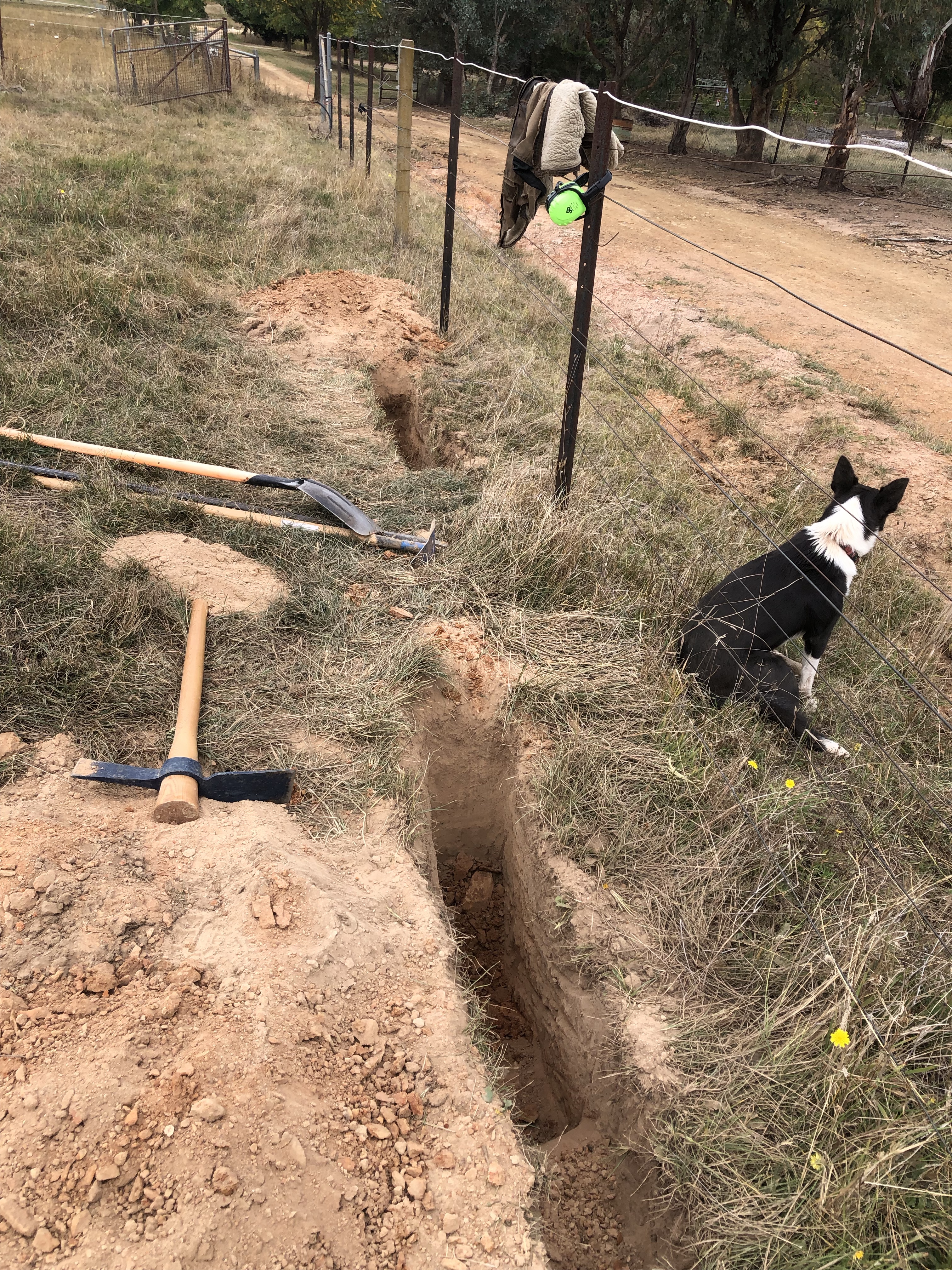
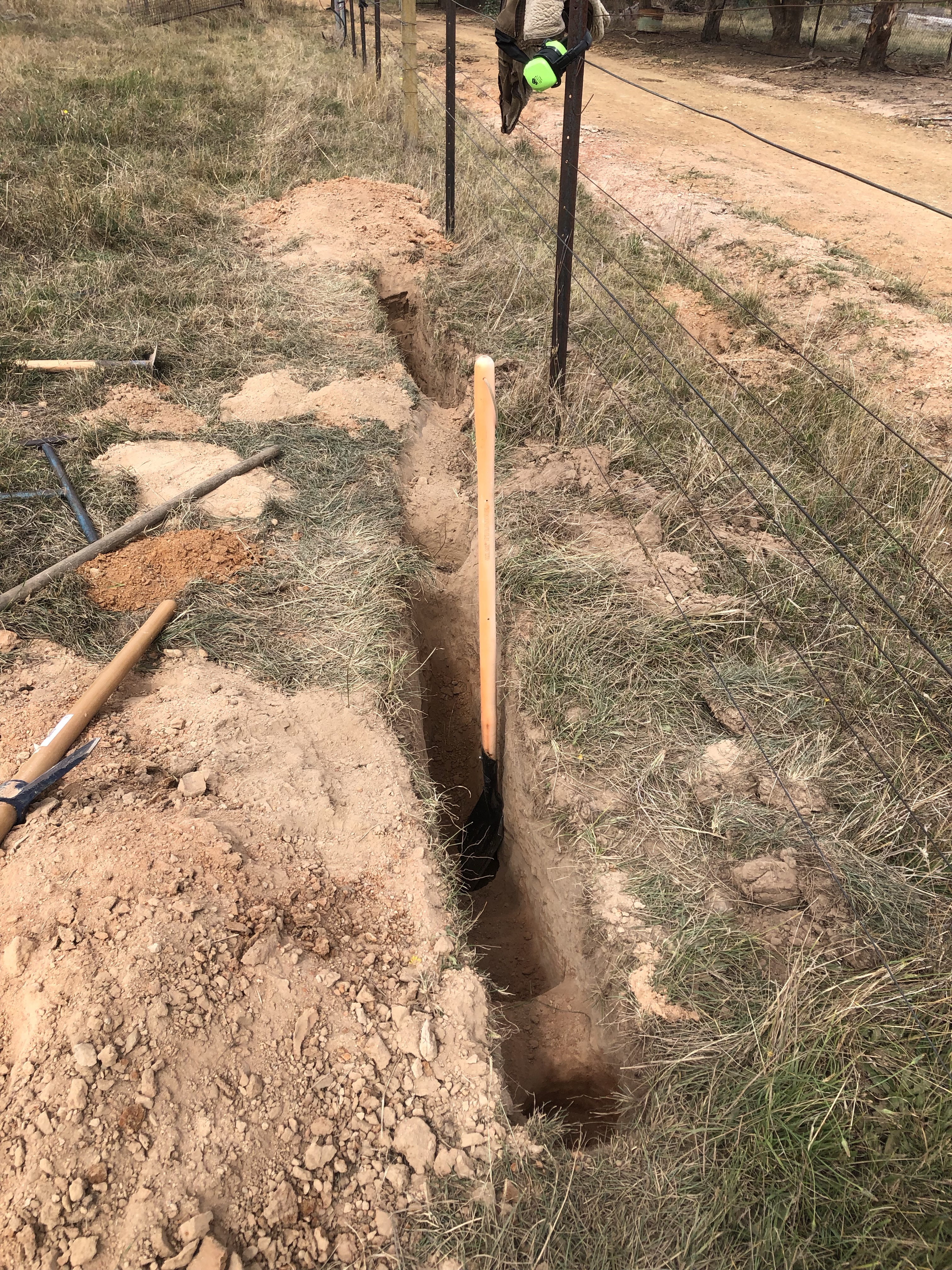
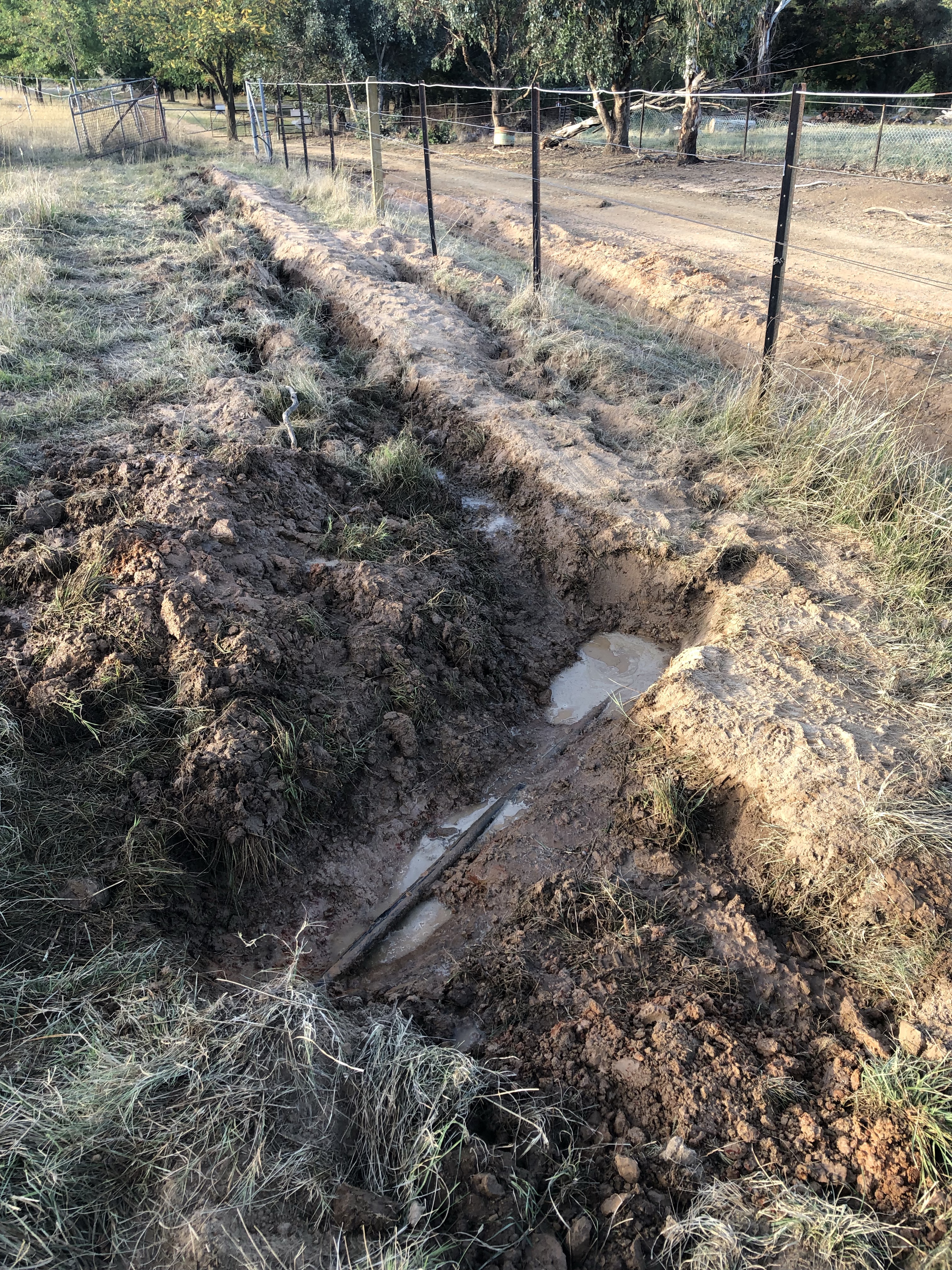
My water divining rods suggested one place to dig… and then another. By the end of it I had followed pipes all over the place and dug trenches all to no avail. I spent nearly all day digging an ever expanding trench. The dog soon realised that to get my attention, she needed to drop her stick in the hole for me to throw it… There was a very dark cloud hanging over The Rock Farm as the shadows lengthened. In desperation I ran the tractor’s ripper back and forth – but it didn’t seem to find the pipe either. In frustration, I called it a night.

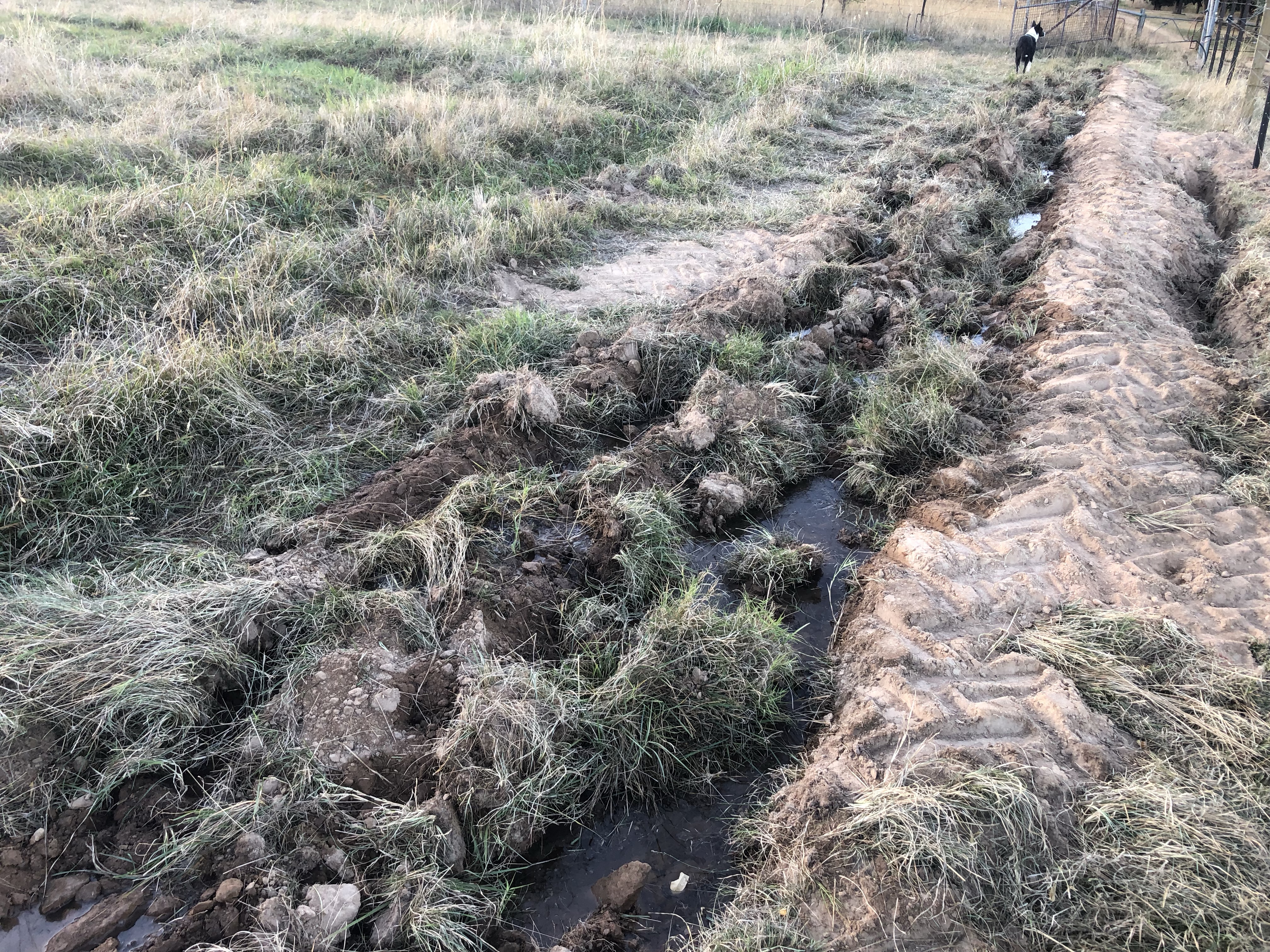
The following morning, I reluctantly returned to the scene of my digging to find water everywhere! The rippers had just run across the top of the pipe! I have never been so happy to find a broken pipe. I quickly turned the pump off, and raced to the rural supply shop to pick up the new trough and fittings.

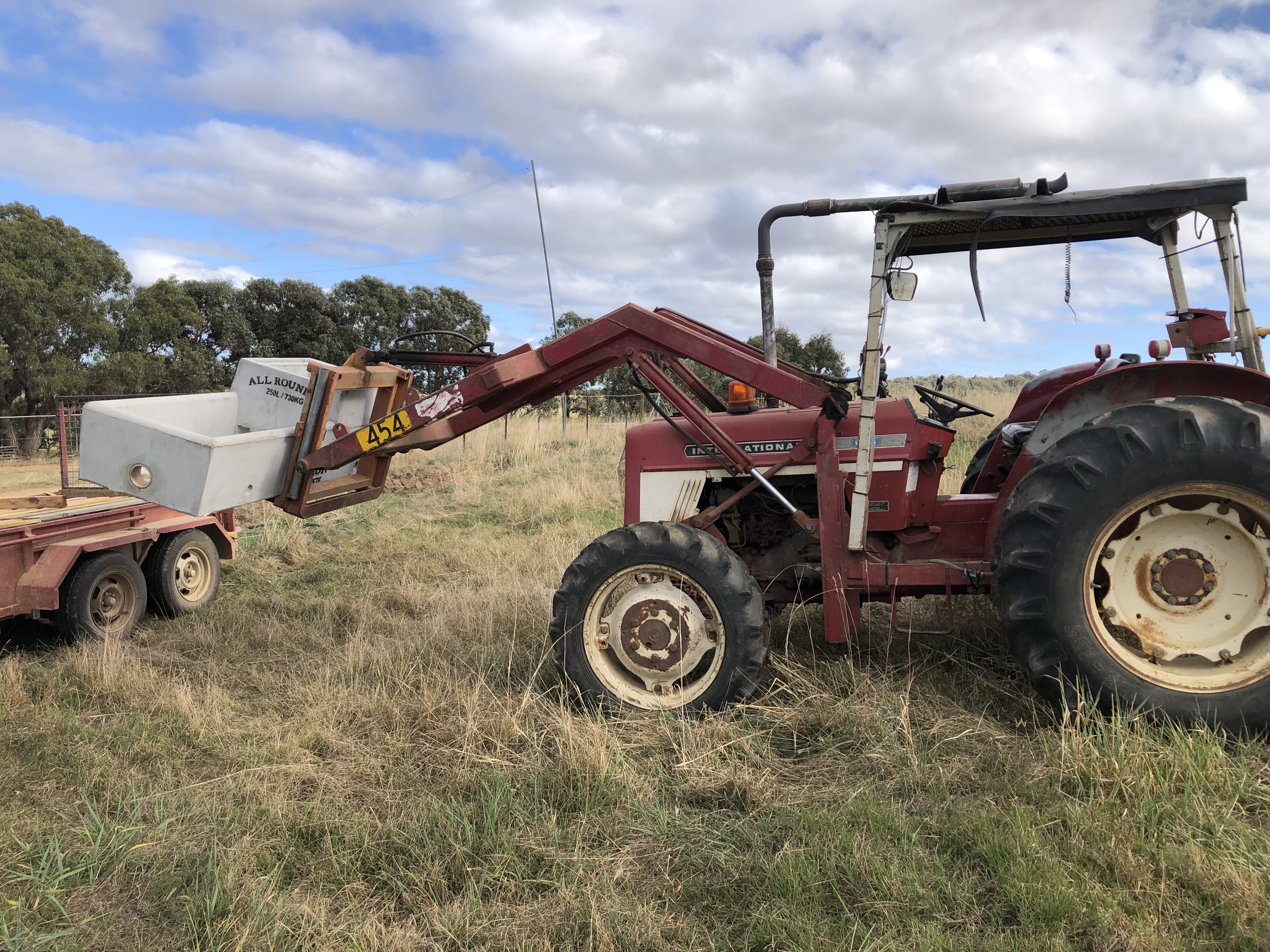
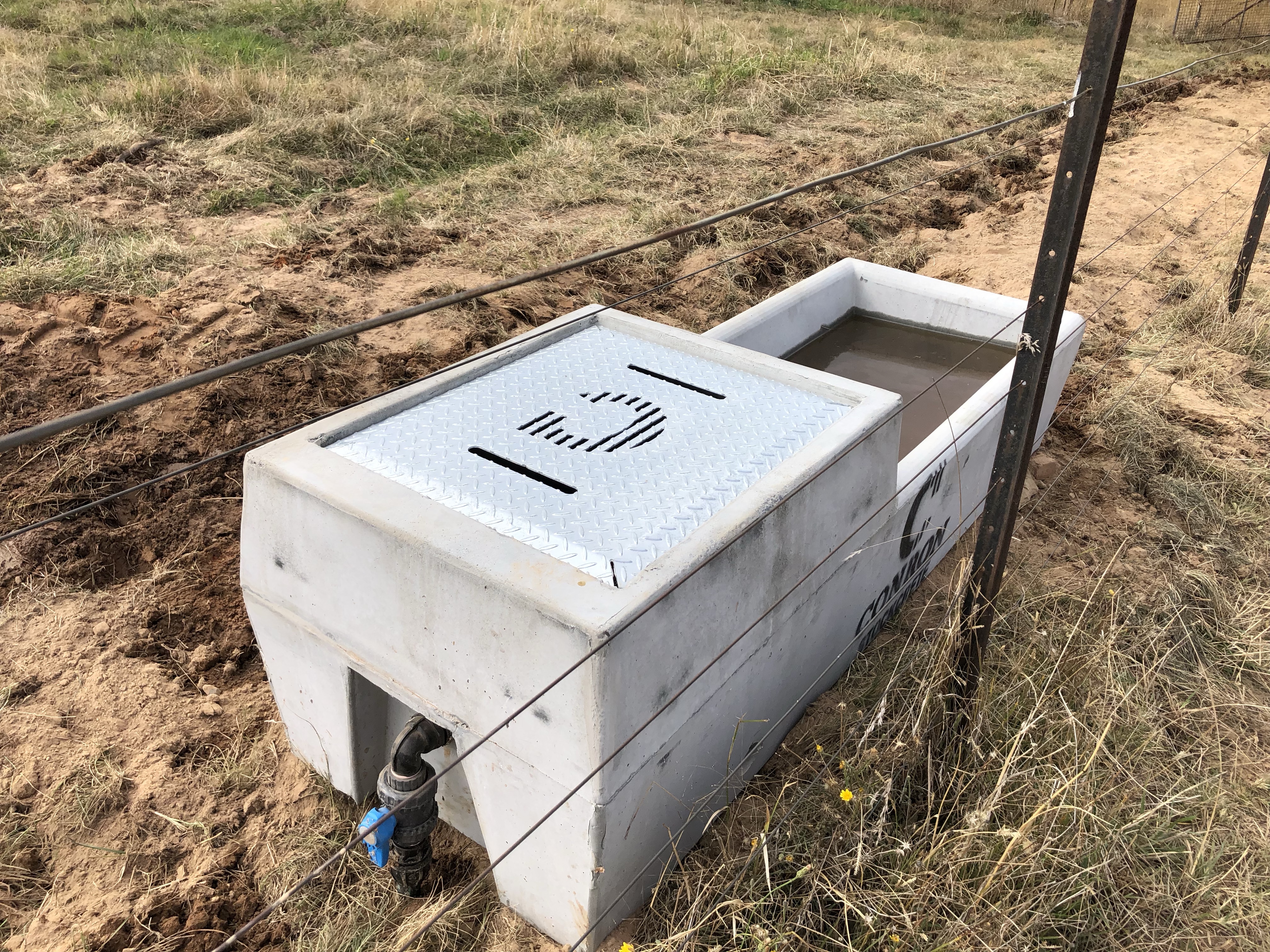
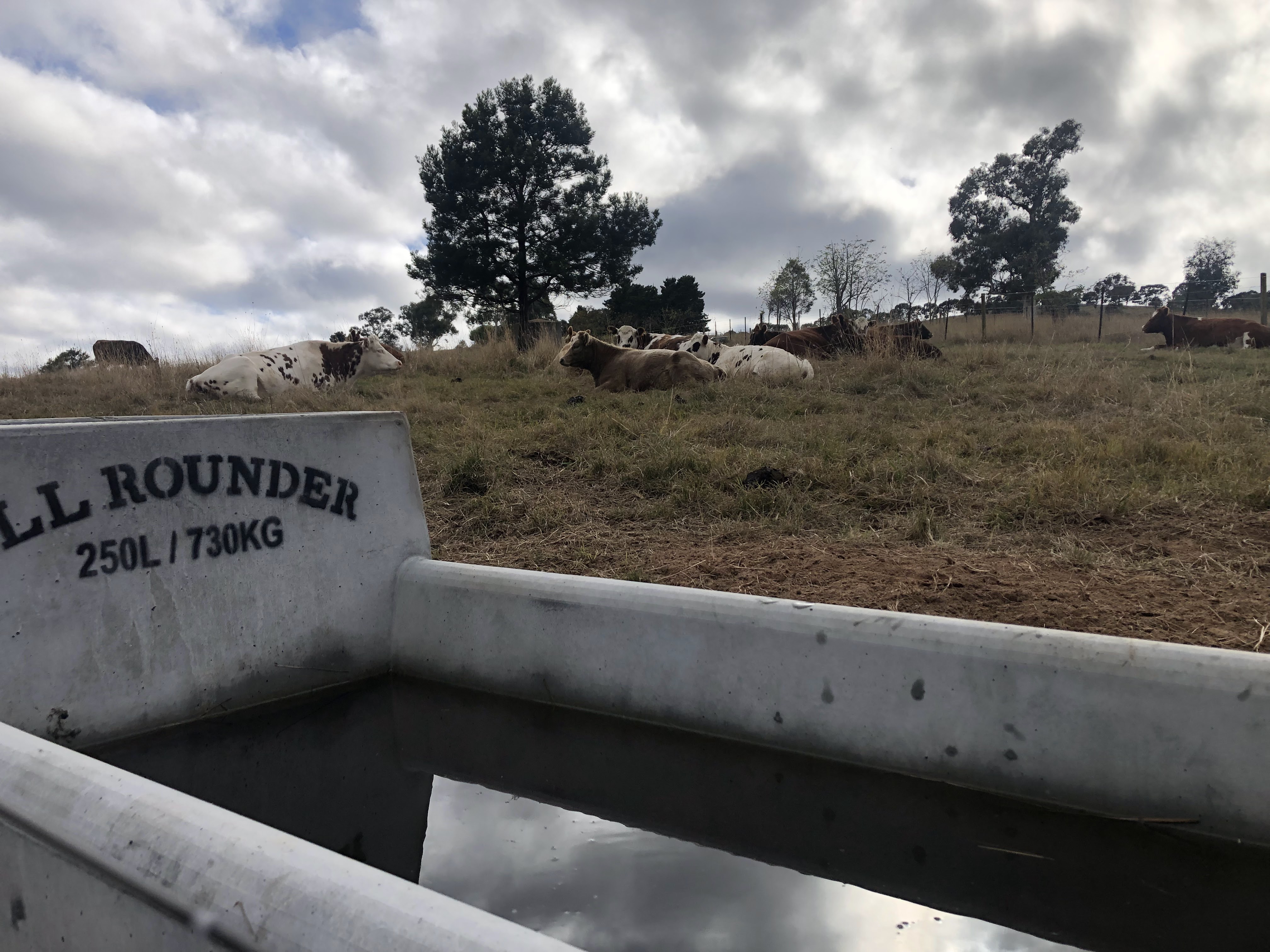
From there it was relatively easy. My biggest worry was that the tractor would struggle to lift the 730kg water trough out of the trailer, but that was no problem at all. After a bit of work with the levels (and the astute eyes will see I still have a little work to do), it was relatively easy to plumb in the new fittings, repair the leak and fill the trough.

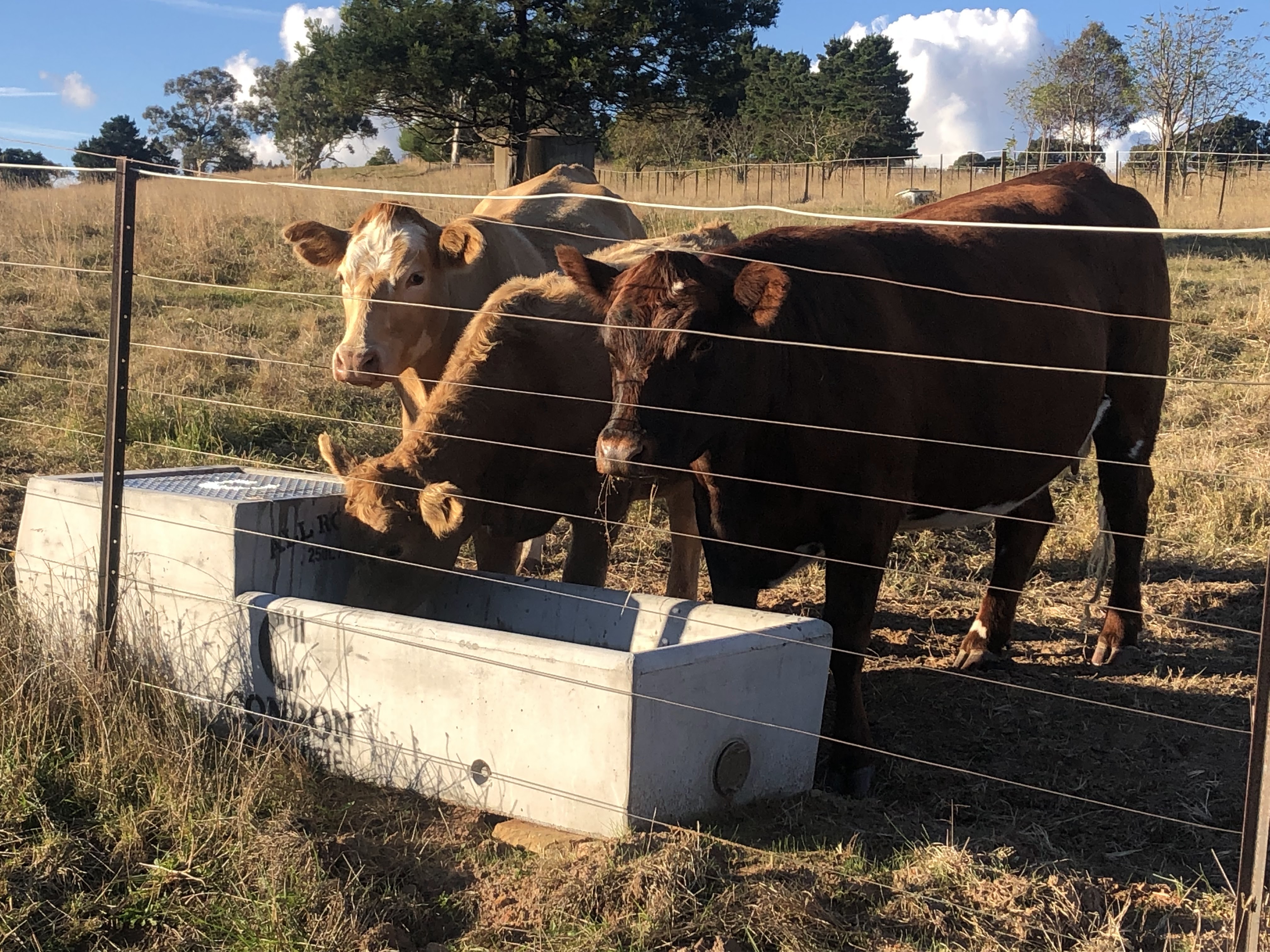
The cattle are happy with the new arrangement. Whilst some studies suggest they perform better on clean trough water instead of water from dams, my main aim was to reduce my maintenance requirements. It was not a cheap investment – but it should last a lifetime.

Harvesting Phalaris

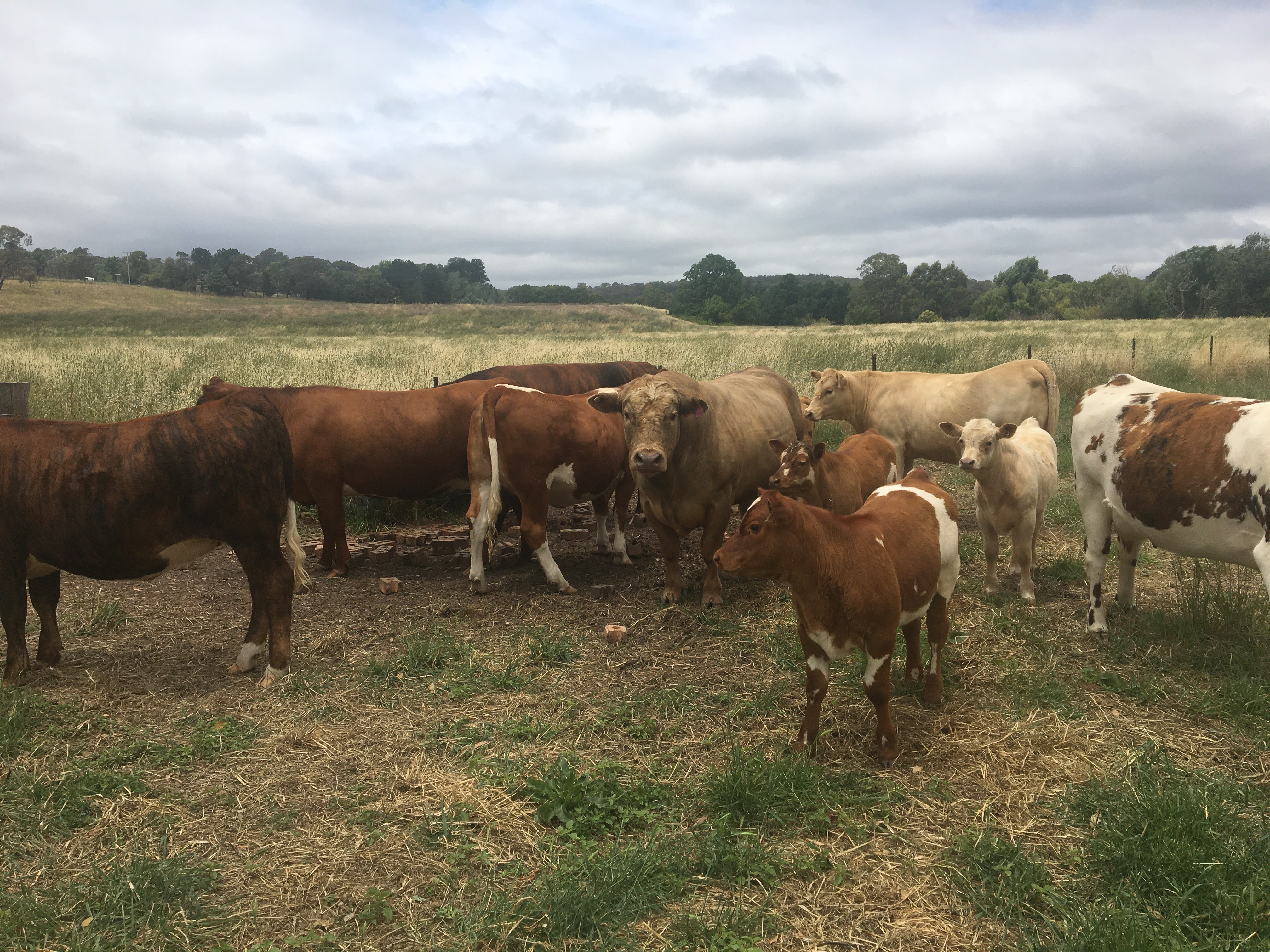
The contrast between this summer and last cannot be more stark. Our beautiful cows are in excellent condition, which is unusual when calves are at foot. I have modified my rotation through the paddocks in an attempt to keep the grass near the house as short as possible. This is to reduce the intensity of any grass fire that may approach our house when the grass goes off.

The good news is that I am able to use the opportunity to rest some paddocks completely. It has led to the phalaris grass setting seed for the first time in years. Phalaris is a drought tolerant perennial grass that is competitive against weeds and aids in control of erosion. Too much phalaris can cause staggers, however it works well in conjunction with companion planting of clover, ryegrass and fescue.

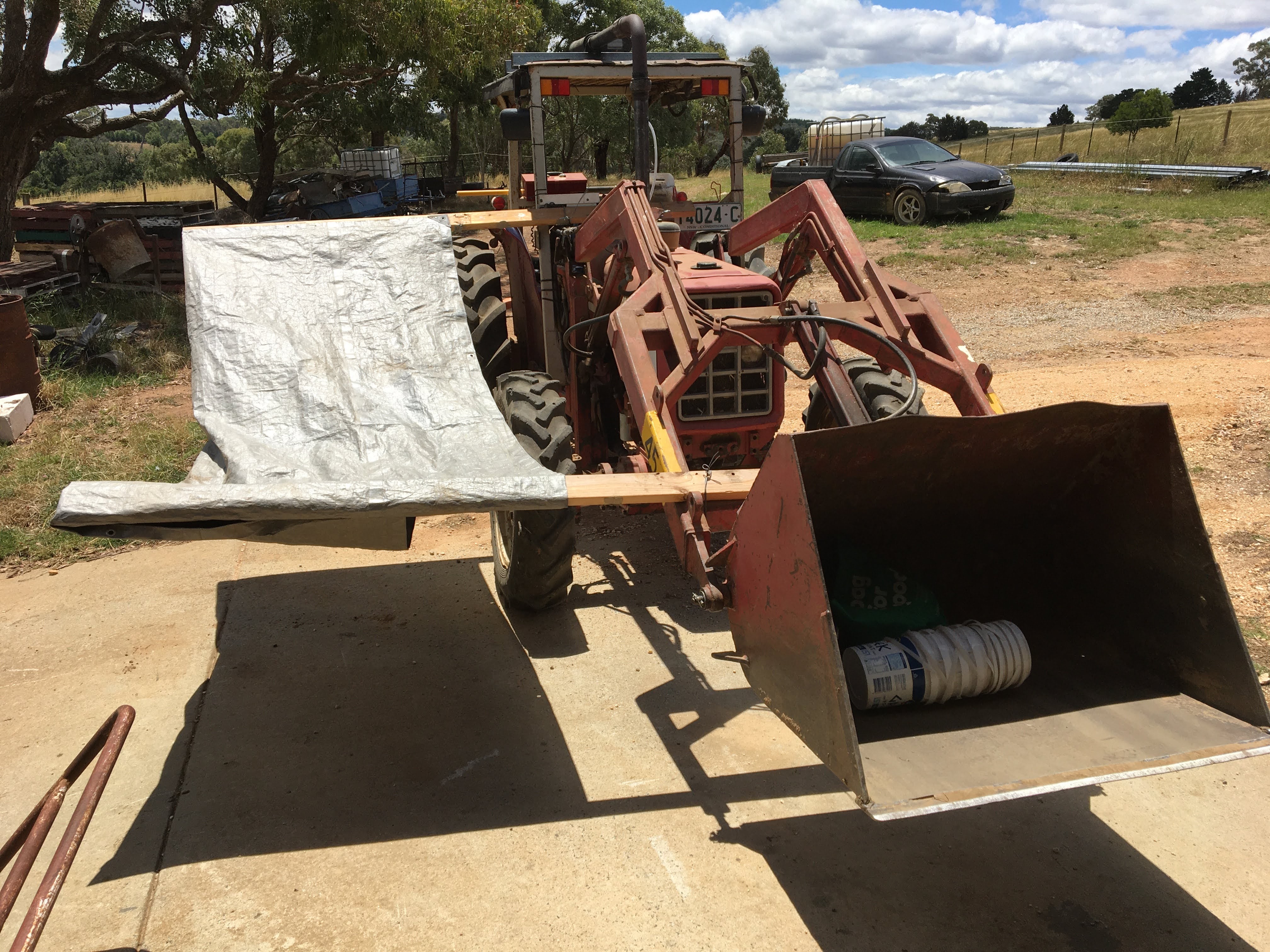
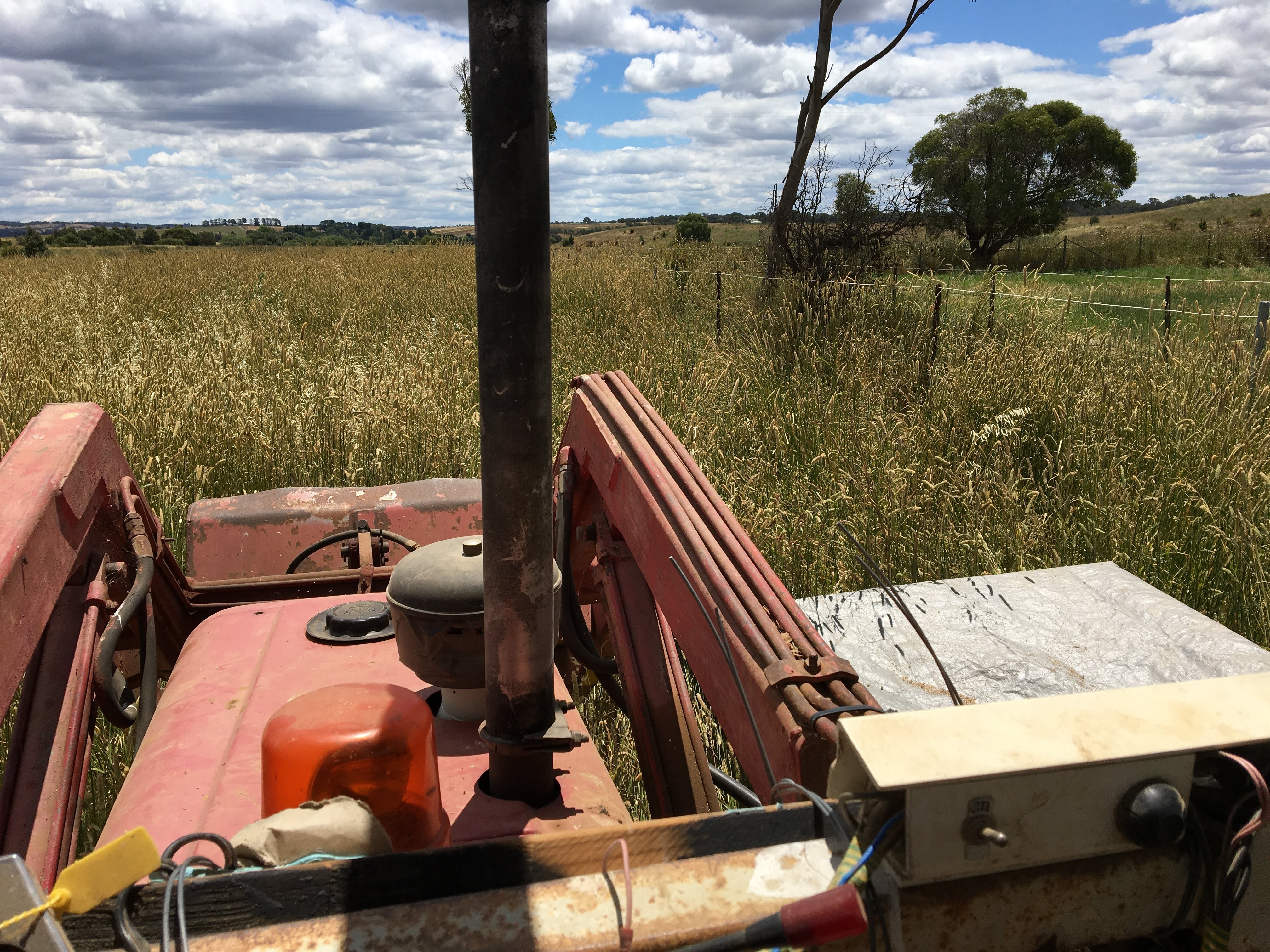
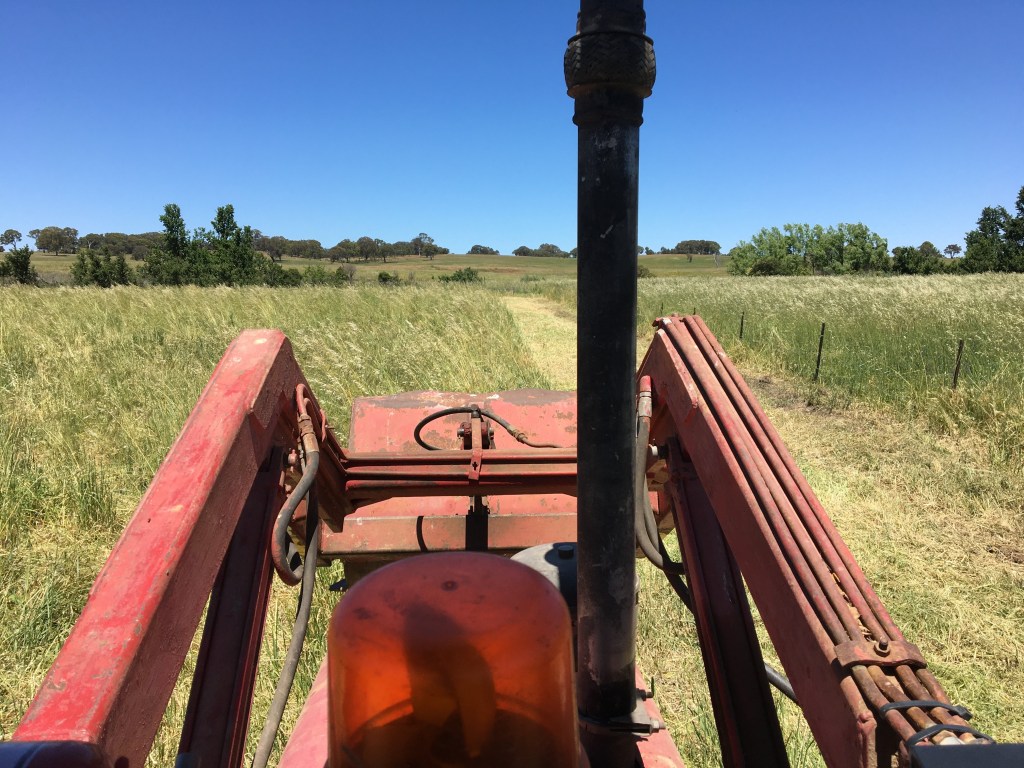
The good news is that harvesting the seed is relatively easy to do. Based on the advice of a local with years of experience, I rigged a couple of pieces of timber beside the tractor, with a tarpaulin loosely draped between them. By putting the front timber on the front end loader, I was able to adjust the height to below the seed heads. It was then a case of driving through the paddock and watching the seed accumulate in the tarpaulin.

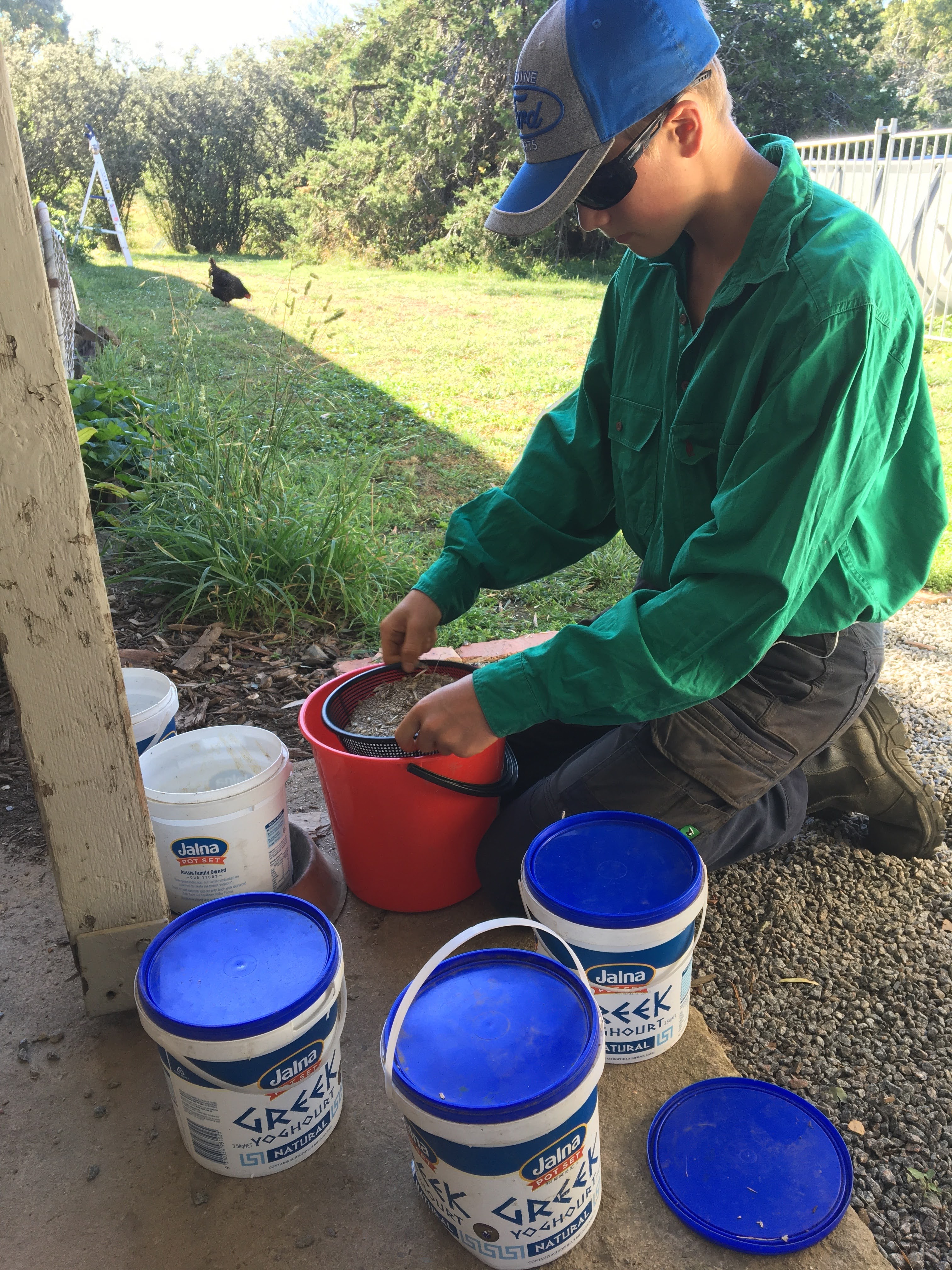
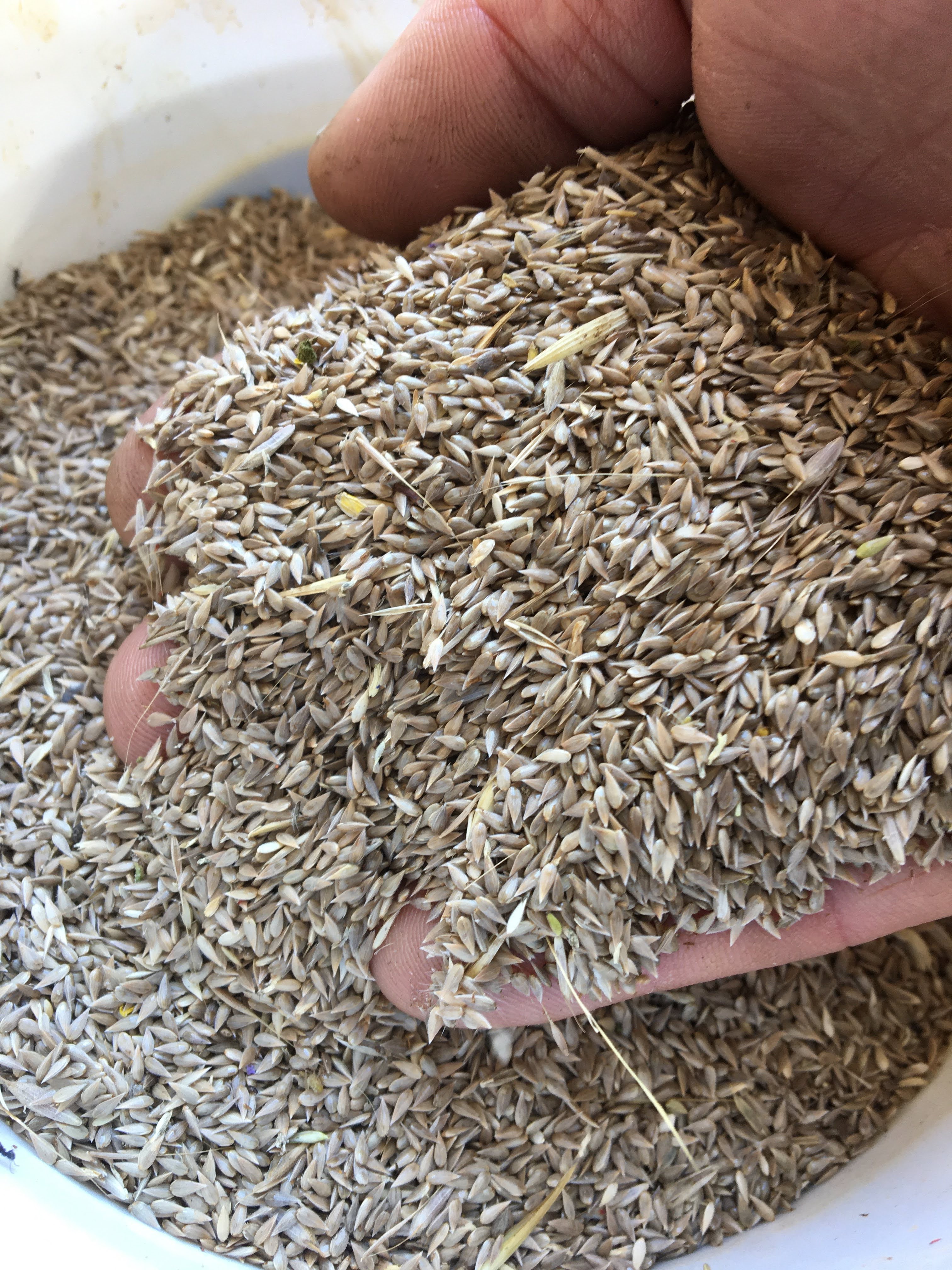
It didn’t take long to fill four small buckets. It took almost as long to sift out the spiders, caterpillars and larger wild oat seeds, but I had a willing assistant – until he caught sight of a large spider disappearing up his sleeve! It was tedious work, but the chickens enjoyed the free feed!

In autumn, I hope to spread the seed amongst areas of unproductive wire grass. I will also spread some seed in areas of erosion or scalding that we have been managing thus far by spreading green waste. I have to be careful to manage the pasture to make sure the phalaris doesn’t dominate, however at this stage, any ground-cover is better than none.

It was also a good exercise to see how easy phalaris seed is to harvest and for that it was a complete success. I always enjoy trying new techniques on the Rock Farm, with a special thanks to Jimmy of Bushfield Farm for his advice. More information on phalaris as a pasture species can be found at the excellent NSW DPI website here: https://www.dpi.nsw.gov.au/agriculture/pastures-and-rangelands/species-varieties/phalaris

Slashing Weeds (or is that tyres?) – Changing a Tractor Tyre

With the prodigious and welcome explosion of grass this season, We have been running machines that have done very little work in the past few years. And for old machines, especially old tractors, the maintenance requirements are a little higher. I have had to replace pins, stabilising chains on the three point linkage, and a tube in one of the front tyres. But I had been watching the right rear tyre of our old tractor with increasing dread.

In my a recent post, I explained how we had been using an old mulching or flail mower behind the tractor to knock down Paterson Curse and other weeds. We had put new tyres on the mower this year, which has allowed me to manage the height the mower works at more precisely and reduce the load on the top pin.

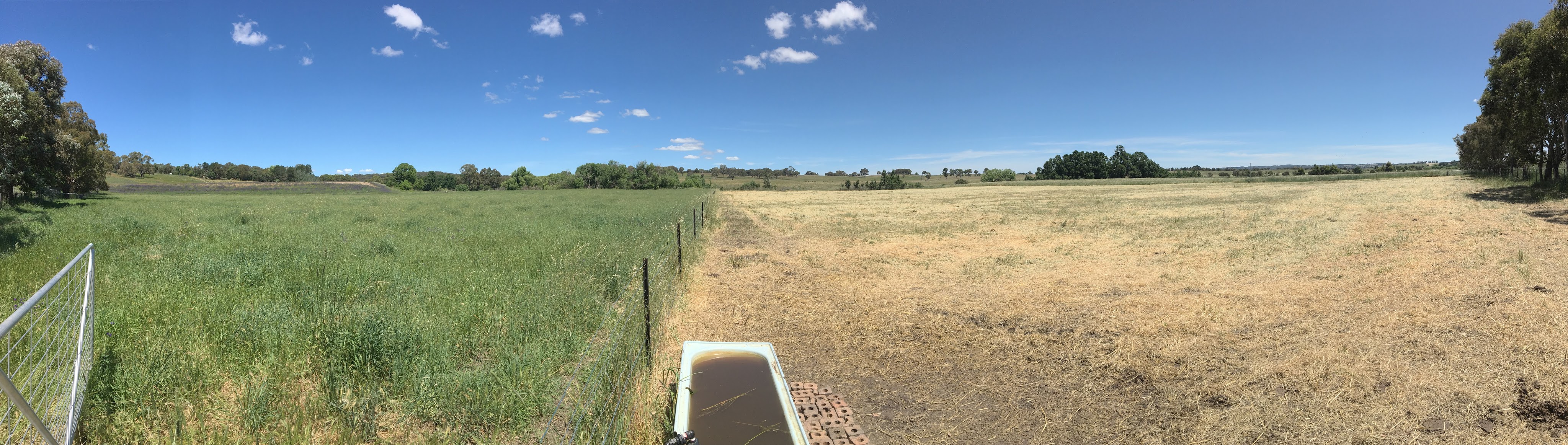
I have also been using the mulcher to create firebreaks around the house. The grass is still green at the base, but with the heat of the last few weeks, it has browned off and stopped growing. By slashing it now, I hope to maintain a zone of safety around our house and shed for this year’s fire season.

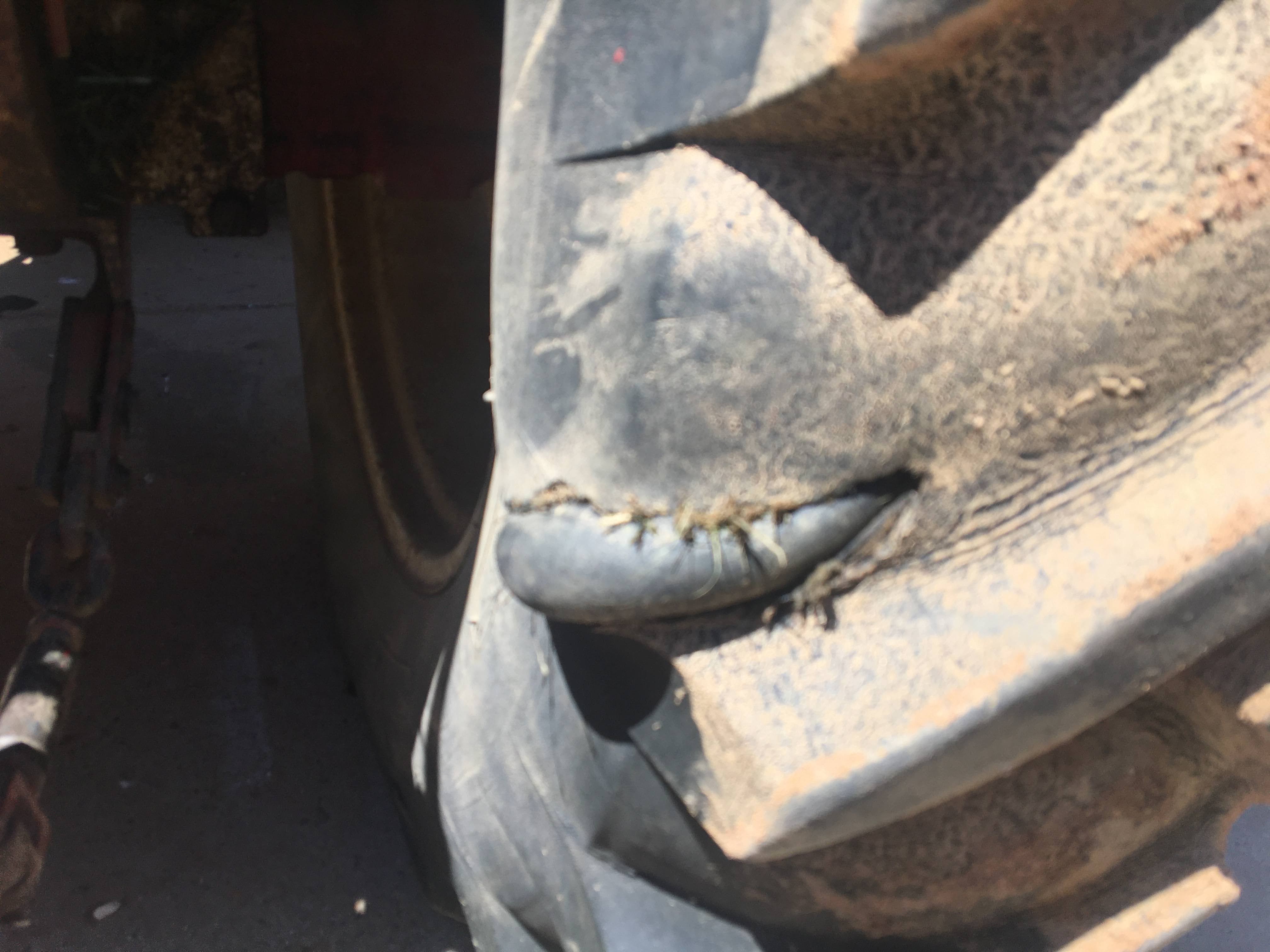
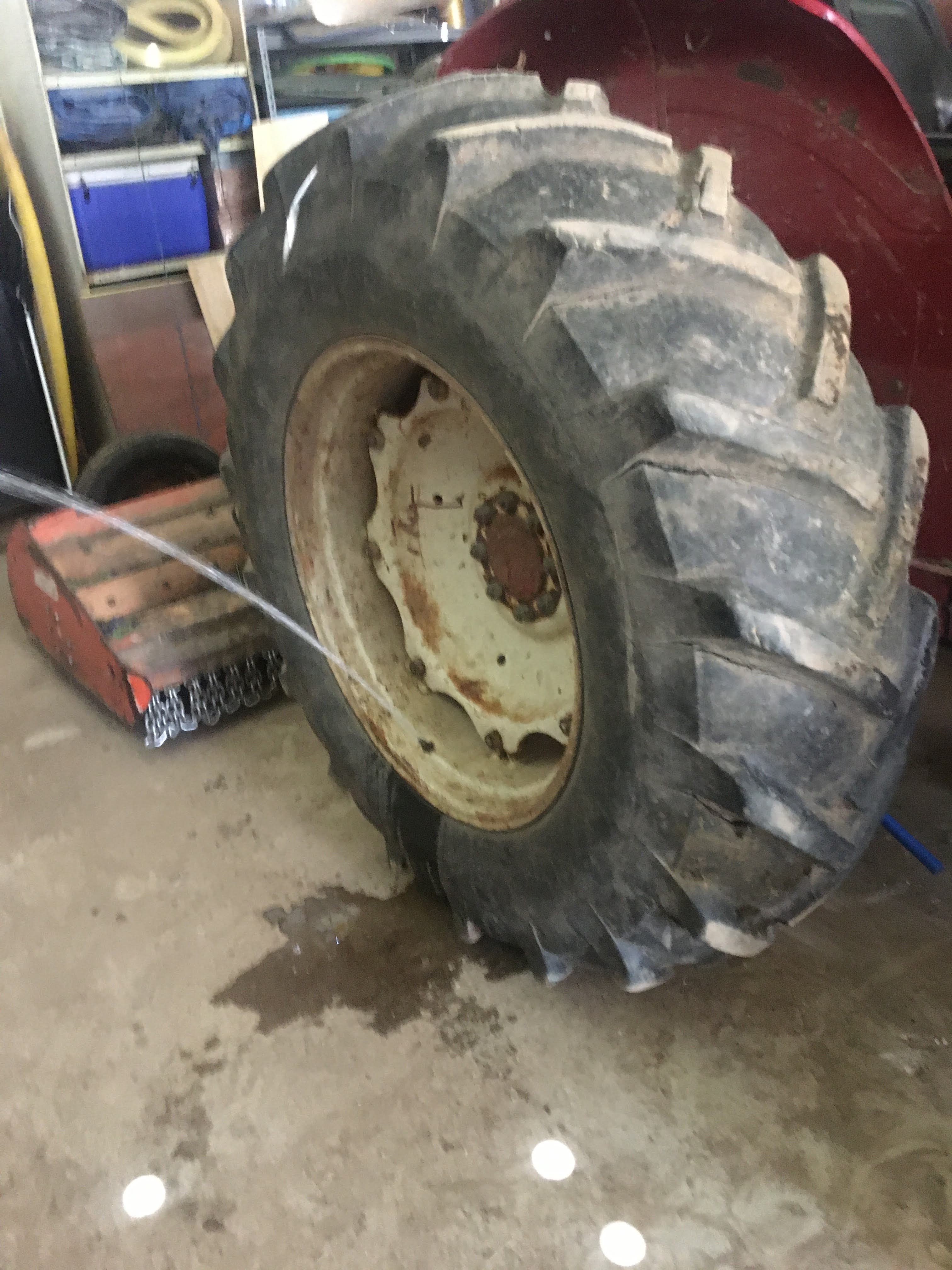
I had been watching the right rear tyre closely for a while. It was probably original fit to the tractor, making it over 45 years old, and was in much poorer condition than the left rear, an obviously much newer tyre. The tyre in question had several tears along the lugs, including one that had opened up and had the tube protruding.

I decided to err on the side of caution, and relocate the tractor to the shed to remove the wheel before it punctured. The main reason for this is I find it much easier to work in the shade and on a concrete floor at my convenience rather than in the paddock on a terrible slope at the worst possible time.

I was concerned the tyre would be too heavy for me to move. As feared, it was filled with ballast water. Before I undid the wheel nuts, I removed the valve stem, and admired the jet stream of water pouring out of the tyre onto the shelves in my shed. Once the water was mostly drained out of it, I found I was able to roll the tyre about easily enough. The boy’s trailer came into its own, with a handy tail ramp that I could roll the tyre up and into the trailer.

Even better, the local tyre shop was able to source a new tyre – the same brand and size as the one on the left hand side. They refilled the tube with air, and explained to me how to ballast it with water. On their advice, I parked the tractor with the valve at 10 o’clock, supported the axle with the jack and removed the valve stem. I then clamped a hose to the valve and started filling with water. Every minute or so I removed the hose, to allow the pressure to release. Once the tyre was full to the mark with water, I replaced the valve stem, rotated the tyre so the valve was at 12 o’clock and topped it up with air.

A huge thank you to the team at Douglas Tyre Service who had the tractor back in service, slashing weeds and clearing fire breaks two days later.

Winter paddock rotations

On the Rock Farm we are continuing our rotation of cattle to fresh pastures, using the regenerative principles of Allan Savory. The cattle manage a pretty good job of eating the grass and a lot of the leafy weeds however they aren’t so keen on the woody weeds or thistles. After I rotate them out of their paddock, it is often worth slashing the remaining weeds, and then following up with the hand chipper a few days later.

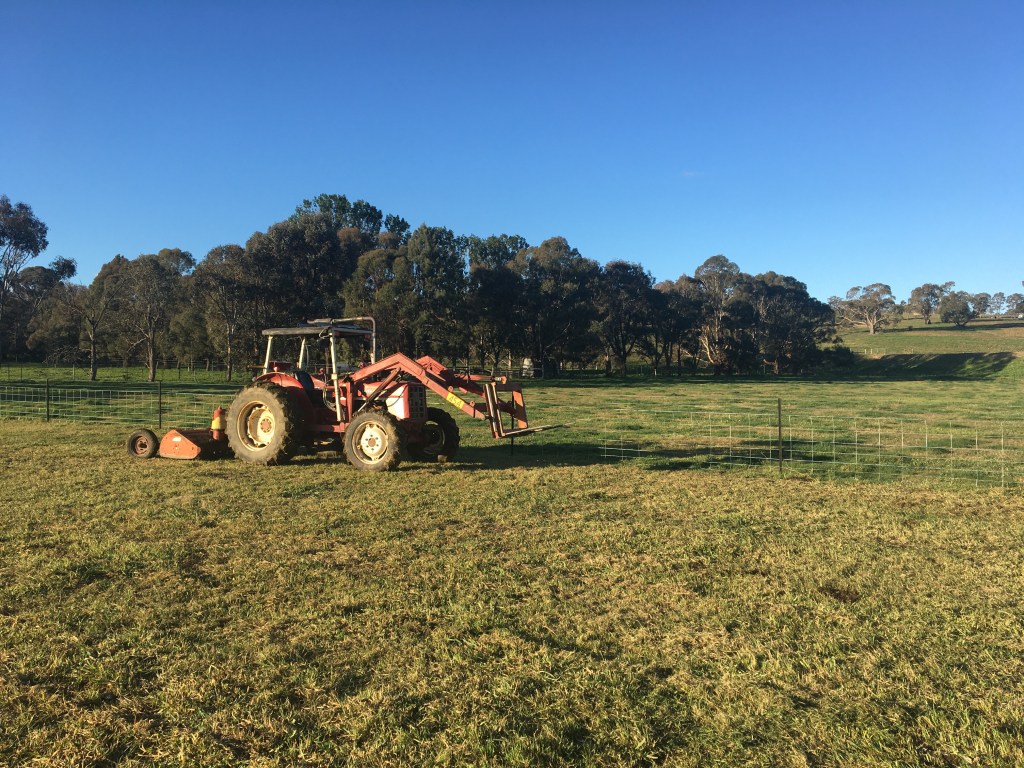
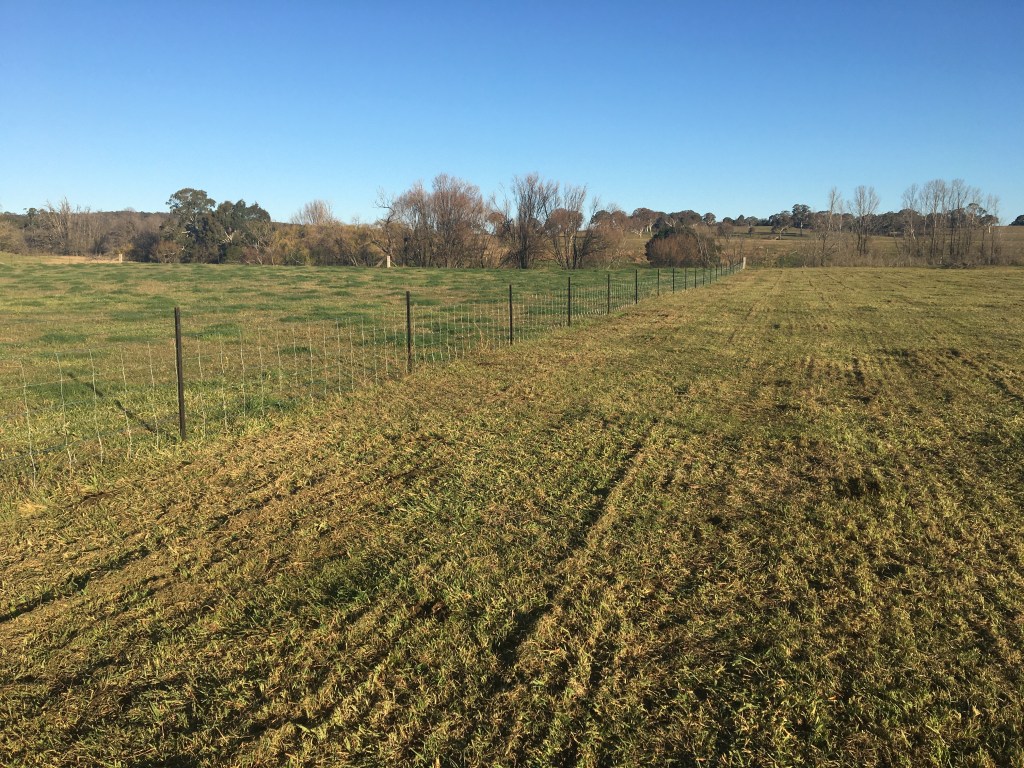
The old tractor and mulcher make short work of the weeds and it doesn’t take long for the paddock to look like a lawn. The mulcher also breaks up dry cowpats and leaves the clippings to mulch back into the soil. Using this process I hope to slowly increase soil microbial activity, and encourage productive grasses to out-compete weeds. This technique has been effective against thistles so far, and whilst there are still plenty of weeds in the paddock, I am loathe to use chemicals to control them.

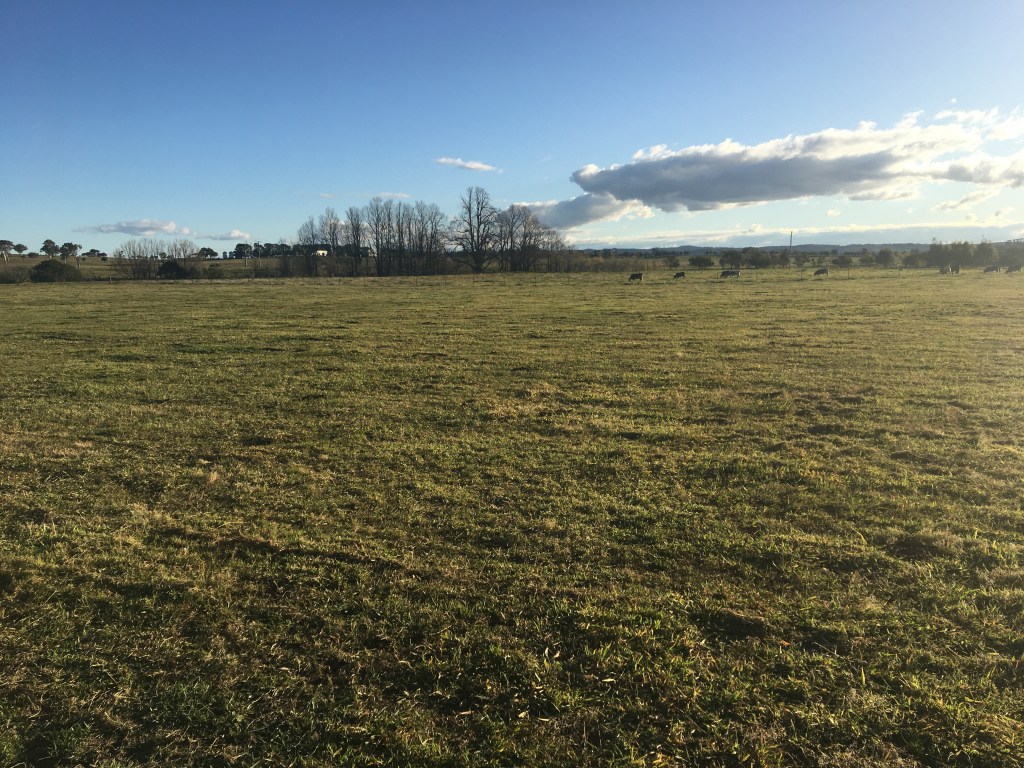
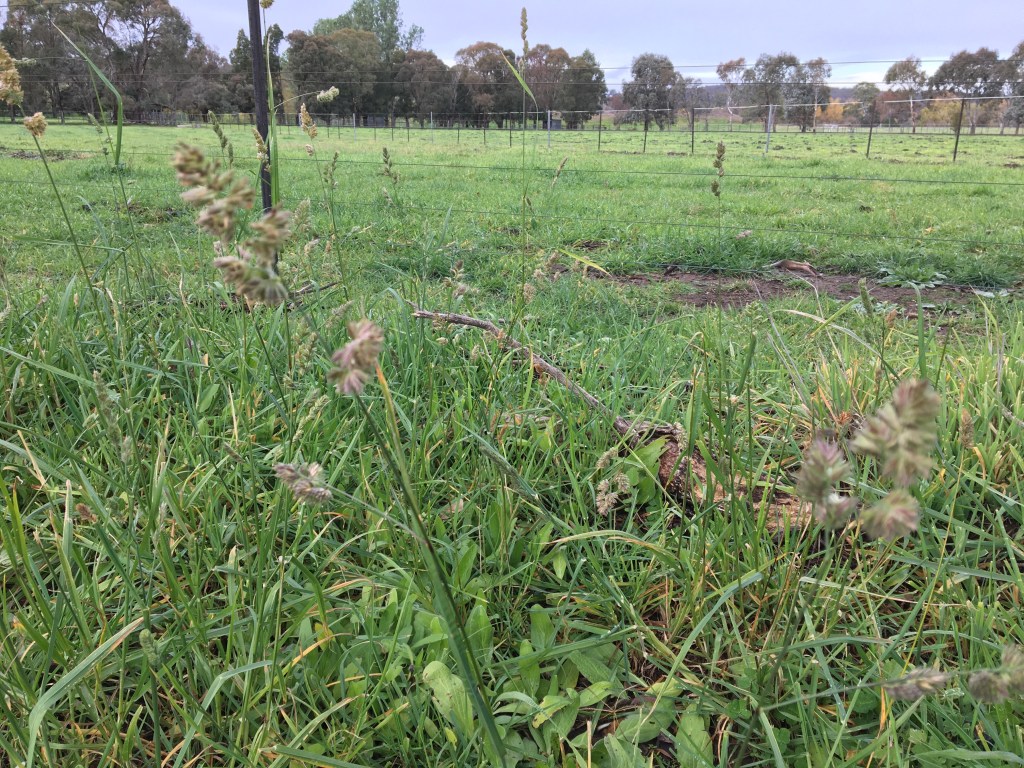
The shot above compares the freshly mulched paddock with the paddock the cattle were in previously, only a couple of weeks ago. The previously grazed paddock is recovering quickly, with healthy patches of barely grass, cocksfoot and clover growing despite the cool weather.

One of the great pleasures this rotation brings is the antics of the cows when you invite them to a new paddock. They carry on like newborn calves – despite their own ever increasing bellies! I love it.

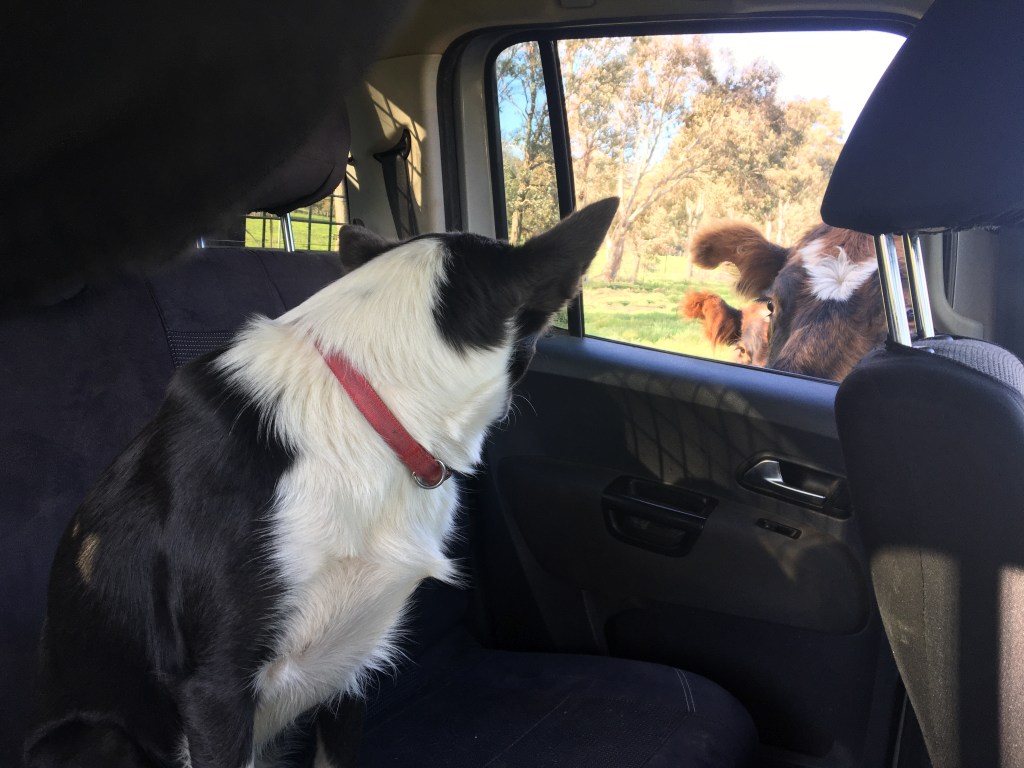
The girls settled quickly into their new paddock – however I needed to duck down and make a small repair to their water trough. The cows not only came over to check out my work, they also gave poor Sapphire the border collie cross a fright. She didn’t know what to do when some gentle (but very big) brown faces came snorting through the window. She placed herself very much in the middle of the seat, as far away from the open windows as she could and kept a very close eye on the inquisitive bovines.

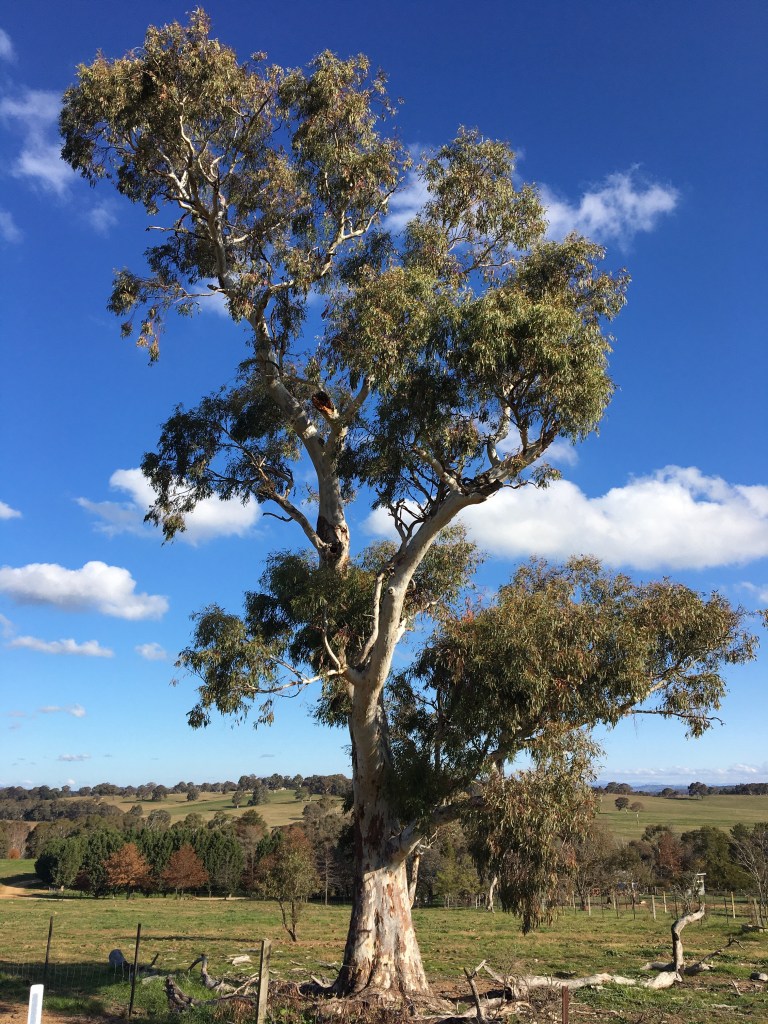
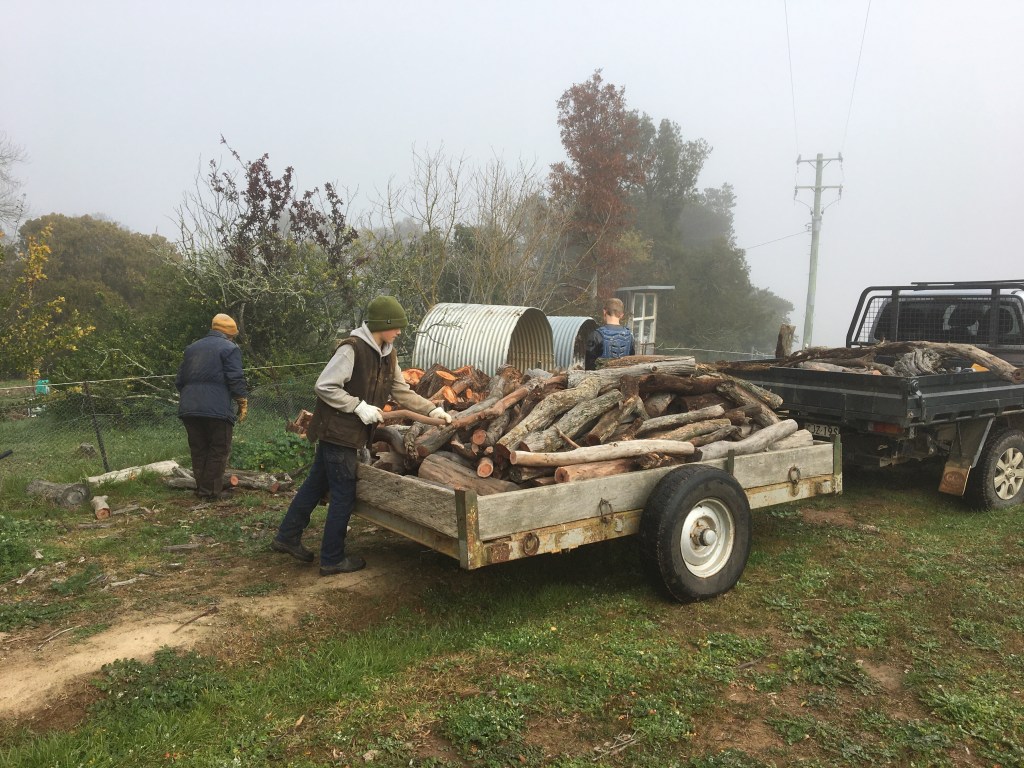
Winter is firewood harvest time. Our neighbours have a great stand of red-box regrowth that we had selectively thinned for firewood about 18 months ago. With that block being recently sold, we took the opportunity to collect the timber we had previously cut. The reason we selected young green branches and trees to harvest is that it encourages the remaining trees to grow large and straight. It ensures we aren’t removing habitat from the area, as most of the hollows required for nesting birds and reptiles are in the large old trees – like the brittle gum below. It also means the timber doesn’t need splitting either – a bonus. We have planted red-box trees on our property, and will be sure to harvest more seed from other red-box trees this year in order to re-establish a stand of these magnificent trees on one of our ridges.
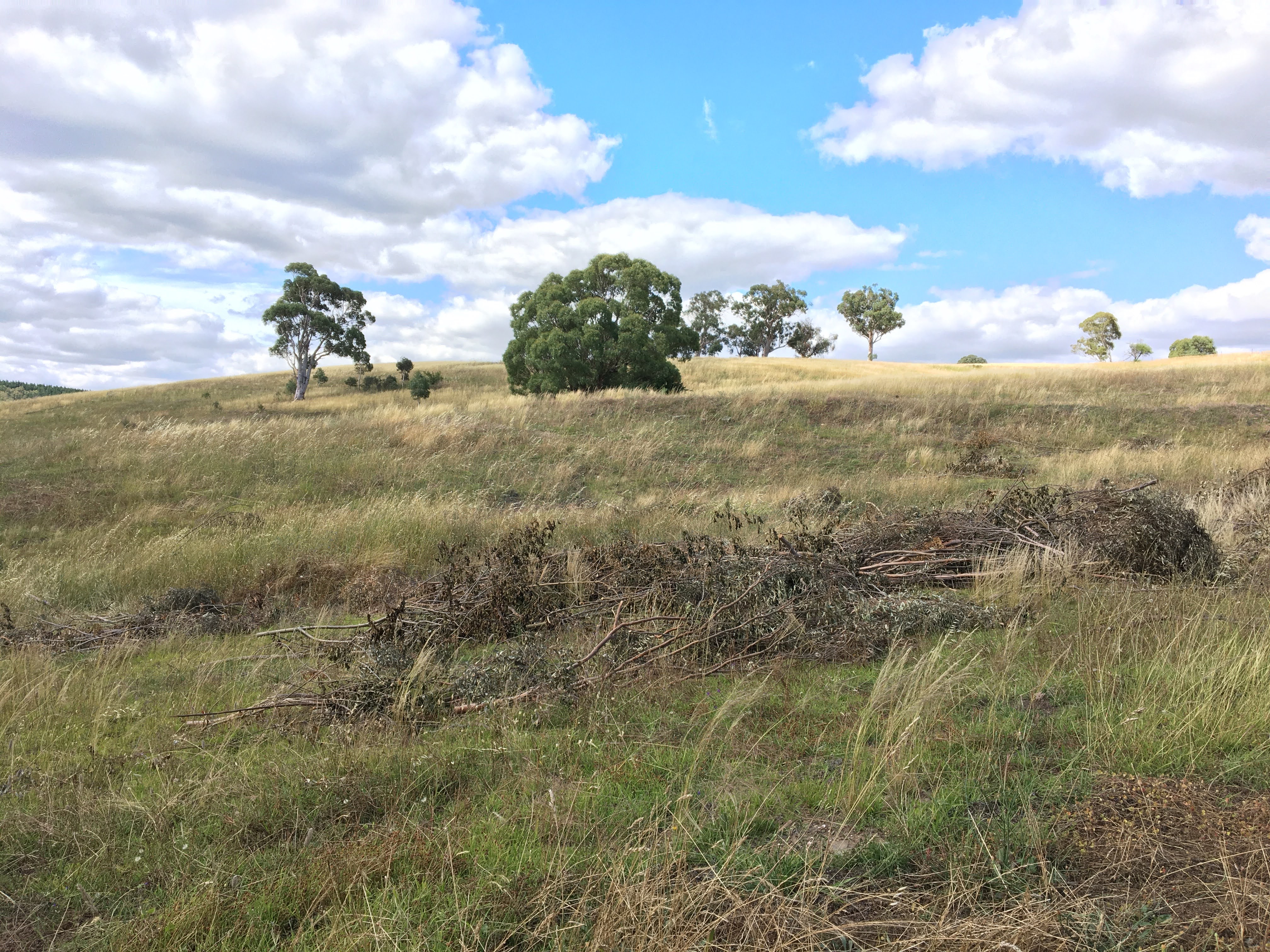
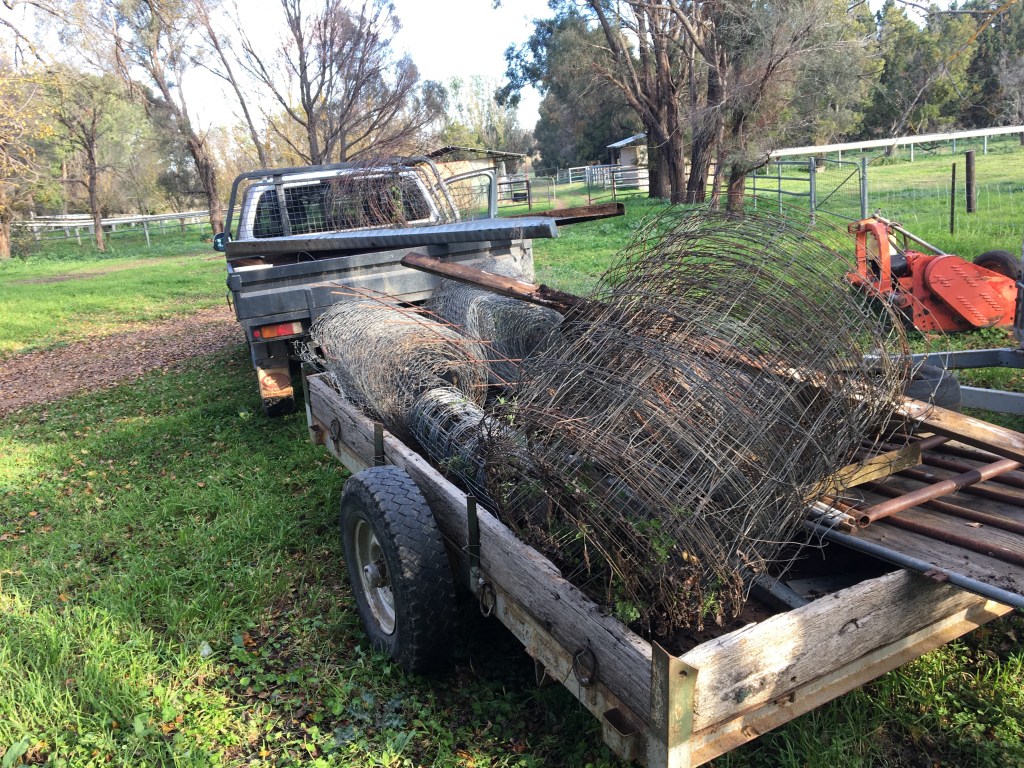
In the meantime we have been slowly working through some of the piles of wire and steel that have been scattered around the Rock Farm. Over the past couple of years we have slowly rounded up dozens of 44 gallon drums, old gates, star pickets, and tyres. They have all been taken to our ‘resource centre’, and some of the steel being recycled at our local tip.

At times it seems like a never ending task, but every now and then we look back and see progress. Whilst it might not add to our little farm’s overall productivity, it does make the farm safer, and improves its appearance. It fits with our philosophy of trying to leave the land in better condition than how we found it.

The only problem is that my wife sees in every pile of scrap an opportunity.. Getting her to help me clean up the farm usually creates more projects than I finish, as her imagination transforms the items into wind-breaks, chook sheds, garden trellises and so on. And I must admit, that isn’t a bad thing 🙂

Getting Winter Ready

As the cooler weather comes to the Rock Farm, I have been busy trying to get everything set up for winter. Whilst our country isn’t cold enough to bring the cattle into sheds or barns over winter, my main focus has been increasing our soil moisture and pasture health to ensure our cattle have plenty of feed.

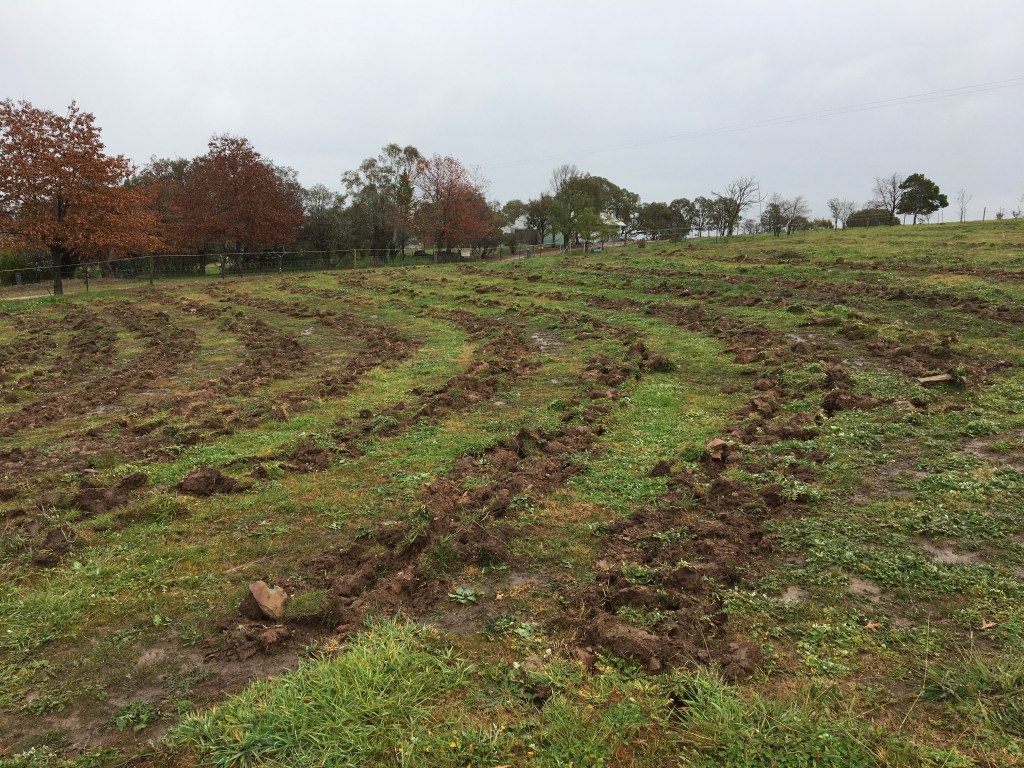
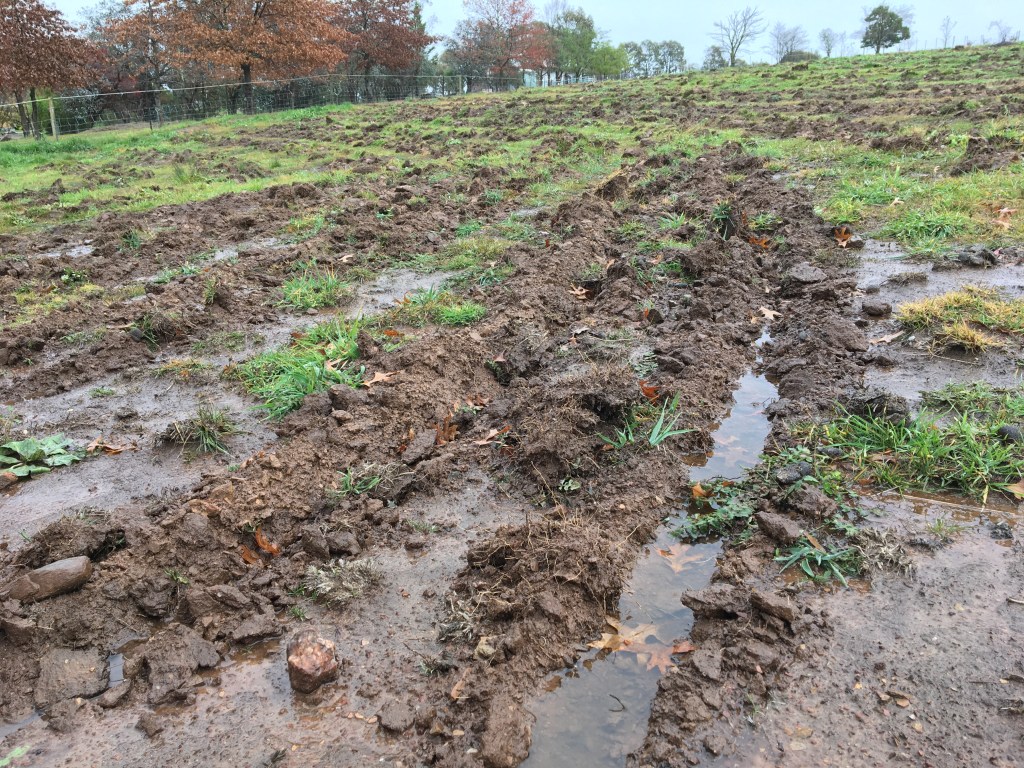
After trialing rip lines on different parts of the Rock Farm, I found we had most success ripping along the contours of our slopes. With a little rain forecast recently, I took the opportunity to put some more rip lines in a small paddock near the house. The forecast 10mm fell , and it was great to see the effectiveness of the rip lines in slowing the water down and allowing it to penetrate the soil. This was particularly evident in areas where the soil is hard, compact and especially hydrophobic. I hope this will encourage pasture to grow in these areas.

Another area we have been working on our pasture and soil health is on our alluvial flats. Regular readers may recall that we recently split our 5.6Ha flat paddock into three smaller paddocks (https://rockfarming.com/2020/04/21/autumn-school-holiday-project-new-paddocks-on-the-rock-farm/). The reason for this is that the cattle were selectively grazing their favourite grasses, and leaving the less palatable weeds. By making three smaller paddocks, we encourage them to heavily graze the paddock, weeds and all. A long period of rest allows the pasture to regenerate and this technique has been shown to improve the pasture quality.

Our experiment is still in its early stages, however the initial results are promising. After putting the cattle in the first of our paddocks for a couple of weeks, they had grazed the grass and most of the weeds. After moving the cattle out of the paddock, I ran the mulcher over the paddock to knock down remaining weed heads (hopefully before they had run to seed).

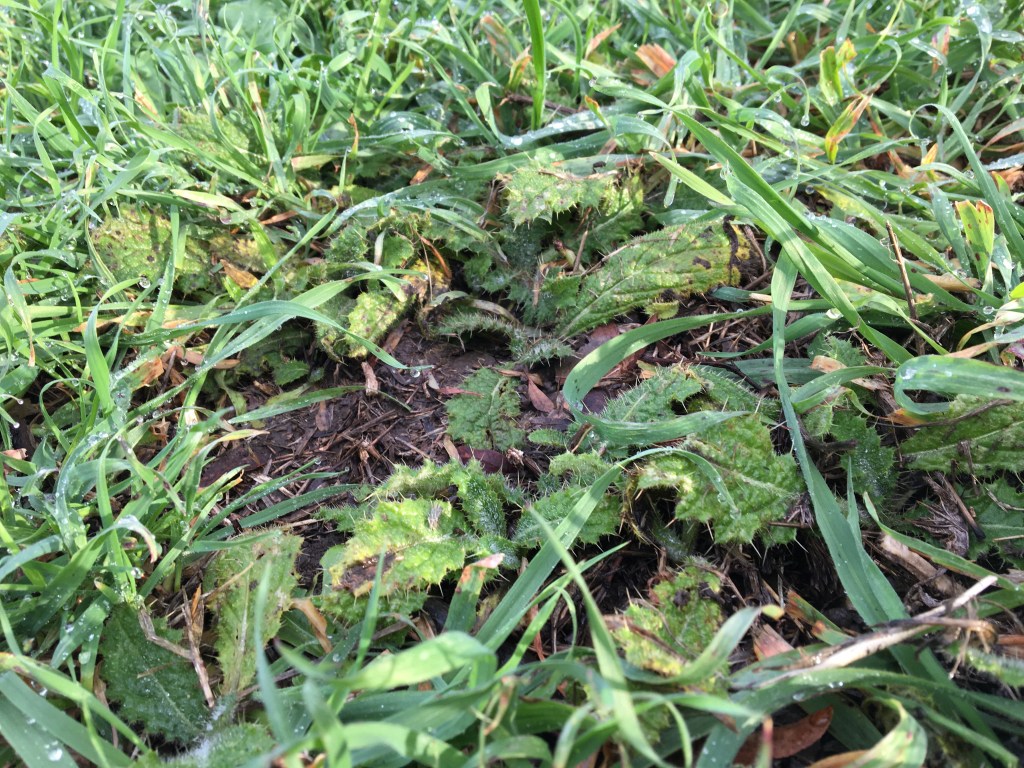
Three weeks later and the grass is growing. The photo above left shows an area that a few months ago was all tall thistles. The pasture in this area is now strong and competing with young thistle plants. I spent about half an hour with the chipper just working on the odd patches of young thistles, and hopefully will prevent them from growing to seed. The cattle have been moved to the next paddock and we hope to repeat the cycle in that paddock too.

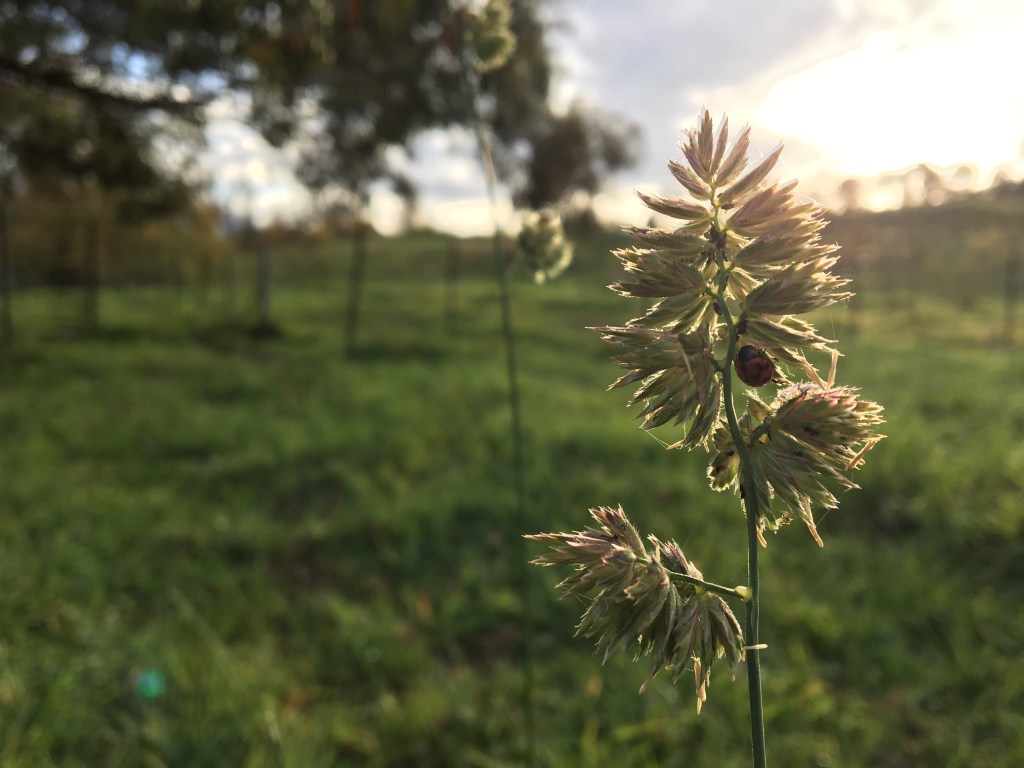
Meanwhile the rest of the farm is being rested. One of my greatest pleasures is taking walks around the farm and observing the recovery of the other pastures. The change in moisture has encouraged some species of grass, like the Cocksfoot above left, to seed. If you look closely, you will see a Ladybird making the most of the shelter. These pleasures make all the effort of living out here all worthwhile.

But it doesn’t take long for reality to bite.

I arranged for a load of pasture hay to be delivered. This hay is insurance for a dry winter or a poor spring. I also look at the hay as fertilizer. It brings nutrients onto the farm, that the cattle will process into the perfect soil food. The hay took a little longer to unload as the tractor seemed to struggle to lift and move the bales – whereas it has previously lifted bales that weigh twice as much…

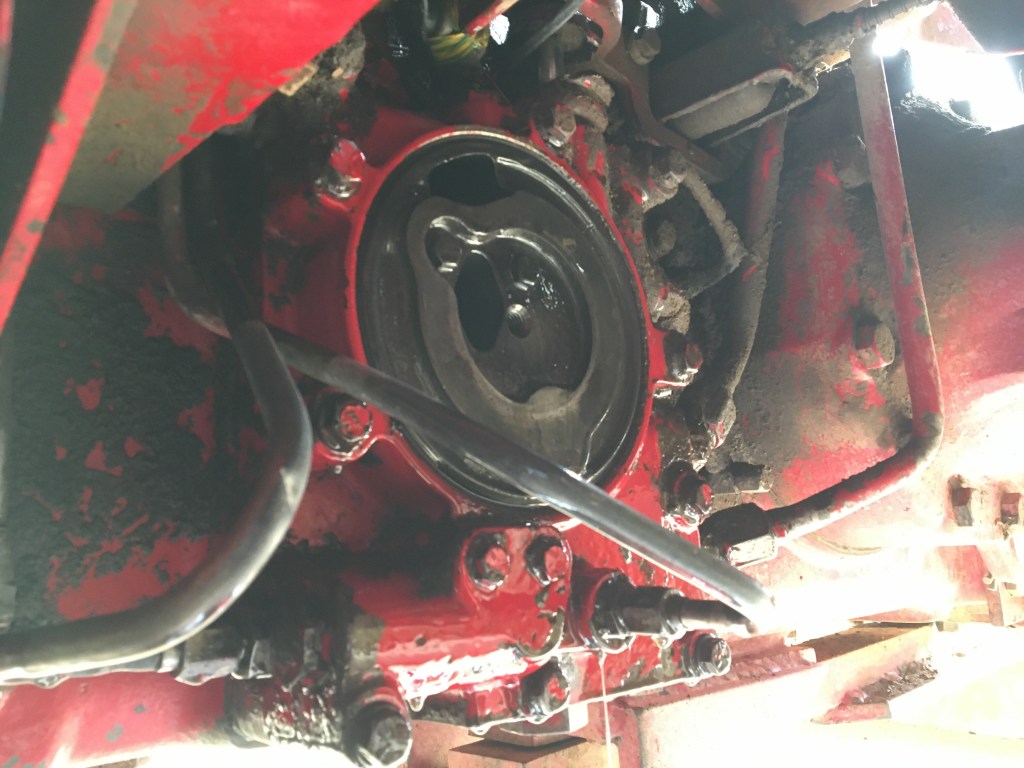
There is a constant requirement for maintenance and repair on any farm, and ours is no exception. Since mulching the first paddock’s weed, the tractor’s hydraulics had become problematic. The hydraulic pump was making horrible noises, and I feared that the diagnosis of a burnt out pump or bearing would be terminal for our old tractor.

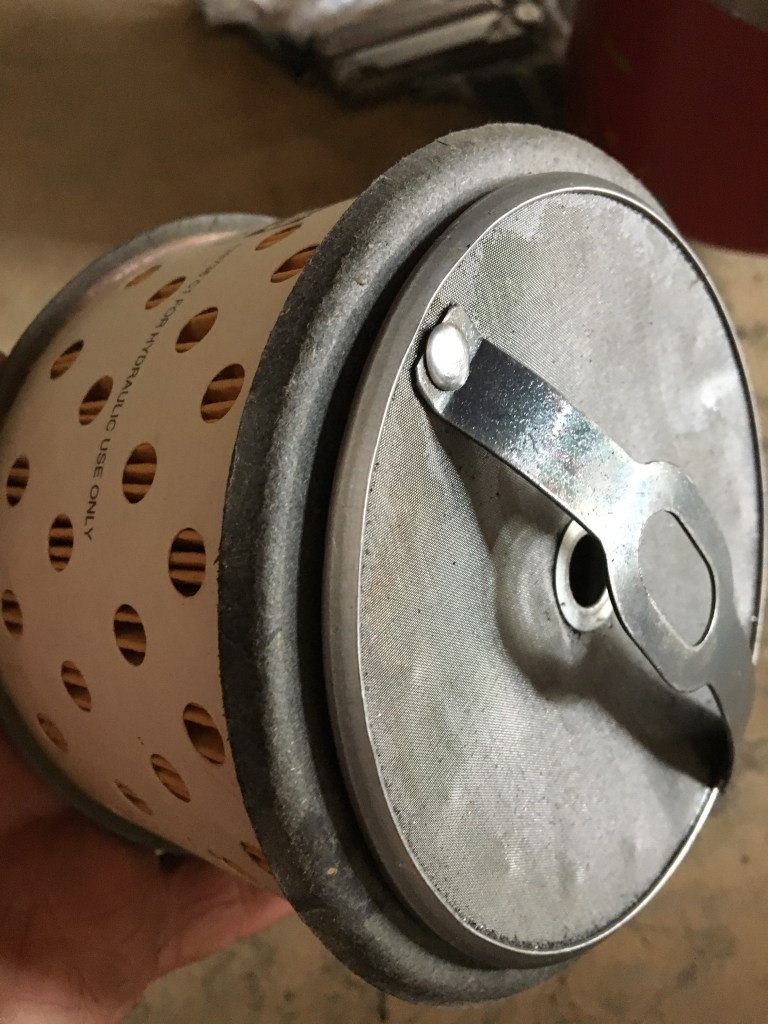
A bit of research online started to lead me towards thinking I might have a problem with the bypass valve. On our tractor this is located low on the chassis, with the hydraulic oil filter. Thankfully the former owner gave me the Owner’s Manual and a new filter when I purchased the tractor. The manual described how to replace the filter and more importantly how to clean the fine mesh of the bypass valve. The clean and new filter was an undoubted success with the tractor hydraulics performing like new again! Phew.

I should have done the maintenance before the load of hay arrived, but I was terrified I’d break something and have no means of unloading the hay. Hindsight is a wonderful thing.

So now I have a shed full of winter hay, a tractor that is fully operational and paddocks that seem to be becoming more productive. I love nothing more than my ambles around the paddocks. Life is good on the Rock Farm.

Best I turn my attention to that other winter activity – harvesting some firewood.

Planting Trees and Un-bogging Tractors

One of our aims on the Rock Farm is to re-rehabilitate the soil and create a parkland type landscape, similar to what was first described in the journals of the first European explorers.  We are doing this with a mixture of native and introduced deciduous species – and last week it was time to plant some natives.

img_6860

Our back paddock has a fantastic hill, with wide views along the Yass Valley.  We have often camped up here, and enjoyed many sunsets soaking up the atmosphere of this special place.  The only problem with the hill is it has four lonely trees, three Brittle Gum (eucalyptus mannifera) and one Red Box (eucalyptus polyanthemos).  The ground however is littered with huge logs – nearly all Red Box timber, cut for firewood and fence posts many years ago. It does make for a wonderful camp fire, however it is a limited supply, and serves to remind us of what trees once stood in this special spot.

Reading Bruce Pascoe’s book  (see my review here: Book Review: Dark Emu by Bruce Pascoe), I started thinking about how I could improve this part of the farm.  After our last camp, I took the tractor up to the hill, and started spreading the logs around the paddock.  I focused on placing the logs in such a way that they straddled rip lines I made back in March, and placed them to provide protection from the prevailing westerly winds.

Then it was time to plant seed.  The first batch of seeds I planted came from an ironbark (I think it is an eucalyptus sideroxylon) near our front gate.  The others were white cypress pine (callitris glaucophylla) that we collected from our visit to the Pilliga a few years ago.  The ironbark seeds were especially small.

img_6967

The seeds had been stored in paper bags for a few years and the gum-nuts had released their seed.  I cleared grass away from each site, and planted the seeds in the soil, along with some ash from our slow combustion fireplace.  I selected places nestled near the logs I had recently moved, with good sunshine and shelter from the western winds.  The last task was to mark each site with a bit of ribbon tied to a rock.

It helped that it was a glorious morning – even if the four legged helper was more interested in sniffing out rabbits than me digging holes!  As I wandered back to the house, I was able to collect some more gum-nuts from the ironbark, which I put straight into a paper bag.  I will also collect red box, black wattle and other seed in the coming weeks and attempt to re-introduce some of these trees back on this hill too.

A few days later we had an amusing series of incidents at the Rock Farm.  A poor supermarket delivery driver managed to not only get the wrong house, but he took our bottom driveway and managed to get his truck stuck.  A couple of sunny days had failed to dry out the steepest bit of this track that is in full shade all day.  After pulling him out with the tractor, I thought I would fill in the worst of the sections with some gravel that had previously washed down a culvert.  The gravel was nice and handy – but also a little close to a small dam.

The first few buckets went well.  I was me able to skim gravel from the top of the pile, with and only the front wheels dropping into the wet ground.  And then I got greedy and went back for one more bucket.  First one back wheel slipped into the goop, followed by the other and I was stuck.  Proper stuck.

Thankfully the family were all working or schooling from home, meaning help was nearby.  I knew their lunch break would be in about half an hour, so I worked like fury with a shovel trying to move as much gravel as I could under the front wheels (now lifted by the bucket).

I also moved our mighty Mitsubishi down and put it in position.  Being automatic, I figured it would be a little easier for a not-so-little helper to use to drag me out.  With the chain hooked up, the car in low range and the rear differential locked, it was time to call down the helpers (and advisers) to get me out.

Thankfully the recovery all went off without a hitch!  Best I get a load of gravel brought in to give us all weather access to our carport!  Just another job to add to the list 🙂

Autumn School Holiday Project – New Paddocks on the Rock Farm

I have been looking forward to the school holidays for a while now.  My last post was about some of the little jobs around the RockFarm that needed doing.  The school holidays have allowed us to tackle some of the bigger ones.

The first major project was to divide our large 5.5 hectare flat paddock into three smaller paddocks of around 1.8 hectares each.   It involved the construction of two new fences, the first of around 150 metres, and the second of around 200 metres.  For the first fence, I only had to install one new strainer post, but the other section required two new posts.  Good job the boys were at home with time on their hands – I have never found installing strainer posts or star pickets so easy!  The boys even stood up and clipped on the hinge joint in record time.  I think they enjoyed working outside – but are secretly looking forward to online lessons resuming so they can get a break from all the farm jobs.

The reason we have decided to split this paddock is two fold.  Firstly it allows us to intensively graze the smaller paddocks – thereby assisting in our weed management.  The cattle eat most of their favourite grass, and as they go, they nibble and trample the weeds.  We can then either chip or slash any remaining weeds once we move the cattle out onto fresh paddocks, hopefully improving the pasture as we go.

The second reason we have split the paddock is to allow us to install shelter belts along the new fence lines.  This will, in time, provide protection to the paddocks from the westerly winds.  The shelter belts are a future project and we intend to plant a variety of shrubs and trees in new stock proof tree guards.

New paddocks are useless without water.  Thus the next stage of the project was to install 150 metres of 1-1/4 inch poly pipe.  Because of the frosts we get in winter, and harsh sun in summer, we buried the pipe.  I don’t have a fancy pipe installer – but I do have a ripper on the tractor and two teenage sons.  The boys cleared the rip lines and I buried the pipe.  A job that would have taken me all day on my own was done in little over an hour.  I was thrilled we were able to get so much done in a morning.  We have a couple of old bathtubs we will install as water troughs once I get all the fittings sorted.

In the meantime we have still been chipping thistles – one little triangle paddock had a really bad patch that we have spent ages working on, with very little progress.  It was time to call out the big guns, so I fitted the mulcher to the back of the tractor for the first time in two years.  Thankfully with a bit of grease and WD-40 on the moving parts, it spun back to life and mashed and mulched the majority of the weeds.  If we can do this a few times and prevent the thistles from seeding, this paddock should turn around.

Thistles aren’t a new thing on the Rock Farm.  When we moved in to the Rock Farm, the adjoining 1.8 hectare paddock on the flat was full of thistles.  I slashed them a couple of times over the summer (https://rockfarming.com/2018/01/04/managing-thistles-on-the-new-farm/).  I am pleased to report that this autumn I was able to chip out the handful of remaining thistles in this paddock in around an hour.  The process works – and with a machine such as the mulcher, it is quick and easy to do – and nutrients remain in the paddock and feed the soil.

With the weeds taken care of (well in this patch at this moment), I had a few broken wires to fix around the place.  The neighbour’s beautiful helpers came down to offer advice and redistribute loose items in the back of the ute such as pairs of gloves and containers of wire clips.

A gorgeous distraction they were – but as far as helping, I’ll take my boys any day of the week!

Making Shade

Sometime before we bought the Rock Farm, the garage was filled in to make a sun-room off the house.  Whilst this has made the house a much nicer place to be, it has done nothing for the protection of our cars.  In winter the frost forms thickly on the windscreens, making early morning starts a misery, whilst in summer the searing heat makes the cars extremely uncomfortable until the air conditioning starts to win the battle.

When a friend offered me a second hand carport, late last year, already disassembled, I quickly accepted. We soon had the steel delivered,  unloaded and neatly stacked… where it then sat for nearly 11 months.

In the meantime life got in the road, and the carport sat and waited.  During the next few months we brainstormed where it would go, and we ended up moving its planned location several times until we settled on building it at the back of the house – off the rarely used formal front door.

Once the site was settled, we hired our water pipe finding friend, Jimmy, to bring his Kanga and dig the 450mm diameter foundations.  The Kanga made short work of the digging (The hint of rain) – and saved me a whole heap of time.  I had to make sure the footings were at the right height.  Being second hand, all the poles were different lengths, and their overall height set the pitch for the roof.  With fingers crossed, we poured in the concrete.  I was assisted by one helper, who worked out that being a concreter’s labourer was off his list of future careers…

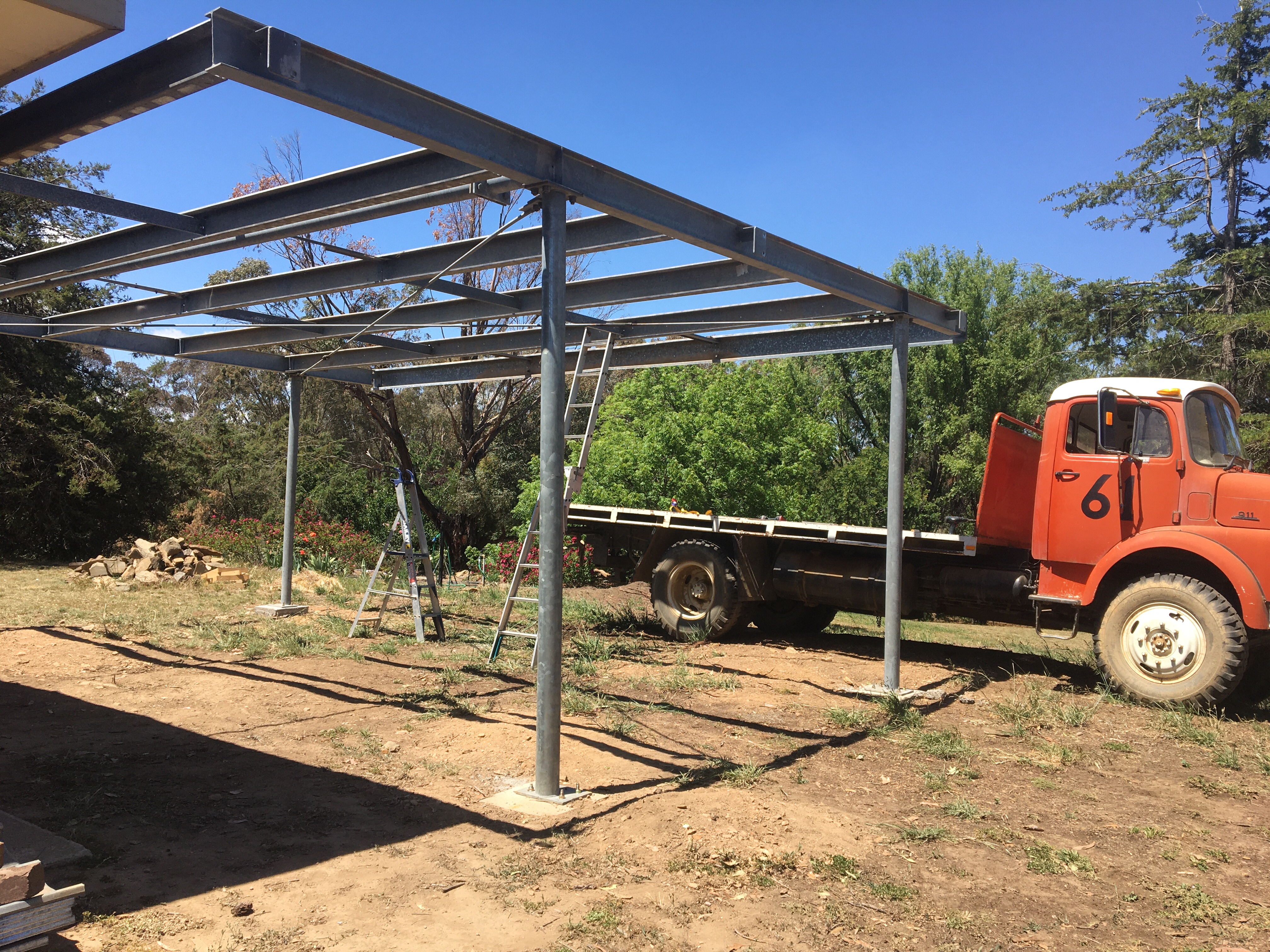
Once the concrete had gone off, it was time to drill the anchors for the posts.  I used the largest bolts I could find and chemically set them into the pads using a chemset kit.  The poles were easy to stand up, but I was really glad to have my old man to advise and the tractor to do the heavy lifting of the main steel beams.

Next Jo and I put the purlins up.  Much lighter than the main steel structure, we had to manoeuvre the purlins over the cross bracing.  Mytle, the old red truck not only made moving everything a lot easier than carrying it down from the shed, but it also doubled as a ladder!

We had to pick our timings to put the roofing iron on.  The winds that have caused terrible fires up north have steadily dried everything out around us.  As the winds were due to pick up from 9am on the day we planned to put the roof on, we got up really early and by 6am were laying down sheets.  And I am so glad we did, as the wind came in exactly as the forecast predicted.


The end result is a fantastic, re purposed three bay carport!  We are really pleased with the outcome.  We have a little more work to do, finishing off the trim and installing the gutters, but the shade on the recent days above 39 degrees has just made life so much more bearable.
A special thanks to Dave, whose generous offer created lots of discussions, deliberations and pacing around the house, but ultimately has made the Rock Farm a much nicer place to live.

Now we just need to build the driveway to the new carport!