The Little Helper’s Holiday Project (Part 2)

It has been a hot couple of weeks on the Rock Farm.  We have been busy watering trees, feeding cattle and trying to stay cool.  The bush-fires have been an ever present threat.  This instalment comes from the (not so) Little Fisherman. 

Due to the weather, we have not been able to work much on the float since the other Little Helper did his last blog (The Little Helper’s Holiday Project (Part 1)).  The last couple of days have been total fire bans with one of the days even being a catastrophic fire danger day.  But the next day brought some relief.  The temperature was set to be a maximum of 28 degrees Celsius, and the fire ban had been lifted!

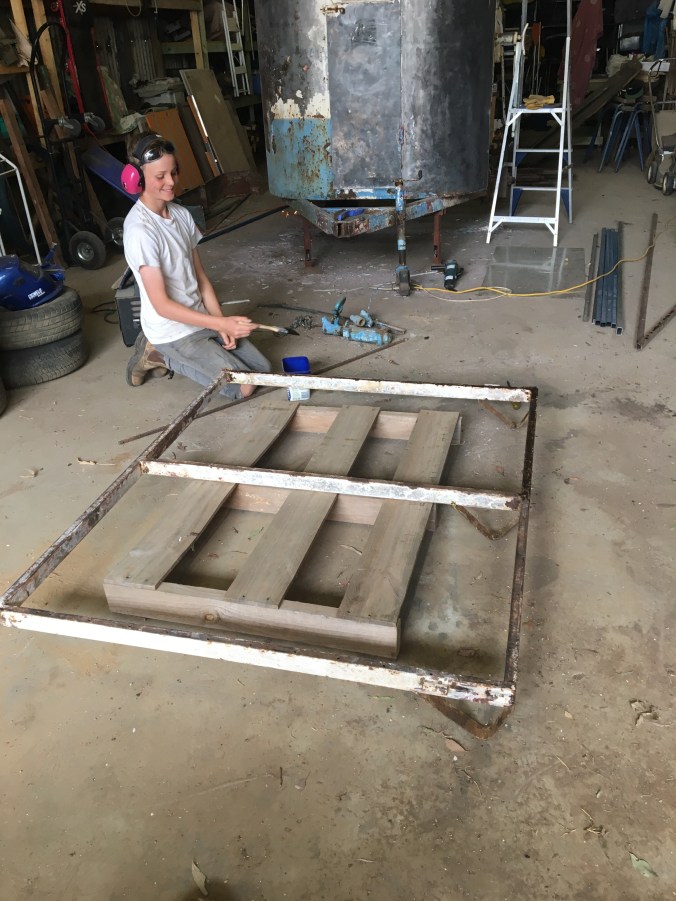
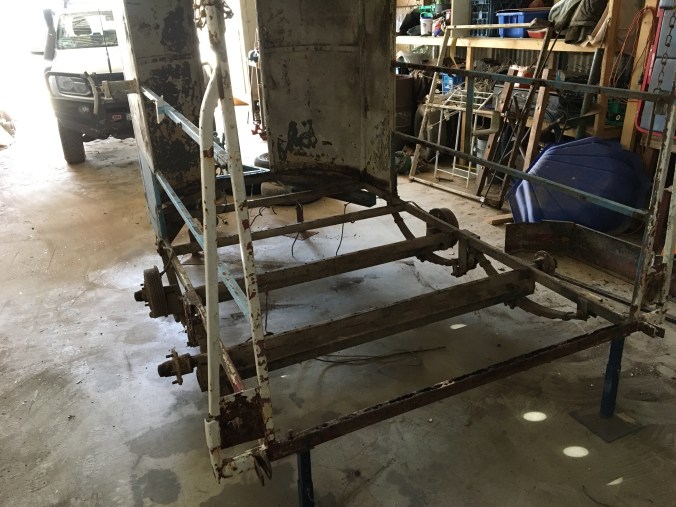
We decided to use the break in the weather to replace some of the rusted frames in the float.  Our replacement bar for one of the more rusted floor sections, was slightly to small and did not have the strength needed of it (Dad will take more care to purchase steel of the correct dimensions next time).  Despite this, we still managed to replace some of the other frames on the side of the float.

This turned out to also be the perfect time for me to hone my grinding skills…  Although it took a while, I managed to successfully remove one of the old bars and clean up the cuts, before cutting a new piece (A tad to long).  I also asked dad if I could weld the bar in place, but after watching him struggle to weld the thin steel we decided that I would do more harm than good.  Instead, I took my new-found grinding skills to finish making my mother’s Christmas present.

After the horizontal struts were in place, we realised that we needed to replace one of the vertical supports.  This meant that dad had to cut up some of his pre-existing welds to put the new piece in place.  Let’s just say, I don’t think that he was to happy with having to re-weld the weak steel.
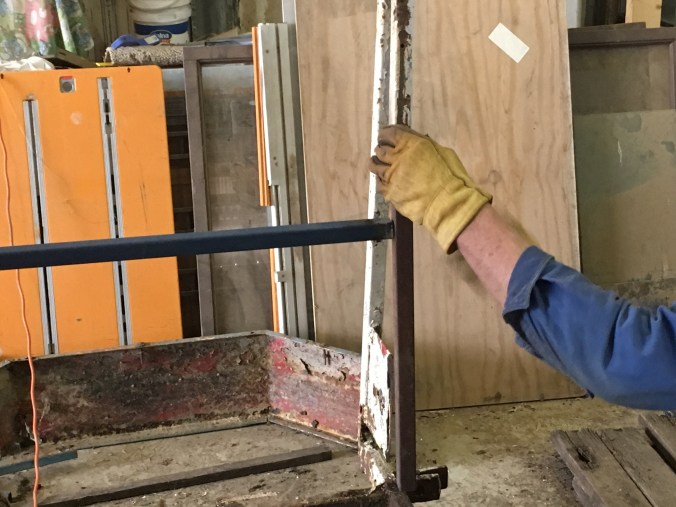
Meanwhile, the little helper was cleaning up the tailgate with a wire brush and a lot of elbow grease.  After he had finished polishing off the tailgate, he proceeded to rust-proof all the exposed metal he could lay eyes on with some ‘Rust Converter’ (phosphoric acid).
A couple of days later, the weather cooled down again.  We took this opportunity to remove the fibreglass section of the roof.  This proved somewhat difficult as many of the rivets where rusted in place.  We ended up drilling out the rivets.  After some effort we got the roof down, where it now lies, waiting to be sanded, patched and painted.

All in all, we have made many very important structural repairs and have begun looking at the roof.  Hopefully the next blog will be about reattaching the roof and possibly finishing our structural repairs.  We are looking forward to being able to start re-assembling the body of the horse float soon.
The Little Helper’s Holiday Project (Part 1)

For something different, the (not so) little helpers have a school holiday project that they will work on over summer.  Not only that, they have agreed to update their progress online.       They have a tight budget to work on, but we hope to turn this old float into some pocket money.  The main priority is to make the float completely solid and safe, not just to drive on the road, but also to carry precious horses in.  Turning a profit would also be nice – and should be achievable when you’re used to earning $10 per hour….  But enough from me – over to the Little Helper for his take on the holiday project.  


The school days are over, and on the Rock Farm the holidays have started. It’s great to lie back, throwing a ball for a very energetic dog, whilst enjoying a smoothie that would break the world record for the most sugar consumed at once. And it’s awesome the sleep in and not wake up at six o’clock to catch the school bus. Holidays are fantastic.

They are also good to look back on the year and see what we achieved, what happened, what went wrong, and what we can do next time.  Something that I noticed about this year, is that my brother and I achieved almost nothing together. Sure, there were the days where we made catapults, swords, and things to whack each other with, but there was nothing where we did something to learn new skills. (comment from Dad – I would disagree – I love the things they have done where the didn’t even realise they were learning!).

So, these holidays we asked Dad for help, and we started a new project – horse float restoration.

There has been an old horse float down near the stables. It hasn’t been undercover and it has just sat there, rotting itself apart. With the help of Dad, the ute, and the air compressor, we got the old float up to the shed for some pretty major repairs.

We started by taking the wheels off, and after years of rust, the nuts holding the wheels on weren’t feeling like moving. Even after I stood on the tyre lever trying to make the bolts spin, the nuts stayed attached. Only Dad could undo those bolts.

After the wheels were sent rolling, we started taking out the floor. This was more challenging than we had hoped because the bolts had rusted so much there was basically nothing left of them.  The old nuts had seized to the metal frame. So, we called in Dad with the grinder. After an hour of grinding, levering, and swearing (comment from Dad – speak for yourselves!), we pulled the hardwood beams from the frame.

This was all that we could achieve at the time, because the following few days were forecast to be above 40 degrees with total fire bans in place. Sadly, taking apart the horse float involves a lot of sparks.

But there was still one thing we could do: paint scraping.

To be honest, I am so over using the wire brush and chisel. After scraping every single piece of paint off, every side, every corner, we could finally put down the brush and smile. But that’s only the start. We still need to put the rust preventer on that Dad got us, and then paint, replace the rusted beams, put the floor back in, redo the wiring, replace the springs, check it all works, and make it look nice.

We have some more to do, but due to the heat we can’t progress at the moment. So for the time being, we can go back to our smoothies, and relax.


Making rain… of sorts, or how to build a cheap house sprinkler system

With the new (second hand) carport meeting our 80% completion rule, the strong hot dry winds brought another project into sharp focus.  With much of the state affected by catastrophic bush fires, and with no rain on the medium term forecast, we critically looked at our bush-fire plan, and decided to make a few changes.

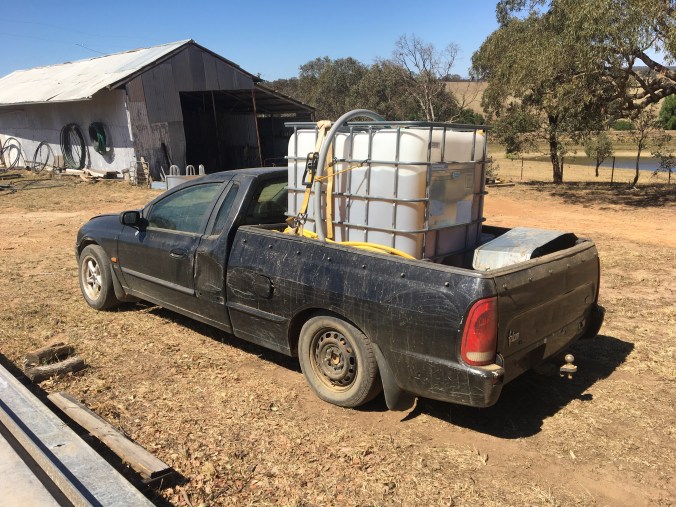
We upgraded the water pump on our mighty AU falcon ‘fire truck’.  We had previously stored the tank on a trailer, but the falcon struggled to tow the trailer having no weight over its back wheels.  A new larger capacity Honda fire pump with a 6 metre suction hose also allows us to fill the tank from a dam or the creek.  As a bonus, I can hold the hose in my right hand and water our new trees from the driver’s seat, making that job a lot easier too.

The falcon fire pump upgrade was an easy fix, however the next part of the project was much more complex.

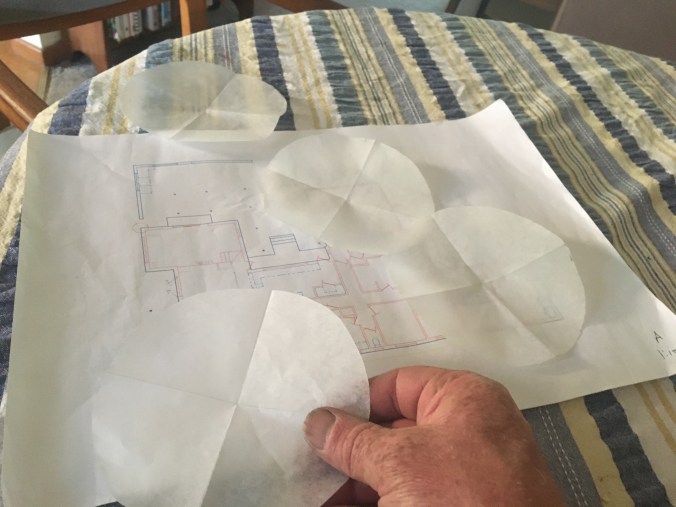
We wanted to install a sprinkler system on the roof of the house.  The first step was to come up with a plan.  Using our CAD (cardboard aided design) template, we came up with a plan for a series of sprinklers that would maximise coverage.  Noting that our worst fire weather comes from the west, we biased the sprinkler sites to the west of the house to allow for drift.

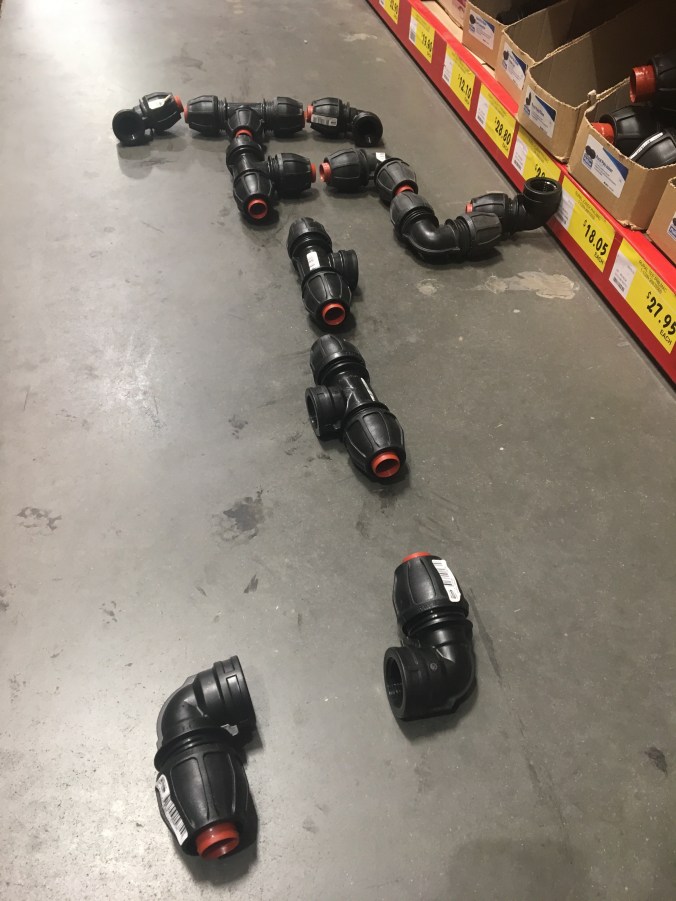
Initially I wanted to install a galvanised steel system, however with a roll of 1 inch rural pipe hanging on the shed wall, I decided to use resources to hand.  What I forgot to factor in was the cost of the compression fittings.  I spent a few minutes at Bunnings laying out the fittings in order to make sure I had all the bits I needed.

A couple of early mornings work, and I had the fittings in place and all the pipe laid out.  The 1 inch pipe was a bit difficult to work, but I soon had it tamed and looking reasonably neat.  The one advantage of a flat roof is that you can’t see much of my work from the ground!

The water comes from our house water tank, which uses a petrol pump to transfer water to our shed tanks, which supply the house.  I simply traced the pipe and installed a T piece and a couple of valves to allow water to be diverted onto the roof of the house when required.  I was a little nervous when I started up the pump for the first time, but I was more than happy with the results.

The pump is the same model Honda as is on the back of the mighty AU falcon.  The Honda small engines are unbelievably reliable, and easy to start.  The whole family are able to start the pumps – which make me far more comfortable this time of year.

One important element of our fire plan acknowledges that if there is a fire nearby, there is a very good chance I won’t be around to do much about it.  Lending a hand last weekend with our local brigade reminded me how many volunteers give thousands of hours protecting the property of strangers.  And how many volunteers also provide logistic support – it might have been late when we took a break in at Braidwood, but we left with full bellies.

Unfortunately I can’t make it rain – but what I can do is hopefully lessen the impact of one of the consequences of ongoing drought – bush-fire.

Making Shade

Sometime before we bought the Rock Farm, the garage was filled in to make a sun-room off the house.  Whilst this has made the house a much nicer place to be, it has done nothing for the protection of our cars.  In winter the frost forms thickly on the windscreens, making early morning starts a misery, whilst in summer the searing heat makes the cars extremely uncomfortable until the air conditioning starts to win the battle.

When a friend offered me a second hand carport, late last year, already disassembled, I quickly accepted. We soon had the steel delivered,  unloaded and neatly stacked… where it then sat for nearly 11 months.

In the meantime life got in the road, and the carport sat and waited.  During the next few months we brainstormed where it would go, and we ended up moving its planned location several times until we settled on building it at the back of the house – off the rarely used formal front door.

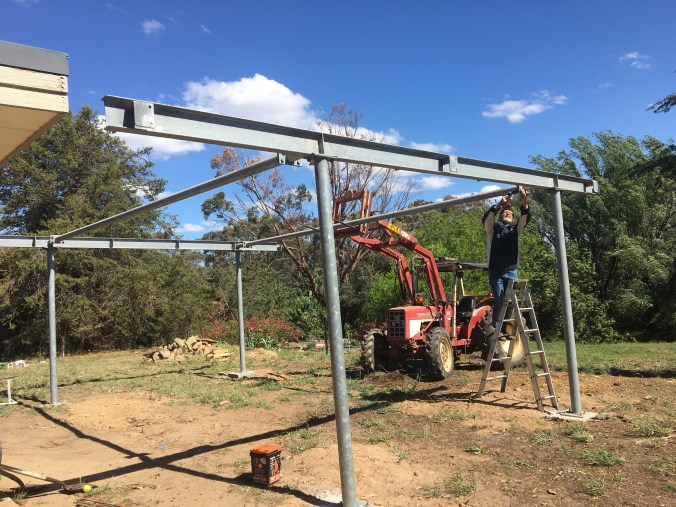
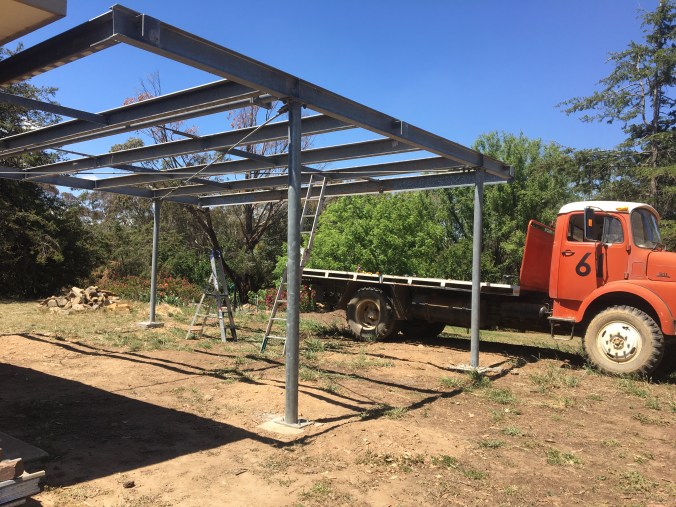
Once the site was settled, we hired our water pipe finding friend, Jimmy, to bring his Kanga and dig the 450mm diameter foundations.  The Kanga made short work of the digging (The hint of rain) – and saved me a whole heap of time.  I had to make sure the footings were at the right height.  Being second hand, all the poles were different lengths, and their overall height set the pitch for the roof.  With fingers crossed, we poured in the concrete.  I was assisted by one helper, who worked out that being a concreter’s labourer was off his list of future careers…

Once the concrete had gone off, it was time to drill the anchors for the posts.  I used the largest bolts I could find and chemically set them into the pads using a chemset kit.  The poles were easy to stand up, but I was really glad to have my old man to advise and the tractor to do the heavy lifting of the main steel beams.

Next Jo and I put the purlins up.  Much lighter than the main steel structure, we had to manoeuvre the purlins over the cross bracing.  Mytle, the old red truck not only made moving everything a lot easier than carrying it down from the shed, but it also doubled as a ladder!

We had to pick our timings to put the roofing iron on.  The winds that have caused terrible fires up north have steadily dried everything out around us.  As the winds were due to pick up from 9am on the day we planned to put the roof on, we got up really early and by 6am were laying down sheets.  And I am so glad we did, as the wind came in exactly as the forecast predicted.

The end result is a fantastic, re purposed three bay carport!  We are really pleased with the outcome.  We have a little more work to do, finishing off the trim and installing the gutters, but the shade on the recent days above 39 degrees has just made life so much more bearable.

A special thanks to Dave, whose generous offer created lots of discussions, deliberations and pacing around the house, but ultimately has made the Rock Farm a much nicer place to live.

Now we just need to build the driveway to the new carport!

When it feels like Summer

The chance of decent rainfall before the grass becomes dormant over summer has all but passed on the Rock Farm.  Dry westerly winds have persistently blowed over the past fortnight, removing any residual moisture from the ground.  These same winds have fanned bush-fires that are causing so much devastation in the north of NSW. As I write, over one million hectares of NSW has been burnt – and we aren’t even half way through November yet.  These fires are unprecedented in their intensity this early in the bush fire season.  But they were not un-predicted.  The biggest question is can we shape our environment to protect us from future fire events like this.

We are starting to understand that the Australian landscape has been carefully managed for tens of thousands of years by the Aboriginal people.  Small low intensity ‘cool’ fires created a woodland landscape that was recorded in journals and art of the early European explorers. These woodlands prevented the large scale devastation wreaked by huge fire storms.  There is plenty of evidence to suggest that our bushland National Parks have more trees now than at any time since human habitation of Australia, some 30000 years or more ago.

Our aim is to create a woodland like setting on the Rock Farm, working with trees that are already established here, and planting new trees.  We want to create a sustainable agricultural enterprise that creates an income and a food source whilst improving the health of the soil.   This doesn’t mean returning the landscape to native bush-land, or what it looked like before European settlement, but something we can use towards the future.

Our plan on the Rock Farm, as most of you know, begins with trees.

With 1.3% of the state not in drought or drought affected (https://edis.dpi.nsw.gov.au/), it is a hard time to get trees established.  Our ground has very little subsoil moisture and our stock are getting hungry.  We had a few oak seedlings (quercus lobata and dentata) still in pots, we knew we had to get them in the ground if we are to have any success at all with them.

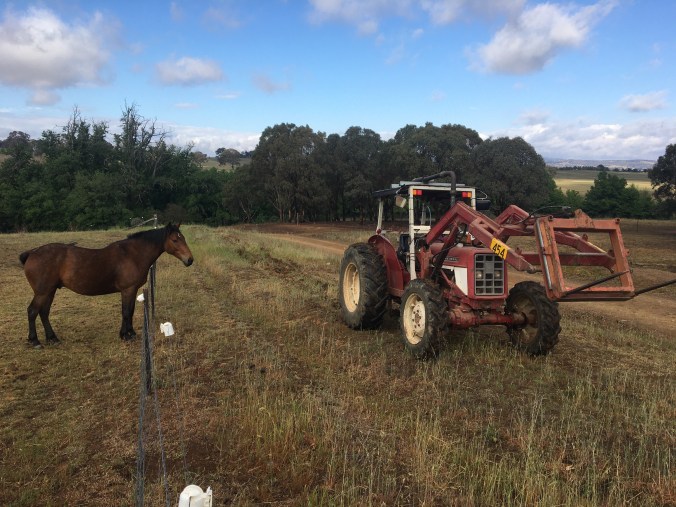
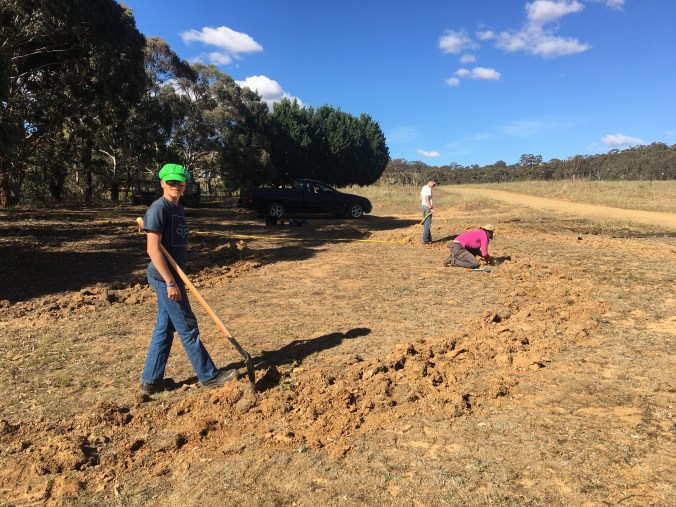
The tractor is an extremely useful tool to prepare the soil for tree planing.  I ripped a line beside the driveway to create an avenue of oaks.  Unfortunately I worked out too late that the tractor requires a little less air and a little more diesel in the fuel tank.  After refilling the tank, I couldn’t get the tractor to start.  After much troubleshooting following the fuel lines, I determined that I had a blockage in the line from the tank itself.  45 years of crud and muck had blocked the tank outlet.  A few good pumps from a bike pump back up the line seemed to clear the blockage, and after bleeding the lines again, we were back in business. Monty the horse found the whole exercise most entertaining!

On the other side of the drive we planted a stack of native shrubs.  Native Callistemon, leptospermum and melaleuca were planted to provide flowing shrub food source for bees.  This soil looked particularly bare and windswept.  We hope the shrubs are able to get established.

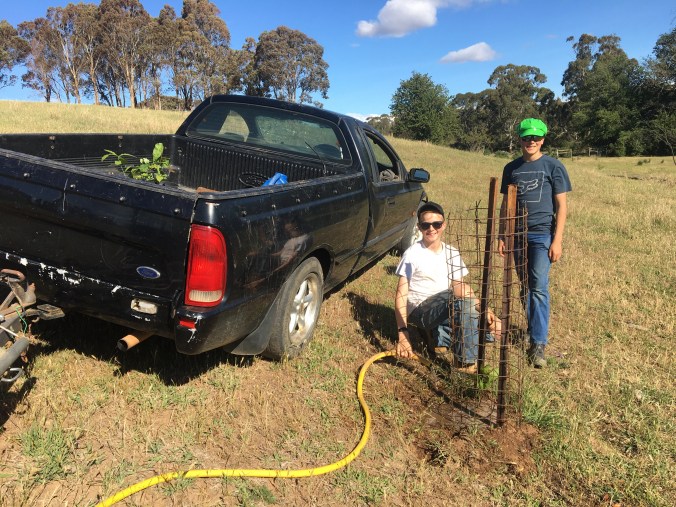
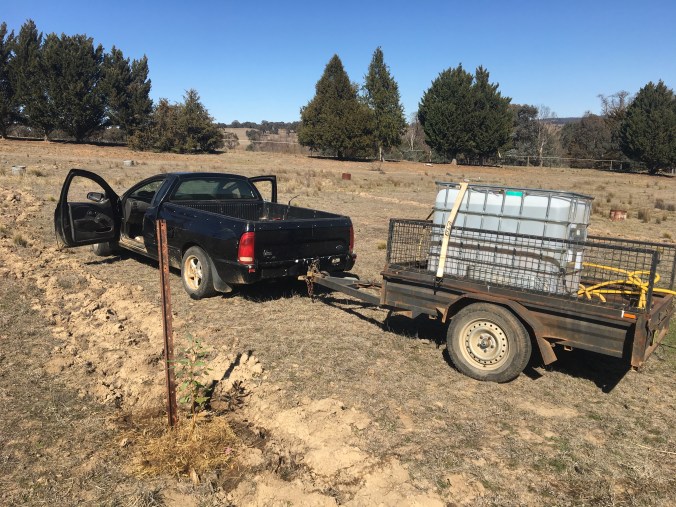
We planted a couple of the remaining oaks in the paddocks.  It was a wonderful way to spend the afternoon with the family.  Although you don’t want to be the one who forgets his hat… If you do, you get to wear the bright green Mario Cart Hat!  We will water the plants every fortnight over summer with the IBC tank towed behind the go-anywhere-a-4wd-can falcon.

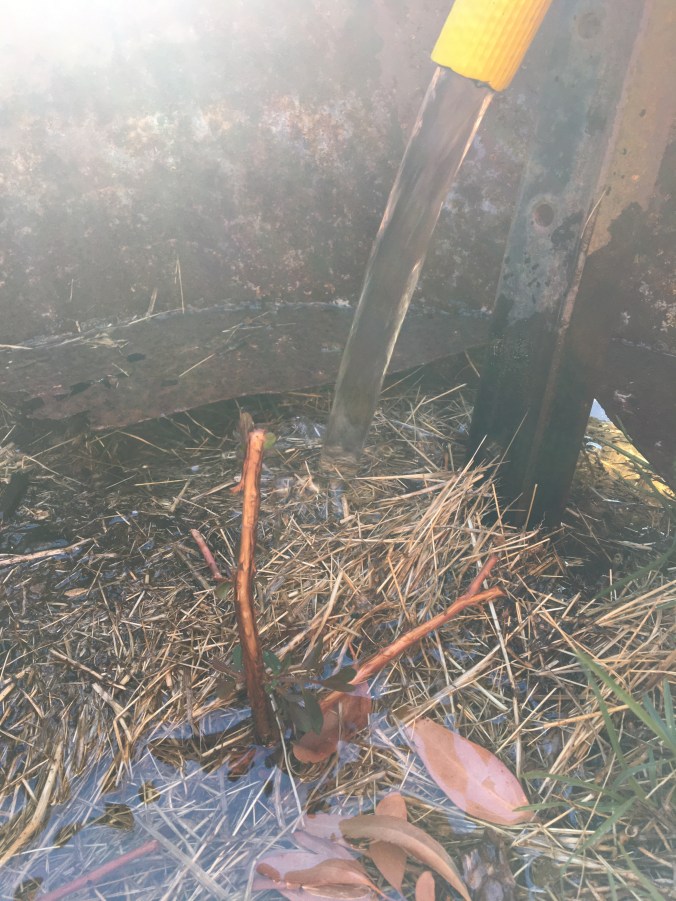
With the water tank on and helpers available, we also gave a drink to the other trees we have planted around the place.  Last time (Update on trees and rip lines.) you may recall I was cursing hares, who had snapped off our yellow box (eucalyptus melliodora) seedlings.  I had placed some tree guards around the snapped off bases and gave them a water.  I was extremely pleased to see that new shoots were coming from the base,

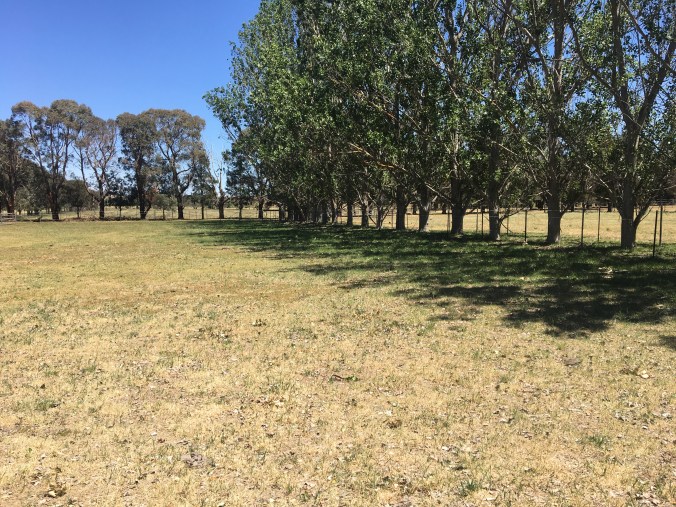
And why bother planting trees, especially during one of the most widespread droughts ever recorded?  Well, a walk through our small paddocks shows the results of the vision of the former owners.  In the shade from large deciduous trees is grass.  Green growing grass…. can’t get any more reason than that.


Update on trees and rip lines.

Walking around the Rock Farm this week, I have been struck by how similar to January the weather is.  Dry grass crackles underfoot, and in many areas the earth is dry and hard.  Hot dry days have us monitoring the Fires Near Me app, with a guard zone set 50km around the property.  We have been watering newly planted fruit trees in the garden in a desperate struggle to keep them alive, but I also knew I needed to check on some of the trees we had planted in the paddock.

We planted some Hakea and Yellow Box trees along some rip lines in early August.  The rip lines hold some extra moisture and we thought would be a good place to pant the trees.

After planting the seedlings, we watered them a few times to get them going.  It was good pre-season maintenance for our portable water tank, even if it looked a bit like a moonscape at the time.  A small shower of rain a couple of weeks ago had turned the grass in the rip lines green, and encouraged the weeds to grow.  Sadly it wasn’t all good news.

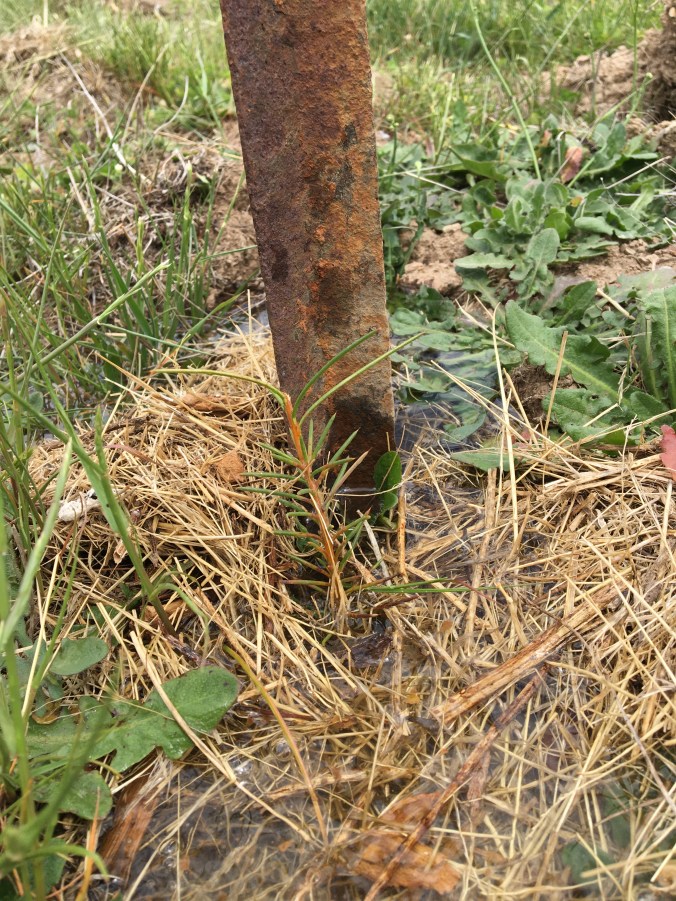
With occasional watering, the Hakea or Needle bush have responded well.  They are optimised for Australian conditions, and are naturally unappealing to grazing stock such as cattle or kangaroos.  When they grow, they provide habitat for many of the native birds that have shifted into living in the weed Sweet Briar.  Once we get these Hakea established, we will re-double our efforts to remove the Sweet Briar.

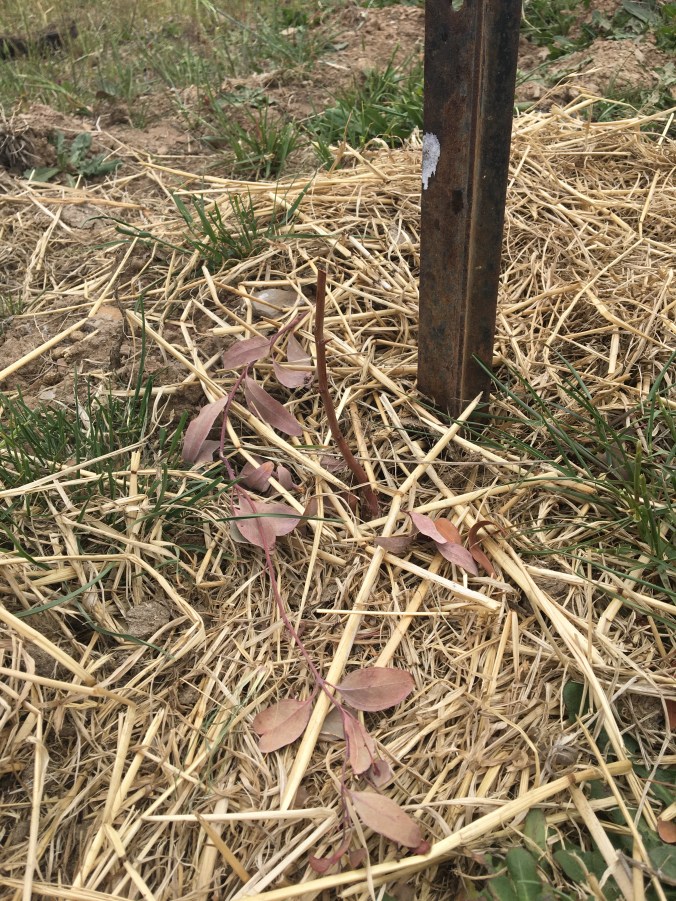
Unfortunately the Yellow Box has not fared so well.  It would seem a hare has taken to all the plants not in guards, and chopped them off a few inches above the ground.  A couple of the plants had clean cuts, with some buds below the cut, so we installed a guard and gave them a good water.  Time will tell if we have saved these trees.  The trees in guards were alive – but only just, and we hope a couple of good soaks will pull them through.

The rip lines have broadly been a success.  I had spent a fair amount of time in autumn and winter dragging an old ripper along contours:  (See https://rockfarming.com/2019/03/20/ripping-lines-for-soil-health/ ).  It was an experiment to see if the lines would allow water to penetrate the subsoil, and to aerate the soil.

The change on the rocky slopes is in a word remarkable.

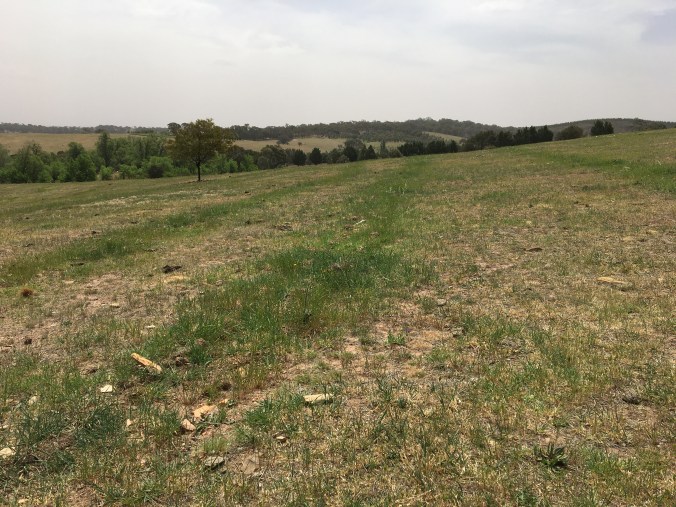
The rip lines are clearly visible by their lines of green growing grass.  Between the rip lines, the grass is struggling to stay alive and the clover has all but turned up its toes.  With rain forecast for tomorrow, I hope that every drop that falls makes its way into the ground.  This is especially the case for short sharp summer thunderstorm cloud bursts that see a large amount of water fall quickly and run off before it soaks into the ground.  This might not be ideal for our dam that is getting lower and lower, but the grass is what the cattle and sheep need to eat.

It is great to see the boys and girls are in good health and condition.  Our calves and lambs continue to grow and are all nice and quiet.  The lambs are responding well to living near the house and are starting to come up to me when I appear with a bucket.

It might already feel like summer, but we are really pleased with some of the progress we have made in keeping the grass growing for a little longer on the Rock Farm.

Every blade of grass counts.

The past week had seen the end of spring. Hot days above 30 degrees and some wild winds have dried out the grass. Many people in the district nervous for the bushfire season and our local RFS training is ramping up.

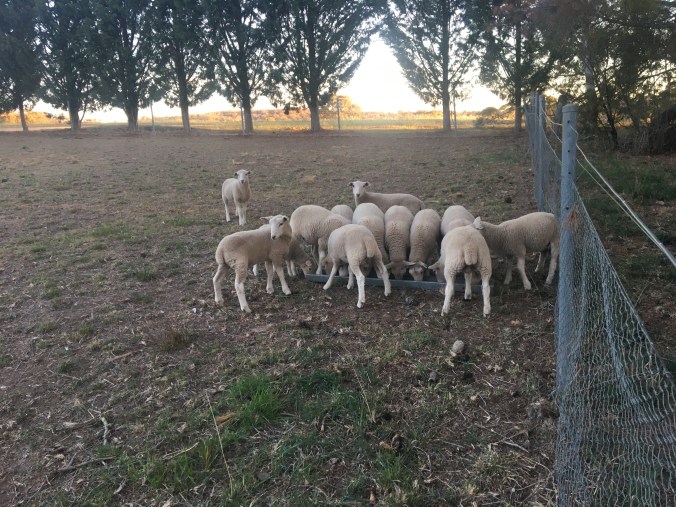
On the RockFarm, our lambs have been eating out their small holding paddocks. This is a good thing as the paddocks are close to the house, and the less grass here the better coming into summer.

Between the two paddocks is a channel for water. Water hasn’t flowed down here for months, but it naturally holds a bit of extra moisture and therefore grass.

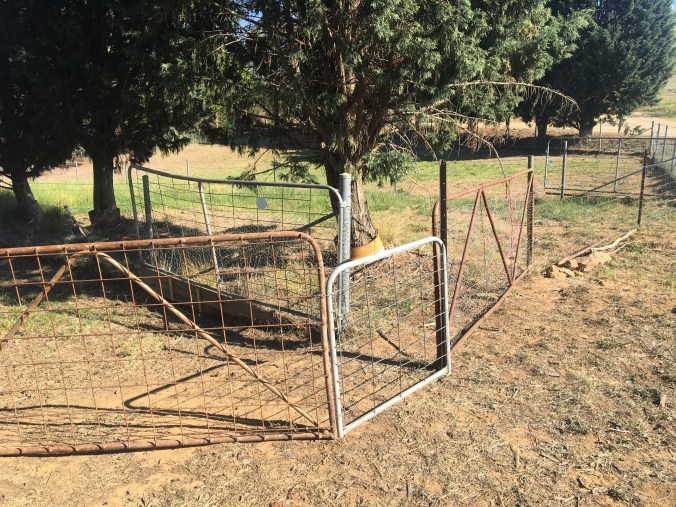
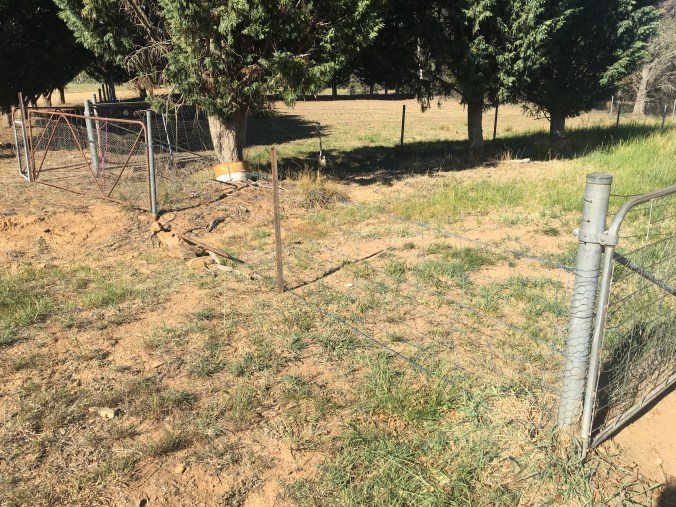
There isn’t enough grass to make it worth fencing properly, but it was worth spending an hour to rig up a little race for the lambs to have access to the lane. This allows them to come and go as they please, with water in their paddock.

The old gates were around the hay shed. When we replaced them with the old roofing iron from the house, we kept the gates handy. I can now understand why farmers never seem to throw anything out!

The lambs love it, quickly disappearing in the long grass. The only problem is they will be through this in about a week.

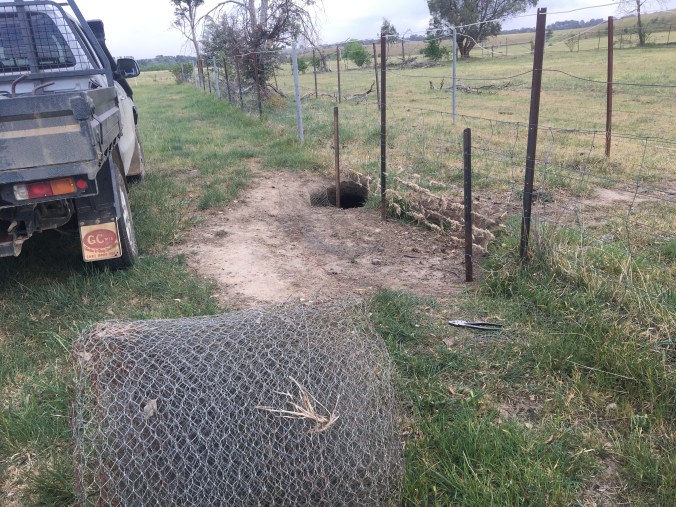
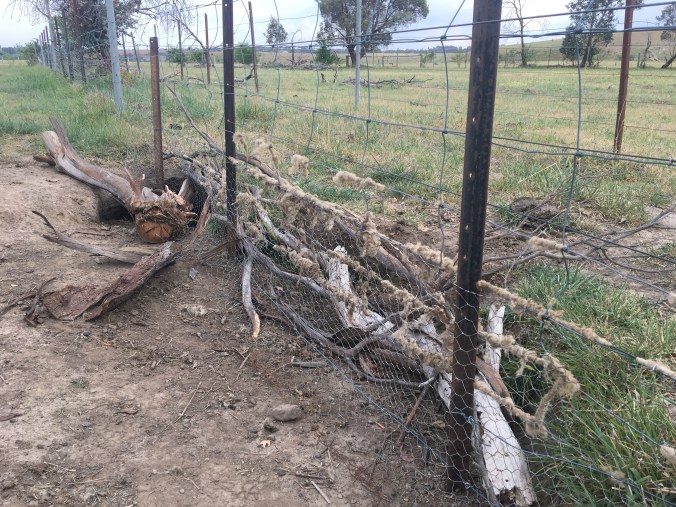
I hope to move the lambs soon to our large flat paddock. It is fenced with hinge joint stock mesh. It is mostly sheep proof, but wombats also hang out here – and they have no respect for fences!

It is a constant job patching holes. Old star pickets, short rolls of old netting and logs or branches hopefully create a barrier that works

I will have to check the fence again before we move the sheep into this paddock – but hopefully it won’t take too much extra work to keep them in.

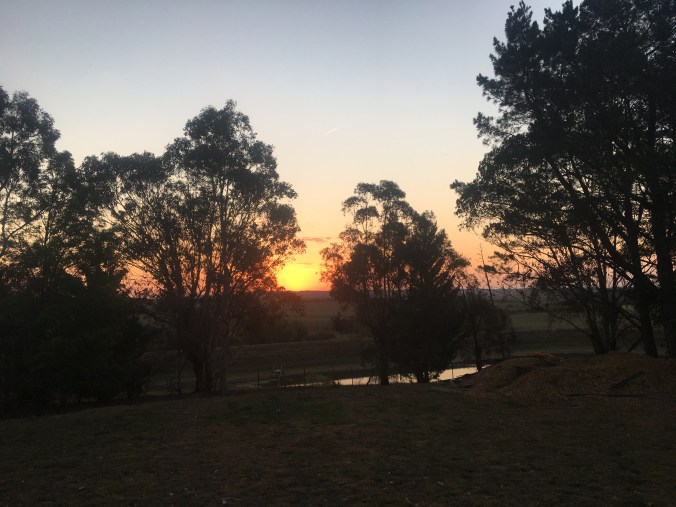
And then as the sun sets it is nice to sit back and relax feeling great about living in paradise.

Winter on the Rock Farm

We have settled into winter on the southern tablelands.  Our recent weather patterns seems to be cracking frosts followed by crystal clear days, or bleak overcast skies with lazy winds that seem to pass through every layer of clothing you can wear. Sadly we have had precious little rain to bring us any growth.

We have been feeding the cattle since the start of winter.  I am rotating the cattle through the paddocks, and have even opened up some of the tree guards for the cattle to graze under the established trees.  The grass has turned green – but it is too cold and dry for it to grow.  The cattle need the roughage that the old pasture hay provides, and I have just started feeding them some silage we purchased at the start of winter.

It is my preference to buy hay and silage over fertilizer.  The more I learn about soil health, it is far better for the soil to receive nutrients that have been processed by a ruminant stomach first.  If only the cost of feed was cheaper!

The one good thing to come of the lack of grass is one of our pest weeds, the serrated tussock is easy to see.  We have been chipping out tussock for a while now, but even I had to admit defeat and hit large swaths of it with chemical.  It sure isn’t my preferred model for control, but after reading Millpost (Book Review -Millpost, a broadscale permaculture farm since 1979) I decided I had to make better use of my time.  We will use chemicals on large patches until we have got on-top of the tussock and then hopefully revert to chipping to stay on top of future outbreaks.  The little hundred litre tank and 12 volt pump make spraying remarkably time effective.

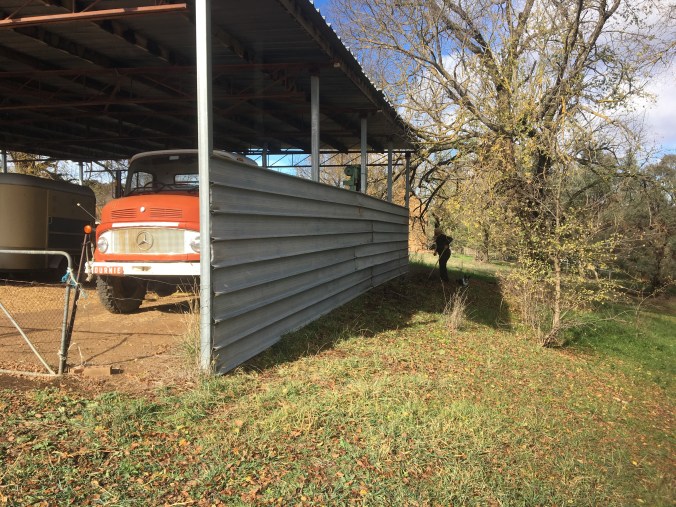
I have taken the opportunity of re-purposing the old roof sheets from the house into panels on the side of the hay-shed.  With most of our pasture hay stored in an old stable, the hay-shed has become the default storage shed for the truck and horse-float.  In an attempt to make it more weather proof, and suitable for storing hay into the future, we have been using the old roof iron to make walls.  If and when feed costs become more affordable, I hope to ensure we store enough hay to get us through a couple of winters in this shed.  We have been lucky to get through this far with what we have, but we need some growth to get us through spring.

The sheep have been enjoying the run of the place, and manage to find enough pick to keep in good condition.  It was a wonderful surprise to check on them after a couple of days at work to find they had started lambing!  We will mark these lambs in a few weeks, but for now, we were happy to let them be (and give their mum’s a treat of some oats).

The only problem with all the work outside is that is cold… damn cold.  Especially overnight.

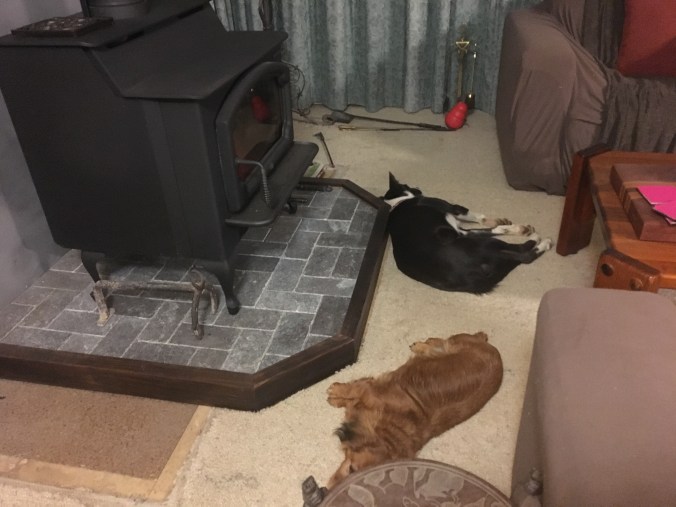
But the dogs wouldn’t know that…  they reckon it’s summer all year around on the Rock Farm!

Sadly not long after this photo was taken, the dachshund Dilys passed away.  She has been part of our family for 10 years and despite her little size, has made a big hole in our hearts.  We buried her down by the stables, where she loved chasing rabbits, even if she was never quite quick enough to catch them.  Good dog.  Rest in peace.

Cutting Edge Tech on the Rock Farm

These school holidays are fast upon us – and the weather this weekend is bitterly cold and windy.  Perfect weather to be inside and making the most of the new heating system on the Rock Farm (see – keeping-warm-part-1).

We have enjoyed a nice break from the endless running around chasing kid’s school, sport and music commitments.  Instead we have caught up with family and friends and tried hard to do nothing…  It has been a pleasant change to actually read a novel.

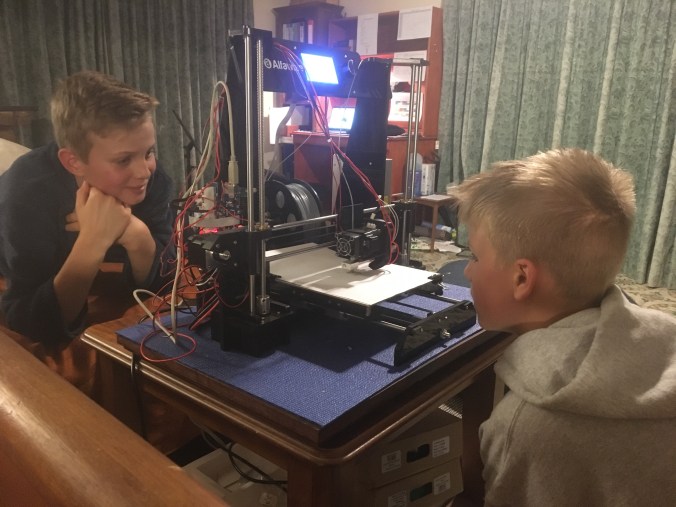
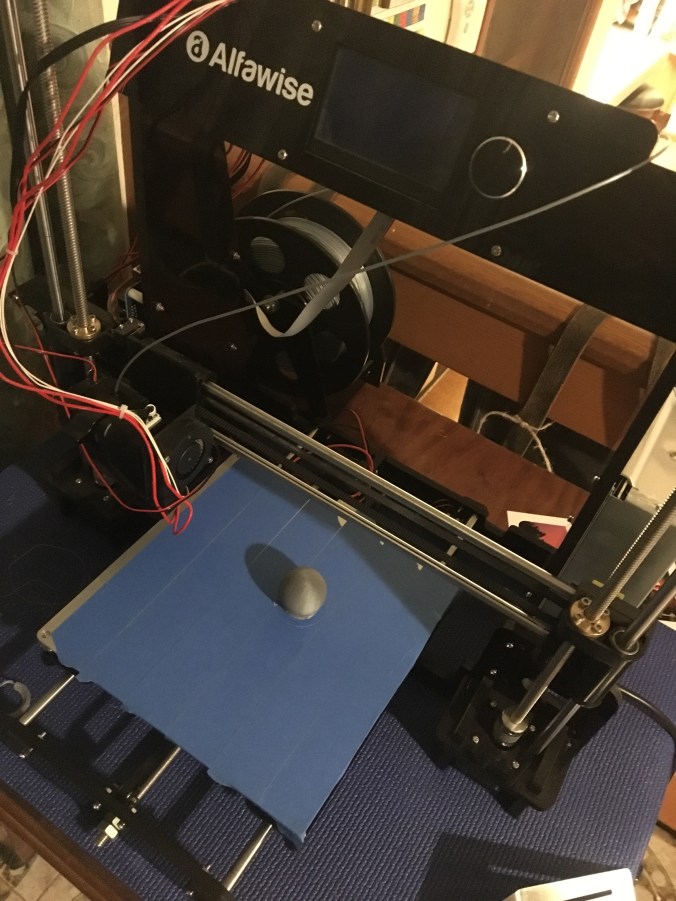
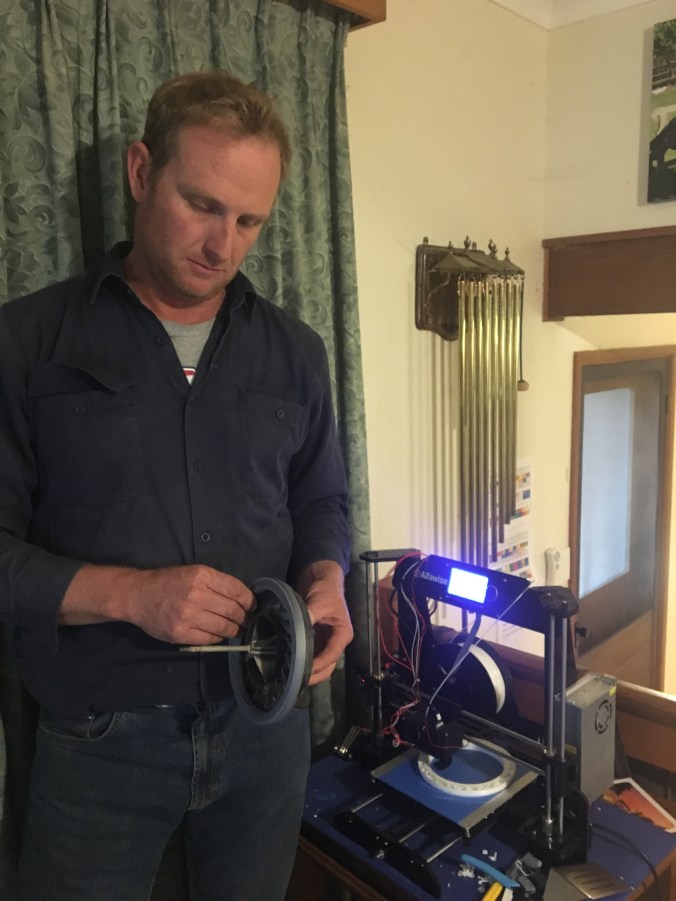
But not all has been quiet.  An almost constant whirring and beeping has been coming from the the study nook.  It has been emanating from the latest tool on the Rock Farm.  Unlike the majority of tools here that are old style and barely changed over the past 50 years or so, this one comes from the other end of the spectrum.  It is our very own 3D printer.

img_4897

The (not so) Little Fisherman received a box of parts a while ago, and eagerly started putting them together.  They were remarkably complex, and I started to feel a little bewildered as he tackled his task with enthusiasm.  Disaster struck though, when he lost the instructions when he didn’t shut down his computer properly.  A few months of emails back and forth requesting another copy of the assembly instructions with Chinese manufacturer who mis-understood our requests entirely.  Eventually we gave up and took a punt plugging in the last couple of wires.  Thankfully Murphy was on our side that day, and the printer came alive and successfully printed its calibration cube.

Since then, I have been amazed at the progress.  Within a week, the (not so) Little Fisherman had stopped downloading designs from the internet and had started making his own creations.  Initially plenty of catapults, trebuchets and other mini-weapons of mass destruction were crafted by the printer as we learnt it’s capabilities.

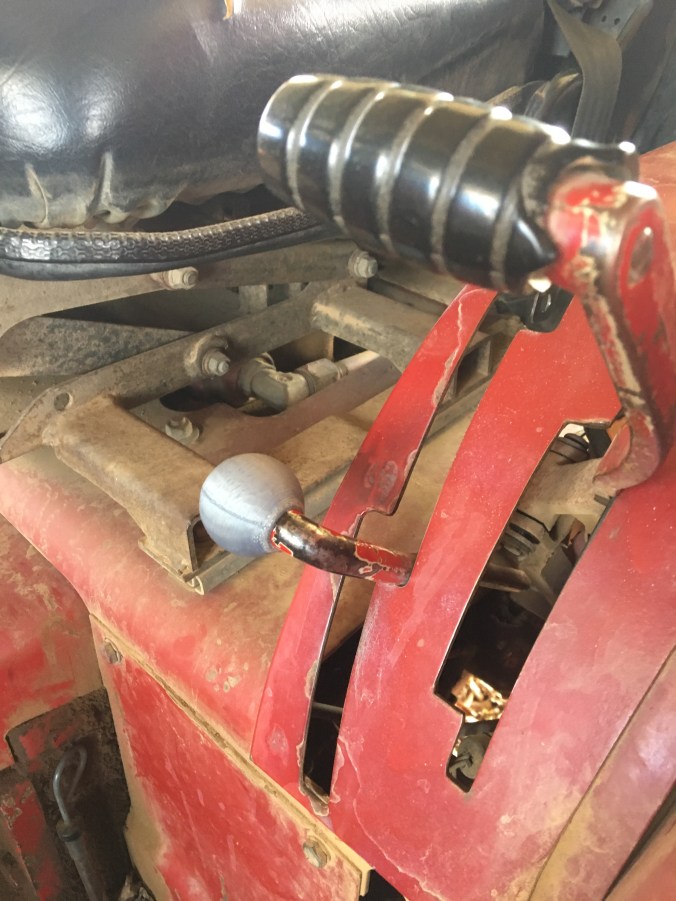
And then I thought it was about time to start harnessing this unbridled enthusiasm for good… and asked the (not so) Little Fisherman to design and make for me a  new gear knob for the tractor.  A simple round knob was required, with a central hole to fit over the metal linkage.  It had been long missing from the tractor, but proved to be a good exercise, particularly in the precision required for measurement.  We used a vernier caliper to measure the precise diameter for the central hole, and it fit perfectly.  I was very impressed.

And I quickly put the tractor to work tidying up the garden.

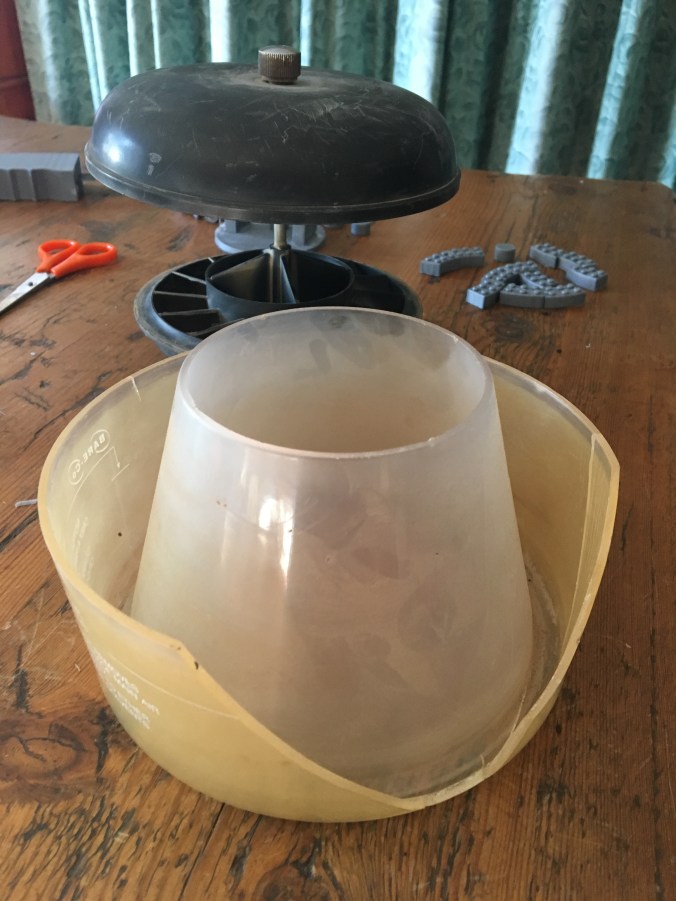
But the next challenge is proving to be a bit more difficult.  Somehow I had also managed to break the centrifugal dust bowl filter…  The (not so) Little Fisherman initially baulked at the size and shape of the problem – but has managed to come up with a design.

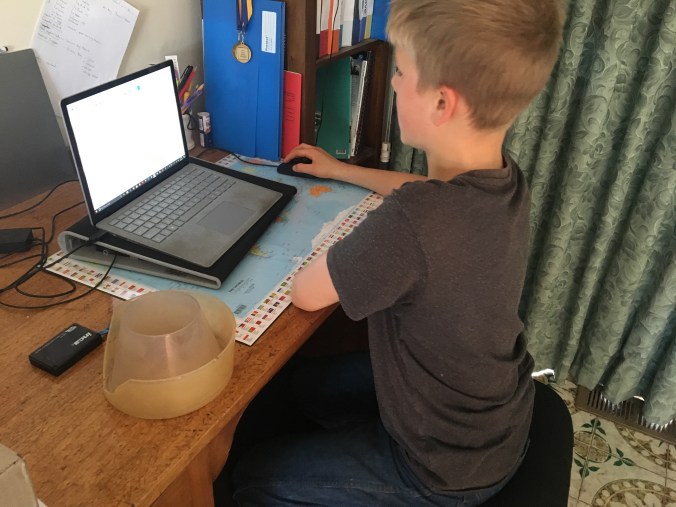
He has spent a fair bit of time measuring and even trialled the construction of a torus of revolution for the base to ensure he had it exactly right.   Don’t worry – I had to google the name of it when he told me he had made a torus!

The only problem is that this is a particularly large and complex build.  The print time will be around 55 hours – if only I can hold my breath that long, I can’t wait to see what the little machine will produce!

The best part is that I am in good hands.  I now have a talented young man who is learning skills to repair old and worn out items with good-as-new parts.  I feel excited to be part of this new technology that will allow us to repair many more items previously considered beyond saving.  This cannot help but contribute to reducing our footprint on this precious planet.

A large part of our choice in living on the Rock Farm was to give our children a well rounded education, with academic opportunity tempered with responsibility to care for the land and livestock.  It is a constant juggling act, balancing the competing interests of their schooling, our work and their real education of life and how they can make a difference in this world.  Giving a child opportunities to pursue their interests is the wish of most parents and I am immensely proud of this fellow and his first steps into the future.


A lesson on leadership – taught by a calf

On the Rock Farm this winter we have a six month old calf that was a bit of a bonus when he was born.  Unexpected, he was a delightful surprise that has grown into a healthy and strong steer of around 200kg.

He is now old enough to be weaned, and the (not so) Little Helper decided his school holiday project was to break the calf into halter.  We did point out to him that whilst it was our responsibility to give him the best life we could, ultimately his purpose is to be processed into beef…  We agreed that we wouldn’t do this on our place.

Having not broken a calf in before, we had to seriously consider our strategy.  My young son decided he wanted to follow some of the principles he had seen in action at The Man From Snowy River Breaker’s Challenge over the past couple of years.

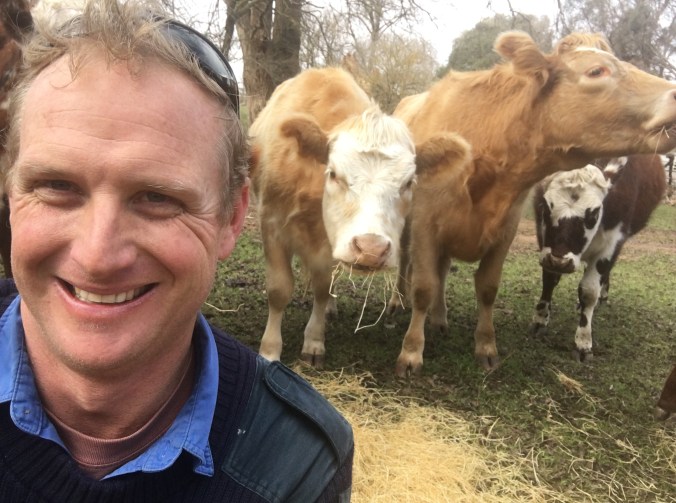
I think Mum (with the white face) is enjoying the weaning process too!

Whilst a horse is a different beast entirely from a calf, we really liked the way the horsemen harnessed the horse’s natural strengths and worked with them.  We decided that we wanted to develop a relationship with the calf where the behaviour we wanted was easy for the calf to do, and the behaviour we didn’t was hard.

Lesson One: Consistency – your words have to match your actions

As you can’t use words, you have to be entirely focused on what your body language says to the calf, now named Moo.  It really makes you think about what you are asking him to do.  And when he doesn’t do what you want, it is usually because you have put your body, or your arms, or even your eyes in the wrong place.

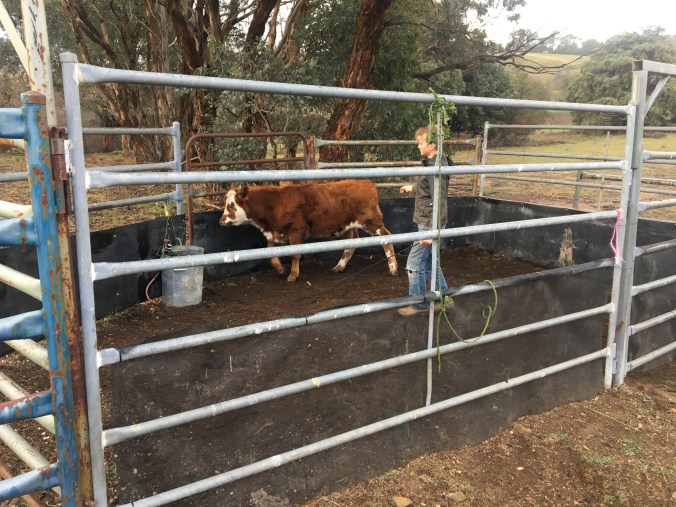
The young fellow is moving the calf away from him using old horse whips as extensions of his arms

It is an entirely pure response. You can’t hide anything.  And your actions have to match your intentions.  If you want him to turn towards you, you have to really think about what you are asking him to do.  Remember you have to reward the behaviour you are seeking.

Lesson Two – Assertive, not aggressive

You must be assertive and assume to role of leader of his herd.  It is essential for your safety with a calf that weighs 200kg and is immensely strong.  We were very keen for Moo to turn towards us instead of away from us.  This is to keep his back legs away from us (where he could take a kick if he felt threatened).  By using rods as extensions of our arms, we were able to project our body language onto him at a safer distance.  We kept asking and putting pressure on him until he did what we want.  Soon he would recognise what we were asking and turn towards us most times.

Being the leader of the herd, you have a responsibility to meet the calf’s needs.  We had to step up and meet his need for safety, for belonging, for shelter, food and water.  By  meeting his needs, we are fulfilling his requirements to be part of a herd (even if we look different to him)

Lesson Three: Make the good behaviour easy and the stuff you don’t want hard

The calf naturally didn’t want to be with us at all.  He moved away from us and sought refuge by sticking his head in corners of the yards.  This behaviour was not what we wanted, so we continued to put pressure on the calf by moving towards him and making him keep moving away from us.

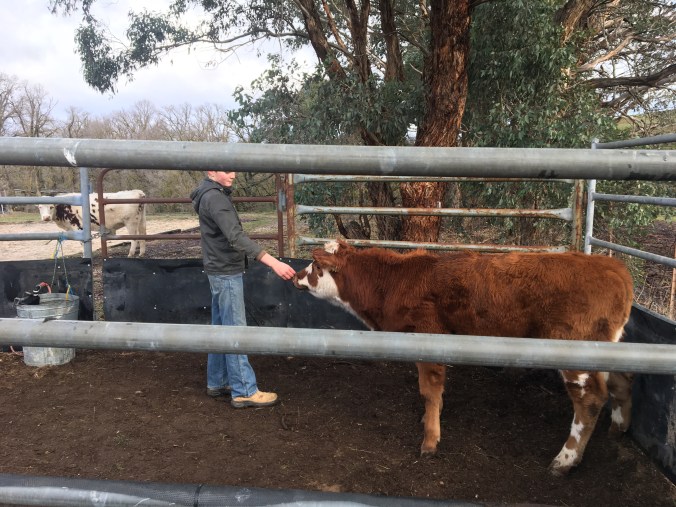
Until he stopped – and looked at us.  As soon as he did what we wanted, we stopped and took the pressure off.  And it was amazing how quickly he worked out that stopping and looking at us gave him the reward of us stopping the pressure – and lunch.

As soon as he did what we wanted, we stopped and rewarded him with a break

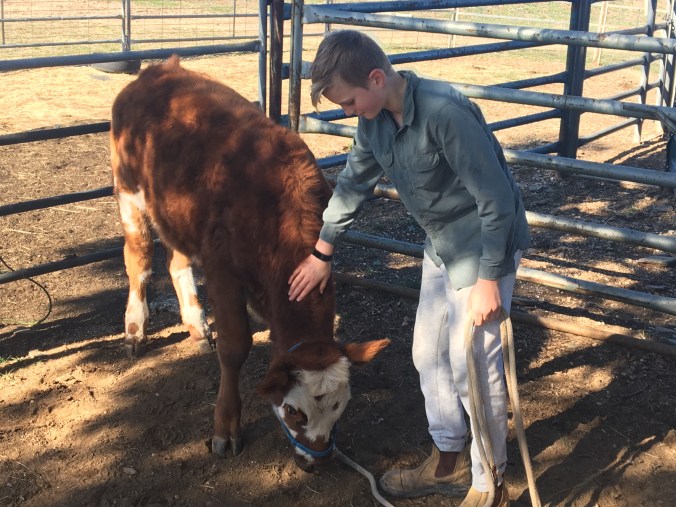
Each day we worked gently with Moo for around 15 minutes or so.  It only took a couple of days and we were able to put the halter on him.  The same principles applied – the pressure stopped as soon as he did what we wanted.  It didn’t take him long to work out that following us around was the best way to stop the pressure.  We modified his natural behaviour to generate the behaviours we were looking for, than trying to break his will.

Lesson Four: You have to be mentally ready

A couple of times the (not so) Little Helper and I were tired and not in the head space to enter the yard with Moo.  It was almost instantly apparent that we were not achieving any progress.  The best action to take was to stop the session and come back when we had mentally prepared to put our best foot forward.

Lesson Five: Mistakes are OK

We made plenty of mistakes.  And it wasn’t a problem.  If we put ourselves in the wrong place, Moo’s behaviour would let us know.  It wasn’t that he was doing the wrong thing, often we were.  The main part was to look at what we were asking and reflect on how we should approach the problem differently.  Often it was that we were looking at his shoulder instead of his flank – and once we understood what we were doing from the calf’s point of view it was easy to change.

What does it mean?

Training a calf has been a great opportunity to reflect on how we treat each other and are treated.  When you enter that yard, you have to be the strong leader that the calf is looking for… and you can’t hide behind clever words.  The calf reflects your behaviour in the purest sense, as all he responds to is your body language.  You have to be firm, consistent and look for ways to make it easy for the calf to do what you want.

Unfortunately at Christmas time or so, Moo will be sold.  It will be a sad day on the Rock Farm for which I hope the (not so) Little Helper will forgive me.