More trees for the Rock Farm

My first lockdown project was addressing an immediate need for nesting sites for birds that naturally nest in hollows. The second lockdown project has a much longer timeframe before we will see the rewards. Instead of building nesting boxes for trees, we were planting tube-stock trees to restore native habitat and control erosion on the Rock Farm. With a nearby nursery specialising in local species, and a forecast wet spring, the conditions seemed ideal for us to continue our efforts in planting trees.

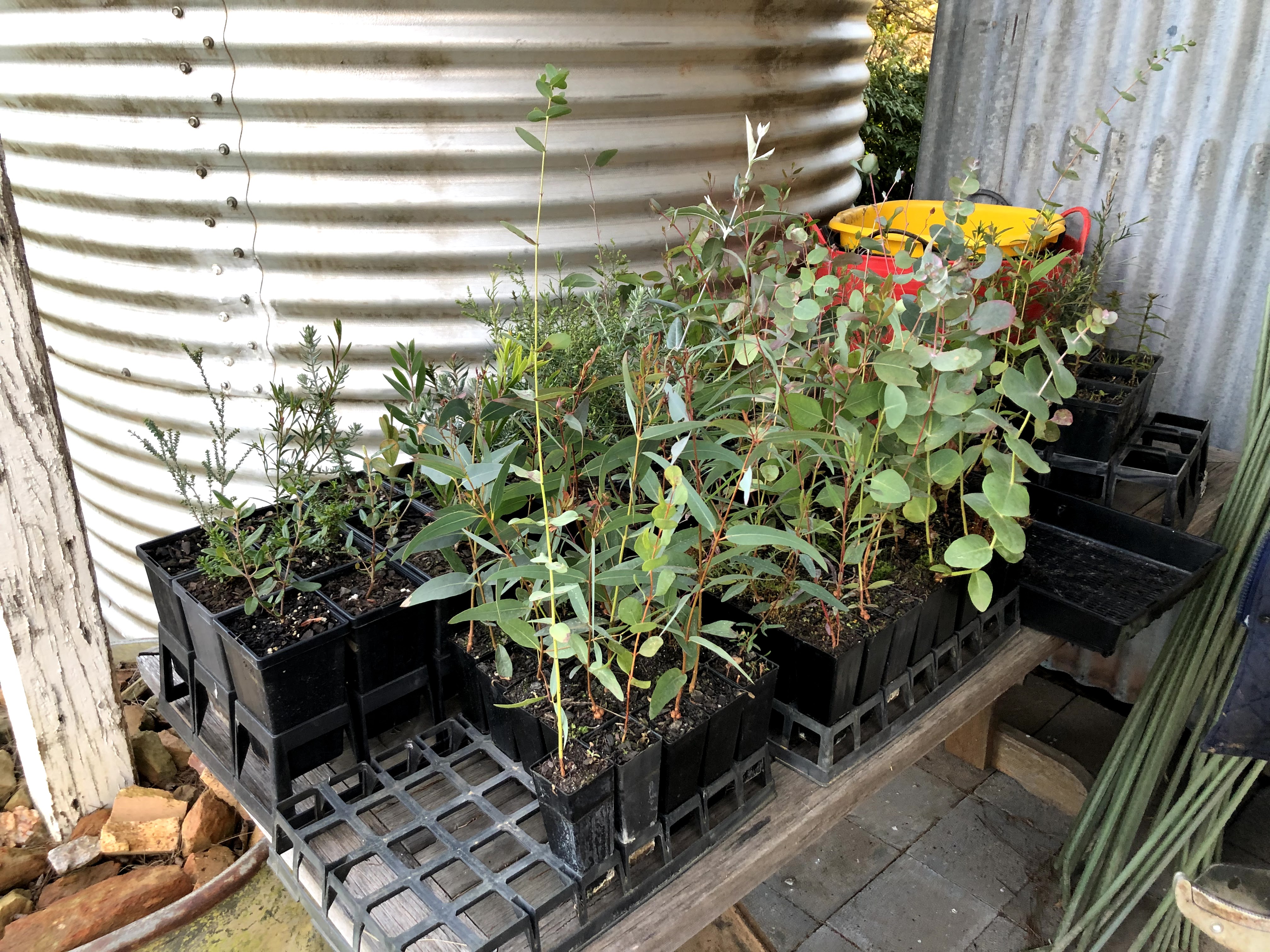
We were fortunate to secure 110 native tube stock plants from Damien at ACT and Southern Tablelands Nursery (https://windbreaktrees.com.au/). Our plants ranged from Red Box (E. polyanthemos) and Yellow Box (E. melliodora), to others such as Grey Box (E. microcarpa), Apple Box (E. bridgesiana) and other native trees that are being trialed in our area. Given our short notice, we sadly didn’t get any Drooping Sheoak (Allocasuarina verticillata), one of the key food sources for the Glossy Black Cockatoo.

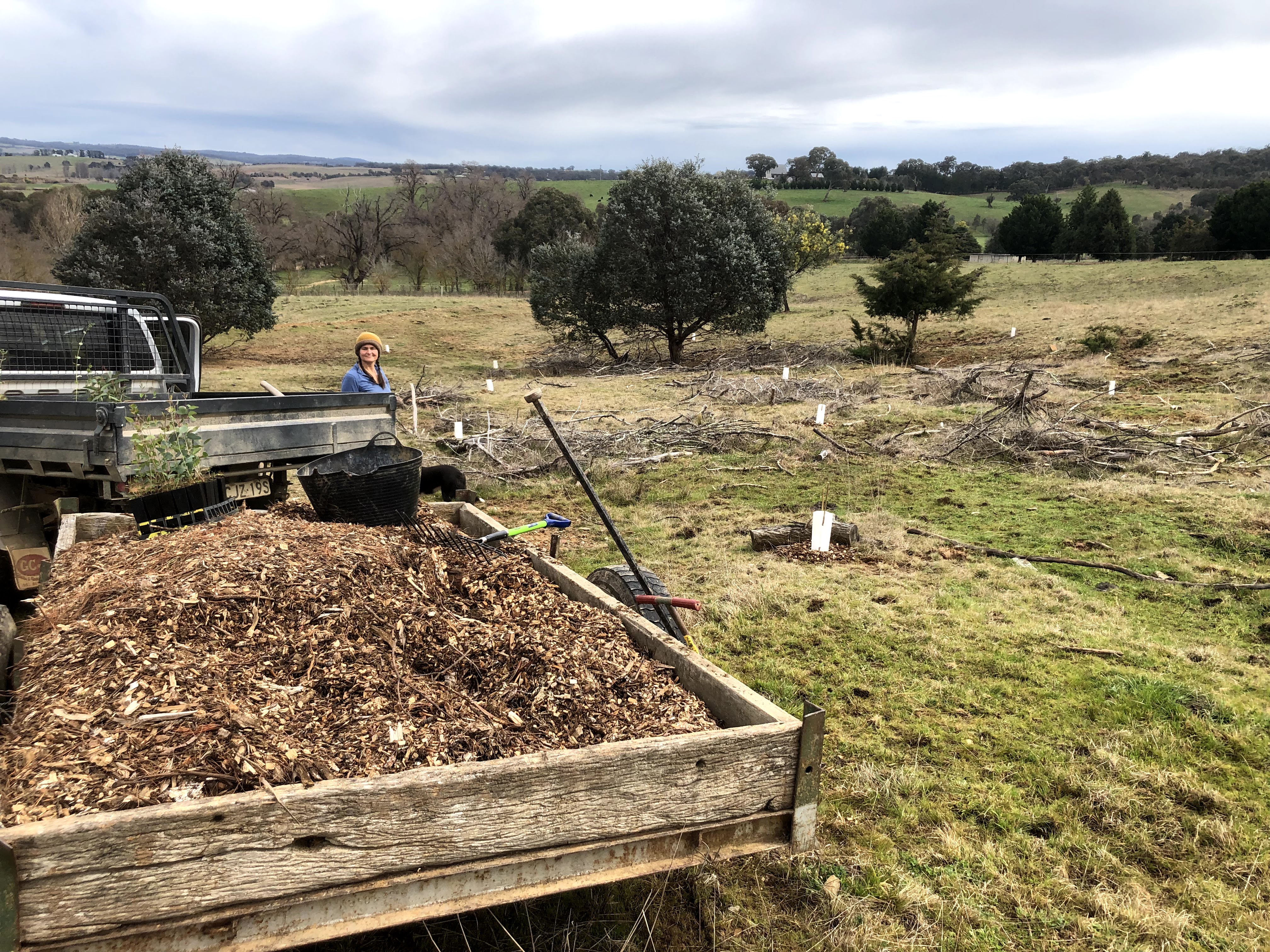
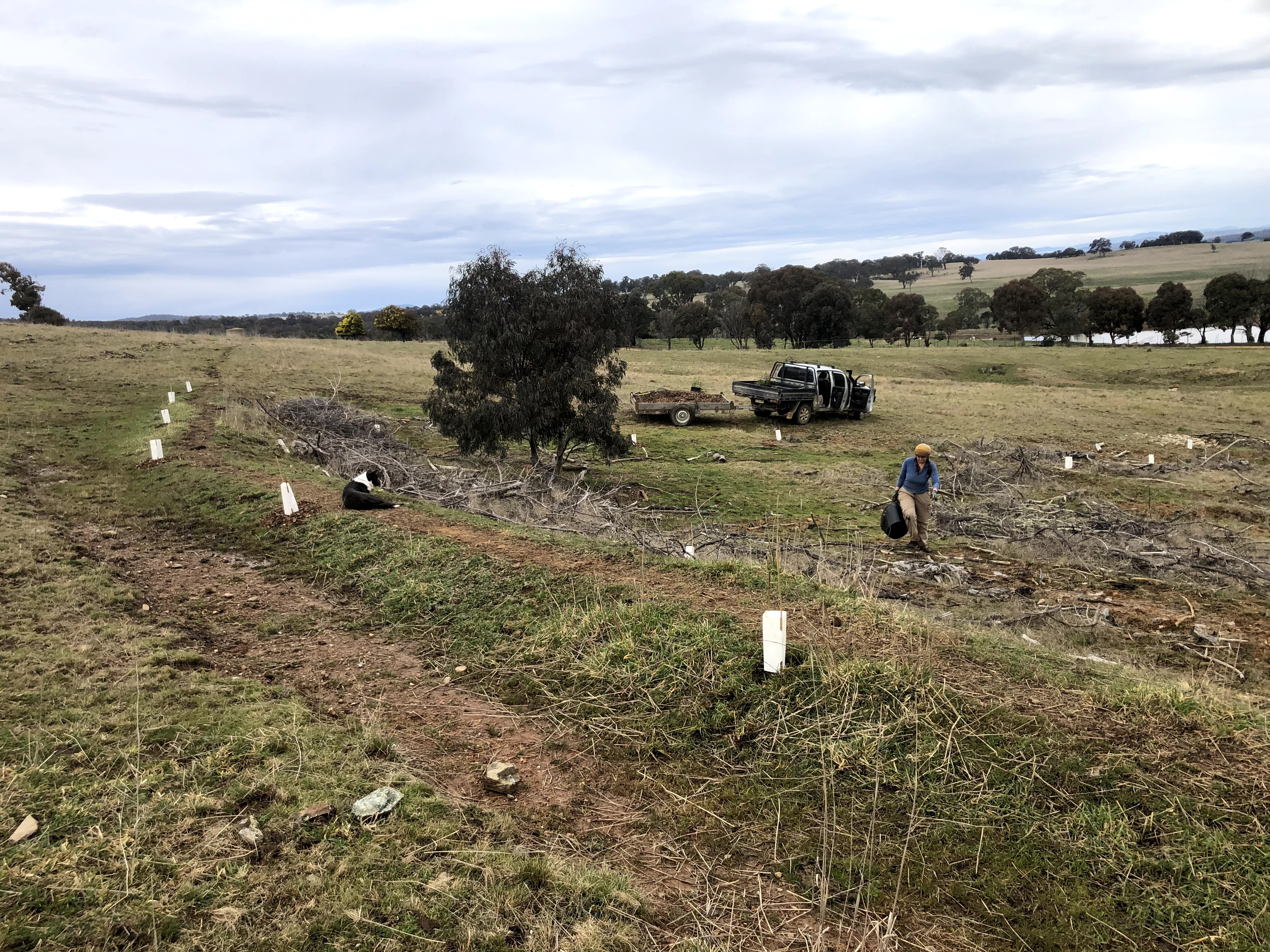
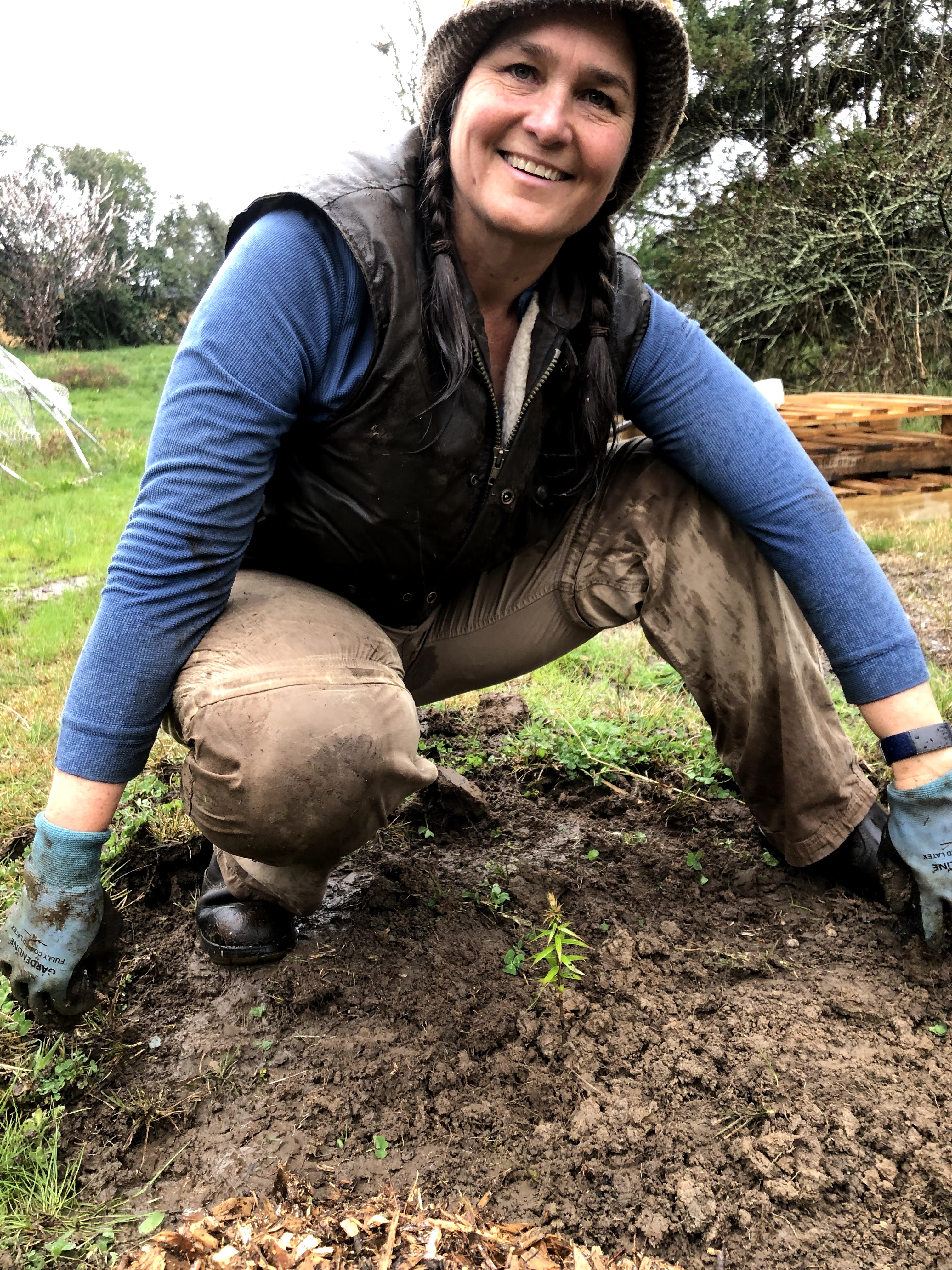
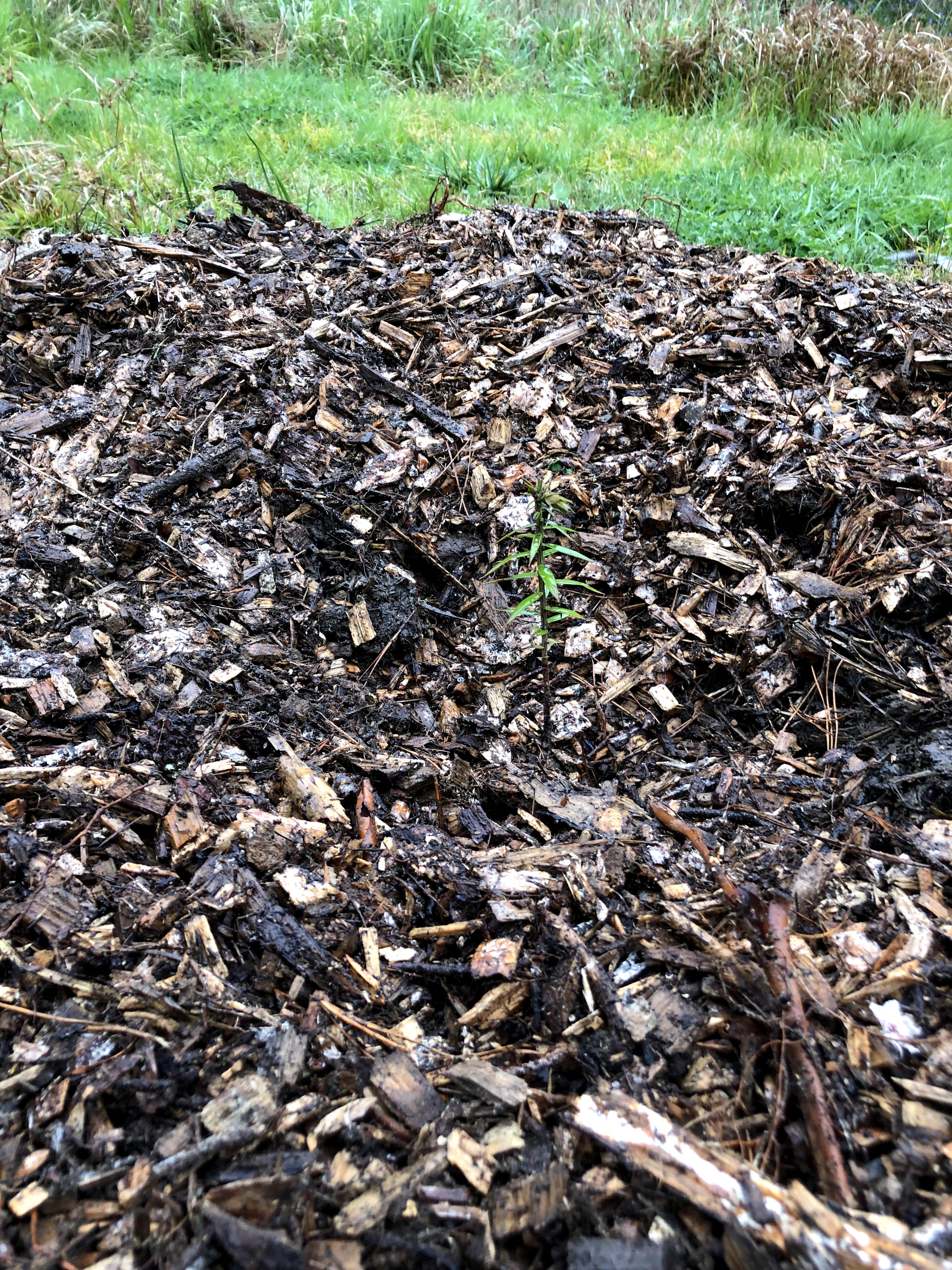
Over the next couple of days Jo and I put our tubestock in the ground. We again found the Hamilton Tree Planter invaluable, however many holes also needed a good working over with the crow-bar to open up the ground for the tap roots to penetrate. Each tree was then provided a scoop or two of mulch, and then protected, either with a tree guard or with cut branches. It was exhausting work, and whilst there are easier ways to plant trees en-masse, we were able to get them placed where we wanted for best effect.

The last couple of trees we planted we learnt about on a lap around the country a few years ago. We planted three Bunya Pines (Araucaria bidwillii) as the rain came down. Whilst they occur naturally in the Bunya Mountains in SE Queensland, there are some magnificent specimens of this tree in our region that pre-date European settlement. The Bunya Mountains was a site of many great meetings of the indigenous people for thousands of years. At these corroborees, held when the trees bore nuts every three years or so, law was made, disputes settled, marriages arranged and the seeds from the tree dispersed. It seemed that the weather wanted these trees to have the best possible start with a good shower of rain falling as we put the last ones in the ground. We might have been cold and wet, but my heart was singing.

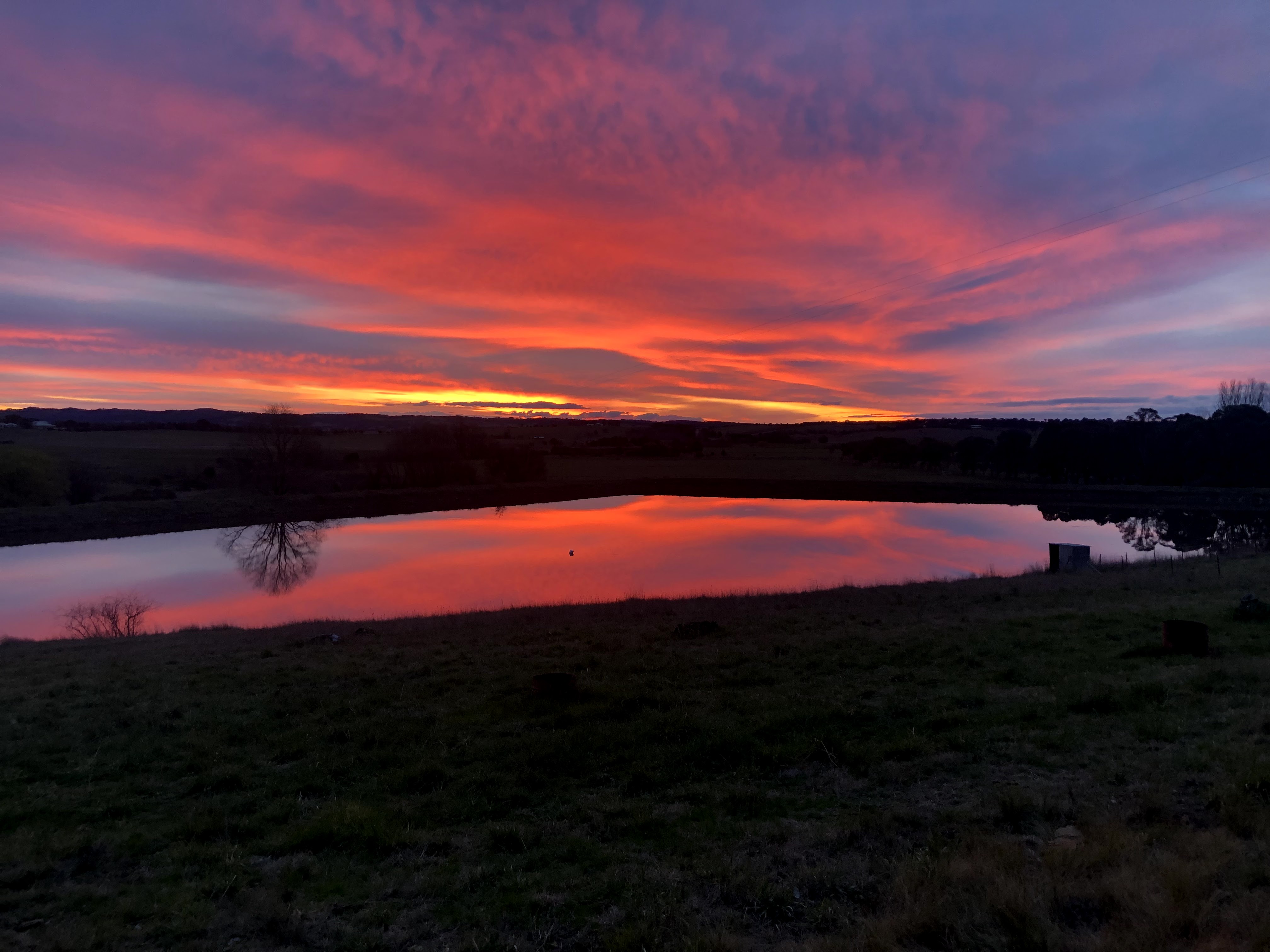
It was extremely rewarding work, and whilst my back and shoulders were sore, I know my aches will be temporary. I hope that these trees will grow and provide shade, shelter and habitat for our native friends on the Rock Farm, whilst protecting our soil. As I sat back watching the sun set after the last tree was planted, nature put on a spectacular light show. I am sure it is a good omen.

A huge thank you to Damien at ACT and Southern Tablelands Nursery (https://windbreaktrees.com.au/) for his excellent quality tube-stock and advice. If you want one tree, or a hundred, Damien will be able to help you pick the one you need.

If you build it, they will come… I hope

A few weeks ago I caught a fleeting glimpse of a Barn Owl (Tyto Alba) hard at work reducing the local mouse population. These beautiful creatures are one of the most widespread birds of prey in the world, and I held my breath as I watched her at going about her business.

Seeing this magnificent bird got me thinking about the balance of nature, and especially what do about our population of mice. Sure I could lay poison for the rodents, but then I risked killing the owls through secondary poisoning. The problem is not too many mice, but too few birds of prey like the Barn Owl.

The biggest limitation on our population of birds here on the Rock Farm is the number of suitable nesting sites. A lot of birds nest in hollows, and unfortunately these take a long time to form naturally. Whilst the Rock Farm has been blessed with innovative and forward thinking tree planting in the past, sadly there are very few really old trees on the property. This means that nesting hollows are few and far between. This is a problem we shared with our last property, and the boys enjoyed a project there making nest boxes for cockatoos (https://rockfarming.com/2016/10/23/helping-birds-with-nesting-boxes/)

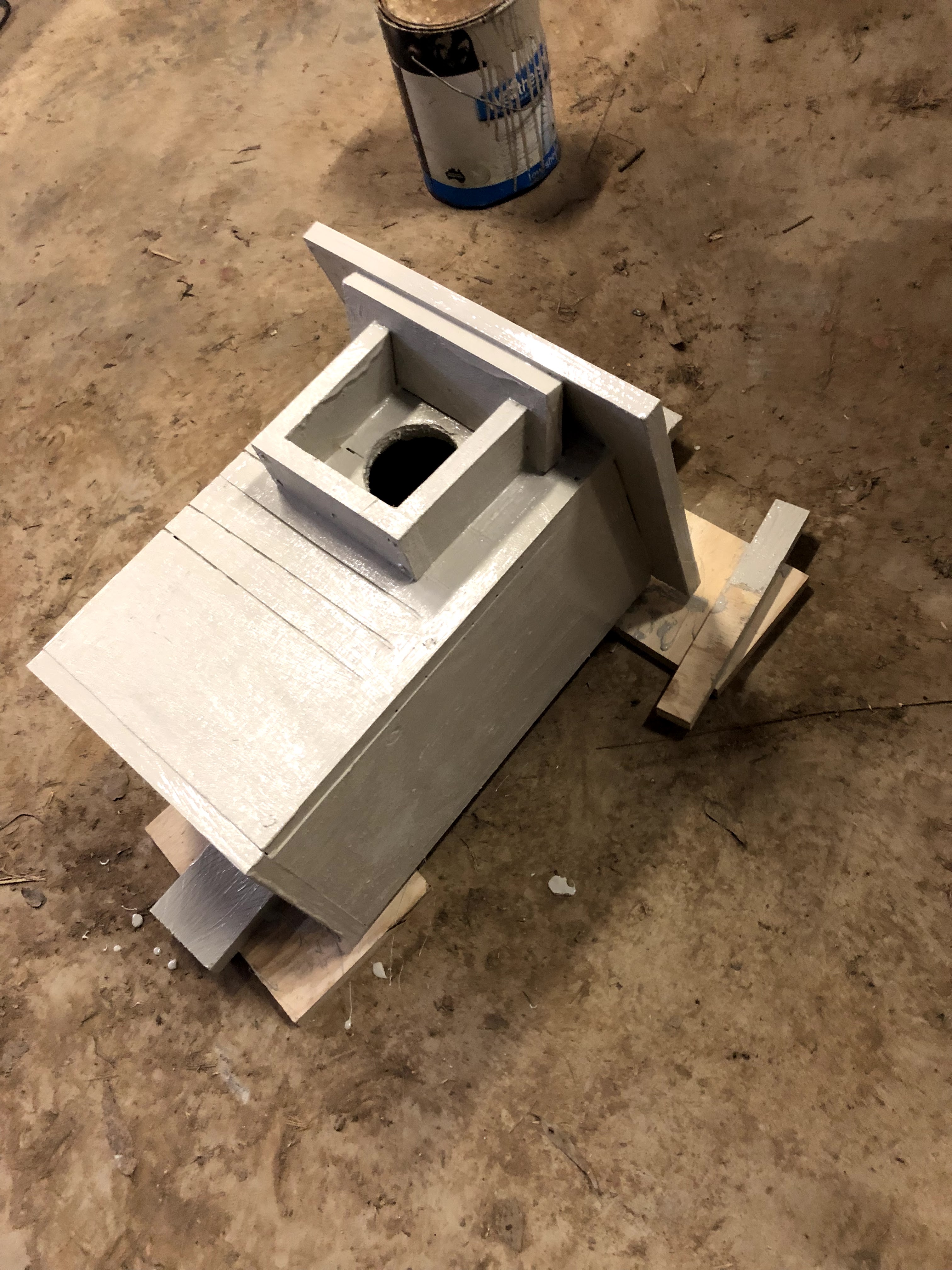
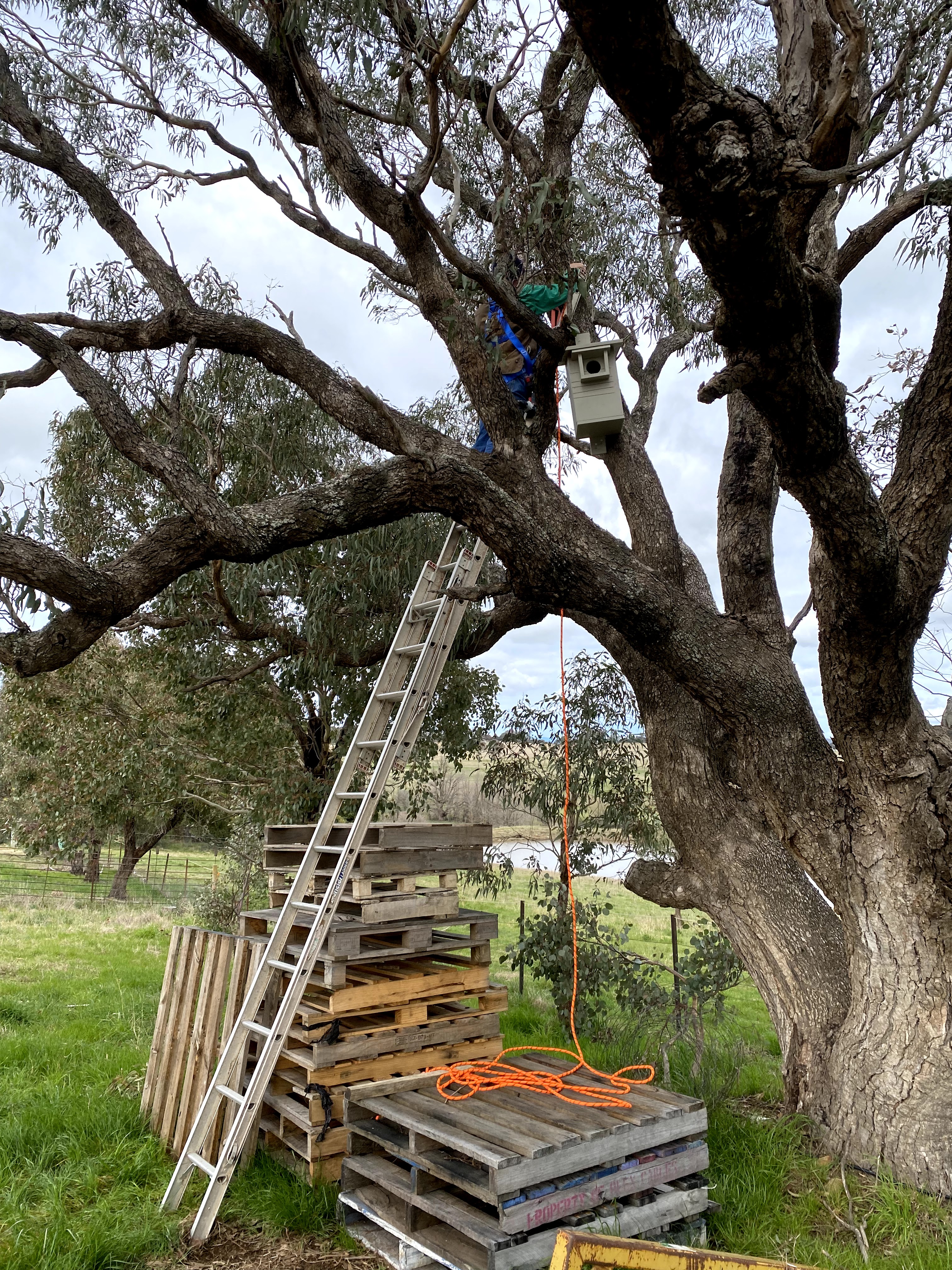
So my lockdown project was to build a nesting box for a Barn Owl.

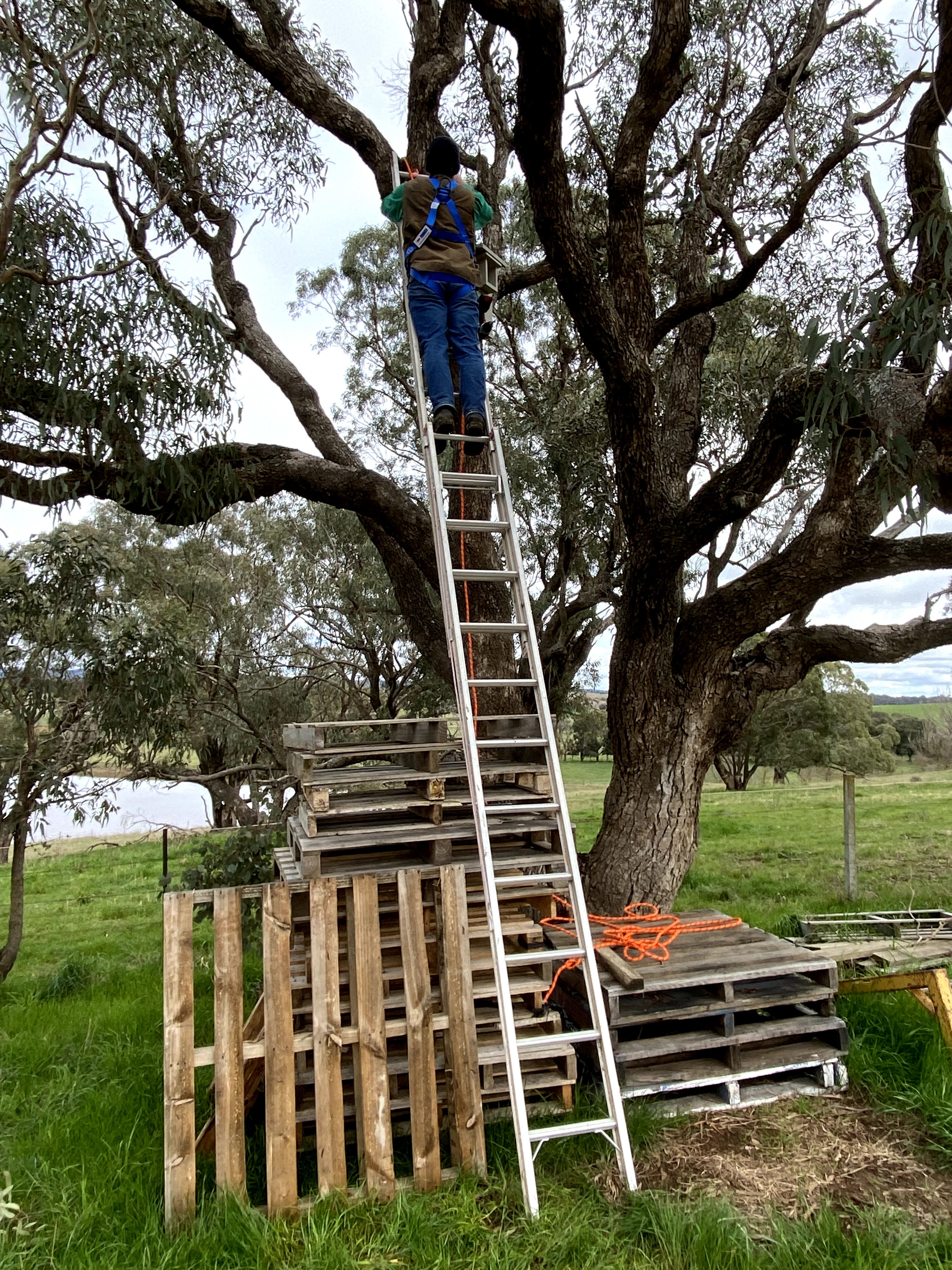
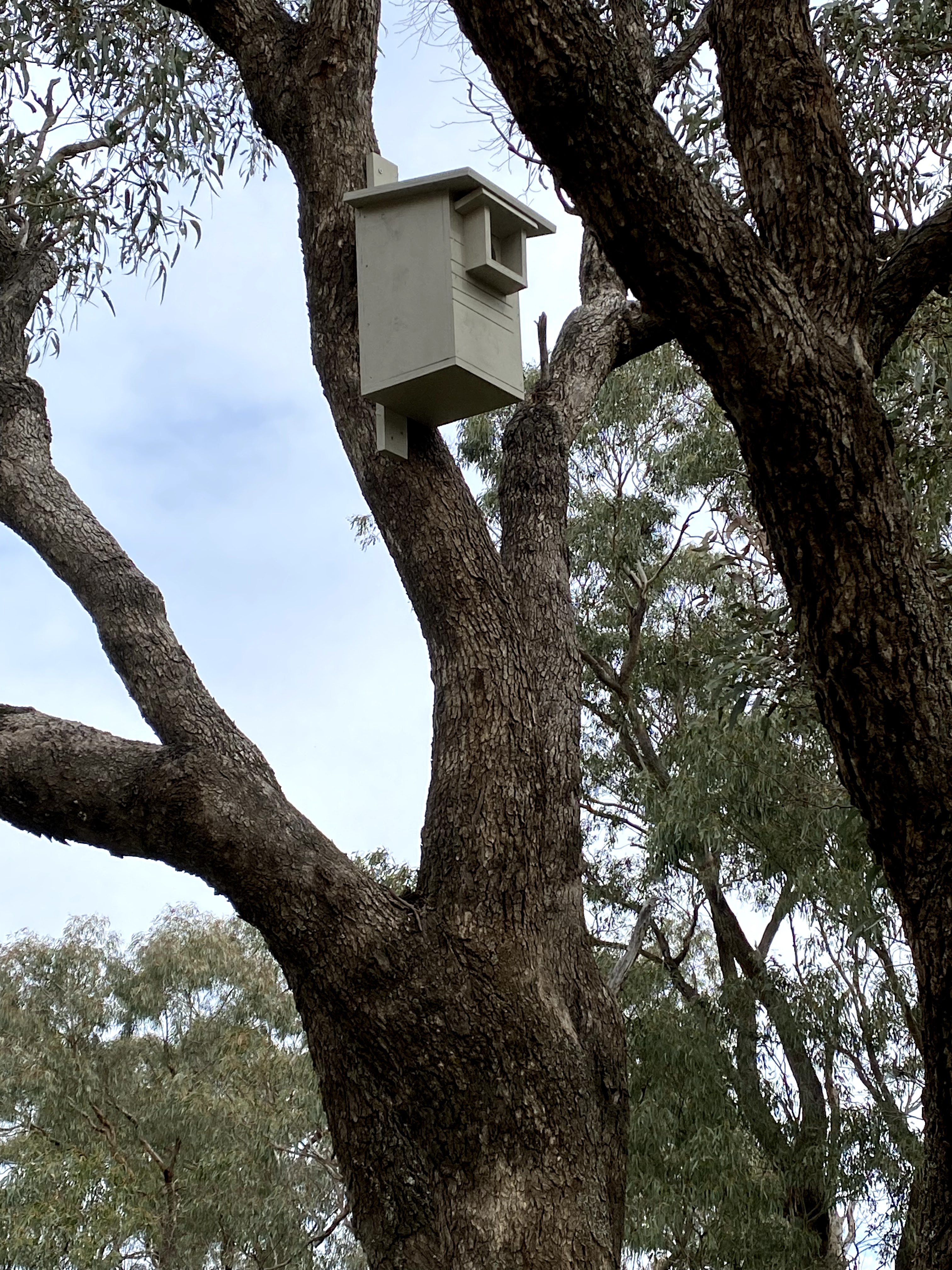
It was a relatively simple build from some dimensions I found online. I used some old exterior paint I found in the shed to protect it for a few years. The hardest part was mounting it high enough up a tree for the birds to feel safe. I picked an Apple Box near the shed as the site of our first nest box, so I can keep an eye on who might move in.

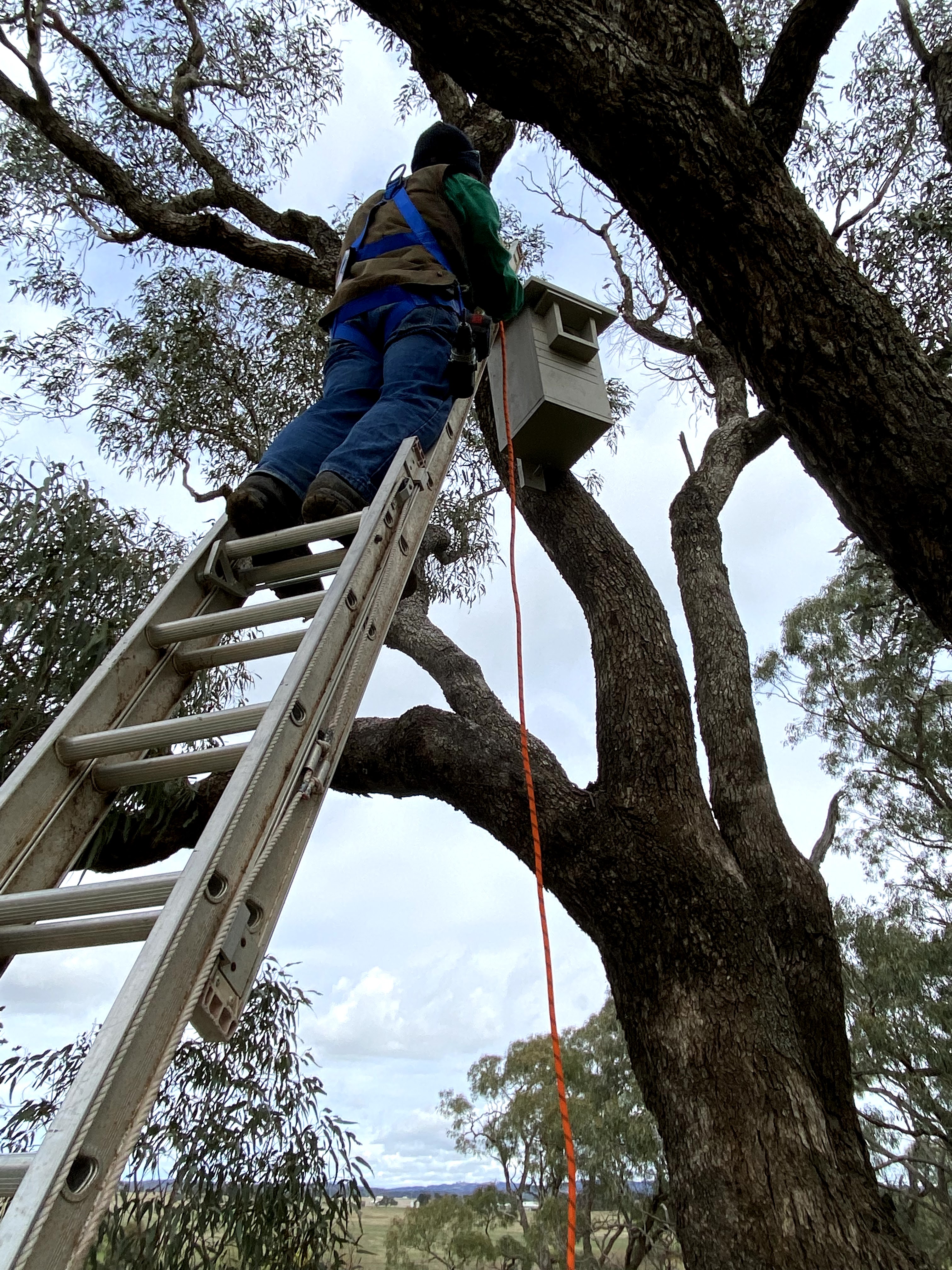
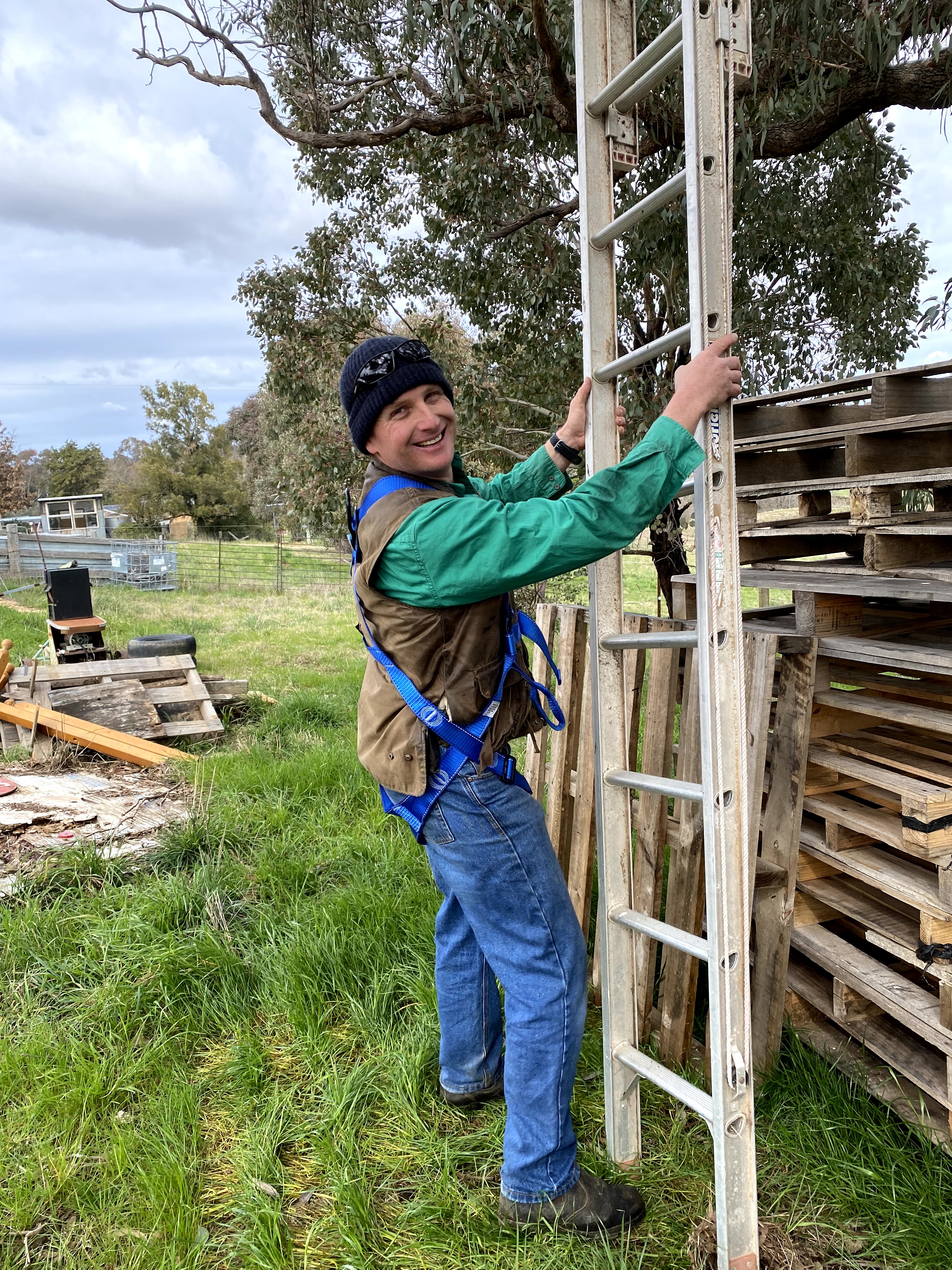
I knew it would be a bit of a challenge lifting the large box into the tree – and given the soft nature of the ground I decided to put a harness on. Oh and I got my lovely wife to come and keep and eye on me just in case gravity got the better of me.

I must admit I was a little relieved to get back onto the ground safe and sound, with the nest box mounted securely in the tree. I hope the birds think it looks as good as I reckon it does. I hope the old adage, “if you build it, they will come” holds true.

If anyone else is looking a for lockdown project and would like to build some nesting boxes for us to mount in our trees, please let me know. We have lots of young trees that would be the perfect place to mount various sized boxes to support our avian friends.

Comings and Goings on The Rock Farm

As we join the rest of our state in returning to lockdown, It would be nice to say our family has had a great opportunity to sit down and reflect on the journey that led us to choosing to make our life out here on our 100 acre hobby farm. However due to colleagues having to isolate, my regular work has fallen on fewer shoulders, meaning I haven’t had the opportunity to spend anywhere near enough time on the Rock Farm as I would like. I am very aware that we are extremely fortunate to be able to call this small patch of land home, and I hope by sharing our story during this testing time, I might bring some joy to our followers around the world.

Life on the Rock Farm continues to beat to its own schedule. Cattle continue to find their way into the wrong paddocks, machinery breaks, and trees fall on fences. But the Rock Farm continues to recharge my soul. Today my story is about the cattle and some of the comings and goings over the past few weeks.

Regular readers will know I deliberated holding last year’s calves over winter. With a wetter than average forecast, it made sense to hold them, even if we were feeding out a bit of hay. But a few weeks ago, we decided that the new calves were due, and it was time to move our weaners on. We had five steers and five heifers from last year, however I was given very stern orders that one of the heifers – named Zoe – was not to be sold.

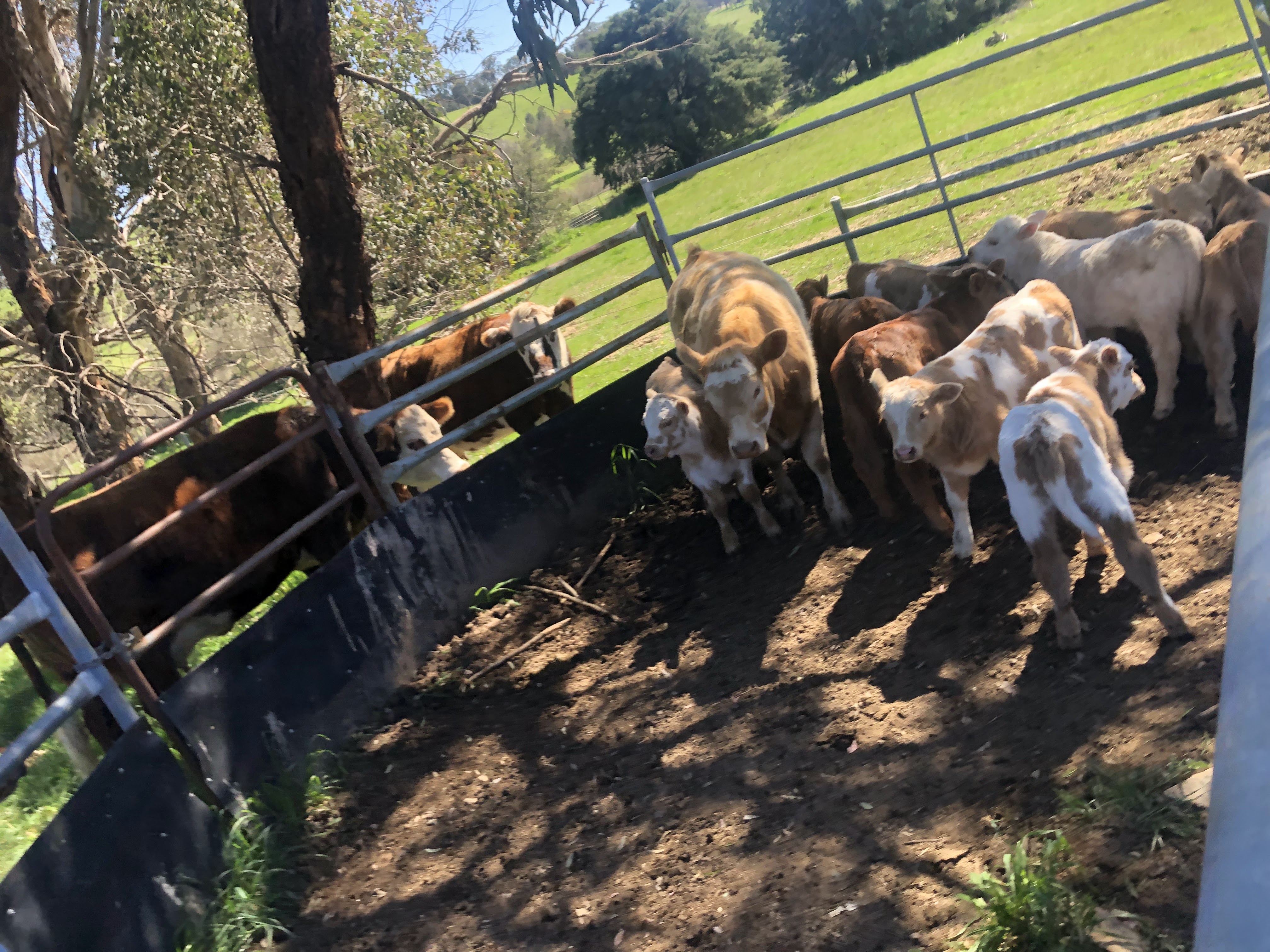
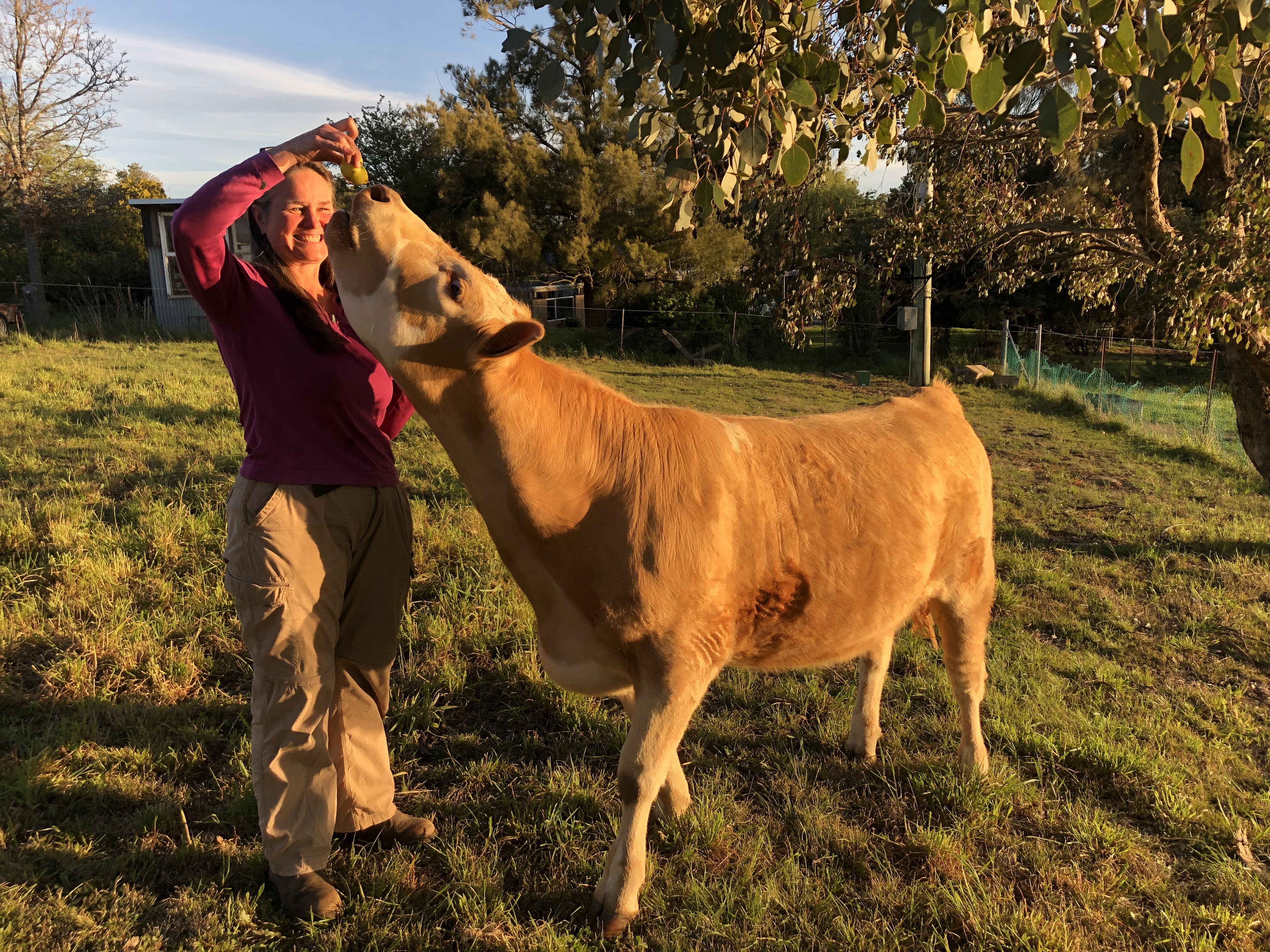
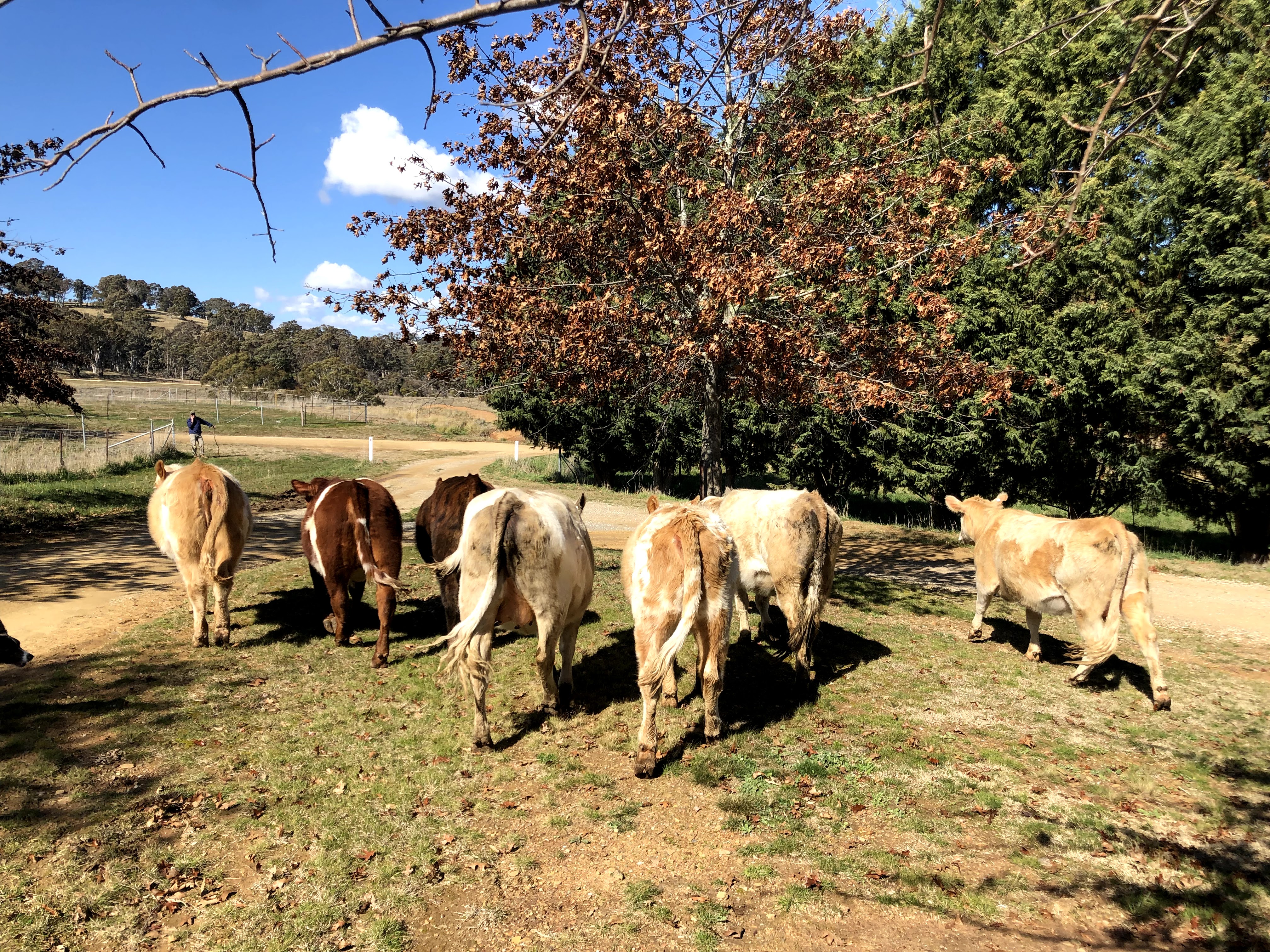
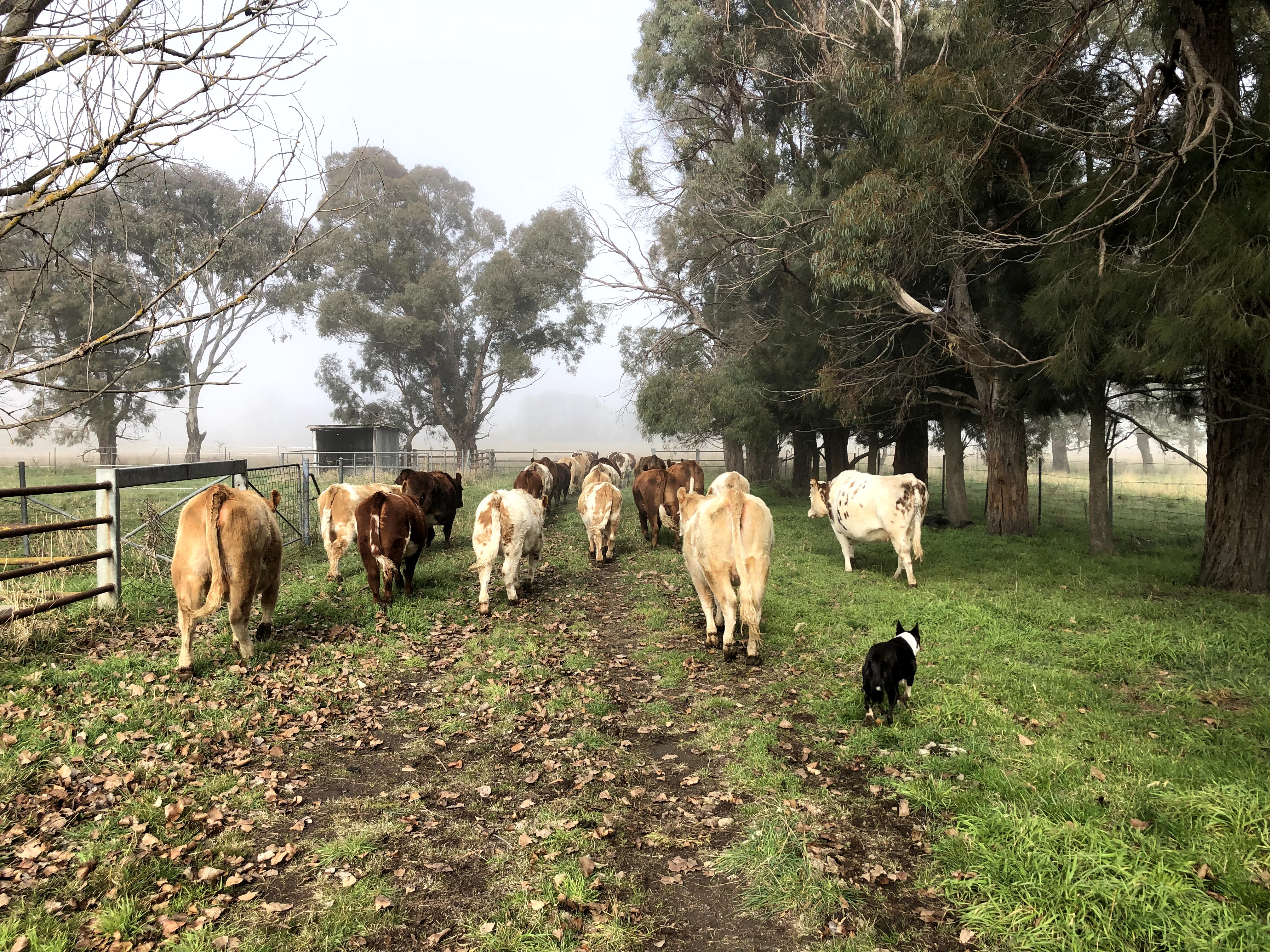
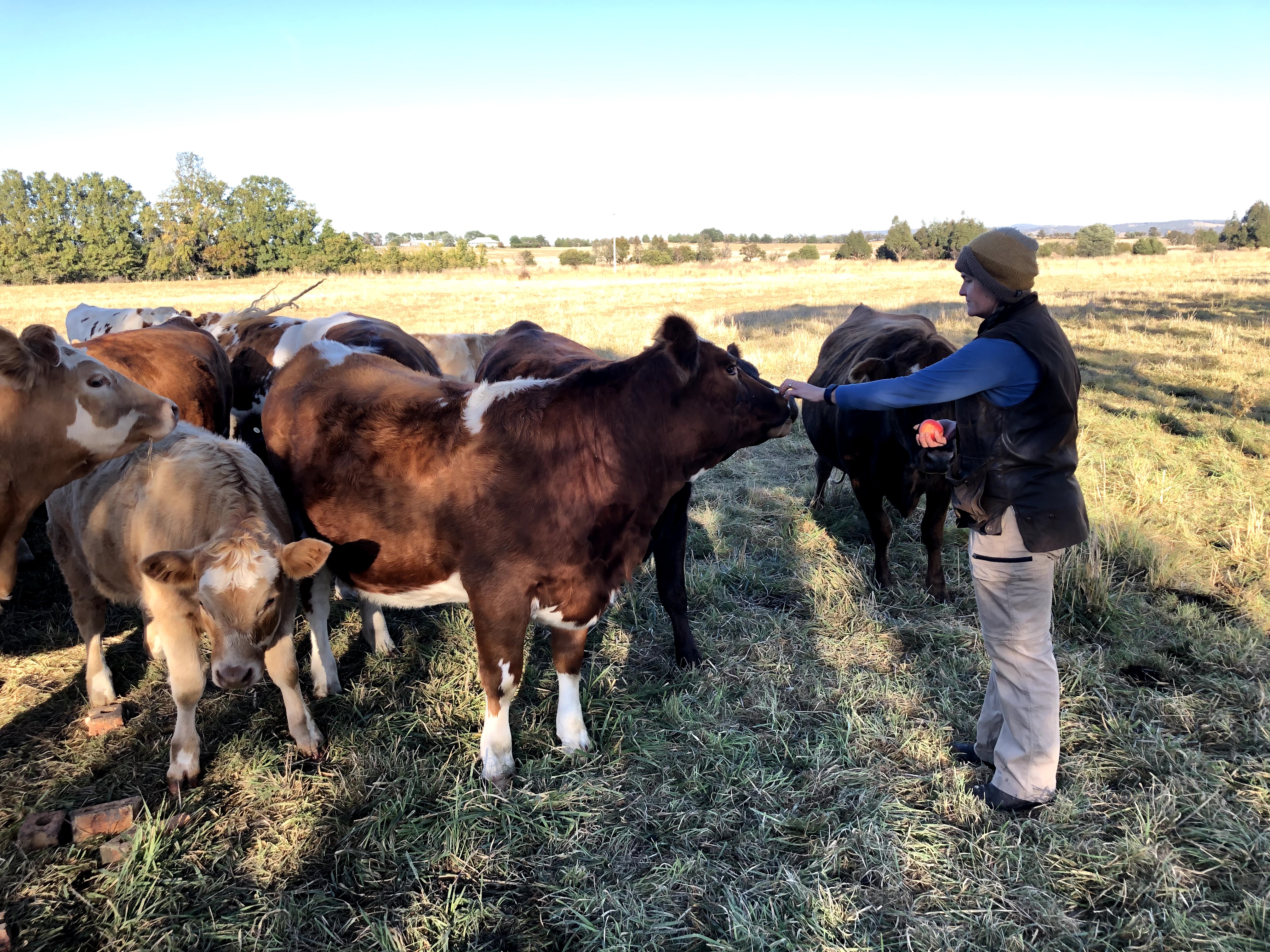
With all the family in town at work and school (just before the lockdown), I asked our neighbour to give me a hand to bring the weaners into the yards. I was able to draft them out of the paddock with the cows easily enough, but really appreciated Stuart’s assistance to bring the young cattle into the yards. The added bonus of this arrangement was that Stuart had agreed to buy the four remaining heifers. It was also the perfect time for three two-year-old maiden heifers that had been running with our herd to make their way to their new home. I was absolutely thrilled to know that all of the girls would be going to such caring owners – and that I would still be able to feed them the odd apple over the fence! We soon drafted the small herd, and walked the girls down the lane.

Being such a small producer with full time careers, we are unable to establish a pasture to plate relationship with butchers or other local markets. We also don’t generally have the feed to finish our cattle on grass. This means that we usually sell our cattle to the local livestock exchange at Yass. This year we sent five steers in to a regular sale, and their average weight was 331kg. It was a bitter sweet moment to see the steers leave the property – but it was definitely time to move them on – because the other news of the week was that the next generation of calves had begun to arrive!

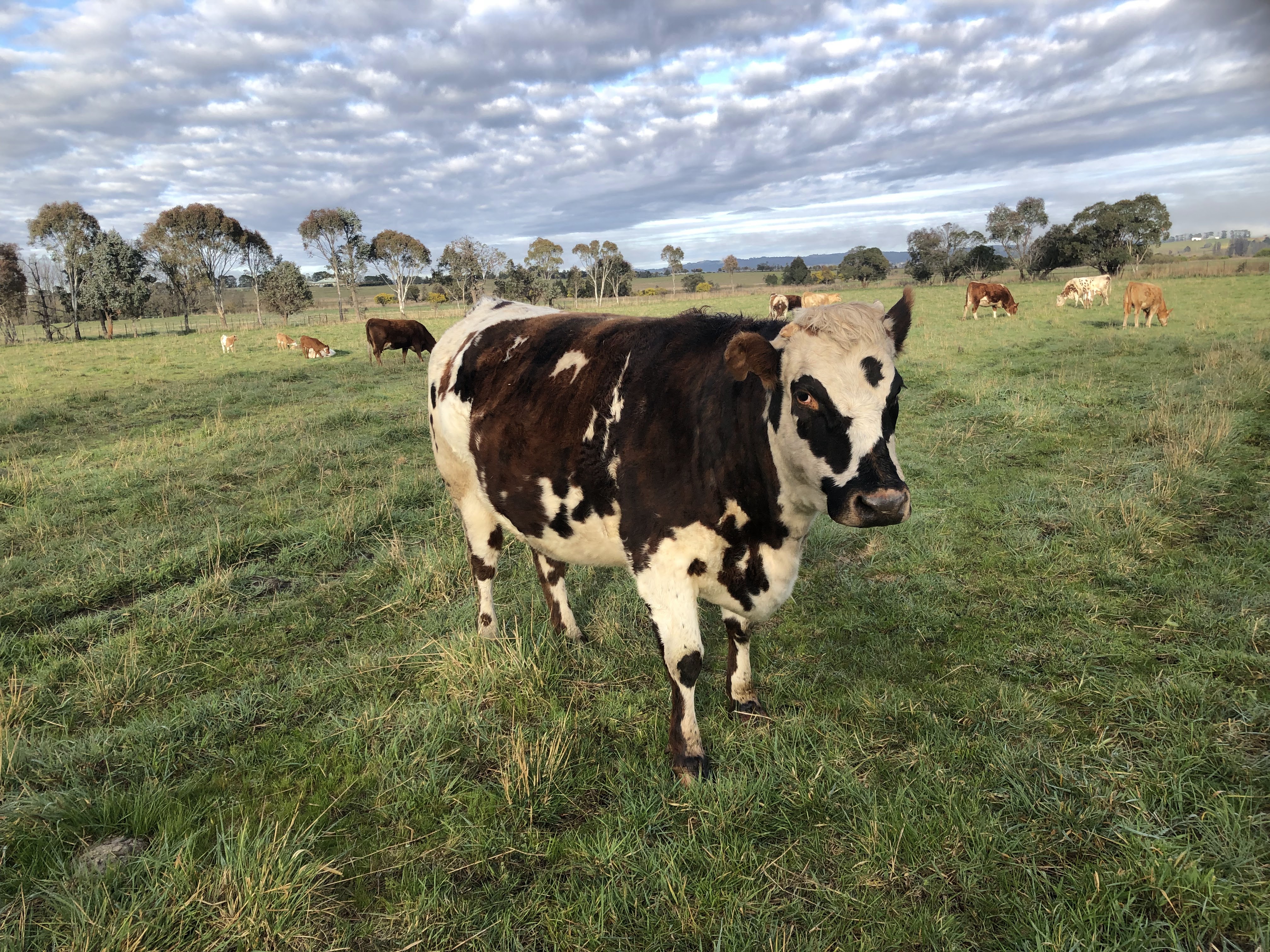
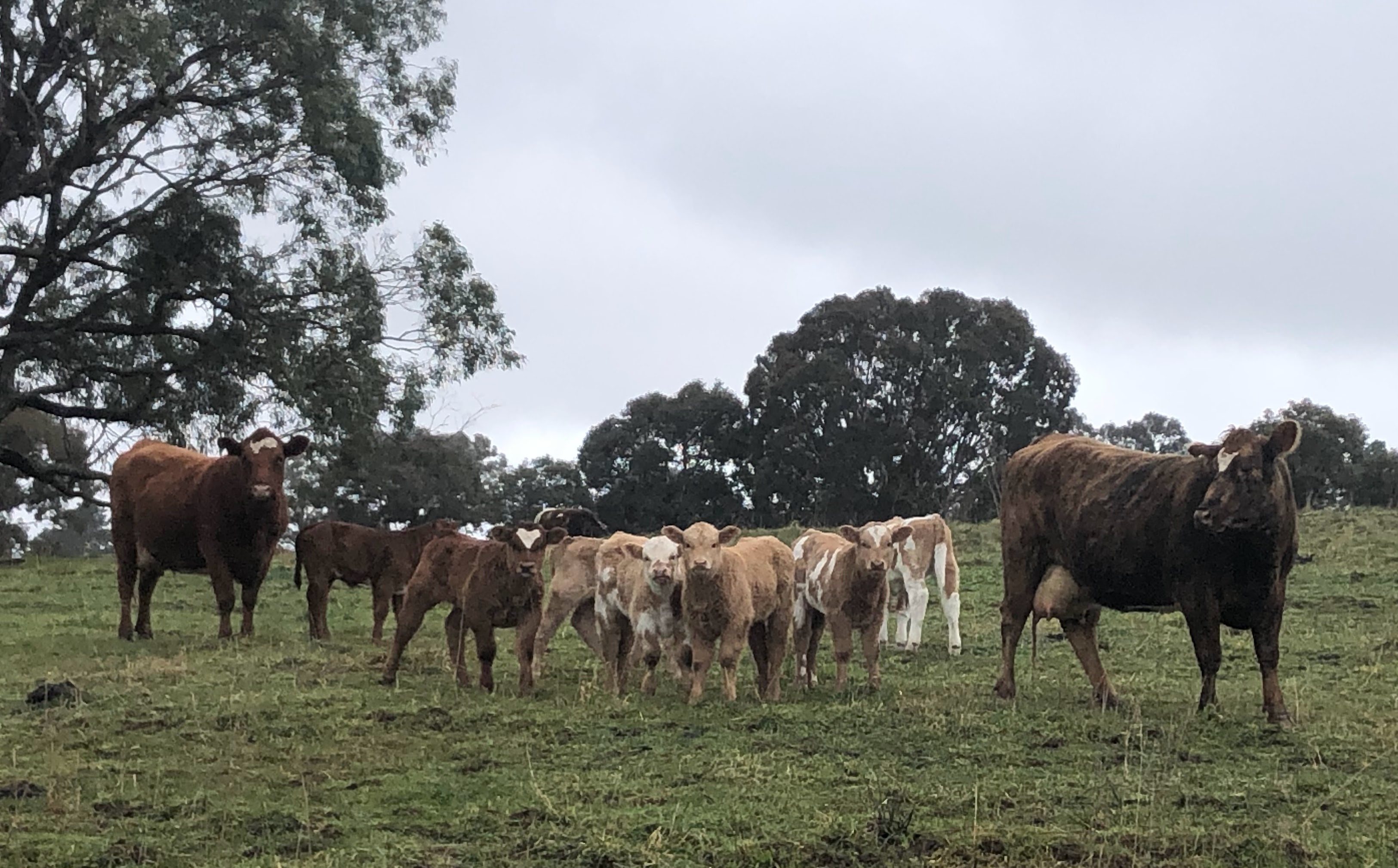
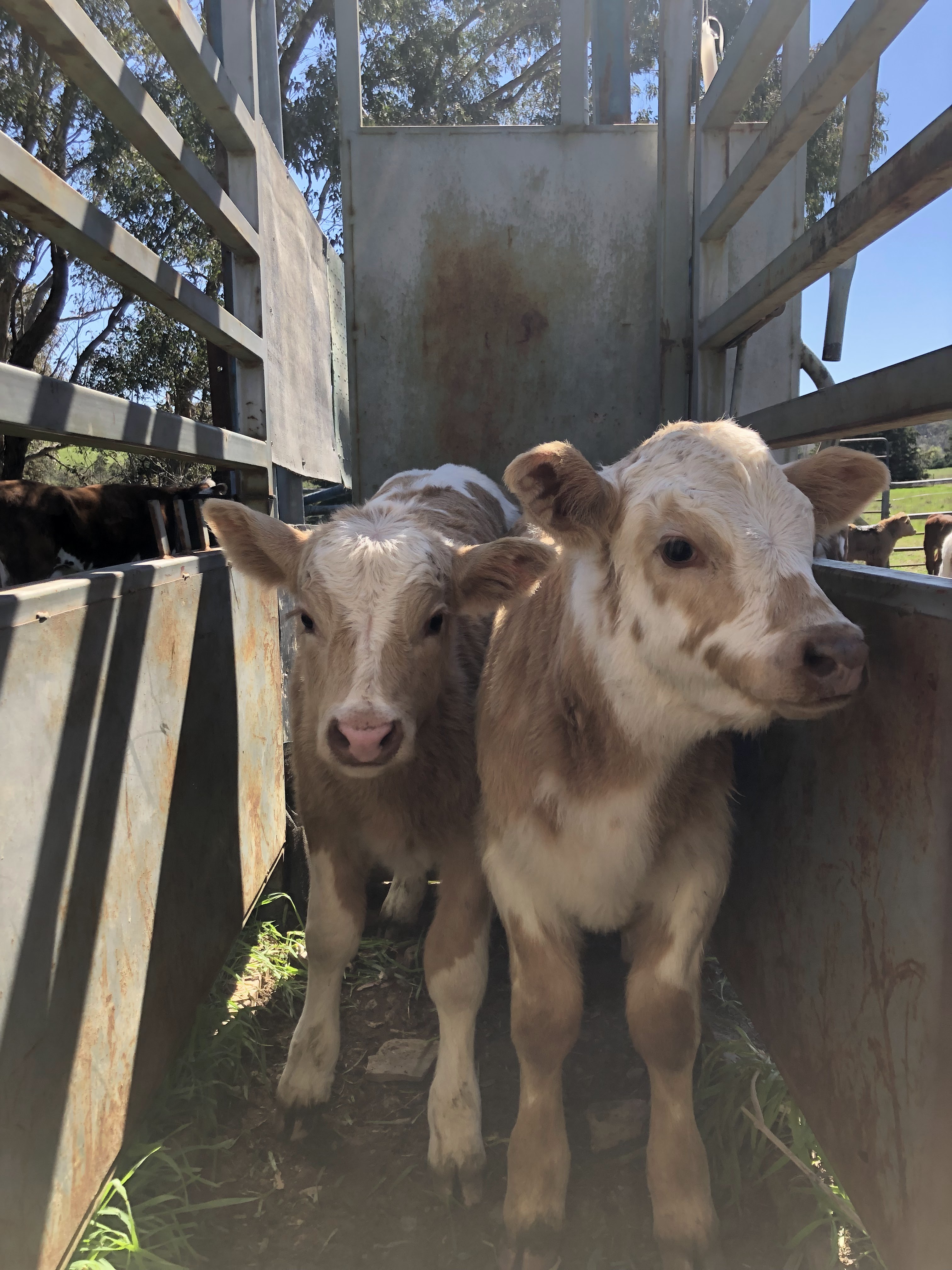
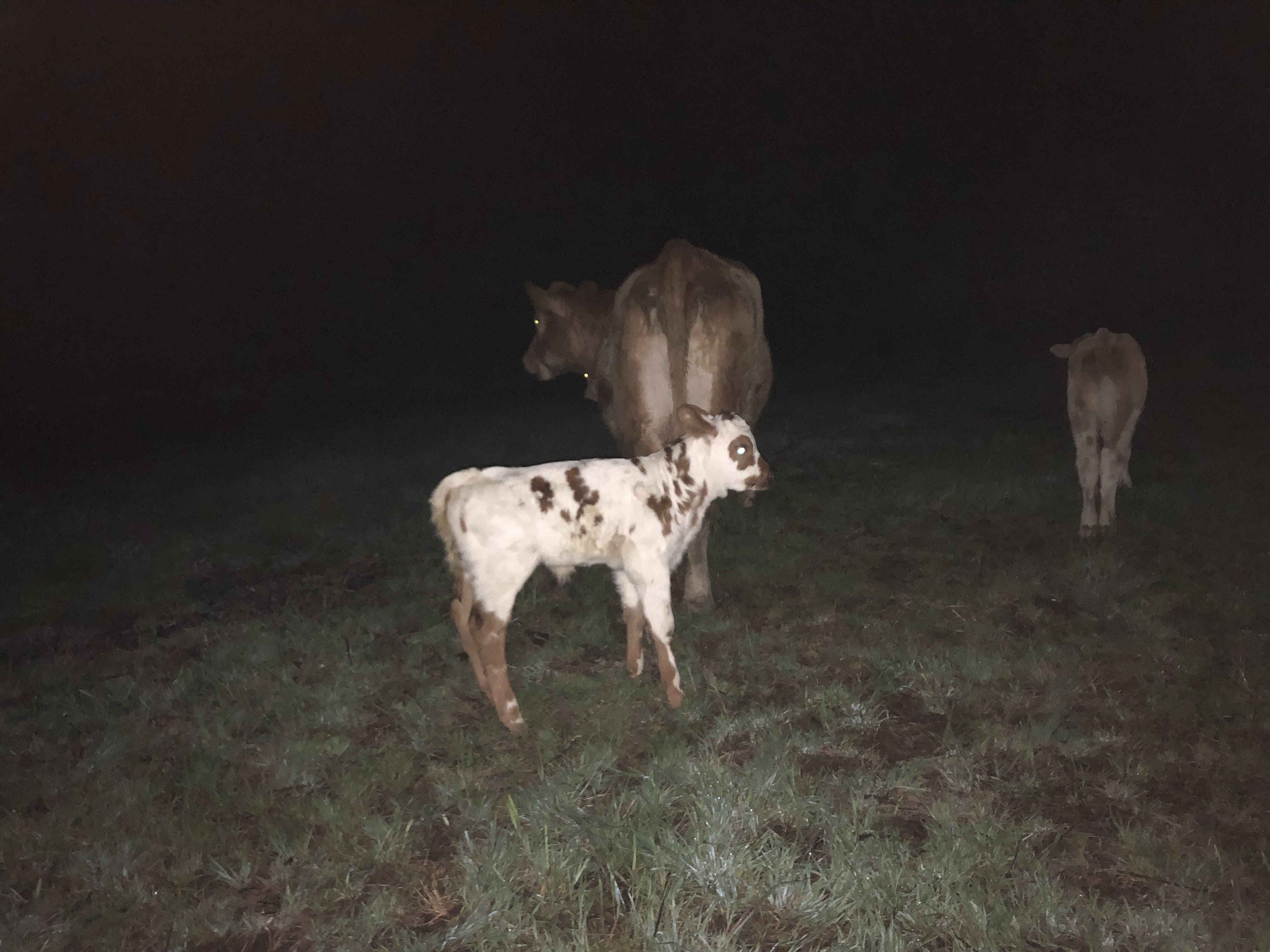
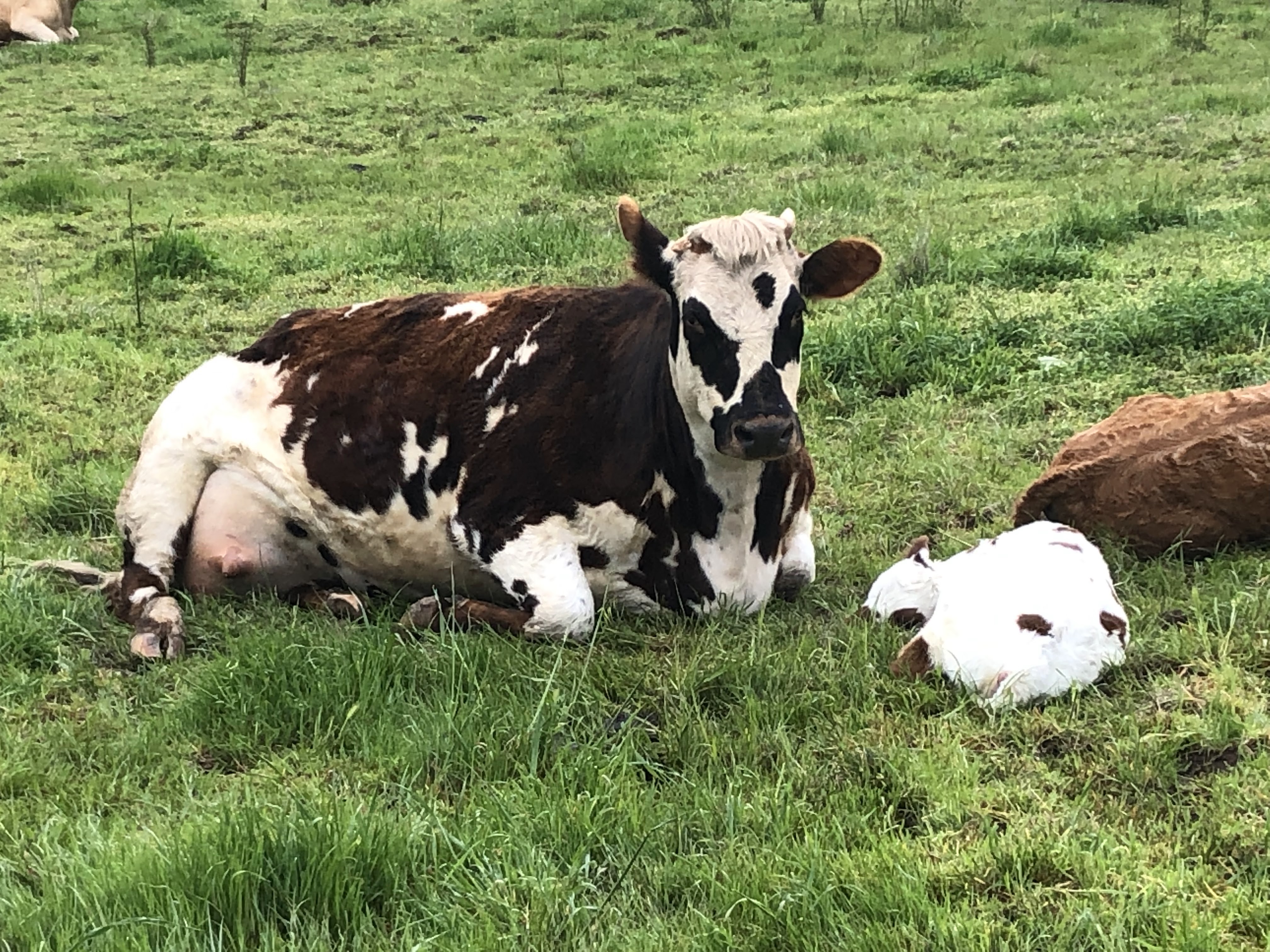
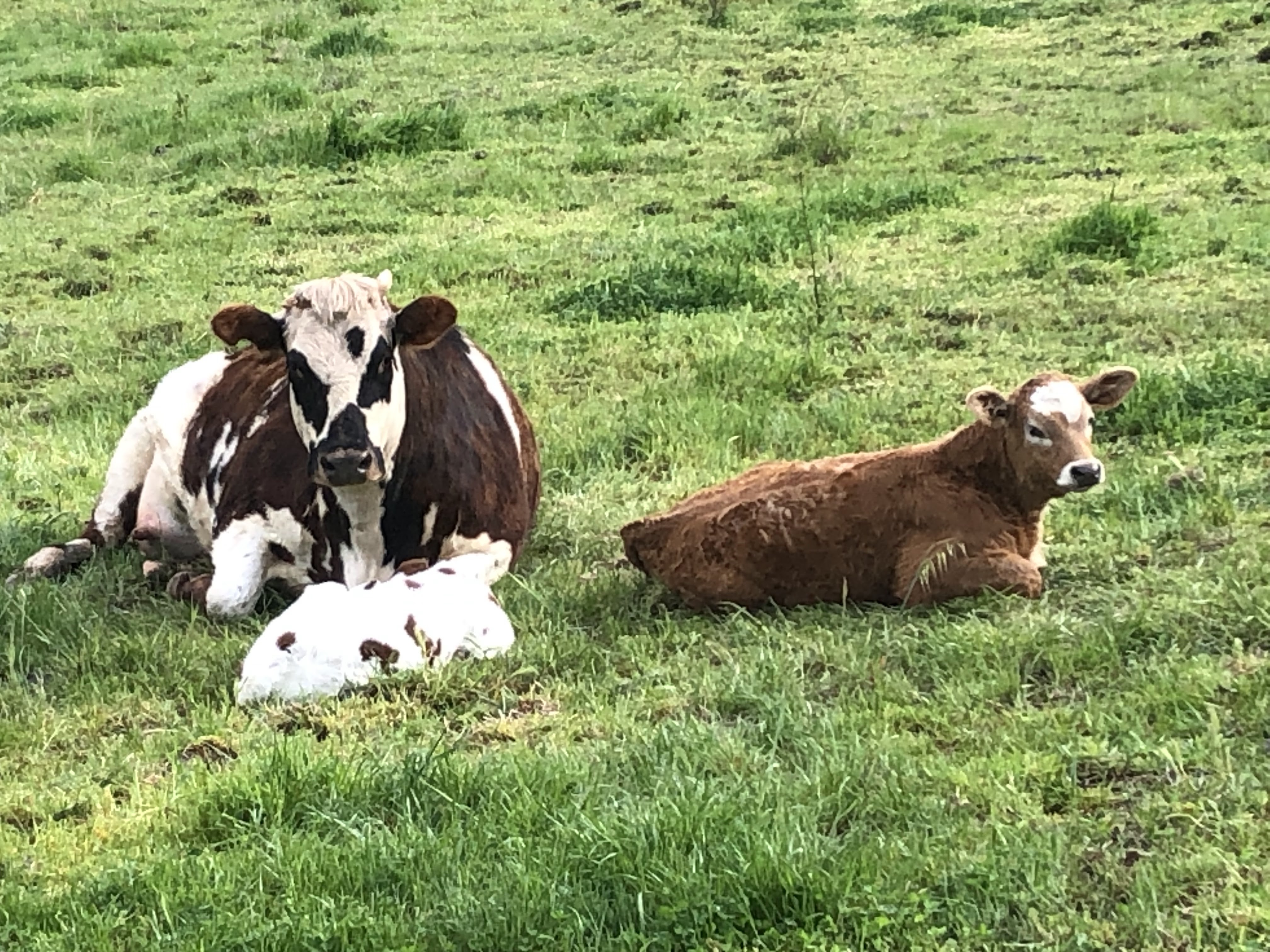
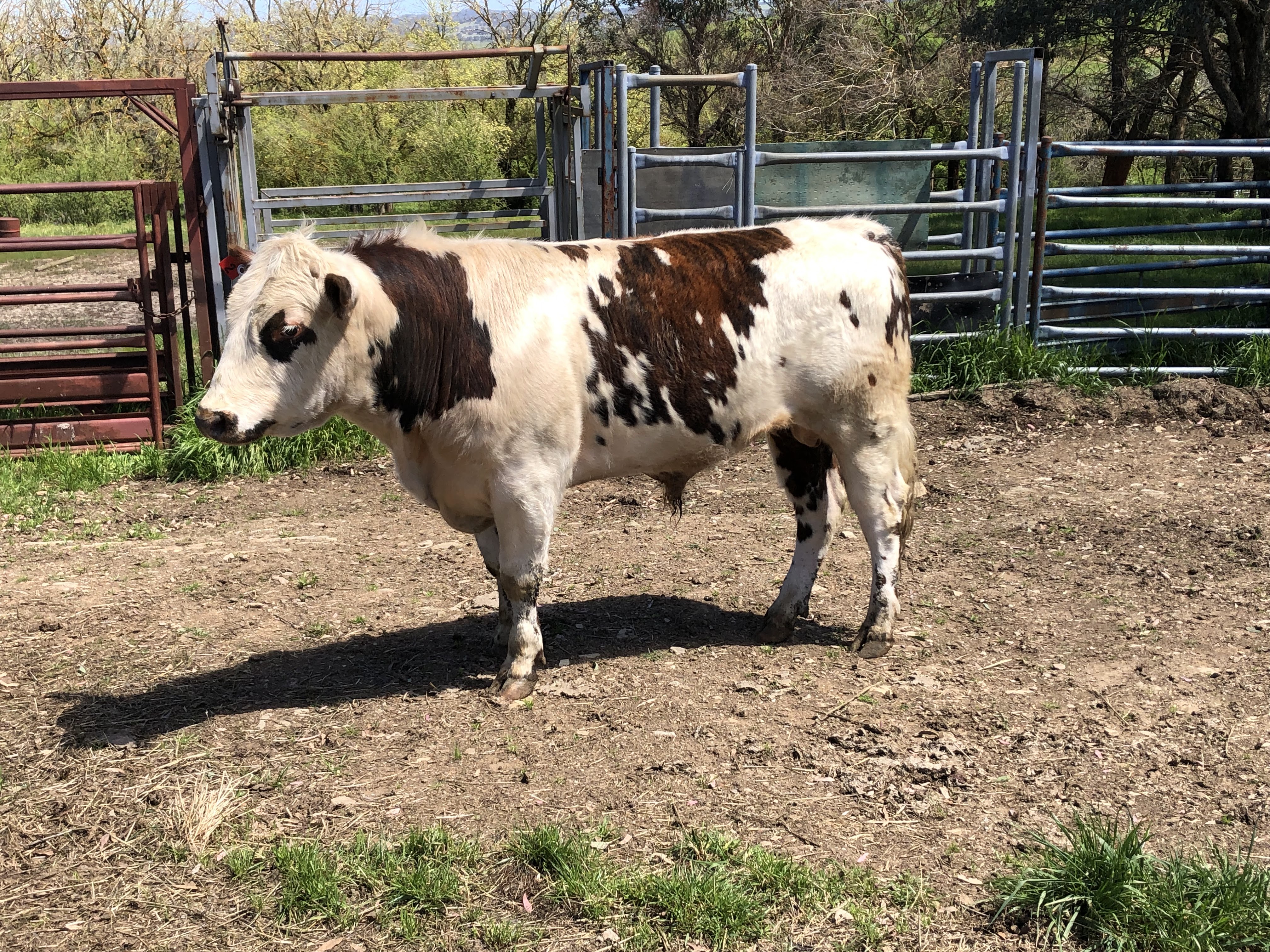
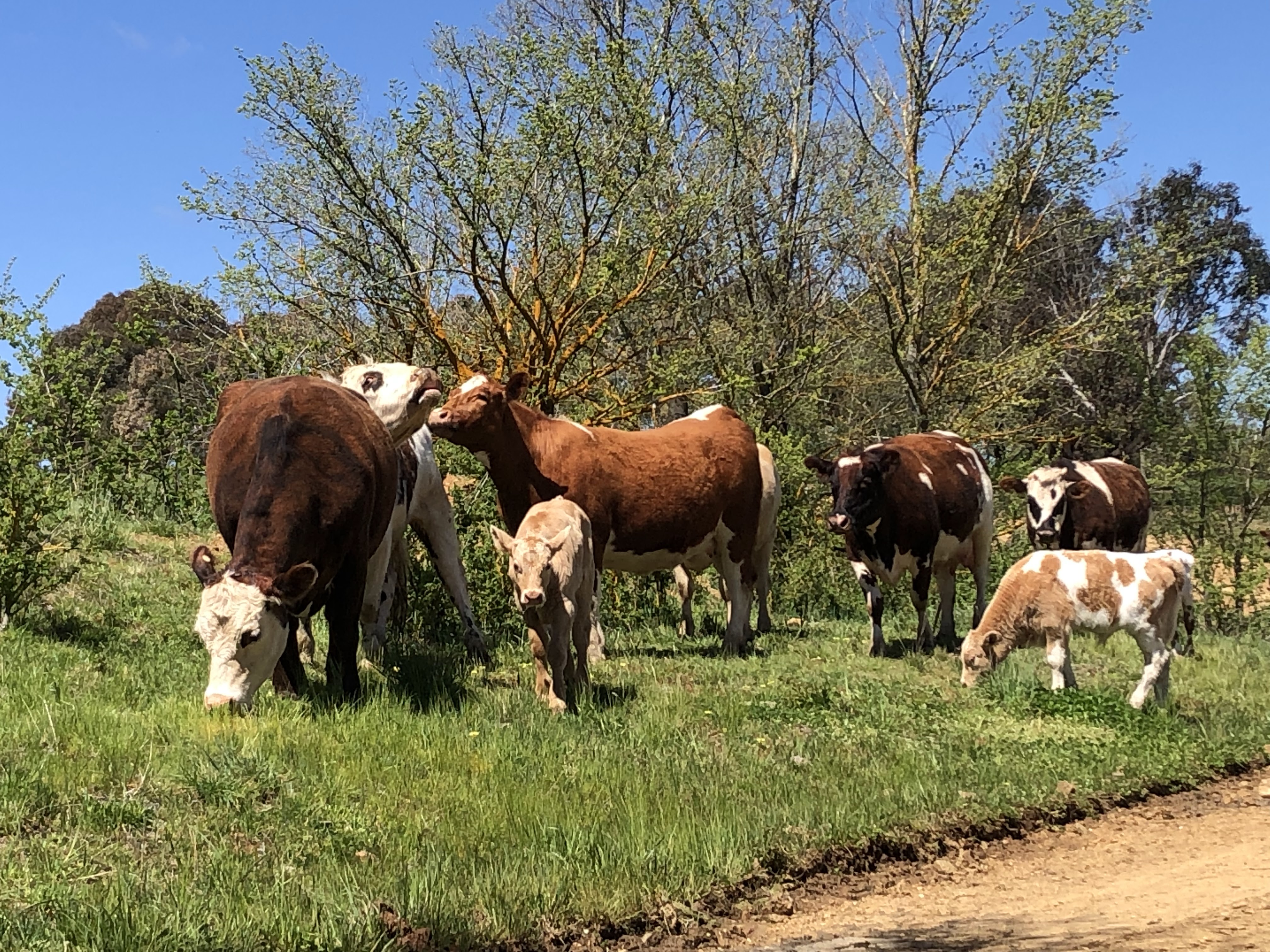
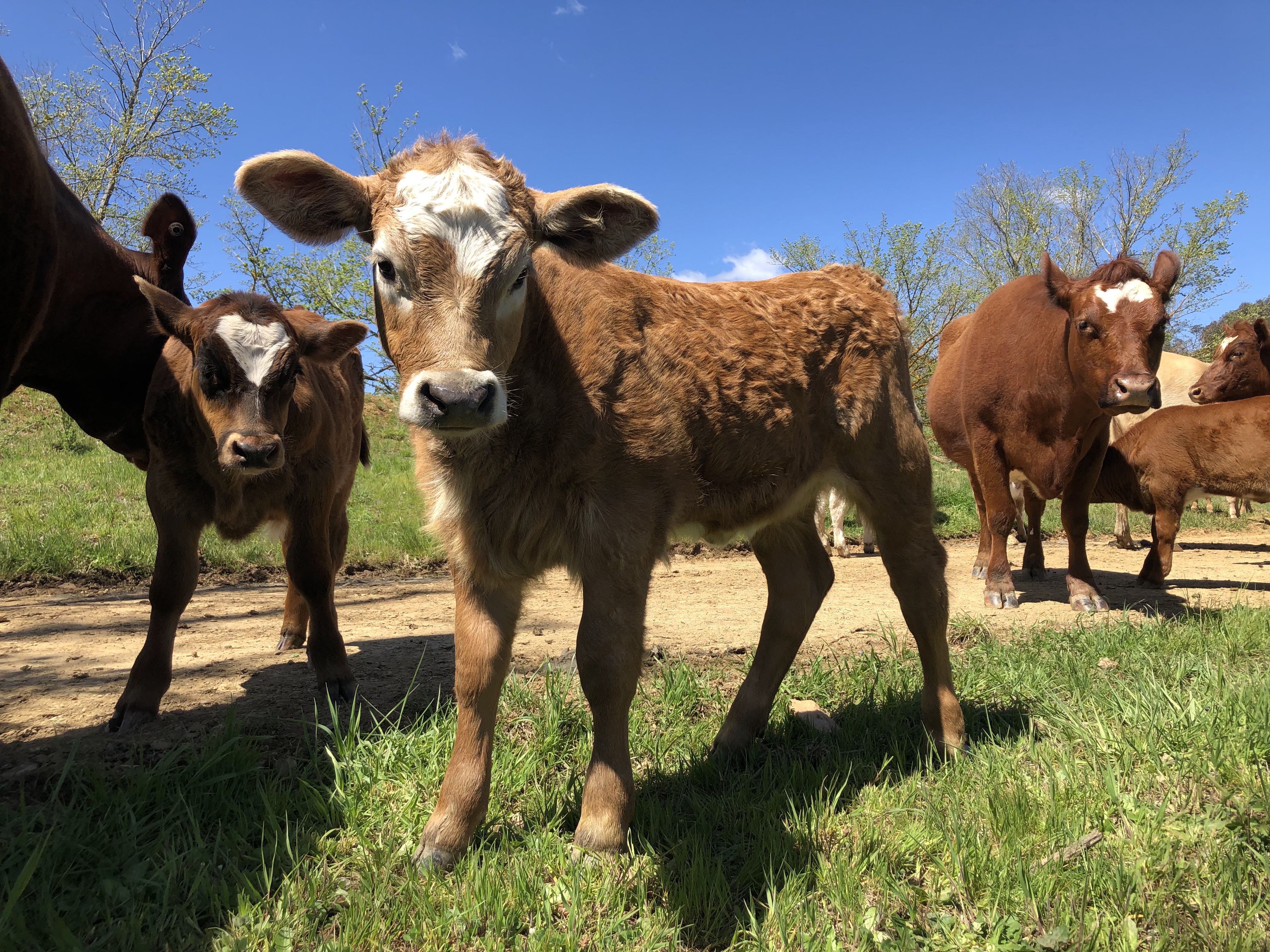
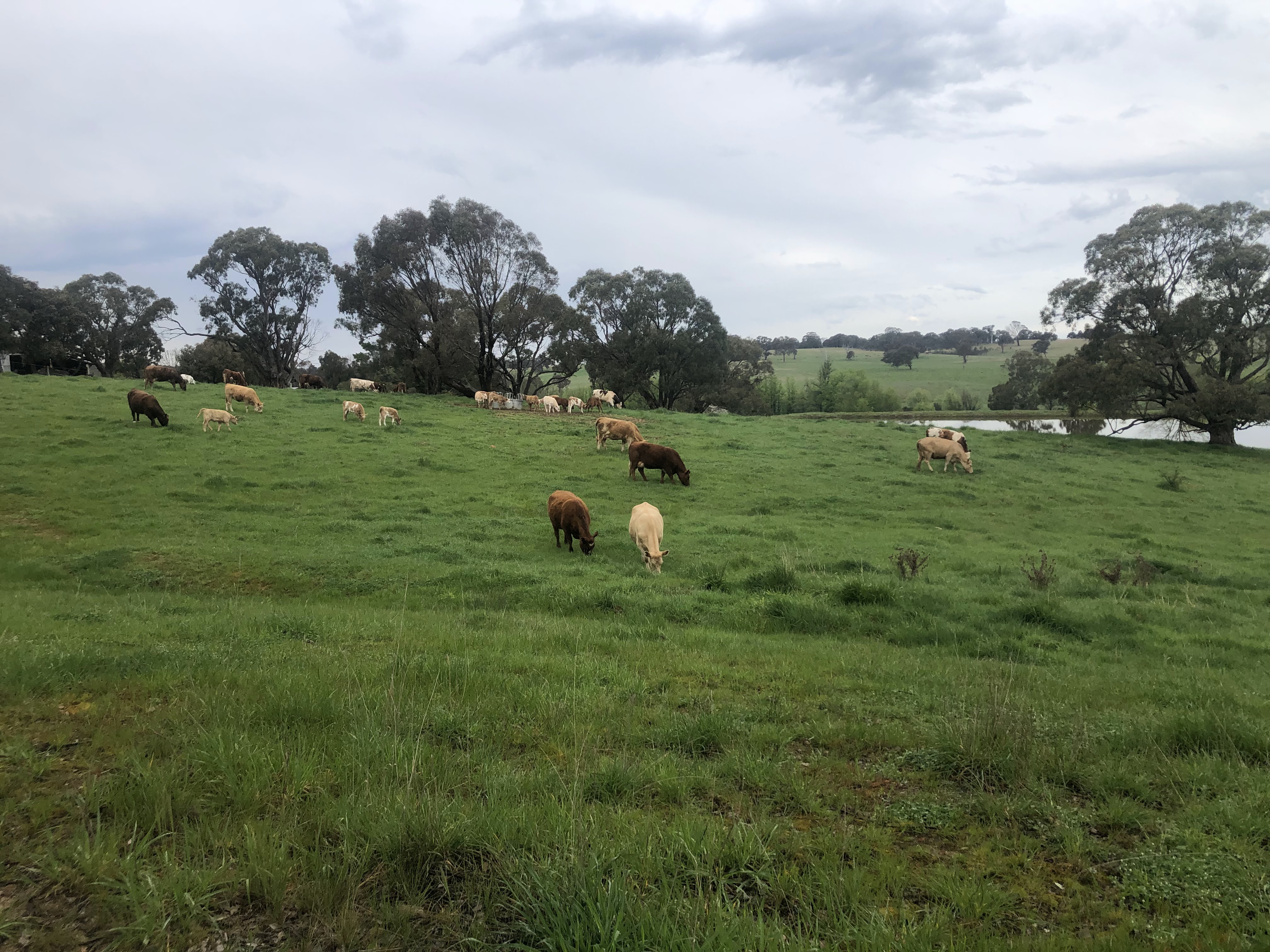
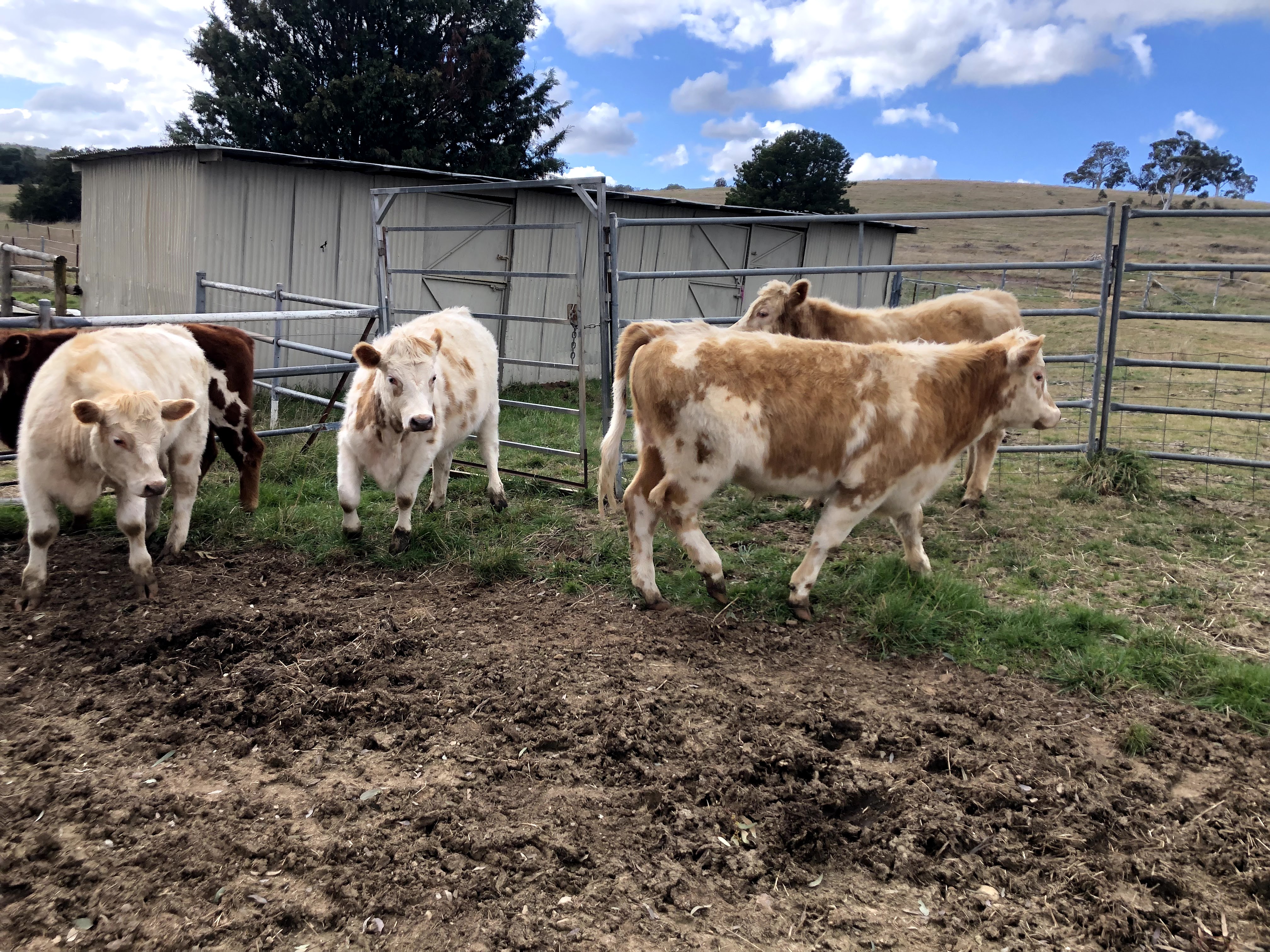
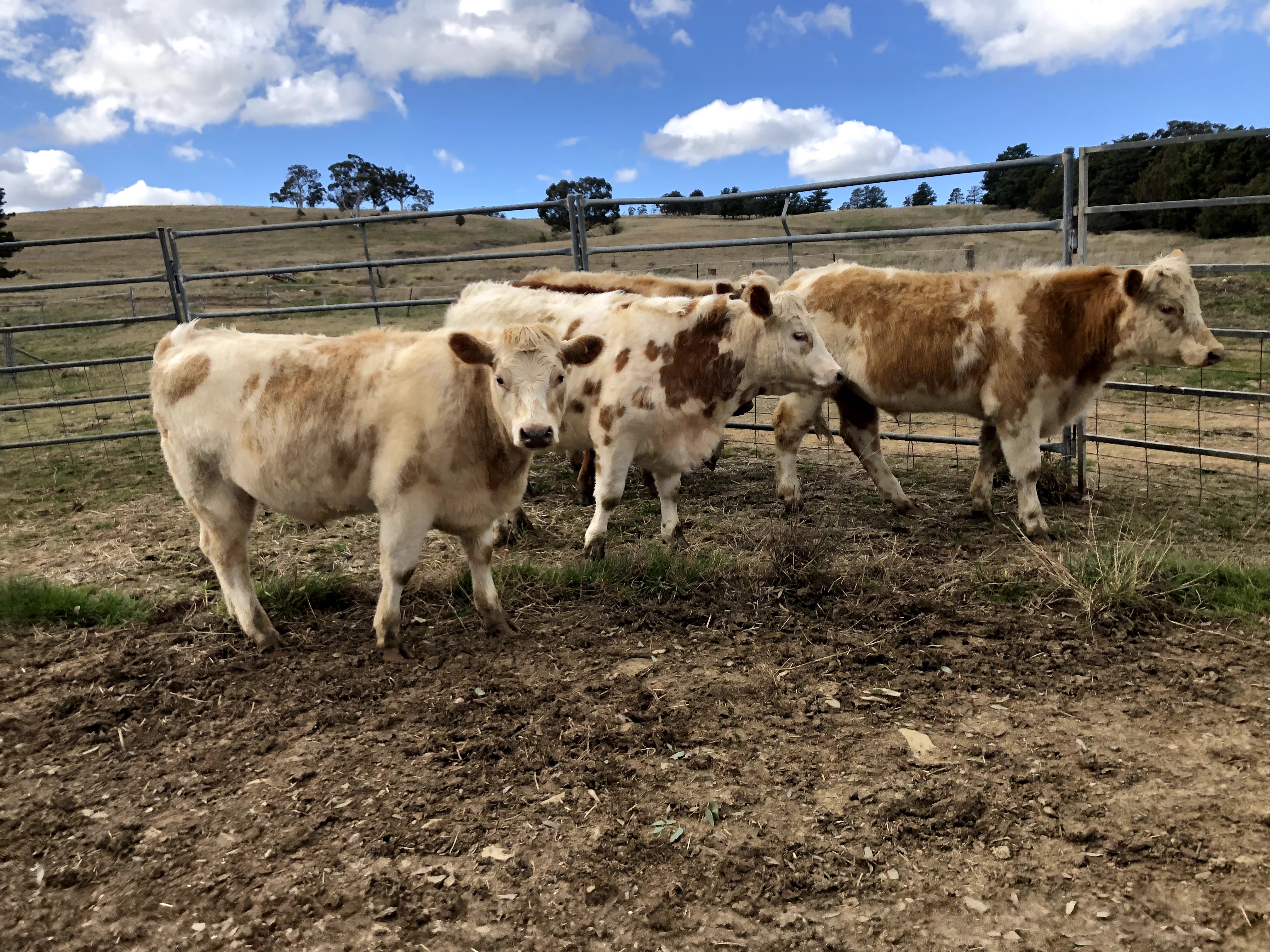
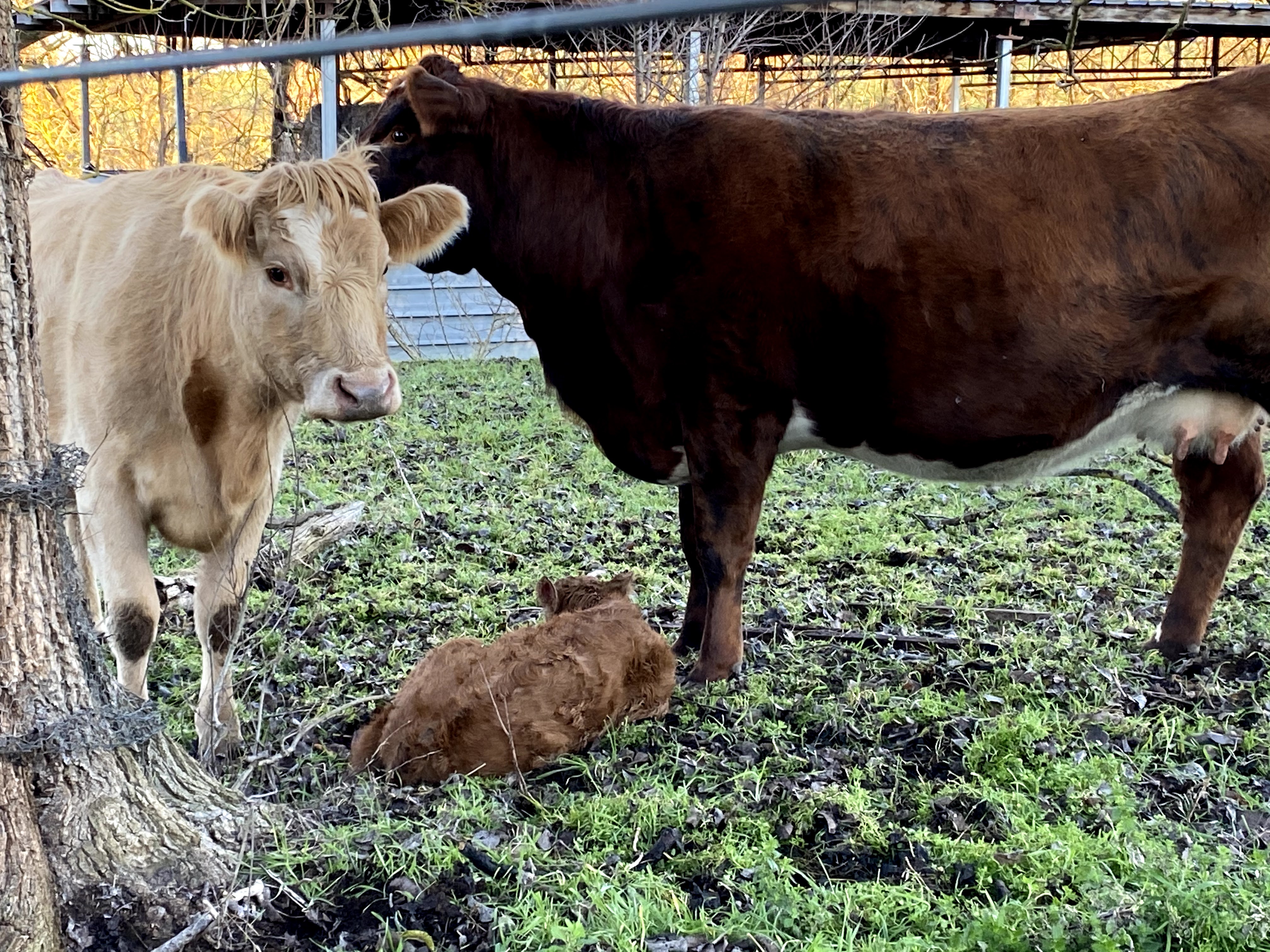
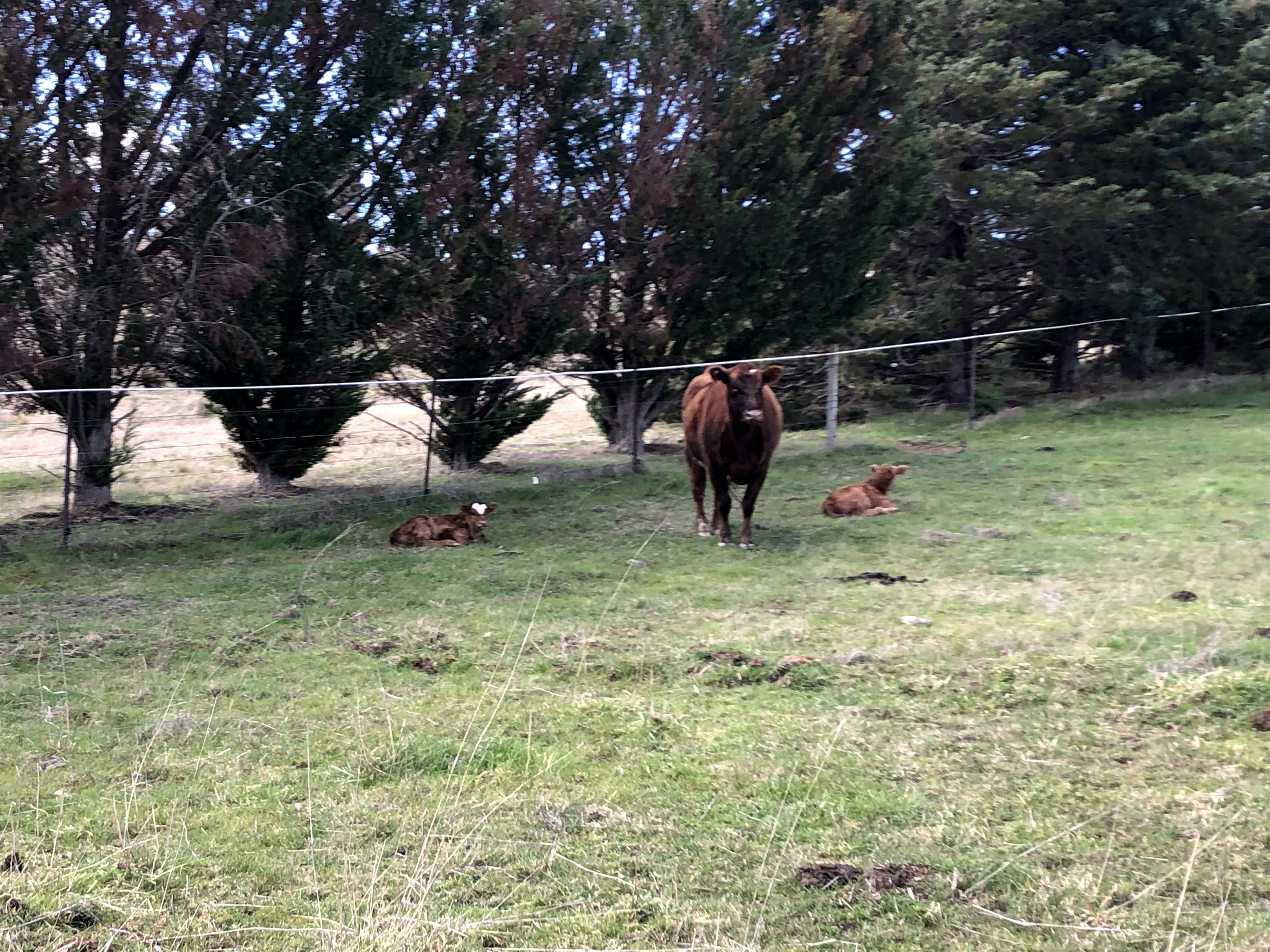
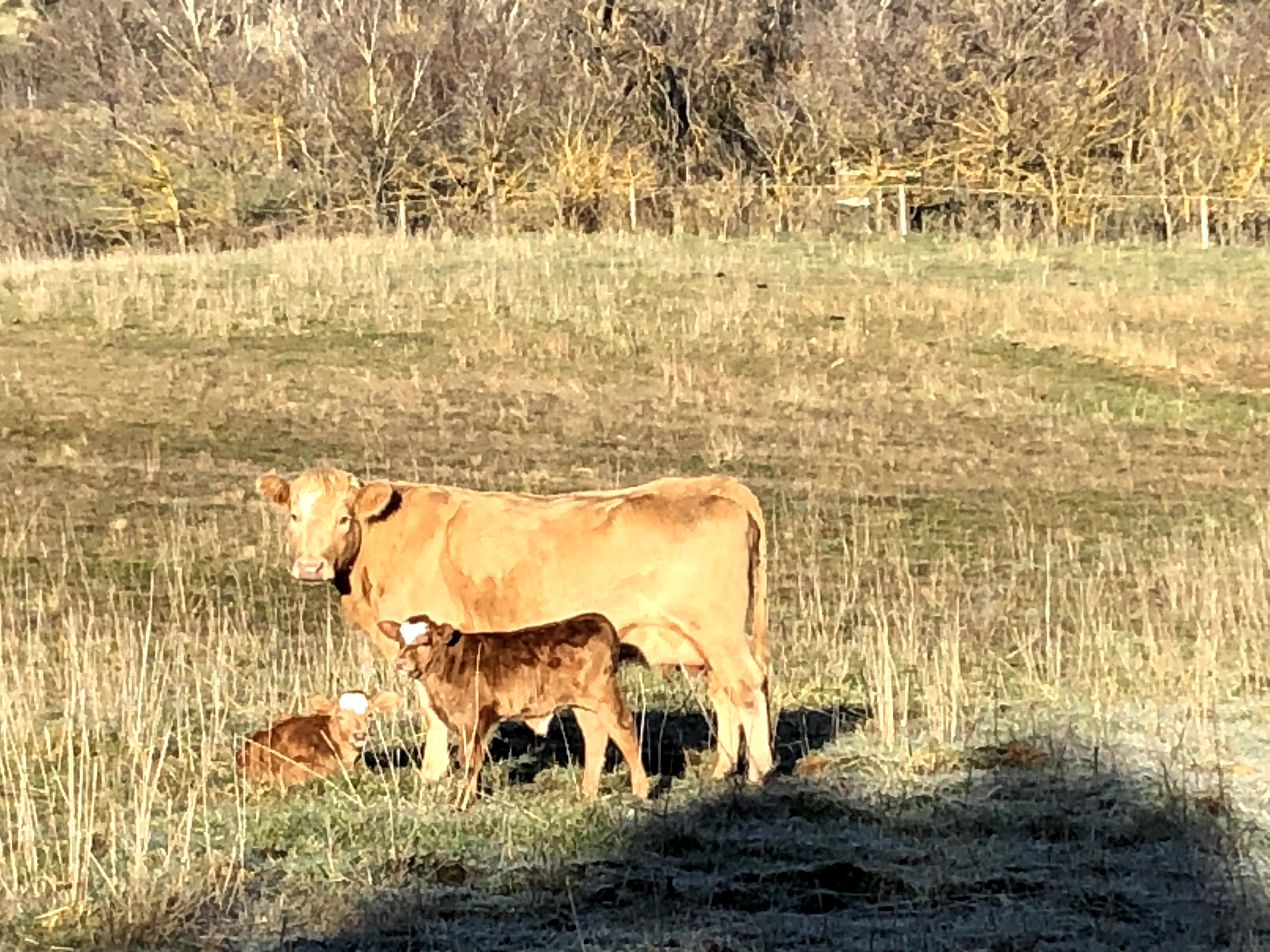
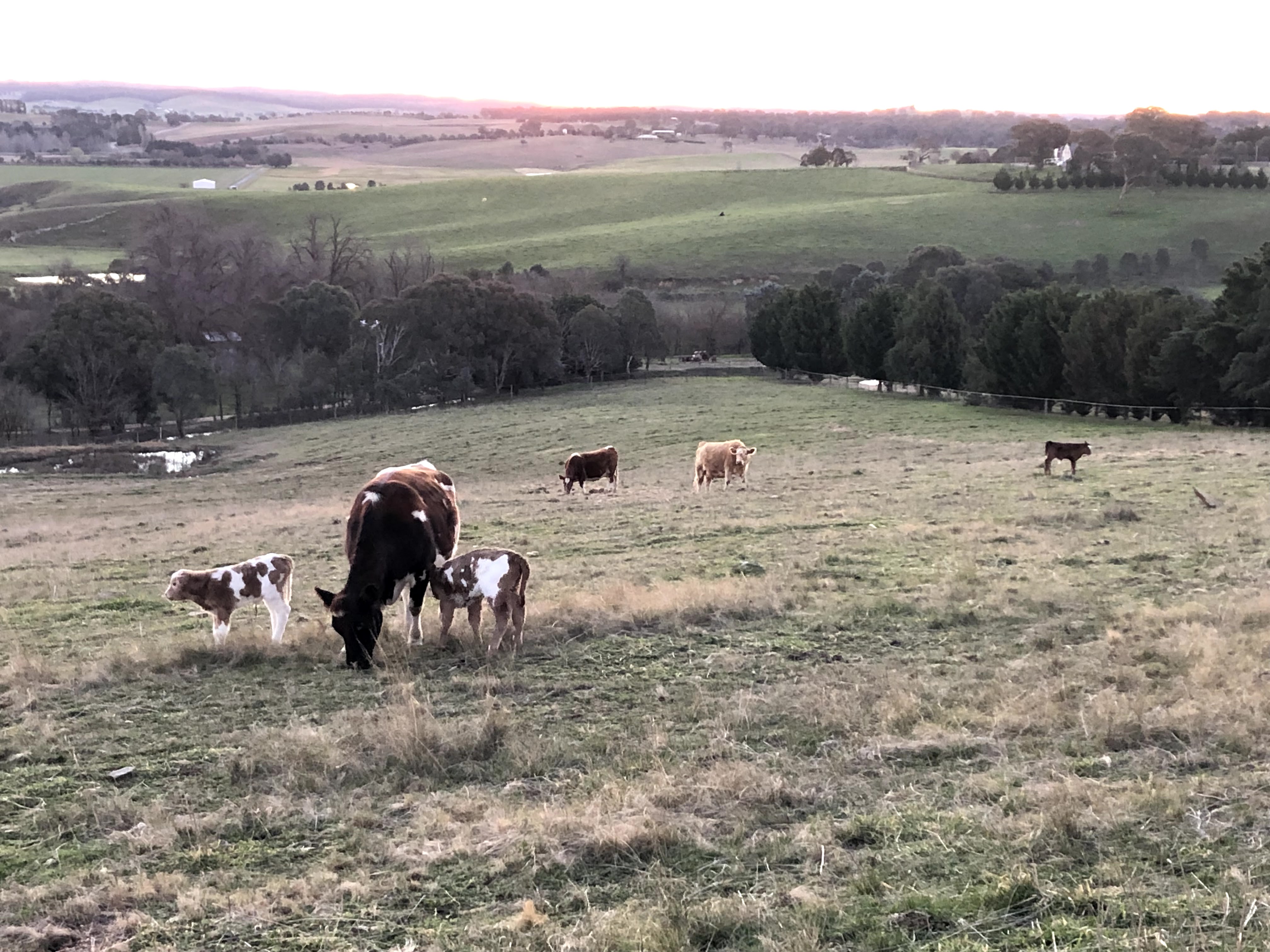
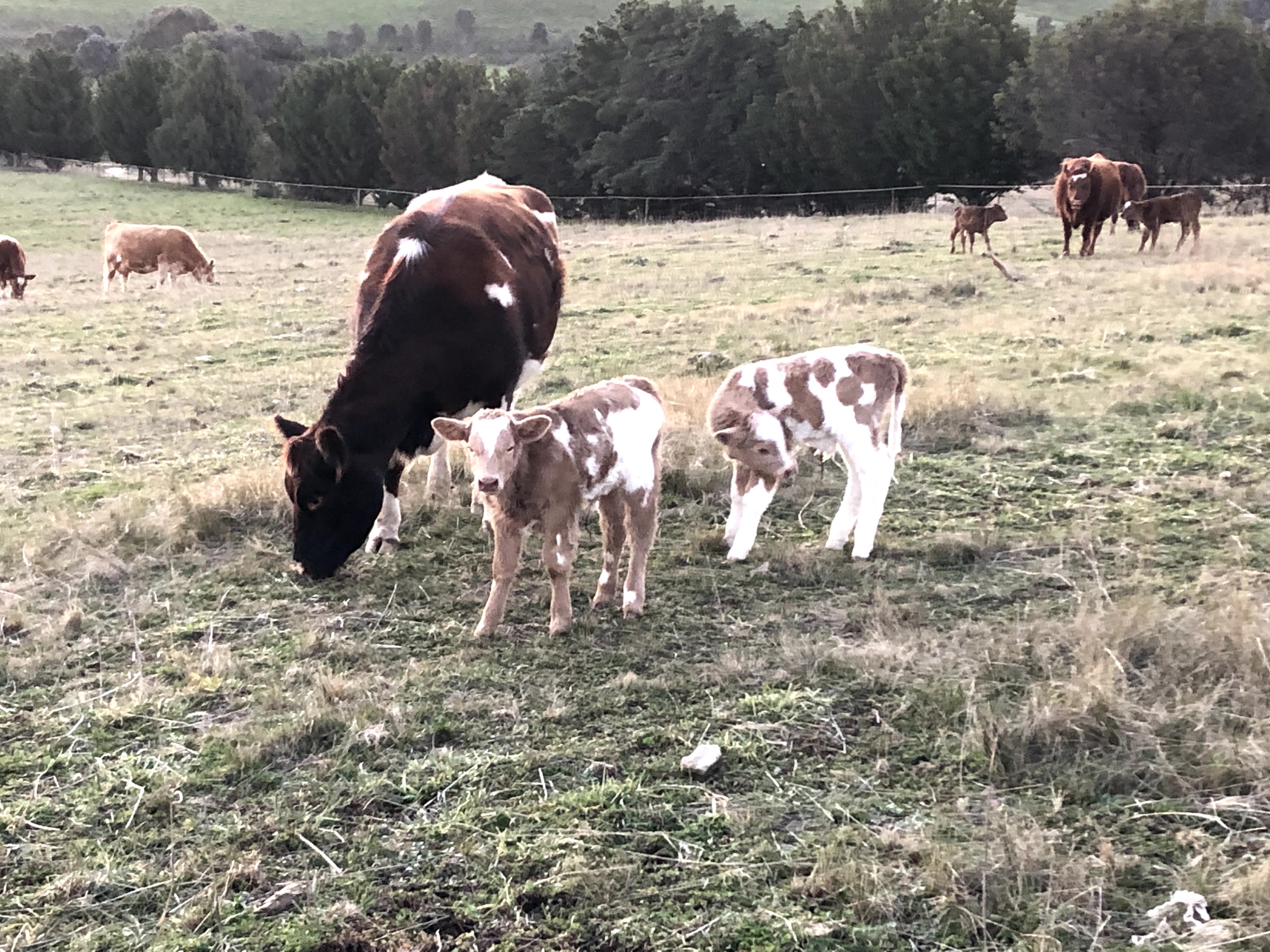
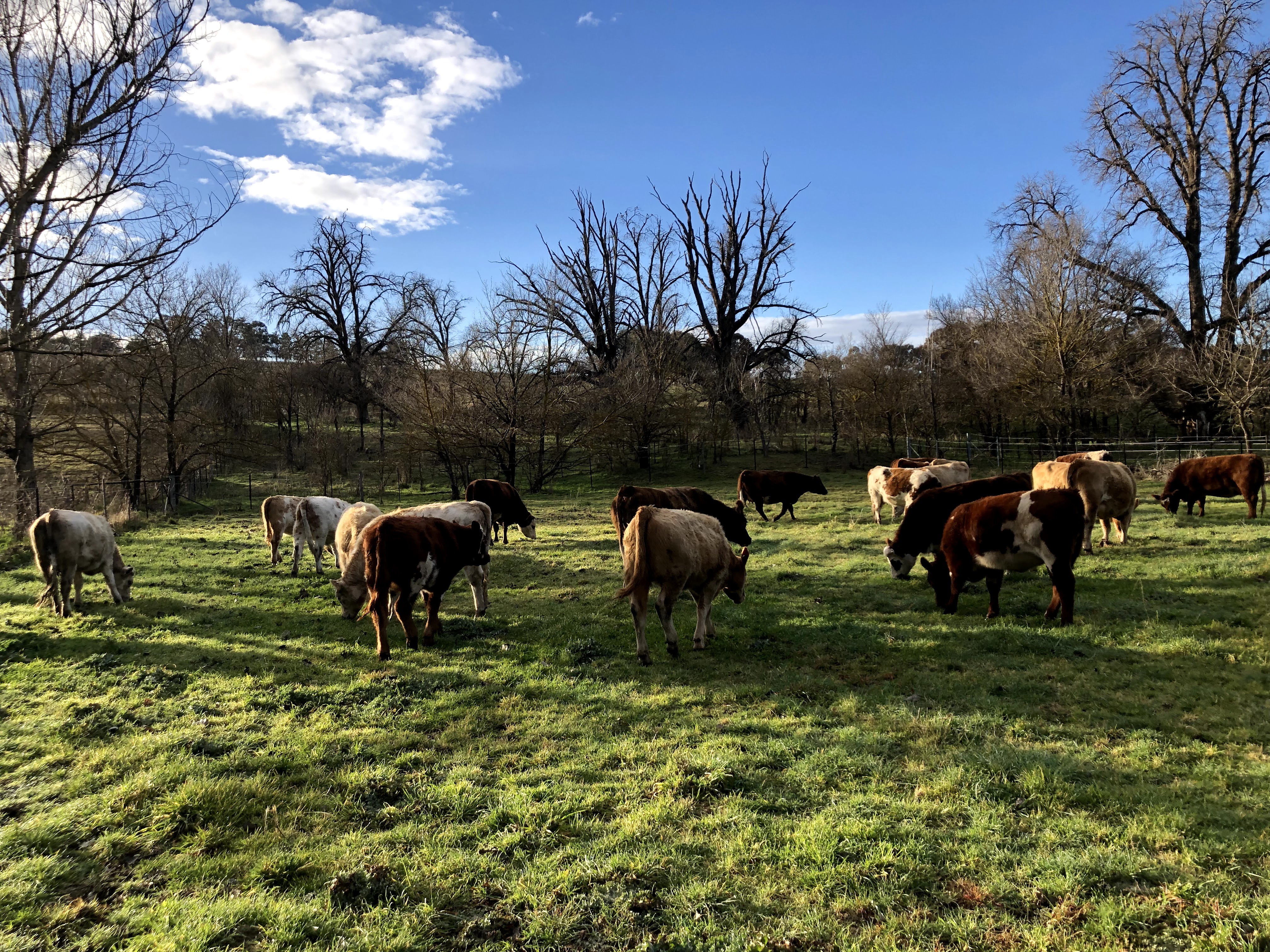
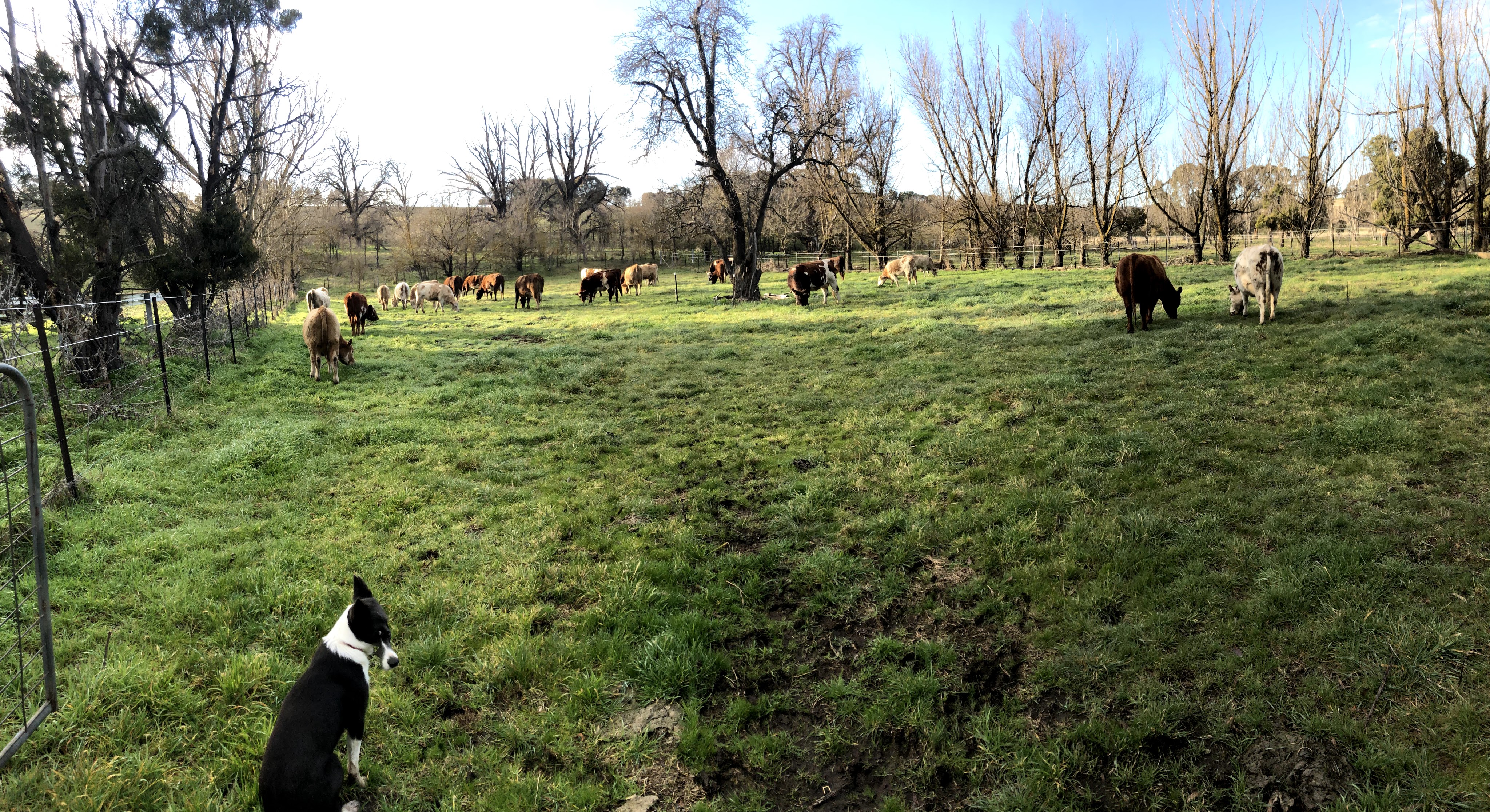
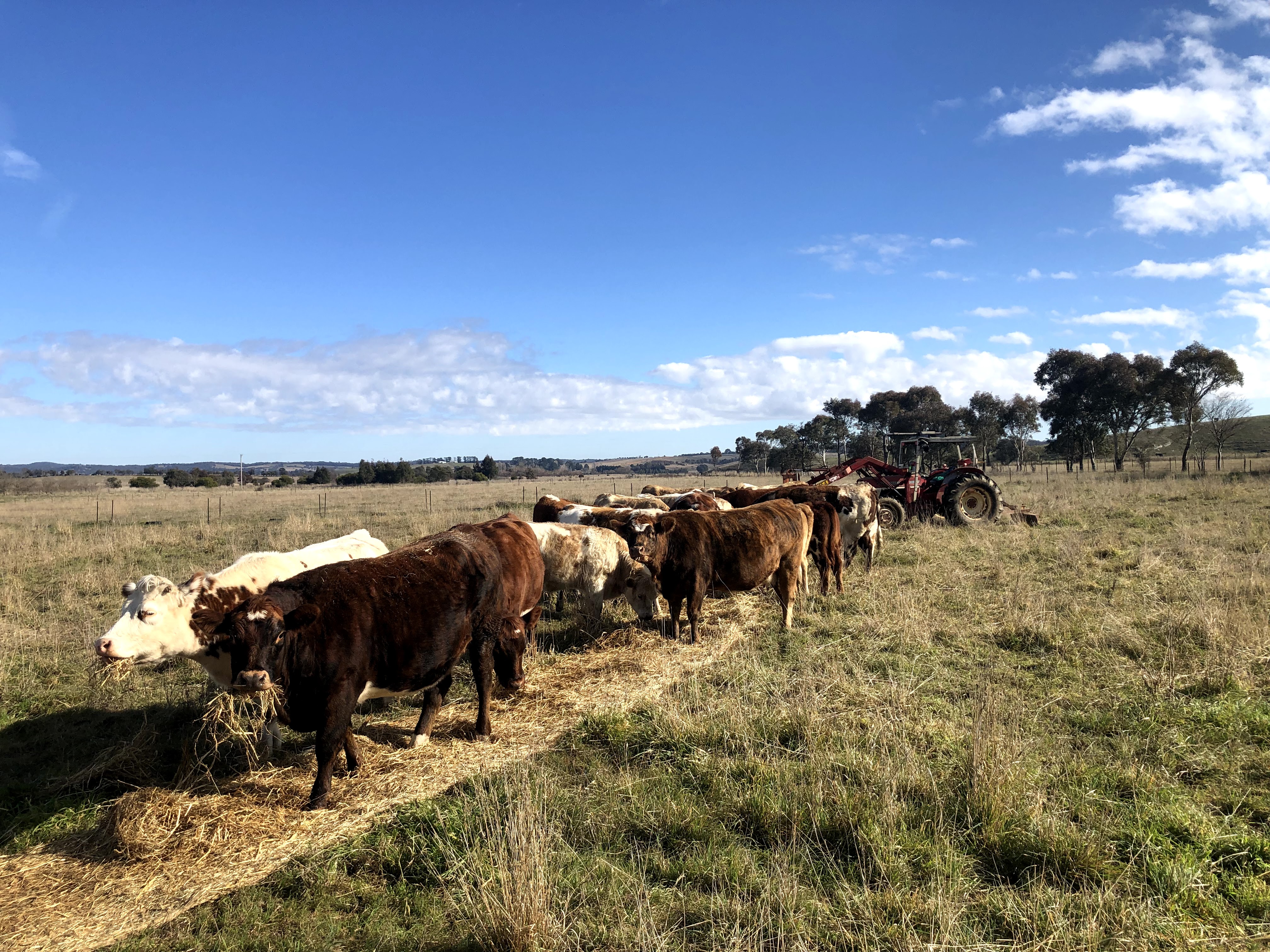
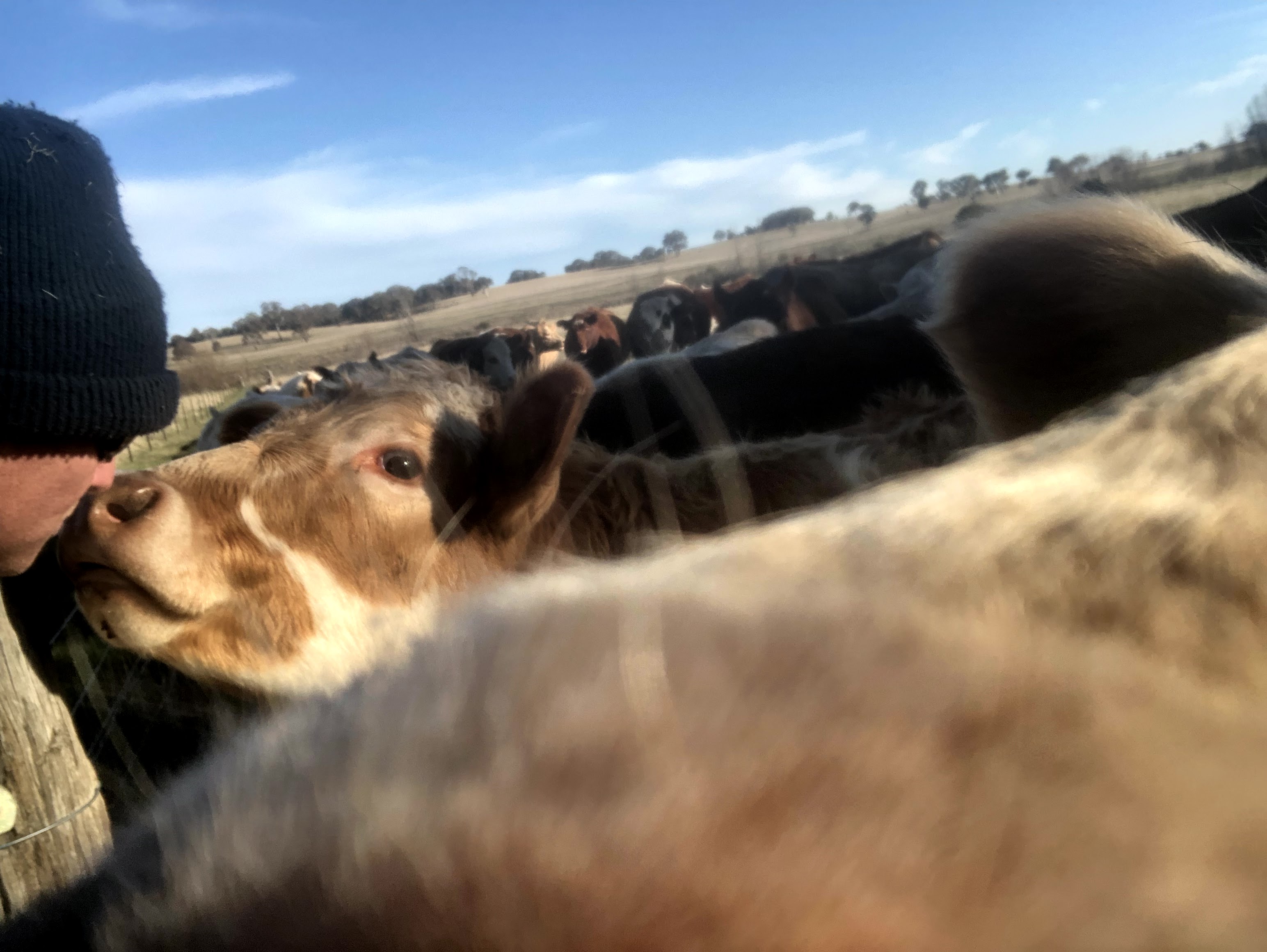
Whilst I might be back to our ideal stock rate of 15 cows (plus Zoe of course), the next generation have started to drop. Precisely 285 days after the bull joined the herd, we had our first calf. There is something magical about seeing the new calves on the ground. Their gentle mothers give me a shake of their head if I look like approaching too close, especially for the first day or two. After they find their feet, the calves are often found in a creche with one cow on supervision duties. They especially love napping in a sunny spot out of the wind. Zoe has settled back in with the the herd also – if you want to know which one Zoe is, she is the one who gave me a kiss in the last blog: https://rockfarming.com/2021/08/01/winter-planning-on-the-rock-farm/

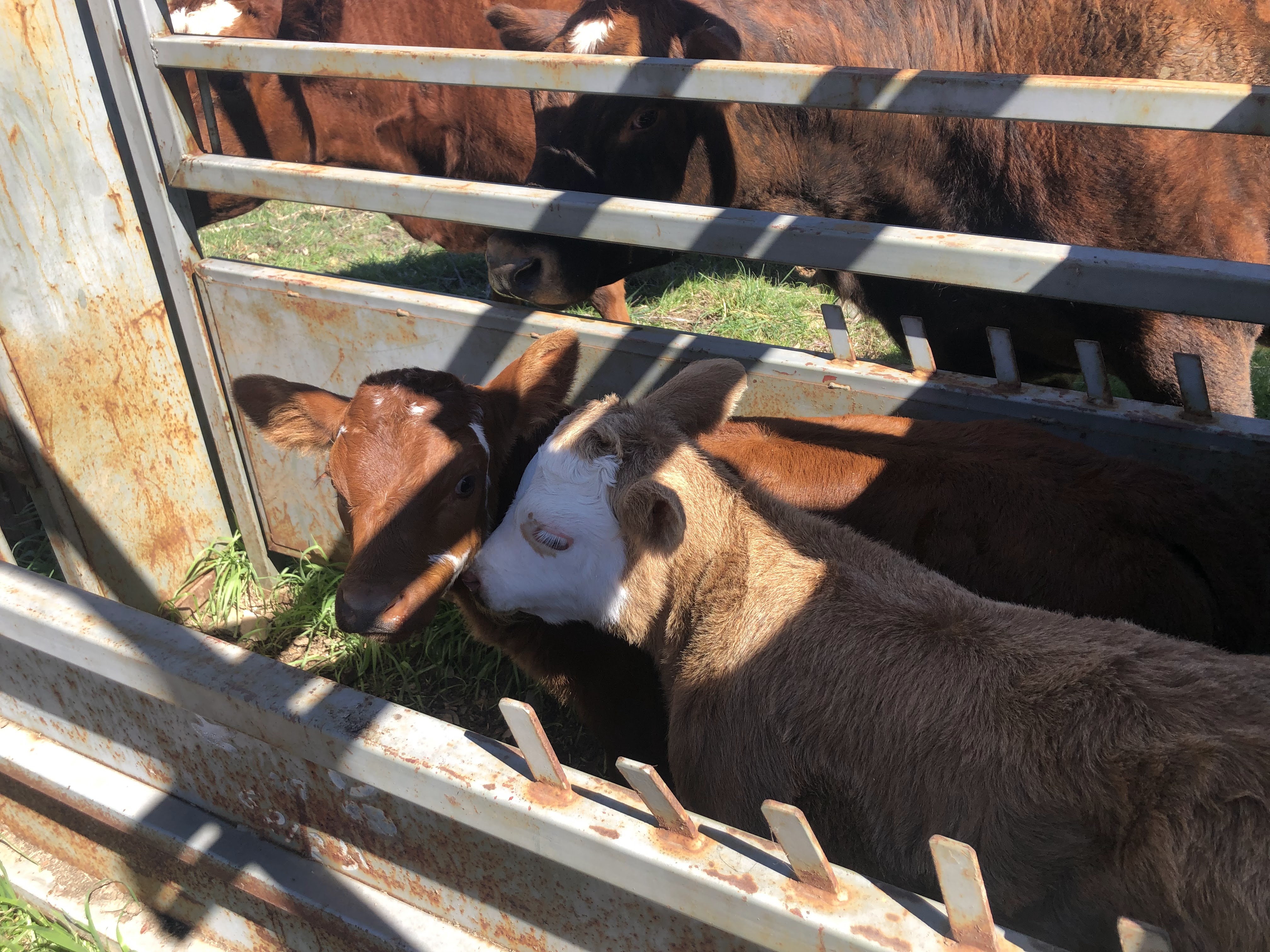
This year, for the first time, one of my favourite cows, Margurite, gave us the most unexpected gift. Twins! Twin calves are not only unusual in cattle, but the mother often rejects one of them. We watched pretty closely for the first couple of days, but Margurite seemed more than happy to accept the duties of looking after both of them.

So be warned – lots of calf photos to follow!

Please stay safe and look after yourselves. We are surrounded by wonderful neighbours who are keeping an eye out for us. We are also fortunate to have regular jobs and meals on the table. For friends who read this – if you’re are finding the going a little tough, please reach out. I hope you enjoyed this little update.

Winter Planning on the Rock Farm

Winter on the Rock Farm this year has been remarkable, with steady rain creating a beautiful slushy feel when walking around the paddocks. With the rain has come plenty of cool overcast days, and some thoroughly miserable windy days. But the rain has also kept the frosts mostly at bay, and this means the grass is still growing, albeit slowly. The cattle all seem to have recovered from the curse of Mavis (https://rockfarming.com/2021/07/10/curse-of-mavis-mange-mite/), and the cows are definitely starting to look uncomfortable with their growing bellies.

Regular readers will be aware I decided to hold last spring’s calves over winter. I have been using a couple of tools to help me determine my strategy. The first is Farming Forecaster (https://farmingforecaster.com.au/). This tool, supported by Local Land Services and CSIRO examines soil moisture profiles at numerous sites. All the sites near the Rock Farm show we are in an exceptional season, with unusually high pasture growth forecast for spring. Whilst most of the sites nearby run merino sheep, there are useful graphs on forecast livestock weight. The model predicts steady increases in stock weight until around the first week in August before a steady decline, associated with lambing.

Farming Forecaster estimates our pasture is growing at around 4-5 kg/ha/day – which is not enough to feed all my hungry mouths entirely. To help me determine the balance required, I use the Local Land Services “Drought and Supplementary Feed Calculator“(DAFSC) app (https://www.dpi.nsw.gov.au/animals-and-livestock/nutrition/feeding-practices/drought-and-supplementary-feed-calculator). This app takes into account the amount of pasture I estimate I have, and allows me to develop a ration to meet the nutritional requirements of the cattle. Practically this means it allows me to calculate how much hay I need to feed the cattle for them to maintain condition. My theory is, if I leave it long enough for me to recognise the cows have lost weight, I have left it too late.

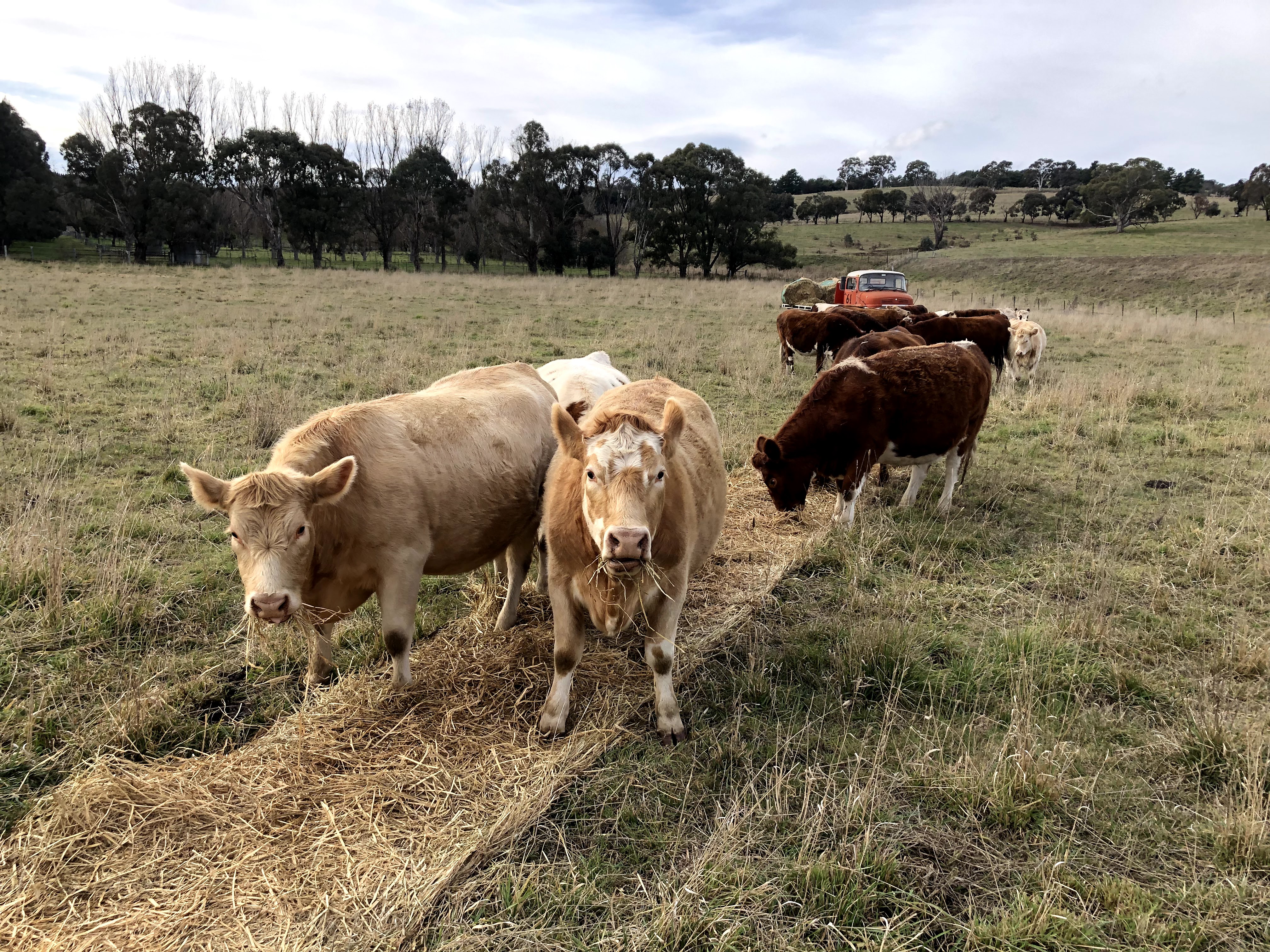
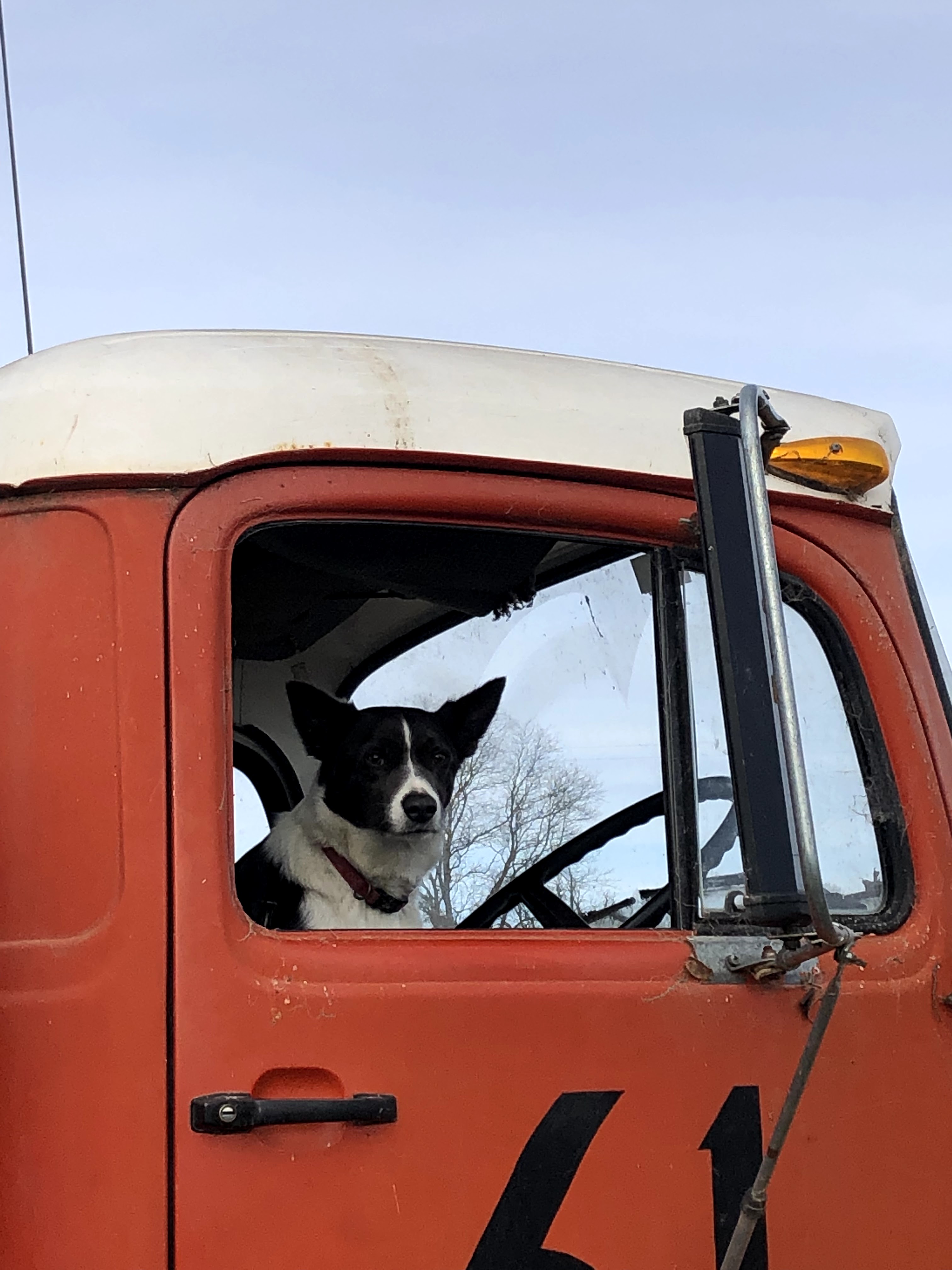
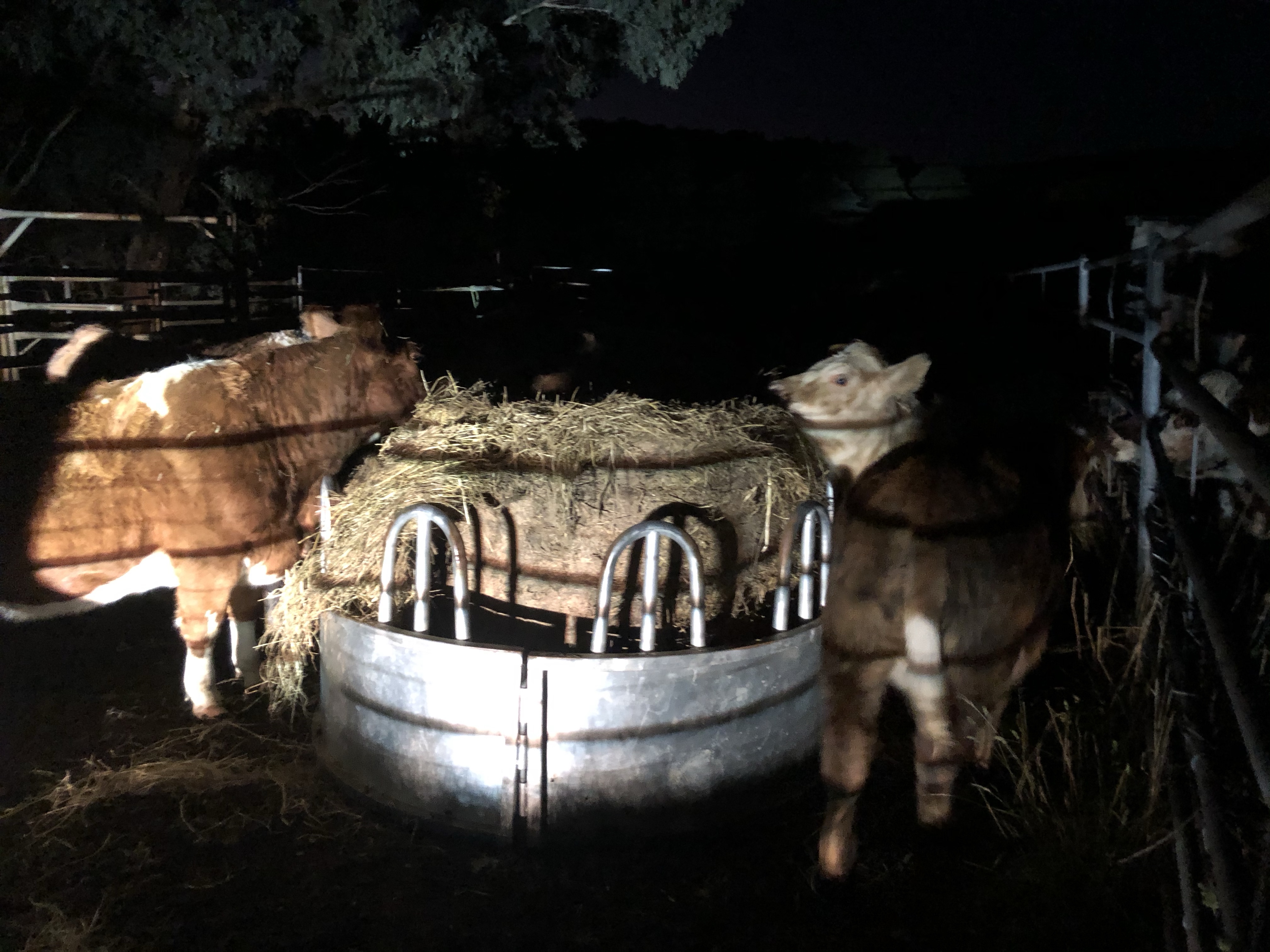
These calculations have allowed me to more accurately determine my supplementary feed requirements. I am feeding out a small round bale of pasture hay to the cattle every couple of days. The cattle love the sound of the tractor starting up. Their antics as I try to work past them into the paddock to unroll the bales make me laugh. I had put a couple of bales on the back of the truck – to allow the family to roll out the hay if I wasn’t there to drive the tractor, but it was more effort than it was worth. Only the hound seemed to think it was a good idea!

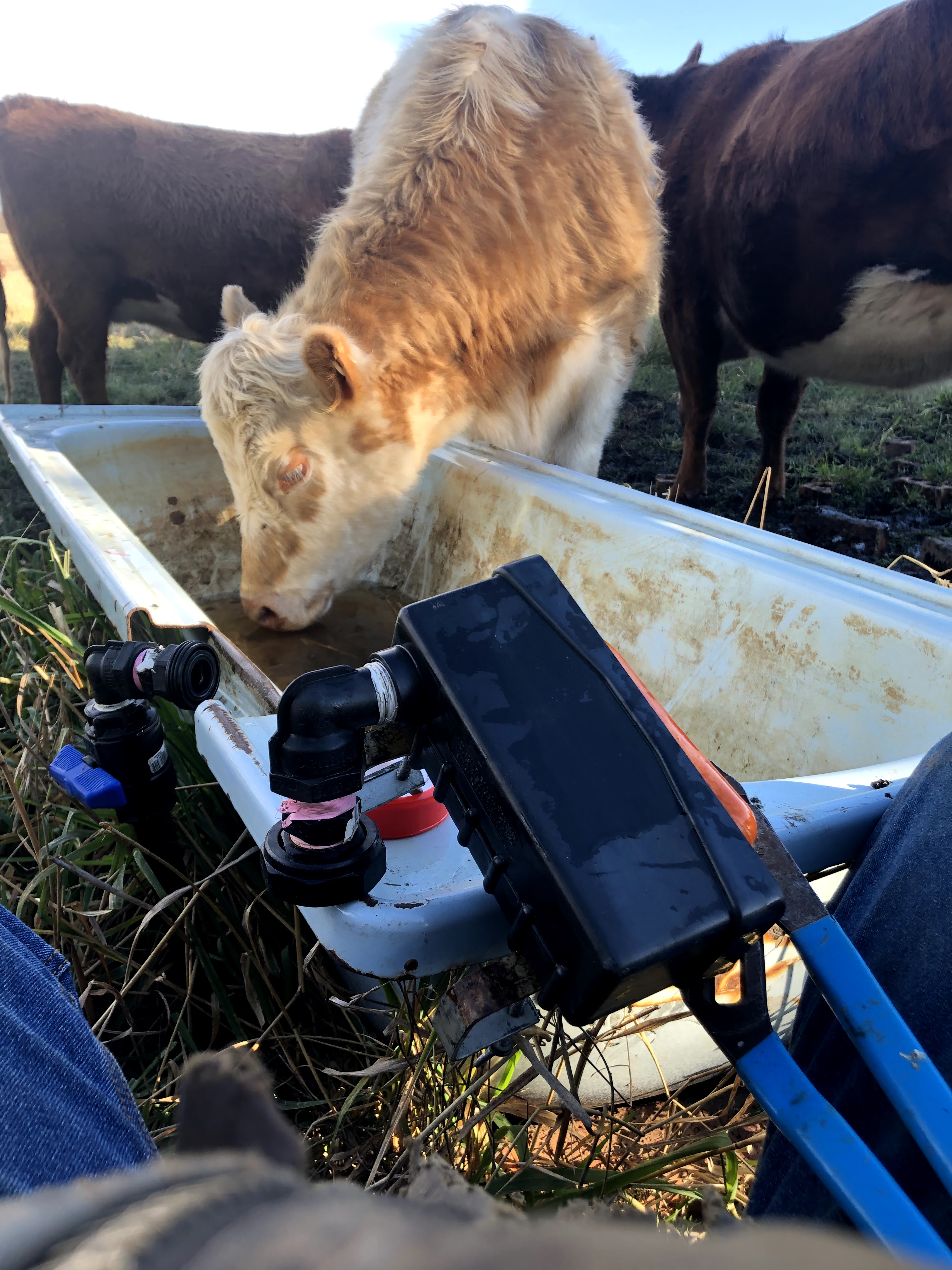
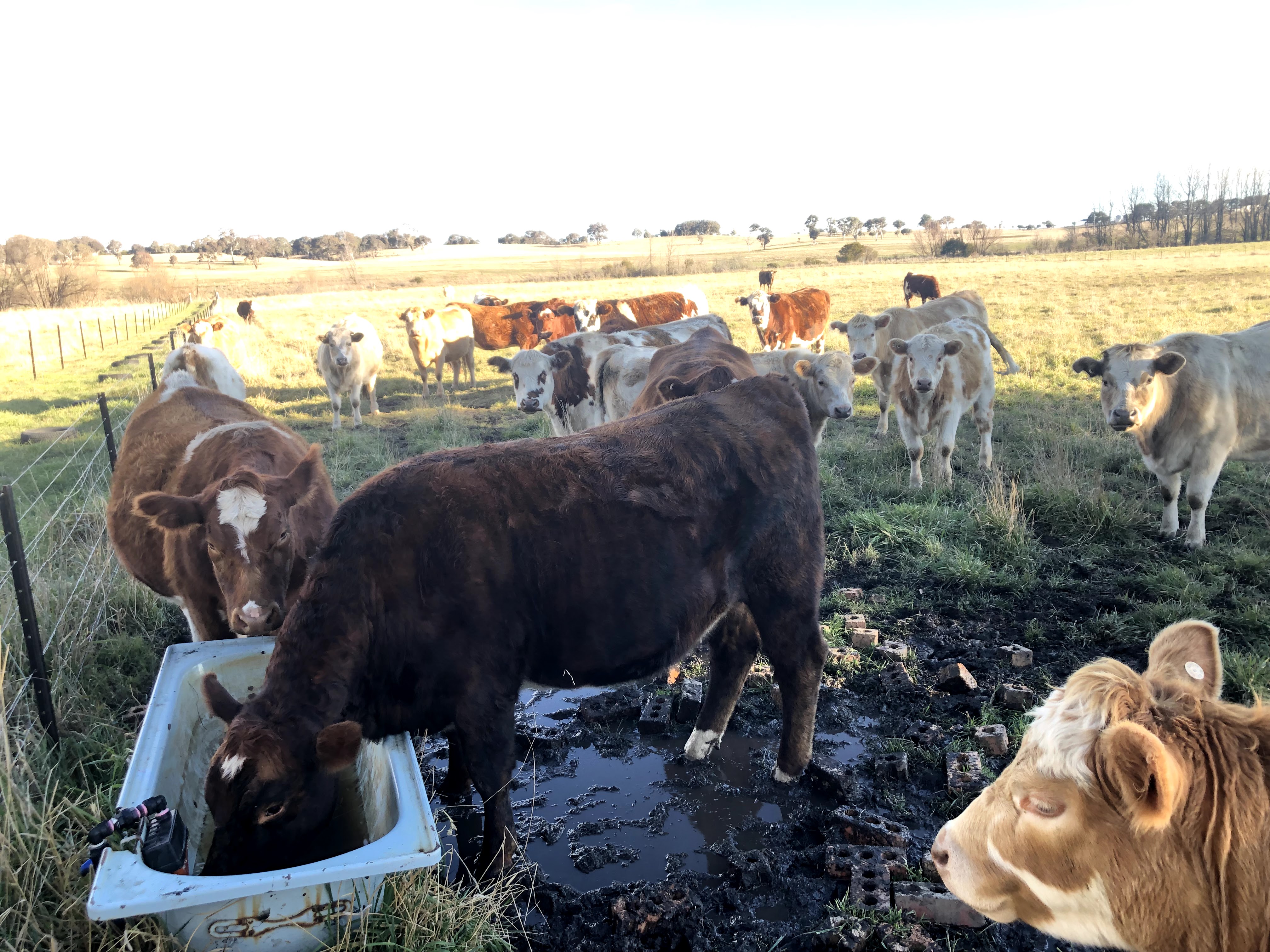
The winter hasn’t been entirely incident free. On one of my daily checks the cattle came running up to me – to let me know the frost (or one of their friends) had knocked the float valve off the trough. Thankfully nothing was broken, and after going and getting a couple of tools and some fresh silicone tape, I was able to get their water flowing.

One of my favourite winter past times is the early morning walks on the Rock Farm. In the still morning fog, the dam takes on an other worldly feel. The crisp crunch of the frosty grass underfoot and the silent flight of a barn owl make such moments exhilarating. After checking on the cattle, it is lovely to retreat back to the warmth of the house for a morning cuppa and cuddle on the couch.

Keeping a driveway

When we built our carport at the Rock Farm, we knew eventually we would have to do some work on the driveway. The carport has been one of the most useful additions to the liveability of our house – with the shade welcome in summer and the lack of frost a bonus in winter for early morning starts. Building the carport was a challenge (https://rockfarming.com/2019/11/22/making-shade/) however it also created other problems that we knew we would need to address one day.

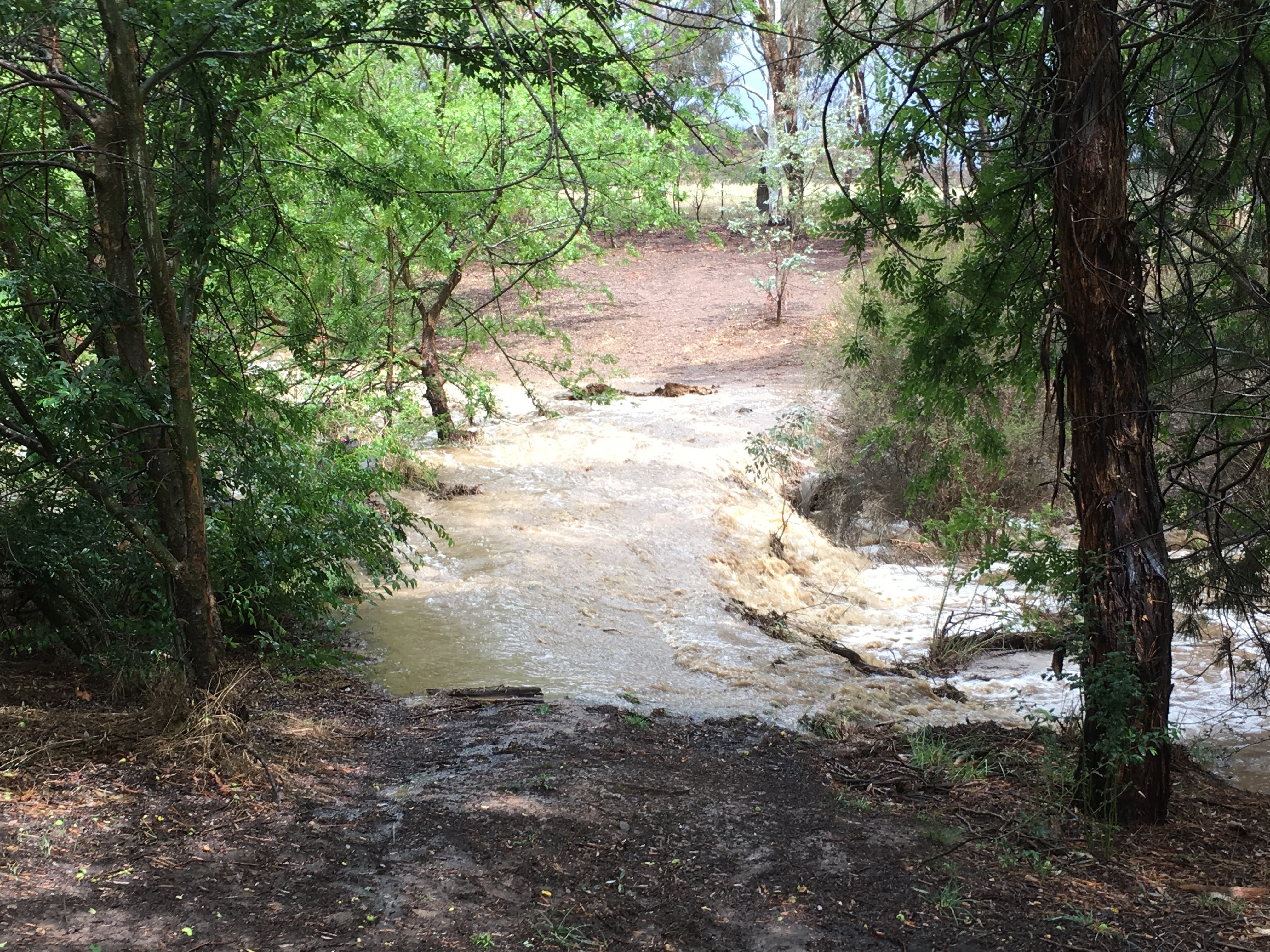
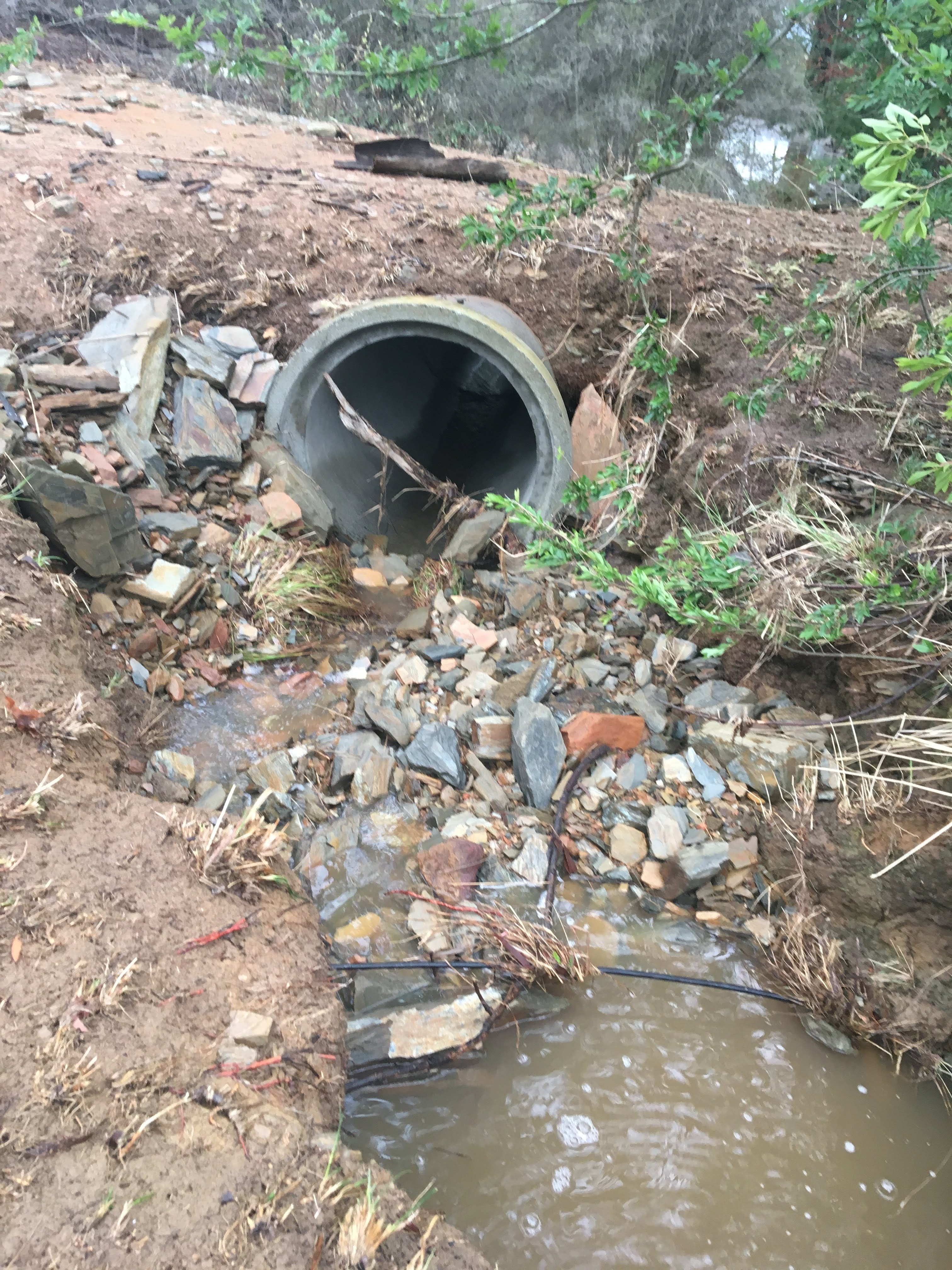
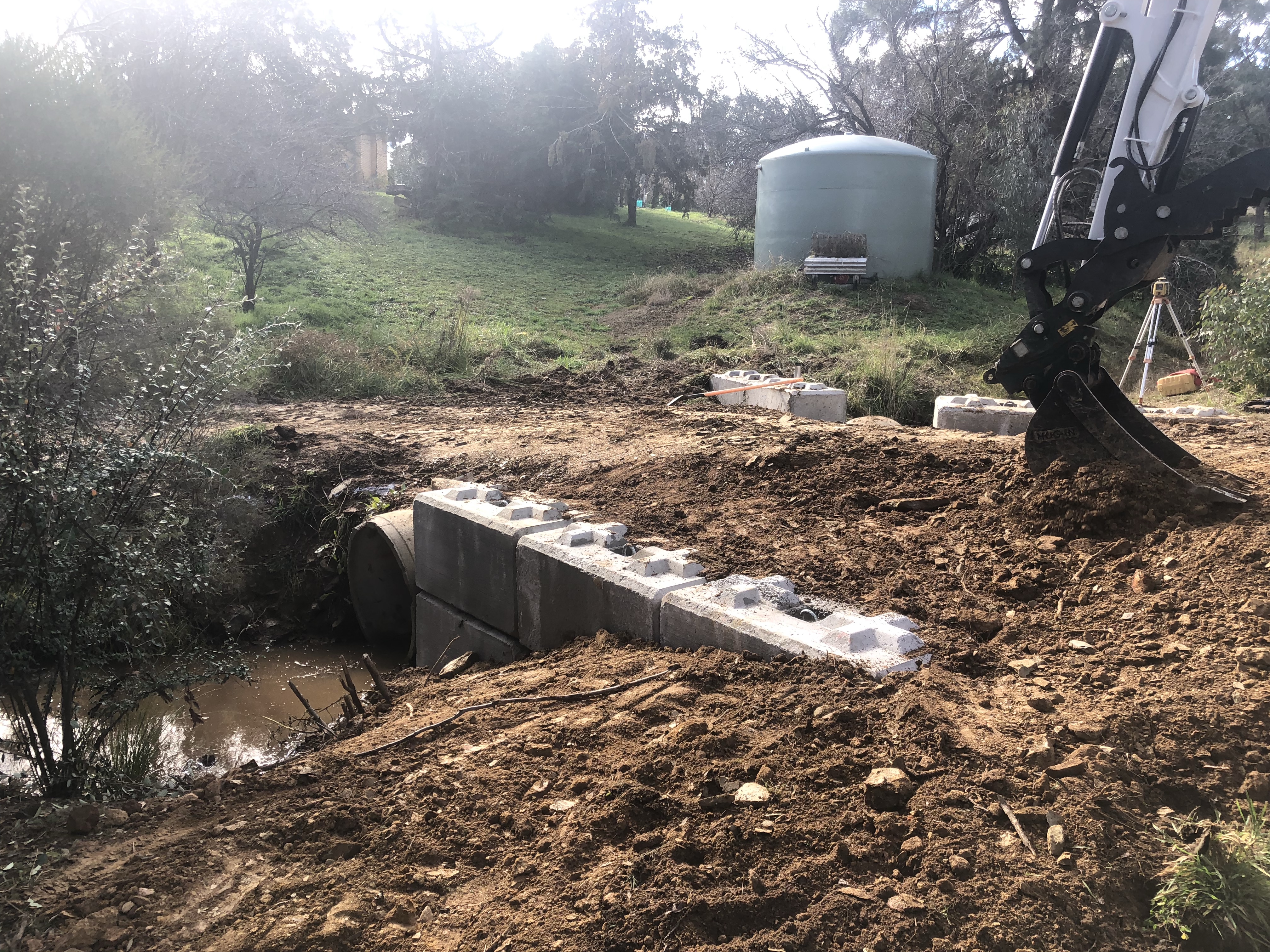
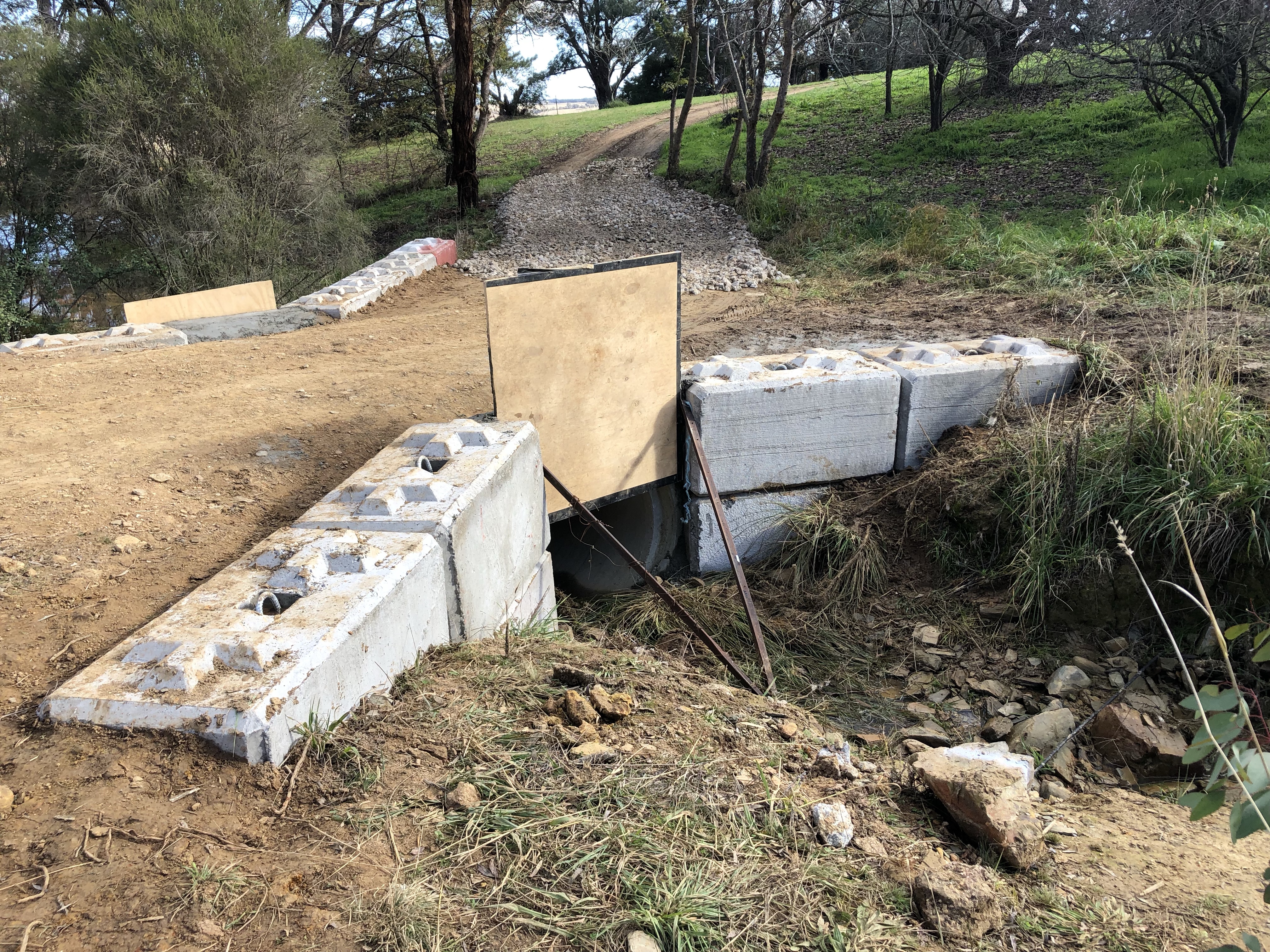
The access to the carport used a track through the garden that had been formed but not used much for the next 40 years. A large concrete pipe carries the drive over a small gully. The problem is to do with the volume of water that comes down the gully. Normally the gully is dry or barely a trickle, however on occasion it comes in torrents, through the pipe and overflowing across the road. Jo always wanted a babbling brook outside the back door…. perhaps not with all-or-nothing features of this one!

When the water subsides, the damage becomes apparent. Over the past 18 months of regular driveway use and occasional floods, the remaining base has become narrower. An attempt to address some of the drainage was of limited success (https://rockfarming.com/2020/08/31/drainage-trees-cattle-and-some-sad-news/). With the driveway now unsuitable for anything but cars, it was time to call in our neighbour, who happens to have his own bob-cat and excavator business.

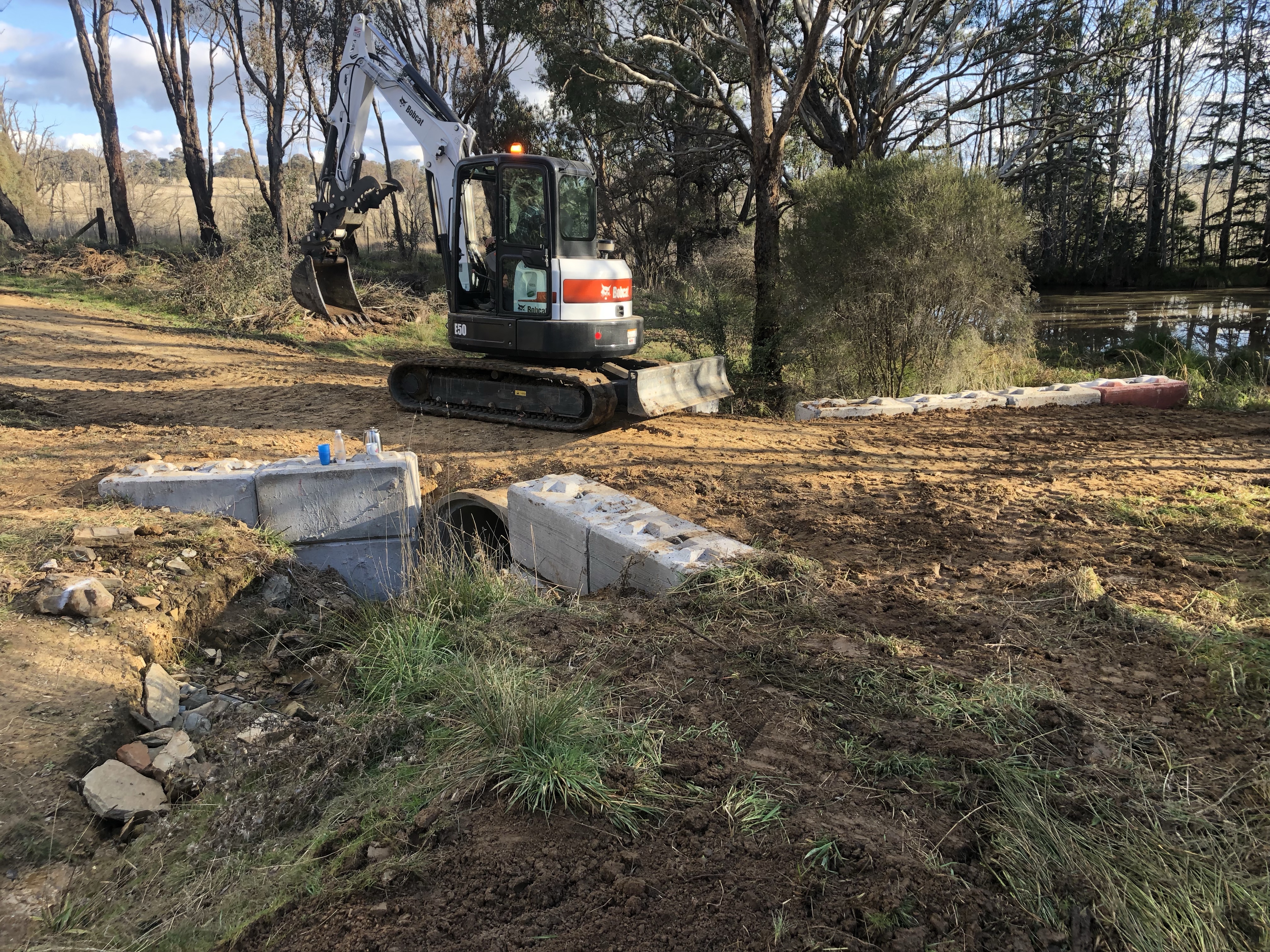
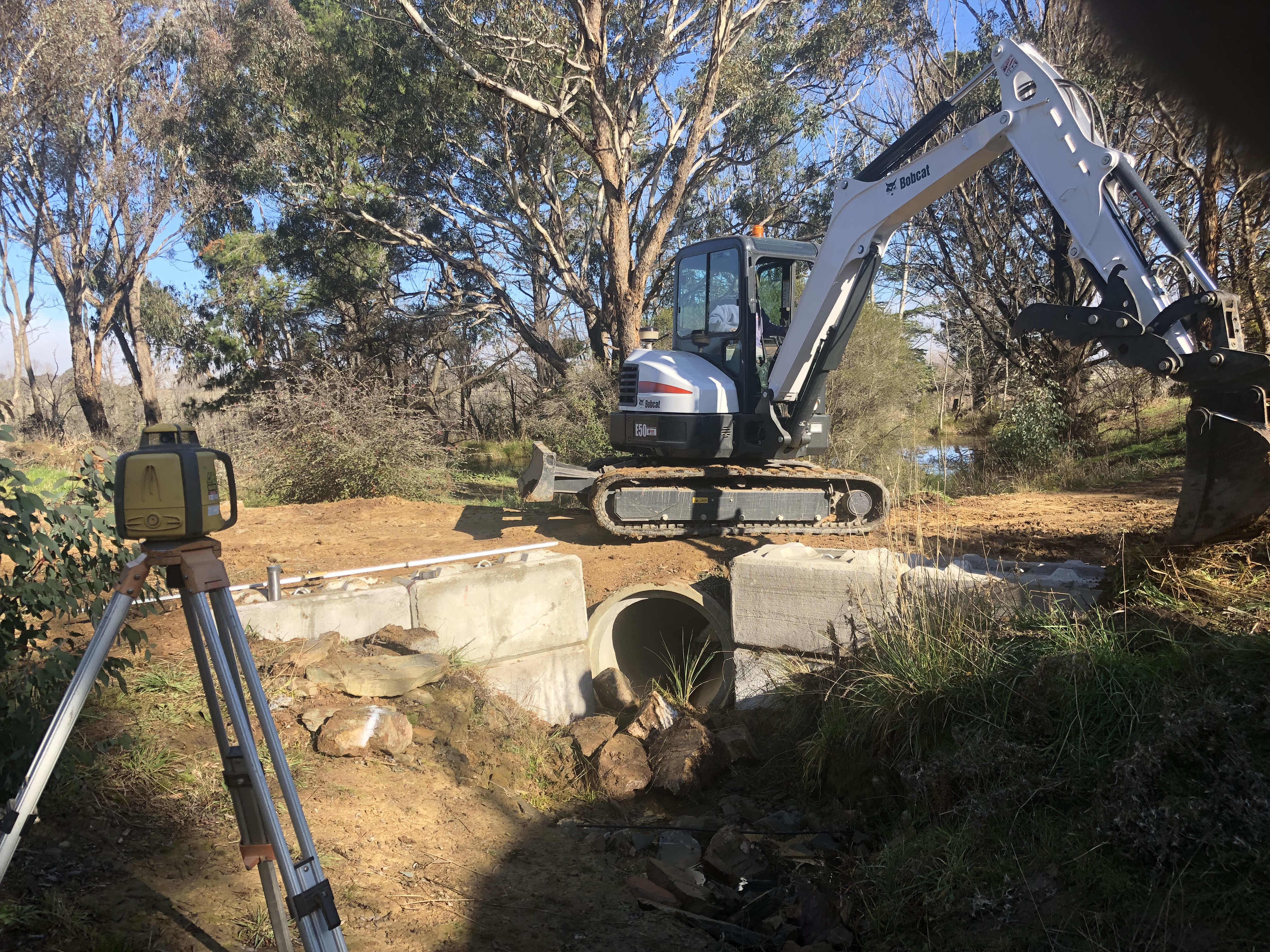
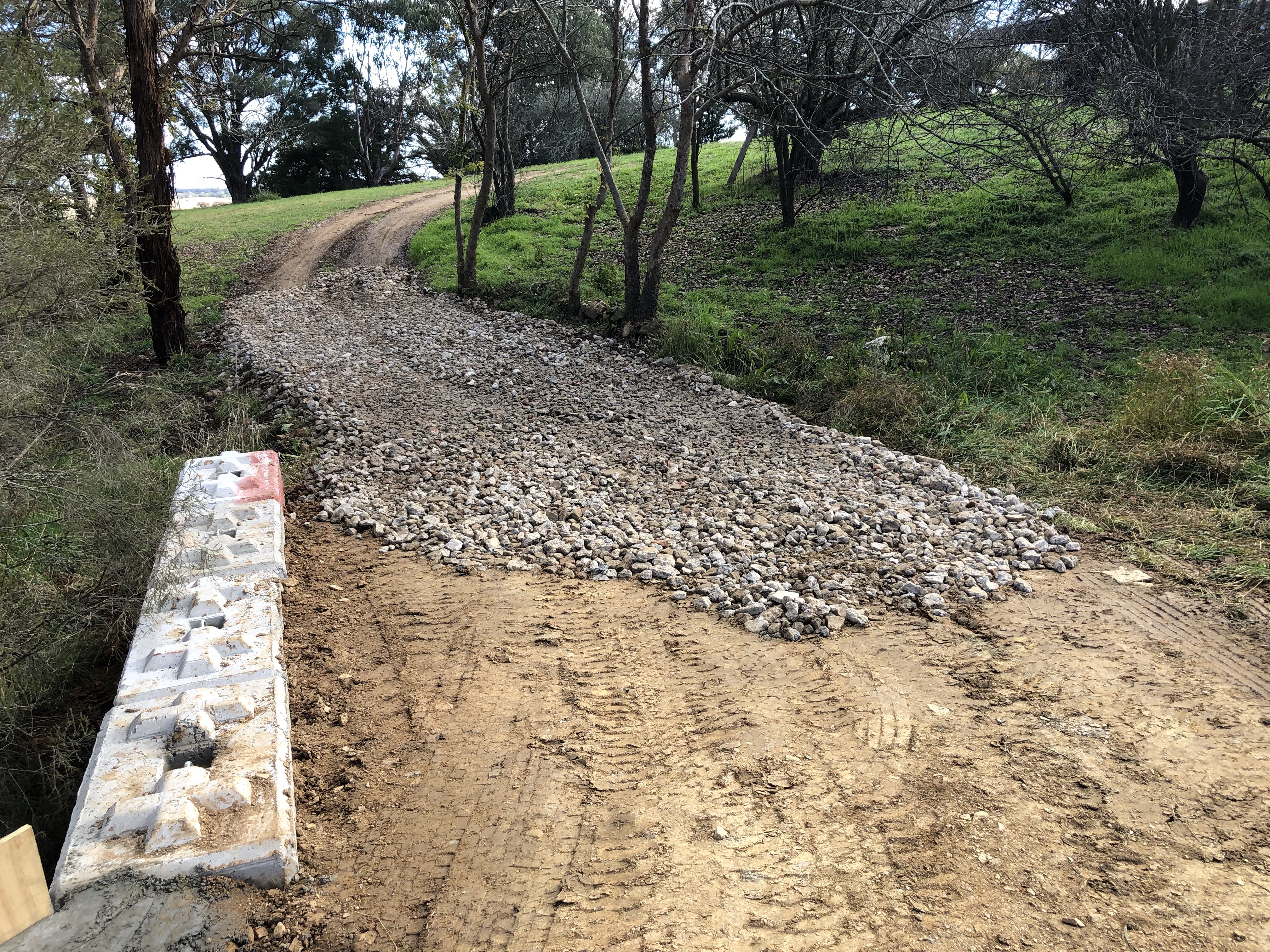
Lou is an absolute master of his machines, and made short work placing large concrete blocks to form a wingwall on both sides of the driveway. The laser dumpy level helped ensure the blocks were all on the same plane – making the job far neater and more precise than I could have achieved for a fraction of the time.

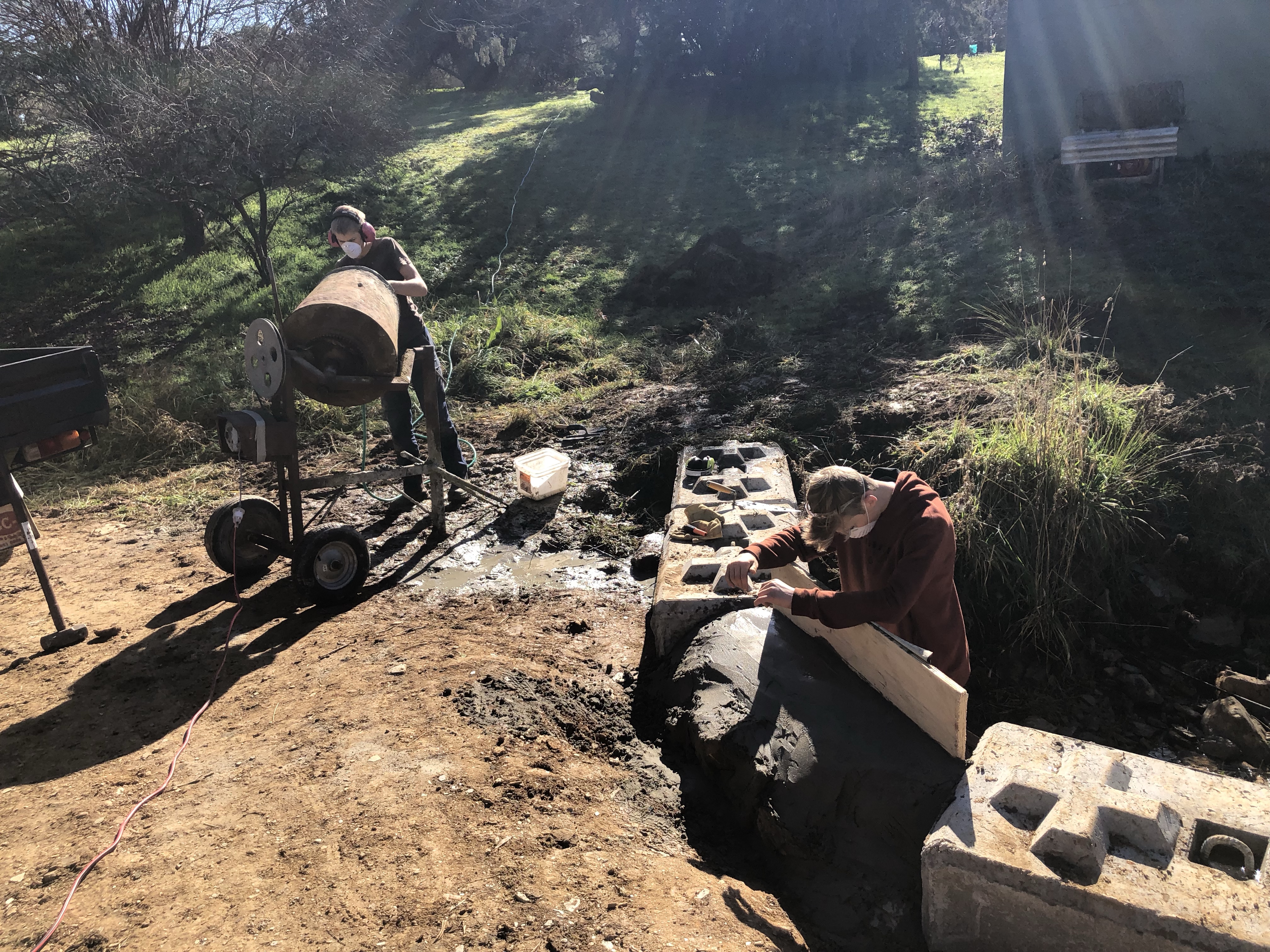
The last job for us to do was to install the headwall. For this I enlisted some school holiday labour. The boys were in a word fantastic, and were soon mixing the concrete to a perfect consistency. They learnt some important skills, and I really enjoyed the time working with them on this little mud pie project.

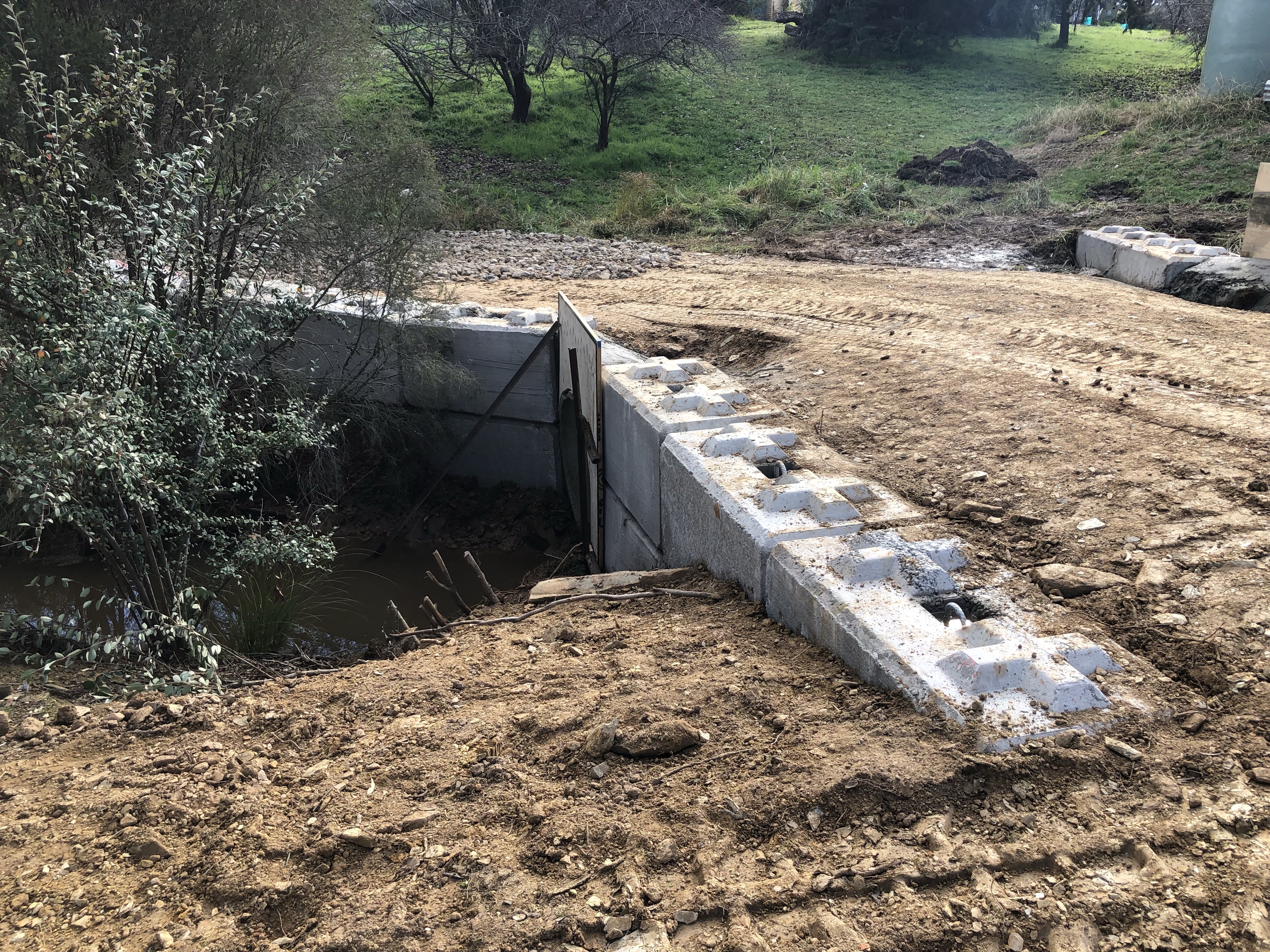
Lou also dropped a load of large recycled concrete over the boggy section – making our driveway a far safer all weather proposition…. well except for the last run up the hill to the house. But that will be a job for another day 🙂
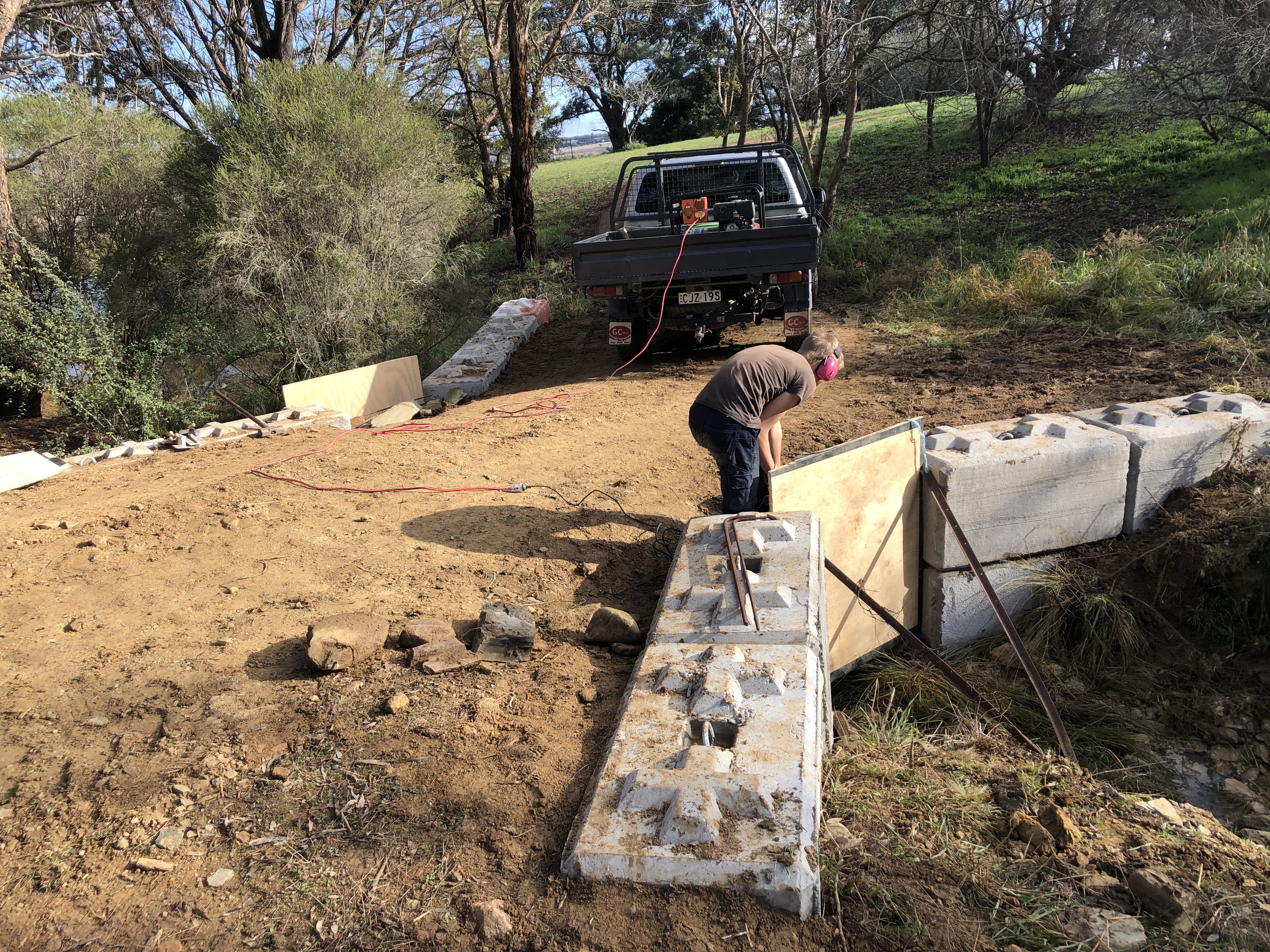
We are thrilled with the change to the driveway. Whilst it still isn’t finished properly, it provides far better access to the house for all vehicles, including RFS tankers. A special thanks to Lou for his mastery of his machinery and the school holiday helpers.

Curse of Mavis – Mange Mite

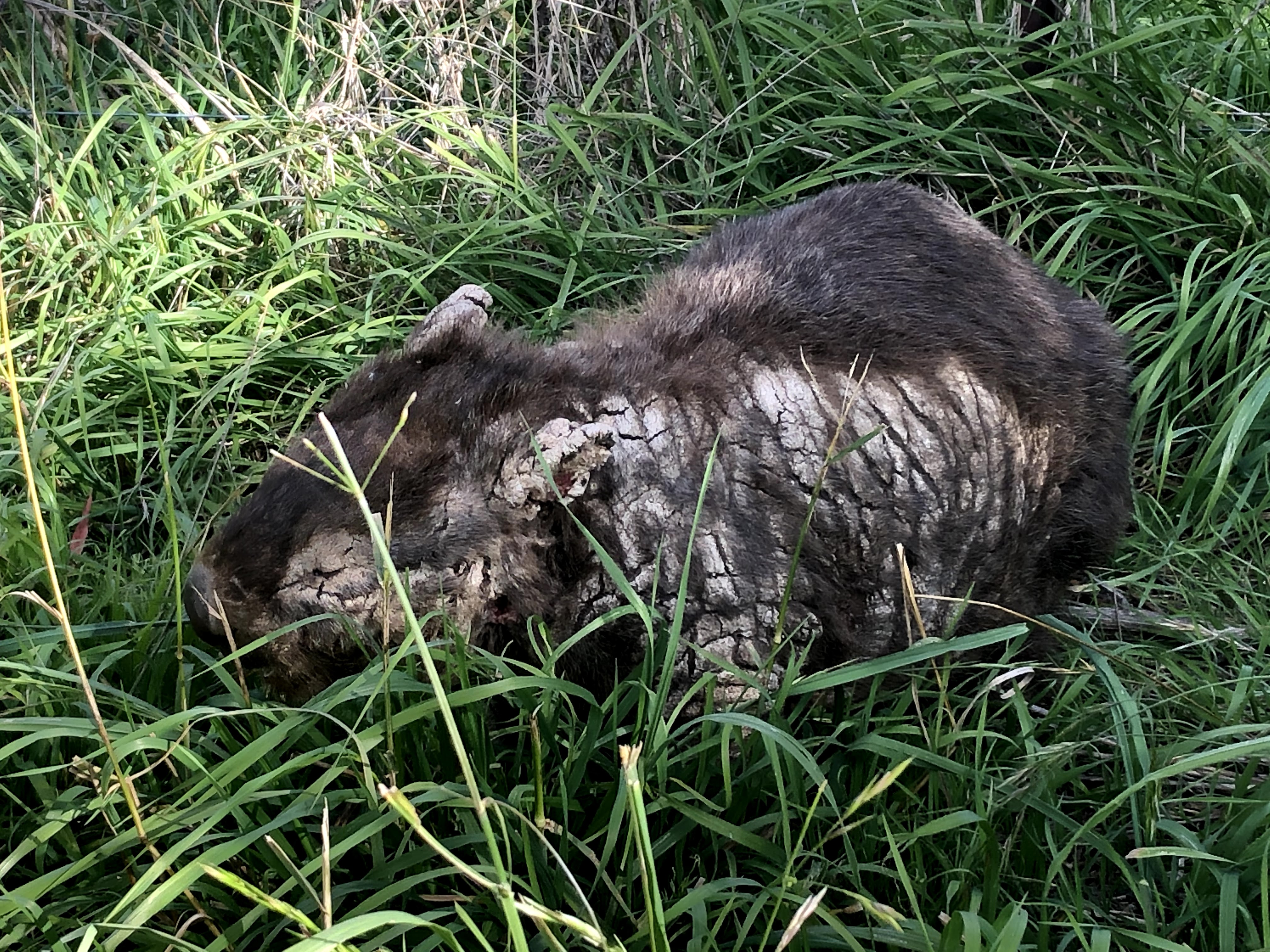
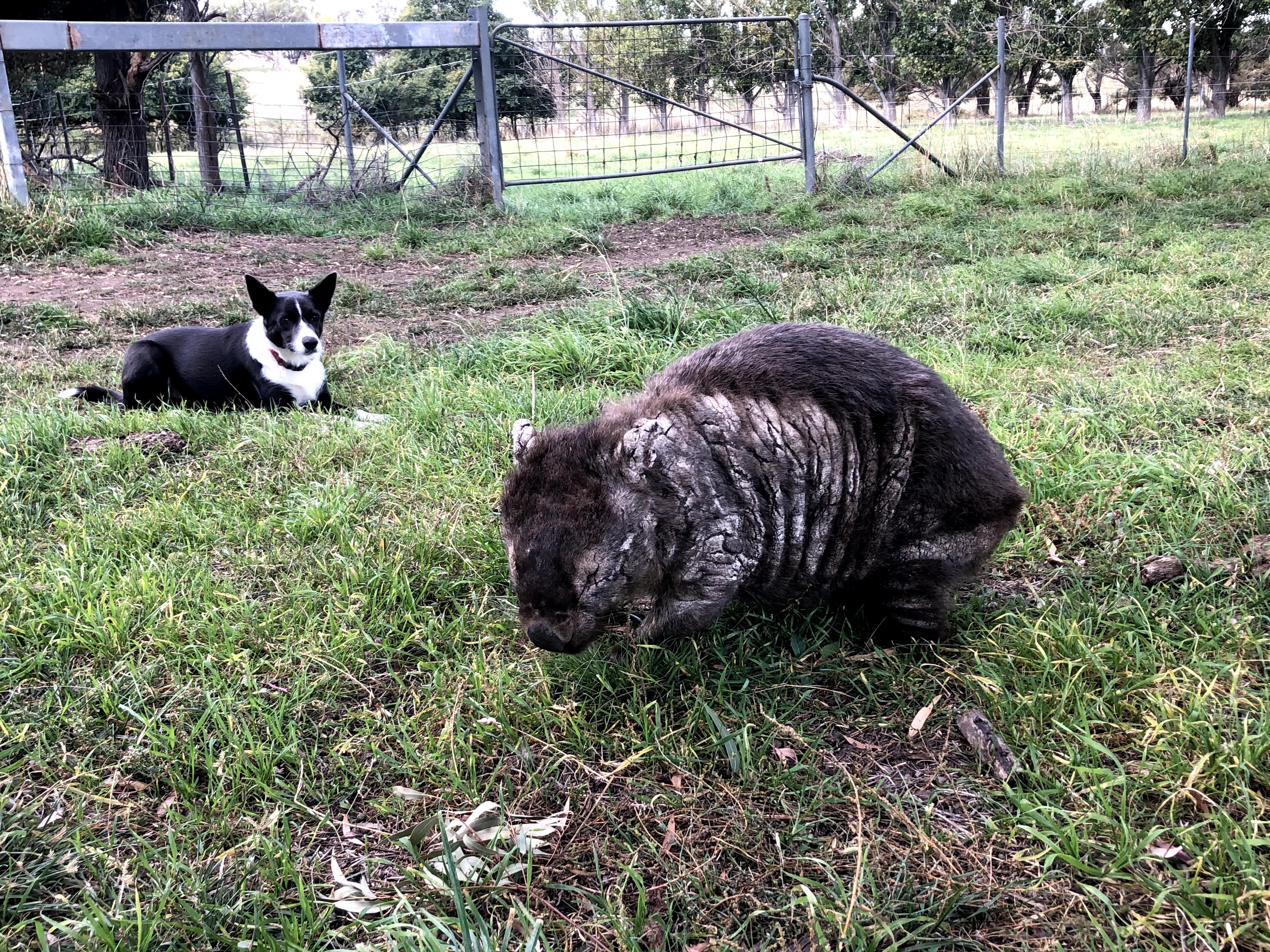
In April this year we rescued Mavis, the Muddle Headed Wombat, who was badly affected by mange. Mange is caused by the mange mite, sarcoptes scabiei, which lives on and under the skin of mammals. It causes a particularly painful itch, and eventually leads to the animal’s death, and is sadly common amongst our native wombats. Mavis was successfully rescued and is making a full recovery at a nearby wombat sanctuary.

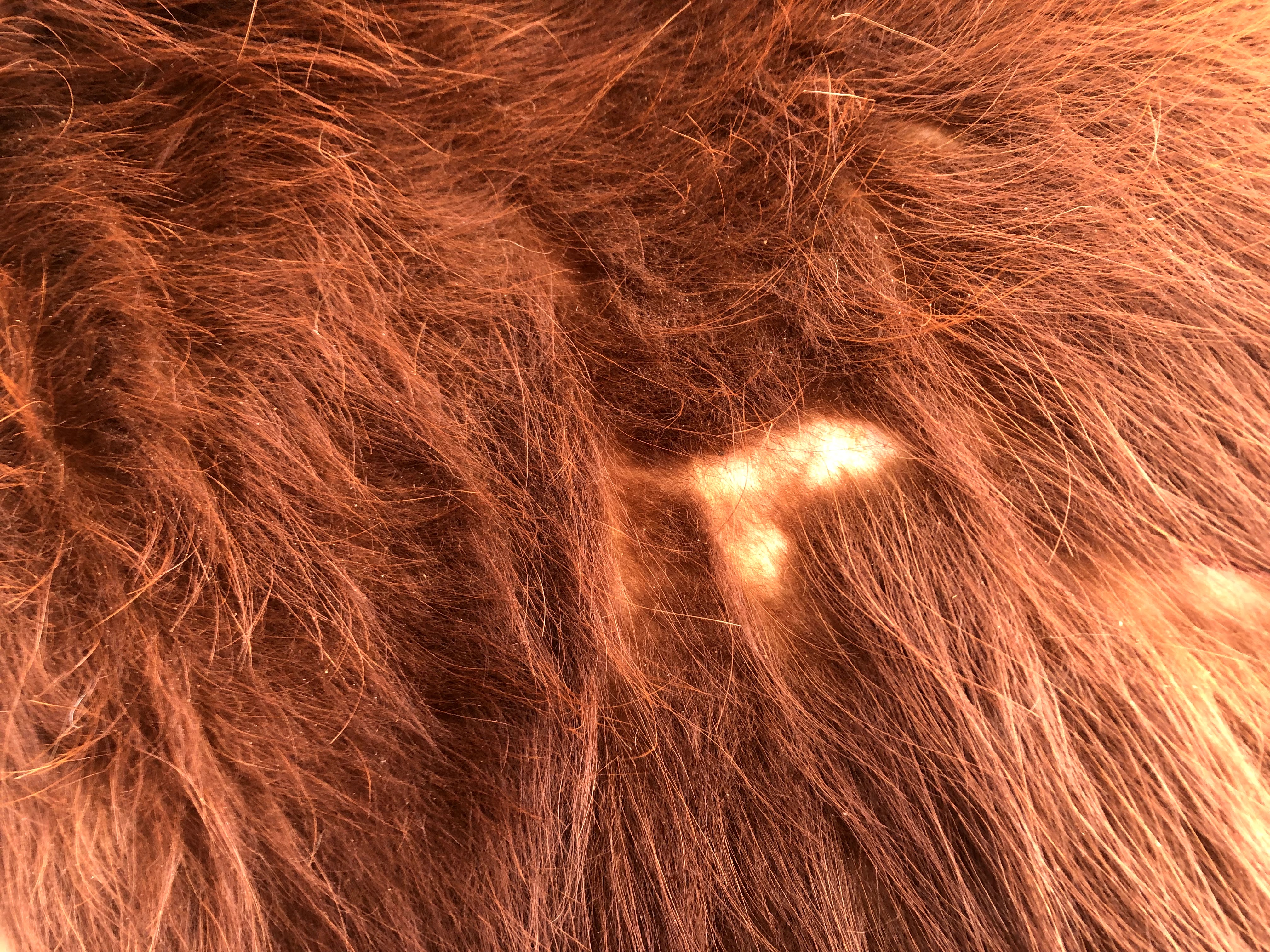
Unfortunately the mite that caused Mavis’ discomfort is still about and causing havoc. A couple of days ago I found evidence that it is affecting the cattle, and determined I needed to take action.

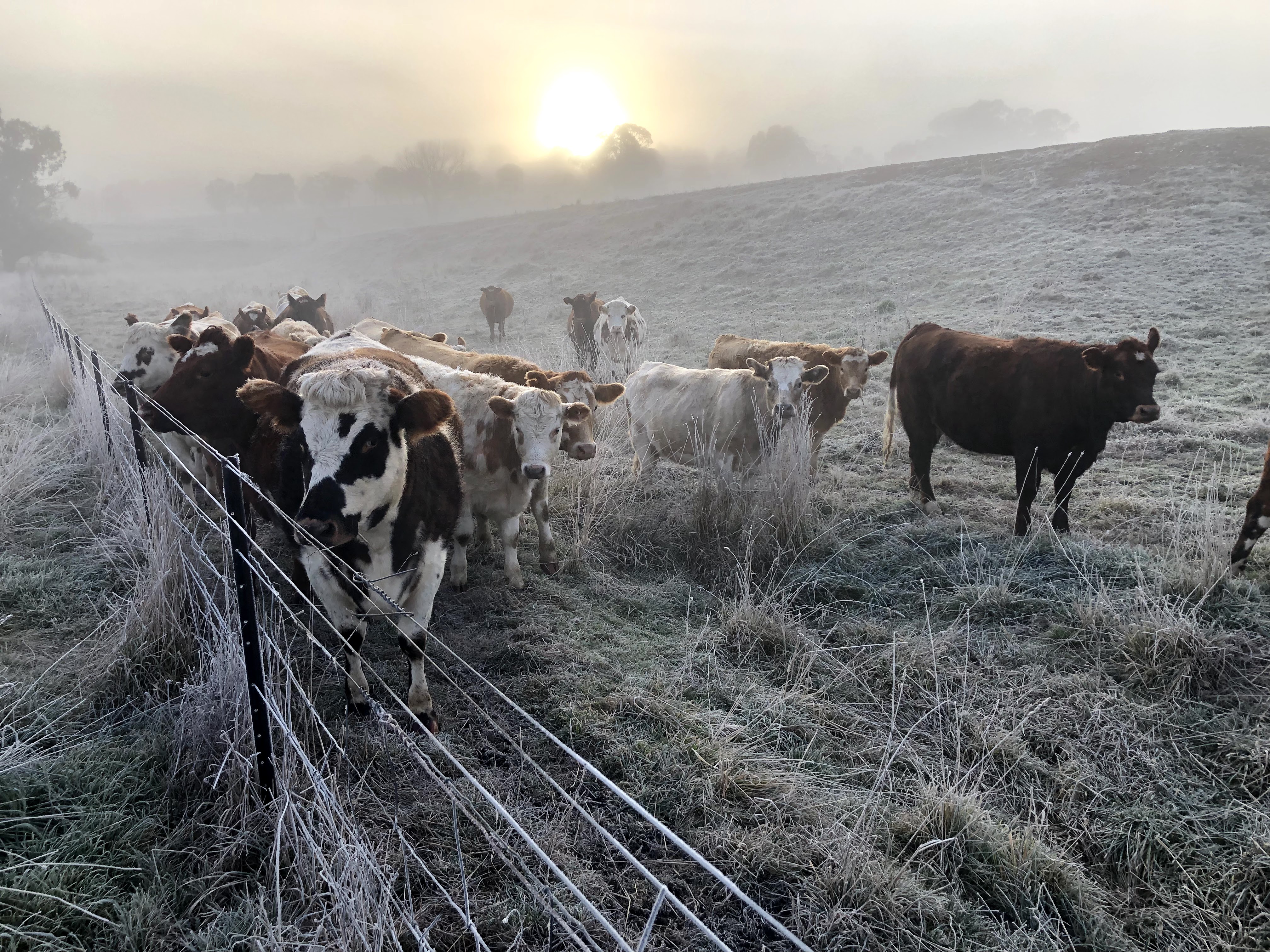
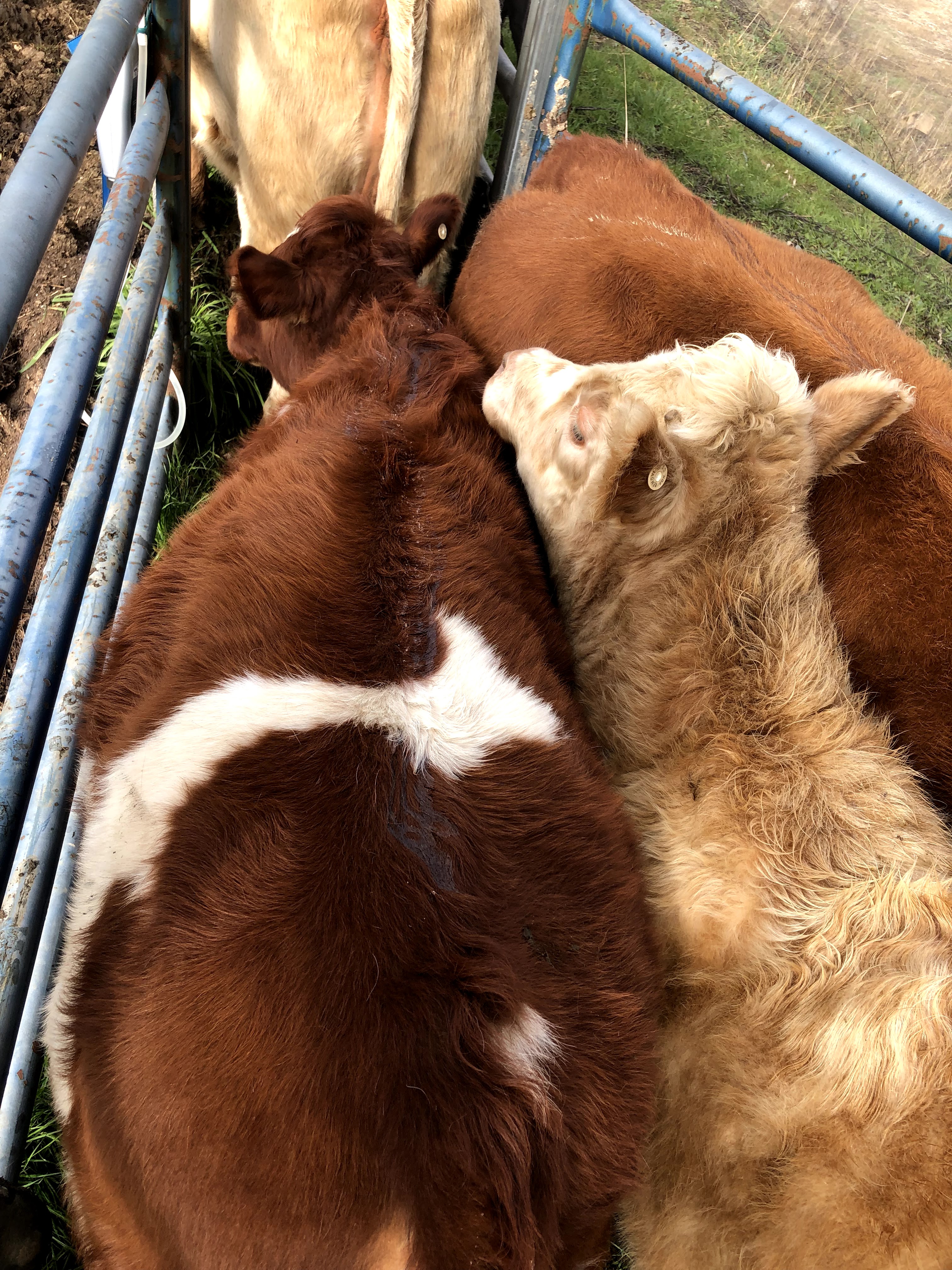
The bare skin patches, especially in the calves suggest that the mite has started to affect their behaviour. Cattle with the mite put on less weight and are obviously uncomfortable. My research suggested treating the cattle with moxidectin was the most effective and least harmful approach to treating the mite. The cattle seemed to want to follow me when I brought them into the yards early one frosty morning.

The reason I chose moxidectin to treat the cattle is:

  • It is effective on the mange mite sarcoptes scabiei
  • It is safe for dung beetles
  • It has no with-holding period for beef cattle and no export slaughter interval.

I am now in a waiting game to see whether the treatment is effective, and will keep you posted.

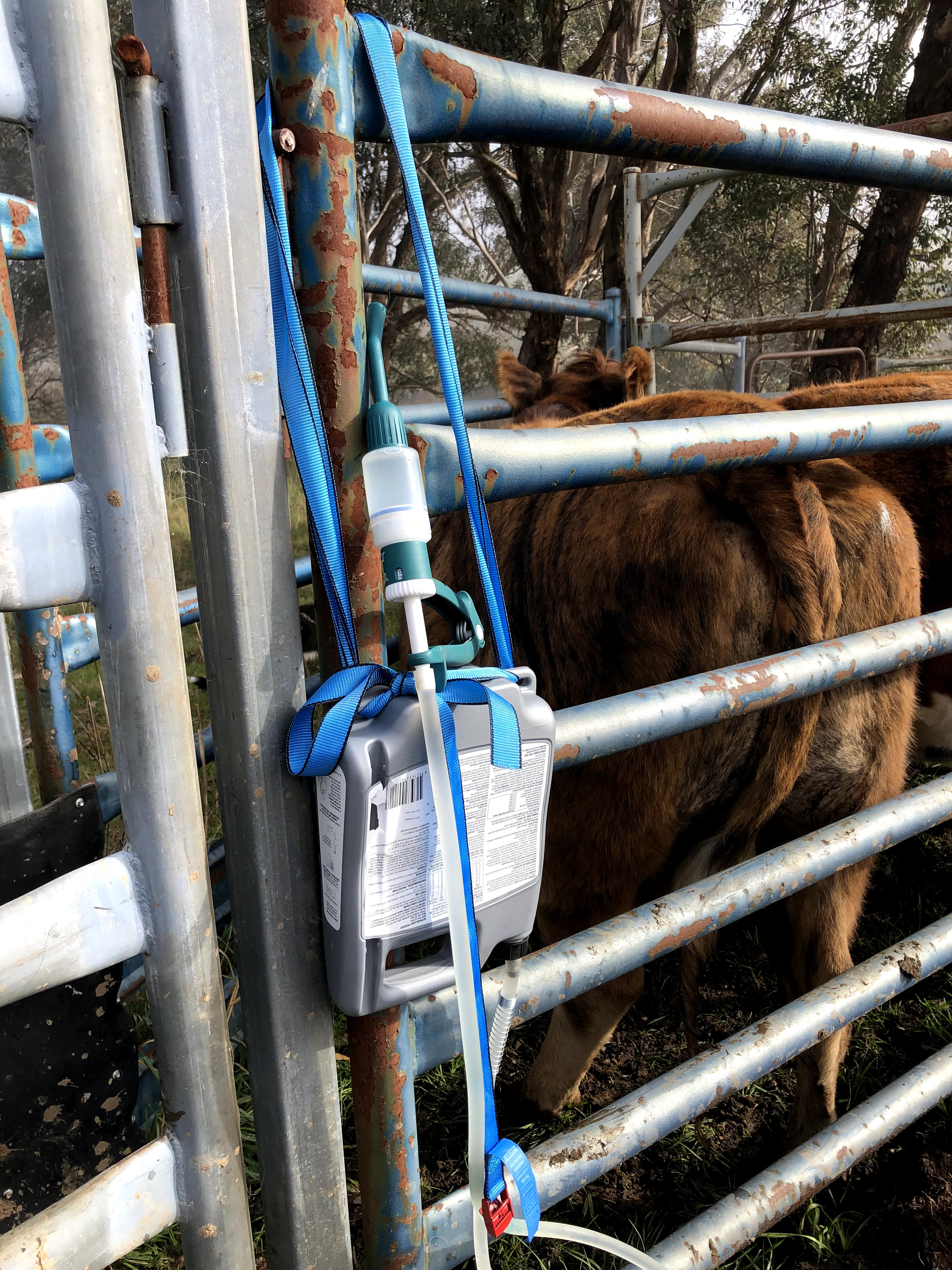
As a side note, I had some old moxidectin in the shed. It was tempting to ‘use it all up’, however I am glad I went to out local ag store. Roger explained to me how old drench goes off and can cause the chemical to be less effective, whist leaving residue in the cattle. Whilst the drench is eye-wateringly expensive, it works out to be much more palatable when calculated on a cost per head basis to treat the cattle – even for small producers such as the Rock Farm. Roger even gave me a new applicator, which allowed me to accurately deliver the required 10mL/100kg of live-weight, ensuring we give the optimal dose per animal.

The out of date drench remains difficult to dispose of safely, but the regular chemical muster remains a must do activity on my calendar. We did it a couple of years ago when we bought the property ( https://rockfarming.com/2018/11/25/farm-chemical-disposal-with-chemclear/ ), and I keep an eye on when I am able to do the same again.

Weaning on the Rock Farm

A few weeks ago we made the decision that we would keep the calves over winter, but I knew that this would be a significant increase on our stocking last year. I have been keeping a close eye on the cows, and noticed a couple of the cows start to show their hip bones. The best way to keep the cows in good condition for the rest of winter is to wean their calves. This should see the cows maintain condition for calving in late August. With a wetter than average winter forecast hopefully yielding reasonable pasture growth, we should be able to keep the calves until spring. To be sure, we organised a load of hay, bringing our stored total to around 15 tonnes of fodder. I just hope the cattle get to eat it before the mice!

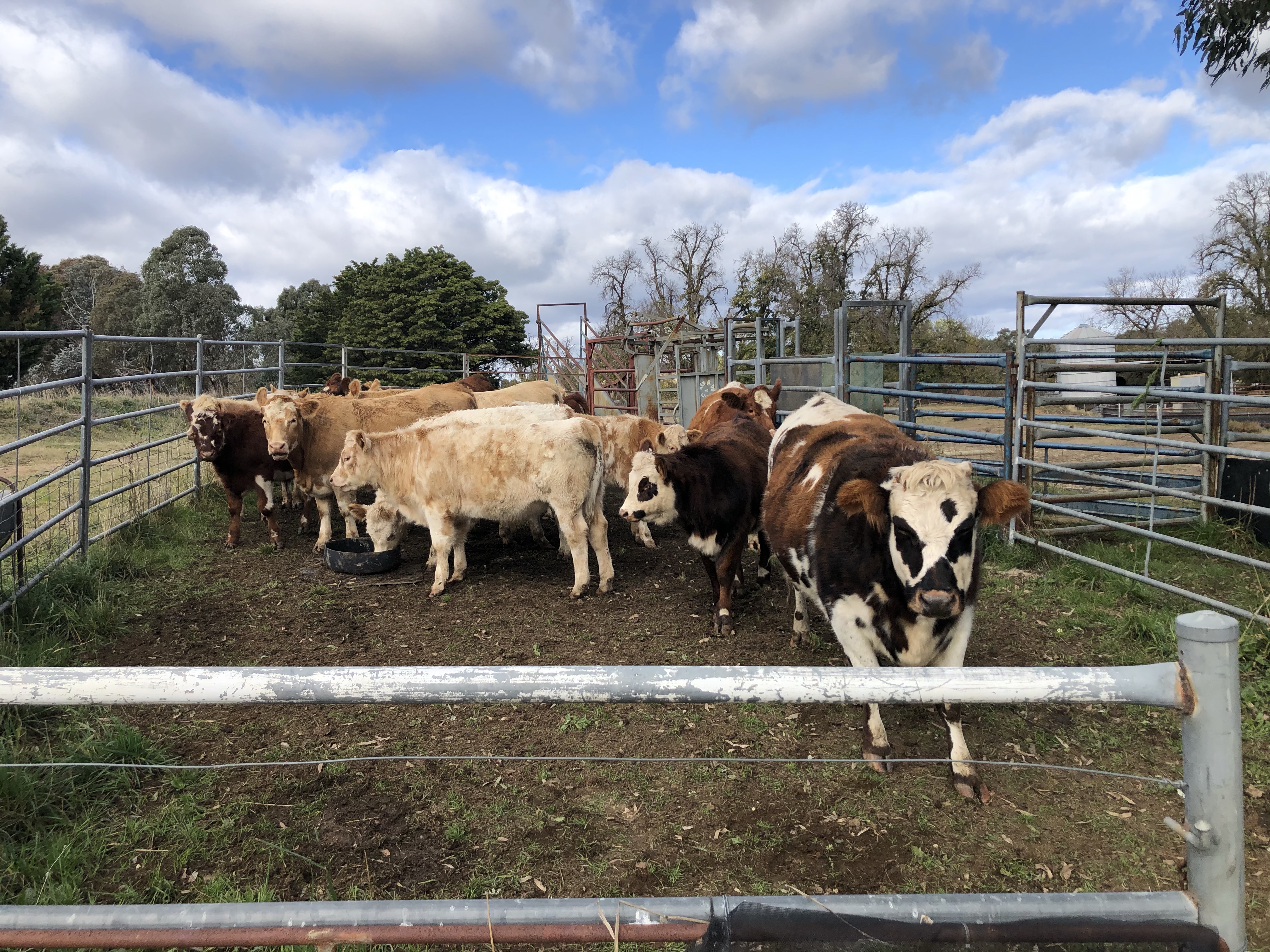
We brought the cattle into the yards, and quietly drafted them into two mobs. We released the mothers into the adjoining paddock, where they seemed to blissfully shrug off the burden of their calves and start feeding. So I moved them an hour later to a nice fresh paddock over the hill, and thought the worst of the weaning process was behind me. Oh how wrong I was.

Weaning can be a stressful time for young calves and their mothers. So I left with the calves our four maiden heifers and Miss-Steak, one of our original herd who didn’t calve this spring. The initial separation seemed to go well. The calves, secured in the yards followed the lead of the older cattle and started enthusiastically feeding from our round bale feeder.

Later that evening as udders filled, the cows remembered their obligation to the calves and came back to the yards…. through the fences that separated them. Jo took the initiative and opened the gates to let the rest of the mob through. We left them overnight, bellowing to each other through the panels of the yards.

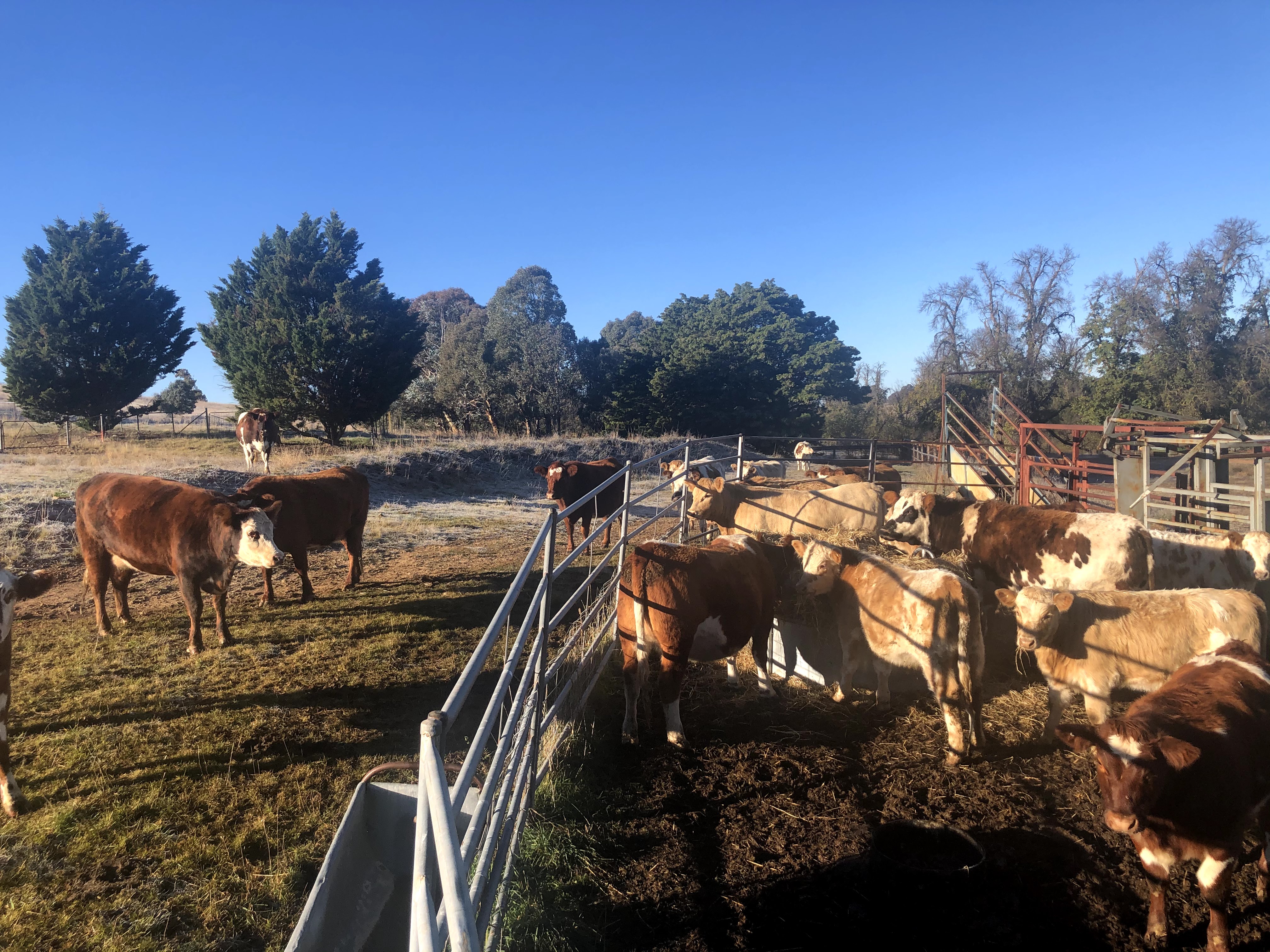
Over the next week, both mums and bubs started getting the hang of the new routine. I kept the cows in paddocks where they had access to the yards when they wanted to drop in and check on the calves. Most of the time they were happy to graze, but would visit their little ones late in the day. The calves seemed more than happy with the company of their peers

After a couple of weeks, I was able to move the cows away into a new paddock, and this time they didn’t push through fences to get back to their calves. I will keep the calves separated for a few more weeks before running them together again for simplicity. It didn’t take the calves long to associate the sound of the tractor starting up with the delivery of fresh hay.

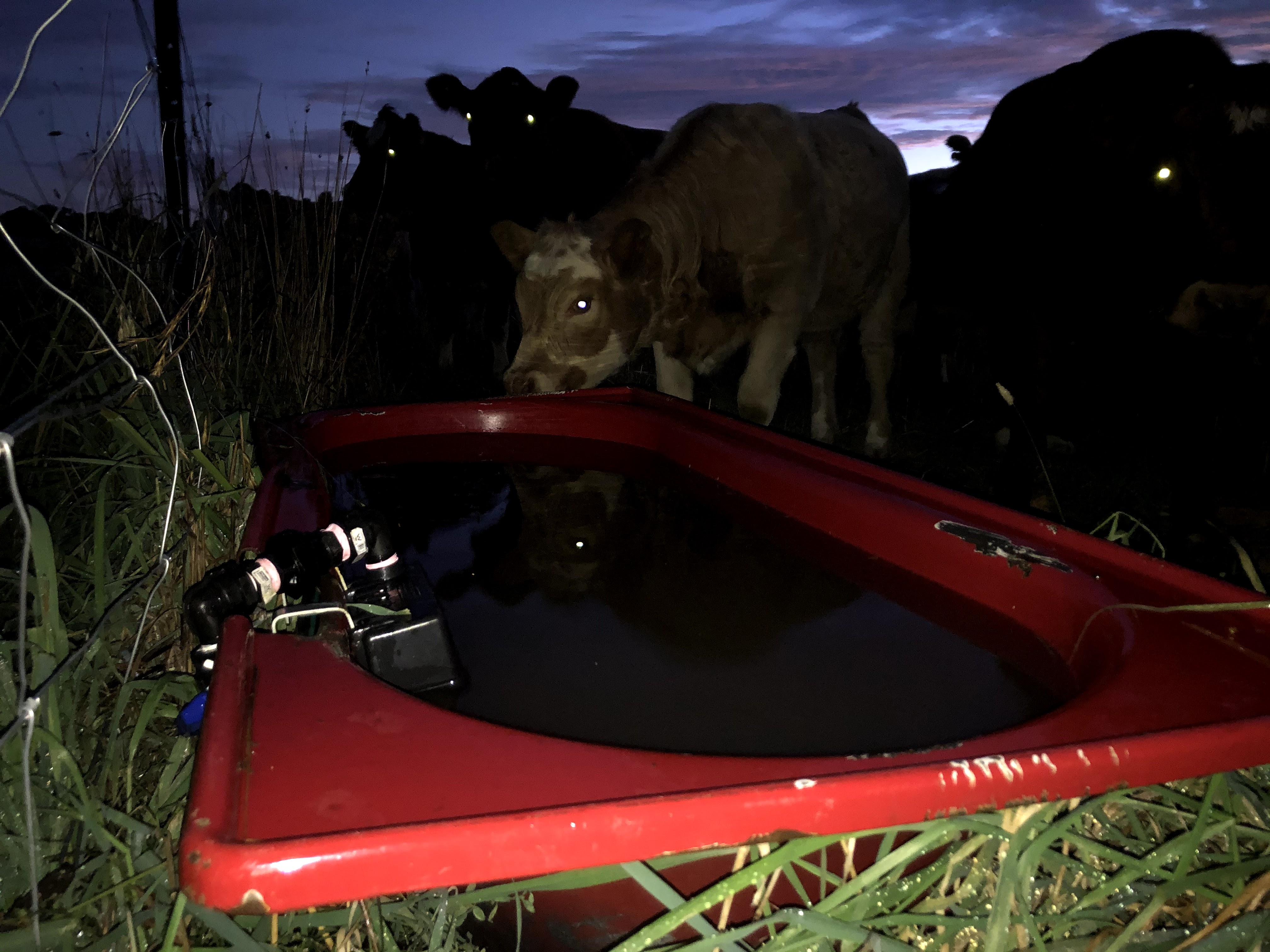
The not-so-little-photographer captured this gorgeous image of one of the calves lifting her head from the water trough. Most mornings I have been breaking the ice on the old bathtub trough so the claves can have an early morning drink… it has been bitterly cold.

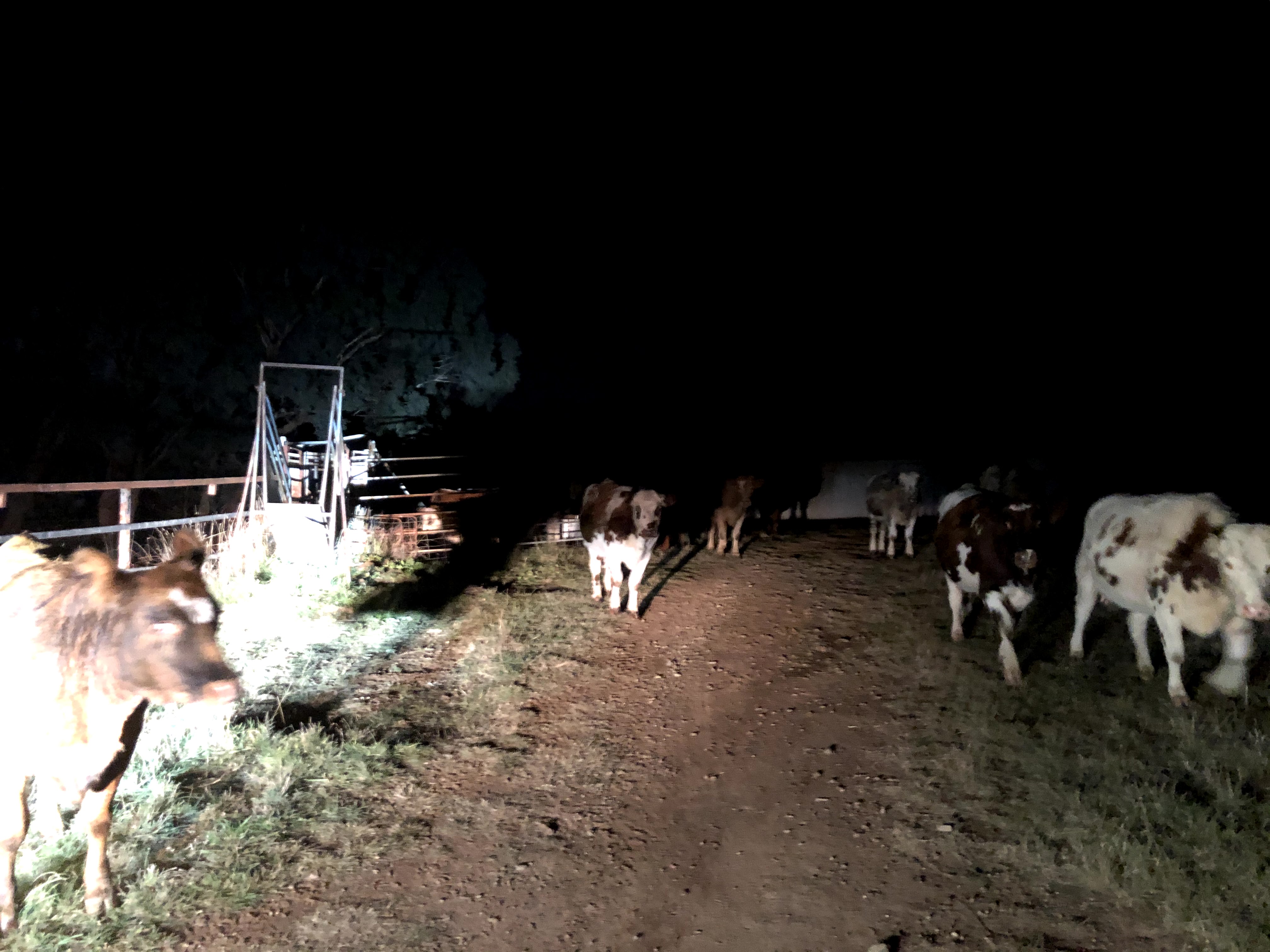
It has been a busy few weeks, and juggling work, kids and the cattle. I have had a few late nights down at the yards until well into the night – especially when the float valve controlling the water supply failed due to a rusted split pin. My evening excursions reminded me that I need to recruit some extra help to give me a bit of redundancy if I can’t get around as easily, or if I am out of town. The not-so-little Helper jumped at the chance to drive the tractor, and he is learning the basics of moving it around (with the intention of building jumps for his mountain bike). Jo came down to the shed armed with a laminated instruction sheet on starting the tractor I made up last year. Following the instructions, she too was able to get the tractor in the right place with a bale of hay for the appreciative mouths.

In all, it has been a productive and busy time on the Rock Farm, and despite all the extra work juggling, I wouldn’t change a thing 🙂
Further information on weaning can be found here: https://www.mla.com.au/research-and-development/Animal-health-welfare-and-biosecurity/Husbandry/Weaning

I also found this research particularly interesting and will investigate doing something similar next time: http://www.beefresearch.ca/blog/low-stress-weaning-benefits-on-several-levels/

More Trees Planted on the Rock Farm

After an usually dry April with no rain recorded at all on the Rock Farm, May started with a much needed soaking . I took the opportunity of a rainy day to relax and catch up on a long overdue book review (Call of the Reed Warbler). Rain like that is an gift not to be missed however and it was just the motivation I needed to get two new tree guards completed and some acorns in the ground before winter.

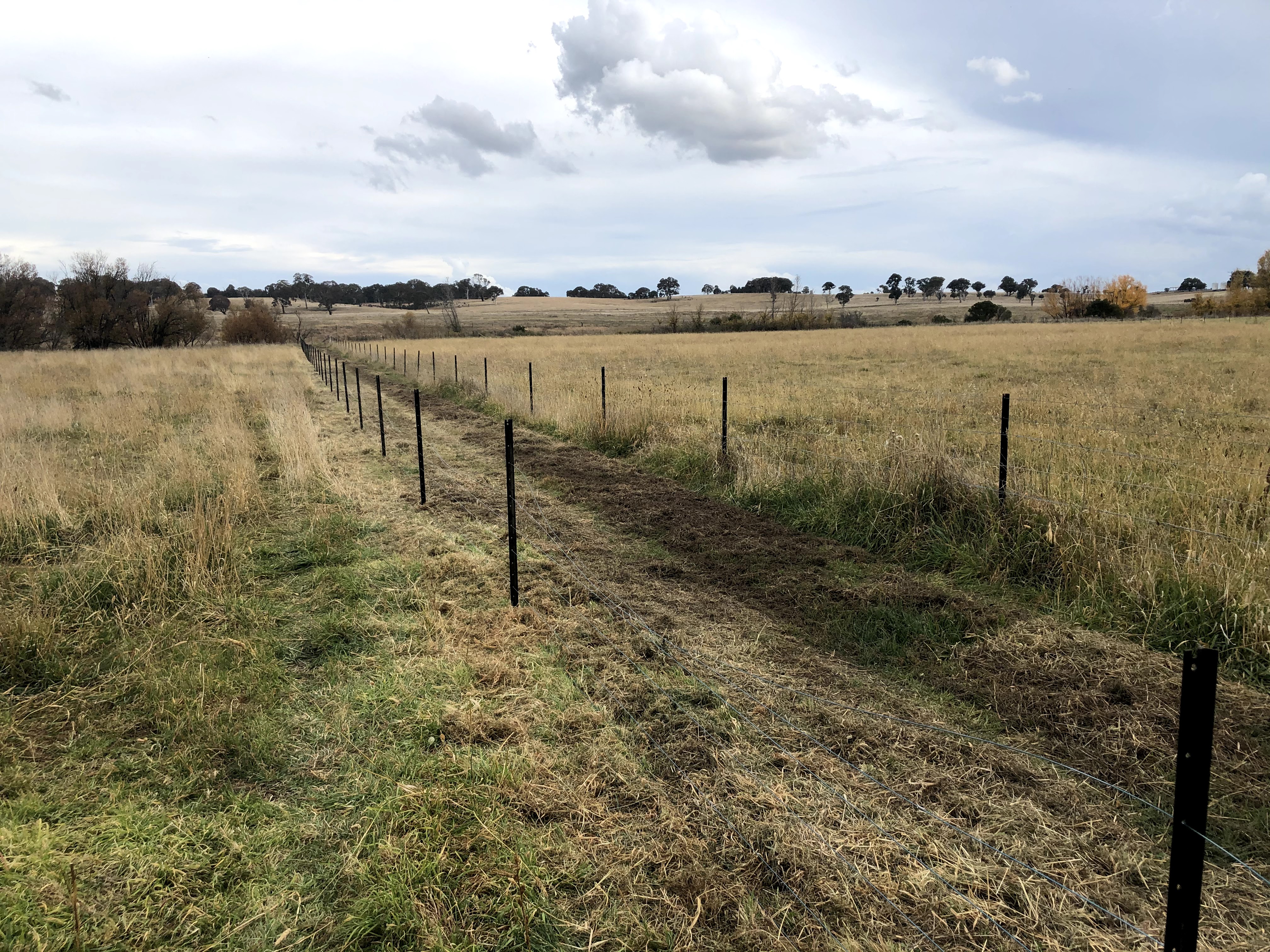
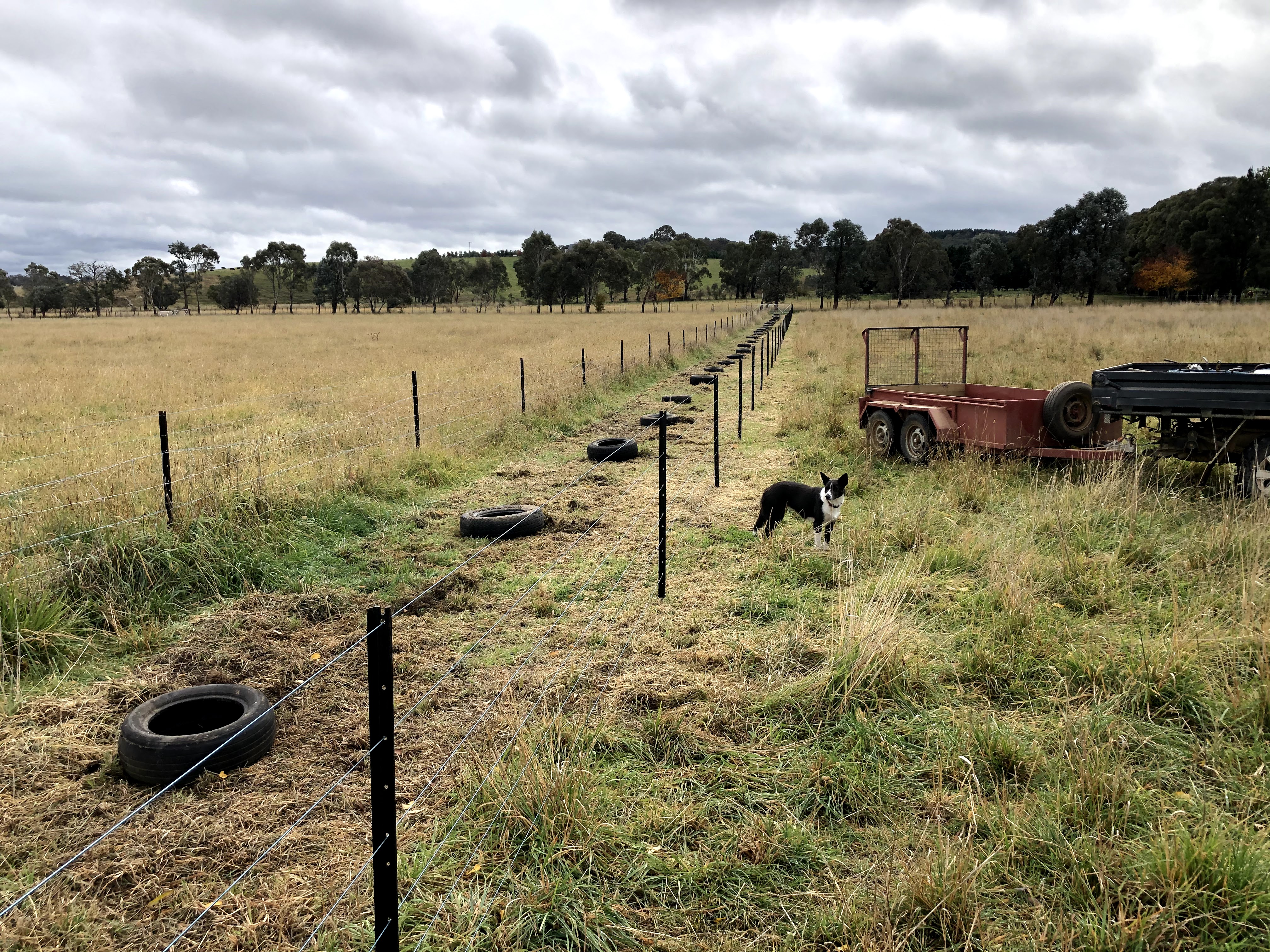
Our lock-down project last year (New Paddocks on the Rock Farm) was to divide a 6 hectare paddock into three smaller paddocks by building two new fences. It was always planned to plant trees along the new fences, which will one day provide shelter and mulching deciduous leaves to the paddocks either side.

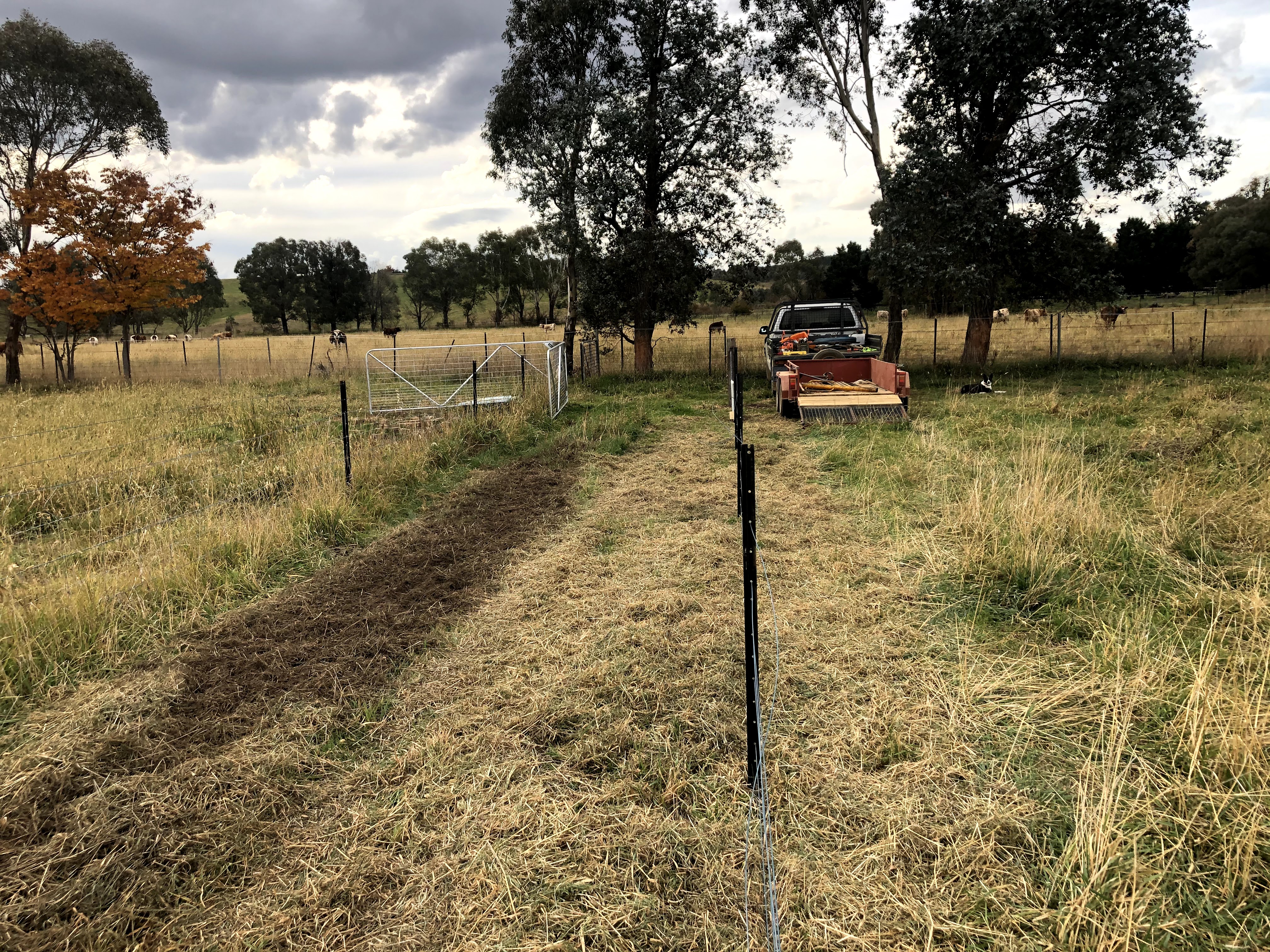
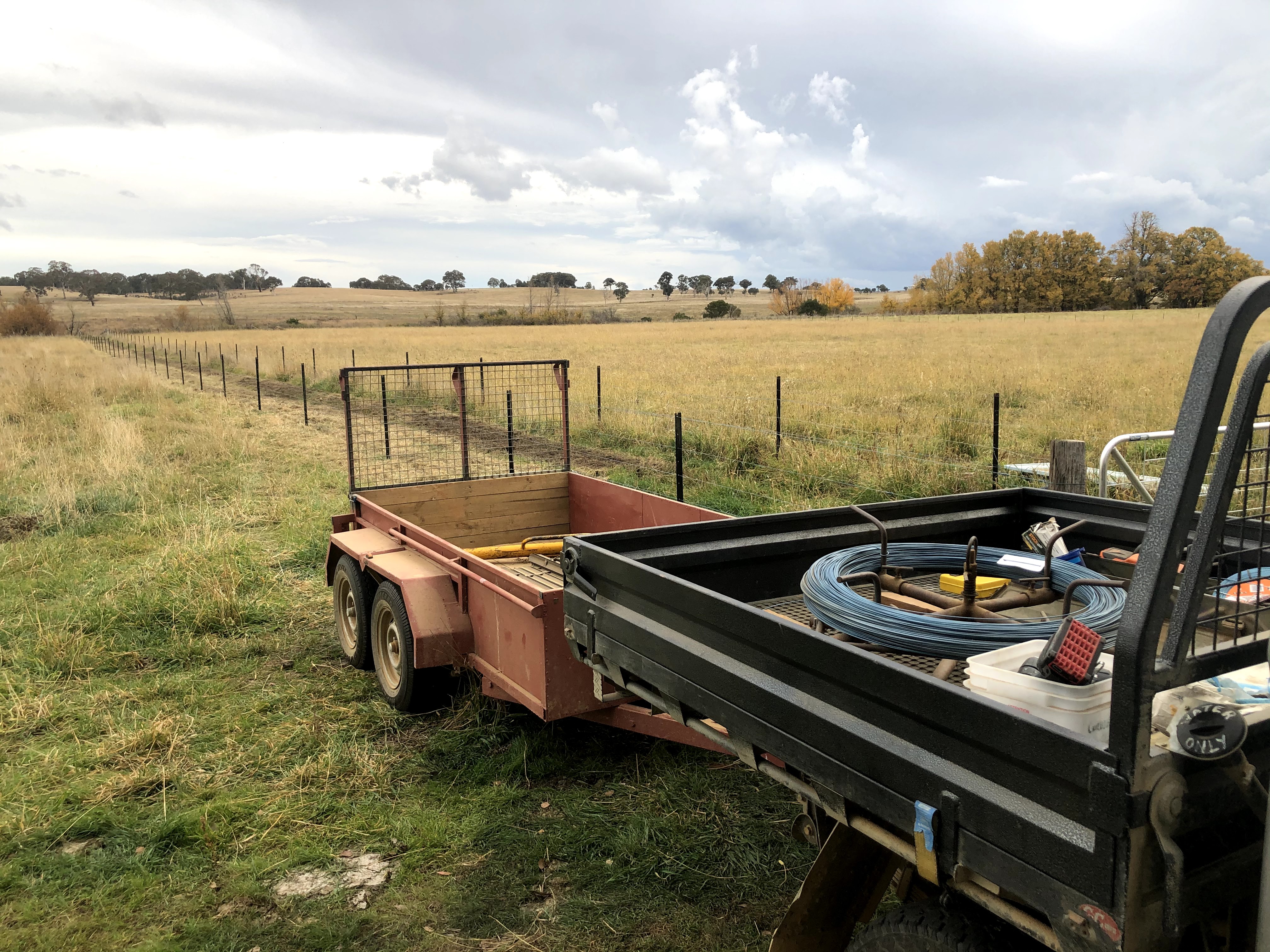
After running the mulcher over the long grass, I put two new strainer posts in the ground 3 metres off the existing fence. At the end of a pretty solid day, I had the first tree guard finished, with acorns planted between each star picket.

I repeated the process the following day with the other guard.

We planted a mixture of Californian White Oak (Quercus Lobata) and Japanese (or Korean) Emperor Oak (Quercus Dentata). In between the oaks, I have also planted some Tagasaste seeds (Chamaecytisus palmensis). Tagasaste is also called tree lucerne, and is a good shelter and fodder tree which fixes nitrogen in the soil.

We chose deciduous trees for these tree guards because they provide good shade during summer, allow light to penetrate during winter and their leaves form a deep mulch for fertilising the soil. Adjoining this paddock is a series of four small horse paddocks. One of these paddocks has a line of white poplar (populus alba) along its northern fence. The paddock is the lushest, and greenest of the four little paddocks – a difference I can only attribute to the tall deciduous trees that provide shade and leaf litter.

If this is your first time reading our blog, you might be asking why I haven’t planted native trees along these fence lines. The answer is complex and it relates to our desire to create a productive farmland that is in balance with nature. We are not trying to re-create the landscape as it was prior to European settlement. Rather as our climate gets hotter and dryer, we believe that large deciduous trees will help shelter our property from the extremes of the weather. We have some beautiful Elm Trees (Ulmus Procera) that are at least 150 years old near an old stone cottage ruin. Their shade and mulching leaves make this area the coolest part of the property on hot days

In other parts of the Rock Farm we have planted native trees. Along the creek bank, we recently planted 300 native trees for habitat and to help stablise the bank. That marathon effort (Can’t see the wood for the trees) has been a great success, with the vast majority of the seedlings becoming established. Wombats have knocked a few over, but overall I am very pleased with the first six months of growth.

Planting trees is rewarding. Just as I packed everything up to head back to the shed, a rainbow appeared. I hope it is a good omen for the beautiful trees I would love to see grow here. As I told my boys, it is my dream that not their kids, but their grand-kids will one day be able to sit in the shade of these trees.

Out and about on and off the Rock Farm

After our last good rainfall in late March, we have barely had a drop of rain, and the farm has quickly taken on a bleak winter look. Talking to a couple of local old timers recently, they felt we are in for a long cold winter, and at this point in time, I am inclined to believe them. That said, our cattle and pastures are in good shape, and the hay shed has a good amount of hay in it.

The Rock Farm has been a hive of activity since our last update in early March. A combination of getting the farm winter ready, school holidays, unscheduled repairs combined with a busy run at work has seen the blog take a bit of a back seat.

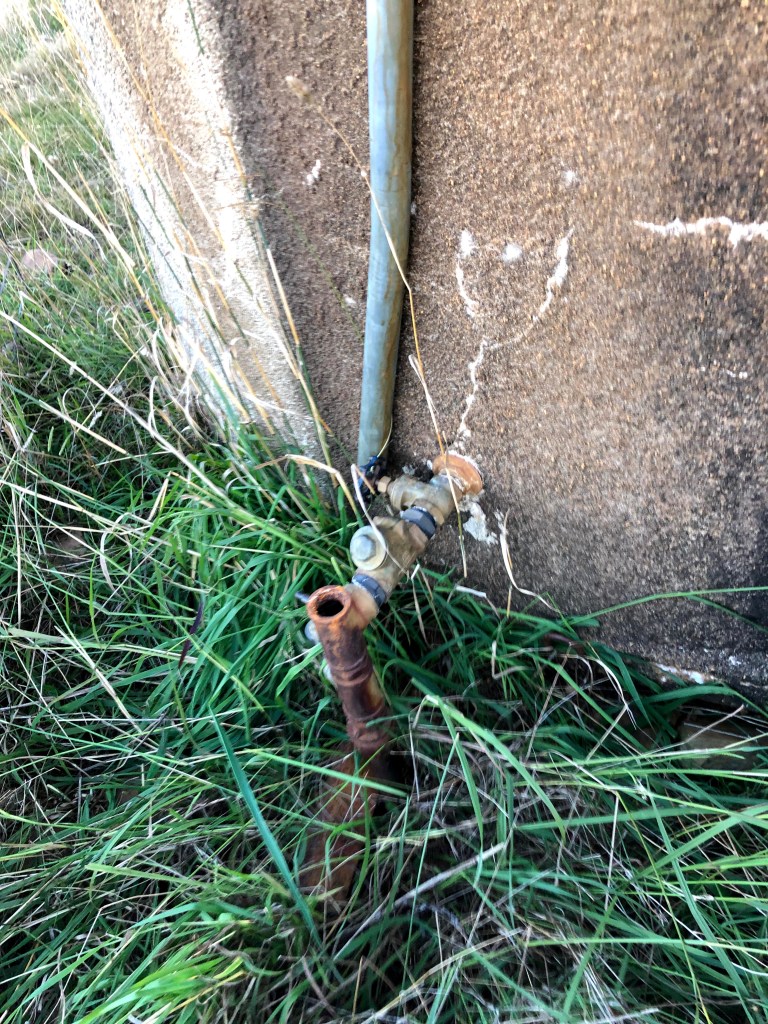
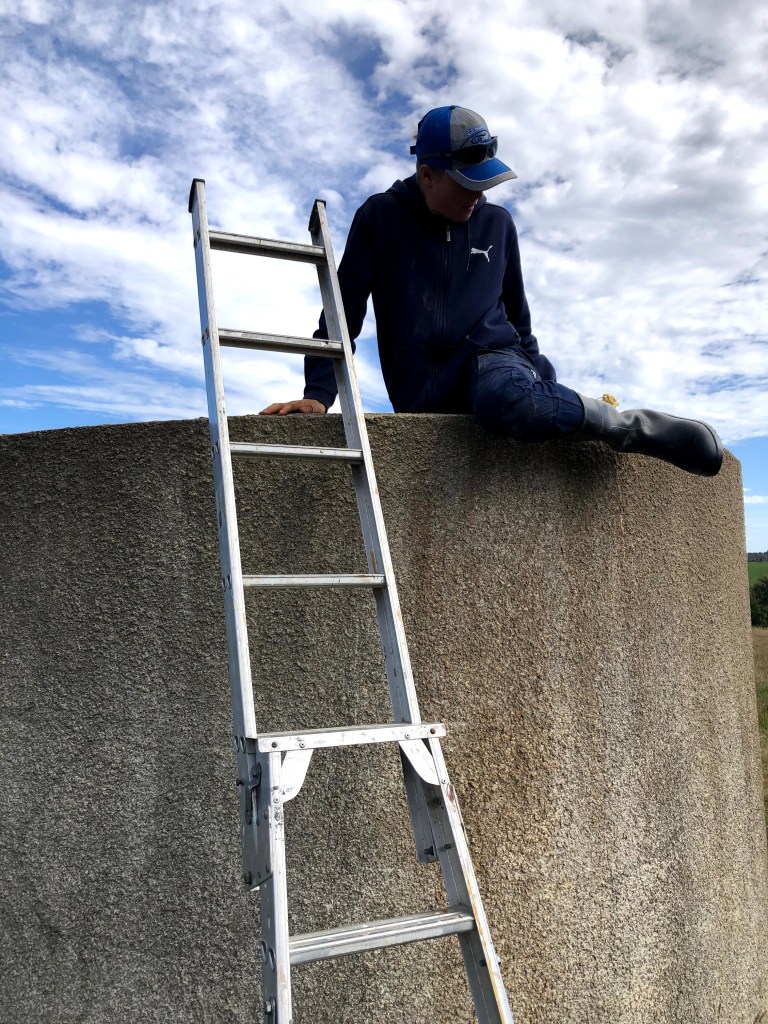
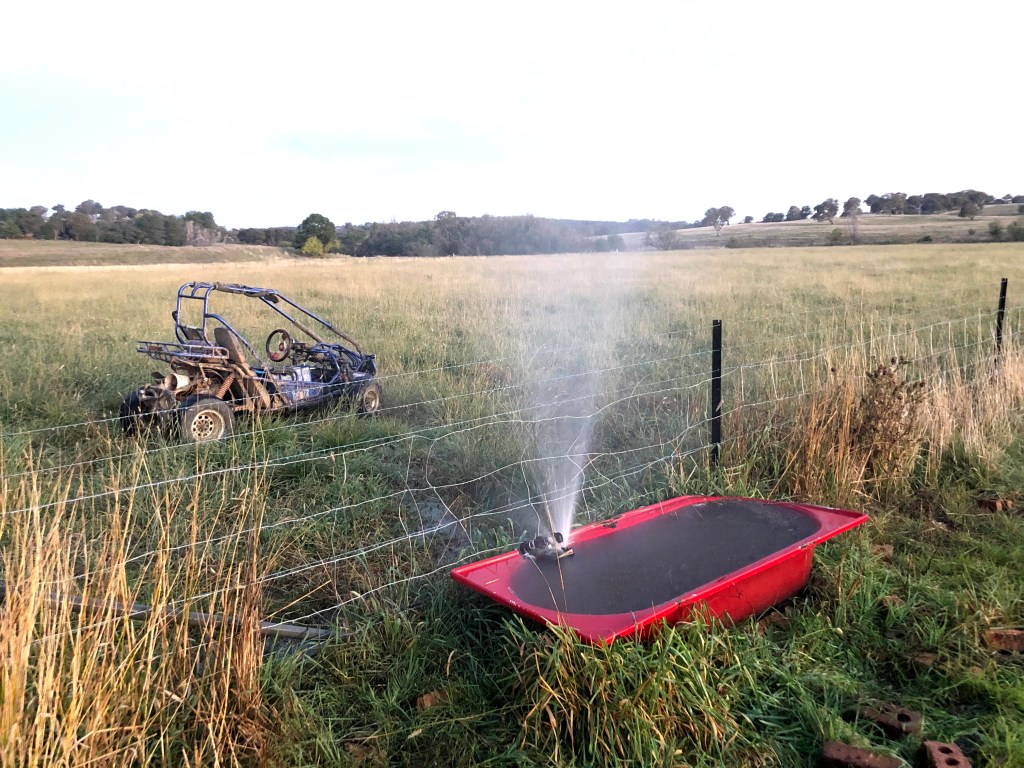
Some of the activities we have been up to included repairs to our dam water header tank. The old galvanised pipe rusted through at the base, meaning that we had no water to our troughs, the garden or the house toilets. Thankfully we were able to replace the rusted section with some new poly pipe – but when the system was pressurised, a new ‘water feature’ appeared in the paddocks!

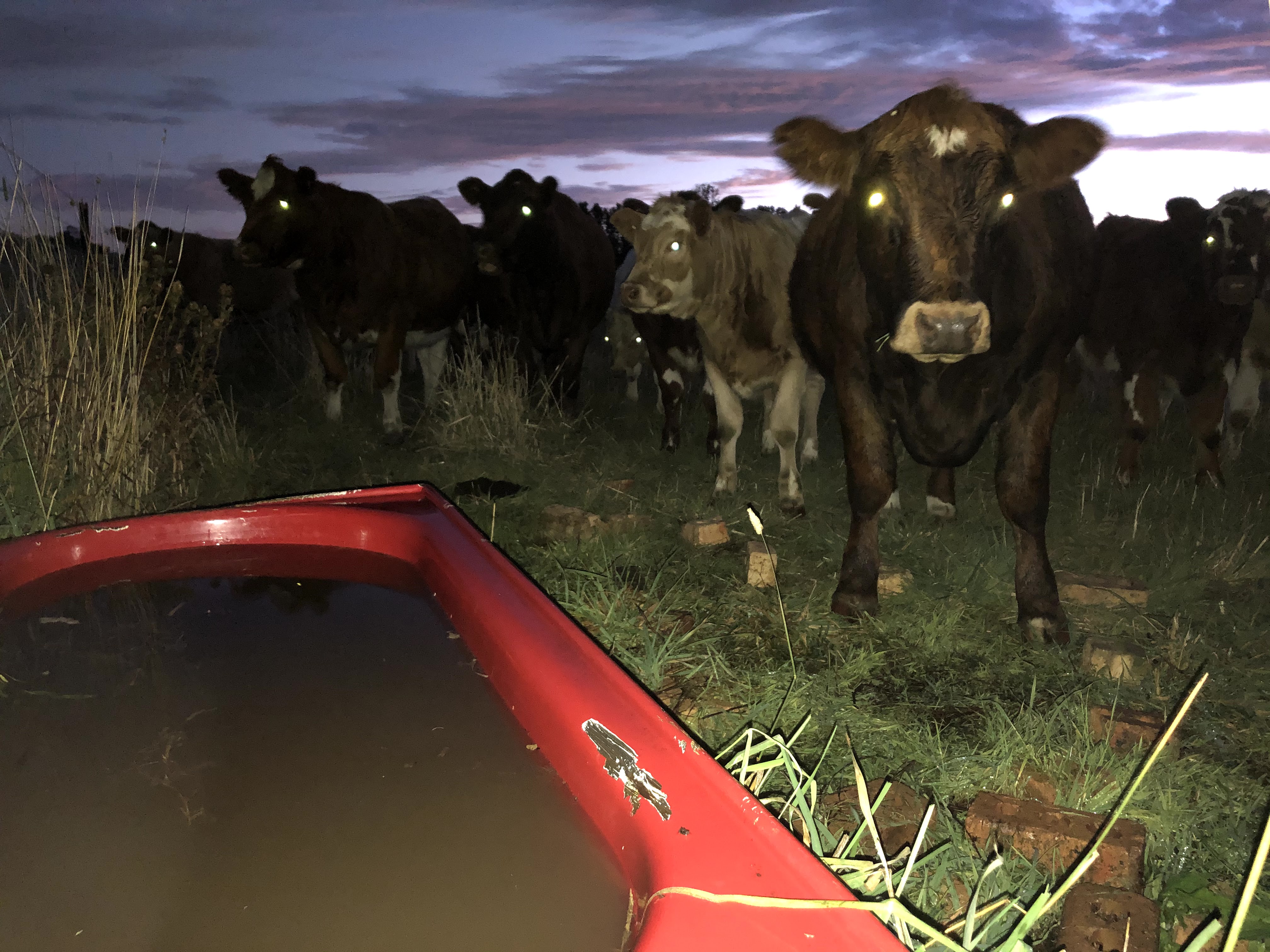
By the time I finished repairing our fountain it was dark, I was cold, however I had an appreciative and curious audience.

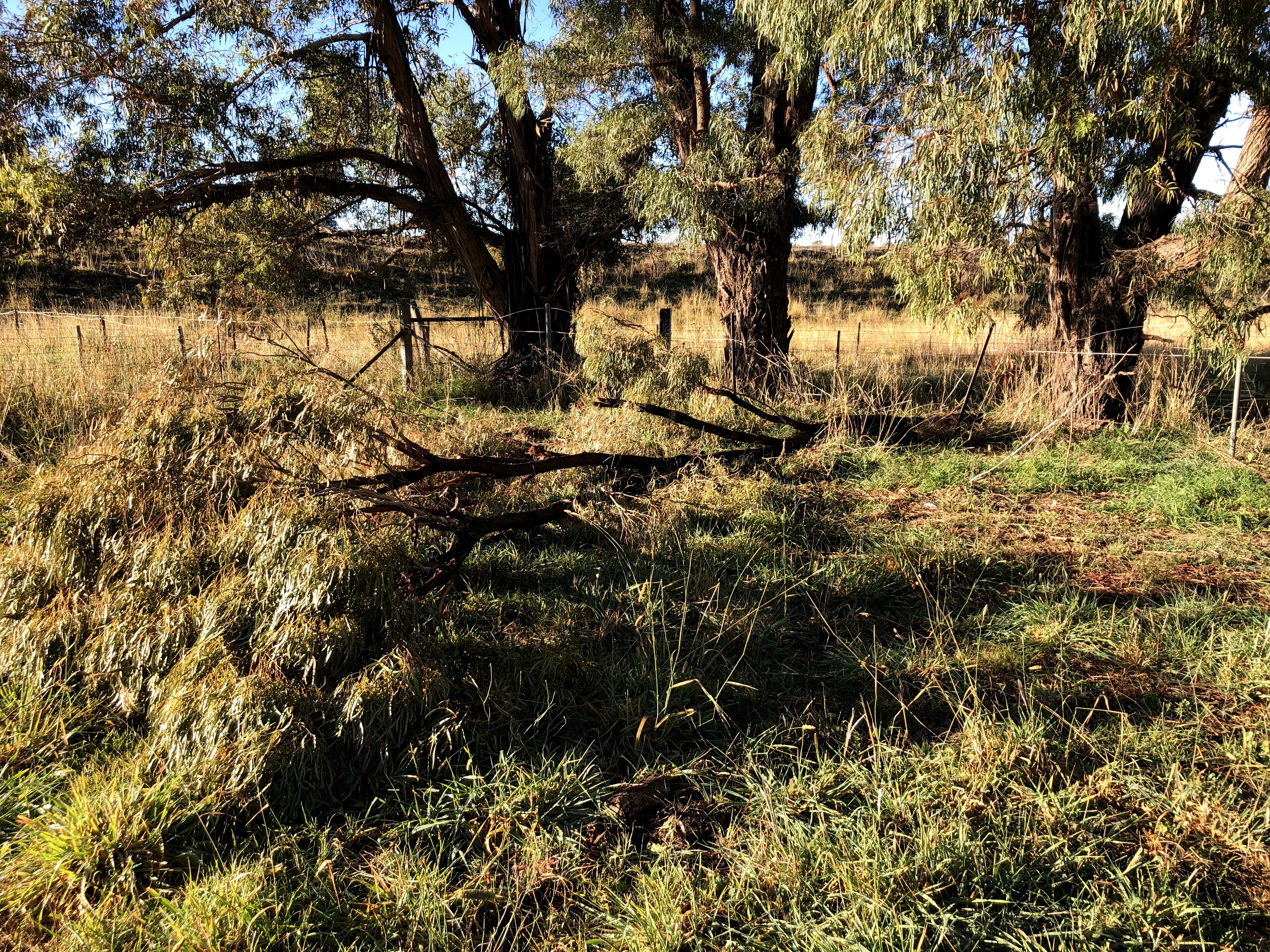
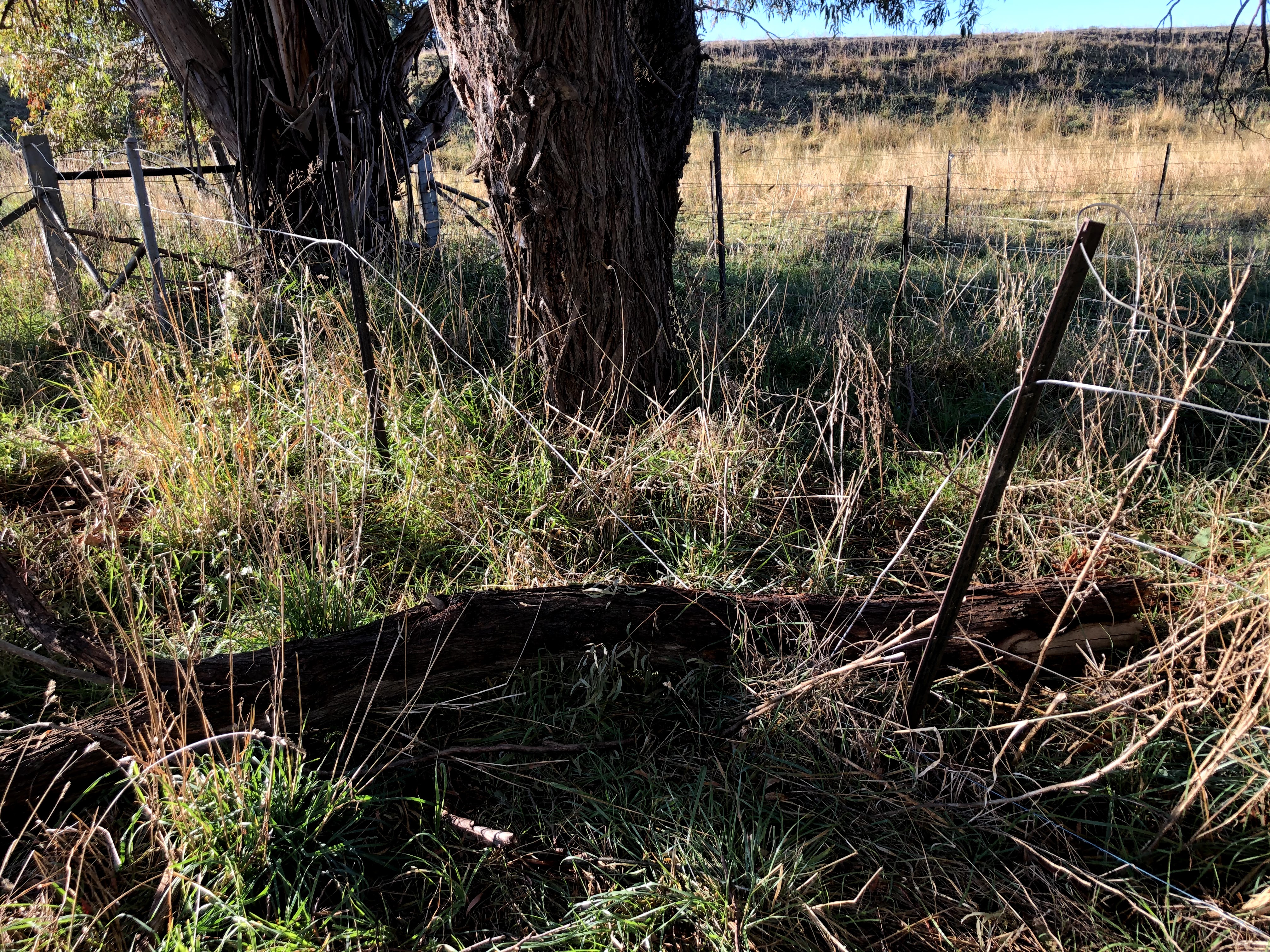
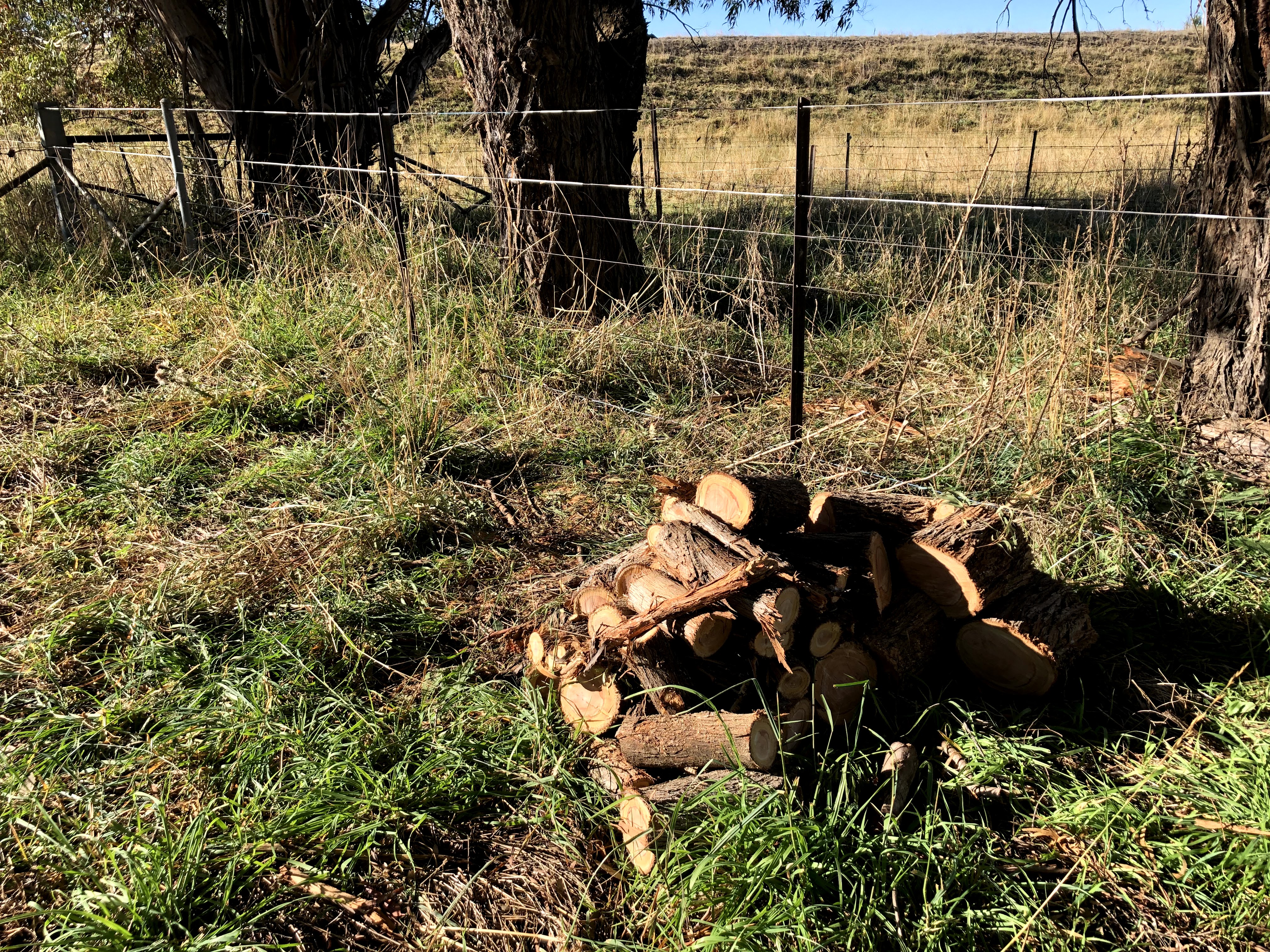
In other parts of the farm, our old Peppermint Gums (eucalyptus nicholli) are in the habit of dropping branches – newly always on fences. It doesn’t take too long to cut up the branch and repair the fence, but it does stop other jobs from being done. I’m beginning to understand why it seems every fence on the place is made up of hundreds of little lengths of wire!

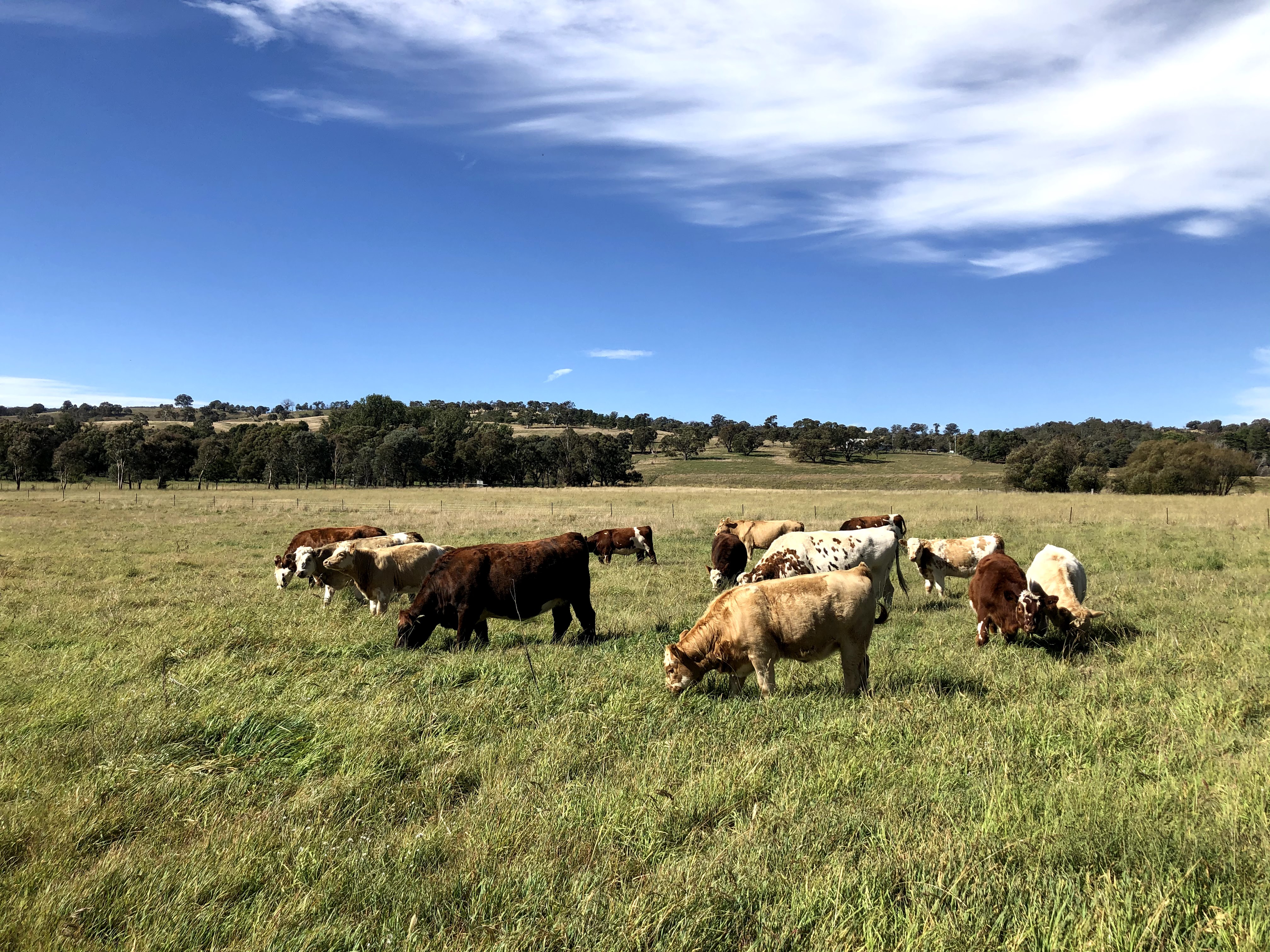
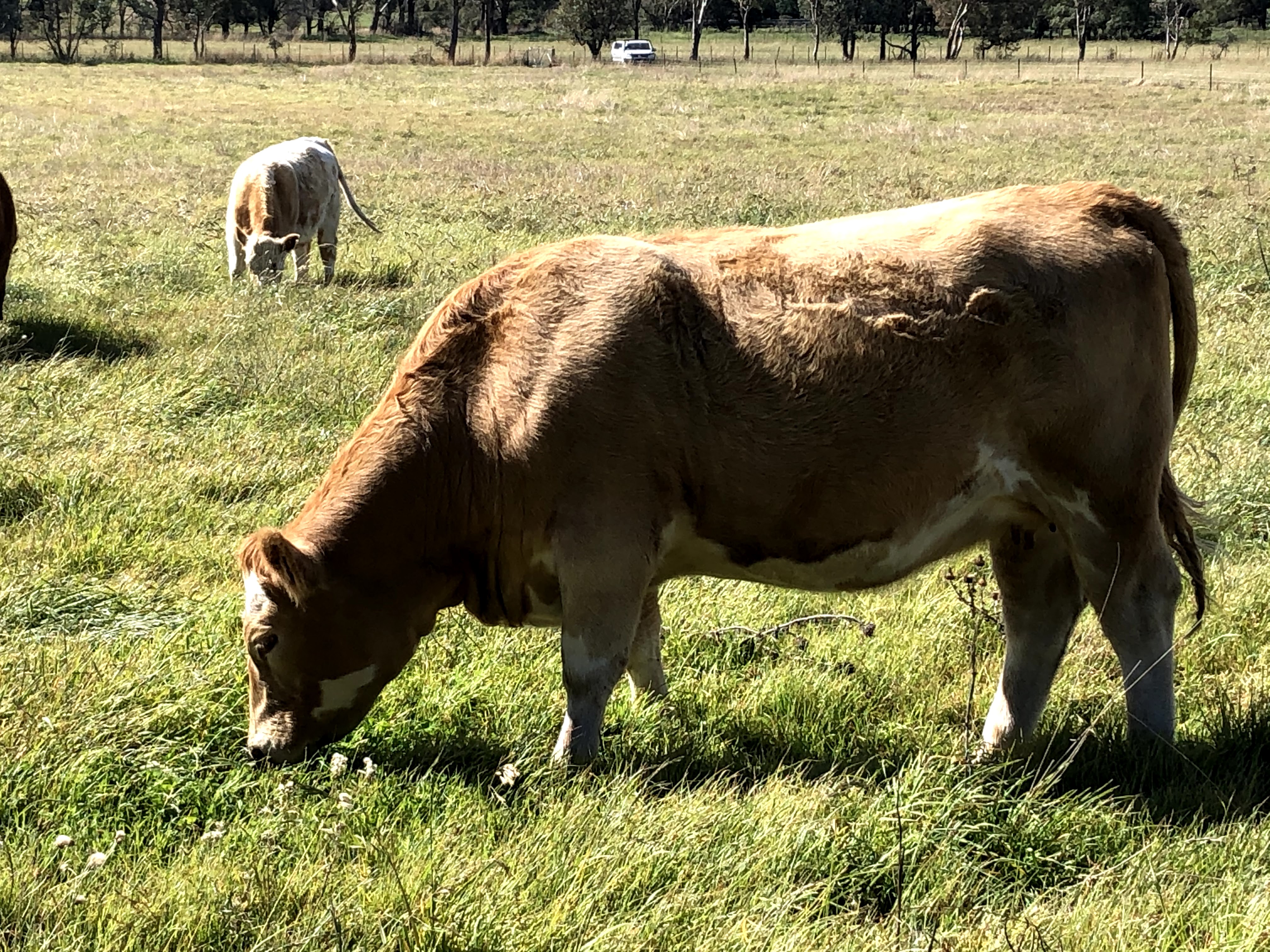
The good news is the cattle are all in excellent condition. The problem I have is that every time I threaten selling the calves to ease the feed burden over winter, I find that more have names. And of course, once it has a name, it stays…. This means that I am relying on our pasture and hay stocks to get us through winter. We are planning on holding on our 10 calves over winter and sell them in Spring when they are 12 months old. I do have an escape plan, and the boy’s did help me put NLIS ear tags in them to ensure that we can sell them at any time should we need.

I am very conscious that the Rock Farm can be all consuming, and it is very much my passion. The kids enjoy the space and help out with many of the job, but they are busy forging their own paths. It is a balancing act to keep the boys engaged, but not feel exploited in their contribution to the farm.

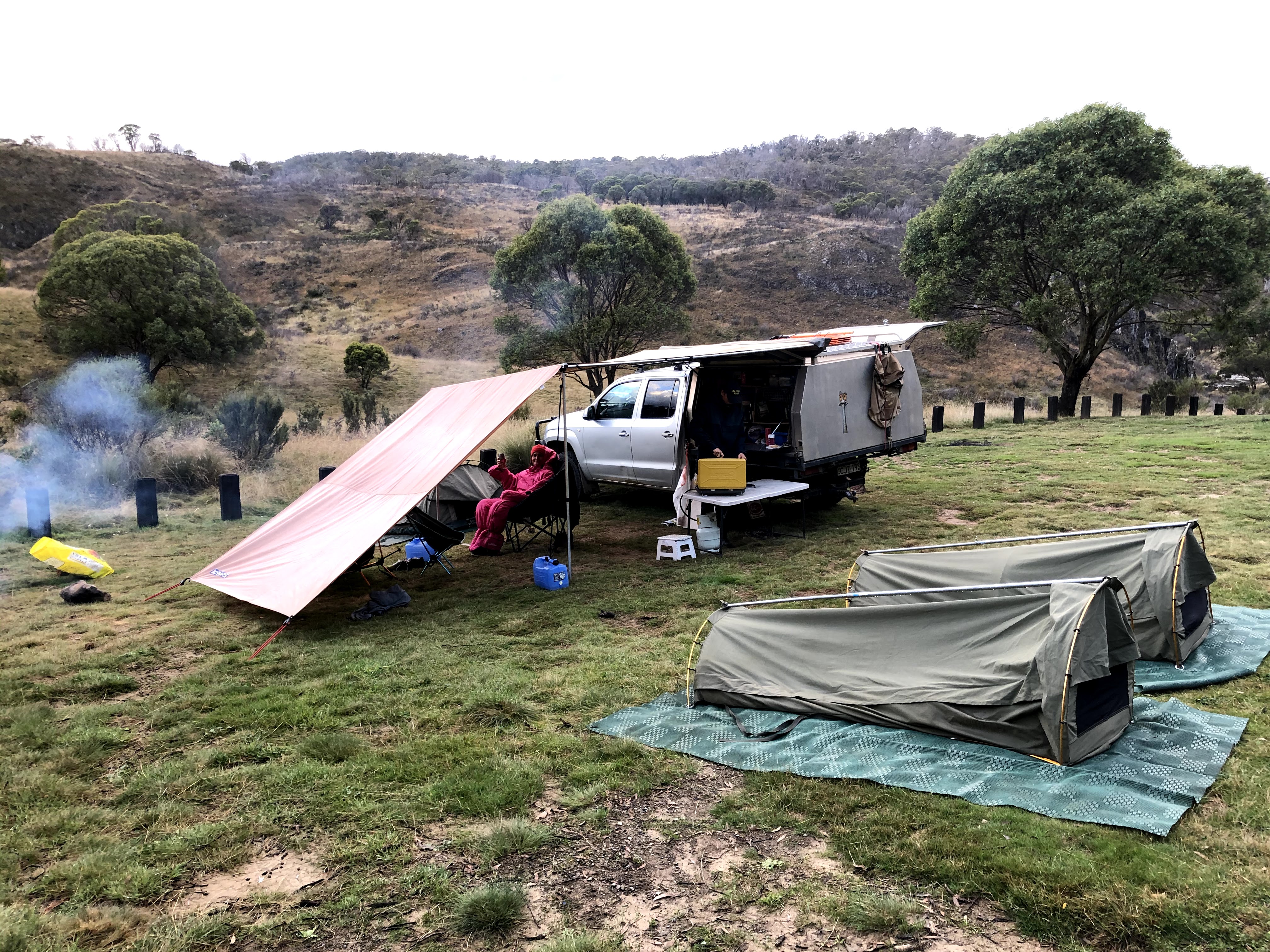
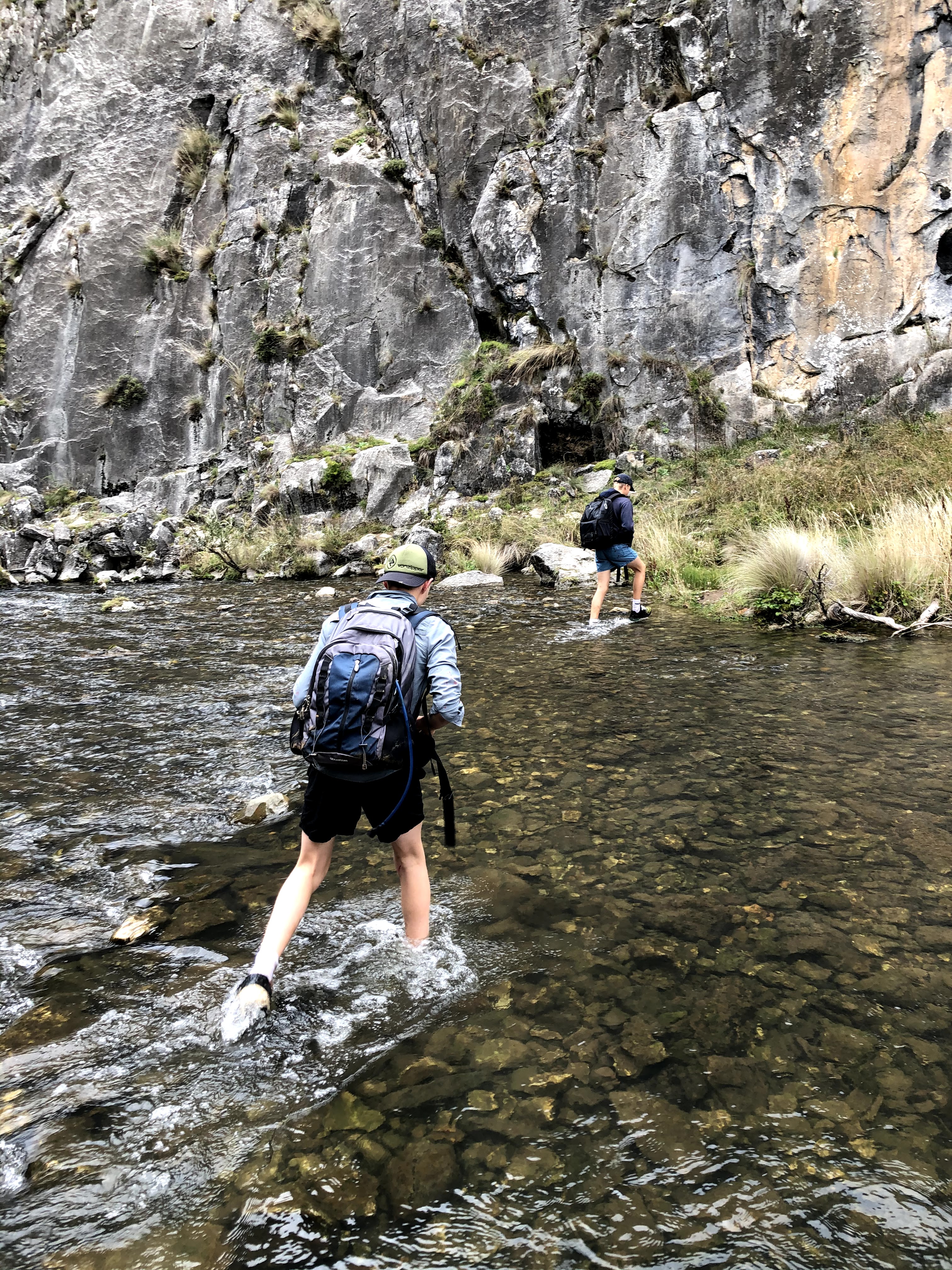
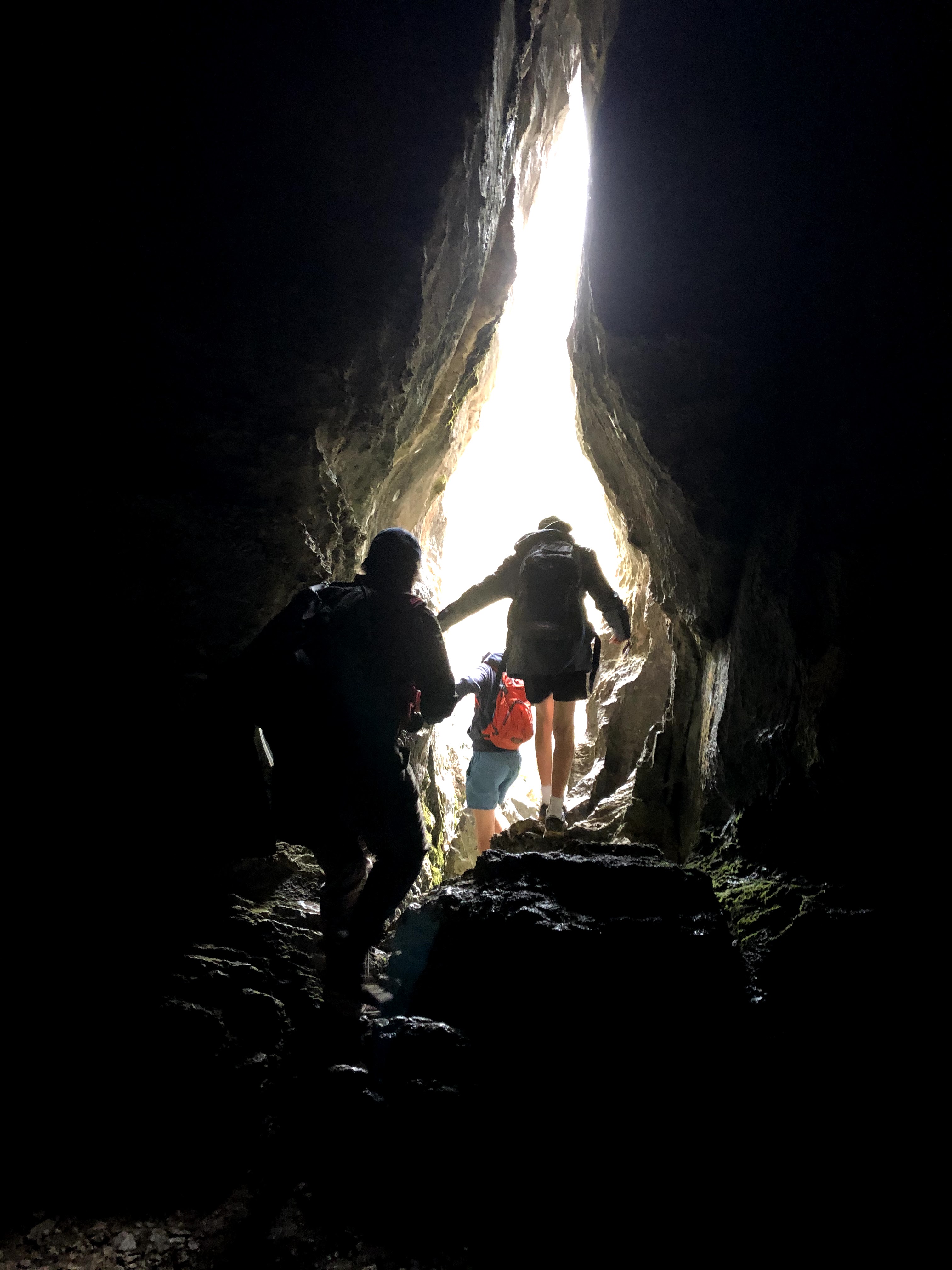
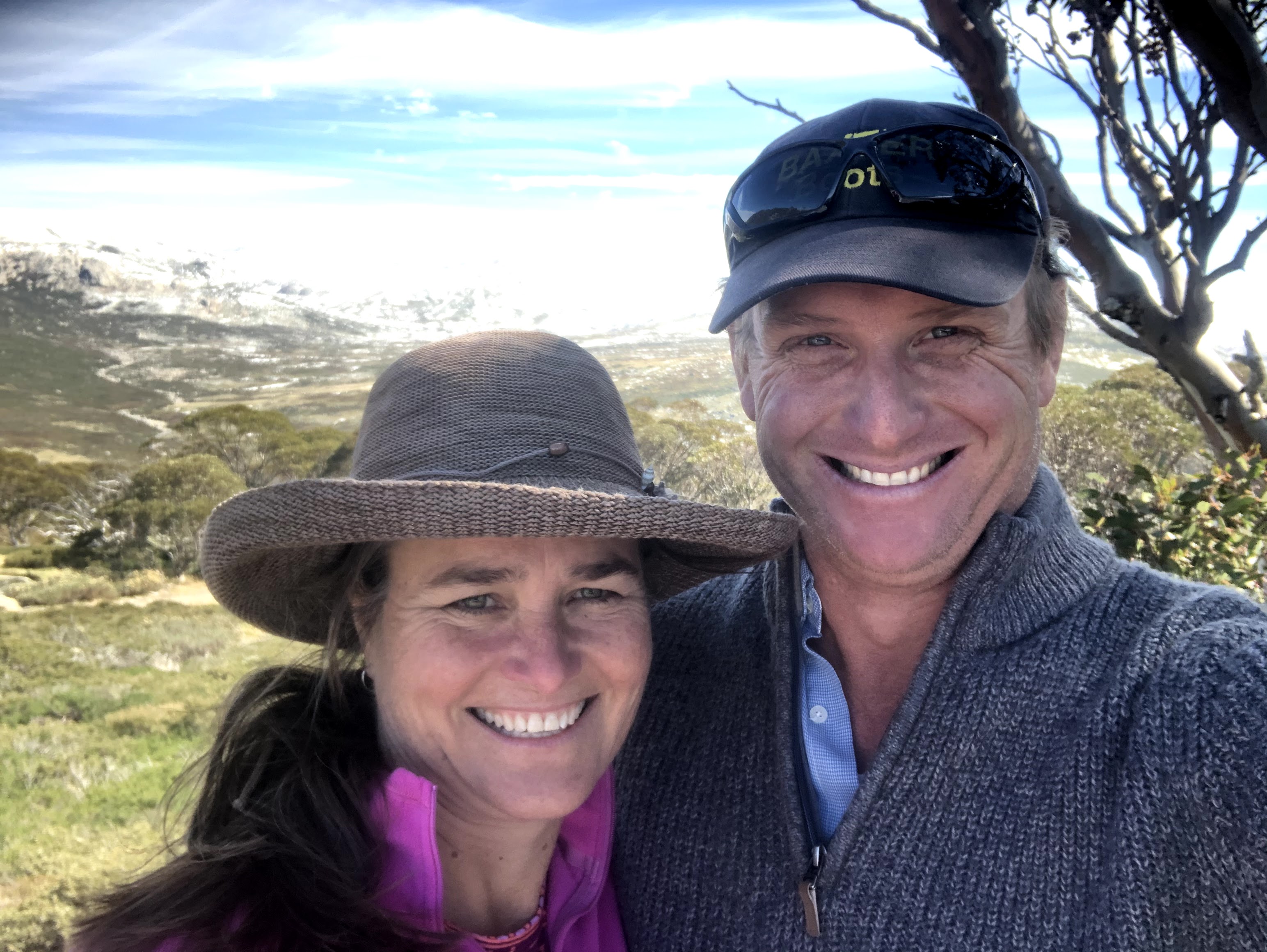
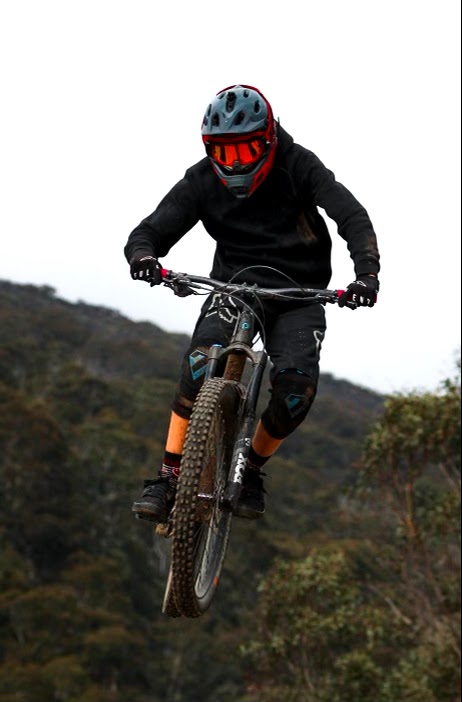
With that in mind, it is important to make time to get away from the Rock Farm. We did enjoy a few nights camping in Koscuizsko National Park and couple of weeks later we stayed at Thredbo. It was great to get the family together and enjoy a break together free from the distractions of work, school or the farm. We loved exploring Blue Waterholes, and the adrenaline junkie loved hitting the slopes at Thredbo on his mountain bike.

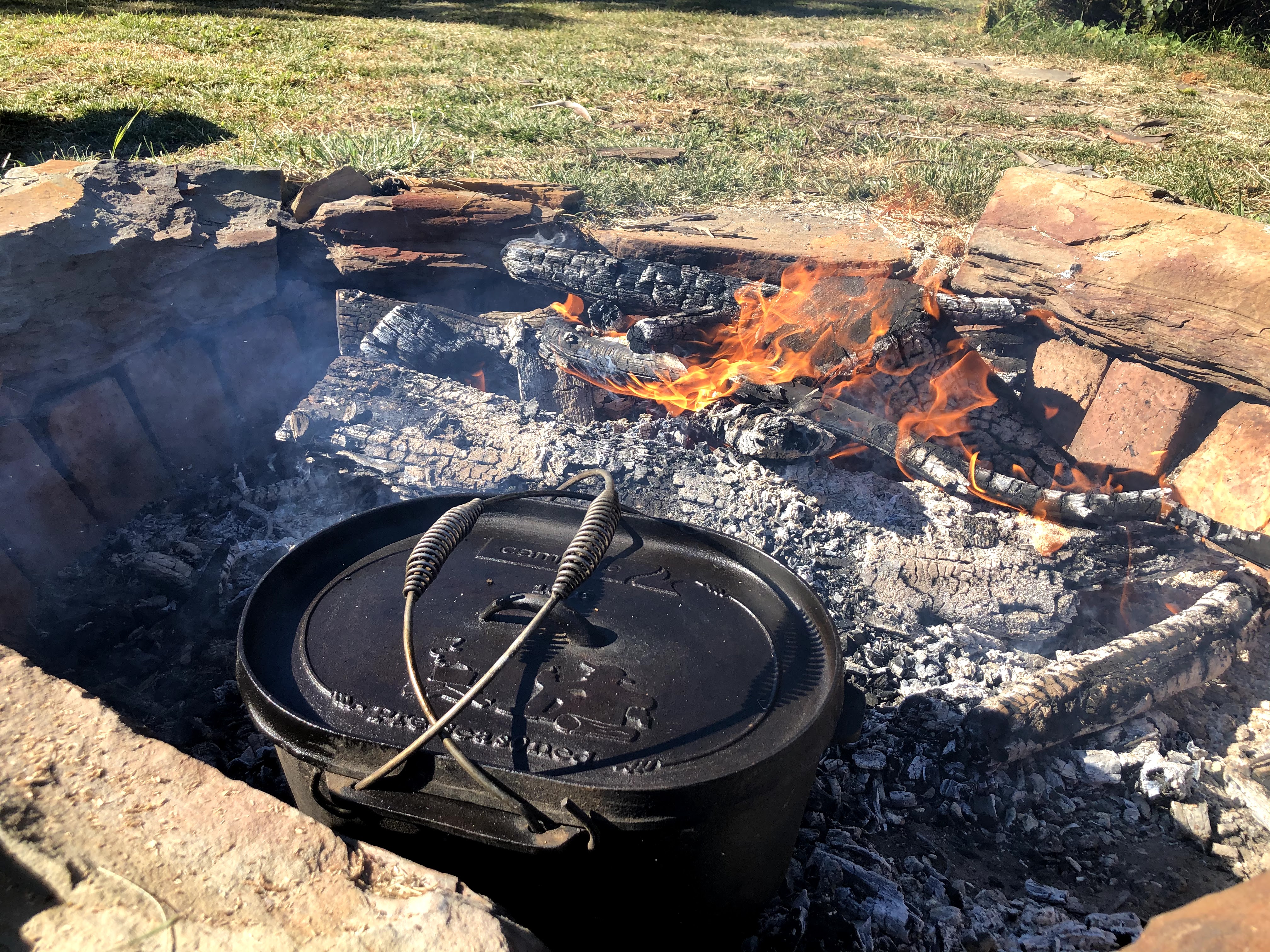
As much as I enjoyed getting away, it was lovely to get back home and enjoy a slow cooked dinner prepared in the fire pit. Something seems to slow down when you’re sitting around a fire.

While the blog might have been a bit quieter than normal, life has been anything but. And that’s a good thing.

Hangry Man Welding

A couple of posts ago I promised that I would share the artistic talents of our eldest son. Those who know him would appreciate that this fellow views the world in very black and white terms. He is also the first to describe himself as not artistic at all, which makes the discovery of his hidden talent all the more remarkable.

One of our neighbours has a wonderful skill in making sculpture out of steel. We caught up before Christmas, and he heard that the not-so-little helper had enjoyed welding for the horse-float rebuild project (https://rockfarming.com/2020/07/14/little-helpers-holiday-project-part-five-and-final/). Dave very kindly invited the not-so-little helper to come and join him for a morning welding during the holidays, which he did.

And so has begun a marvellous journey of discovery.

After coming home with his first sculpture a stunning turtle, he quickly disappeared up into the shed and started looking for material and inspiration.

He called his next sculpture “Dragging Dad Along” with the hope that it would encourage me to buy him a new welder. It worked. He managed to convince me that the old stick welder he was using was limiting his style… so we bought him a nice little mig multi function welder and the production rate lifted significantly.

All of a sudden strange creatures started popping up in the garden, but it was his phone holder made out of an old stirrup that he named “Hangry Man” that caught his mother’s eye. In no time at all she had commissioned several more phone holders for the family.

Not only that – word spread and the not-so-little helper was commissioned to help repair a cracked weld in a friend’s horse float. Unbeknown to me, he had to cut the trailer wiring in order to make a clean weld. When I came to check out his work, he had also soldered the wires back together and taped it all up neat as a pin.

It is great to see his confidence and skill improving all the time – and I have to admit he can do a much neater weld than I can. He will quite often disappear up into the shed to work away at his next project. In a world with so many digital distractions, it is great to see him getting his hands dirty.

I love seeing both my young men starting to hone their crafts. I hope to continue encouraging them by providing the means for them to follow their dreams.

In case you missed the video that our other son made, here is the link for it again: https://rockfarming.com/2021/02/08/2020-on-the-rock-farm-a-short-video/