Weaning and a plan for the cattle

The dry-as-chips Rock Farm has been sweltering through the summer school holidays and whilst the boy’s have been busy restoring the old horse-float, we have all been busy feeding and managing our stock and watching our water supplies dwindle.  I have spent some more time on big red trucks, most recently south of Canberra near Colinton. Thankfully on the day we were there, the fire was relatively benign and we spent the day watching for embers and spot fires ahead of the front.


Just after Christmas, the girls were visited by a bull, called Number 6.  An impressive Charolais cross, we hope he was able to service our cows during his several weeks on the Rock Farm.  We tried hard to get the cows in good condition to make the most of his visit.
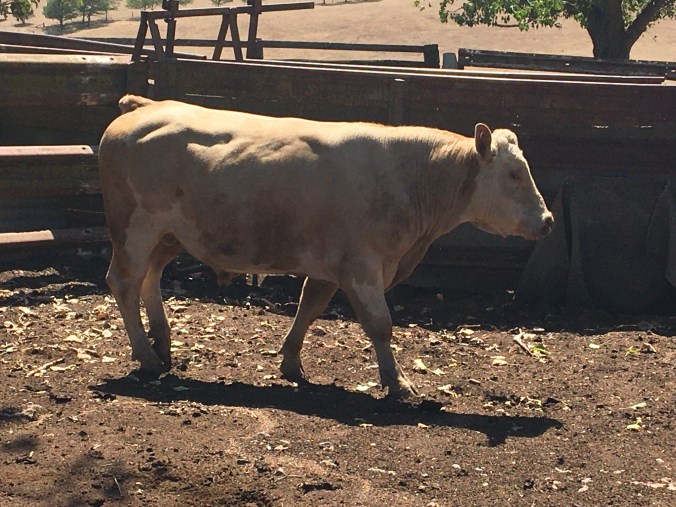
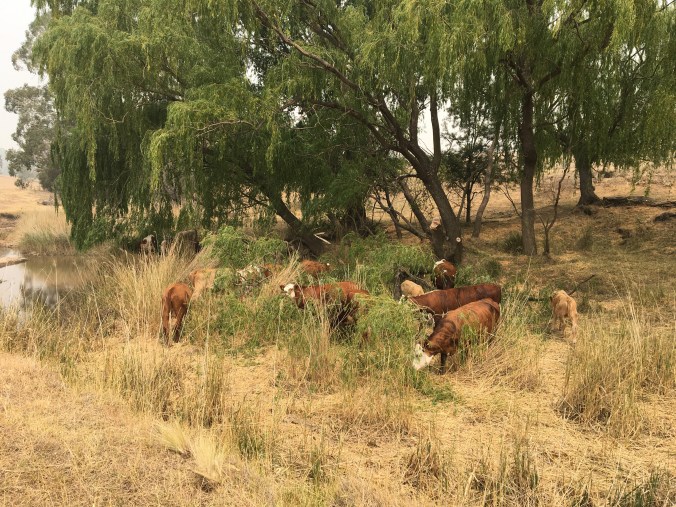
We have been feeding the cattle without much of a break for months and months.  Initially we started with some old pasture hay, and then more recently with some higher quality lucerne.  The cattle have also really appreciated some willow branches that provide a bit of green pick.  That said, it has been really hard to keep the weight on the cows, with them putting so much of their energy into milk production for their calves

After talking with some experts in the beef cattle sphere, one of the recommended strategies in drought years is to wean the calves early.  This can be done anytime from six weeks of age, so our calves at nearly four months old are well ahead of the curve.  It took me a couple of days to get the water supply upgraded in the yards and arrange feed pellets before we were ready to start the big experiment.
img_6248

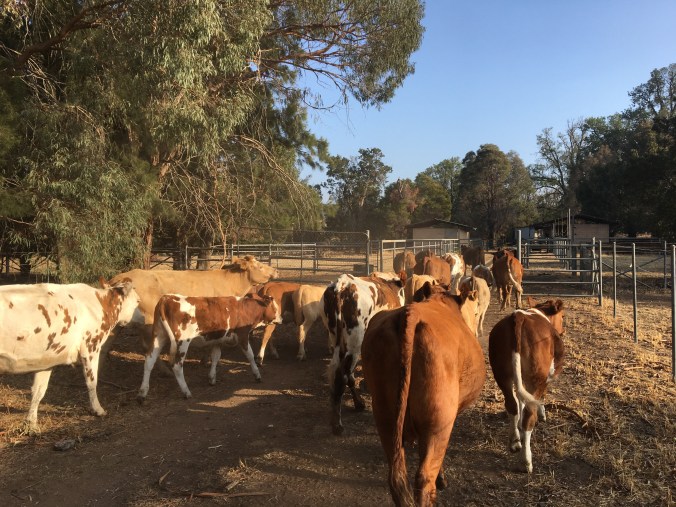
Bringing the cattle into the yards was the easy bit.  Separating the cows and calves was also remarkably easy to achieve.  The cows then followed the truck with hay back to the paddock and the calves got stuck into some fresh hay in the small yard paddock.  It had all gone remarkably well…  for the first few hours.
With fiercely hot days forecast, I wanted to allow the calves access to the small holding paddock behind the yards.  Surrounded by trees, it has good shelter.  Unfortunately the fences aren’t great, and by the first evening two calves had got out, and two cows had got in after crossing through two other fences…  I was still mending and strengthening the fences as the sun set.
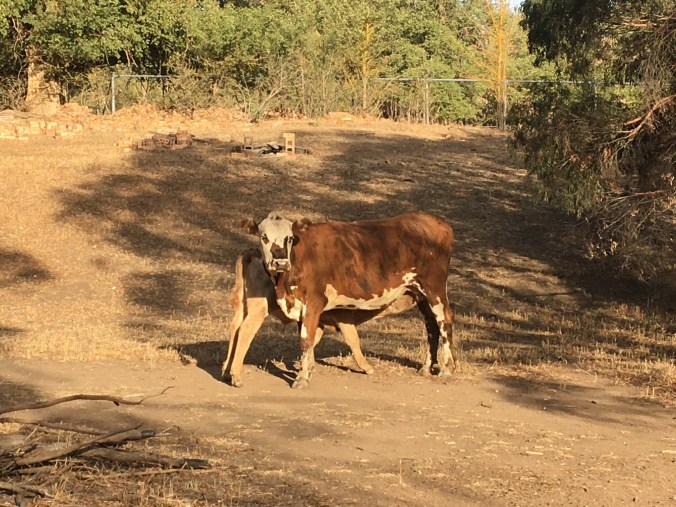
By the next morning, four cows were out and back with the calves.  We returned them to their paddock and the calves to theirs.  In the evening we repeated the exercise.  By third day of this routine, a couple of cows had become regular offenders, and we decided that we would have to confine the calves to the yards, necessitating the rigging of an additional shade sail.


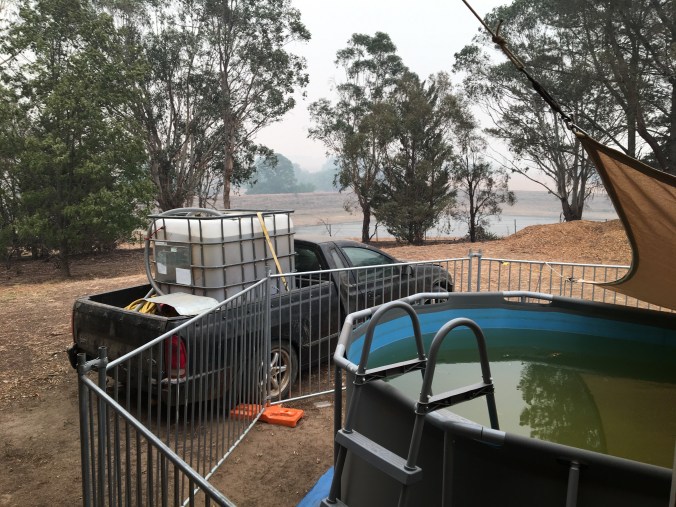
An old shade sail from a friend’s awning, given to us years ago was pulled out of the shed and rigged across the main pen.  Whilst trees provide good afternoon shade over the yards, the morning can get hot with little shelter.  As we had several days forecast with temperatures in the mid 40’s, the cattle quickly appreciated the shade provided by the sail.
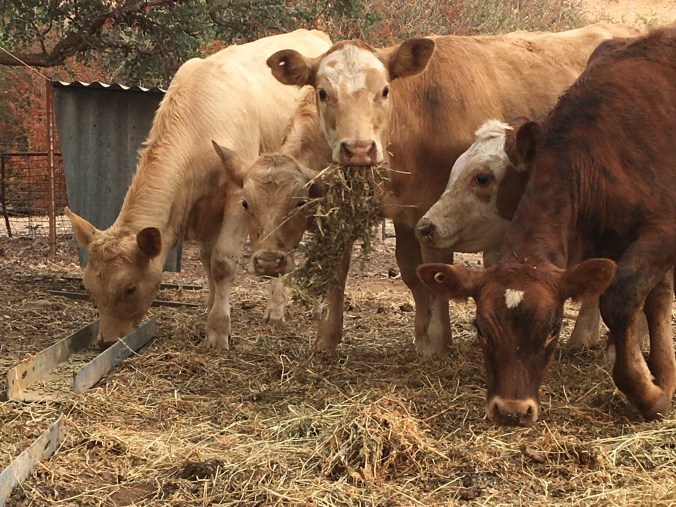
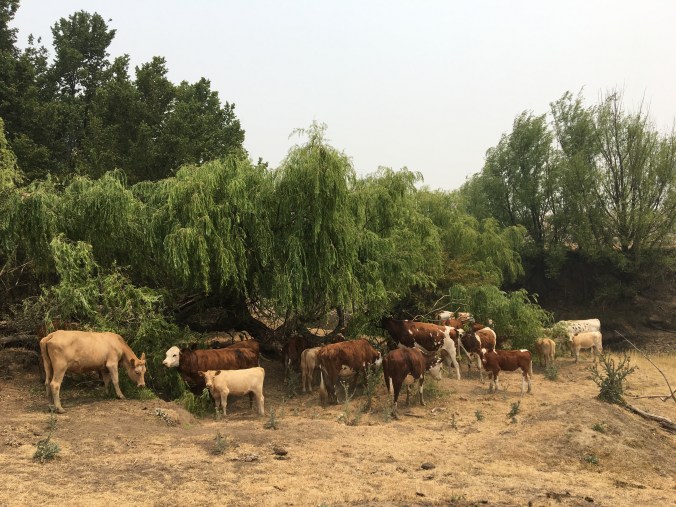
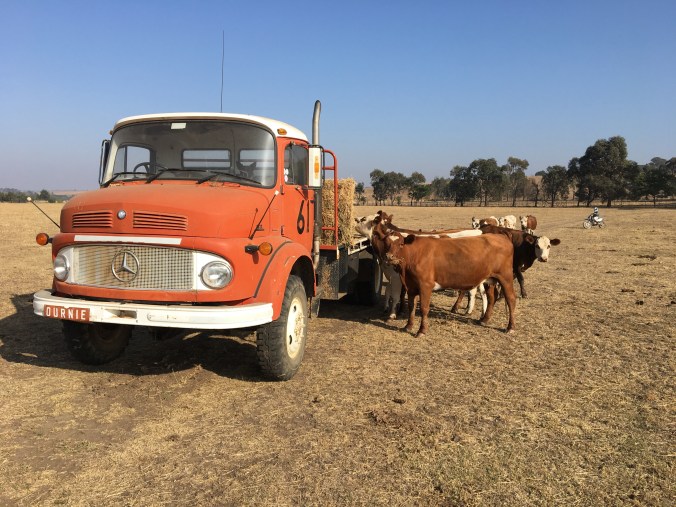
Now the calves are contained in the yards, the most of the cows have settled into their new routine.  A couple remain defiant, and still make their way through my other fences to the yards… except the sight of the hay on the truck makes them change their resolve and they happily trot back to their paddock to get breakfast with their sisters.
img_6250

The calves seem to be settling into their new routine nicely, and now bellow more once they see me walk to the hay shed to start the big red truck than they once did for their mothers.
img_6278

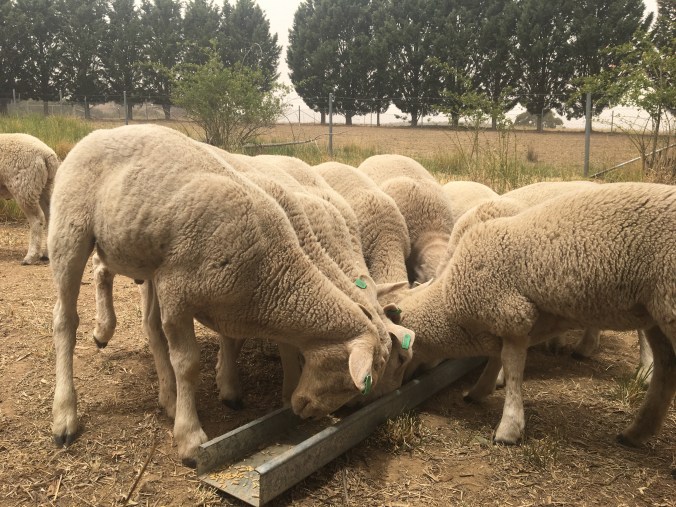
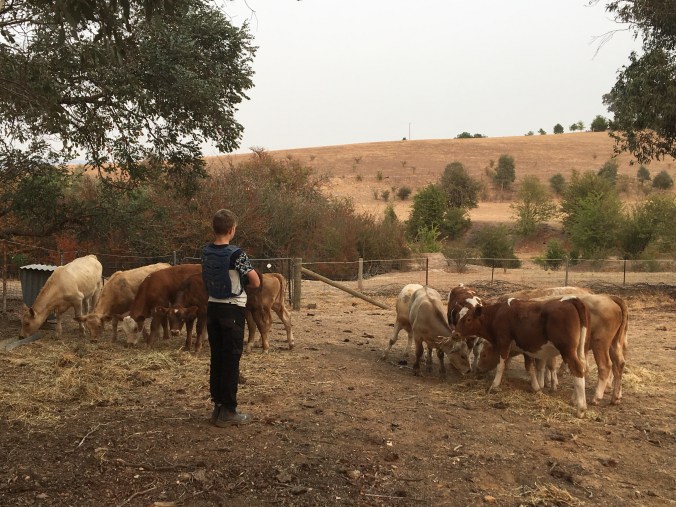
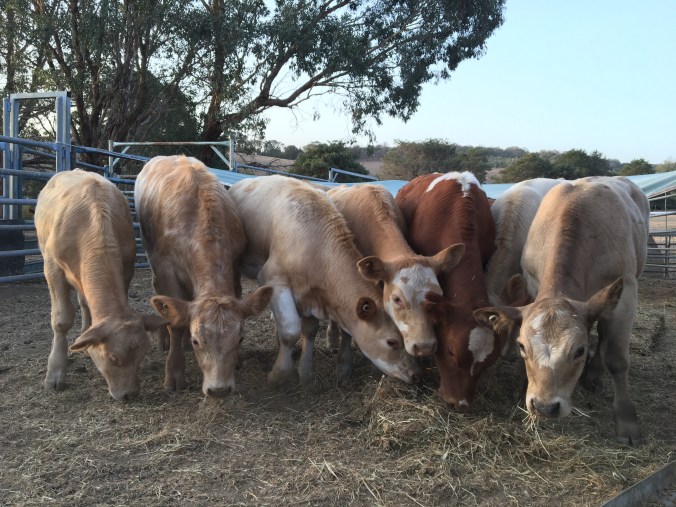
The biggest risk to the calves is pulpy kidney (enterotoxaemia), which occurs when a bacterium that normally lives in their intestines multiplies to toxic levels.  This is caused by a change in feed, usually from a poor dry feed to lush pasture or a diet high in grain.  To reduce the risk to the calves, we are supplementing their feed with mineral supplements, mainly seaweed meal and mineral salts.   We are also gradually increasing the grain component in their diet, and giving plenty of roughage in good quality lucerne hay.  The calves were also vaccinated at weaning, which provides some protection, however they are due for a booster which we will give them soon.

I am watching the little heifer in the middle of the above photo.  She seems to have taken to the nuts far more quickly than the others – and she is watching me closely after I pushed her gently away from the pellets and back to the hay!

The aim of early weaning is to reduce the overall feed requirement, and increase the performance of both calves and cows.  It should make it easier to get the cattle in better condition, and the calves should continue to grow quickly.  The additional handling will make them extremely quiet which is an added bonus.

The strategy with the cattle as it stands is all dependent on rain.

Option A – Dam runs dry – If we run out of water – we sell all our stock and start again when we have a secure water supply.  We cannot cart enough water to sustain our cattle if there is no water.

Option B – Water but no feed – If we run out of feed, we will have to determine whether to keep calves, or cows, or a combination.  My thinking at the moment is to sell any dry cows, and all the steer calves in March or April.  I may have to bring this forward if we have no autumn break.

Option C – Bring in hay – With the price of feed due to the drought and bush-fires – this is dependent on winning big at lotto!

With hay of any quality fetching very high prices, I can only be thankful that I am not trying to make a living from the Rock Farm.  We are extremely fortunate that we are able to support our lifestyle with off-farm incomes, but even so, we can’t afford to make huge losses turning hay into manure.  At the moment, we consider it a type of fertiliser, that is processed by the cattle and dung beetles.

I am not sure what the future holds for our cattle enterprise on the Rock Farm, but it really all depends on what happens in the next couple of months.  Having a bit of a plan helps, even if it is a basis for change.  Hopefully it involves a lot more sitting and watching rain fall than ash and embers!  We could all do with a break.
 

Little Helper’s Holiday Project (Part 3)

I think the not-so-little helper has done a fantastic job telling the latest stage of the horse float restoration…  

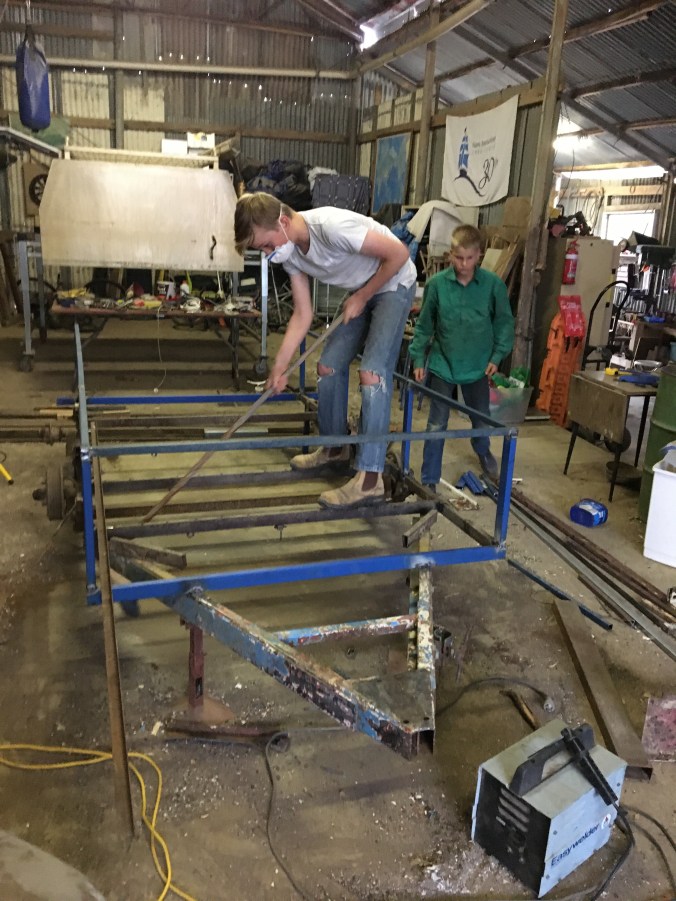
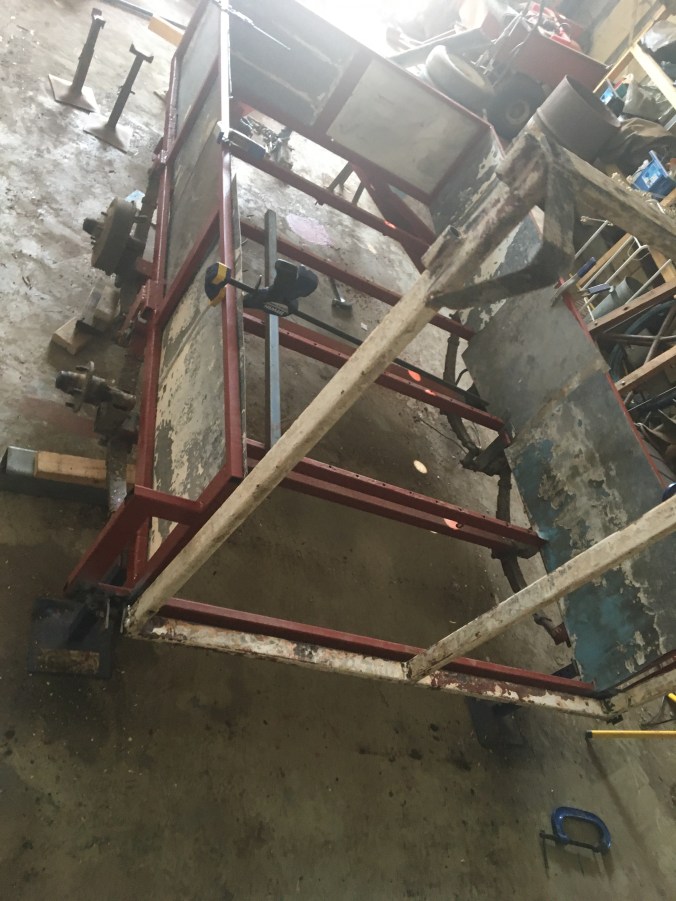
The horse float restoration on the rock farm is rolling again, with some nice and cool, but still smoky days. The mornings start clear, so for a brief part of the day, we can continue working.

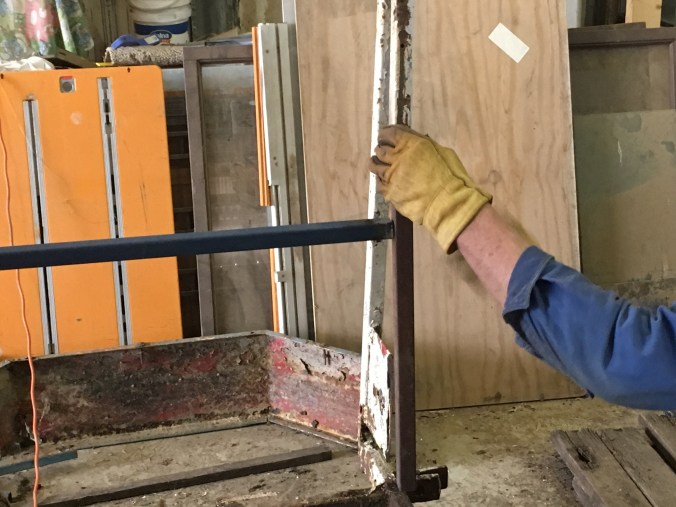
But almost straight away we hit a problem. It’s something Dad was thinking for a while and he came to us with his problem. The horse floats frame is made of 1-inch steel. This may seem pretty solid, but with half of it rusted, and hopefully future horses riding in it, it wouldn’t be safe. Not at all.

So, we went back to stage 1, designing.

We have found around the rock farm that Dad doesn’t have any good, solid box trailers. Or at least any 9 feet long with tandem axles. So, somehow Dad persuaded us to turn a totally terrible horse float into an okay box trailer, and his idea is kind of working.

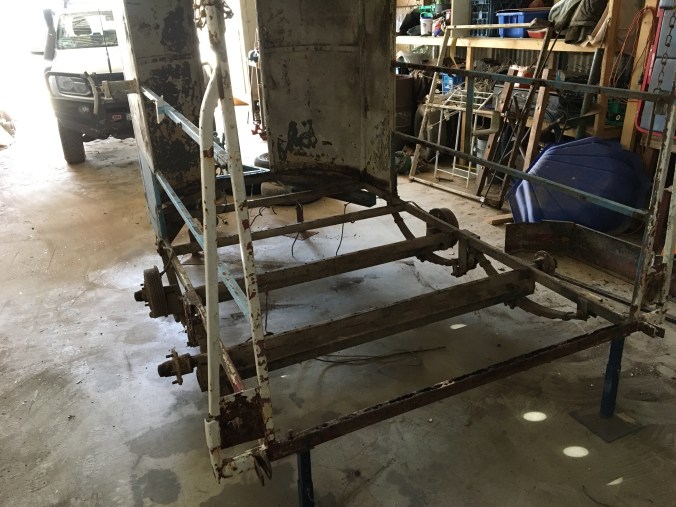
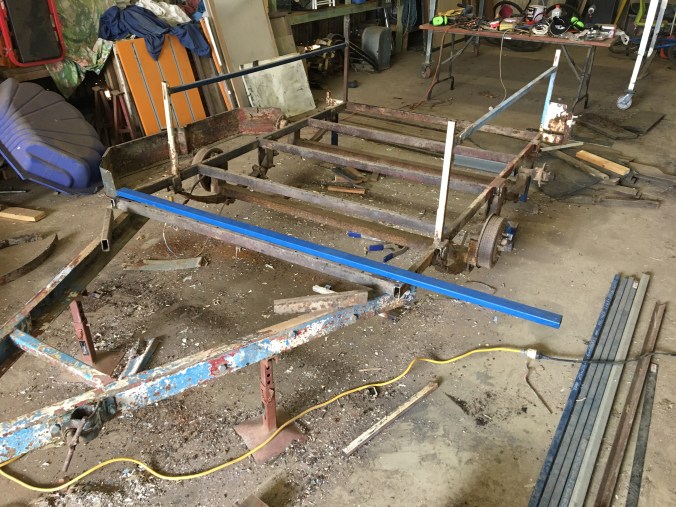
A few days ago, the trailer was just the chassis. We stripped the trailer a day before a total fire ban, smoky and hot day, so we had to go on another small break.

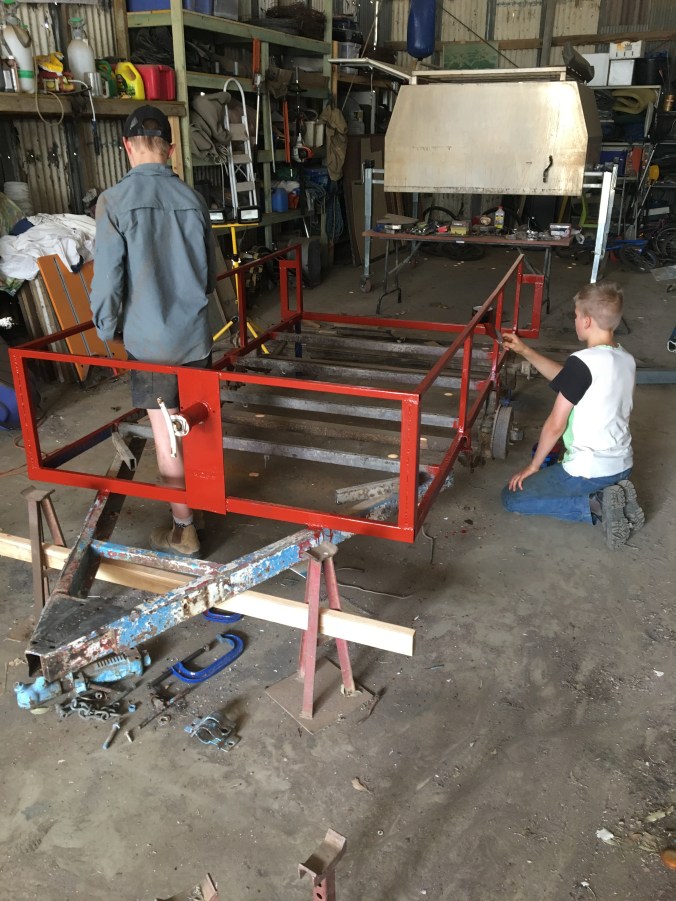
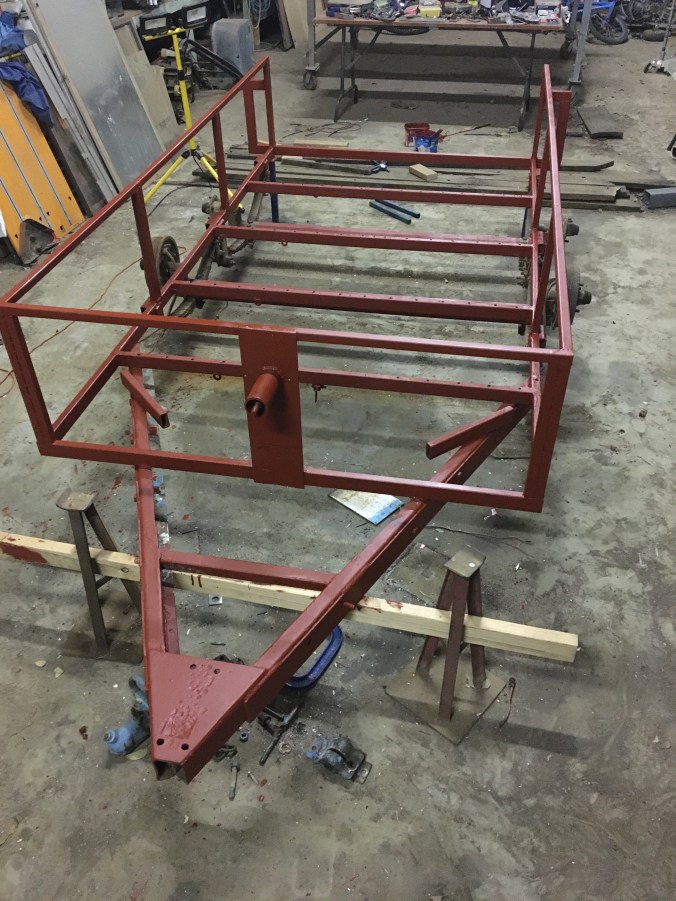
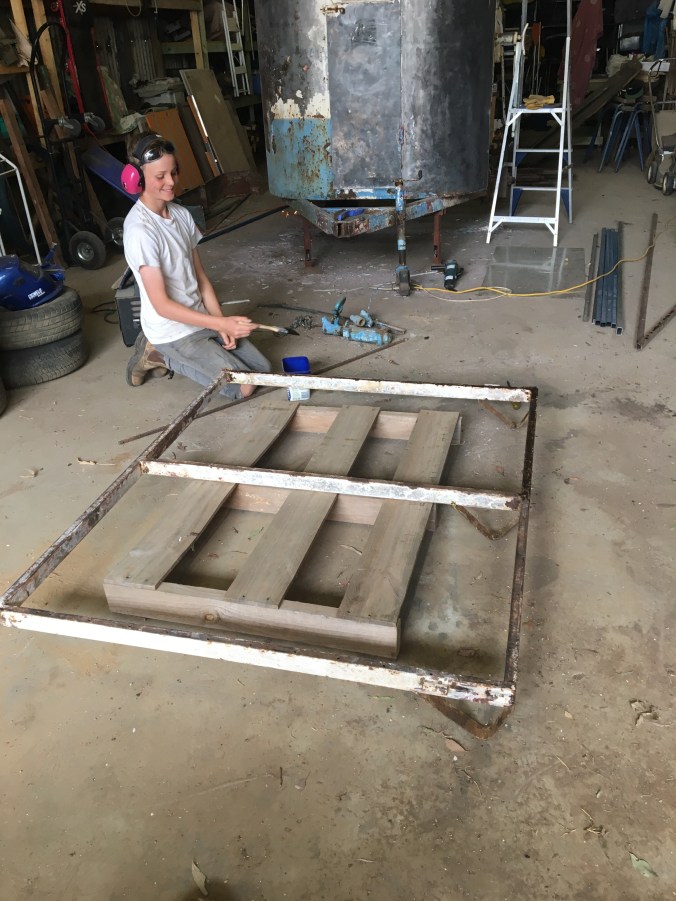
Then we made a frame from 2×1 inch steel. It’s around 450 mm high and it’s really tough. Dad decided to leave us to paint it with the paint primer. Bad idea Dad, really bad idea.

It ended up even worse than I could imagine because the paint primer was bright red, and two brothers, each with paint brushes and bright red paint, does not end well.

I am still part painted red, so, yeah, fun.

Today we attempted to rivet some of the sheets onto the frame of the trailer. We haven’t even finished one sheet. ( out of the 8 we need to do. ). Out of all the things we needed to do on the trailer, putting in rivets was the one I expected least to be taxing. But I was wrong. Very wrong.

After the first 10 holes were drilled, and the rivets were shoved in, I was sweating a river and my arms had died. After that, I don’t need to explain, I think you can just imagine.

But the holidays are soon closing, and the ex-horse float will have a break. It’s going to be fun to go back to school, chill with friends, forget about study, but I will miss the days of using the grinder, or scrubbing away with a wire brush. Or at least until the next holidays.

Book Review: The Uninhabitable Earth – a story of the future

This summer I planned to spend a whole heap of time with my boys working on the Rock Farm.  Unfortunately it hasn’t worked out that way.  Total fire bans and hot dry weather have caused us to stop working on our projects and nearby bush-fires have created a toxic smoke haze that has limited our ability to get out of the house.  This has created an opportunity to catch up on some reading.

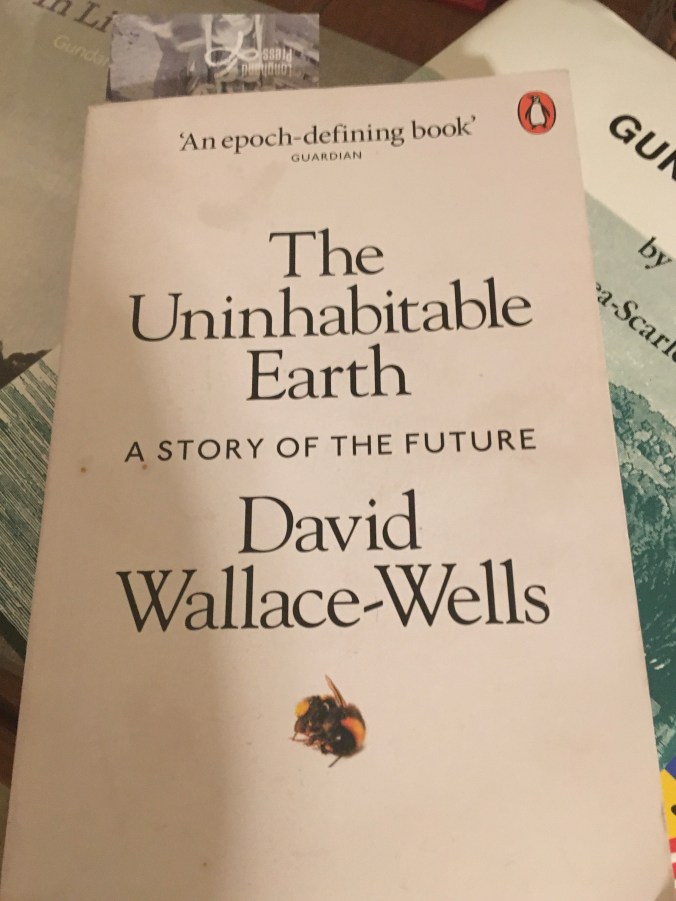
This title comes from my professional book-club, however has an application to the Rock Farm.  Indeed it has an application to all of us, and it is one of the most important books I have ever read.

David Wallace-Wells approaches an enormous topic with his book The Uninhabitable Earth – a story of the future.  It is the product of his two year immersion in the science of climate – and he attempts to make sense of it all in a way that we can understand.

It isn’t comfortable reading.

img_6149

It has been thirty years  since Al Gore published his “Inconvenient Truth”.  In that thirty years, humans have emitted as much carbon into the atmosphere through the burning of fossil fuels as in the entire history of mankind up until that point!  Wallace-Wells bemoans our indifference to the threat of climate change and wants to spurn us into action

Wallice-Wells breaks his book into two main sections.

The first section addresses the elements of chaos.  This section looks at the physical manifestation of climate change.  What an increase of temperature will mean.  How it will affect the oceans, the air we breathe, the behaviour of wildfires, the production of food.

The second section looks at the impacts of a changing climate on society. It examines how society may be shaped through the challenges of climate change.  Wallace-Wells asks will we find solutions in technology, or will humanity descend into some post apocalyptic Mad Max type scenario?

To address these issues, Wallace-Wells has collated the best science from around the world and turned it into a non-technical book accessible to most readers. By trying to keep the book non-technical, I feel that Wallace-Wells has cherry-picked the figures that best support his case – and this makes me feel he is often overstating his argument.  One example about sea-birds reads: “one researcher found 225 pieces of plastic in the stomach of a single three-month-old chick, weighing 10 percent of its body mass“.  I found this example of one bird particularly odd, especially when Wallace-Wells is arguing that the entire sea-bird population is declining rapidly due to plastics in the ocean.

One of Wallace-Wells arguments is that disasters will no longer be considered ‘natural’.  Severe weather events will be of higher intensity and occur more frequently than in the past.  The impacts of these events on  infrastructure and human population will be greater.  Wallace-Wells puts forward that societies will get to a point where it will be uneconomic to repair the damage.  This introduces the concept of climate refugees.

Climate refugees are people displaced by climate change.  Wallace-Wells asks whether the current ongoing crisis in Syria and the rest of the middle east has its roots in climate change and pressures on food supply?  Perhaps the combination of climate change and poor agricultural practices has led to the desertification of what was once the Garden of Eden.

Heat from a global temperature rise will affect food production – drought will become a huge problem for agriculture attempting to feed an increasing population.  Wallace-Wells states that at 2 degrees warming, “droughts will wallop the Mediterranean and much of India“.  At 2.5 degrees warming, we could enter a global food deficit.  Due to the nature of drought, many of his claims are difficult to accept directly, however the overall message that drought will impact food supply is terribly important.

I found parts of the book frustrating in the way the science is collated and presented.  Wallace-Wells uses a lot of numbers to make his points- and deliberately chooses the numbers that sound the worst.  When talking about the threat of micro-plastics to the ocean, he uses absolute numbers: “in one square mile of water near Toronto, 3.4 million micro-plastic particles were recently trawled“.  It is hard to understand what this means, especially when we are told that each washing machine cycle can release 700 000 of these microscopic bits.  By trying to use specifics, I find the numbers almost meaningless, despite the overall message being very important.

I found the predictions as to the future shape of societies and ethics in the future concerning.  The book is intentionally alarmist – and I find that sometimes it is hard to understand the claims behind the figures presented as facts.  At least Wallace-Wells has a comprehensive notes section with references to most of his claims, and there is no denying he has done a mountain of research to base this book on.

One story that I found particularly concerning and highlights how little we know about the climate feedback loops concerns the central Asian Saiga – a dwarf like antelope.  In May 2015 over a few days 60 percent of the global population of Saiga died in what is termed a “mega death” event.  Their deaths were caused by a bacteria, pasteurella multocida which lives naturally in the animal’s tonsils.  Suddenly it proliferated, entered the animals’ blood stream, then liver, kidneys and spleen.  The cause was an extremely hot and humid weather pattern – with the highest humidity ever recorded in the areas where the deaths occurred.  Wallace-Wells described the scenario in this case as: “Climate is the trigger, Pasteurella is the bullet.”  We are entering uncharted territory and many of the feedback loops remain unknown at this time.

So what does it all mean for us at the Rock Farm.

As many of you know, we are trying to establish a woodland type setting with deciduous trees providing a shade, shelter and food source for our grazing stock.  We have sections of native trees and plants for habitat, however we want to make sure that we can protect our pasture from the buffeting winds and drying sunshine, to give us more capacity to deal with drought.  We want to offset the carbon emissions of our car travel.  We want to understand the research that suggests that holistic pasture management with cattle is actually a net carbon sink.

When looking at what plants we want to grow, we are looking at plants that thrive not just in our local area, but also further west of us, where the climate is more ‘Mediterranean’ tending arid.  We want to set our farm up to deal with the changing climate.  The current drought and bush fire crisis has sharpened our focus, and whilst it has made it hard this year to get our trees established, we remain committed to trying to improve this patch of earth we have the responsibility to care for.

It worries me that the debate about climate change and the cause of the fires on social media (and even in the mainstream media)  is increasingly binary.  I see friends using the internet not to open their minds and see different perspectives, but rather to seek other’s opinions that match their own, and then argue that because someone doesn’t share their opinion, they’re an idiot.  The internet was invented to share information, not to watch cat videos and argue with strangers.

We only have one world.  Surely it is too precious to get it wrong. I am the first to admit we live a life of extreme privilege.  It is fair to ask whether it really too hard to make a difference?  Bear in mind, that if the top 10 percent of energy consumers dropped their consumption to just the EU average, total global emissions would fall by a staggering 35 percent.   Now that is something we probably can do, and once we start, I am sure the groundswell of humanity will get on-board!

As Lydia Dotto asked in her piece Storm Warning, Gambling with the Climate of Our Planet twenty years ago

Imagine for a moment you’ve been diagnosed with a serious medical condition.  The diagnosis was difficult but the doctors think they have caught it early.  The prognosis is uncertain:  they can’t fully predict what’s going to happen, but they do know you face difficult choices because this condition gets worse before it gets better.”  

Do you wait for the proof of your condition to become undeniable, before you start treatment, even though it may be too late for that treatment to be effective? Do you take treatment that may drastically reduce your quality of life now, whilst other people say that you’ll barely notice the effects?

I think we all have a responsibility to try to make a difference – and it starts at home.  We can’t afford to wait for the politicians to catch up with us. I am an optimist, and I know that there are many wonderful people working hard to help our world solve its many challenges.  Books like The Uninhabitable Earth remind us how important it is that we stay focused on making the future a better one, for our children’s sake.


The Uninhabitable Earth, a story of the future by David Wallace-Wells  ISBN 978-0-141-98887-0

Summer on the Rock Farm

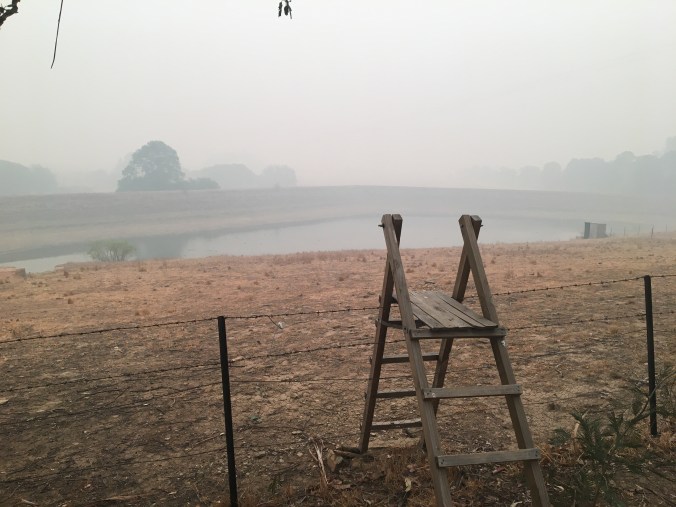
With the continuing hot and dry conditions, coupled with ongoing hazardous air quality, we made the decision to stop work on the horse float restoration. Whilst disappointing, it was an easy decision to make.  As I write, our nearest air quality station is reading 999 – its maximum reading, and we have just sweltered through another day of howling westerly winds and temperatures over 40 degrees.

We are extremely fortunate to have not yet been directly affected by the ongoing bushfire crisis that is the south east coast, other than the lingering smoke haze.  That said, we have been on high alert.

Our local fire captain has a challenging role, juggling the requests to support strike teams  in other areas, whilst maintaining the ability to respond to local incidents.   I have been part of the team that is on standby for local incidents.  Other than a few nervous moments caused by a dusty willy willy, we have been ok – for now.

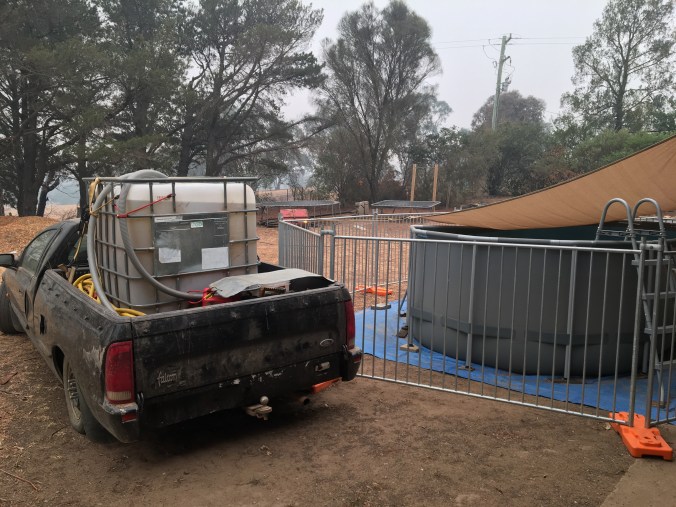
That said, we have been using our time to check in on neighbours and prepare the house.  The falcon has been positioned next to our hillbilly pool – giving around 15000 litres of firefighting water if the bladder doesn’t burst!  The roof sprinklers have been tested and are working.  Mum and the boys are the critical element in our fire plan, because it is highly likely that in the event of a fire, I will be fighting it elsewhere on a big red truck – or at work.

Our large dam is nearly empty with an average depth remaining of less than 30cm.  Our pump inlet that supplies the water troughs is sucking little more than mud.  All the other dams are dry.  We have isolated all the water troughs and hopefully fixed any leaks to try to conserve every drop.  There is always more that can be done – but for now we are in a relatively good place.

In the meantime, the cattle are hungry.  We are feeding hay twice a week, and are supplementing their feed with willow branches.  They have learnt to love the sound of the tractor starting up.  Obviously Pavlov never fed cattle during a drought, or he may have made is conclusions regarding conditioning much earlier!

We have taken refuge in the house where we all, dog included, are going a little stir crazy.  The boys have re-discovered their Lego, have devoured some books, done some music practice and we have enjoyed some board games.  We have also purchased a couple more games for the Xbox, and have allowed a little more time each day on their devices.

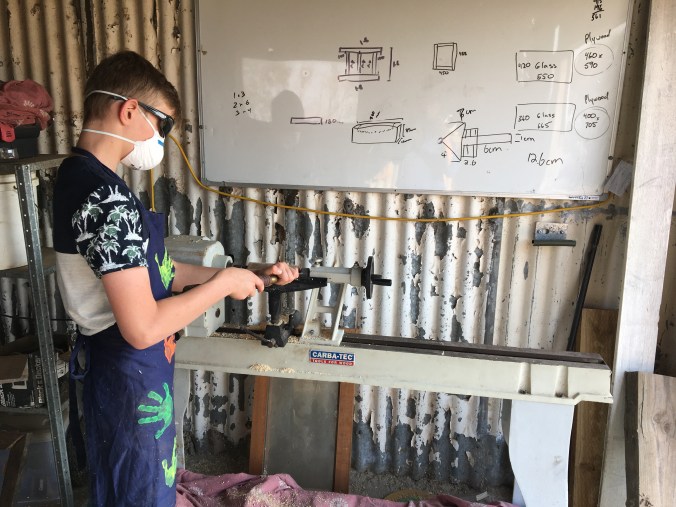
When the air has been a little clearer, we have taken a turn at woodworking.  The boys are making some pens and spinning tops.  I was lucky we had a stash of P2 dust masks in the shed because every shop is sold out for miles around.

It has been an usual summer with many temperature records broken.  I fear we are entering a new era, where extreme weather events become much more the norm.  I have found this book fascinating, and confronting.

David Wallace Wells has collated all the science regarding climate change and tried to make sense of what it means for us.  The difficulty is trying to understand what will happen because there are so many feedback loops.  This piece is worthy of its own article, and when I get a chance, I will try to write a proper review.

For now, please stay safe and check in on your family, friends and neighbours.  We have a couple of months before the fire season will even begin to abate.  I have a feeling that there are still plenty more nervous days ahead of us.

The Little Helper’s Holiday Project (Part 2)

It has been a hot couple of weeks on the Rock Farm.  We have been busy watering trees, feeding cattle and trying to stay cool.  The bush-fires have been an ever present threat.  This instalment comes from the (not so) Little Fisherman. 

Due to the weather, we have not been able to work much on the float since the other Little Helper did his last blog (The Little Helper’s Holiday Project (Part 1)).  The last couple of days have been total fire bans with one of the days even being a catastrophic fire danger day.  But the next day brought some relief.  The temperature was set to be a maximum of 28 degrees Celsius, and the fire ban had been lifted!

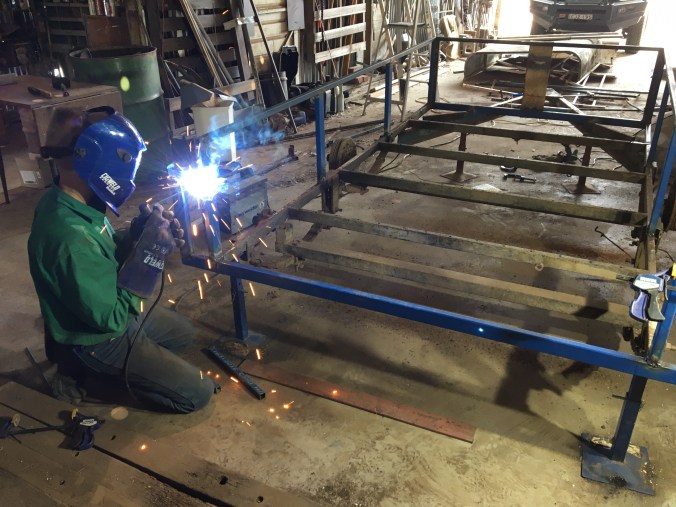
We decided to use the break in the weather to replace some of the rusted frames in the float.  Our replacement bar for one of the more rusted floor sections, was slightly to small and did not have the strength needed of it (Dad will take more care to purchase steel of the correct dimensions next time).  Despite this, we still managed to replace some of the other frames on the side of the float.

This turned out to also be the perfect time for me to hone my grinding skills…  Although it took a while, I managed to successfully remove one of the old bars and clean up the cuts, before cutting a new piece (A tad to long).  I also asked dad if I could weld the bar in place, but after watching him struggle to weld the thin steel we decided that I would do more harm than good.  Instead, I took my new-found grinding skills to finish making my mother’s Christmas present.

After the horizontal struts were in place, we realised that we needed to replace one of the vertical supports.  This meant that dad had to cut up some of his pre-existing welds to put the new piece in place.  Let’s just say, I don’t think that he was to happy with having to re-weld the weak steel.

Meanwhile, the little helper was cleaning up the tailgate with a wire brush and a lot of elbow grease.  After he had finished polishing off the tailgate, he proceeded to rust-proof all the exposed metal he could lay eyes on with some ‘Rust Converter’ (phosphoric acid).

A couple of days later, the weather cooled down again.  We took this opportunity to remove the fibreglass section of the roof.  This proved somewhat difficult as many of the rivets where rusted in place.  We ended up drilling out the rivets.  After some effort we got the roof down, where it now lies, waiting to be sanded, patched and painted.

All in all, we have made many very important structural repairs and have begun looking at the roof.  Hopefully the next blog will be about reattaching the roof and possibly finishing our structural repairs.  We are looking forward to being able to start re-assembling the body of the horse float soon.

The Little Helper’s Holiday Project (Part 1)

For something different, the (not so) little helpers have a school holiday project that they will work on over summer.  Not only that, they have agreed to update their progress online.       They have a tight budget to work on, but we hope to turn this old float into some pocket money.  The main priority is to make the float completely solid and safe, not just to drive on the road, but also to carry precious horses in.  Turning a profit would also be nice – and should be achievable when you’re used to earning $10 per hour….  But enough from me – over to the Little Helper for his take on the holiday project.  


The school days are over, and on the Rock Farm the holidays have started. It’s great to lie back, throwing a ball for a very energetic dog, whilst enjoying a smoothie that would break the world record for the most sugar consumed at once. And it’s awesome the sleep in and not wake up at six o’clock to catch the school bus. Holidays are fantastic.

They are also good to look back on the year and see what we achieved, what happened, what went wrong, and what we can do next time.  Something that I noticed about this year, is that my brother and I achieved almost nothing together. Sure, there were the days where we made catapults, swords, and things to whack each other with, but there was nothing where we did something to learn new skills. (comment from Dad – I would disagree – I love the things they have done where the didn’t even realise they were learning!).

So, these holidays we asked Dad for help, and we started a new project – horse float restoration.

There has been an old horse float down near the stables. It hasn’t been undercover and it has just sat there, rotting itself apart. With the help of Dad, the ute, and the air compressor, we got the old float up to the shed for some pretty major repairs.

We started by taking the wheels off, and after years of rust, the nuts holding the wheels on weren’t feeling like moving. Even after I stood on the tyre lever trying to make the bolts spin, the nuts stayed attached. Only Dad could undo those bolts.

After the wheels were sent rolling, we started taking out the floor. This was more challenging than we had hoped because the bolts had rusted so much there was basically nothing left of them.  The old nuts had seized to the metal frame. So, we called in Dad with the grinder. After an hour of grinding, levering, and swearing (comment from Dad – speak for yourselves!), we pulled the hardwood beams from the frame.

This was all that we could achieve at the time, because the following few days were forecast to be above 40 degrees with total fire bans in place. Sadly, taking apart the horse float involves a lot of sparks.

But there was still one thing we could do: paint scraping.

To be honest, I am so over using the wire brush and chisel. After scraping every single piece of paint off, every side, every corner, we could finally put down the brush and smile. But that’s only the start. We still need to put the rust preventer on that Dad got us, and then paint, replace the rusted beams, put the floor back in, redo the wiring, replace the springs, check it all works, and make it look nice.

We have some more to do, but due to the heat we can’t progress at the moment. So for the time being, we can go back to our smoothies, and relax.


The end of our time with sheep… for now

You may recall that in September we took stock of our options and after looking at the long term forecast, we sold our Wiltipoll ewes (https://rockfarming.com/2019/09/28/the-hint-of-rain/) .

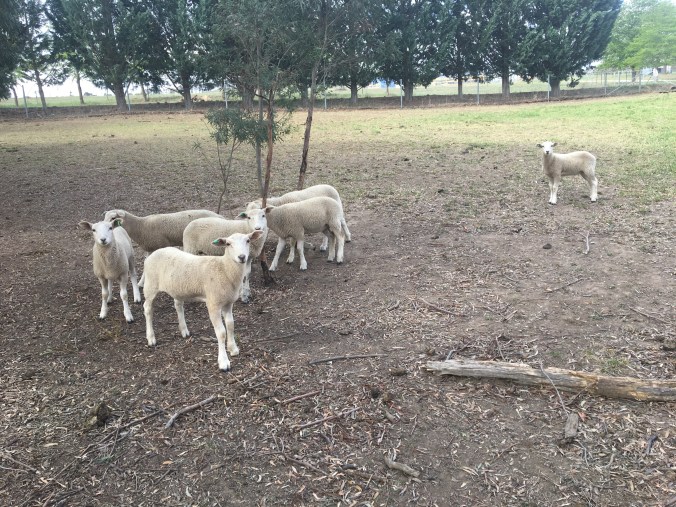
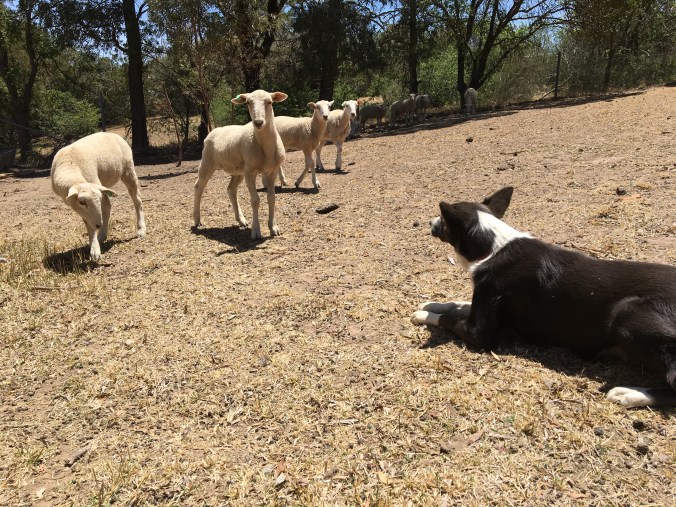
Our gorgeous lambs were brought into some small paddocks near the house and were weaned onto grass and pellets.  Being hand fed, and so close to the action, they soon became very quiet, and would come running towards you – especially if you were carrying a bucket.

We trialled letting them out into the main paddocks, however this turned into a disaster.  As our property was set up for horses, nearly all the paddocks are fenced in plain wire.  The sheep had the run of the place – however decided that the grass was greener on the other side of the fence, specifically the neighbour’s paddocks.  Whilst the lambs were easy to catch (with the use of a bucket), we were wasting a lot of our time retrieving them.

So we made the decision to sell the lambs too.

Twelve of our lambs went to a friend’s place and are now being spoilt on his hobby farm.  To transport them, we parked the horse float in the lamb’s paddock for a couple of days and started feeding them in there.  On the day of the move, we simply sprinkled some oats on the floor and they all marched inside – making it all too easy to pull up the tail gate and take them to their new home.

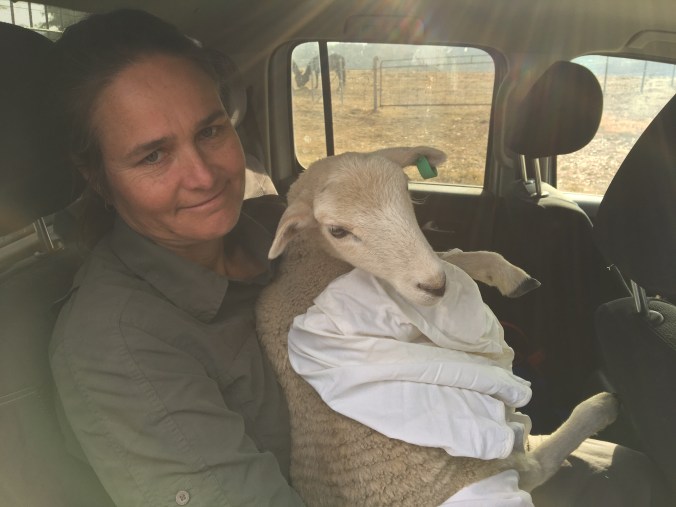
The youngest and by far the smallest, but rapidly growing girl, nicknamed Runty, went back to other friends who looked after all our sheep during the last school holidays.  She must have made an impression (or Mark and Mell are suckers for a cute face).

Sadly our time with sheep has come to an end… for now.  We have enjoyed raising sheep, with all their challenges, since they joined the first Rock Farm back in 2015.  With a bit of luck – and a bit of time working on the fences, I am sure sheep will become part of our farm again.

Making rain… of sorts, or how to build a cheap house sprinkler system

With the new (second hand) carport meeting our 80% completion rule, the strong hot dry winds brought another project into sharp focus.  With much of the state affected by catastrophic bush fires, and with no rain on the medium term forecast, we critically looked at our bush-fire plan, and decided to make a few changes.

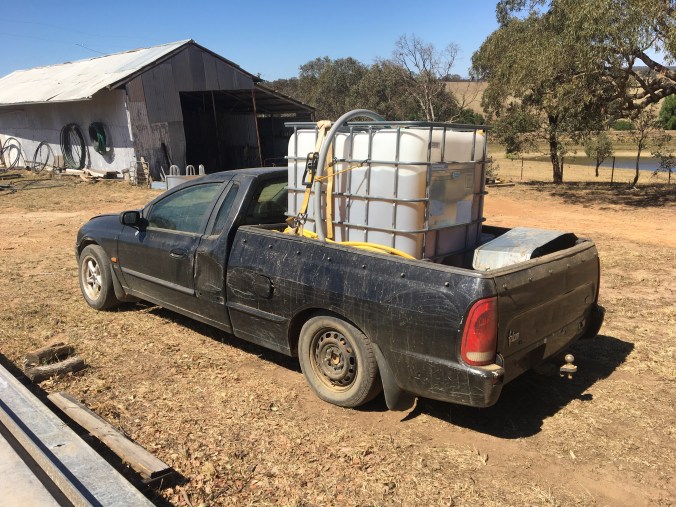
We upgraded the water pump on our mighty AU falcon ‘fire truck’.  We had previously stored the tank on a trailer, but the falcon struggled to tow the trailer having no weight over its back wheels.  A new larger capacity Honda fire pump with a 6 metre suction hose also allows us to fill the tank from a dam or the creek.  As a bonus, I can hold the hose in my right hand and water our new trees from the driver’s seat, making that job a lot easier too.

The falcon fire pump upgrade was an easy fix, however the next part of the project was much more complex.

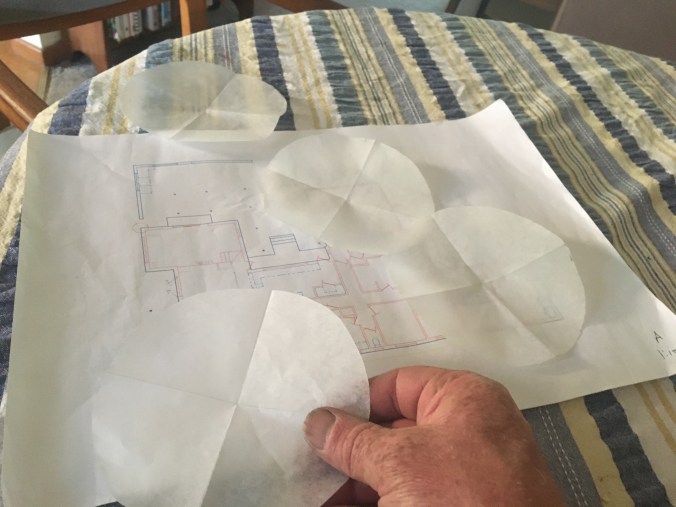
We wanted to install a sprinkler system on the roof of the house.  The first step was to come up with a plan.  Using our CAD (cardboard aided design) template, we came up with a plan for a series of sprinklers that would maximise coverage.  Noting that our worst fire weather comes from the west, we biased the sprinkler sites to the west of the house to allow for drift.

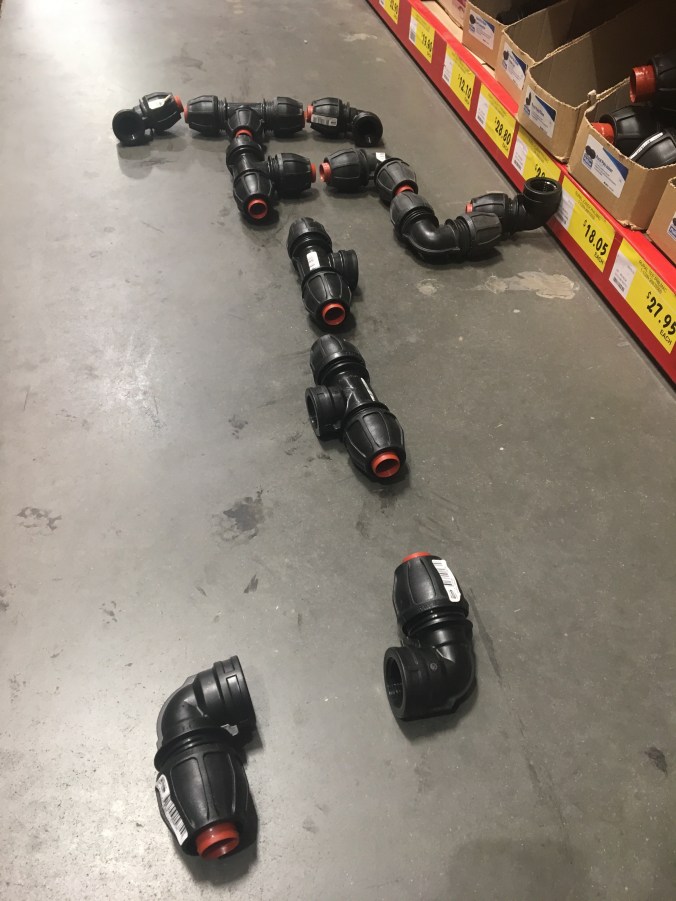
Initially I wanted to install a galvanised steel system, however with a roll of 1 inch rural pipe hanging on the shed wall, I decided to use resources to hand.  What I forgot to factor in was the cost of the compression fittings.  I spent a few minutes at Bunnings laying out the fittings in order to make sure I had all the bits I needed.

A couple of early mornings work, and I had the fittings in place and all the pipe laid out.  The 1 inch pipe was a bit difficult to work, but I soon had it tamed and looking reasonably neat.  The one advantage of a flat roof is that you can’t see much of my work from the ground!

The water comes from our house water tank, which uses a petrol pump to transfer water to our shed tanks, which supply the house.  I simply traced the pipe and installed a T piece and a couple of valves to allow water to be diverted onto the roof of the house when required.  I was a little nervous when I started up the pump for the first time, but I was more than happy with the results.

The pump is the same model Honda as is on the back of the mighty AU falcon.  The Honda small engines are unbelievably reliable, and easy to start.  The whole family are able to start the pumps – which make me far more comfortable this time of year.

One important element of our fire plan acknowledges that if there is a fire nearby, there is a very good chance I won’t be around to do much about it.  Lending a hand last weekend with our local brigade reminded me how many volunteers give thousands of hours protecting the property of strangers.  And how many volunteers also provide logistic support – it might have been late when we took a break in at Braidwood, but we left with full bellies.

Unfortunately I can’t make it rain – but what I can do is hopefully lessen the impact of one of the consequences of ongoing drought – bush-fire.

Making Shade

Sometime before we bought the Rock Farm, the garage was filled in to make a sun-room off the house.  Whilst this has made the house a much nicer place to be, it has done nothing for the protection of our cars.  In winter the frost forms thickly on the windscreens, making early morning starts a misery, whilst in summer the searing heat makes the cars extremely uncomfortable until the air conditioning starts to win the battle.

When a friend offered me a second hand carport, late last year, already disassembled, I quickly accepted. We soon had the steel delivered,  unloaded and neatly stacked… where it then sat for nearly 11 months.

In the meantime life got in the road, and the carport sat and waited.  During the next few months we brainstormed where it would go, and we ended up moving its planned location several times until we settled on building it at the back of the house – off the rarely used formal front door.

Once the site was settled, we hired our water pipe finding friend, Jimmy, to bring his Kanga and dig the 450mm diameter foundations.  The Kanga made short work of the digging (The hint of rain) – and saved me a whole heap of time.  I had to make sure the footings were at the right height.  Being second hand, all the poles were different lengths, and their overall height set the pitch for the roof.  With fingers crossed, we poured in the concrete.  I was assisted by one helper, who worked out that being a concreter’s labourer was off his list of future careers…

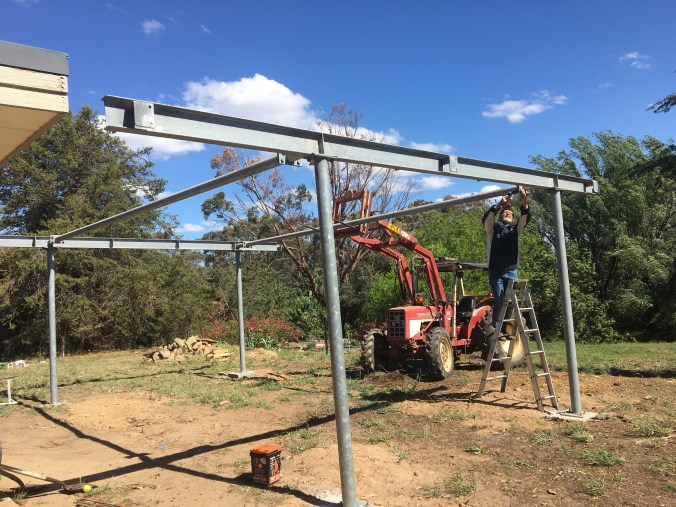
Once the concrete had gone off, it was time to drill the anchors for the posts.  I used the largest bolts I could find and chemically set them into the pads using a chemset kit.  The poles were easy to stand up, but I was really glad to have my old man to advise and the tractor to do the heavy lifting of the main steel beams.

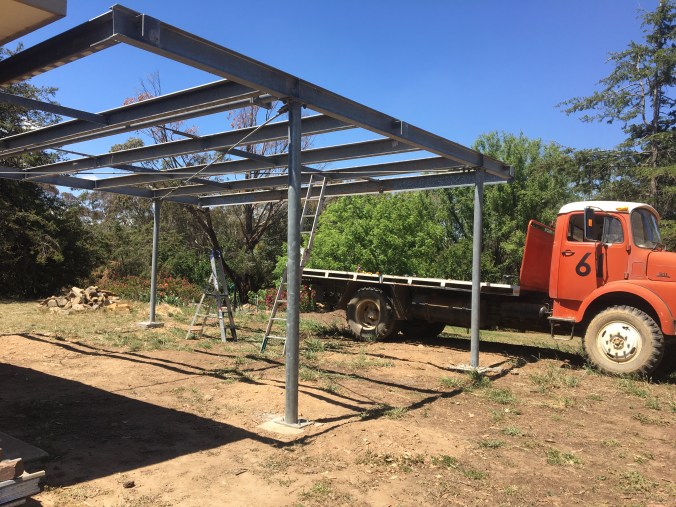
Next Jo and I put the purlins up.  Much lighter than the main steel structure, we had to manoeuvre the purlins over the cross bracing.  Mytle, the old red truck not only made moving everything a lot easier than carrying it down from the shed, but it also doubled as a ladder!

We had to pick our timings to put the roofing iron on.  The winds that have caused terrible fires up north have steadily dried everything out around us.  As the winds were due to pick up from 9am on the day we planned to put the roof on, we got up really early and by 6am were laying down sheets.  And I am so glad we did, as the wind came in exactly as the forecast predicted.

The end result is a fantastic, re purposed three bay carport!  We are really pleased with the outcome.  We have a little more work to do, finishing off the trim and installing the gutters, but the shade on the recent days above 39 degrees has just made life so much more bearable.

A special thanks to Dave, whose generous offer created lots of discussions, deliberations and pacing around the house, but ultimately has made the Rock Farm a much nicer place to live.

Now we just need to build the driveway to the new carport!

When it feels like Summer

The chance of decent rainfall before the grass becomes dormant over summer has all but passed on the Rock Farm.  Dry westerly winds have persistently blowed over the past fortnight, removing any residual moisture from the ground.  These same winds have fanned bush-fires that are causing so much devastation in the north of NSW. As I write, over one million hectares of NSW has been burnt – and we aren’t even half way through November yet.  These fires are unprecedented in their intensity this early in the bush fire season.  But they were not un-predicted.  The biggest question is can we shape our environment to protect us from future fire events like this.

We are starting to understand that the Australian landscape has been carefully managed for tens of thousands of years by the Aboriginal people.  Small low intensity ‘cool’ fires created a woodland landscape that was recorded in journals and art of the early European explorers. These woodlands prevented the large scale devastation wreaked by huge fire storms.  There is plenty of evidence to suggest that our bushland National Parks have more trees now than at any time since human habitation of Australia, some 30000 years or more ago.

Our aim is to create a woodland like setting on the Rock Farm, working with trees that are already established here, and planting new trees.  We want to create a sustainable agricultural enterprise that creates an income and a food source whilst improving the health of the soil.   This doesn’t mean returning the landscape to native bush-land, or what it looked like before European settlement, but something we can use towards the future.

Our plan on the Rock Farm, as most of you know, begins with trees.

With 1.3% of the state not in drought or drought affected (https://edis.dpi.nsw.gov.au/), it is a hard time to get trees established.  Our ground has very little subsoil moisture and our stock are getting hungry.  We had a few oak seedlings (quercus lobata and dentata) still in pots, we knew we had to get them in the ground if we are to have any success at all with them.

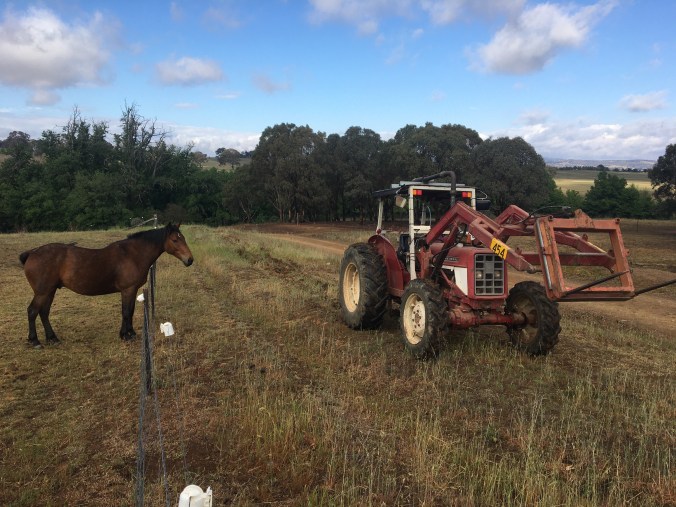
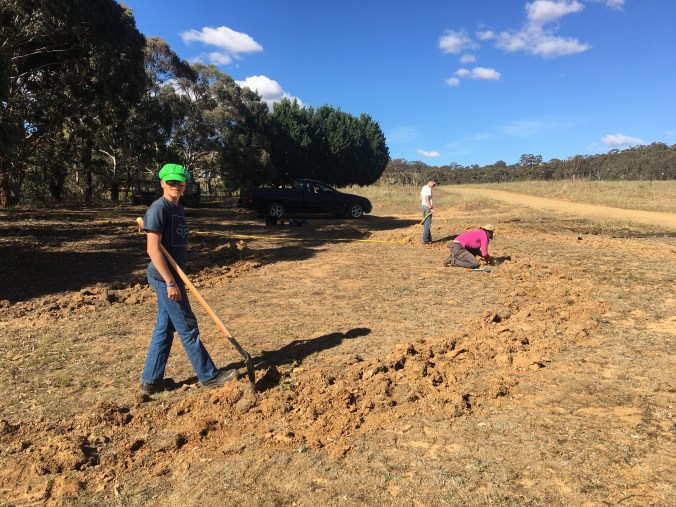
The tractor is an extremely useful tool to prepare the soil for tree planing.  I ripped a line beside the driveway to create an avenue of oaks.  Unfortunately I worked out too late that the tractor requires a little less air and a little more diesel in the fuel tank.  After refilling the tank, I couldn’t get the tractor to start.  After much troubleshooting following the fuel lines, I determined that I had a blockage in the line from the tank itself.  45 years of crud and muck had blocked the tank outlet.  A few good pumps from a bike pump back up the line seemed to clear the blockage, and after bleeding the lines again, we were back in business. Monty the horse found the whole exercise most entertaining!

On the other side of the drive we planted a stack of native shrubs.  Native Callistemon, leptospermum and melaleuca were planted to provide flowing shrub food source for bees.  This soil looked particularly bare and windswept.  We hope the shrubs are able to get established.

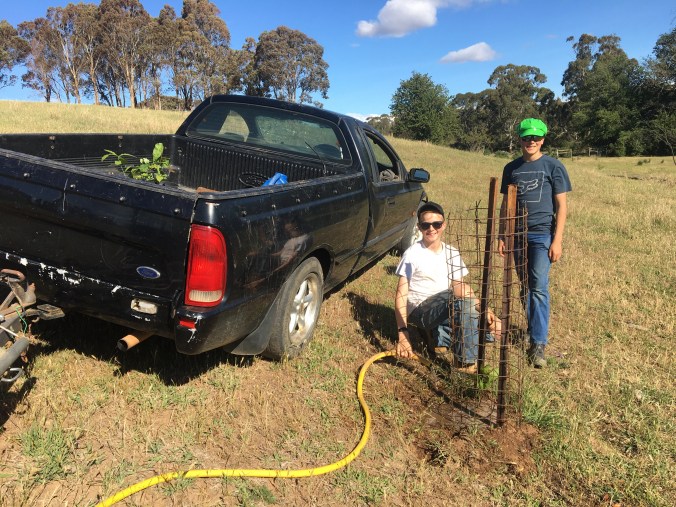
We planted a couple of the remaining oaks in the paddocks.  It was a wonderful way to spend the afternoon with the family.  Although you don’t want to be the one who forgets his hat… If you do, you get to wear the bright green Mario Cart Hat!  We will water the plants every fortnight over summer with the IBC tank towed behind the go-anywhere-a-4wd-can falcon.

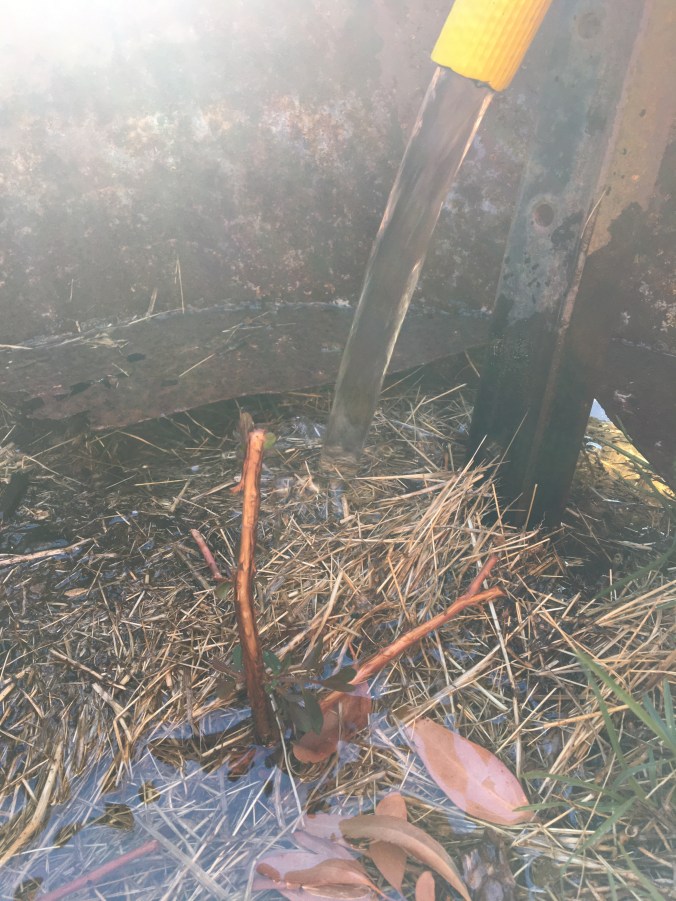
With the water tank on and helpers available, we also gave a drink to the other trees we have planted around the place.  Last time (Update on trees and rip lines.) you may recall I was cursing hares, who had snapped off our yellow box (eucalyptus melliodora) seedlings.  I had placed some tree guards around the snapped off bases and gave them a water.  I was extremely pleased to see that new shoots were coming from the base,

And why bother planting trees, especially during one of the most widespread droughts ever recorded?  Well, a walk through our small paddocks shows the results of the vision of the former owners.  In the shade from large deciduous trees is grass.  Green growing grass…. can’t get any more reason than that.