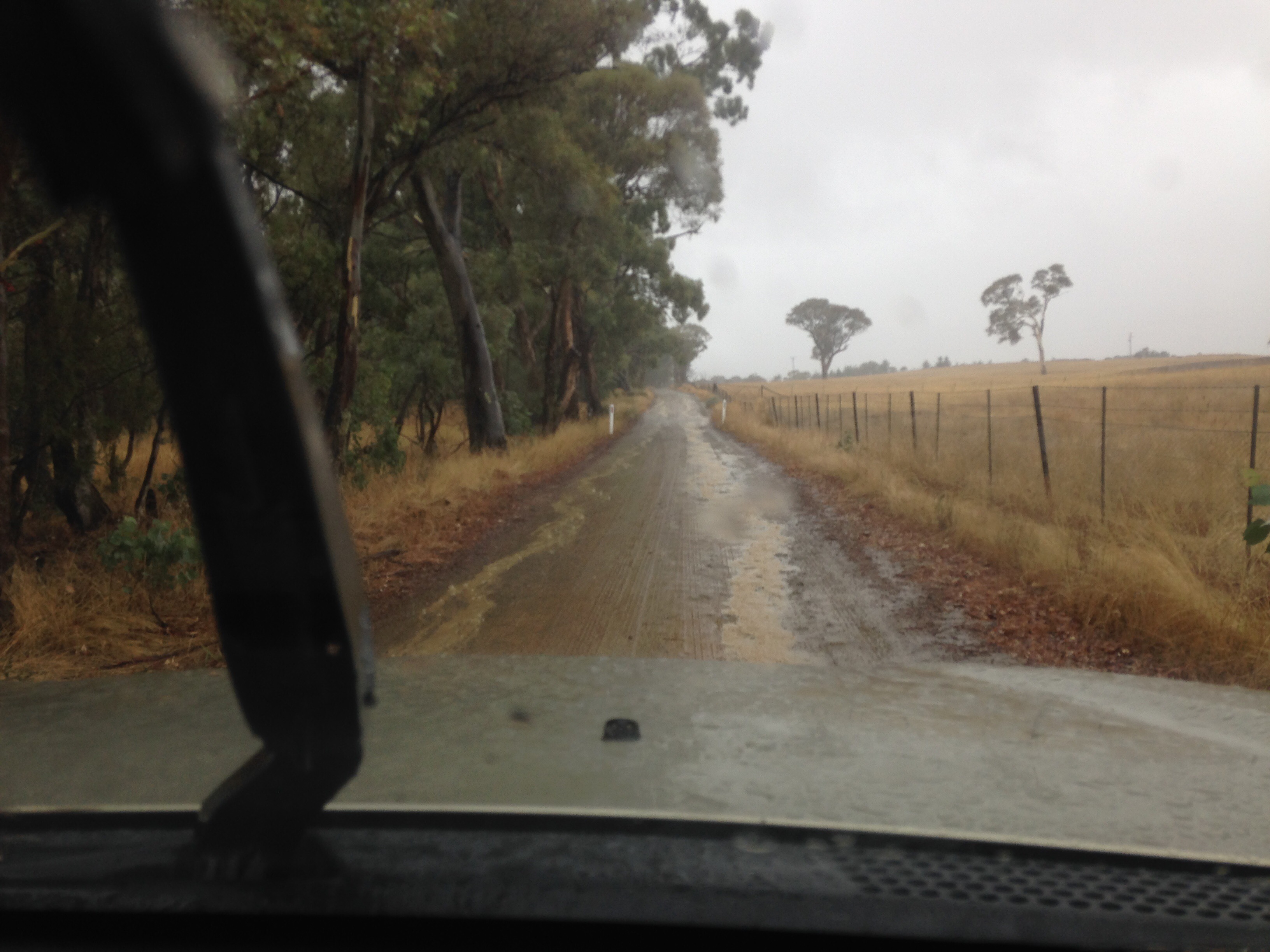
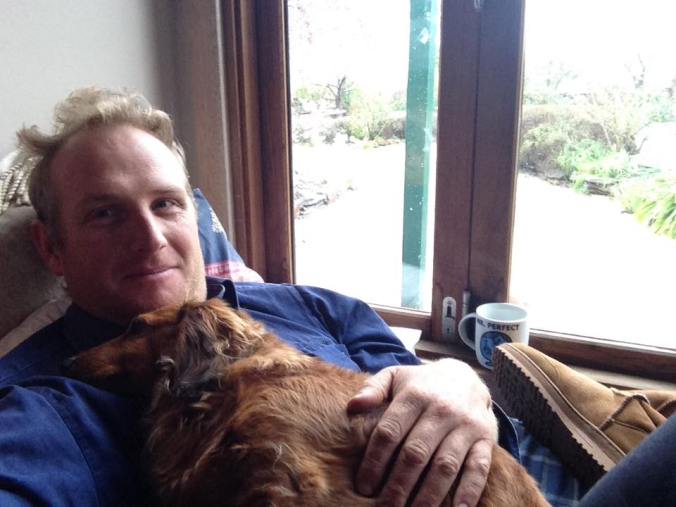
Which is best for mustering? Horse or Motorbike…

A couple of days ago we celebrated a massive milestone for the Rock Farm.  We sold our first lambs!!!  Three adorable ewe lambs were sold to a delightful family not far away for their hobby farm.

I could go on about the virtues of the magnificent Wiltipoll and how suitable they are for small farms like us, but that is not the purpose of this post.

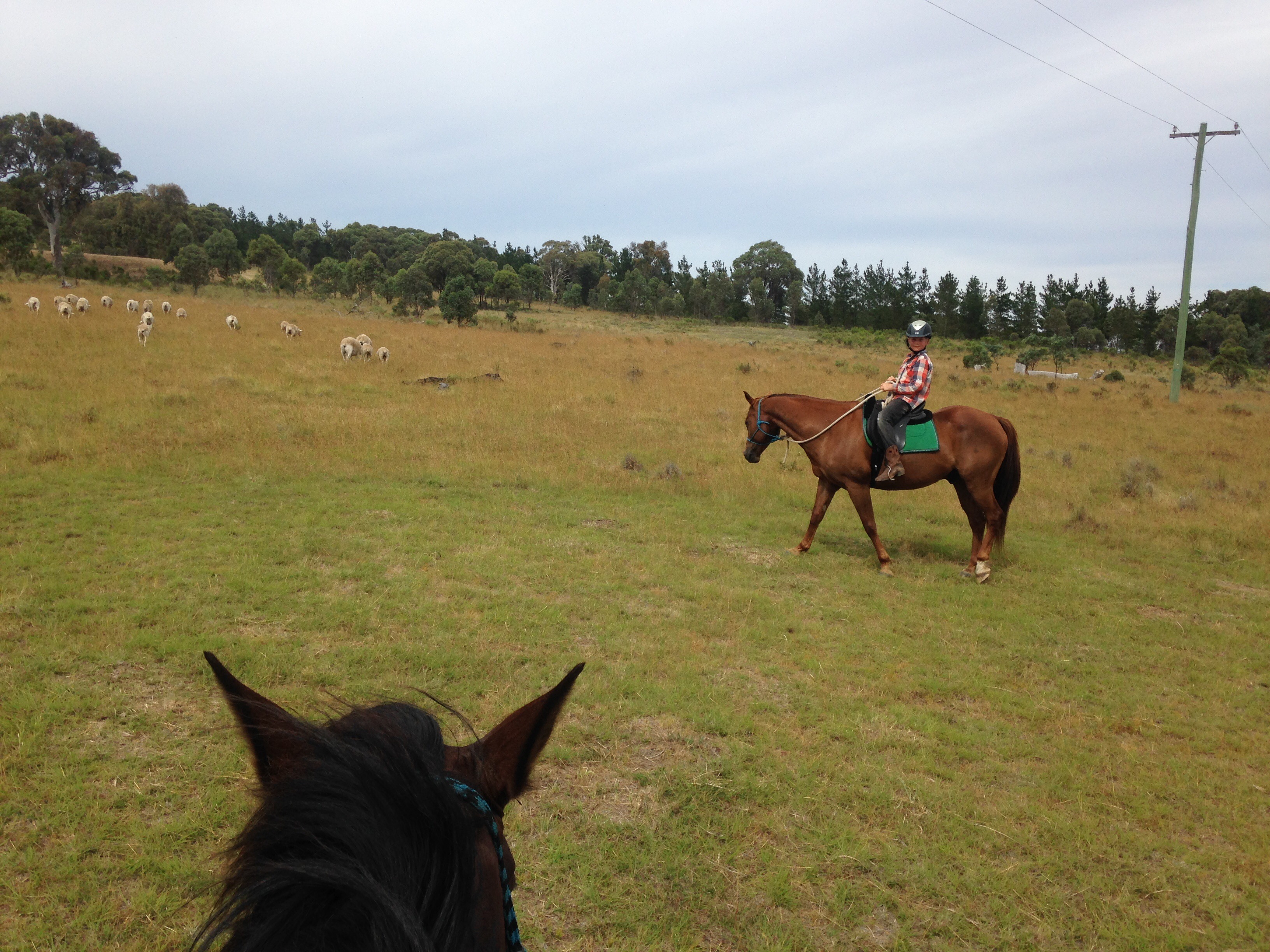
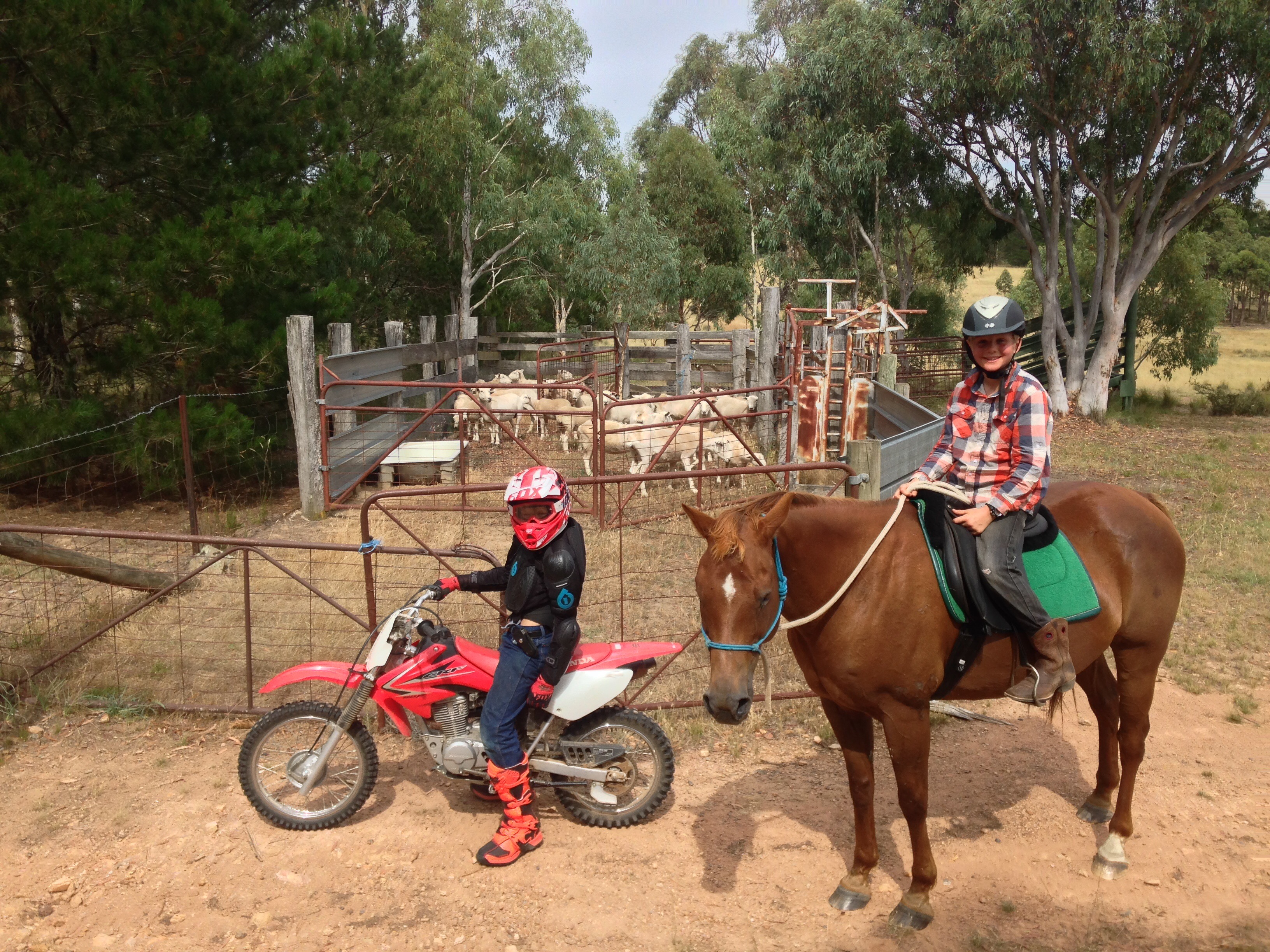
With two wannabe stockmen in the family, it was a perfect opportunity to put their mustering skills to the test!  It also was an opportunity for the Little Helpers to compare their preferred mustering method… horse or motorbike!

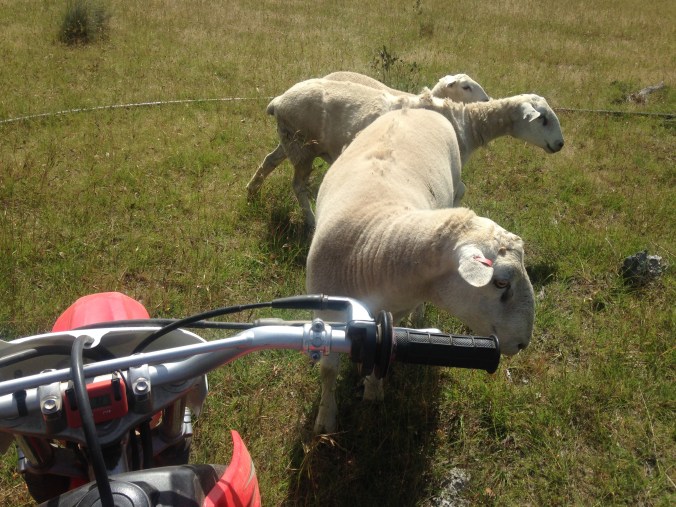
In no time at all, the boys had checked the boundary and confirmed all the sheep were enjoying a mid morning nap in the shade.  Unfortunately for the Little Fisherman, the sheep are very quiet, and assume the motorbike might also be associated with a bucket of oats, causing a slight hold up in proceedings.

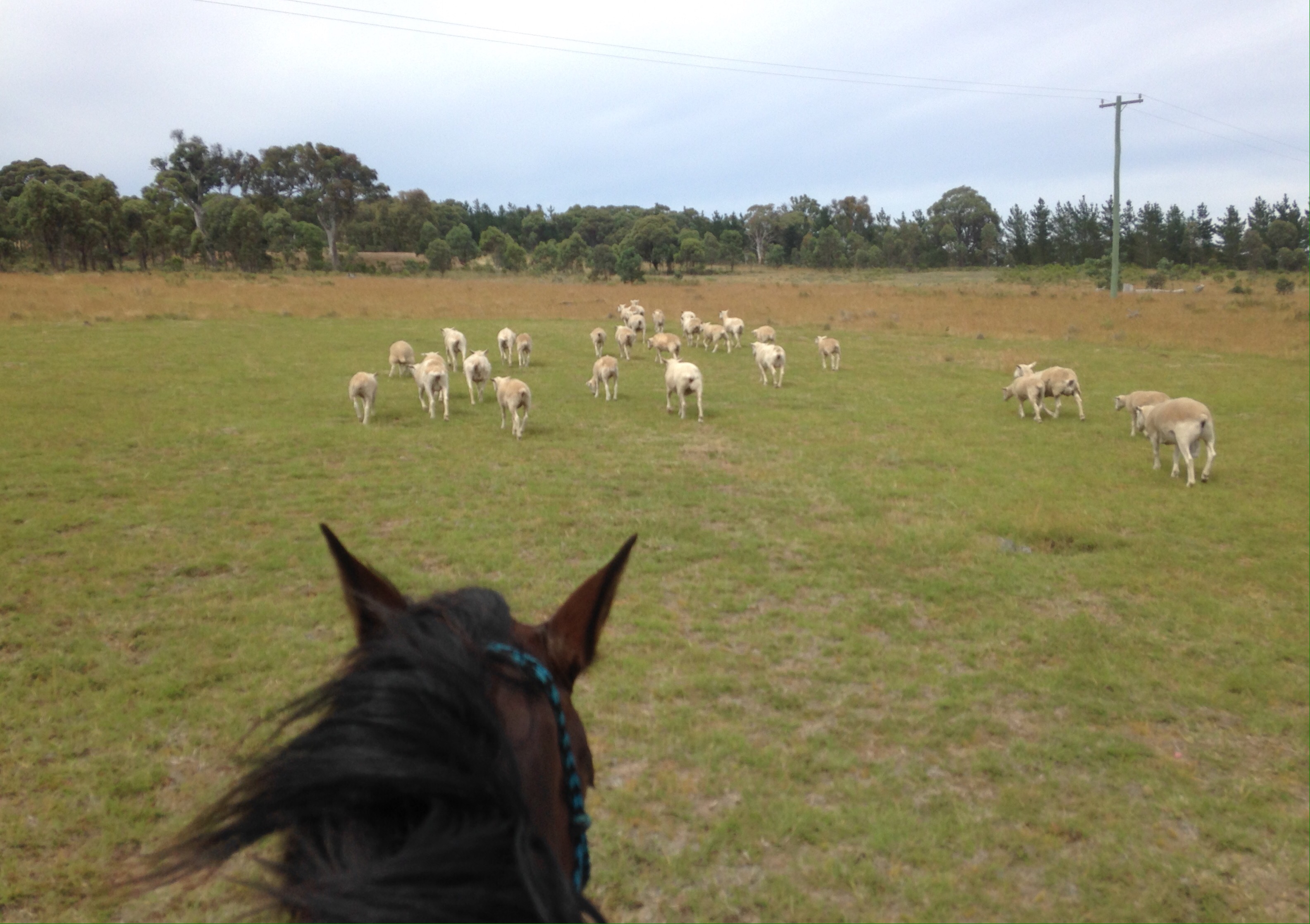
The horses however were a less familiar proposition for the sheep, and they quietly pushed the sheep out from their shady mid-morning siesta.  The horses both have far more experience than either of their riders (The Little Helper and myself) at this game, and put themselves in exactly the right place to push the sheep gently towards the yards.

The Little Fisherman had a great time on his motorbike, but found it hard to match his speed to the sheep.  He also had the added complication of having to ride around obstacles that the horses just stepped over.

A last-minute dash for freedom by a couple of cheeky ewes was quickly rounded up by the ever watchful horses, and a moment later all the sheep were safely ensconced in the yards.

Job done…

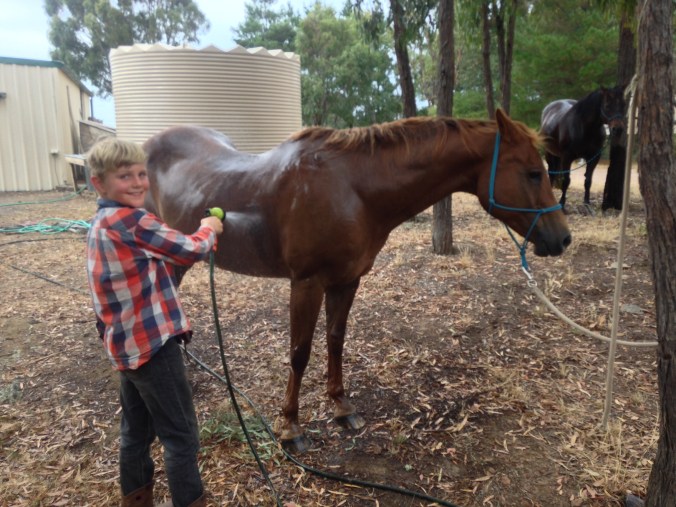
Well nearly.  Whilst the Little Fisherman wheeled his motorbike up to the shed, switched it off and isolated the fuel, the Little Helper had a couple more jobs to do.  Our trusty steeds, Mater and Dusty were given a refreshing shower and rub down before being put back in the paddock.

And so the debate still rages in our family as to which method of mustering is best.  The horses have a natural intelligence that means they naturally will work the stock and keep them together.  The motorbike however just sits in the shed until you need it, and doesn’t require anywhere near as much maintenance as the horse.

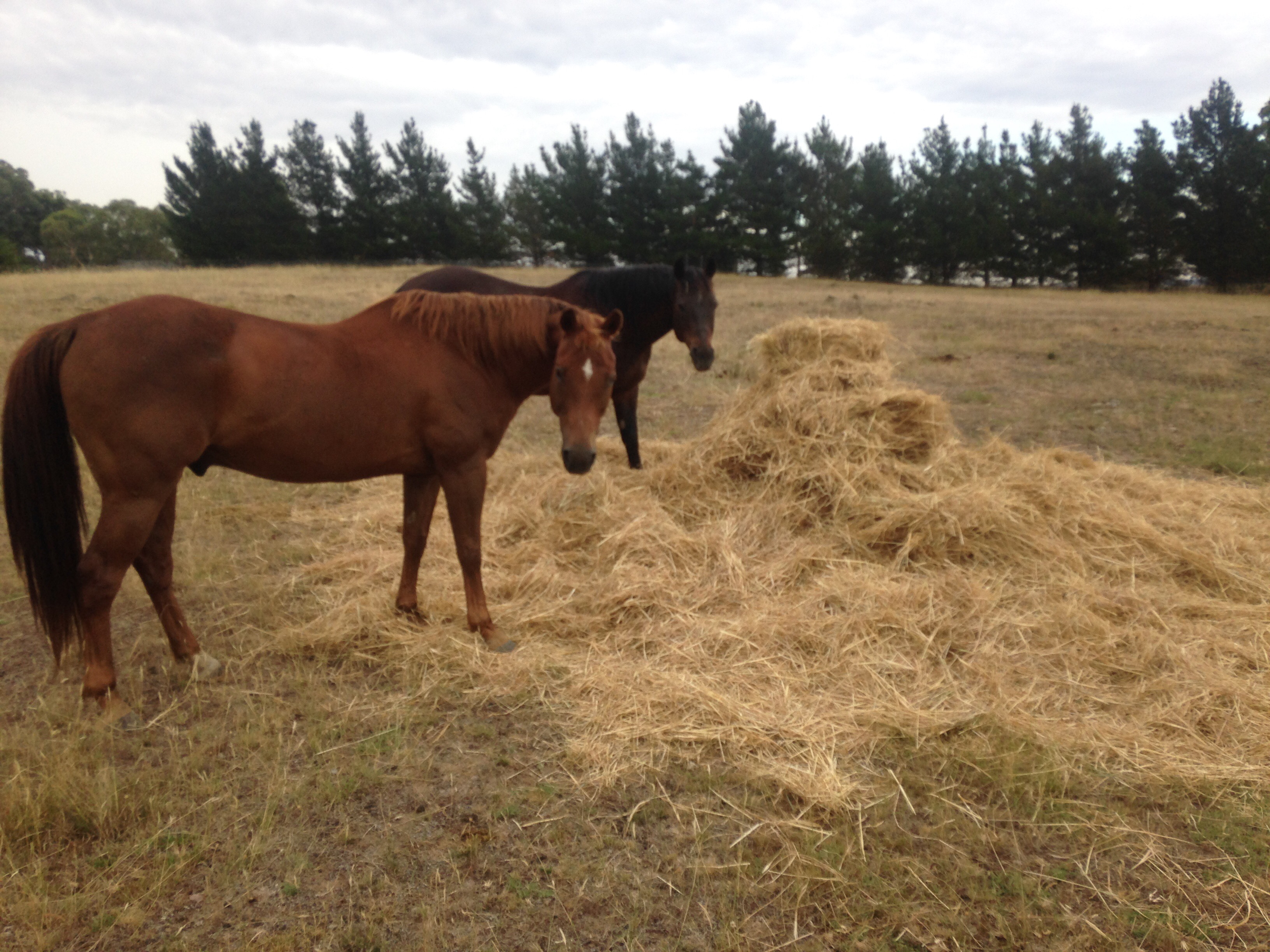
It must therefore come down to other attributes…  The horses were put back to work manufacturing quality garden fertilizer by processing pasture hay – which is something no motorbike could ever do!
Time to move the lambs on

With the young lambs growing quickly, it is time to make some decisions as to their future on the rock farm.  Our young ewe lambs will be weaning shortly and this will mean that soon they will start cycling.

With only one ram, it is important that we move these girls on before they are covered by their father.  Therefore it is time to sell them.

Being such a small farm, we have only eight ewe lambs to sell.   In an area where people sell lambs by the hundred, it isn’t as easy to sell such small numbers.

Our lambs have all been tagged with NLIS (National Livestock Identification Scheme) ear tags.  These tags mean that they can always be traced back to our property, through our unique PIC (Property Identification Code).  When moving livestock around Australia, you need a vendor declaration form.  The PIC registration, ear-tags, and declaration forms all cost money – making dealing with such small numbers not really cost effective at all.

Whilst I am a firm believer that our future lies in small, poly-culture farms, our national system is geared towards large scale mono-culture.

If you are interested in buying some of our gorgeous girls, check out our advertisement here:

http://www.gumtree.com.au/s-ad/gundaroo/livestock/wiltipoll-ewe-lambs-not-dorper-/1132474243

Our eight weather lambs will become staying on a little longer.


How to plant trees… lots and lots of trees…
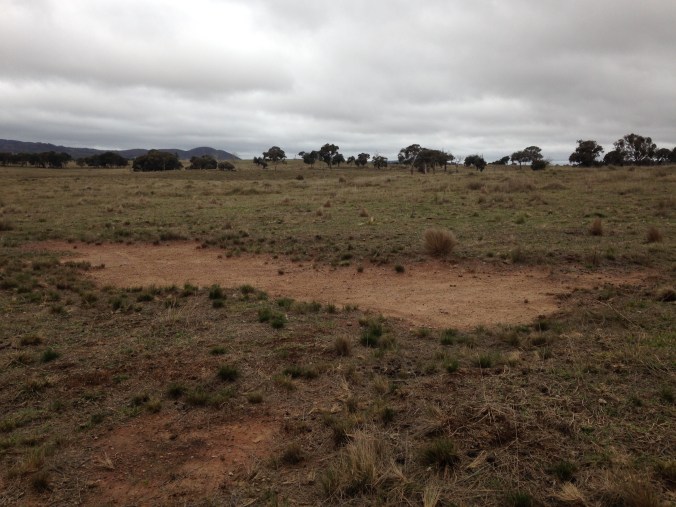
One paddock on the Rock Farm is typical of many others in this area.  Cleared and heavily grazed in its past, it is showing evidence of years of abuse.  Areas of sheet erosion and poor soil cover meant this was a paddock in desperate need of restoration.

img_8257

One of the first things we wanted to do to that paddock when we bought the property was to plant trees in it.  With no knowledge of how to do this, we thought it best to seek out the experts.

When it comes to planting trees, few do it better than Greening Australia.  We soon found ourselves speaking with Ben Hanrahan, and he explained that our site would be perfect for their Whole of Paddock Rehabilitation (WOPR) program.  https://www.greeningaustralia.org.au/project/whole-of-paddock-rehabilitation

The program aims to plant belts of native trees along contours with 40-50 metres between each belt.  In addition to providing habitat for many species of birds, the program also improves soil structure, reduces salinity and provides shelter and additional food sources for stock during times of drought.  It is designed to increase biodiversity and habitat for native animals and also improve outcomes for graziers.

It fits well with our aim for “sustainable and ecologically sound stewardship of our property, that creates an income and food source…”  So we signed up.

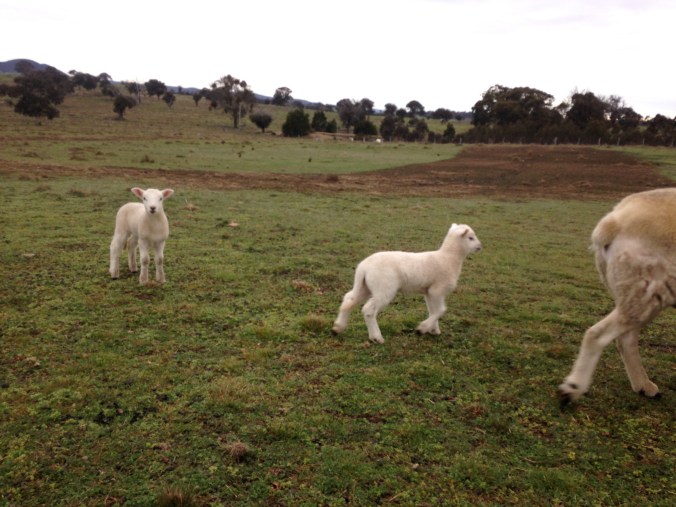
The first step was to mark the contours.  Ben came out with a specially calibrated tool and marked the contours on the property.  We then sprayed the belt in Autumn and again in Spring with glyphosate to kill the grass.   Whilst I am not a fan of broad scale use of herbicides, in this case it will ensure a far greater strike rate with our trees.  The glyphosate did make large brown stripes in the paddock over winter, which contrasted with the bright green grass (and our super cute lambs).

img_9669

Spring it is time to plant.  Normally this is done in September, but with the unusually wet season, the paddock has been too boggy to work.  We finally got the spring spraying done on Melbourne Cup day, and the seeding was done two days later.

Greening Australia Whole of Paddock Rehabilitation

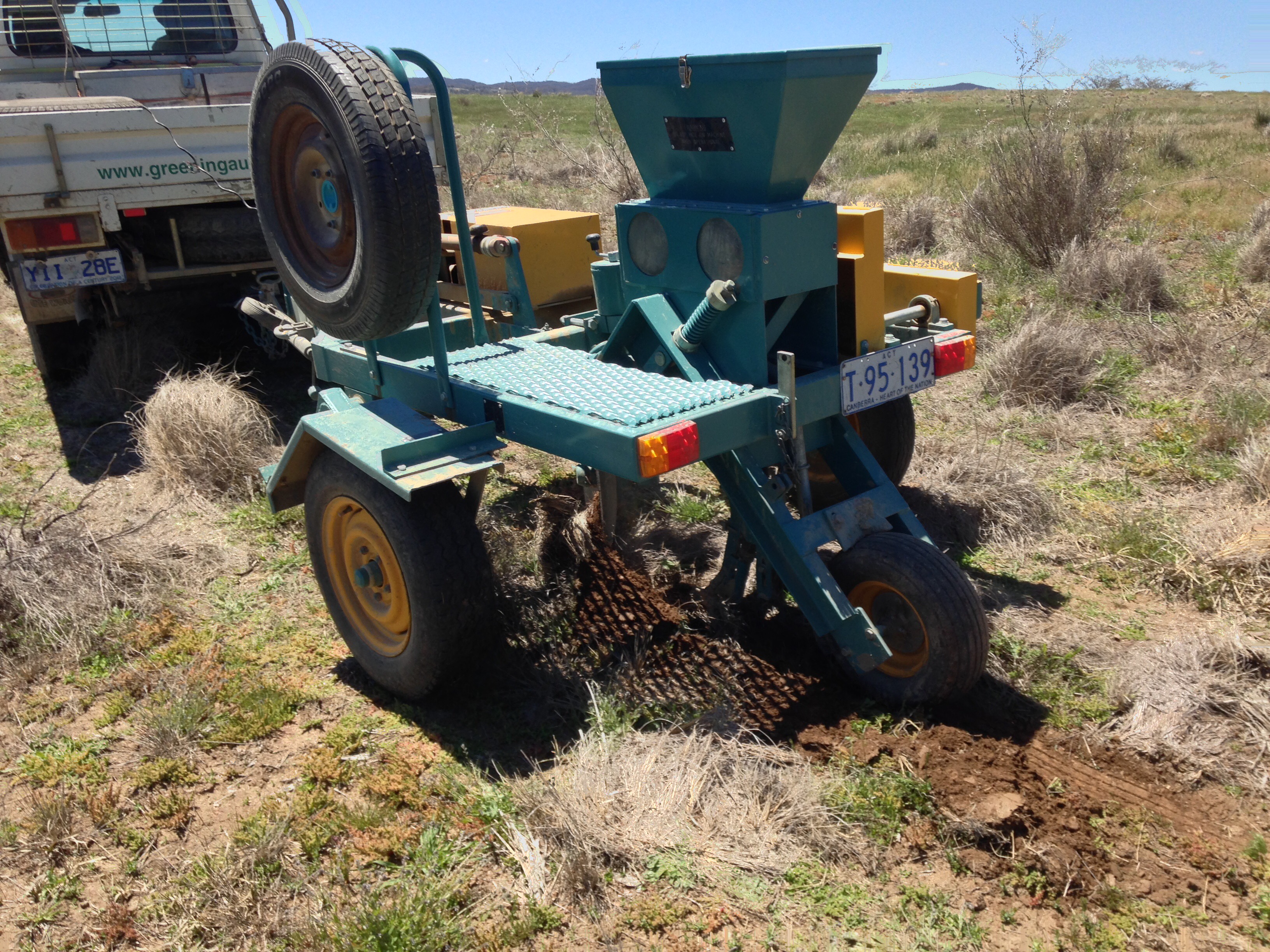
The seed used is a mixture of seeds from trees native to this area.  We also have a some trees from other areas that are being included as part of a trial to do with climate change resilience.   The seed hopper is designed to accept two types of seed, with one distributing the very fine eucalyptus seeds, and the other distributing the coarser wattles and she-oaks.

Greening Australia Whole of Paddock Rehabilitation

A disc turns over the soil, and the seed is pressed into the soil by the trailing wheel.  This places the seed in the ideal place for germination.

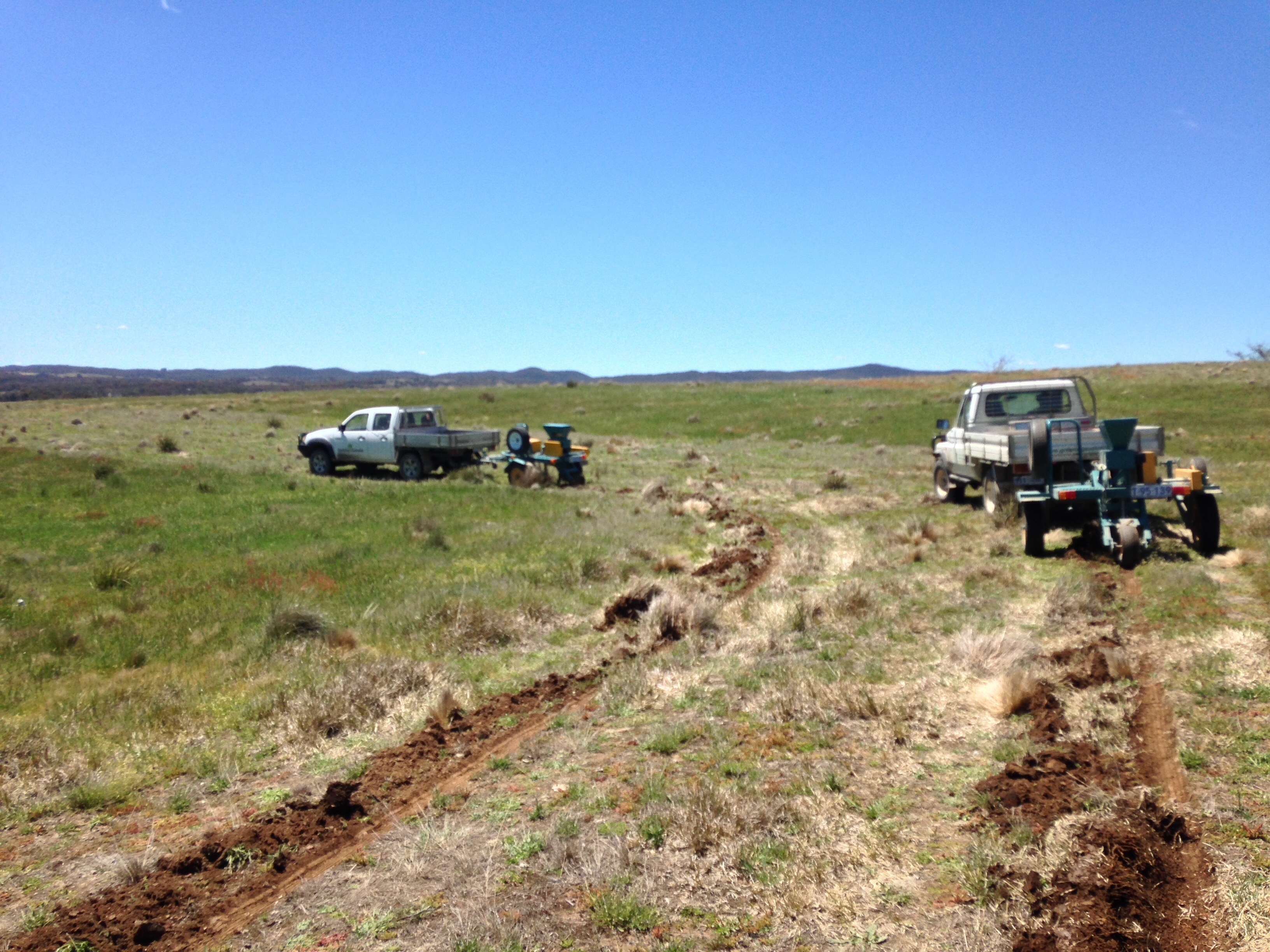
Working in tandem, Ben and Hayden were able to get to work quickly.  Four rows of trees were planted in each belt, totaling around 10 kilometres of tree lines.   It took them most of the afternoon, and whilst it doesn’t look like much now, I can’t wait to see what happens over the next few years or so.

Now we wait.  Part of the deal is we keep stock off the paddock for five years, to allow the trees to get established.  We will need to control kangaroo numbers, and keep the sheep from pushing their way through the fence.  It won’t happen overnight, but it will go a long way towards making our grazing enterprise more sustainable into the future.

A huge thank you to Ben and the team at Greening Australia for helping us achieve a better outcome for our native birds and animals, and our stock.

Helping birds with nesting boxes

Whilst the Rock Farm is blessed with many hundreds of trees, only a handful of our trees are large old trees, with all important nesting hollows for our native birds.  Hollow logs and branches take literally hundreds of years to form – and are prized by native birds for nesting.  With our young areas of re-growth promising excellent habitat in the future,  we thought we would lend our birds a helping hand.

One way to assist native birds, even in an area with as many trees as ours, is to build nesting boxes.  They replicate the hollows that take so long to form.  There is a wealth of information online, with plans freely available.  There is also a significant amount of science involved too, with the size of the box, the entry diameter and other features critical for many species.

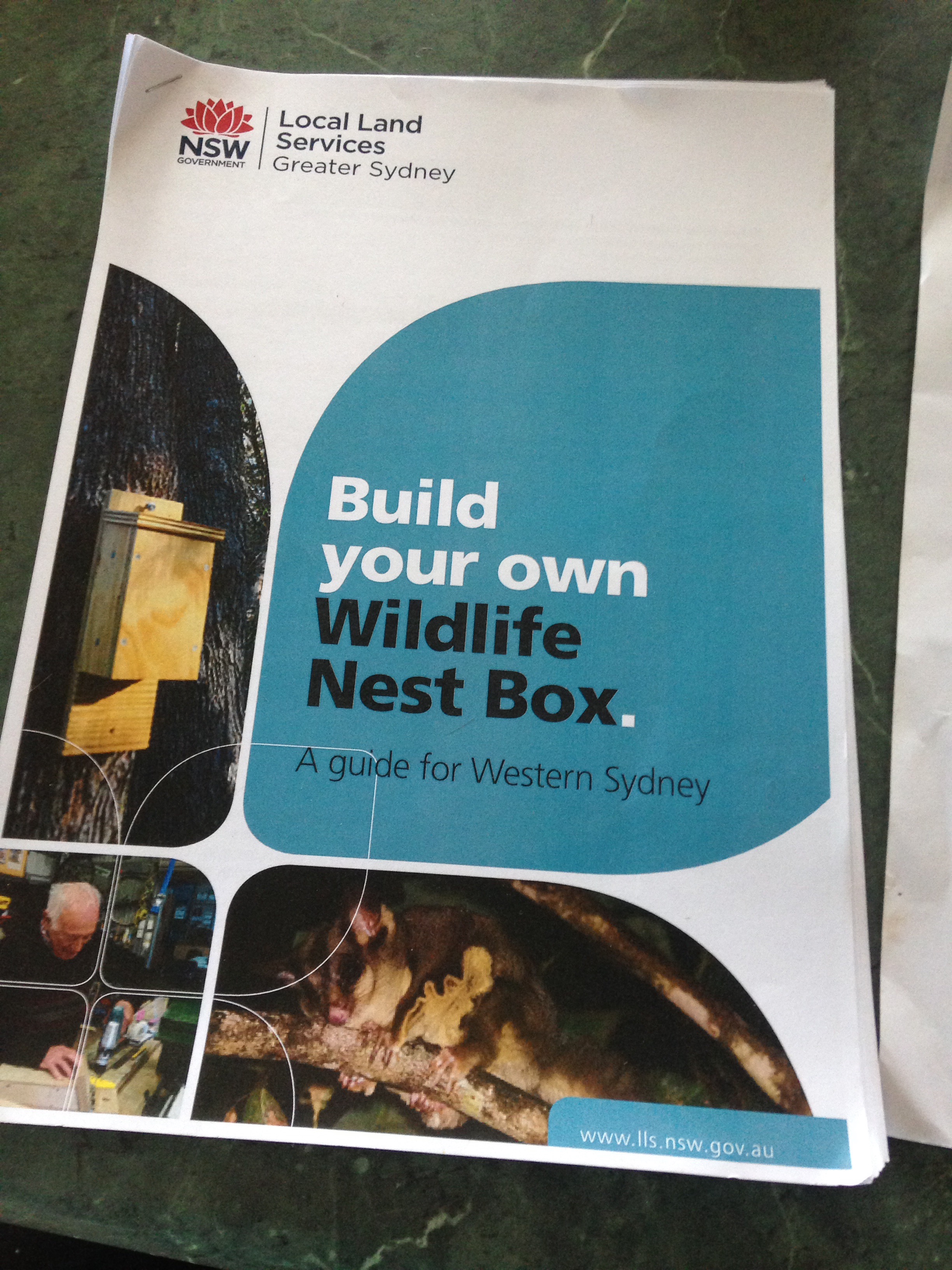
We armed with this excellent publication from the Local Land Services (available online here: http://greatersydney.lls.nsw.gov.au/__data/assets/pdf_file/0006/656610/GS-LLS-Wildlife-Nest-Box-2016_Final-Accessible.pdf).  With our heads full of plans and ideas it was time to get building.

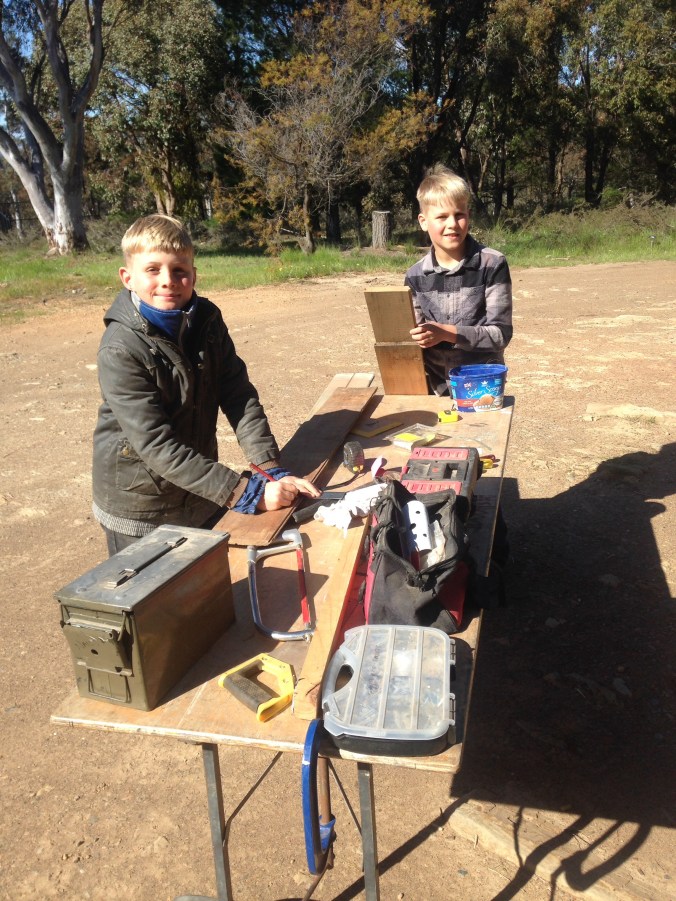
The boys had a look around the Rock Farm Resource Centre  – also known as Dad’s Shed, and we found some old flooring that was looking for a new purpose.

img_0019

This was to be the boy’s own project.  In the interests of expediency (I was looking forward to an afternoon nap) I might have cheated and run the timber through the bench saw to cut it, but I was working to their design.  The old adage of measure twice and cut once was in force… but soon there was so much pencil lines on the boards it was hard to tell which ones to cut!

img_0021

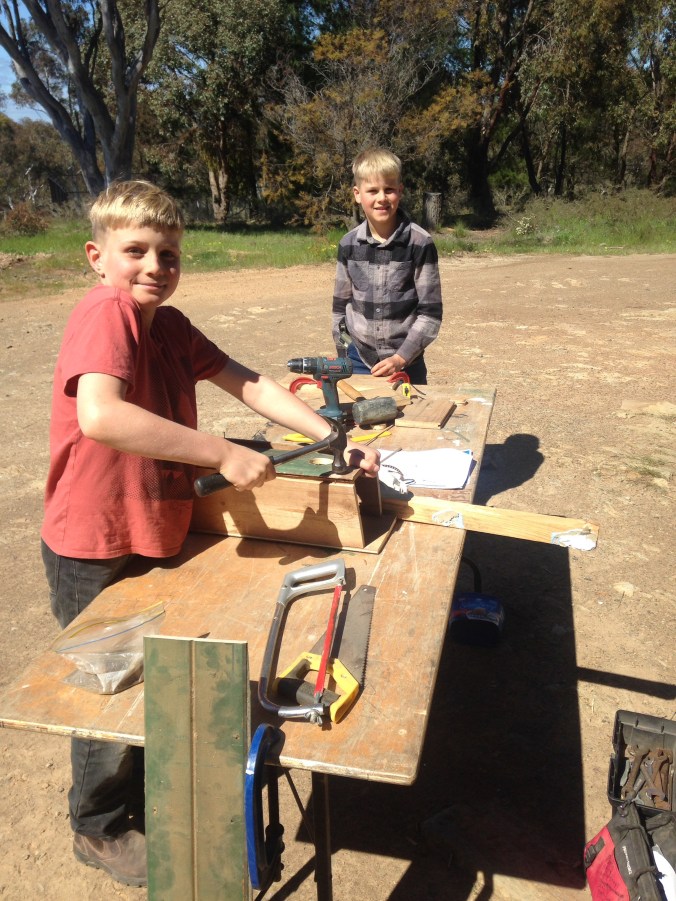
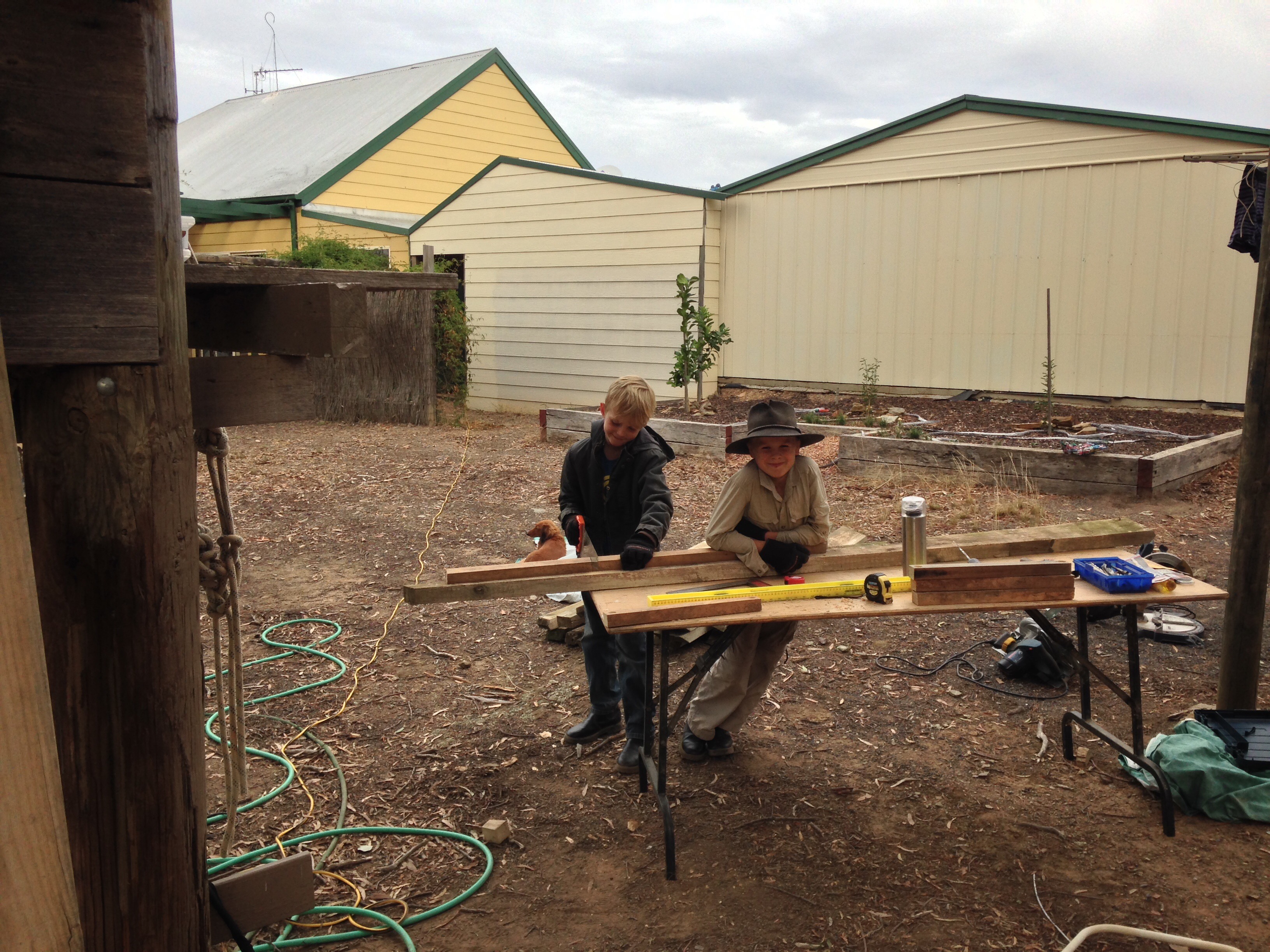
The boy’s initial thoughts were that this would be easy… but like all good plans, they soon realised that assembling the boxes would take a little effort.  I told them they couldn’t use glue – so it was hammer and nails only.  The Little Helper found his soft oregon boards were easy to work, but the Little Fisherman regretted his selection of thick hardwood boards.  He ended up pre-drilling his holes, and only broke one drill bit in the process.

img_0022

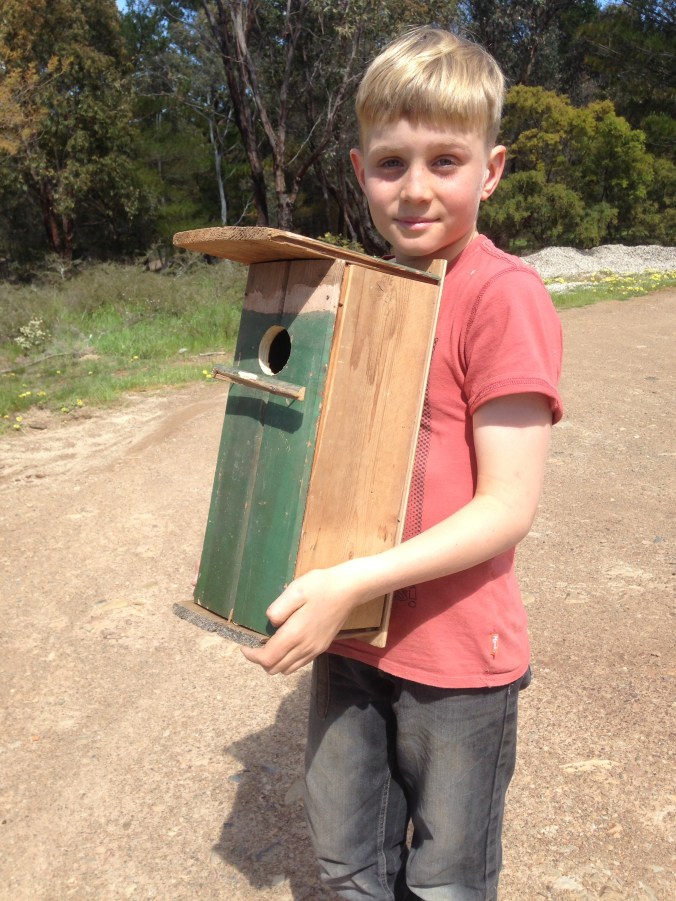
To their credit, I only was used to hold things together a couple of times.  The bench saw made small adjustments easy and before long we had a couple of neat little boxes ready to hang in the trees.

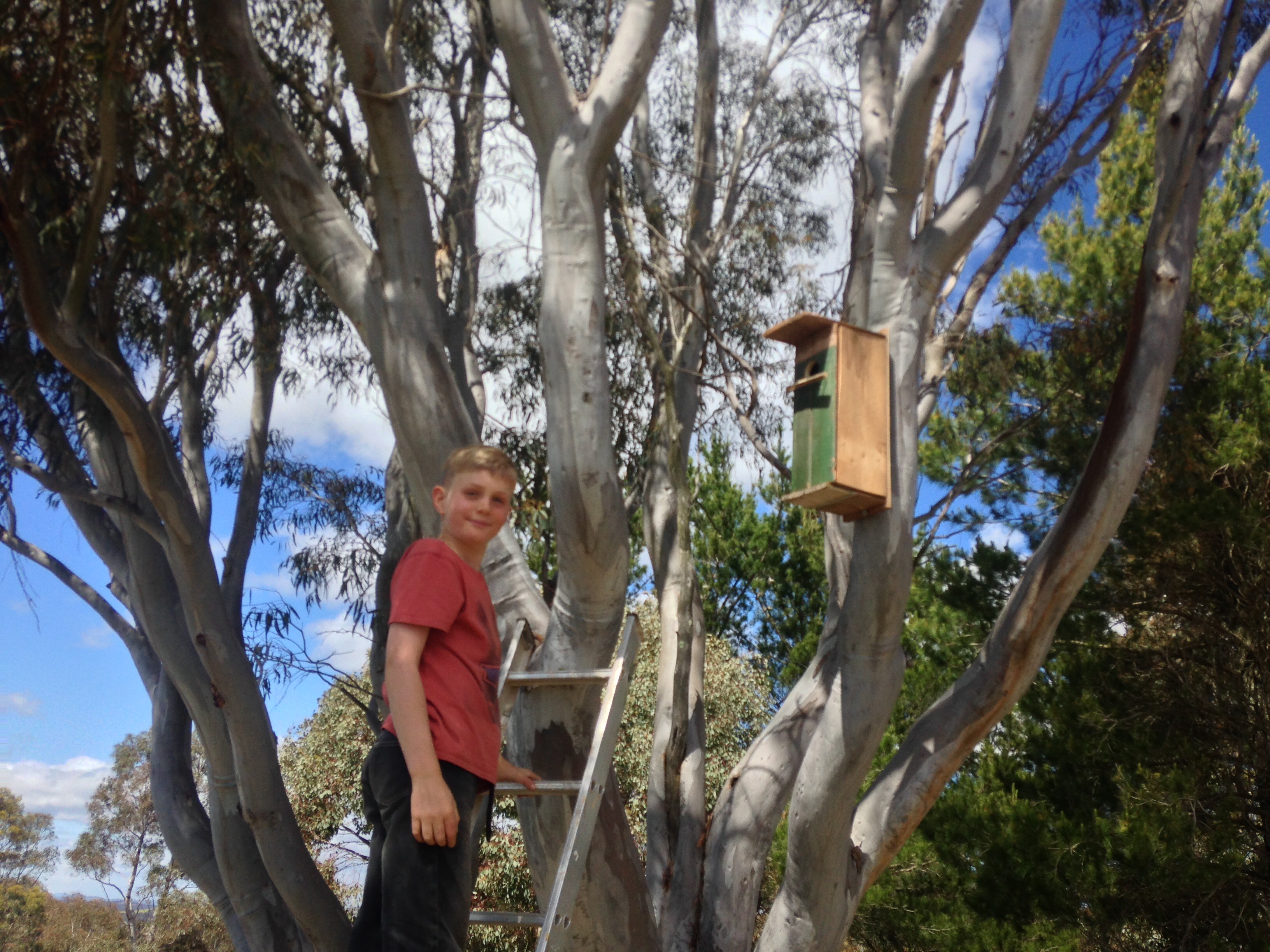
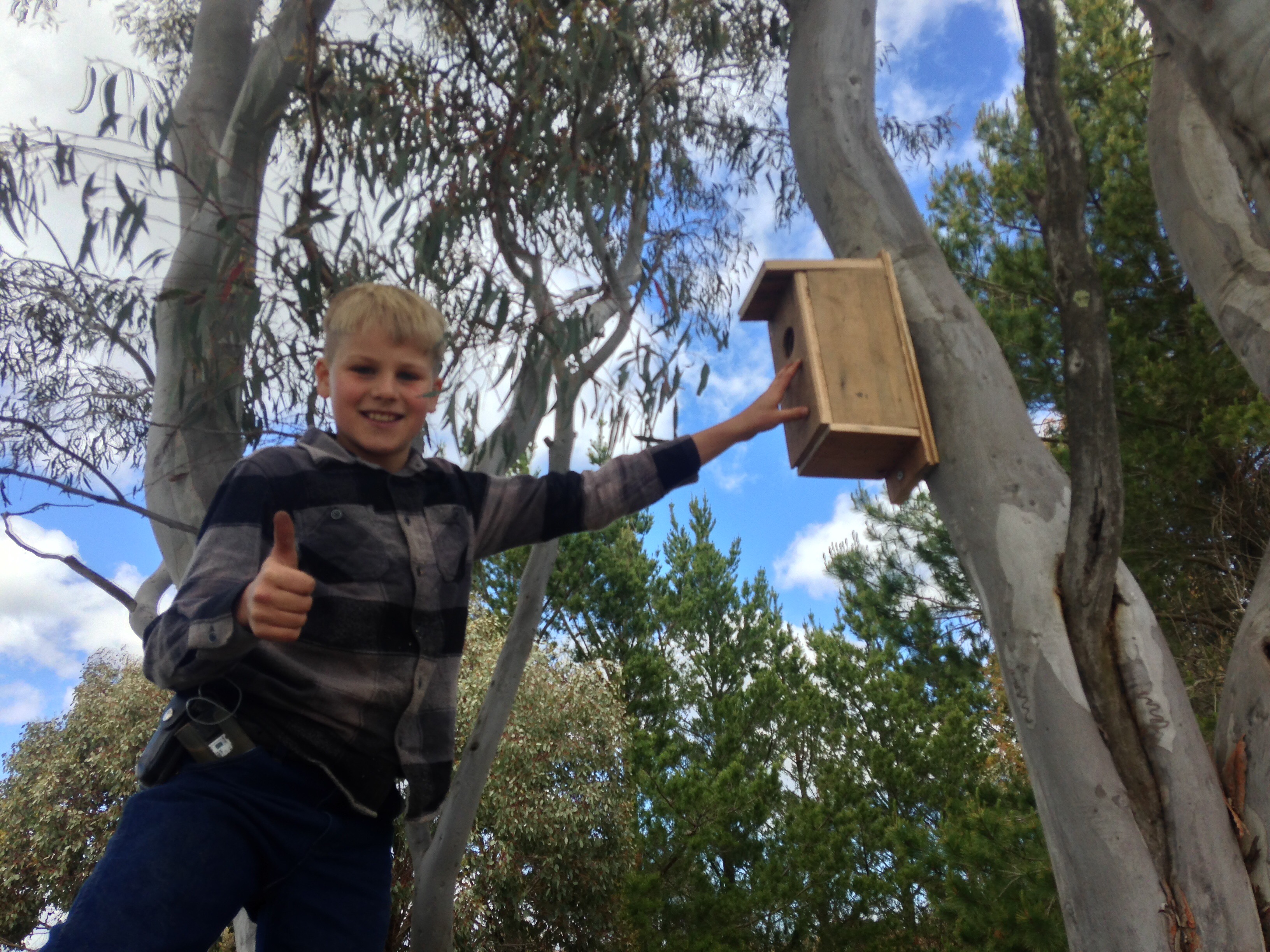
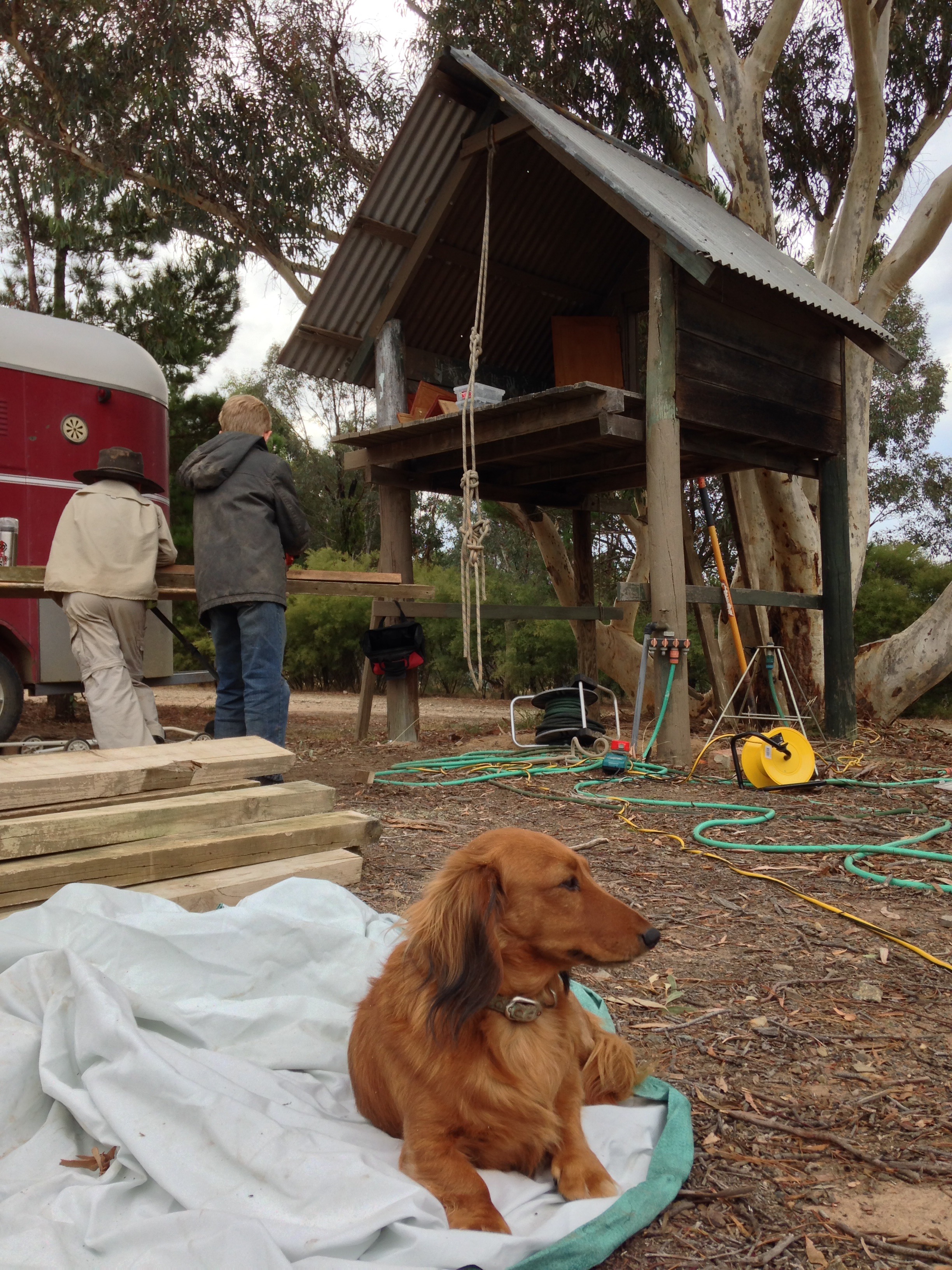
The best way to secure the boxes to the trees is via two bugle headed screws.  This causes far less damage to the tree than tying wire around the branch.  We mounted the boxes in a Scribbly Gum (Eucalyptus Haemastoma).  We are just now waiting for our first guests to move in!

It was a wonderful way to spend a morning with my gorgeous boys.  They learnt a few new skills, and as a bonus, we get to help a few little birds get a head start.

You can shear a sheep many times, but…

One of the reasons we moved to the Rock Farm was to ensure our kids have a well rounded understanding of our food supply chain.  One part of this food chain includes the raising of sheep for meat.  And whilst we could sell our sheep through the regular sale yards, and buy our meat from a butcher, I think we have a responsibility to teach our kids about what meat production actually involves.  By slaughtering the lamb ourselves, we reduce the stress on the animal significantly and save on food miles.

I appreciate that many people may feel uncomfortable with this process, and indeed many people make the choice not to eat meat at all.  I understand and respect those choices.

But I also feel that meat production often gets an unfair portrayal.  We are told it is bad for the environment, however I know that the Rock Farm has an incredible range of biodiversity that you don’t find on mono-culture cropping farms.  We have hundreds of native animals, lizards and birds, native grasses, shrubs and trees that live in harmony with our small scale sheep production. I also know that all who raise animals have a social responsibility to ensure the stock are raised in a humane, healthy manner.  I see small scale poly-culture or permaculture that works with the natural environment as being our future.

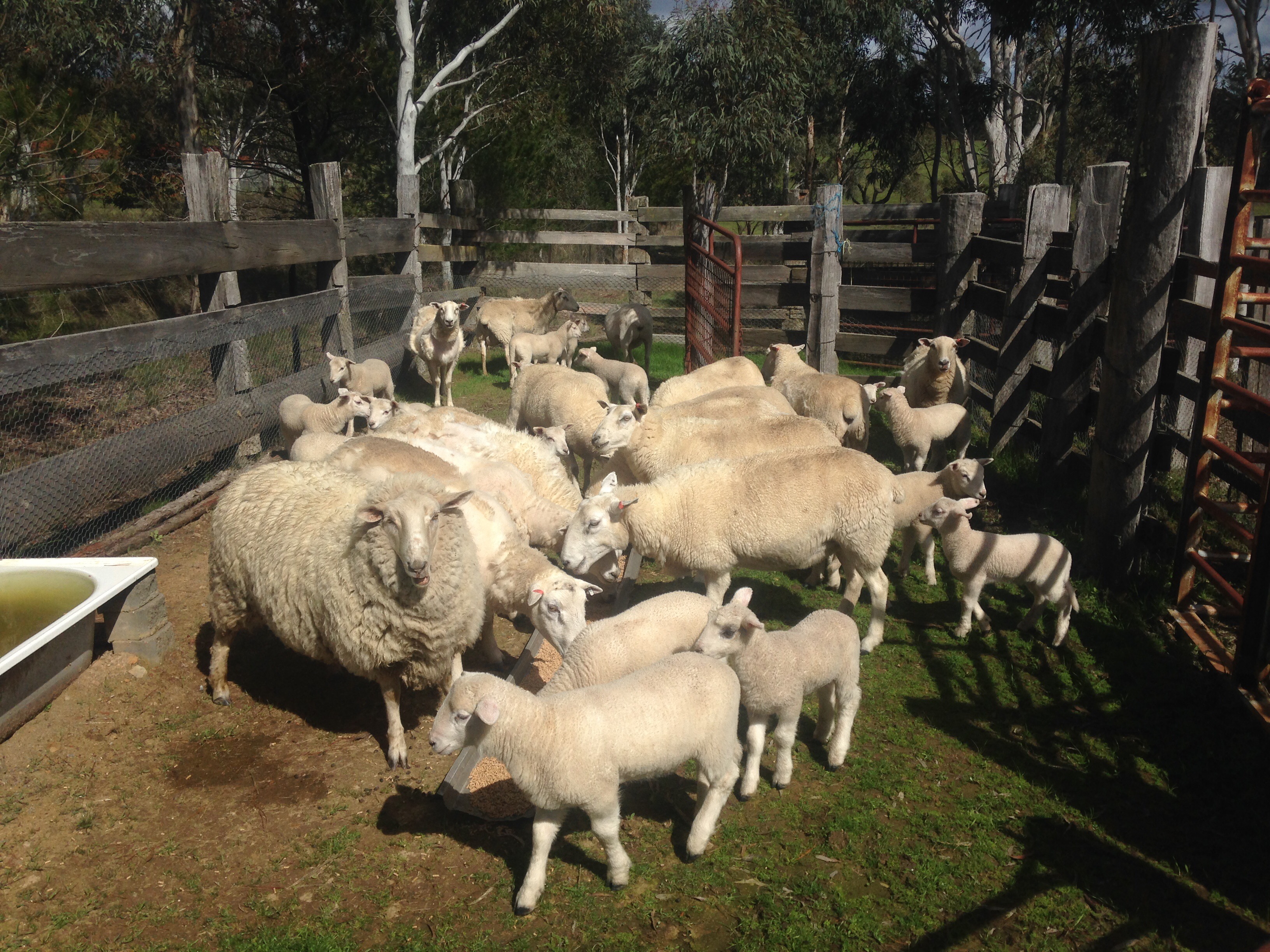
You may notice one sheep above that doesn’t look like the other ones.  Most of our sheep are wool shedding Wiltipolls, however the fellow with a full clip of wool is a first cross Meriono/Suffolk wether.  Despite his size, he still has a mouth full of baby teeth, meaning he is still a lamb.  He had been raised as a poddy by the boys, but we had always told them that his job (every animal has a job on a farm) was to feed us, and he was now ready.  His wool was also long enough to shear, and whilst it will never win any awards, the first cross wool is usually handy enough (medium fine) to make the effort to shear.  It did remind me of the old adage that “You can shear a sheep many times, but you can only skin them once.”

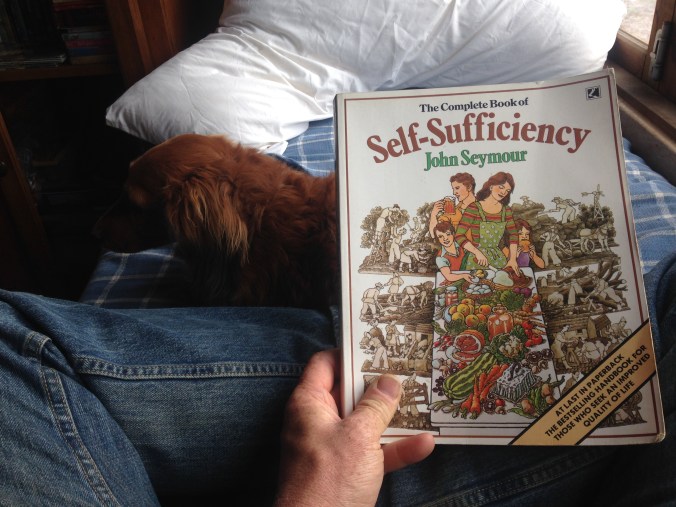
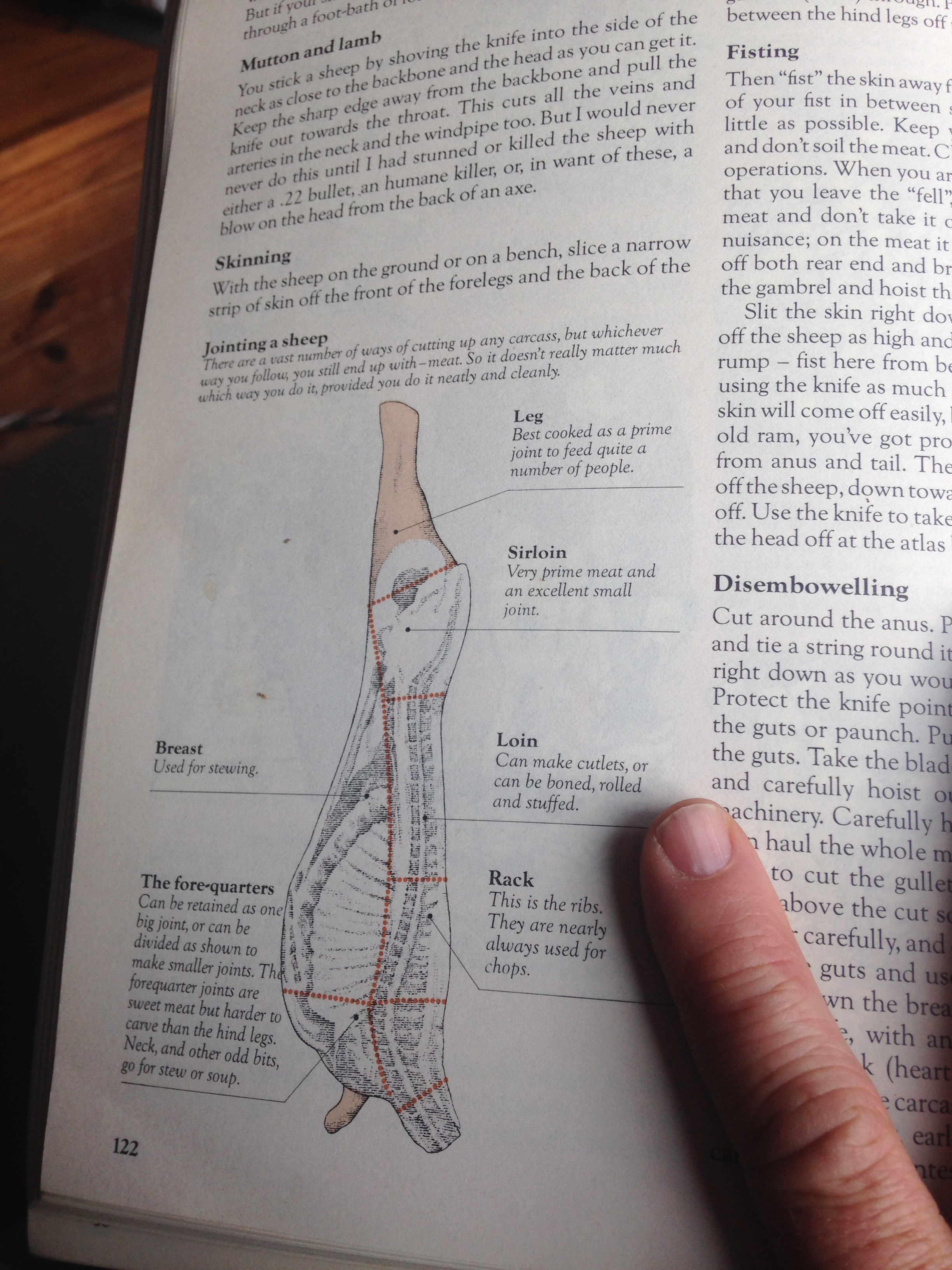
Butchering a lamb is a skill, and it had been many years since I had last butchered a couple of lambs.  I found a few moments to enjoy a cup of coffee refreshing myself with the excellent words of John Seymour in his Self Sufficiency guide.

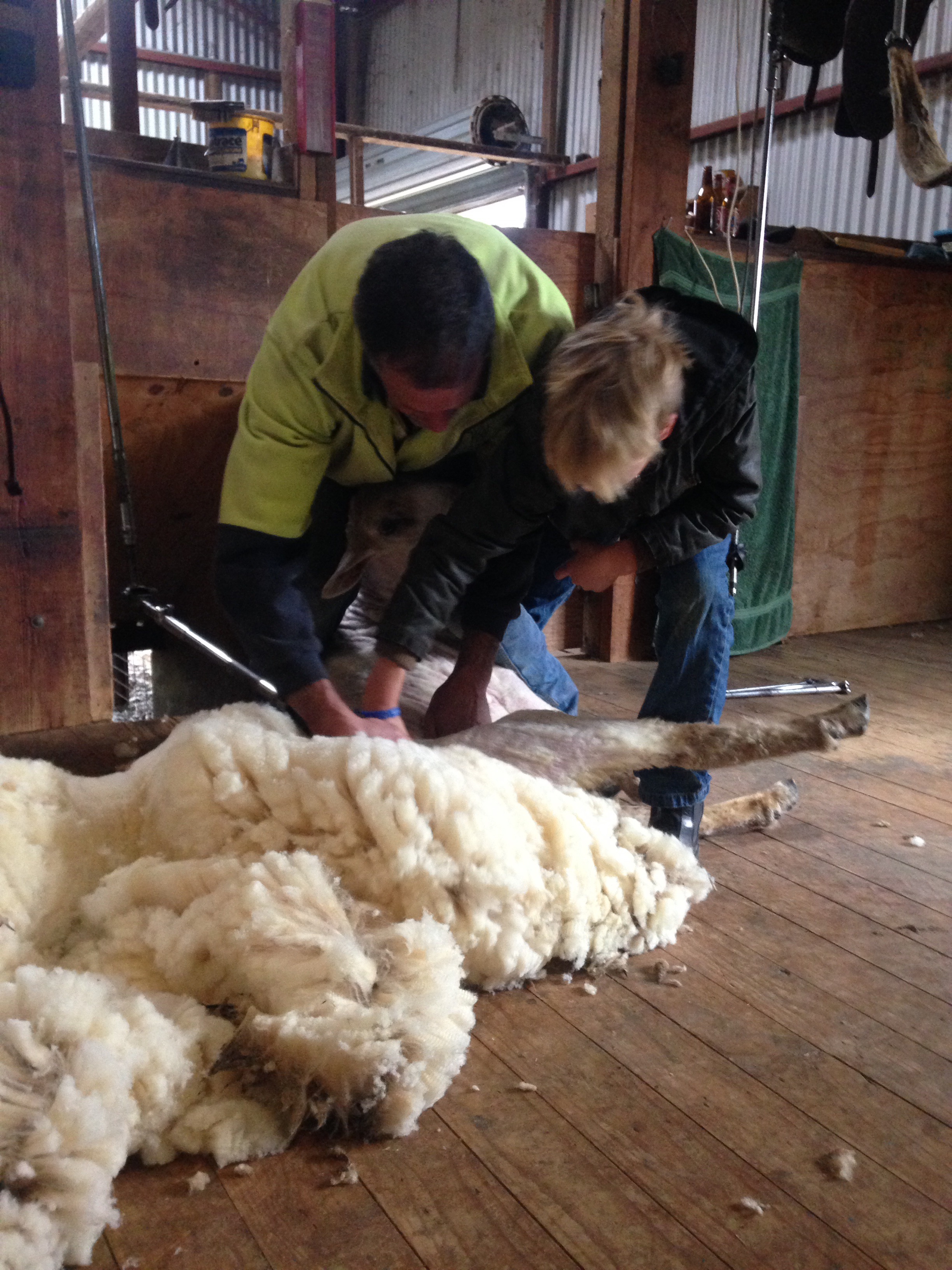
The first thing to do with the lamb was to shear him.  Thankfully friends down the road kindly agreed to shear the lamb, and also give the Little Fisherman a lesson in shearing.  This is definitely something I cannot do, but Jimmy made it look easy.

After shearing, it was important to slaughter the lamb quickly and humanely.  Again I learnt from Jimmy, who after many years has perfected the skills of cleanly slaughtering and butchering sheep.  The principles were as described in John Seymour’s book, however Jimmy was unbelievably quick and in no time at all we had skinned and cleaned the carcass.

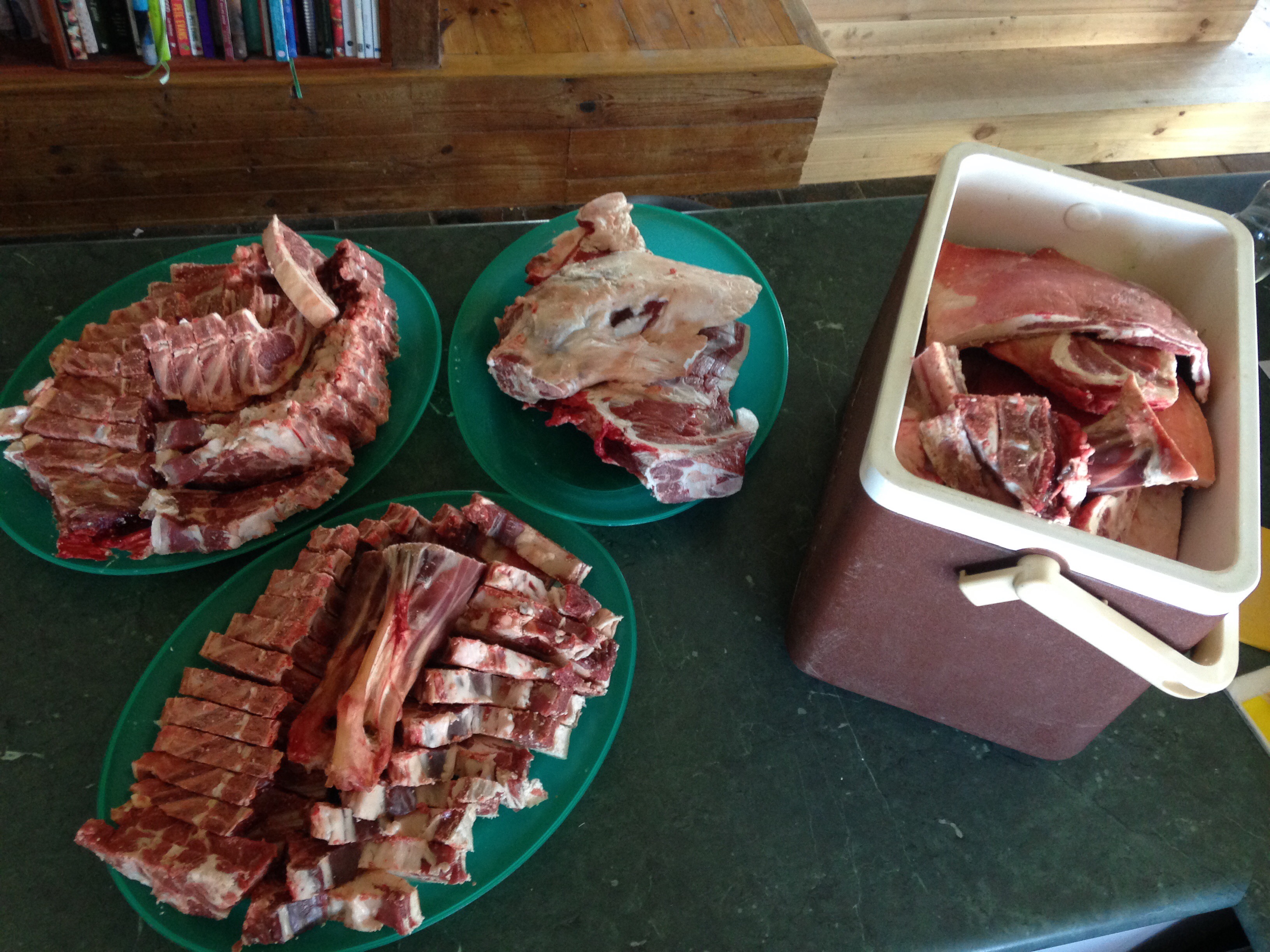
We then hung the carcass in a cool room for 10 days, before running it through a band-saw.  With the legs and shoulders making great roasts, we cut most of the rest into chops.  It took under ten minutes to turn the carcass into meals.

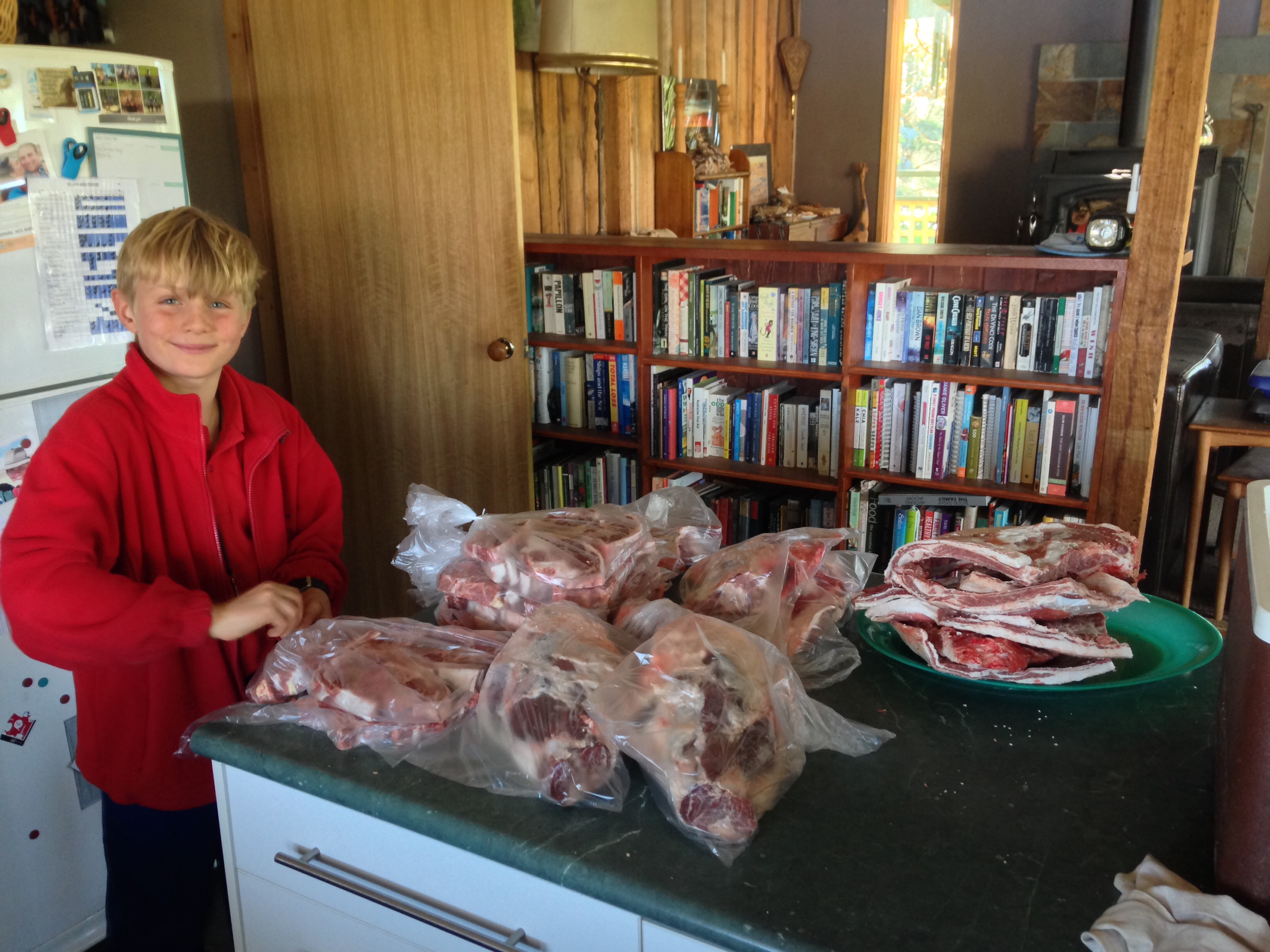
It was then a relatively simple process to divide the meat into meal size portions for the freezer.  The dog also managed to do extremely well out of the offcuts.

And the verdict?  Delicious 🙂

There are few rules that apply to home butchering in NSW.  The basic premise is that meat that is butchered at home is not able to leave the property.  You are not able to sell, swap or barter it, or even give it to family and friends.  This is to protect us all from disease and parasites that used to be common place in yesteryear.  Making sure the meat is well cooked is a good start, but you also need to wash your hands frequently, make sure you dispose the offal properly and keep vaccinations and dog worming up to date.

A huge thank you to Jimmy for his guidance, and patience in bringing me back up to speed.  It was much appreciated.

I’m not the only one with projects

With always something to do on the Rock Farm, it is inevitable that the Little Helpers want to get involved.  Sometimes they take it even further, and decide that they would rather work on their own projects.  They frequently have projects on the go, and I must admit that I had forgotten how fortunate they are.

In New York, they are creating an Adventure Playground for kids – and I think it looks a lot like the Rock Farm.  http://www.nytimes.com/2016/05/29/nyregion/on-governors-island-mountains-of-junk-where-children-find-adventure.html

Whilst some of their ideas are inspired by such wonderful books as “The Dangerous Book for Boys, by Conn Igguiden, many are their own creation.

I am a big fan of the boys getting their hands dirty.  I have a good collection of hand tools, old timber and various ‘resources’ others might term ‘junk’.  The boys know which tools they’re allowed to use, and which ones they need to ask permission for.

I must admit I occasionally get nervous when they ask to borrow my tools.  I am working on solving that one, by buying them some tools of their own.  They like nothing more than using their tools to help me with my projects.

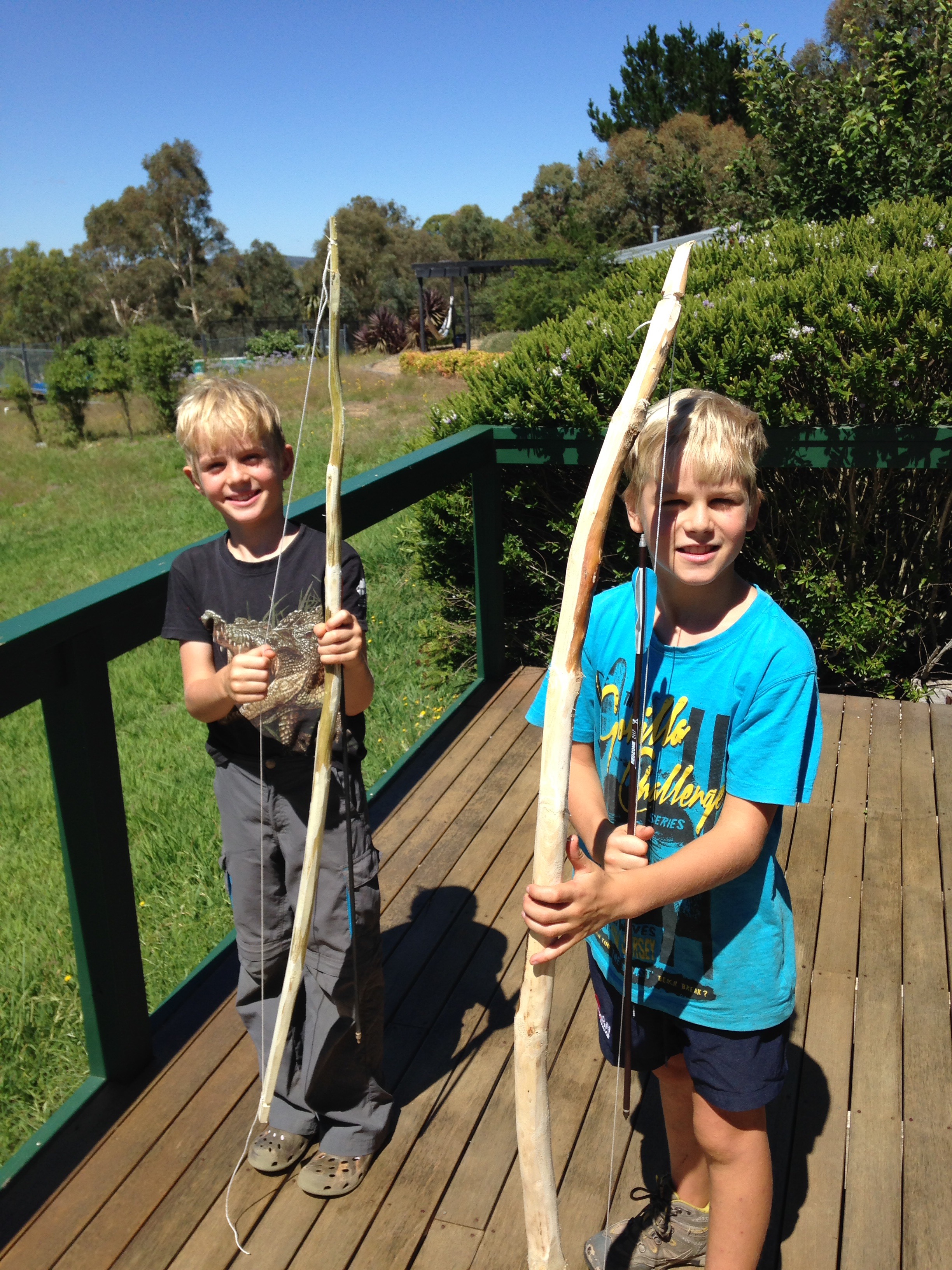
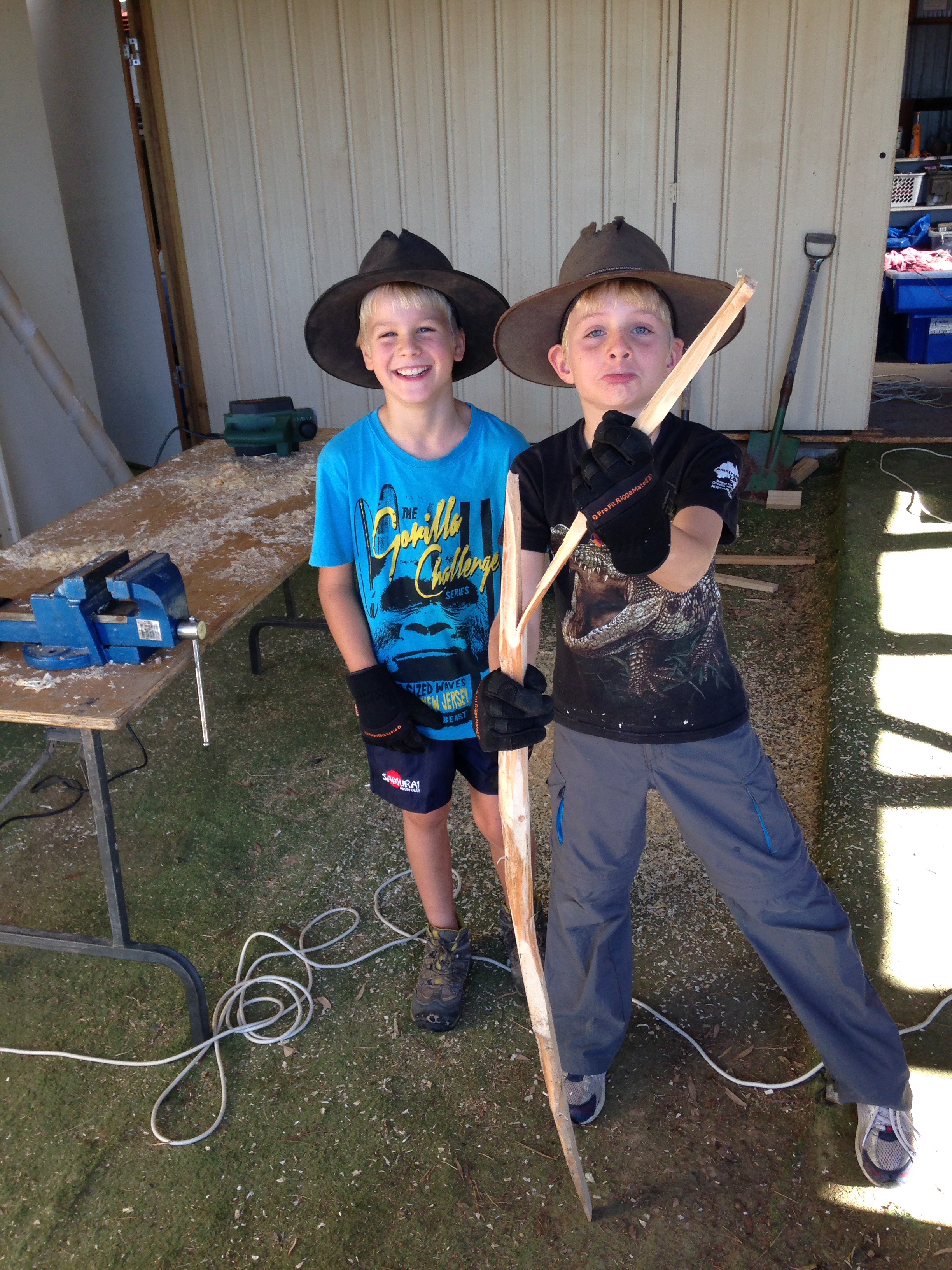
Last year they decided that they would make some bows.  It was a good fun activity, but the Rock Farm is distinctly lacking in Yew, meaning that we used wattle and then pine branches to make our bows.

It didn’t work out too well.

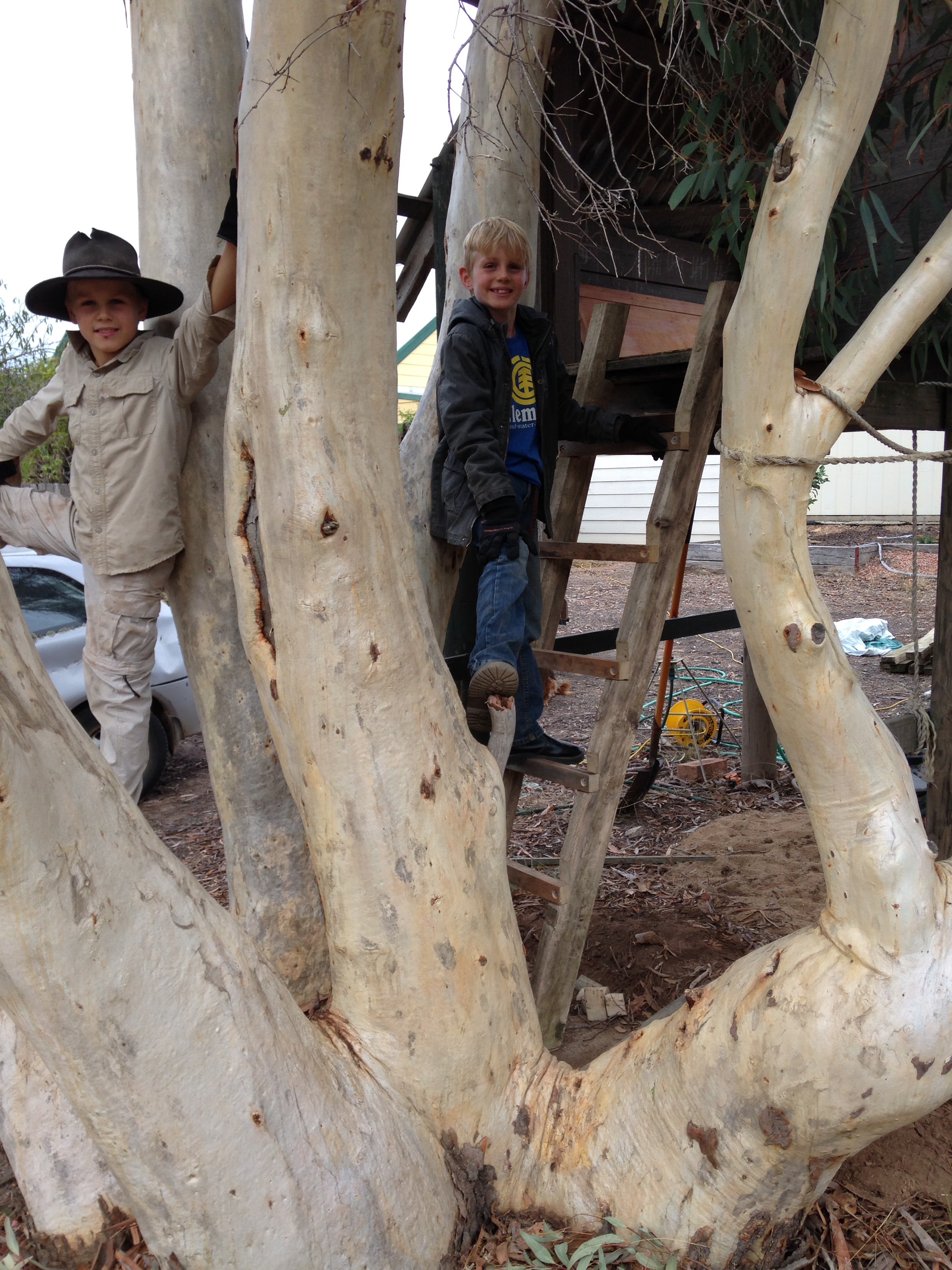
Other jobs the boys have taken on is the construction of a ladder into their cubby house.  I might have provided a little bit of guidance, as the Little Helpers don’t tend to use tools such as tape measures or pencils too much.

Most hand tools are pretty safe to use.  The worst the kids will do is cut themselves.  It is modern power tools that scare me.  A circular saw will take off a thumb in the blink of an eye.  I love seeing them get out there and use the traditional tools.

But of course, with all things, the kids need adequate supervision.

You might be able to do it all in New York… but I’m happy enough knowing that we have all we need right here 🙂

Mineral supplements for sheep

Australian soils are often described as ancient weathered soils,  poor in nutrient and often have very little organic matter.  Here on the Rock Farm, we take it to another level, with our Ordovican shale bedrock often just below the surface of our thin gravel based lithosols.

There is an old adage  that states ‘if you want to run ten sheep, you feed the sheep until you can run ten sheep’.   This means that the food you feed your sheep becomes the manure that increases your soil fertility until you can run ten sheep.  In essence, your sheep become a vital part of the composting cycle where the imported food is converted to fertilizer.

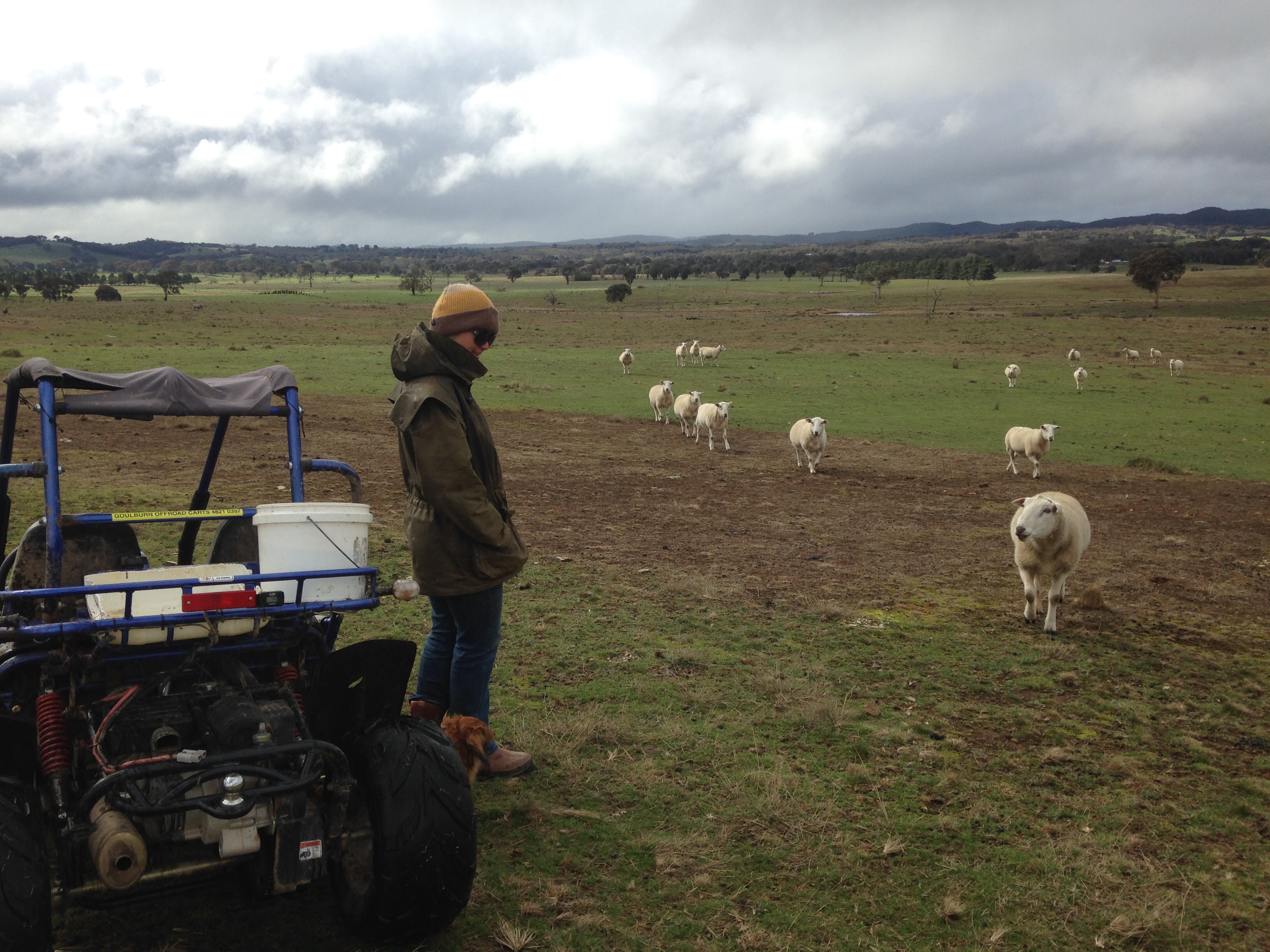
And when you feed your sheep, mustering becomes a whole heap easier, as they come running to you!

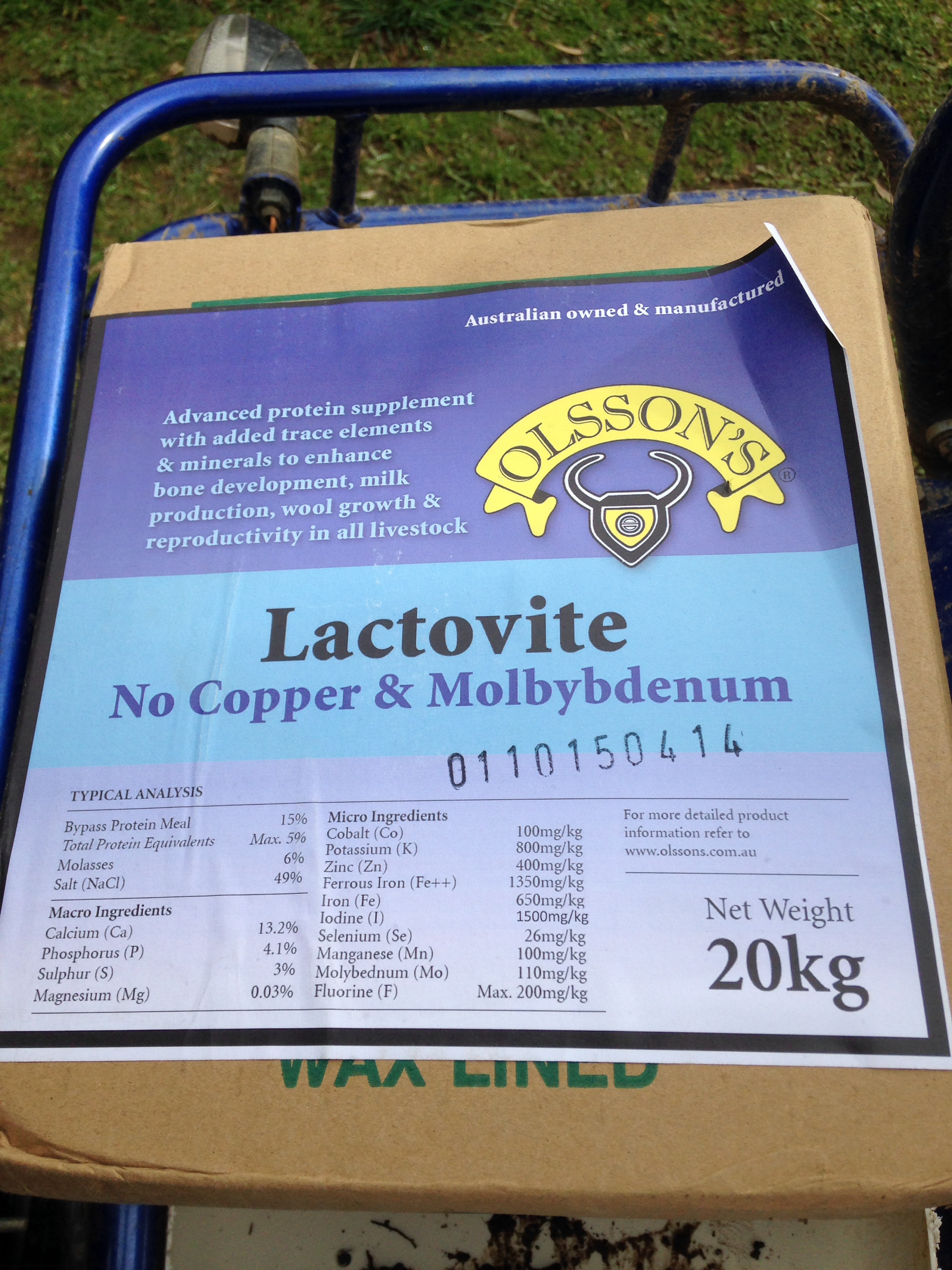
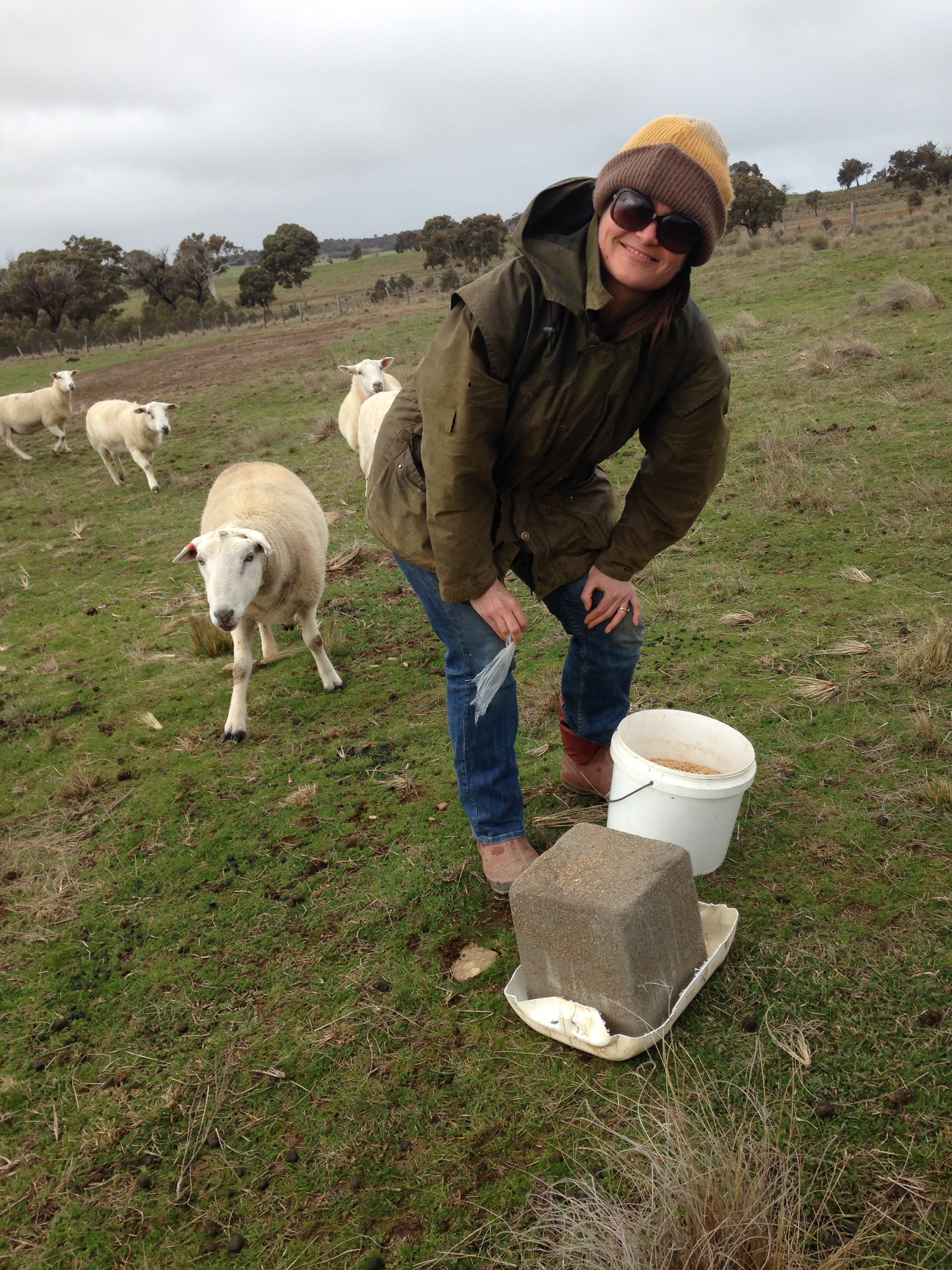
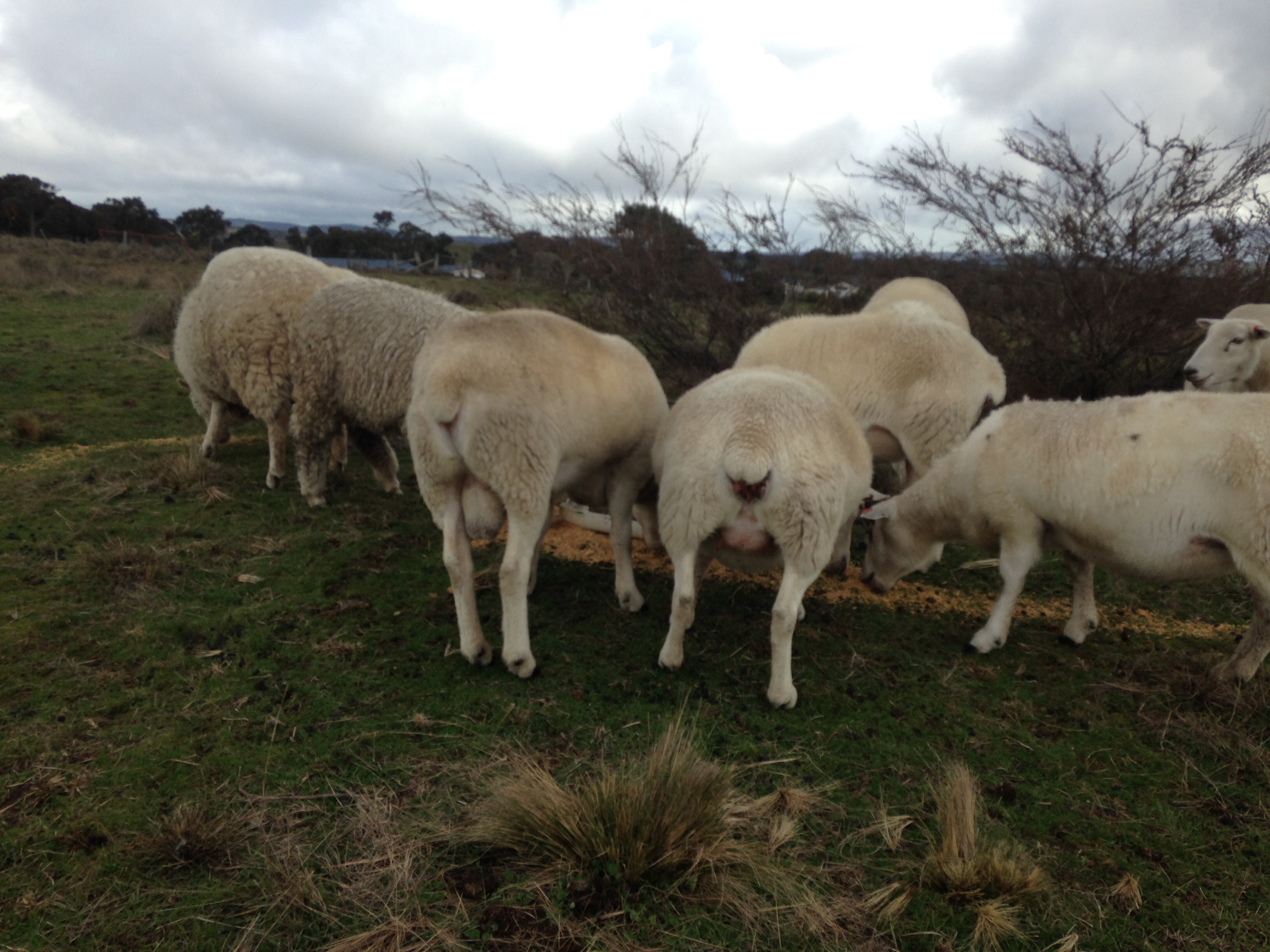
In this good wet winter, our problem isn’t enough food.  There is plenty of bulk in the native grasses at the Rock Farm, but like Burke and Wills, I didn’t want our sheep starving on full bellies.  With mineral deficiencies common, we are experimenting with a salt lick or mineral supplement block.

With the sheep and horses running in the same paddock, we had to pick a mineral supplement that doesn’t contain urea.  Most cattle and sheep supplements contain urea.  Urea is toxic to horses, due to the differences in the gut.  The urea provides nitrogen for the the microflora that lives in the ruminant (cattle and sheep).  Horses only have one stomach (like us), and the urea may cause non-protein nitrogen poisoning.

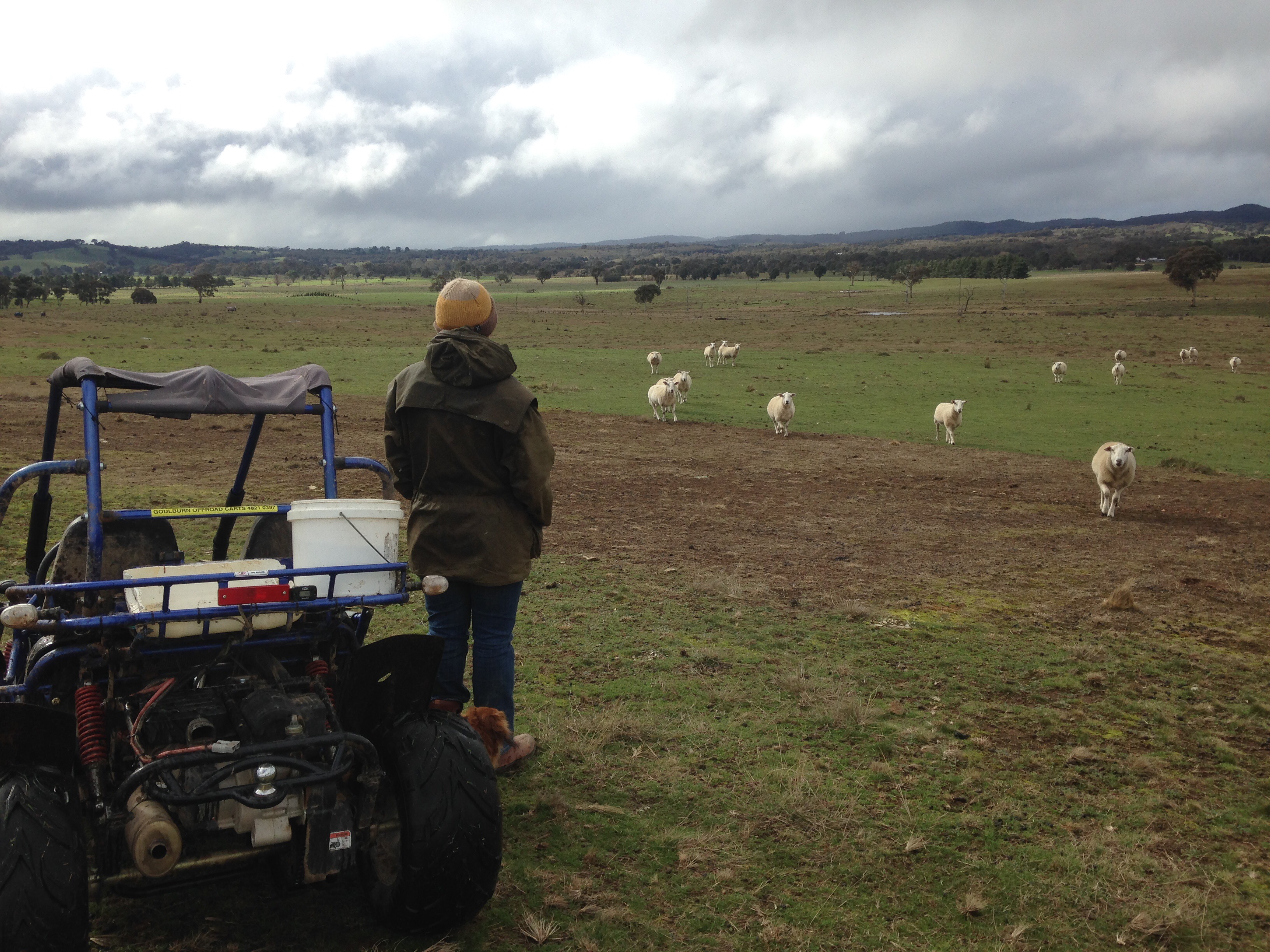
We put the lick out in the paddock, and soon had the sheep wandering up to check it out.  Actually they were checking out the bucket of oats – and looking for a feed.  The benefits of bucket mustering are obvious when they come when you call!

This is obviously a very broad solution to a specific problem.  With a bit more time and effort, we could put out a range of different specific minerals, and see which ones they take.  This will indicate strongly which minerals our land is deficient in.  We hope to get to this point in the future, but in the meantime, the scatter-gun approach will have to suffice.

As an aside, you can see the bands of dead grass in this photo.  The ground has been sprayed in preparation for planting of trees in spring.  Whilst I am generally against chemical use on the paddocks, this is the most effective way to establish trees.

We spread the oats around the lick.  The sheep crowded around it – and devoured the oats. I am not sure how long it will take them to work out the benefits of the mineral supplements now available to them.  We have gone back a couple of times over the past week to encourage the sheep to check out the lick.

I don’t know how successful this will be – but we will see.  Hopefully the sheep will seek out any mineral deficiencies they crave.  Any minerals their bodies don’t require will pass through the sheep and become part of the mineral bank in our soil.  It will take us time to work out what the best way to manage our resources on the Rock Farm… but that is what it is all about.

Road Gang for Hire

Living on the Rock Farm brings us so much pleasure and enjoyment that we often forget some of the other disadvantages of living at the end of a gravel road.  Whilst our gravel road provides us with a quiet refuge from the pace of modern society, it is not on the local Council’s regular maintenance schedule.   And whilst the recent wet weather has been welcomed on the Rock Farm, it has wreaked havoc with our road.

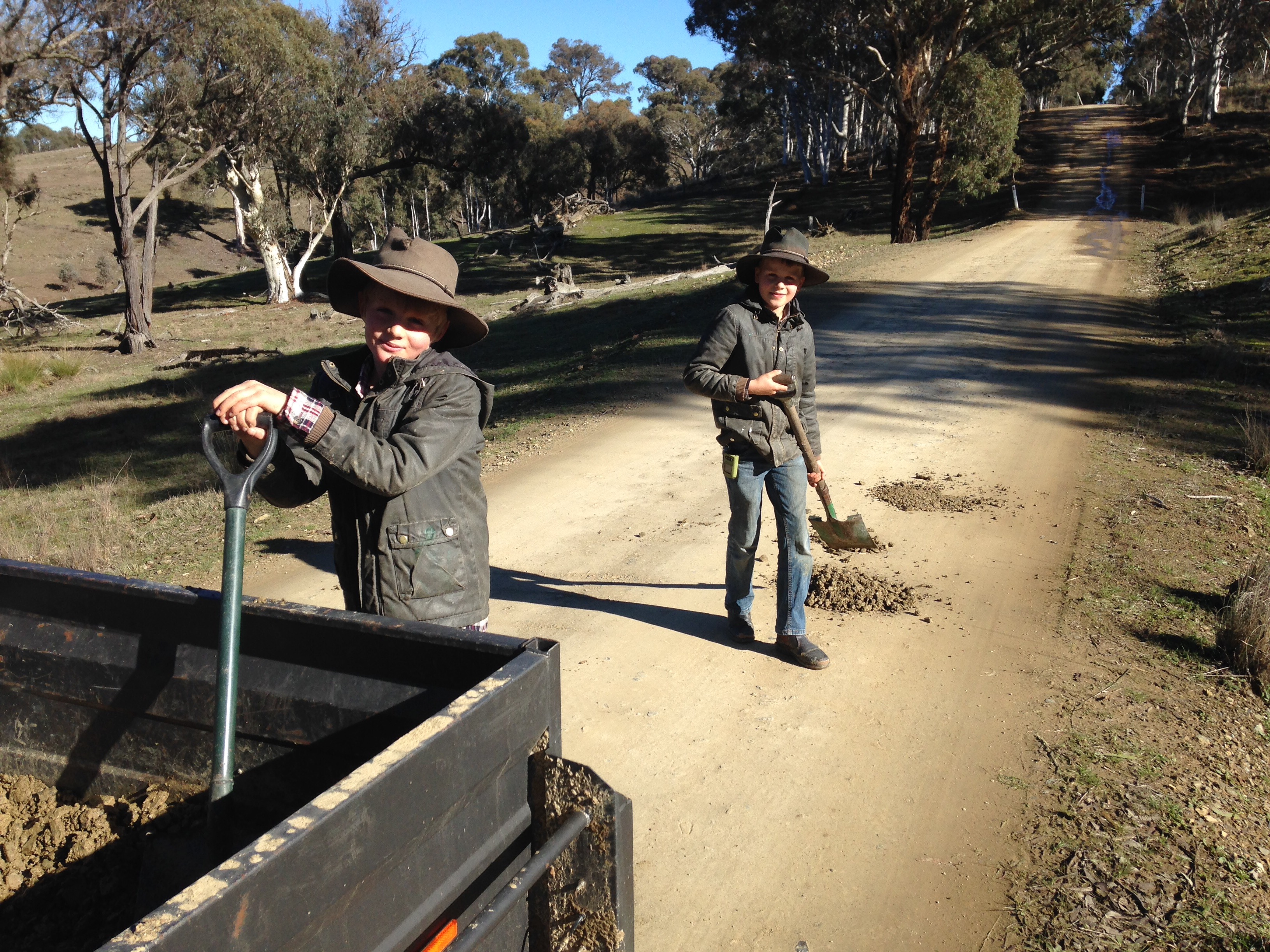
With the pot holes reaching wheel swallowing size, it was time to call in a favour and recruit a new Road Gang.

Our neighbour David owns a tractor and has a gravel pit on his place.  David’s tolerance of pot holes is even less than mine, and he regularly fills in some of the worst of the holes on the road.  His efforts are very much appreciated by all of us, but it was time that the Little Helpers were recruited to bolster the road maintenance program.

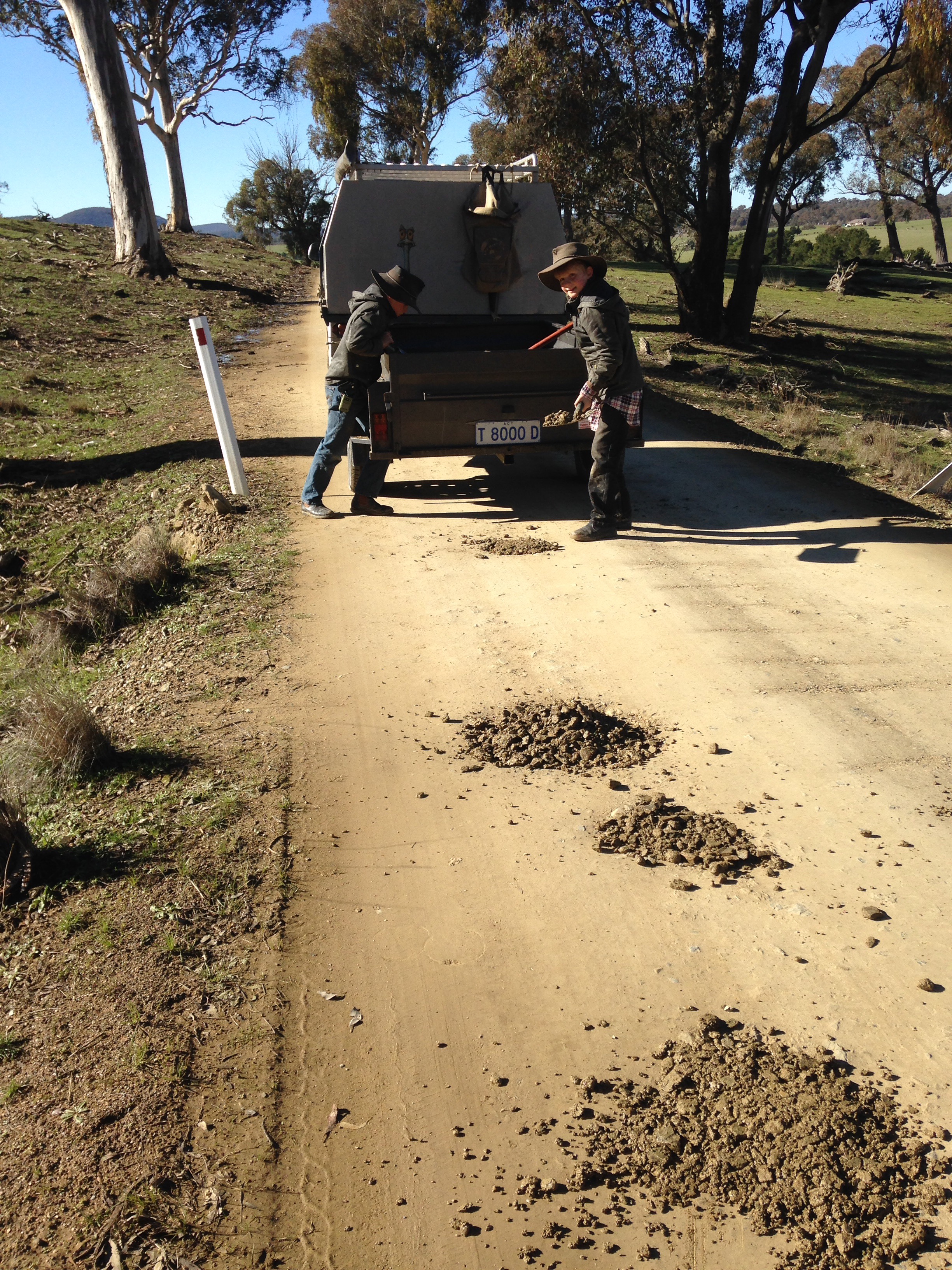
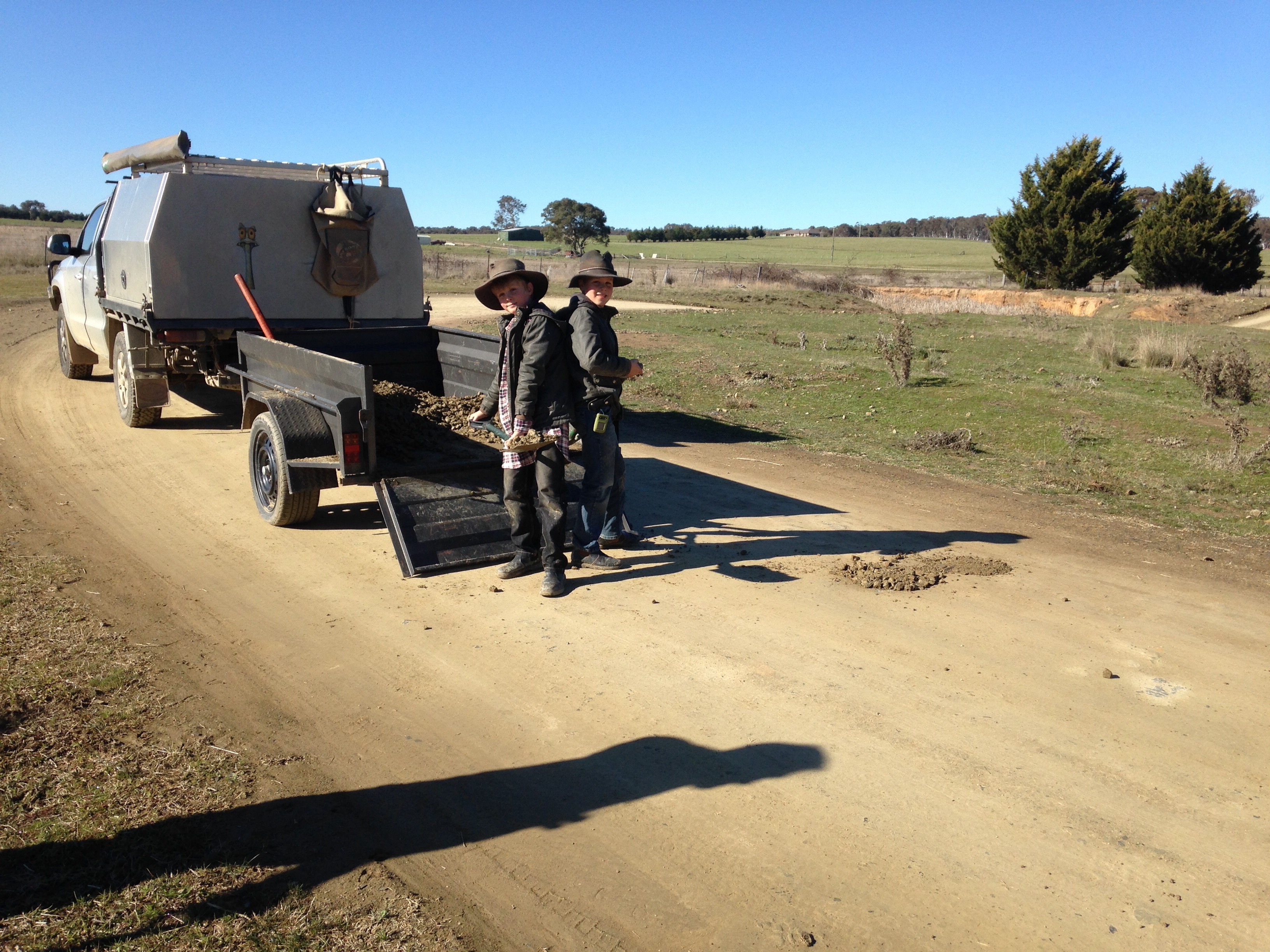
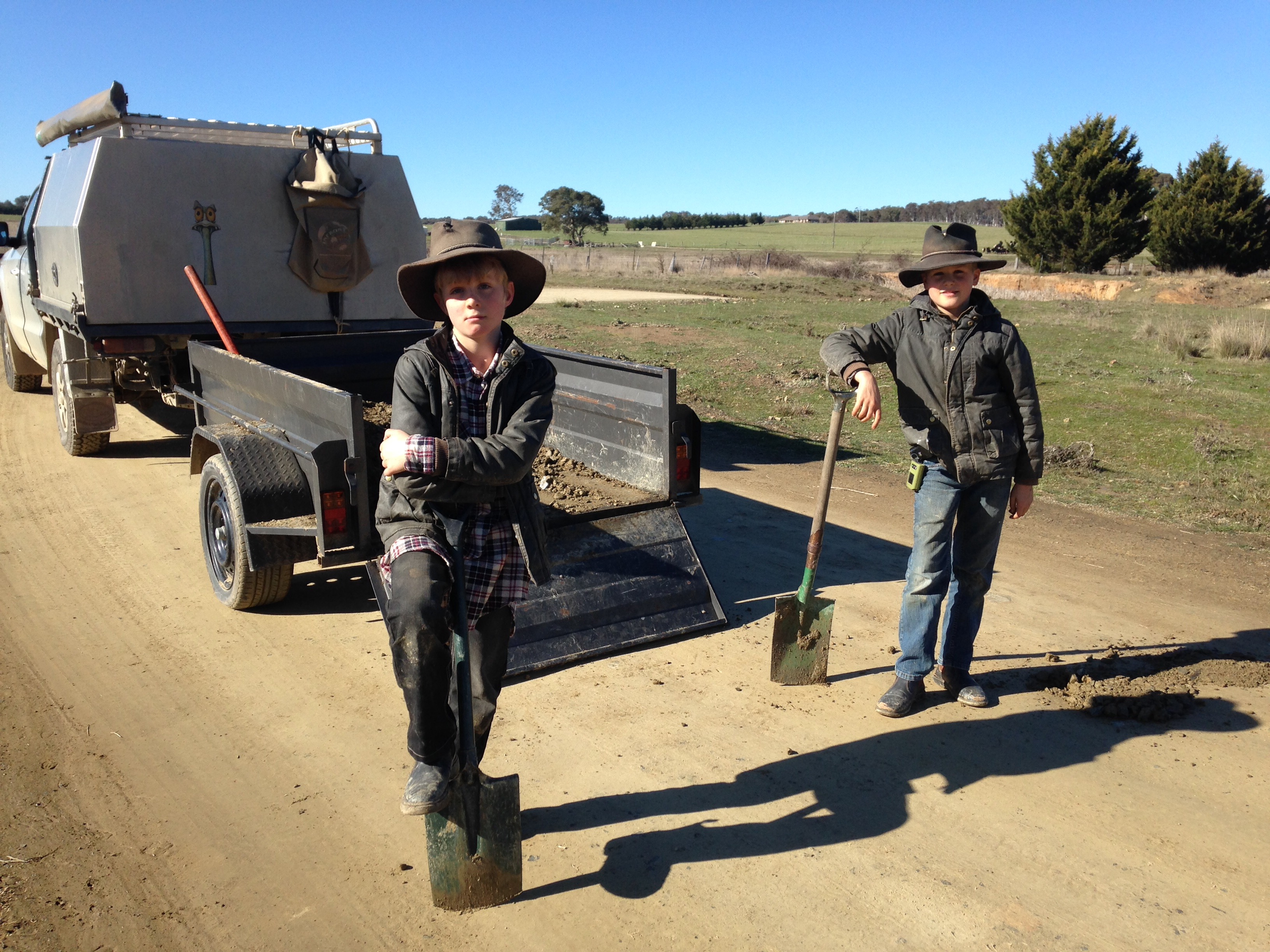
And they loved it.  David kindly loaded our trailer with a bucket or two of great gravel, and we put the boys to work.  After many years of making mud pies, and digging holes in all the wrong places, it was great to see their handiwork with a shovel extended to constructive projects too.

They even decided they could take a moment to strike their ‘best Council Worker pose’.

Our work here is far from completed.  After emptying the trailer in the worst of the road, we dropped it off at David’s, with a ‘fill it up please’, so we can do it all again.  I hope the Little Helper’s enthusiasm remains for the next load… and the next… and the next. 🙂 

So how hard can changing a clutch be? Really?

One of the joys about living on the Rock Farm is being miles from the hustle and bustle of modern day life.  It is also one of its drawbacks, with round trips into the big city being at least a 100km journey.  This means that our cars end up driving lots of kilometres each year.  And eventually this catches up with you with a big maintenance bill.

Eventually you get to a point where a car becomes uneconomic to repair, and you are forced to get a new(er) one.  One of the ways we try to hold off this expensive option is to do some of the maintenance work on one of the cars ourselves.

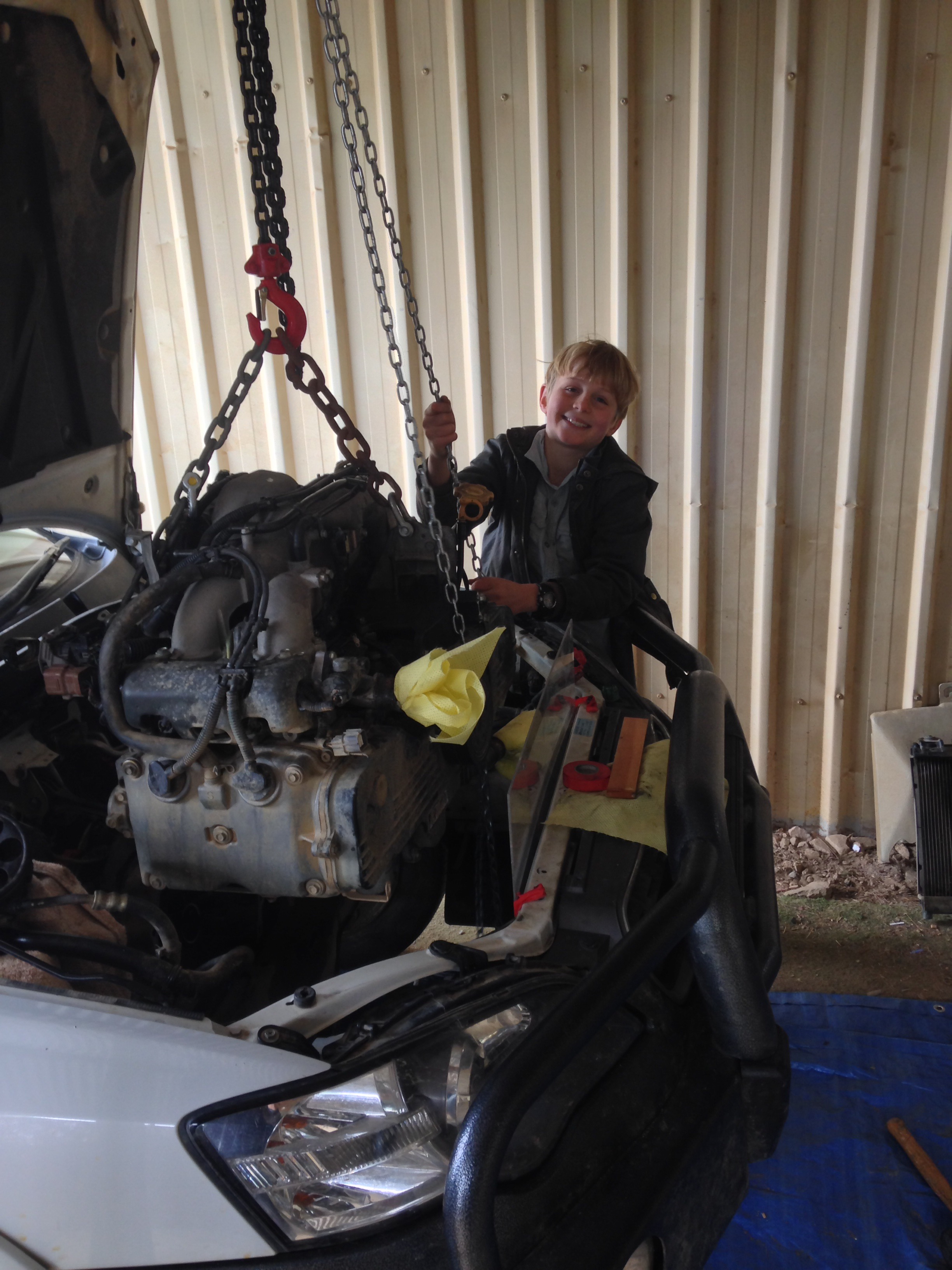
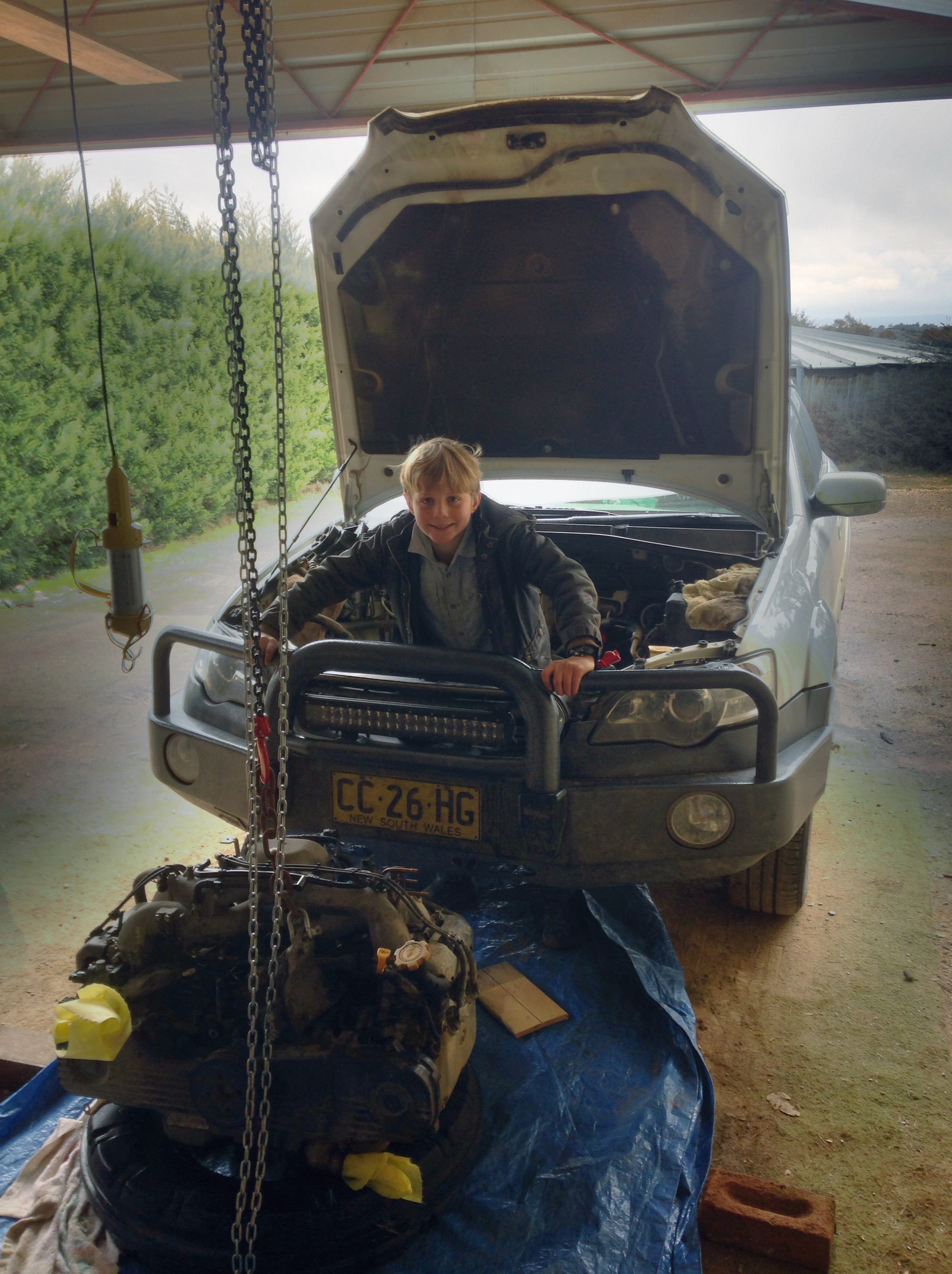
Now dropping the oil and kicking the tyres is one thing, but our little Subaru was starting to make all sorts of new groans and noises.  Completely understandable after the past 270 000km of its life.  So we were faced with a  decision – repair or replace.

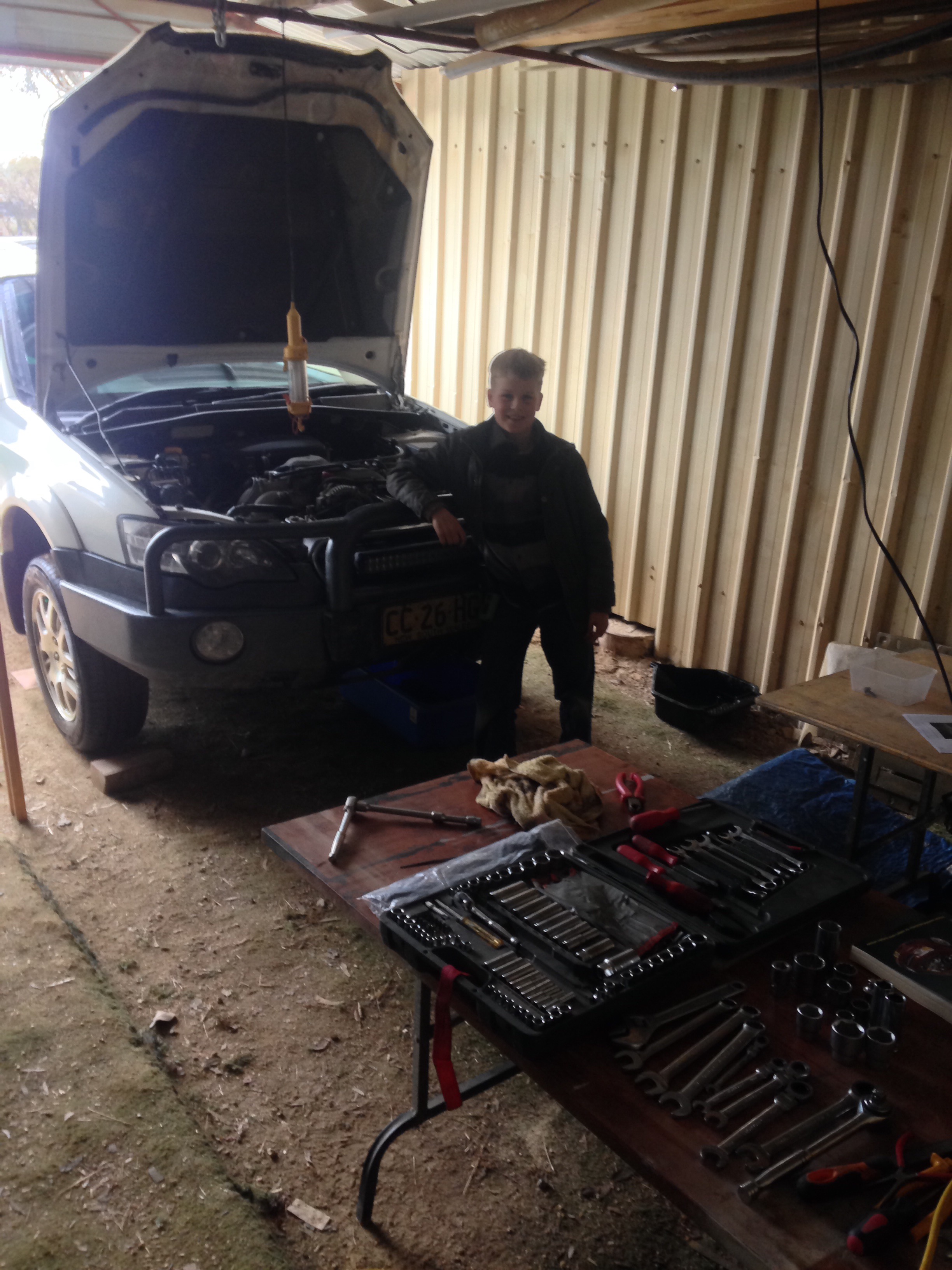
A short walk around a few car yards made the decision easy.  Repair was to be our choice.  With our long term mechanic finally closing his doors a couple of years ago, we have been unable to settle on a mechanic.  So I decided to give the job a go, myself – well not quite by myself – I did have a couple of little helpers.

With YouTube research confirming any old hack can replace a clutch and replace the timing belt, I decided to give it a go.  With parts alone amounting to over $1500 it wasn’t a gamble I really wanted to get wrong. An extra $75 for a workshop manual and another $99 for a chain block, it was time to swing the first spanner and give it a red hot go.

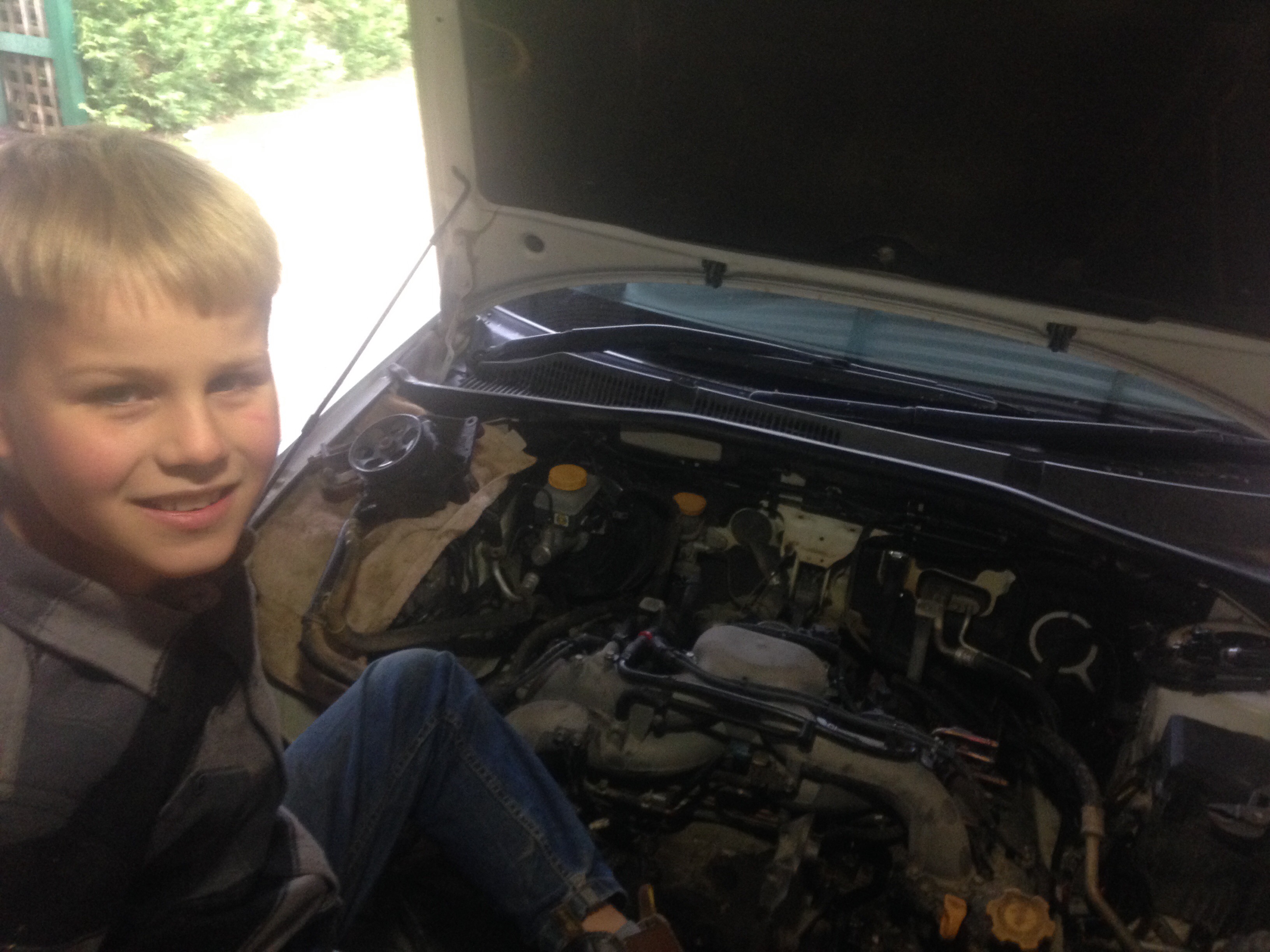
And give it a go we did. The Little Helpers were fantastic, holding the light just right, for almost long enough before deciding to create interesting shadows on the wall. The intracies of the mechanical marvel that is the internal combustion engine might have been lost on them, but it was a good introduction that most mechanical machines can be maintained. Not all of them are disposable items in this consumer driven society.

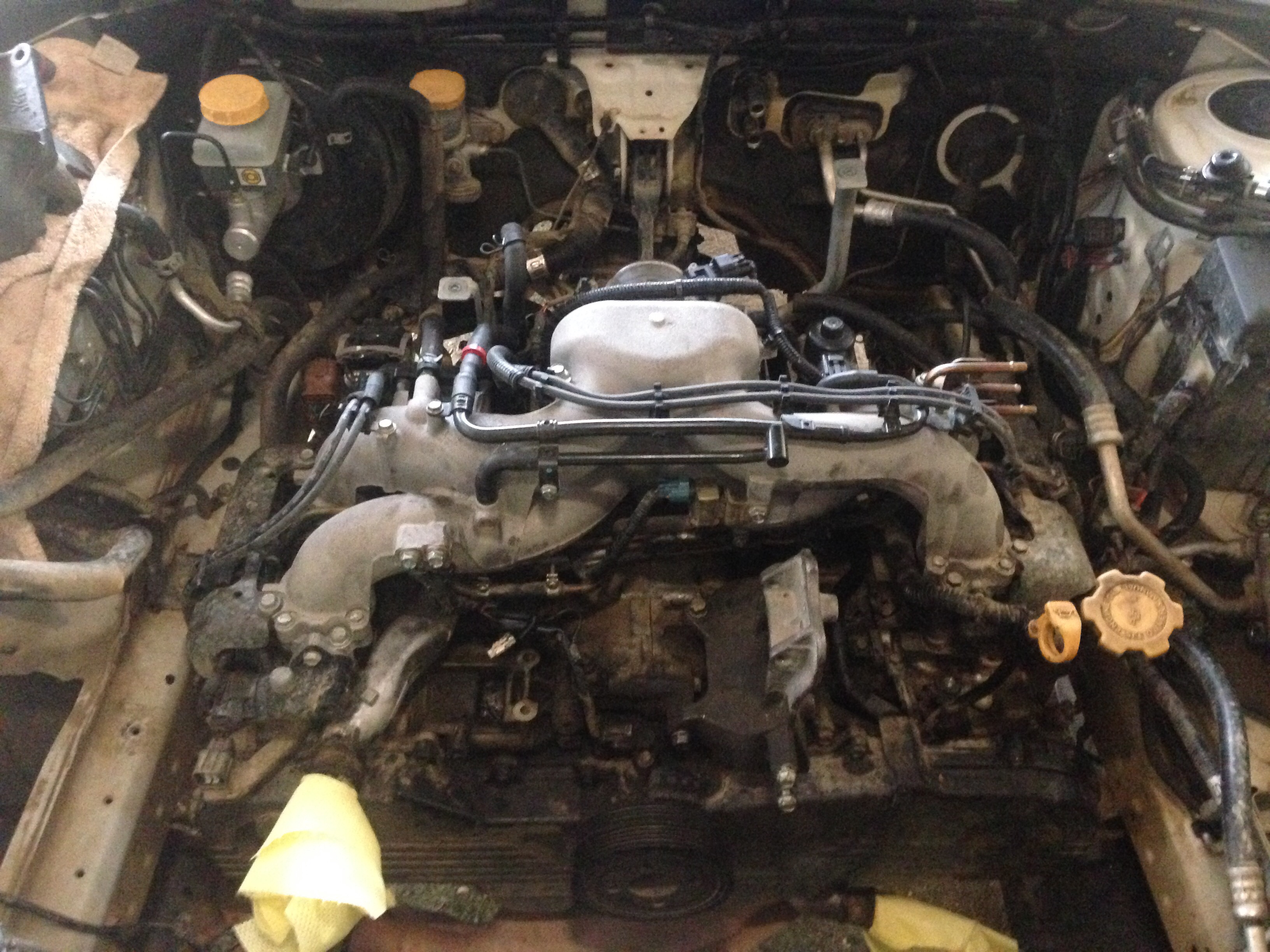
One of the advantages of this modern consumer scoiety however is the little camera that doubles as a phone.  I was able to take lots of photos during the disassembly, which greatly aided the reverse process!

I had a few nervous moments installing the new timing belt, with the explicit and direct warnings of the workshop manual burning into my brain that severe engine damage will occur if you get any part of this wrong. There is nothing like putting the cover back on and discovering there is a new pulley still sitting in the box! We also faced the problem that the water pump provided in the kit was from an earlier model and required a different flange for the radiator hose. The right bit cost $10 and half a day from a local wrecker).

I considered replacing the whole engine with an exchange unit, however if I was going to go down that path, I would also replace the gearbox, radiator, alternator, and a whole heap of other bits and pieces.  We would also need to re-bush the suspension, and so on.  Mind you, as we went along, the Flintstone model (below) was looking mighty attractive!


But it all went reasonably well.  A friend lent me a magic 12 volt impact driver that made short work of the flywheel bolts and crankshaft pulley, without which the job would have been impossible.  Putting it all together was another exercise in methodical and careful checking, but we got there in the end.  The car started with an almighty screech from  one of the drive belts, but a quick adjustment to the power steering pump soon fixed that and we were back on the road.

All up it took about two and a half days – including the half day lost due to the trip to the wreckers.  The result is definitely worth it.  Thanks to Chris, Pa and the Little Helpers for their assistance during this exercise, and to Jo who managed to find the odd little tools and bits in town that made life a whole heap easier.

Would I do it again?  Hopefully not for another quarter of a million kilometers!

Pump woes on the Rock Farm

One of the joys of living on a rural property is beautiful fresh rainwater stored in your own tank.  The water tastes fresh, is free from chemical impurities and is deliciously soft.  It is your water, and you can use as much or as little of it as you like.  The consequences of your usage are yours alone to deal with.  It is a wonderful part of living on your small farm.

Until your pump dies.   And then you need to get it fixed. Quickly.

We were in a fortunate position that our pump gave us warning it was on the way out.  It would fail to operate, and a simple reset by turning it off and on again would fix it.  For a while at least.  When the interval between resets became daily, it was time to take action.

Davey Pumps were called, and their technical department were most helpful.  They told me that the most likely culprit was the pressure switch in the controller.  The type of controller we had fitted hadn’t been made in around 20 years, giving us some indication of the age of the pump.

I was advised to take the pump to a repair agent, where the pump could be bench tested.  One phone call later, and the pump was booked in the following morning for a thorough inspection.

The pump was easy enough to remove.  The worst bit was the cold fingers on the chilly morning easing the pipe fittings from the pump.

And in no time at all, the pump was in a tub on its way to town for inspection.

After a few hours, I was told that the pump itself was in good condition, however the controller was indeed stuffed.  Thankfully the new controllers are compatible with the older pumps, meaning we were able to fit the new controller.  A few minutes work and some new plumbing tape and the pump was reinstalled and working a charm.

This little process taught me the value of buying a quality Australian made pump, particularly for critical components such as house water.  The service and support offered was excellent, and instead of buying a complete replacement unit, I was able to save a small fortune by buying just the component I needed.

I am looking forward to another twenty years of trouble free water supply 🙂