From Spring’s Green to Summer’s Gold

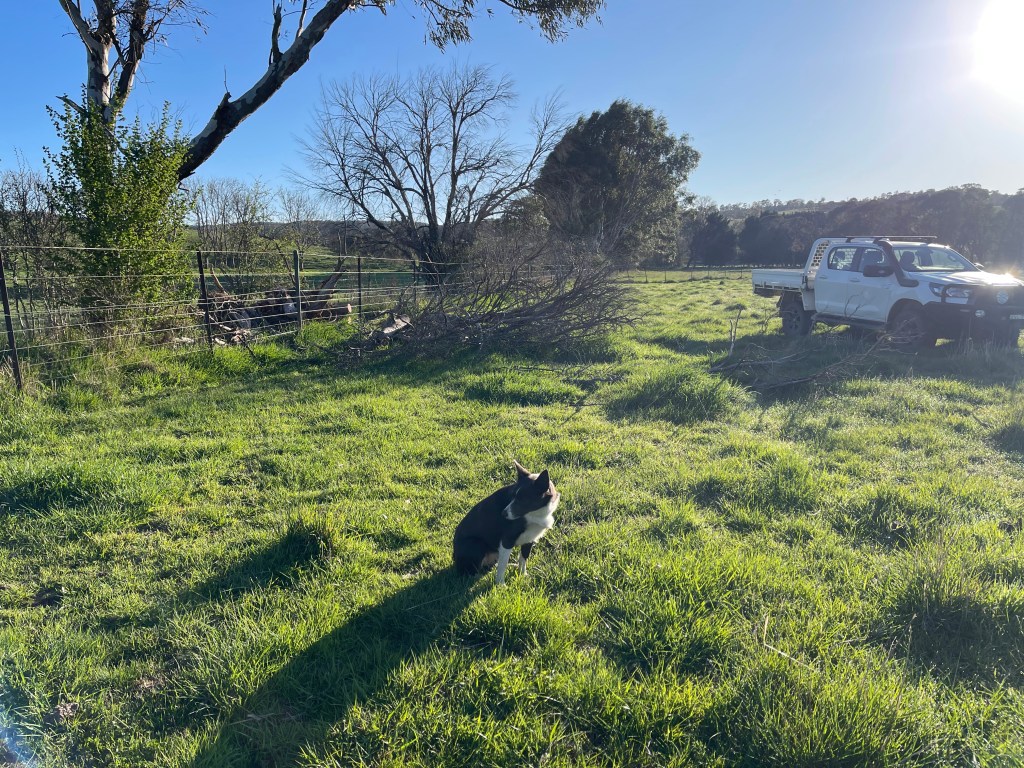
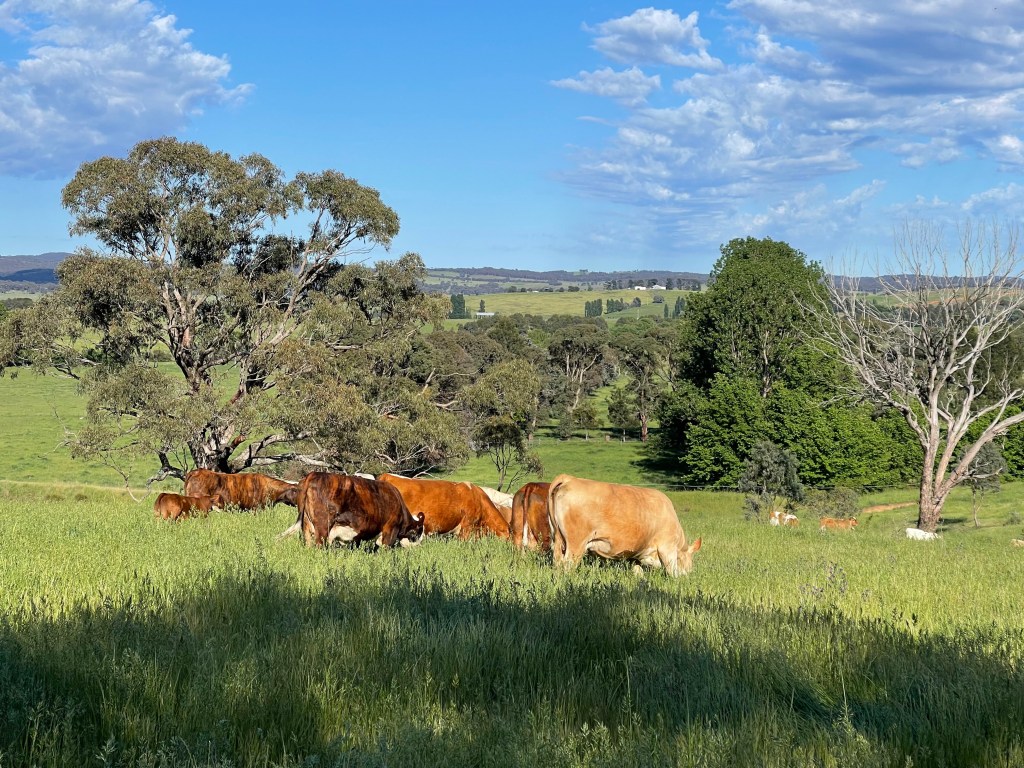
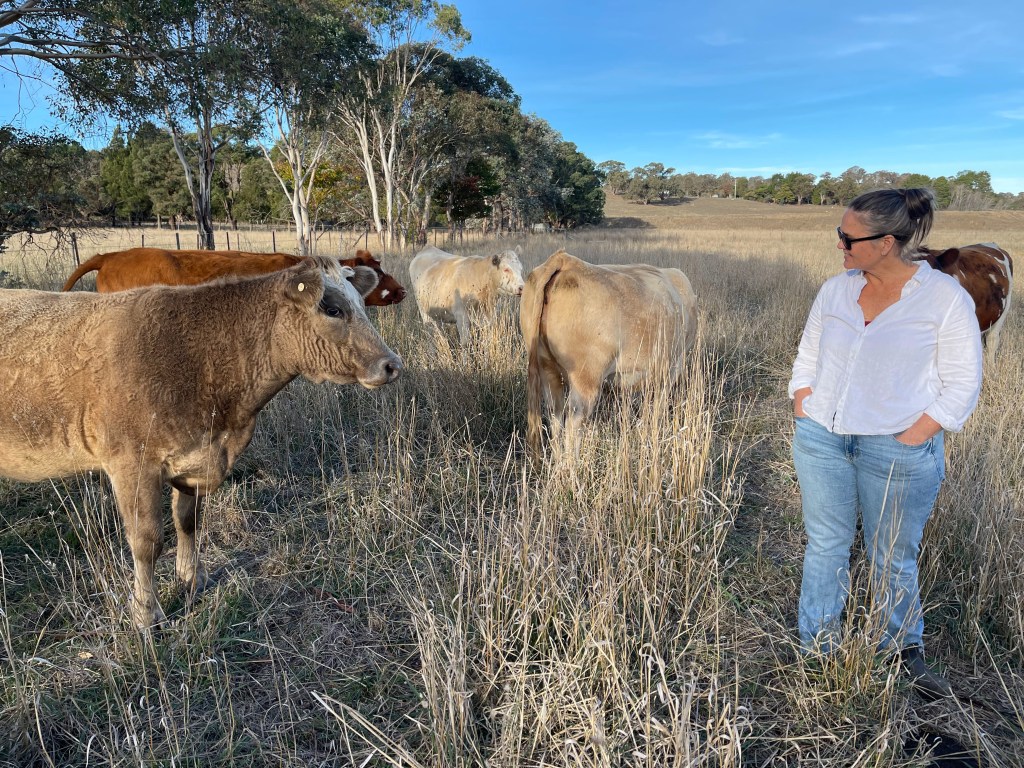
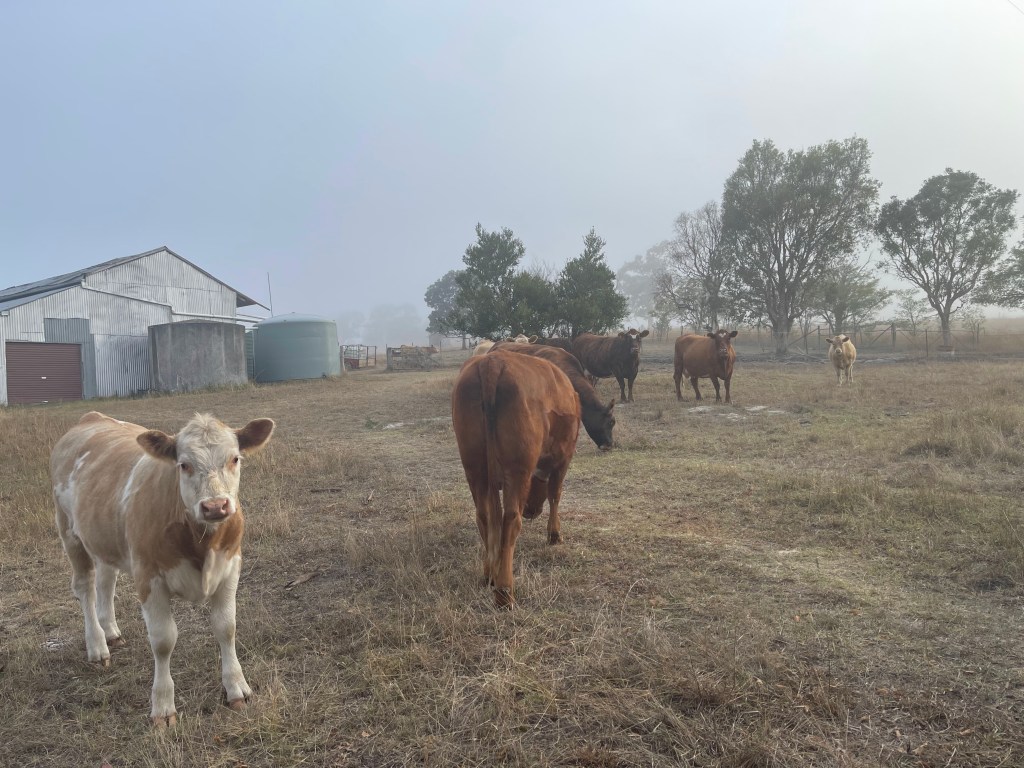
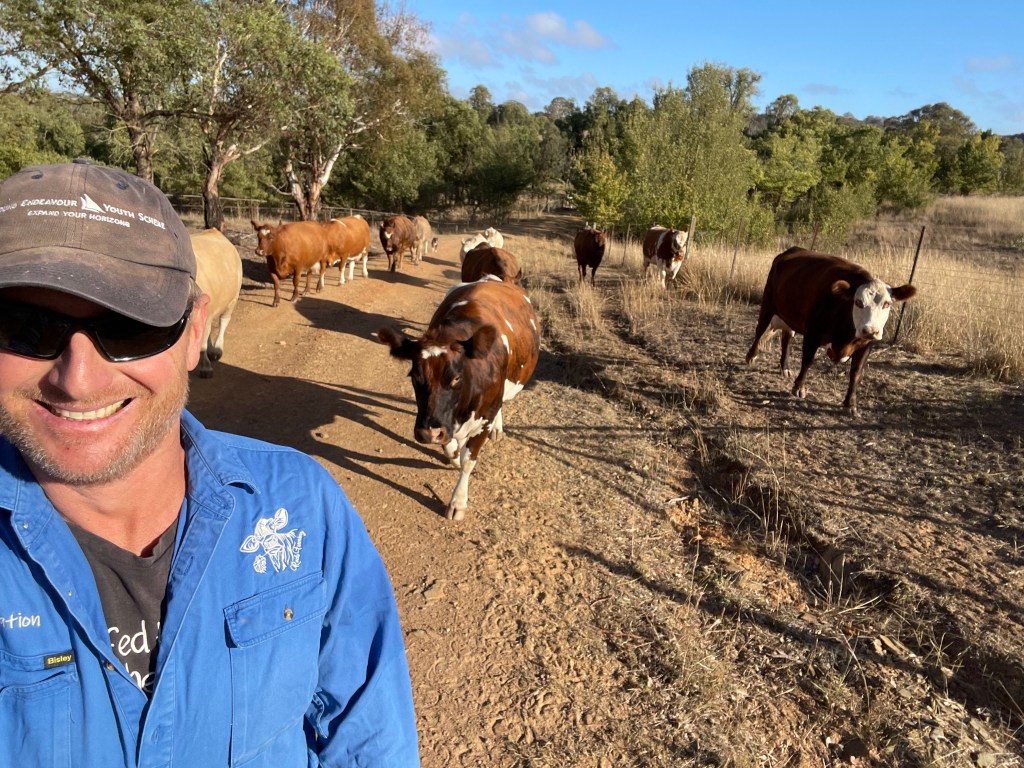
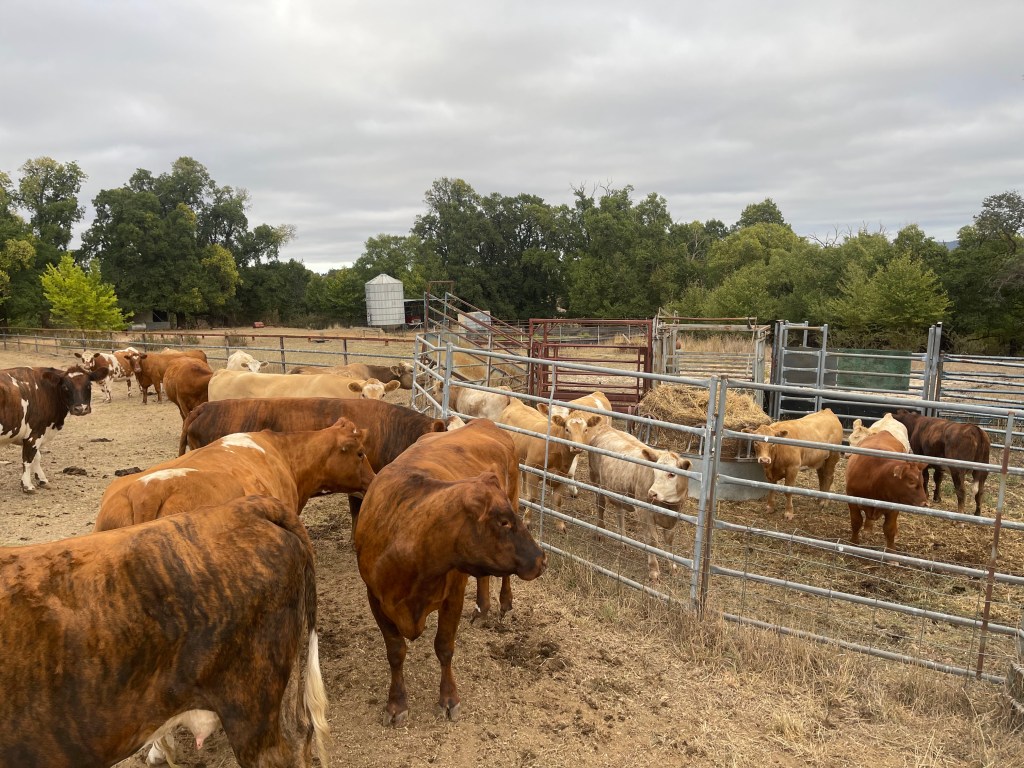
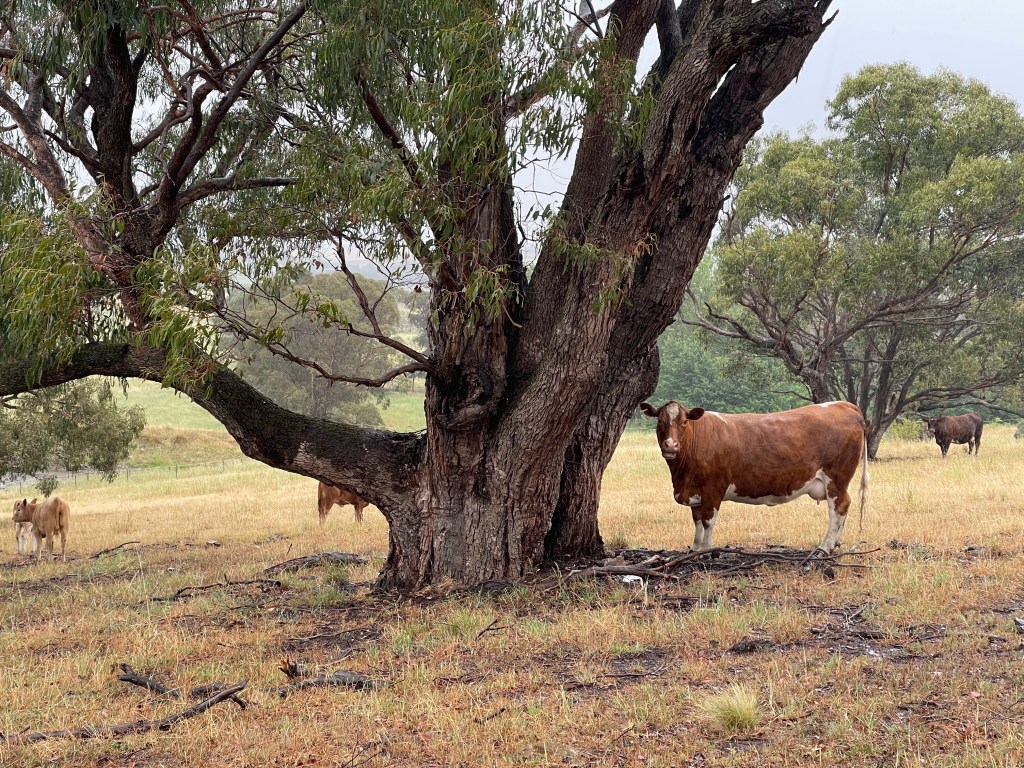
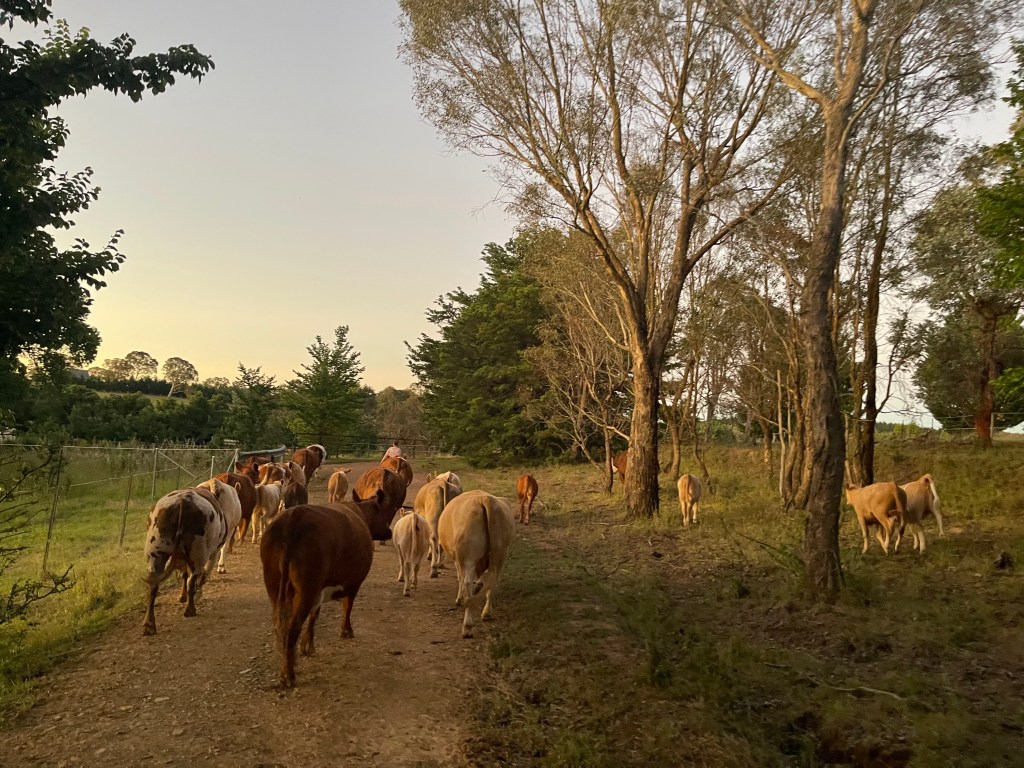
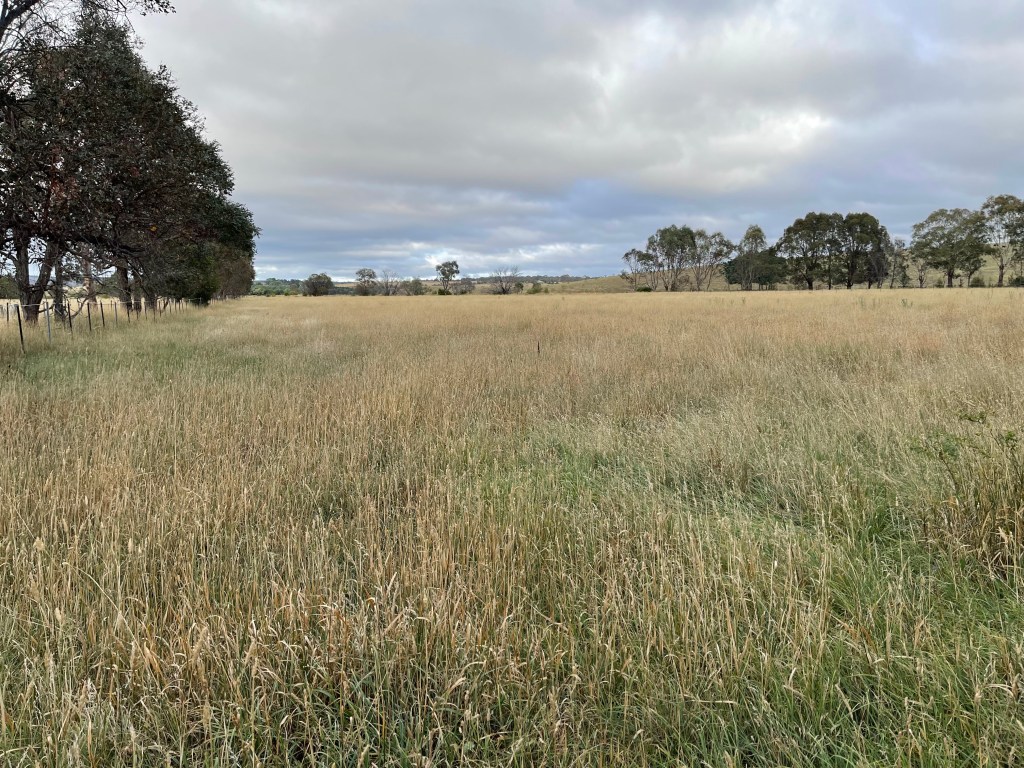
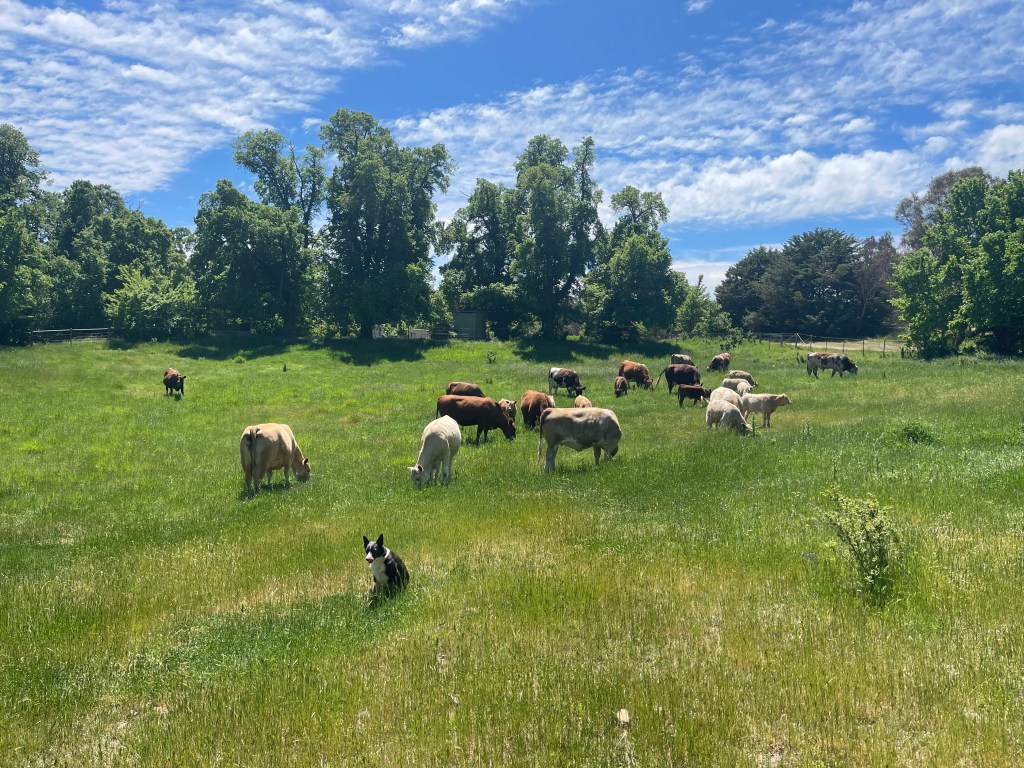
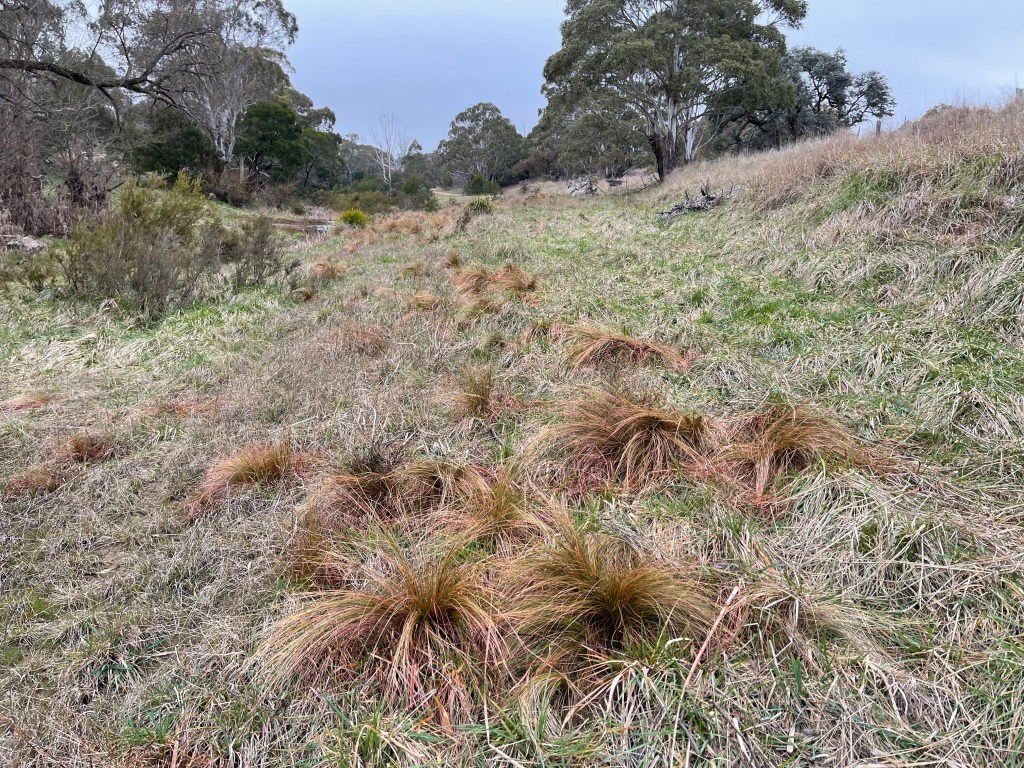
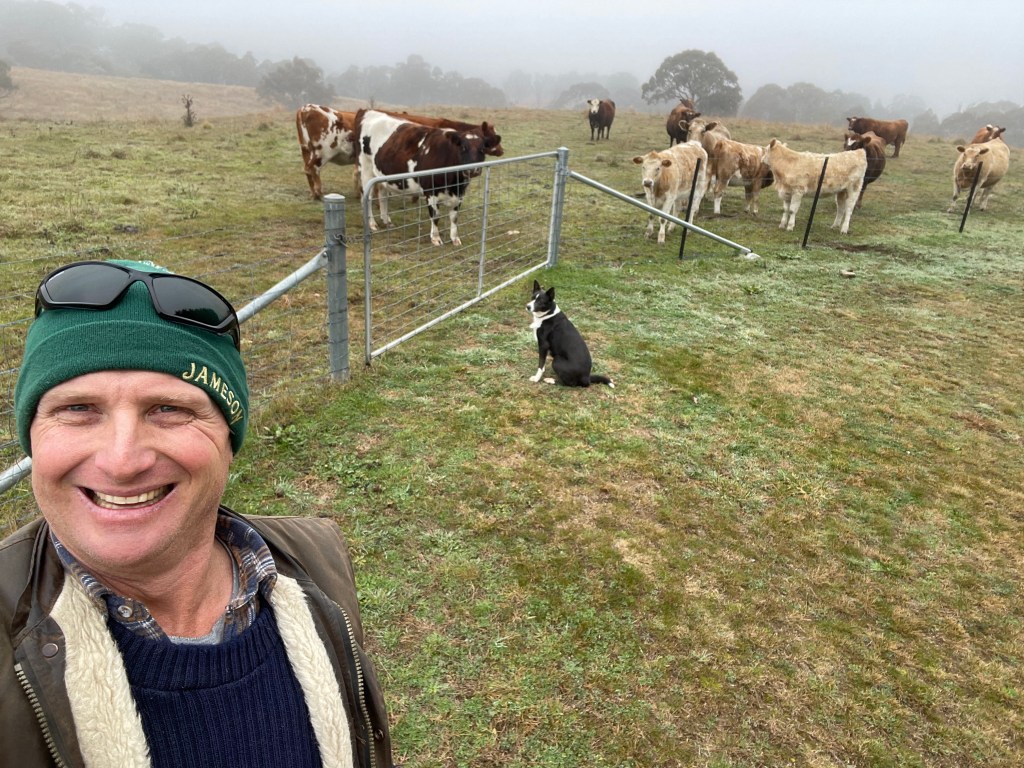
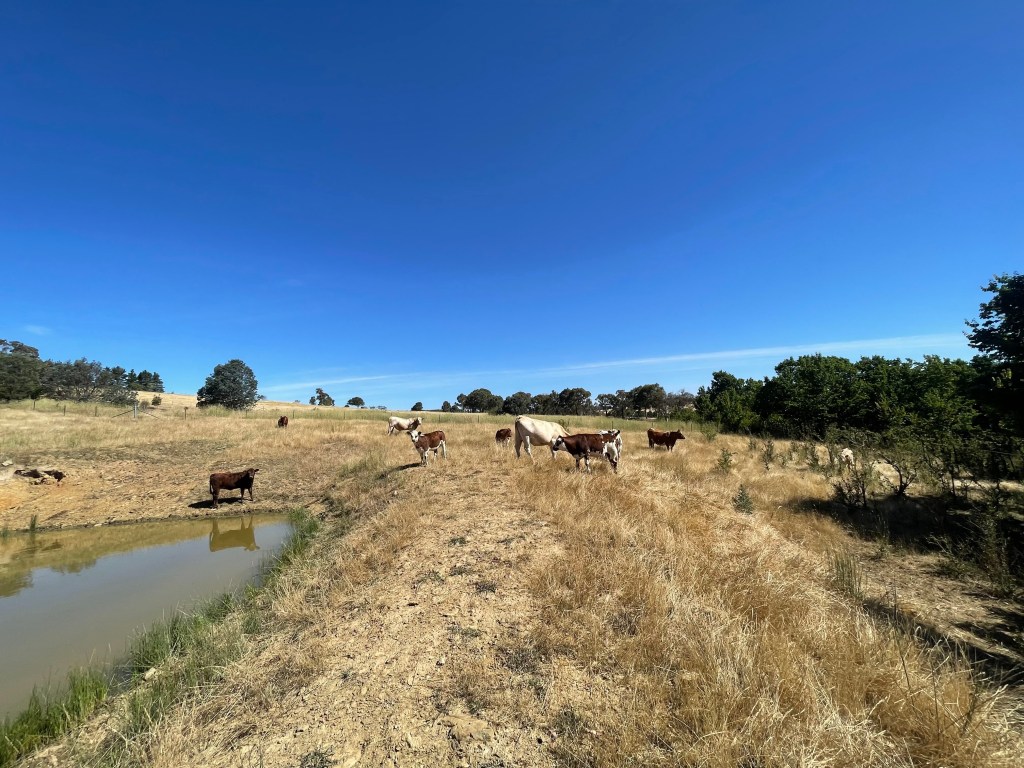
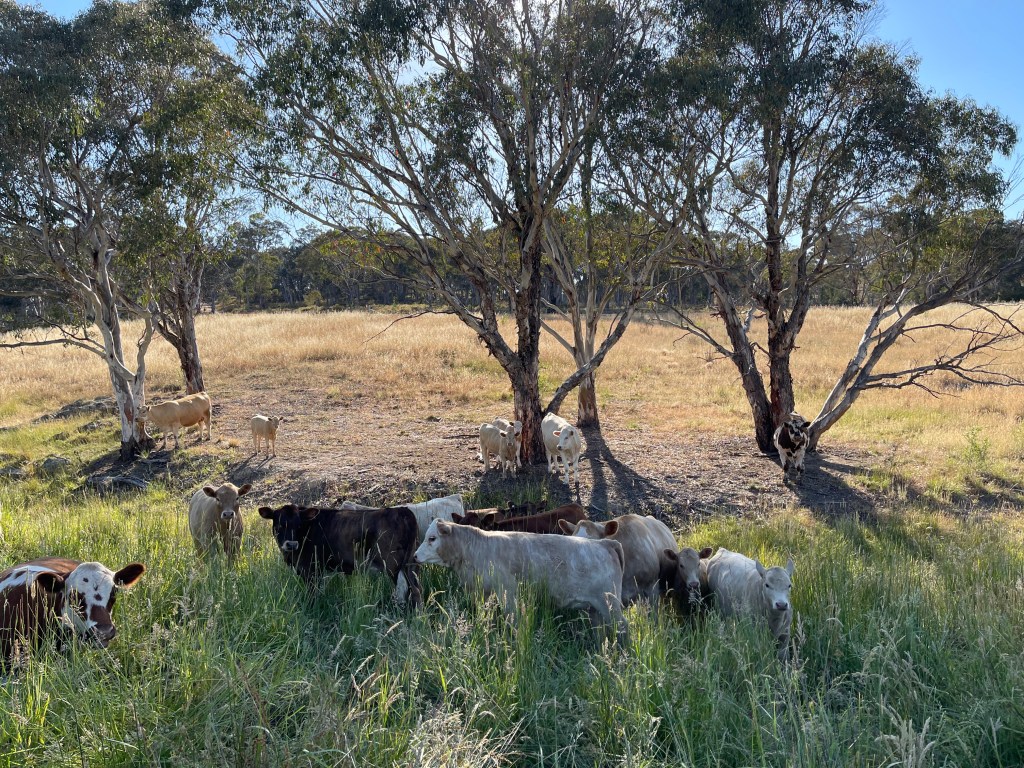
As surely as the sun rises in the morning, spring slips to summer. The flush of green has turned golden, with the grass rapidly setting seed and going off. The paddocks feel different now—still beautiful, but carrying that familiar hint of dryness that reminds us the hot months are here.
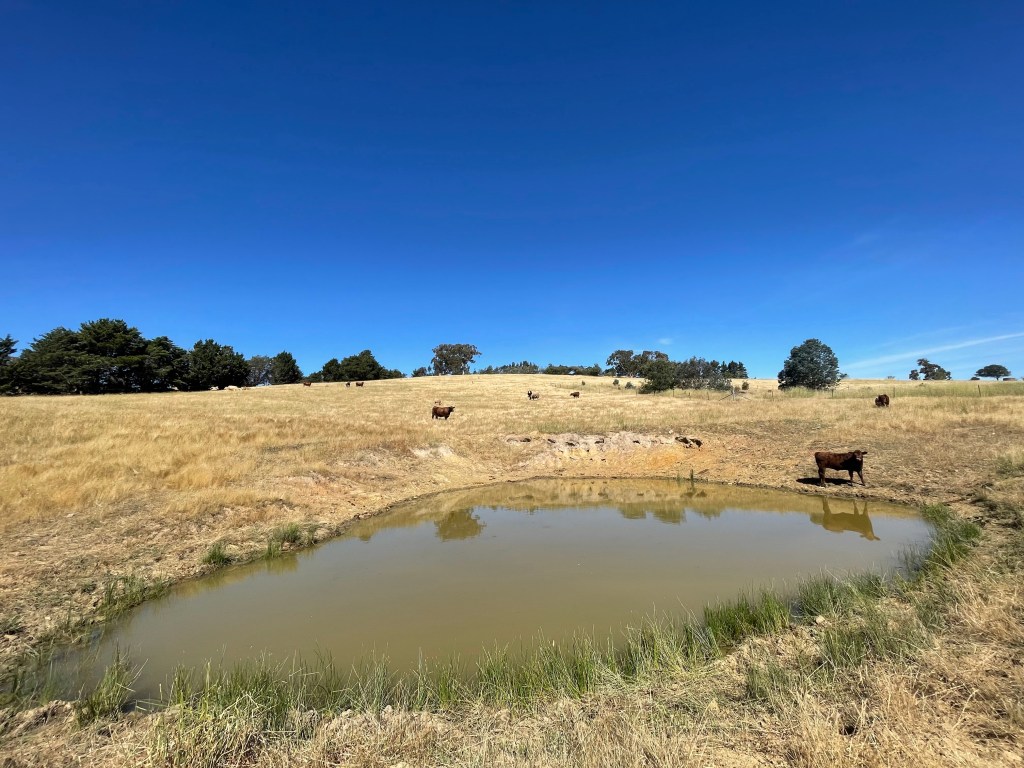
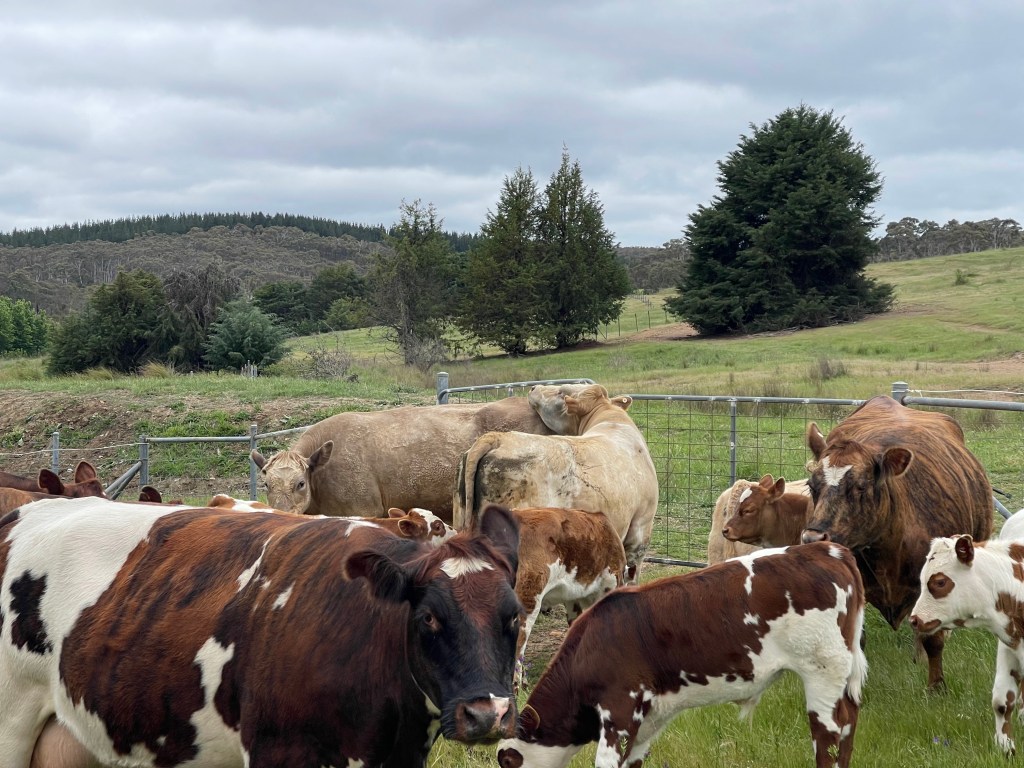
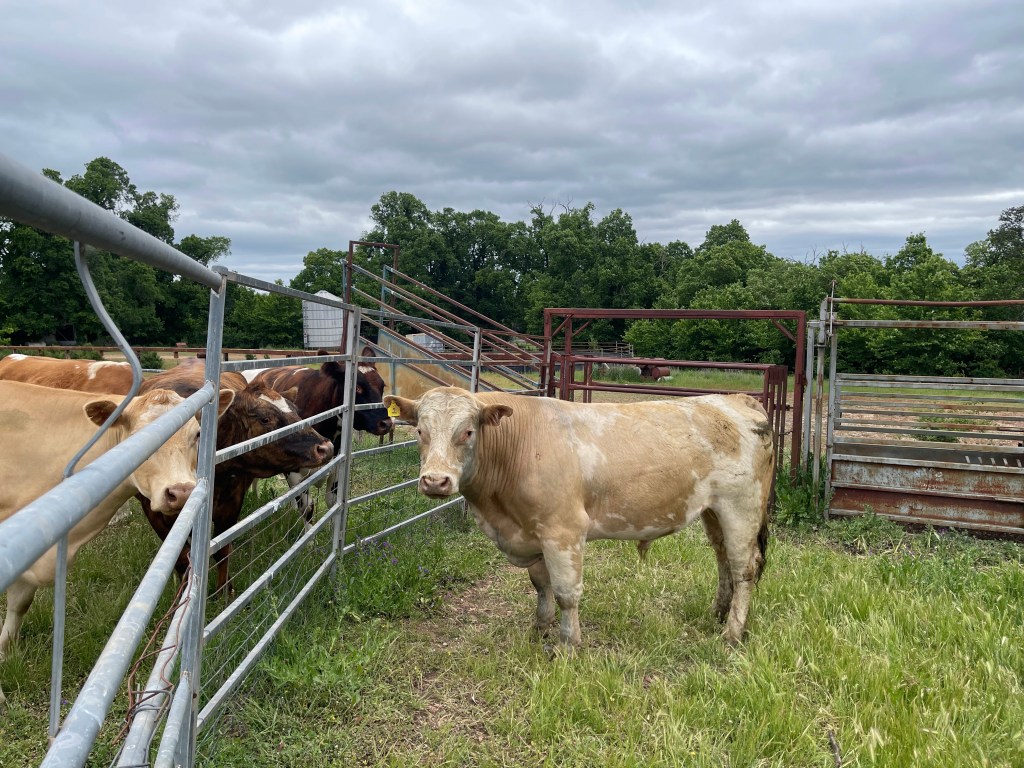
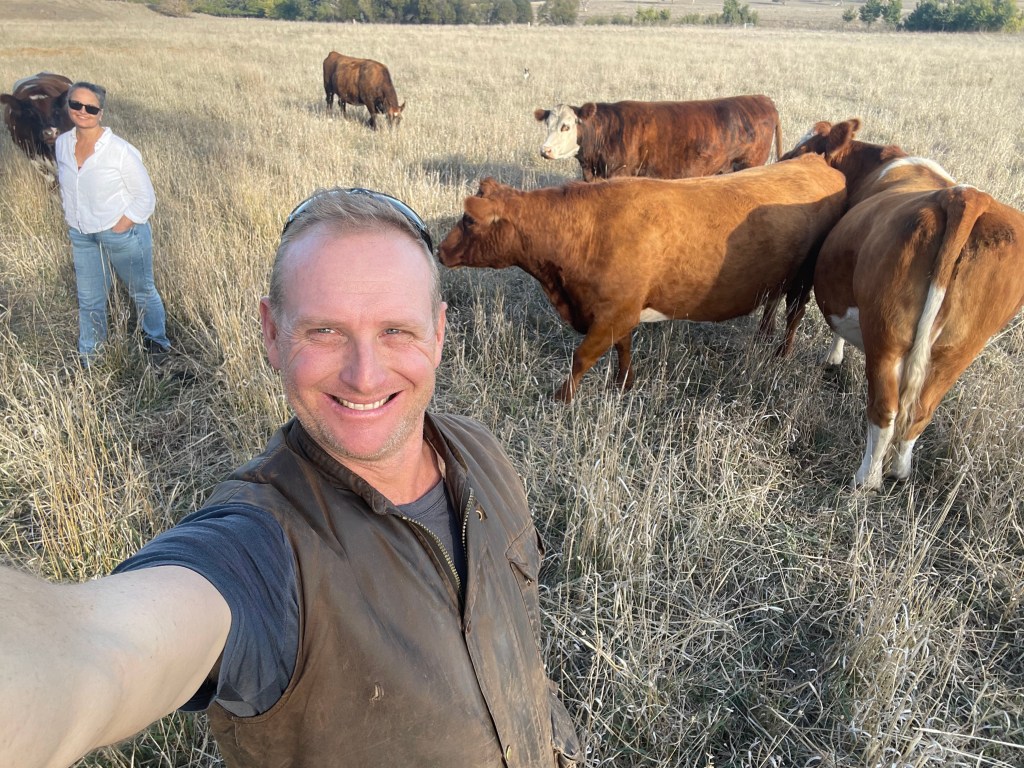
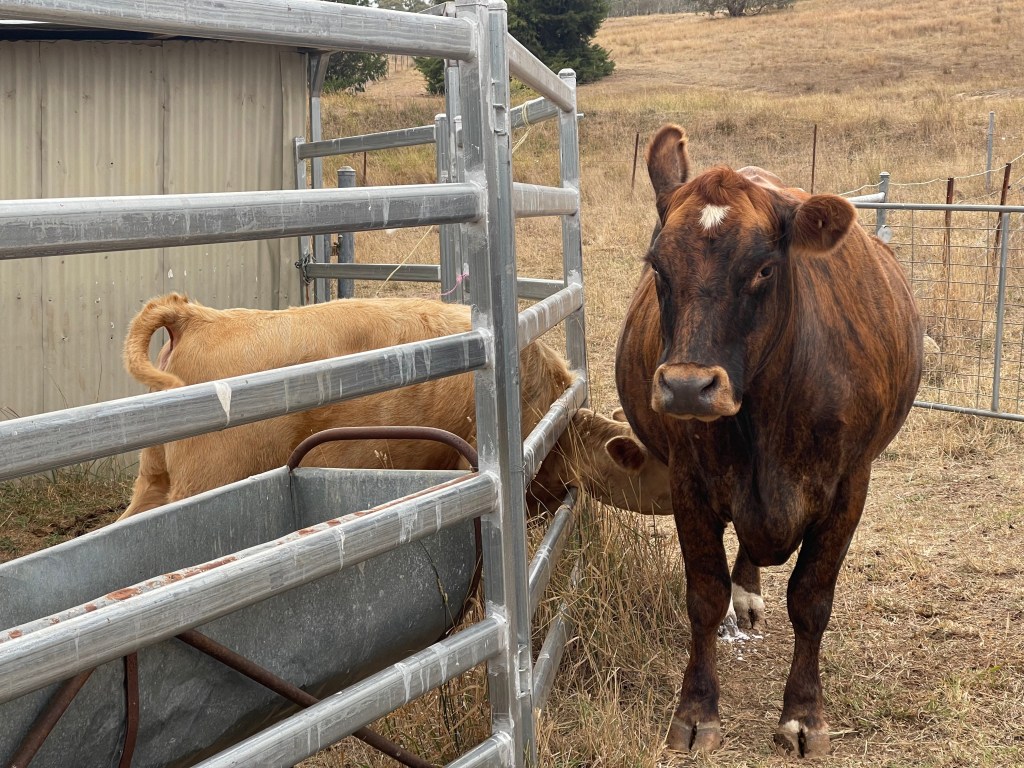
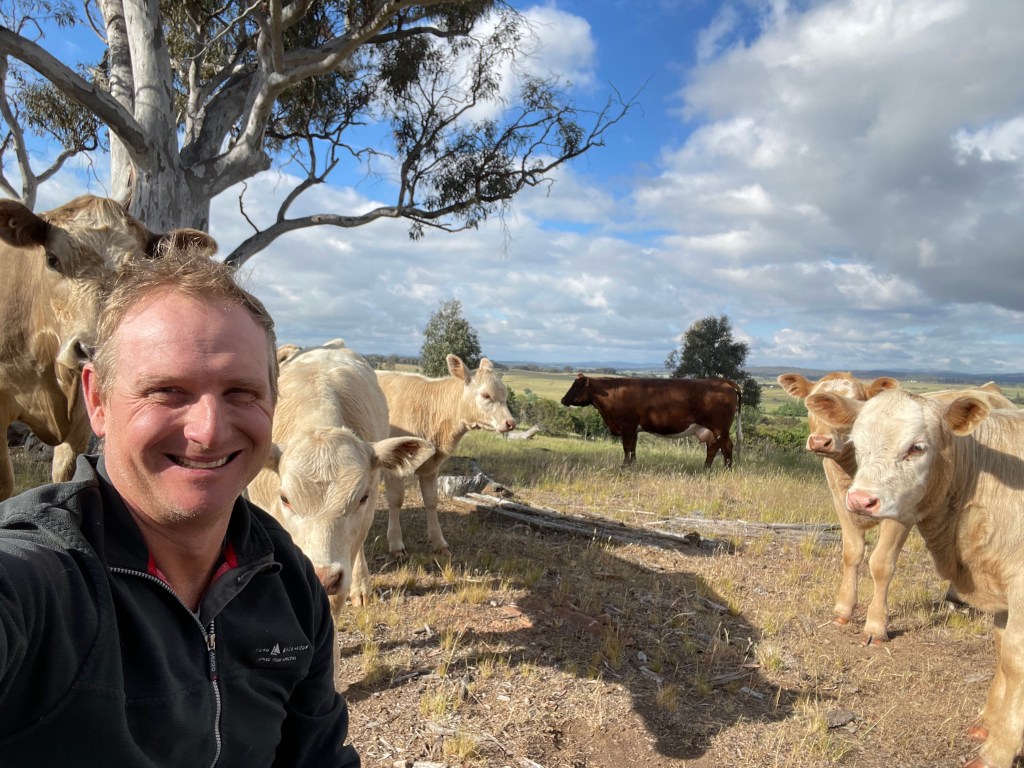
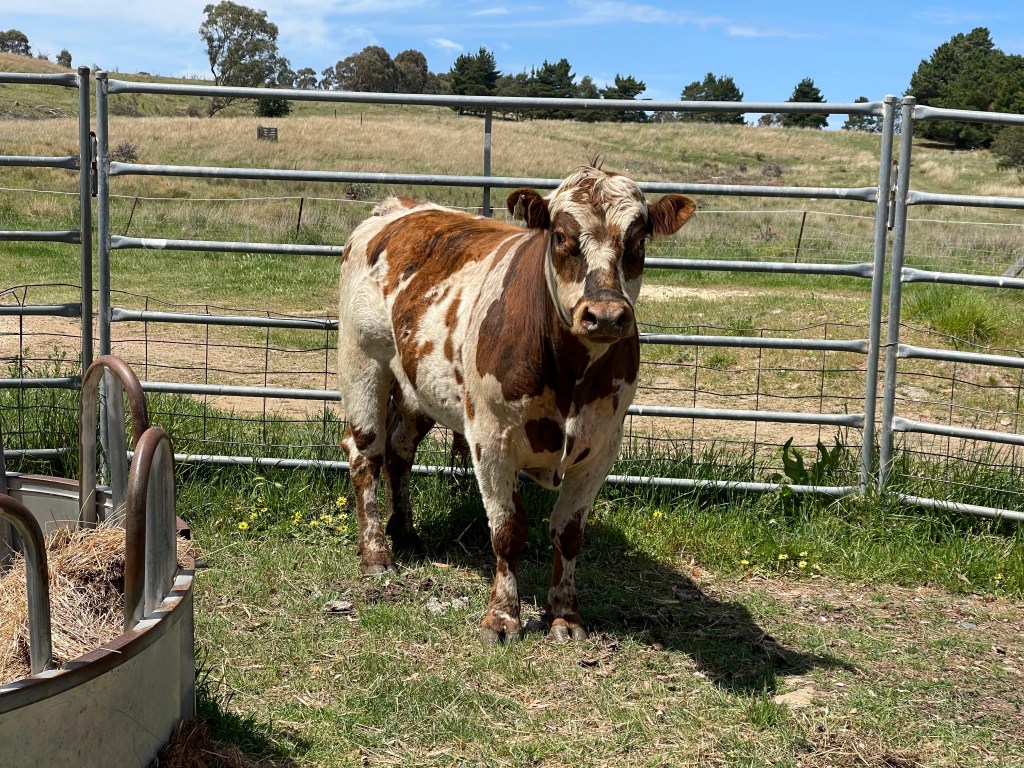
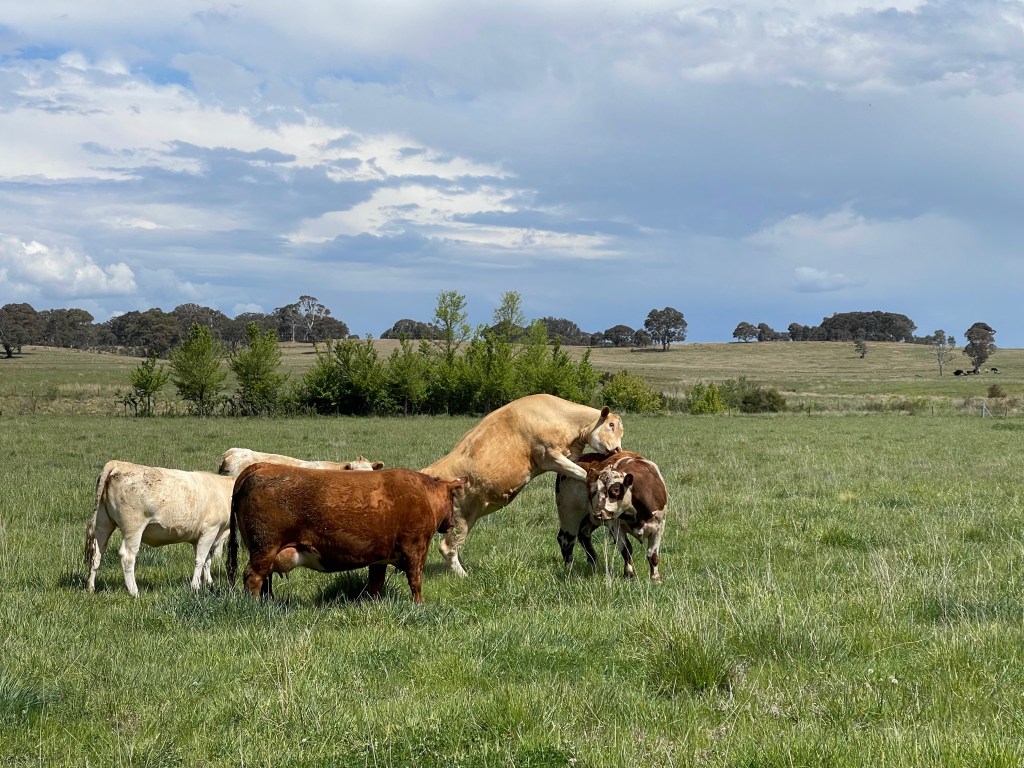
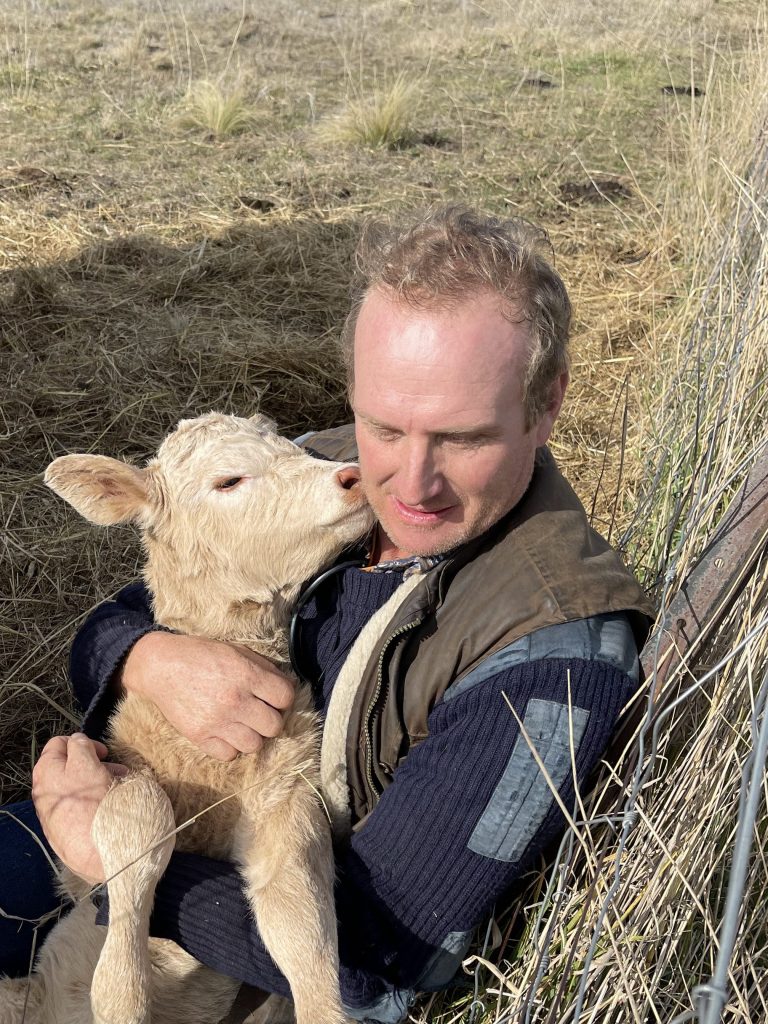
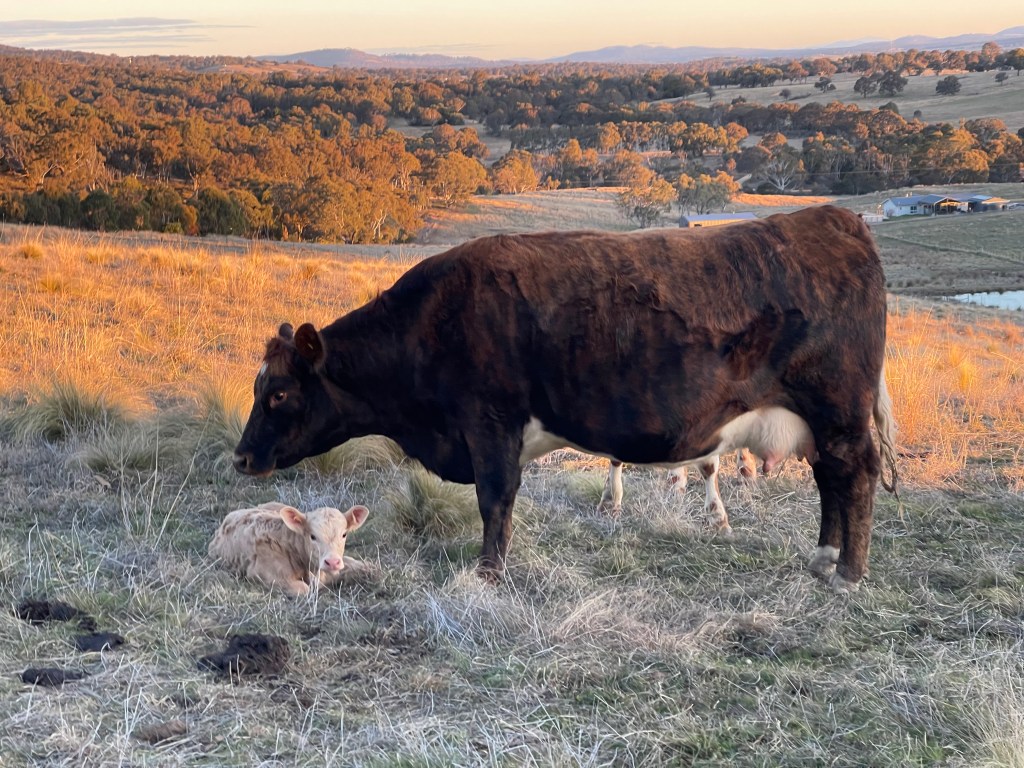
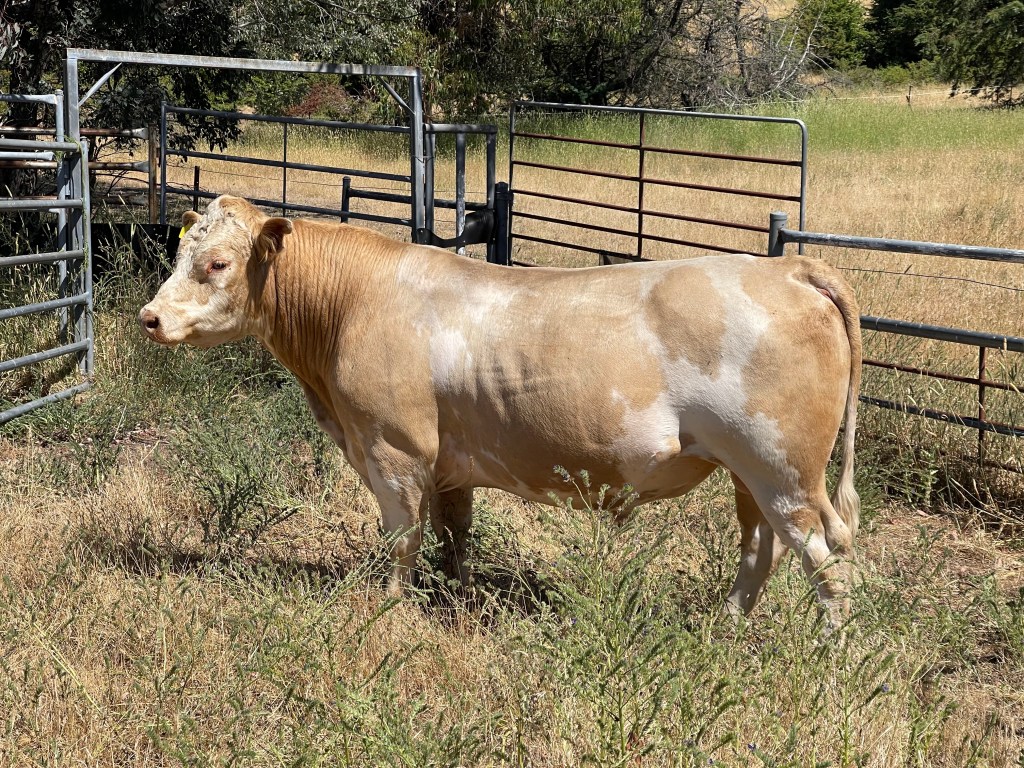
The bull has enjoyed his time on the Rock Farm. He bonded well with the girls, and even though it took him a little while to get used to the layout of the farm, he happily followed the cows through the gates. Watching him settle in has been a quiet pleasure, one of those small farm moments that mark the rhythm of the year.
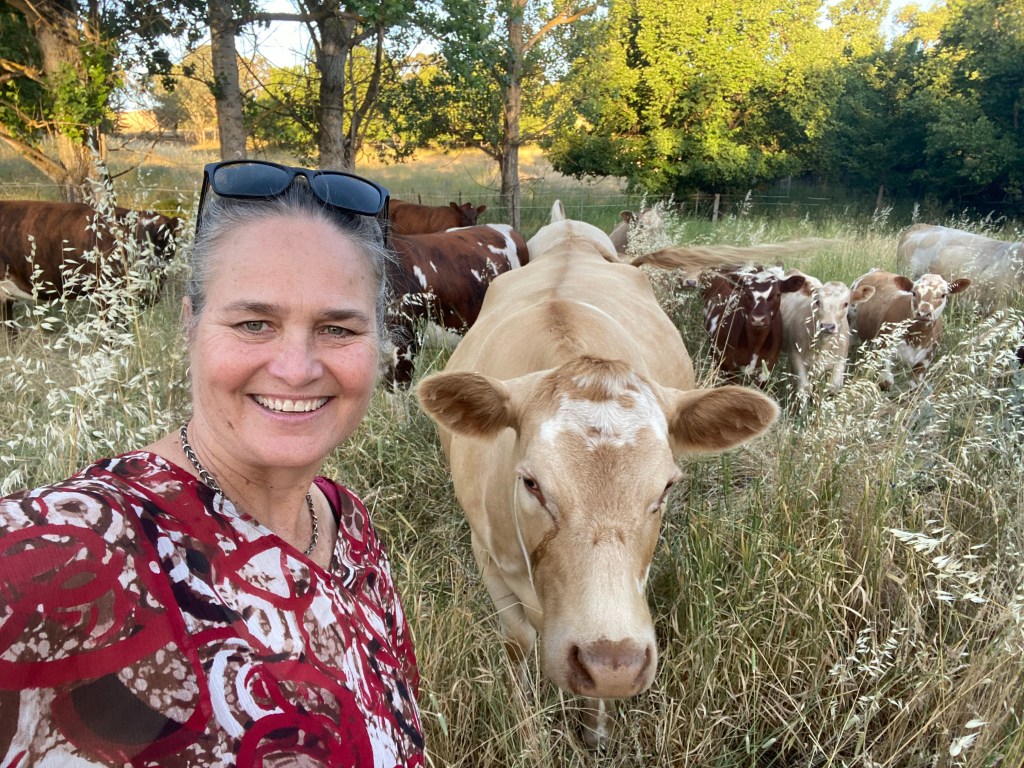
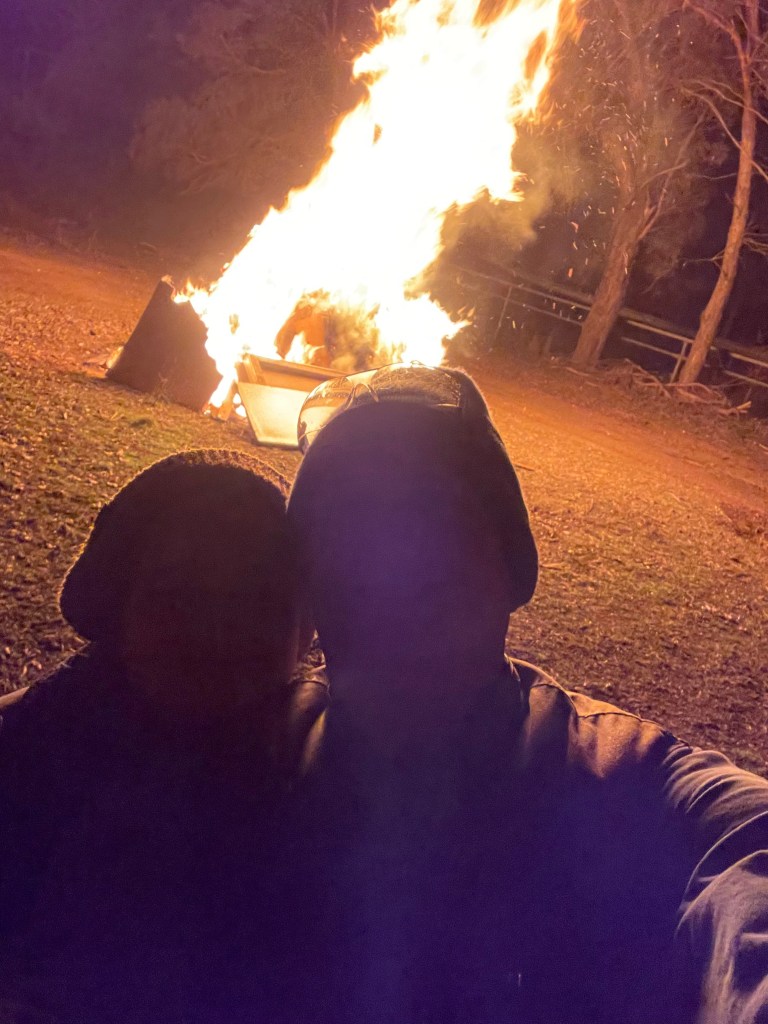
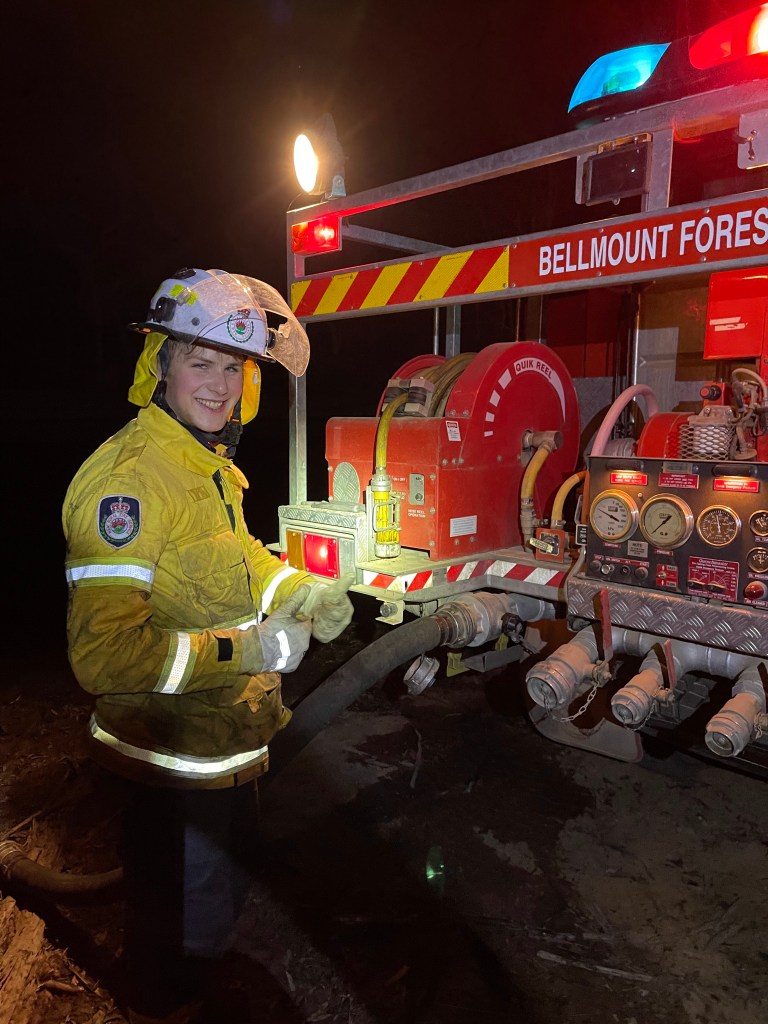
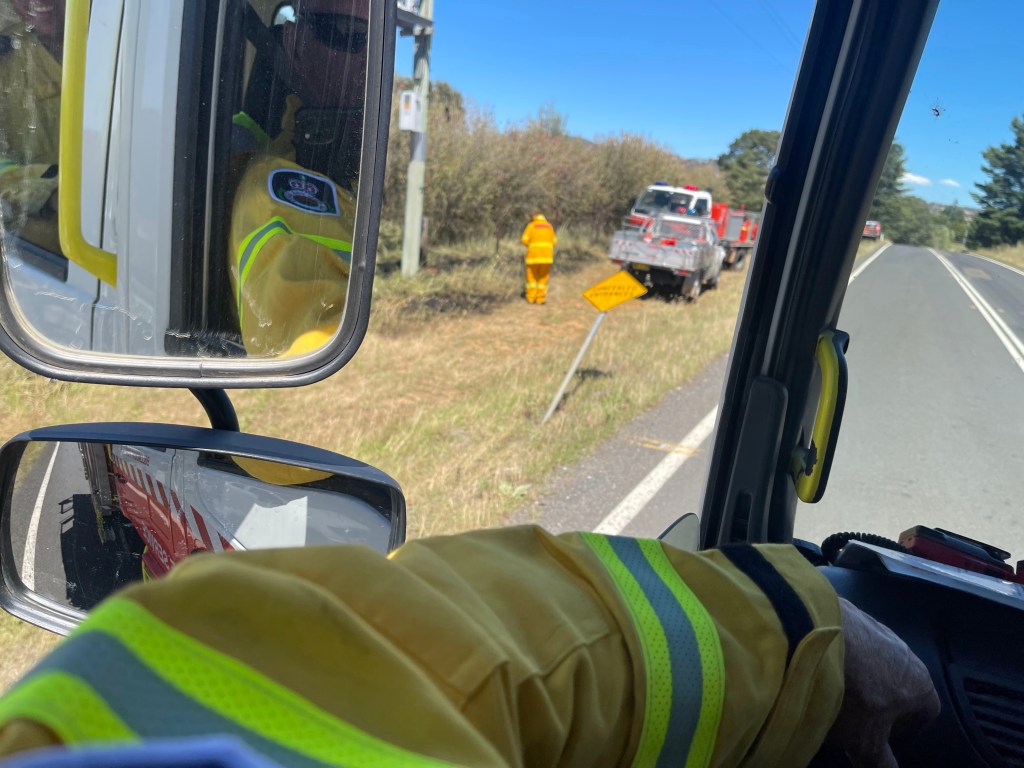
Our minds have now turned to summer preparedness. We’ve tested the fire pumps, refreshed ourselves with training at the RFS, and even attended our first fire of the season. It was a stark reminder that the landscape is shifting quickly. We’ll keep our fingers crossed, stay alert, and hope for a gentle summer. That balance between readiness and optimism is part of life out here, and it shapes our seasonal routines.
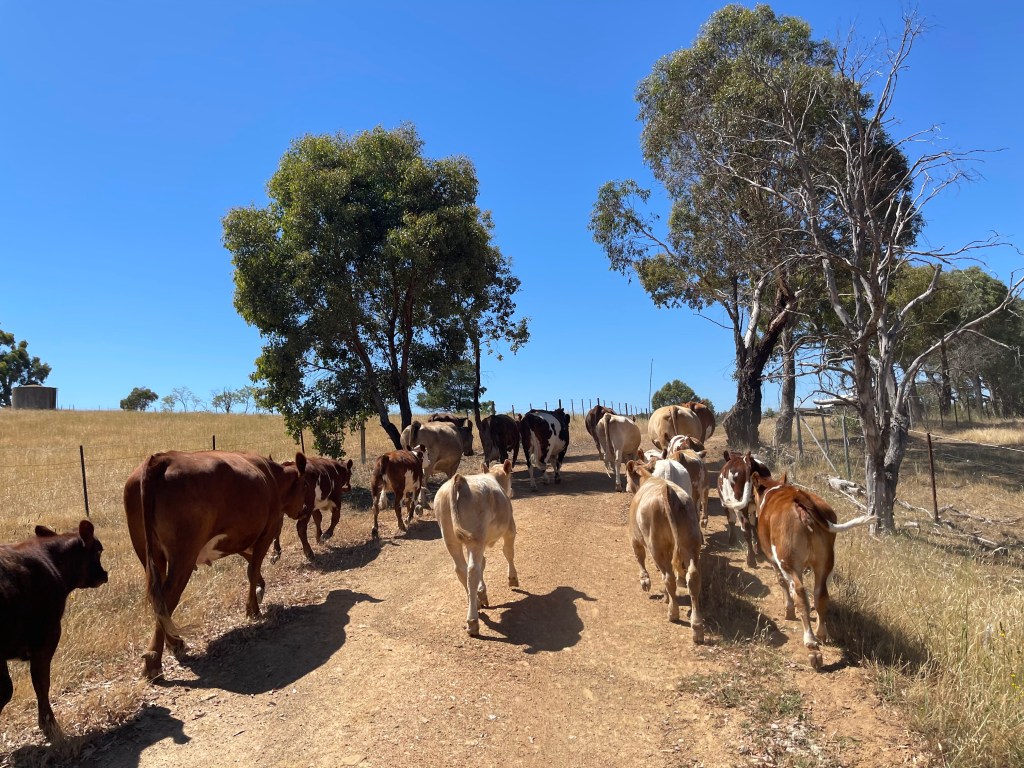
Some genuinely exciting news hit the cattle industry in NSW this week with the approval of virtual fencing technology. Described as a smart watch for cows, it uses GPS and audio cues to guide stock without the need for physical fences. For producers, it opens the door to new grazing strategies, improved pasture management, and far more flexibility in how we move animals across the landscape. It’s early days, but the potential is enormous, and it’s encouraging to see innovation that supports both animal welfare and land stewardship. More details can be found here: https://www.abc.net.au/news/2025-12-14/virtual-fencing-legalised-nsw/106128536

We will be looking at purchasing a virtual fencing system in the new year. Whilst our place has lots of small paddocks, this will allow us to managing our grazing more precisely, establish more trees without the need to construct expensive tree guards, and more effectively manage severe weather events such as flash flooding.

Summer may be settling in, but there’s always something new to learn, something to prepare for, and something to look forward to on the Rock Farm. As we wrap up another busy year on the Rock Farm, we’re grateful for the small wins, the lessons learned, and the steady rhythm of life on the land. From our family to yours, we wish you a peaceful Christmas and a safe, gentle start to the New Year. May the season bring good rain, good company, and plenty of reasons to smile.
Spring on the Rock Farm: A Seasonal Transformation

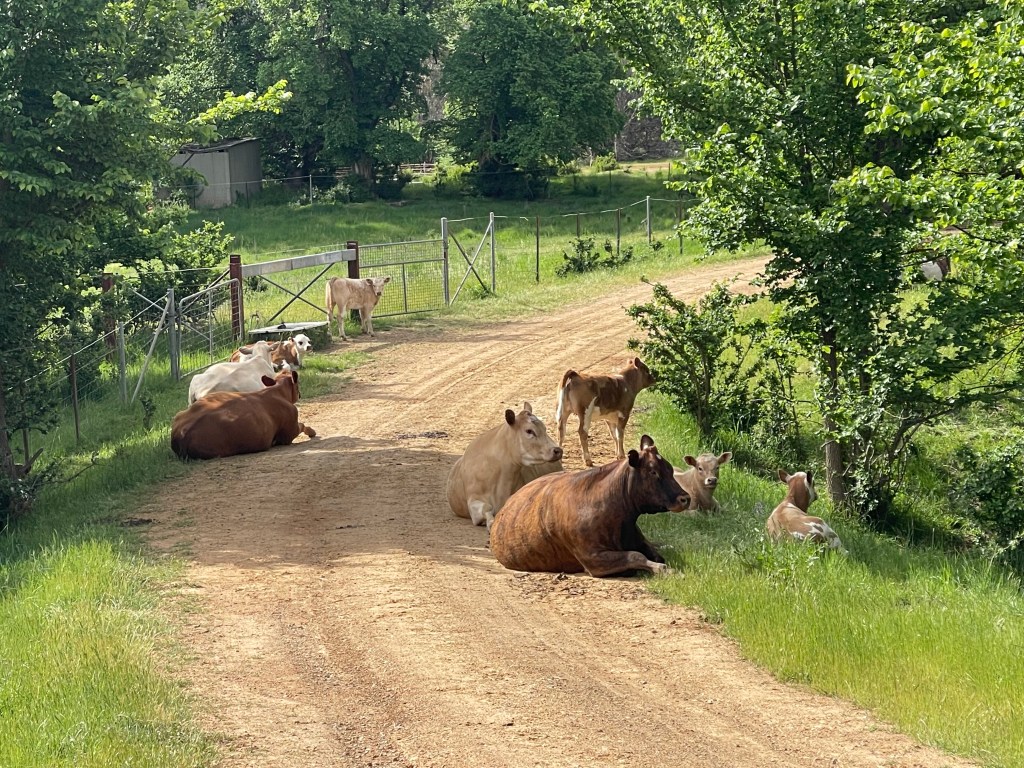
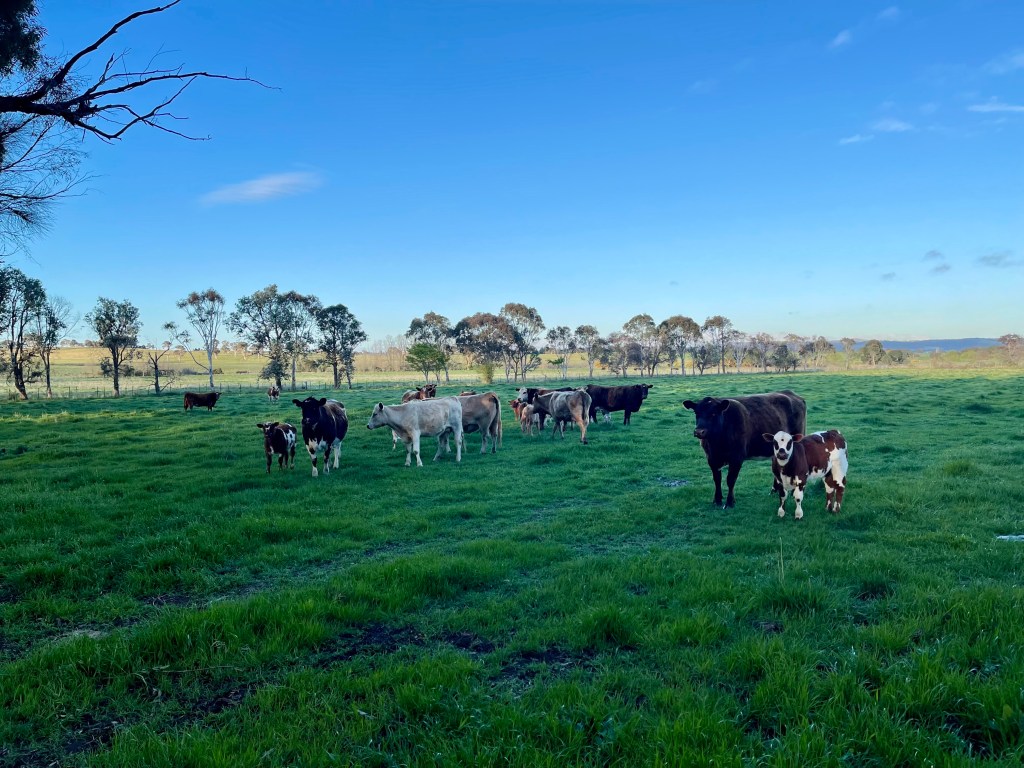
After a long, bitter winter of feeding out cattle daily, the growing season is finally upon us. Spared the ferocious storms that battered regions further north, we’ve been blessed with regular light showers and glorious sunny days. These have transformed the Rock Farm into a lush green paradise. The paddocks are thriving, and the cattle are loving it.

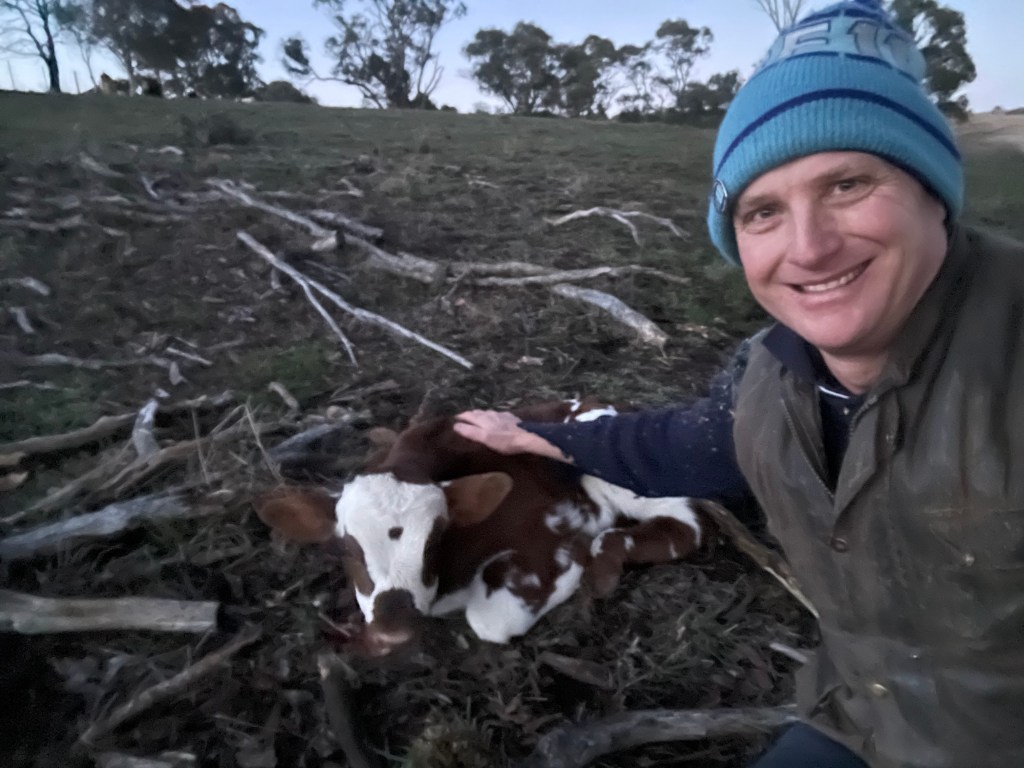
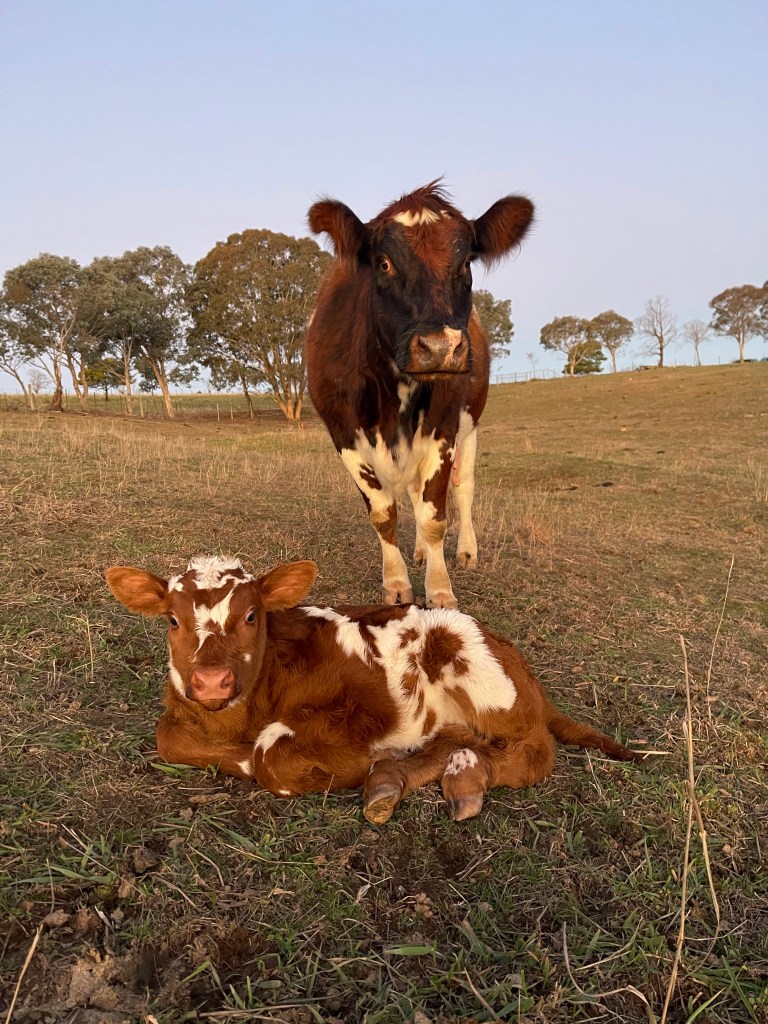
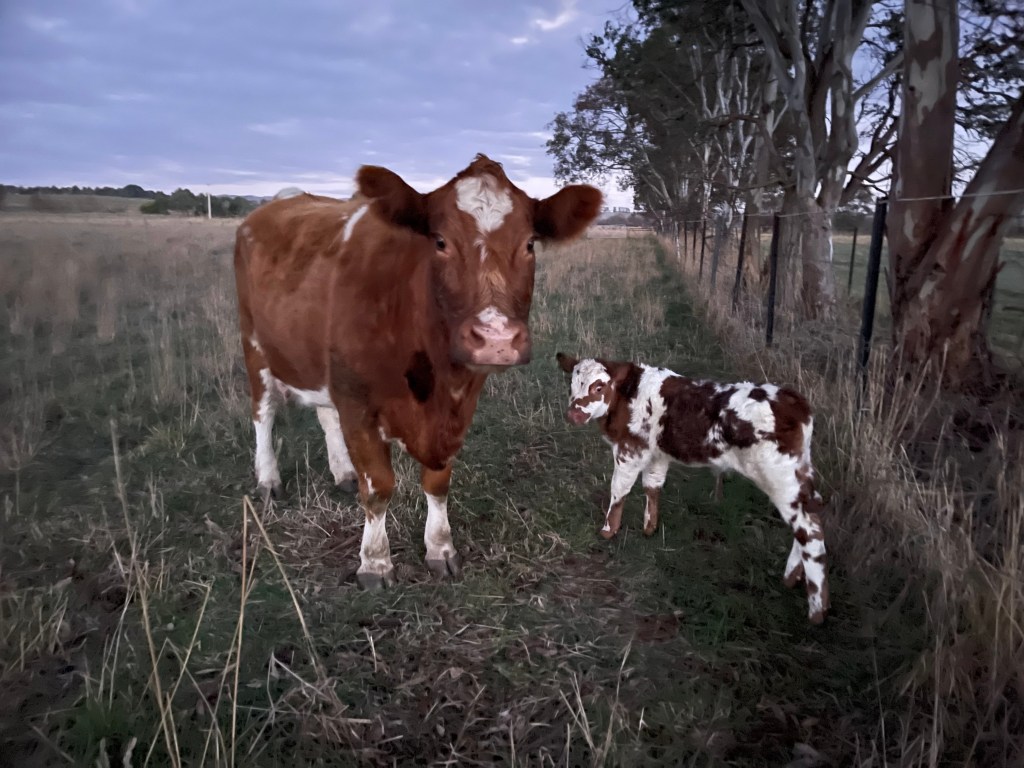
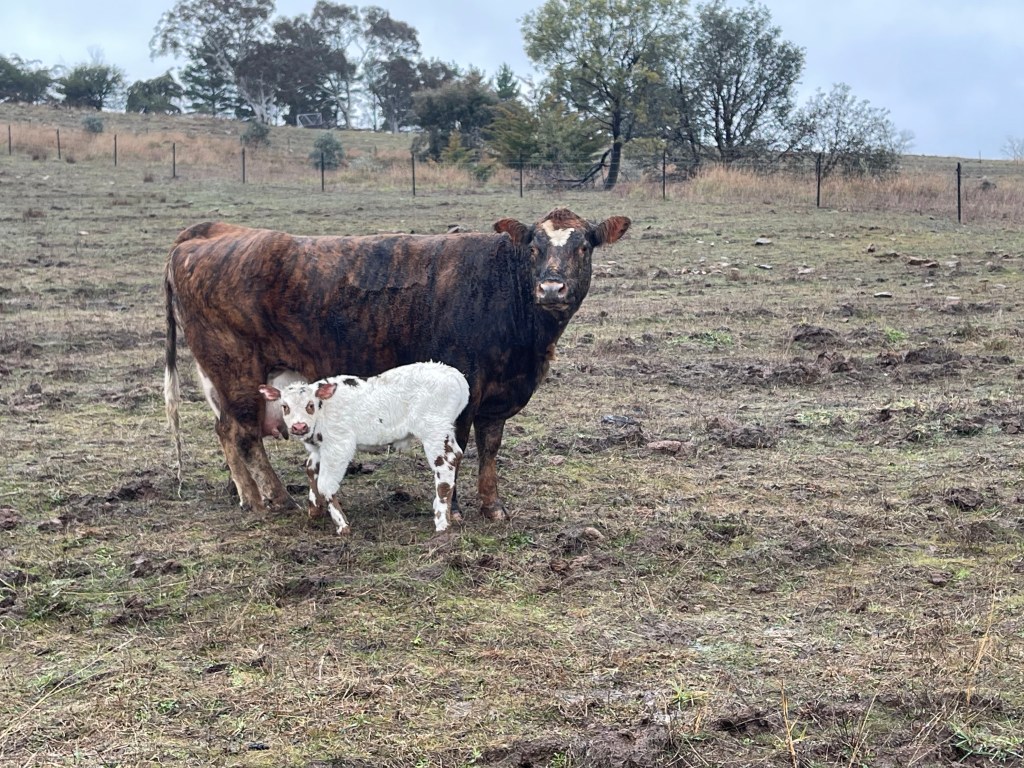
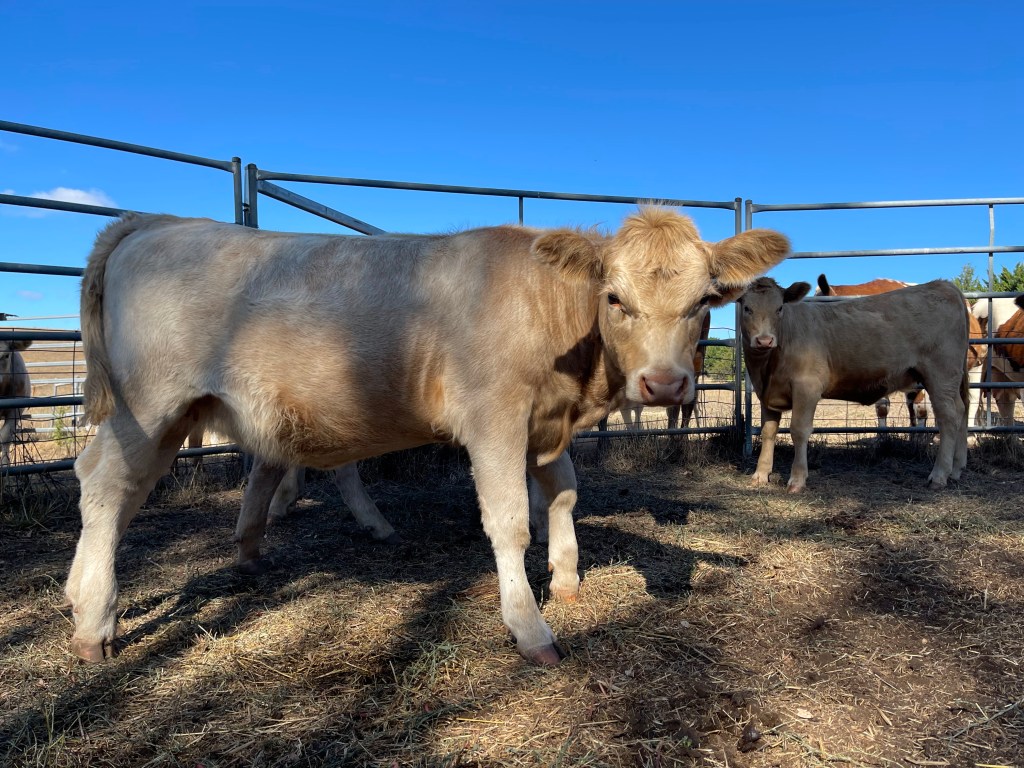
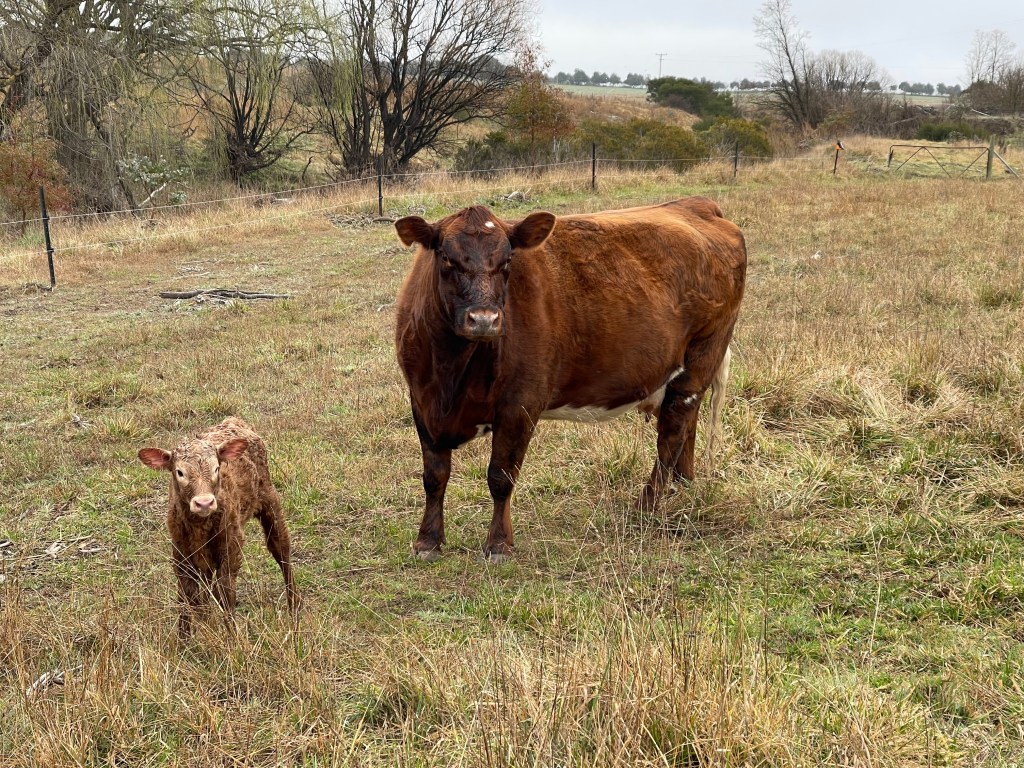
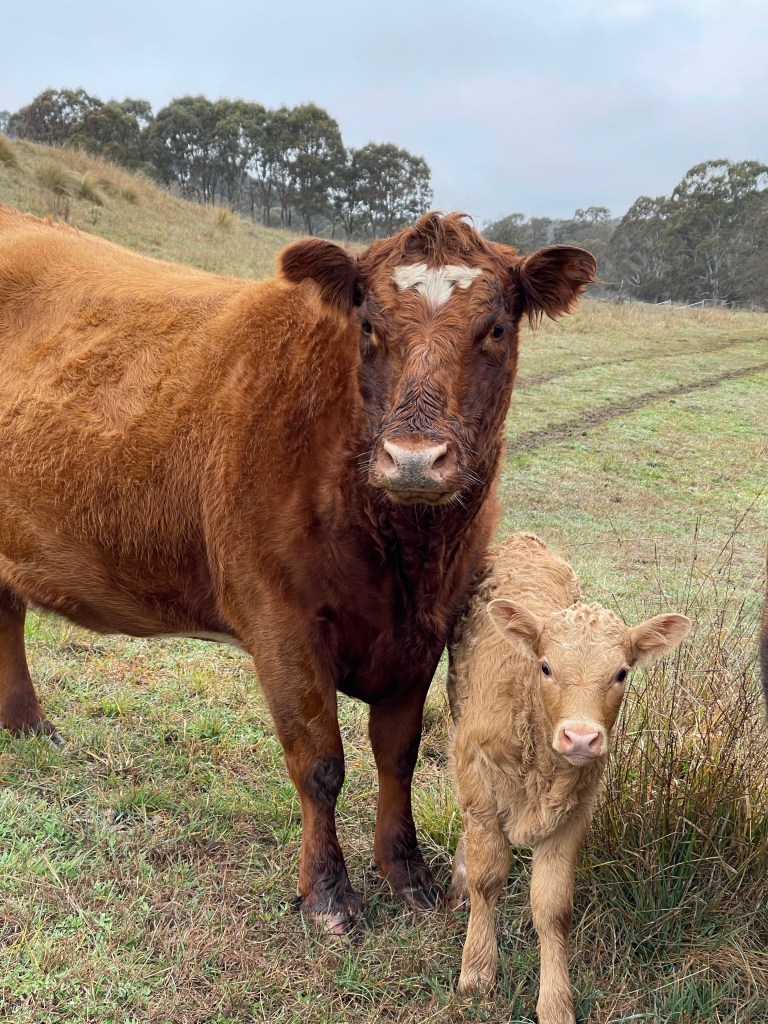
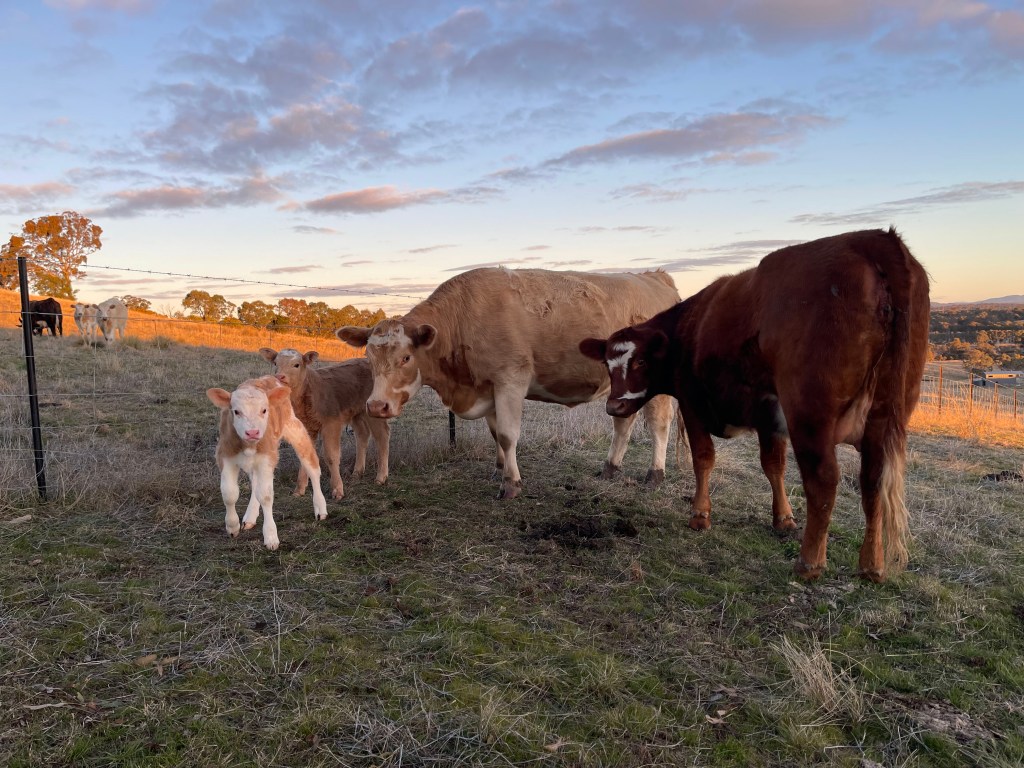
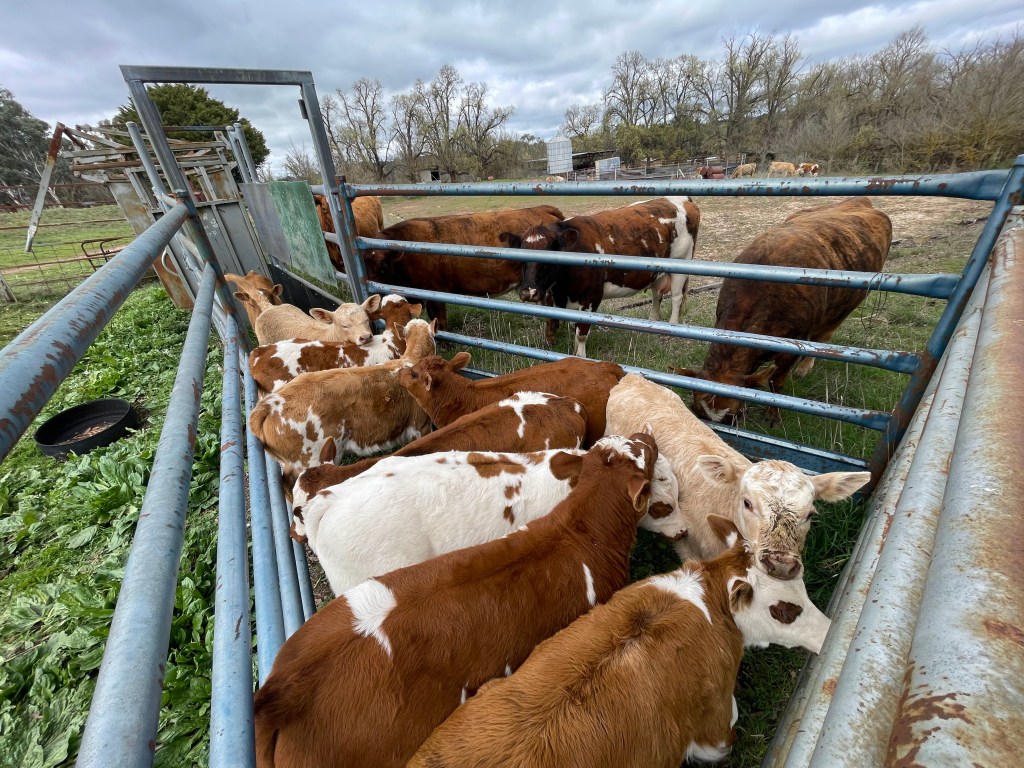
Our calves are growing quickly—ten in total this year. With their attentive mothers looking on, marking and vaccinating was swiftly attended to. We had an even split: five bull calves (now steers) and five heifers.

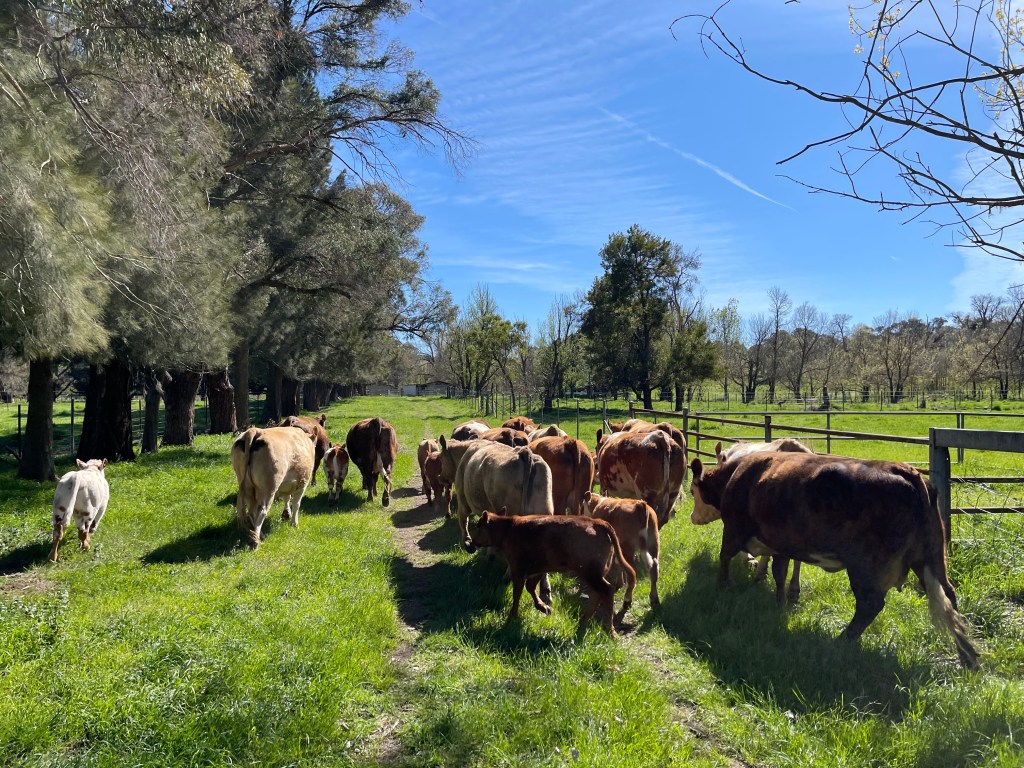
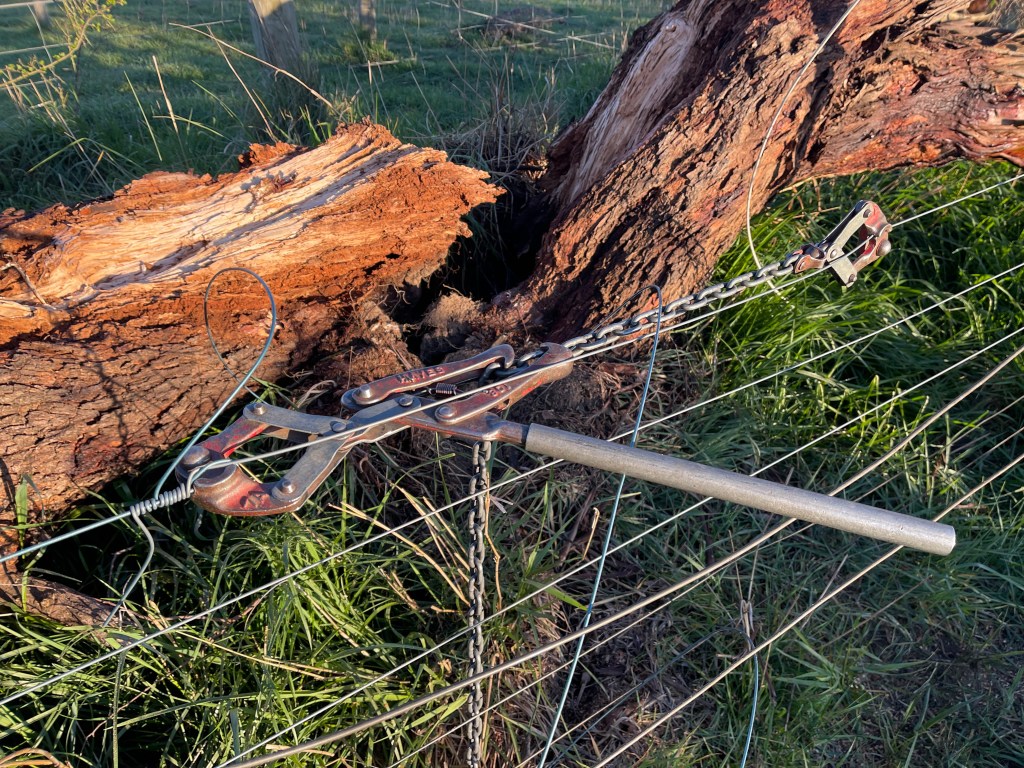
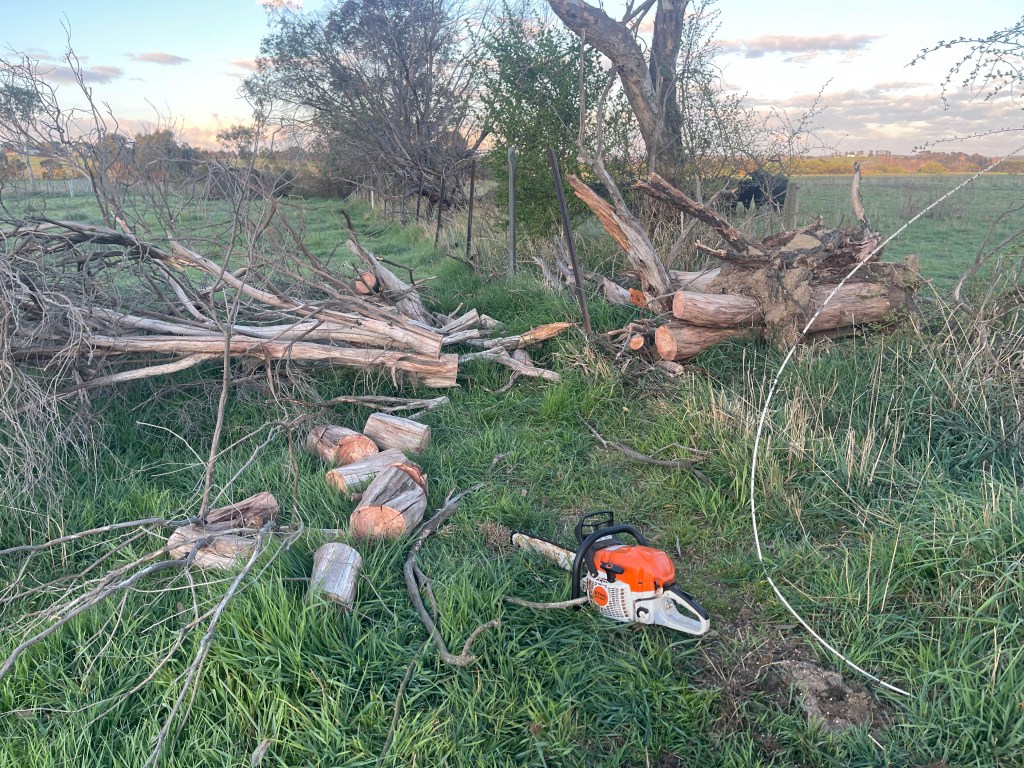
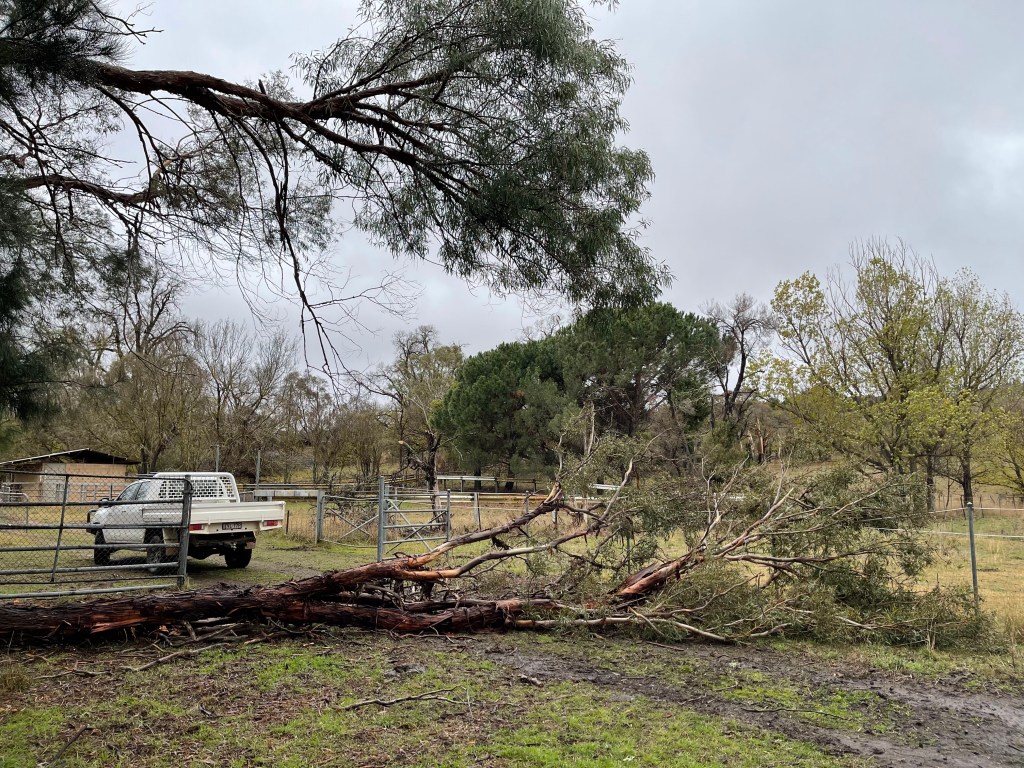
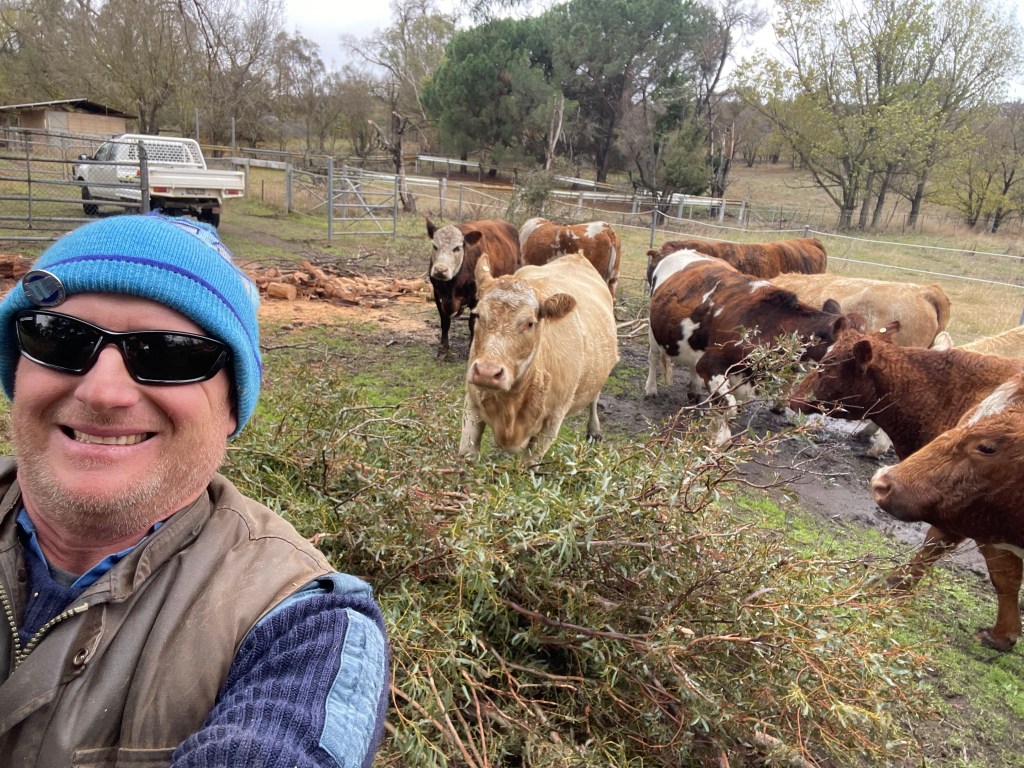
General maintenance on the Rock Farm has slipped a little this year. Our weekends are focused on renovating the house and catching up with the kids, friends, and each other. I still move the cattle frequently to fresh paddocks, which is usually a simple morning task. Occasionally, urgent jobs crop up—like when a tree falls on a fence and I’m out early to make it stock-proof again.

We have a saying on the Rock Farm: “There are jobs that have to be done now, and there are jobs that can wait.”

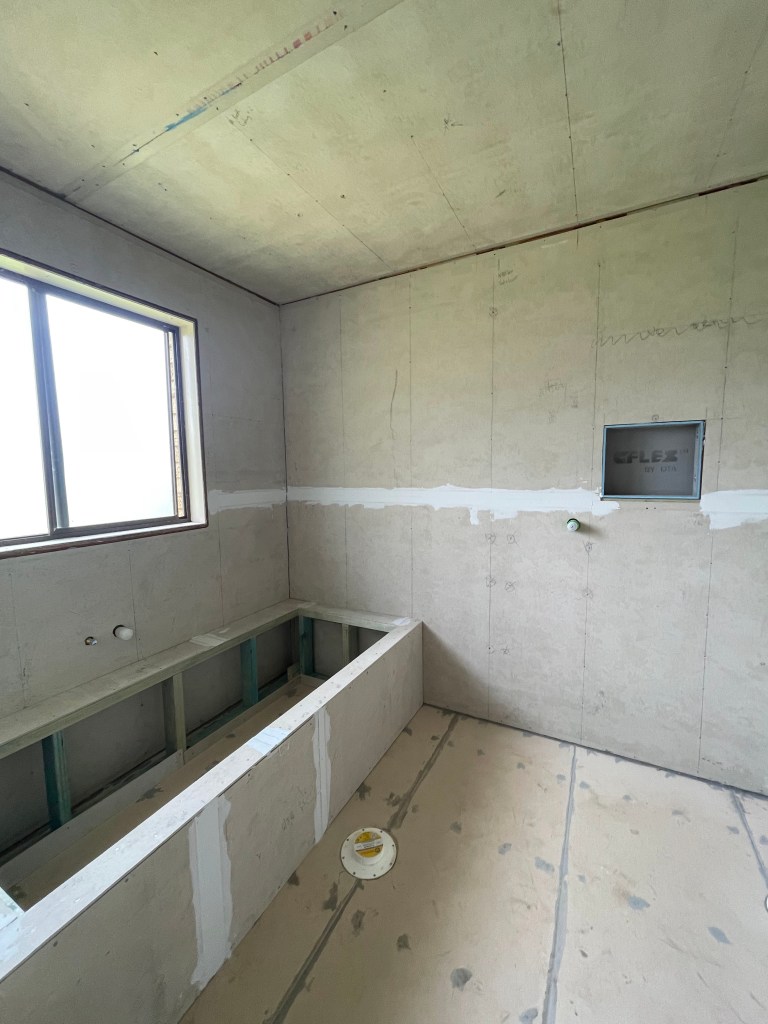
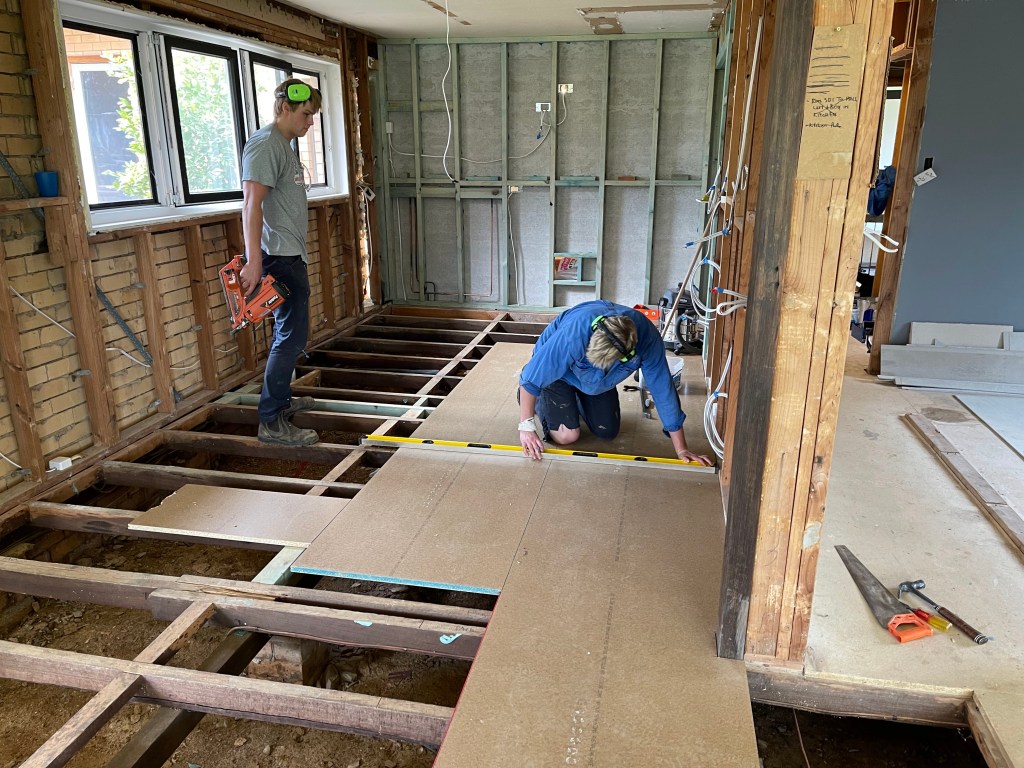
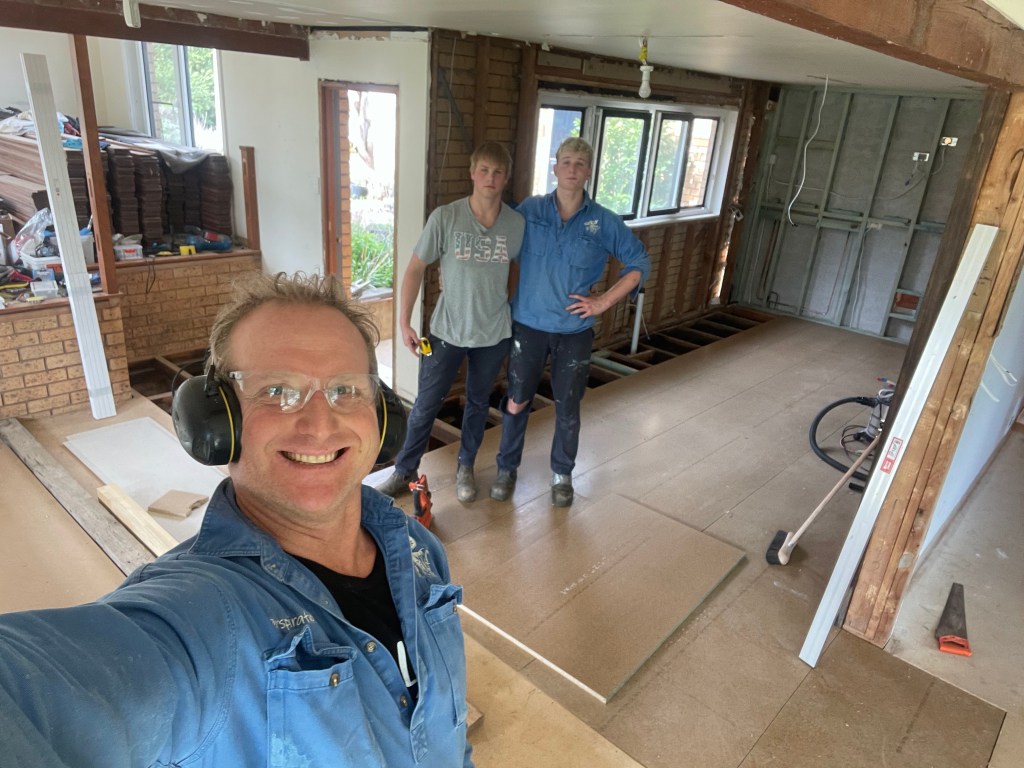
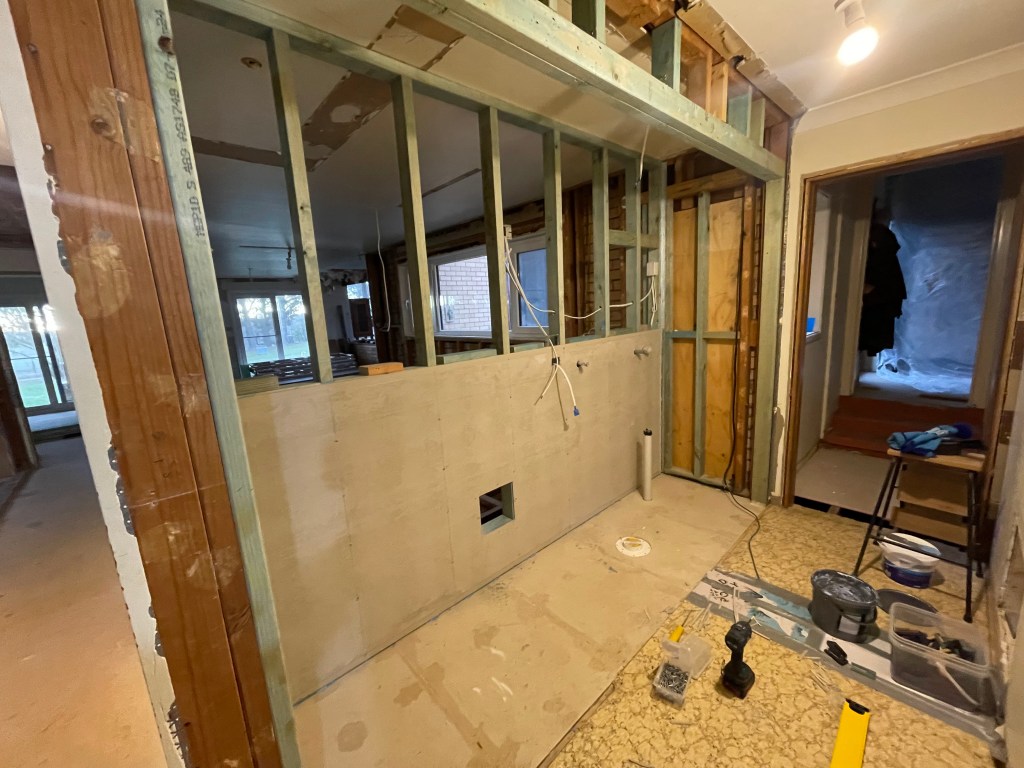
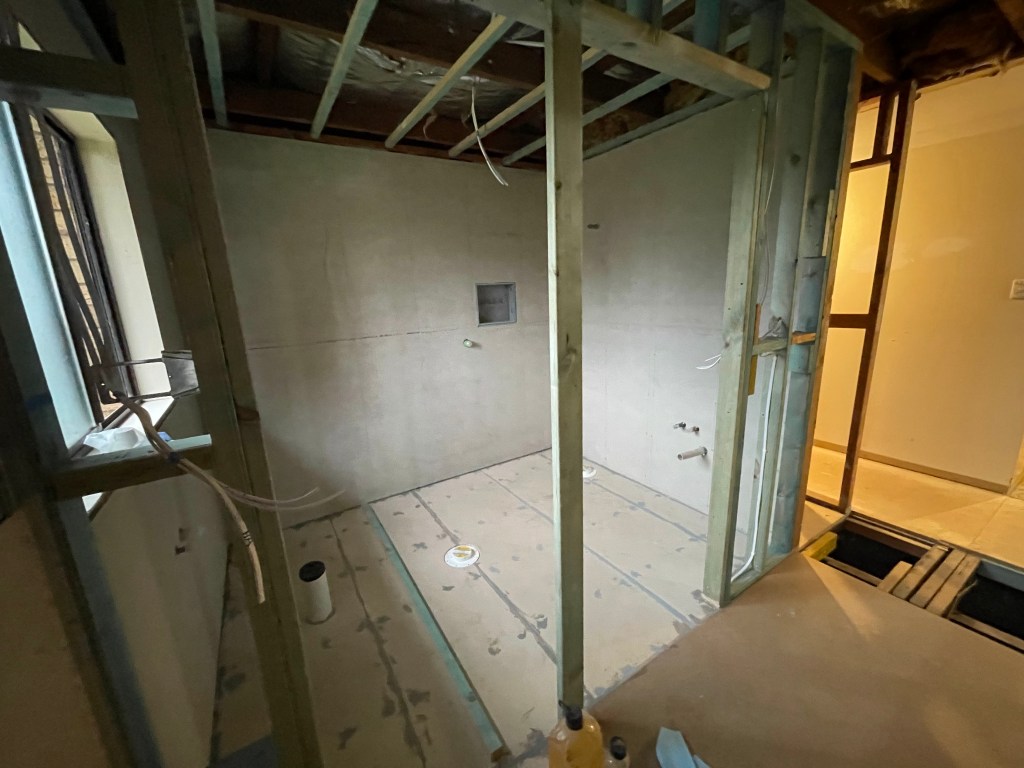
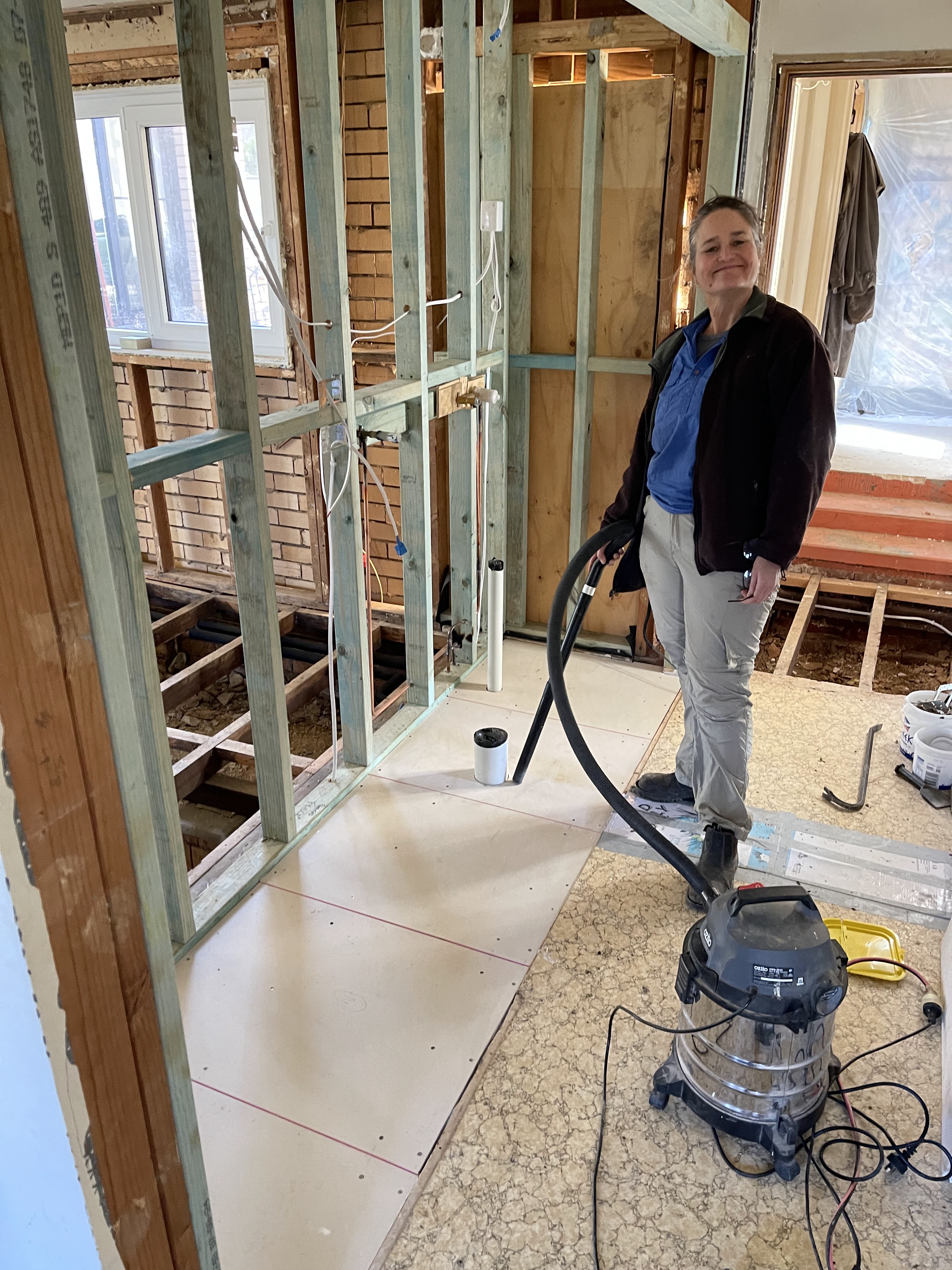
The house renovation continues, albeit slower than the project manager would prefer. I gratefully accept help from the lads when their play money runs low. Progress comes in fits and spurts. Thanks to their efforts, we now have a sub-floor in most of the house. The bathrooms just need the villa-board set and cornice installed before tiling can commence—hopefully before Christmas.

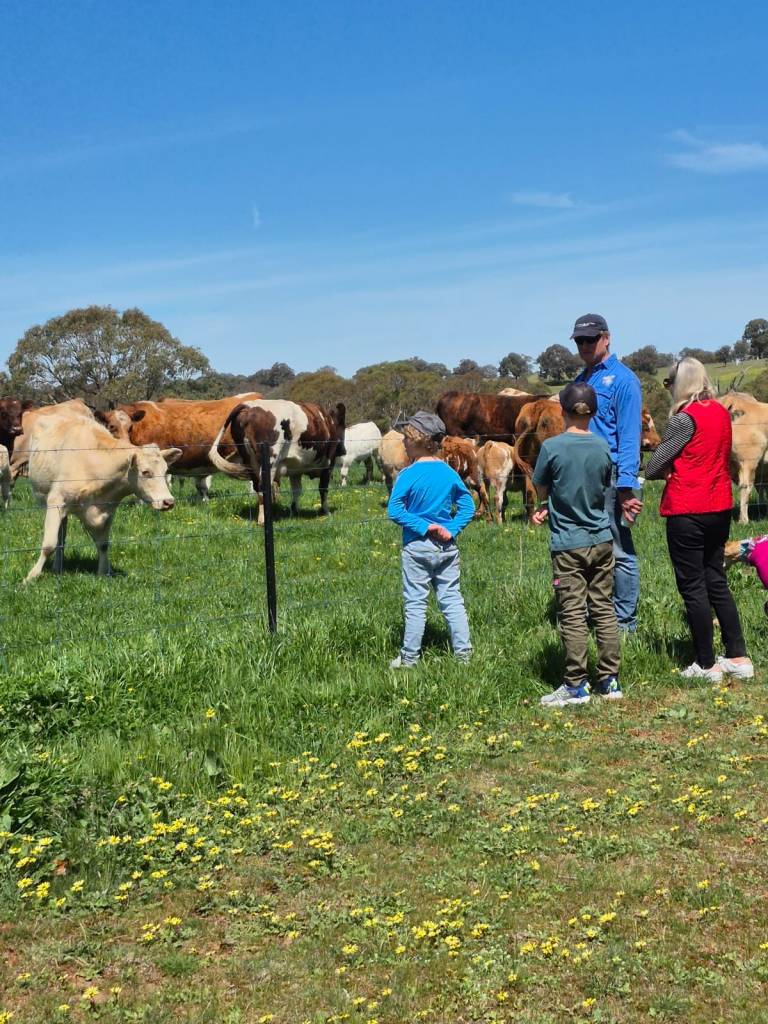
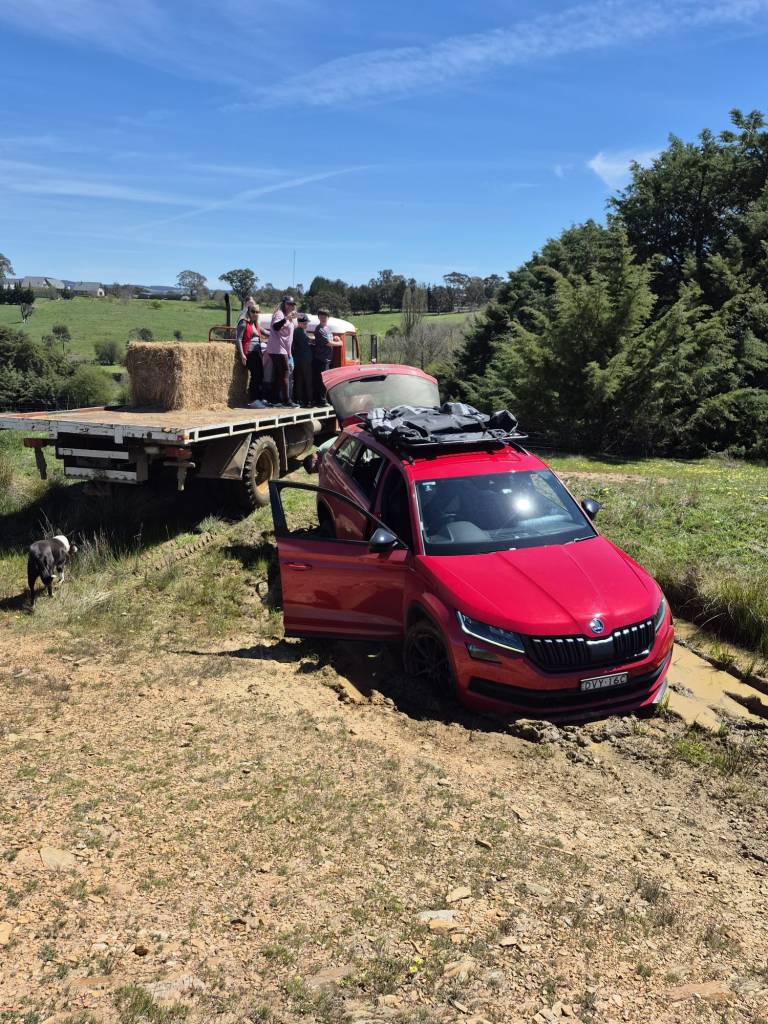
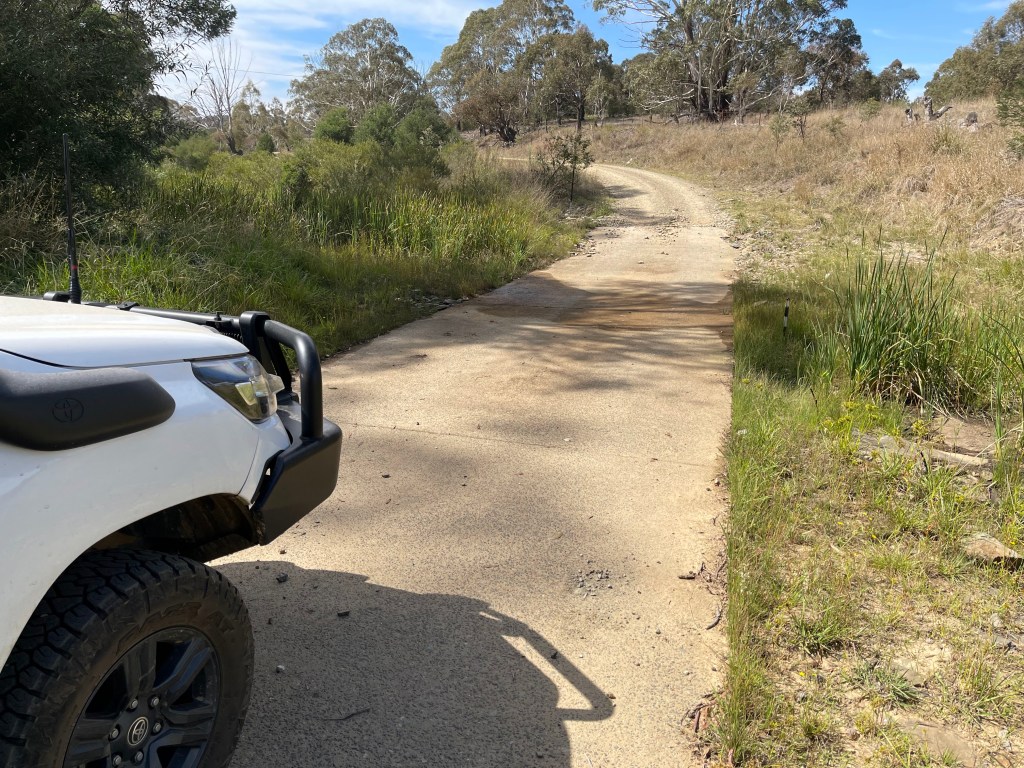
But it’s the moments in between that make the Rock Farm truly special. We had a ball hosting my city cousin Kath and her family. Dave was a great sport—he managed to get his car stuck on one of the tracks, which caused great mirth among the kids. It reminded me how precious family time is, and how important it is to share farm experiences with children. Not just for the fresh air, but for the smells, sounds, and rhythm of country life.

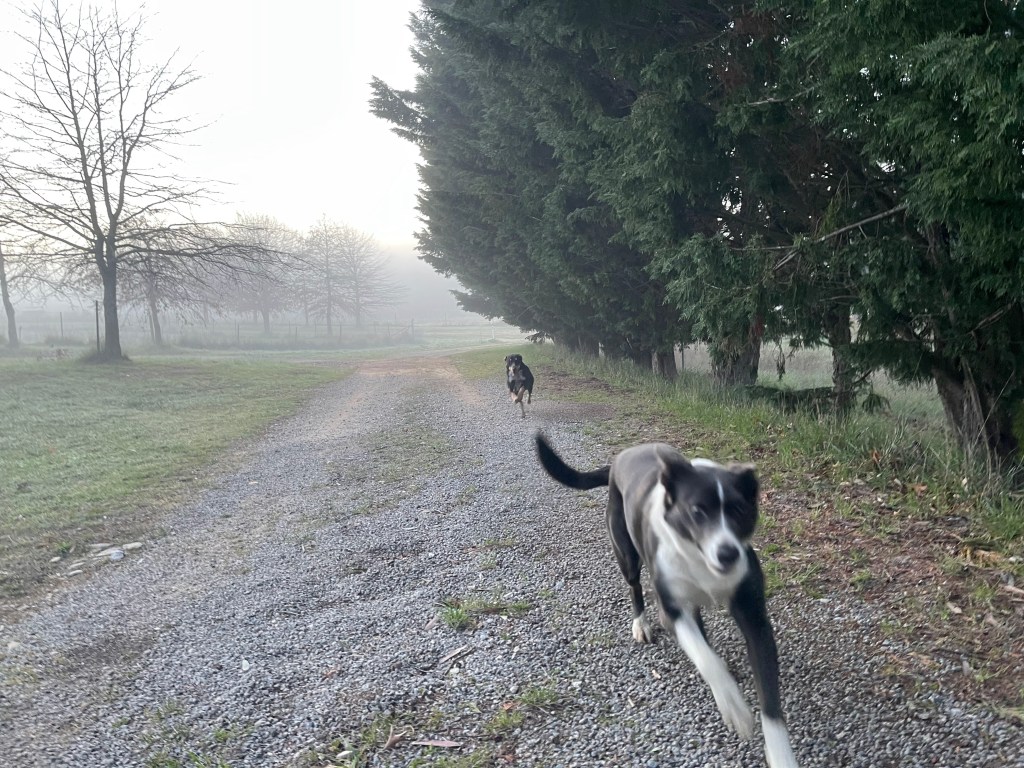
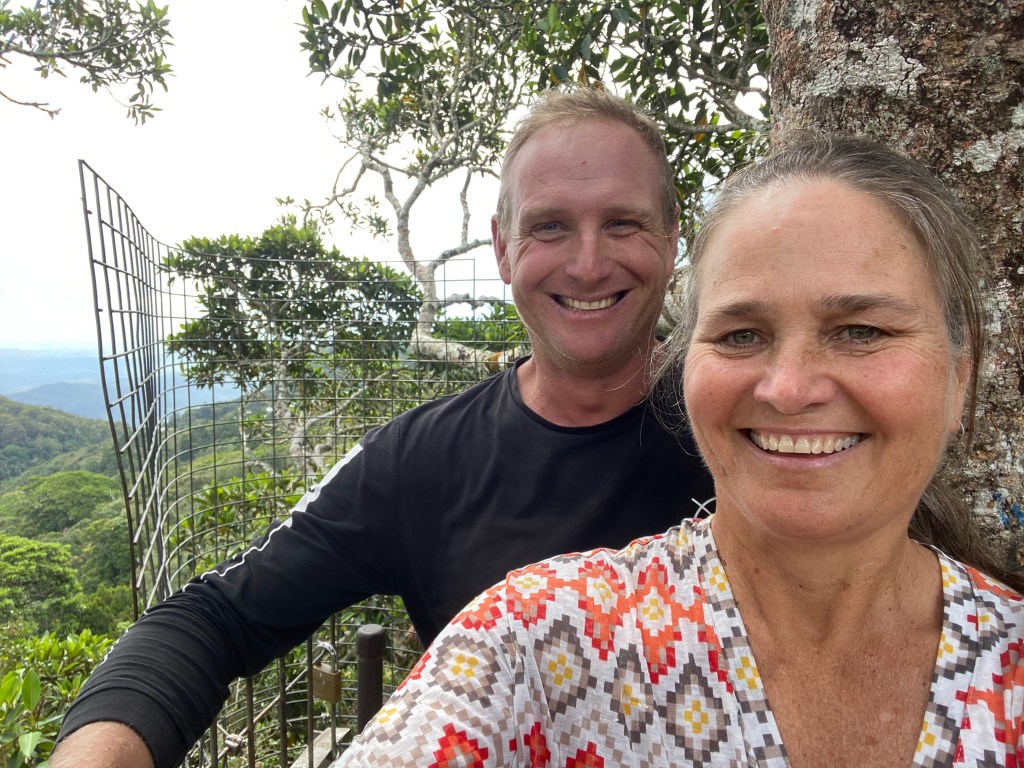
Through winter and into spring, I was working regular weekday hours—a big change for us. The routine was handy when we were feeding every morning. As the season shifted, so did our mornings—Jo and I now take peaceful sunrise walks around the farm. I’ll miss these early starts when I return to shift work in late October… though probably not as much as Sapphire, who relishes the chance for an early morning run!

Spring also means it’s time to lease a bull again. This handsome fellow came down from Crookwell and wasted no time getting to know his new herd. He’s settled in quickly and seems quiet—which, as far as I’m concerned, is the most important trait for any animal weighing over 600kg!

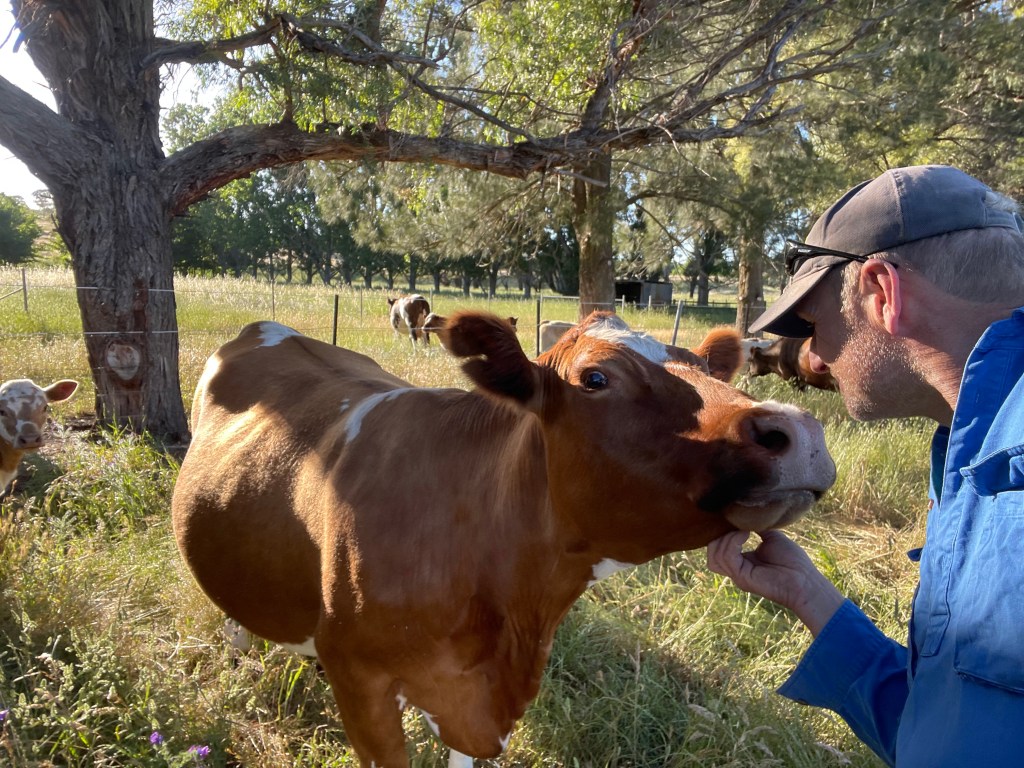
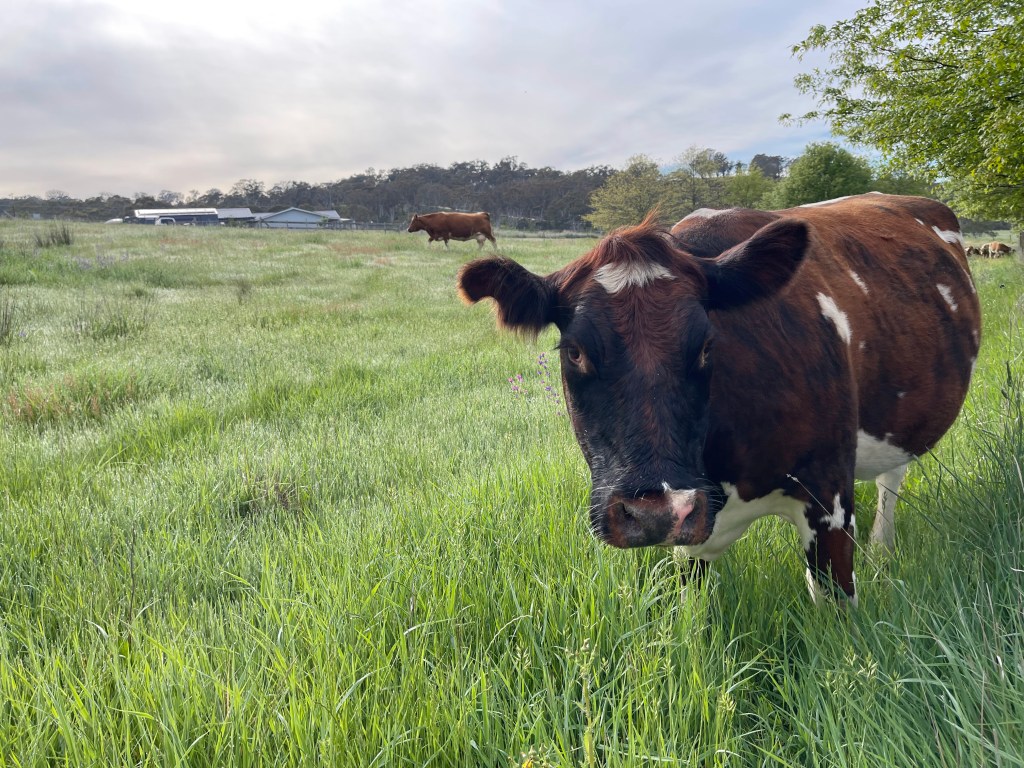
It’s a wonderful time to wander around the farm. The cows are content, with grass reaching to their bellies. The changing of the seasons brings constant delight—and makes me so happy to call this place home.

Green Shoots and New Calves on the Rock Farm

August – usually cold, wet, and miserable – was just cold this year. While the eastern seaboard has been drenched with record-breaking rain, we’ve stayed stubbornly dry. That is, until yesterday, when we were blessed with 20mm of much-needed rain. The paddocks have turned green almost overnight and are poised to really respond once the weather warms up.

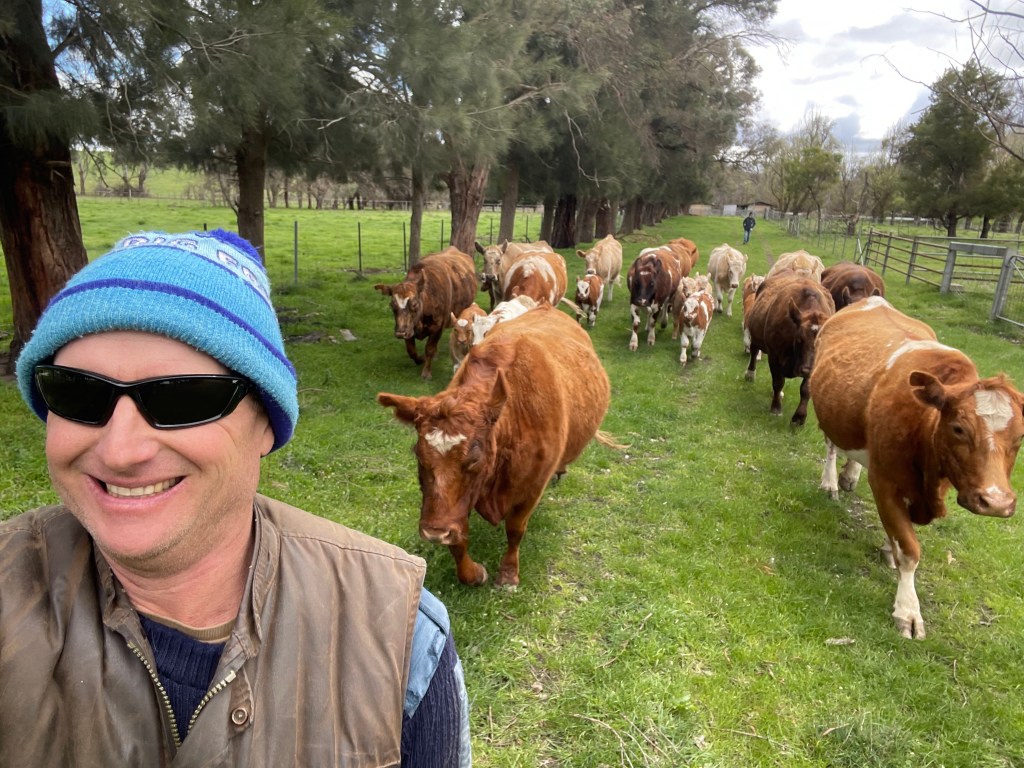
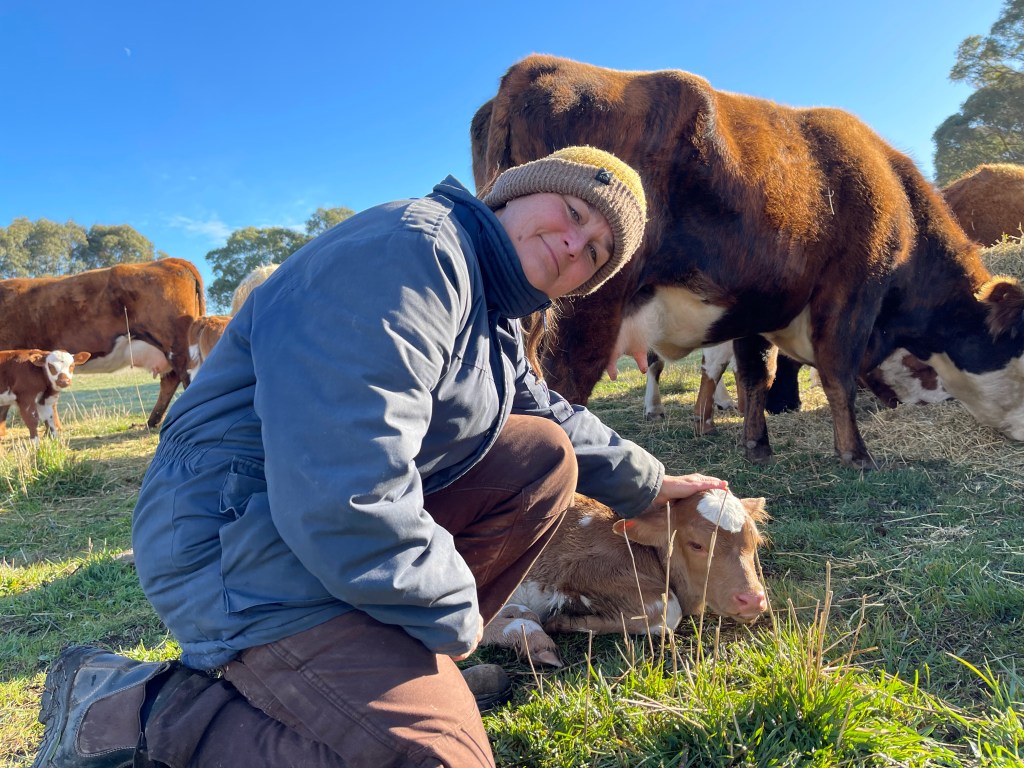
Feeding the cattle each morning has become one of our favourite routines – especially for Sapphire. It’s also given us the chance to welcome our new calves to the Rock Farm. More than once, we’ve found ourselves running late for work because we didn’t want to drag ourselves away.

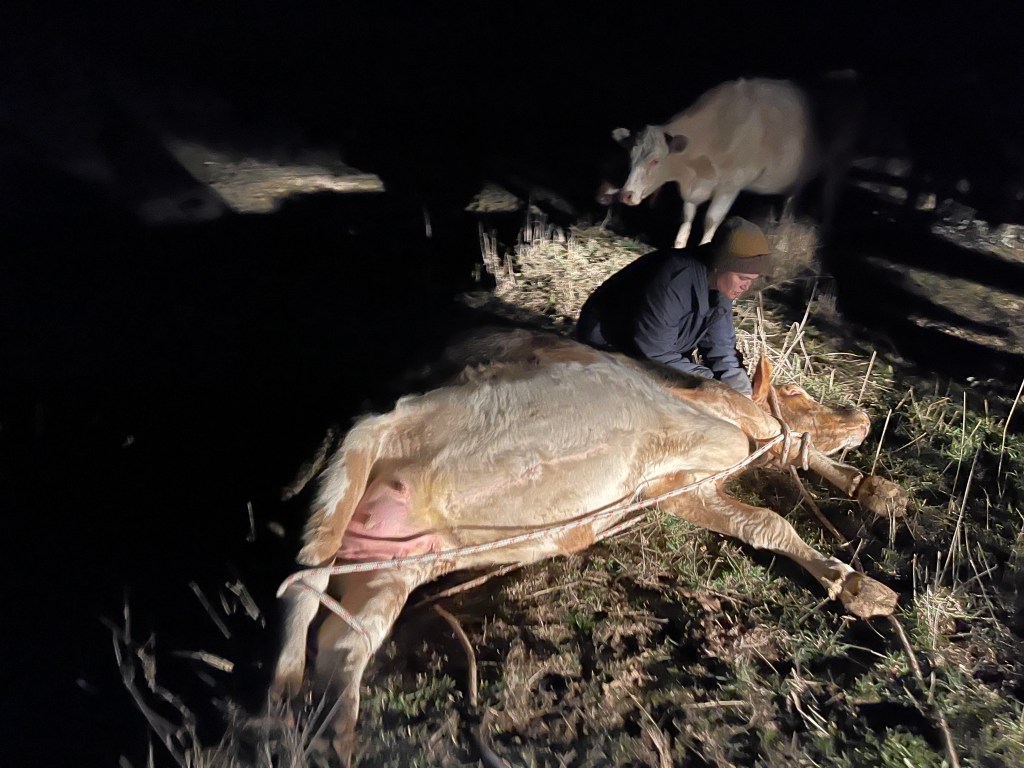
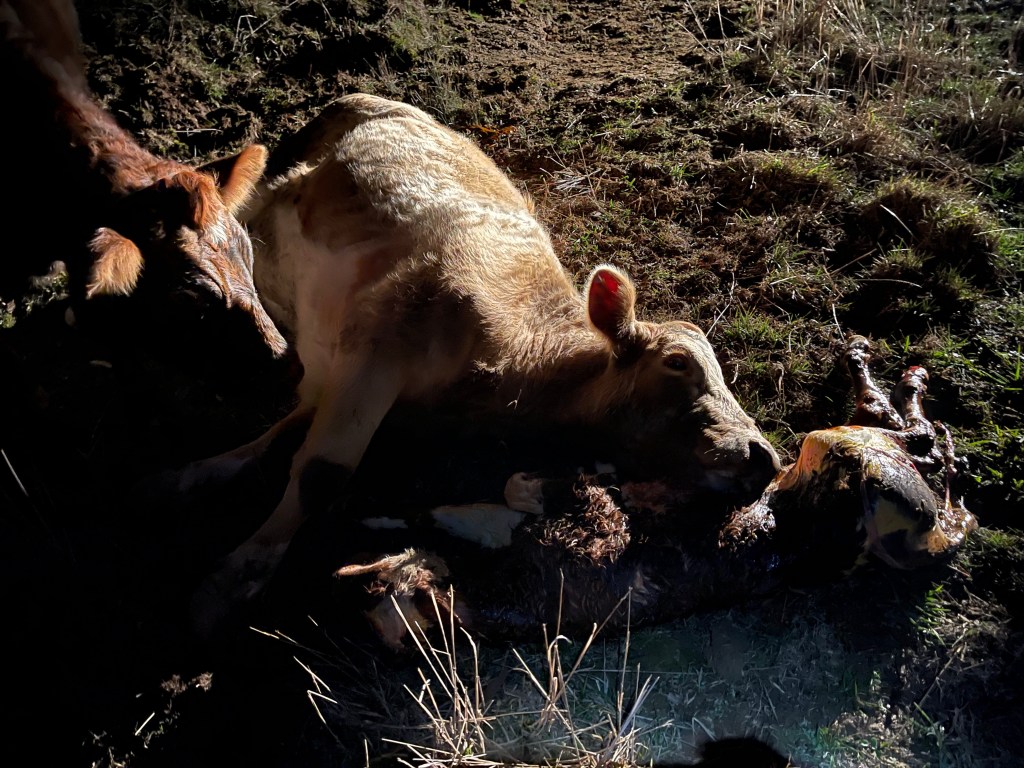
Of course, it hasn’t all been smooth sailing. Checking the herd twice a day still leaves long stretches where things can go wrong. Sadly, for Dozer (Daughter of Zoe), we came home from work on Friday afternoon to find her exhausted and struggling with her first calf. After catching her in the paddock with a makeshift lasso and laying her down, I was able to clear the calf’s legs and head. What should have been a simple heave to deliver the rest of the calf turned into a drawn-out struggle. Despite our best efforts, and some desperate attempts at CPR, the calf passed away shortly after birth. Dozer, Jo and I were all left exhausted.

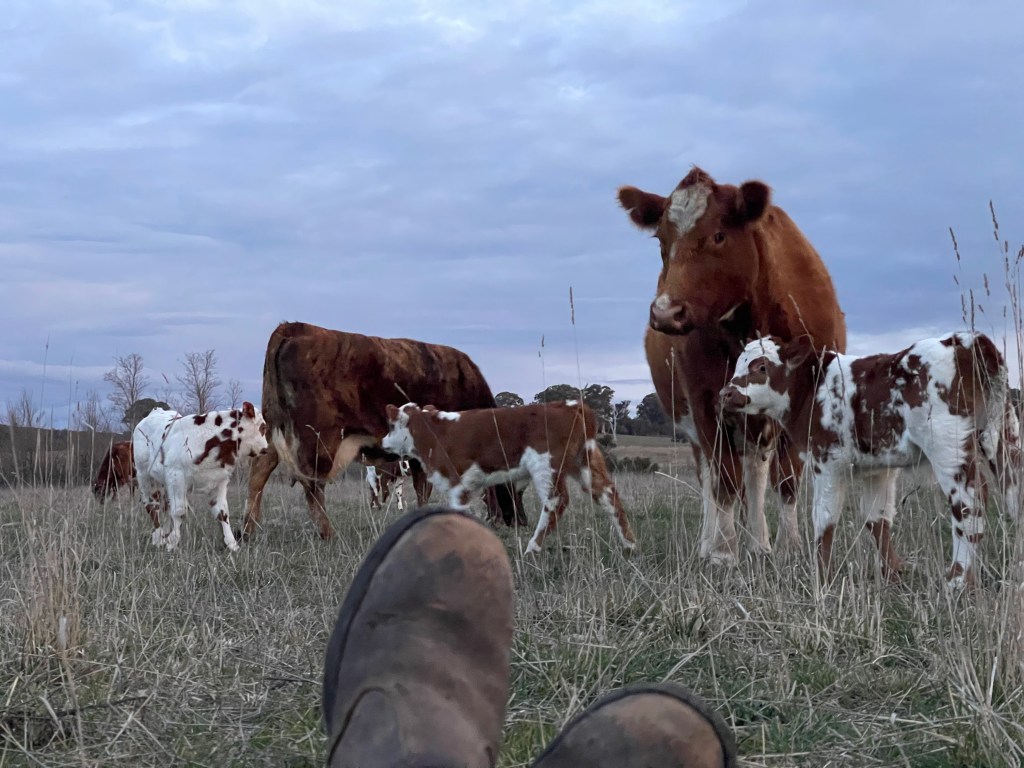
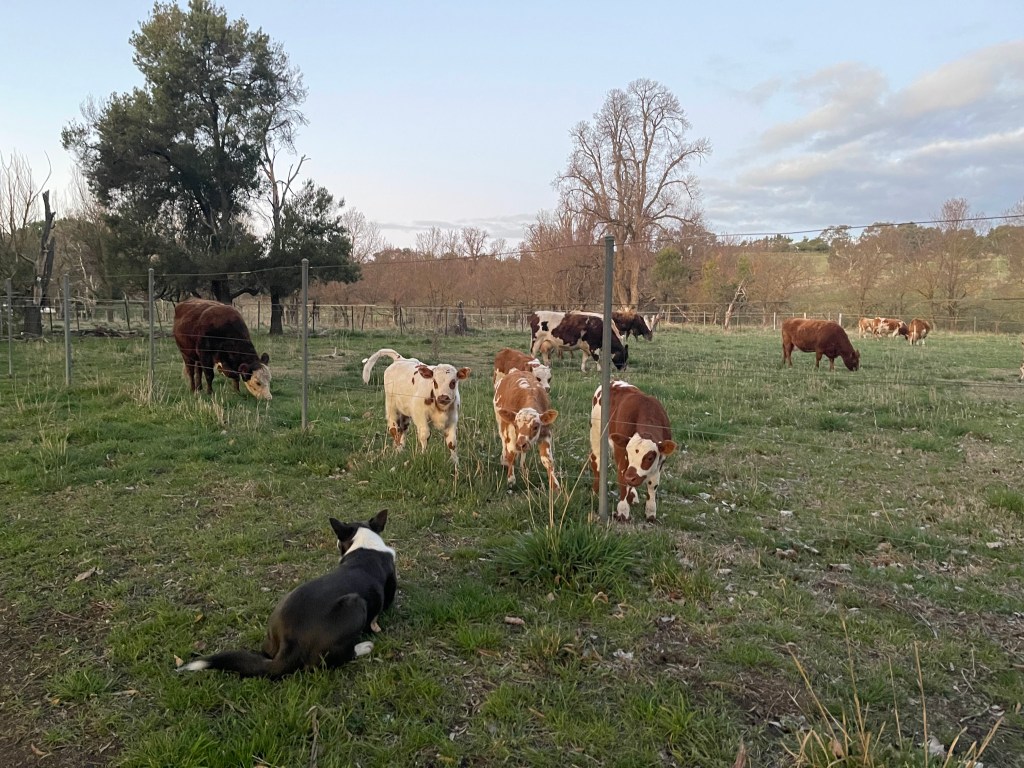
Thankfully, Dozer was up and about the following morning and has since made a full recovery. The rest of the calves have arrived safely, without drama. They’re now a mob of cheeky little boys and girls, and to them, Sapphire is just another big calf. Watching them play is an absolute delight.

Jo and I have also settled into our Monday-to-Friday rhythm. After feeding the cows, we often carpool to work – still a novelty for us. I do feel a little more disconnected from the community while we’re both working full-time, but I know it’s only temporary.

Our weekends are dedicated to the slow but steady renovation project. A special shout-out goes to John and Bradley from J&B Building Supplies, who deliver everything we need straight to the house. Their service is a lifesaver when you live out of town. Not only that, but they’ve also helped me find the best way forward on a few tricky issues. I couldn’t recommend them more highly.

As we head into spring, our focus will shift to keeping pastures healthy, managing the growing calves, and making steady progress on the renovations. The recent rain has given us a good start, and with a bit of sunshine, the paddocks should really come to life. There’s plenty of work ahead, but it’s the kind of work that keeps us grounded and grateful to be here on the Rock Farm.

A Cold Winter Settles In On The Rock Farm

Life on the Rock Farm has well and truly settled into winter. With no meaningful pasture growth during autumn, we knew it was going to be a long season of feeding our cows. Sporadic rainfall hasn’t done much to improve the soil moisture profile around the district—and with a run of spectacularly beautiful, but bitterly cold frosts, whatever warmth remained in the soil has now disappeared. The grass may have turned green, but it’s yet to start growing.

Pastures in our district remain in the bottom 10th percentile for growth this year. (See: https://www.farmingforecaster.com.au/southeast).

We quickly used up the last of our pasture hay and had to buy a truckload from irrigated country north of here. With our tractor still out of action at the time, our challenges mounted when the carrier also experienced mechanical breakdowns. On the very last day before we completely ran out, the new lucerne finally arrived—and our wonderful neighbours came to the rescue. A massive thank you to Jeff, who brought his tractor and saved the day!

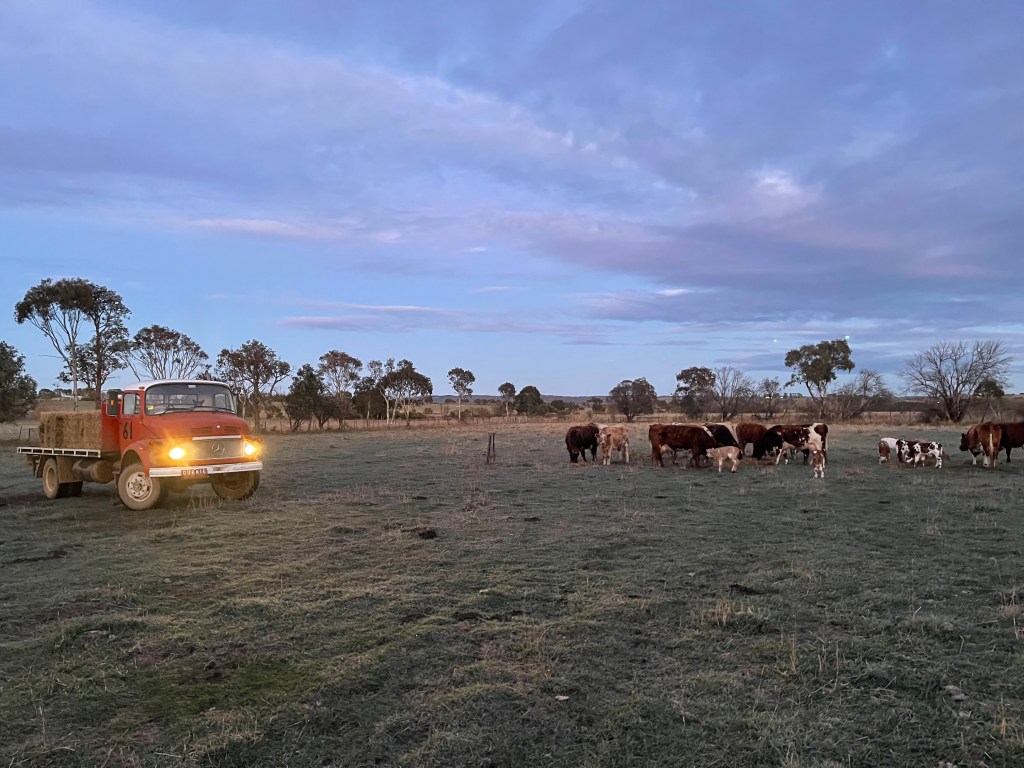
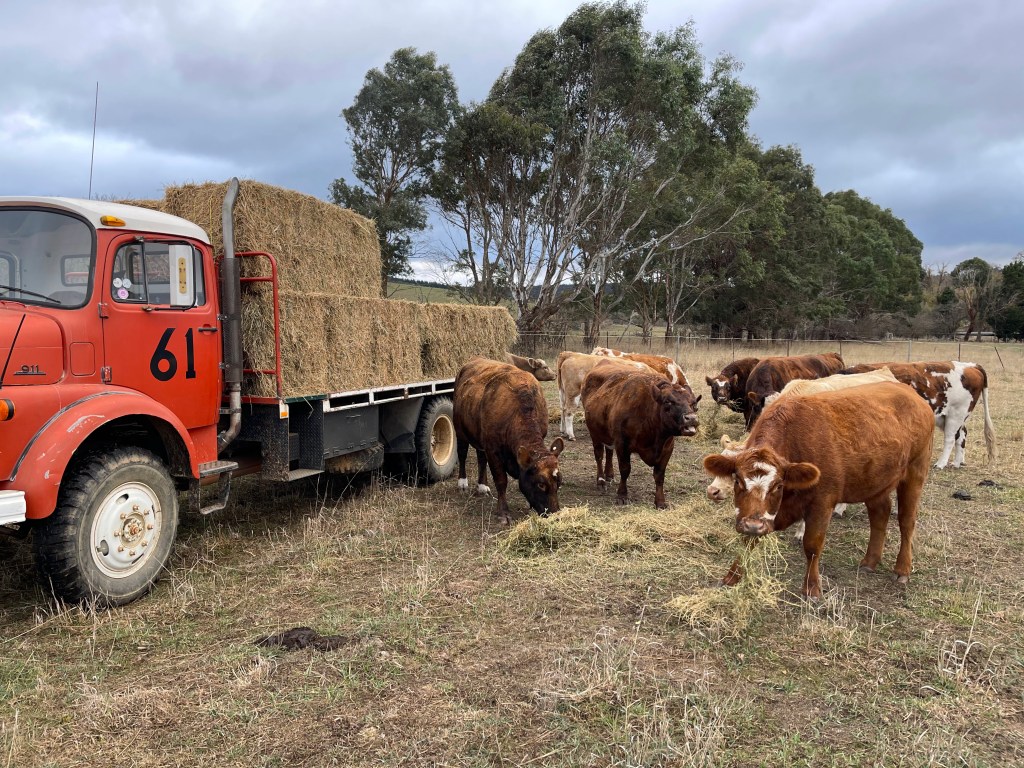
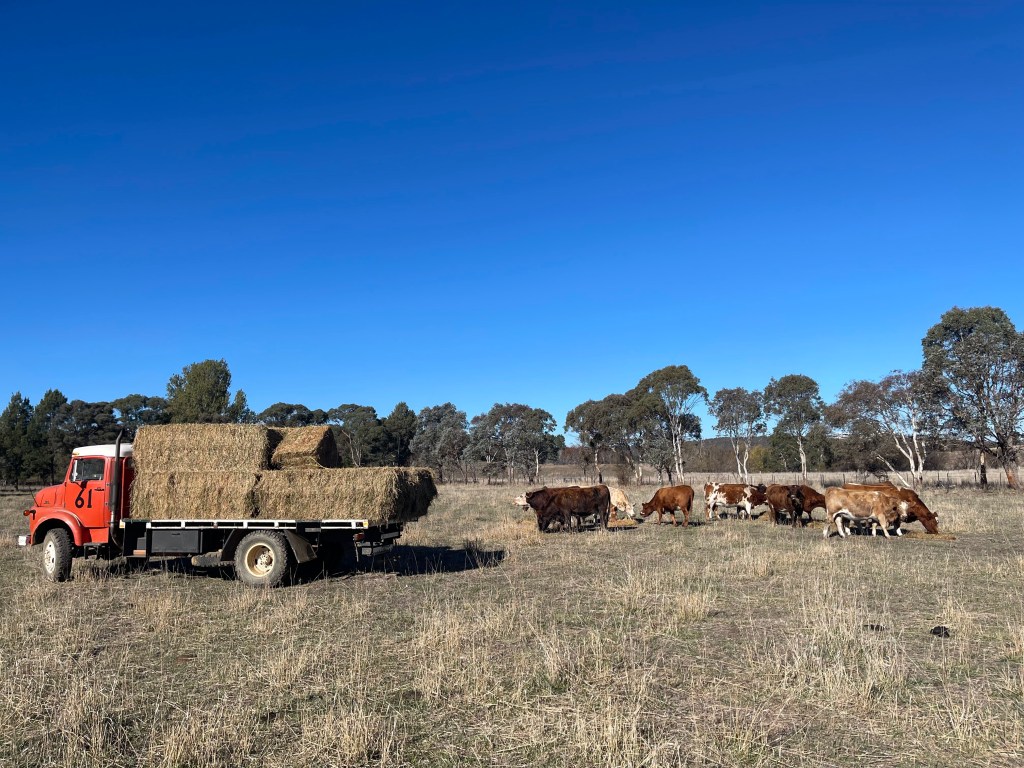
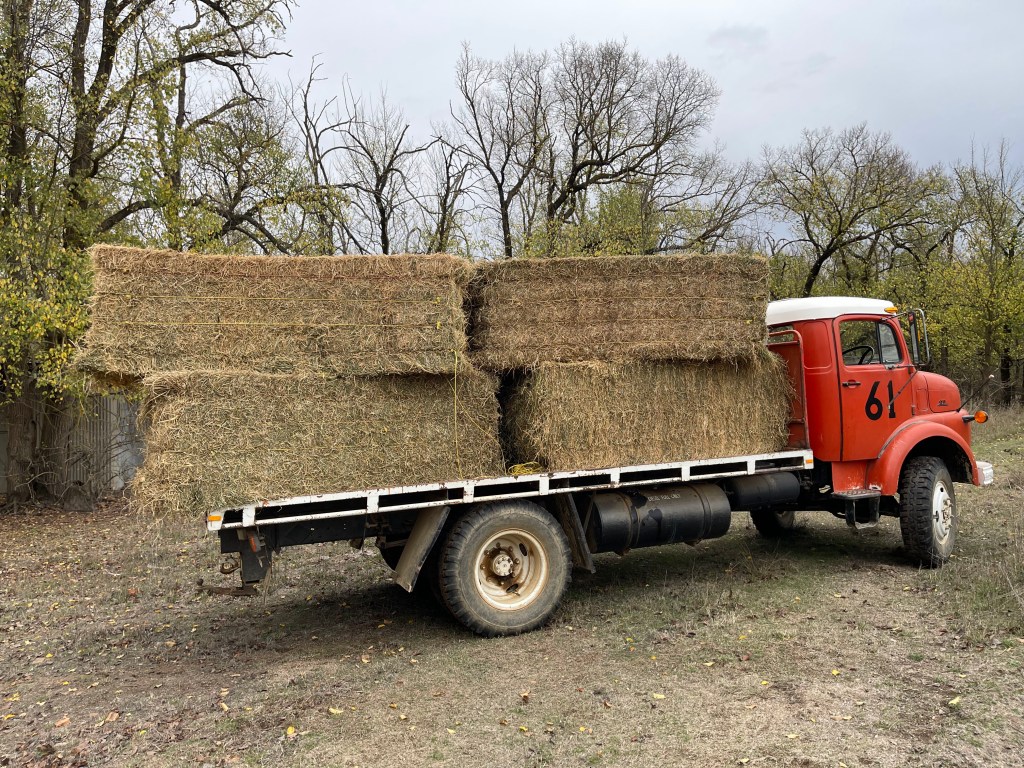
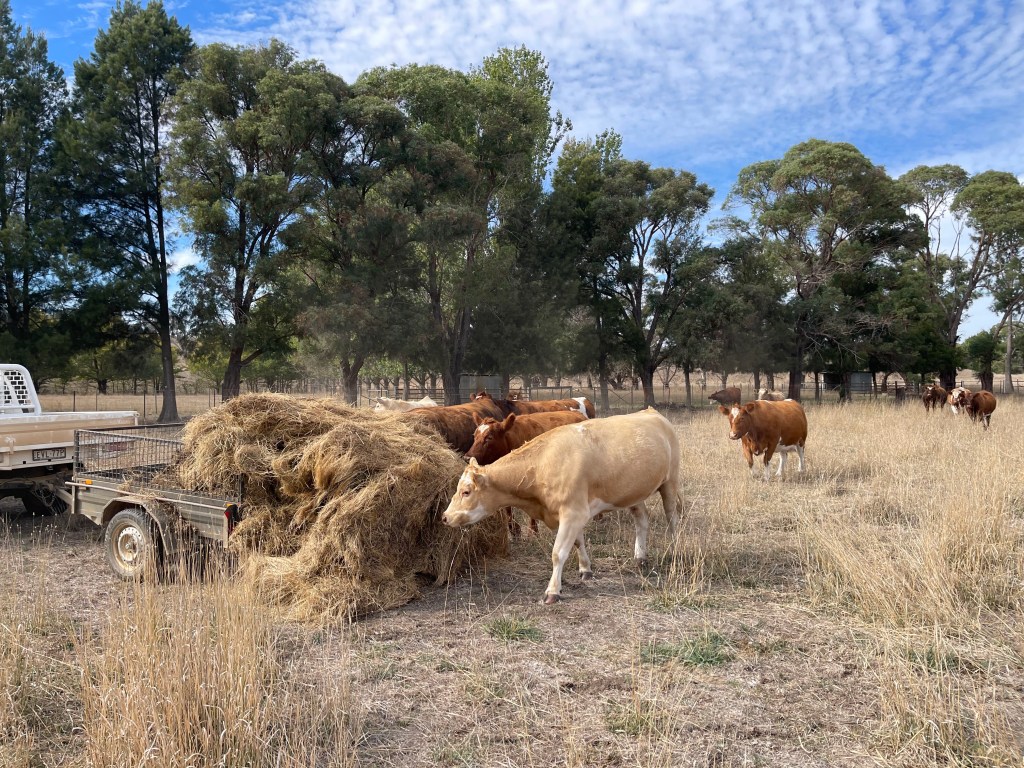
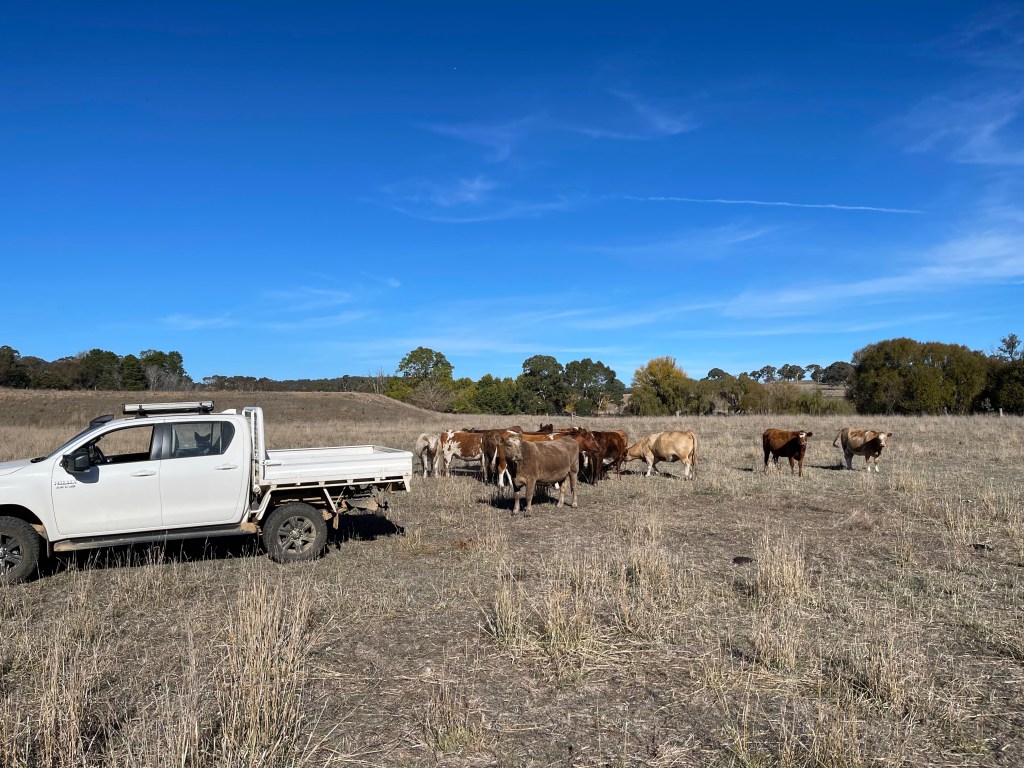
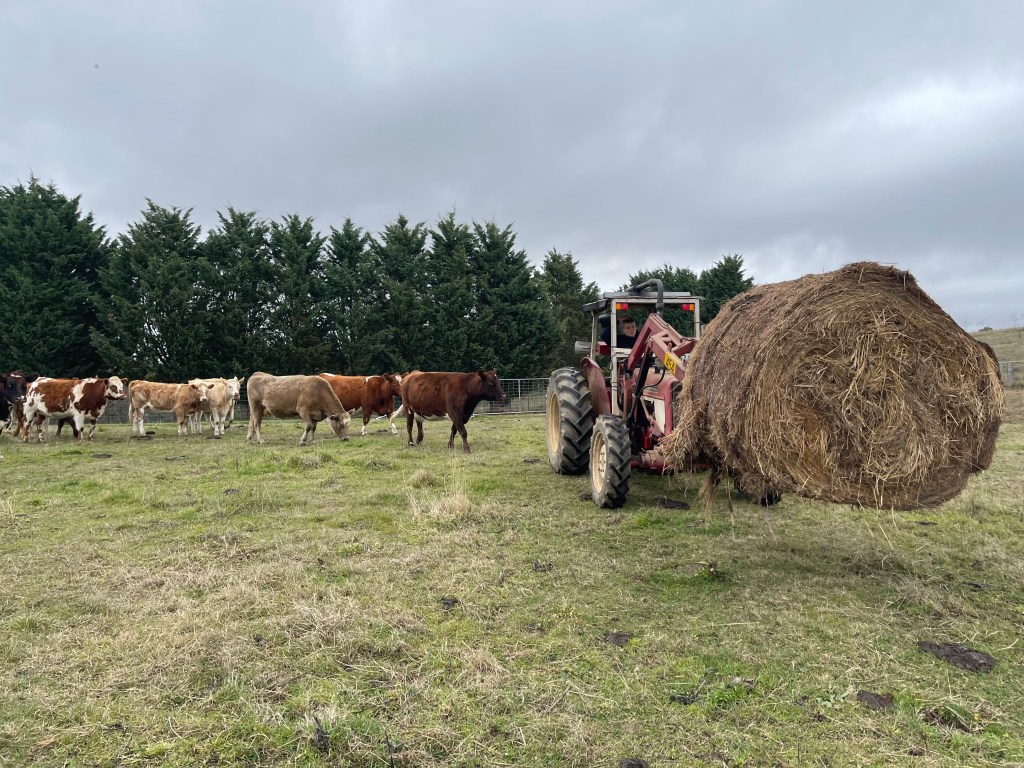
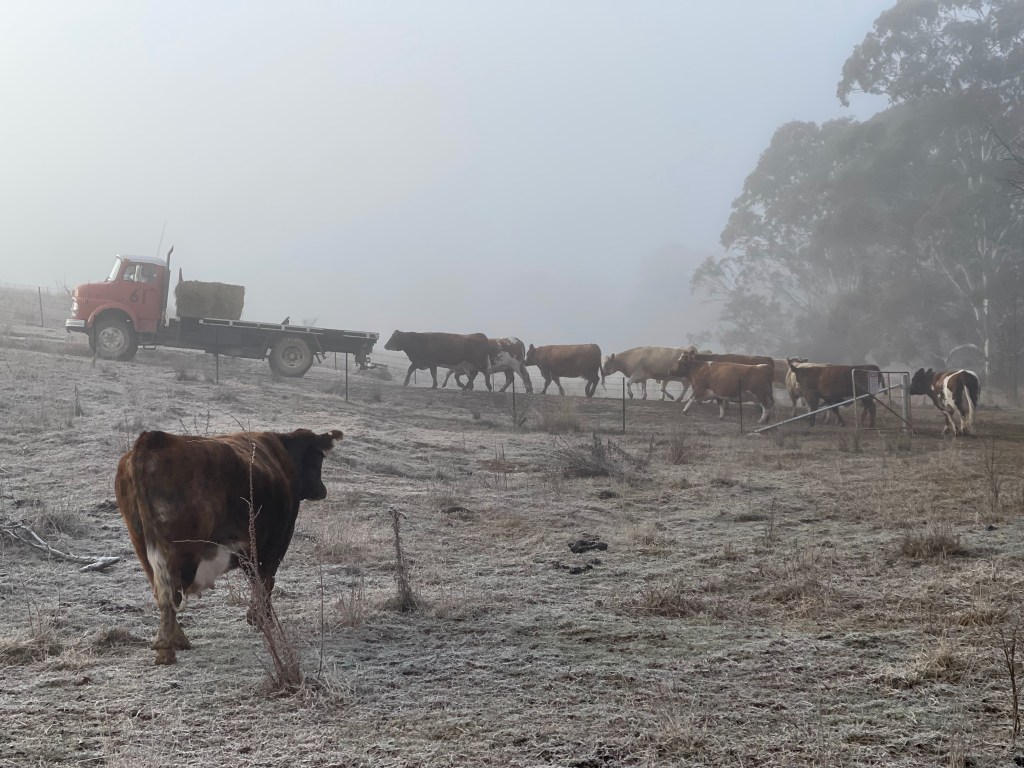
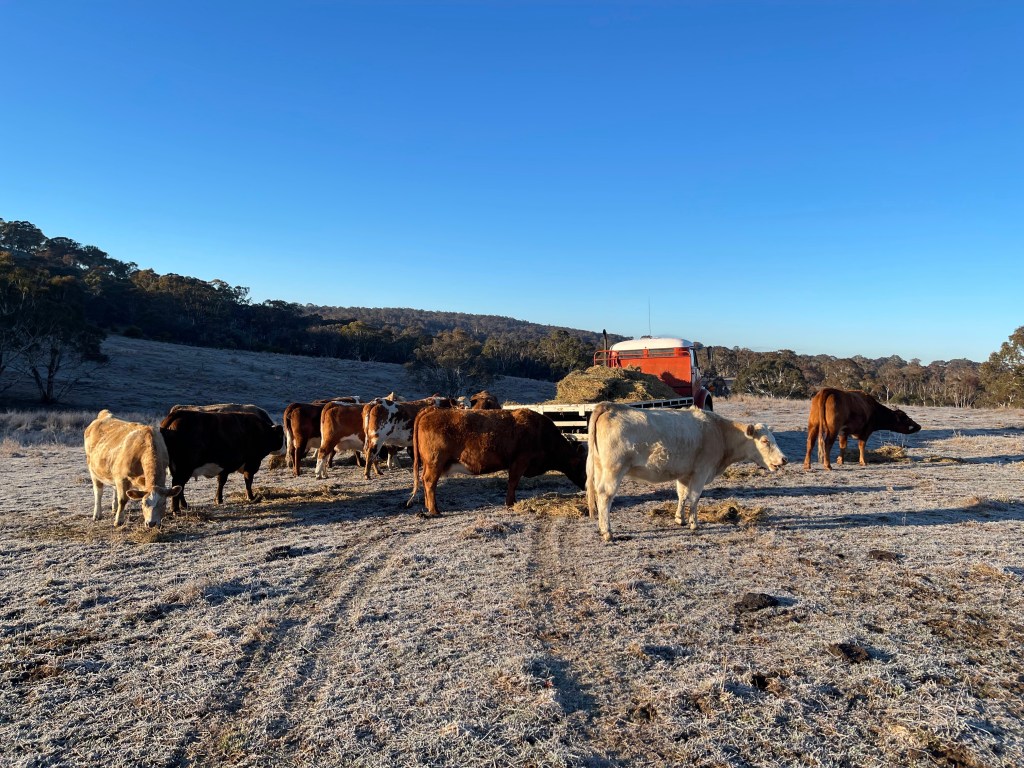
Jeff helped load a few of the large square bales onto the back of our BRT Myrtle, making it much easier to feed out. It didn’t take long for the cows to associate Myrtle with breakfast! I now have a new appreciation for how an ice-cream van driver must feel pulling up to a beach on a hot summer day—the cows come running, kicking their heels in the air at the sound of the truck.

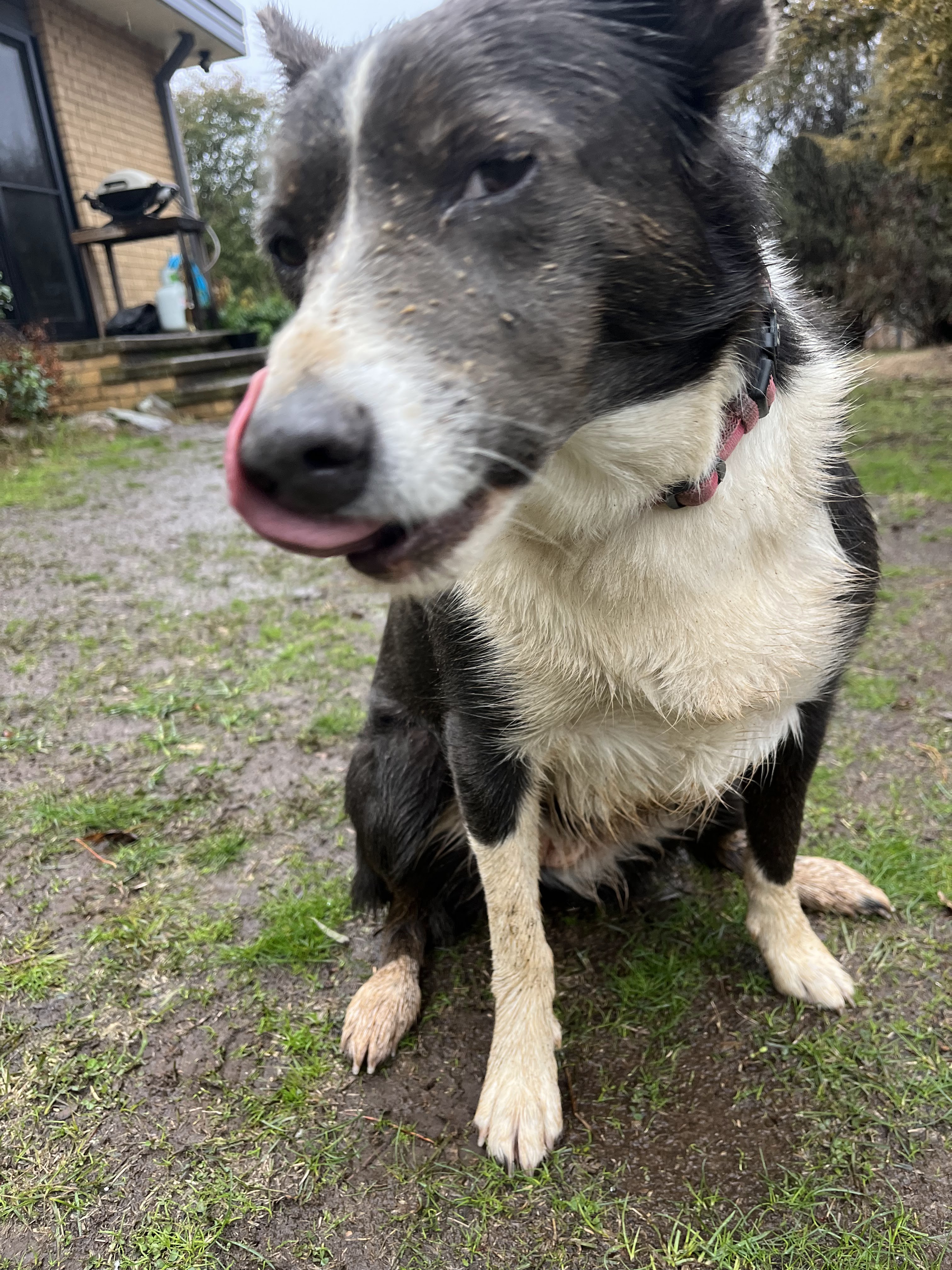
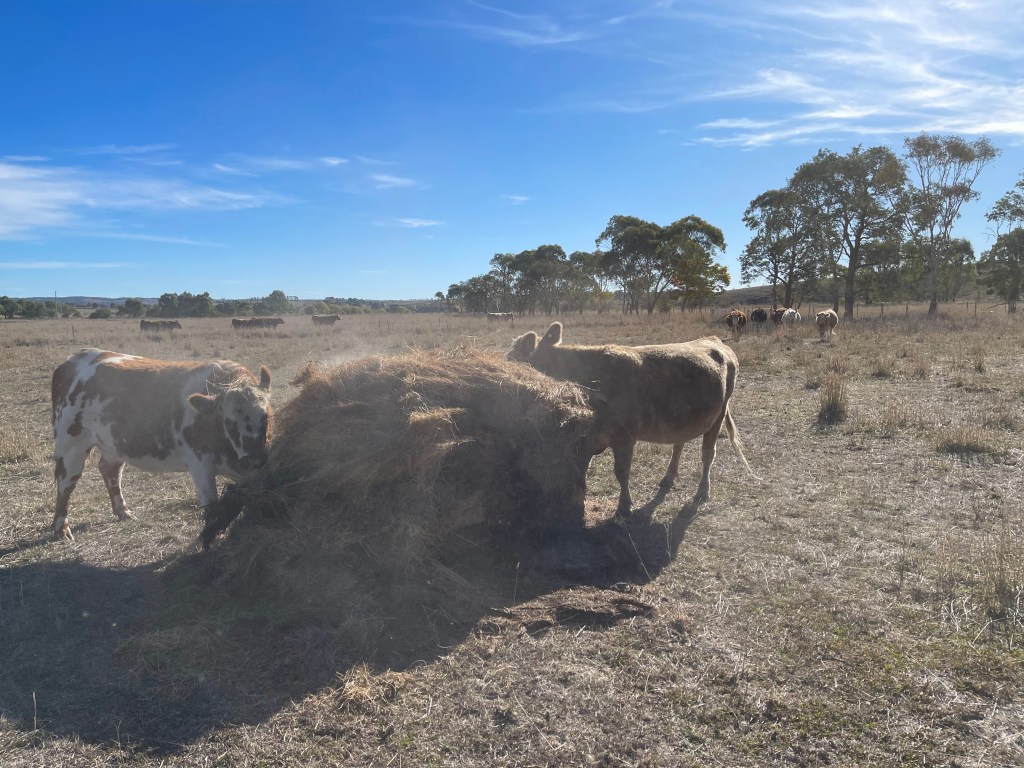
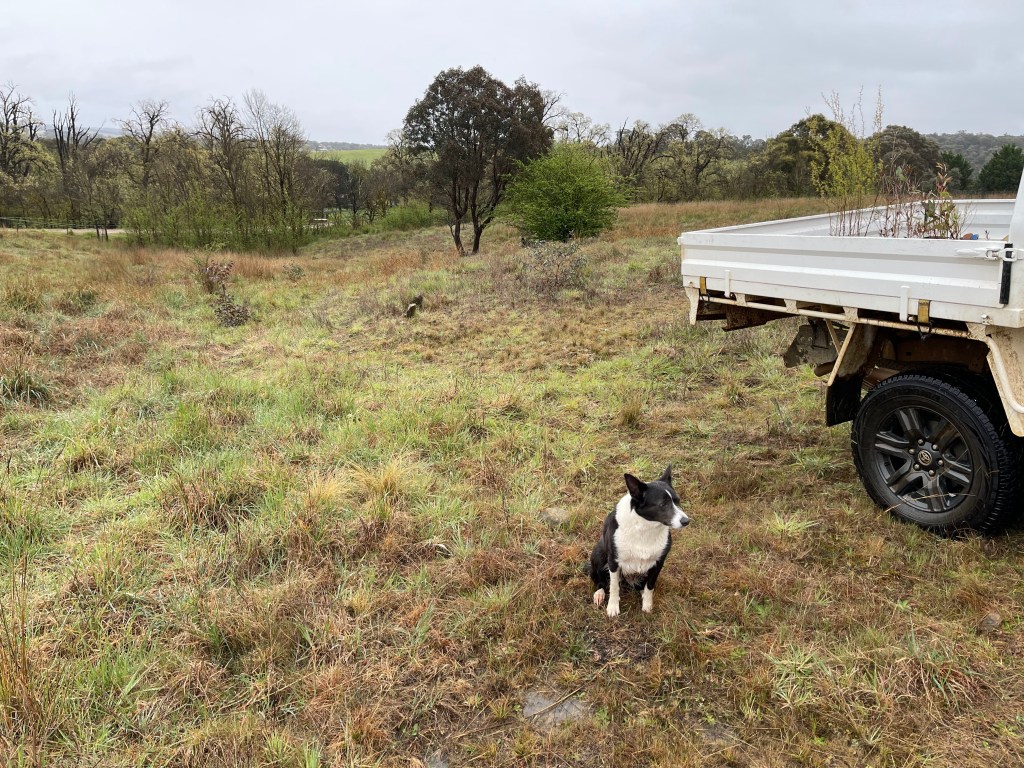
We’re now feeding daily, which has become a very early morning ritual, as I’m currently working regular Monday to Friday hours. It’s actually one of my favourite parts of the day—and the dog agrees, especially enjoying the early starts.

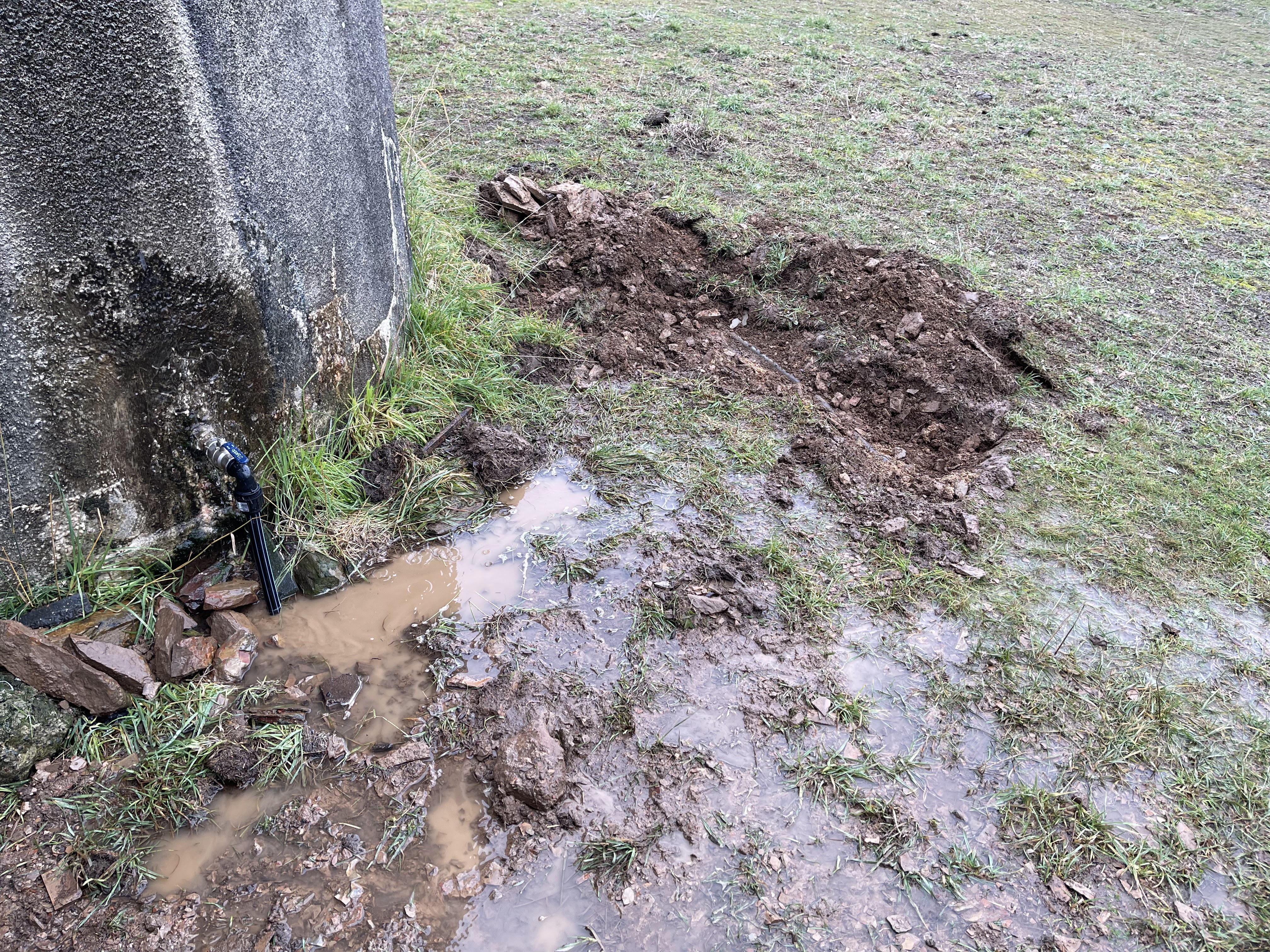
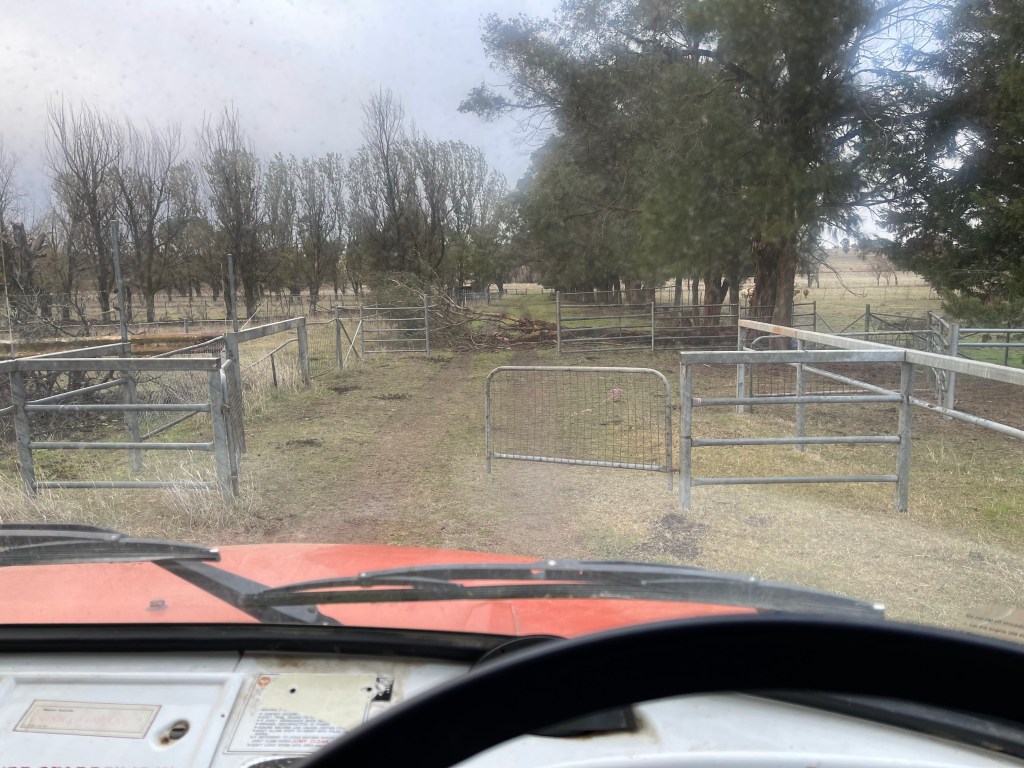
The Rock Farm has become part of the backdrop to a busy schedule. I’m reminded that some jobs must be done immediately, while others can wait. Leaks in the water trough system need urgent attention, as do trees fallen across tracks. Other tasks have taken a back seat—waiting either for warmer weather or for me to return to shift work.

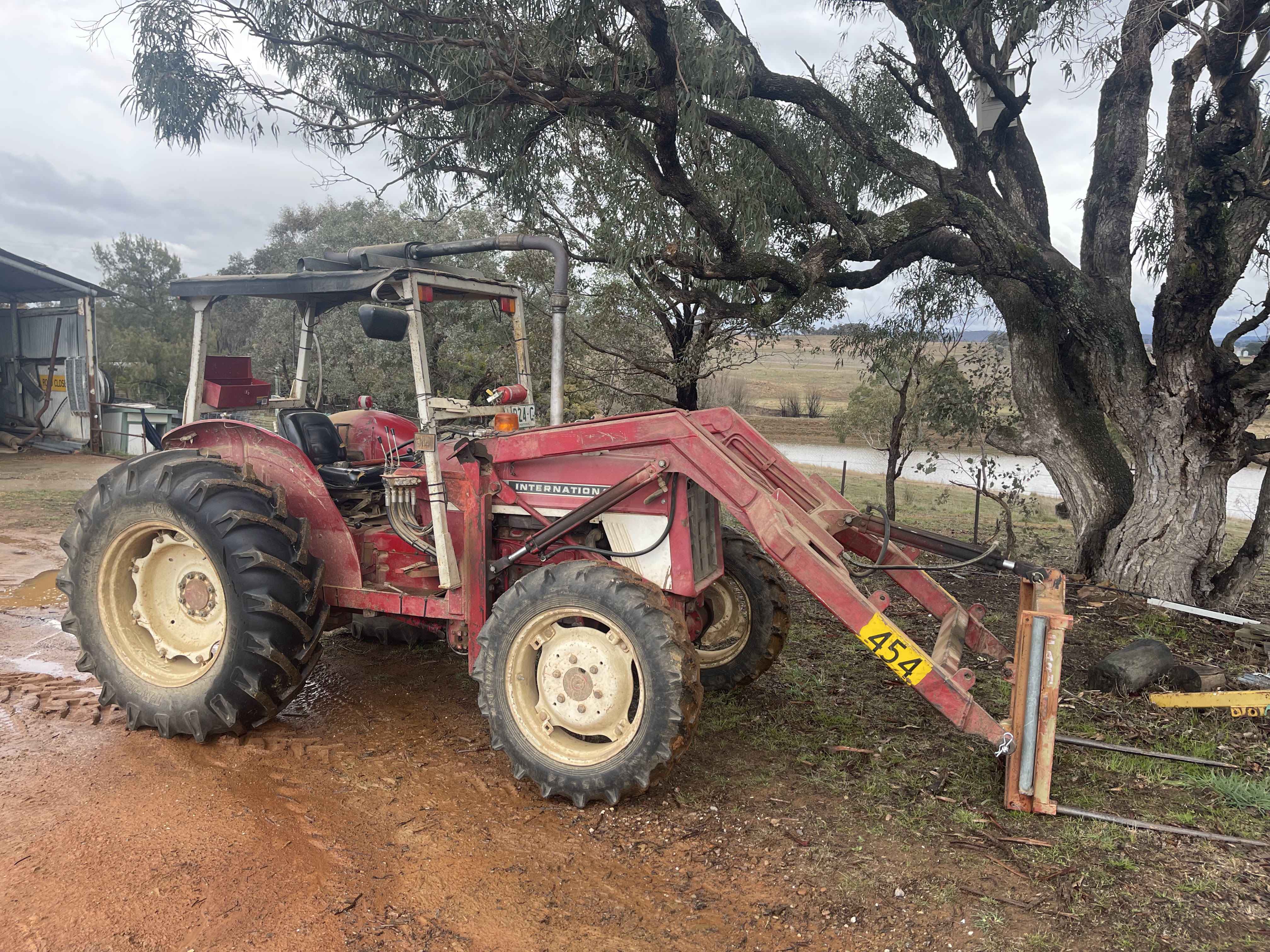
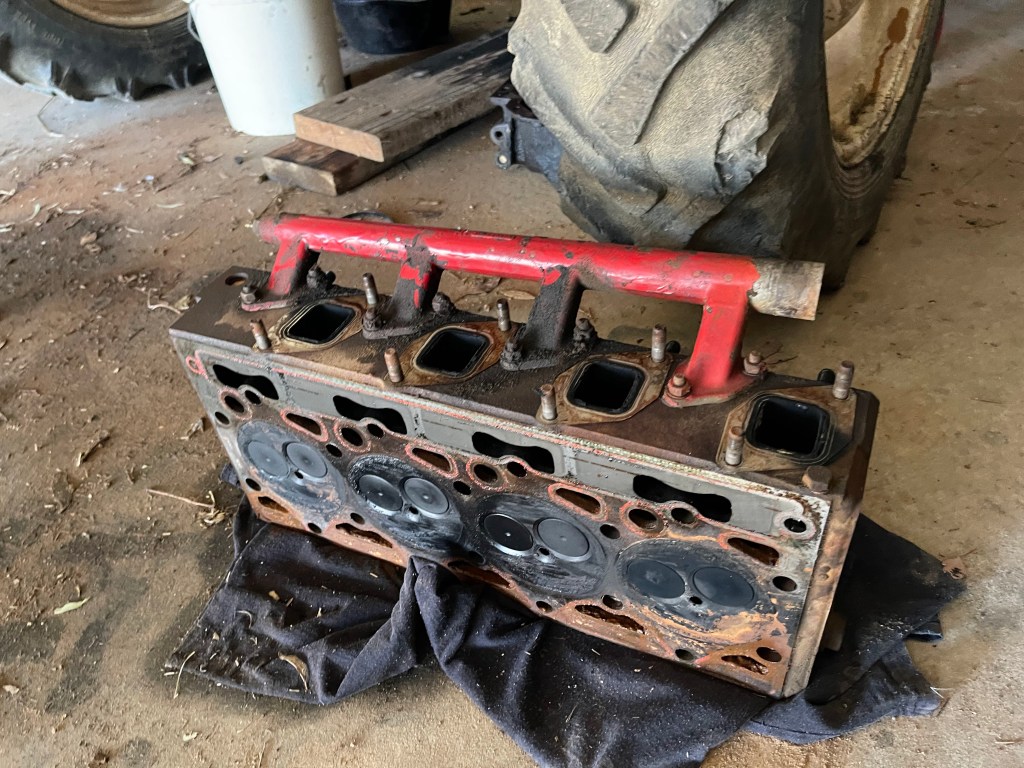
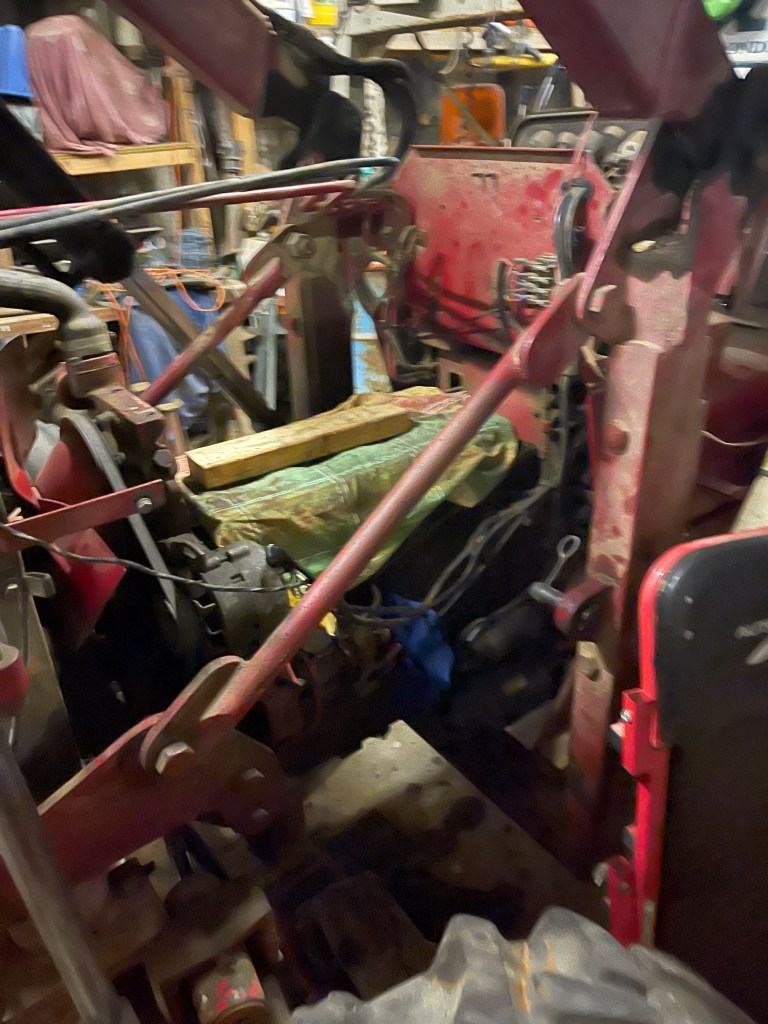
We’re thrilled to have our tractor back after a full engine rebuild. Dan from Direct Diesel Truck and Tractor Repair sourced a rebuild kit—including new pistons and liners—after the head gasket failure. It’s amazing how indispensable an old tractor can be. I hadn’t realised just how much I missed having it available until it was gone. Dan’s work was absolutely top-notch, and I couldn’t be happier.

Meanwhile, our house renovation continues to inch forward. The support from local plumbing and electrical services has kept the momentum going. Huge shout-out to Sam from Prime Plumbing Yass and Andrew from APL Electrical, who’ve helped keep the build ticking along while I’ve been tied up with work.

As winter rolls on, we’re reminded that life on the land is full of challenges, but also full of community, resilience, and moments of quiet joy. Whether it’s the early morning feed runs, the clatter of hooves chasing Myrtle, or the steady progress on the house, there’s always something to be grateful for. With spring on the horizon, we’re looking forward to warmer days, greener paddocks, and whatever the next chapter brings for the Rock Farm.

Oh and calves… hopefully lots of calves!

Thanks for following along with our journey — stay warm, and take care until next time.

What autumn break?

As we have slid into autumn, our hopes for an autumn break didn’t eventuate. Passing storms missed our property by literally hundreds of meters. Driving through puddles just a short distance from home, with wipers on, turned into not-quite-damp dust on our driveway. It was almost worse to find not even a trace of rain in the gauge. We are by no means alone—much of the south-eastern part of the country is desperately dry, despite the record rains and floods that affected Queensland just a few weeks ago.

Any chance of the grass growing this winter has all but gone. The first frost signals the end of the growing season. With little grass remaining, we have commenced feeding our remaining cattle.

Feeding has been a little more difficult with the tractor still out of action. Thankfully the Not-So-Little Helpers still turn up occasionally. They get press ganged into helping me roll the remaining round bales into the trailer for feeding out.

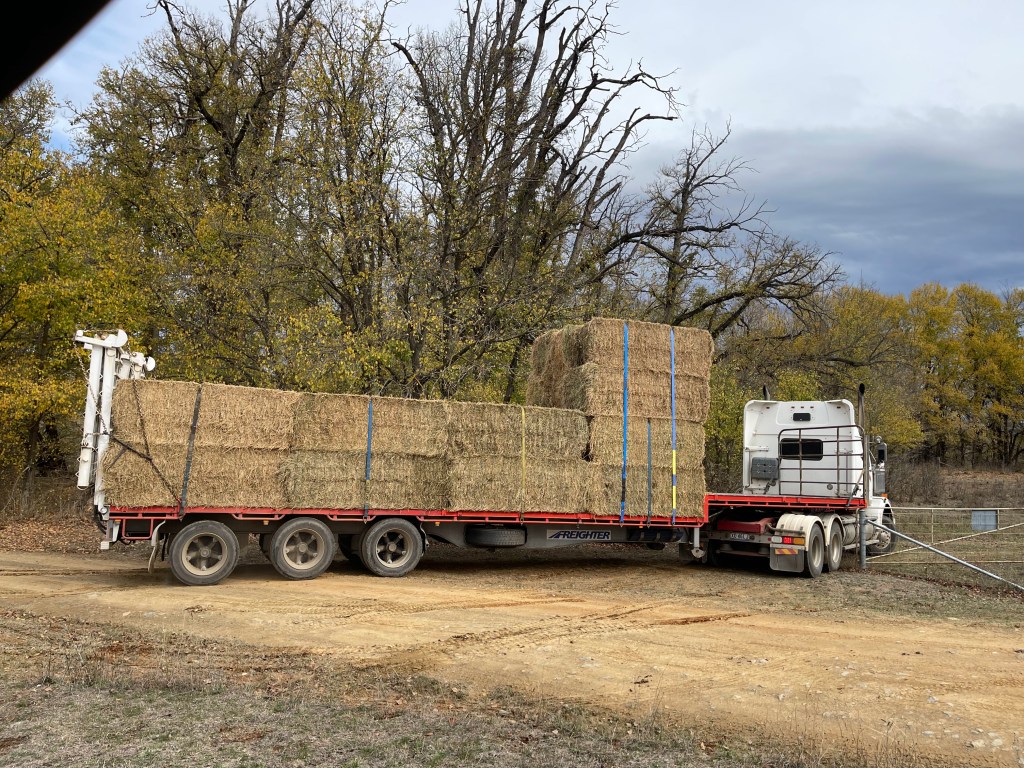
We delayed purchasing hay with the tractor broken, but eventually had to order a truckload. It should arrive by the end of the week. In the two weeks since ordering, prices for hay delivered on-farm have gone up another 25%. Thankfully, our wonderful neighbours will bring their tractor over to help us unload. This should see us through until spring.

The good news is that, according to local folklore, as Kati Thanda-Lake Eyre fills with water, it brings wetter weather. This should set us up for a reasonable spring. Watch this space!

Our decision to sell the weaners early seems to have been sound. Cattle prices in the local area have dropped dramatically as producers seek to reduce numbers. Apparently, there is strong demand further north to replace losses from the floods and take advantage of the good rainfalls. The money from the sale of our heifers didn’t last long—it went on the hay!

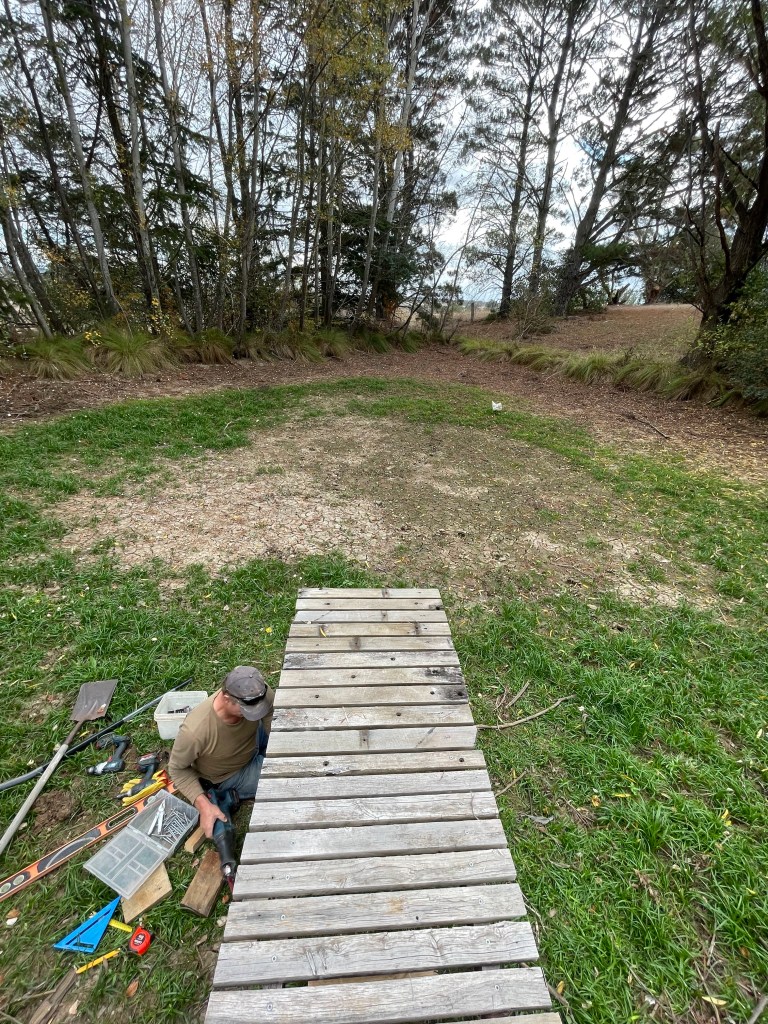
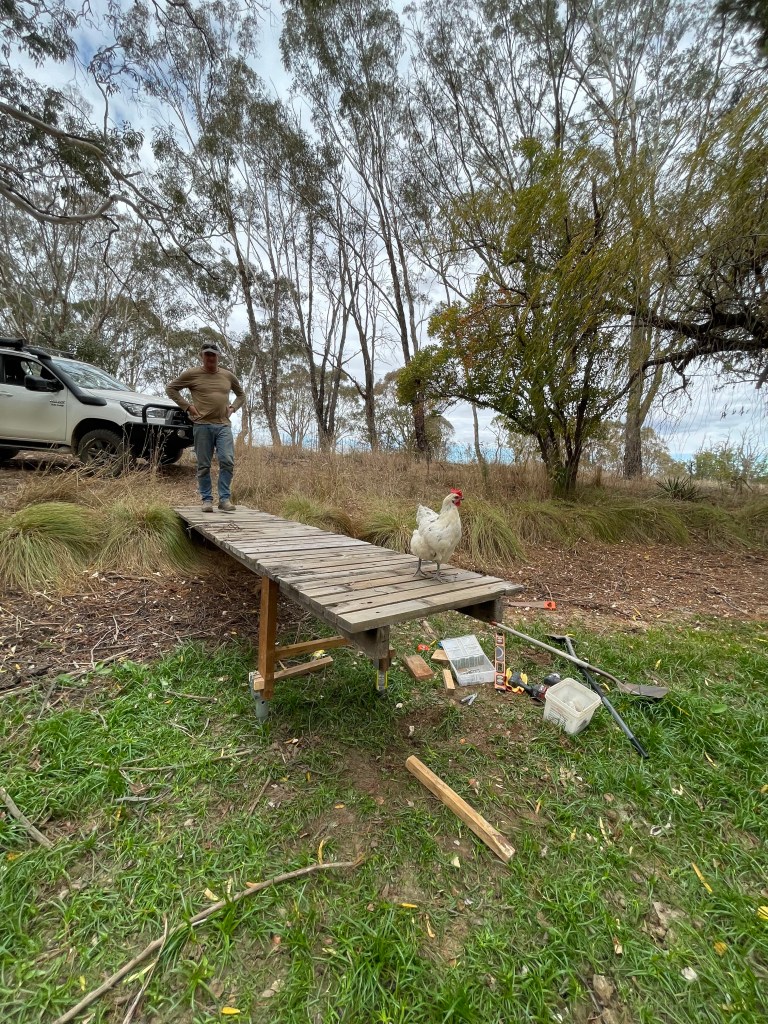
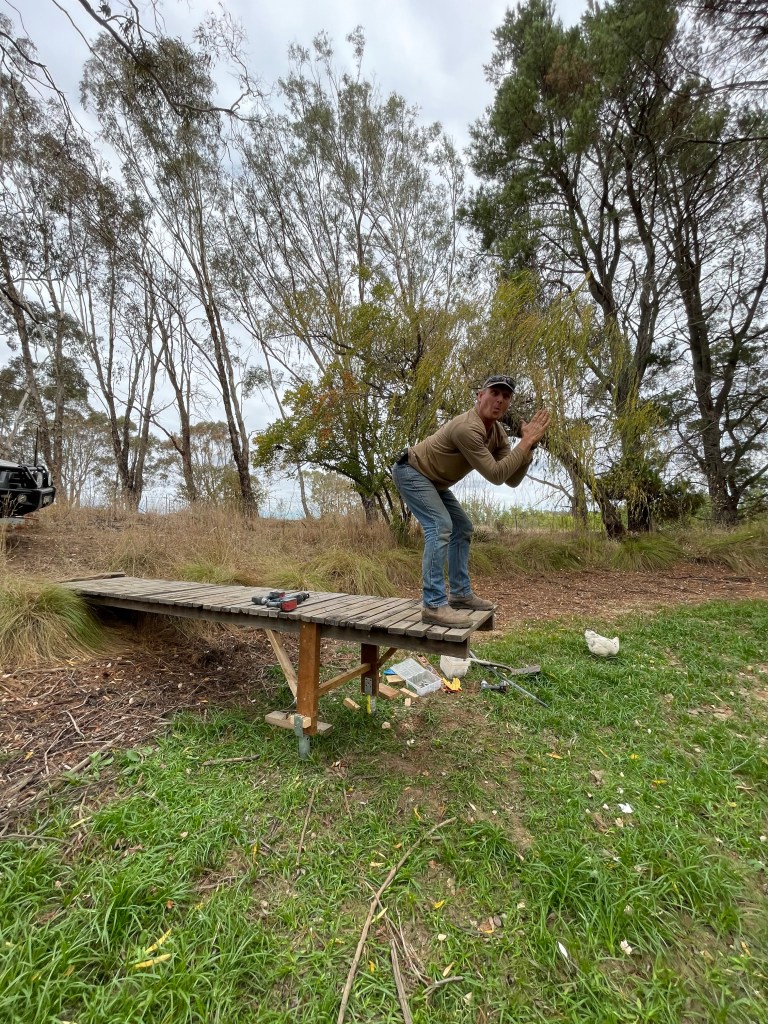
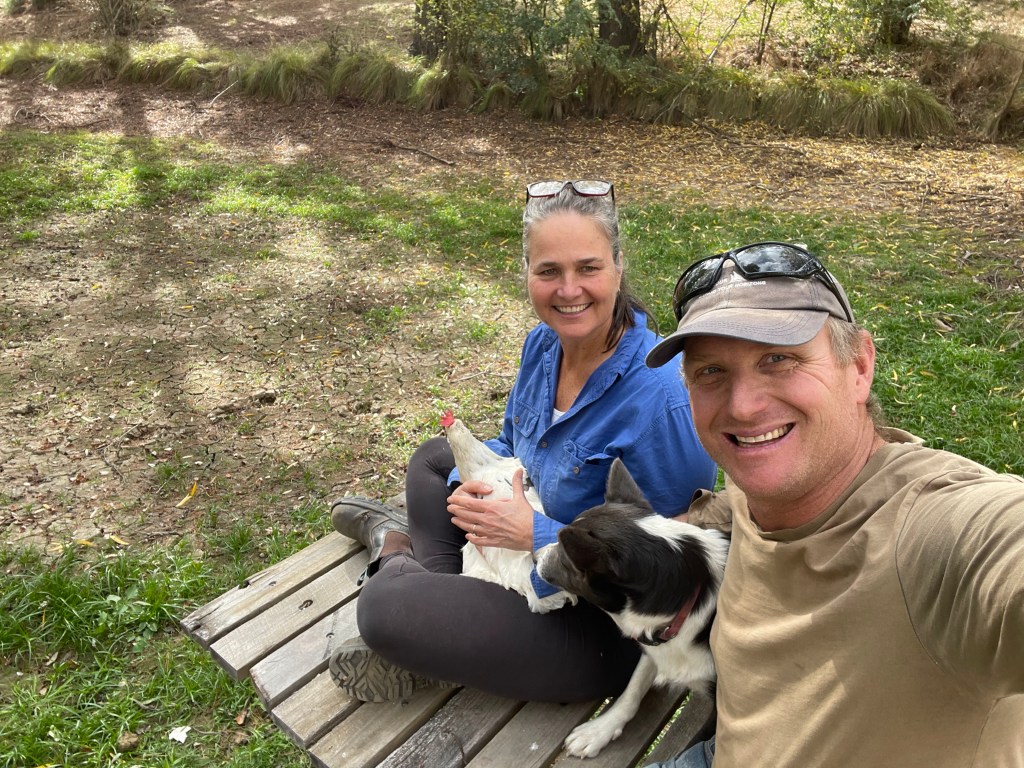
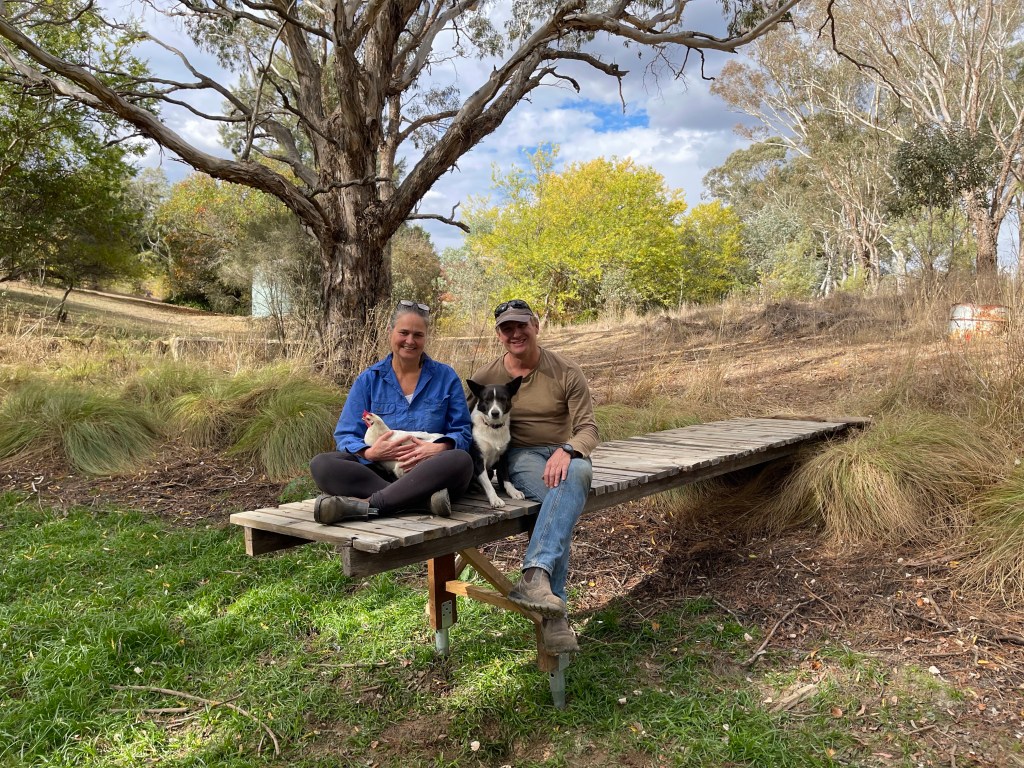
One advantage of the dry weather is that the little dam in our garden dried out. For many years, I’d promised Jo a jetty. I even managed to construct the deck a while back. Running fast out of excuses—and with the youngest Helper back from university—we got it installed, much to the one remaining chicken’s satisfaction. Result: one happy wife… and chicken!

Thankfully, the fire danger period ended without any major fires in the district. That said, there were a few smaller fires that threatened houses later in the season. With the eldest Helper now a fully fledged member of our local brigade, we went to a couple of these fires. Despite the serious nature of the work, it was a lot of fun working with this chap!

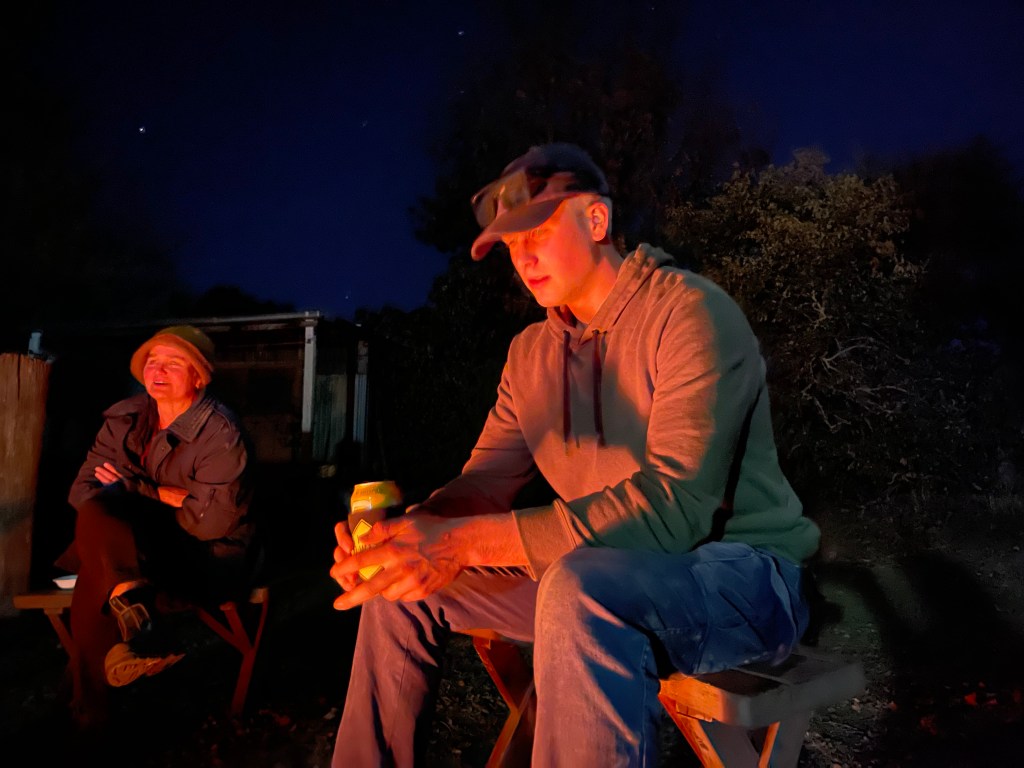
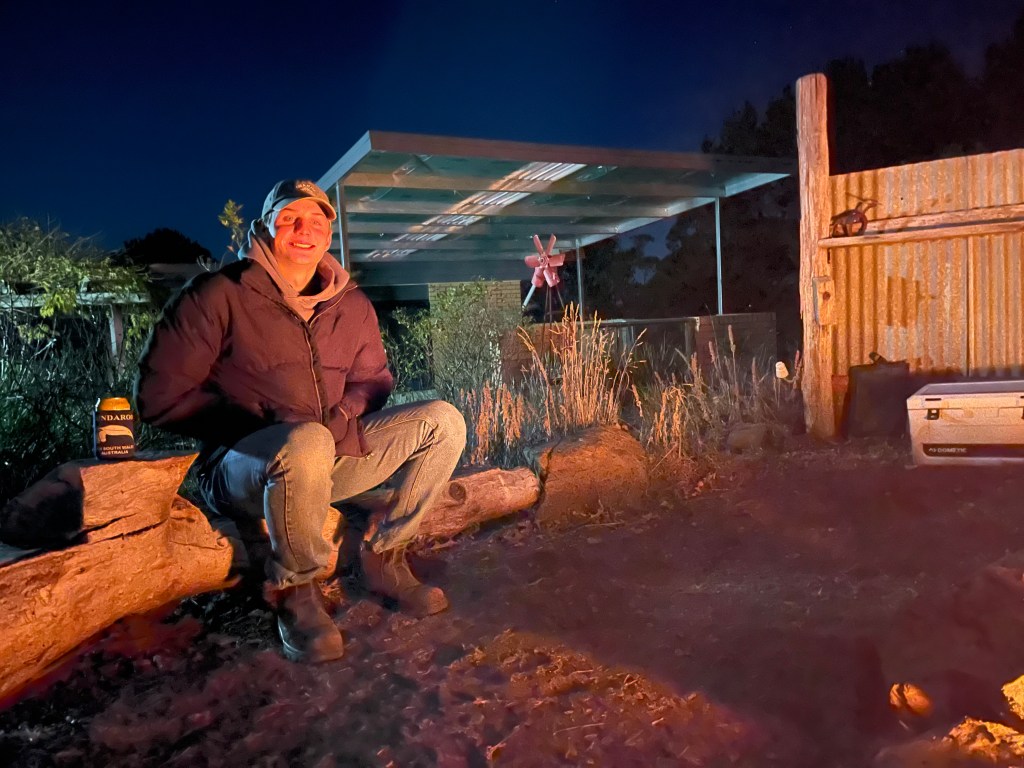
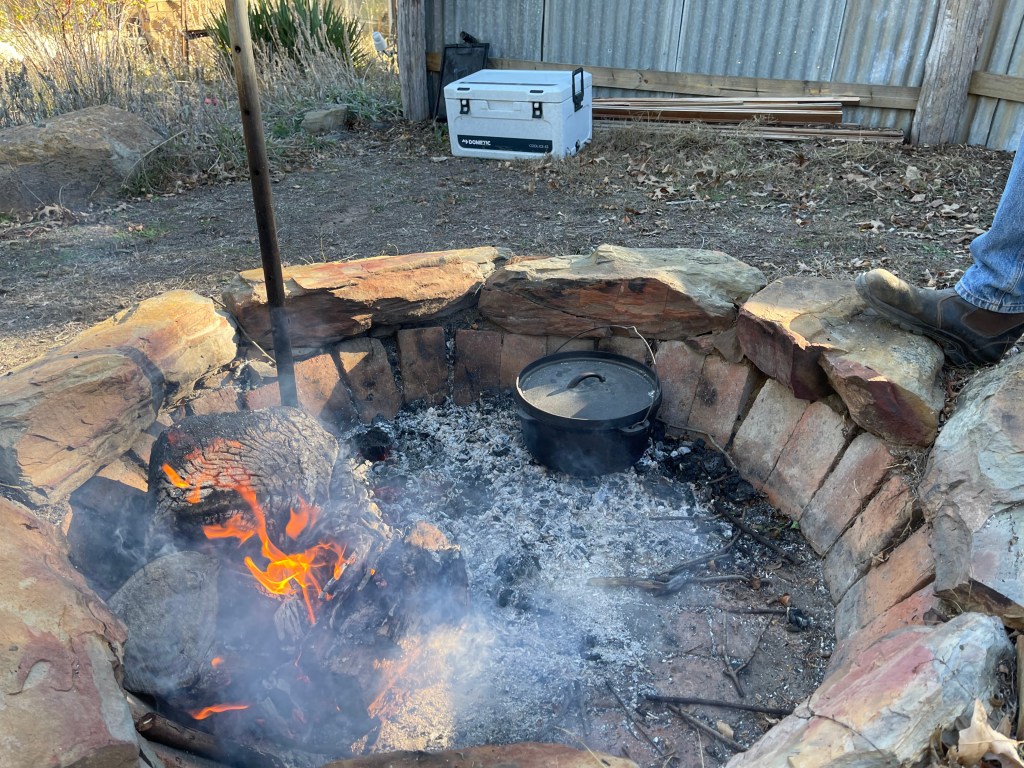
It was great to have both boys home to celebrate Mother’s Day. The youngest Helper came back from university in Sydney for the occasion. We slow-cooked a lamb shoulder in the camp oven, which was delicious. Dinner was followed by a wonderful night catching up over a few beers. These moments are all too precious now that both these fine young men are making their way in the world.

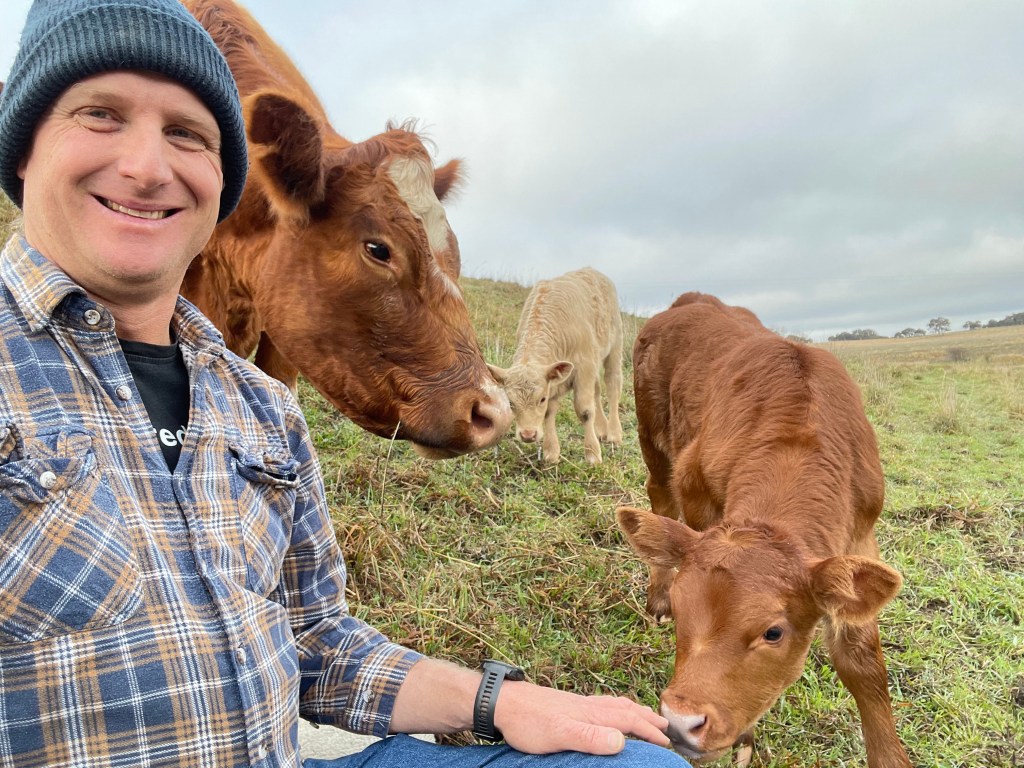
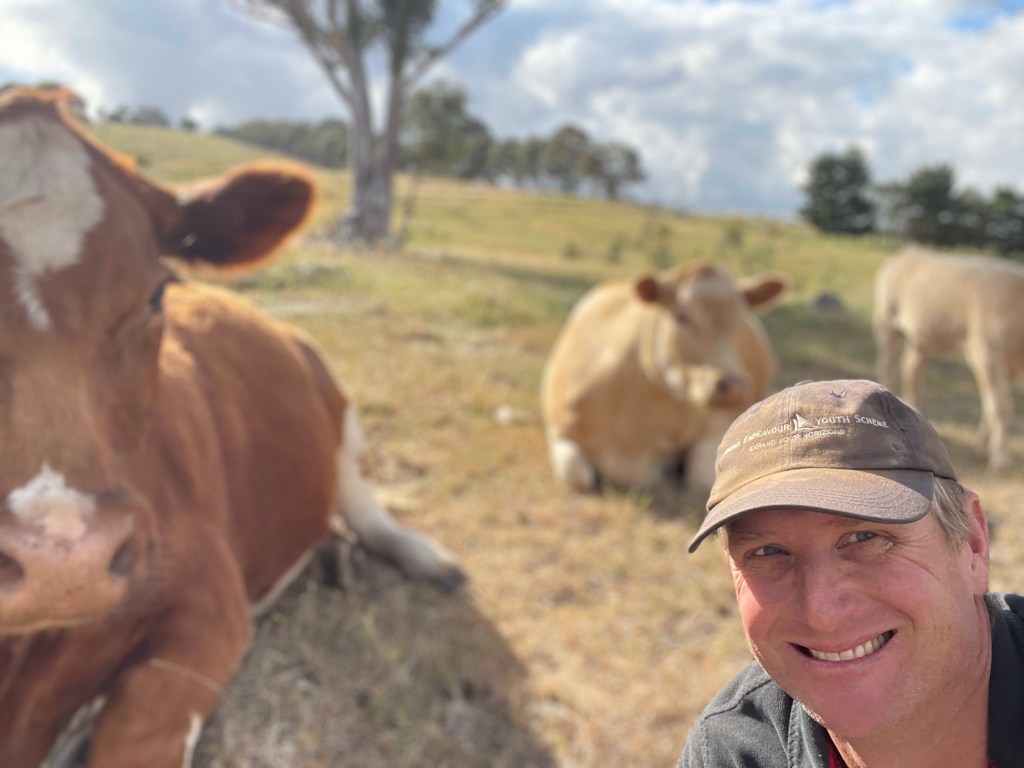
The farm has taken a back seat this year as we continue to renovate our home. Sadly, my updates on the blog have also fallen behind. The house is progressing (slowly). We’ve moved on from demolition and are now rebuilding subfloors and getting our plumbing repaired and roughed in. Between feeding the cattle and working on the house, I’ve also taken on a new project at work. It’s filling my days—and my cup. But it doesn’t stop us from taking time to just pause and hang out with the cattle to re-set every now and then.

All in all, it’s been a busy few months, but we’re getting through it—one job at a time. The support of family, neighbours, and the Helpers has made all the difference. With a bit of luck and some rain, we’re hopeful the season ahead will be a little easier.

Things dry out on the Rock Farm

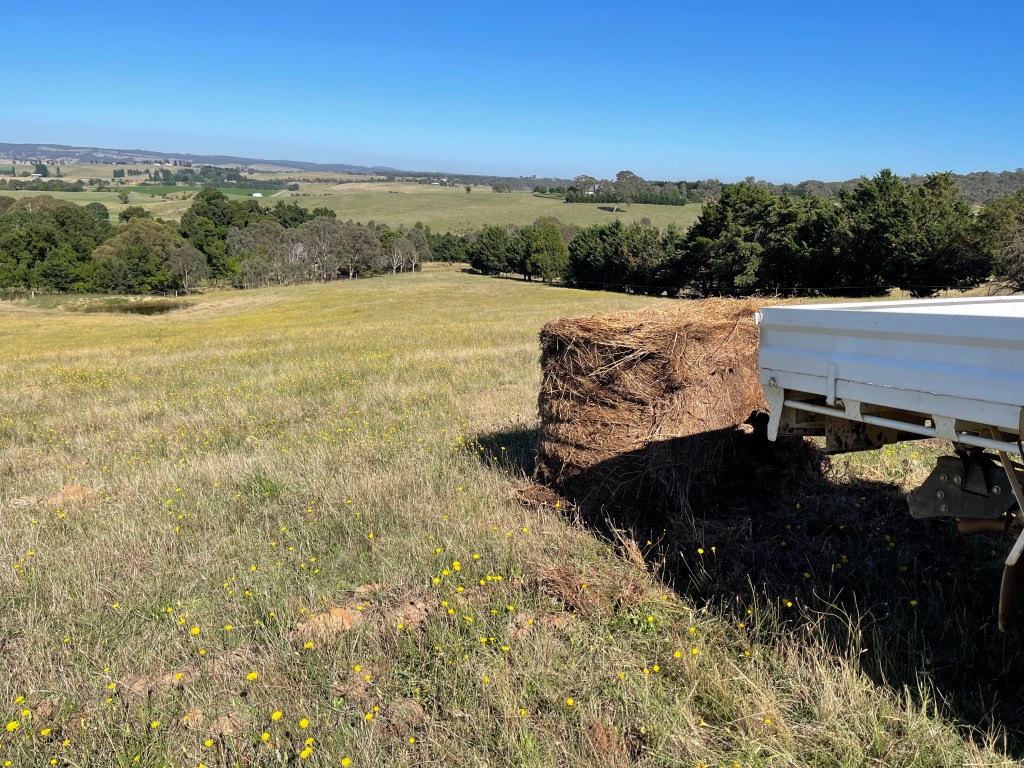
In my last post, I was grateful that some summer storms had helped the pastures along. The Rock Farm was looking surprisingly green for Christmas—an exception rather than the norm in this part of the world. By the end of January, however, it was clear that things were drying out. So, like all good husbands, I packed up and went to sea for a couple of weeks, leaving the farm and livestock in Jo’s capable hands. Before I left I pre-positioned a couple of hay bales in the paddocks to ensure the cattle had feed ahead of them—but I wasn’t prepared for what I found when I got home.

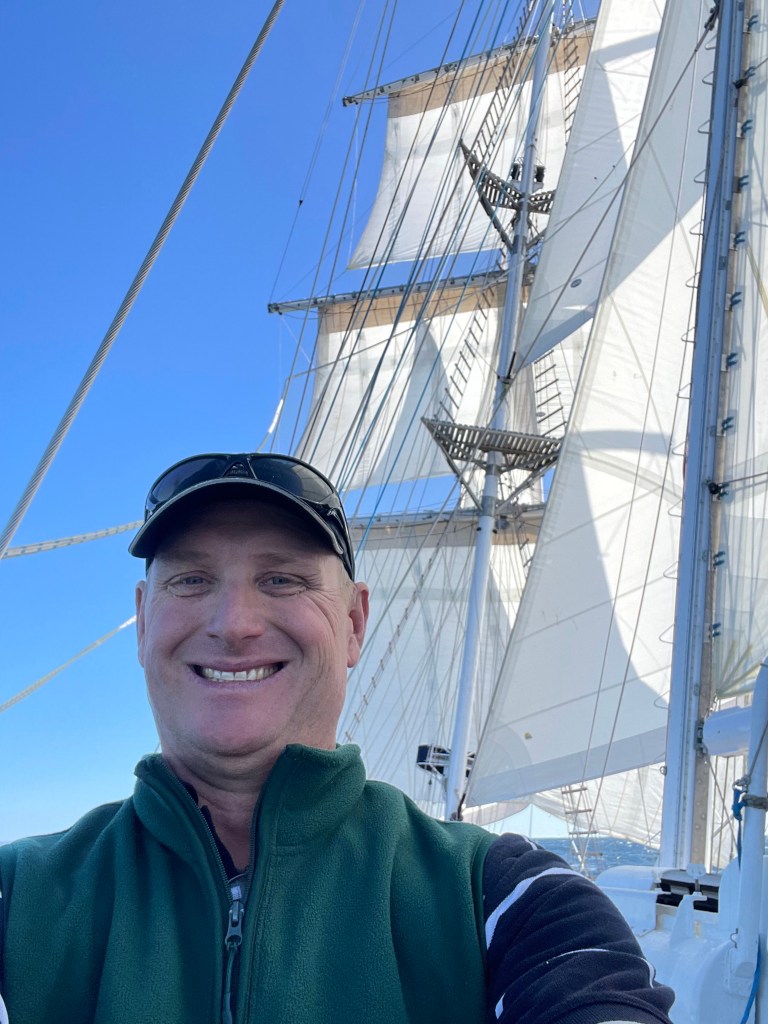
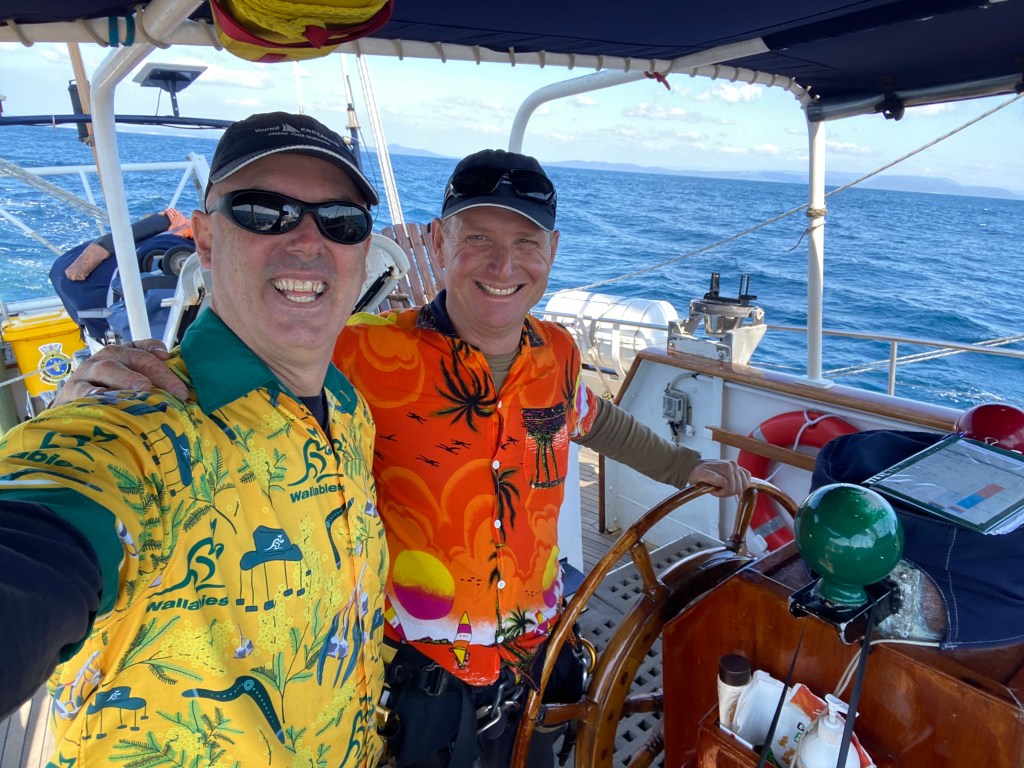
It was a huge amount of fun to return to my old ship and sail north from Hobart back to Sydney. During the voyage we experienced all weathers, including a lively crossing of the infamous Bass Strait in 55-knot winds. As we battled large seas and rolls exceeding 50 degrees (past the limits of the inclinometer, known onboard as the “ooh-aah meter”), I was reminded of the oft-quoted words of John A. Shedd: “A ship is safest in the harbour, but that is not what it was built for.”

What struck me most on this voyage was the advancement in weather forecasting since my first voyages onboard. The ability to track conditions and predict wind changes down to the hour allowed for well-informed decisions, especially regarding the sail plan.

Back home, I returned to happy, well-cared-for stock, (thanks Jo), but even I was surprised by how much the landscape had changed. Paddocks that had been full of feed just weeks earlier were now eaten out. The absence of rain was becoming more apparent, with no fresh growth, and the cattle had begun reaching for anything green to chew.

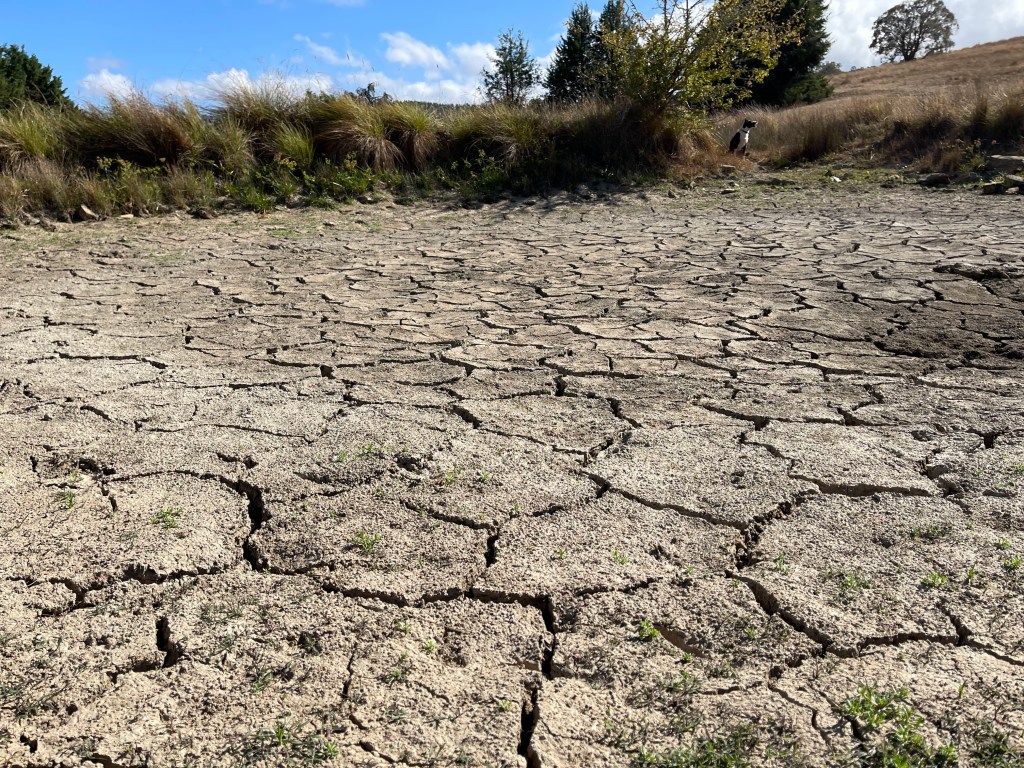
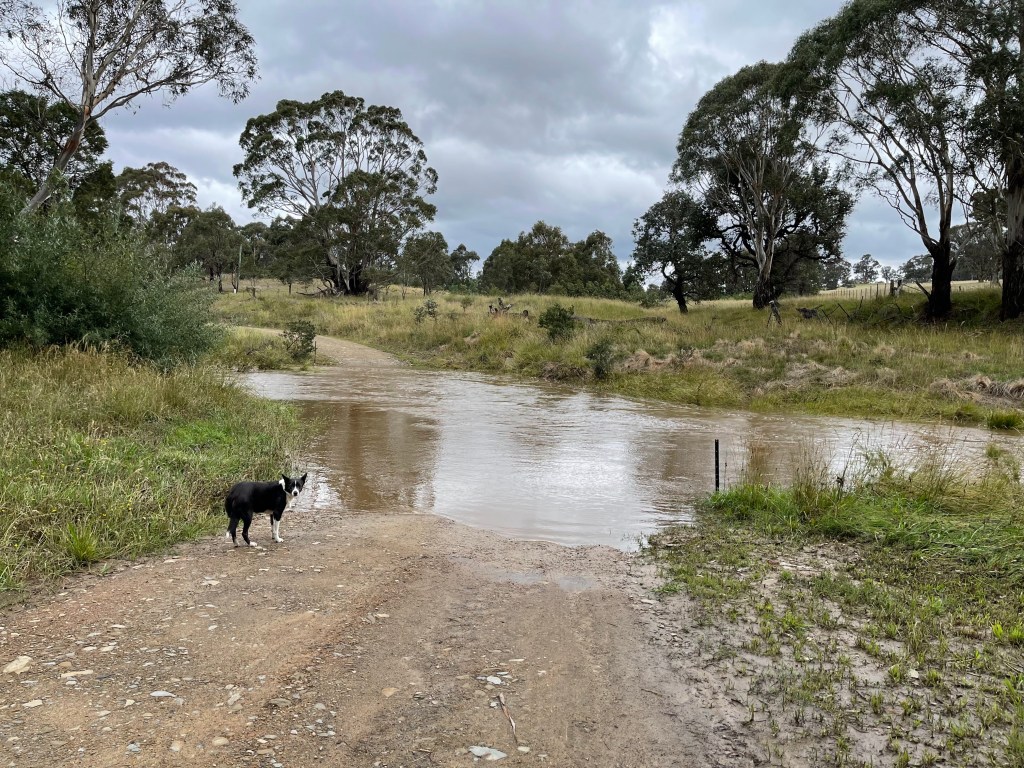
Then came the most telling sign of all. Last week, our creek—flowing continuously at our causeway since the drought broke in February 2020—slowed to a trickle and then finally stopped entirely. It’s a small but significant marker for us.

Looking back at photos from before that drought broke, the farm was in far worse condition than it is now. But the contrast is still striking. (See here: What a Difference a Day Can Make).

With the season deteriorating and Tropical Cyclone Alfred teasing us with the promise of rain that never arrived, we decided to bring forward the weaning of our heifers. These delightful young calves quickly settled into their new routine—though a couple managed to cheat the system and sneak the occasional drink from their mothers. After a few days, we moved the cows to the other end of the farm and let the calves graze in the “weaning paddock” near the yards.

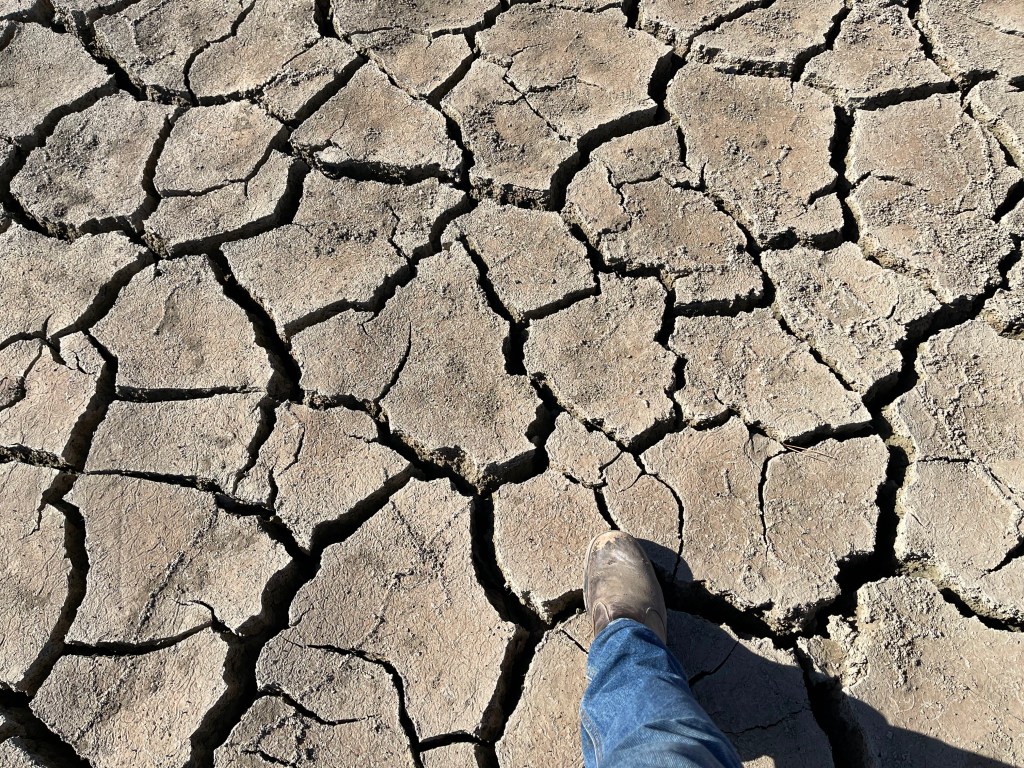
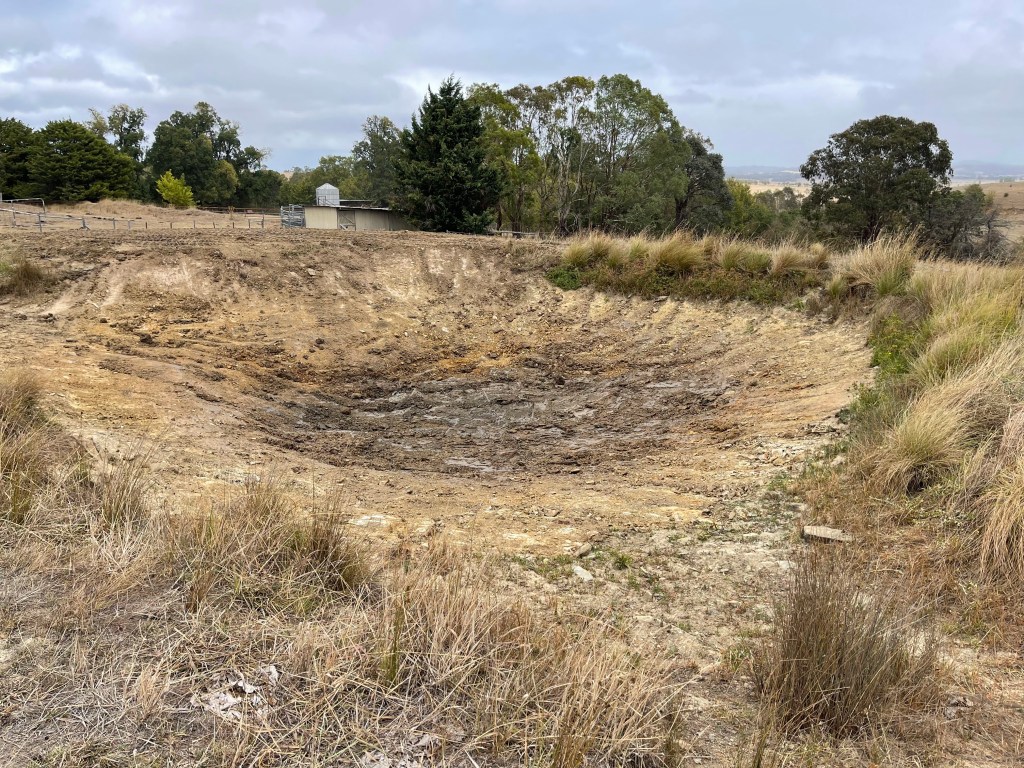
The dry conditions also presented some opportunities. A small silted-up dam had been on my radar for a while, dried out. Our neighbour and friendly earthworks operator, Lou, made short work of cleaning it out. Thanks, Lou!

Unfortunately, the news about the tractor isn’t as good. In my last post, I mentioned it was out of action. It had been running extremely rough, with no compression on at least two cylinders. While I was away, Dan—my fantastic mechanic who replaced the clutch in November 2023—pulled the head off and confirmed the head gasket had failed. Further inspection revealed scoring on cylinders #1 and #2, prompting him to remove the crankshaft as well. Full rebuild kits are available, so we’ve ordered new pistons, liners, and everything needed to get the tractor operational again soon.

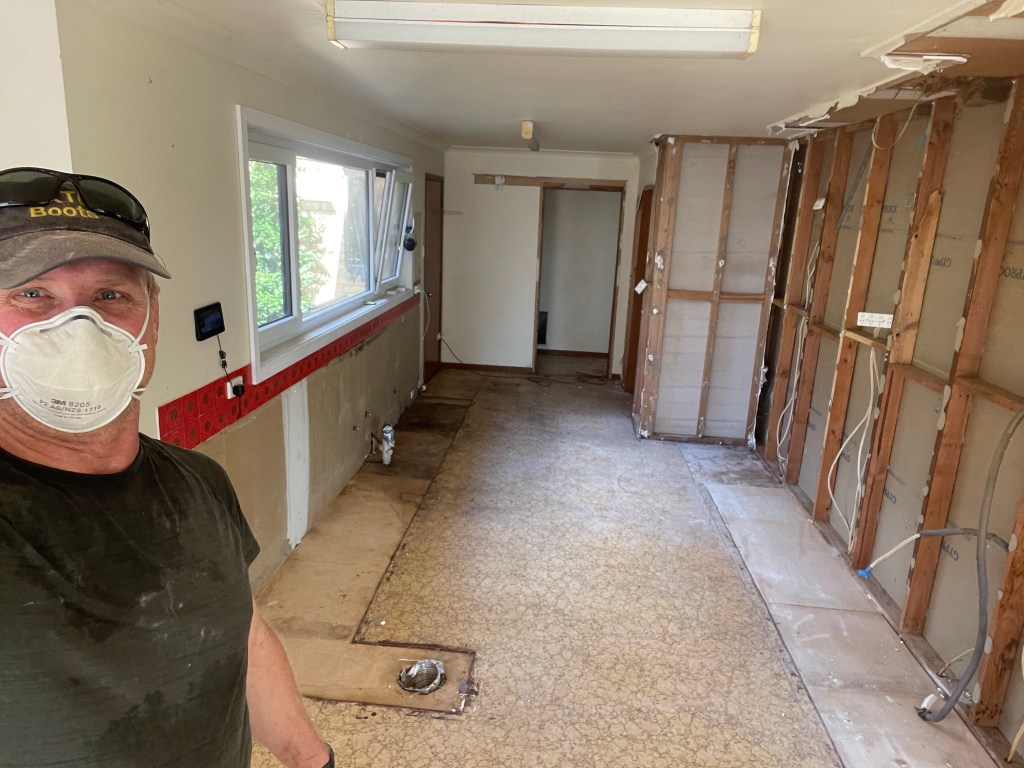
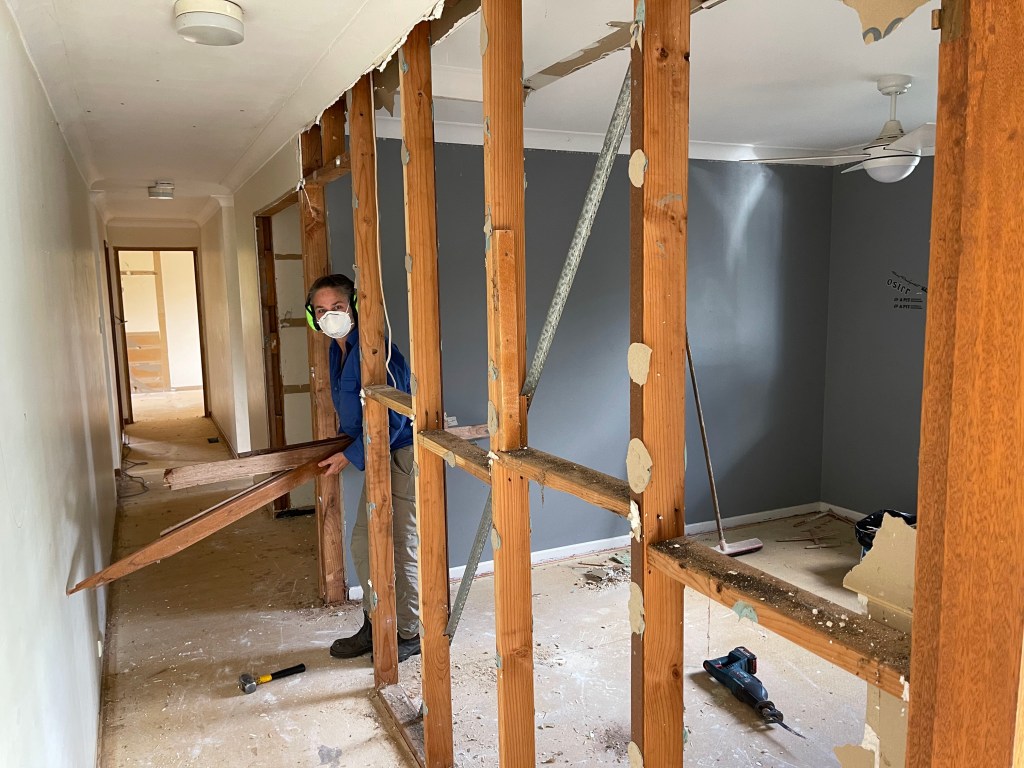
And, of course, because we clearly don’t have enough going on, we decided to make the most of being empty nesters by starting renovations on our home. After seven years of waiting, we’re finally bringing the house into the modern age—and we’ve well and truly dived in.

The demolition phase is going well. Fortunately, we can stay in the small flat attached to the house while we work. Pulling up rotten carpets and ripping off gyprock gives the impression of great progress, though we know things will slow down as we move into the reconstruction phase. Still, it’s exciting to see the potential of our home coming to life.

As summer rolls on, the Rock Farm is once again adapting to the changing conditions—just as we are. While the return to dry weather brings its challenges, it also presents opportunities and is a regular feature of this area. We are enjoying the full spectrum of activities, from weaning the heifers tackling long-awaited renovations. With the tractor rebuild underway and the house taking shape, there’s plenty to keep us busy as we look ahead to whatever the next season brings.

Summer on and off the Rock Farm

One of the things I love most about the Rock Farm is how much the landscape changes from week to week. This summer has been particularly dynamic—starting with dry, poor conditions but transforming into a green-tinted vista after a few refreshing summer storms. Sadly the green is fast turning back to brown as we have missed follow up rains.

Our cows and their calves are all in excellent condition. As January comes to a close, we’re fortunate to still have plenty of ground cover and grass in the paddocks. Many of our neighbours, both to the north and south, have had to destock due to a lack of feed. I’m relieved we made the decision 12 months ago to significantly reduce our herd size (see here: Comings and Goings in an Unusual Season). That choice has eased the strain on our pastures and made this season much more manageable for both us and the cattle.

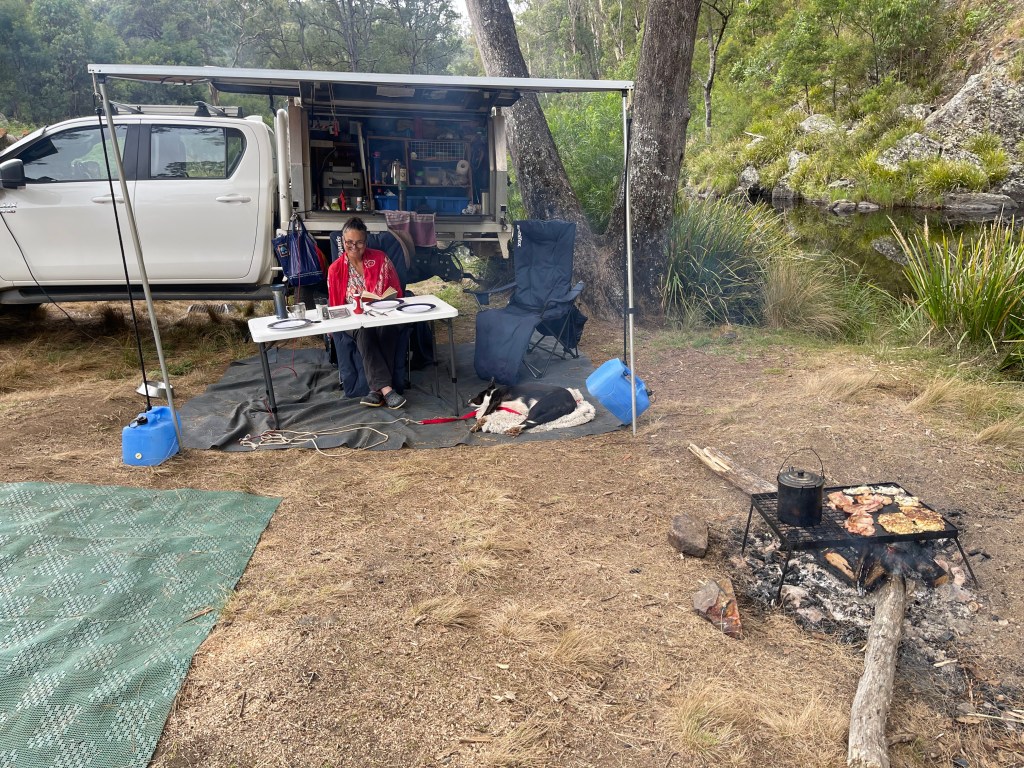
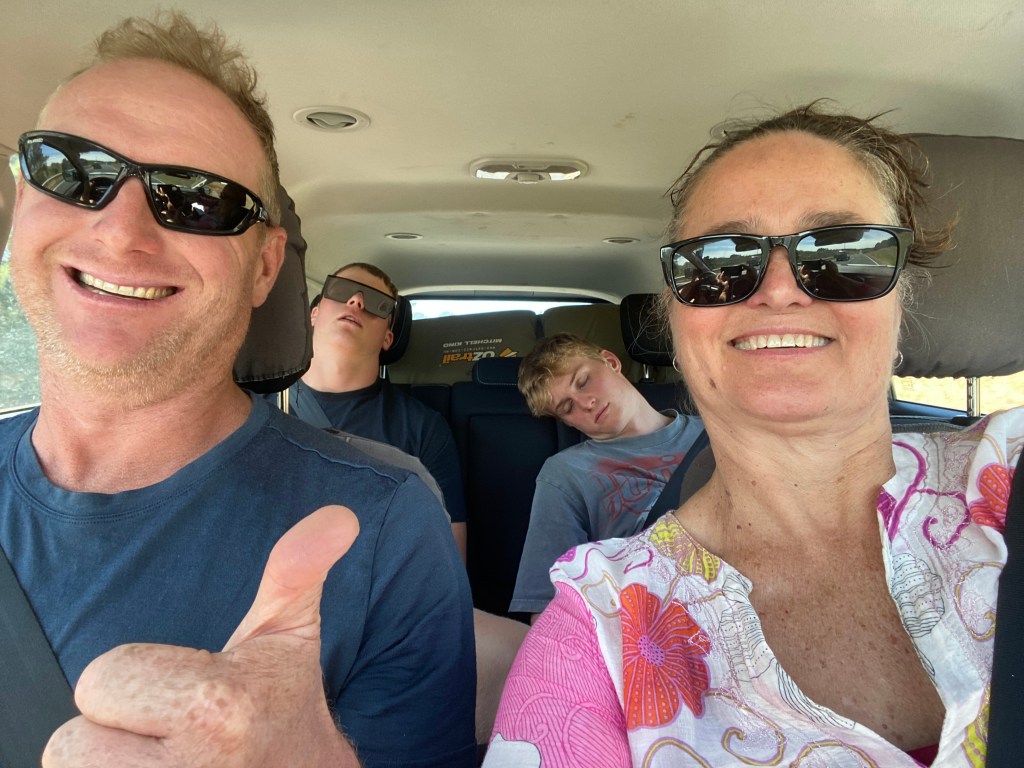
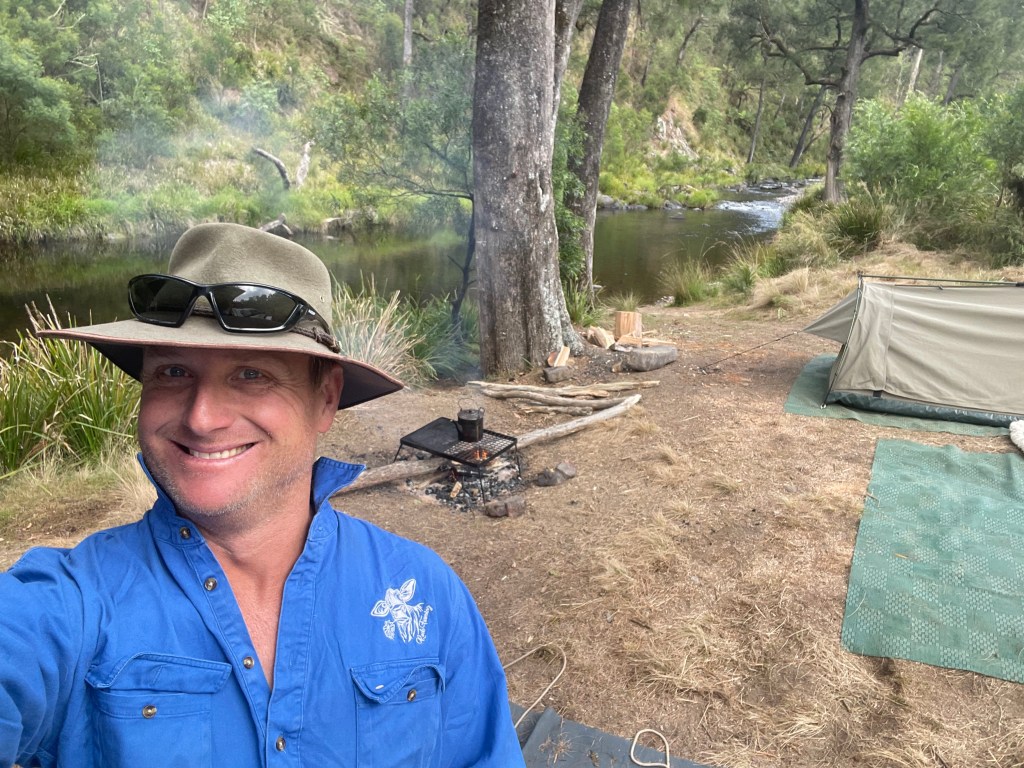
One unexpected benefit of downsizing the herd was the chance to take a short Christmas break. With an extra bale of hay in the paddock and a full dam of water (thanks to Lou’s help: Dry Times Present a New Opportunity), we headed north to spend Christmas with family. The road trip was great fun, made bittersweet as the boys start forging their own paths as young adults. The boys flew home early from the Gold Coast, leaving Jo and me a few days to ourselves. We camped by a swimming hole east of Armidale which were lucky enough to share with a pair of platypus. We had three relaxing nights in our swag before slowly making our way back home.

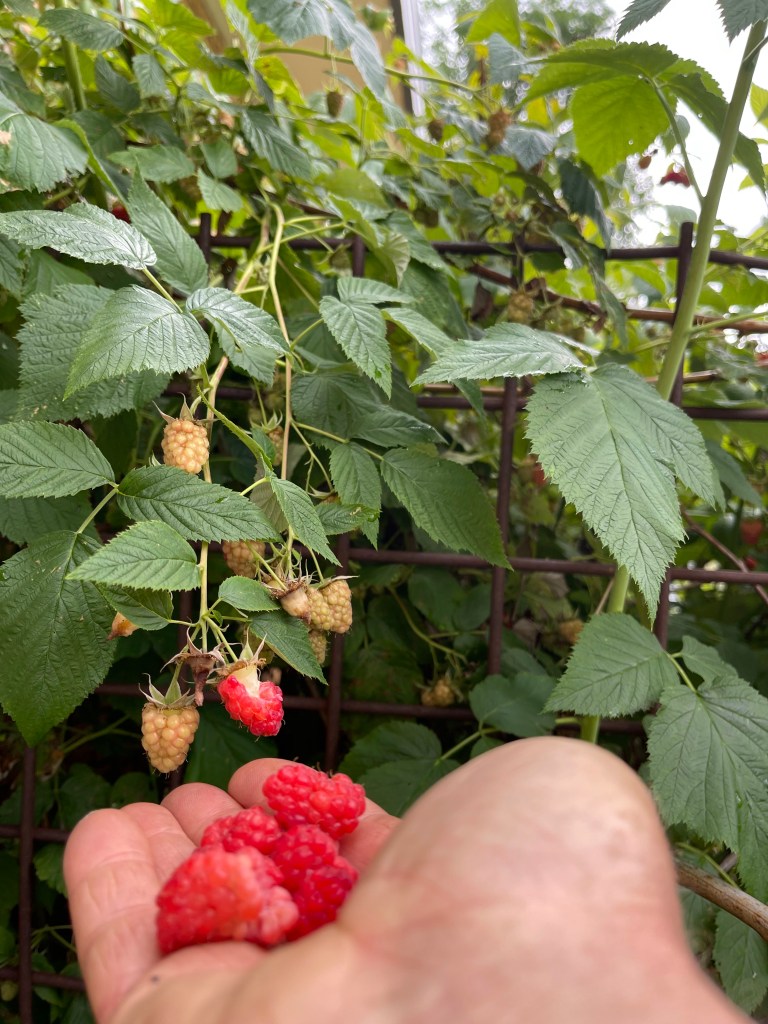
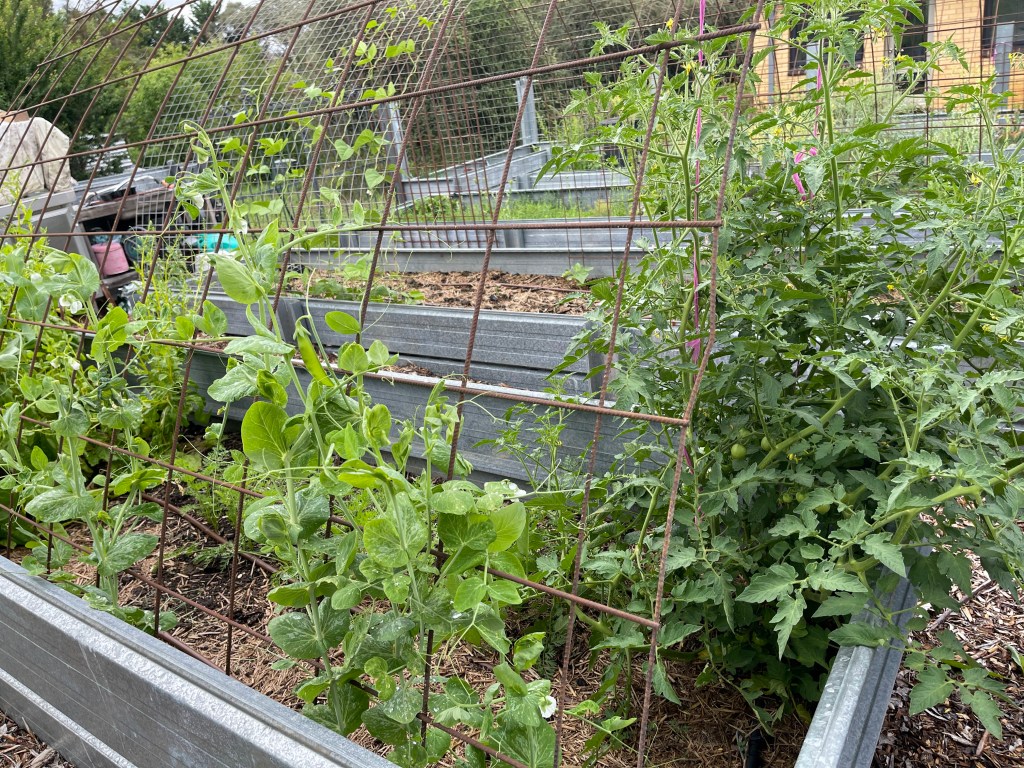
Meanwhile, our vegetable garden has adapted to the season’s changes. The raspberry season was short but delicious. Luckily, our peas, beans, tomatoes, red cabbage, and cauliflowers survived our holiday, and we’re now enjoying the fresh bounty in our kitchen.

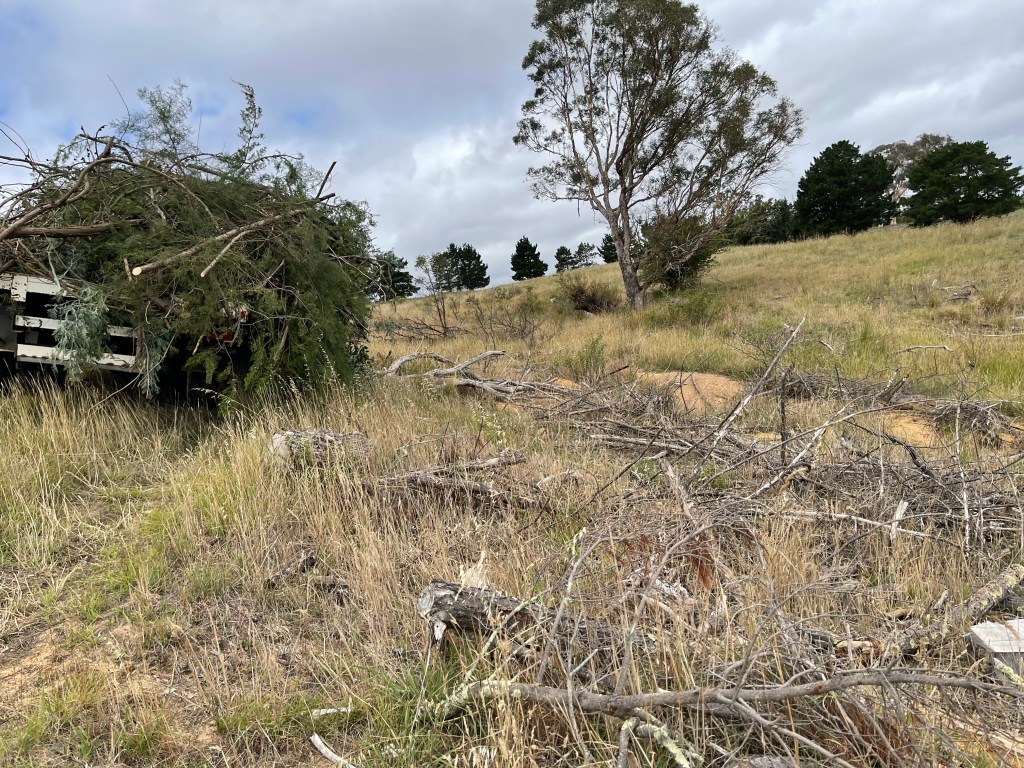
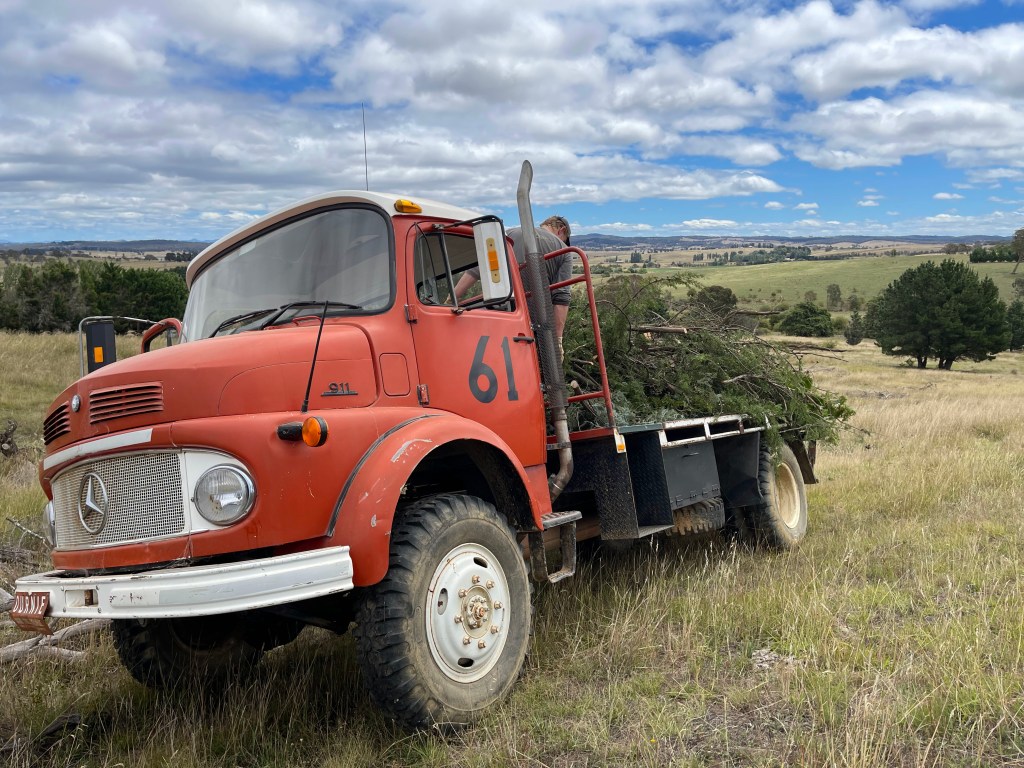
The weather has brought its challenges. While the Bureau of Meteorology hasn’t officially declared a La Niña, the conditions feel markedly different since Christmas. Summer storms have delivered patchy rain and strong winds. Our nearby village lost several trees, but we escaped the worst and we’ve only had some minor clean-up tasks. Myrtle, our big red truck, continues to prove her worth, helping me spread green waste in old gullies. It’s rewarding to see the soil stabilizing and vegetation returning to once-bare patches.

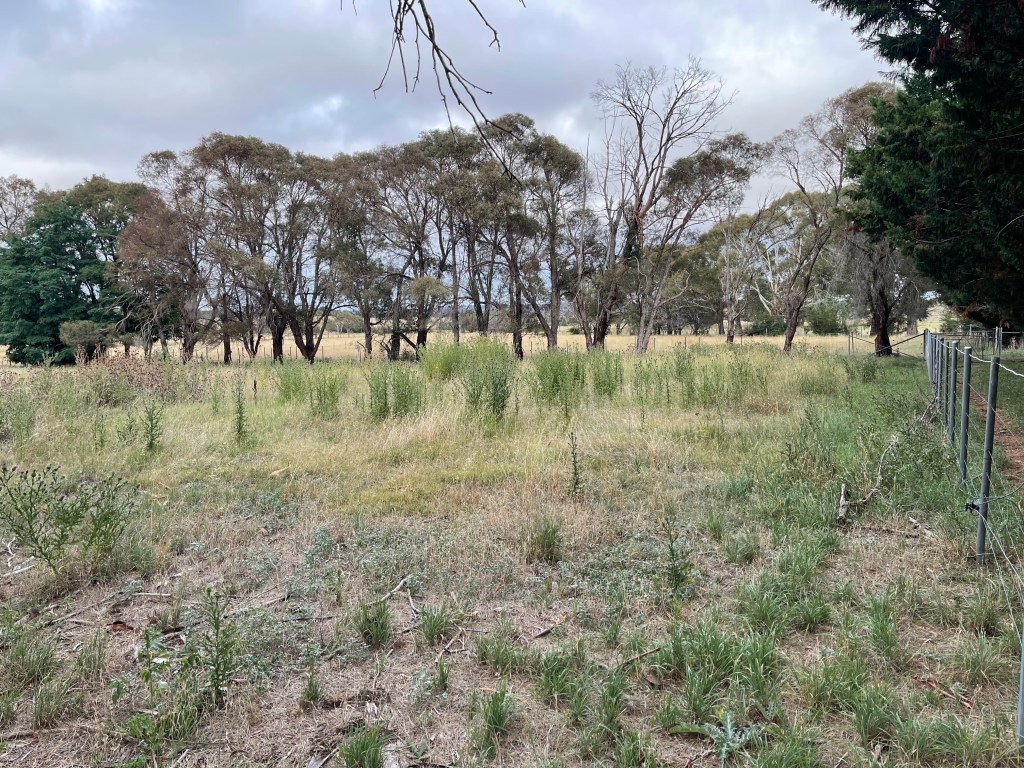
Managing weeds remains a constant challenge on the farm—a timeless battle for farmers. I have a great chipper that is my primary tool for dealing with isolated thistles. A few hours of work (who needs a gym?) allows me to stay on top of most areas.

Slashing has been my go-to method for controlling large areas of thistles. Unfortunately, my tractor is currently out of action. (A whole other story). This means I am falling behind on my thistle control.

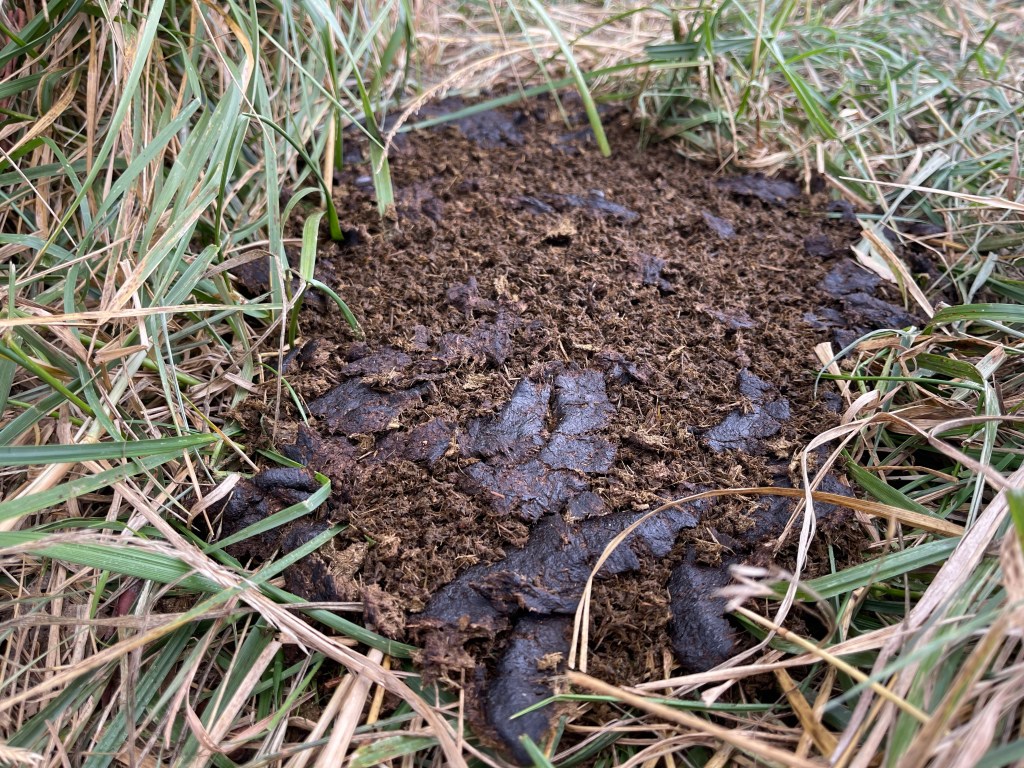
Walking the paddocks with a chipper offers more than just weed control; it’s an opportunity to inspect the pastures closely, clear my mind, and get some exercise. I’ve been especially pleased to see dung beetles at work, rapidly breaking down manure. Their activity is a promising sign of healthy soil—and healthy soil means healthy cattle.

I prefer mechanical methods for weed management over chemical solutions, though my approach often depends on the time I have available. Large areas of thistles. are easily managed by slashing, but more persistent weeds like Serrated Tussock and African Lovegrass need to be chipped out by hand. Unfortunately, I also have to contend with St John’s Wort and Sweet Briar—neither of which respond well to slashing, pulling, or chipping, despite my best efforts and experiments.

The real challenge lies in staying on top of these weeds to avoid using poisons altogether. While herbicides might be effective against the weeds, I can’t help but worry about their potential effects on my health and the health of the soil biota around the sprayed plants. For me, maintaining a balance between effective management and preserving the integrity of the land is an ongoing—and deeply personal—commitment.

As each season brings its challenges and rewards, life on the Rock Farm continues to teach me resilience, adaptability, and gratitude. From managing livestock and nurturing the soil to tackling weeds and adapting to shifting weather patterns, every task reinforces our connection to the land and my responsibility to care for it. The journey isn’t always easy, but the satisfaction of seeing healthy pastures, thriving cattle, and the fruits of our labor makes it deeply fulfilling. With each passing week, the landscape reminds us of its power to change and renew. I love it.

Navigating Farm Life: New Calves and Family Milestones

The past couple of months have been bustling both on and off the Rock Farm.

Our beautiful calves, now approaching three months old, are thriving—including our delightful twins. To my surprise, all ten calves turned out to be heifers, a rare occurrence. While steers typically fetch higher prices at the sale yards, having heifers opens up more future options for us. About a month ago, they received their first round of vaccinations and will soon be due for their second. I use a 7-in-1 vaccine to protect them against various clostridial diseases and common leptospirosis strains, which can affect both cattle and humans.

As in previous years, we’ve leased a bull from John at Crookwell. This handsome fellow shows off his Normande ancestry—a dual-purpose dairy and beef breed originating from Normandy, France. Renowned for producing rich milk prized in the cheese industry and for their fast-growing progeny, Normandes are also celebrated for their exceptional carcass quality and marbling potential. In France, Normande beef is branded much like Angus beef is in Australia. (For more information about the breed, visit: https://www.thecattlesite.com/breeds/dairy/68/normande.)

The bull made quite an impression on our girls when they first met, though he seemed a bit unsure of how to handle a group of established, mature cows. Thankfully, he settled in quickly. He’s a gentle, quiet chap, and we’ll miss him when he returns home next week.

Our pastures shifted quickly from lush green to golden brown, as is typical for November. But an unexpected 50mm of rain last weekend soaked the land. While it turned the pasture into mush temporarily, it promises fresh growth that will benefit us through summer. For now, we’ll rotate the cattle through paddocks to manage the short-term feed shortage until the grass catches up.

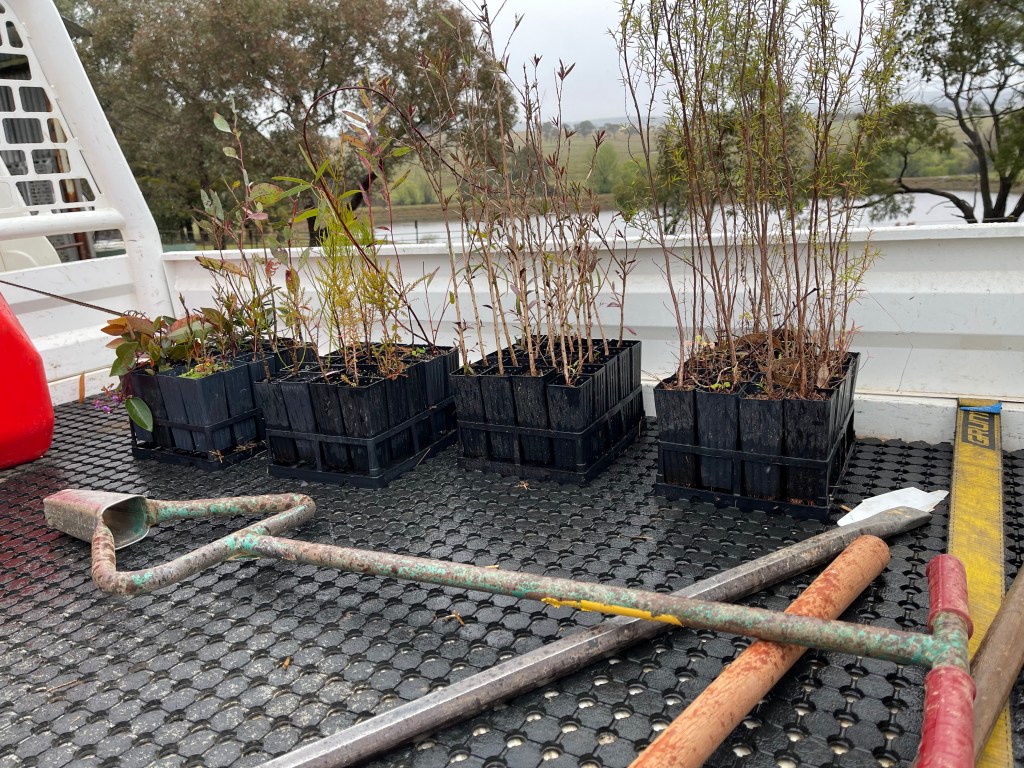
In other news, we’ve planted another hundred or so native tubestock across the farm, purchased from the local Greening Australia plant sale. These will help restore areas around the Rock Farm. I’m particularly excited about the drooping she-oak (Allocasuarina verticillata), one of my favorite trees and a primary food source for the Glossy Black Cockatoo.

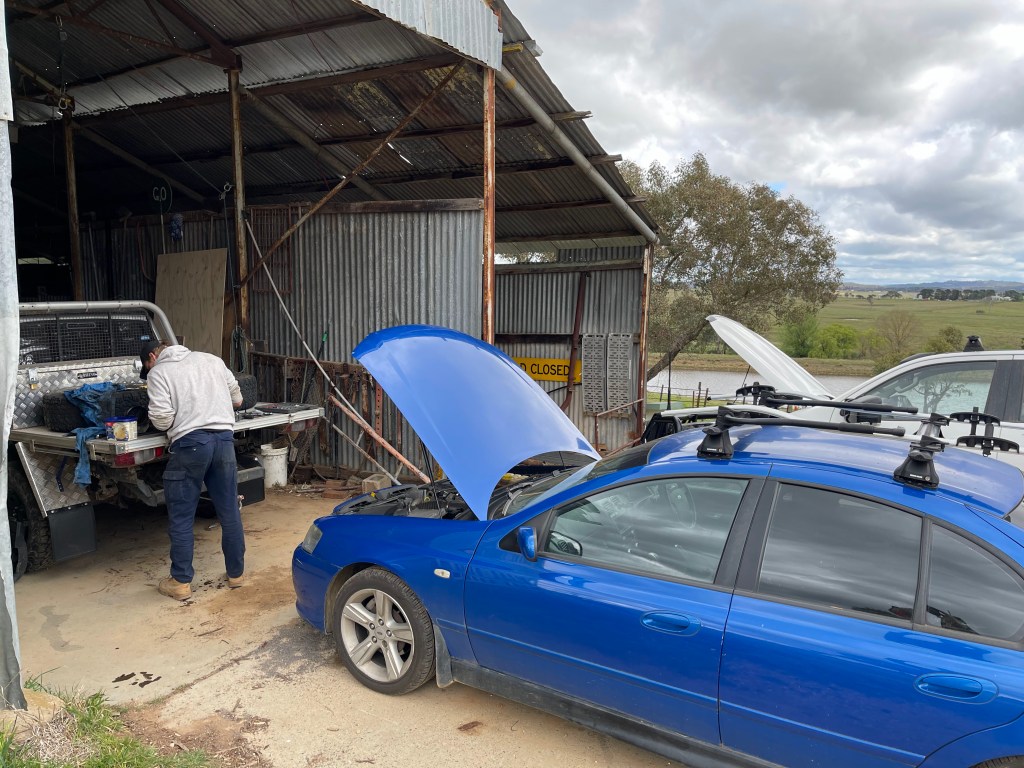
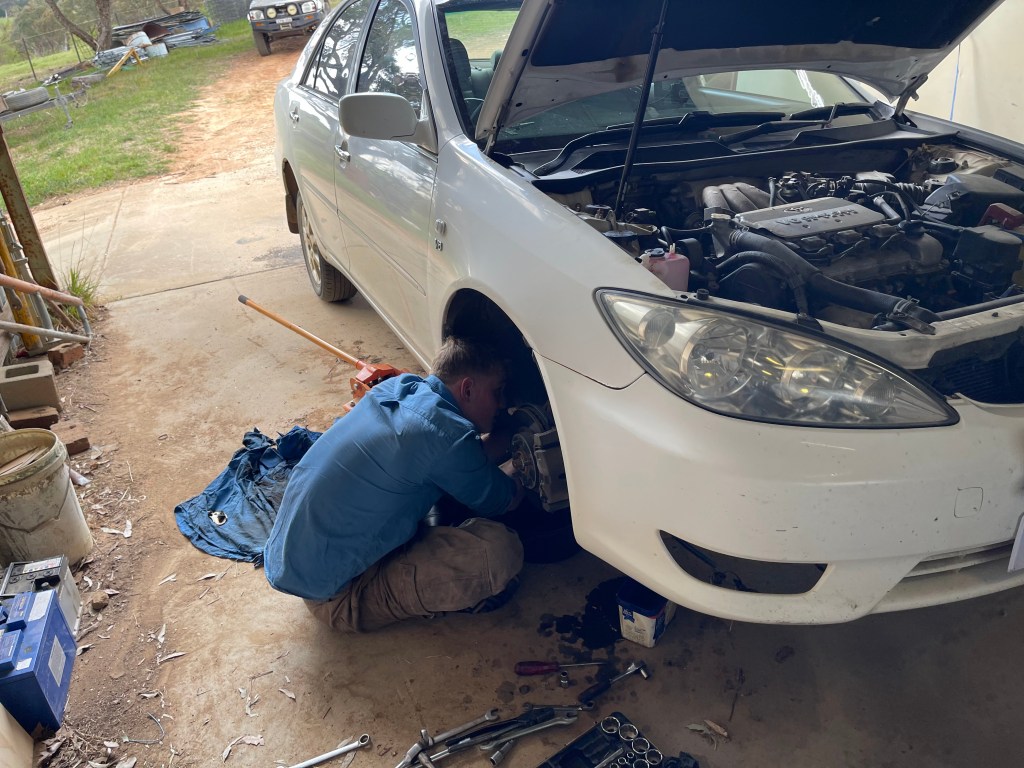
On the family front, the boys are becoming impressively independent. Recently, both tackled replacing power steering pumps on their cars—an easier task on the blue Falcon than the white Camry. It’s been great to see their confidence and skills grow, enabling them to handle such projects and get their vehicles back on the road. The older one is also working on re-registering a 4WD ute. Though the project proved more ambitious than he initially thought, he’s nearly there—a fantastic achievement.

Life hasn’t been all about the farm. We had a couple of family reunions in Warwick and Goondiwindi, which took us north for a few nights. I also managed to squeeze in a couple of stints at sea—just enough to get some salt in my hair and make time fly.

A big milestone for our family was celebrating the youngest helper finishing high school, marking the end of that chapter for us. While the boys aren’t as keen on photos these days, we’re incredibly proud of the young men they’re becoming.

The farm has provided them with so many different opportunities to explore what they want to become. They have made all sorts of crazy contraptions, getting more complex (and expensive) as they have got older. Living out of town brought challenges too, with long drives for school and sports, and the farm occasionally felt more like a burden than a solace, especially when planning long holidays.

But overall, the Rock Farm has been a tremendous gift. It’s built their confidence and equipped them with a range of skills—from handling livestock, riding motorbikes, fixing fences, and welding steel to identifying weeds, handling a rifle safely, and turning timber into art. They can repair machinery, split pipes, and even navigate the digital world with ease—leaving their old man in the dust when it comes to Fortnite, modern mathematics, 3D printing, and design.

Reflecting on these past months, it’s clear how much life on the Rock Farm continues to shape and enrich our lives. Whether it’s nurturing our cattle, restoring the land, or watching the boys tackle new challenges, every moment reinforces the value of this lifestyle. While it’s not without its trials, the farm has been a place of growth, learning, and countless memories. As we look ahead, I’m reminded that it’s these simple, meaningful experiences—shared with family and rooted in purpose—that truly make the journey worthwhile.
Spring Calving Challenges on the Rock Farm

Calving is one of my favourite times on the Rock Farm. We started a little earlier than normal this year – driven by our desire to have a holiday late last year. Thankfully with the unseasonably warm August, we are getting through it ok. After losing a maiden heifer to bloat a couple of months ago, we are down to 11 cows, but we suspect two are dry.

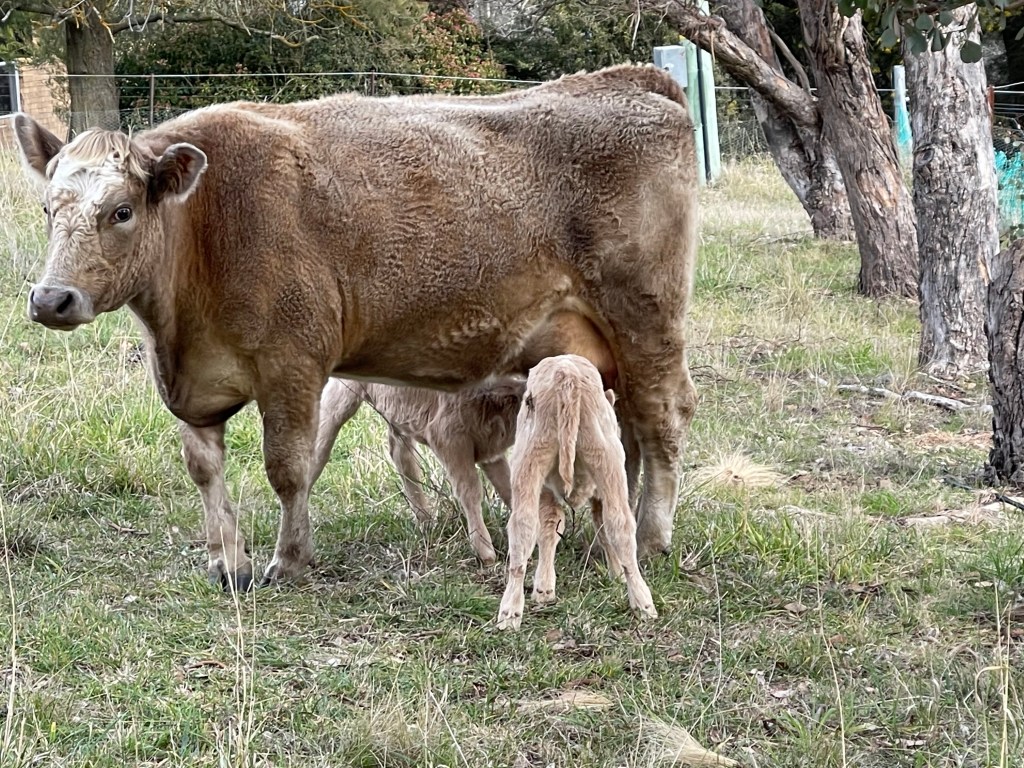
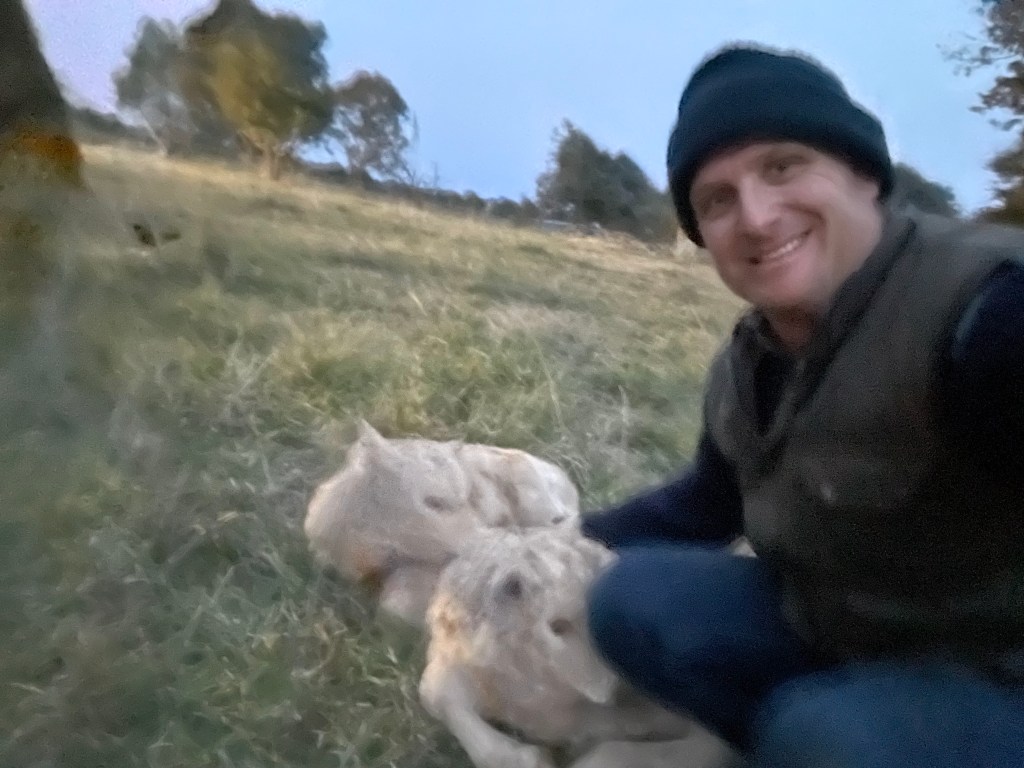
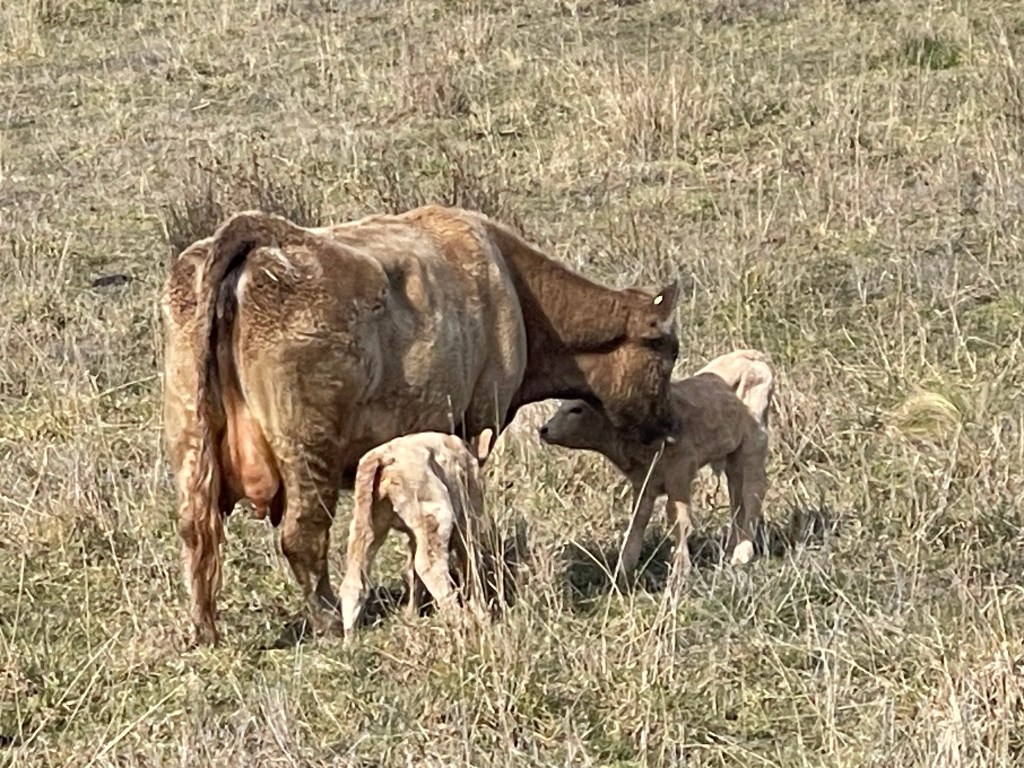
Calving hasn’t all been smooth sailing. It never is. One of our cows had twins. Relatively unusual in cattle, survival of the second calf is extremely rare. And we learnt why. It’s because cows can’t count!

Twins were born to cow Grey Girl. I swear she didn’t realise she had two calves to look after. She seemed surprised to find her calf in front of her, and then, by the time she turned around it appeared behind her again. What started comically almost ended in tragedy. The first morning following their birth, we could only find one calf – pushed through a hinge-joint the fence into the neighbour’s. After quickly reuniting this calf with mum grazing nearby, so commenced a desperate search for the other – with no success. We feared the calf had either frozen overnight, or had been taken by wild pigs.

With downcast hearts, we eventually returned towards the house, only to find at the opposite end of the paddock, tucked into a sunny spot the other twin.

We separated Grey Girl and her twins from the herd and put them in a small paddock for the next couple of days. This allowed the calves to gain strength enough to follow mum around and fight for their own supper. The strategy worked, and a week later Grey Girl and her twins returned to the herd where they continue to prosper.

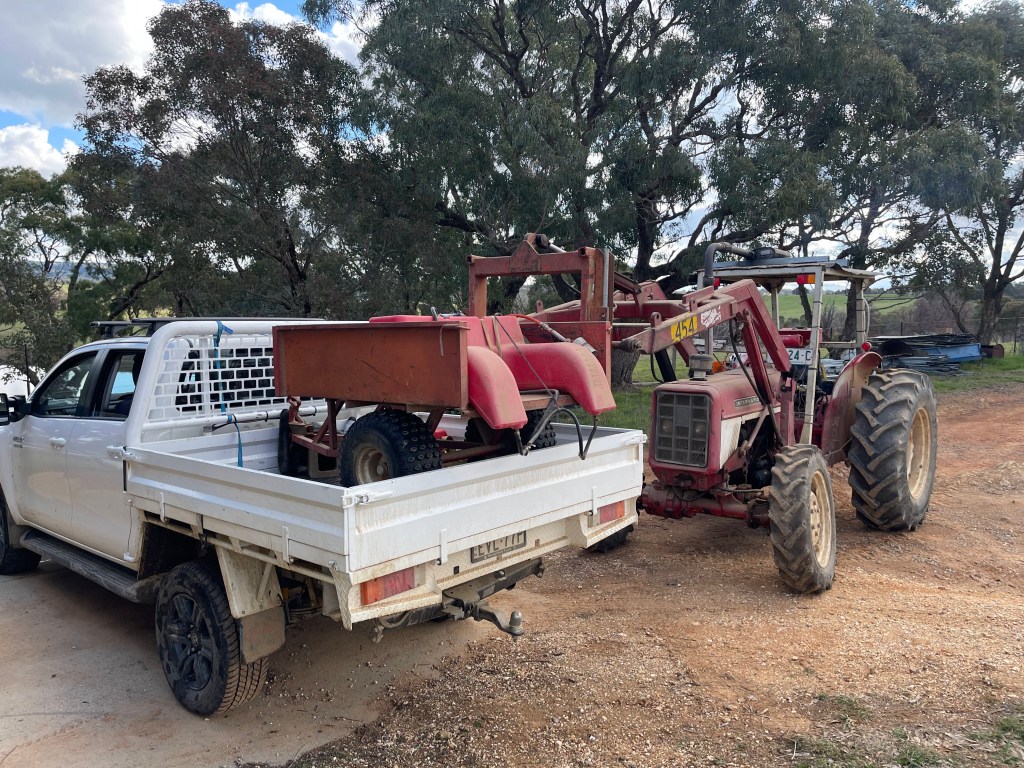
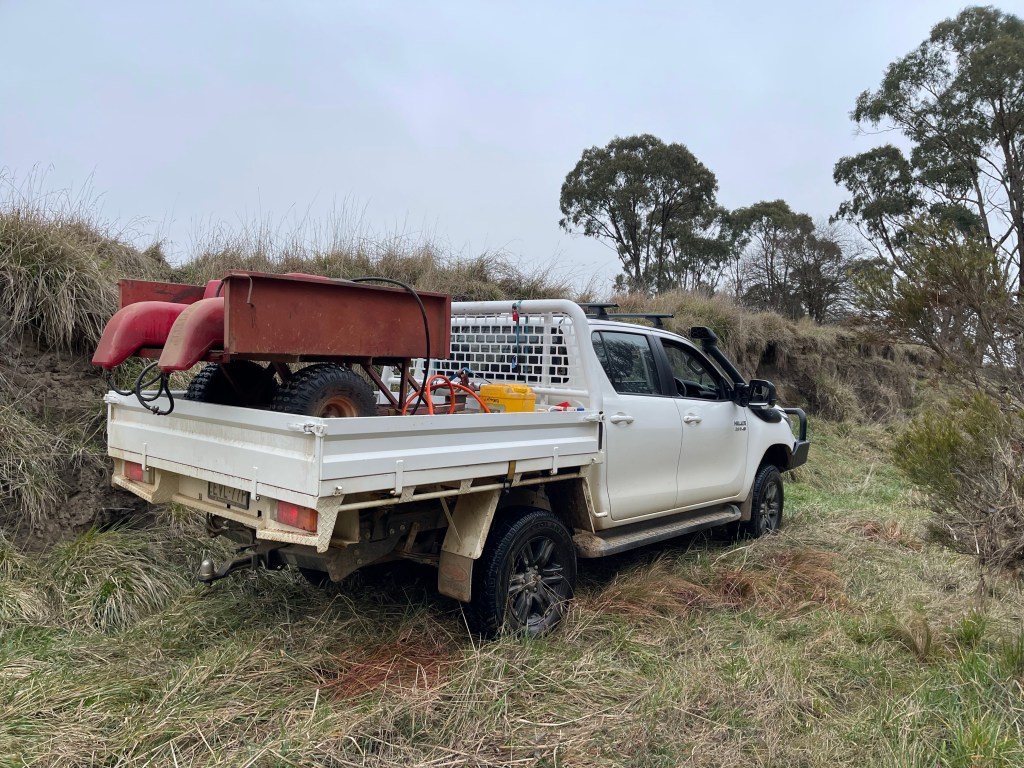
Whilst it is easy to waste so much time just hanging out with the cows, Spring is also a busy time on the Rock Farm. Sadly in some areas the serrated tussock has got established. Whilst I have been madly chipping out isolated little patches of it, in some areas it was far more effective to use chemical spray. This is my least desired strategy, but it is effective. I had a couple of tight areas, where I knew I wouldn’t be able to reverse a trailer, so I lashed the spray trailer to the ute bed, and got onto the task.

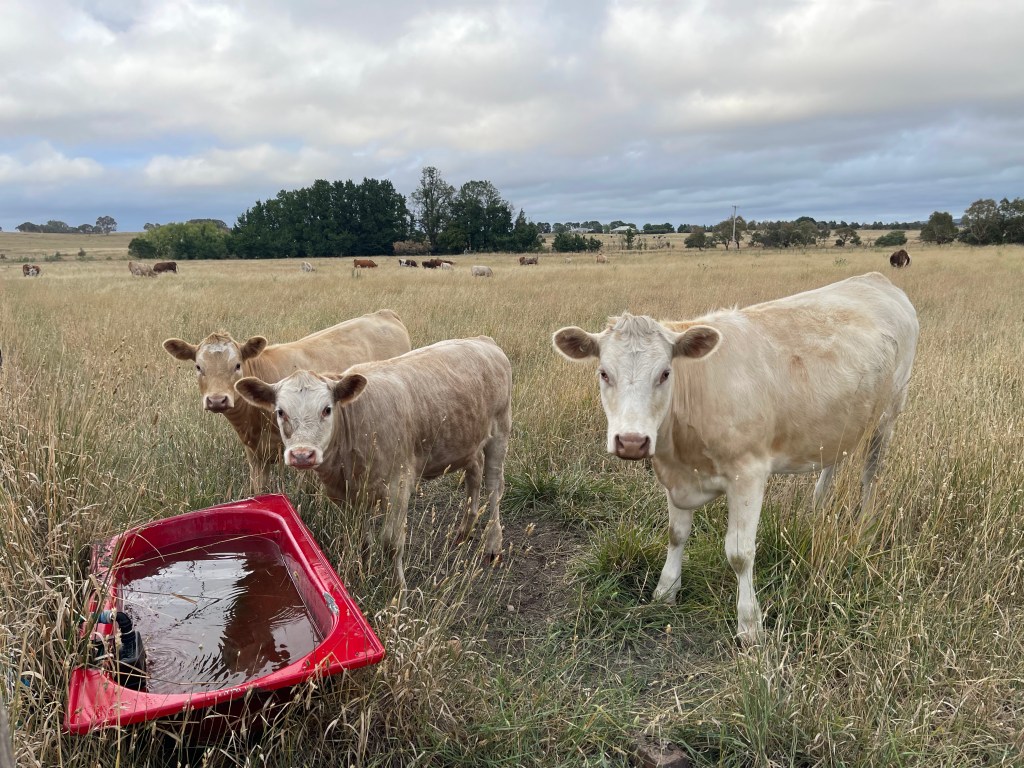
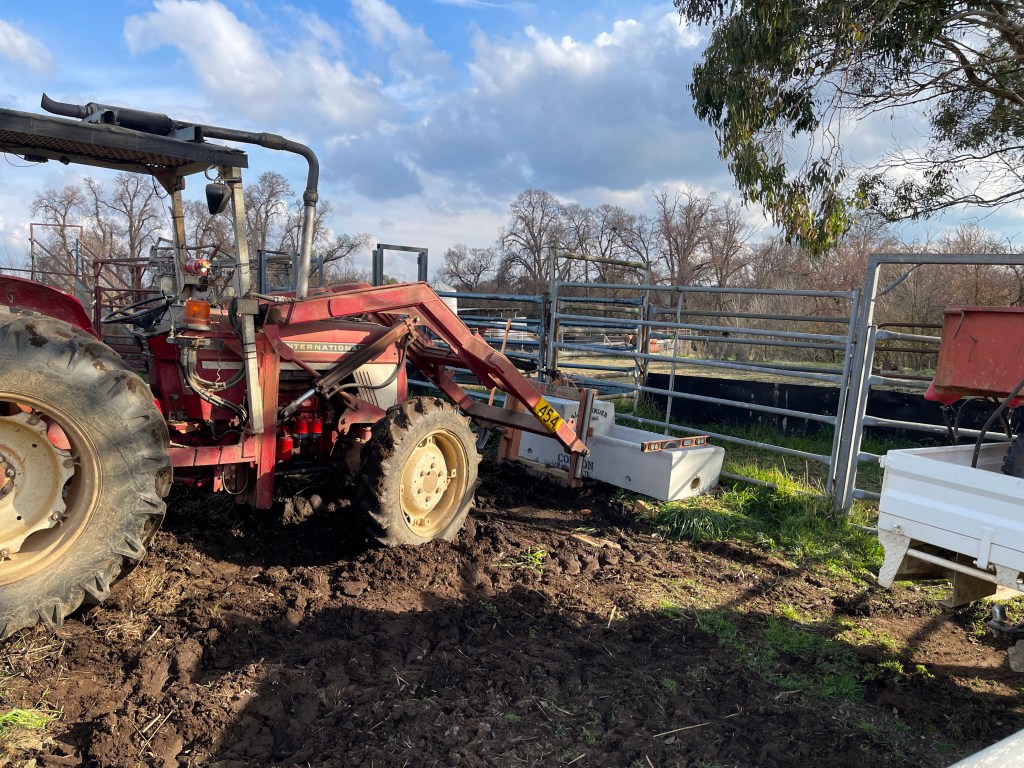
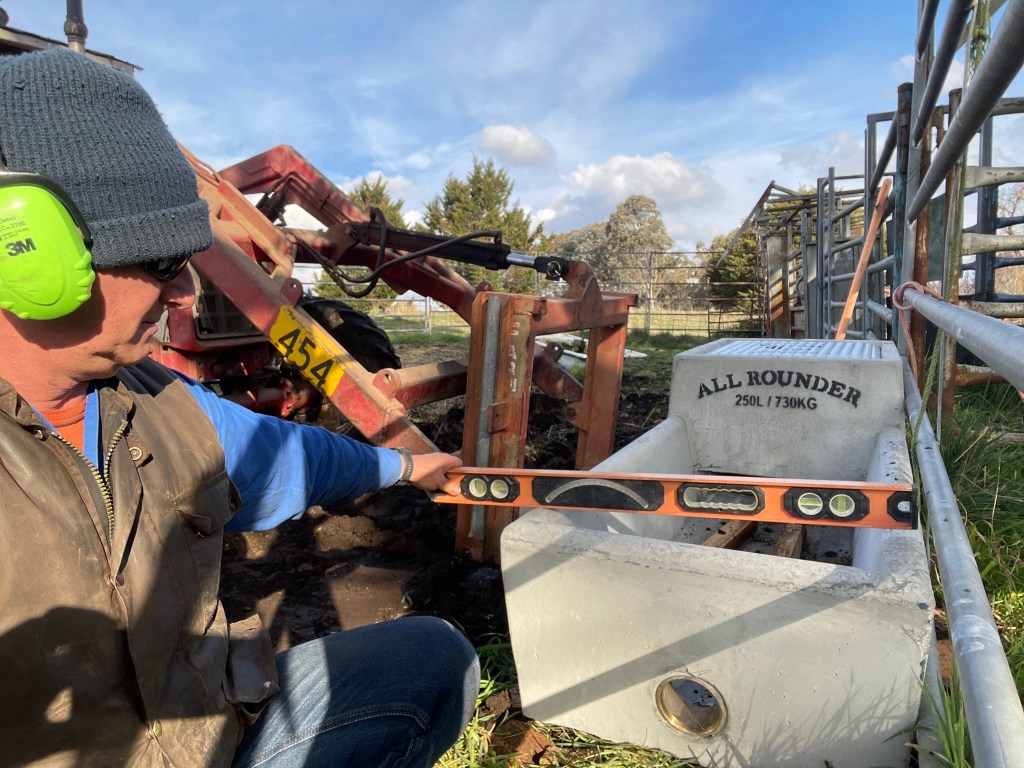
Little (and not so little) projects abound on the Rock Farm. One that had been sitting on my to-do list for a while was to replace the leaky unreliable bathtub water trough in the yards with a new concrete tank. It took a bit of fiddling to get the levels right (after nearly getting tractor well and truly wedged in the yards), but I was happy with the result.

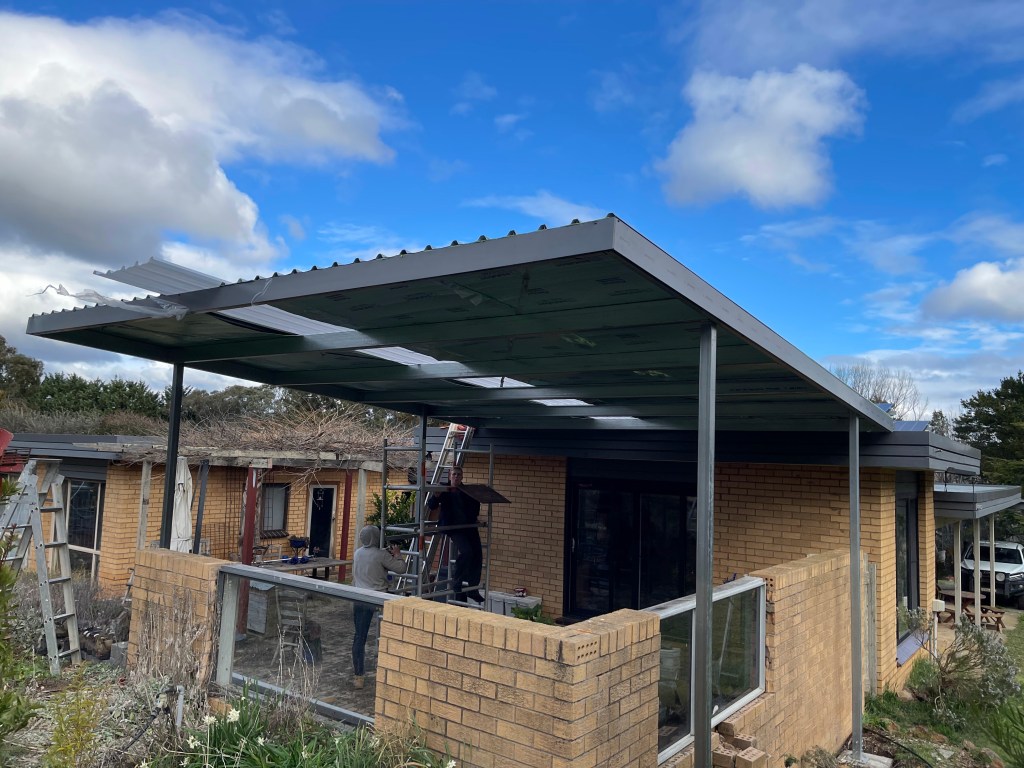
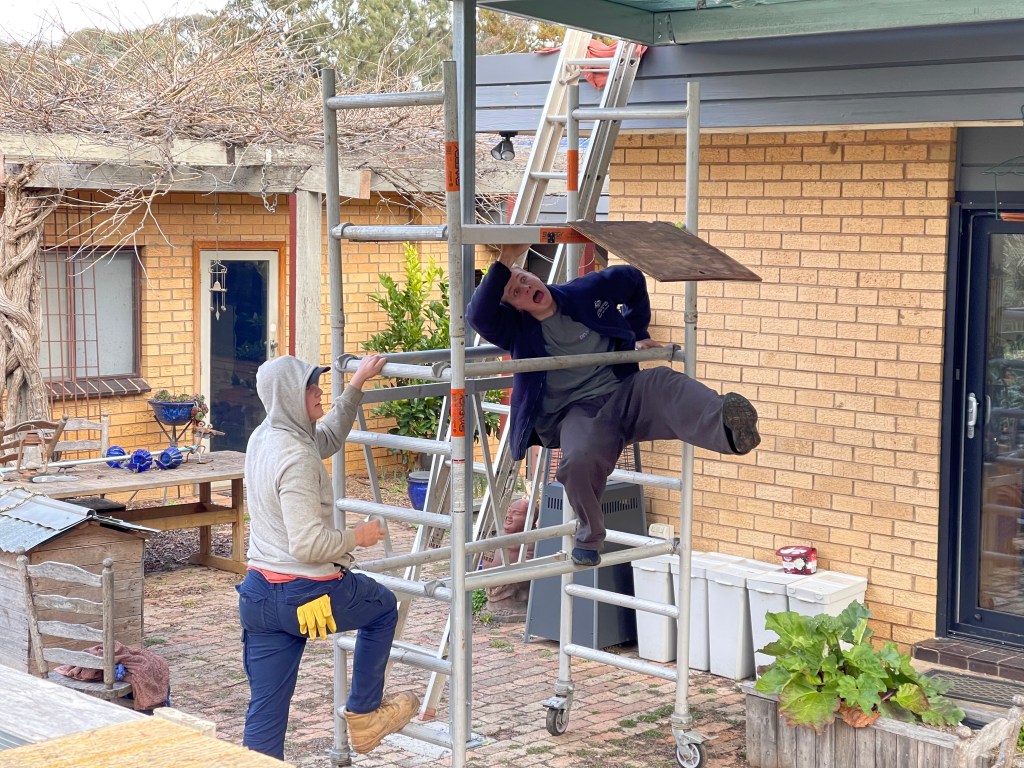
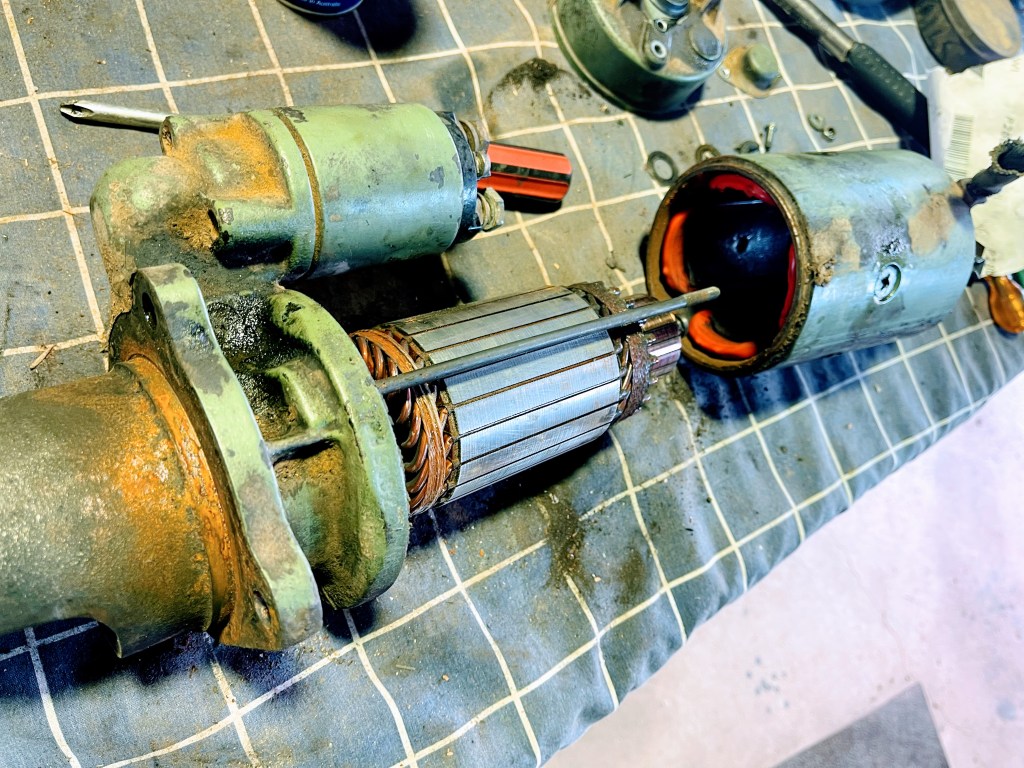
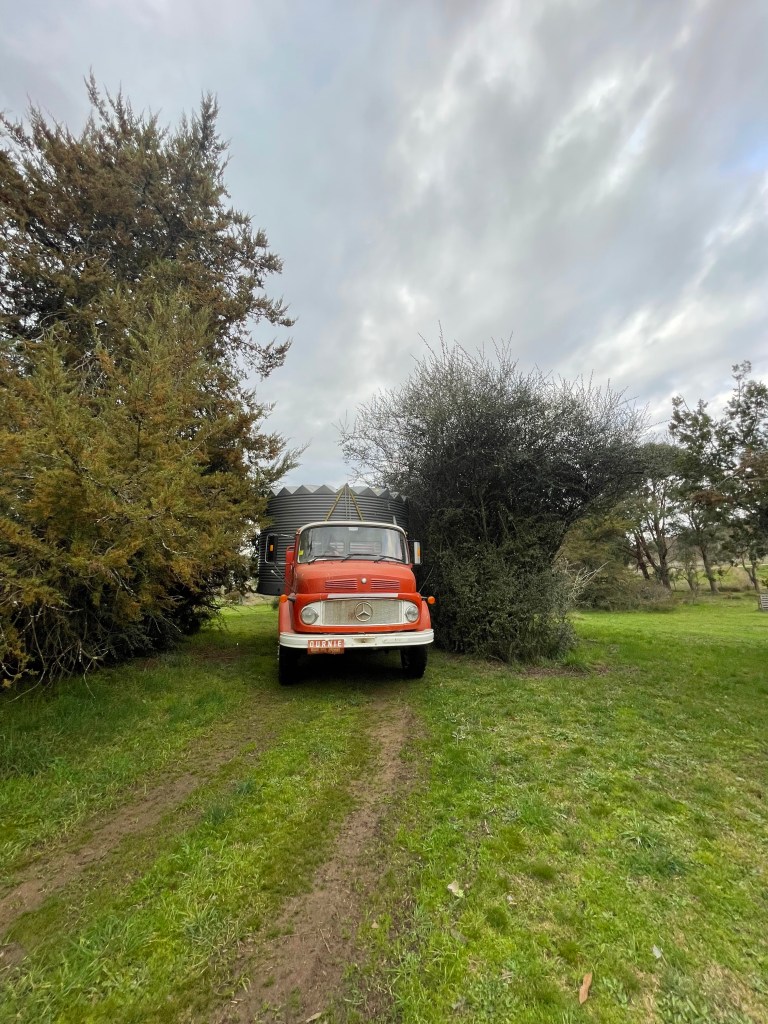
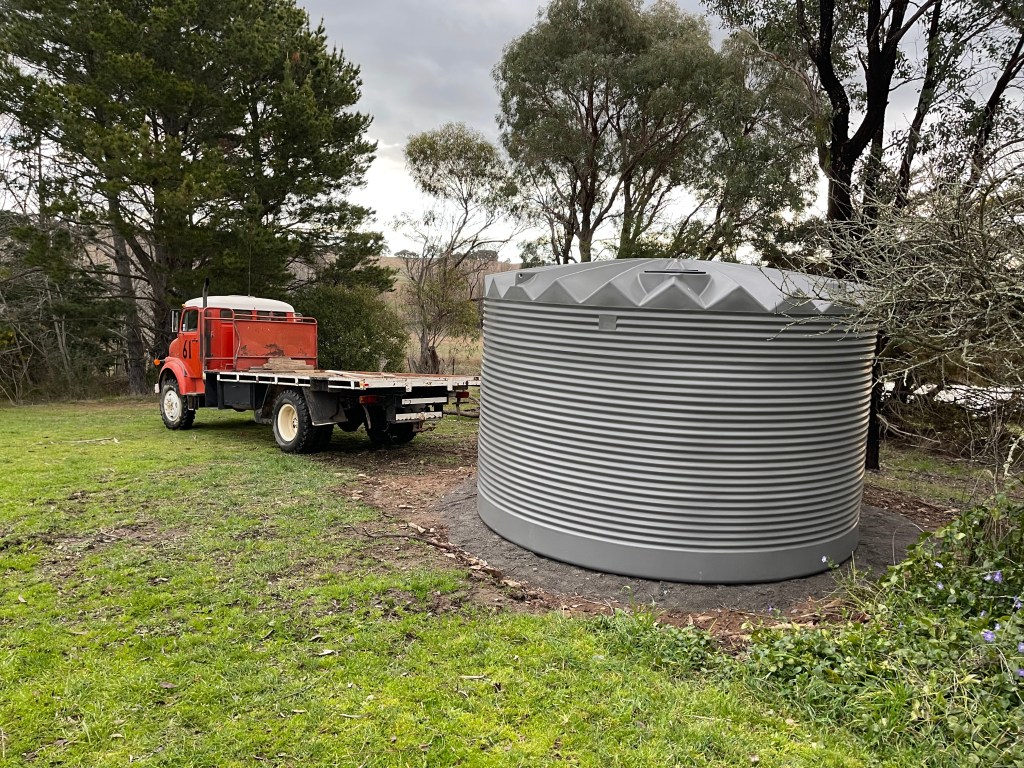
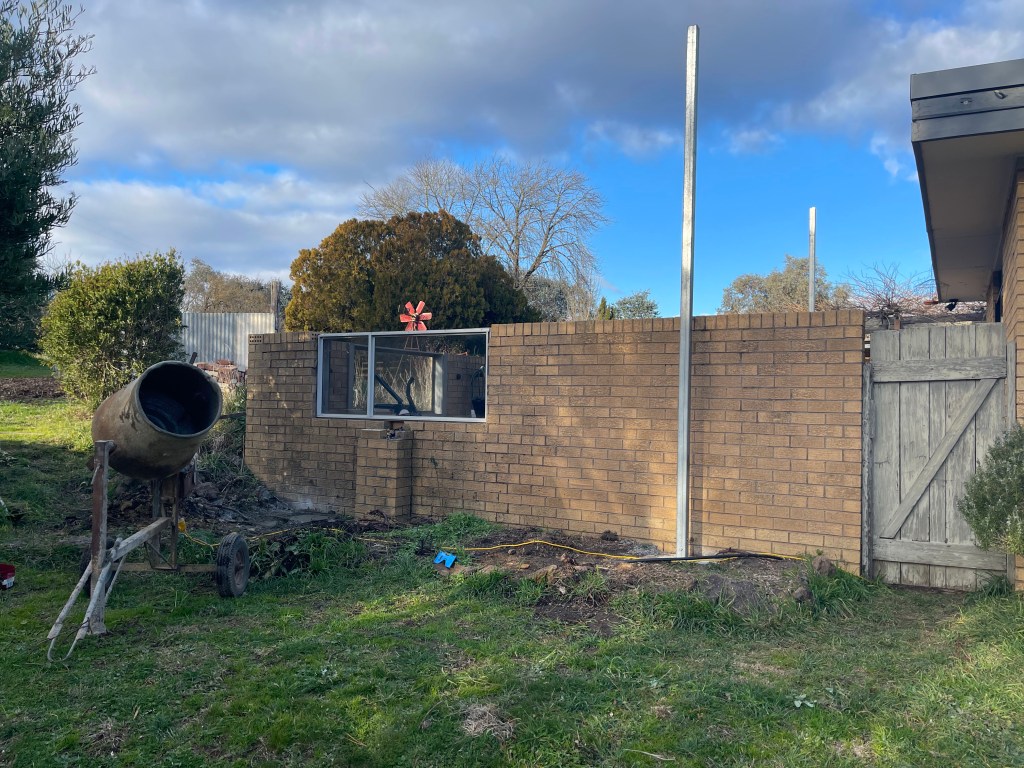
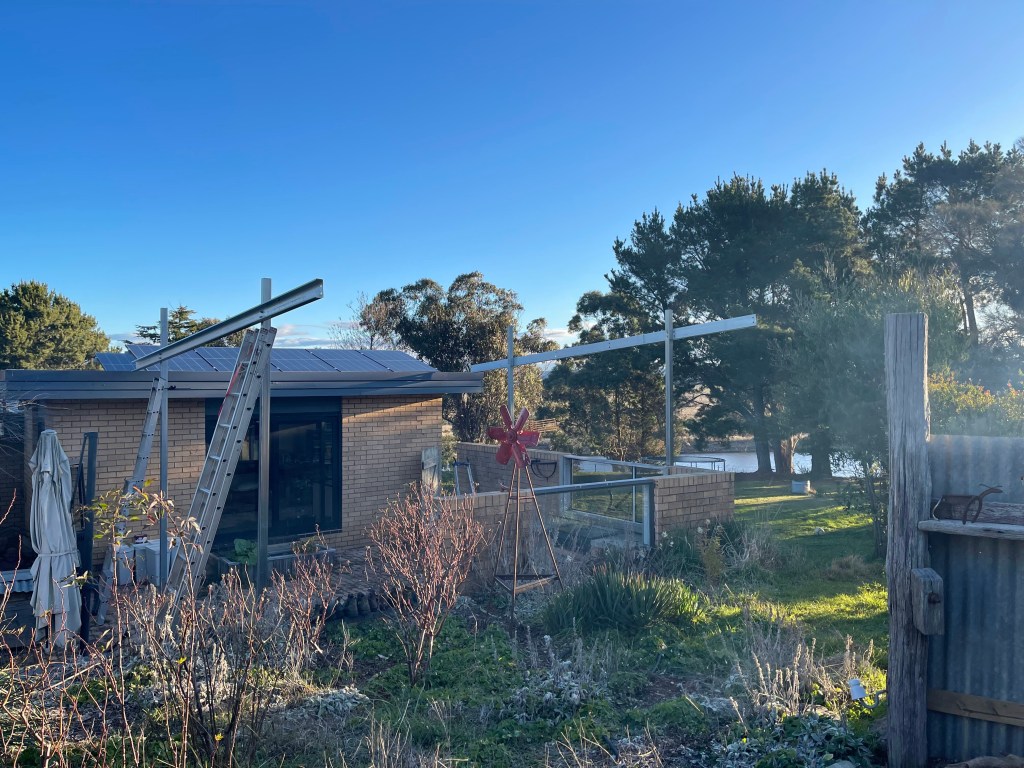
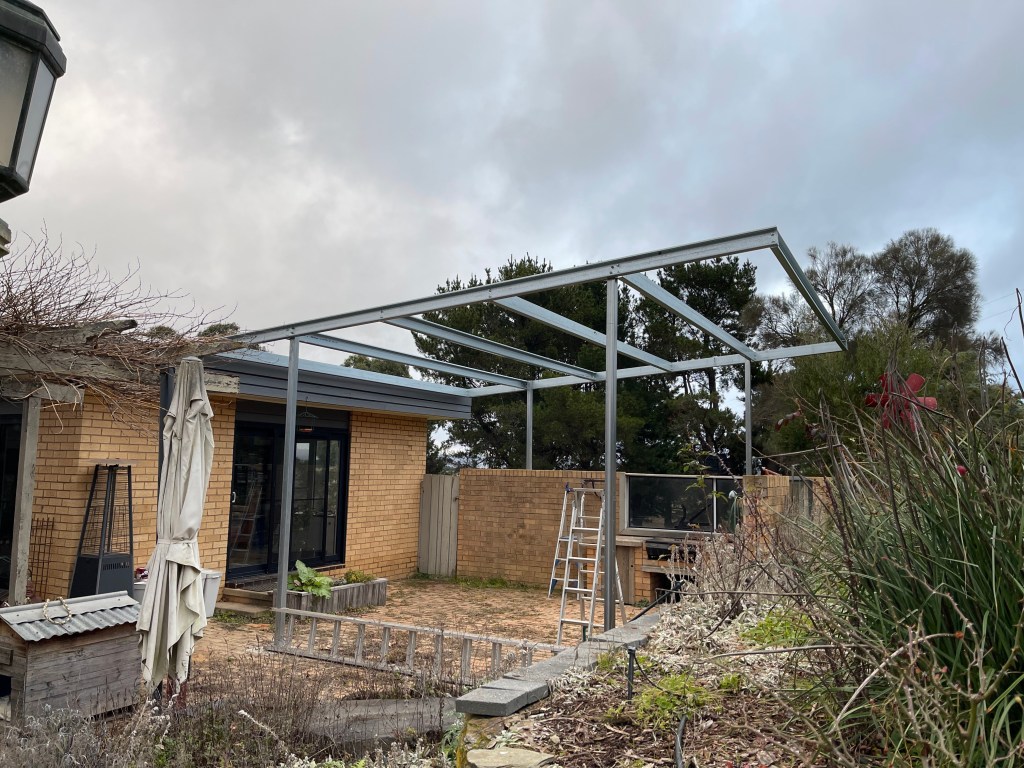
Most projects aren’t wrapped up so quickly and are best described as continuing. We pulled down our existing patio in January. Pulled down is really an euphemism for pulling out a couple of nails and watching it fall down! A new steel carport is slowly taking shape to provide shelter over the BBQ. I was lucky to get the help of a couple of key assistants coinciding with a reduction in wind to get the roof sheeting on. And with any new roof area comes an opportunity to store more water. A new tank arrived, but the delivery driver baulked at taking his shiny new truck to the prepared site. Thankfully Myrtle (sporting a refurbished starter motor – nothing is ever simple) had no problem in taking to the task at hand.

The next challenge is to hook up the down pipes and be ready for the rain if it should ever fall again. We are now almost two months since our last rainfall and things are rapidly changing from being unseasonably warm and growing to stunted growth and grass bolting to seed. The next couple of weeks will be critical in determining what season we will have and we will keep our fingers crossed.

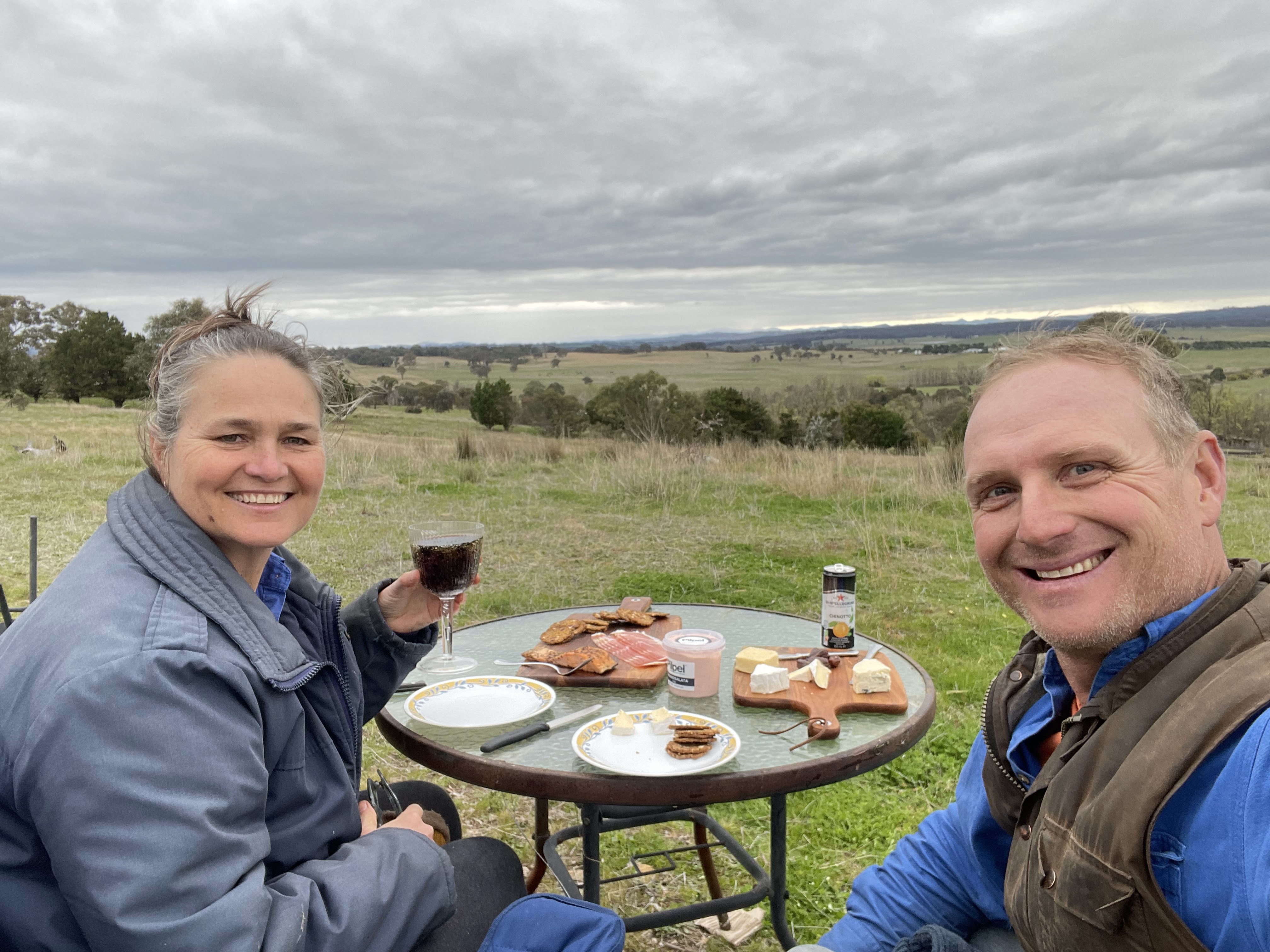
In the meantime it is important to celebrate little milestones like birthdays and wedding anniversaries with the people who matter. After a morning planting bare rooted fruit trees into the orchard, we took a few moments to enjoy lunch on Bee Hill. Sometimes the simple life isn’t that simple, but I sure am lucky to be sharing the adventure with this lovely lady 🙂

Of course I am not the only one with projects! It is great to see the boy’s really getting into their own interests now, but of course, that is a story for another time.

The Coldest Week of the Year and Some New Arrivals :)

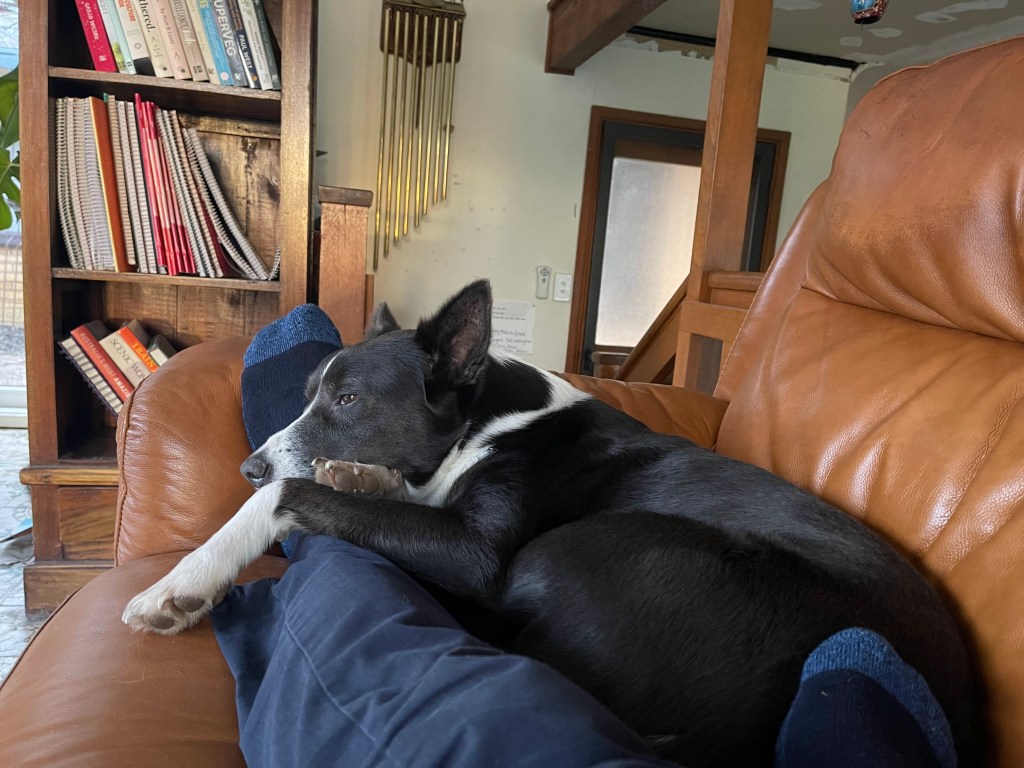
In this part of the world, the second week in July is historically the coldest week of the year for air temperature. The soil temperature continues to cool until the first week in August before it starts to warm, encouraging pasture growth. There is some variance, of course, but overall, it is a good time of year to bunker down in front of the fire and plan out the next few months. Sapphire agrees, especially when the wind and sleet are coming in sideways.

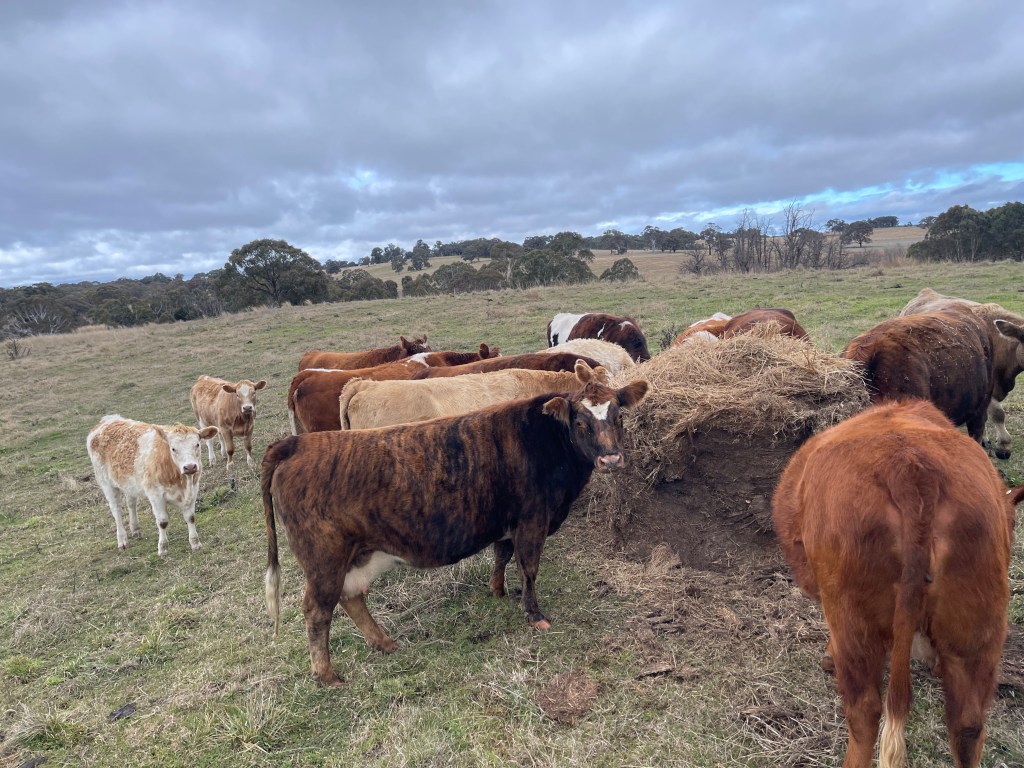
The paddocks are looking typical for winter. Short green grass and some standing dry matter makes for slim pickings for the cattle. Despite reducing our numbers heavily, we have chosen to supplement the cattle’s feed with the odd bale of hay.
The older cows remember the sound of the tractor well and were very happy to see me, despite them all being in good condition. They will need every ounce of condition once they calve and start producing milk.

We have spent a fair amount of time inside this winter planning, dreaming, measuring, and pacing out a long-overdue renovation of the house. The Rock Farm homestead was built in the 1970s and is in almost original condition. We have done a few things to the house to make it warmer since we moved in (insulation in the roof, a new fireplace, and some new windows), but the majority of the house is very much as it was when it was completed (we think – our local council has a distinct absence of records relating to our home). We are enjoying planning what it might become.
Despite the impending renovation, those who know us well know we have a long list of projects already on the go. The latest one is the construction of a new patio above our BBQ area, to be followed (one day) by a homemade pizza oven and new BBQ. It has been a whole family affair, with a fantastic day’s work from my brother, which saw us get the rafters up, and Jo and the still-at-home helper lending a hand getting the purlins and fascia ready for the new sheets.
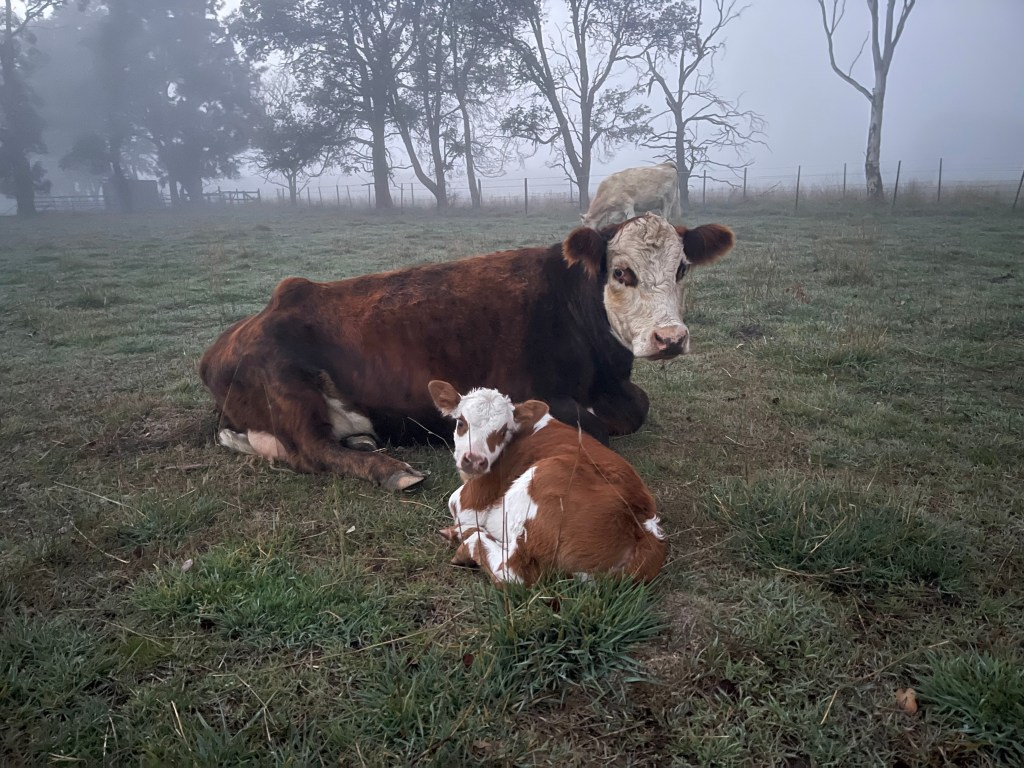
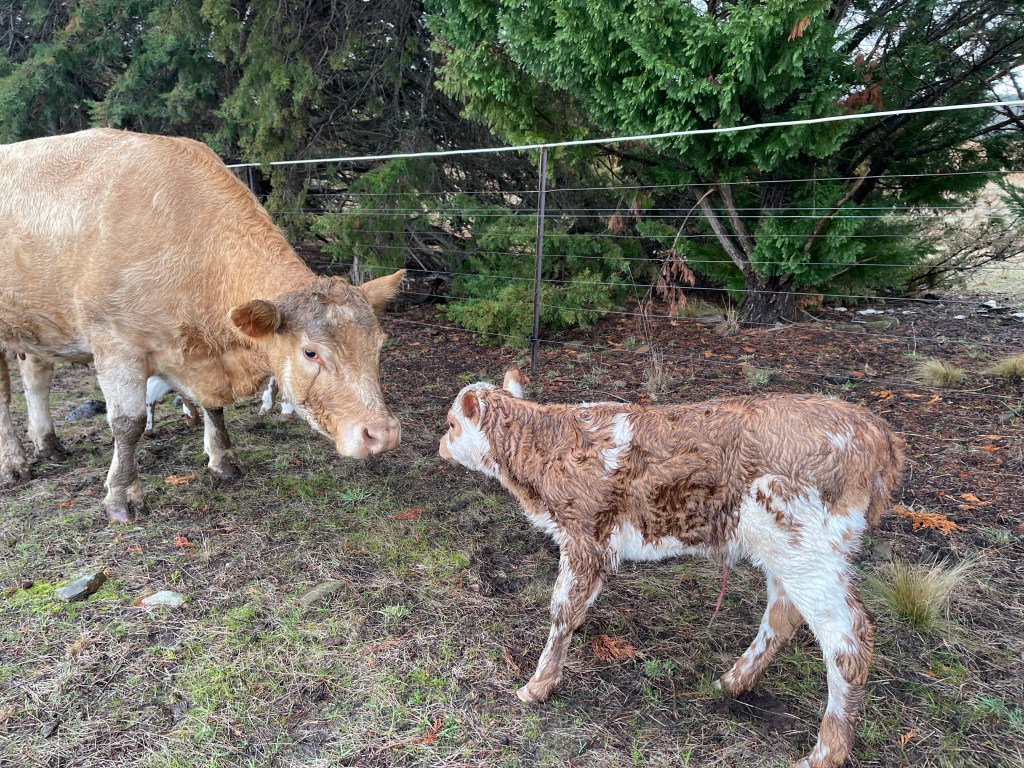
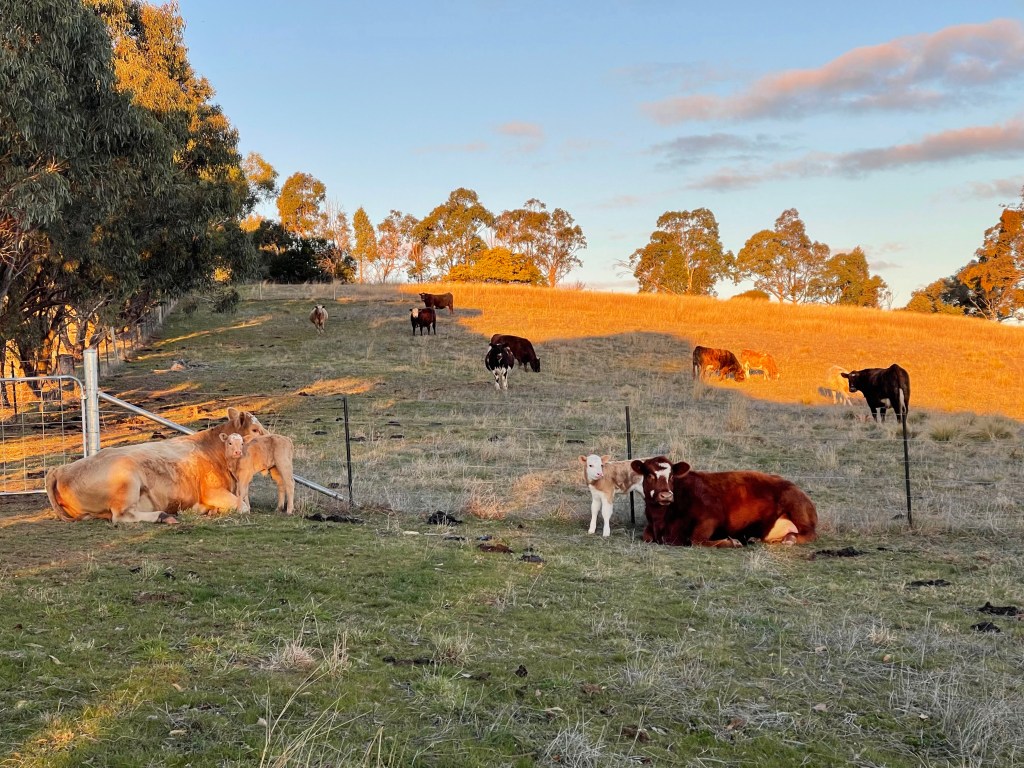
But everything stops on that special day when the first calf arrives! Two calves arrived on their due date, and another one arrived the next afternoon. I can now see us finding many more excuses to go and sit with these beautiful animals.

With lots of things happening on the Rock Farm, it is great to take a moment every now and then to reflect on what we have accomplished. Sometimes Nature creates those moments for you.

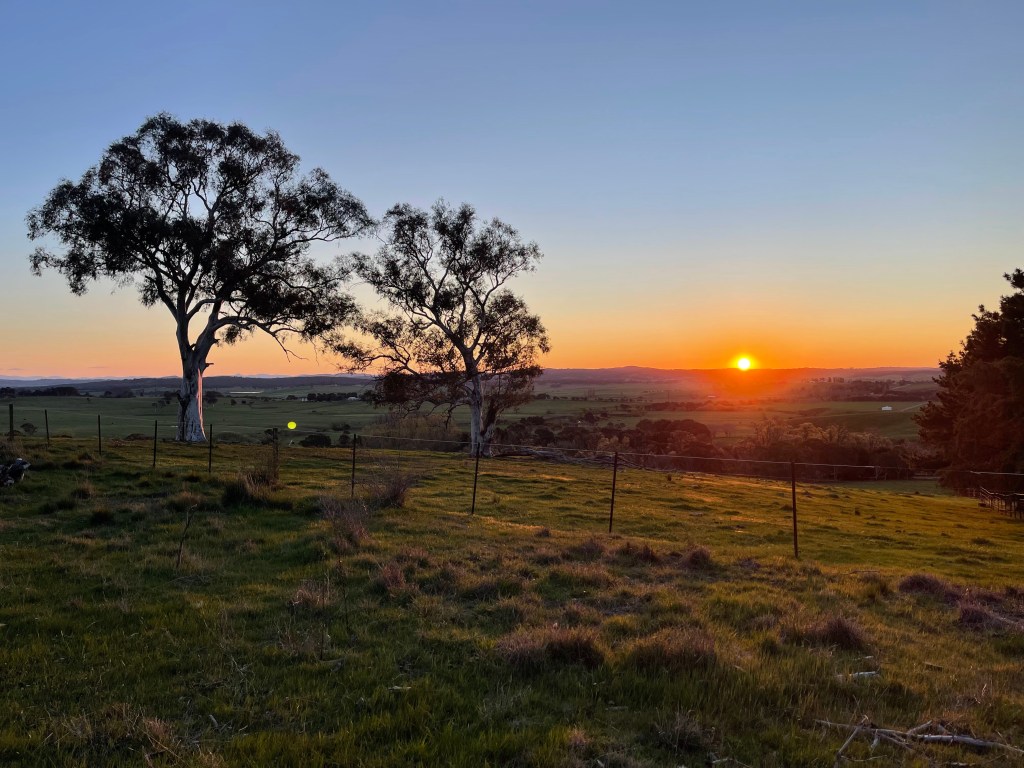
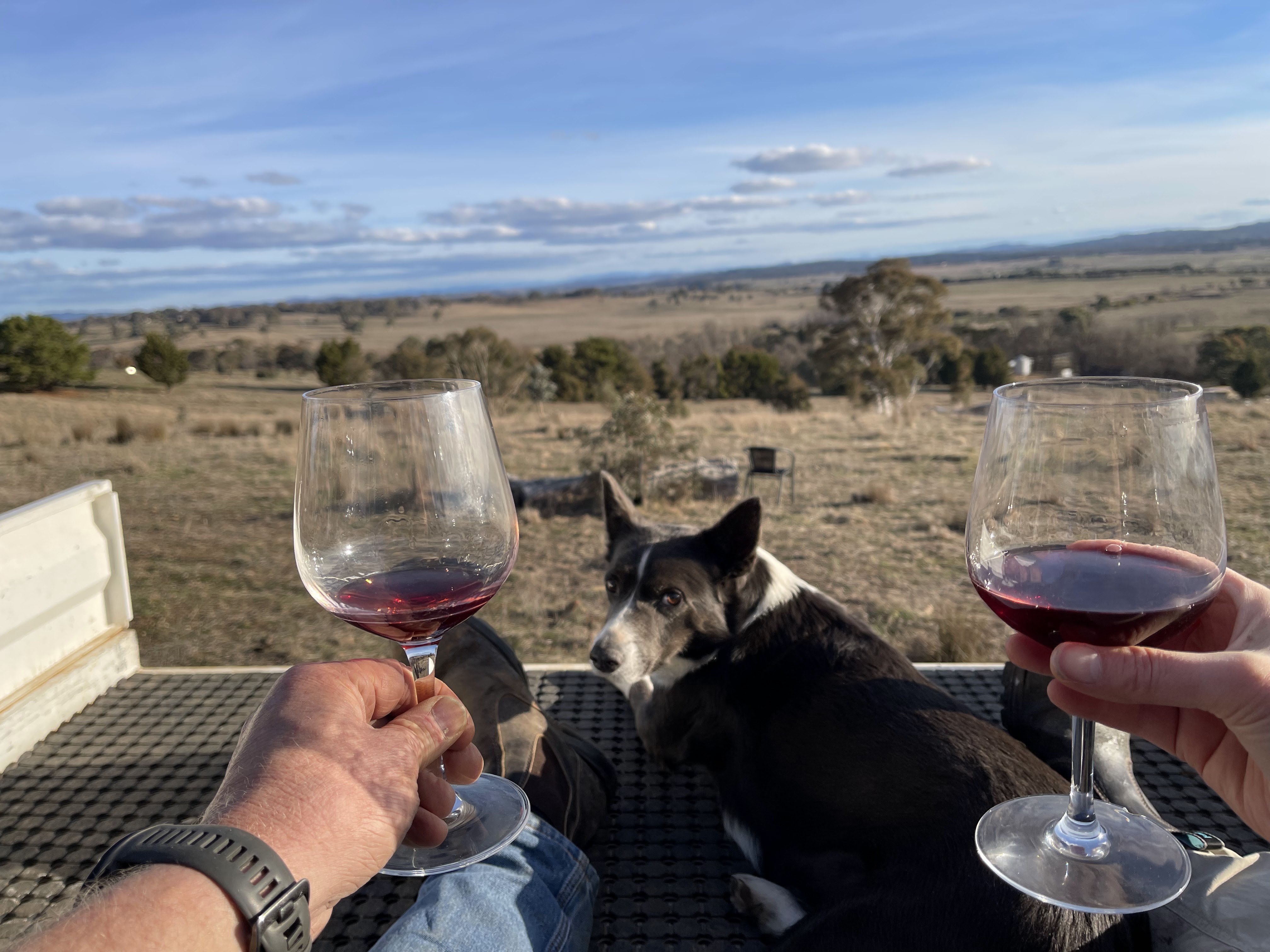
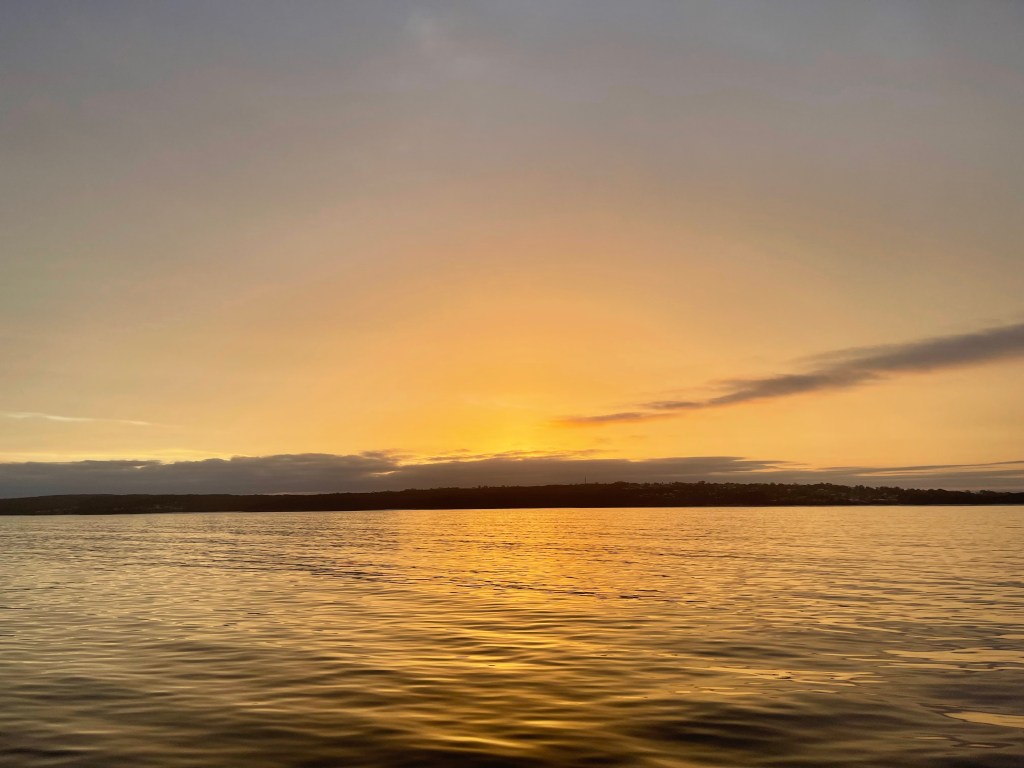
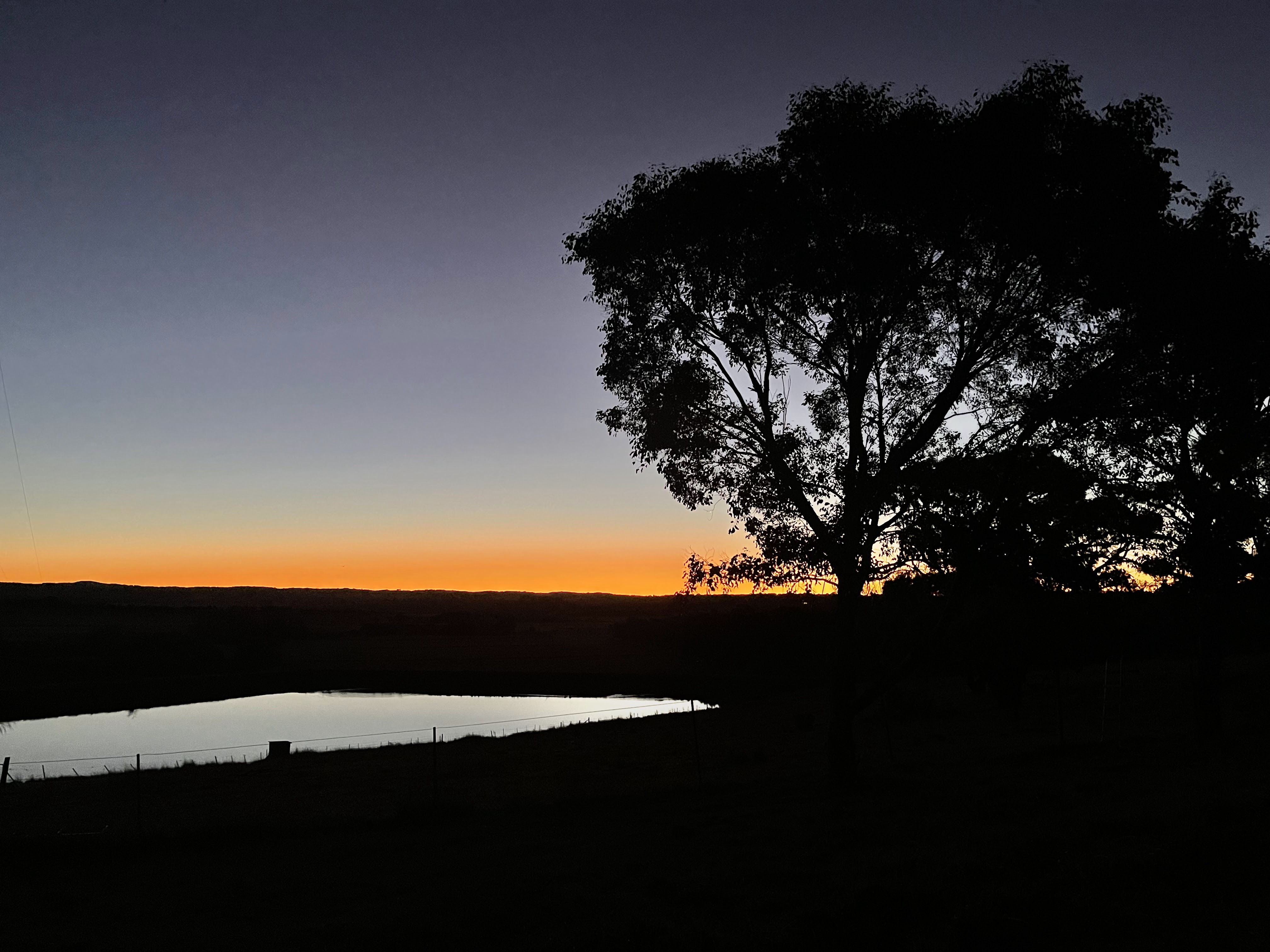
When the wind stops and the sun comes out, there is nothing like watching the sun sink below the horizon and seeing the stars appear in the night sky. The cold, clear air allows us to witness the magnificent glory of the stars, reminding me of how fortunate we are to be here.