Support for total newbies on small farms

Recently many people have chosen to leave the cities and move to the country. The ‘tree change’ phenomenon is nothing new, and many people relish the new lifestyle and opportunities that come from moving to acreage. For some, it is returning to their roots, however for many it is a new experience living on acres. They quickly find that there is so much more to it than ‘buying a few sheep to keep the grass down’. It can feel confusing and overwhelming, but it is great to know that there is support available for newbies.

The most important thing to understand is your ‘why?’. If you are able to understand why you want to live on acres and what you want to achieve on your block, then you are half way there.

If you haven’t yet made the decision to move out to acres, you may like my previous posts about some of the benefits and drawbacks of living on a hobby farm. Whilst my kids have grown since these posts, the issues haven’t changed – except perhaps fuel now takes up an even larger part of our budget. If you have already moved to acres, you may find some of the following information useful.

Firstly there is nothing wrong with being a total newbie. Nearly all of us have been there, and can remember how it felt the first time we realised that small farms doesn’t necessarily mean small problems…

What support is available?

Neighbours are a great source of information. They may have years of experience living in the area, or may be newbies like you. If you’re able to establish and maintain good relationships with your neighbours, it will help you feel comfortable in your new home – especially in times of crisis. It is worth investing in building this relationship – and you might find you share ideas, knowledge, labour, equipment and friendship.

Local Land Services is a NSW government agency, funded through landholder’s rates. Their aim is to help people make better decisions about the land they manage, to ensure profitable and sustainable rural and regional communities. I have found them to be a wealth of knowledge, with some great resources available online and through workshops. The LLS information is easy to digest and applicable for the largest landowners down to small hobby farms. (Edit: A great guide specifically for small land owners that I found particularly useful is the Rural Living Handbook available here: https://www.lls.nsw.gov.au/__data/assets/pdf_file/0007/1147804/Rural-Living-Handbook-2020.pdf)

Specifically the LLS provide help and advice dealing with:

  • Livestock health and production
  • Biosecurity
  • Pests, weeds and diseases
  • Emergencies such as natural disasters
  • Native vegetation

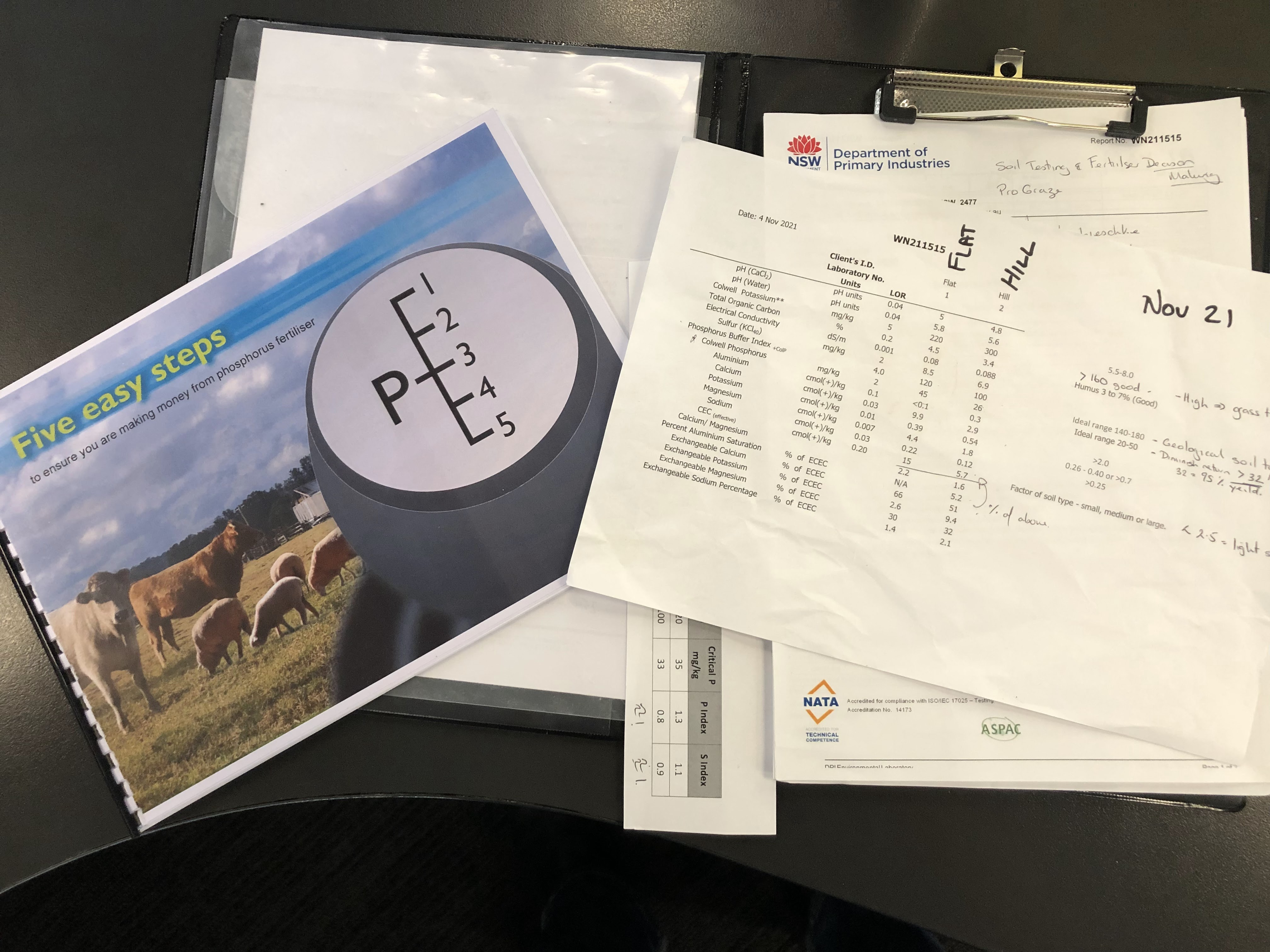
Each LLS region publish a quarterly newsletter with relevant local information and workshops. Through a LLS program, I arranged for free soil tests, and am currently half way through a two day workshop on how to interpret my soil test results and what they mean.

Small Farm Networks is a network of small farm landowners and provides advice and support for people who live on or manage rural and -peri-urban land for primary production, biodiversity or lifestyle goals. They host a number of really useful workshops and webinars, from preparing your property for bushfire threat, to grass identification field days. What I really like about their program is that it particularly relevant for people like us who only have small herds of animals. I also find they host some really innovative and interesting guests. A lot of the presentations are now held online via zoom, and this flexibility has allowed me to attend far more meetings that I could previously.

Another great community organisation is Landcare. Landcare aims to demonstrate best practices that improve soil and water health whilst maintaining of increasing biodiversity. There are many local groups around Australia who can provide advise and support. Our local chapter hosts regular meetings dealing with topics ranging from invasive weeds to salinity. I have always found the guest speakers informative and engaging.

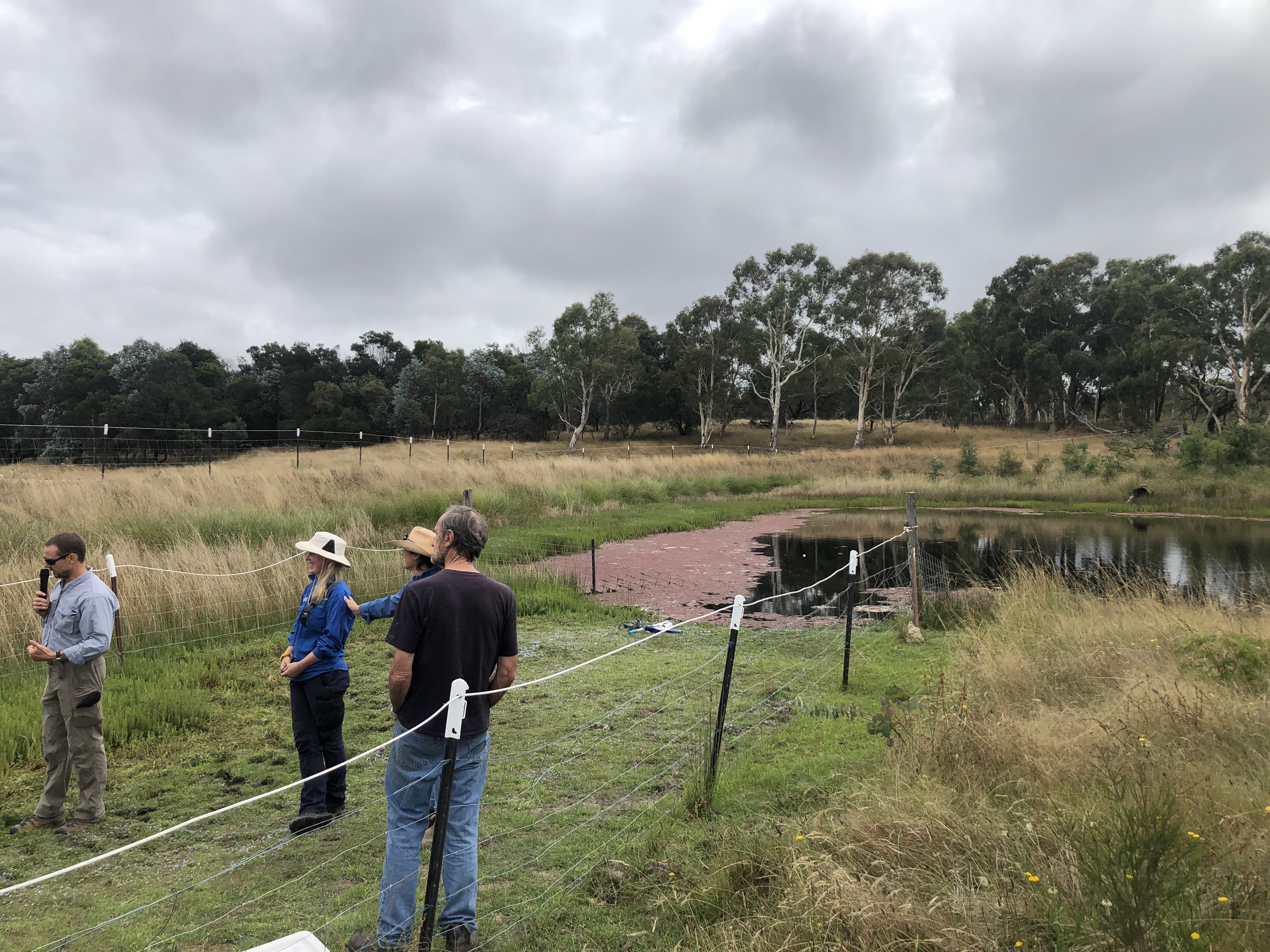
Sustainable Farms is an initiative of the Australian National University (ANU). This organisation employs a team of ecologists who conduct long-term biodiversity surveys on farms to understand the role of natural assets. I recently attended a field day about enhancing farm dams for biodiversity and water quality outcomes near Goulburn. Hosted by Landcare in conjunction with Sustainable Farms I found the day inspiring, with practical solutions that improve outcomes for farm production and biodiversity outcomes.

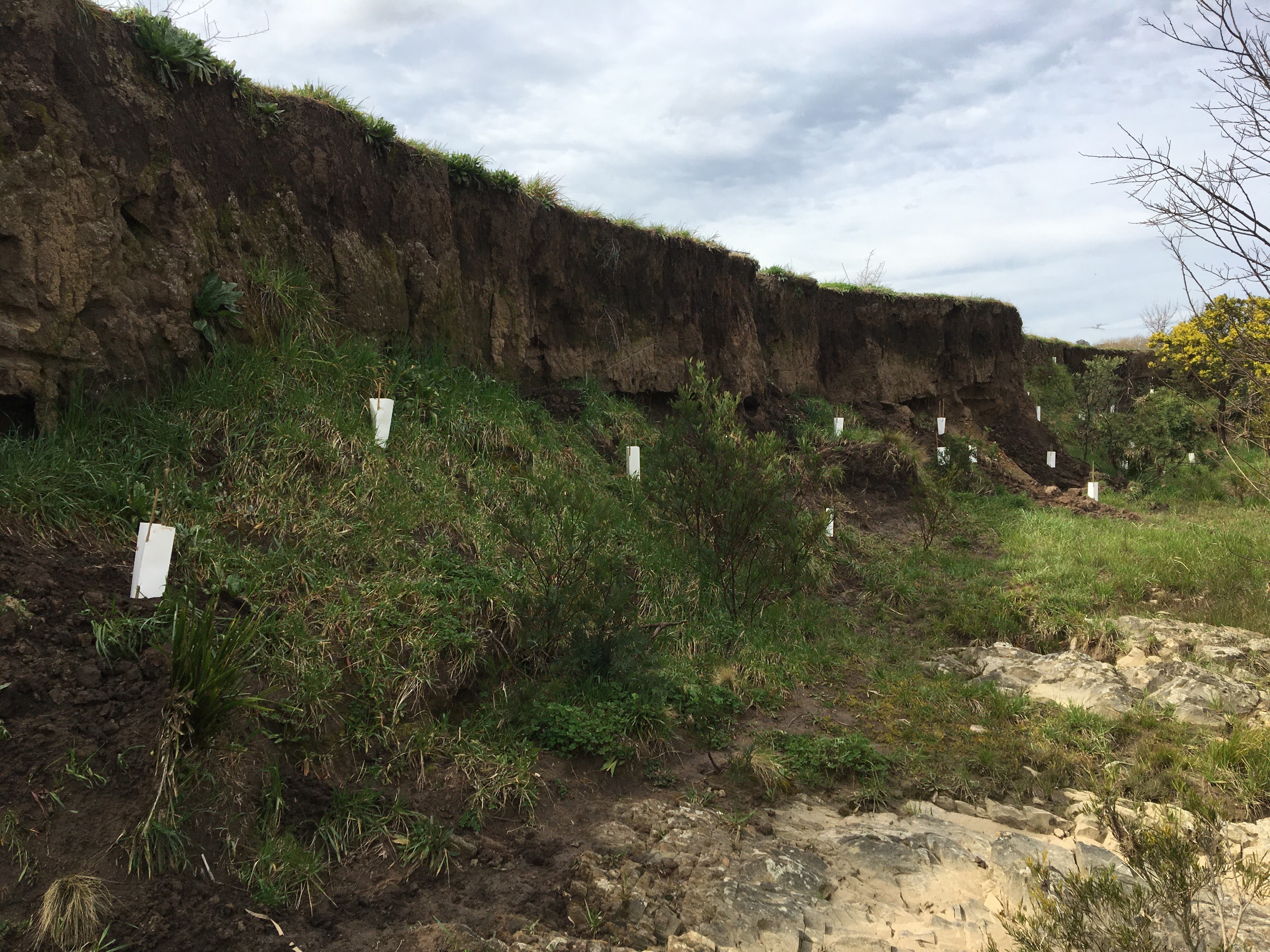
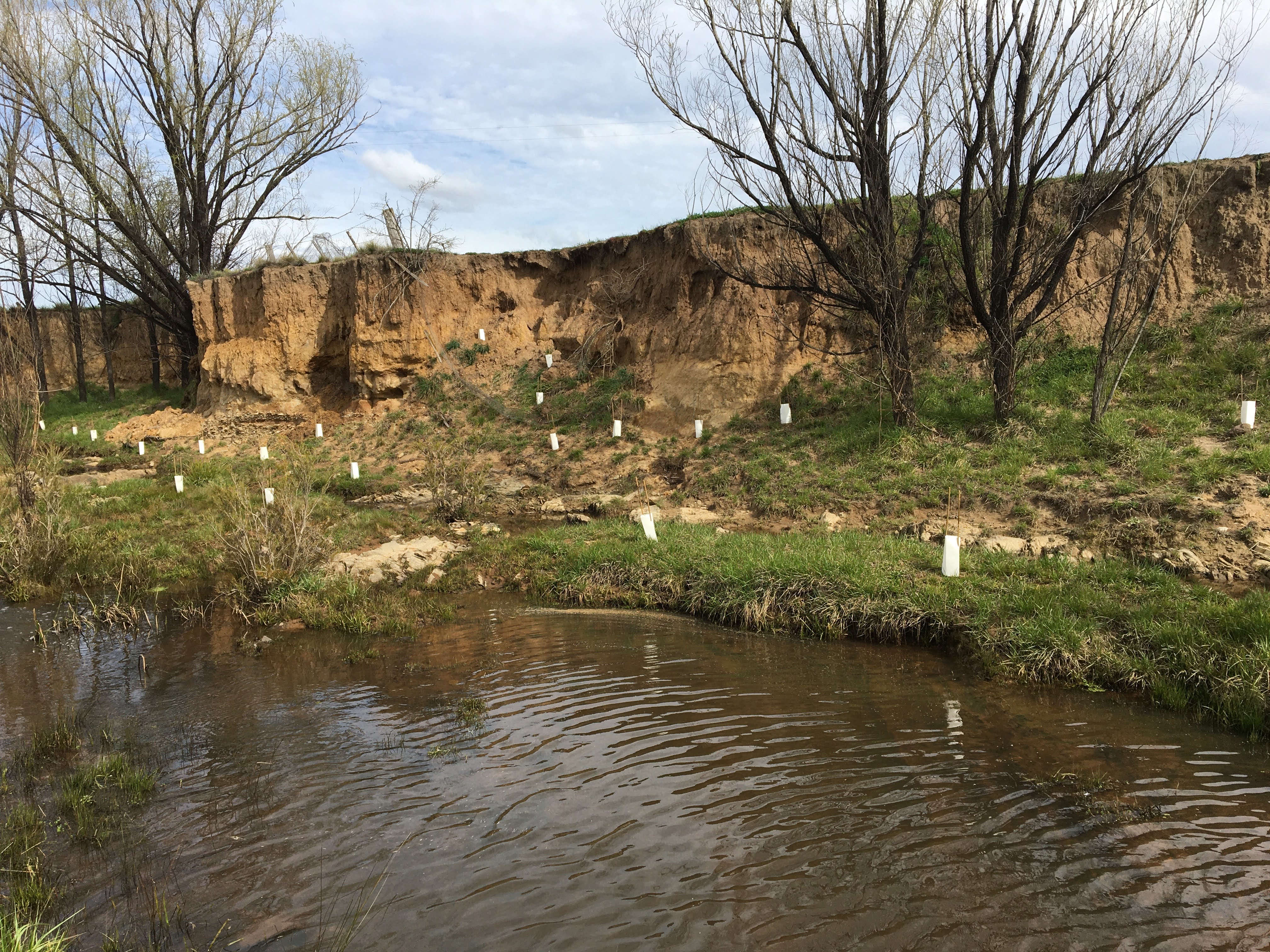
Greening Australia is a non for profit organisation committed to restoring Australia’s diverse landscapes and protecting biodiversity and ways that benefit communities, economies and nature. We have found them to be extremely supportive of our attempts to improve biodiversity outcomes through various programs, most recently with the donation of tube-stock to stabilise our creek banks and improve water quality – see my post here.

Each town or village has a range of other community groups and associations. Our village has a population of just over 1000 people in the 2016 census, however proudly supports over 30 community groups. From the Film Society that screens movies monthly in the village hall, to the Men’s Shed, Historical Society and various sporting teams, each group represents an opportunity to meet other people in the area. We are exceptionally proud of our community, but I know our village is not unique. All across Australia each town and village has networks of people who are proud of their community and the people in it. Being involved in these groups encourages me to associate with people from different walks of life. Their perspectives provide a fresh lens to view my situation and I welcome the new ideas.

One group that has developed is an informal group of around 50 landowners in our area interested in Regenerative Land Management. Social media allows us to share ideas and organise visits at each other’s properties. We were humbled to host the group recently at the Rock Farm. We had some great conversations and this has led to us harnessing some other skill sets within to group to help us develop farm plans.

What I have learnt is that some of the best ideas come from people who are unshackled by convention and follow their passion. By reaching out to as many groups as you can, you will find the support you need to help you achieve your goals. Don’t be afraid to ask lots of questions. Take what resonates with your ‘why’. It is a glorious wonderful journey and you won’t regret it for a moment.

A disadvantage of living on a hobby (any?) farm

Regular readers know how much I love living on the Rock Farm. I find great joy in the raising of livestock, planting of trees and improving the amenity and functionality of our farm. Through the pandemic, we have considered ourselves extremely fortunate to be custodians of this 100 acres of farmland. We have used the isolation periods to get some projects done, spent hours walking around the paddocks and even gone on camping ‘holidays’ in the back paddock. These adventures have been wonderful, and no doubt my friends in the city have looked enviously at our relative freedoms. However before you all rush out and join the hill-change, it is fair to warn you living on a hobby far does have one significant drawback.

The recent school holidays brought this disadvantage into sharp focus. It can be hard to leave – for even a few days.

With travel restrictions easing across most of the country, we were determined to head north and catch up with some of our family during the school break. We had a limited window of opportunity in the second half of January to get away for a week…. but the planning for our break away started much earlier than that.

Livestock have an uncanny ability to know when you are not around. Being a shift-worker we recently changed from a two day / two night pattern to an alternating arrangement with blocks of three day shifts and two nights. And the cattle sensed the change too. For some reason, on my third day shift, the wheels come off on the Rock Farm.

It is always on the third day that the water trough leaks, or a calf gets through a fence, or the bull gets in with the neighbour’s cattle…. or any other myriad of crisis that require intervention. And it is not just cattle. It can be that the pump stops working meaning the toilets in the house won’t flush – and by default the cattle run out of water. Or the car starts making a new noise, or a chook gets sick, or a branch falls on a fence – or a road. I think you get the picture.

This gives you some idea about the things going through my head contemplating heading away for a good week and a half. It required military level planning – and generous neighbours.

Thankfully we are blessed with wonderful neighbours, who offered to take Sapphire – our almost useful dog – in and treat her as one of their own. Our neighbours also kindly agreed to feed and water our hens during our absence.
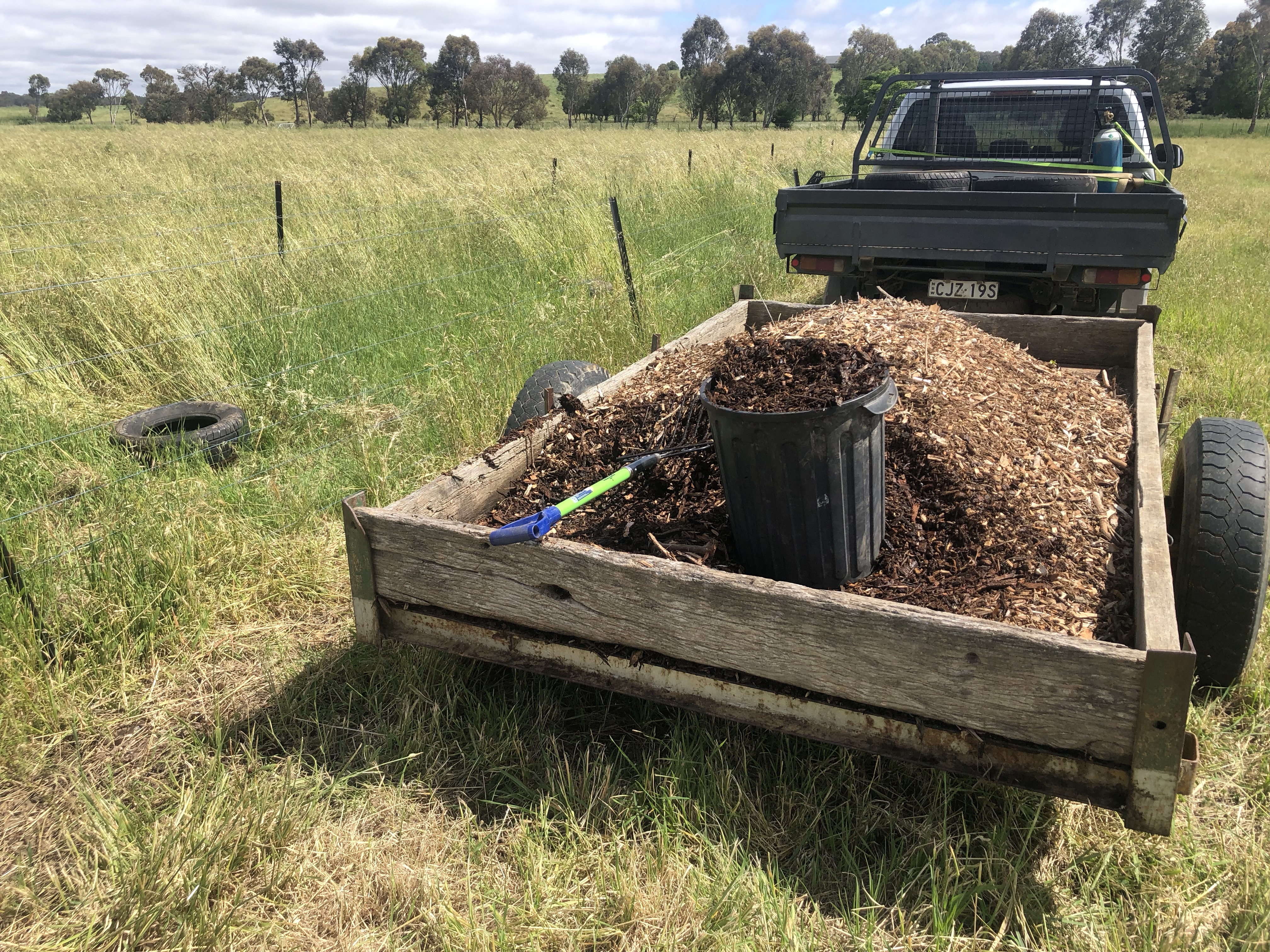
But it was the cattle that needed the most thought. They needed to be in a paddock with good water, good fences and good feed. And this was the problem. I had such a paddock, in reserve since September for just this purpose. The only problem was that we had also planted around 130 trees in the paddock, and they required a tree guard to protect them.

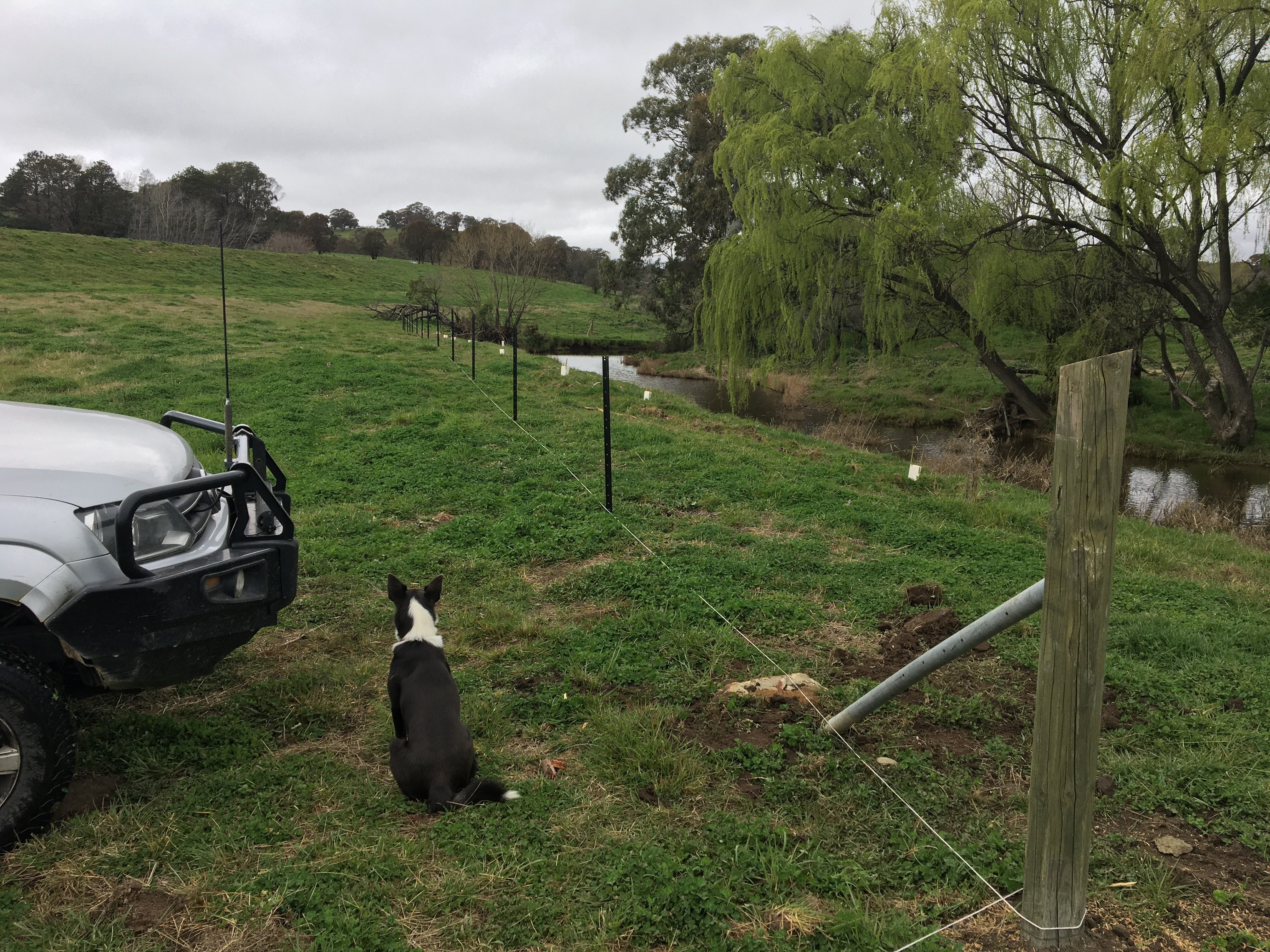
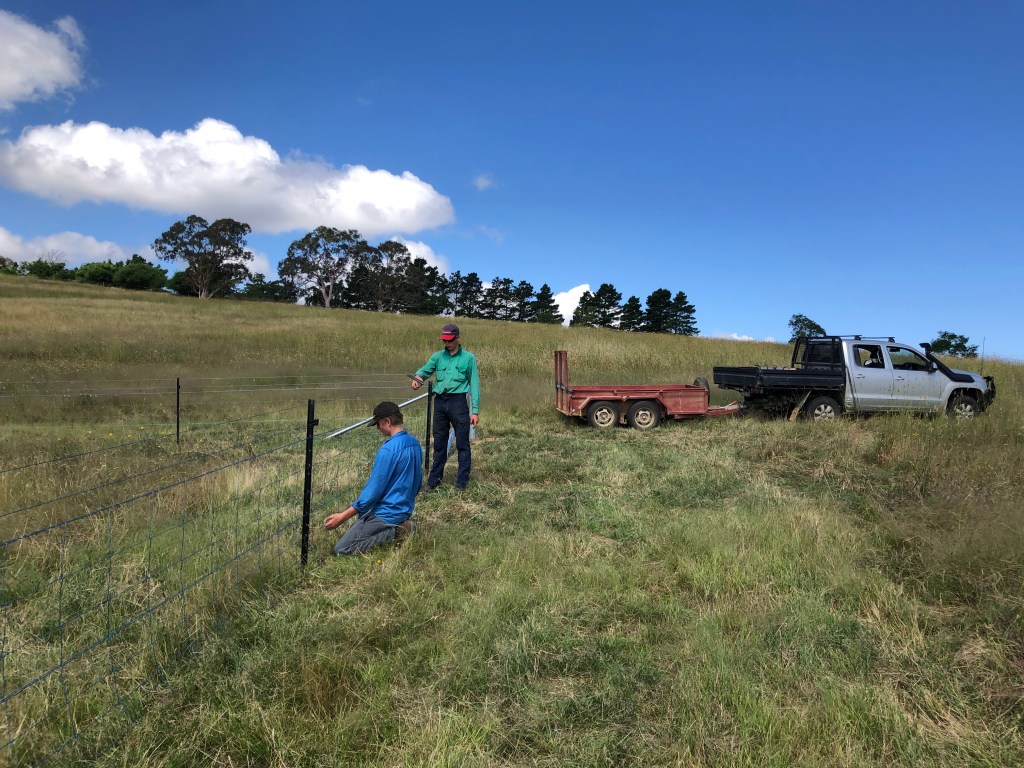
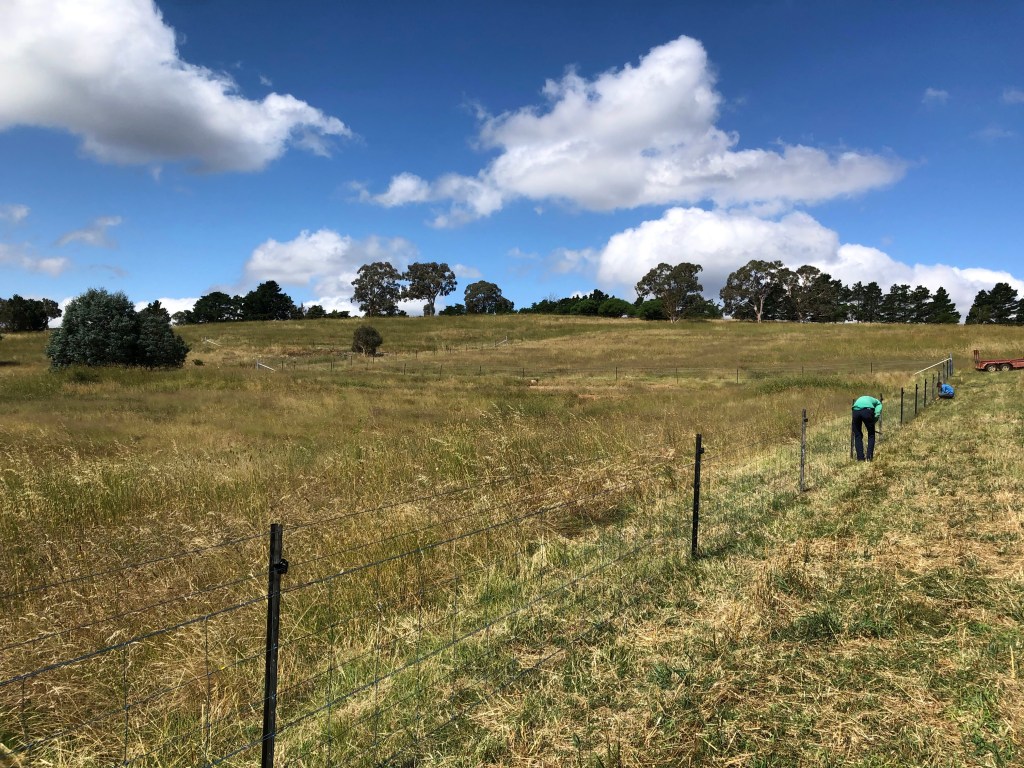
You may recall in my last post that we had started building a fence to protect our one hectare native habitat reserve…. Well that was in the same paddock I was reserving for our trip – and it needed to be finished.

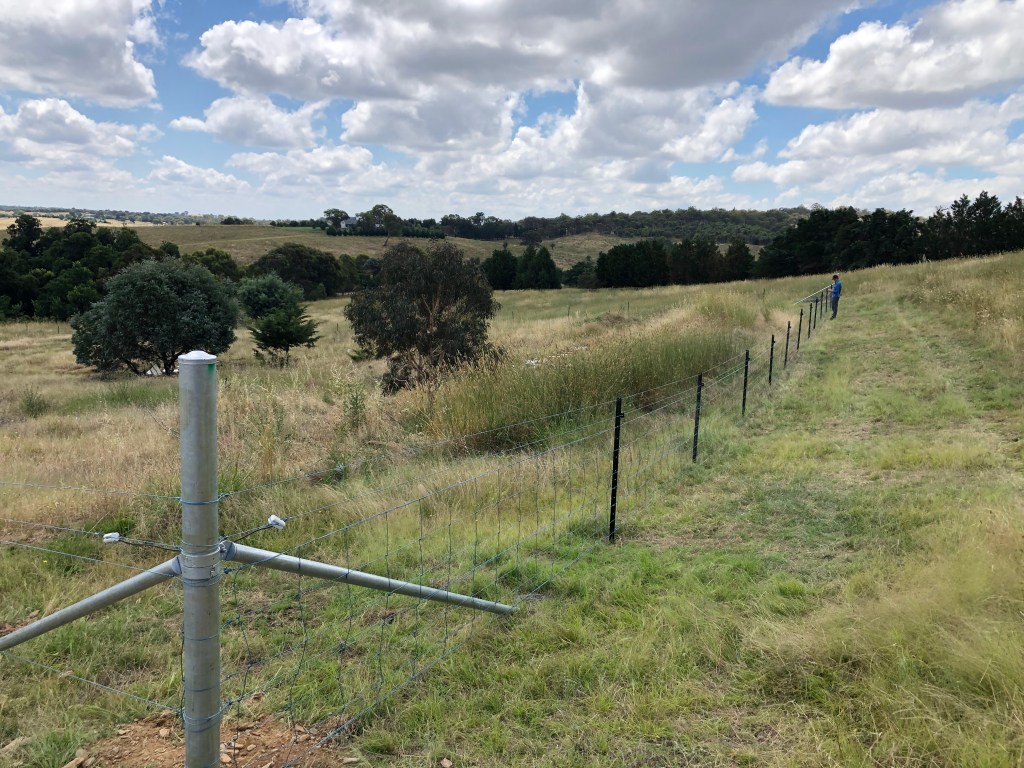
One solid days work with all four of us working had the star pickets hammered home, with wire strung and mesh clipped on. The new fence looked great. The next day I spent restoring the defunct electric fence system to operational – and the paddock was ready. Just in time.

With good water in the paddock we weren’t relying on our temperamental electric pump to supply a water trough. The Not-So-Smart helper proved the electric fence was operating with his hand. I also hoped there was enough feed to keep the cattle safe and happy until our return.

And they were – but they mobbed me on our return, bellowing and asking to be moved to a new paddock, which I obliged. 30 seconds later the pandemonium was over…

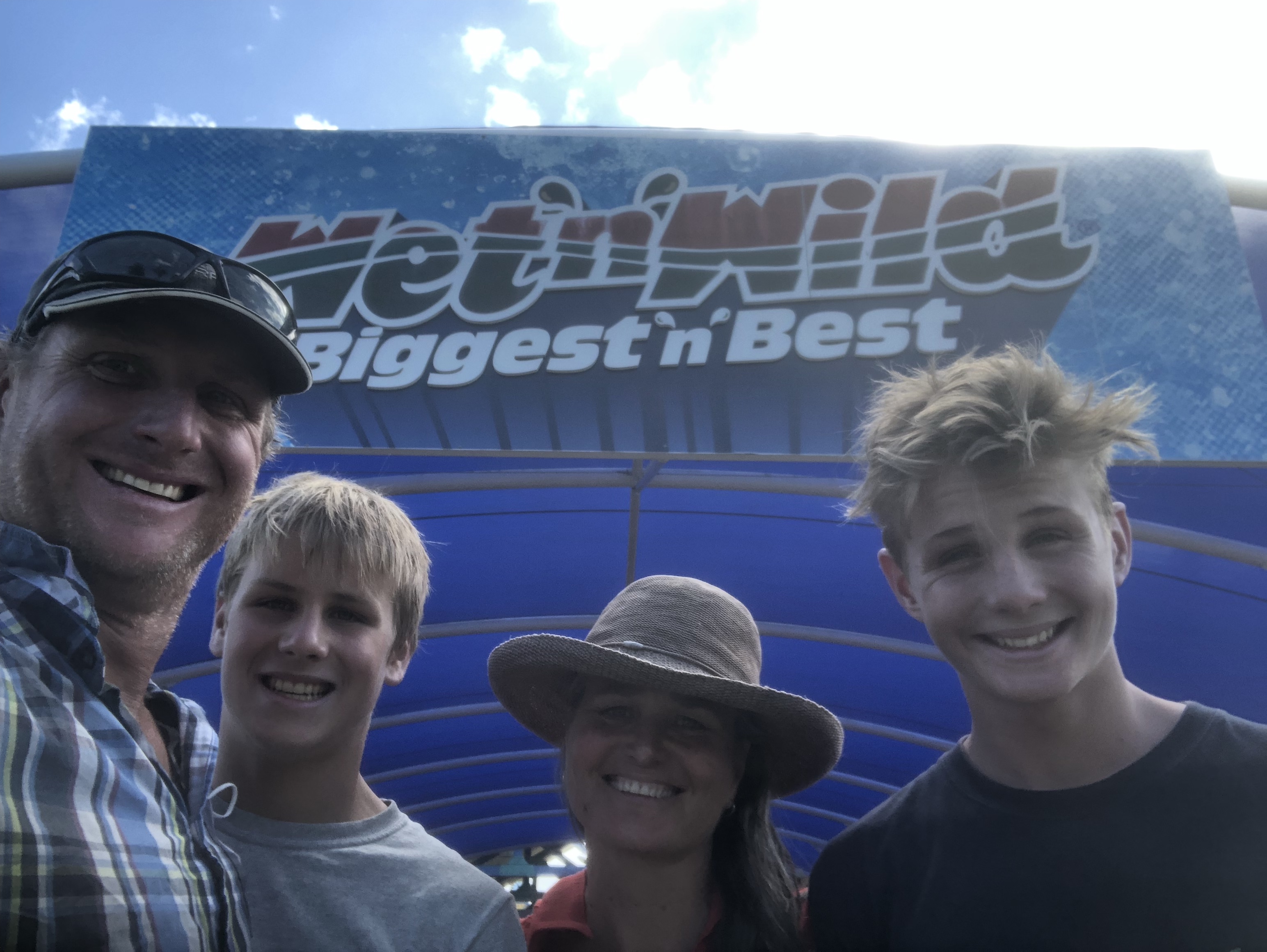
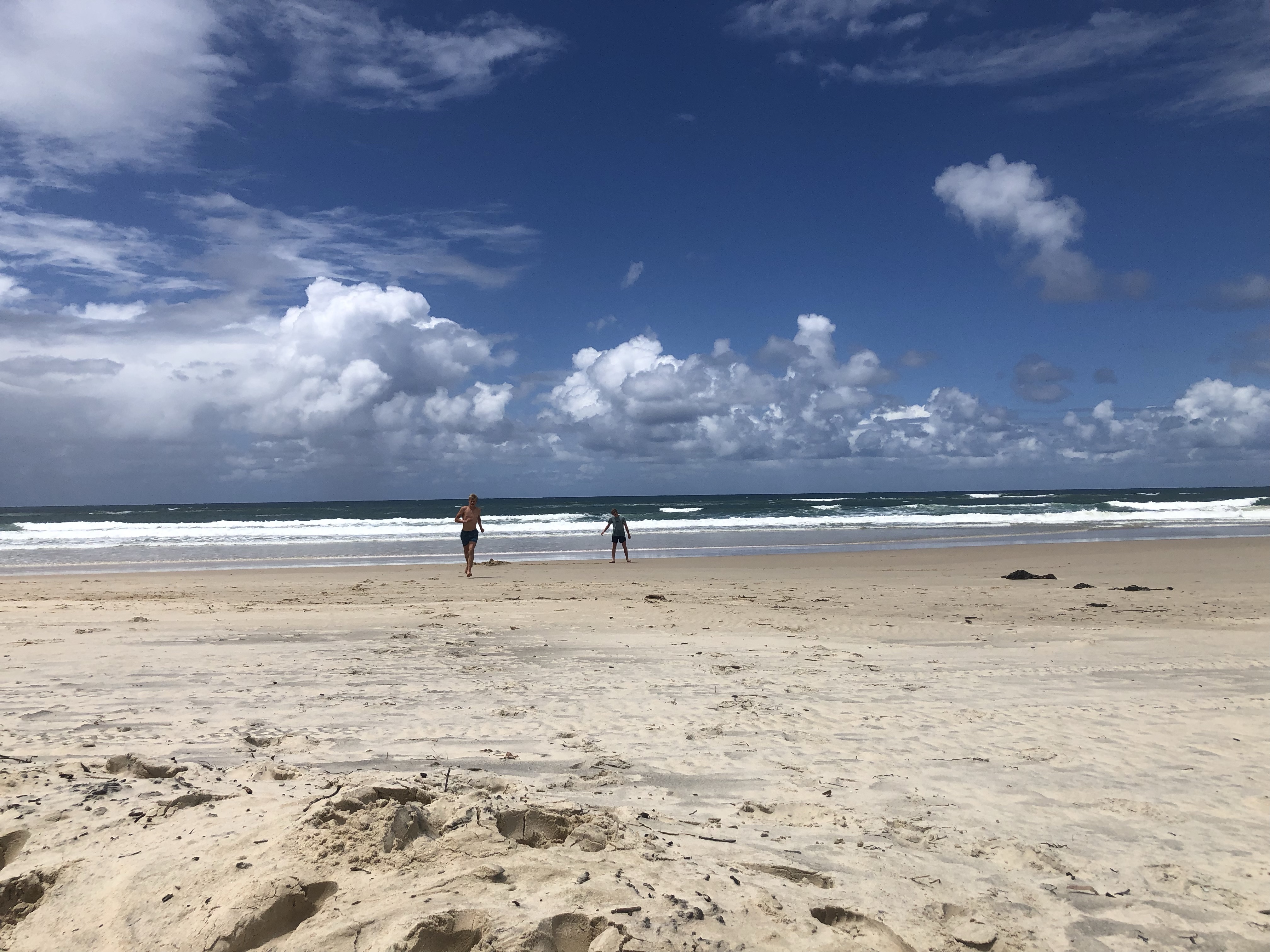
Our holiday was well worth the efforts to get away. We caught up with family and friends, swam in the surf and even braved the crowds at Wet’n’Wild. It was important to remind us how much we love a good road trip.

It also provided a new issue to contemplate. How to set the property up for super low maintenance such that a keen teenage neighbour could keep an eye on it for some pocket money.

If we solve that problem, we will have the best of both worlds. We will be able to live in a truely beautiful place, without it becoming a burden. We will let you know how it turns out.

A new opportunity and a “Green Christmas”

In my last post I informed you that I had some exciting news. I was invited to join a group of local land owners (custodians) who, like me, are interested in regenerative agriculture. The aim of the group is to share knowledge and experience whilst also joining a community of people who have a desire to improve their land. None of us are full time farmers, which frees us from the constraint of having to make a living from our land, however does limit the time we can put into repairing the soils of our properties. The group was established by Cate, and our first gathering was generously hosted by Marty on his nearby property.

Marty brought his knowledge of natural sequence farming and showed us how he had been changing the hydrology of his property. At the highest points of his block, Marty had built shallow ponds, which he filled using water from a large dam lower in the property. The ponds allowed water to enter the soil and hydrate the land, with a solar pump and float switches keeping the ponds filled. As we walked downhill, we crossed swales that Marty had built along contours, slowing surface water and allowing it to enter the soil. Beside these Marty had planted banks of trees. At the bottom of the hill in old gullies, Marty had built leaky weirs, which slowed the water and again hydrated the landscape. Gorgeous Belted Galloway cattle grazed the paddocks in a rotational program. It was a wonderful afternoon and I look forward to sharing more ideas with the group into the future.

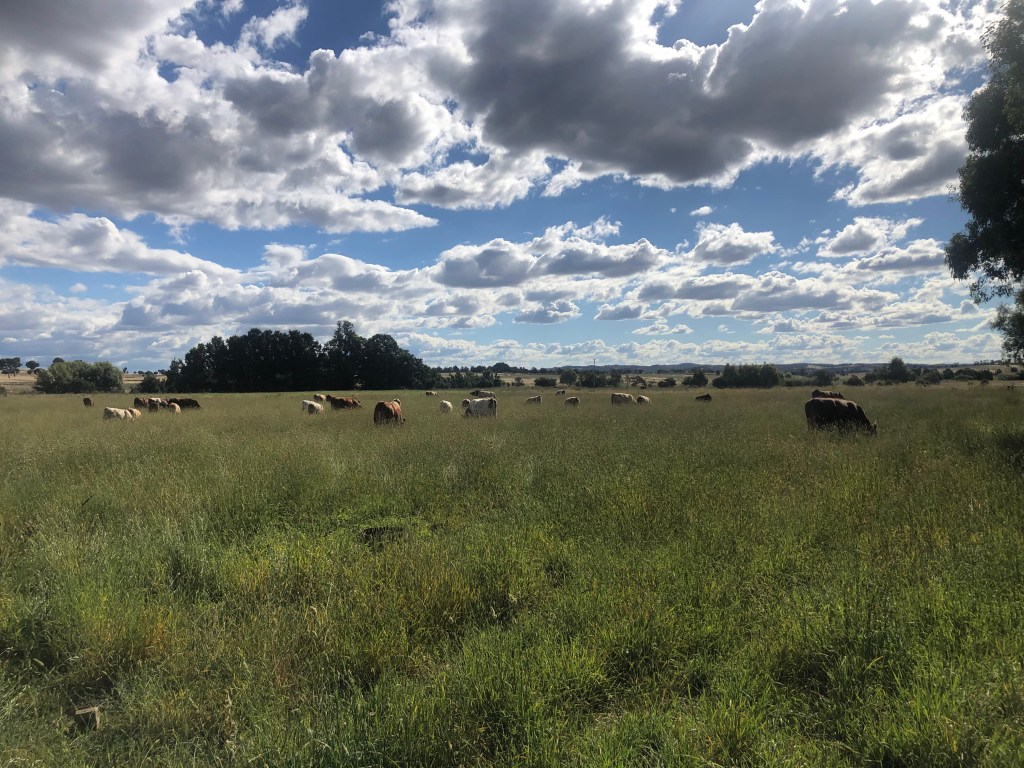
In such a wet year, the impact of our changes to the landscape are hard to tell. It is easy to convince ourselves that the fantastic condition of the landscape is the result of good management, allowing us to make the most of every drop of rain. It is really hard to know, with over 900mm falling on our farm this year (our average rainfall is closer to 650mm), the property looks fantastic. As we approached New Years Eve, the dryer weather has seen the grass turn to its typical golden summer hues, but it remains plentiful.

Over the past few years when the property was in drought, I spent several hours on the tractor putting rip lines in our paddocks along contours to assist in allowing rainfall to penetrate the subsoil. Once the soil settled, the rip lines could be easily seen as lines of green across the hills (see link: https://rockfarming.com/2019/11/02/update-on-trees-and-rip-lines/). This year, the whole hillsides are a mass of grass, and the rip lines have all but disappeared from view.

The quantity of grass is amazing, and the cattle have been unable to keep up with the growth. After the cattle have rotated out of the paddocks on our flats, I have slashed them to knock down any thistles. This also assists in breaking down the phalaris stalks (like a mulch). The paddocks have quickly recovered with the grass regrowing quickly.

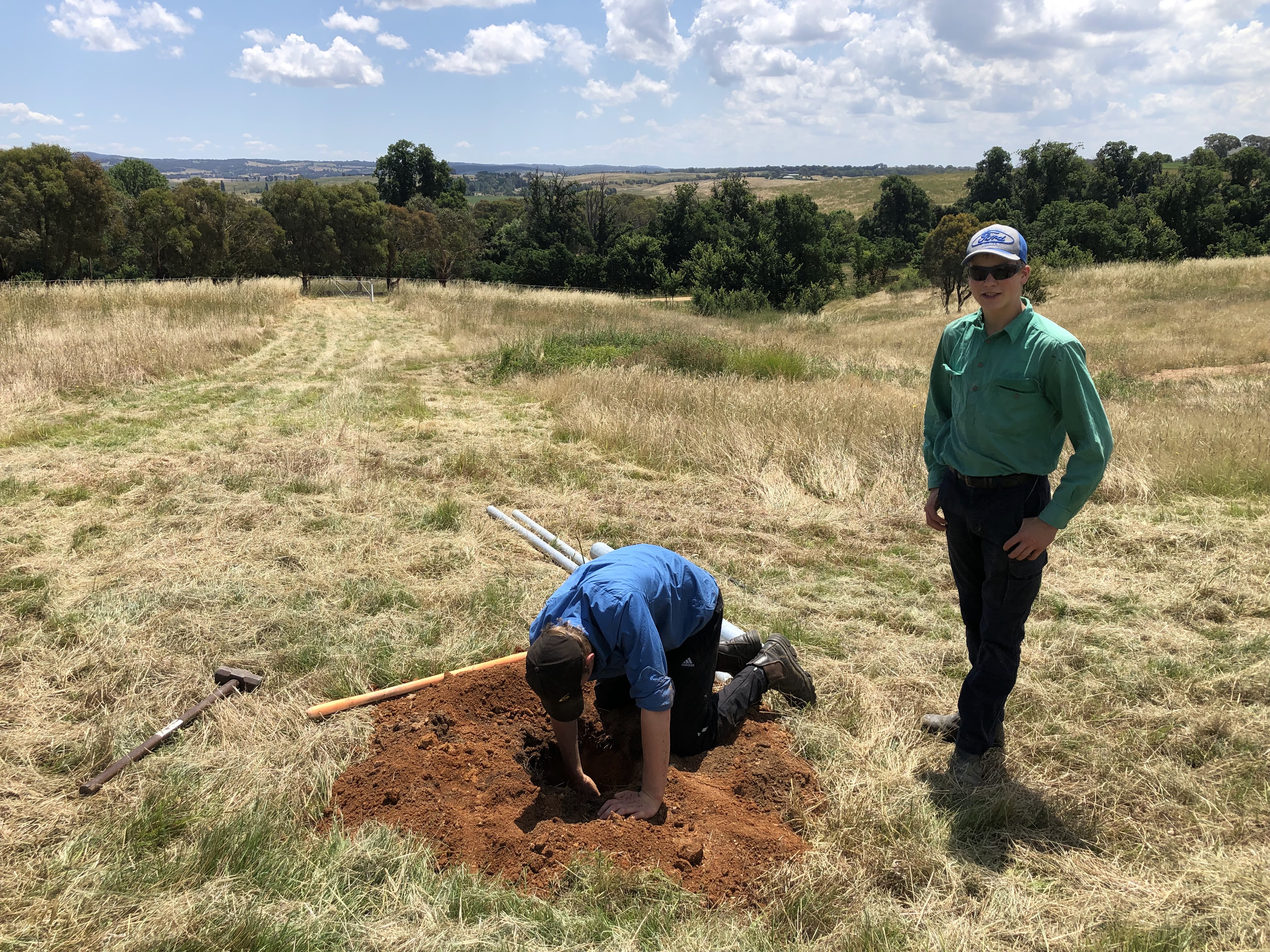
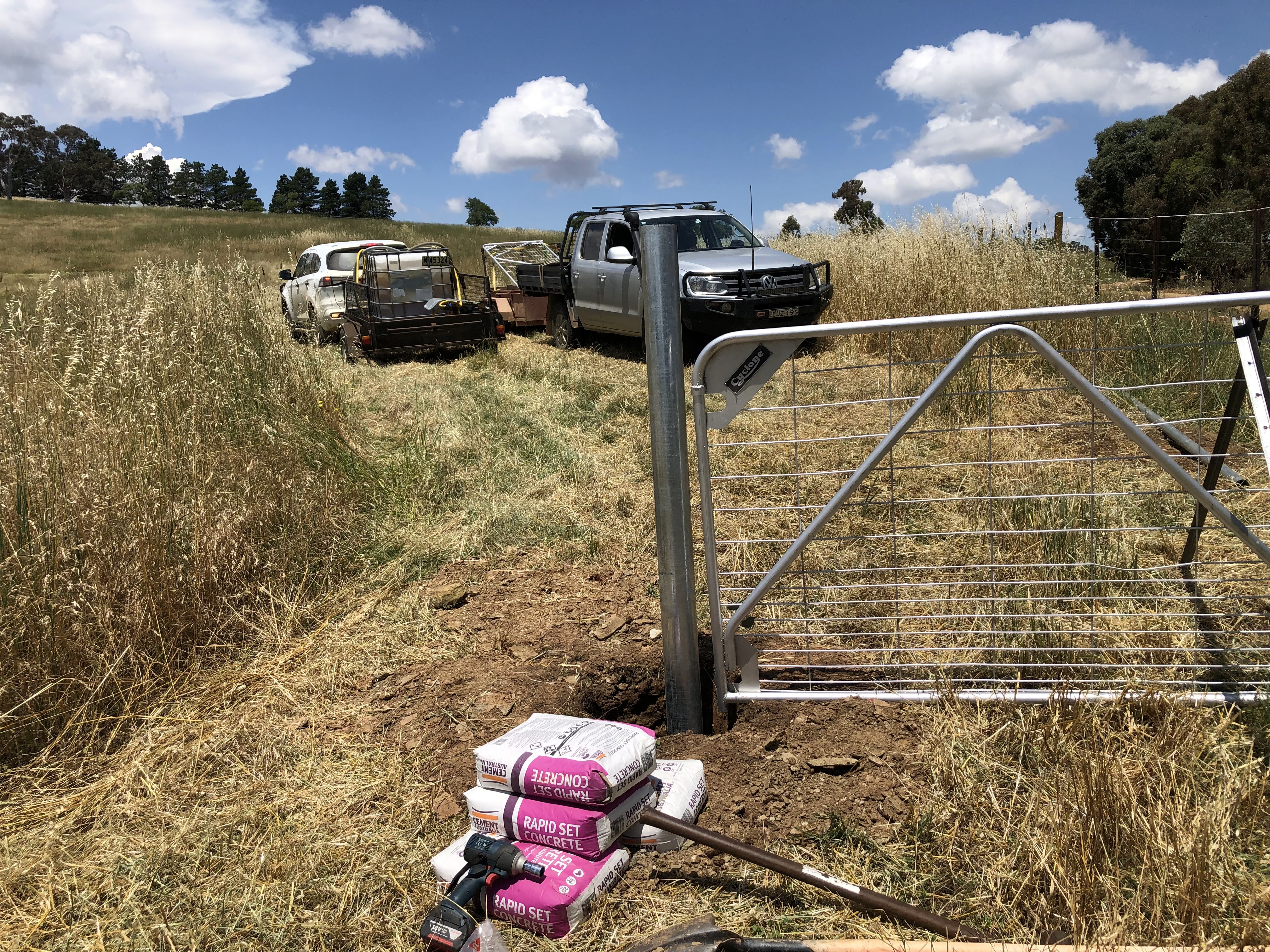
The school holidays have also allowed me to make the most of some cheap available labour! Regular readers might recall in August we planted around eighty trees in an erosion gully (https://rockfarming.com/2021/08/31/more-trees-for-the-rock-farm/). A few weeks later, we planted another fifty or so in the same area. These school holidays we plan to fence around 1 hectare in this 5.5 hectare paddock to create a native vegetation habitat zone. This paddock has been off-limits to the cattle since we planted the trees, but I am fast approaching the time I need to rotate the cattle through here. With a bit of help from our neighbour’s augur, we soon had the seven strainer posts set in the ground. We will bang in the star pickets and run the wire in the next few weeks, allowing us to re-use the “tank paddock” again.

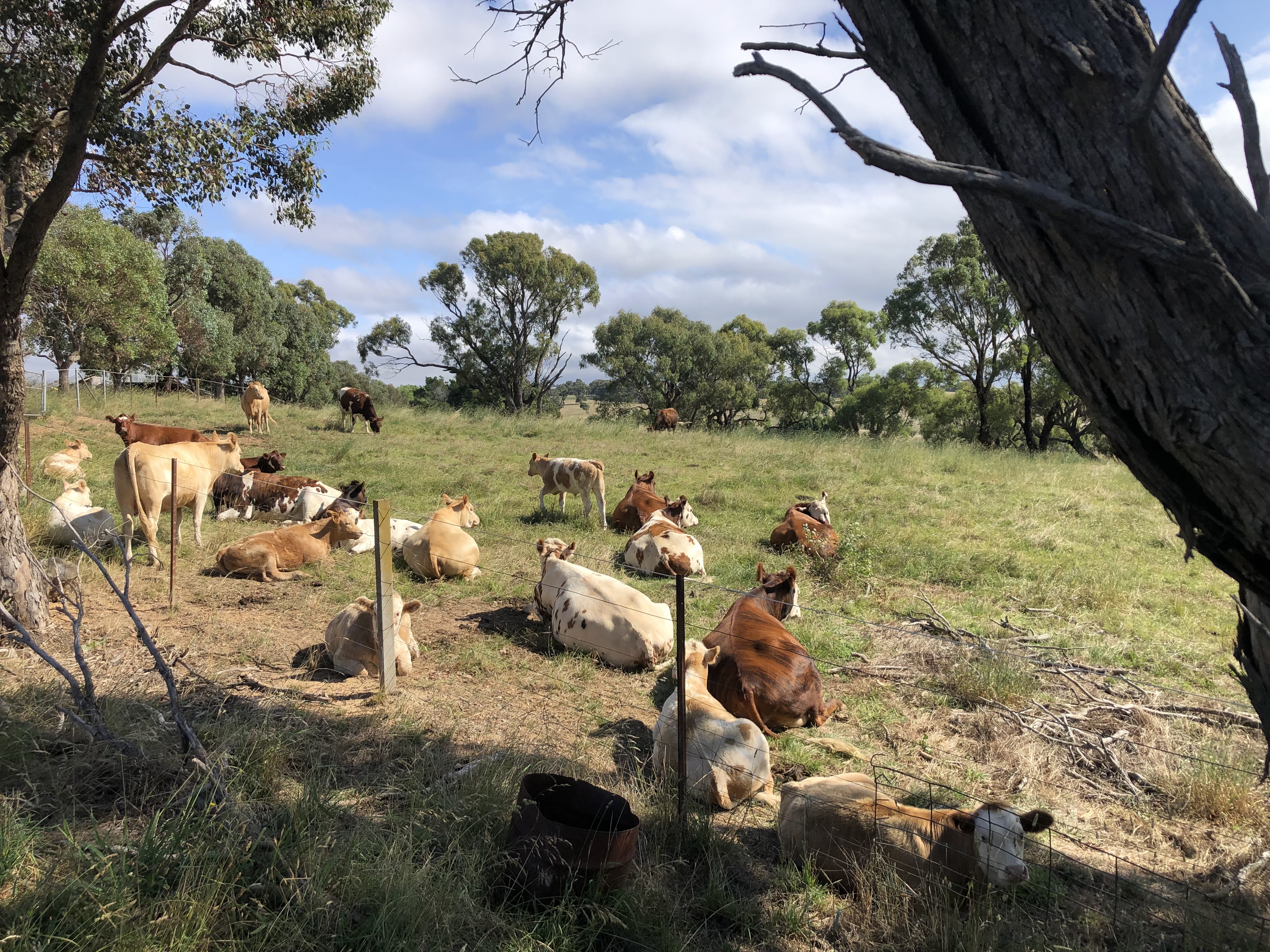
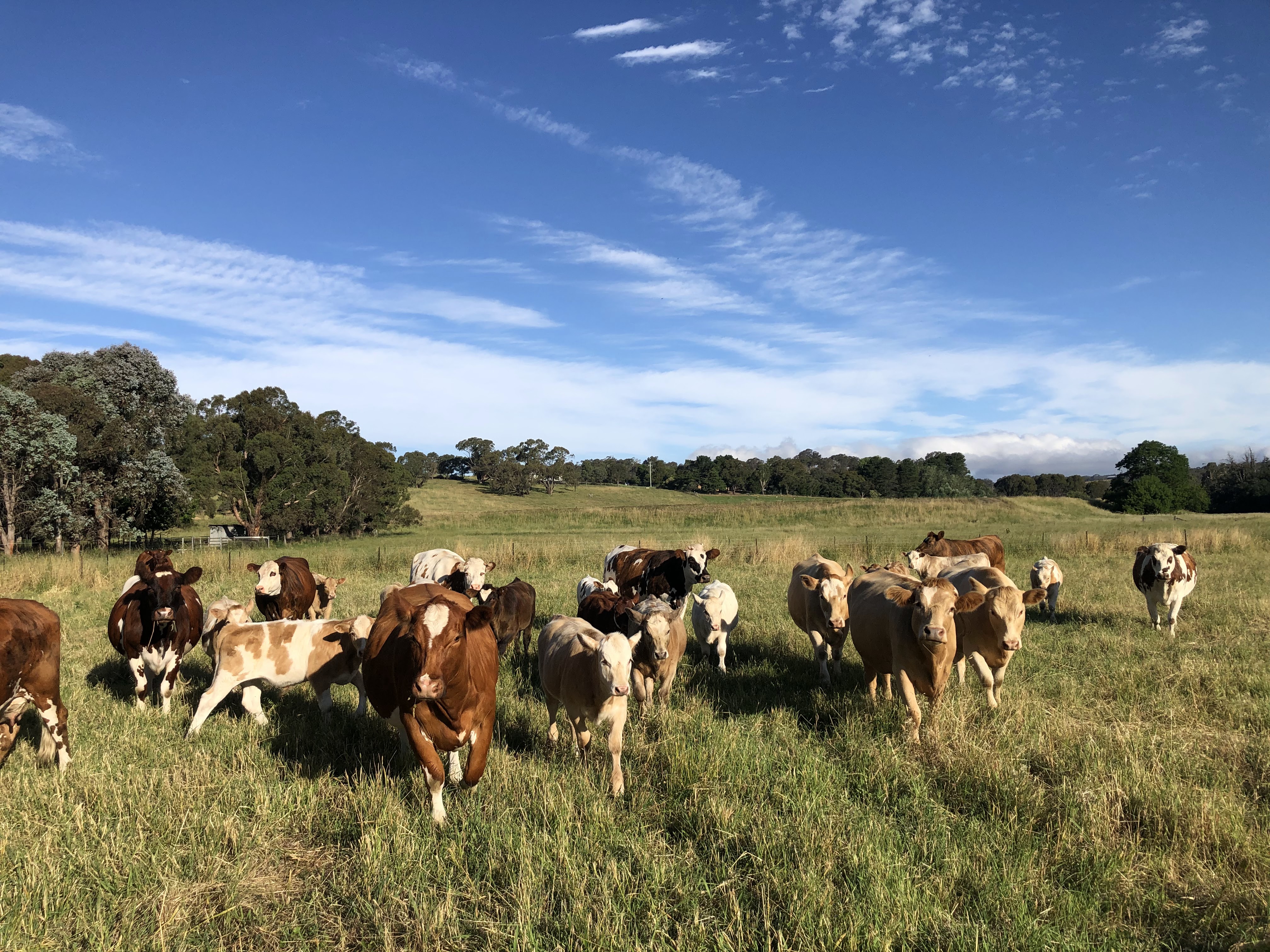
The cattle are in good condition – and revelling in the fact we are enjoying a “Green Christmas”. Our leased bull has returned to his home – after a brief excursion through two fences to our neighbour’s. That is a whole other story, along the lines of “little farms doesn’t always mean little problems”.

It has been a remarkable and challenging year for many of our friends. We consider ourselves so fortunate to live on our little hobby farm / sanctuary. Whilst it hasn’t all been easy on the Rock Farm, and at times it the list of projects feels a bit overwhelming, we do love it out here.

Sapphire and I would love to wish all of our readers best wishes for the New Year. We hope that 2022 is the year we can open up the Rock Farm to share it with you all.

Making the most of the season.

This cool wet summer is glorious. The grass continues to grow, the cattle are fat and rainy days mean inside jobs are slowly being worked through. The rain also means we are able to continue to grow and develop the Rock Farm with a couple of little projects.

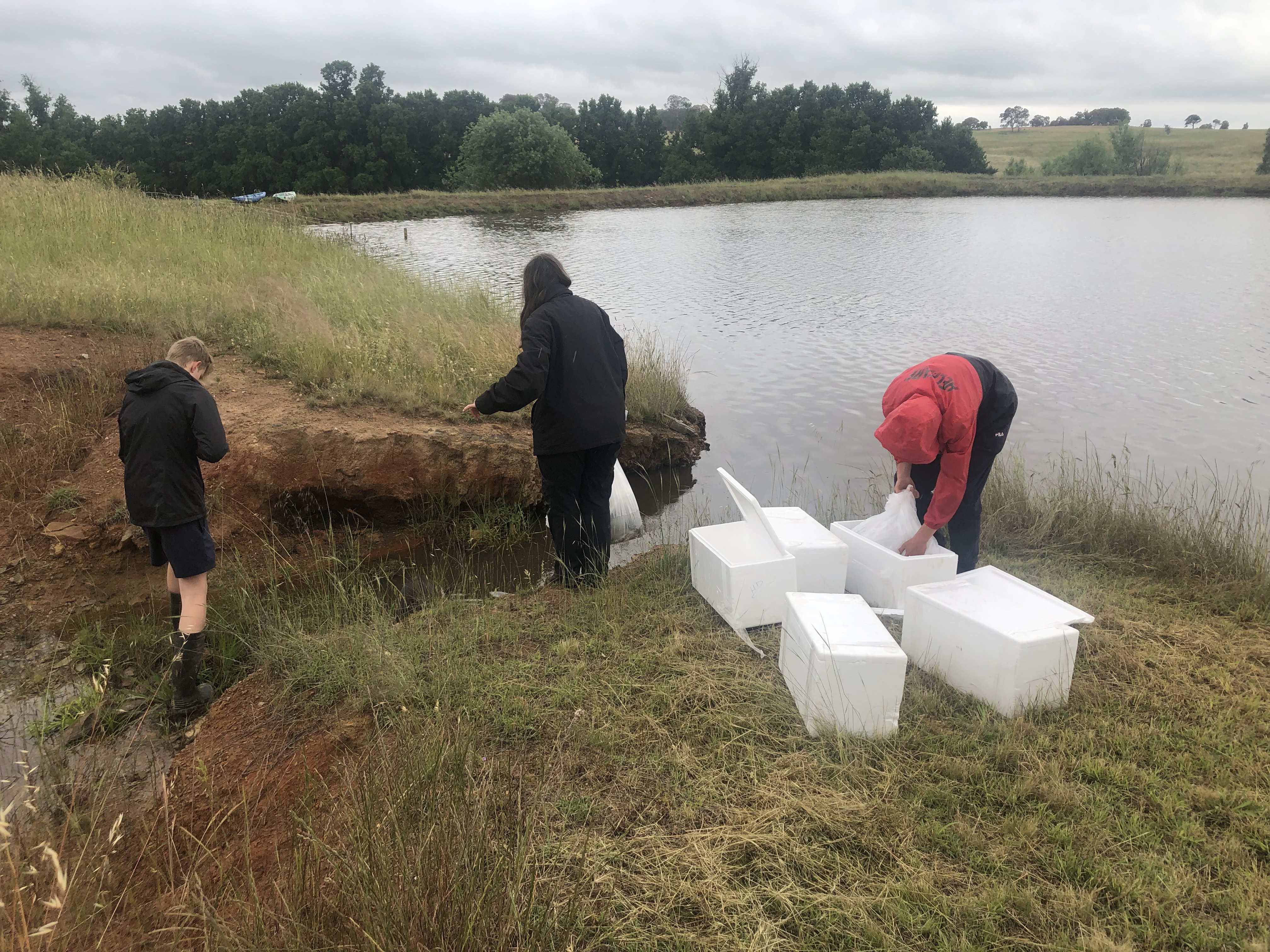
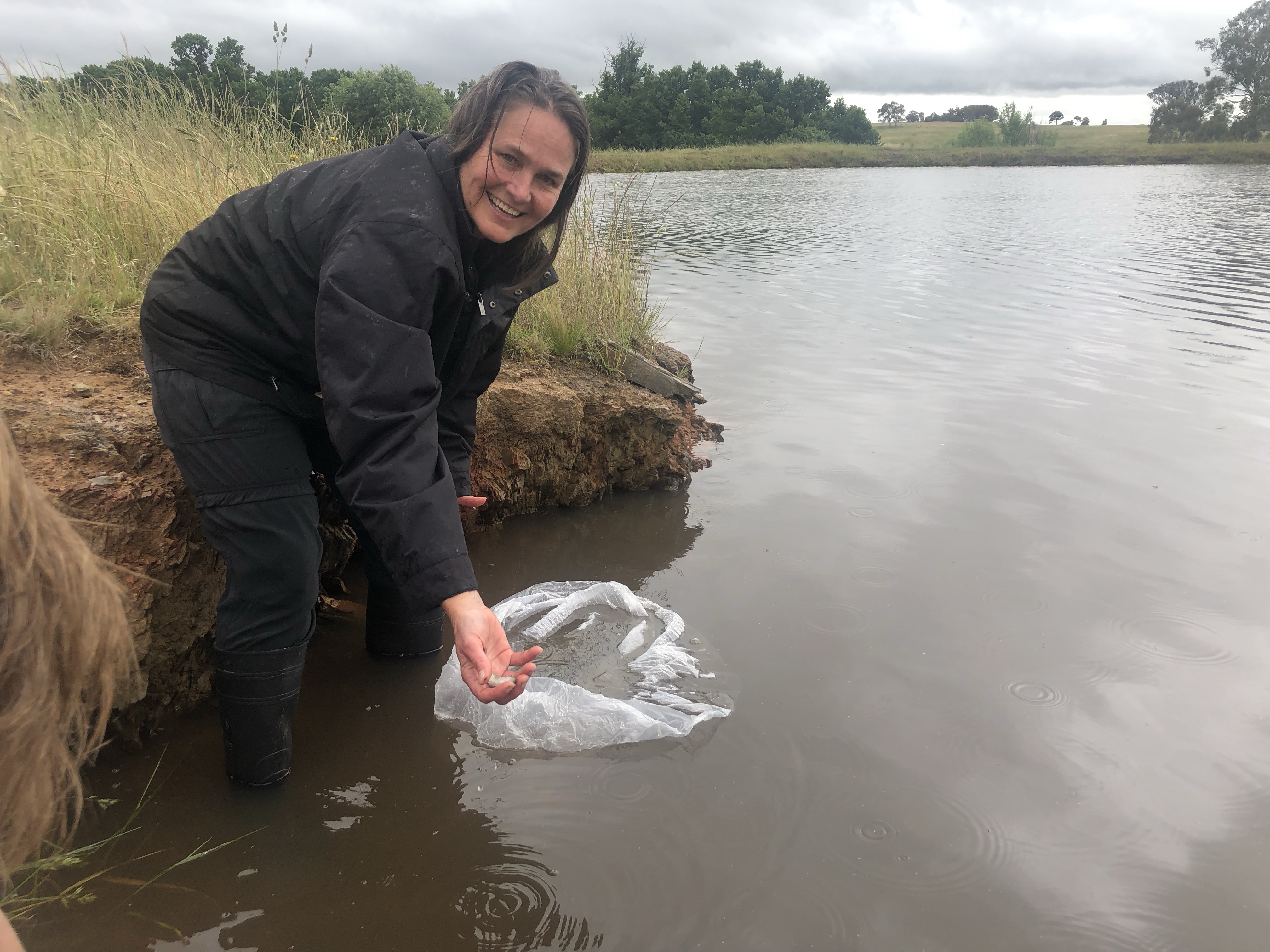
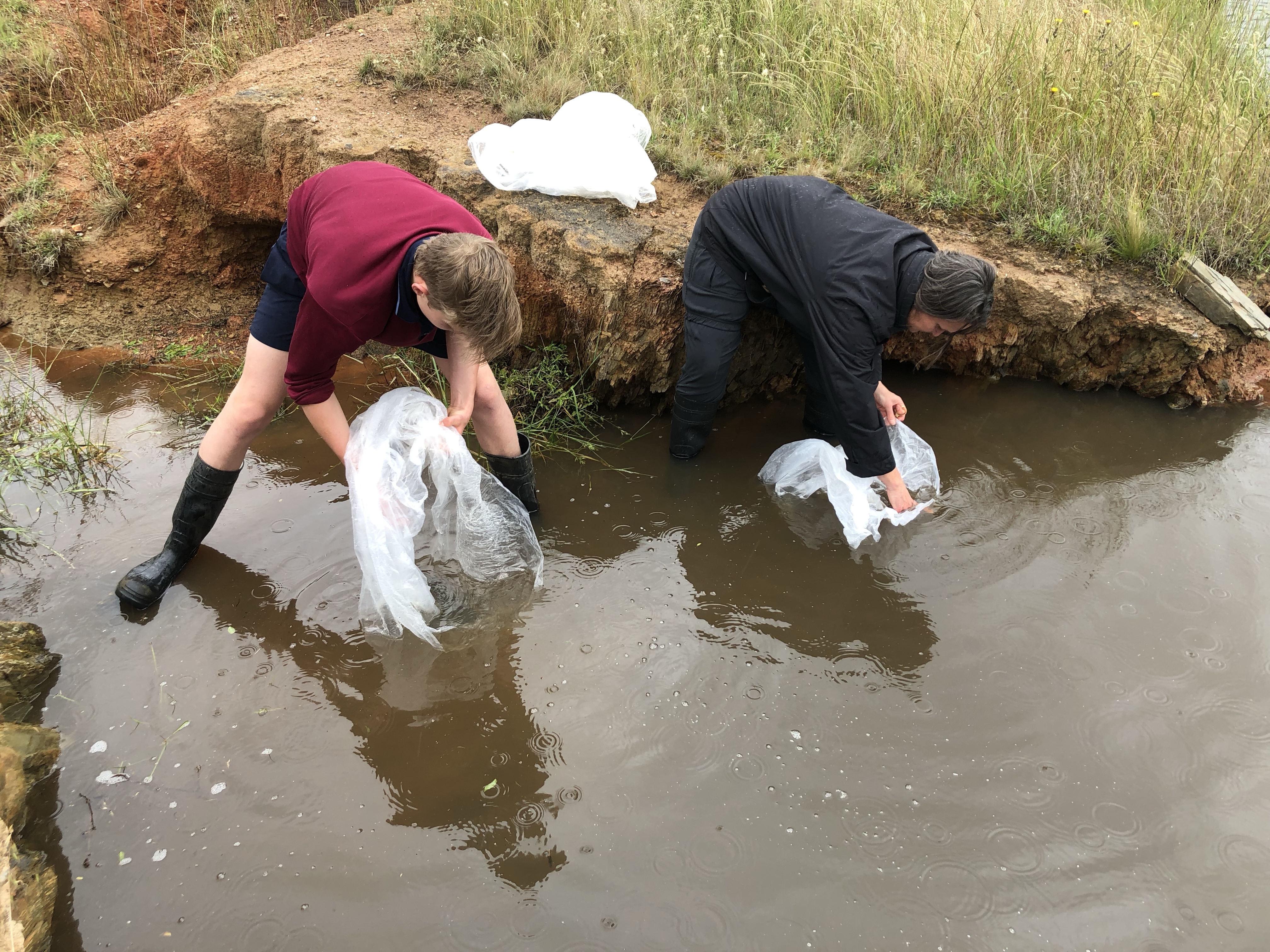
I was really excited to get going on our first project – having placed an order almost 18 months ago. With such a magnificent body of water in our dam, it seemed like a good idea to stock our dam with some fish. Last week we took delivery of 500 Silver Perch (bidyanus bidyanus) fingerlings from Alan at Jamberoo Aquaculture (http://www.silverperch.com.au).

The silver perch is a medium sized native fish found in the Murray Darling Basin. This means that should our dam overflow and fish escape, they will enter their natural habitat. Sadly today the silver perch are functionally extinct in the Murrumbidgee river system, which our local creek eventually joins. Indeed in the last 40 years wild silver perch populations have collapsed, with only a small pocket surviving in the mid reaches of the Murray River. The fish do not breed in dams or other impounded water supplies.

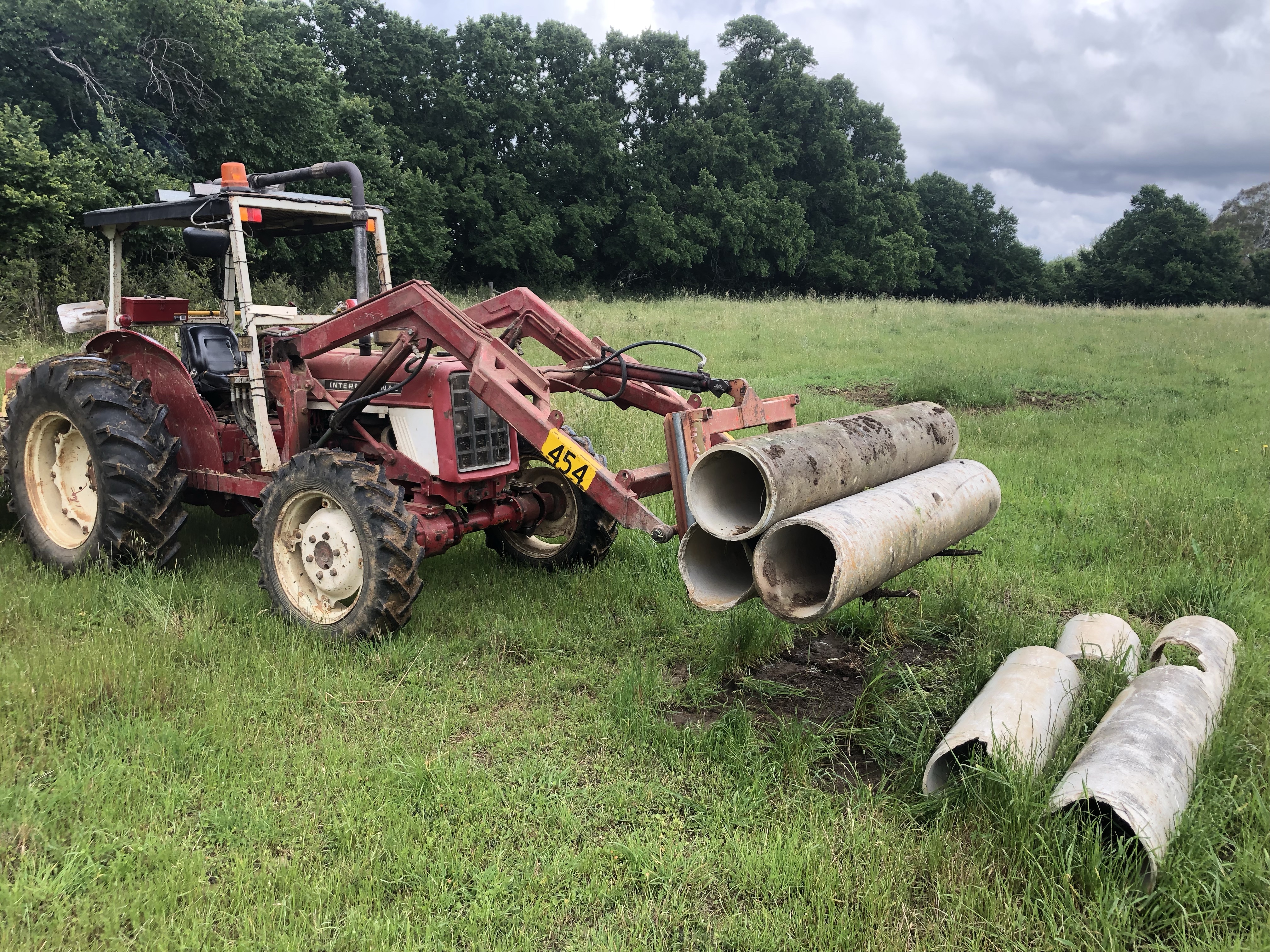
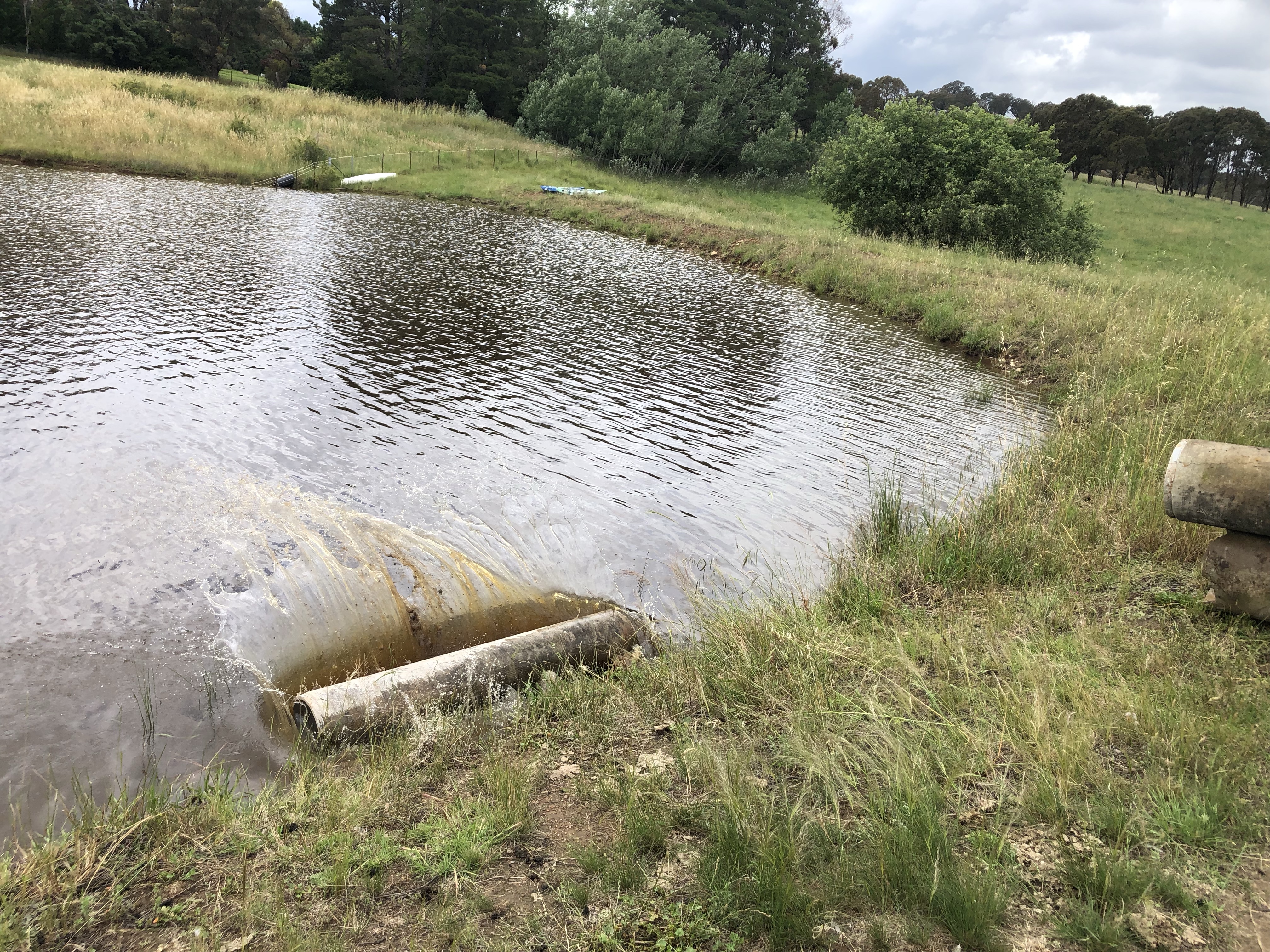
The fish arrived in great shape, and quite a lot larger than we expected. In a couple of years they should be plate size – if the cormorant who has taken to camping on the dam wall doesn’t get them first. To give the fish half a chance, I put some old pipes in the dam to give the fish some shelter should they want it.

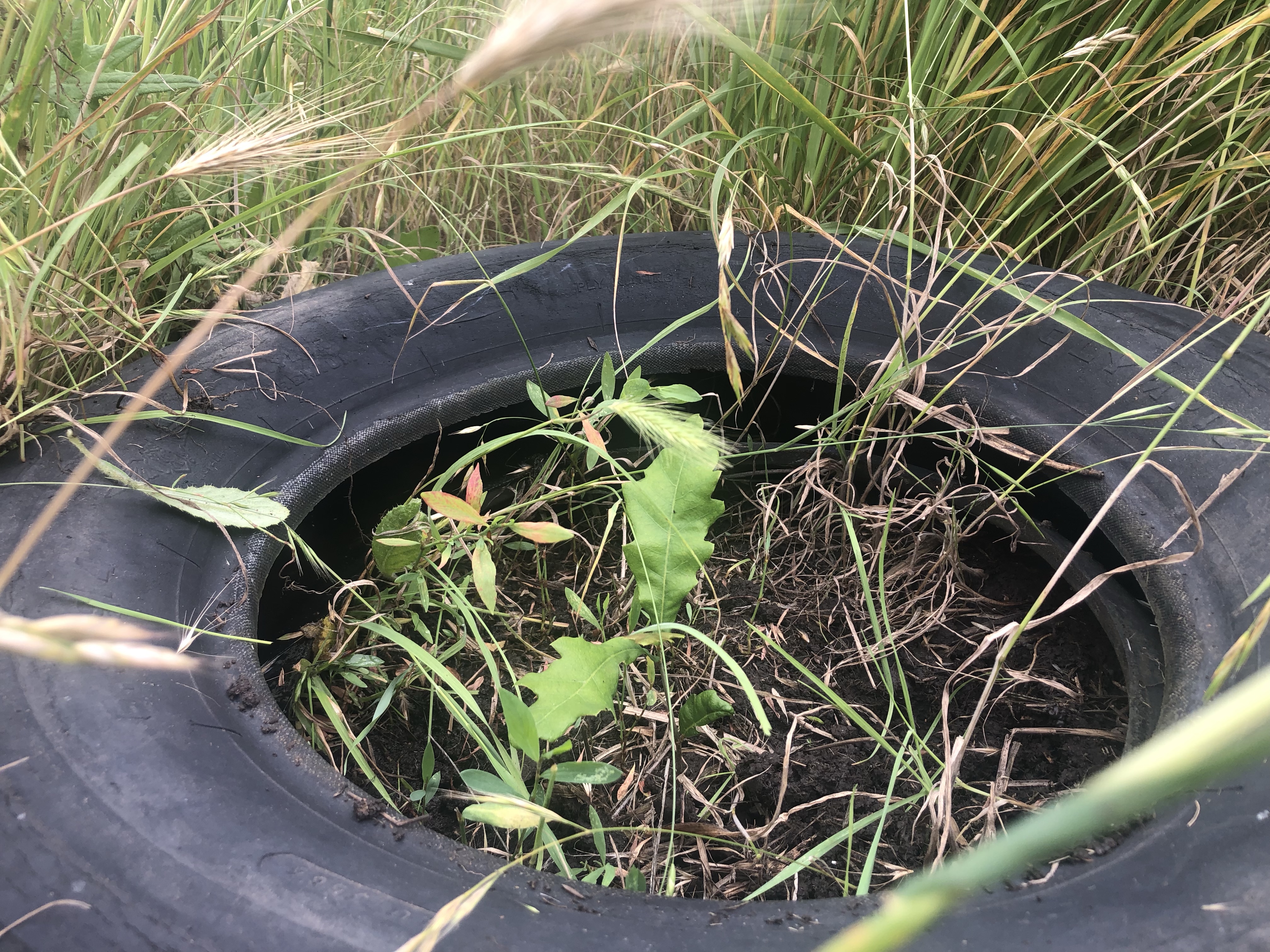
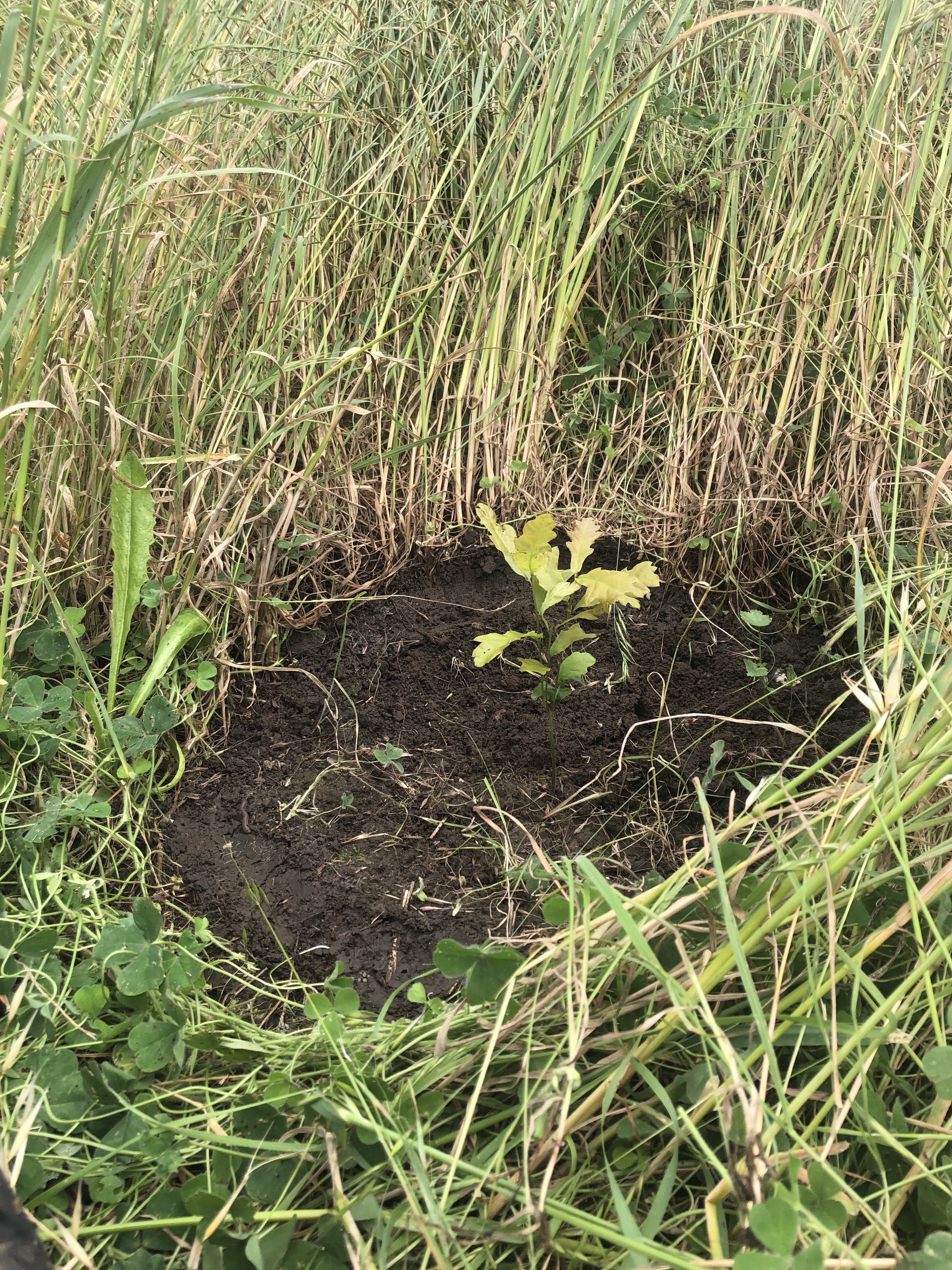
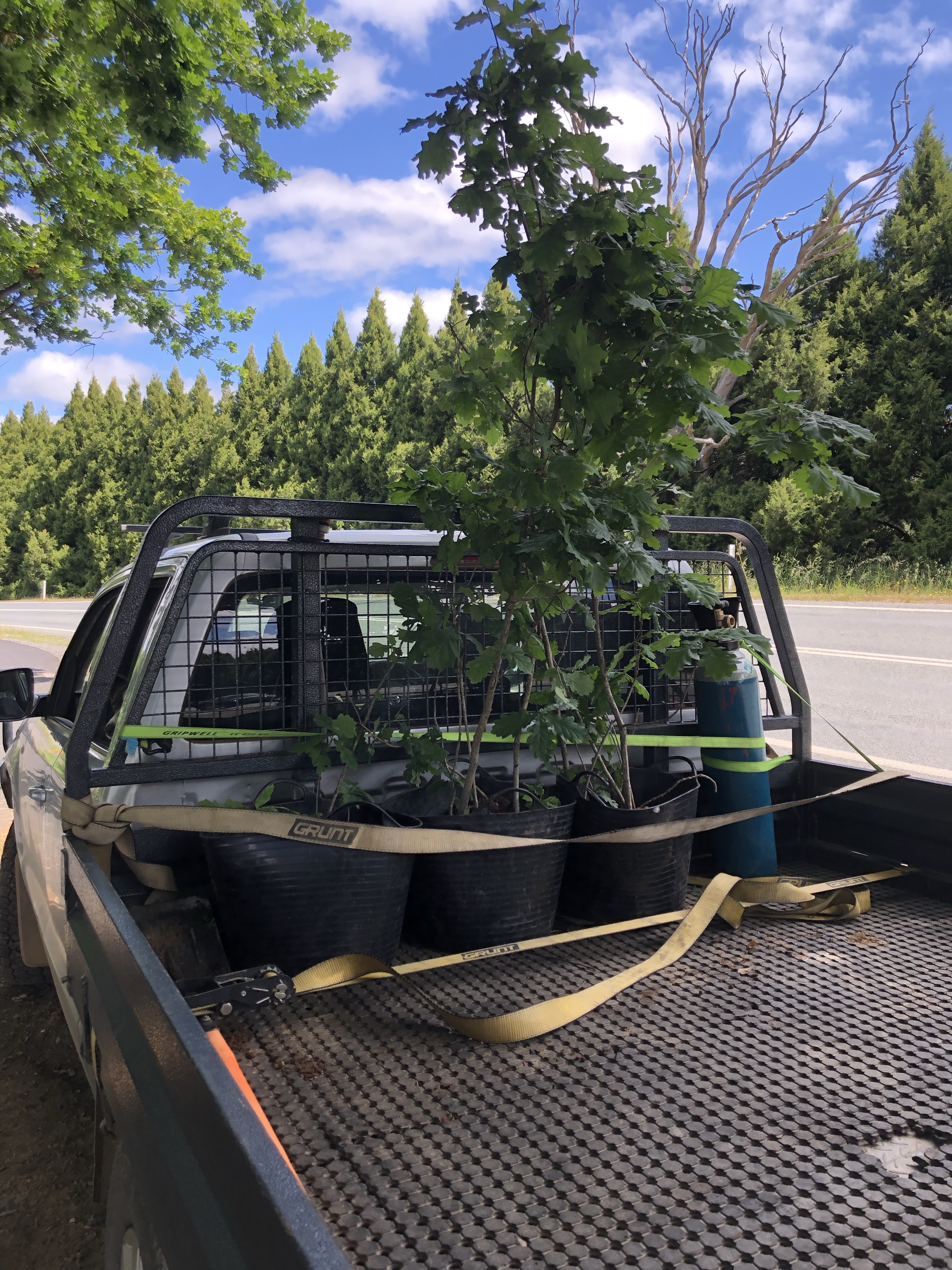
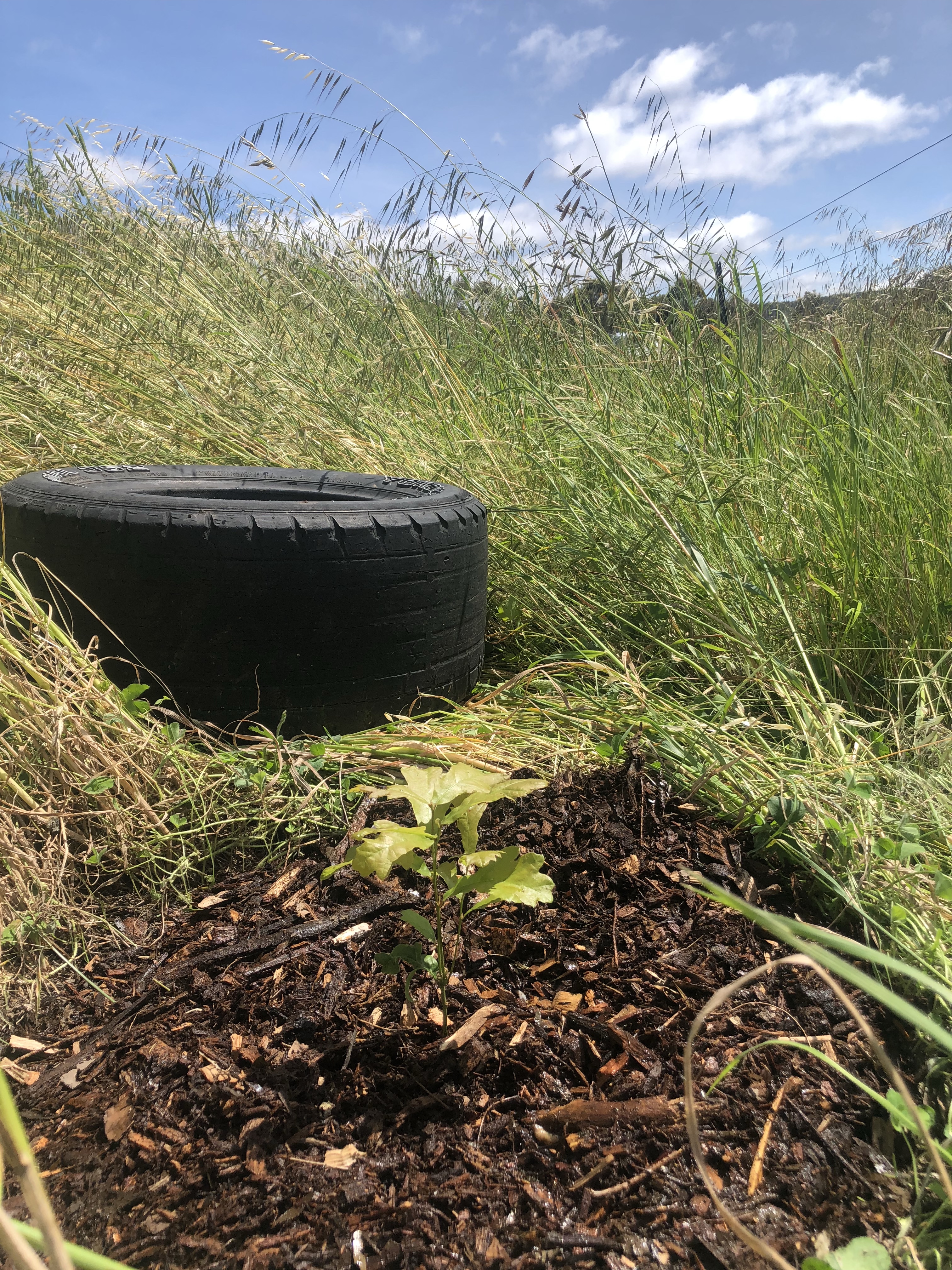
In another part of the farm, we have been watching oaks come out of the ground. We planted a range of acorns last May and around 70% have sprouted and are doing well (https://rockfarming.com/2021/05/16/more-trees-planted-on-the-rock-farm/). I was sharing my progress with a colleague at work, when he invited me to collect a number of oak seedlings that had come up under some oaks growing at his place to fill in my gaps. There were hundreds of little oaks all competing for lights, and I quickly filled all the punnets I had brought. What I didn’t expect was some much taller saplings also looking for a new home. I harvested three buckets of tall saplings and hurried home.

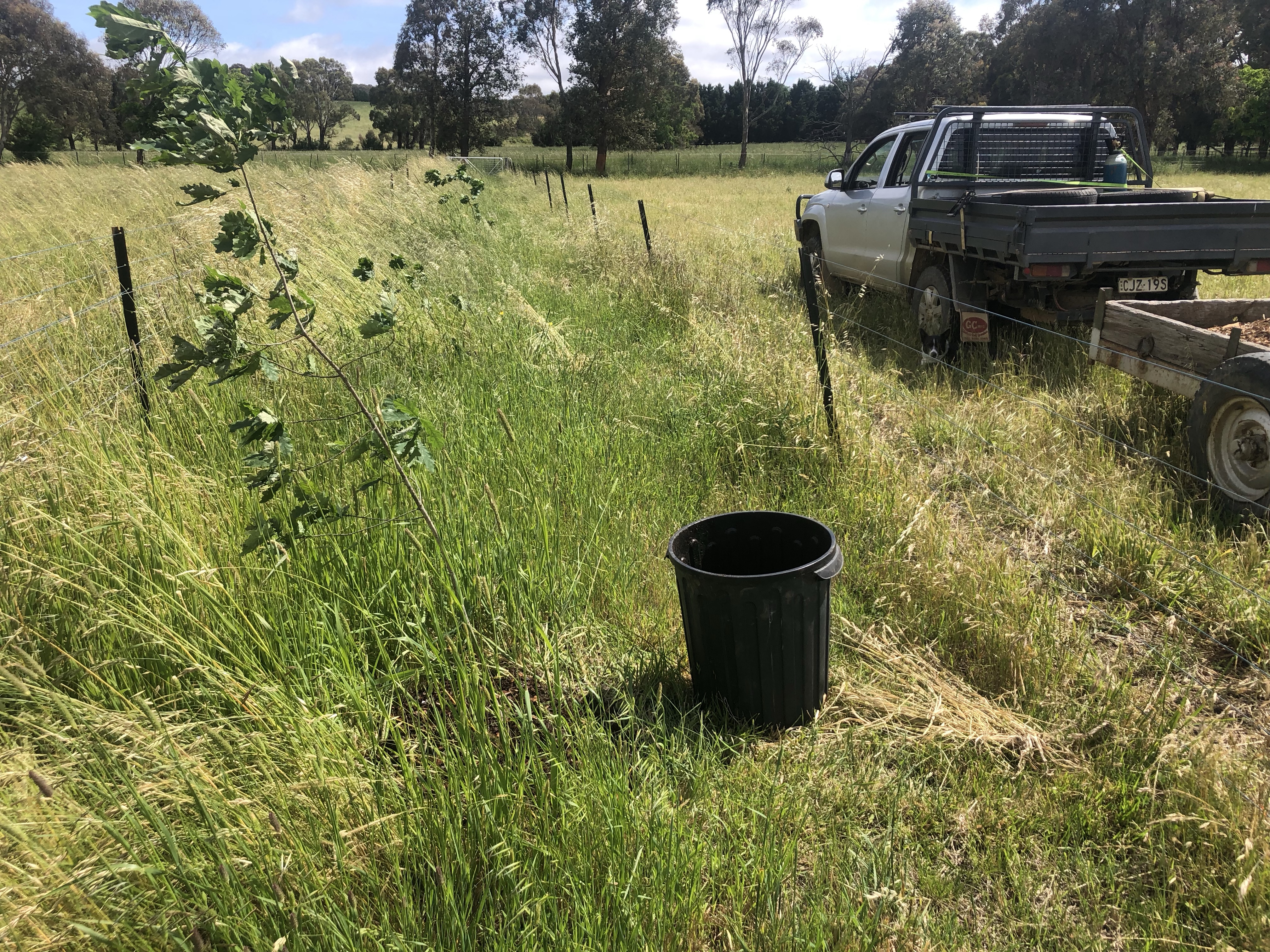
I soon had the new seedlings and taller saplings in the ground. Hopefully they make the most of the rain forecast this week.

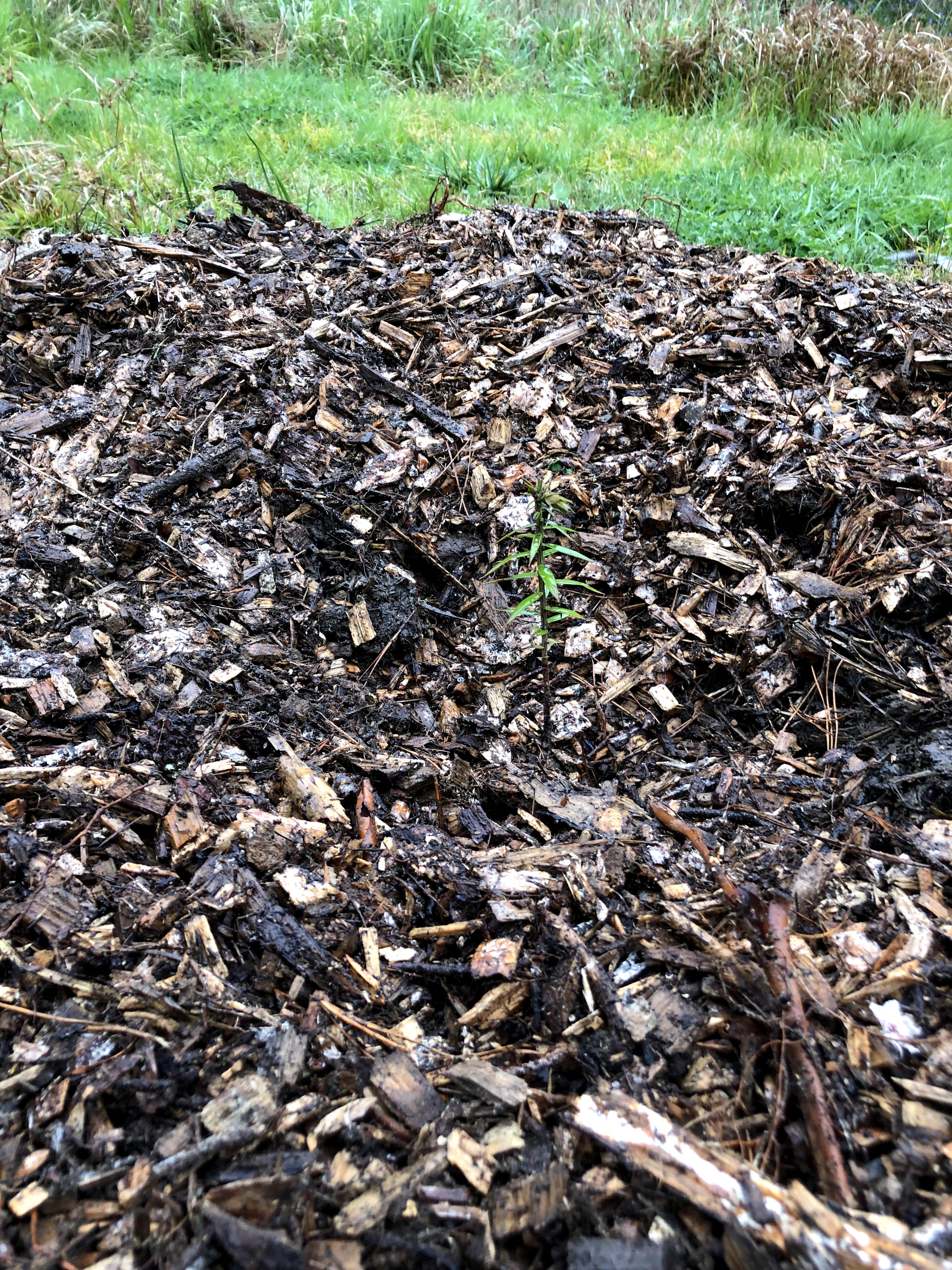
I spent an hour or so weeding around the seedlings, and mulched around these young trees. This really is the most ideal season to get them established. Knowing how many oak seedlings I left behind, I will be going back to get some more soon.

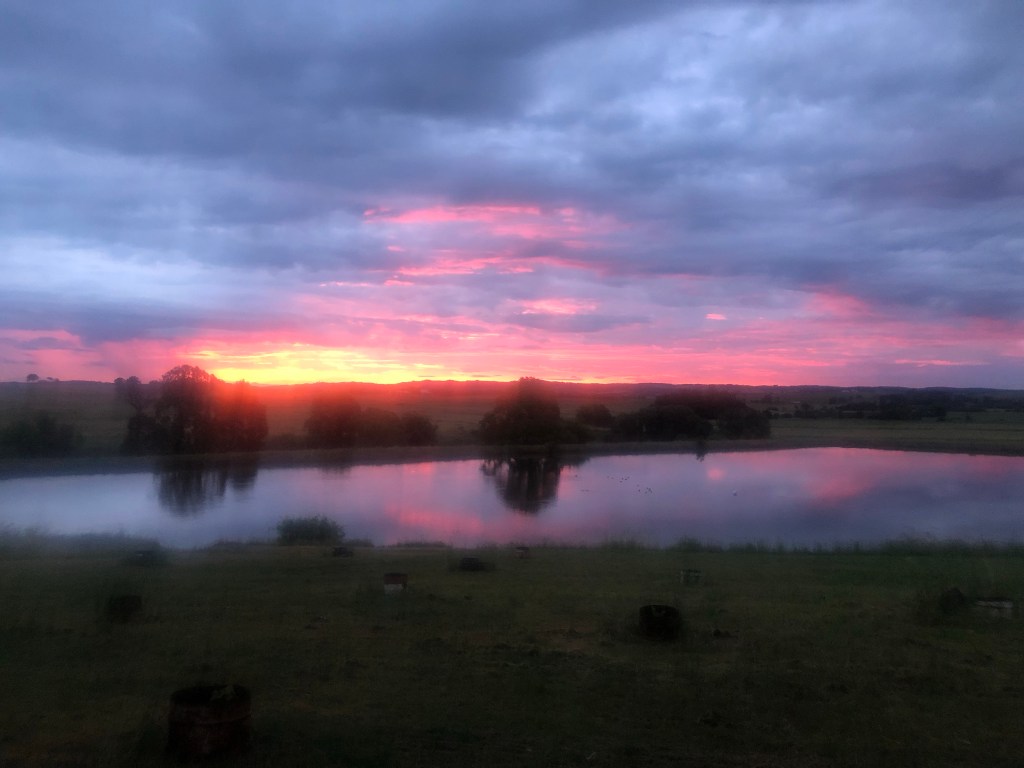
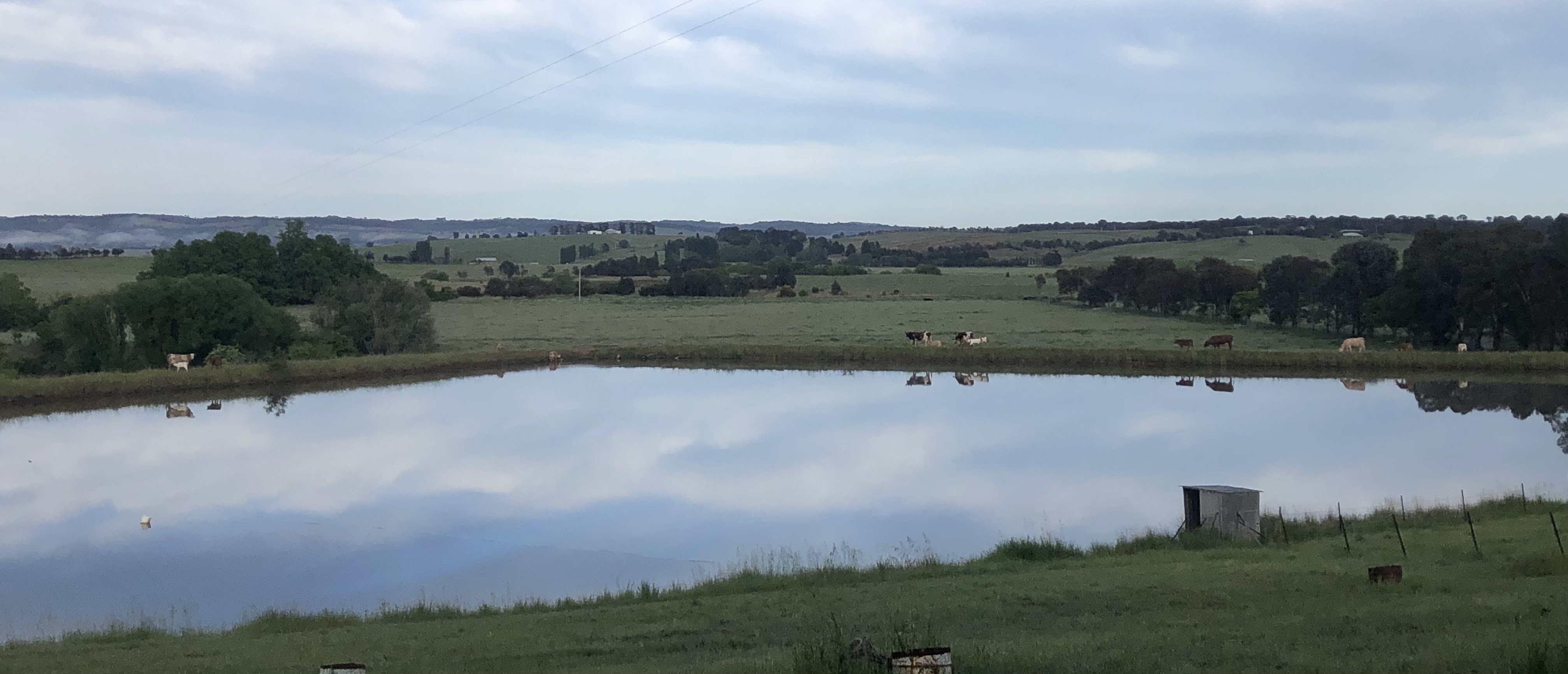
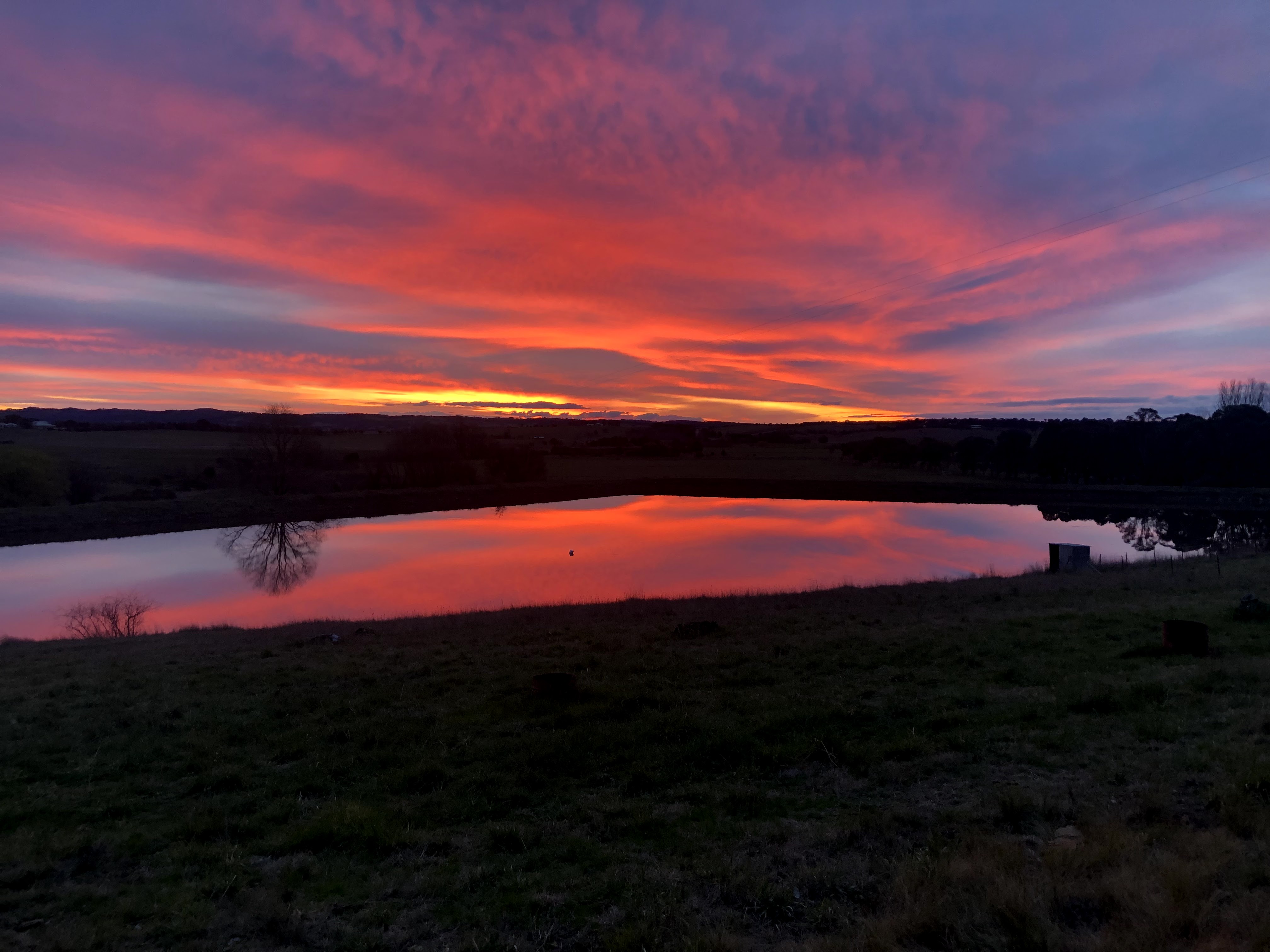
A shout out to CK for the beautiful trees and Alan and Jamberoo Aquaculture for the beautiful fish! It sure makes the sunset photos even more special overlooking the dam with it’s new inhabitants and sharp eyes may spot the oak saplings in the tree guards on the right behind the dam.

My next post has some exciting news – and I can’t wait to share it with you. There are some wonderful people in our local region doing some exceptional things on their farms, and I had the privilege to join some of them to hear their stories and how they are also pursuing the goals of healing their land.

A wet spring – getting some science on

James Rebanks in English Pastoral described the role of the farmer as one of close observation. Through examination of the interconnectedness of the landscape, Rebanks explains how farmers are able to build an intimate knowledge of every aspect of their farm. It requires farmers to walk their paddocks, getting their hands in the dirt, and examining the second and third order effects from their management decisions. It takes a lifetime to learn.

I don’t have a lifetime of experience behind me, nor do I have the time I would like to devote to unravelling this mystery. So I have to take a slightly different approach, and one method I can use to increase my understanding of my soil health is have soil samples analysed in a scientific laboratory.

I hope the analysis of our soil will answer one of the questions I have from an observation of the cattle’s behaviour. When I move them from a lush grassy paddock to another lush grassy paddock, the cattle seem to have a preference to chew the leaves from young elm suckers if they are present. This could be the cattle seeking roughage, or it could be seeking a mineral that the deep rooted elms have in their leaves that is lacking in the grass. Pat Coleby is a firm believer that the animals know which minerals they need, and their behaviour could be a clue to a mineral deficiency.

We had soil tests conducted not long after we moved to the not-so-rocky Rock Farm (https://rockfarming.com/2018/05/07/soil-analysis-results-are-in/) , so you can imagine when I saw the Local Land Services was offering a soil test program, I leapt at the chance to get onboard. It was three and a half years since our last test was conducted, and I am keen to see if there is a discernible difference in our results since we became custodians of our the 40 hectare Rock Farm.

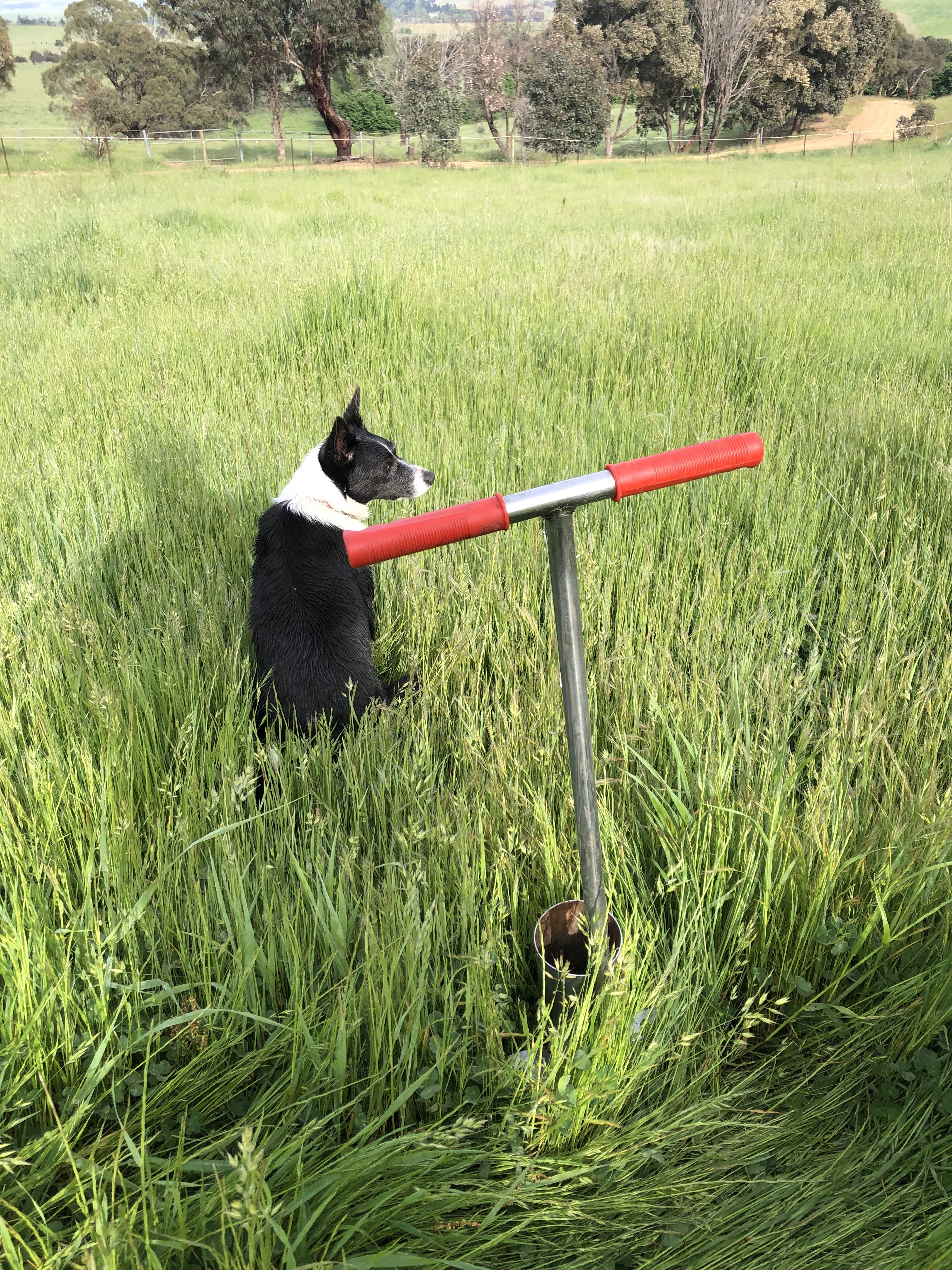
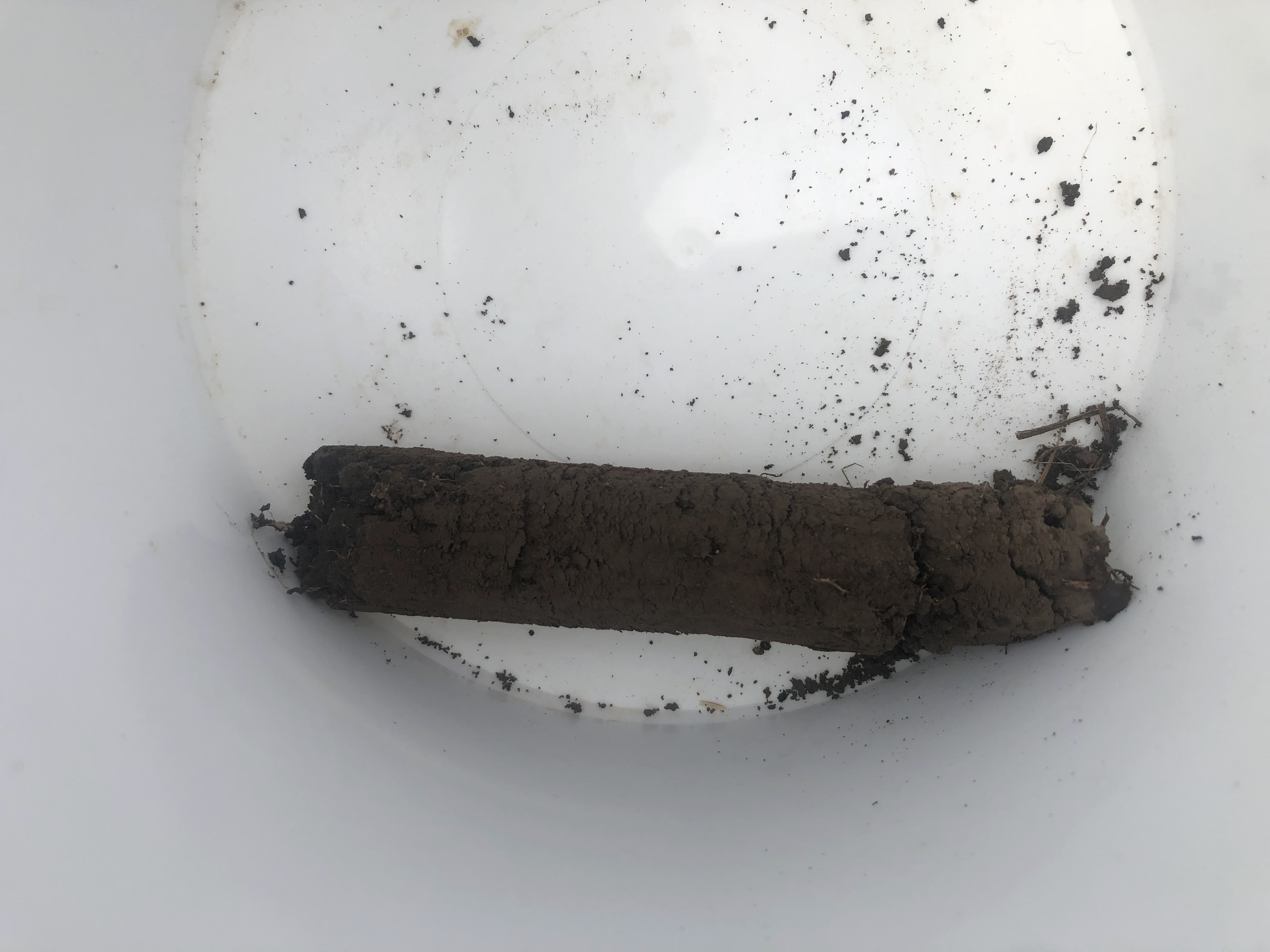
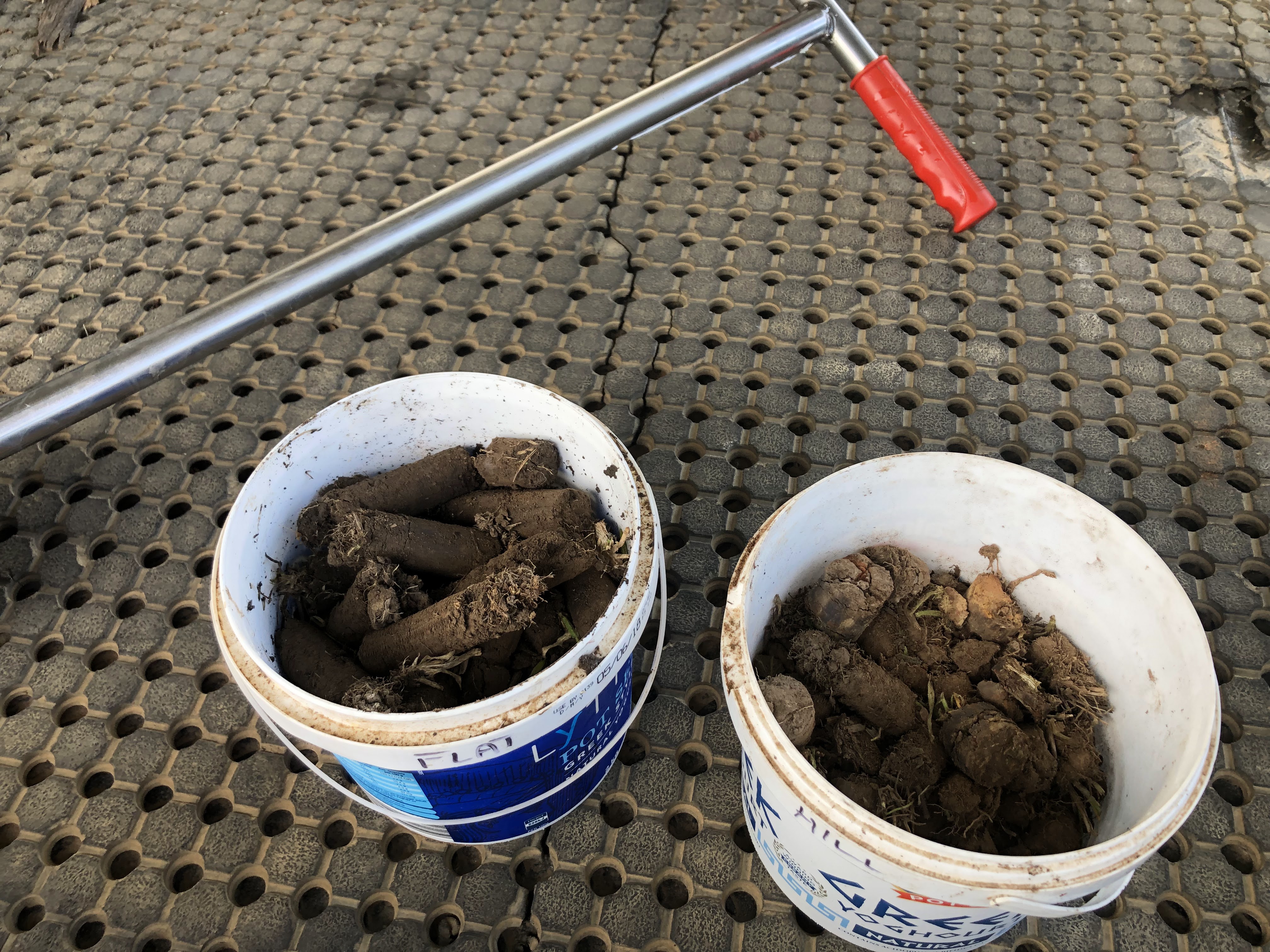
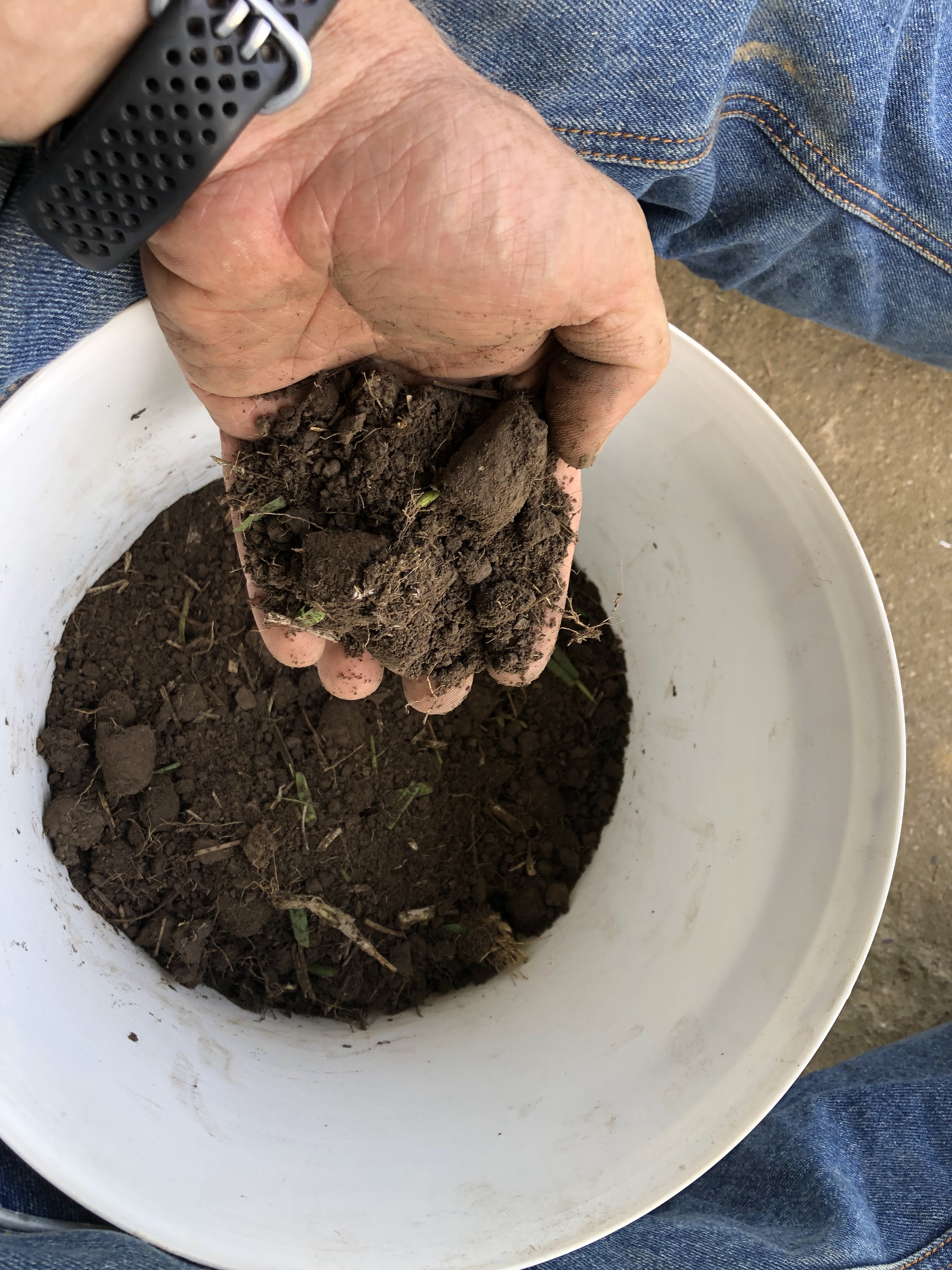
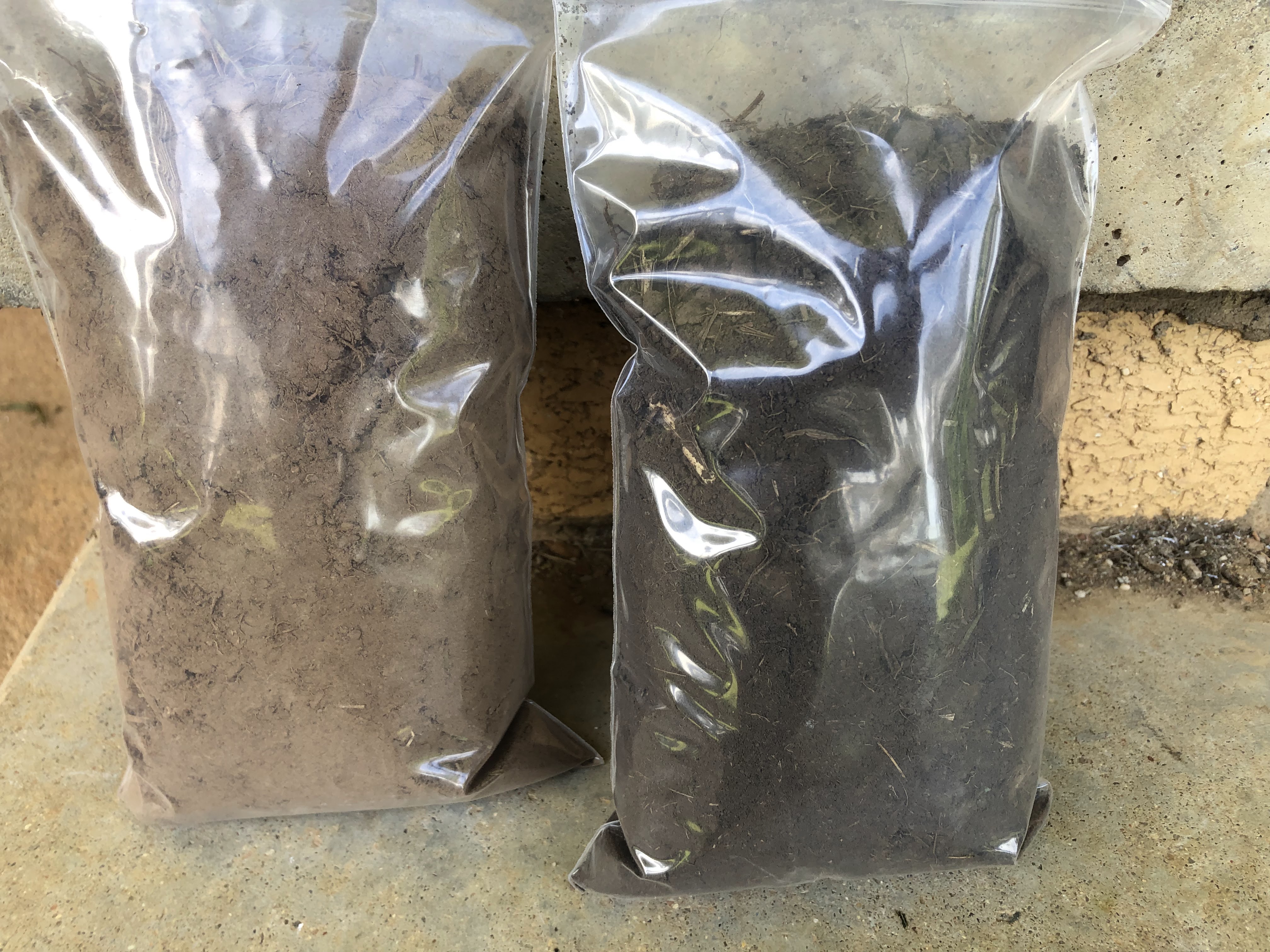
The soil samples require multiple (around 30) 100mm cores to be taken along a transect. I chose two different areas, the first on our river flats, and the second on our shale slopes. Along the flats, the rod was easy to push in the required 100mm. On the slopes, the soil was barely more than 50mm thick, and I had to try really hard to find enough samples that met the 100mm requirement. After I had filled the buckets, I mixed the soil thoroughly, before bagging around 1.5kg of soil for testing. The colour difference in the soil samples was remarkable, but not unsurprising.

Since we bought this Rock Farm, we have not applied fertiliser to these paddocks. Our first two years experienced very low rain fall, and the last 18 months have seen much higher than average rainfall. We initially grazed sheep on the property, before buying our first cattle in May 2018. We sold our last sheep in January 2020 – just before the drought broke.

Instead of purchasing fertiliser, I have been happy to supplement the stock’s feed as required, bringing in hay and other feed as required, using the philosophy “If you want to run ten cows, feed ten cows until you can run ten cows.

We have also practiced cell grazing or rotational grazing. This means we graze a paddock heavily for around a week or so, before resting the paddock for as long as I can. I have around 13 rotations that I cycle the cattle through, meaning each area is only visited every three months or so. It doesn’t always work that way – some sections are significantly larger and have better water supplies, keeping the cattle happy for more than a week, and others they chew out after a couple of days. I also want to keep the grass around the house short in preparation for fire season, meaning this area is eaten out more than the others.

One variable I am not sure how will be reflected in the results is soil carbon. We scored between 3 and 3.6% on our last results, and whilst advocates of rotational grazing claim it increases the amount of organic carbon in the soil, field experience is lacking (https://soe.environment.gov.au/theme/land/topic/soil-carbon-dynamics). Soil carbon does increase the capacity of the soil to store moisture – but the amount of carbon may also be linked to soil moisture meaning rainfall may be the biggest factor in affecting our soil carbon levels. I will be particularly interested in this element of the analysis.

Either way, I am looking forward to the test results. Of course the ones who gain most benefit from healthy nutritious soils are completely oblivious of the science behind their condition.

The good news is they are fat as fools, healthy and happy. They show passing interest in a mineral lick I have available for them, which I take as a good sign. And it is such a pleasure moving them through the farm, especially when the grass reaches their bellies.

A busy spring – marking calves on the Rock Farm and a new boy arrives.

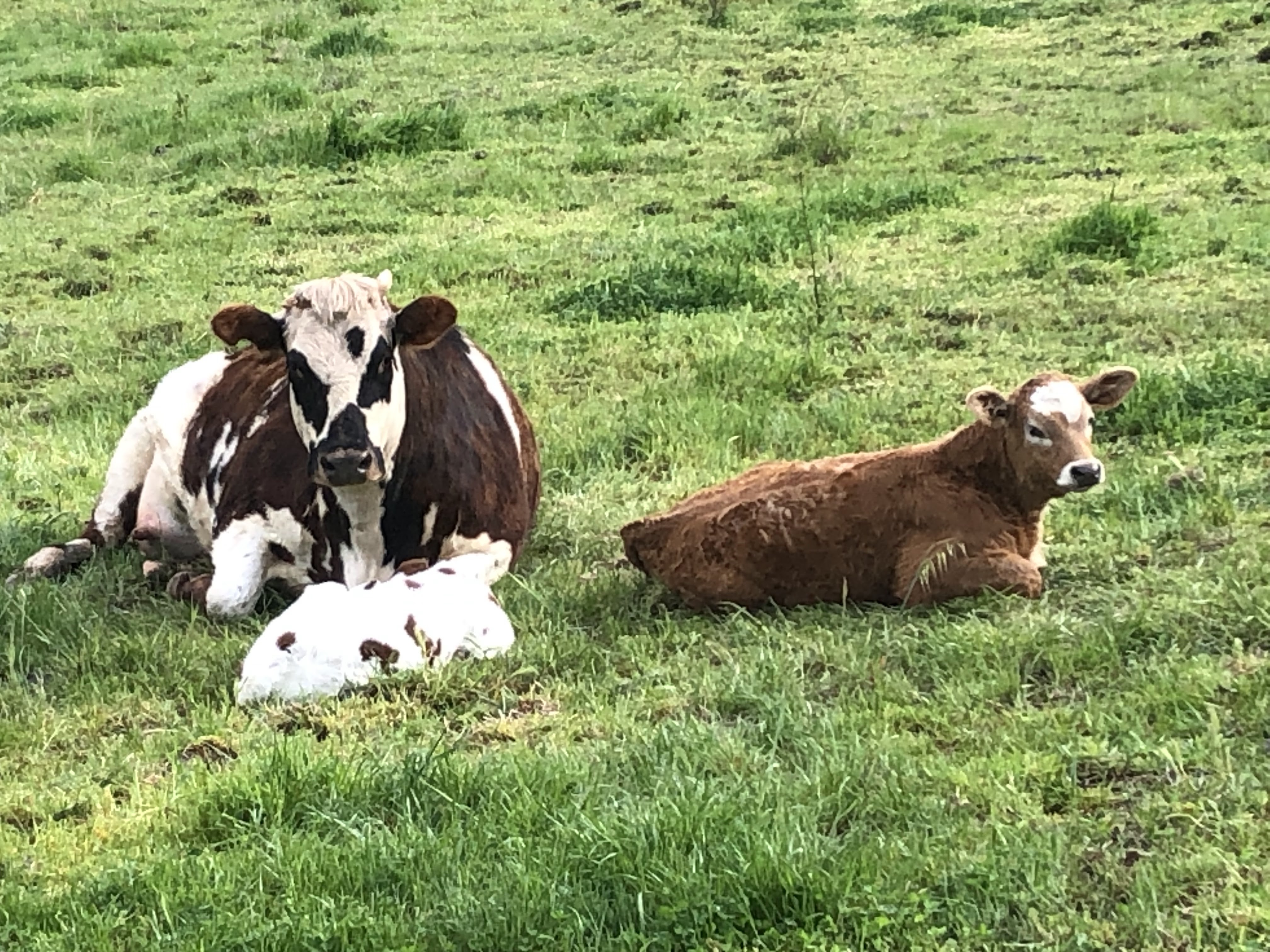
After helping Daisy give birth to Buttercup, the rest of the cows all delivered healthy calves – with the exception of Miss Steak. Miss Steak was on notice, having missed delivering what would have been her second calf last year. Whilst normal commercial operators might have culled her immediately, we were happy to give her a second chance. It seemed our faith was misplaced. Whilst Miss Steak was in rather rotund condition, she didn’t appear to be in calf.
By the 5th of September we had 14 beautiful calves on the ground from the 14 other cows. The maths wasn’t quite that simple, with Uno loosing her calf, and Margurite having twins, but overall it was a pretty good result. After giving Miss Steak another week or so, we decided to mark the calves.

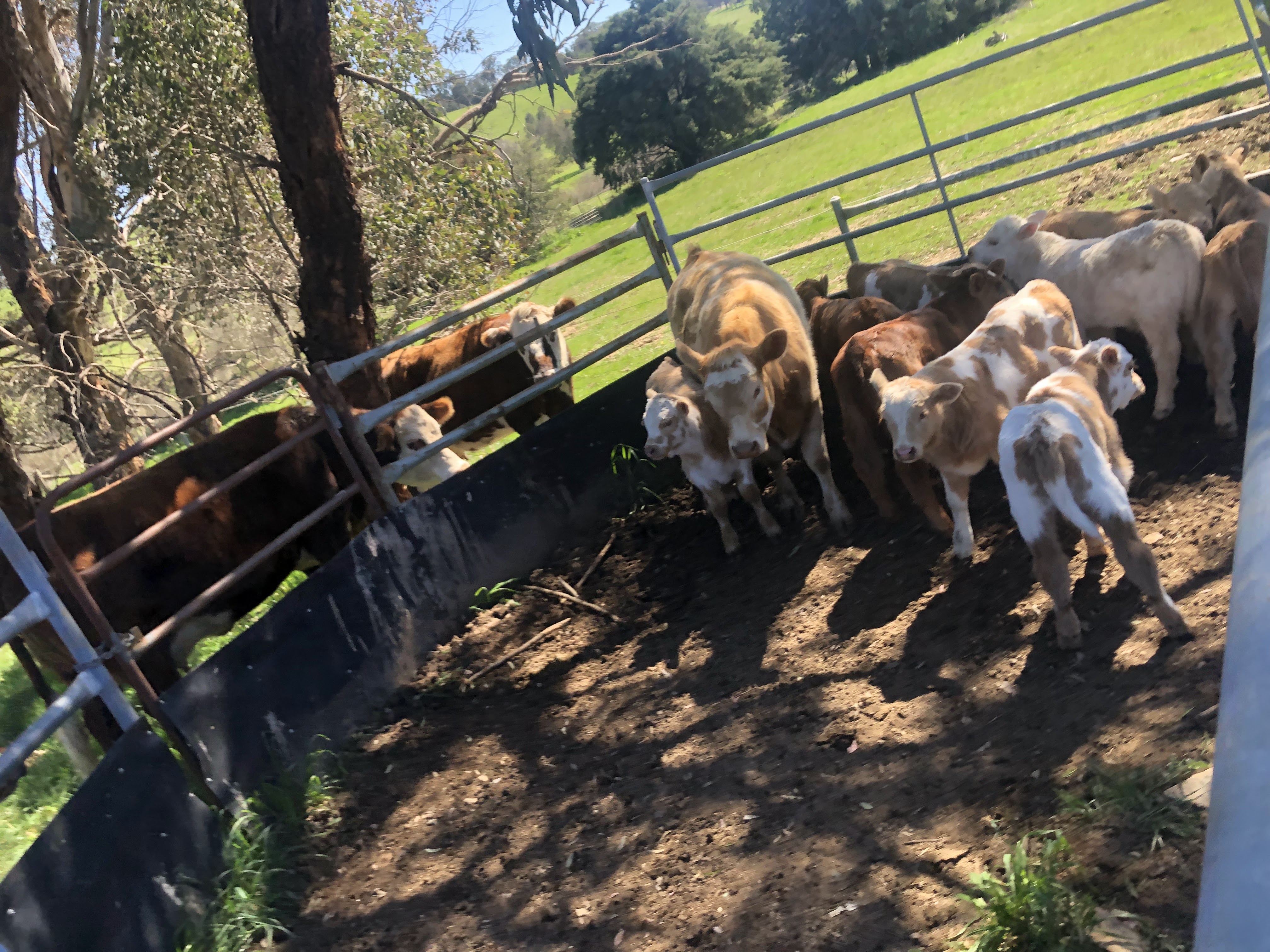
Marking the calves young serves two purposes. The calves are much easier to handle, and the boys are able to be castrated using rubber marking rings. I recruited Master 14 to help with the process. After I vaccinated the calves with a 5 in 1 vaccine, Master 14 was given the job of sliding the rubber rings over the bull calf’s testicles. He really didn’t like it, squirming and wincing and generally doing the whole thing with his eyes closed, which I found hilarious. After we had marked our calves we tallied 7 heifers and 7 steers, with Master 14 looking more cross-eyed than all the boys put together.

With steady and regular rain falling, we moved into September with the promise of solid growth in our pasture. The rain also was causing the weeds and thistles to grow. I took advantage of Master 16’s eagerness to earn money to upgrade his mountain bike by using his willing lockdown labour to chip out thistles each morning in lieu of the long bus ride into town. The Rock Farm pastures have really started to kick along and look fantastic. The good pastures have the cows cycling again.

I contacted our mentor and guide John, and arranged to lease another bull this season. I then asked our friend Jimmy if he could pick the bull up and bring him down to the Rock Farm. The truck arranged, it also made sense to send Miss Steak to the sale yards, a small diversion on the same trip. One of the more colourful characters on the Rock Farm, Miss Steak gained her notoriety with a terrible error of judgement she made as a young heifer (https://rockfarming.com/2018/11/16/a-terrible-miss-steak/). Sadly however, after not calving two years in a row, her time was up.

Then, a week before the truck was due to pick her up, her udder started filling. And filling. And filling. And one horrible cold and rainy night she delivered a gorgeous little heifer. Being the last calf calf, and born in the nick of time to Miss Steak, we named her “Minute”!

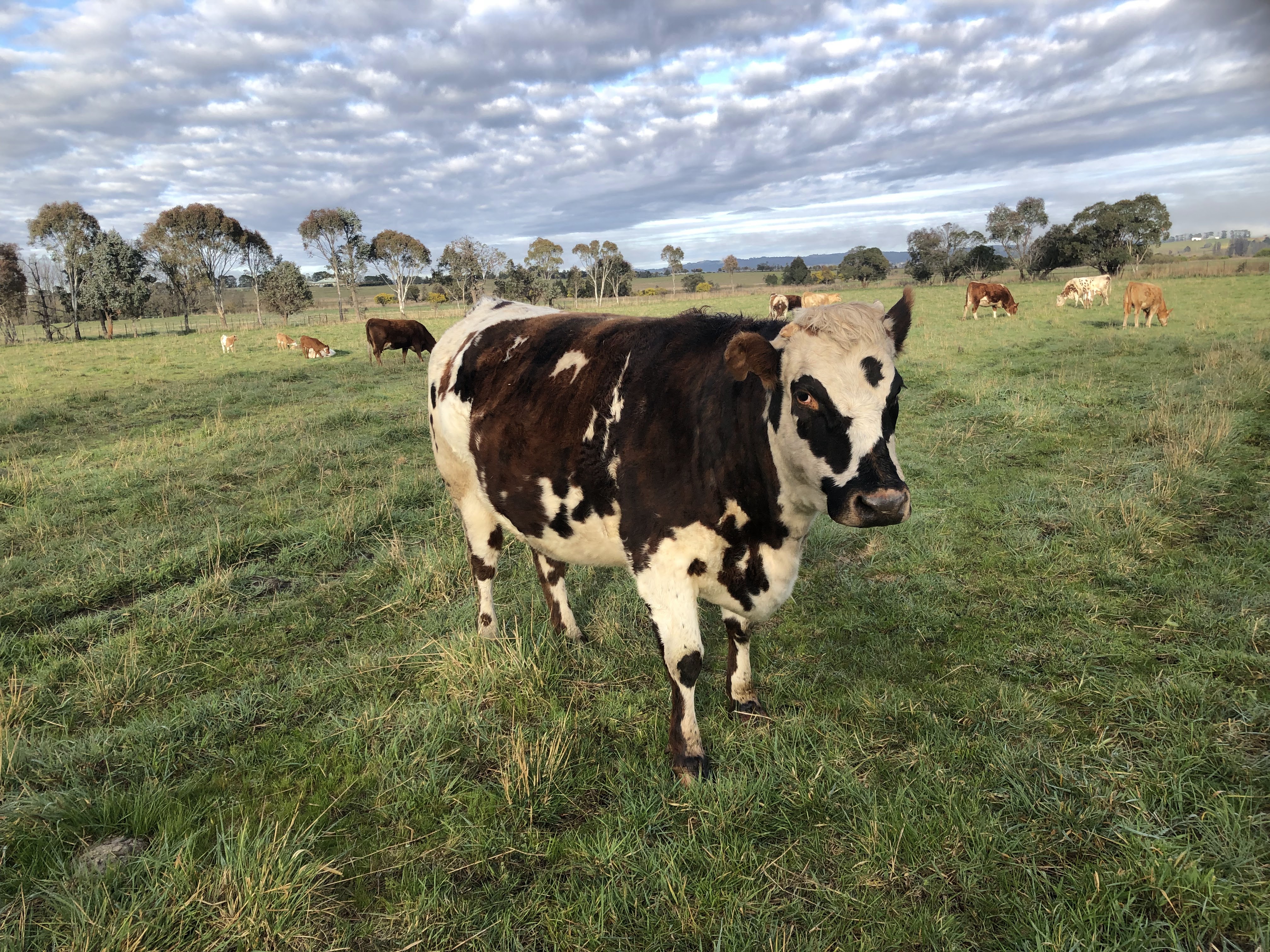
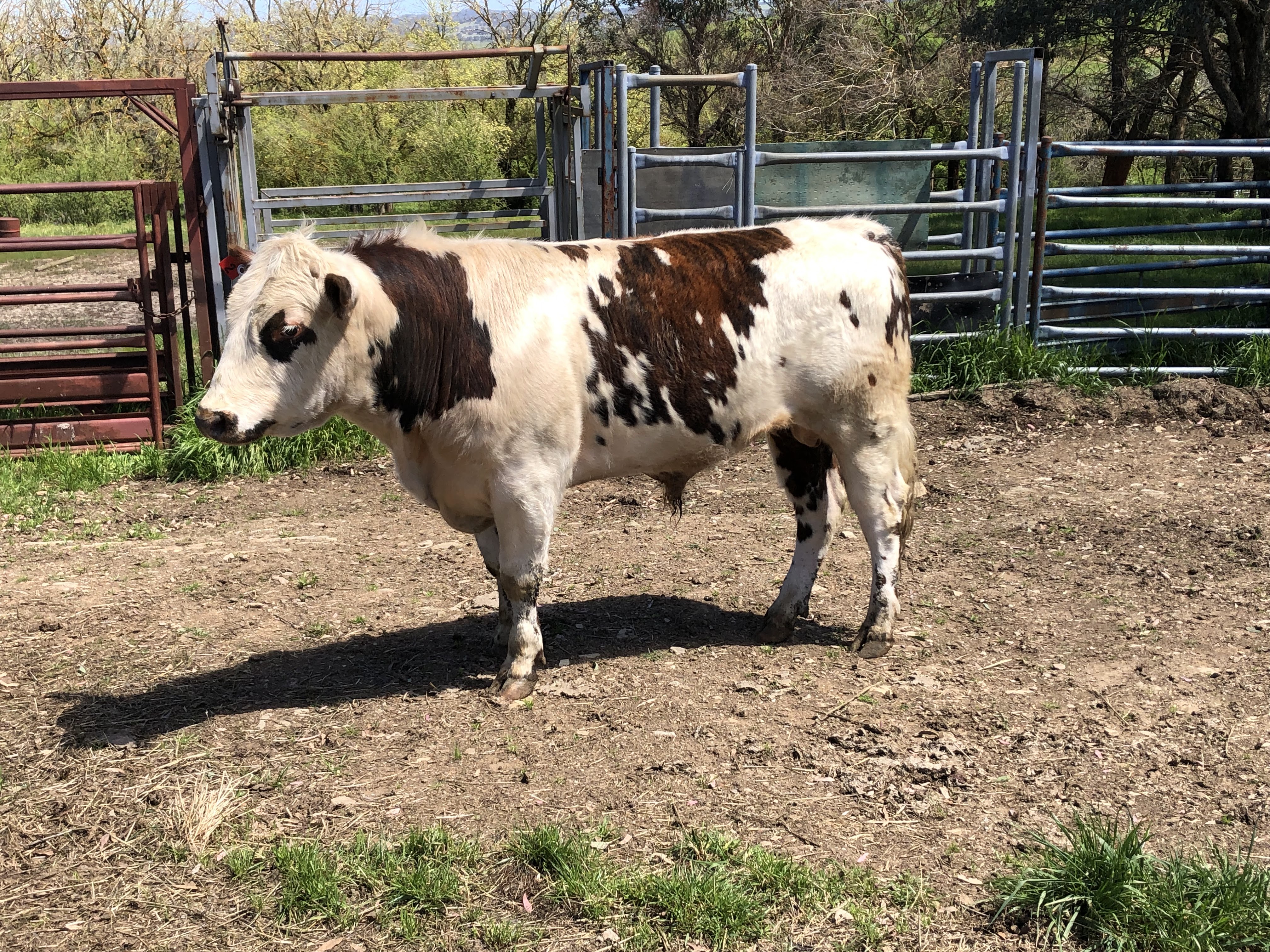
Jimmy happily accepted the change in cartage plans and we picked up our borrowed bull a couple of days later. This magnificent fellow shows is French Normande herritage with his markings and his length. He is also really quiet, and happily settled in with the girls. This year we are joining our 15 cows and 1 heifer with this fellow. They will be due to start calving late July, which is a little early for us, but with the season starting so well, we can only hope it holds.

In the mean time, we have been enjoying our daily strolls amongst the cattle. There are far worse ways to be spending lockdown! Special thanks to John for leasing the bull to us, and Jimmy for getting him here 🙂

More trees for the Rock Farm

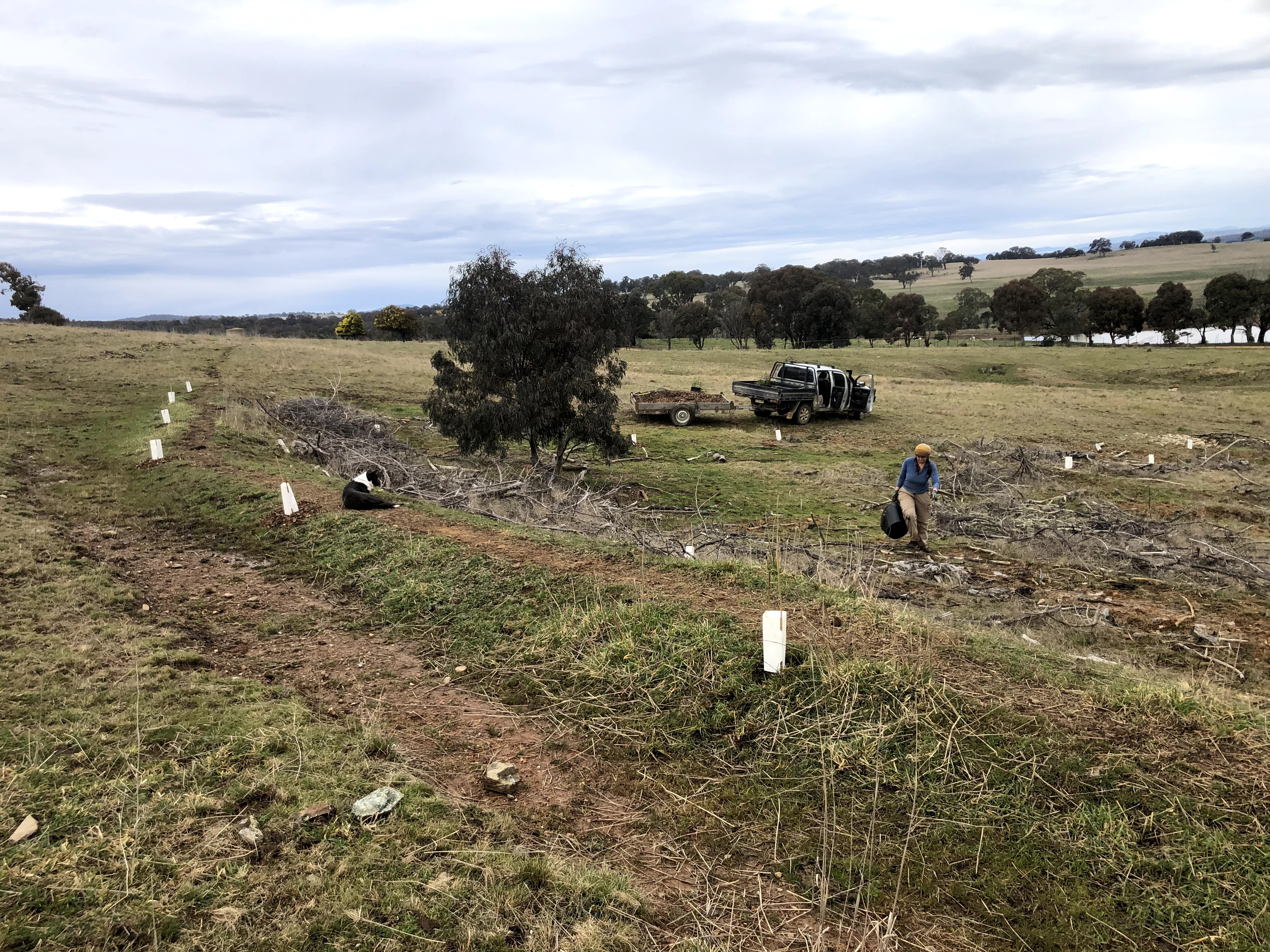
My first lockdown project was addressing an immediate need for nesting sites for birds that naturally nest in hollows. The second lockdown project has a much longer timeframe before we will see the rewards. Instead of building nesting boxes for trees, we were planting tube-stock trees to restore native habitat and control erosion on the Rock Farm. With a nearby nursery specialising in local species, and a forecast wet spring, the conditions seemed ideal for us to continue our efforts in planting trees.

We were fortunate to secure 110 native tube stock plants from Damien at ACT and Southern Tablelands Nursery (https://windbreaktrees.com.au/). Our plants ranged from Red Box (E. polyanthemos) and Yellow Box (E. melliodora), to others such as Grey Box (E. microcarpa), Apple Box (E. bridgesiana) and other native trees that are being trialed in our area. Given our short notice, we sadly didn’t get any Drooping Sheoak (Allocasuarina verticillata), one of the key food sources for the Glossy Black Cockatoo.

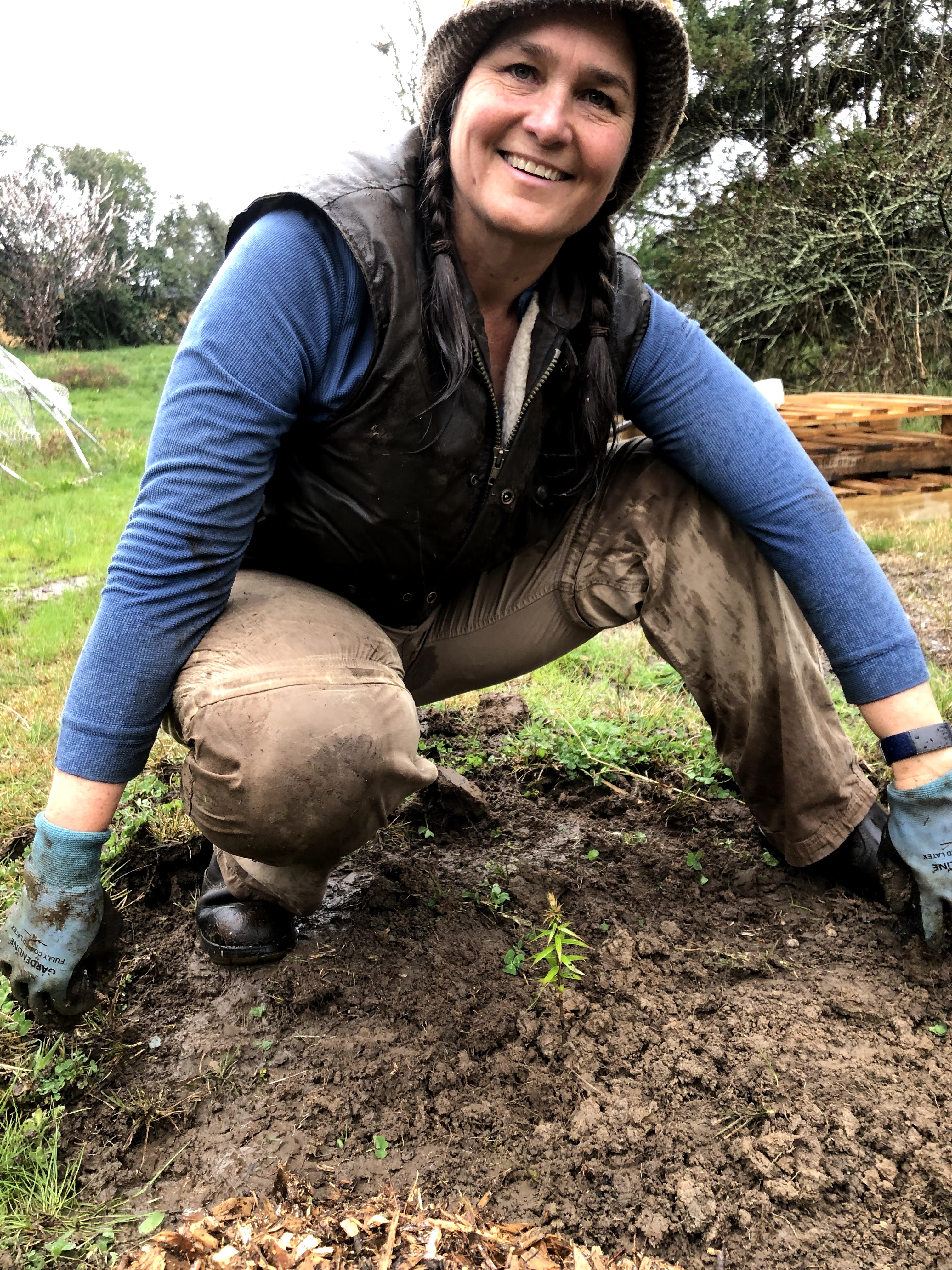
Over the next couple of days Jo and I put our tubestock in the ground. We again found the Hamilton Tree Planter invaluable, however many holes also needed a good working over with the crow-bar to open up the ground for the tap roots to penetrate. Each tree was then provided a scoop or two of mulch, and then protected, either with a tree guard or with cut branches. It was exhausting work, and whilst there are easier ways to plant trees en-masse, we were able to get them placed where we wanted for best effect.

The last couple of trees we planted we learnt about on a lap around the country a few years ago. We planted three Bunya Pines (Araucaria bidwillii) as the rain came down. Whilst they occur naturally in the Bunya Mountains in SE Queensland, there are some magnificent specimens of this tree in our region that pre-date European settlement. The Bunya Mountains was a site of many great meetings of the indigenous people for thousands of years. At these corroborees, held when the trees bore nuts every three years or so, law was made, disputes settled, marriages arranged and the seeds from the tree dispersed. It seemed that the weather wanted these trees to have the best possible start with a good shower of rain falling as we put the last ones in the ground. We might have been cold and wet, but my heart was singing.

It was extremely rewarding work, and whilst my back and shoulders were sore, I know my aches will be temporary. I hope that these trees will grow and provide shade, shelter and habitat for our native friends on the Rock Farm, whilst protecting our soil. As I sat back watching the sun set after the last tree was planted, nature put on a spectacular light show. I am sure it is a good omen.

A huge thank you to Damien at ACT and Southern Tablelands Nursery (https://windbreaktrees.com.au/) for his excellent quality tube-stock and advice. If you want one tree, or a hundred, Damien will be able to help you pick the one you need.
If you build it, they will come… I hope

A few weeks ago I caught a fleeting glimpse of a Barn Owl (Tyto Alba) hard at work reducing the local mouse population. These beautiful creatures are one of the most widespread birds of prey in the world, and I held my breath as I watched her at going about her business.

Seeing this magnificent bird got me thinking about the balance of nature, and especially what do about our population of mice. Sure I could lay poison for the rodents, but then I risked killing the owls through secondary poisoning. The problem is not too many mice, but too few birds of prey like the Barn Owl.
The biggest limitation on our population of birds here on the Rock Farm is the number of suitable nesting sites. A lot of birds nest in hollows, and unfortunately these take a long time to form naturally. Whilst the Rock Farm has been blessed with innovative and forward thinking tree planting in the past, sadly there are very few really old trees on the property. This means that nesting hollows are few and far between. This is a problem we shared with our last property, and the boys enjoyed a project there making nest boxes for cockatoos (https://rockfarming.com/2016/10/23/helping-birds-with-nesting-boxes/)

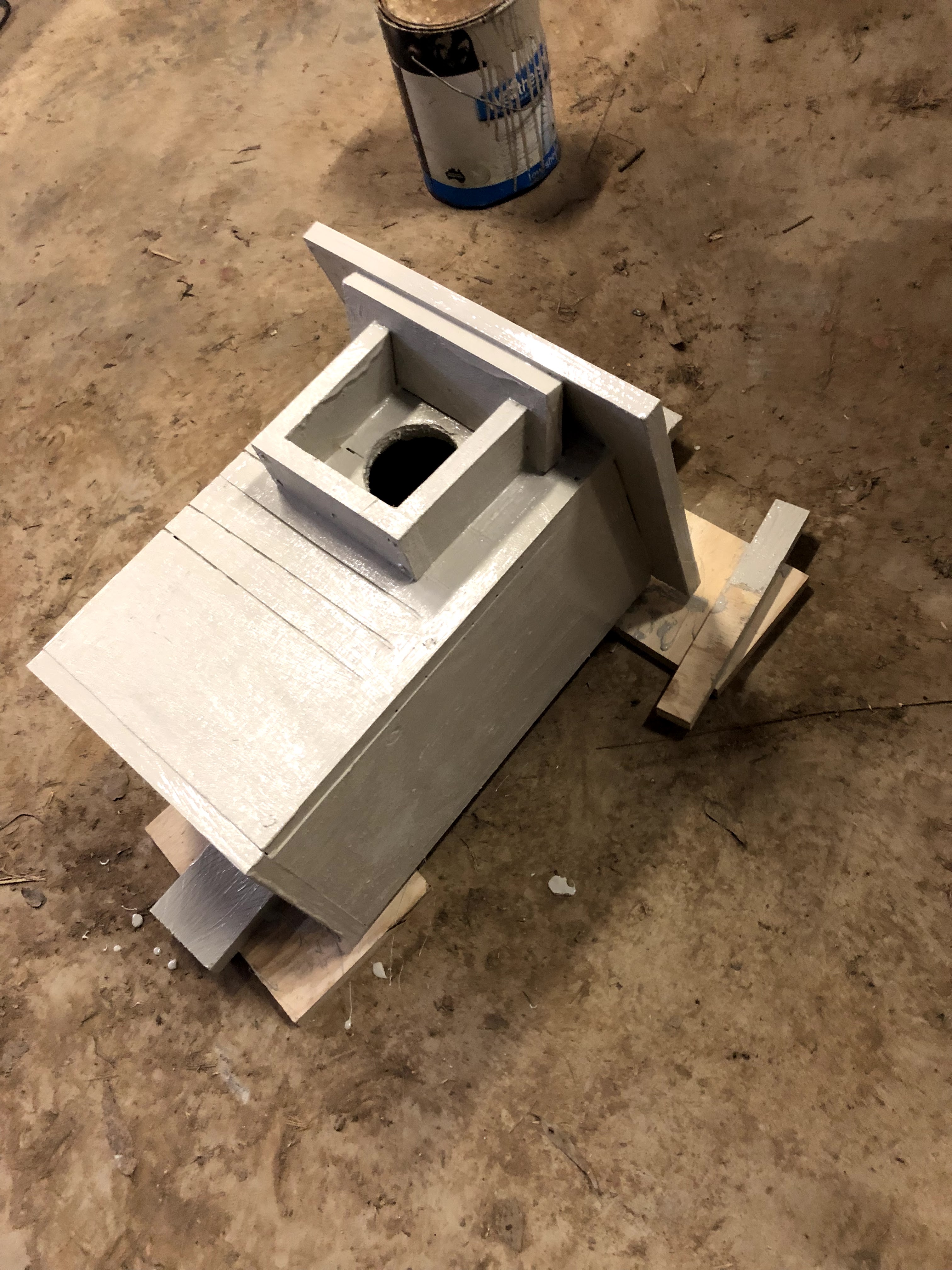
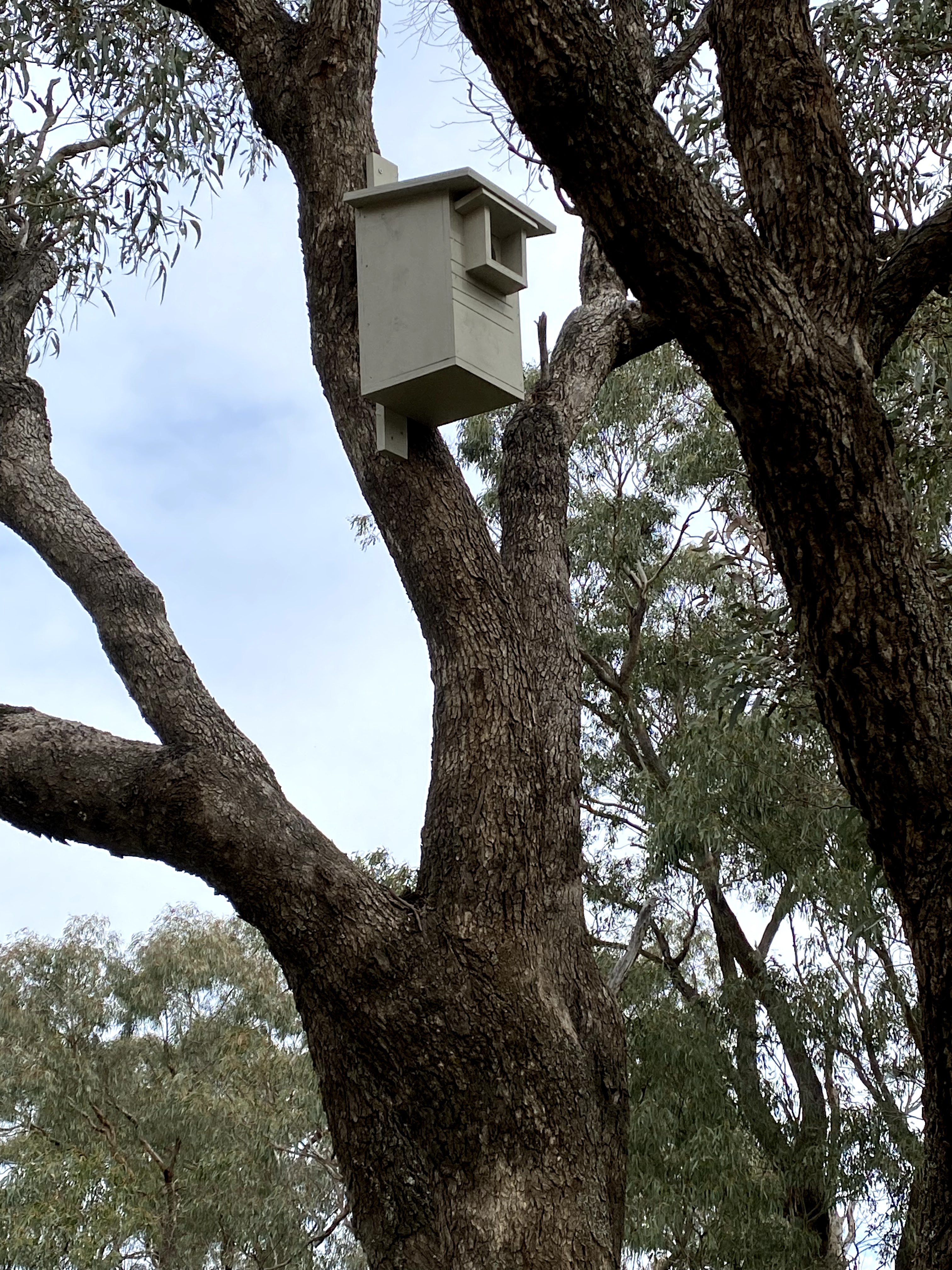
So my lockdown project was to build a nesting box for a Barn Owl.

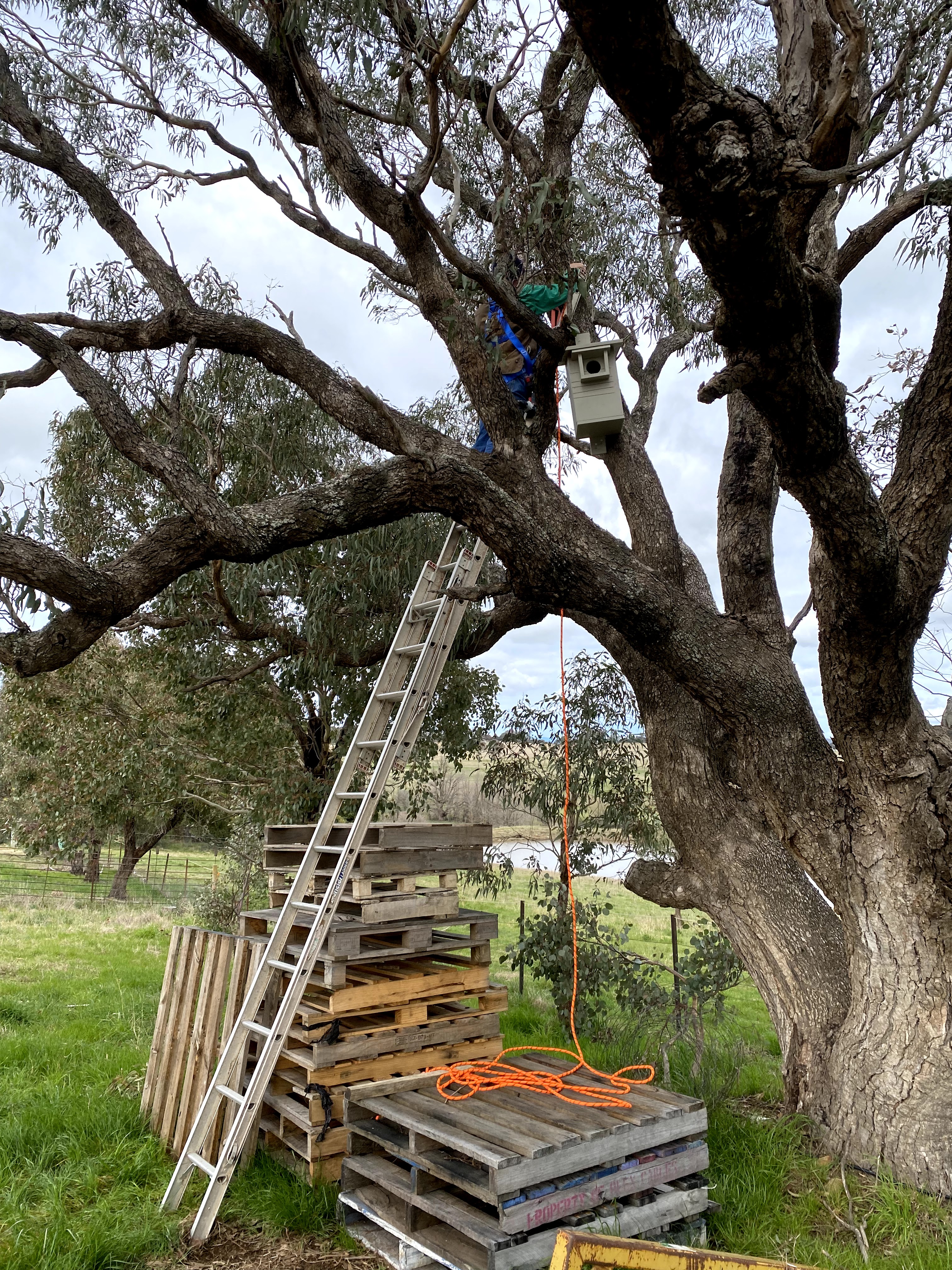
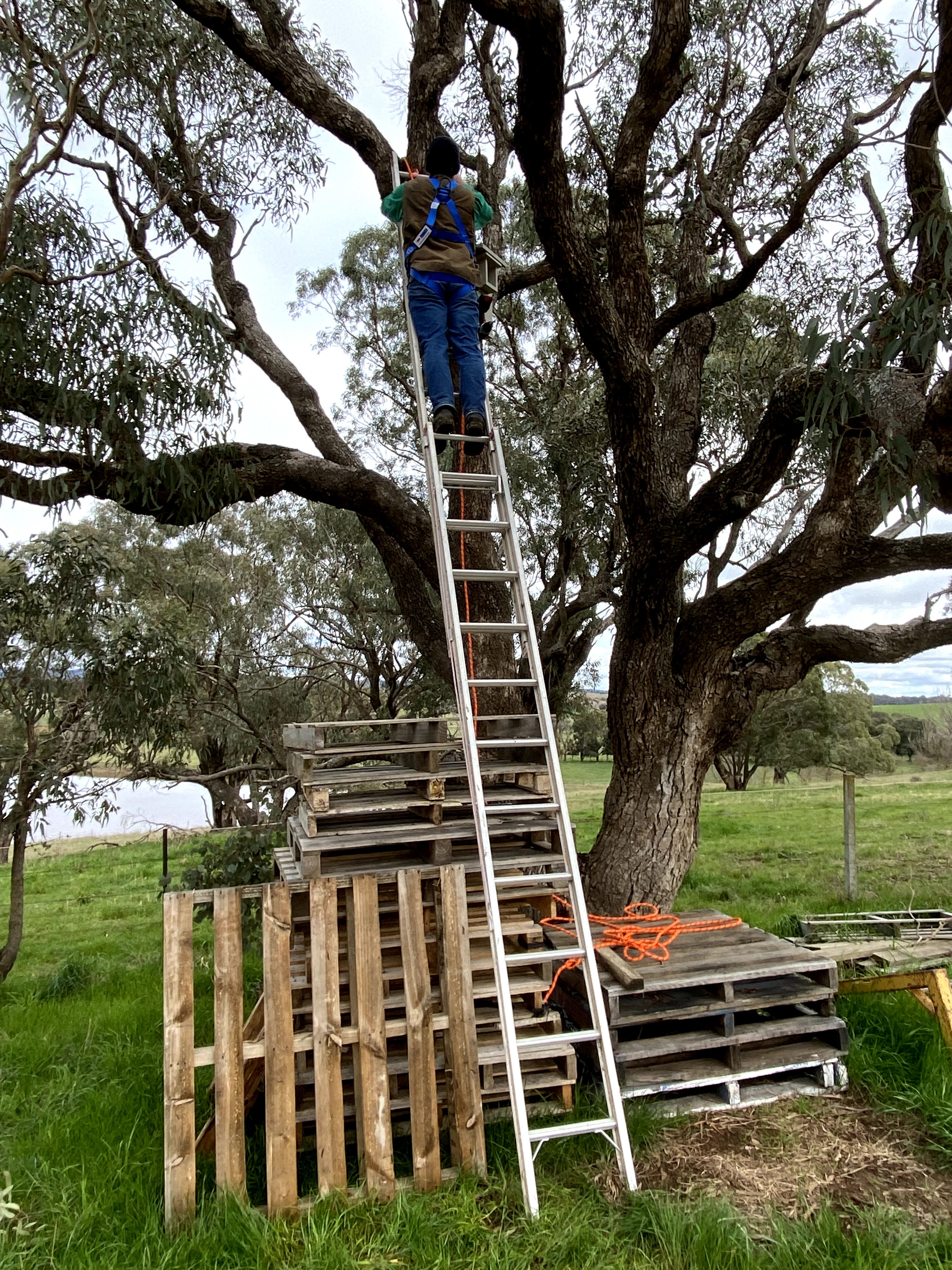
It was a relatively simple build from some dimensions I found online. I used some old exterior paint I found in the shed to protect it for a few years. The hardest part was mounting it high enough up a tree for the birds to feel safe. I picked an Apple Box near the shed as the site of our first nest box, so I can keep an eye on who might move in.

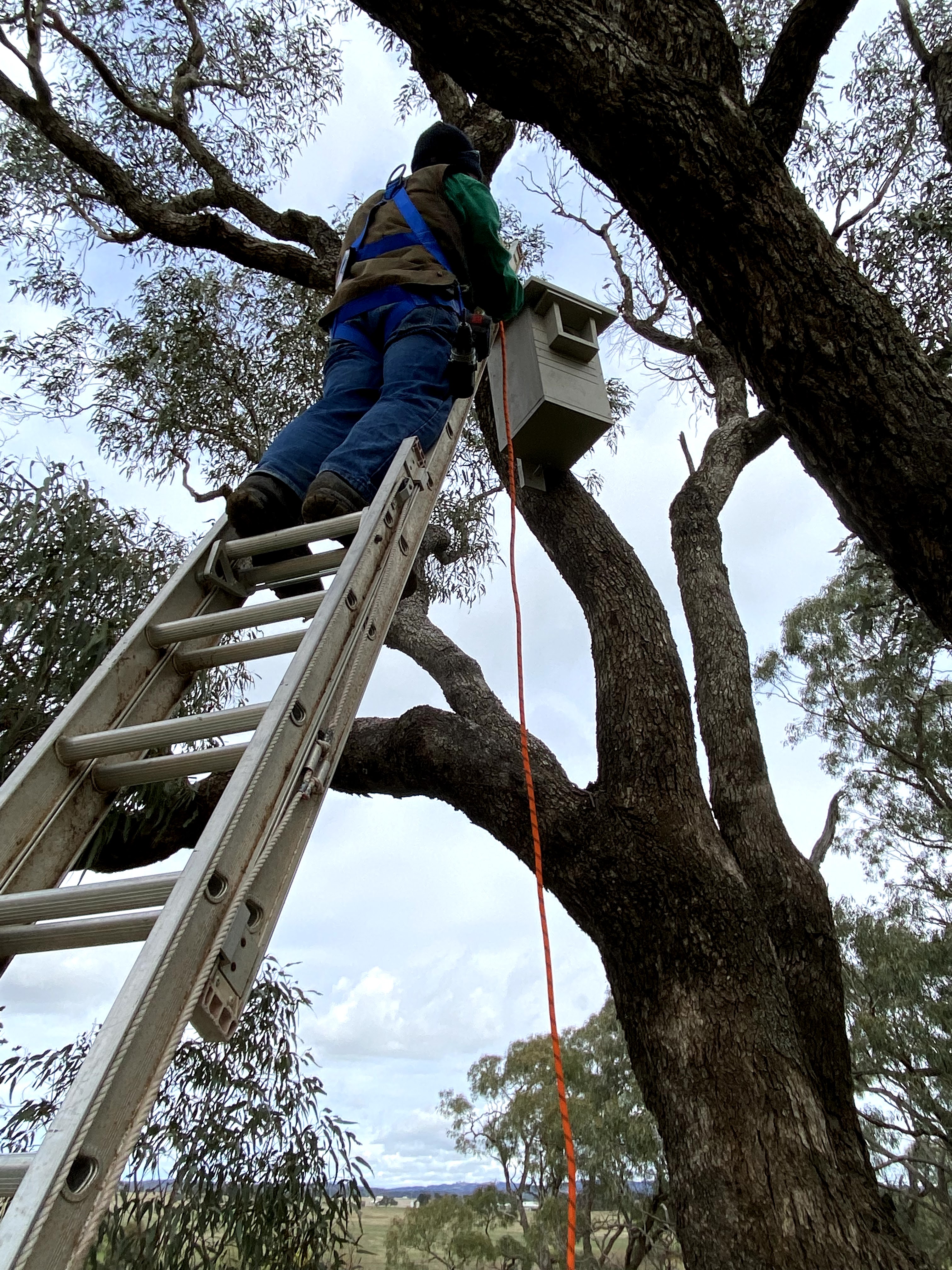
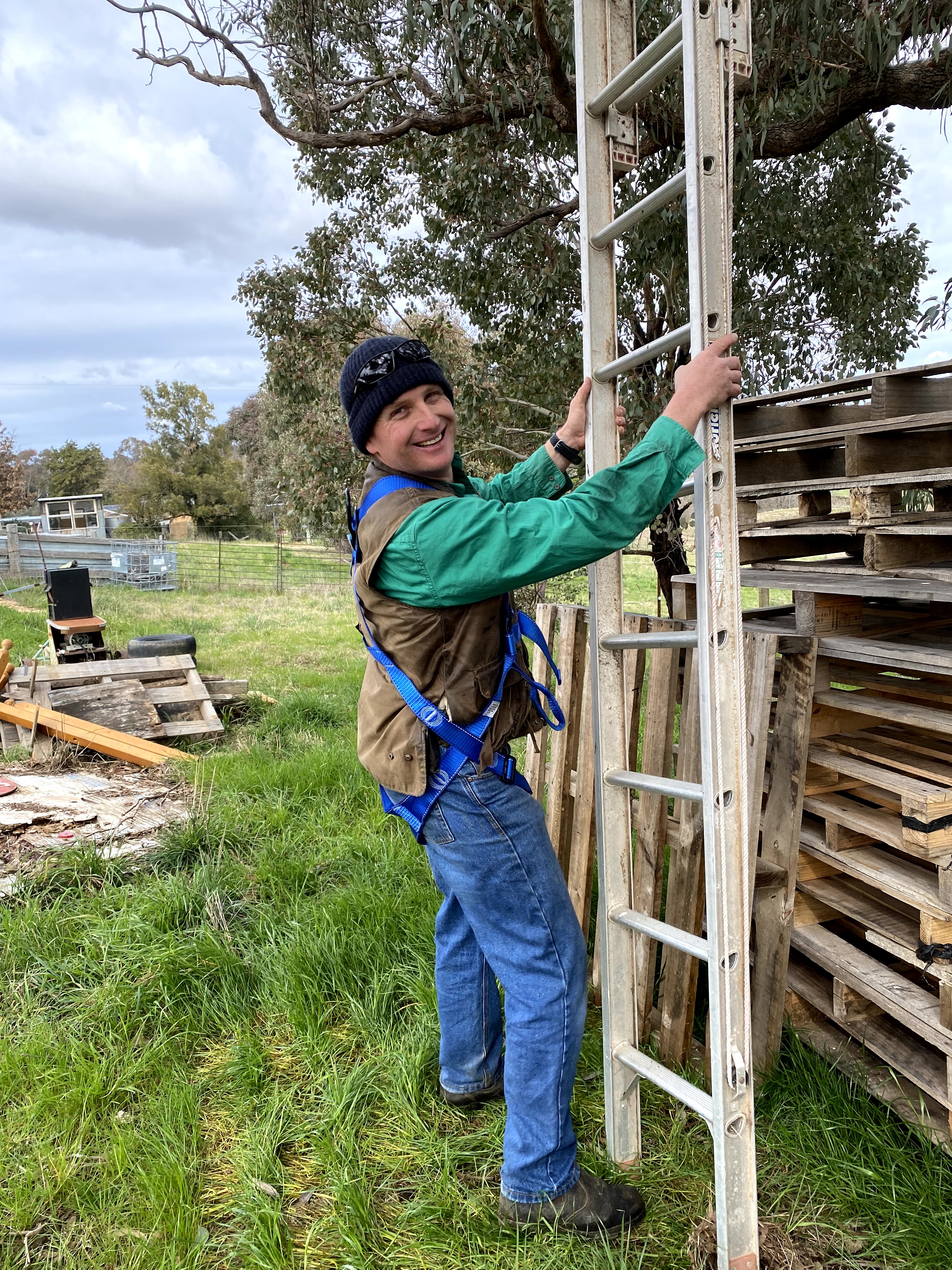
I knew it would be a bit of a challenge lifting the large box into the tree – and given the soft nature of the ground I decided to put a harness on. Oh and I got my lovely wife to come and keep and eye on me just in case gravity got the better of me.

I must admit I was a little relieved to get back onto the ground safe and sound, with the nest box mounted securely in the tree. I hope the birds think it looks as good as I reckon it does. I hope the old adage, “if you build it, they will come” holds true.

If anyone else is looking a for lockdown project and would like to build some nesting boxes for us to mount in our trees, please let me know. We have lots of young trees that would be the perfect place to mount various sized boxes to support our avian friends.

The battle for Daisy (again) – Update

Having started work before the sun, I have been eagerly awaiting a phone call from Jo or the kids to give me an update on the condition of Daisy or her calf. I was still processing the events from the previous day, and had woken this morning with sore muscles in all sorts of unexpected places.

Overnight we had conducted a stock-take of our powdered milk supplies, and hunted around for our poddy calf bottle and teat. We were worried that either Daisy or her calf, or both would die overnight. It was a cold and bitter night, with some more rain in the mix. Jo came to the conclusion that it was foolish to name our cattle, and vowed never to name them again. We feared the worst.

It seems no one was keen to make their way to the yards to check on Daisy and her calf the following morning. Jo eventually made her way down, apparently checking everything else on her way to the yards. The rest of the cows had water, check. Their calves were all accounted for, check. The tractor and next bale of hay were ready to go in the shed, check. Finally it was time to check the yards… and initially Jo feared the worst because she couldn’t see Daisy or her calf.

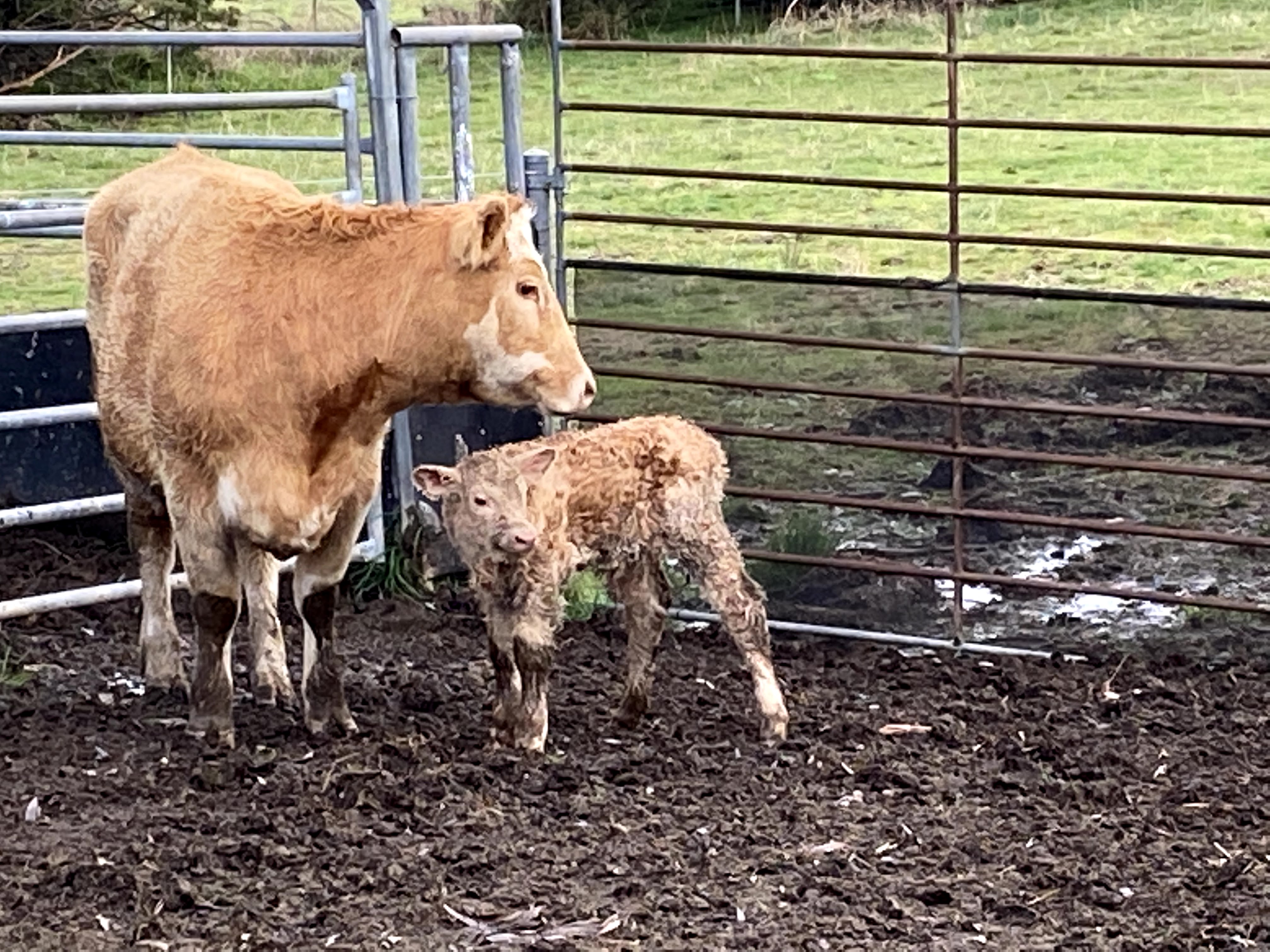
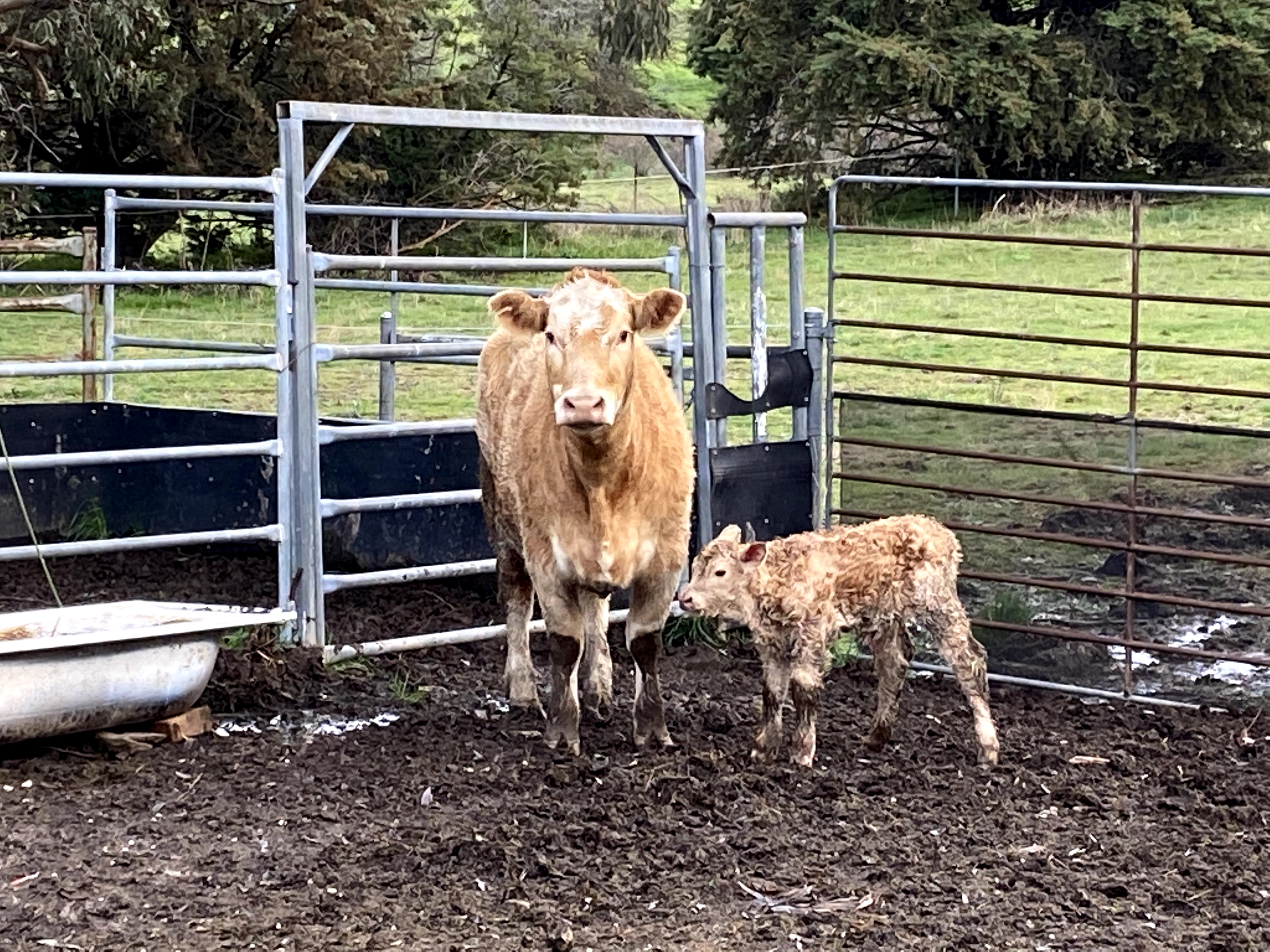
Then she got closer, and found Daisy up and on her feet, with her beautiful heifer suckling at her udder. She called me in delight to give me the good news.

The Vet, Dr Jack from Bungendore arrived a short time later, and gave Daisy and her calf a thorough going over. He gave Daisy a slow acting antibiotic to treat a small tear. He checked out her calf, and gave her a clean bill of health, and a name… Buttercup.

I guess it is all in a name after-all. Welcome to the Rock Farm Buttercup. 🙂

The Battle for Daisy (again)….

A rainy day is welcome any time on the Rock Farm – especially now the days are noticeably longer and the ground is starting to warm up. We now have 8 beautiful calves on the ground. However the old adage, ‘you don’t have livestock without dead stock’ held true. We lost one calf during a particularly long and difficult labour for my favourite maiden heifer, Uno. The loss of the calf was heart-breaking, and we felt the mournful ‘moo’ from Uno deeply.

A rainy day is good for taking stock of things around the farm, and catching up on my blog. However no sooner had I written the paragraph above and my day turned around. By the end of it we were in a desperate struggle to save one of our beautiful girls.

The first event that dragged me outside into the wet was to lend a hand to our neighbour, who needed help with a new water tank delivery. It turned into quite the adventure, with the driveway turned to mush, and the creek (moat?) running deep and fast. The initial plan was to drag the tank delivery truck to the site with the tractor, but when we saw how low his trailer was, we realised it would float downstream on the crossing. Plan B was put into place, which involved rolling the ten thousand gallon, 800kg tank onto the back of Myrtle. This went remarkably well, and we soon had the new tank deposited in our neighbours paddock. Remarkable because no trucks or tractors got bogged during this evolution.

In my dash down to the shed to get the tractor, and then swap it for the truck, I had noticed that Daisy was in labour. When we had done with our unloading, I checked on Daisy again and my heart sank. Daisy somehow managed to beat all the odds when she was born. And despite all my reasoning to sell her, she somehow seemed to have very vocal allies on her side. The whole challenge to save her when she was born can be found here: https://rockfarming.com/2019/09/04/the-battle-for-daisy-rescuing-a-calf-on-the-rock-farm/

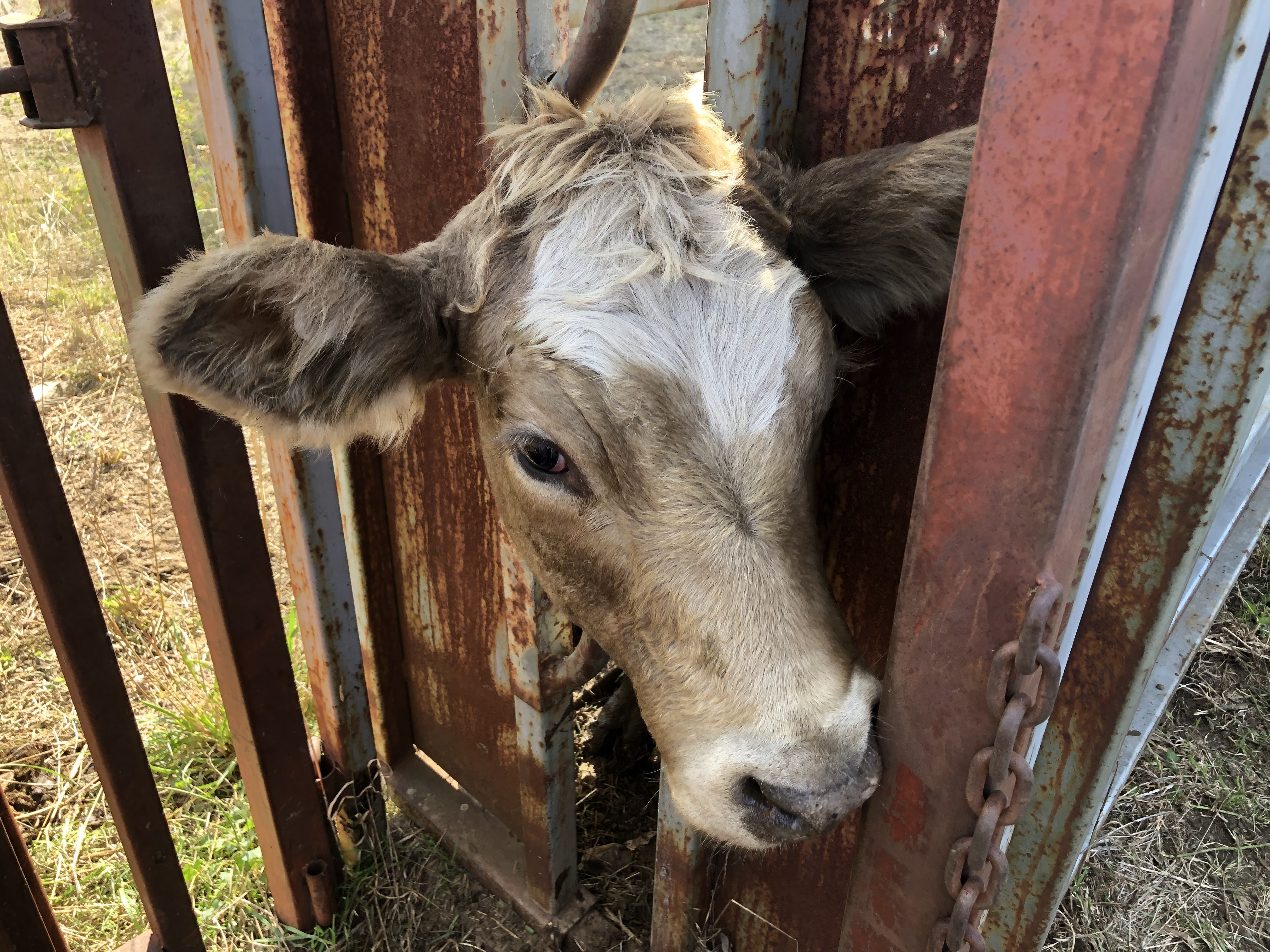
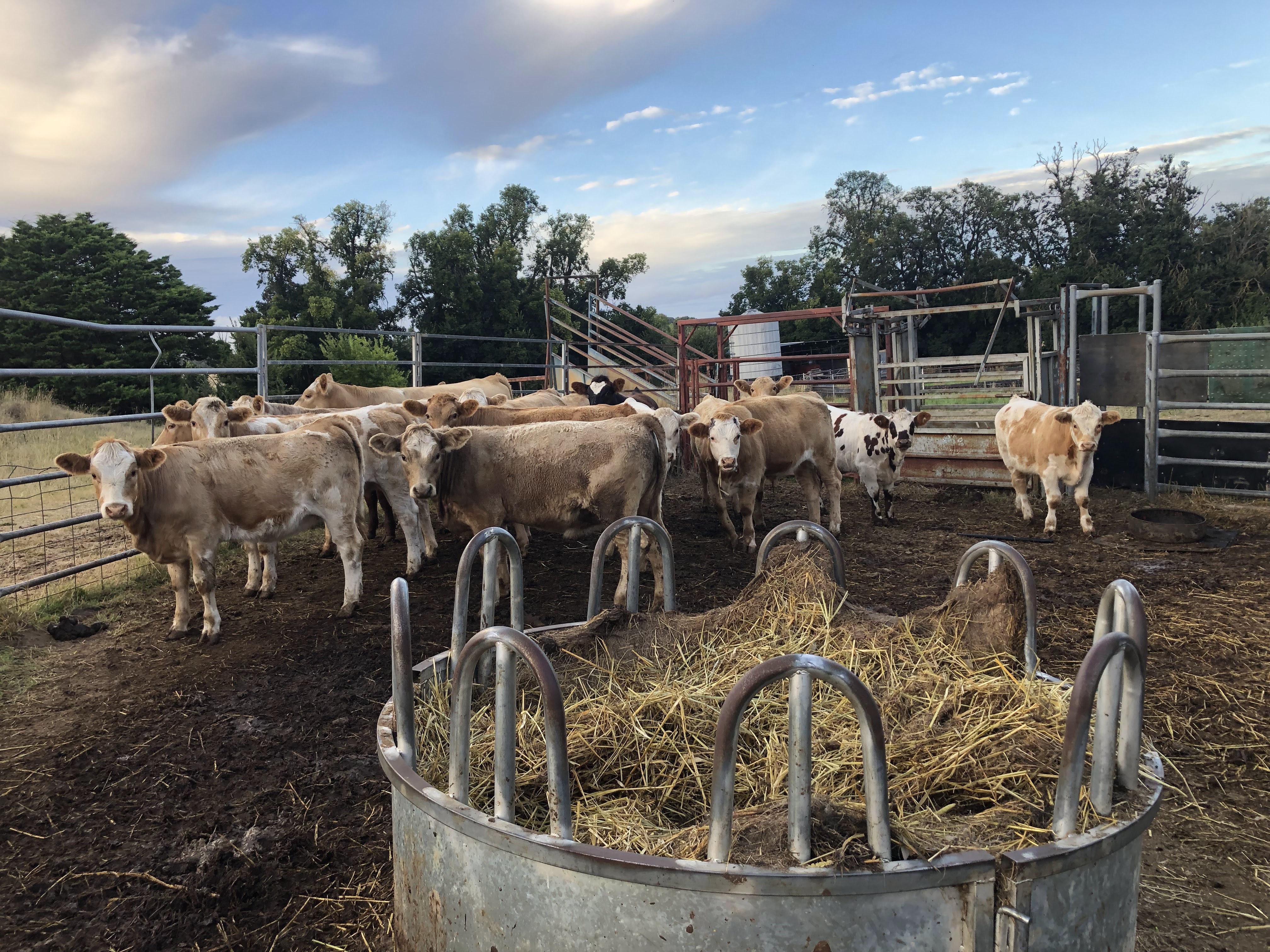
Protruding from Daisy’s rear was one hoof and a calf head, with its tongue hanging out. The calf’s tongue was a blueish colour, and there were no signs of life. I knew we had to get her in the yards, try to pull the calf and see if we could save Daisy. Despite our efforts, Daisy had no desire to leave her friends. It took all of us a lot of initially gentle and then more forceful encouragement to get her in the yards. By the time we got her safely secured in the crush, we were all exhausted.

Once in the yards, the real battle for survival began. We used this rope squeeze technique to lay her down. The reason for laying her down was that she can push a lot harder lying down. The next thing to do was to find out what was wrong. By now the cold was seeping through my wet clothes, and I was acutely aware of how cold it was now the sun was setting. Jo kindly brought down a bucket of warm water from the house, some old towels and some ropes. I tried to recall any snippets of advice from a childhood reading James Herriot, but sadly not much was coming. I figured it must be like helping lambs, but only bigger…

A gentle examination revealed only one leg was showing. The other leg was folded back – meaning the calf would never come. It was time to call an expert. Our first phone call was to our vet. The next was to another expert – my father. His advice was really simple – before you can pull the calf out, you’ve got to push it back in to re-align the leg. So – against nature, and the vice like grip of the contractions, I pushed the calf back into Daisy, and desperately felt around for a leg. I was on the point of giving up when I found it. That was the easy bit. Getting it to point the right direction was not so. Eventually we got there, and with both legs aligned, it took a few more tugs and our calf was born.

I was relieved that we had saved Daisy (again), but feeling sad about the calf when the calf opened its eyes and gave a breath. It was alive! My heart skipped a beat, and we quickly rubbed it down with the towels and put her next to a thoroughly exhausted but interested mum. Daisy had given birth to a beautiful little heifer.

As I write, they are safely tucked out of the wind in the yards. I still don’t know if either Daisy or her calf will survive the night, but we figured it was time to let them work it out by themselves. We called the vet and cancelled the late night call, but arranged for them to come out first thing to check on their progress. Time will tell if we have beaten the odds, or delayed the inevitable. But that is how things go on a farm. Things can turn around so quickly. And as hard as it can be, it helps me feel alive.