Update on trees and rip lines.

Walking around the Rock Farm this week, I have been struck by how similar to January the weather is.  Dry grass crackles underfoot, and in many areas the earth is dry and hard.  Hot dry days have us monitoring the Fires Near Me app, with a guard zone set 50km around the property.  We have been watering newly planted fruit trees in the garden in a desperate struggle to keep them alive, but I also knew I needed to check on some of the trees we had planted in the paddock.

We planted some Hakea and Yellow Box trees along some rip lines in early August.  The rip lines hold some extra moisture and we thought would be a good place to pant the trees.
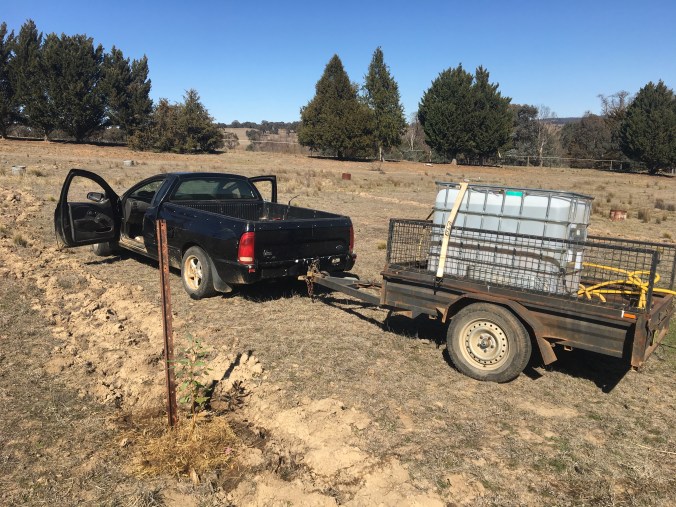
After planting the seedlings, we watered them a few times to get them going.  It was good pre-season maintenance for our portable water tank, even if it looked a bit like a moonscape at the time.  A small shower of rain a couple of weeks ago had turned the grass in the rip lines green, and encouraged the weeds to grow.  Sadly it wasn’t all good news.
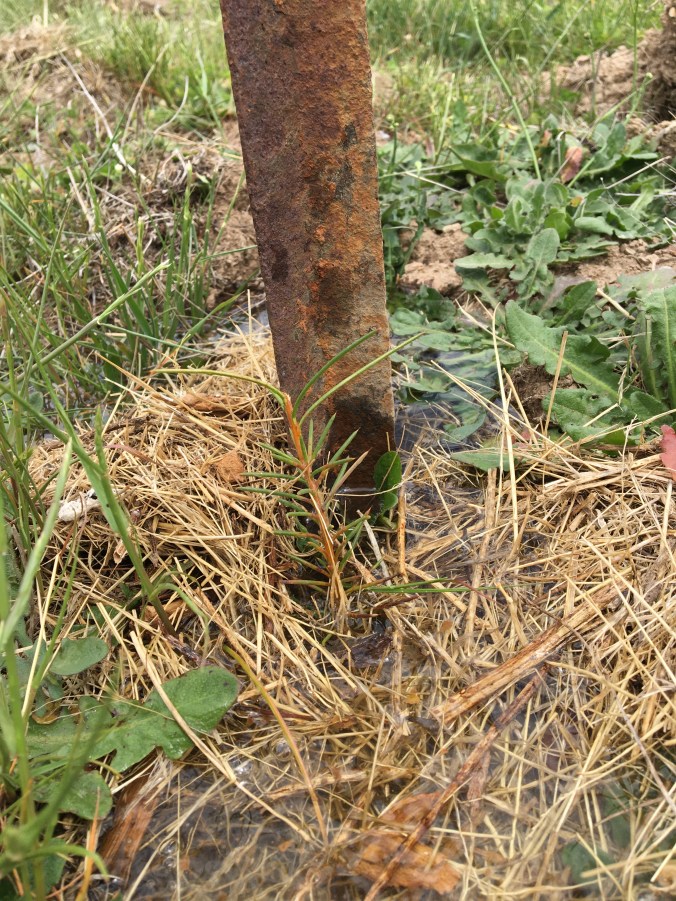
With occasional watering, the Hakea or Needle bush have responded well.  They are optimised for Australian conditions, and are naturally unappealing to grazing stock such as cattle or kangaroos.  When they grow, they provide habitat for many of the native birds that have shifted into living in the weed Sweet Briar.  Once we get these Hakea established, we will re-double our efforts to remove the Sweet Briar.
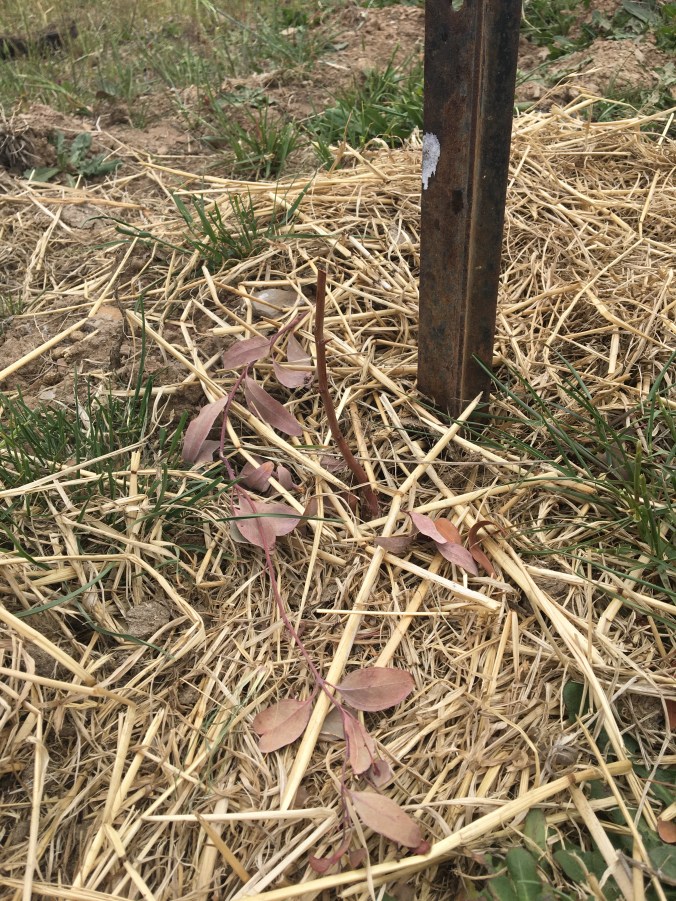
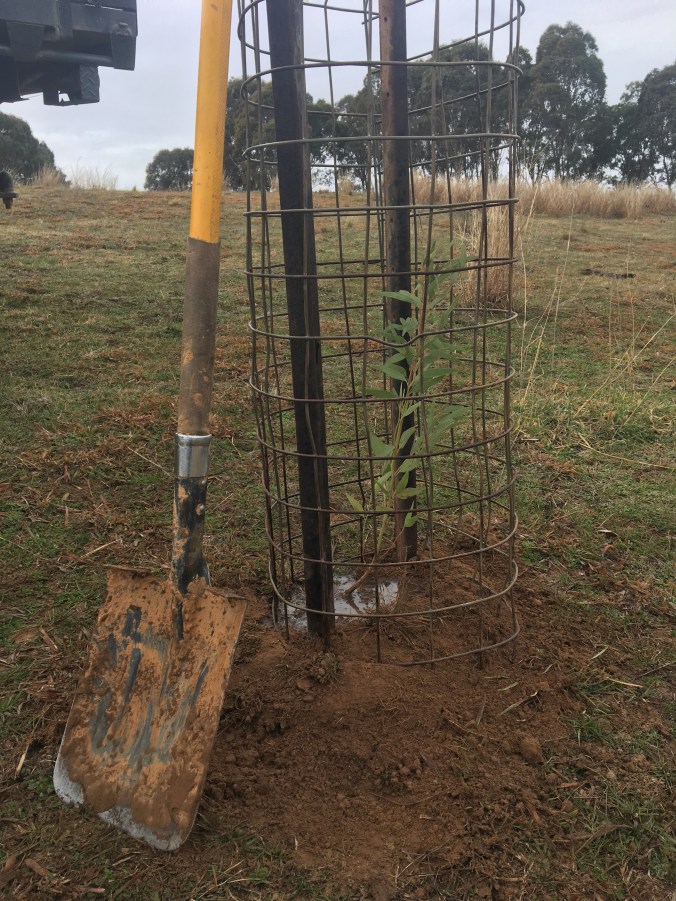
Unfortunately the Yellow Box has not fared so well.  It would seem a hare has taken to all the plants not in guards, and chopped them off a few inches above the ground.  A couple of the plants had clean cuts, with some buds below the cut, so we installed a guard and gave them a good water.  Time will tell if we have saved these trees.  The trees in guards were alive – but only just, and we hope a couple of good soaks will pull them through.

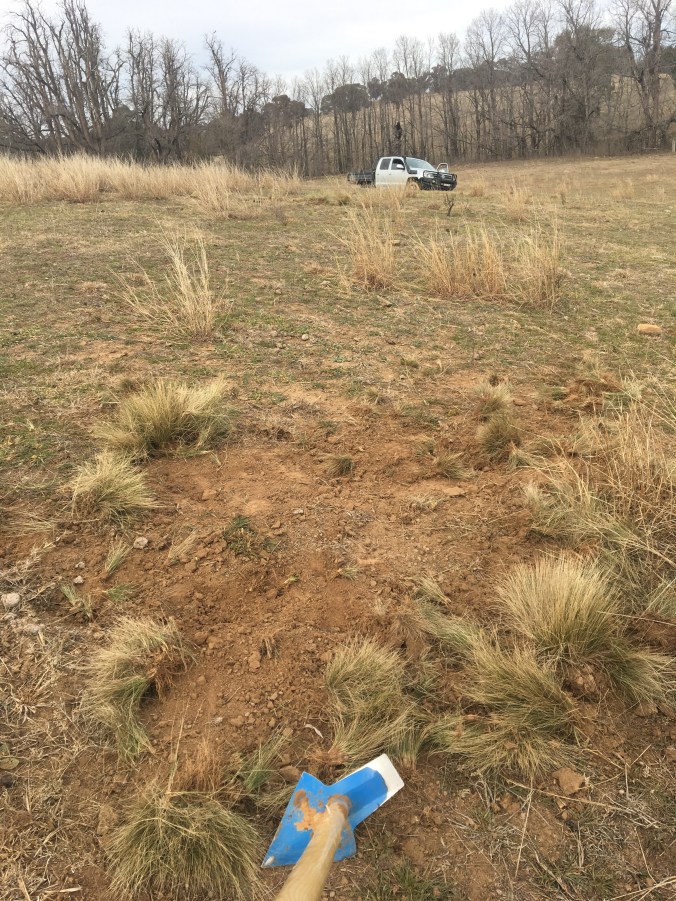
The rip lines have broadly been a success.  I had spent a fair amount of time in autumn and winter dragging an old ripper along contours:  (See https://rockfarming.com/2019/03/20/ripping-lines-for-soil-health/ ).  It was an experiment to see if the lines would allow water to penetrate the subsoil, and to aerate the soil.

The change on the rocky slopes is in a word remarkable.
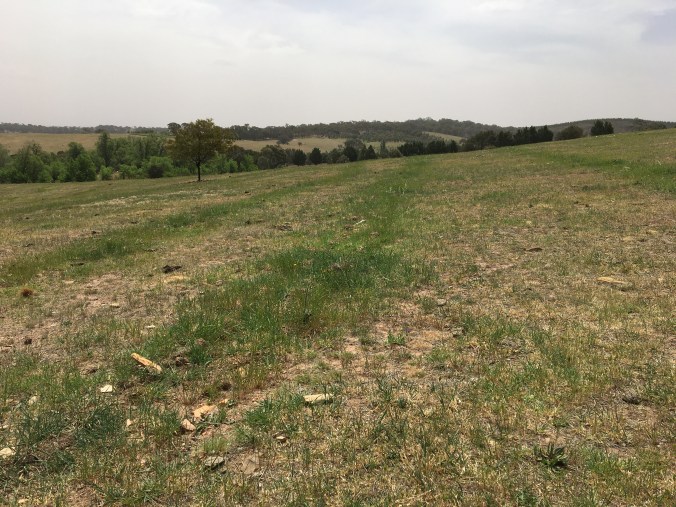
The rip lines are clearly visible by their lines of green growing grass.  Between the rip lines, the grass is struggling to stay alive and the clover has all but turned up its toes.  With rain forecast for tomorrow, I hope that every drop that falls makes its way into the ground.  This is especially the case for short sharp summer thunderstorm cloud bursts that see a large amount of water fall quickly and run off before it soaks into the ground.  This might not be ideal for our dam that is getting lower and lower, but the grass is what the cattle and sheep need to eat.

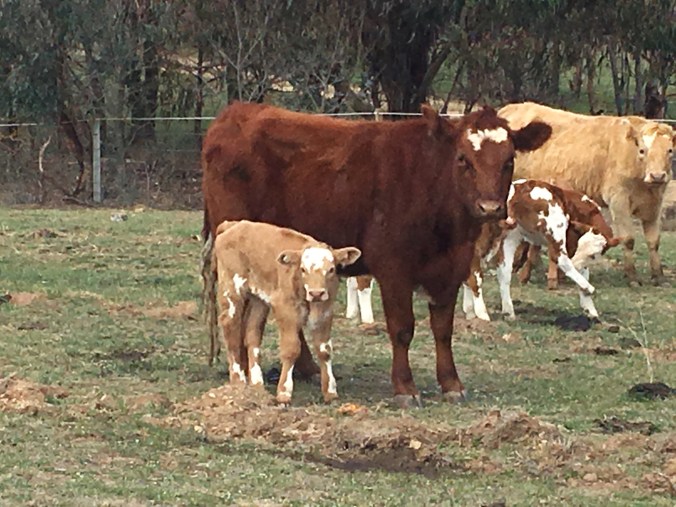
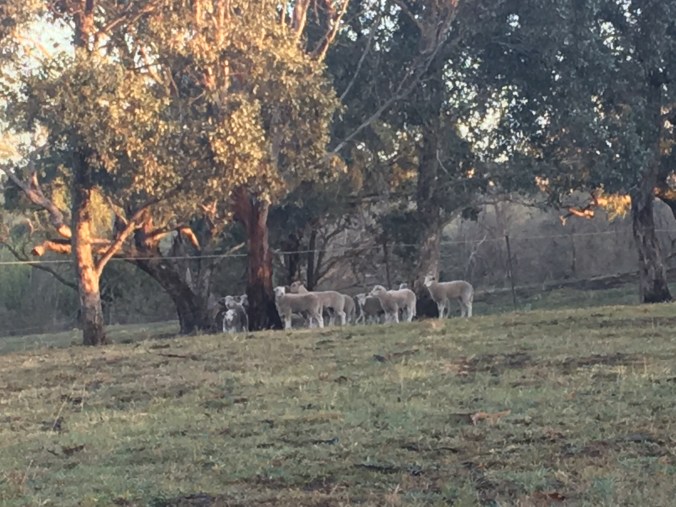
It is great to see the boys and girls are in good health and condition.  Our calves and lambs continue to grow and are all nice and quiet.  The lambs are responding well to living near the house and are starting to come up to me when I appear with a bucket.

It might already feel like summer, but we are really pleased with some of the progress we have made in keeping the grass growing for a little longer on the Rock Farm.
Every blade of grass counts.

The past week had seen the end of spring. Hot days above 30 degrees and some wild winds have dried out the grass. Many people in the district nervous for the bushfire season and our local RFS training is ramping up.

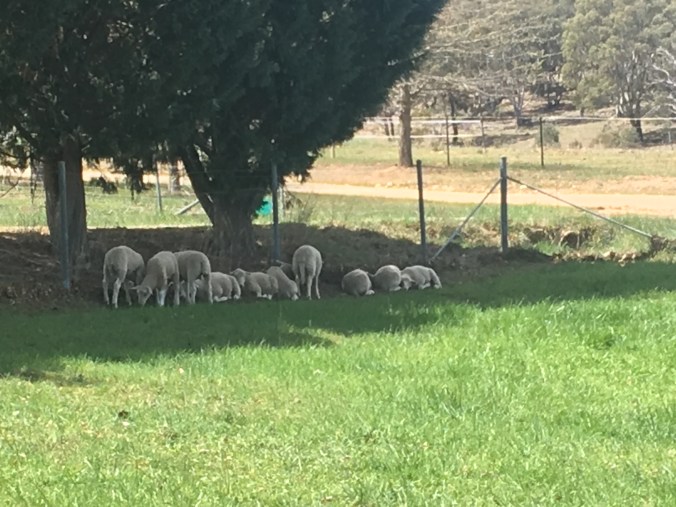
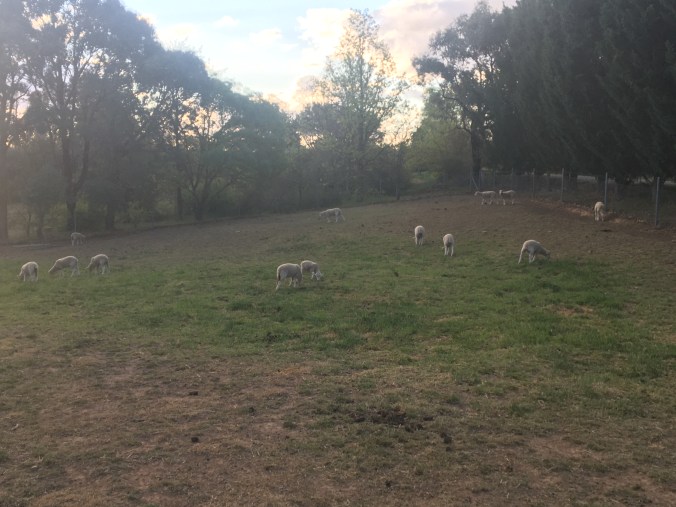
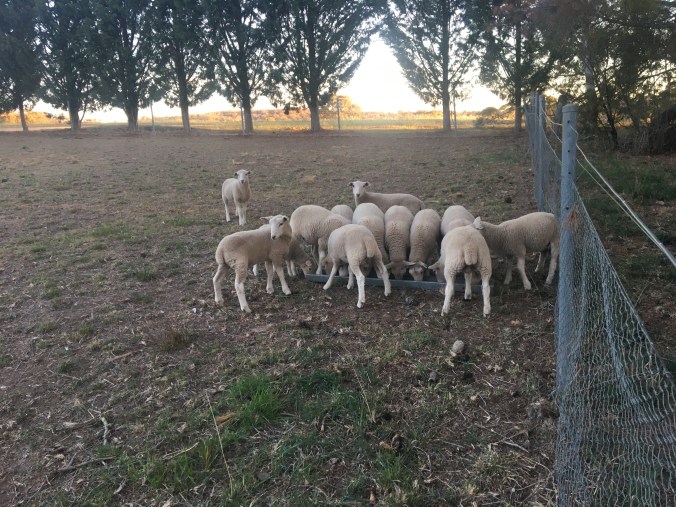
On the RockFarm, our lambs have been eating out their small holding paddocks. This is a good thing as the paddocks are close to the house, and the less grass here the better coming into summer.

Between the two paddocks is a channel for water. Water hasn’t flowed down here for months, but it naturally holds a bit of extra moisture and therefore grass.

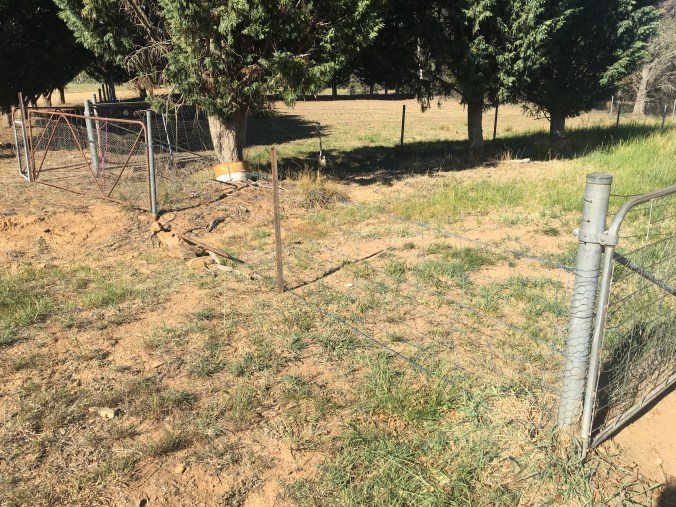
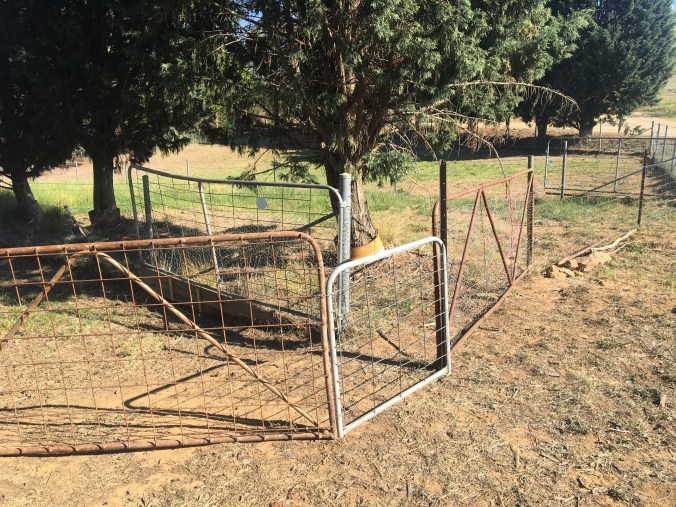
There isn’t enough grass to make it worth fencing properly, but it was worth spending an hour to rig up a little race for the lambs to have access to the lane. This allows them to come and go as they please, with water in their paddock.

The old gates were around the hay shed. When we replaced them with the old roofing iron from the house, we kept the gates handy. I can now understand why farmers never seem to throw anything out!

The lambs love it, quickly disappearing in the long grass. The only problem is they will be through this in about a week.

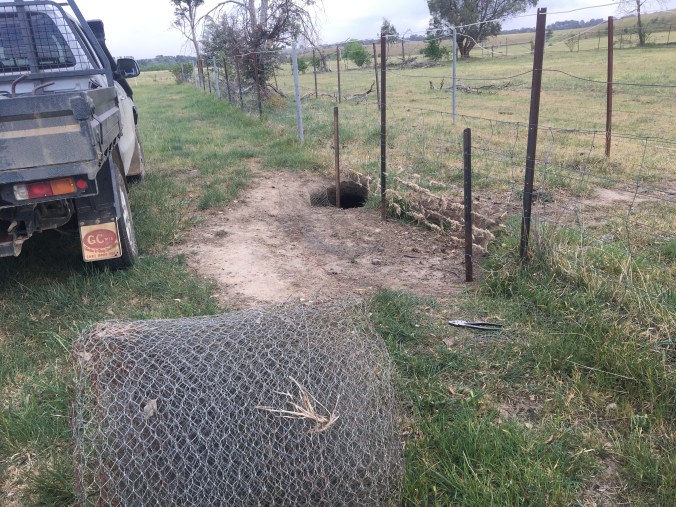
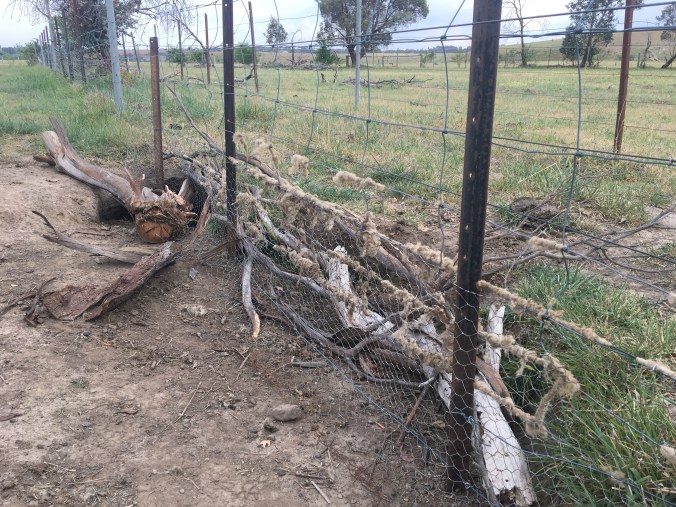
I hope to move the lambs soon to our large flat paddock. It is fenced with hinge joint stock mesh. It is mostly sheep proof, but wombats also hang out here – and they have no respect for fences!

It is a constant job patching holes. Old star pickets, short rolls of old netting and logs or branches hopefully create a barrier that works

I will have to check the fence again before we move the sheep into this paddock – but hopefully it won’t take too much extra work to keep them in.

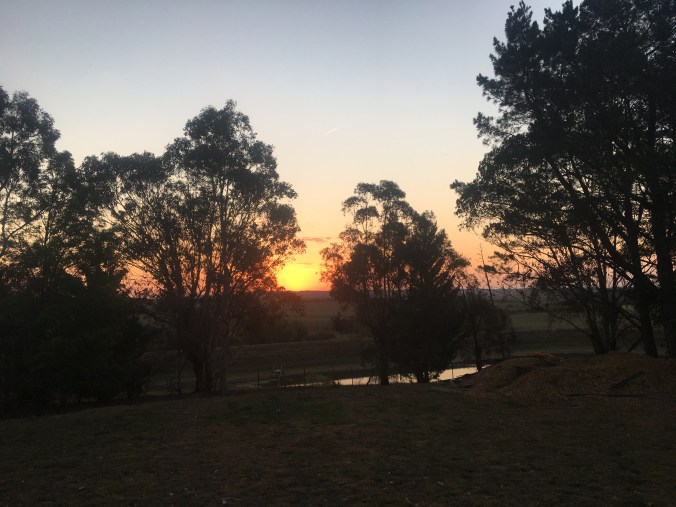
And then as the sun sets it is nice to sit back and relax feeling great about living in paradise.
School Holidays – You’d think it would be easy to get away!

Despite one good fall of rain nearly a month ago, and a follow up 8mm a fortnight later, we are really starting to dry out on the Rock Farm.   My last update was a bit chaotic as we took some ewes to the sale yards, and kept a close eye on Daisy.

The reason for the mad rush was that we were trying to get everything in hand for us to take a break away from the Rock Farm for the school holidays….

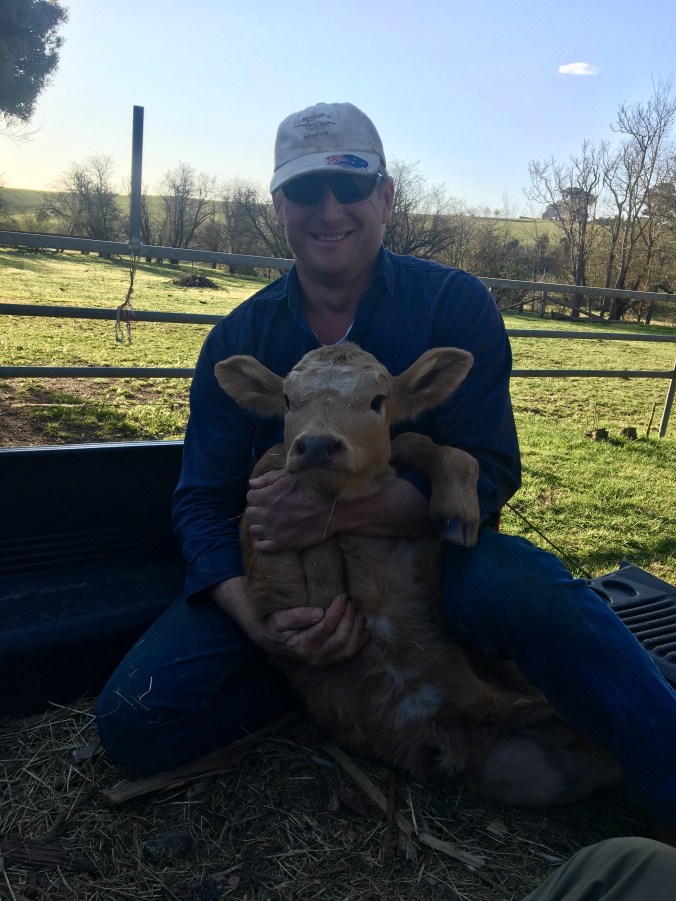
And just when you think you have it all sorted, you find the youngest and last calf in a paddock three fences from Mum.  I was reluctant to interfere, so left him overnight to see if he could find his own way home.  When he was still in the wrong paddock the following day, I knew we needed to take action.

img_5575

The hound distracted him long enough for me to grab and sit on him.  Then the boys brought down the old falcon ute and we gently picked him up and put him in the back of the ute.  Somehow he managed to get one good kick in, just to remind me that he didn’t appreciate the undignified mode of transport. He got me good and proper – but I knew that I would get my revenge a few weeks later at marking time…

And then, to top it all off, the lambs were spotted in the neighbours place.  After herding them back to our side of the fence and onwards to the yards, I requested a huge favour and asked friends if we could agist our lambs on their place for the duration of our holiday….

It was just what I needed to be doing after a night shift, catching lambs and putting them in the horse float for a quick dash down the road.  But it was done.  We held our breath and counted to ten… twice.

The following morning we left at the crack of dawn with fingers crossed…. and phones turned off!

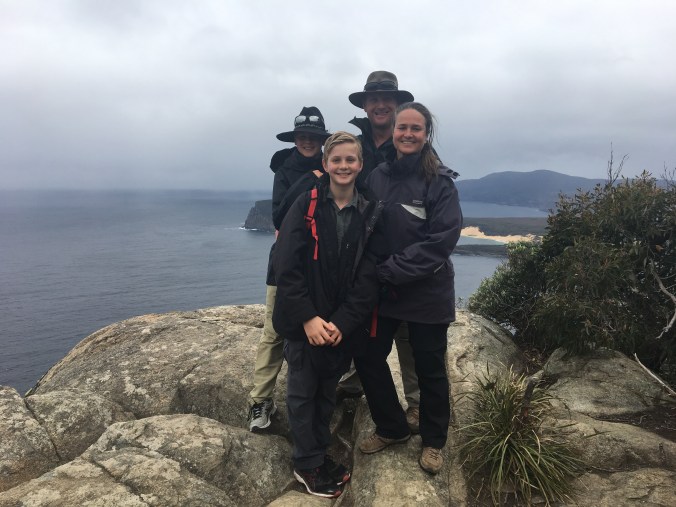
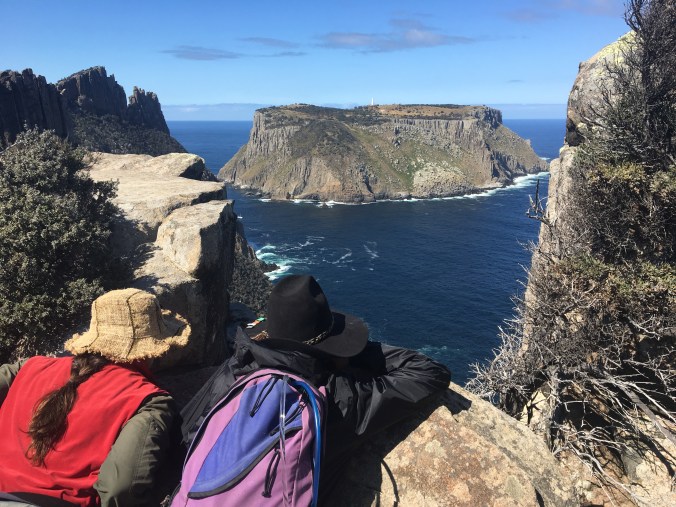
Our destination was Tasmania via the Spirit of Tasmania.  We enjoyed a wonderful break.  The main activity was the 48km hike along the recently developed Three Capes Track in Tasmania.  In a word it was spectacular.  The scenery is staggeringly beautiful, with the rugged dolerite cliffs falling away to the ocean in places nearly 300 metres below.  The quality of the track, the huts and the Rangers was an absolute credit to the people of  Tasmanian Parks and Wildlife Service.

img_5656

What was really wonderful, apart from the scenery was the time connecting with our family.  Free from the other distractions and tasks that keep us busy, it took a few days for us to hit our groove, but it was so important to share this time.

But all too soon it was time to return home and retrieve our sheep, mark the last of our calves and get ready for returning to school.  The cattle were happy to see me, and more than happy to follow me to a new paddock.

The lambs were corralled into the horse float.  A hilarious exercise considering our friends had no yards.  We parked carefully alongside a fence line, and with the aid of a couple of old farm gates as wings, we gently pushed the mob to the float.  One ewe lamb kept trying to lead the rest of the mob around – but after breaking free once, we closed the net and loaded them up.  A few minutes later they were unloaded at home in a secure paddock near the house.  A huge thank you to Mark and Mel for answering our crisis call!

It has been a good experience for the lambs.  This little paddock is close to the house, and the lambs have become very quiet.  Now they have eaten most of the grass in it, we have started feeding them, and they are learning to follow a bucket.  I am a huge fan of ‘bucket mustering’.

As it stands, we marked 12 calves, with a bonus calf born in December taking us to 13 out of 15 maiden heifers.  We also have 13 lambs….  It is a good time on the Rock Farm….

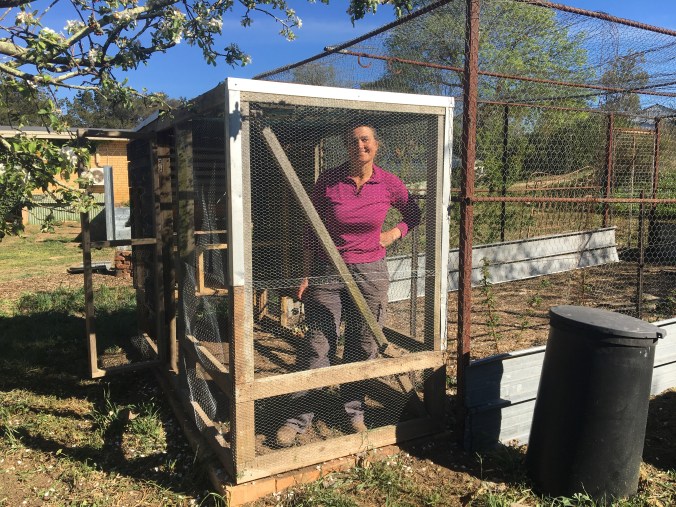
We just need to get some chickens… but we are working on that too!  More on the chook house redevelopment soon!

img_5749


The hint of rain

The past few weeks have been a little hectic on the Rock Farm.  Calving and lambing has continued.  Life has also continued, with some big weeks at work and school keeping us all away from the farm for longer than we would like.

First an update on Daisy.  Daisy and Mum have rejoined the herd and have settled in well.  Daisy has put on weight and enjoys her fellow bovine’s company more than humans now.  This is not a bad thing – although I miss our cuddles.  She might never do particularly well, but we are really happy that both Daisy and mum are now in good health.

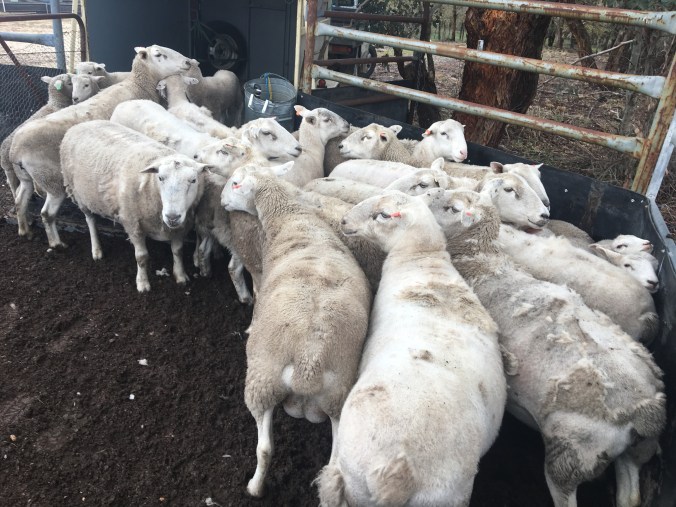
With the long-term forecast for spring rainfall looking grim, we elected to sell off our older ewes and ram.  With such a small herd of 13 to take to the sale-yards, it was hardly worth organising a truck.  With a bit of time, I soon had the sheep loaded in the horse-float and passed the lambs out the tailgate back into the yards.  The irony was on the day I took the sheep to the sale yards, we received our first decent rainfall in months, a delightful 22mm.  It was a rare and unusual problem to be loading the sheep in the rain!

Selling the ewes solved a couple of problems.  It reduced the immediate pressure on the feed, and also stopped me having to retrieve them from the neighbour’s on a regular frequency.  I must admit I felt a little dwarfed by all the trucks and semi-trailers unloading stock at the yards, but the stock agent showed good humour and helped me pen the sheep.

The lambs are now enjoying some time near the house, where we are supplementing their feed.  They are becoming much quieter, hopefully making them easy to handle as they grow.

The little bit of rain was welcome.  It settled the dust, but more importantly it turned the grass green.  We are still feeding, whilst we wait for the grass to grow.

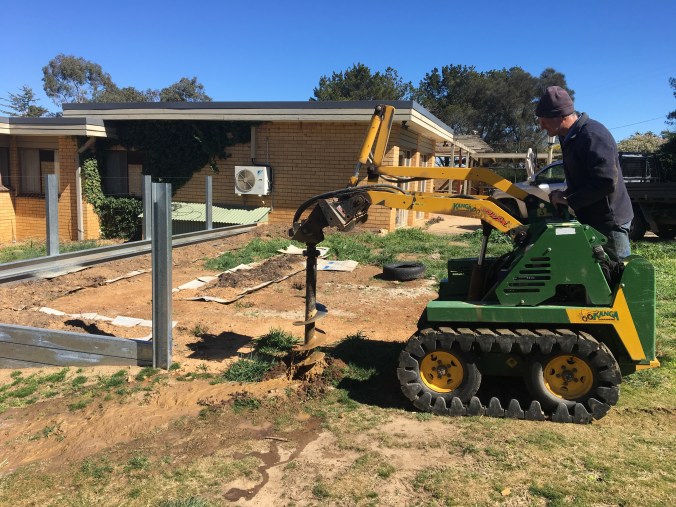
If you do want to find water though – I would highly recommend hiring a Kanga.  Jimmy and his marvellous machine have an amazing ability to find water pipes.  After successfully digging holes for our carport foundation, we decided to make the most of his visit with a couple of extra post holes for gate posts….  it was the last hole (it always is) when the auger came up with water pouring out of the hole…

Needless to say I am becoming pretty handy at repairing poly pipe.  Thankfully we were able to quickly isolate the water, which was non-potable water from dam.  Around the house it is used for flushing the loo and around the garden.  This water also supplies all the stock troughs – so I needed to get it repaired relatively quickly.  It has highlighted the need to install a valve so I can isolate the garden water quickly in case of future mishaps!

After repairing the pipe, it was time to head back with the girls.

I have moved them onto the flat country.  Whilst there isn’t much feed here yet, I am just rotating them through the smaller paddocks.  I hope they will keep on-top of the Barley grass, but it all seems to be going to seed early as it struggles with the dry season.

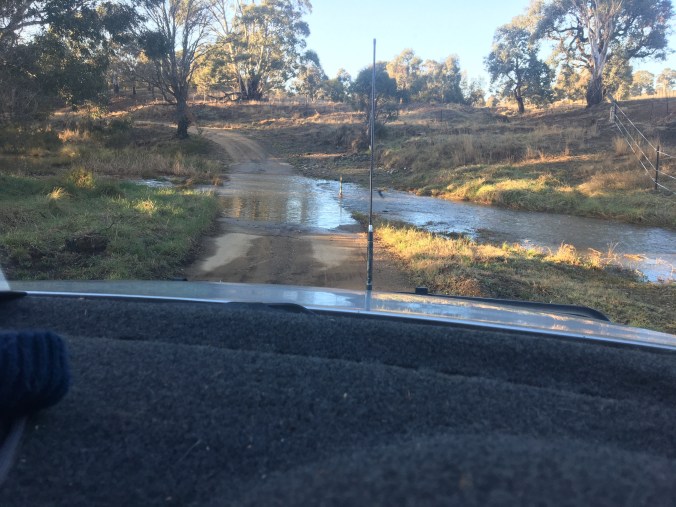
Time will tell what the season holds.  In the meantime, we have developed a plan for the cattle which we will start to implement in a few weeks.  For now though,  it is lovely to see a little water flowing in the creek again.

The battle for Daisy – rescuing a calf on the Rock Farm

The last 72 hours have been a race against time on the Rock Farm.  Our maiden heifers have been calving and whilst the first seven calves arrived without any trouble at all, calf number eight changed everything.

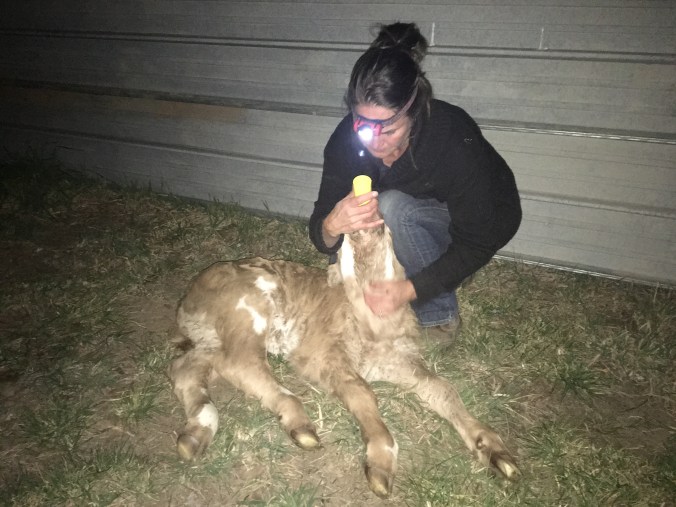
We found a very exhausted calf and Mum on Sunday morning, both in a very poor way. The calf was unable to get up, and it was clear hadn’t been able to suckle from Mum.  Mum was lying several metres away, also unable to get up, with a very sore hind leg.  It was pretty grim however we decided to not interfere initially and give them a couple of hours to see if the warmth of the sun would give the calf enough energy to get up and have a drink.

These things always happen when I am at work, and the burden of managing the evolving situation fell on Jo, the kids and our wonderful neighbours.  After a few hours of waiting, it became clear we needed to intervene.  Mum had managed to get up, however had left the calf.  She was clearly very lame and was unable to assist in any way.  I feared she was so badly injured we would have to put her down.  We brought the calf into our sheltered yard beside the shed and attempted to give her a drink.

Poor Daisy as she was now known took a few attempts to get the hang of suckling our modified colostrum mix.  The first feed is so important, however we had to make do with our mix of milk, warm water, raw egg and hemp oil.

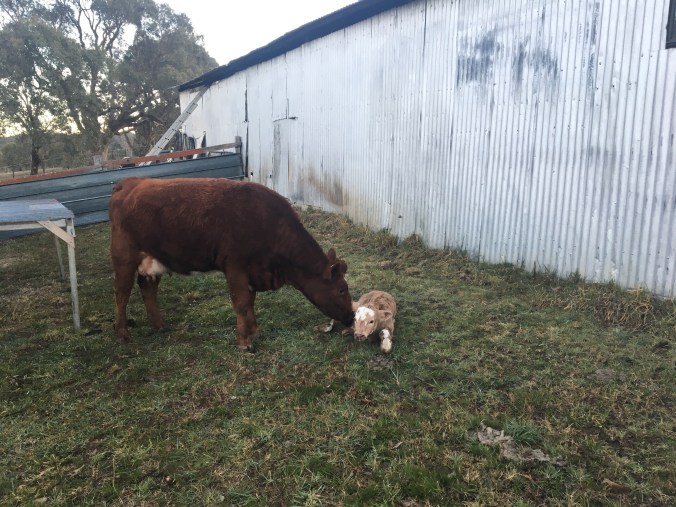
When I got home from work that evening, we found Mum was much more mobile.  Whilst she was obviously very sore, she was able to hobble, and we moved her into the yard with Daisy.  This process in the dark wasn’t exactly easy, as we ended up with half a dozen of her friends in the paddock as well – however in the end it was relatively straightforward to cut her out of the herd.  Our efforts in making the cattle quiet paid dividends that night.

The following morning revealed a very protective Mum, and a lethargic Daisy.  In order to safely feed Daisy, I had to push Mum out into the next paddock.  I always move the cattle with a long stick in my hand.  Usually it acts as an extension of my arm, enhancing my body language to the cattle – however Mum sized me up and I gave her a rap over the nose.  I was pleased Mum was very obviously guarding her precious calf as I feared she would have rejected Daisy, but I was also thankful for the stick in my hand.

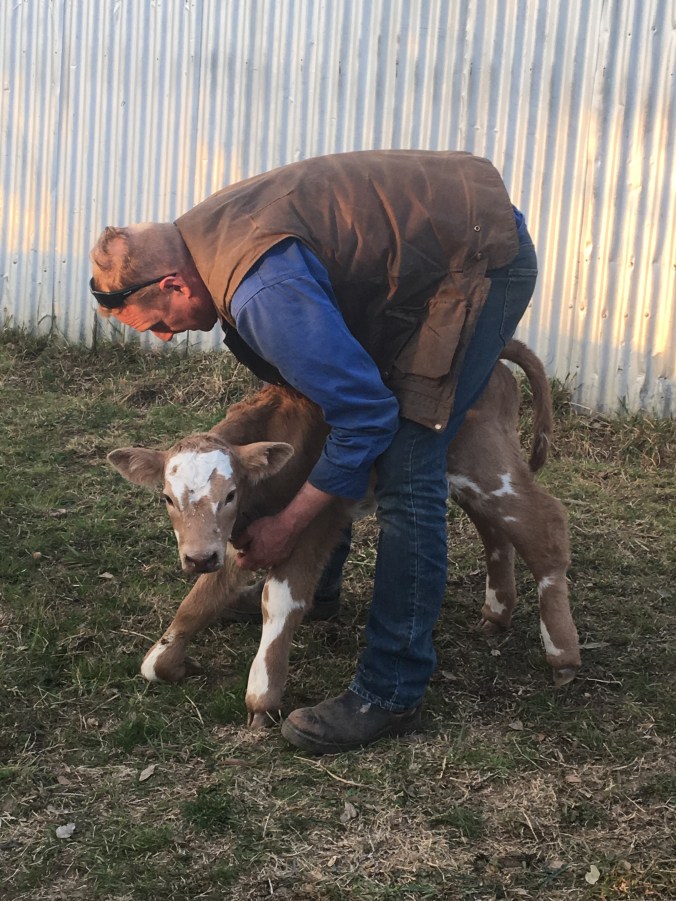
Over the course of the day I fed Daisy regularly, however she still didn’t seem to want to stand up.  When the kids got home from school, I got them to keep an eye on Mum as we attempted to teach Daisy to stand with the aim of her being able to feed unaided.

At the end of day two, I sat down with Jo and looked at our options. Ultimately we were faced with a decision.  If Daisy hadn’t got enough strength or ability to feed from Mum, then we would put her down at the end of day three.   I feared she had possible brain damage from a long and arduous birth.  It was an awful decision to make, but we knew we had to involve the kids with our thought process before putting her down.

Day three dawned and we wanted to see if Daisy would get hungry enough to attempt to feed from Mum.  Whilst we never actually saw her move, it became apparent she was able to move from the sun to the shade.  Our neighbour gave us regular updates on her movements as our family was all in town during the day.  It was an extremely positive step, and it looked Daisy was through the greatest hurdle.

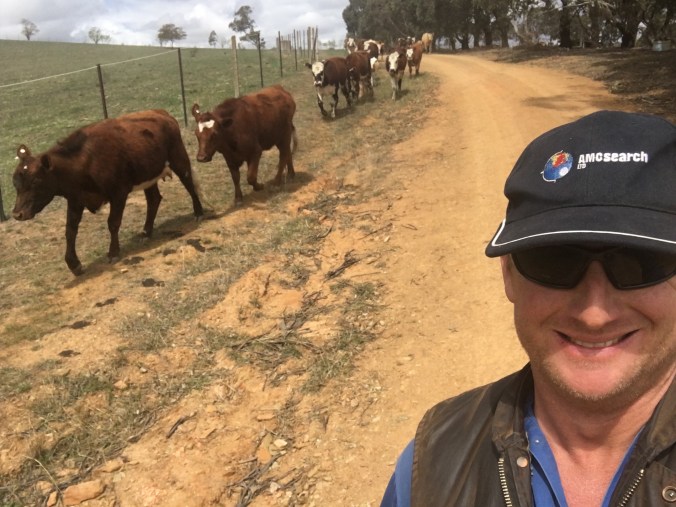
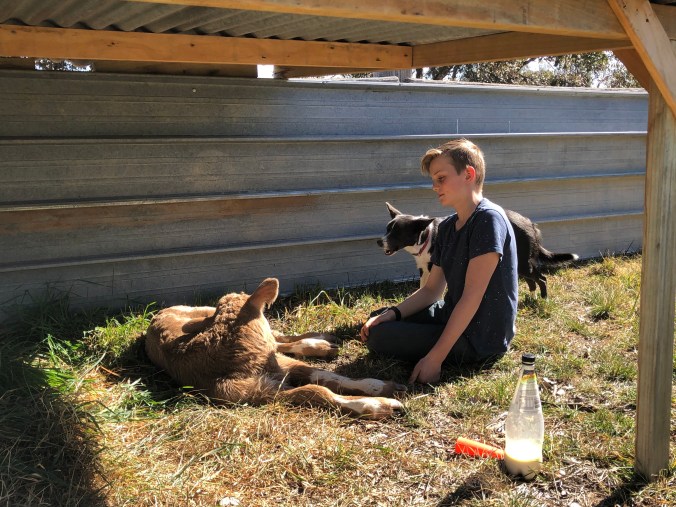
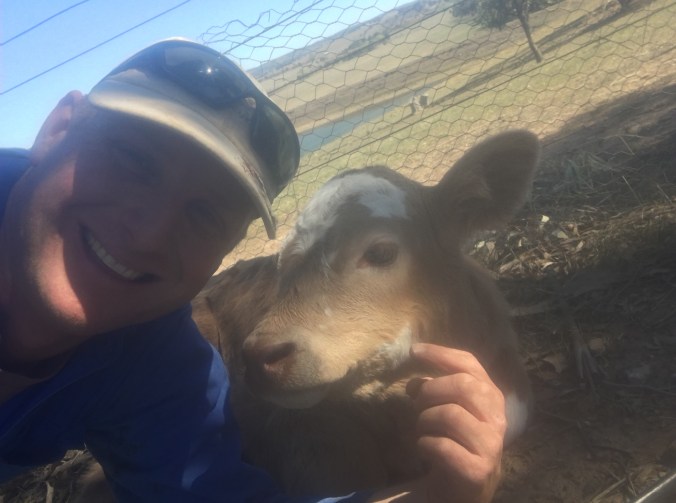
Day four and we opened up the yard into the small paddock.  Daisy was spotted at different places during the day, and I even caught her on her feet.  I was overjoyed, and whilst Daisy didn’t mind a celebratory selfie, Mum was still very protective despite my attempts to distract her with some fresh hay.

And then I saw it.  Just before heading into work at the end of day four, success.  Daisy was on her feet feeding from Mum.  It was a great sight.  Whilst we are by no means out of the woods yet, and I suspect we may have ongoing issues with Daisy and Mum into the future, it was an extremely positive sign.  Hopefully we will be able to return Daisy and Mum to the herd in the next few days – although I have one young man who hopes Daisy remembers him.  That, I am sure, will be a whole other chapter in the history of life on The Rock Farm!

Book Review: The Complete Book of Self-Sufficiency

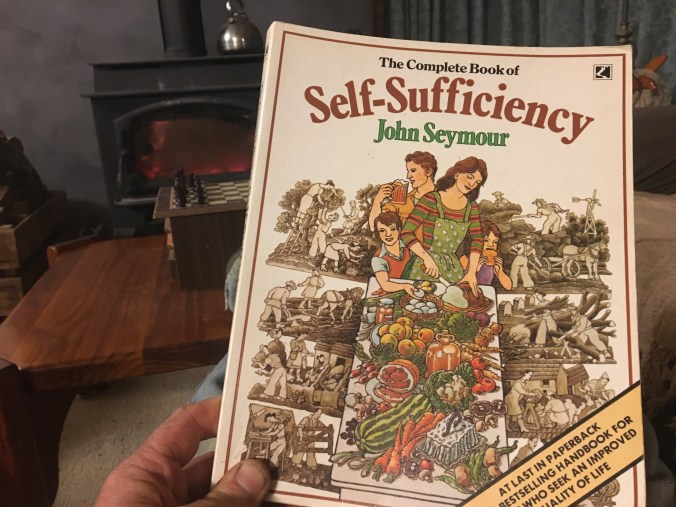
This classic by John Seymour was one of the first books written for a generation that loved the idea of being self sufficient but didn’t know where to start.  First published in 1976, this book has inspired thousands of people to move forward to a “better sort of life”.  Our 1992 reprint is one of the most treasured books on our bookshelf, and I love leafing through it of an evening in front of the fire once the kids are in bed.

The Complete Book of Self Sufficiency covers the whole gambit of living a self sufficient life.  It is broken into various sections that cover different aspects of growing your own food such as:

  • Food from Fields – growing grains and cereals
  • Food from Animals (from poultry to beef, bees and rabbits)
  • Food from the Garden (growing fruits and vegetables)
  • Food from the Wild (foraging)
  • Natural Energy
  • Crafts and Skills

Seymour has tackled an enormous topic with skill and good humour.  His chapter on Horse or Tractor Power details the pros and cons of the three main methods of powering farm instruments.  The tractor, garden or walk behind tractors or animals.  His discussion of the various merits of different animals speaks volumes of Seymour’s experience

“Mules are very hardy, particularly for hot and dry climates.  They walk fast, will pull hard, can live on worse food than a horse, and I find them completely unlovable.  They will not exert so much traction as a heavy horse and are inclined to scratch, kick, bite, and generally misbehave.”

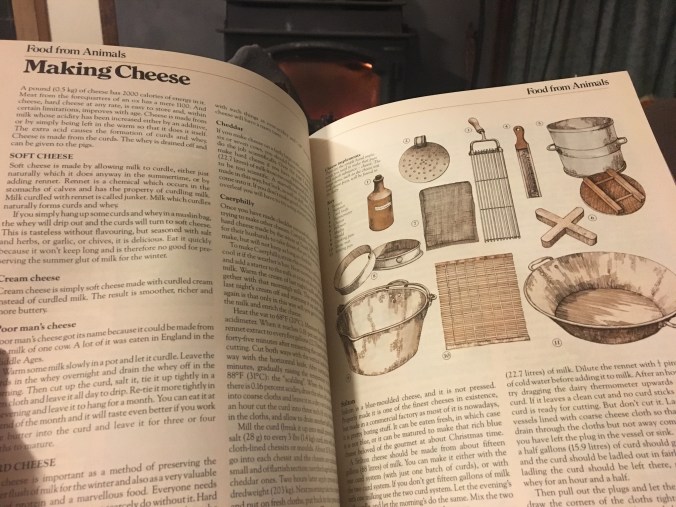
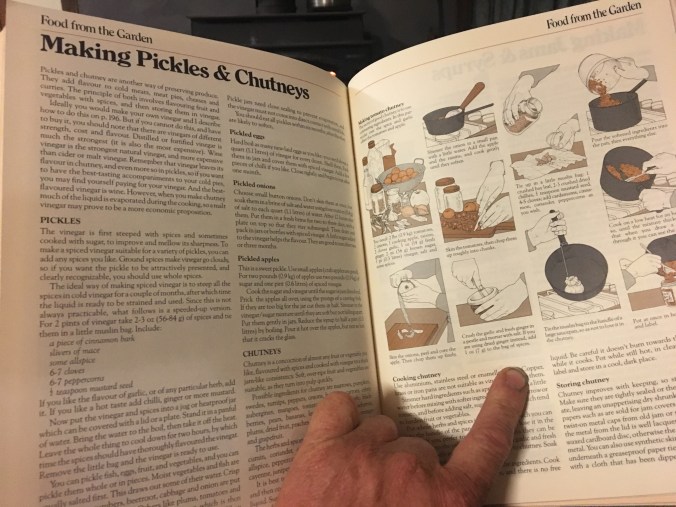
Each section meticulously lays out what techniques you need and what equipment you require.  Most of the tools described are hand tools, that today are hard to come by and look laborious to use.  We have found some of the tools in our shed, relics of a bygone era.  It is nice to know what they were used for, and for some, we have been able to re-use them.

When we started butchering our own sheep, I referred to Seymour’s book.  He describes the technique used to humanely butcher and clean several animals such as sheep, pigs, rabbits and poultry.  He explains the techniques, with a practical element borne from his experience.

“Keep working until the pig is absolutely clean… You really need two or three good men and true to scrape a big hog, with one boy to bring on the hot water and another to fetch the home-brewed beer (vital on this occasion).”

The Complete Book of Self Sufficiency is written for a much gentler climate than ours.  Seymour estimates that a horse will eat the produce of a one acre of land in a year, or of two or three acres of poorer land – which is a very optimistic estimate for our area.  Seymour’s basic model is for a one acre (4000 sq m) lot, however it can be expanded to a five acre lot (2 hectares), and meet most of the needs of a large family, except perhaps coffee and tea.

A special section deals with (almost lost) crafts such as spinning wool and cotton, dyeing and weaving fabrics, tanning hides, working stone and making bricks and other techniques important for someone who wants to have a go at everything.  In this modern age of YouTube, you can easily find videos to augment Seymour’s descriptions of how to practice these skills.

Even Seymour’s section on Natural Energy is still relevant.  Whilst not listing the latest in solar panel and inverter technology, the principles of solar passive design, insulation and harnessing wind power are almost timeless.  The section on a water-wheel was particularly quaint, as it was a form of power that was too unreliable with Australia’s cycle of droughts and floods.

Underpinning the whole book is the importance of soil – the basis of all life on earth.  Seymour’s whole enterprise is based on many facets of poly-culture.  Beneficial relationships between every enterprise increase soil fertility and recognise the inter-contentedness of every element of the farm.  We would now call Seymour’s techniques permaculture or even regenerative agriculture.

There is something magical about a book such as this.  Part of it harks back to a simpler time, however it was written in the modern world for people seeking a life more ‘fun that the over specialised round of office or factory”.  Despite it being written over 40 years ago, it is as important as ever, and one of my favourite books.

Calving Commences and Odd Jobs

Historically the 10th of August is the coldest time of winter in our area.  From here on, the weather rapidly warms into spring.  On the ground our grass has turned green, but it is waiting for rain before it will jump out of the ground… I hope.  I have been busier than I’d like with work, and the kids have been busy with sport and music activities before and after school that reduces the time we have available to enjoy The Rock Farm.  Thankfully it hasn’t been all work and no play.

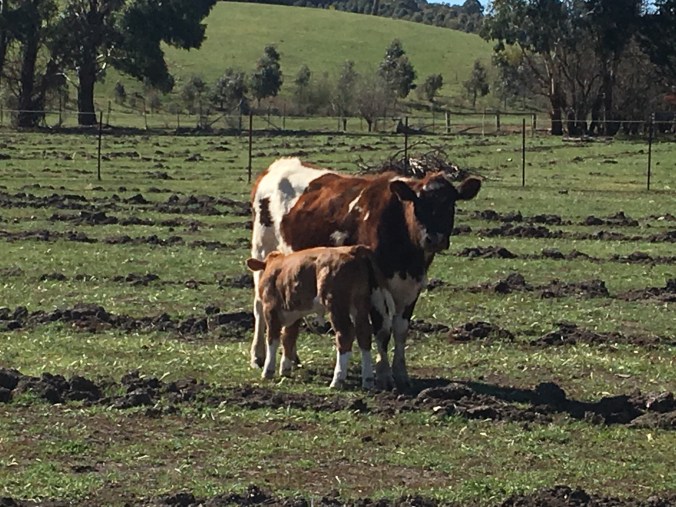
Our maiden heifers have started calving, and as I write we have two gorgeous calves on the ground.  These gorgeous calves gambol around and make us laugh.  Our sheep with their lambs are also growing strongly, however have been a little more timid.  I will try to get some better photos of them soon too.

Winter also brings with it strong winds – and we have had a few days that have tested the structural integrity of our shed.  Unfortunately some of our Peppermint Gums (Eucalyptus Nicholii) didn’t cope so well.  These trees are probably about 40 years old, and are prone to drop branches in strong winds, especially when stressed for water.

It took me a little while to cut the bulk of the branch up.  Over the weekend I will enlist the help of the family to remove the green branches and pull the balanced log safely down for next year’s firewood supply.  The rest of the tree looked in good health, with a wonderful large nest safely remaining untouched.  As to who is living in the nest, I wasn’t sure, as they didn’t like the noise of the chainsaw.

With the landscape so dry and September normally one of the windiest months, I brought forward my annual service on our water cart.  I treated to the pump to fresh oil, cleaned the spark plug and air filter and filled it with fresh petrol.  We had been using the trailer for other jobs over winter, but it was a quick job to re-install the tank and pump.  I hope its main purpose over summer is watering trees, but it is good to know we have 1000 litres of water ready to use in an emergency should we need it, until the big red trucks arrive.

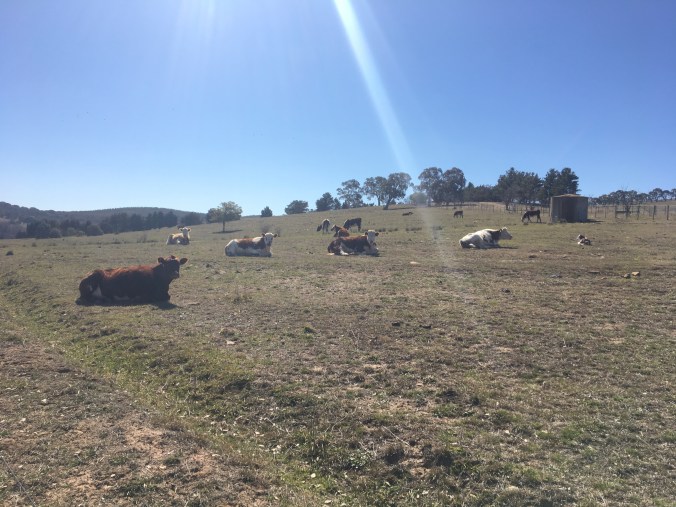
Whilst the cattle were curious with my efforts on the water tank – you may see them in the background of the photo above.  I think they were also more than happy to take a few moments to enjoy the sunshine as we clawed our way from a minimum overnight of minus 5 degrees.  

We will keep a close eye on our expectant mother’s over the next month or so, and keep our fingers crossed it all goes well for them.  Our biggest challenge will be keeping them in good condition as we head into Summer.  In the meantime, it is lovely to take a moment and enjoy the sunshine and the coming of the warmer weather!

Winter on the Rock Farm

We have settled into winter on the southern tablelands.  Our recent weather patterns seems to be cracking frosts followed by crystal clear days, or bleak overcast skies with lazy winds that seem to pass through every layer of clothing you can wear. Sadly we have had precious little rain to bring us any growth.

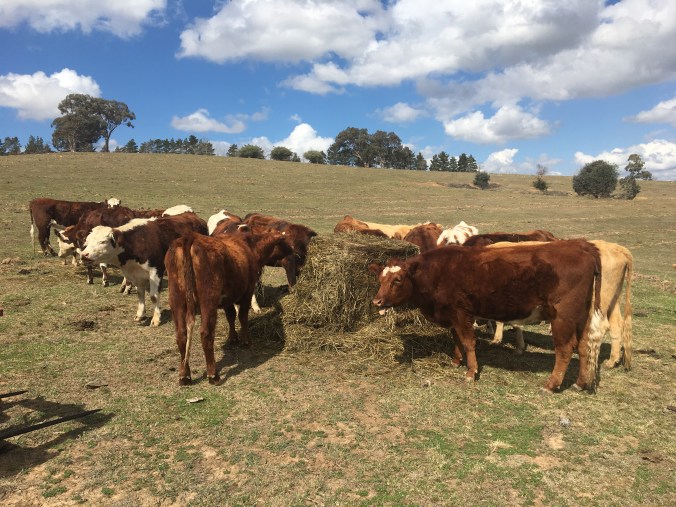
We have been feeding the cattle since the start of winter.  I am rotating the cattle through the paddocks, and have even opened up some of the tree guards for the cattle to graze under the established trees.  The grass has turned green – but it is too cold and dry for it to grow.  The cattle need the roughage that the old pasture hay provides, and I have just started feeding them some silage we purchased at the start of winter.

It is my preference to buy hay and silage over fertilizer.  The more I learn about soil health, it is far better for the soil to receive nutrients that have been processed by a ruminant stomach first.  If only the cost of feed was cheaper!

The one good thing to come of the lack of grass is one of our pest weeds, the serrated tussock is easy to see.  We have been chipping out tussock for a while now, but even I had to admit defeat and hit large swaths of it with chemical.  It sure isn’t my preferred model for control, but after reading Millpost (Book Review -Millpost, a broadscale permaculture farm since 1979) I decided I had to make better use of my time.  We will use chemicals on large patches until we have got on-top of the tussock and then hopefully revert to chipping to stay on top of future outbreaks.  The little hundred litre tank and 12 volt pump make spraying remarkably time effective.

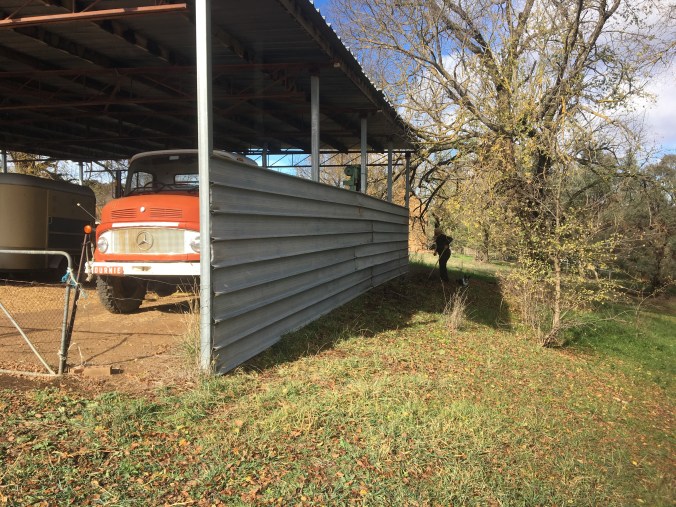
I have taken the opportunity of re-purposing the old roof sheets from the house into panels on the side of the hay-shed.  With most of our pasture hay stored in an old stable, the hay-shed has become the default storage shed for the truck and horse-float.  In an attempt to make it more weather proof, and suitable for storing hay into the future, we have been using the old roof iron to make walls.  If and when feed costs become more affordable, I hope to ensure we store enough hay to get us through a couple of winters in this shed.  We have been lucky to get through this far with what we have, but we need some growth to get us through spring.

The sheep have been enjoying the run of the place, and manage to find enough pick to keep in good condition.  It was a wonderful surprise to check on them after a couple of days at work to find they had started lambing!  We will mark these lambs in a few weeks, but for now, we were happy to let them be (and give their mum’s a treat of some oats).

The only problem with all the work outside is that is cold… damn cold.  Especially overnight.

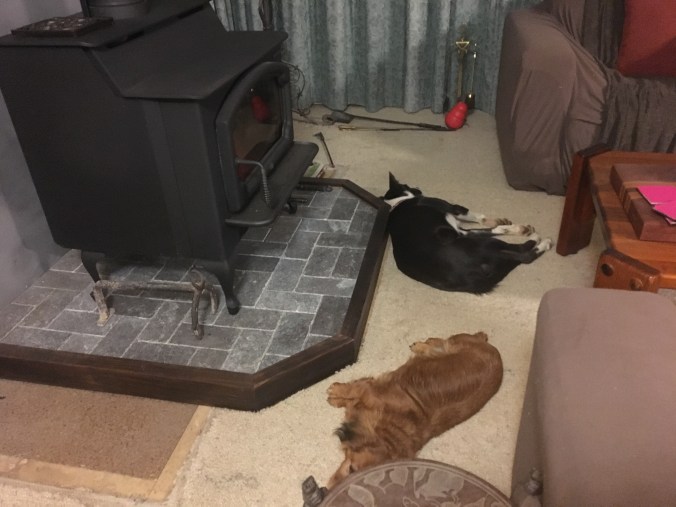
But the dogs wouldn’t know that…  they reckon it’s summer all year around on the Rock Farm!

Sadly not long after this photo was taken, the dachshund Dilys passed away.  She has been part of our family for 10 years and despite her little size, has made a big hole in our hearts.  We buried her down by the stables, where she loved chasing rabbits, even if she was never quite quick enough to catch them.  Good dog.  Rest in peace.

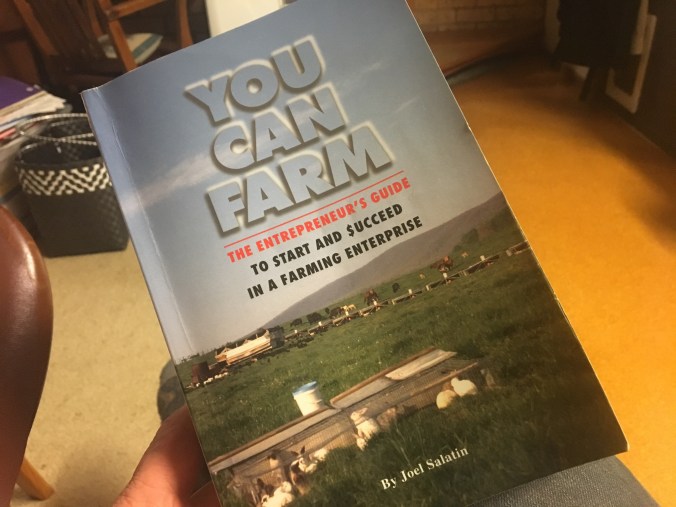
Book Review: You Can Farm

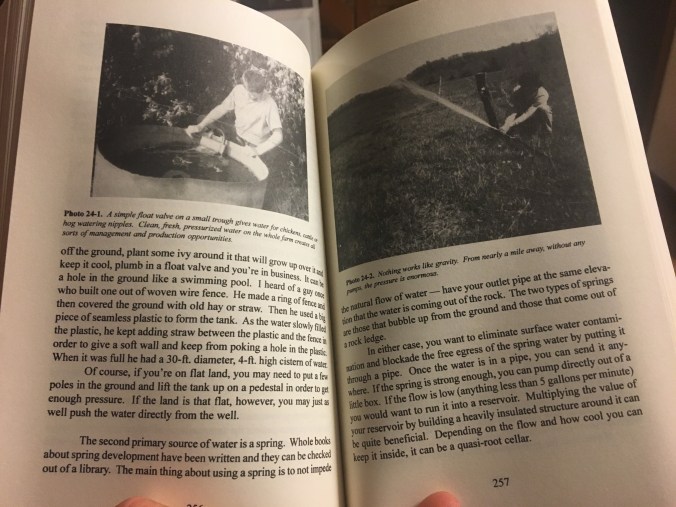
Anyone considering moving onto a farm should put You Can Farm – The Entrepreneur’s Guide to Start and Succeed in a Farming Enterprise by Joel Salatin on their list of books to read.  This book is written for, in Joel’s words: “wannabes, the folks who actually entertain notions of living, loving and learning on a piece of land”.  The question the book addresses is simply “Is it really possible for me?”.  Whilst this book was written 20 years ago and in a North American context, it remains especially relevant today

This book explains what you need to consider if you want to make a living from a farm, as opposed to living on a farm.  Joel Salatin believes that the opportunities for farm entrepreneurs have never been greater, especially as people look for alternatives to industrial agriculture, and seek ethical, and healthier choices.

The other reason to read this book is it will help you develop a farm model, especially if you need to to secure finance to purchase your farm.

Joel takes us on a journey through his farm enterprise, which is a polyculture set up.  Ironically this is nothing new – however his farm looks more like a farm you would have found in the 1950’s.  As agriculture has moved towards mono-culture, and high input / high output models, Joel asks whether all this is really necessary.  His enterprise is run on ‘threadbare efficiency’, and uses many innovative (cheap) solutions to enhance production.  It is full of practical advice, with an astute business mind driving the process.

Joel opens the book sharing his philosophy about farming, so you can understand his perspective.  He also recognises that the reader may not share his views entirely, however that doesn’t mean you should stop reading. Rather it sets the context for the book.  Some of Joel’s fundamental principles are “Environmentally enhancing agriculture”.  The term today is Regenerative Agriculture – but as Joel’s book was written in 1998, that term hadn’t been coined yet.  He strongly believes in using seasonal production cycles to boost efficiency and to develop bio-regional food security.  His enterprise is based on humane animal husbandry and building soil and bio-diversity.    He does not believe in the high input farming models that chain farmers to corporate fertiliser, seed and crops where the farmer holds all the risk for the corporate giants.  Joel is all about family friendly agriculture.  These are all values that I share and partly why I really enjoyed his book so much.

One of Joel’s lessons is that if you want the make the farm your life, you have to embrace it.  The farm is every part of Joel and his family’s life – they have made a conscious decision to live as much as possible on the farm.  They don’t spend their weekends socialising or chasing kids sports in town.  The kids are involved in animal husbandry duties and are fully involved in the enterprise.

Joel also recognises that many people move to the country for a lifestyle.  And that is fine.
This book has made me think about the Rock Farm.  It helped me realise that our operation is very different from Joel’s.  There are many reasons for this.

  • We live under an hour from some of the best schools in the country and we value the education opportunities these provide for children.  We acknowledge that until our children finish high school and the associated music, sport and social activities that go on with that, we will spend a lot of time commuting to the big smoke.
  • The Rock Farm is a choice made by Jo and I to live here.  Our children are here by default, but they did not make the choice to live on a farm.  They love playing in the paddocks, building forts, riding their motor-bikes and making mischief, however the choice to live here was not theirs.  We get them to help out on the farm, especially when working stock or chipping weeds, but they have their own interests to pursue.
  • I am extremely fortunate to have a job that I really enjoy and I work with some inspiring people.  I enjoy working in a close knit team and I really enjoy the interactions I have at work. I know I would miss that aspect of my life if I was to leave it entirely.
  • Being close to a large centre, our land value is not based on farm production opportunity like most farmland throughout the world.  This means our investment in the Rock Farm is more about real-estate than farming potential.  This was brought home when I stumbled on a study conducted by our local council, that determined the ideal block size in our area was 20 acres, and 15 minutes commute from town.  Every minute extra on the commute reduced the property value and every additional acre suffered diminishing returns.

Whilst there are many aspects of our farm that are different, this book has also opened my eyes to many opportunities that exist on the Rock Farm.  It has made me realise there is comfort in threadbare efficiency and helped me look at ways to maximise the return on my effort.  It has helped me crystallise what the Rock Farm is and how we can love and nurture it and help regenerate it into a productive and healthy farm.

This book has also given me confidence that when I am ready to stop working in town, there are opportunities here, even on our small patch of earth, to make a red hot go of things.  If you have the slightest inkling that you too might want to live in the country, then make sure you read You Can Farm – The Entrepreneur’s Guide to Start and Succeed in a Farming Enterprise by Joel Salatin..

ISBN: 0-96381909-2-8

Book Review -Millpost, a broadscale permaculture farm since 1979

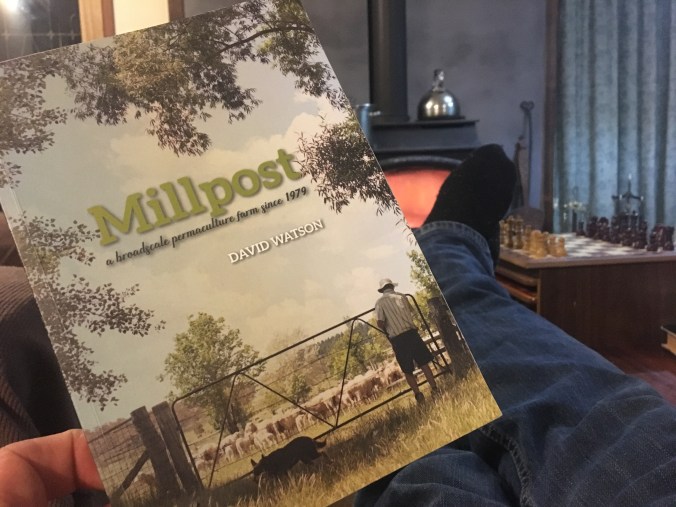
I have taken advantage of the cold weather and re-visited an inspirational book written by David Watson about his experience running a permaculture operation on his family farm.  Millpost is the name of the Watson’s farm, and David takes us on a journey through the many facets of the farm, and shows how permaculture principles have been put in place.  David and his wife Judith implemented permaculture principles on their farm in 1979.  They enlisted David Holmgren to help draw up a whole farm plan in 1994.  David Holmgren was one of the co-founder’s of permaculture in Australia.

Permaculture isn’t a term often applied to broadscale farming operations.  These days you might term it “Regenerative Agriculture” but digging beneath the surface, the aims of permaculture and regenerative agriculture are often very similar.  The Watson’s farm is near Bungendore, which is similar country and climate to the Rock Farm.  Whilst their operation is much larger than ours, it was the first time I had read a book where someone was able to put permaculture into practice on a large grazing property.

What I really liked about David’s book is that he has broken down many facets of the farm’s operation into specific chapters.  From the commercial aspects of the farm with superfine merinos, to the vegetable gardens, tree plantings and chickens, David shares how they make the various aspects work for their family in a permaculture setting.

From David’s analysis of his experience, he has developed several simple lessons.  For example: “Lesson No. 11: Work out which species are suited to your soil before mass planting anything.”  Seems like common sense really, but the words are borne out of years of planting any and all types of fruit and nut trees.  Some species have done really well, but the hot dry summers and brutally cold winters mean that not all trees survive.  Walnuts apparently are one species that doesn’t thrive in this area, with some 30 year old trees barely 3 metres tall and having never borne any nuts.

David’s advice is based on experience and is extremely practical, based on years of following his permaculture plan.  We share many of the challenges with Millpost.  One such problem on the Rock Farm is our serrated tussock weed.  I am coming to realise, like David, that I will need to use chemicals to bring the tussock under control.  Once the tussock is in manageable quantities, I hope to be able to continue chipping out any patches as they occur, like they now do on Millpost.

Why am I so keen to avoid the use of chemicals on the Rock Farm?

It’s simple really.  We eat our own products, and we feel that if our soil is healthy, then our livestock have the best chance at being healthy too.

If you are looking for more information on Millpost, and to purchase some of their superfine wool products, visit the Millpost Farm website here:  https://www.millpostmerino.com/millpost

Millpost, a broad scale permaculture farm since 1979 by David Watson, 2018.  ISBN 978-0-646-98482-7