How to build Wicking Garden Beds – Part 2

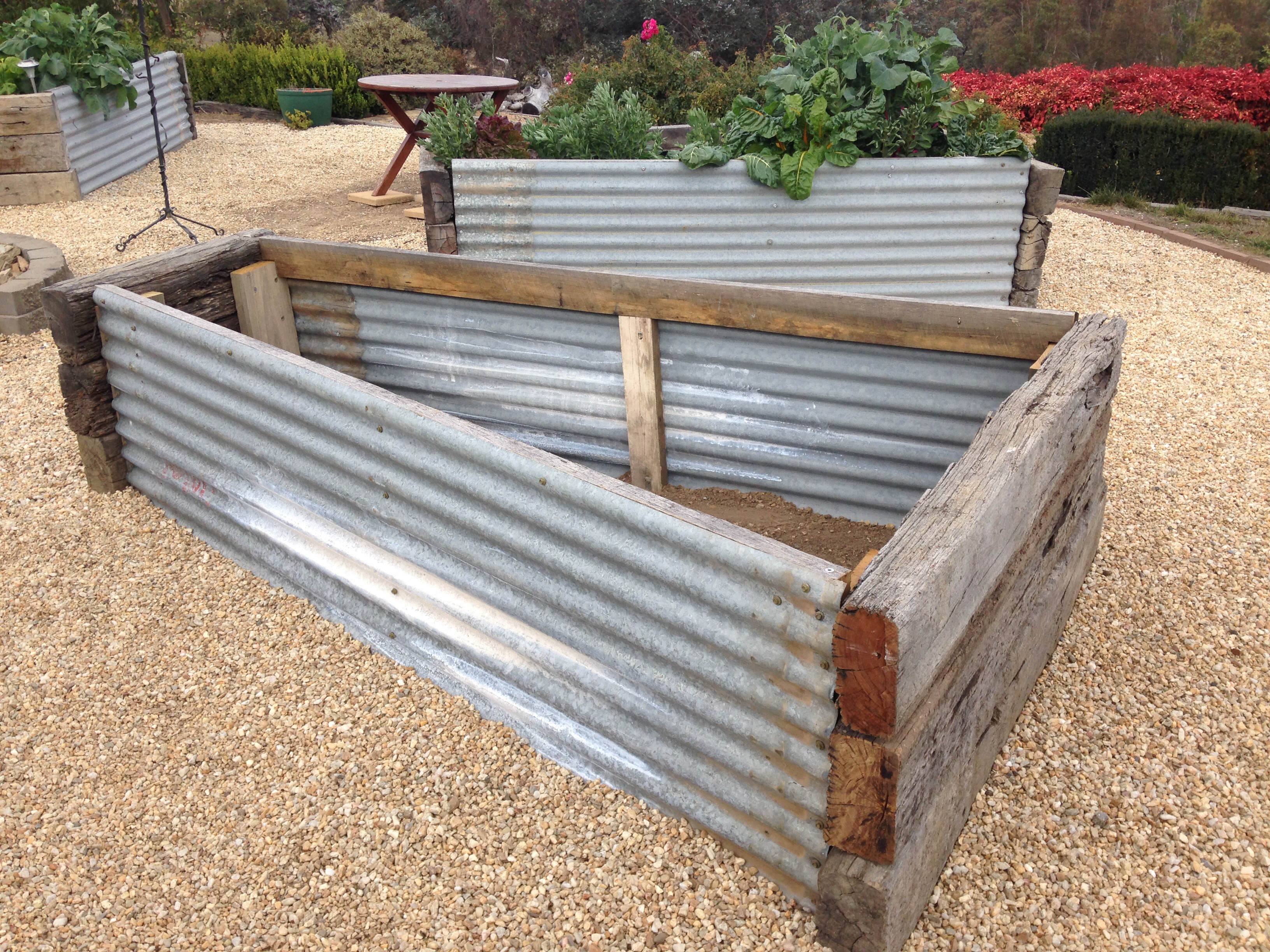
In my previous post, we constructed the base of some self watering wicking garden beds (you can read all about it here).  We made our wicking beds out of old railway sleepers, recycled corrugated iron and other timber we had lying around.  You can make wicking beds out of anything suitable for holding the weight of the gravel and water you plan on putting in them.

The next step is to line the beds with some cardboard or old carpet underlay to protect the water proofing plastic liner.
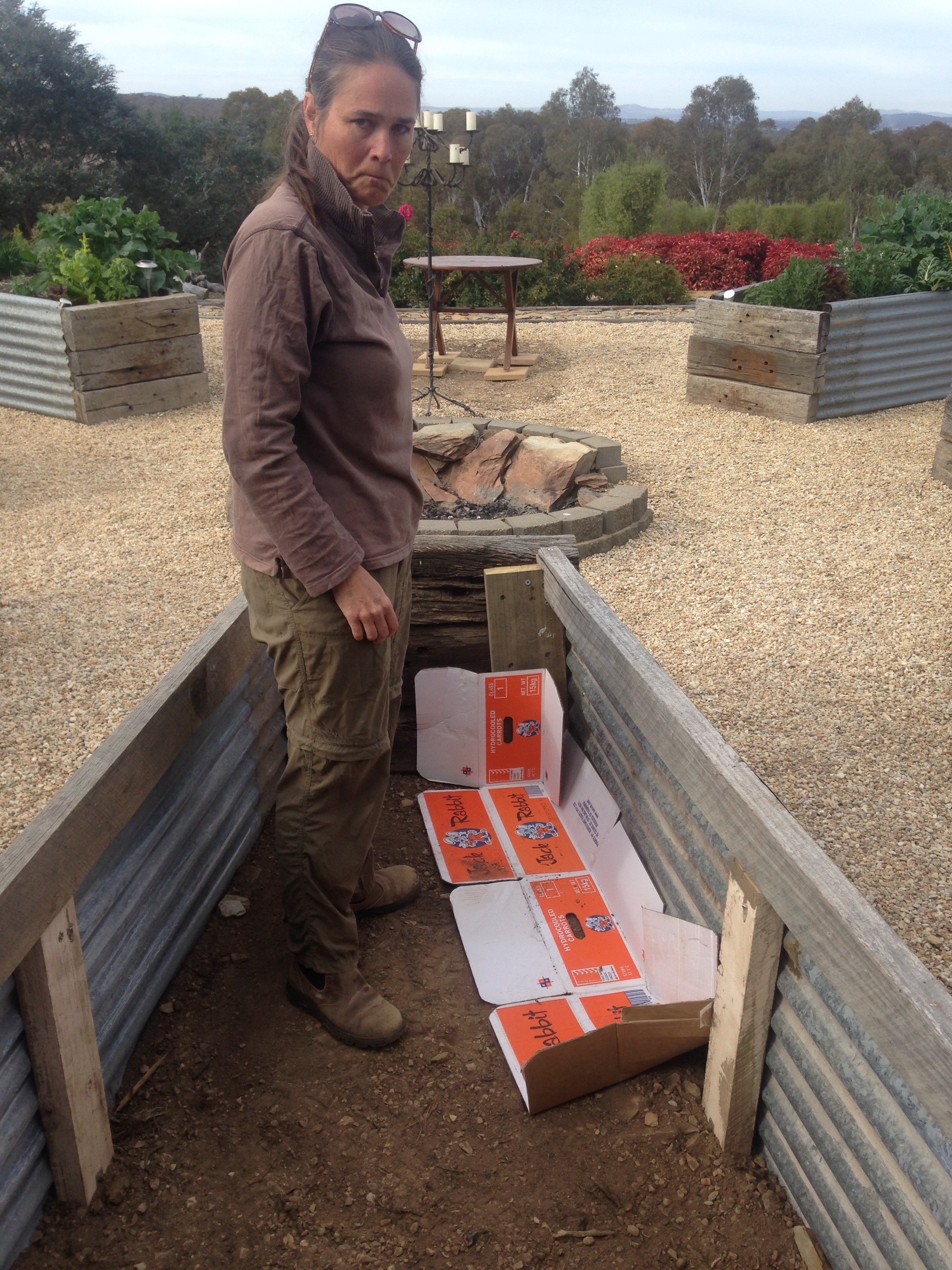
How to build a wicking garden bed

Cardboard can be used to line wicking beds
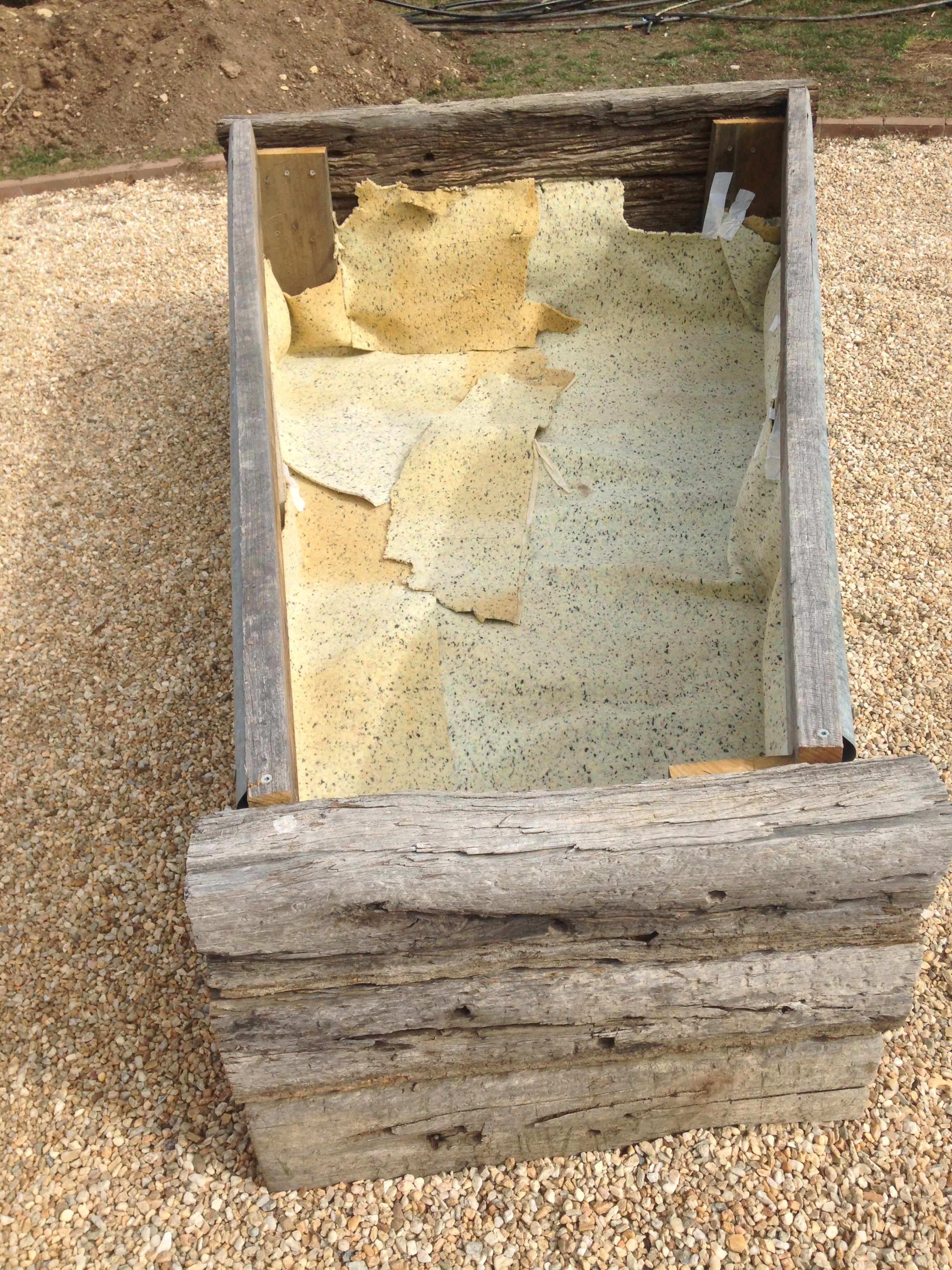
If you have some old carpet underlay, you can use it to line the beds.  Most underlay provides a good base that is resistant to rotting quickly.  It doesn’t have to be pretty – just cover the base.

How to build a wicking garden bed

Old carpet underlay is ideal for lining wicking beds
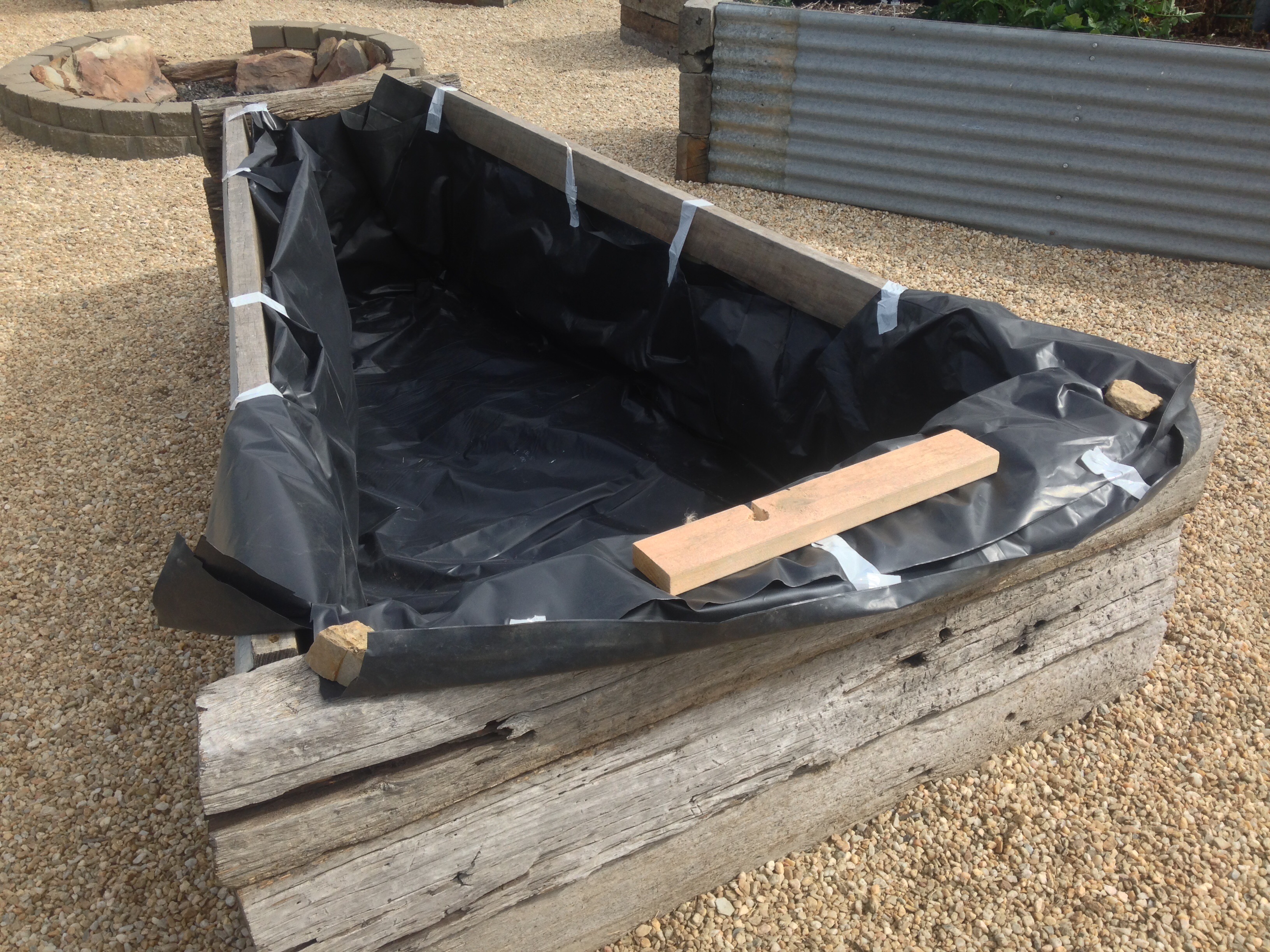
The next step is to line the base with a waterproof membrane.  We initially priced pond plastic, but it is incredibly expensive.  A suitable alternative is builder’s plastic.  We bought a large roll, which we doubled over to give two layers.  The tape holds the plastic in place while we fill it.

How to build a wicking bed

Builders plastic is held in place temporarily with masking tape
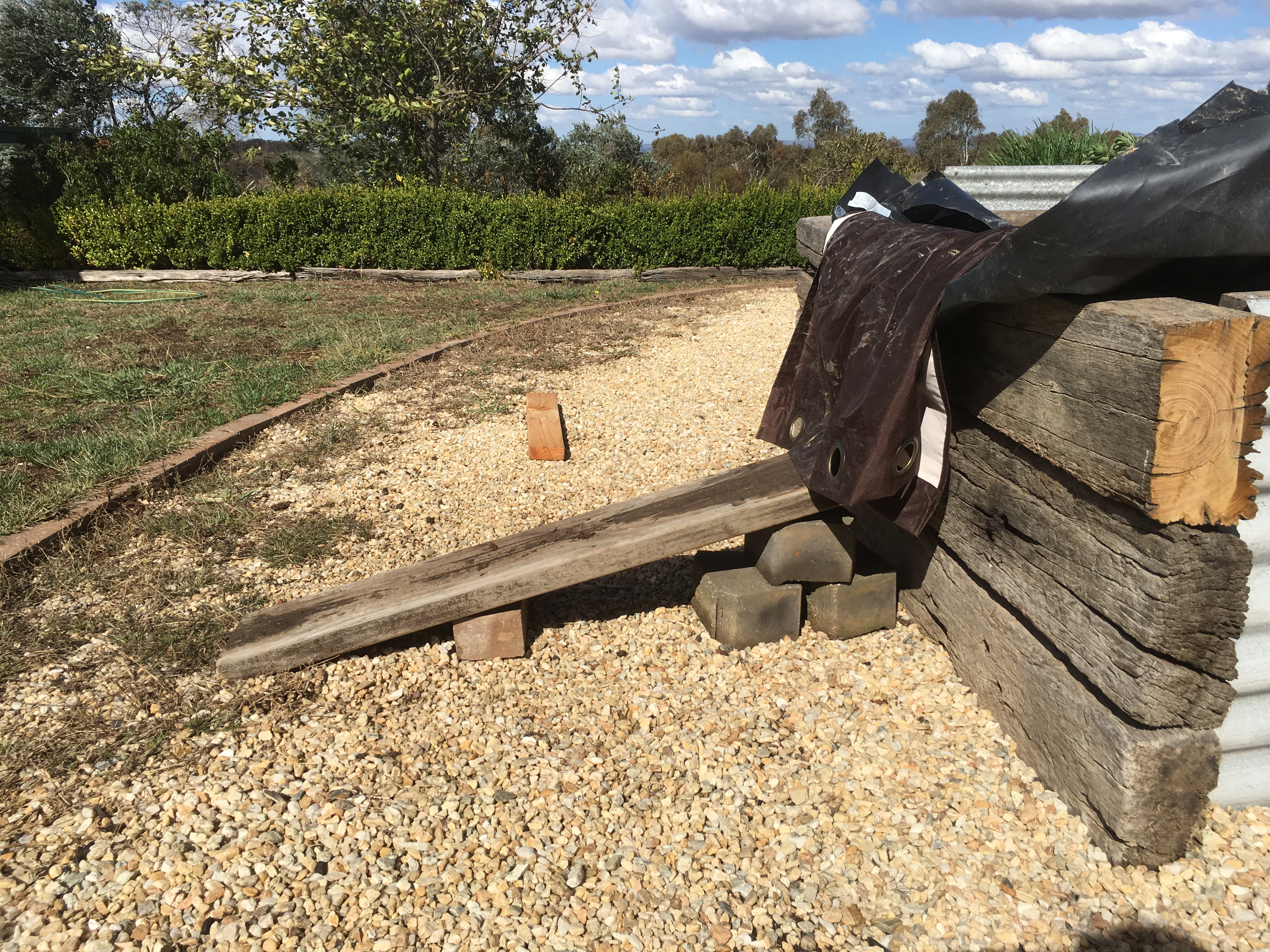
Now comes the fun part.  Time to fill the beds with gravel.  We constructed a ramp to make it easier to run the wheelbarrow up and tip gravel into the beds.  This is done in stages.  Firstly a 100mm layer of gravel is put into the base of the beds.  We used 20mm recycled concrete for our gravel bed, mainly because it was extremely cheap.

A temporary ramp for the wheelbarrow helps when filling the beds
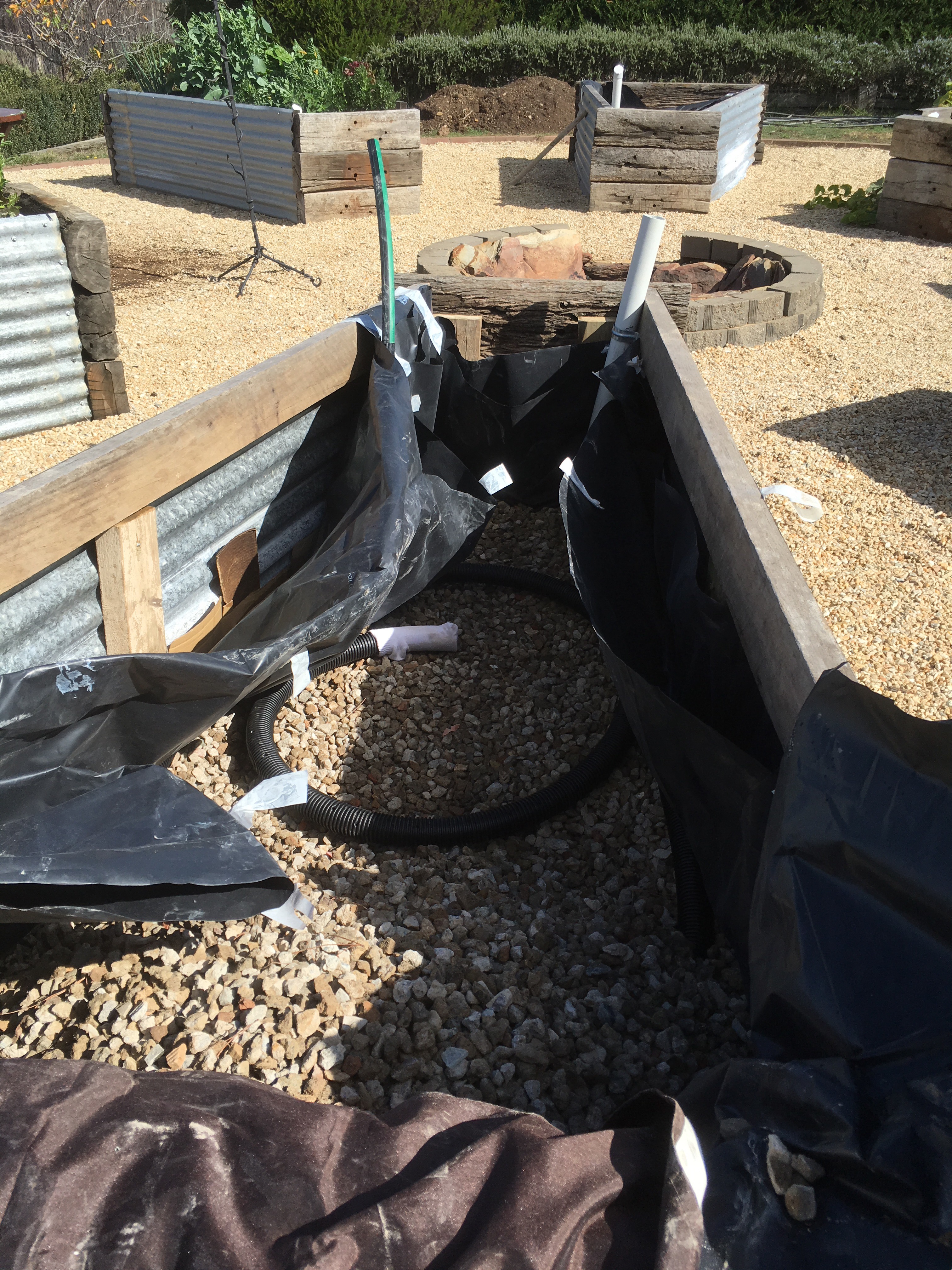
After you have a 100mm gravel base, it is time to put in the irrigation pipe.  We used standard 50mm PVC pipe and brackets for the filler tube  or riser.  To distribute the water quickly and evenly through the bed, some 50mm Agricultural Pipe (ag pipe or drainage pipe) was curled around the bed.  The PVC fittings were glued, using PVC glue, however the ag pipe was simply taped to the PVC pipe using cloth tape.

How to build a wicking bed

The Ag Pipe is laid on a 100mm bed of gravel.
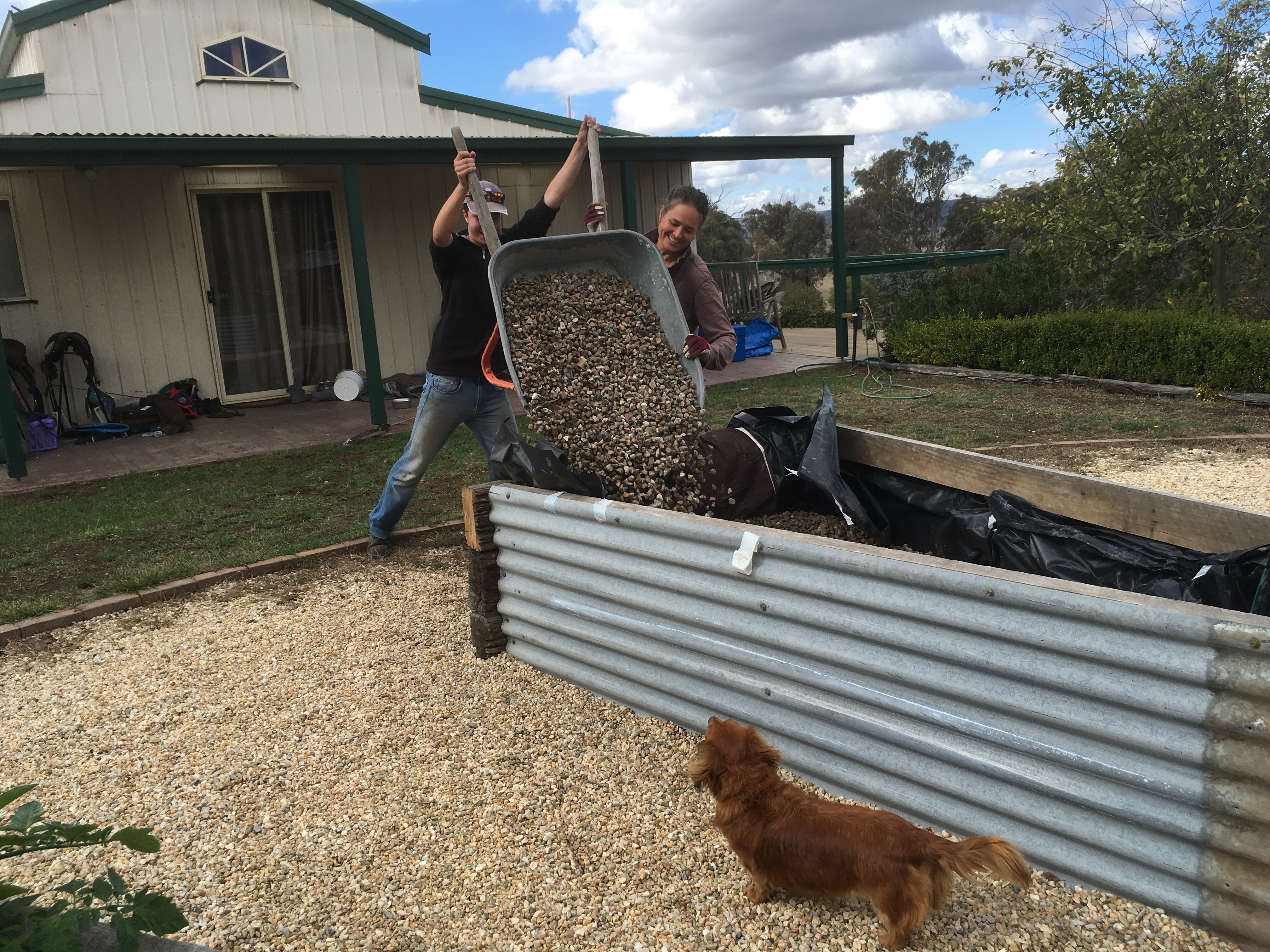
Once the filler pipe and ag pipe is in position, the hard work begins.  If you’re able to hire a strapping young lad for this part of the process, then that makes life a lot easier.  We enlisted the help of a friend’s 15 year old and in a few hours of intense labour, managed to fill three of the new beds with gravel to the required depth.

How to build a wicking garden bed

Filling wicking beds with gravel is easy if you have a helper


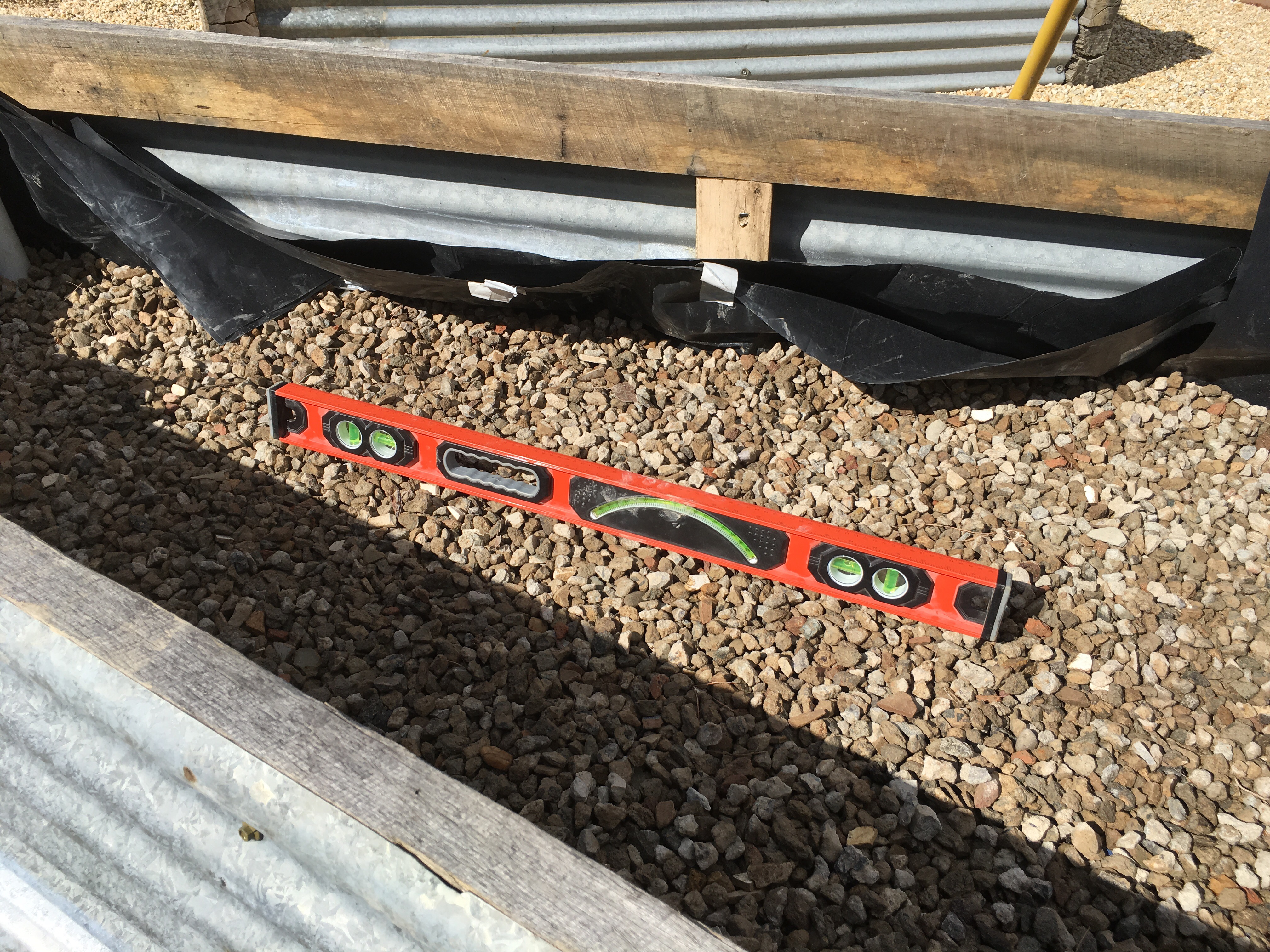
With the gravel filled to the required depth, it is a good idea to check for level.  You can do this with a fancy sirit level, or by filling the beds with water.
The next step is to put a drain in the beds.  We used a 12mm irrigation pipe, protected by a 19mm pipe.  Some old pantyhose over the end stops mosquitoes from breeding in the beds.
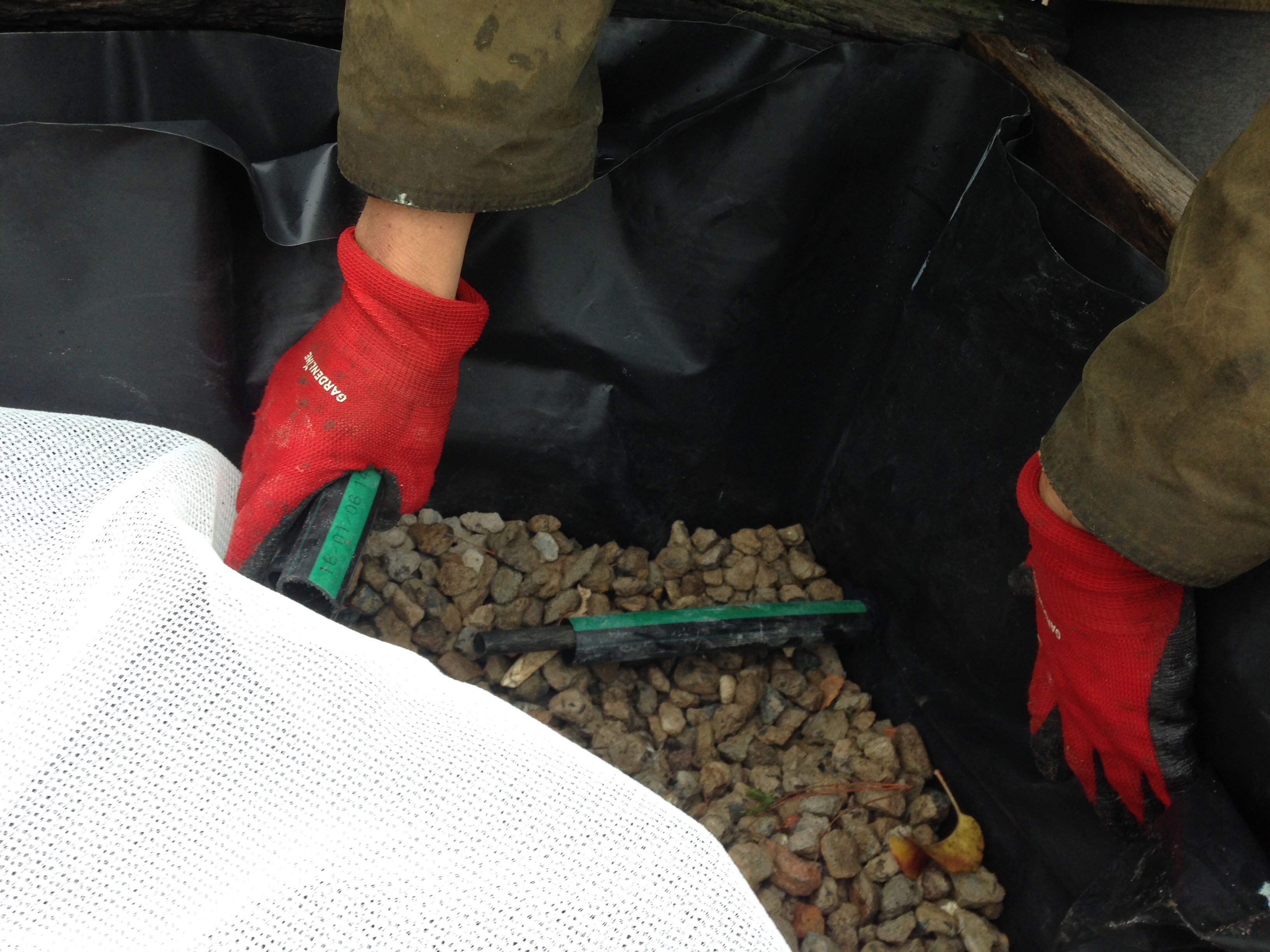
The half inch irrigation pipe is protected by the 1 inch pressure pipe offcut
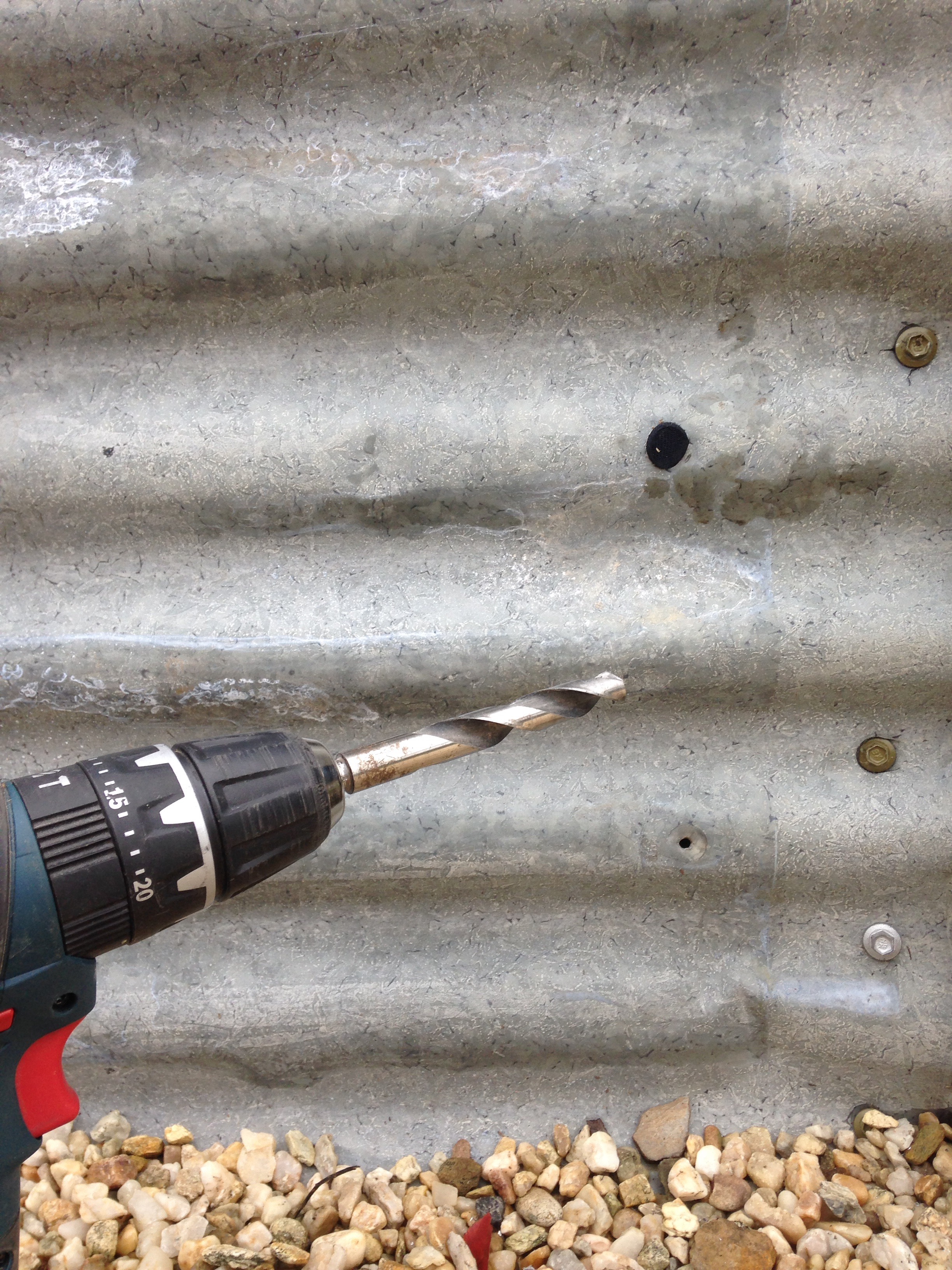
The drain is hard to spot, and the pantyhose mesh stops mosquitos from entering the beds


Once you have the drain installed it is time to put some weed mat or shade cloth over the gravel.  This helps keep the soil on the top from disappearing into the gravel.  It also allows the moisture to wick into the soil.
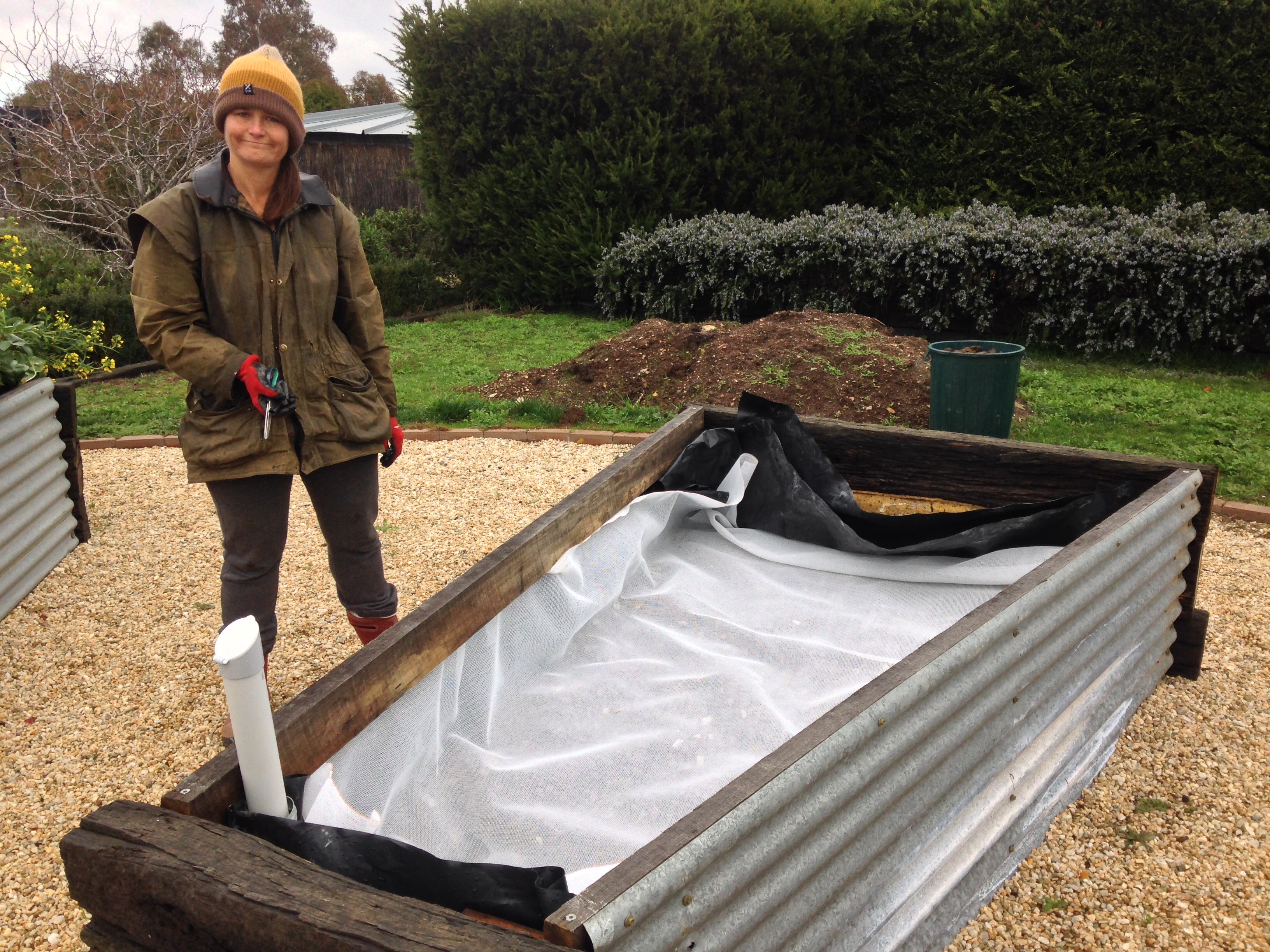

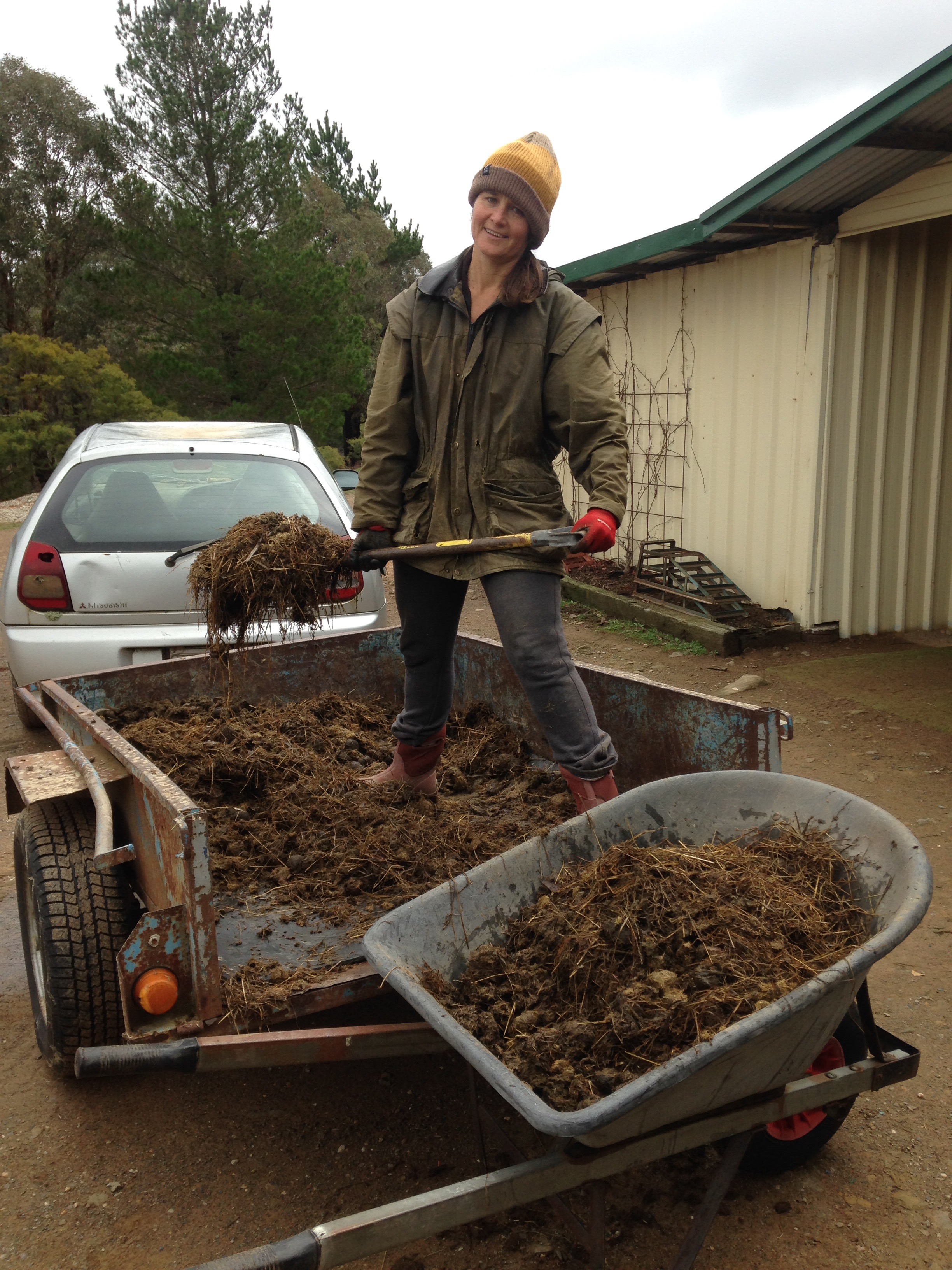
Finally it is now time to fill the top third of the beds with soil.  Again it is handy to hire a strapping young assistant for this process, but if you don’t have one to hand, I’d suggest gently asking the person who desired the beds to be built to lend a hand..
How to build a wicking bed

Do not offer advice during this phase of the construction – or you might find yourself wearing some of the wonderful compost!


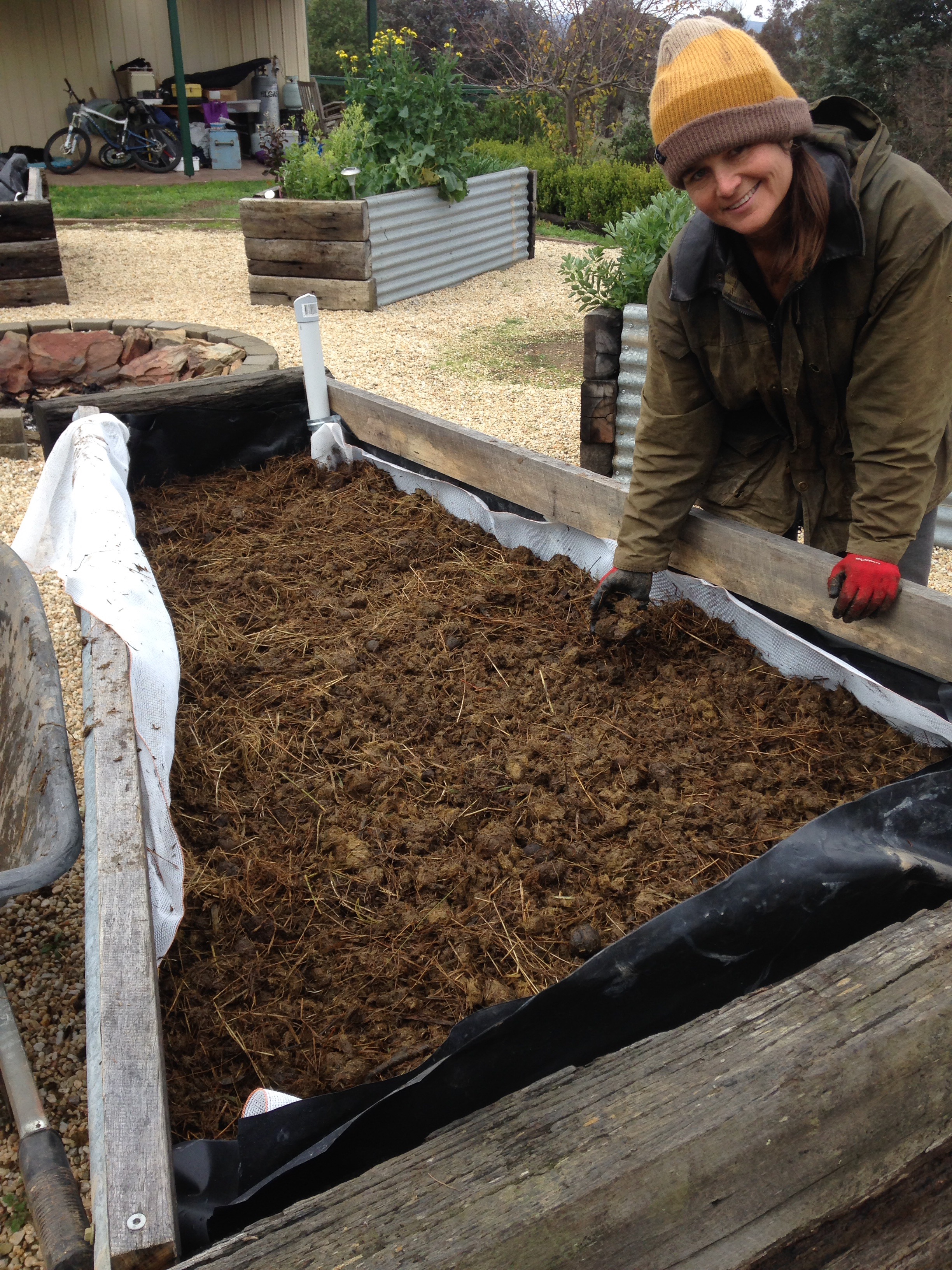
We were fortunate to source some of the most expensive compost in the world for our garden beds. You buy good quality horse food, and process it through the said horse. Then you mix it with fine quality straw, that is used for a short period as a soft bed, before the horse wees and tramples it into the mud. This product is then turned and mushed for a few days before you rake it and apply it to your garden beds.
How to build a wicking garden bed

Alternating layers of soil and compost helps build organic matter in the wicking beds


And you’re done.  If you’re like us, it will be just in time for winter – a particularly difficult time to grow anything on the Rock Farm.  I guess it doesn’t matter when you finish your project… it is just important that one day you do finish… even if it is 18 months after you started!!!

Good luck and happy vegetable growing 🙂
Water Water – Improving a watering system

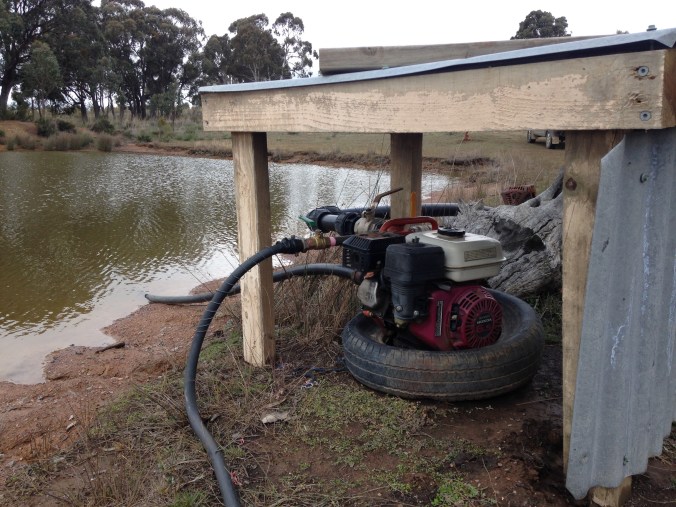
When we moved to the Rock Farm, our garden was irrigated by dam water, pumped by a petrol pump.  To water the garden, we would have to walk down to the dam with a can of petrol, and try to start the pump.  More often than not, the pump would be hard to start and our garden would be left parched and dry for another day.

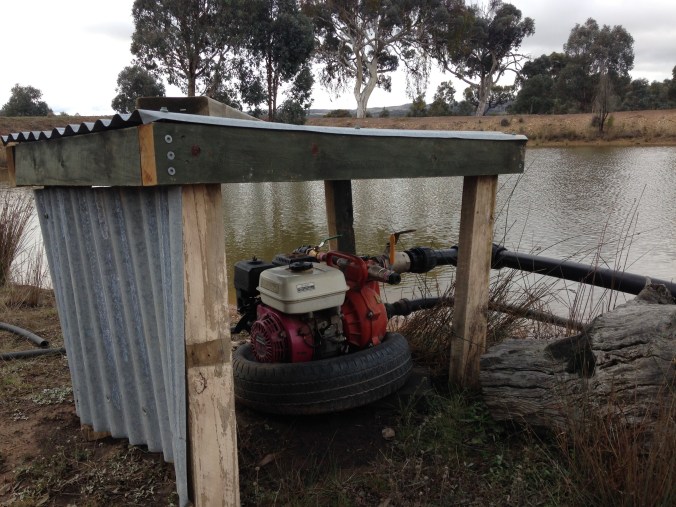
The first step was to give the petrol pump a service, and to build a small shelter or pump house for the pump.  This helped considerably, and the pump is now far easier to start.  But it was still a long way from the house, and turning a tap on to water the garden required a considerable effort.

Water water - Improving an irrigation system

Petrol pumps are useful for moving large volumes quickly, but are tiresome when used to water gardens

Something had to be done, and we decided on a two-phase approach.  The first phase was to install a header tank up near the house, with an electric pump on it that could water the garden on demand.  The second phase was to replace the petrol pump with a solar pump and ball valve that would keep the header tank full at all times.

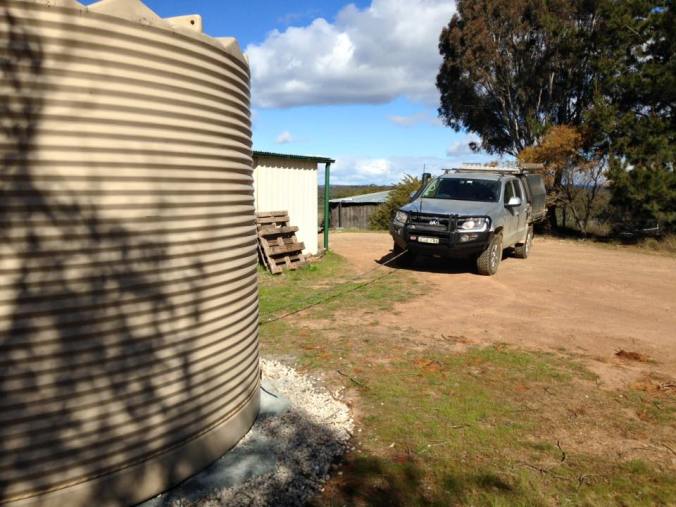
The most cost-effective tank for its size is the 5 000 gallon / 22 500 litre poly tank, and we ordered one from our local rural supplier.  It arrived a week or so later and was carefully placed (dropped) from the truck on my leveled site.  Thankfully I was able to move the tank into the right position with a couple of ropes and the four-wheel drive.

Water water - Improving an irrigation system

Positioning the water tank – using four-wheel assistance

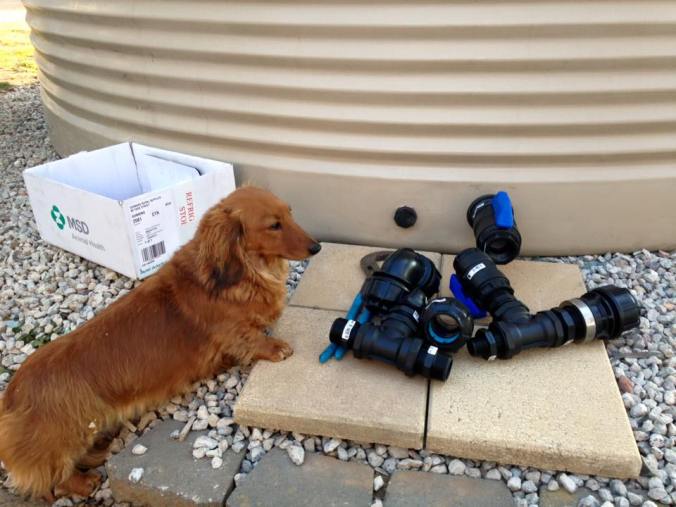
The plan was for the existing piping system to remain largely unchanged.  A short extension was added from the 2 inch feeder pipe to allow the tank to be filled by the existing petrol pump.  I needed a mechanism to bypass the new electric pump, so I added a  few valves to allow me to fill the tank, and then run the electric pump from the tank back into the piping system.

Water water - Improving an irrigation or garden watering system

Plumbing inspector checks the scope of work

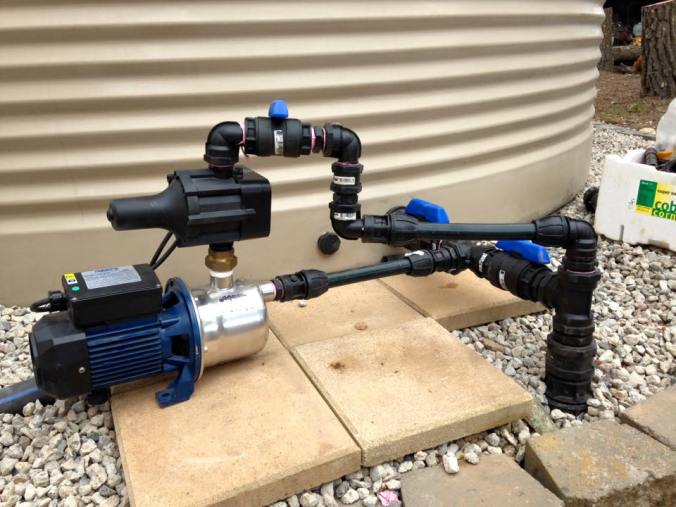
It took a while and a few attempts to get the piping installed and checked for leaks.  In the configuration below, the petrol pump on the dam can be run to fill the tank.  Once the tank is filled, I can then switch two valves and use the electric pump to irrigate the garden.

Water water - Improving an irrigation or garden watering system

Testing for leaks – always a nervous moment… can you spot the little drip?

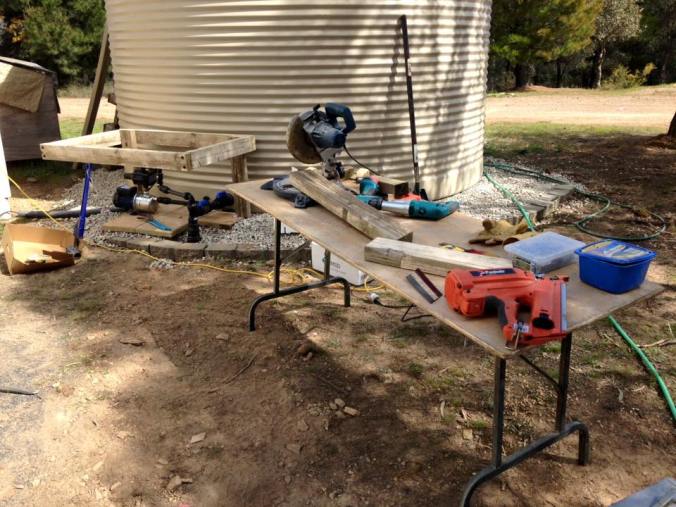
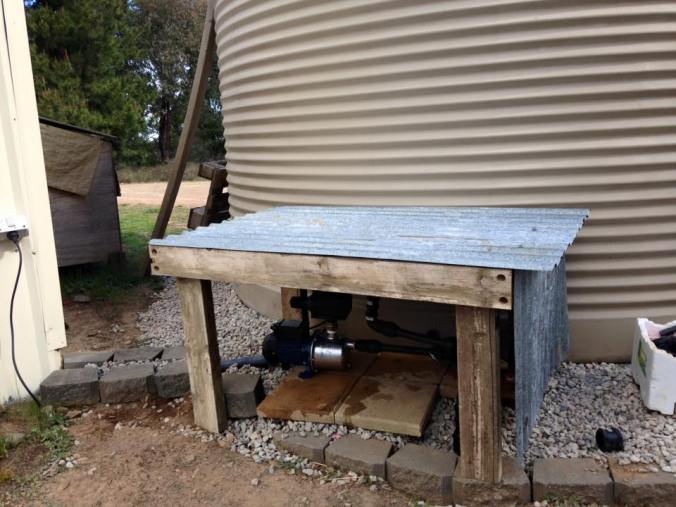
The fittings I used are good quality, but decidedly expensive.  The pump is a cheap one, but easily replaced should I need to.  I have found cheap fittings don’t last, but have had good luck with the cheaper pumps.  To give the pump a bit of protection from the weather, I also built a small shelter for it.

Water water - Improving an irrigation or garden watering system

Building the pump shelter

We leave the power switched off and the tank isolated when not in use, as we have a few leaks in the irrigation system that I am still working through.  That said, it is much easier for us to open a valve and turn on the power to have water on demand in our garden.

Water water - Improving an irrigation or garden watering system

All done

During the peak of summer, we were able to water our garden every couple of days, without the difficulties of starting the old petrol pump.  We found that because we could use the water easily, we did use the water, and we were able to nurse new fruit trees through the worst of the summer without loss.

Water water - Improving an irrigation or garden watering system

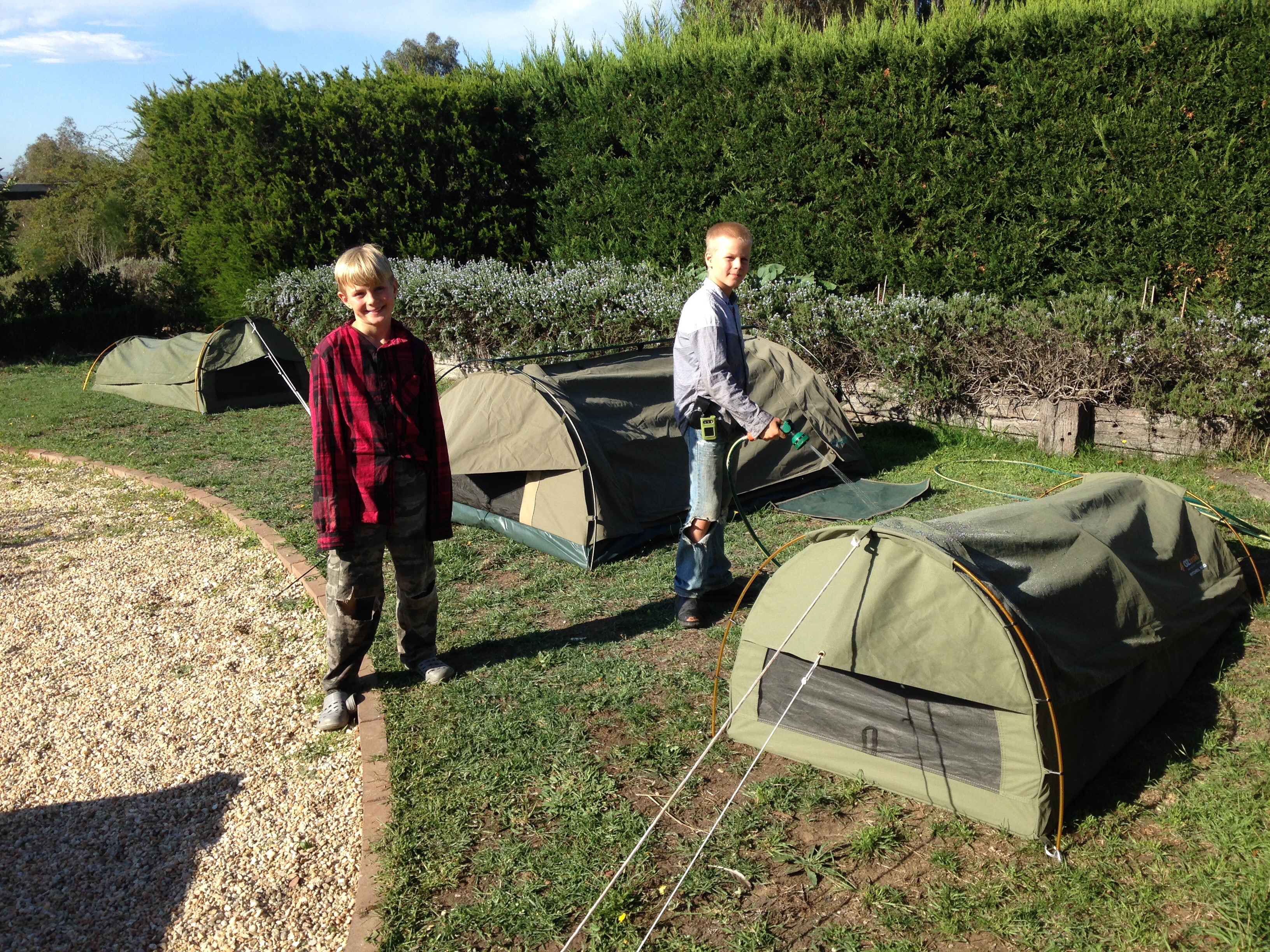
And now water restrictions are lifted, we can use the water for all sorts of important things, like seasoning new swags!

The second phase of our plan – the solar pump on the dam – has been relegated to the bottom of the priority list for the next few years.  The little Honda pump keeps working away without fault, and now I am only running it once or twice a month, my tolerance and patience with it is much less likely to wear out.  It also provides a good redundancy in case of bush fire.

Water water - Improving an irrigation or garden watering system

Old faithful gains a reprieve!

How to build Wicking Garden Beds – Part 1

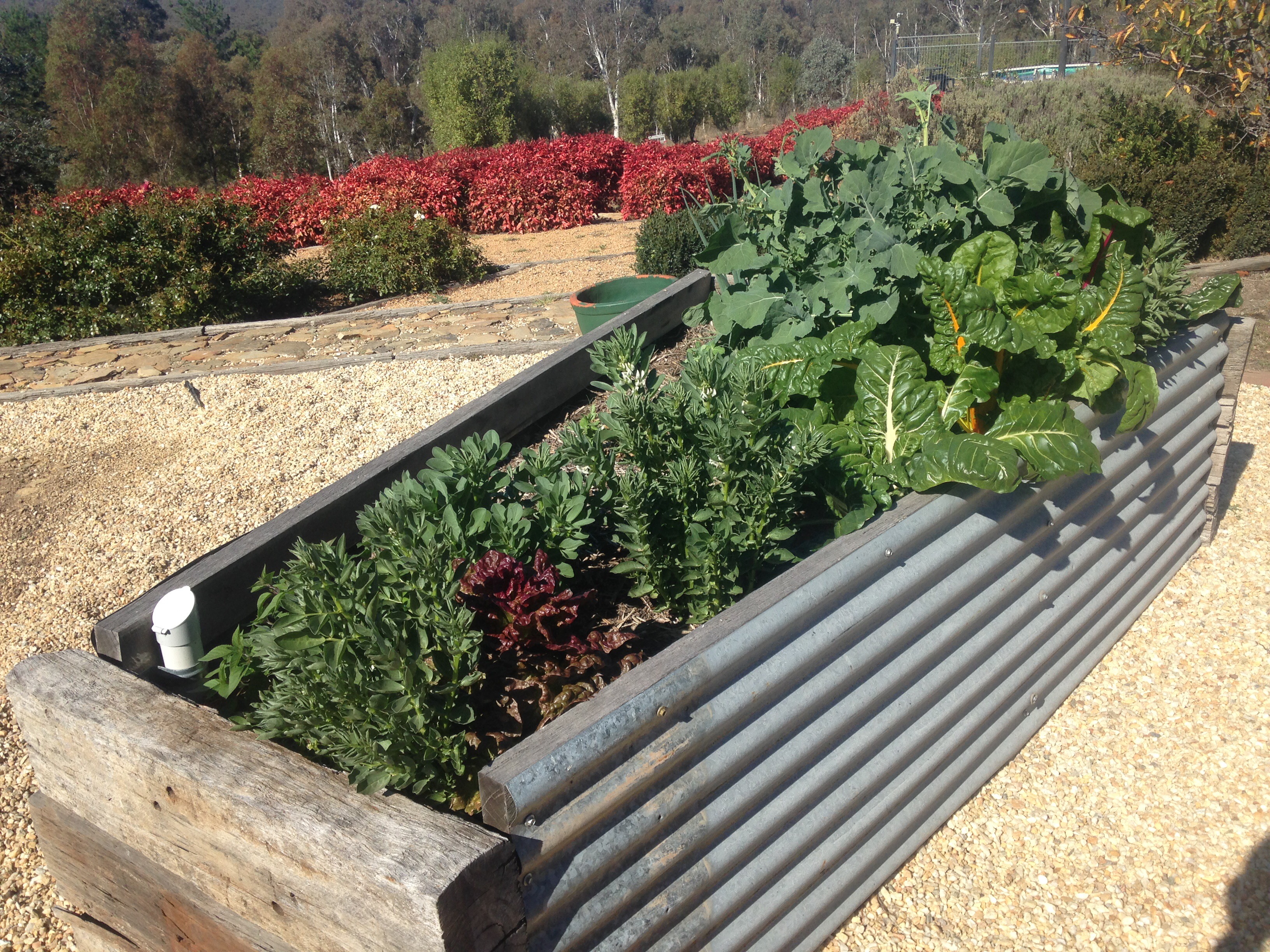
If you think lush green vegetables require too much water to produce  successful crop, or if water is a precious resource, then think again.  Wicking or self watering garden beds may provide the solution you require.  Even of the Rock Farm, we have been able to enjoy some fresh vegetables during a long hot summer by this simple principle.

How to build a wicking garden bed.

Lush green vegetables even in severe drought.

Wicking beds essentially provide water from below, meaning that they are particularly frugal with water consumption, especially during a long hot summer.  They also don’t cost a fortune to make – especially if your wife is a hoarder and you have plenty of old railway sleepers and corrugated iron lying about the place.

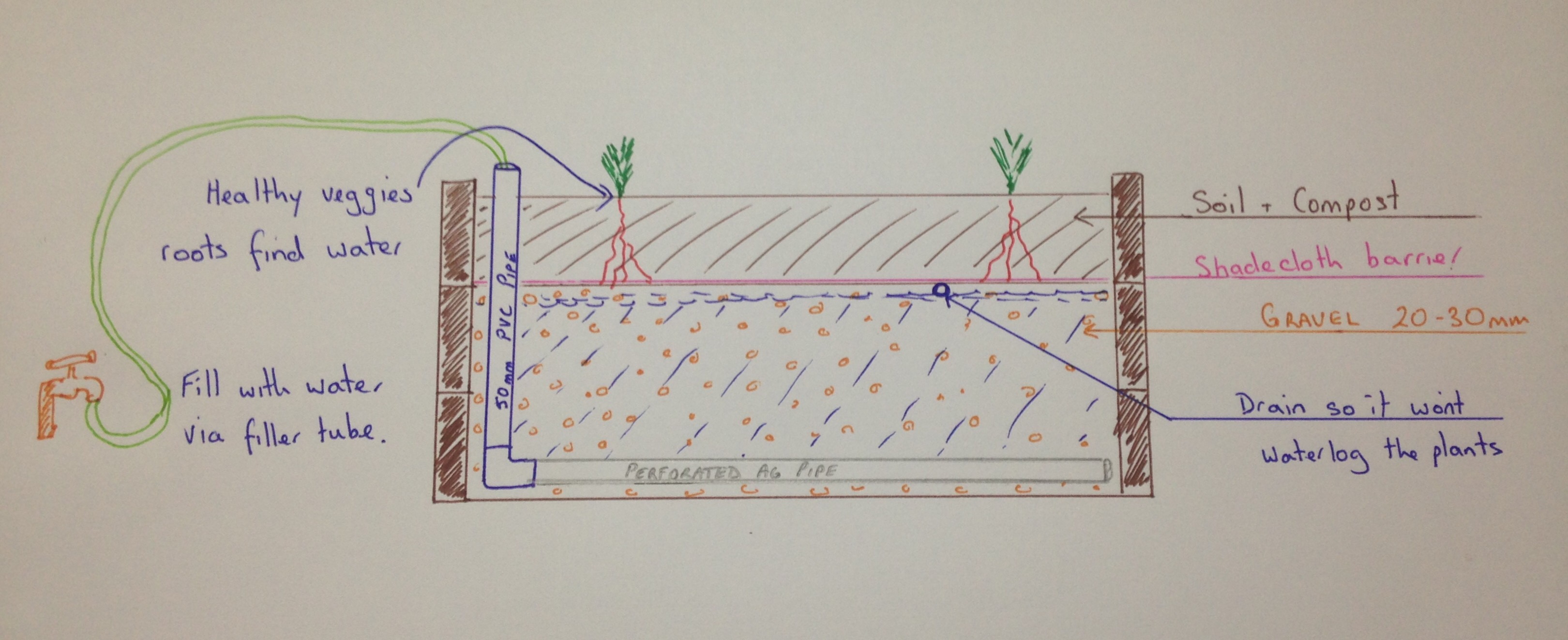
The basic concept is simple.  Water is held in a reservoir at the base.  Moisture is drawn up into the soil via capillary action or wicking.  The moisture is distributed more evenly through the soil, creating better growing conditions for plants.

How to build a wicking garden bed.

Basic design principles – wicking bed

The best part is that you can make these beds out of almost any material.  It is simple to modify the style and shape of these beds to suit your garden or materials at hand.

We chose to make our wicking beds in a wedge shape around a central fire pit.  This allowed us to recycle some original railway sleepers.  In this way, each wicking bed only used three sleepers.  The 2400mm sleepers were cut at the 16000/800mm mark to make the wedge shape.  The corrugated iron sheets were 2400mm long.

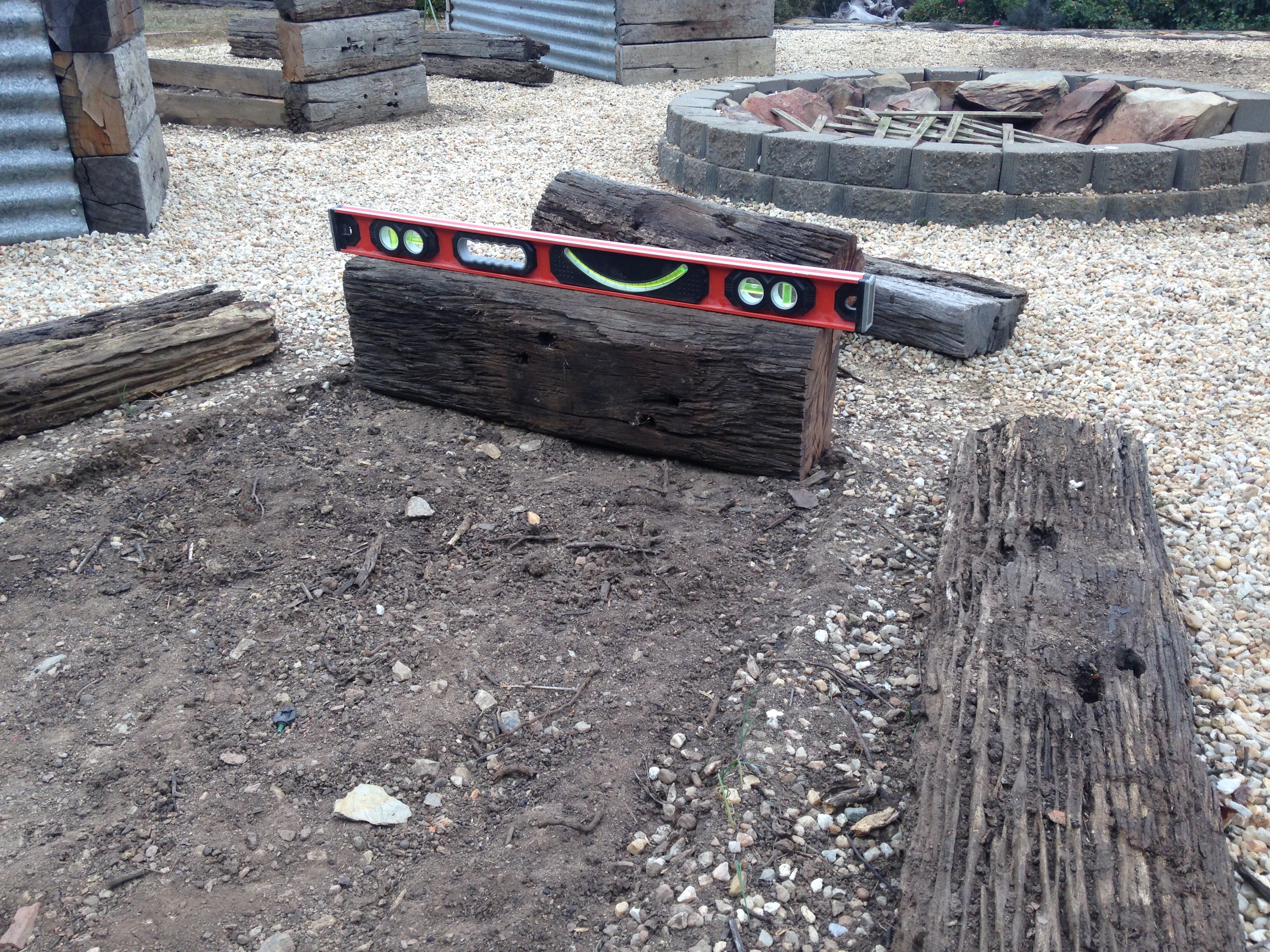
The first step was to clear the ground where the new beds will go and get everything nice and level.
How to build a wicking garden bed.

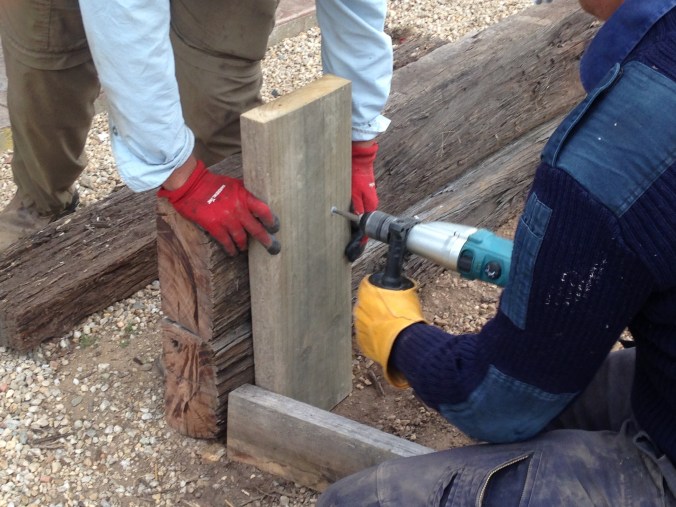
Once I was happy that the base was in the right spot, I placed the next sleeper on top, and secured it using a backing plate and bugle head screws.  This is extremely hard work on the electric drill.  Indeed it destroyed my first drill – so be careful with your drill.  Pre-drilling the holes only helps marginally.

img_8049

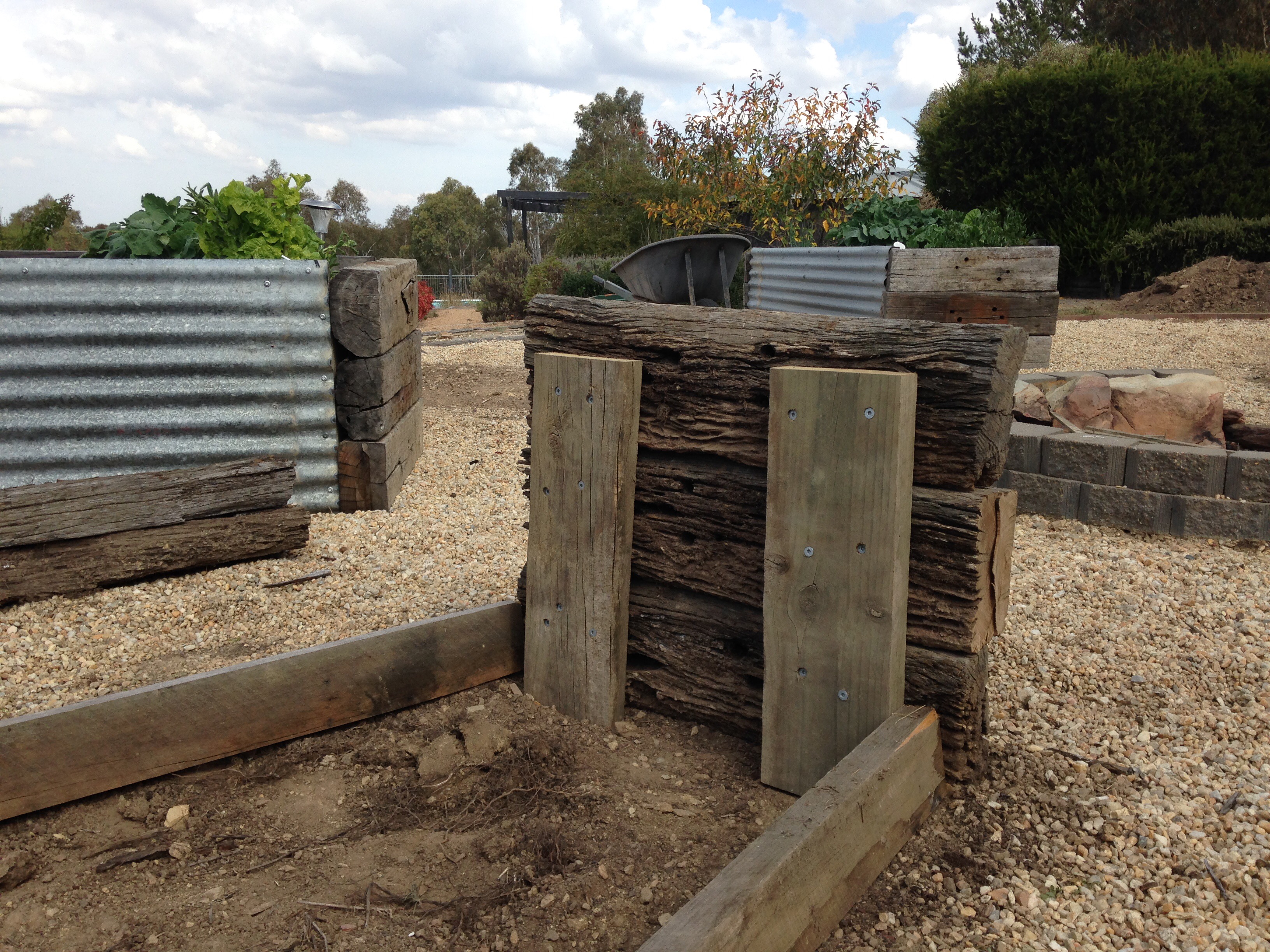
Our wicking beds were designed to be the height of three sleepers.  We anchored the sleepers to each other using the backing plate.  This will be hidden once the beds are constructed.

How to build a wicking garden bed.

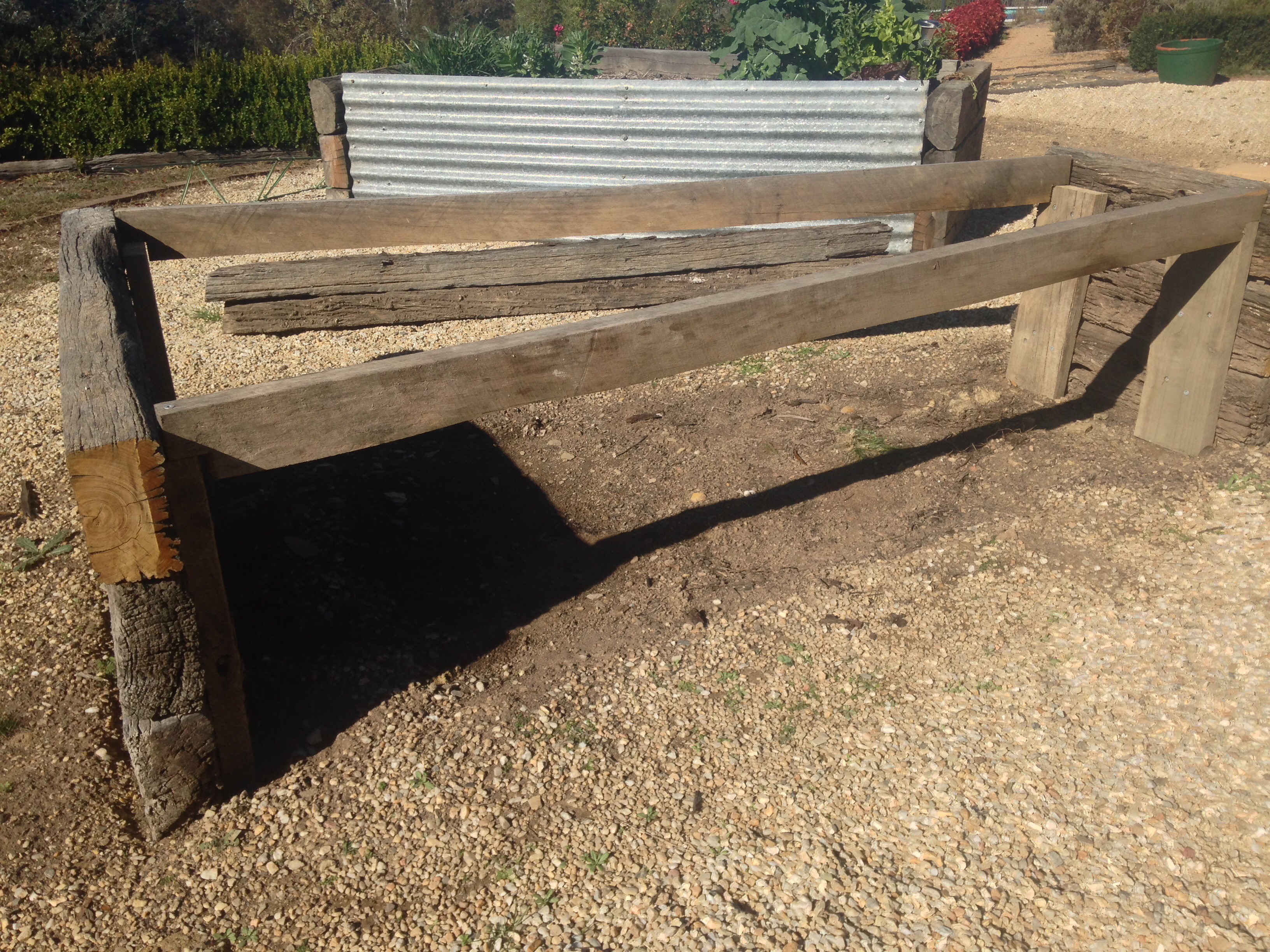
After I had built both ends, I fitted a hardwood brace or frame for the corrugated iron.  This brace was cut to the same length as the corrugated iron and will anchor the iron and provide an edge for the beds.  I had to take out a small corner in each end to allow the boards to sit level between the two end sections.

How to build a wicking garden bed.

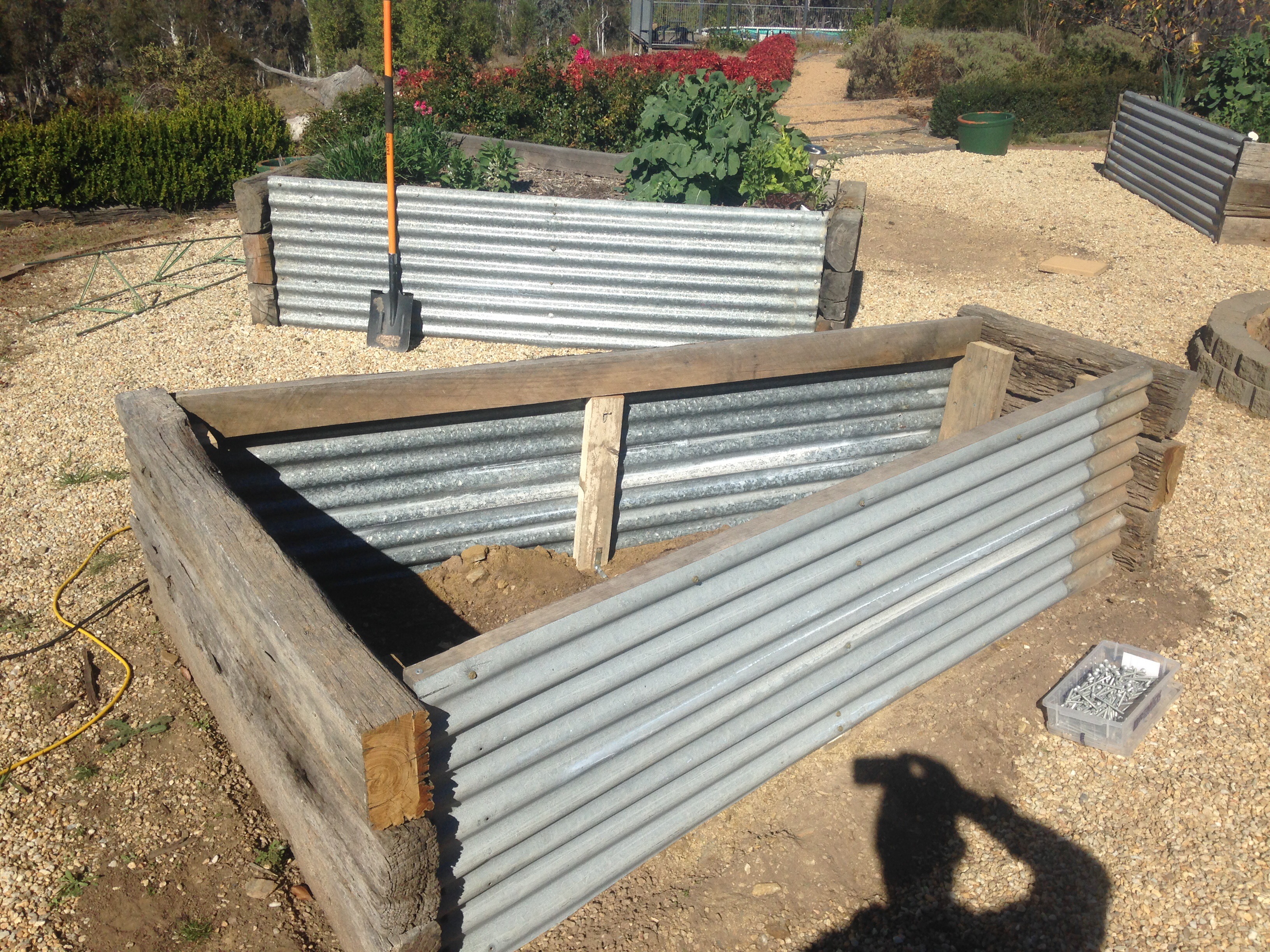
I then cut the corrugated iron to fit.  You can use tin snips for this, but an angle grinder makes short work of it.  The cut edge is placed on the ground and is buried slightly, and the original edge is placed along the timber frame.  I used regular roofing screws to hold the iron against the frame.

How to build a wicking garden bed.

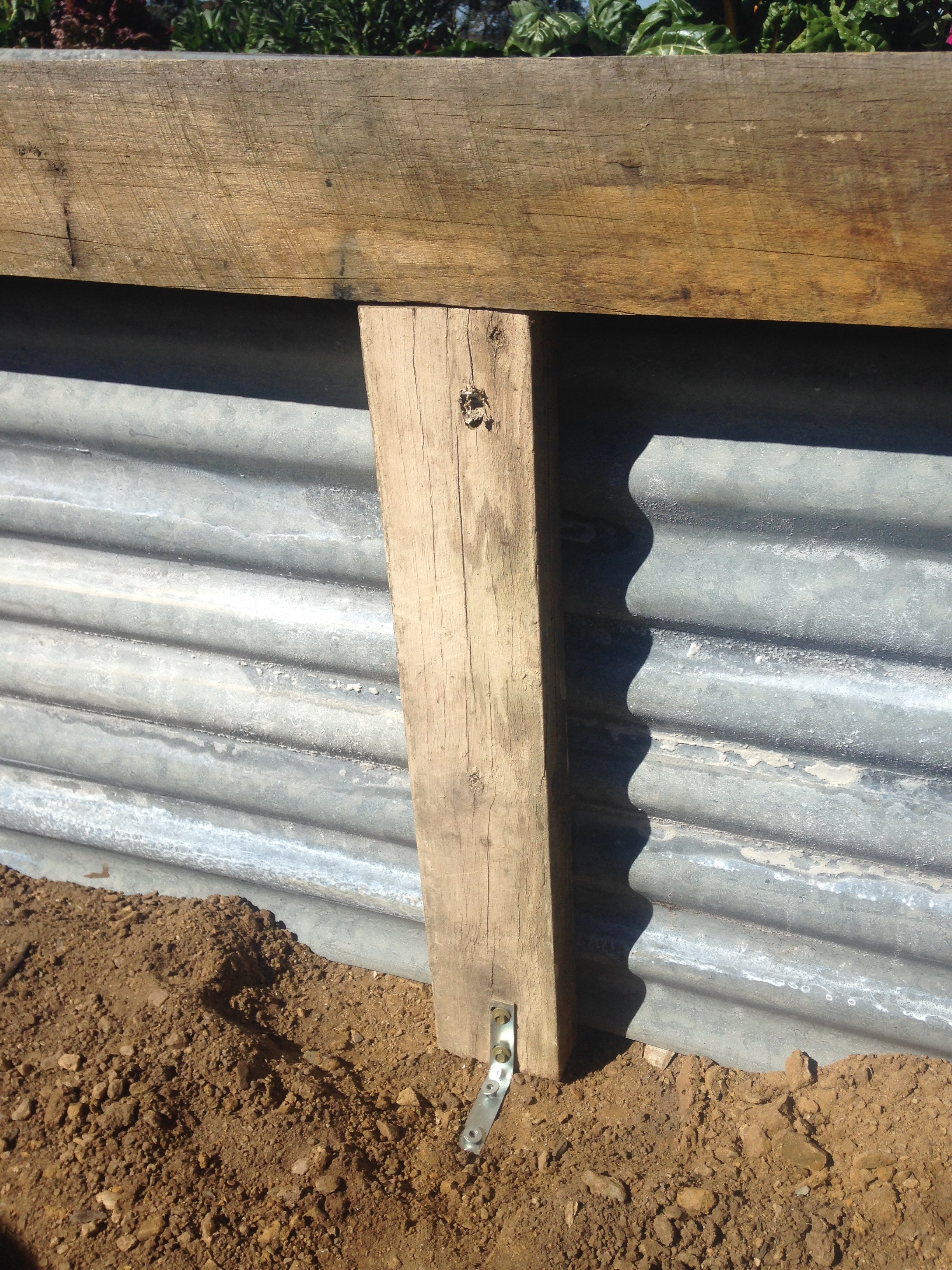
After I had fitted the corrugated iron, I placed a bracing piece in the centre of each sheet.  This provides an anchor for the sheets and helps prevent the beds from swelling or bulging once the beds are full of gravel and water.

How to build a wicking garden bed.

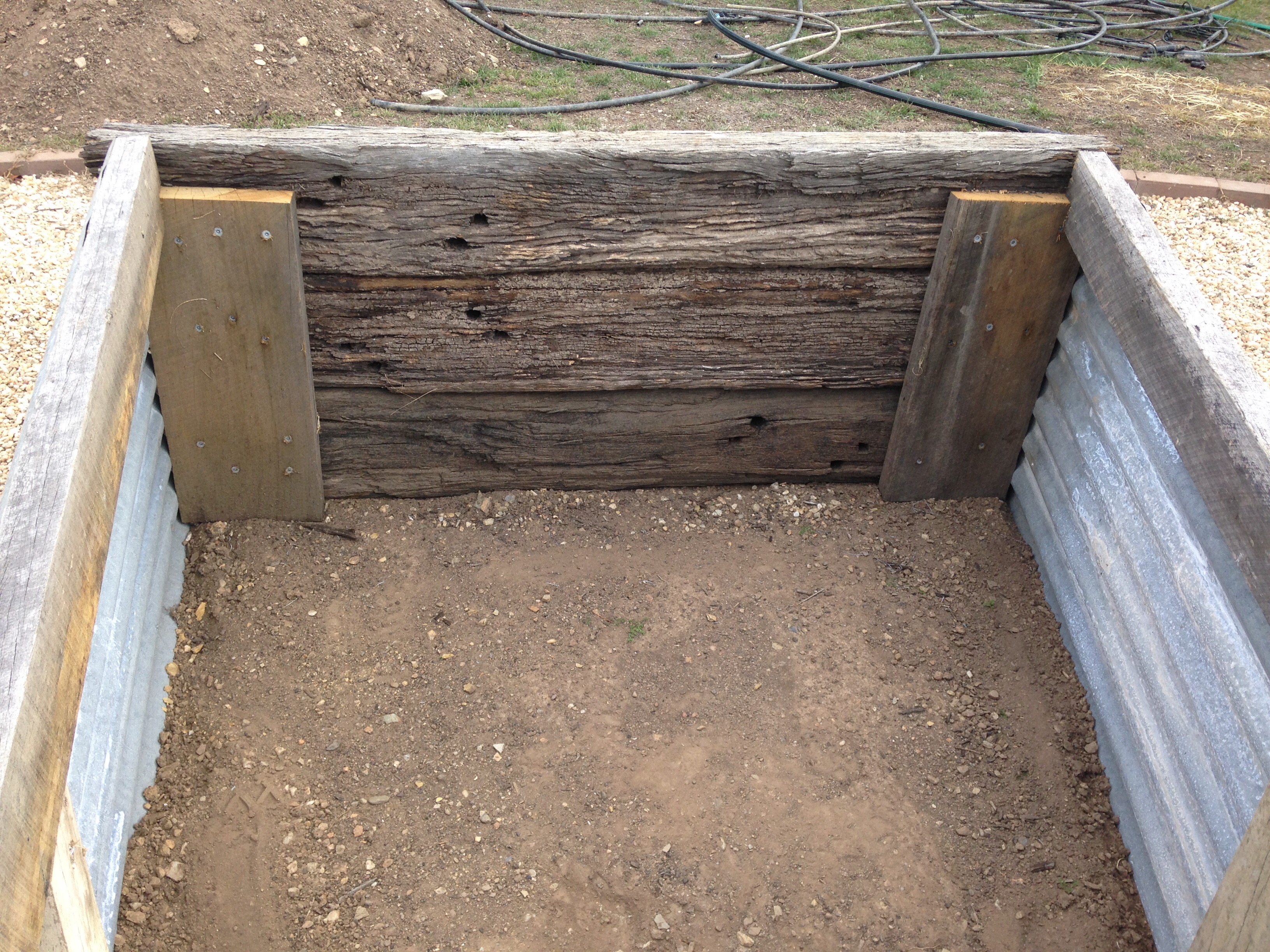
After I was happy that all was in its place, It was time to scrape back the dirt and smooth out the base of the beds.

How to build a wicking garden bed.

How to build a wicking garden bed.

The bulk of the construction is complete. Now to line and fill the beds

At this time the main construction of the beds is complete.  There is still a whole heap of work to go.

  • The beds need to be lined with old carpet underlay / cardboard to protect the builders plastic.
  • Then the beds need to be lined with builders plastic to make them watertight.
  • A filling tube needs to be inserted to allow the beds to be watered from ‘underneath’
  • Once the pipe-work is installed,the beds need to be filled with gravel to about 2/3rd depth
  • A drain or overflow pipe needs to be fitted at this mark
  • Shade cloth or weed mat is to be laid over the top of the gravel
  • Then soil and compost fills the remainder of the beds.

These steps will be covered in Part 2 of this series.

The beautiful thing with these garden beds is that you can build these with just about any material.  It takes a little imagination and work to bring your ideas to life.  If you have wicking beds, please feel free to share photos of them with me at hamalochonline@gmail.com and I will post them for others to see here.