Helping birds with nesting boxes

Whilst the Rock Farm is blessed with many hundreds of trees, only a handful of our trees are large old trees, with all important nesting hollows for our native birds.  Hollow logs and branches take literally hundreds of years to form – and are prized by native birds for nesting.  With our young areas of re-growth promising excellent habitat in the future,  we thought we would lend our birds a helping hand.

One way to assist native birds, even in an area with as many trees as ours, is to build nesting boxes.  They replicate the hollows that take so long to form.  There is a wealth of information online, with plans freely available.  There is also a significant amount of science involved too, with the size of the box, the entry diameter and other features critical for many species.
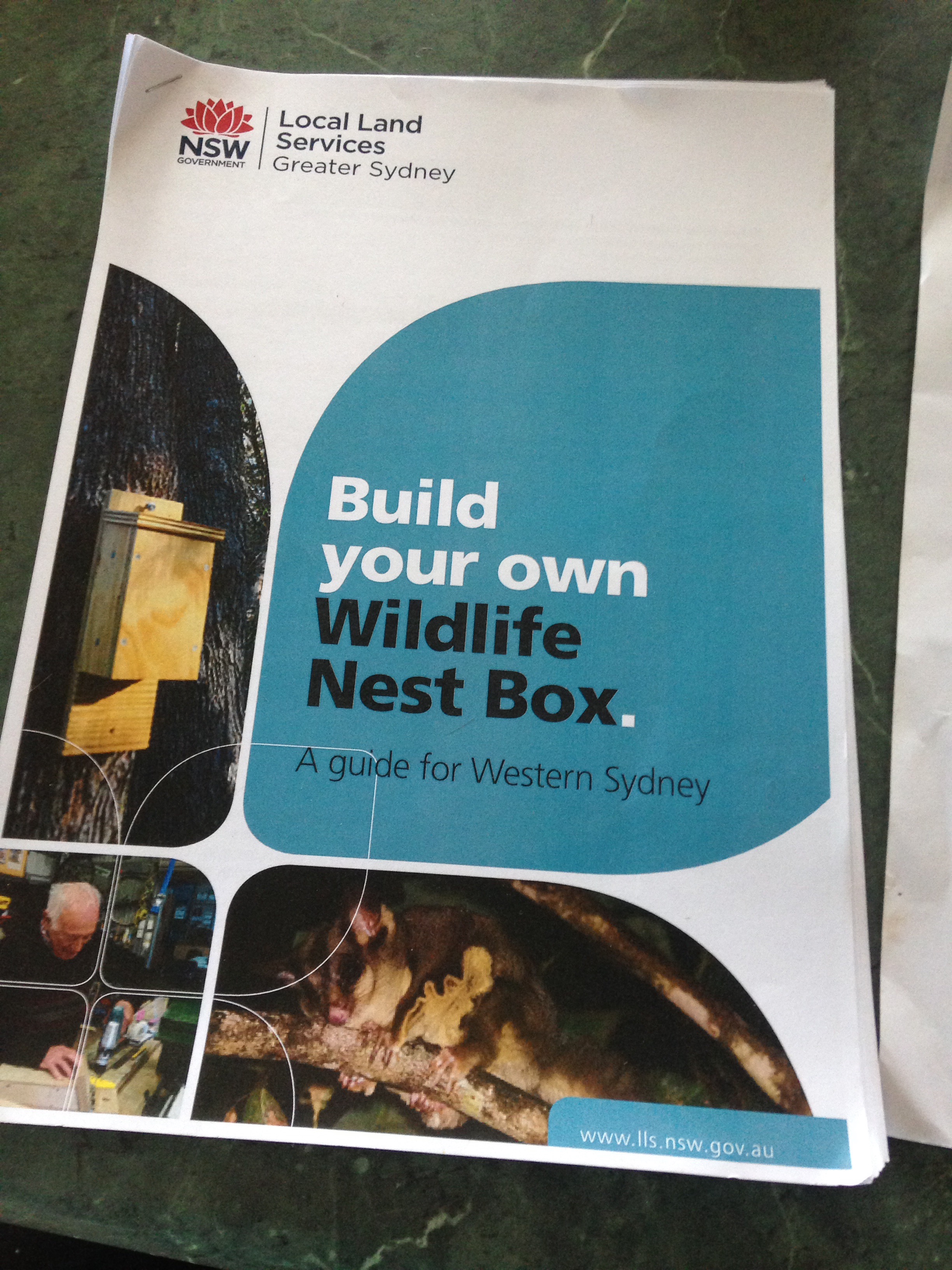
We armed with this excellent publication from the Local Land Services (available online here: http://greatersydney.lls.nsw.gov.au/__data/assets/pdf_file/0006/656610/GS-LLS-Wildlife-Nest-Box-2016_Final-Accessible.pdf).  With our heads full of plans and ideas it was time to get building.

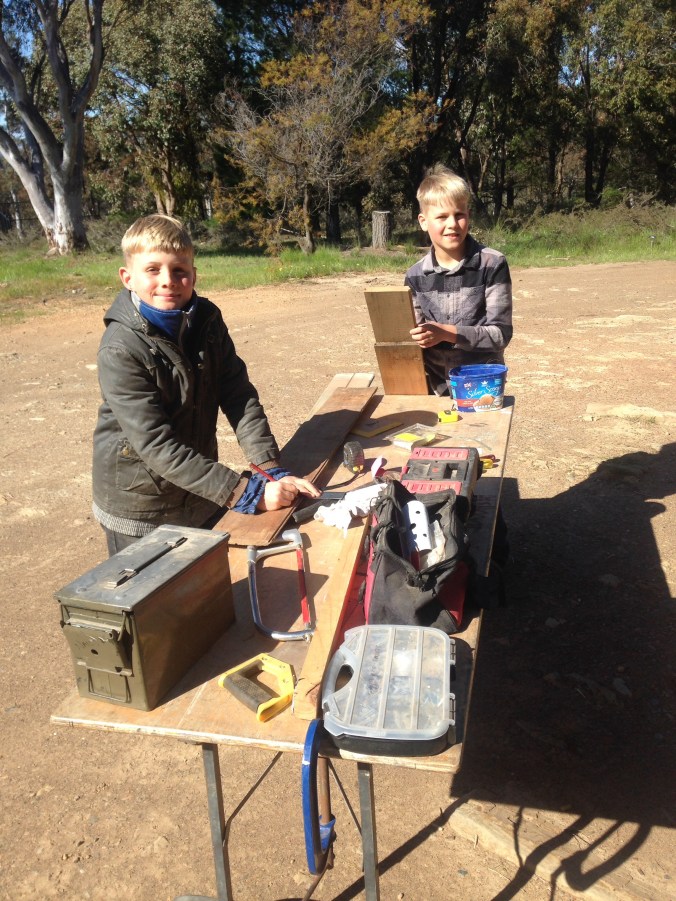
The boys had a look around the Rock Farm Resource Centre  – also known as Dad’s Shed, and we found some old flooring that was looking for a new purpose.
img_0019

This was to be the boy’s own project.  In the interests of expediency (I was looking forward to an afternoon nap) I might have cheated and run the timber through the bench saw to cut it, but I was working to their design.  The old adage of measure twice and cut once was in force… but soon there was so much pencil lines on the boards it was hard to tell which ones to cut!
img_0021

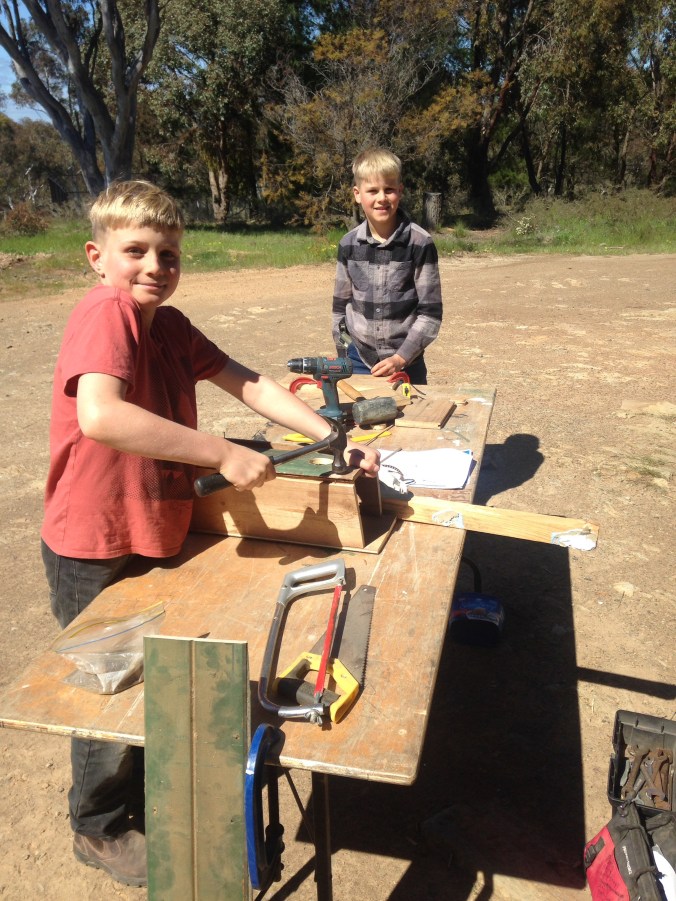
The boy’s initial thoughts were that this would be easy… but like all good plans, they soon realised that assembling the boxes would take a little effort.  I told them they couldn’t use glue – so it was hammer and nails only.  The Little Helper found his soft oregon boards were easy to work, but the Little Fisherman regretted his selection of thick hardwood boards.  He ended up pre-drilling his holes, and only broke one drill bit in the process.
img_0022

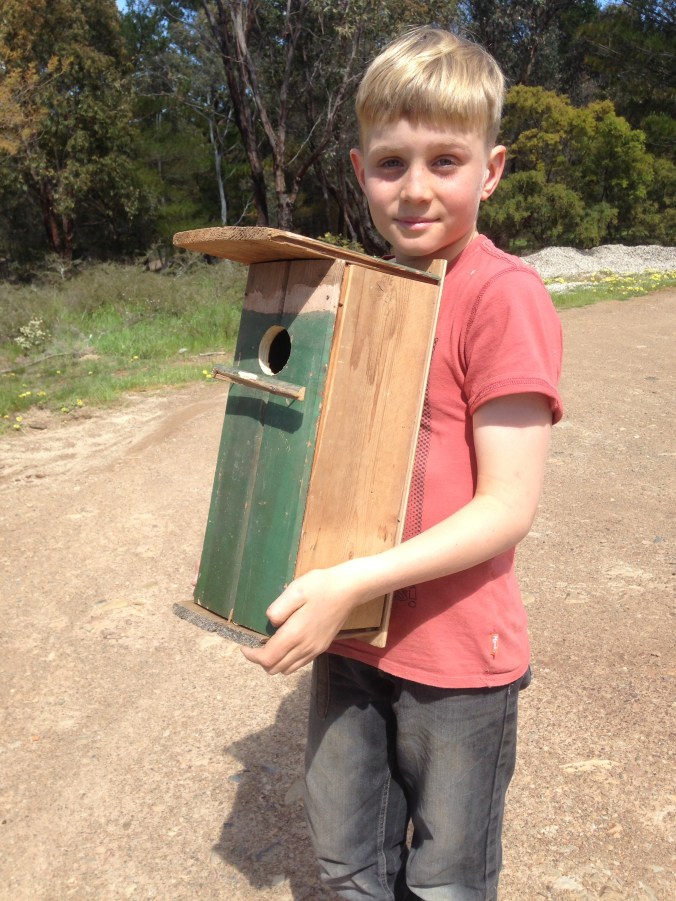
To their credit, I only was used to hold things together a couple of times.  The bench saw made small adjustments easy and before long we had a couple of neat little boxes ready to hang in the trees.
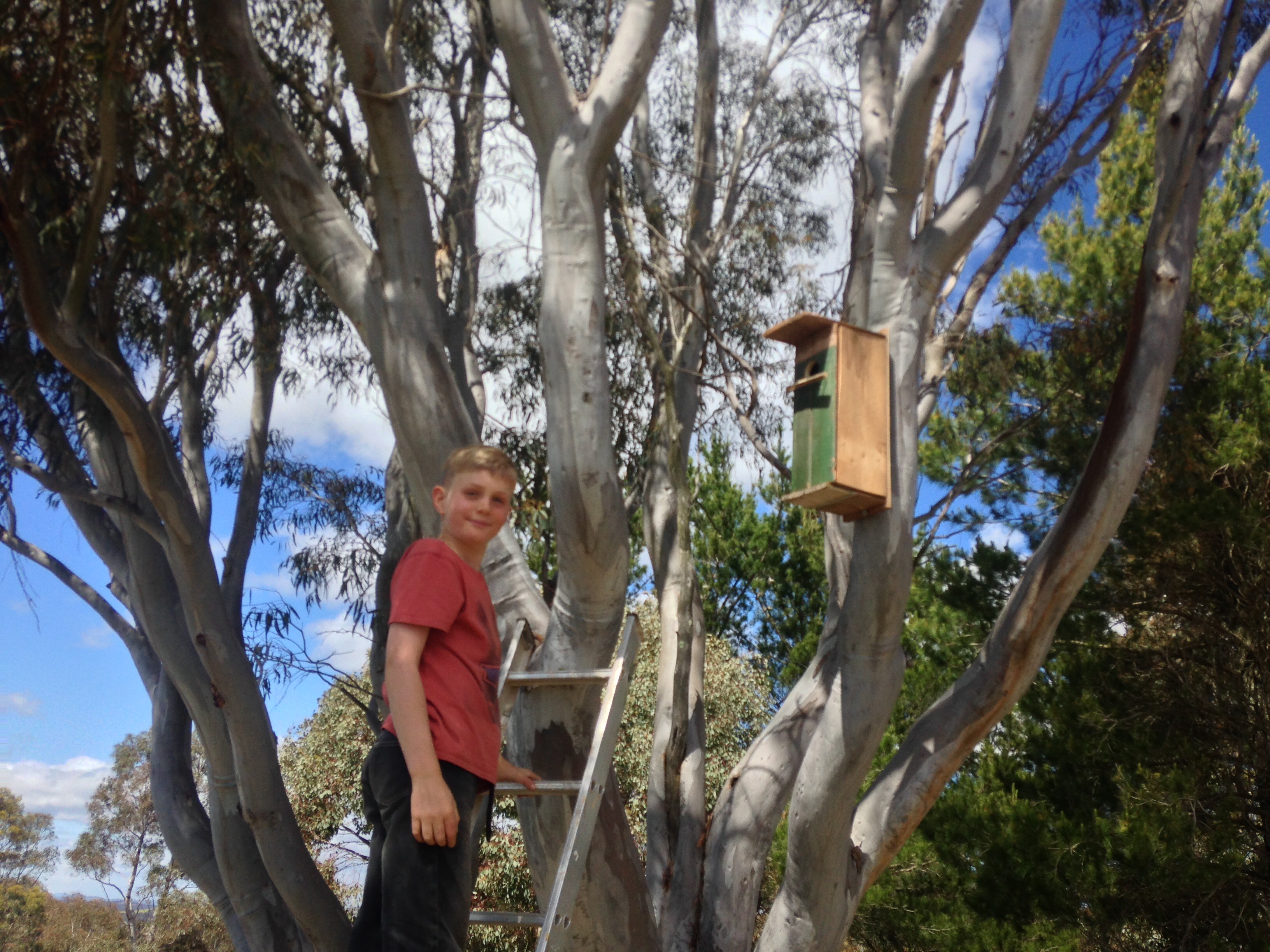
The best way to secure the boxes to the trees is via two bugle headed screws.  This causes far less damage to the tree than tying wire around the branch.  We mounted the boxes in a Scribbly Gum (Eucalyptus Haemastoma).  We are just now waiting for our first guests to move in!
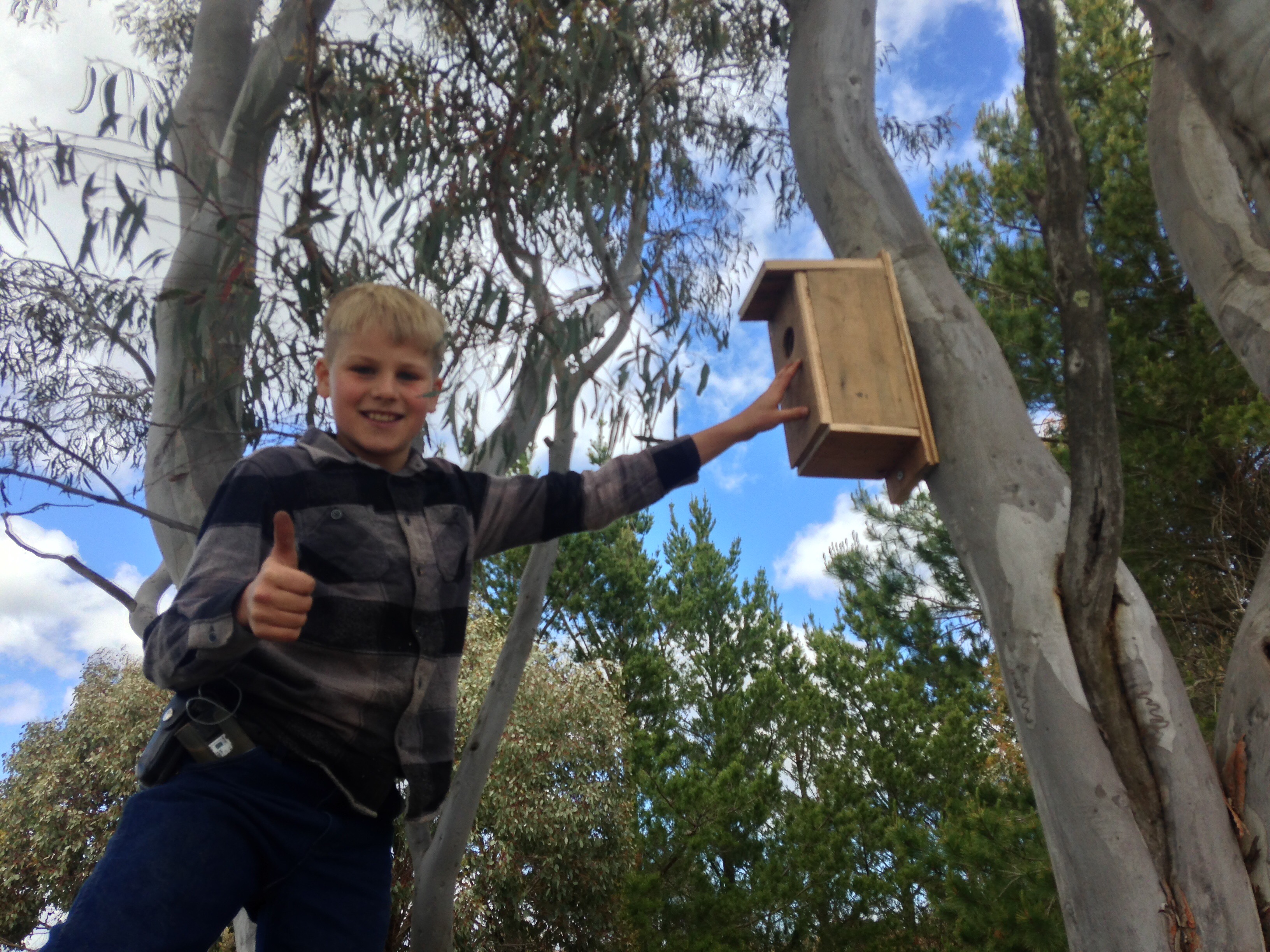
It was a wonderful way to spend a morning with my gorgeous boys.  They learnt a few new skills, and as a bonus, we get to help a few little birds get a head start.
Sustainable firewood harvesting – Cut it green!

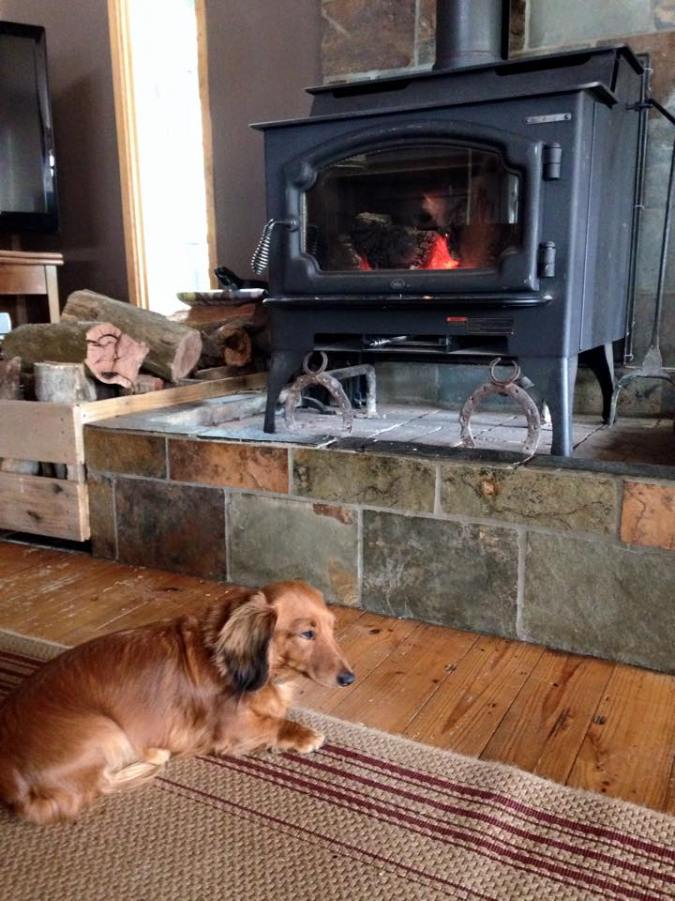
It is that time of year on the Rock Farm, when harvesting firewood becomes a high priority.  With our first frost on the ground, the dog has taken up residence in front of the slow combustion stove, and will only venture outside for calls of nature.  It is a beautiful time of year, but only if you can be snug and warm inside.

Our slow combustion stove is fired by firewood I try to harvest from the Rock Farm.  Our farm isn’t heavily wooded, but I want to ensure that I am able to sustainably harvest firewood into the future in a way.  And I do something a little different – where possible I try to harvest green wood!

There are many advantages to cutting green wood:

  • Green timber is far easier and quicker to cut that seasoned hard wood
  • Chainsaw maintenance and sharpening is reduced
  • Green branches are less likely to be hollowed and therefore homes for native animals
  • The green leafy parts can be used for paddock mulch
  • Larger logs can be left in the paddock to encourage insect activity
  • The smaller branches mean less splitting of logs later.

The main disadvantage of course is that you need to leave the timber for a year or two to season, and this means you need to plan ahead.

One paddock on the Rock Farm has many brittle gums (eucalyptus mannifera) and I have selected these as the primary target for my sustainable firewood harvesting.  This allows the Red Stringybark (eucalyptus macrorhyncha) and the red box (eucalyptus polyanthemos) to continue to regenerate.

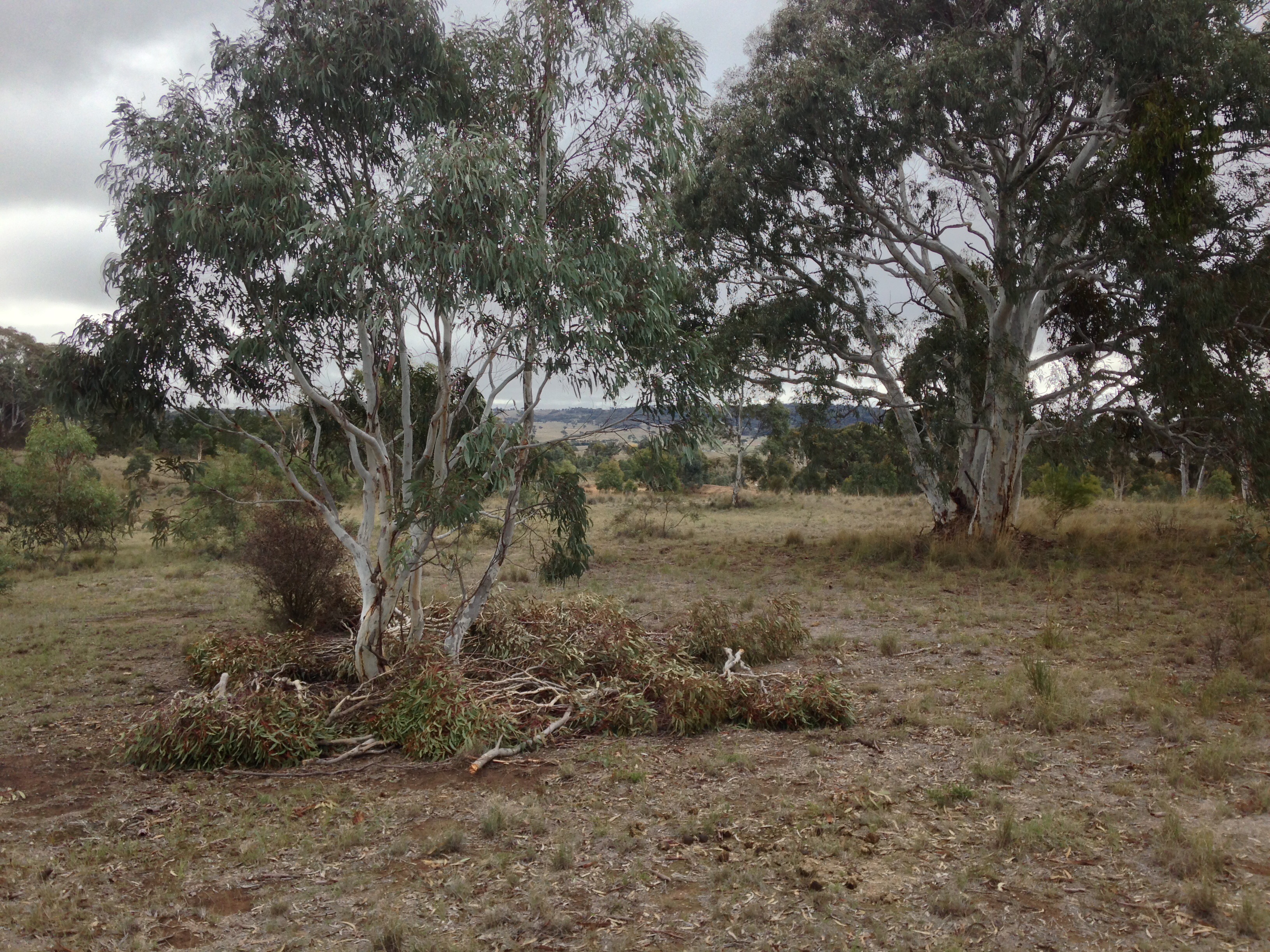
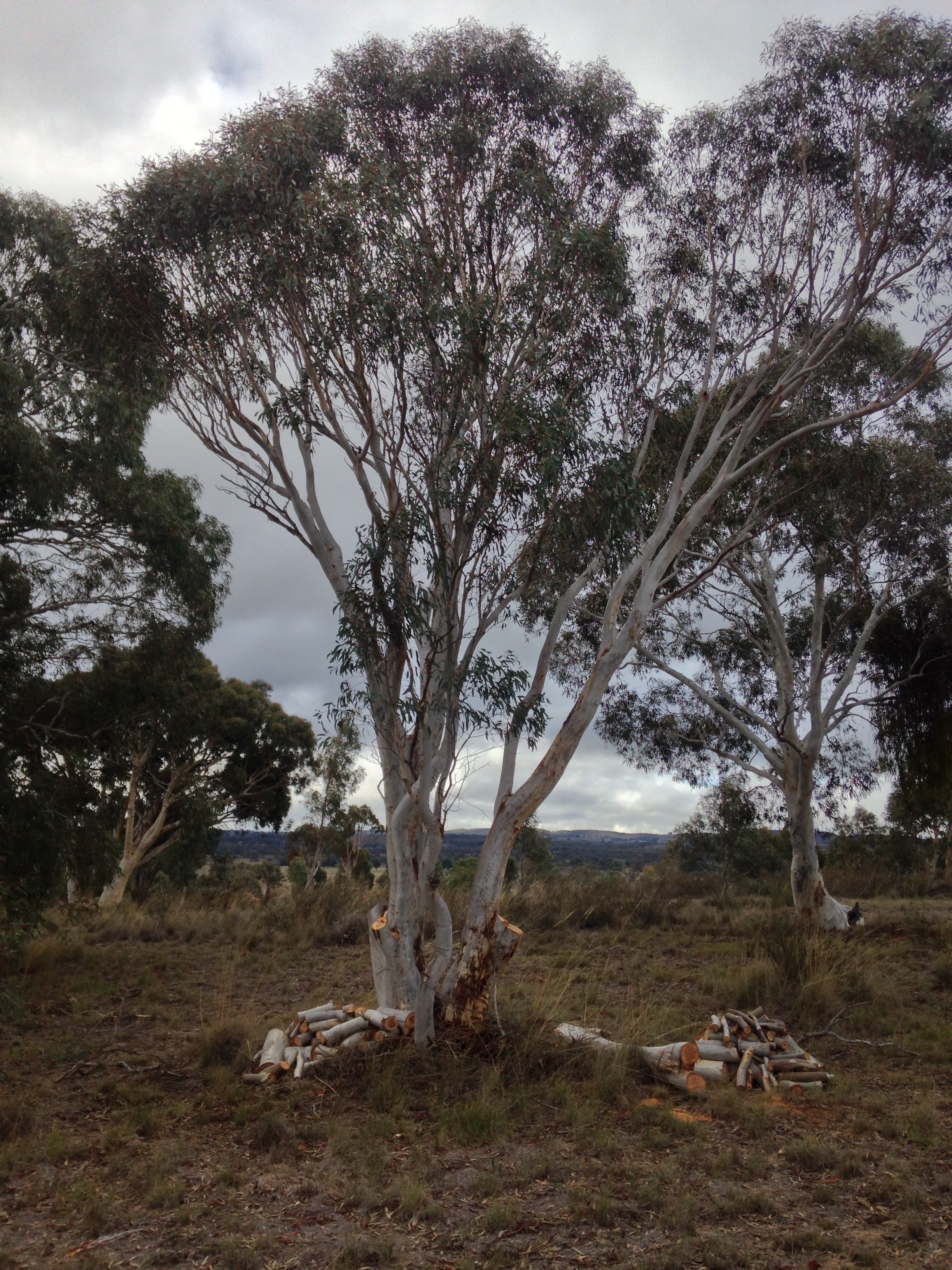
I select a tree with many branches originating from the stump.  After checking for birds nests, I select one or two of these for harvesting.  Being quite small, they are easy to handle and safer to cut than old standing timber.

This young tree will recover quickly from such a small trim.  I have left a log to encourage insect activity into the future

One of the key components of soil fertility is insect activity.  Around any old log you will find richer soil and a multitude of insects and worms of all types.  Unfortunately when most paddocks are cleared, all the logs are also removed.   Down the road at Mulligans Flat, scientes and rangers have added hundred of tonnes of ‘coarse woody debris’ or logs to the reserve to boost the biodiversity of the area. It is a fascinating topic worthy of much discussion, but you can read about the science behind it here: http://www.mfgowoodlandexperiment.org.au/aboutMFGO.html

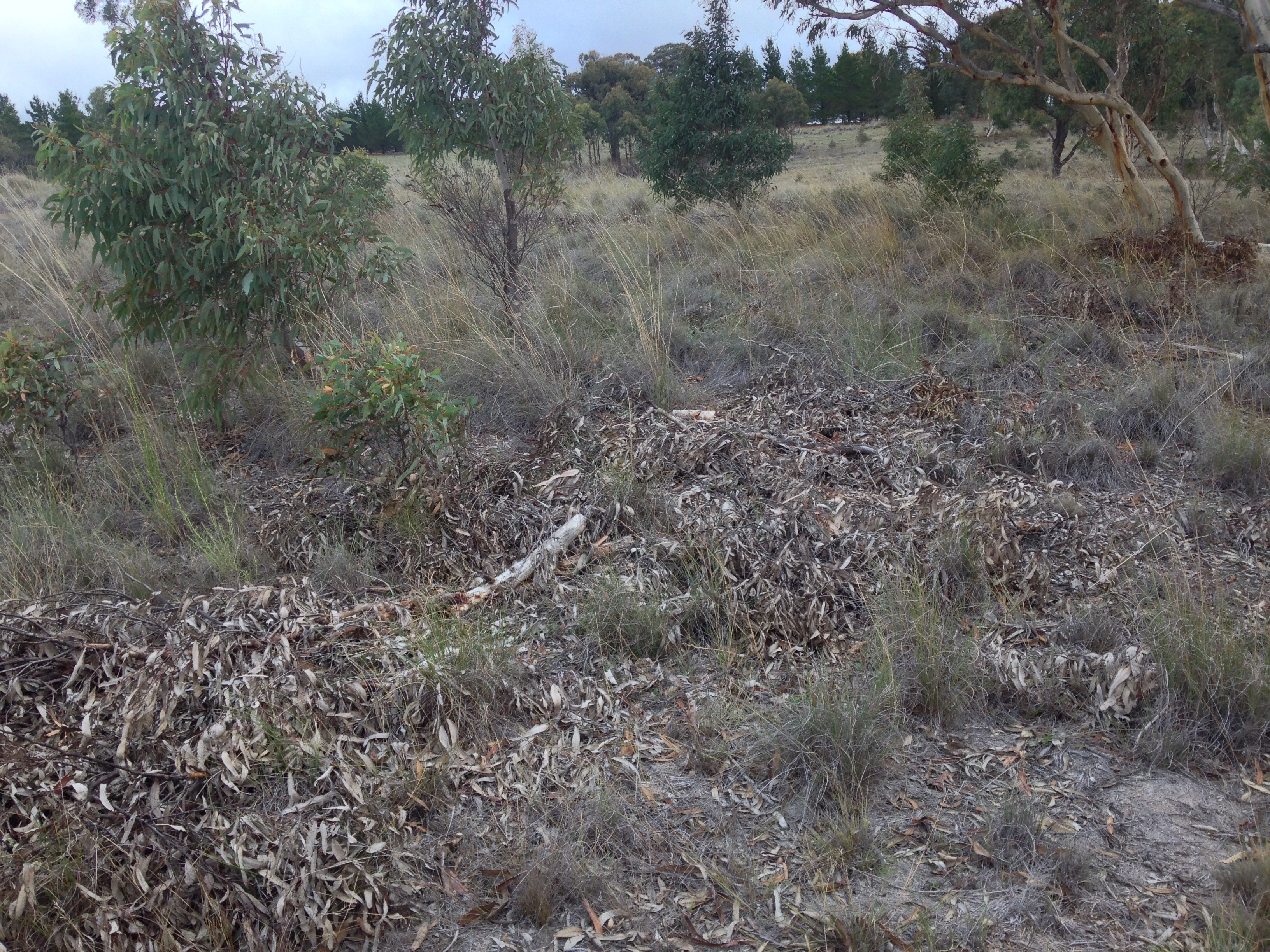
The small branches are leaves are used to cover bare earth and boost young trees – native mulch

I also use the small branches to cover bare soil or areas in need of some protection.  This is a technique we have been using on all our bare patches of soil with great success.  Garden clippings, basically any organic matter is placed over bare soil, encouraging plant growth.

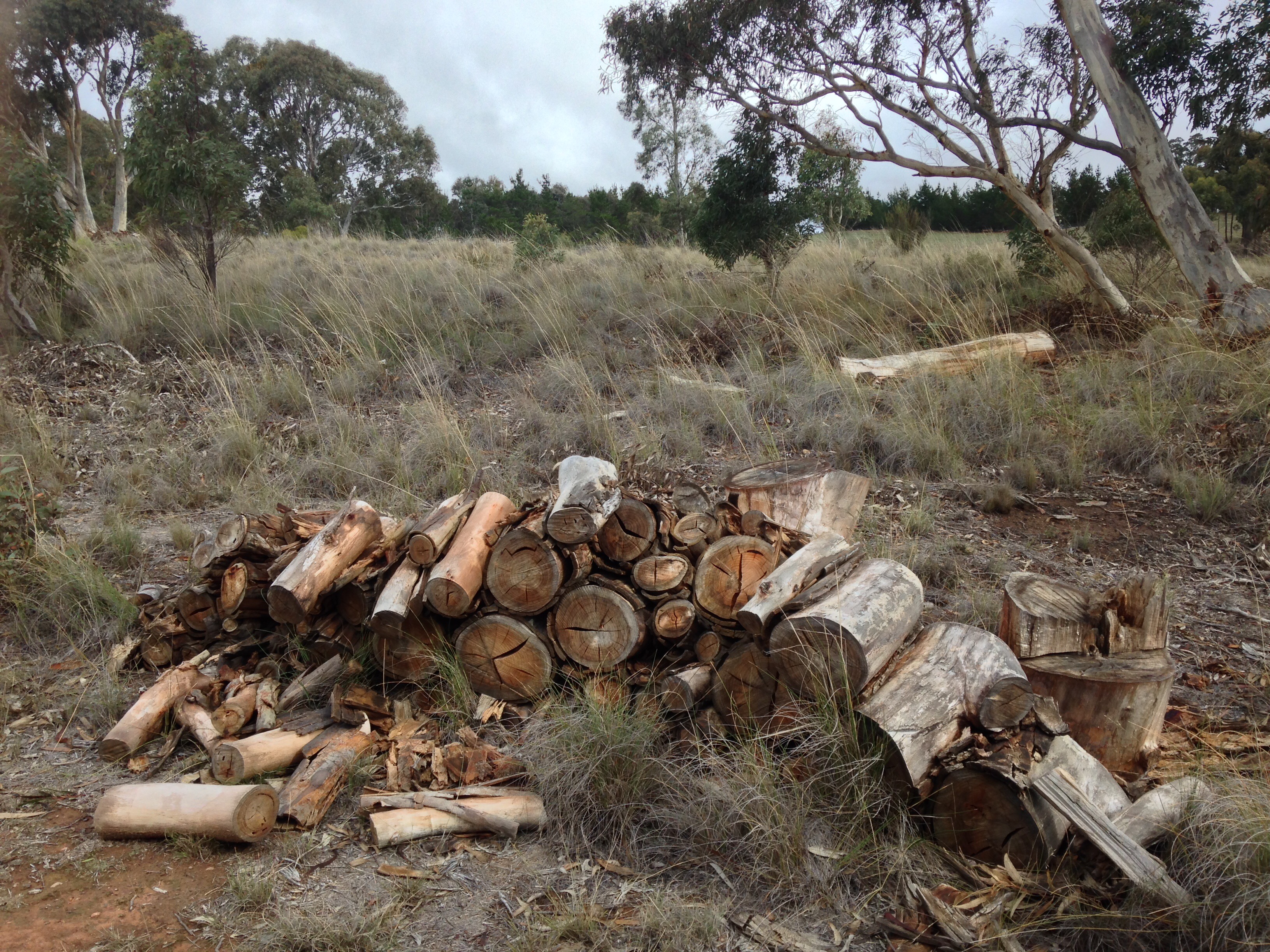
This wood has seasoned for just over 12 months. In the background you can see the large log that will be left for the beetles and insects

The smaller pieces dry out quickly meaning they are able to be burnt after 12 months, however I find a minimum of two years is ideal.

12 months on – the leaves are breaking down slowly… and the young trees are growing strongly

And does it work?  Yes it does, but it does require a fair commitment to build a big enough reserve of timber far enough in advance to see you through winter.  We don’t always cut green timber – I did fell a large red-box stag this autumn.  Its stump is surrounded by young red box trees which are far to small to harvest in this manner, but it is an encouraging sign for the future.

Of course the one who gets most benefit of the slow combustion fireplace doesn’t care where the wood comes from… as long as it works!

Apparently it is cold outside

Apparently it is cold outside