Book Review – My Father and Other Animals by Sam Vincent

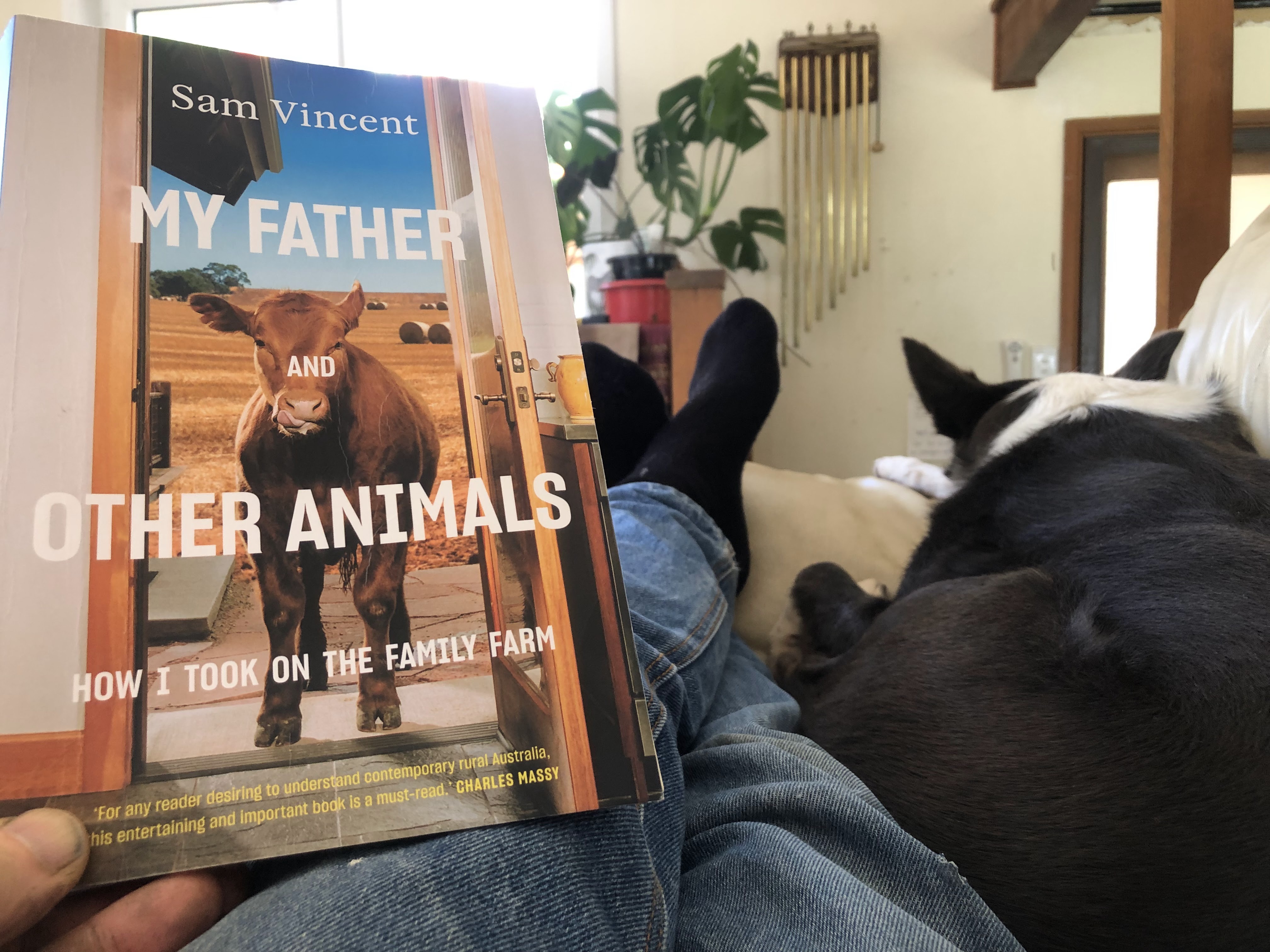
Over the summer, I had the great pleasure of reading Sam Vincent’s heart-warming memoir, My Father and Other Animals: How I took on the Family Farm. Sam, a twenty something millennial returned to the family farm to help his father who was becoming increasingly accident prone. Part apprenticeship, part journey, part discovery, Sam’s account of his time learning the rhythm of the farm is touching, hilarious and brutally honest. Of course I wasn’t the only one who enjoyed taking some time out of the heat of the day to turn some pages before nodding off!

Sam Vincent
MY FATHER
AND
OTHER ANIMALS
HOW I TOOK ON THE FAMILY FARM
For any reader desiring to understand contemporary rural Australia, his entertaining and important book is a must-read. CHARLES MASSY

Sam might have grown up on the farm Gollion, and his memories as a child recall a magical place with dams to swim in, trees to climb and gullies to explore. Returning as an adult, it is an entirely different proposition. Sam shares his apprenticeship building fences, managing livestock and growing fruit through the eyes of a total newbie. Sam relates how we gains a deeper connection to not only the farm but also his father,

Sam’s journey is far more than a book about his relationship with his father. Sam shares many of the challenges facing contemporary farming in Australia, especially the responsibility that a custodian bears. He shares some of his philosophies gleaned form his holistic management courses developed by Allan Savory, lessons from Peter Andrew’s Natural Sequence Farming and some of the ethical and moral issues facing small farmers like us in finding markets for respectfully grown and cared for livestock in a mechanised feedlot based industry. Many of these stories are shared through humourous anecdotes with his father as the unwitting star,.

Through our local Regenerative Land Managers Network and nearby Landcare group, not only did I have the opportunity to meet Sam, but also get a tour of his beautiful property Gollion late last year. Gollion is kind-of-famous in a way regenerative agriculturalists will understand. Charles Massey visited Gollion in 2016 after receiving an invitation from Sam’s father to address their local Landcare Group. Touring Gollion, Massey was impressed with a gully filled with rock that had formed a leaky weir. In the reeds growing in the pool of now-permanent water, Massey heard the call of a Reed Warbler bird, not seen (or heard) in the area for 130 years. Inspired, Massey concluded that the reed warbler could only be a talisman of a watercourse and landscape function on the path to regeneration – and named his seminal work “Call of the Reed Warbler” after this experience. I reviewed Massey’s amazing work last year: https://rockfarming.com/2021/05/05/book-review-call-of-the-reed-warbler-by-charles-massey/.

I connected with Sam’s book on so many levels. I felt many parallels with Sam’s experience growing up on Gollion as I felt growing up on Saltersgate, a small farm owned by my parents. Sam articulates many of the feelings I felt about the farm, however he is able to share them with a gentle humour that I cannot hope to posses. My father with his cattle and sheep, and my mother with her horses were inadvertently the main influence on my journey that led me to the Rock Farm after a career forged at sea. Sam’s is a beautiful story, and I loved every page.

My Father and Other Animals has helped me reconsider how I encourage my boy’s to interact with the Rock Farm. Sam reminds me that the Rock Farm is not their dream, it is mine. Secretly I am happy my boys have already lived some of Sam’s apprenticeship. They have helped me build fences, mark lambs and calves and repair cantankerous farm machinery. But I am also glad that they have also made their own happy memories on the farm, exploring gullies, swimming in the dam, testing their courage on motorbikes and cuddling horses or cattle.

I cannot recommend My Father and Other Animals enough for anyone interested in pursuing a tree-change, or adopting regenerative practices. It is a book for anyone who cares about the future of Agriculture in the world. It is also a book about families and the special relationship between a father and his son.

Flood Repairs, a new fellow and a different kind of holiday on the Rock Farm

I cannot believe three months has passed since my last update. So much has happened that it is hard to know where to start, but a few key themes spring to mind as I reflect on what we have achieved.

  • We repaired flood affected fences and driveway,
  • We built new tree-guards to protect new tree plantings,
  • A bull came to visit the girls and then went back home,
  • We managed a family holiday in a totally different environment,
  • I learnt far more about diesel engines than I ever thought I would,
  • Our local informal regenerative land managers group continued to meet and also took steps to formalise our organisation, and
  • Our calves continue to grow, however not without some heartbreaking news.

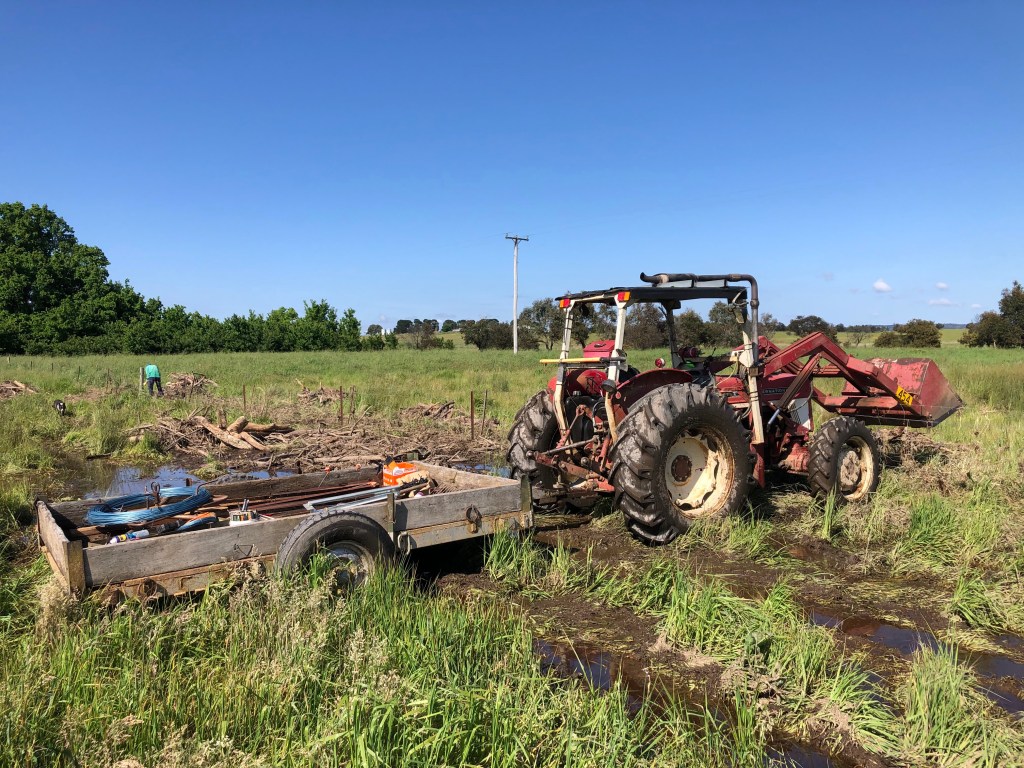
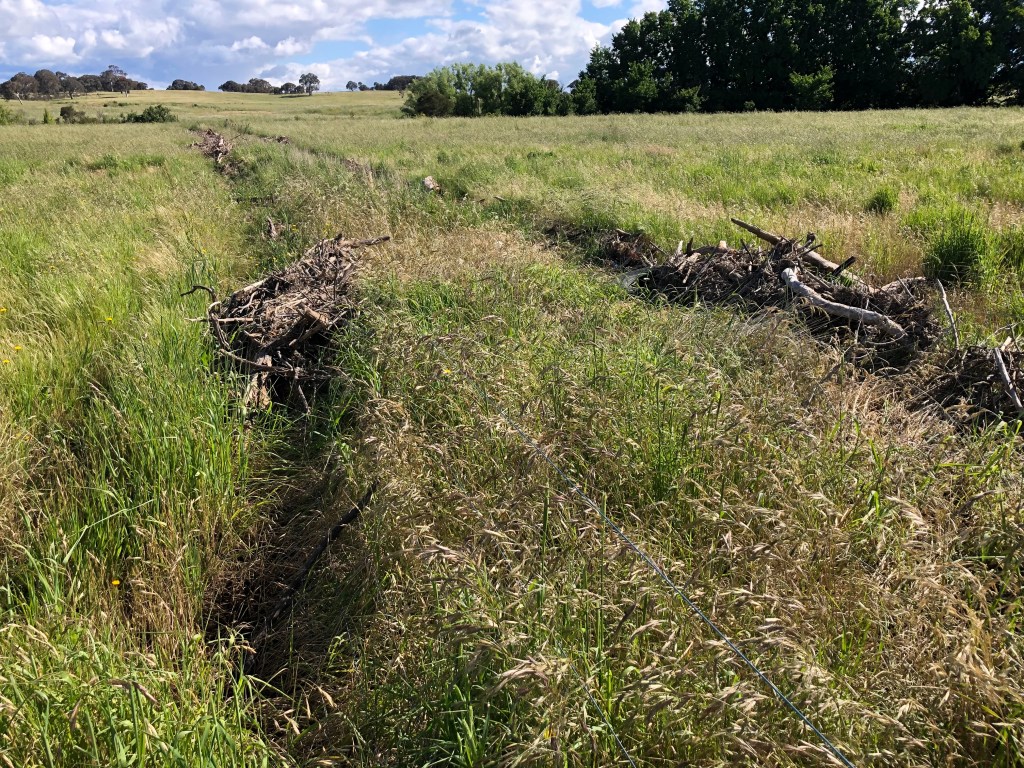
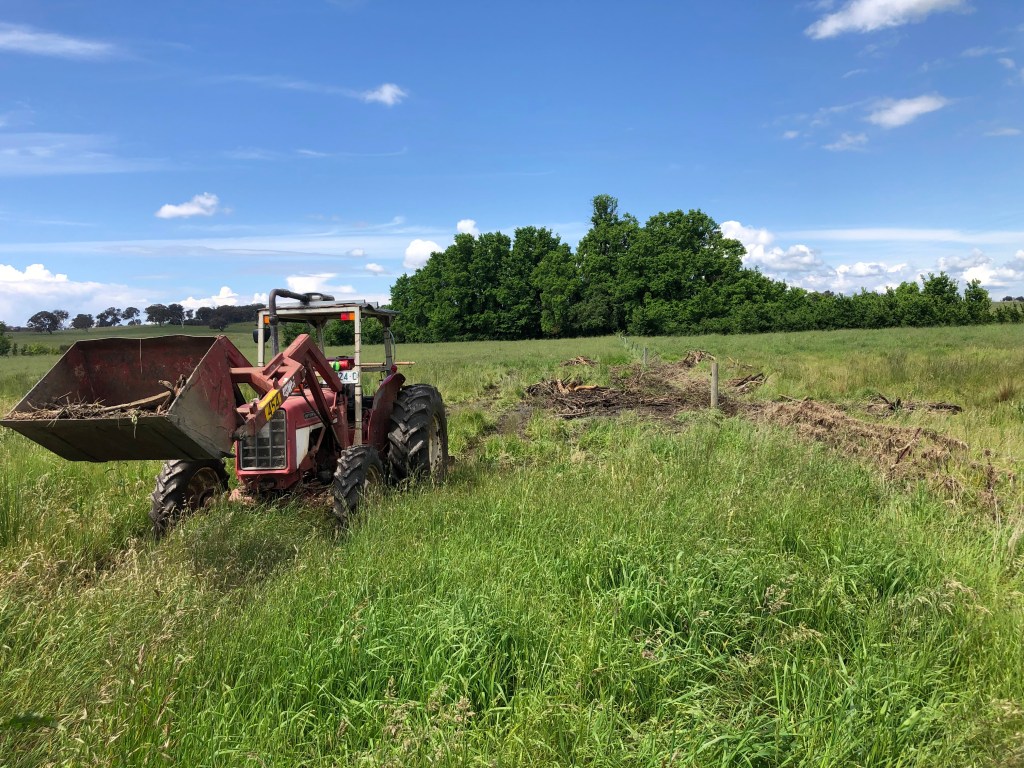
Our floods last October were spectacular – and created several weeks of work for me, clearing debris off fences, then repairing or replacing sections. My priority was to ensure our boundary fence was rebuilt – but Jo sagely asked me how many times I would rebuild it before accepting that our “flats” were actually a flood plain. After making some glib comment that it was the first flood of its kind in over 50 years (the age of the fences), her raised eyebrow caused me to pause. Any husband is wise to listen to his wife – especially when that wife is a Meteorologist and well versed in the matters of rainfall. I elected to focus my attention on repairing the boundary fence to pre-flood strength (critical). Other sections I took Jo’s advice and chose to use temporary electric fencing to keep stock in, using a portable energiser as required. This way if the creek floods again, losses to infrastructure will be minimised.

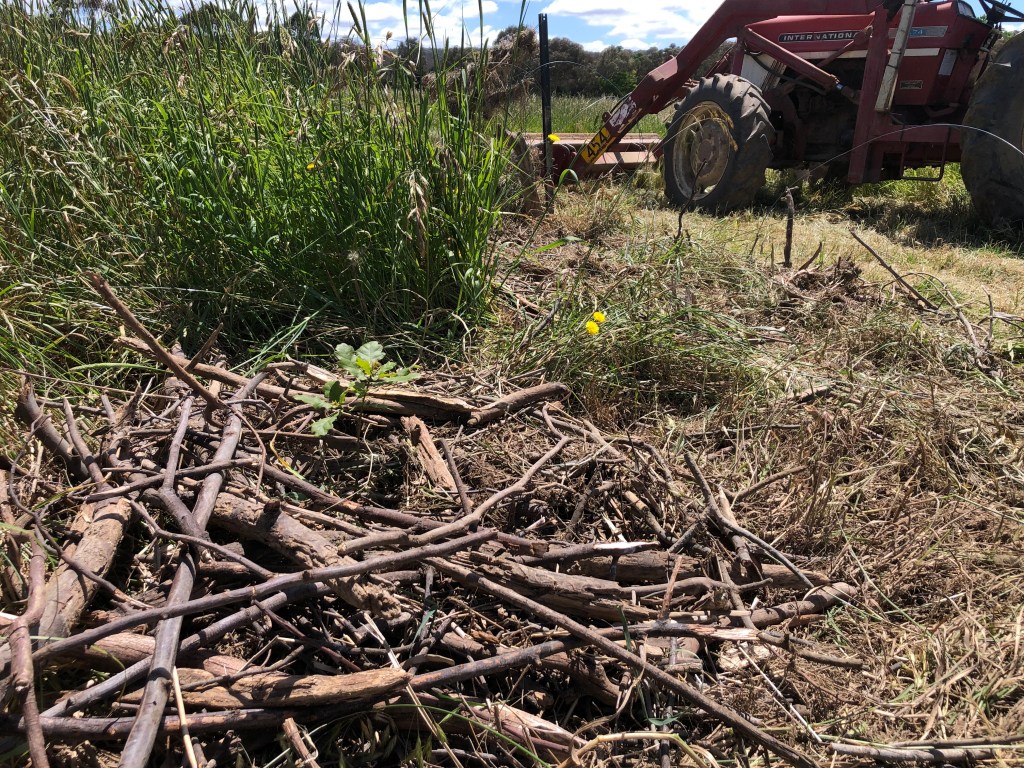
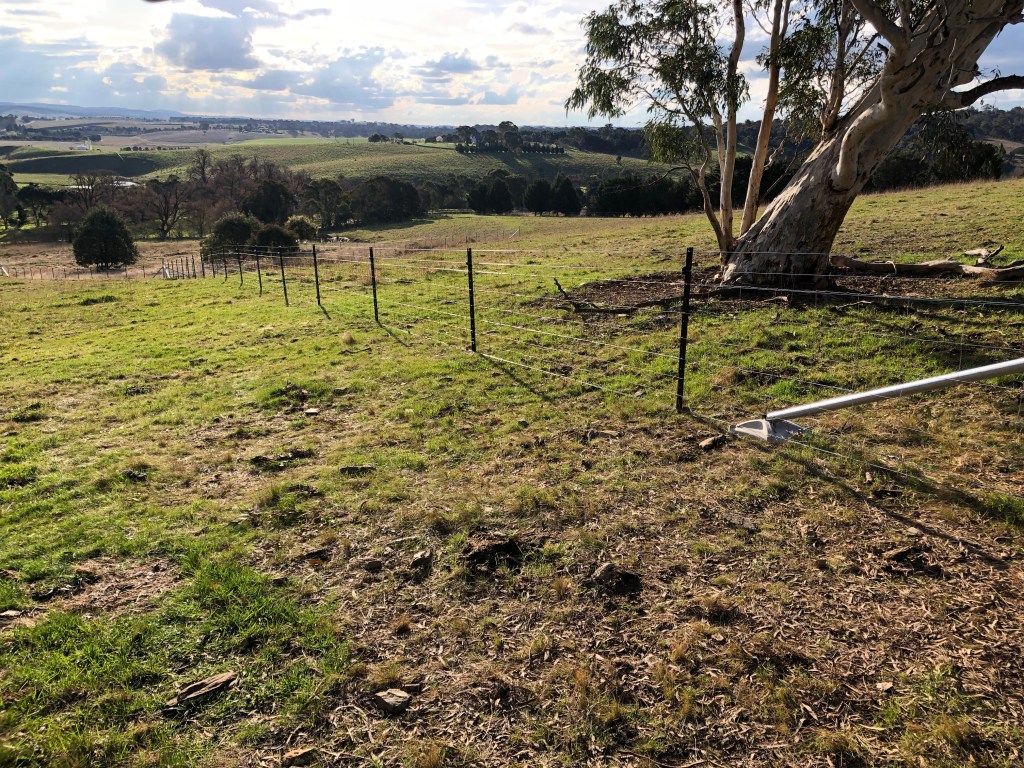
Clearing the fences (thank goodness for the tractor) allowed the opportunity to build a new tree guard around some Cork Oaks (quercus suber) that we had planted along our western boundary. Whilst I had stood up the damaged boundary fence, it wasn’t back to original strength. I took the opportunity to build the tree guard to a high standard three metres in from the boundary. It should not only protect the trees, but keep our cattle in.

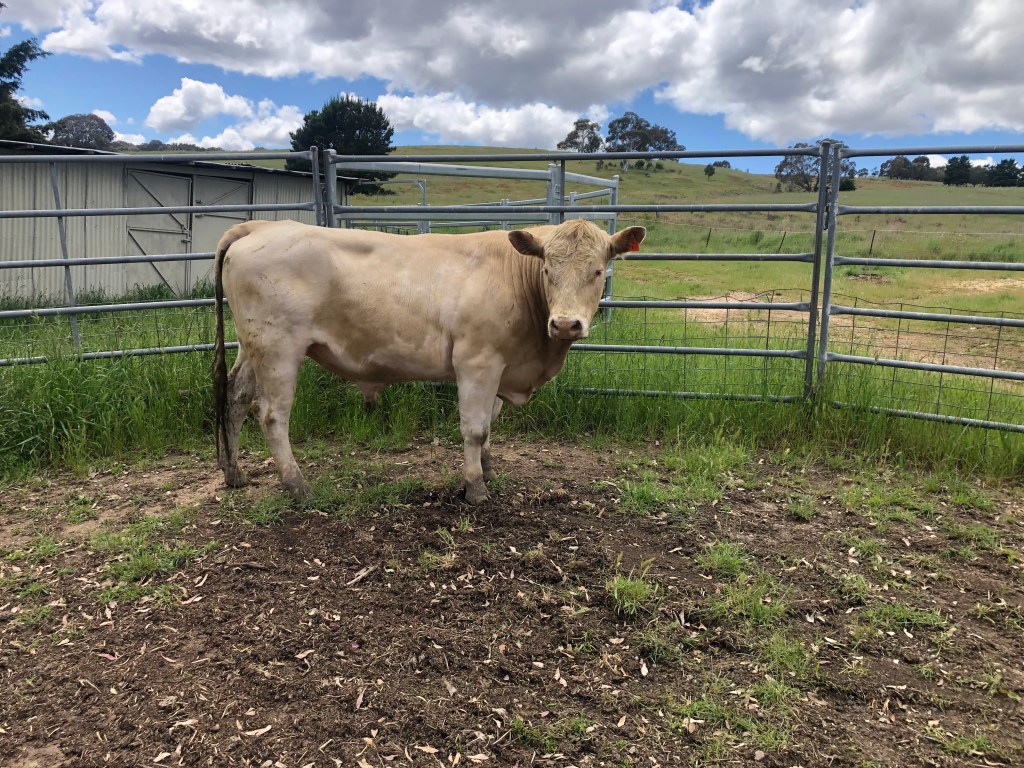
Our cattle mentor John again leased us a bull for this season. This magnificent fellow joined our girls for a couple of months. He settled in to the herd quickly, and seemed very gentle and placid (although it is always wise to exercise a degree of caution in this regard). He followed the girls around and seemed quite happy with the new surroundings for his short stay.

After the experience with our bull last year (he had a little excursion next door), we were keen to get this one home before we went away for a few days with the family before Christmas. Thankfully Jimmy our carrier was able to get the bull safely back home before he was tempted to stray.

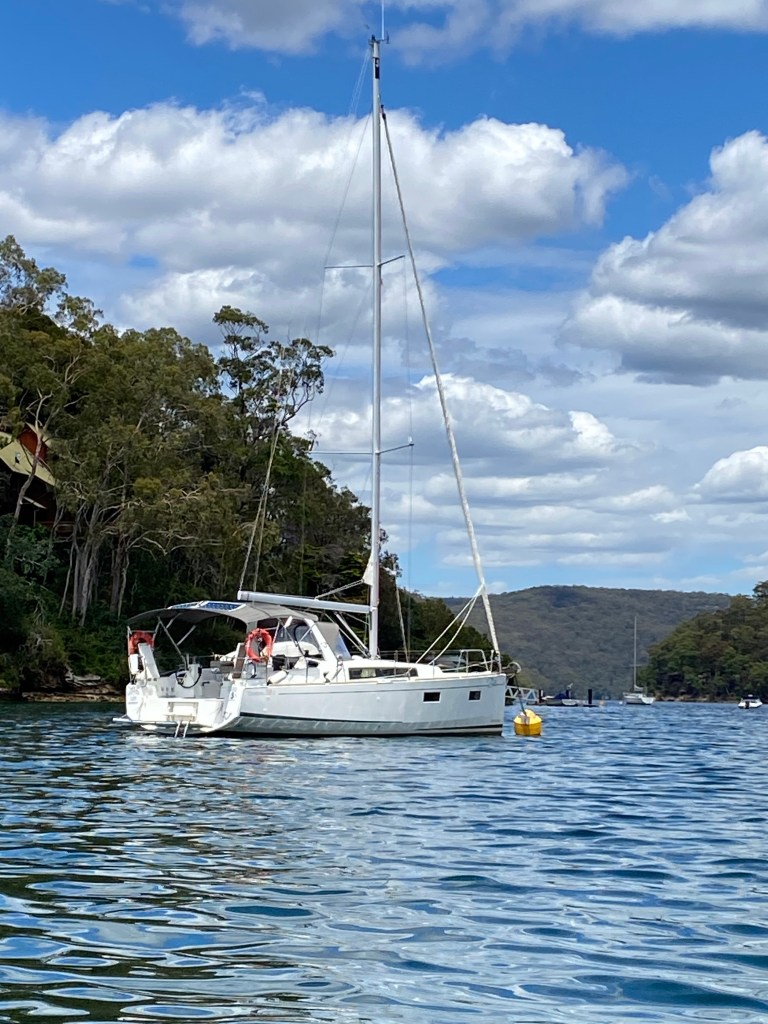
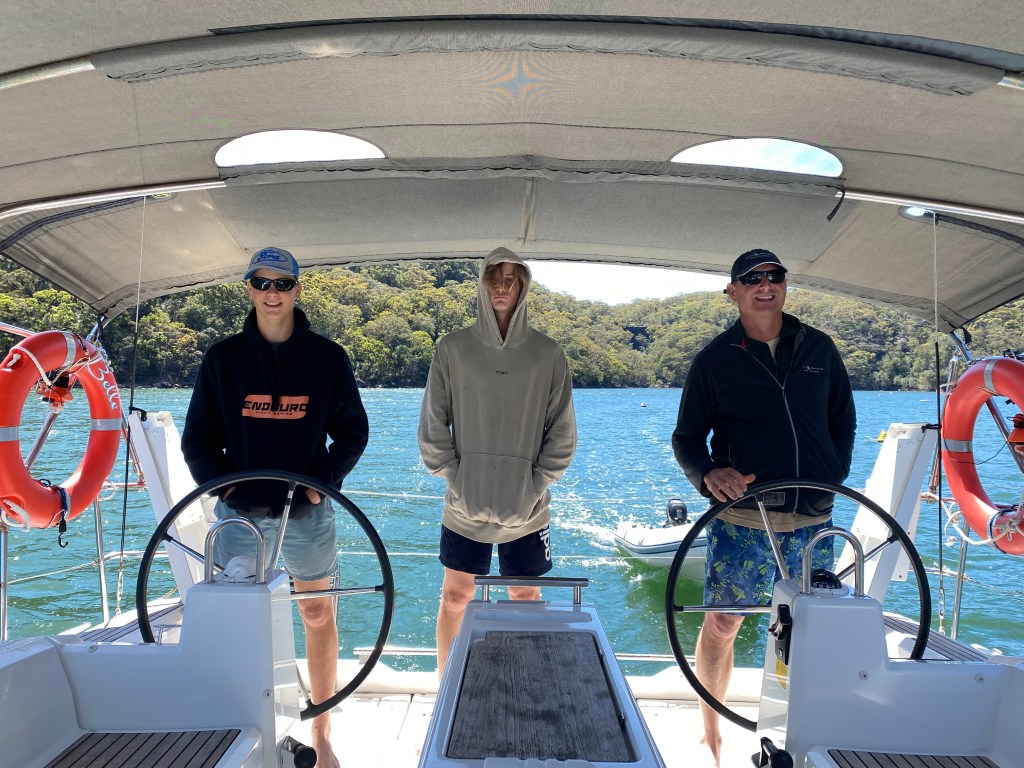
We managed to sneak away on a beautiful bareboat charter in Broken Bay, north of Sydney for three nights. With mobile phones locked away, it was a great opportunity to reconnect with each other and nature of a different kind to the Rock Farm. It also created a hilarious fish-out-of-water moment for the two teenager’s who are convinced their parents don’t know anything about anything!

After getting the run through of the yacht, the charterer politely informed us that the westerly wind blowing creates gusty conditions in Broken Bay, and keeping the sails reefed would be a wise precaution. Shortly after leaving our berth with sails duly reefed, we were barely moving, so we decided to set all our sails. Moments later we were caught in a particularly fresh gust coming down from between a couple of hills. The boy’s eyes opened wide as the yacht heeled over and took off. We decided perhaps we should reef our sails again, and after things settled back down, the boys asked us how fast we had been doing.

It was hilarious watching their faces when they calculated how fast six knots was in kilometres an hour… (about 11km/h).

Both Jo and I have worked on the water before, and we were so glad we took the boys out to enjoy the pleasure of sailing. We moored every night, and all of us loved swimming around the yacht and exploring the bays on the included paddleboard. When we returned the yacht, the charterer couldn’t believe how little fuel we had used over our four day three night charter. It was just perfect exploring the magnificent Broken Bay at the pace dictated by the rhythm of the wind and the water.

There is a kind of magic that comes from being on the water – in many ways it is similar to how it feels on the Rock Farm. There is an inner peace, whilst being acutely aware of how the weather affects each and every part of your day. It is good for the soul.

But we couldn’t stay all at sea forever. There was still extended family to catch up with and plenty to do on the Rock Farm. When we got back home, we started working on the to-do list.

Spring Update – It doesn’t always go to plan….

With the Bureau officially declaring another La-Nina year, we are looking forward to another wet year here on the Rock Farm. It means our tanks and dam will be full, the grass will grow, and we will be able to carry our cattle through to autumn. It also means another great year to establish trees and keep working on improving our natural capital.

Whilst this blog may be a little slow to get updates, it doesn’t mean we have been sitting idly on the Rock Farm. There have been lots of different activities keeping us busy. Some planned, some not planned, but all keeping us busy, fit and challenged.

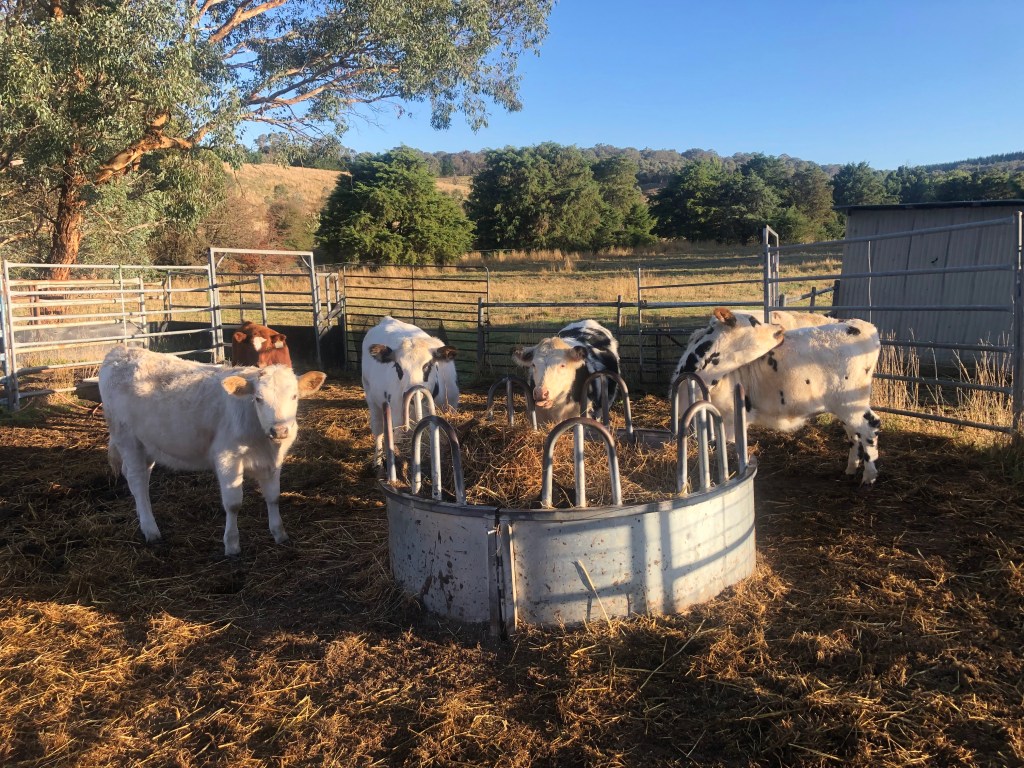
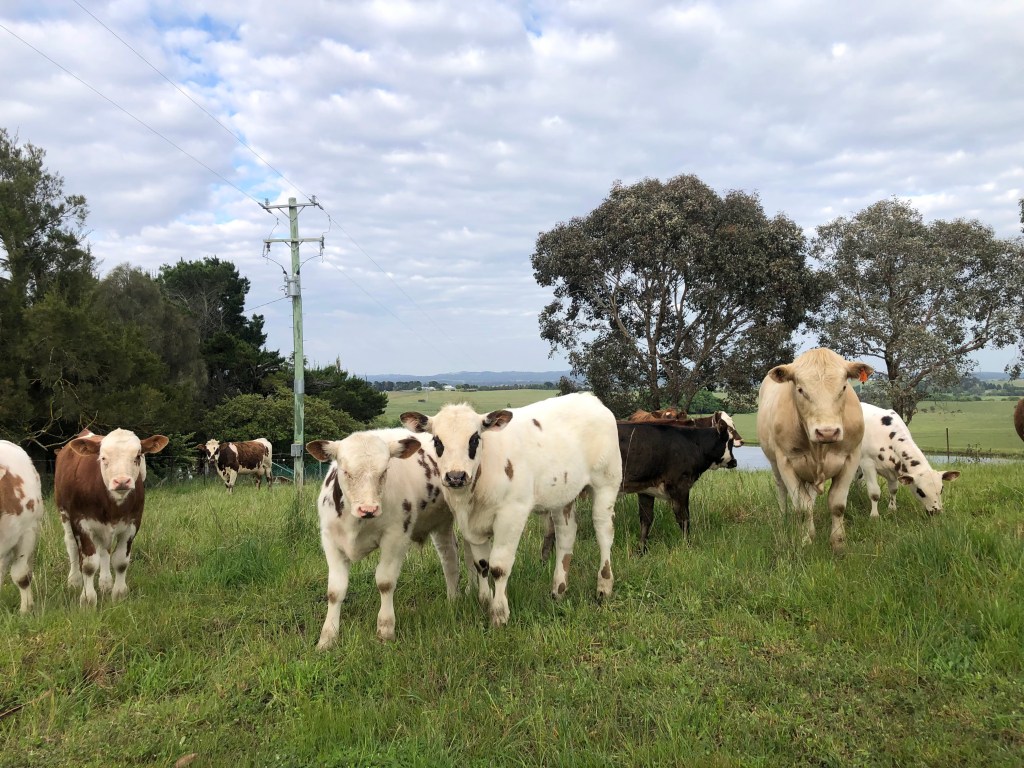
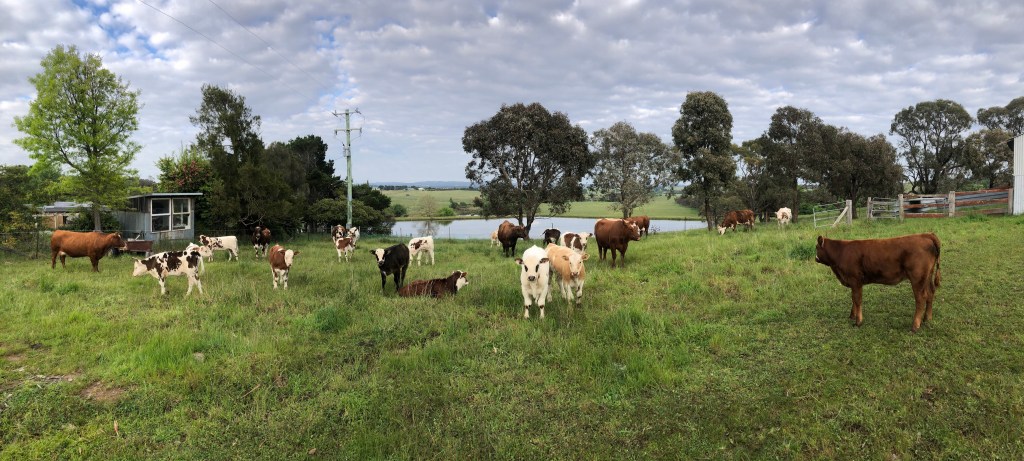
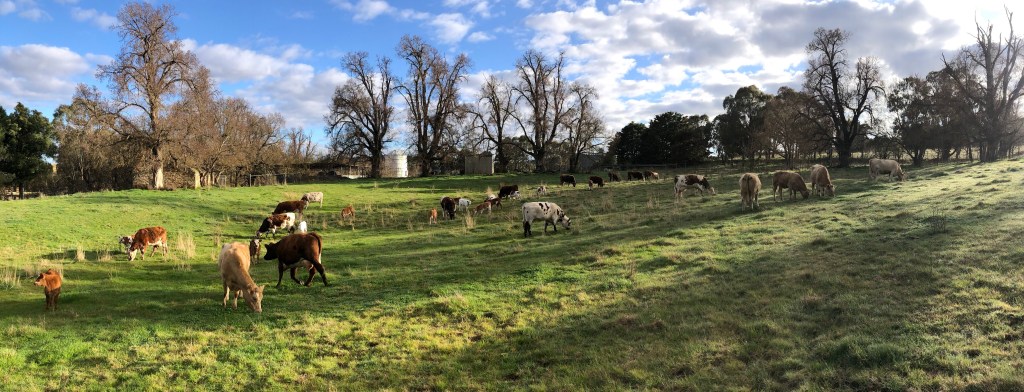
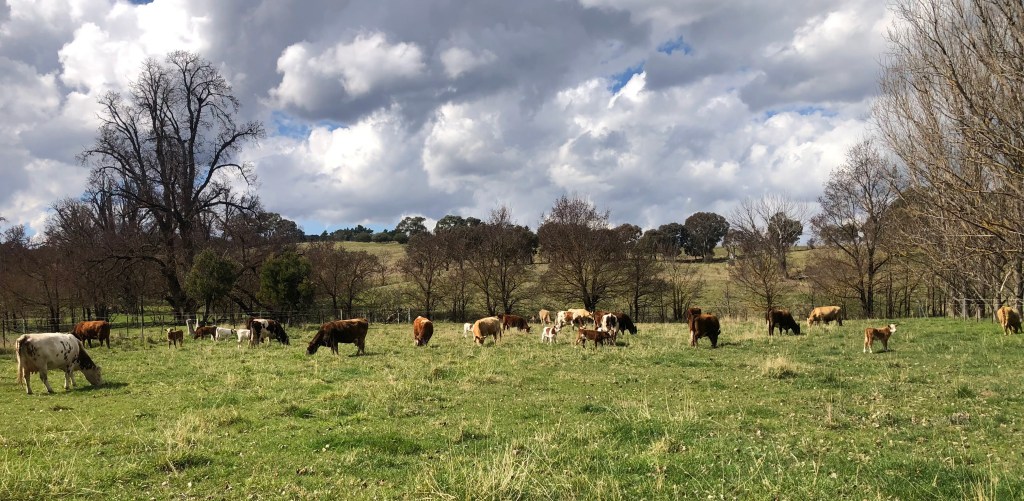
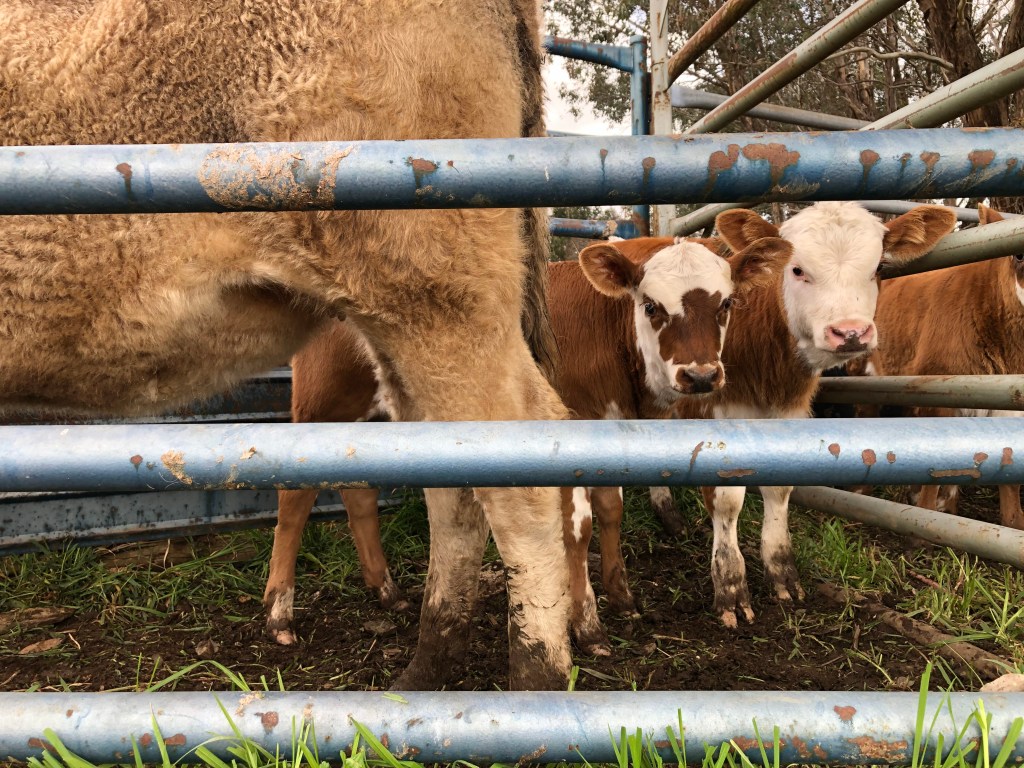
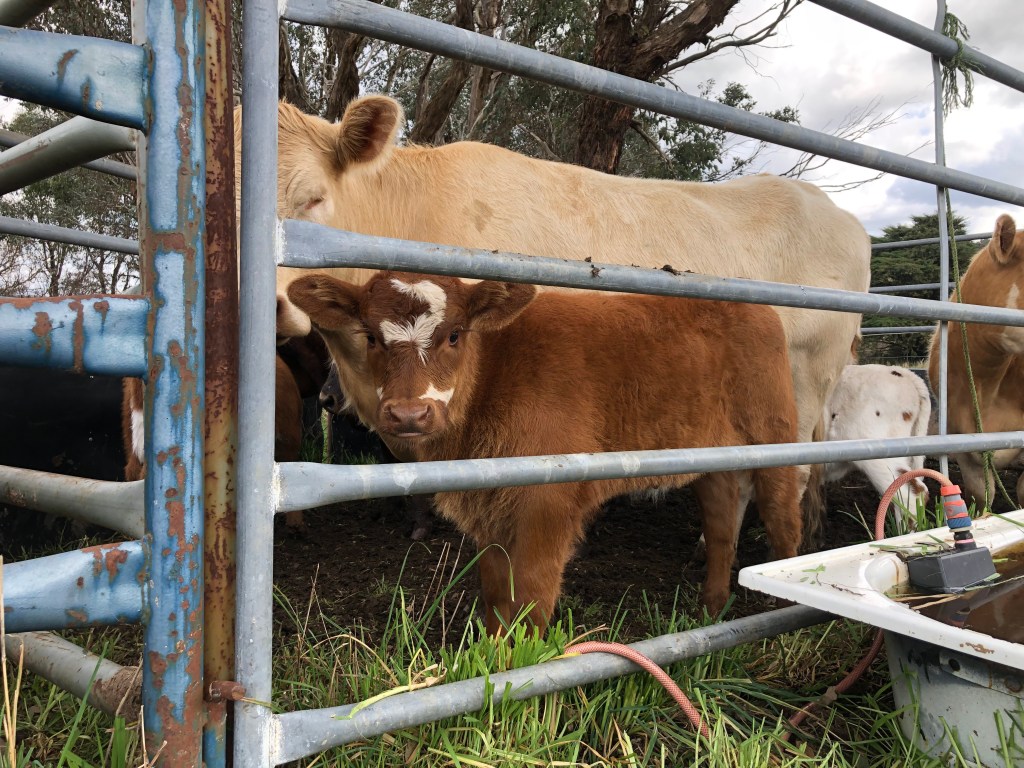
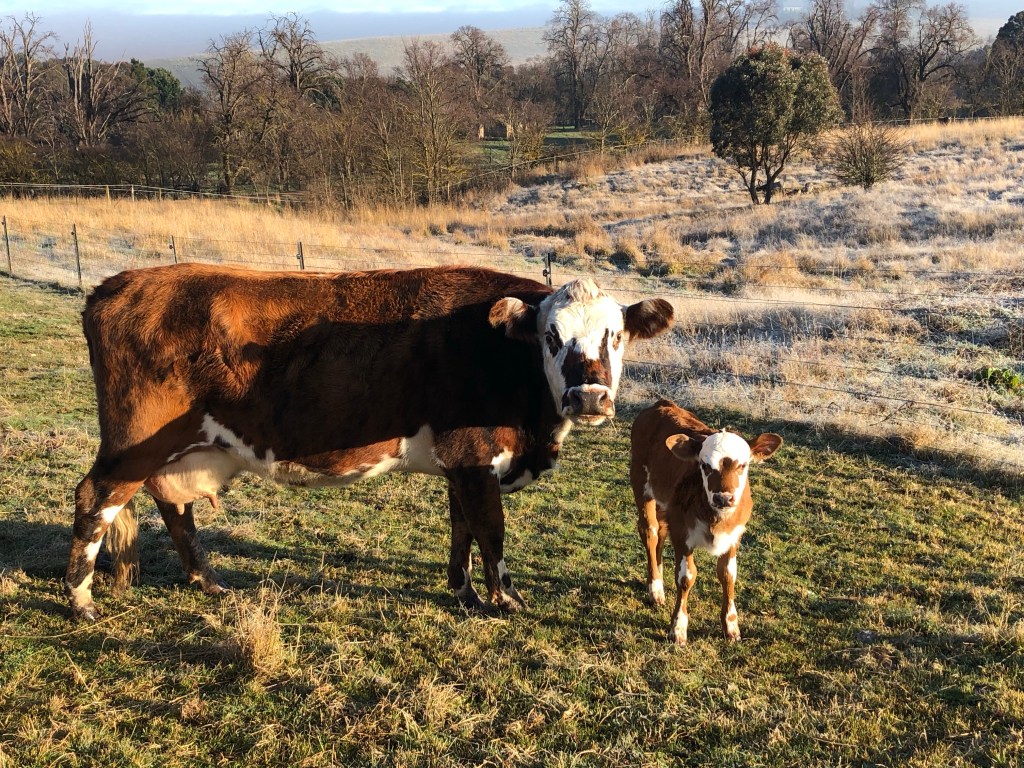
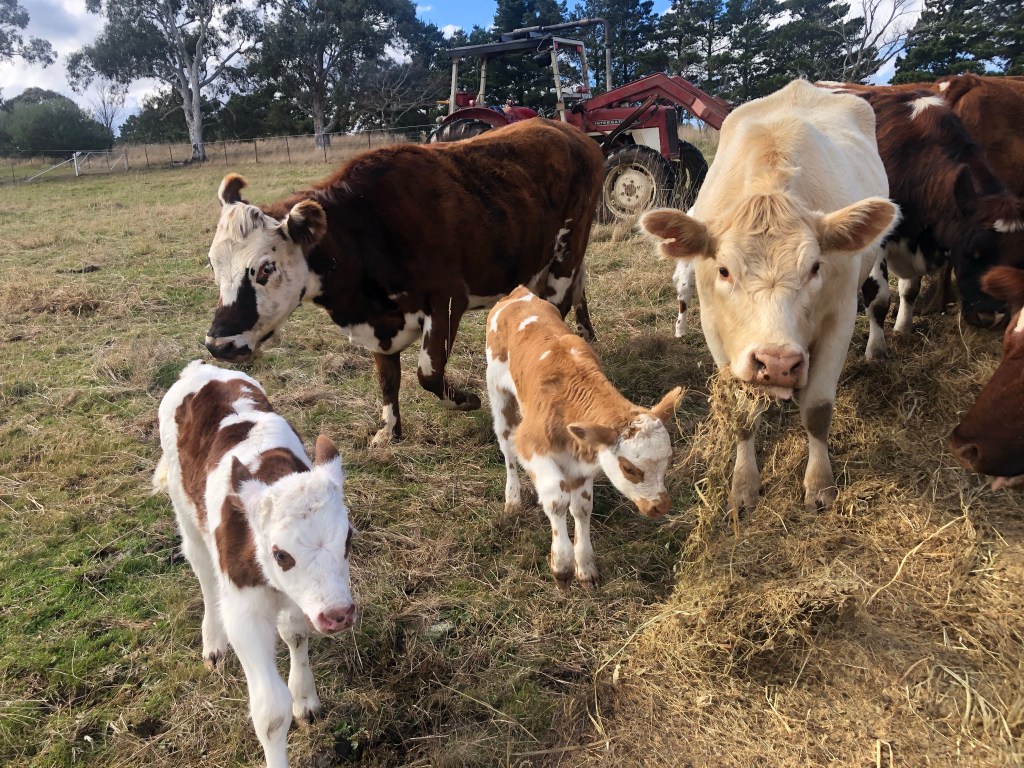
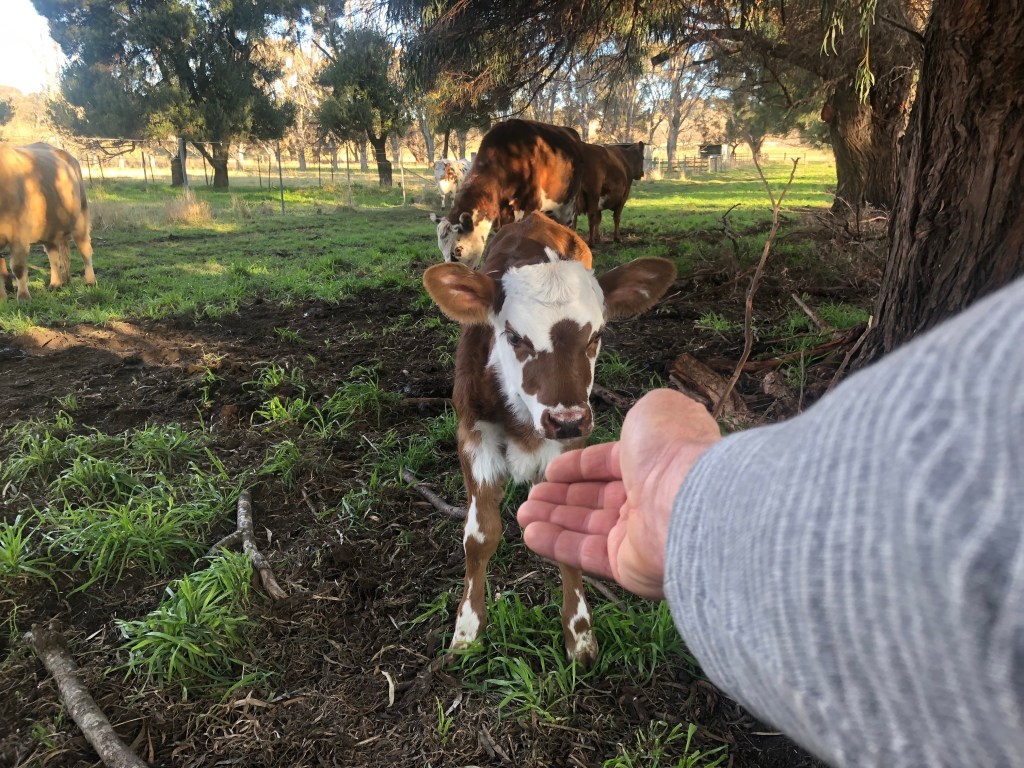
Our beautiful cows, including the four maiden heifers all calved without any difficulty this year, giving us 16 gorgeous calves. With 10 heifers, 6 bull calves, we were thrilled with the result. The antics of the calves are constantly entertaining, and I am happy to admit I spend more time than I should with these creatures. They are naturally shy, but with their quiet mums watching by, their curiosity overcomes their fears, and we have been quite close to several of them.

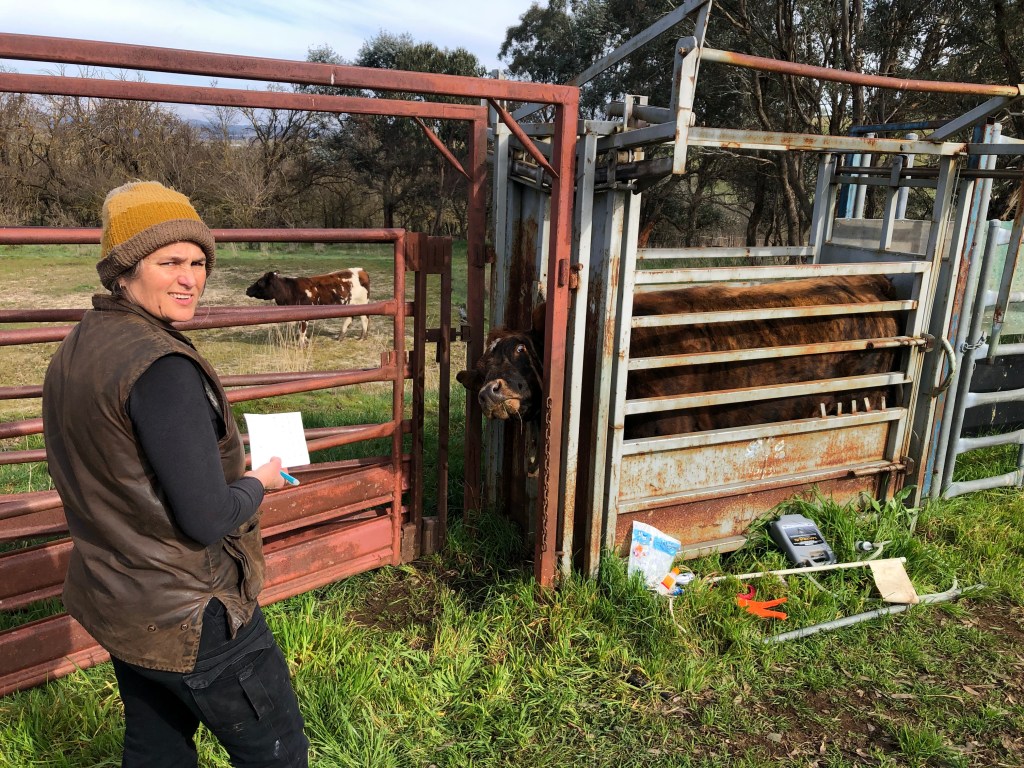
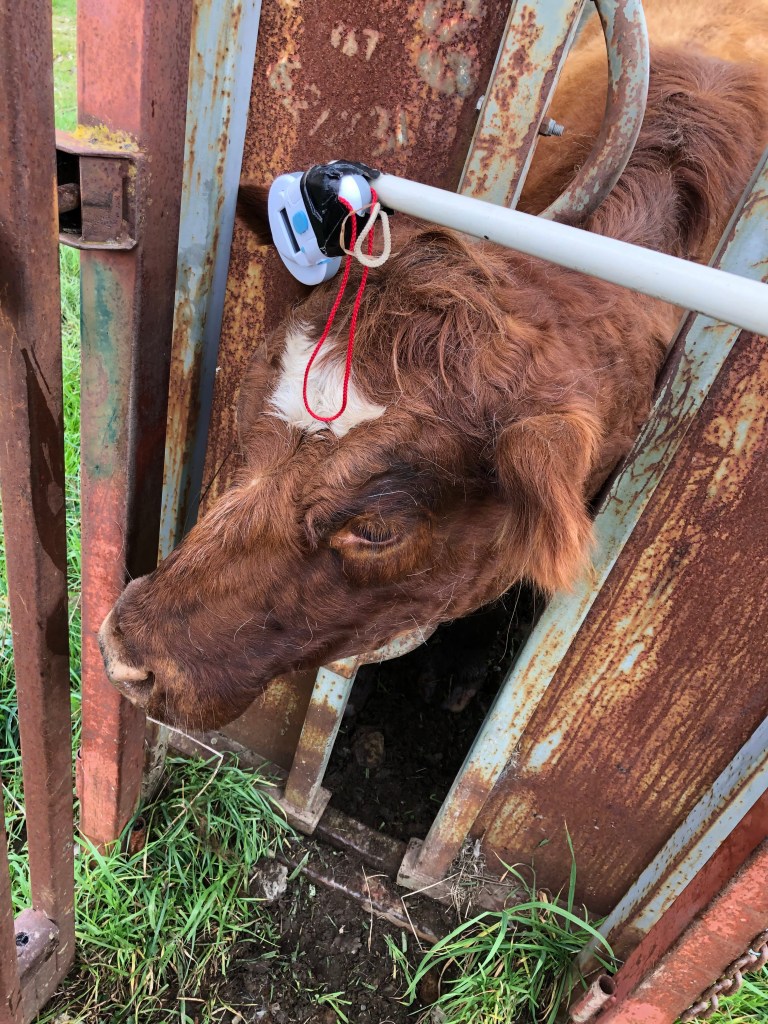
Once all the calves were on the ground, we marked them. They all received a multi-spectrum 5-in1 vaccination, and we castrated the males (with rubber rings). The good news was that all the calves were polled, meaning we don’t have to de-horn any of them (which is a job I hate). The calves will get another booster vaccine in a few weeks to protect them from the common clostridial diseases found in cattle.  We also took the opportunity to audit the NLIS ear tags in each of the cows. This ensures that our records are accurate and up to date, should a biosecurity event such as Foot and Mouth disease enter Australia.

In other news we have continued our work dividing our paddocks into smaller cells. Taking the opportunity presented by creating a nature reserve in one paddock, we completed a small section of fence to divide the paddock into two smaller paddocks. This will help us better manage grazing in this area, continuing our Savory rotational grazing system.

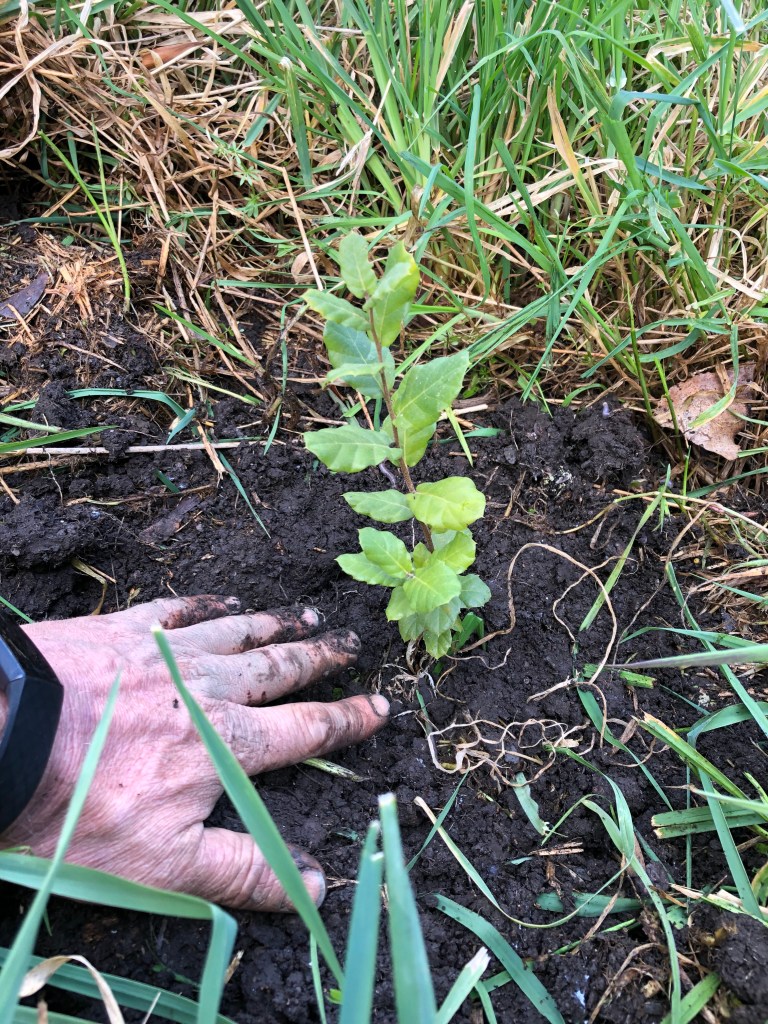
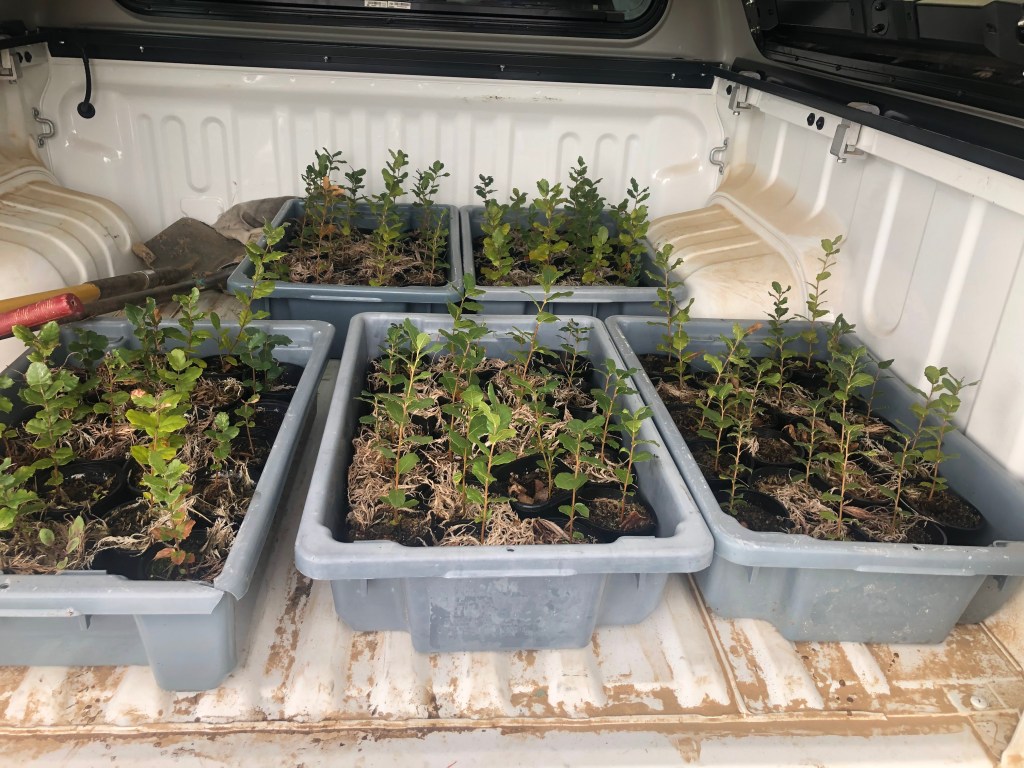
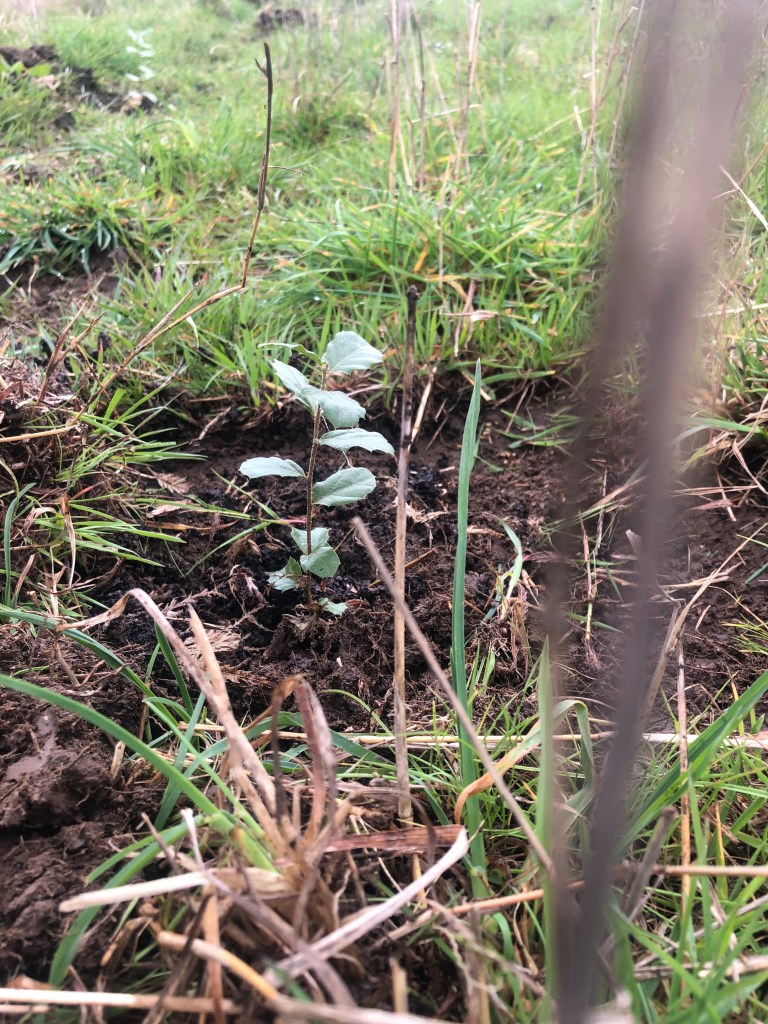
We are continuing to plant trees on the Rock Farm. A friend kindly gave us 120 Cork Oak (Quercus Suber) seedlings. We have planted these in two main areas, to create wind breaks. These medium oaks are ever green, drought hardy and long lived. They are native to the Mediterranean area, and forests are carefully managed as these oaks provide the corks in wine bottles and the centre of cricket balls. We will use temporary electric fence to protect these seedlings in the short term before we build permanent tree guards. Huge thank you to Noel for his donation of these little beauties.

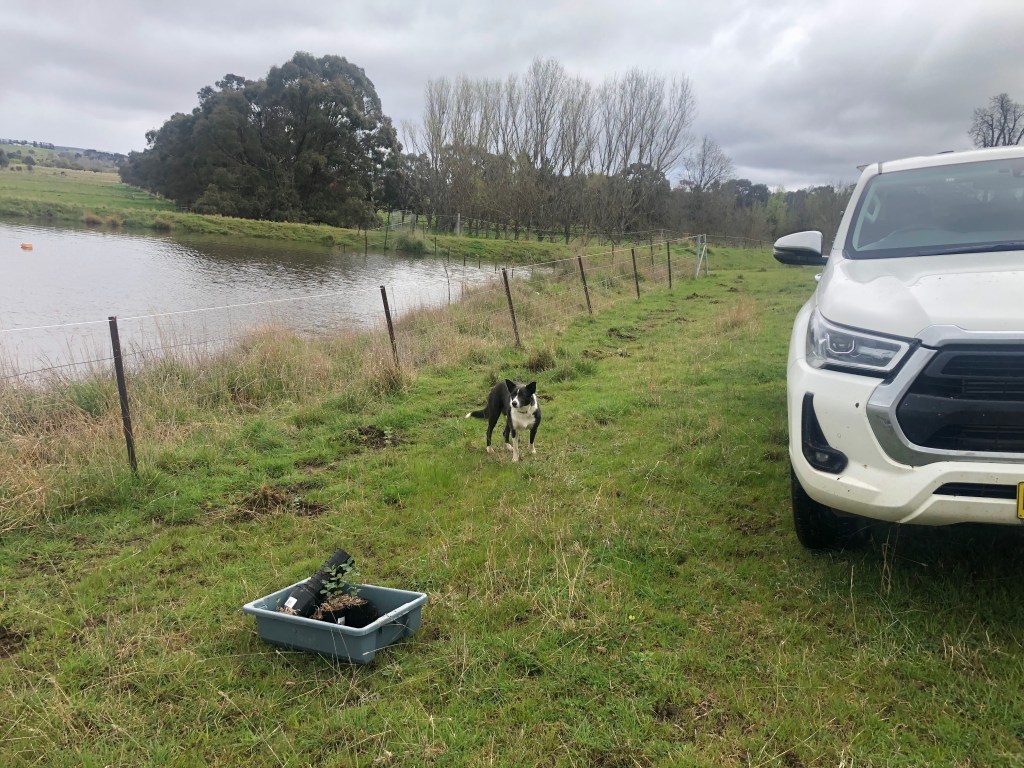
The sharp eyed among you would note in the background our Amarok ute has been replaced with white Hilux. Sadly our Amarok was written off after a particularly nasty pot hole cracked a suspension mount. Whilst our insurance company has been outstanding, they are finding it difficult to replace our ute. It was unexpected (I thought a suspension bush had failed) and whilst I am grateful for the loan of the Hilux with a tub body, it sure is a different set up to our old flat tray. I find it particularly awkward and impractical for our purposes and can’t wait for our replacement vehicle to get here.

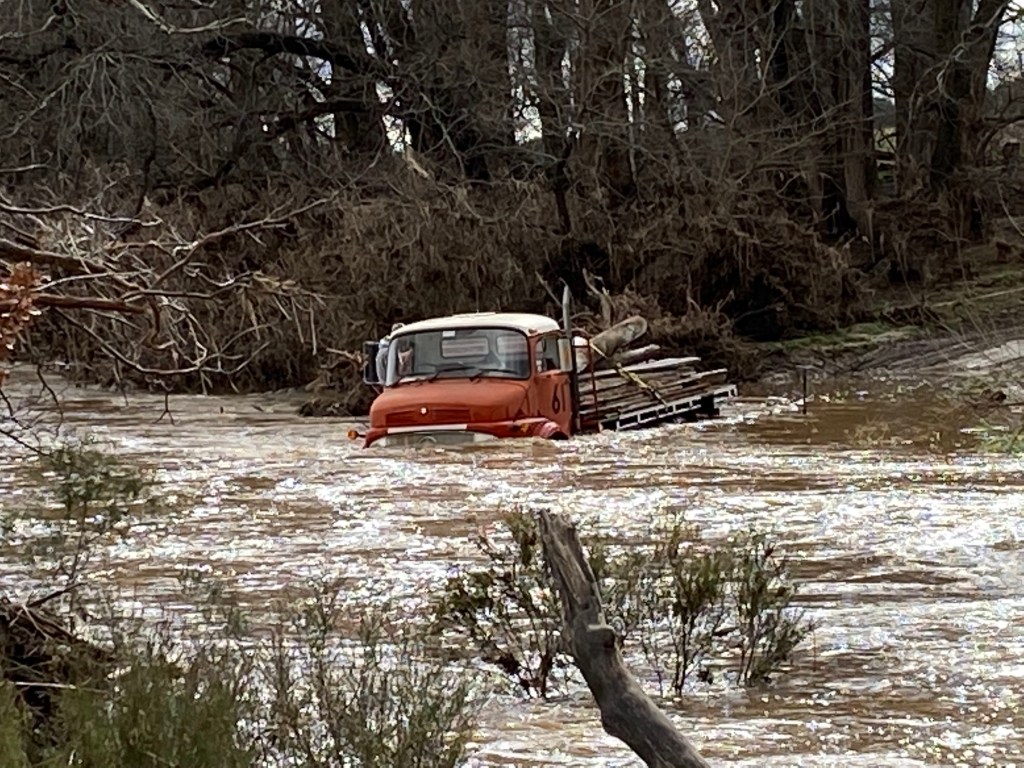
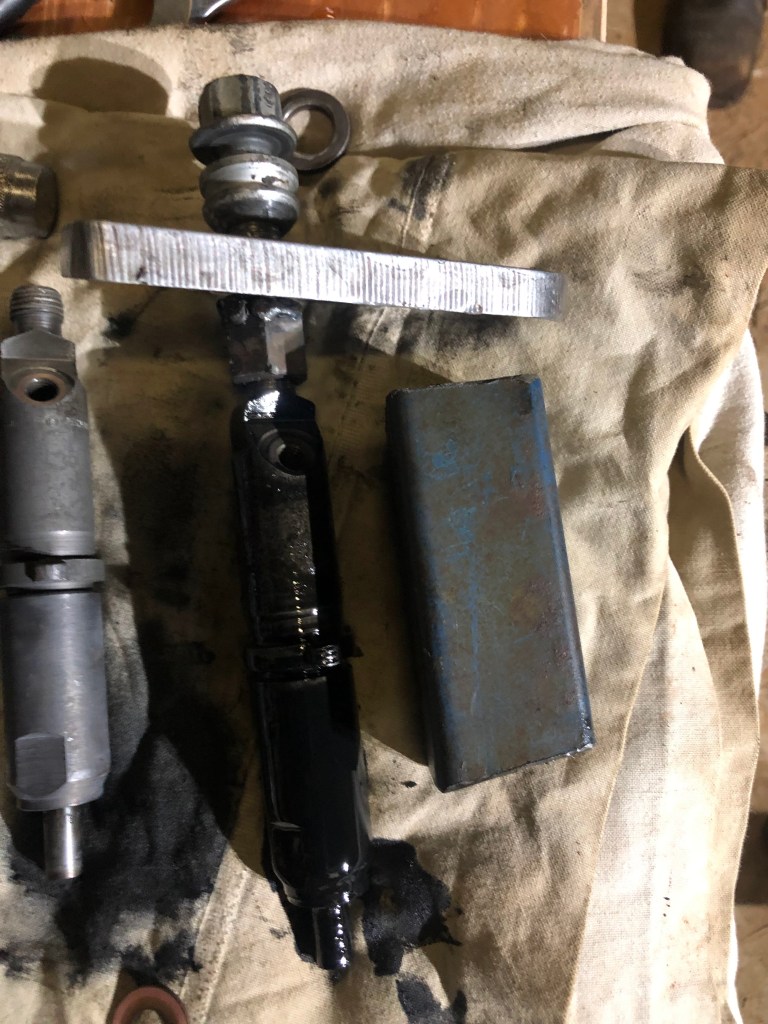
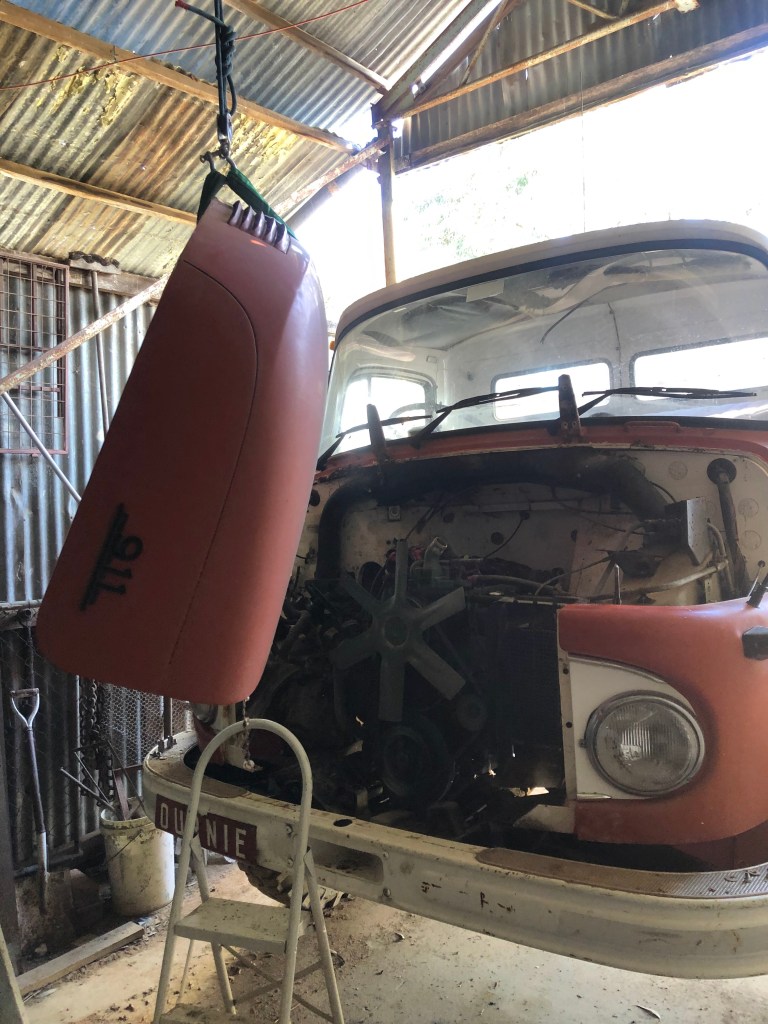
It hasn’t been our year for mechanical devices on the Rock Farm. Our dear old Benz 911 truck Myrtle, suffered a catastrophic engine failure after I took it across our creek in deep water to retrieve the family from the other side. Whilst the air intake was above the water level, I hadn’t countered on the funnel effect which forced water up to the top of the radiator and into the top of the engine. The engine came to a complete stop. After dragging it out of the creek and to the shed with the tractor my worst fears were realised when I pulled the injectors and still couldn’t get the engine to turn over. This was of course no easy process, requiring the fabrication of two Benz ‘special tools’.

Whilst the OM352 engine fitted to Myrtle is common around the world, there aren’t many in Australia. There are a couple of turbo charged variants available (OM352A) but are expensive. I happened to mention my dilemma to our neighbour and he offered an engine from a spare truck at his place. It is an OM366 – which has the same block. It won’t be a straight swap – I will have to get creative – but the engine is far more affordable – and promises 60 extra horses! It might not make Myrtle any faster, but it might not slow down as much on hills! It hadn’t run in a few years, but after hooking up some new batteries, it fired up straight away – so is the path we are pursuing for now.
It means that any spare time I thought I had has been well and truly accounted for. I do love the challenges of the Rock Farm. From getting my hands dirty in the ground planting trees and chipping weeds, to working stock, to solving mechanical problems, it does stretch me. I might not love every minute of it all – but I wouldn’t swap it for the world…

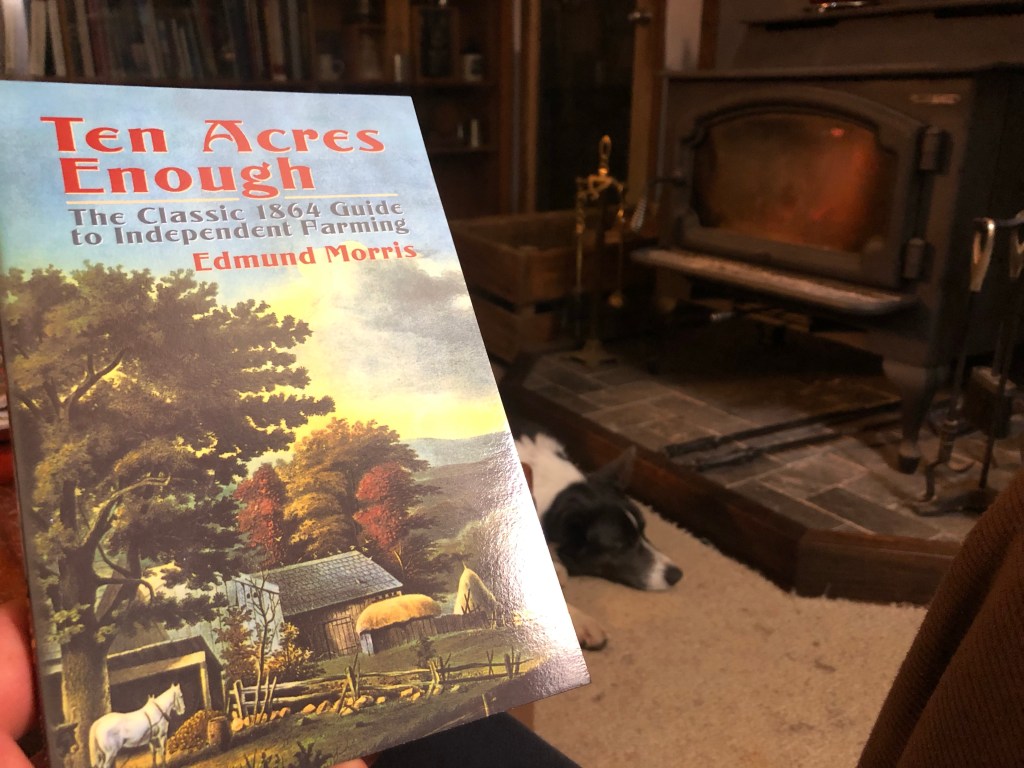
Book Review: Ten Acres Enough by Edmund Morris

I suspect Edmund Morris never expected his little volume published in 1864 to remain in print and popular 150 years later.

On one read, it a delightful autobiographical account of how one family moved to the country and became financially secure. On the other, it is a well reasoned and explained approach to managing a small farm with diverse production whilst creating a healthy lifestyle, in an era before the use of chemicals.

Nothing better on a dreary winter night than to curl up in front of the fire… whilst my humans read books!

I see echoes of Morris’ approach to farming his ten acres in modern permaculture, regenerative agriculture and the homesteading movement. Indeed that is perhaps what makes it such an important work. Morris has inspired countless farmers over the years, who have found his account inspirational, and I see echoes of his work everywhere.
Morris opens the book by sharing with readers the reason he chose to leave city life, and also hints at the research he undertook prior to selling his business and purchasing ten acres in New York State. His wife and large family feature large in this account, especially their influence in the purchase of a milking cow, managing the vegetable garden and preservation of foods.

Morris carefully catalogues his expenses and income, including his initial outlay and capital expenditure. The location of the farm is important, as it needed to be near to a large city for a market for his produce. Morris’ farm, between Philadelphia and New York City also took advantage of the new railway, which meant he was able to deliver his fresh produce to consumers in under 24 hours.

What I found fascinating was how Morris was able to generate so much production on his small plot, with the land carefully tilled and vertically managed. His main production was an apricot orchid, but he also produced tomatoes, strawberries, blackberries and also ran a cow for fresh milk, some pigs and hens. Morris’ astute observation allowed him to recognise the importance of birds in management of weevils and other insect pests against the small losses to his orchids and other crops.

Here now were six acres of ground pretty well crowded up, at least on paper. But the strawberries would never grow higher than six inches, the raspberries would be kept down to three or four feet while the peaches would overtop all. Each would be certain to keep out of the other’s way. Then look at the succession. The strawberries would be in market first, the raspberries would follow, and then fthe peaches, for of the latter I had planted the earliest sorts, so that, unlike a farm devoted wholly to the raising of grain, which comes into market only once a year, I should have one cash-producing crop succeeding to another during most of the summer.

Morris and his large family obviously relished in the change of lifestyle to farming. However between the lines, his success is down to a lot of hard work. I am amazed at the physical labour required to create the profitable business of his farm, but that is through a 21st century lens full of labour saving innovations.

If you find the phraseology dated and difficult to follow, there are updated editions that have been edited to assist the reader in understanding the intent of the original work. I found the original text easy to follow, if a little quaint, but I think that adds to the charm of what is such a wonderful little book.

Morris’ work is especially relevant today as the movement back to chemical free farming methods continues to grow. It seems to me that we will not be learning new lessons in this process, rather we will be relearning old lessons. Morris gives a us a great resource for us to draw on. I can’t recommend it enough.

Calving and a big dump of rain!

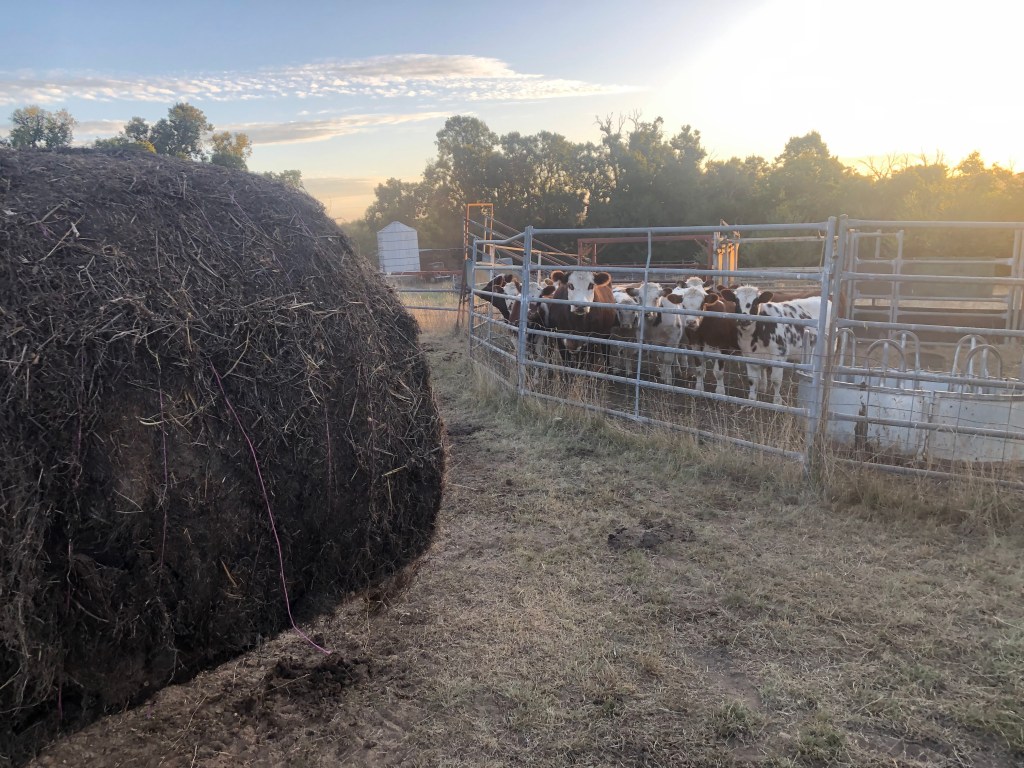
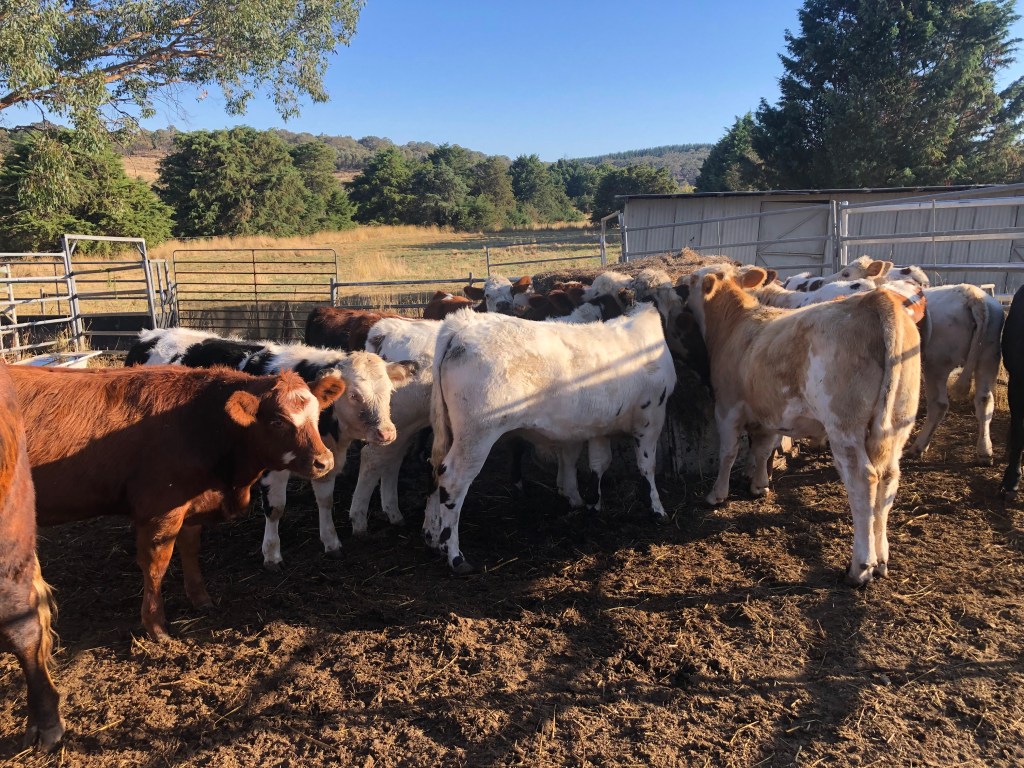
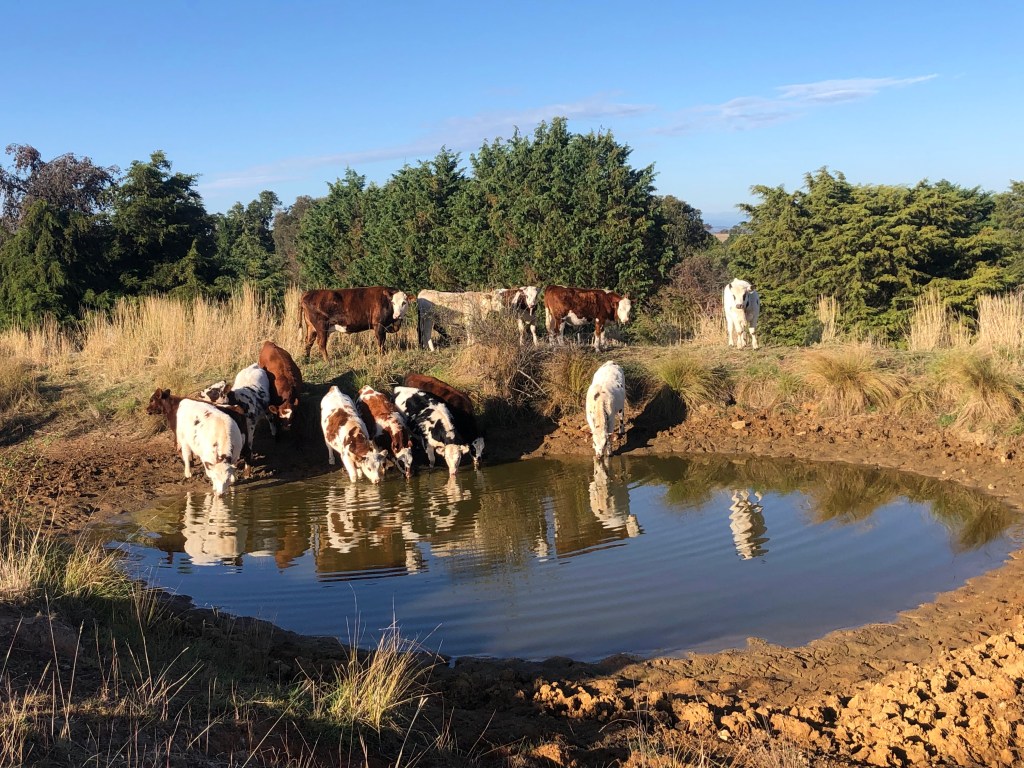
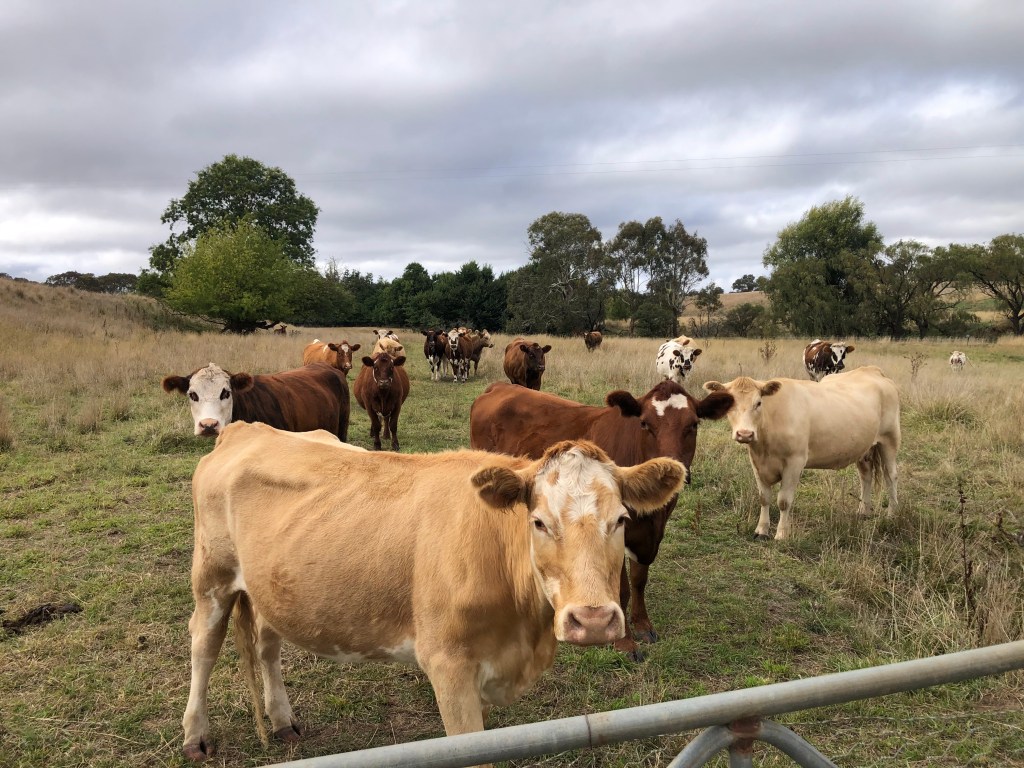
Calving is without a doubt my favourite time of year. It isn’t without its challenges, and requires twice daily (or more) checks just to make sure all is going to plan. As I write we have 13 beautiful calves on the ground, with a couple more stil to calve. The cows seem to understand what we are up to with our regular checks and seem quite happy with our presence. We only have one maiden heifer, and she gave birth to a bull calf without any issues which was a great relief. Regular readers will recall that Daisy had some difficulty calving last year, and despite my misgivings, remained on the farm. She hasn’t calved yet – indeed she might not even be in calf – but we are watching her closely.

Our gorgeous cows are lovely and quiet, however the new mums can be understandably a little more cautious around us. Over the past few years, any cow that has shown any form of aggression has been sold. That said, there are a couple who quitely let us know with a gentle shake of the head that we have approached close enough. We don’t put any more pressure on them. By sitting down a short distance away, those who want to come up and say hello are able to… and they sure make us smile.

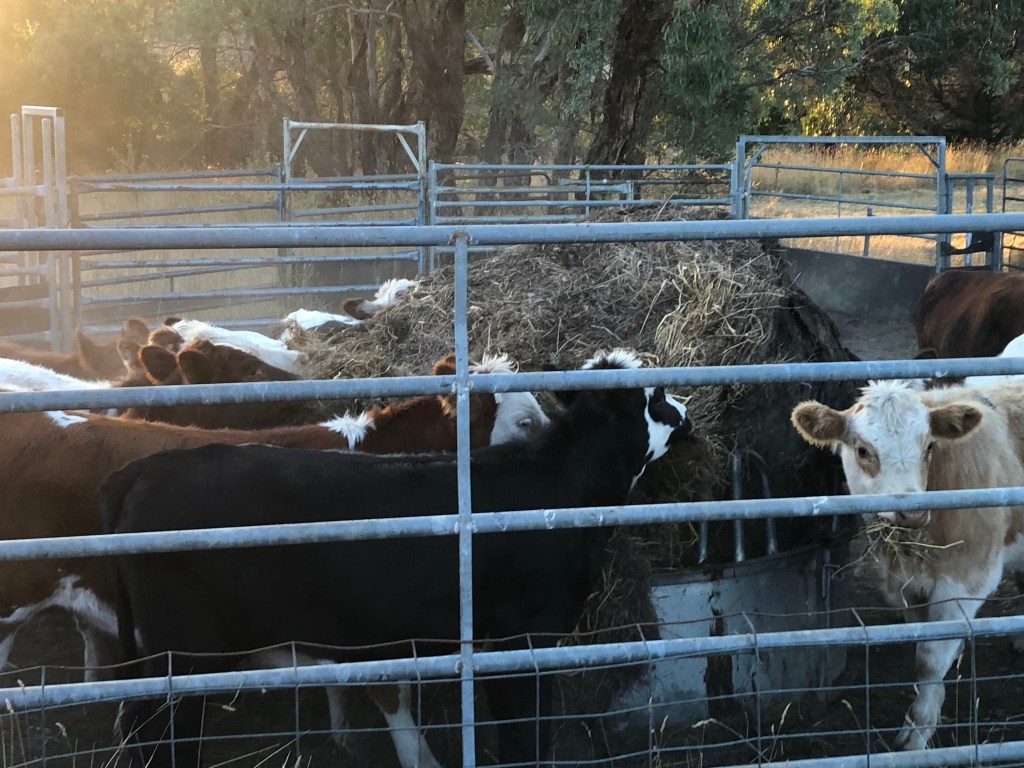
We are calving a little earlier than last year. Whilst the soil moisture is great, the rain has reduced the solar gain on the pastures and hence grass growth is a little less than we expected. We are throwing out a bit of pasture hay, and are providing a magnesium lick to the cattle to support their nutrition requirements.

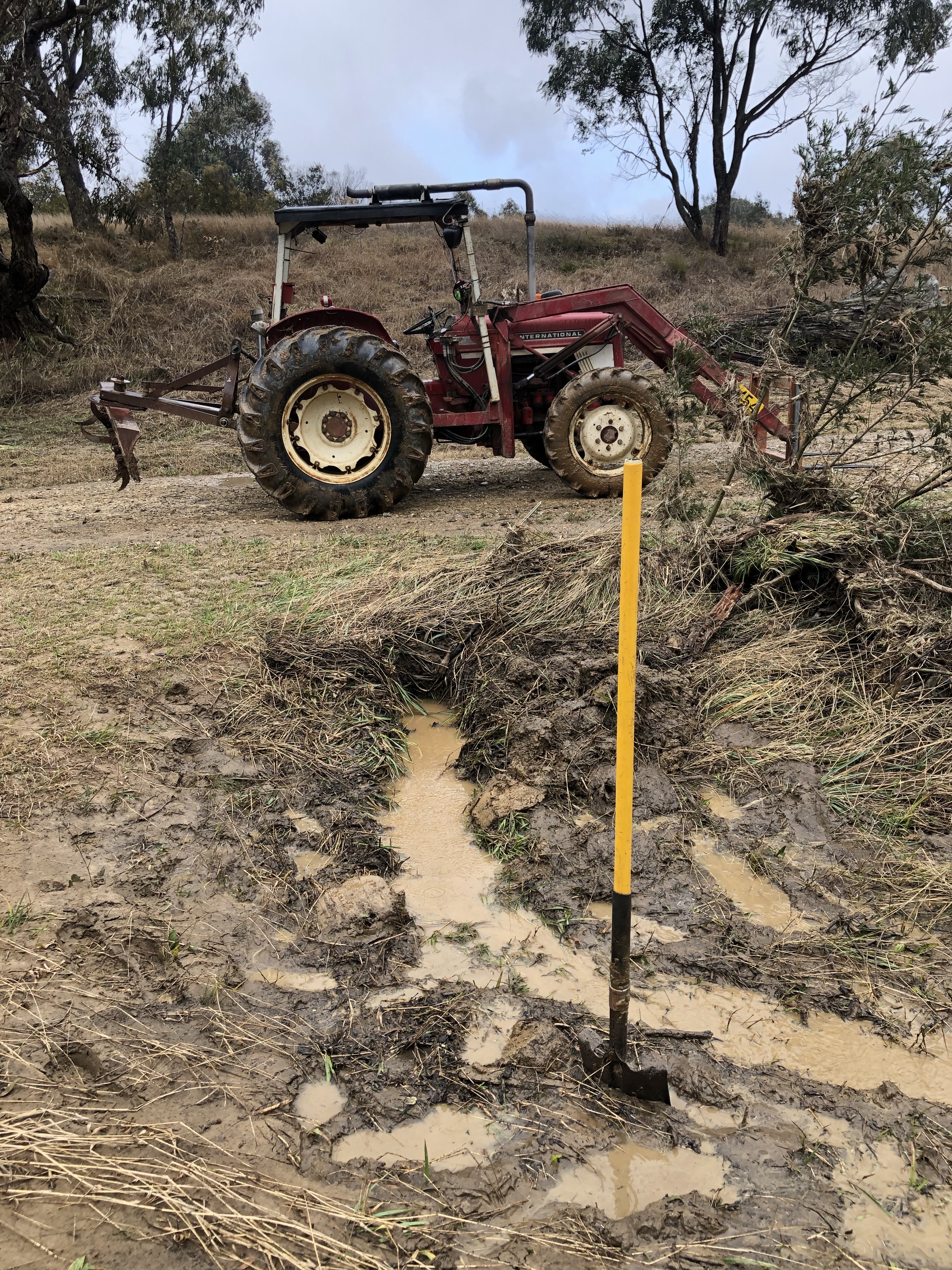
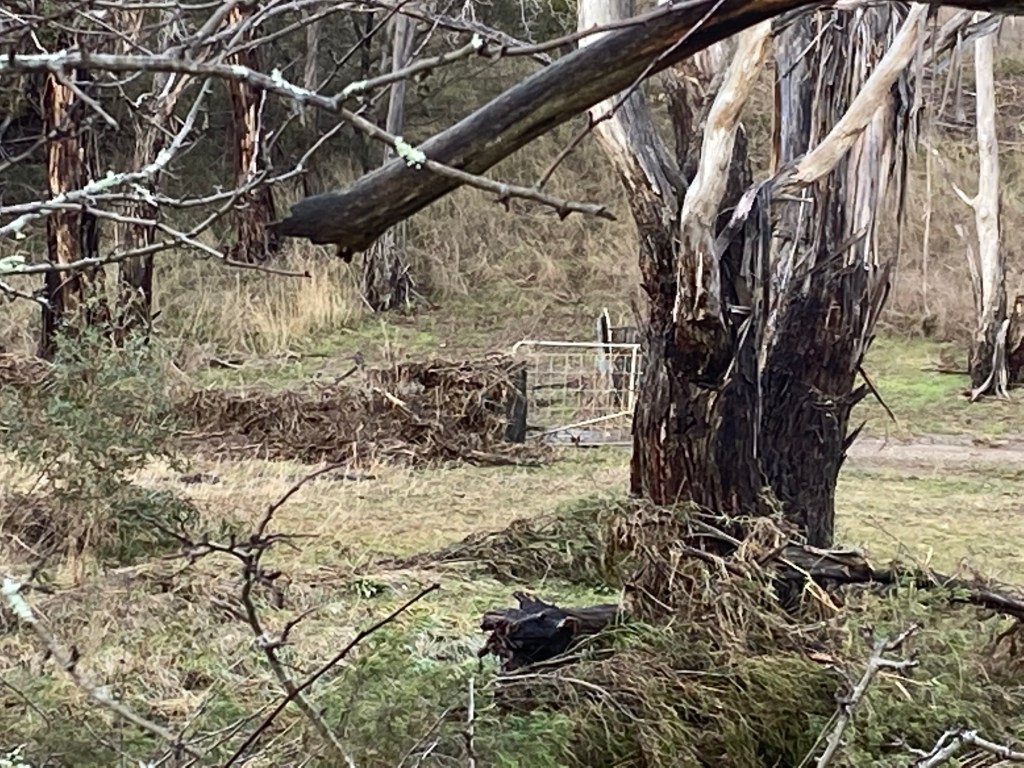
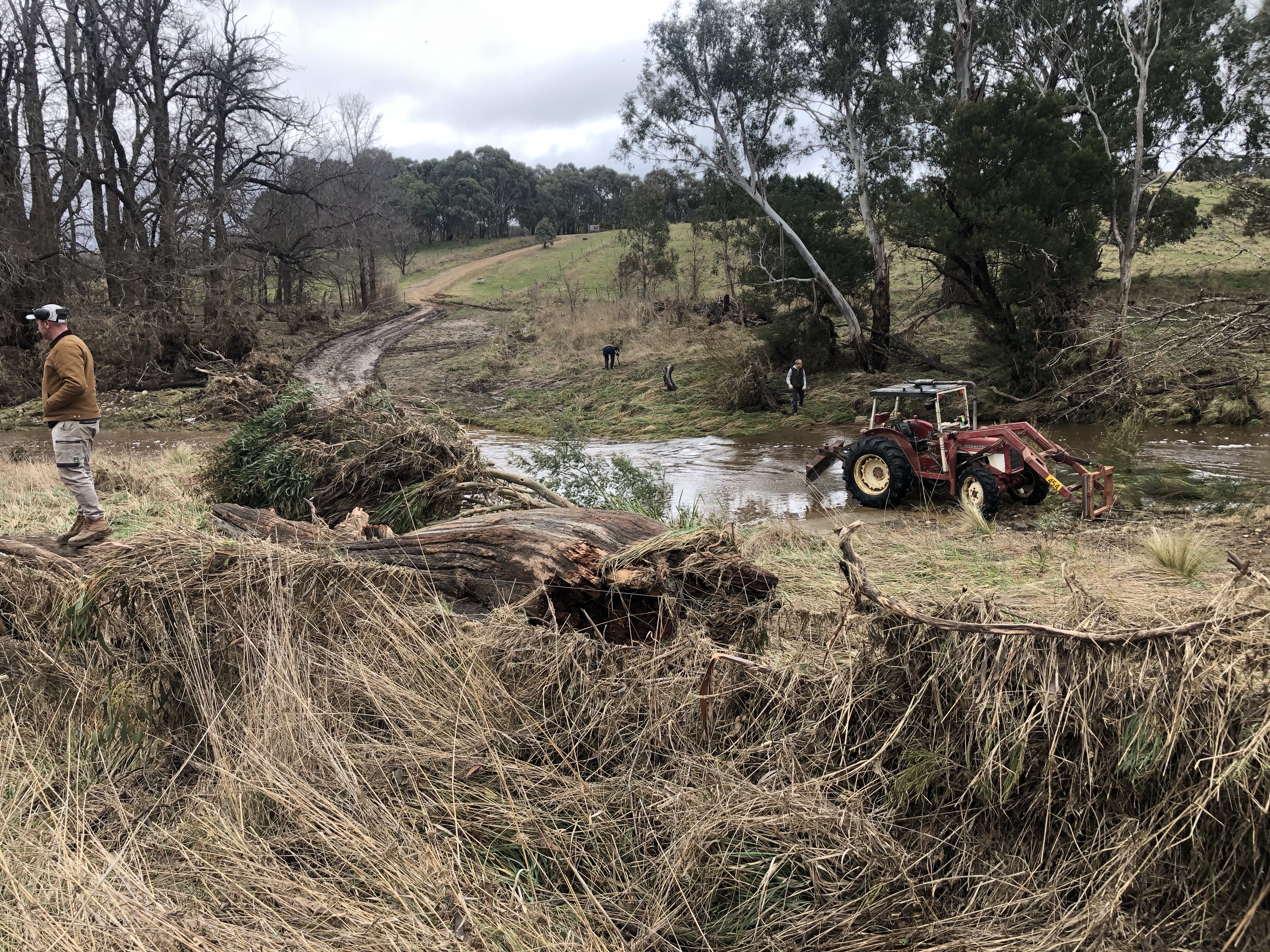
It is an unusually wet year, with the end of last week culminating in the largest flood waters we have seen on our creek since moving in. Our previous flood record was measured to the base of our front gate post. This most recent flood covered the gate and has fiven us a new height datum. A day of steady rain was followed by a sharp 30mm shower as the sun set. The resultant rise in the creek was mirrored with flooding throughout the district, with several roads cut. The family were safely marooned at home, and I ended up staying in town after work.

The following day the creek dropped, and required a bit of work to clear some of the debris off the crossing. Our neighbour was home and cleared the worst of it (thanks Stuart), allowing me to get home that evening. The following day, we continued to drag silt and logs off the drive way. The size of the timber moved downstream by the flood waters was phenomenal. Sadly several trees were ripped out of the creek banks. I haven’t yet established the extent of the damage, but I do know we have lost some creek bank, new trees and a temporary fence. Over the next week or two we will look rebuilding our flood gates and making the front paddock stock proof again.

It is all part of the cycle of the water way. For all the extra work the creek creates, it adds so much more to our property and we consider it an asset to the Rock Farm.

In the meantime, I will keep hanging out with the cows and enoying their company. It is good for the soul!

Special thanks to Stuart for clearing the debris so I could get home and to the Not-So-Little Helper for his amazing photos.

Update on tree planting – Three months in

Three months have passed since we were fortunate to have Greening Australia plant our bottom paddock with seed for thousands of trees.  I thought we would take a wander around our paddock and check out the progress.

The planting was a relatively simple process (see here: https://rockfarming.com/2016/11/03/how-to-plant-trees-lots-and-lots-of-trees/).  After preparing the site, seed was directly planted into small furrows, planted along contours.  We then herded the sheep out of the paddock and closed the gate.

This summer has been hot – at times extremely so, but we have managed to get the odd storm or two.  A couple of weeks ago we also enjoyed one day of steady rain that filled our rain gauge a wonderful 24mm.

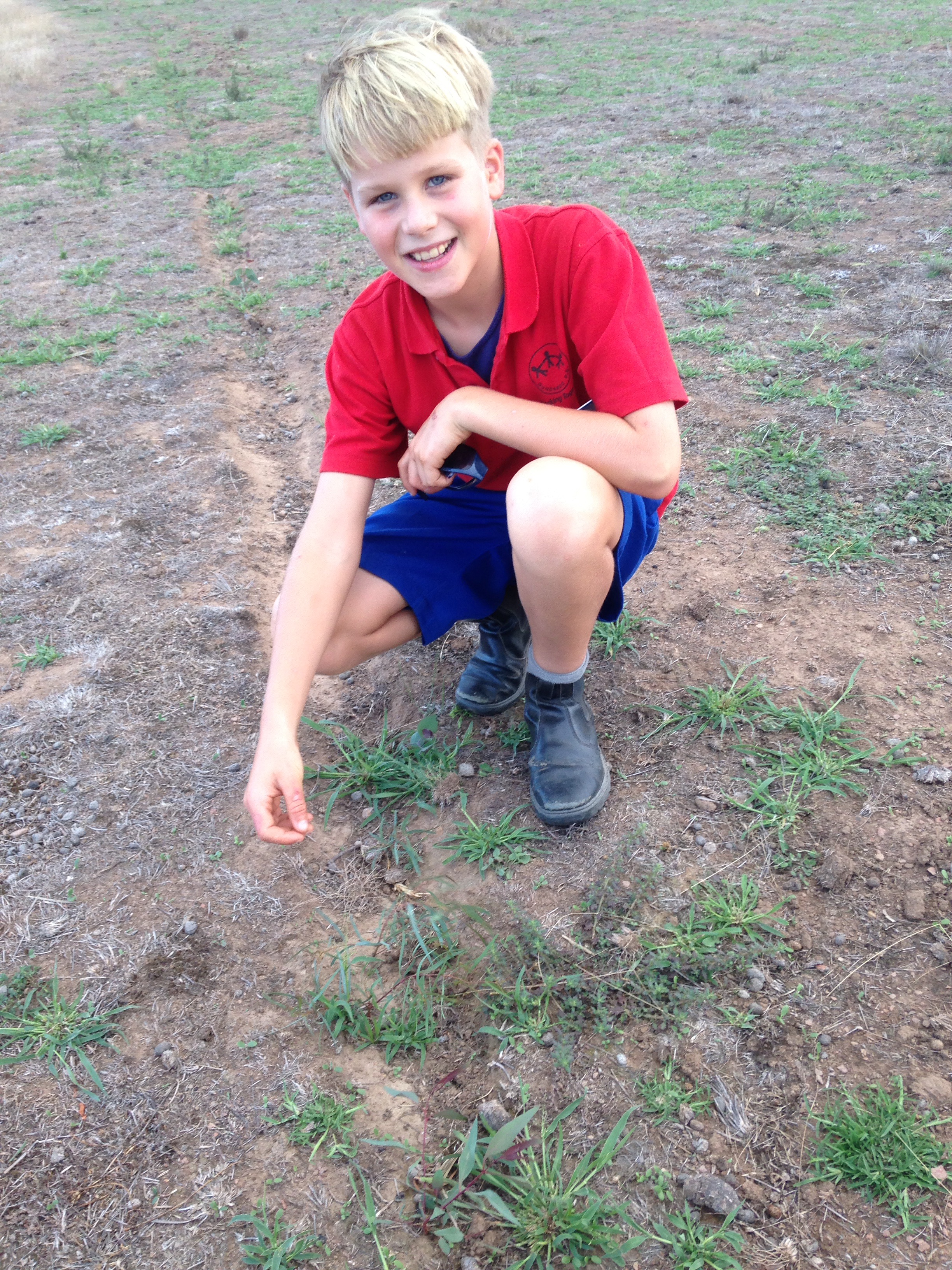
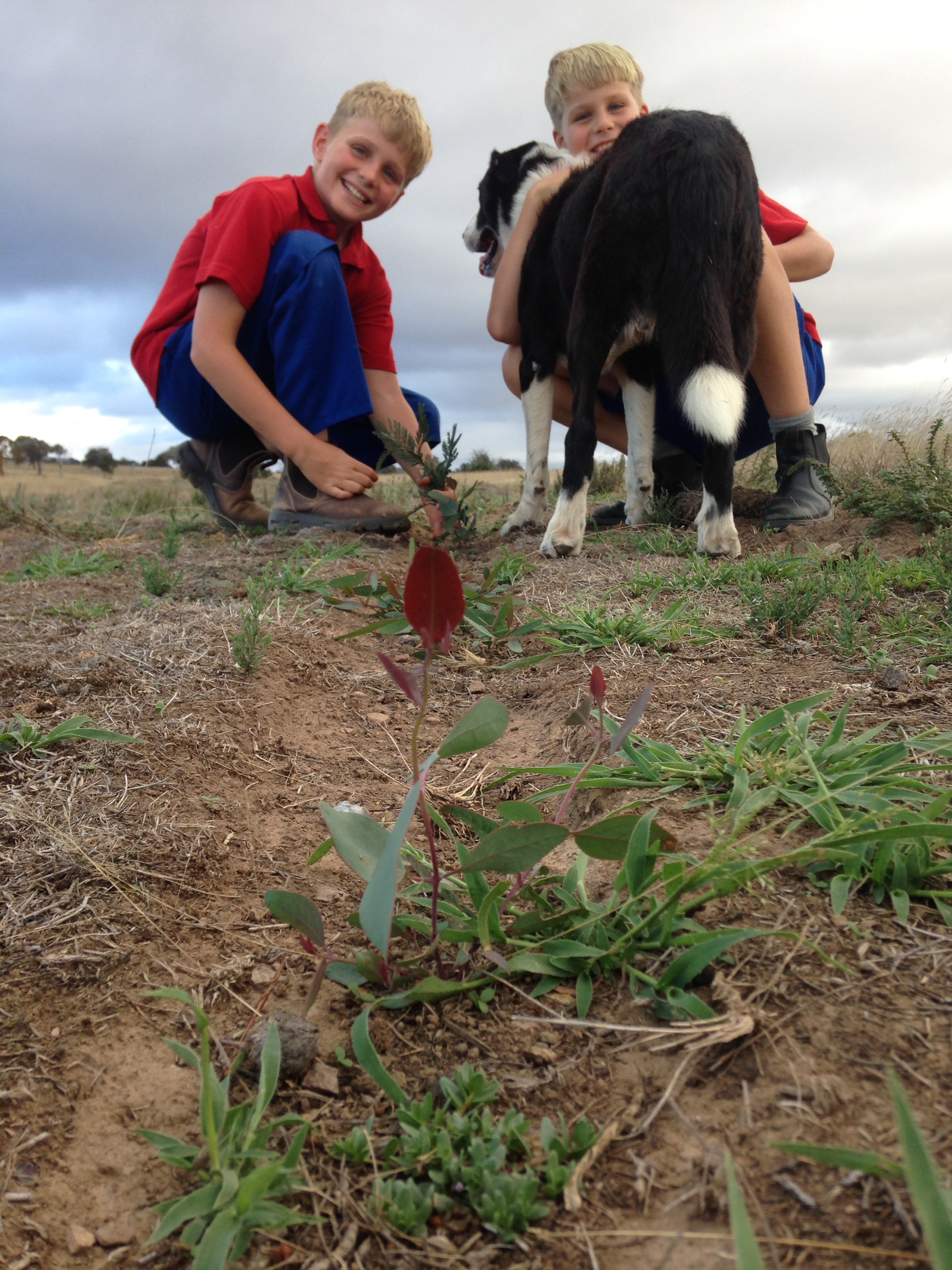
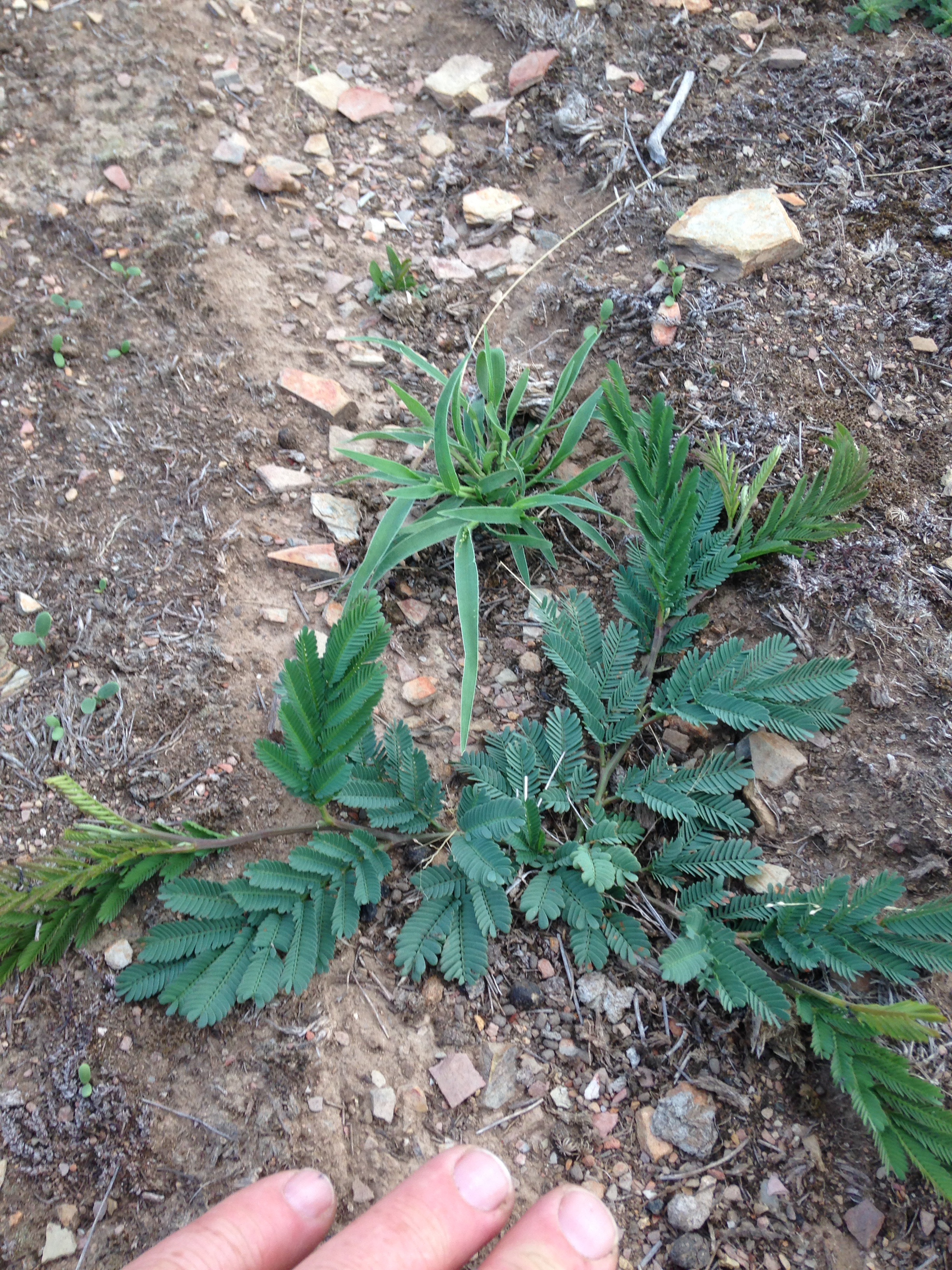
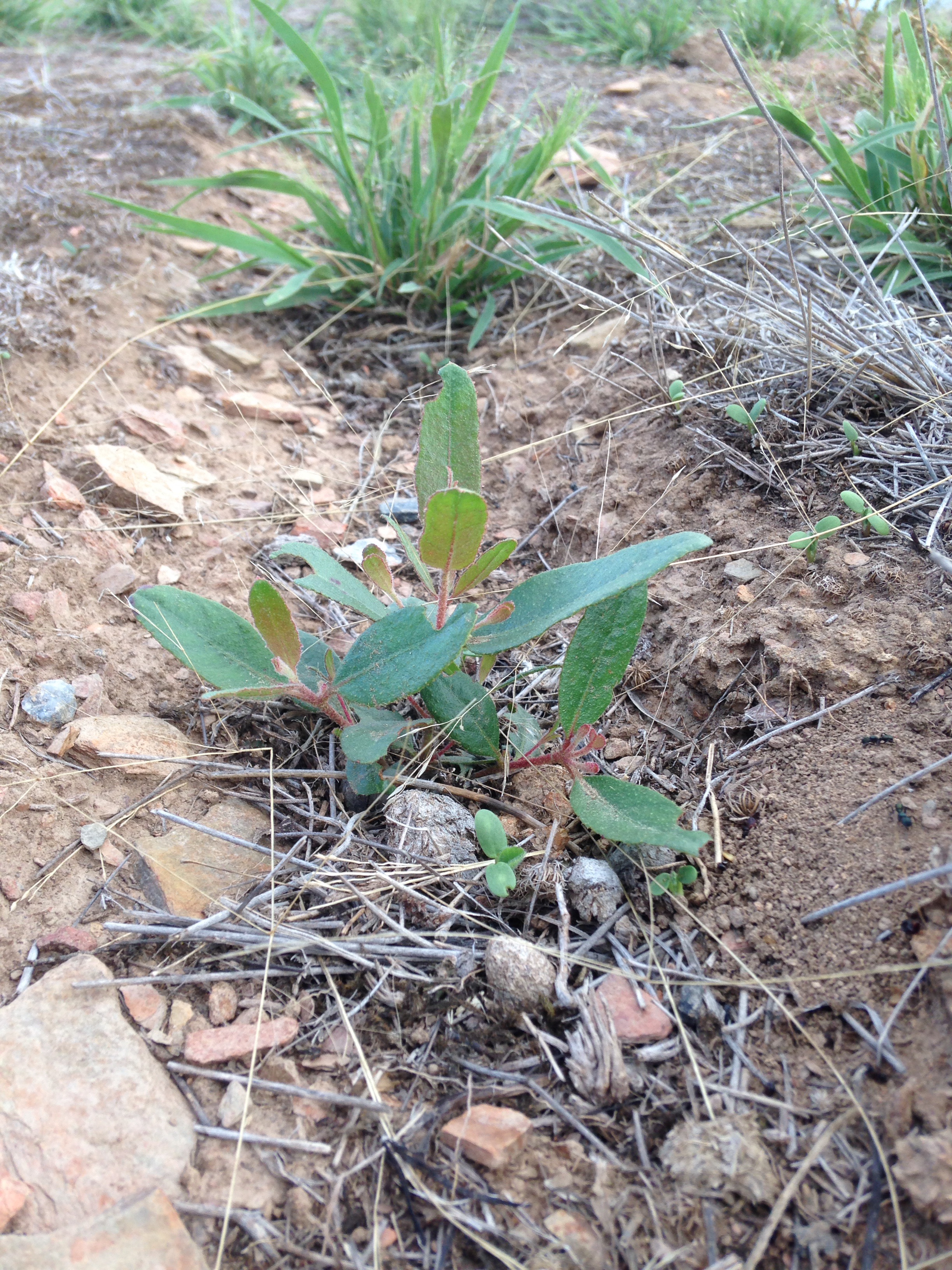
Whilst initial glances over the paddock don’t show much progress, a close up inspection reveals plenty of young wattles and eucalyptus starting to strike.

The kids enjoyed checking out the plants – and so did Kruz – the most wonderful new addition to our family – but I’ll write more about him later.

I’m no expert on identifying the seedlings, but the seed planted had a good mix of Blakey’s Red Gum (eucalyptus blakelyi), Red Box (eucalyptus polyanthemos) and Yellow Box (eucalyptus melliodora).

It also had plenty of wattle seed too, such as Silver Wattle (acacia dealbata).

The tree I have been really looking forward to finding is the Drooping Sheaoak (Allocasuarina Verticillata).  This tree is habitat and food for the Glossy Black Cockatoo.  I found another young tree in our top paddock, bringing the total number on our place to 6, but sadly haven’t found any seedlings in our furrows yet.

That said, the trees seem to be going well.  The weeds are also starting to compete, and I know that I will eventually have to slash between the rows of trees to give them a fighting chance…  best I get me a tractor!

Which is best for mustering? Horse or Motorbike…

A couple of days ago we celebrated a massive milestone for the Rock Farm.  We sold our first lambs!!!  Three adorable ewe lambs were sold to a delightful family not far away for their hobby farm.

I could go on about the virtues of the magnificent Wiltipoll and how suitable they are for small farms like us, but that is not the purpose of this post.

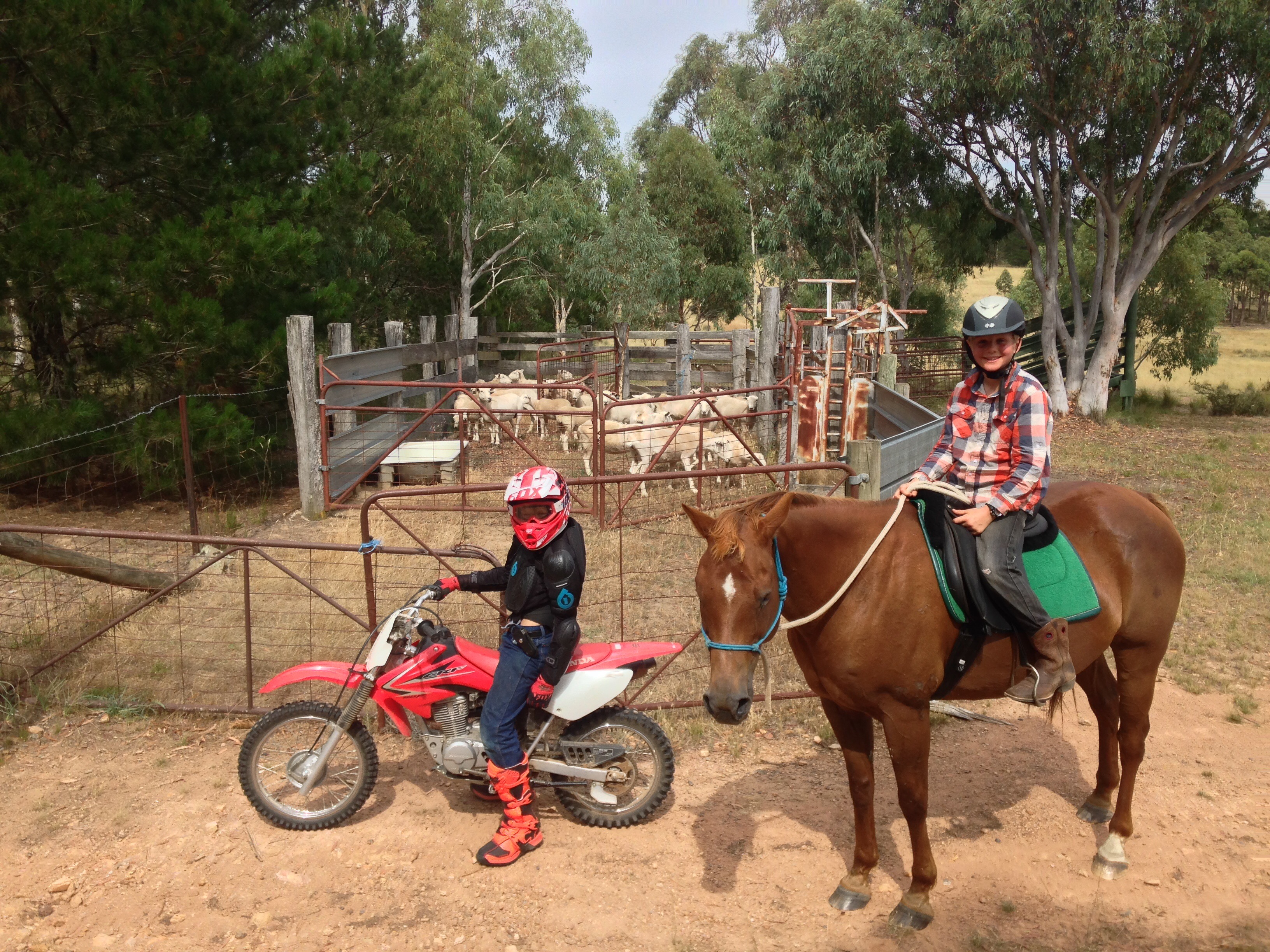
With two wannabe stockmen in the family, it was a perfect opportunity to put their mustering skills to the test!  It also was an opportunity for the Little Helpers to compare their preferred mustering method… horse or motorbike!

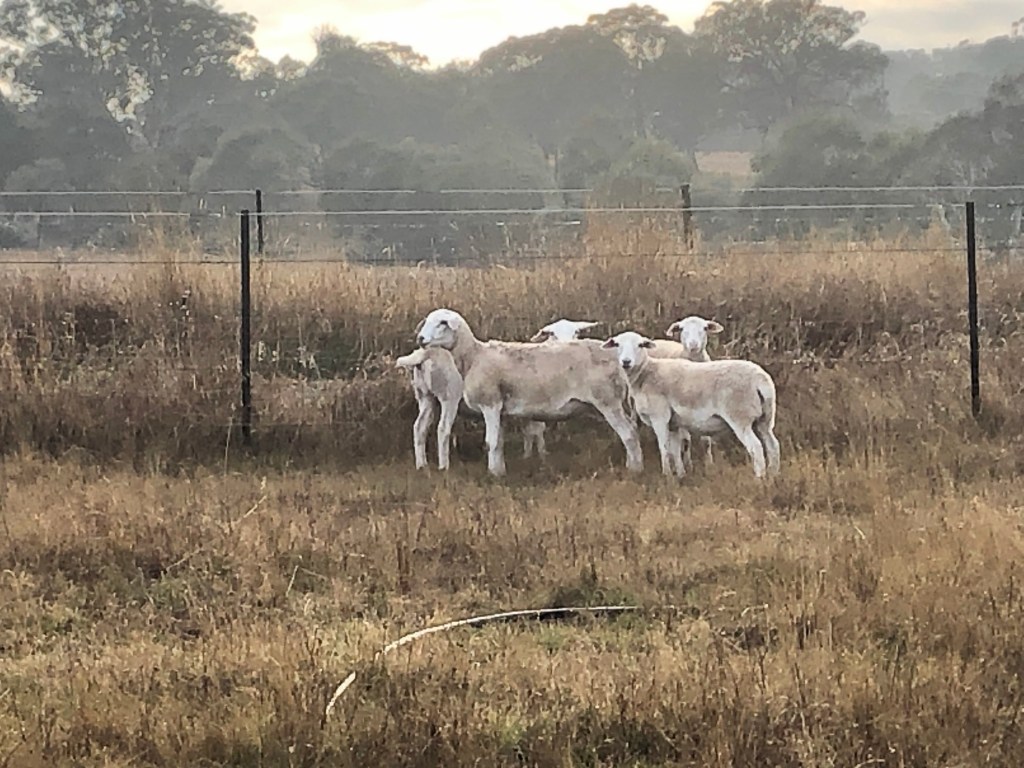
In no time at all, the boys had checked the boundary and confirmed all the sheep were enjoying a mid morning nap in the shade.  Unfortunately for the Little Fisherman, the sheep are very quiet, and assume the motorbike might also be associated with a bucket of oats, causing a slight hold up in proceedings.

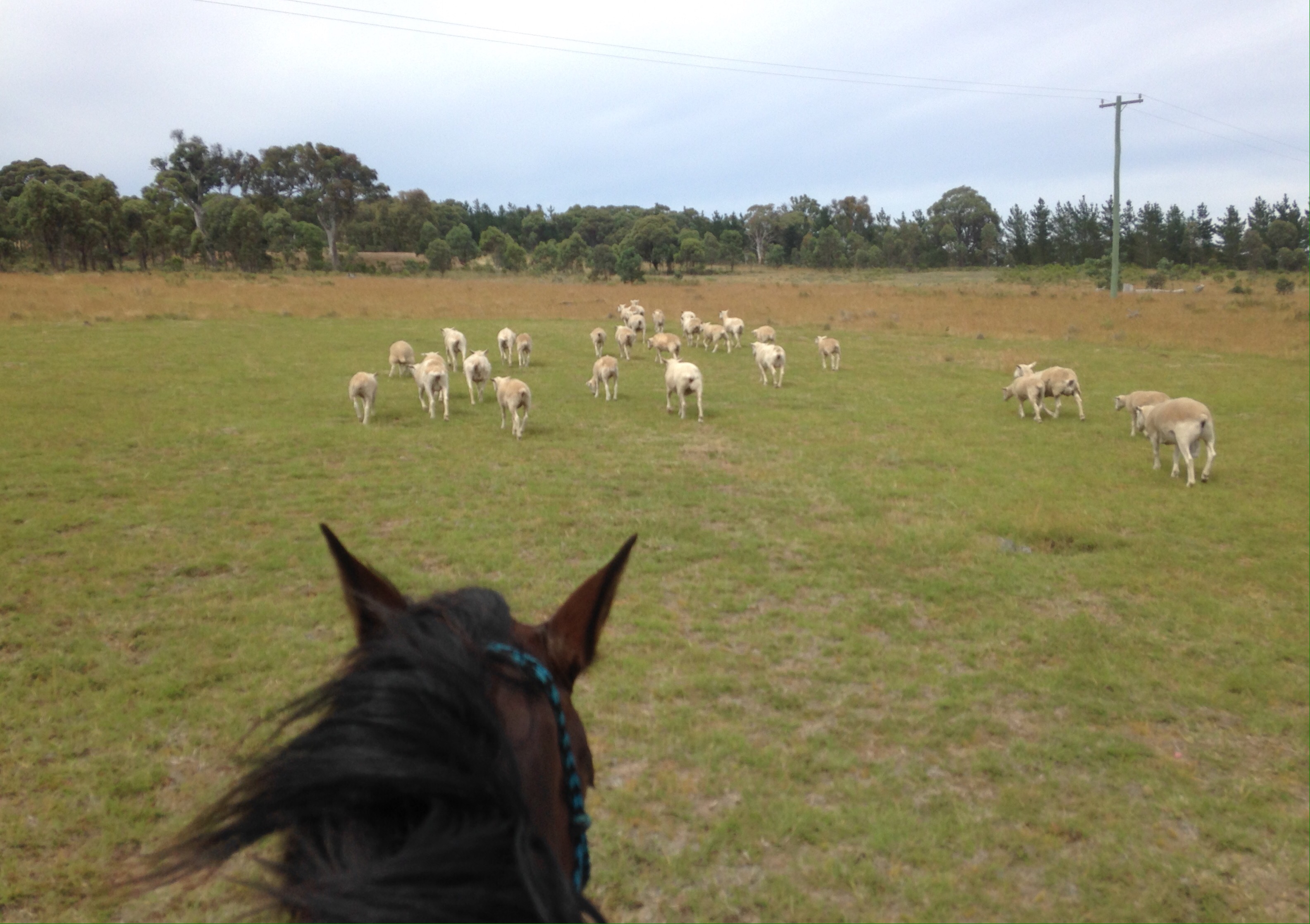
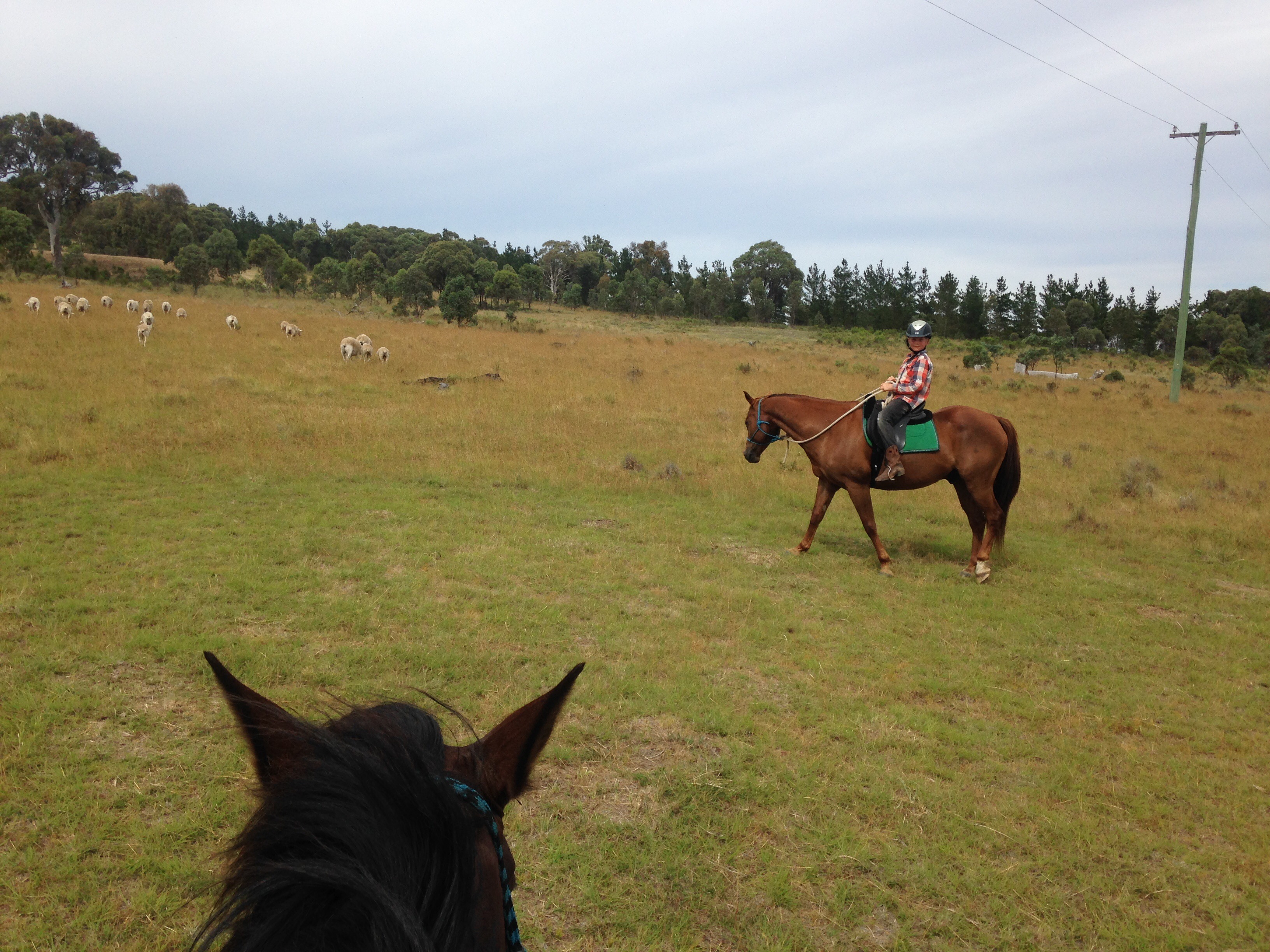
The horses however were a less familiar proposition for the sheep, and they quietly pushed the sheep out from their shady mid-morning siesta.  The horses both have far more experience than either of their riders (The Little Helper and myself) at this game, and put themselves in exactly the right place to push the sheep gently towards the yards.

The Little Fisherman had a great time on his motorbike, but found it hard to match his speed to the sheep.  He also had the added complication of having to ride around obstacles that the horses just stepped over.

A last-minute dash for freedom by a couple of cheeky ewes was quickly rounded up by the ever watchful horses, and a moment later all the sheep were safely ensconced in the yards.

Job done…

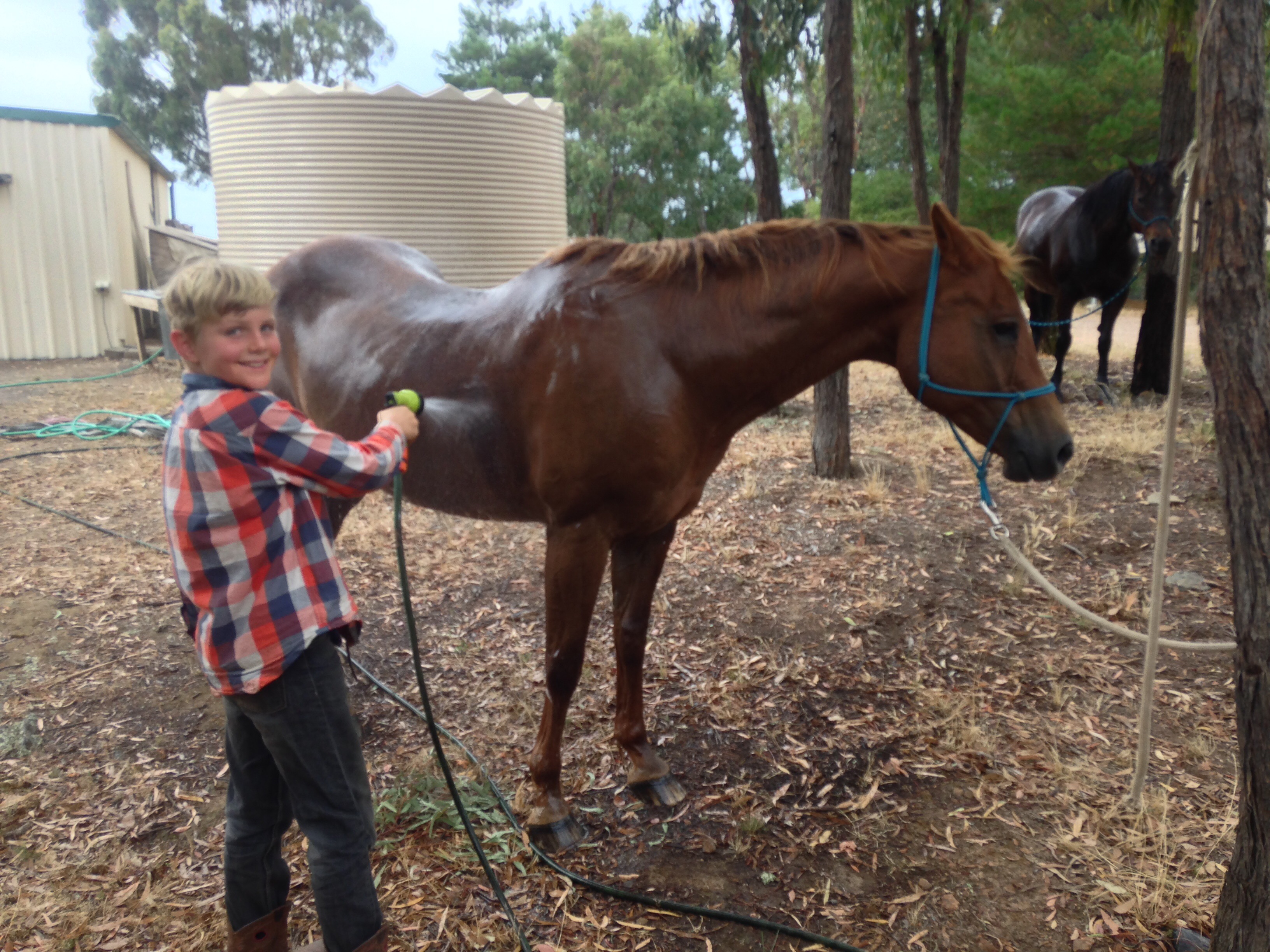
Well nearly.  Whilst the Little Fisherman wheeled his motorbike up to the shed, switched it off and isolated the fuel, the Little Helper had a couple more jobs to do.  Our trusty steeds, Mater and Dusty were given a refreshing shower and rub down before being put back in the paddock.

And so the debate still rages in our family as to which method of mustering is best.  The horses have a natural intelligence that means they naturally will work the stock and keep them together.  The motorbike however just sits in the shed until you need it, and doesn’t require anywhere near as much maintenance as the horse.

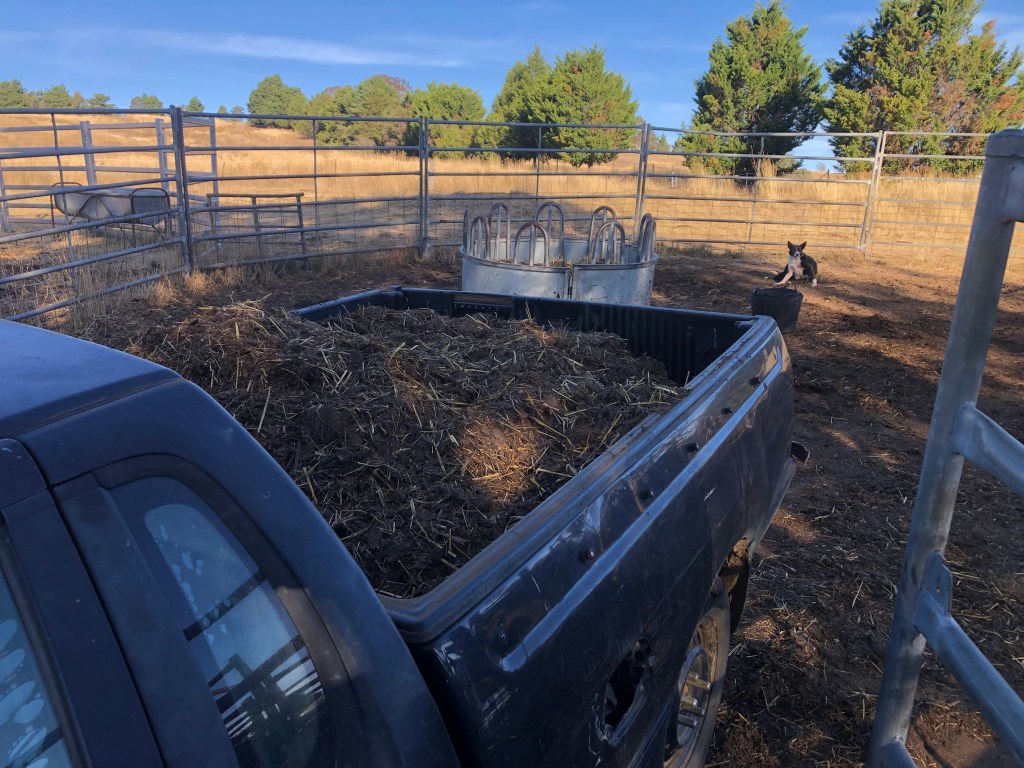
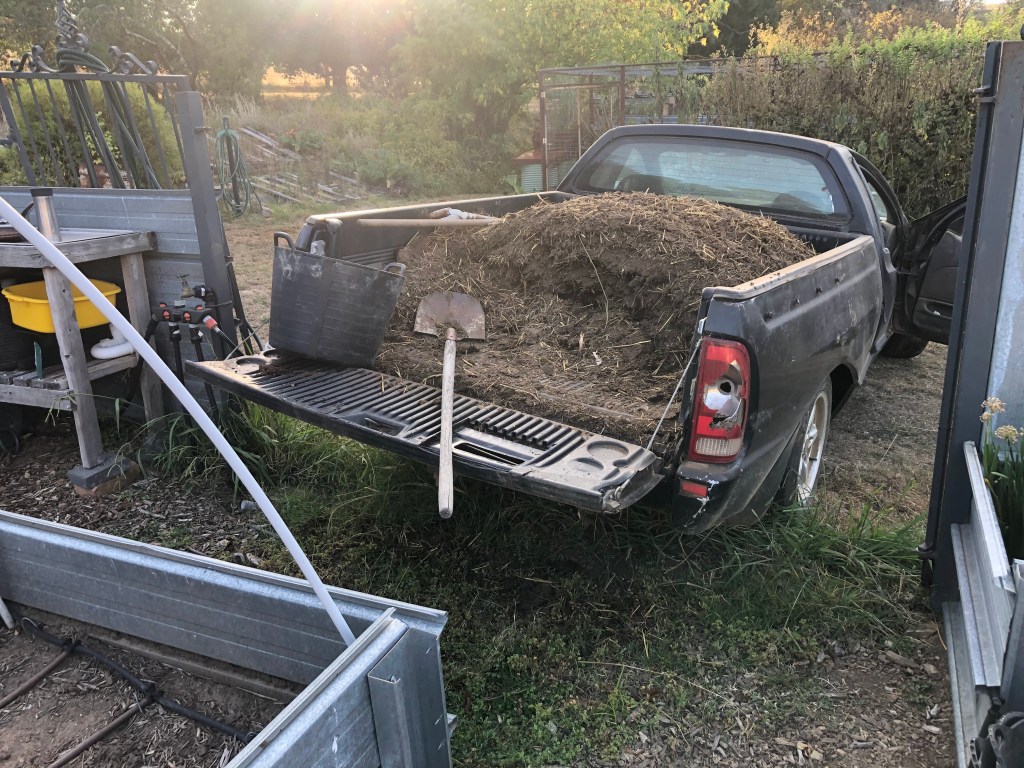
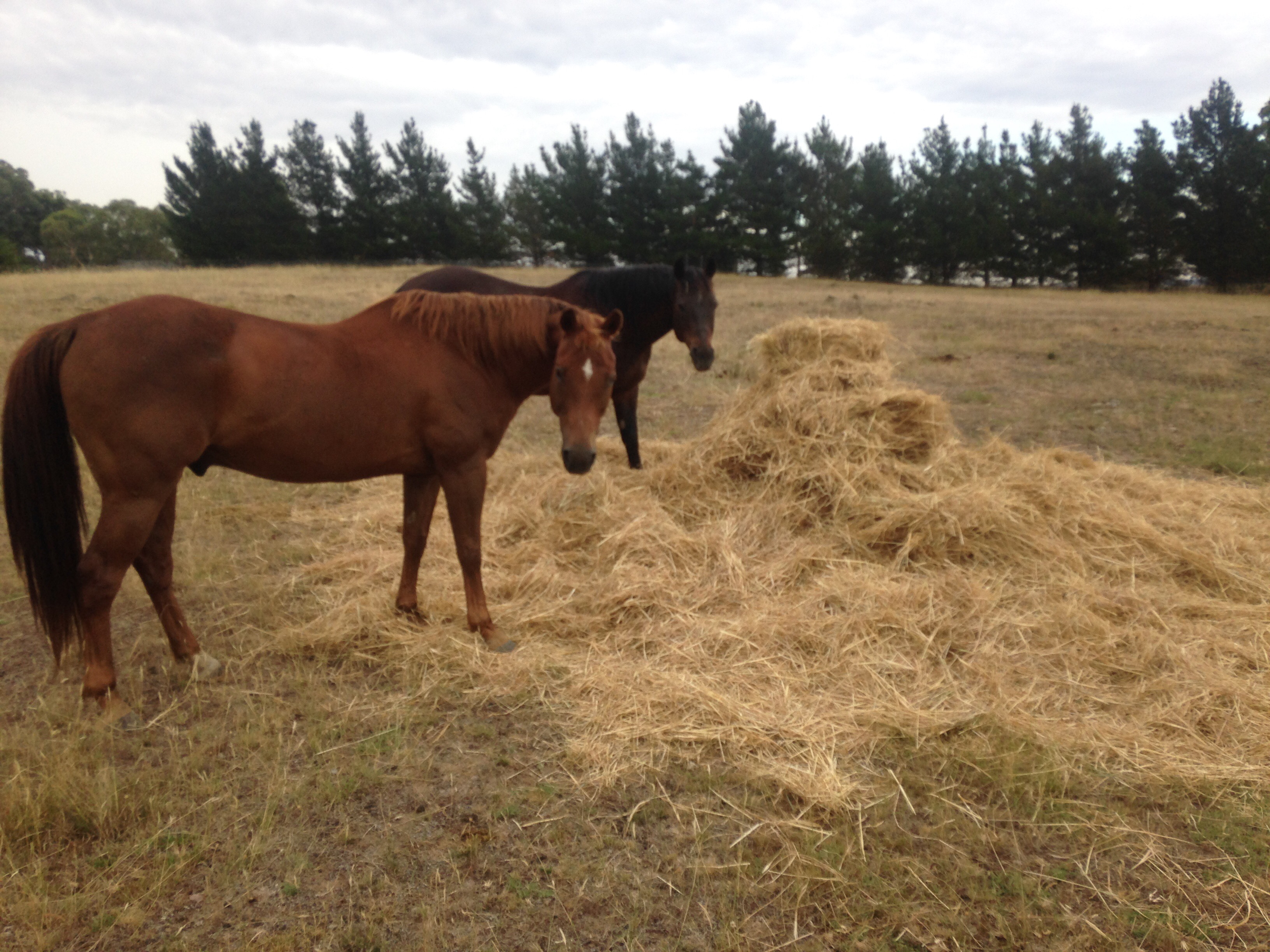
It must therefore come down to other attributes…  The horses were put back to work manufacturing quality garden fertilizer by processing pasture hay – which is something no motorbike could ever do!

Helping birds with nesting boxes

Whilst the Rock Farm is blessed with many hundreds of trees, only a handful of our trees are large old trees, with all important nesting hollows for our native birds.  Hollow logs and branches take literally hundreds of years to form – and are prized by native birds for nesting.  With our young areas of re-growth promising excellent habitat in the future,  we thought we would lend our birds a helping hand.

One way to assist native birds, even in an area with as many trees as ours, is to build nesting boxes.  They replicate the hollows that take so long to form.  There is a wealth of information online, with plans freely available.  There is also a significant amount of science involved too, with the size of the box, the entry diameter and other features critical for many species.

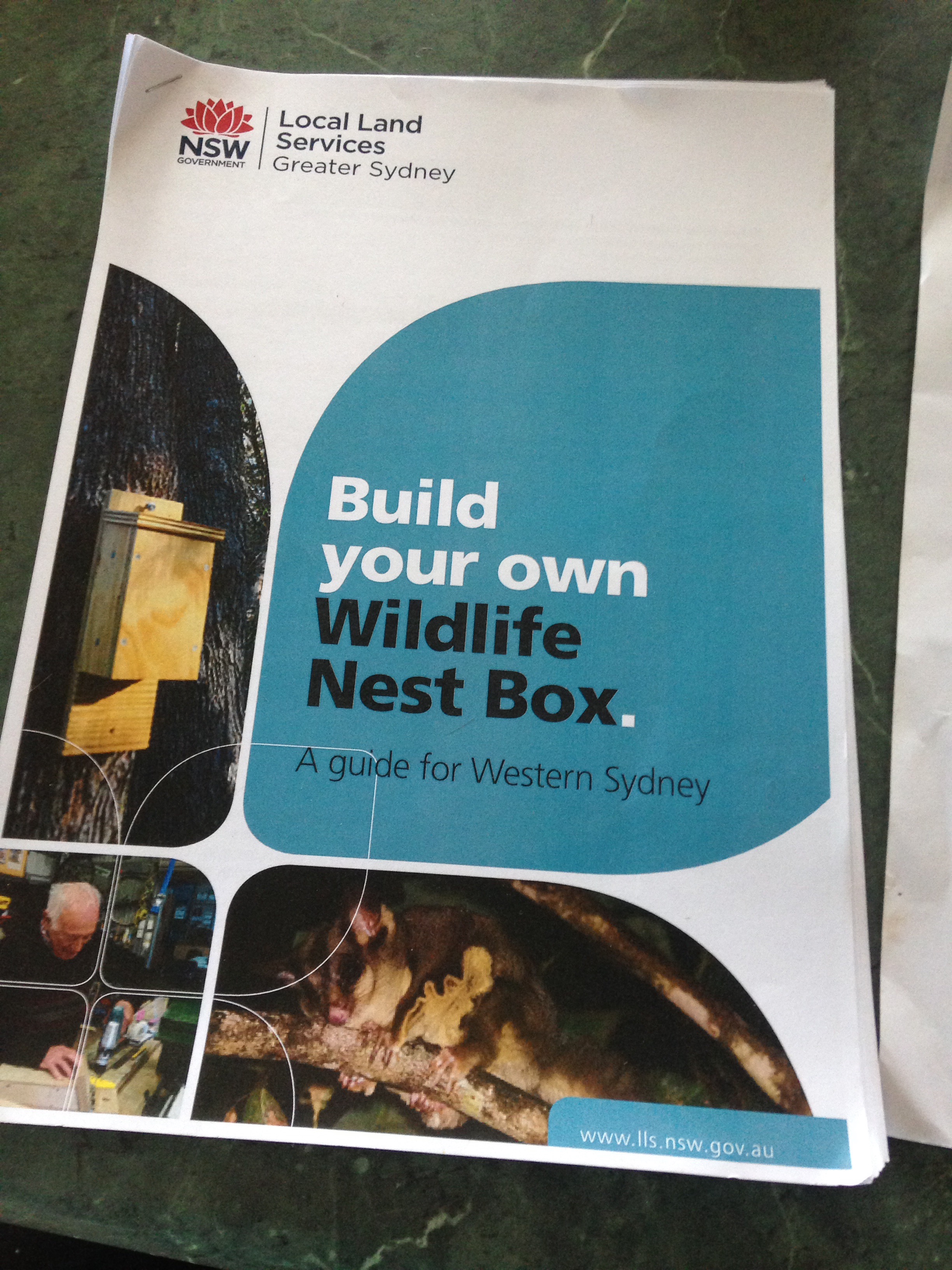
We armed with this excellent publication from the Local Land Services (available online here: http://greatersydney.lls.nsw.gov.au/__data/assets/pdf_file/0006/656610/GS-LLS-Wildlife-Nest-Box-2016_Final-Accessible.pdf).  With our heads full of plans and ideas it was time to get building.

The boys had a look around the Rock Farm Resource Centre  – also known as Dad’s Shed, and we found some old flooring that was looking for a new purpose.

img_0019

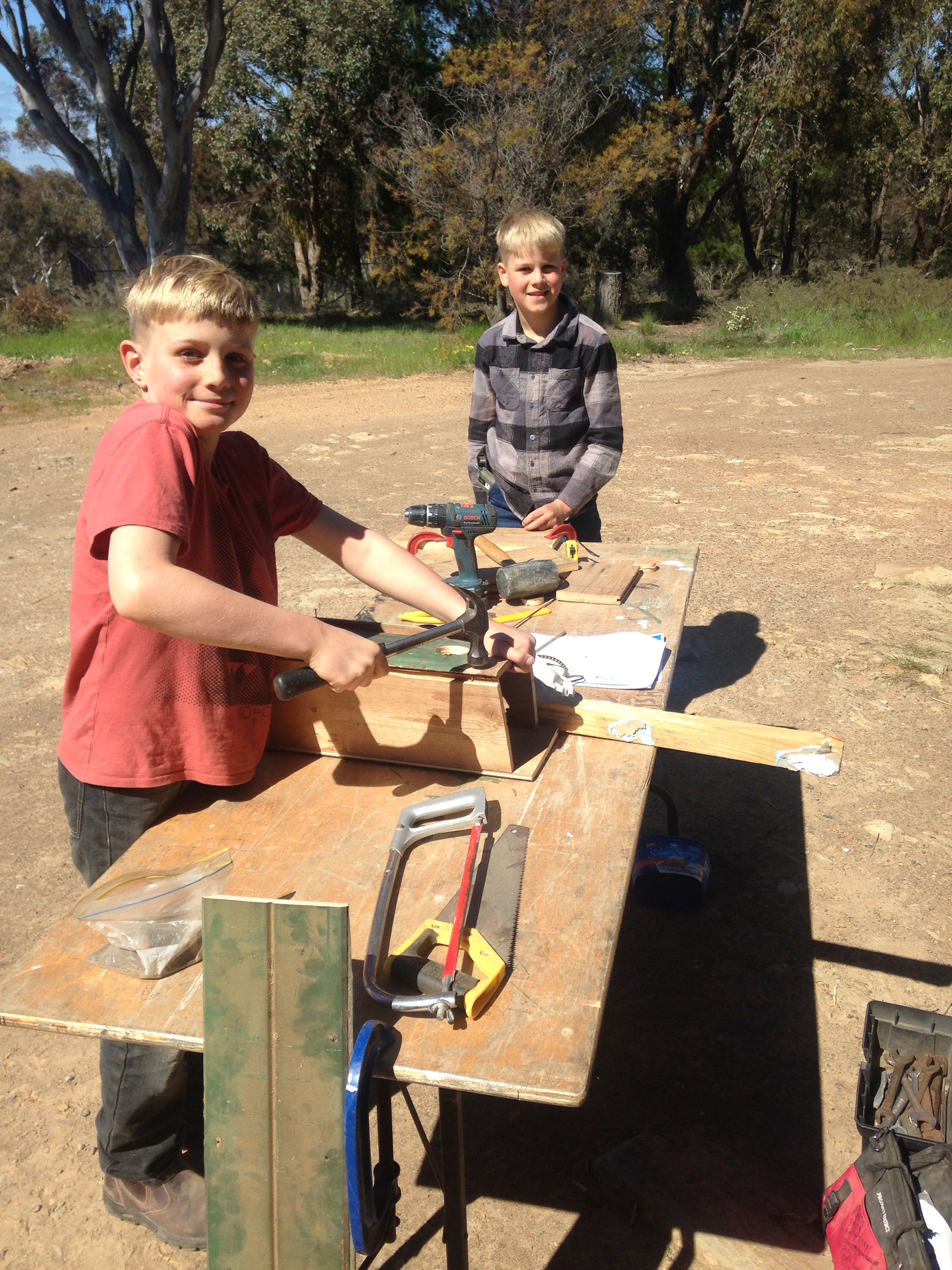
This was to be the boy’s own project.  In the interests of expediency (I was looking forward to an afternoon nap) I might have cheated and run the timber through the bench saw to cut it, but I was working to their design.  The old adage of measure twice and cut once was in force… but soon there was so much pencil lines on the boards it was hard to tell which ones to cut!

img_0021

The boy’s initial thoughts were that this would be easy… but like all good plans, they soon realised that assembling the boxes would take a little effort.  I told them they couldn’t use glue – so it was hammer and nails only.  The Little Helper found his soft oregon boards were easy to work, but the Little Fisherman regretted his selection of thick hardwood boards.  He ended up pre-drilling his holes, and only broke one drill bit in the process.

img_0022

To their credit, I only was used to hold things together a couple of times.  The bench saw made small adjustments easy and before long we had a couple of neat little boxes ready to hang in the trees.

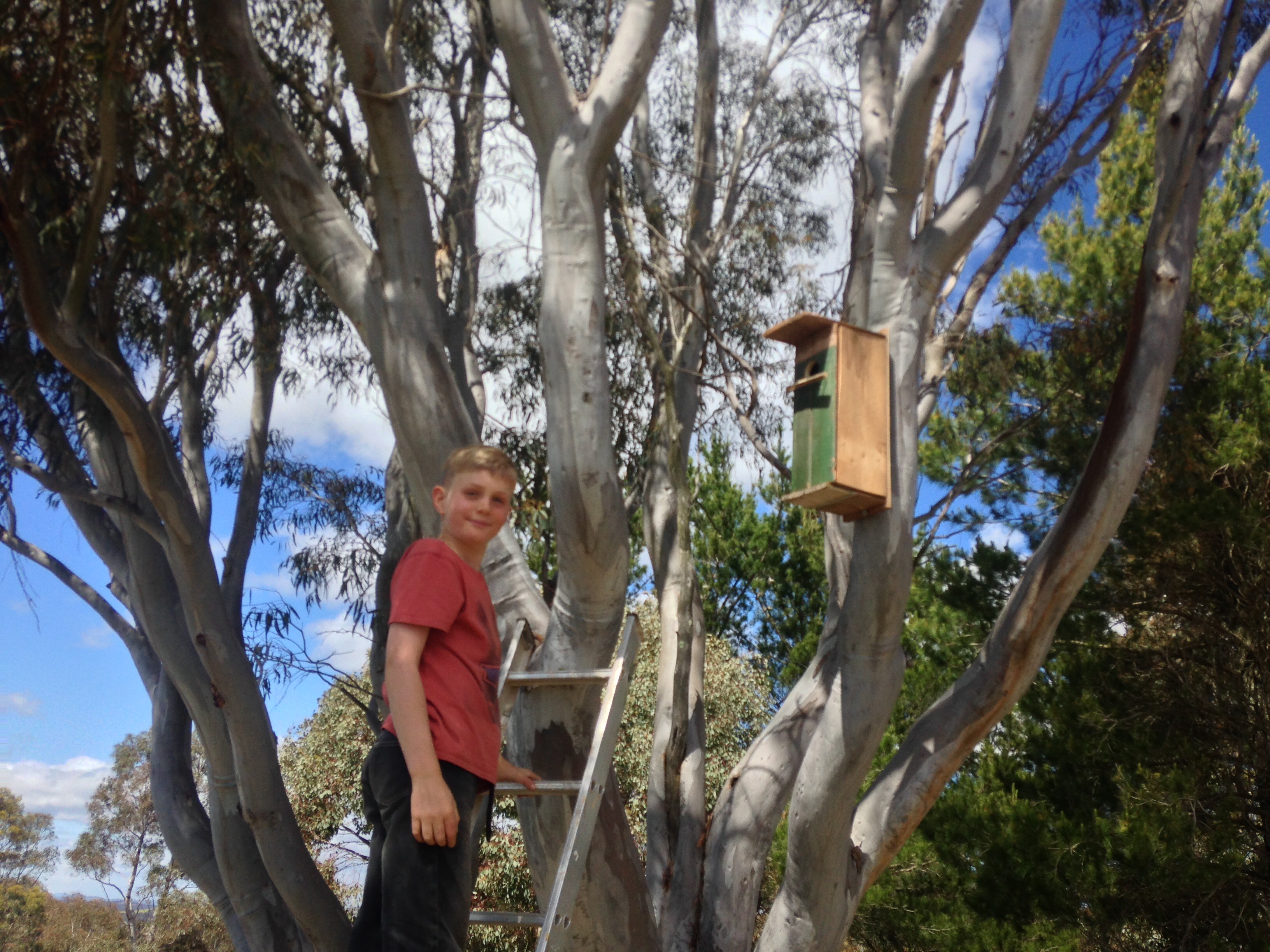
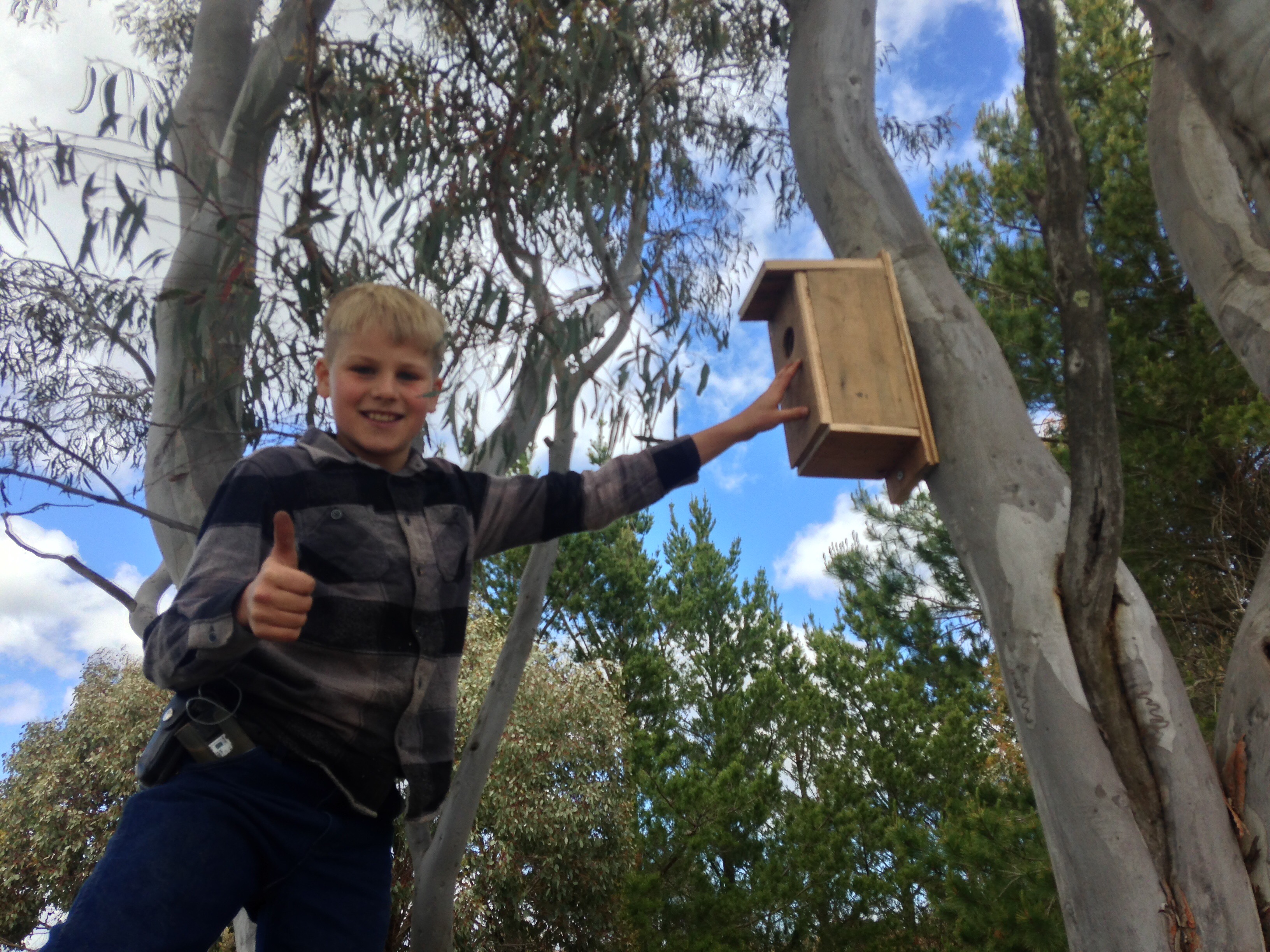
The best way to secure the boxes to the trees is via two bugle headed screws.  This causes far less damage to the tree than tying wire around the branch.  We mounted the boxes in a Scribbly Gum (Eucalyptus Haemastoma).  We are just now waiting for our first guests to move in!

It was a wonderful way to spend a morning with my gorgeous boys.  They learnt a few new skills, and as a bonus, we get to help a few little birds get a head start.

You can shear a sheep many times, but…

One of the reasons we moved to the Rock Farm was to ensure our kids have a well rounded understanding of our food supply chain.  One part of this food chain includes the raising of sheep for meat.  And whilst we could sell our sheep through the regular sale yards, and buy our meat from a butcher, I think we have a responsibility to teach our kids about what meat production actually involves.  By slaughtering the lamb ourselves, we reduce the stress on the animal significantly and save on food miles.

I appreciate that many people may feel uncomfortable with this process, and indeed many people make the choice not to eat meat at all.  I understand and respect those choices.

But I also feel that meat production often gets an unfair portrayal.  We are told it is bad for the environment, however I know that the Rock Farm has an incredible range of biodiversity that you don’t find on mono-culture cropping farms.  We have hundreds of native animals, lizards and birds, native grasses, shrubs and trees that live in harmony with our small scale sheep production. I also know that all who raise animals have a social responsibility to ensure the stock are raised in a humane, healthy manner.  I see small scale poly-culture or permaculture that works with the natural environment as being our future.

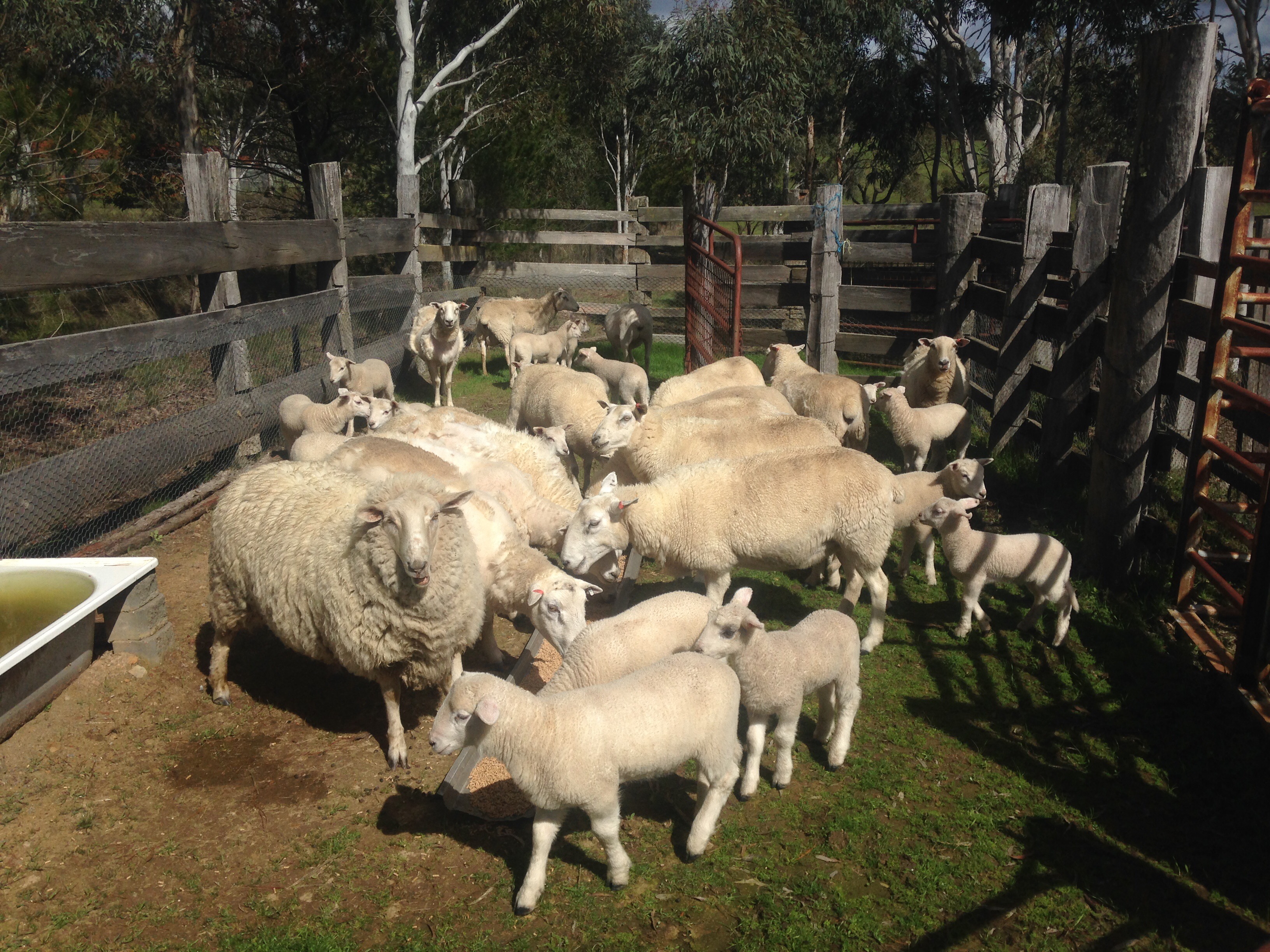
You may notice one sheep above that doesn’t look like the other ones.  Most of our sheep are wool shedding Wiltipolls, however the fellow with a full clip of wool is a first cross Meriono/Suffolk wether.  Despite his size, he still has a mouth full of baby teeth, meaning he is still a lamb.  He had been raised as a poddy by the boys, but we had always told them that his job (every animal has a job on a farm) was to feed us, and he was now ready.  His wool was also long enough to shear, and whilst it will never win any awards, the first cross wool is usually handy enough (medium fine) to make the effort to shear.  It did remind me of the old adage that “You can shear a sheep many times, but you can only skin them once.”

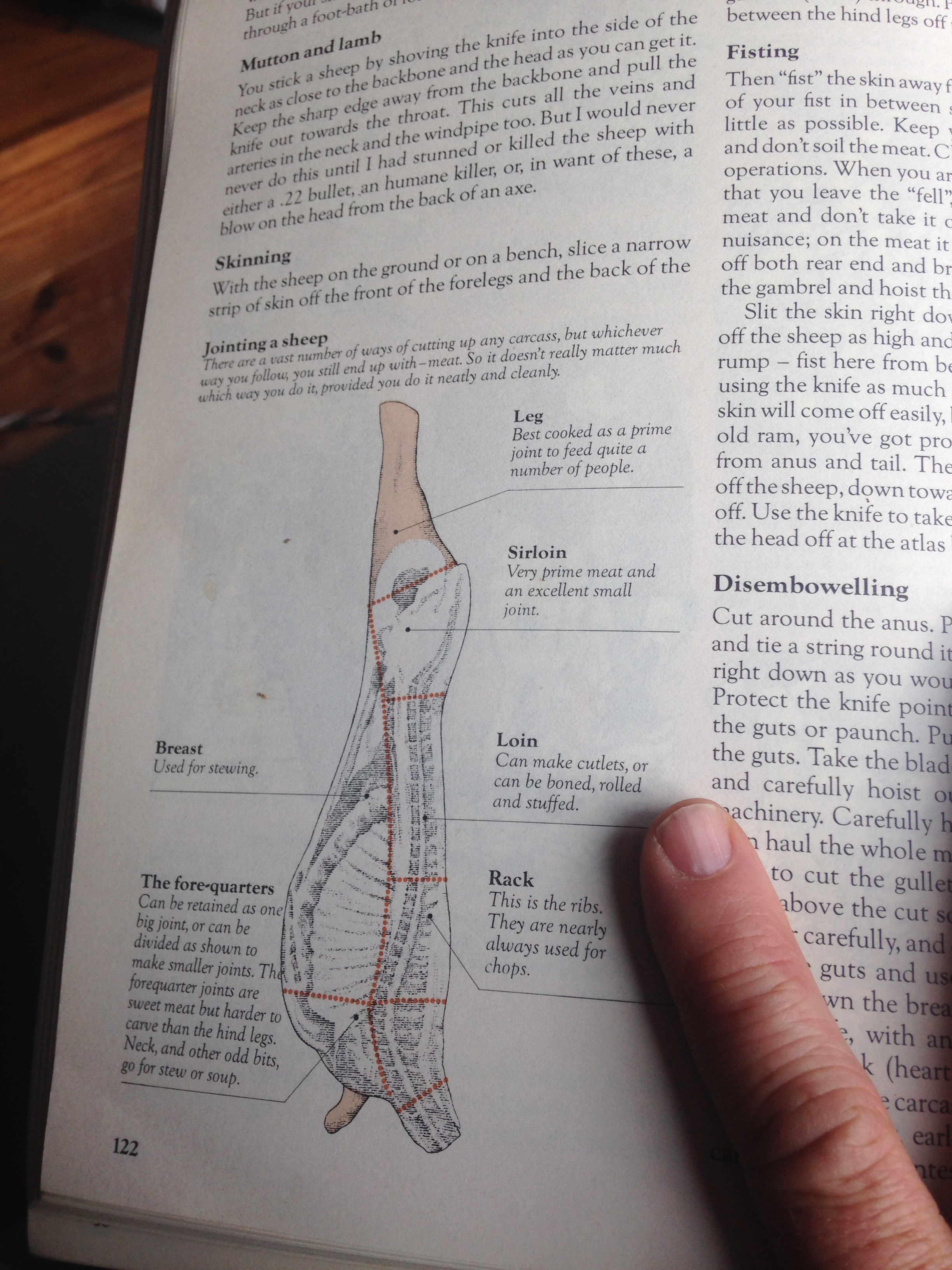
Butchering a lamb is a skill, and it had been many years since I had last butchered a couple of lambs.  I found a few moments to enjoy a cup of coffee refreshing myself with the excellent words of John Seymour in his Self Sufficiency guide.

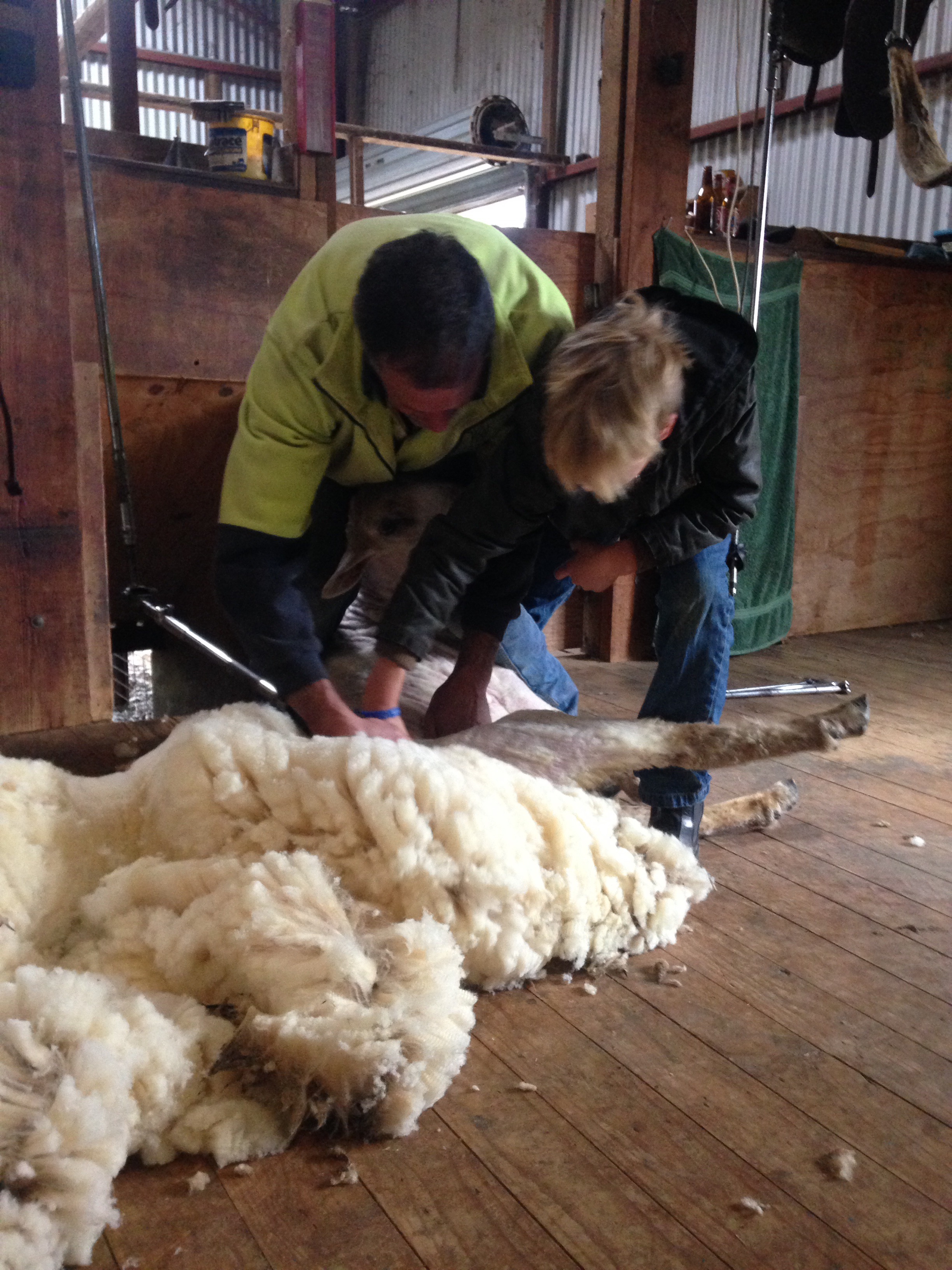
The first thing to do with the lamb was to shear him.  Thankfully friends down the road kindly agreed to shear the lamb, and also give the Little Fisherman a lesson in shearing.  This is definitely something I cannot do, but Jimmy made it look easy.

After shearing, it was important to slaughter the lamb quickly and humanely.  Again I learnt from Jimmy, who after many years has perfected the skills of cleanly slaughtering and butchering sheep.  The principles were as described in John Seymour’s book, however Jimmy was unbelievably quick and in no time at all we had skinned and cleaned the carcass.

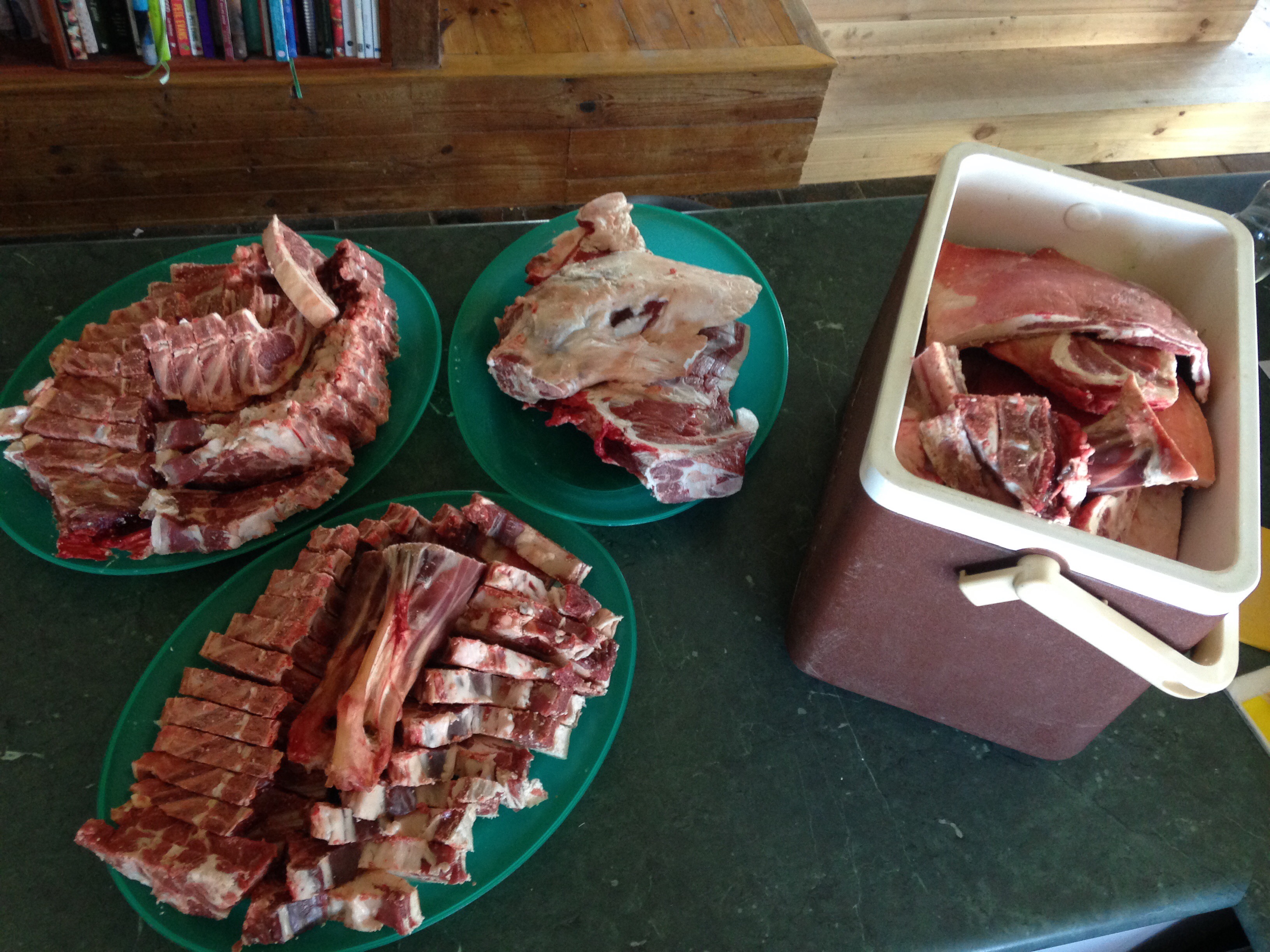
We then hung the carcass in a cool room for 10 days, before running it through a band-saw.  With the legs and shoulders making great roasts, we cut most of the rest into chops.  It took under ten minutes to turn the carcass into meals.

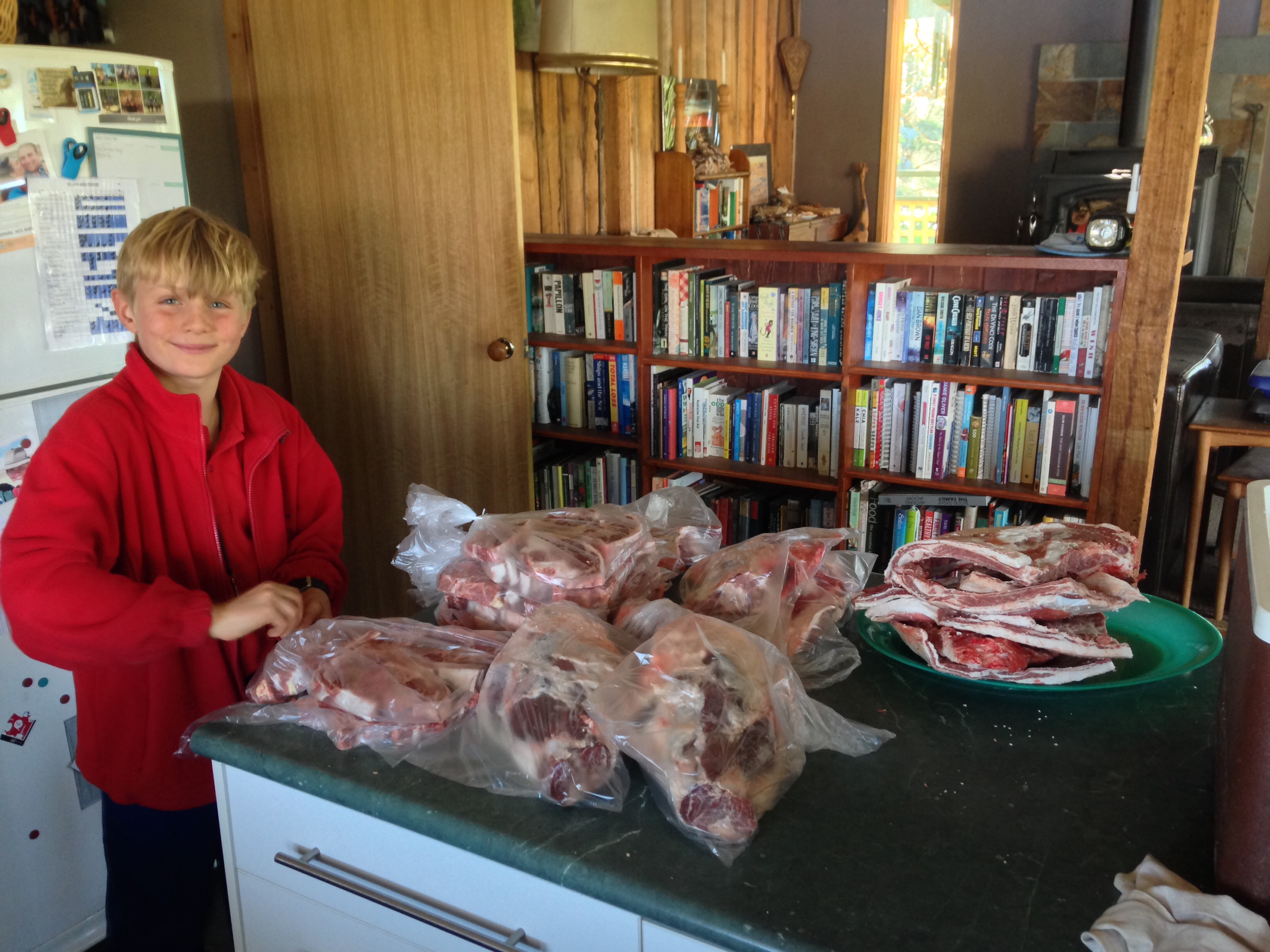
It was then a relatively simple process to divide the meat into meal size portions for the freezer.  The dog also managed to do extremely well out of the offcuts.

And the verdict?  Delicious 🙂

There are few rules that apply to home butchering in NSW.  The basic premise is that meat that is butchered at home is not able to leave the property.  You are not able to sell, swap or barter it, or even give it to family and friends.  This is to protect us all from disease and parasites that used to be common place in yesteryear.  Making sure the meat is well cooked is a good start, but you also need to wash your hands frequently, make sure you dispose the offal properly and keep vaccinations and dog worming up to date.

A huge thank you to Jimmy for his guidance, and patience in bringing me back up to speed.  It was much appreciated.

I’m not the only one with projects

With always something to do on the Rock Farm, it is inevitable that the Little Helpers want to get involved.  Sometimes they take it even further, and decide that they would rather work on their own projects.  They frequently have projects on the go, and I must admit that I had forgotten how fortunate they are.

In New York, they are creating an Adventure Playground for kids – and I think it looks a lot like the Rock Farm.  http://www.nytimes.com/2016/05/29/nyregion/on-governors-island-mountains-of-junk-where-children-find-adventure.html

Whilst some of their ideas are inspired by such wonderful books as “The Dangerous Book for Boys, by Conn Igguiden, many are their own creation.

I am a big fan of the boys getting their hands dirty.  I have a good collection of hand tools, old timber and various ‘resources’ others might term ‘junk’.  The boys know which tools they’re allowed to use, and which ones they need to ask permission for.

I must admit I occasionally get nervous when they ask to borrow my tools.  I am working on solving that one, by buying them some tools of their own.  They like nothing more than using their tools to help me with my projects.

Last year they decided that they would make some bows.  It was a good fun activity, but the Rock Farm is distinctly lacking in Yew, meaning that we used wattle and then pine branches to make our bows.

It didn’t work out too well.

Other jobs the boys have taken on is the construction of a ladder into their cubby house.  I might have provided a little bit of guidance, as the Little Helpers don’t tend to use tools such as tape measures or pencils too much.

Most hand tools are pretty safe to use.  The worst the kids will do is cut themselves.  It is modern power tools that scare me.  A circular saw will take off a thumb in the blink of an eye.  I love seeing them get out there and use the traditional tools.

But of course, with all things, the kids need adequate supervision.

You might be able to do it all in New York… but I’m happy enough knowing that we have all we need right here 🙂