From Spring’s Green to Summer’s Gold

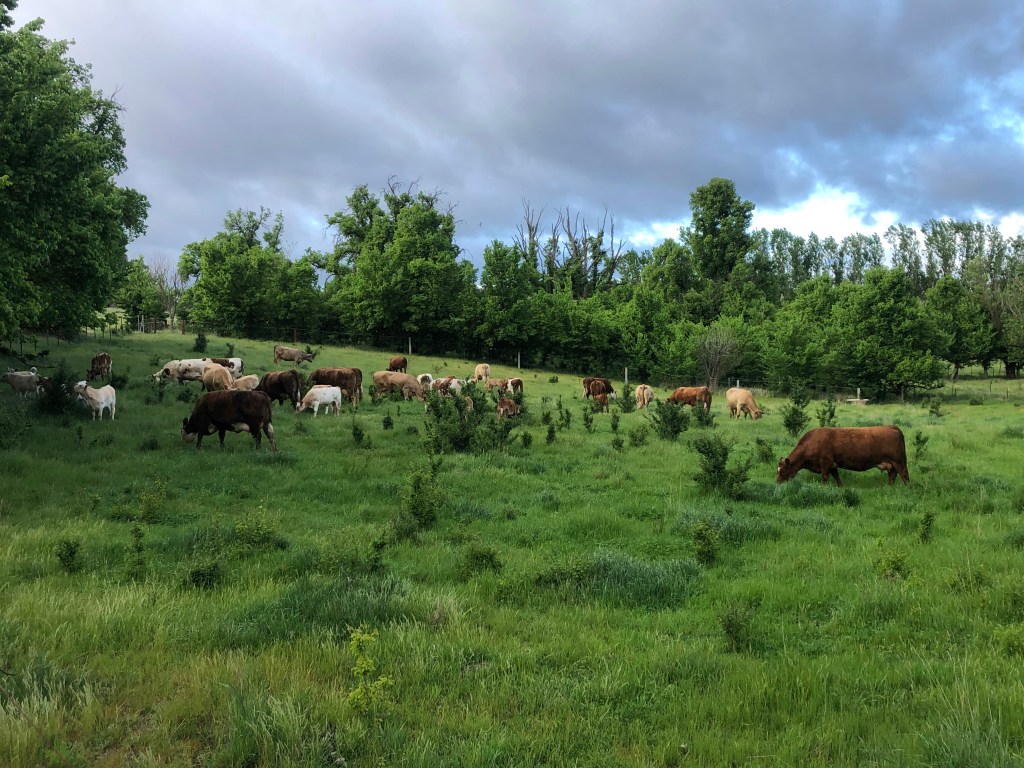
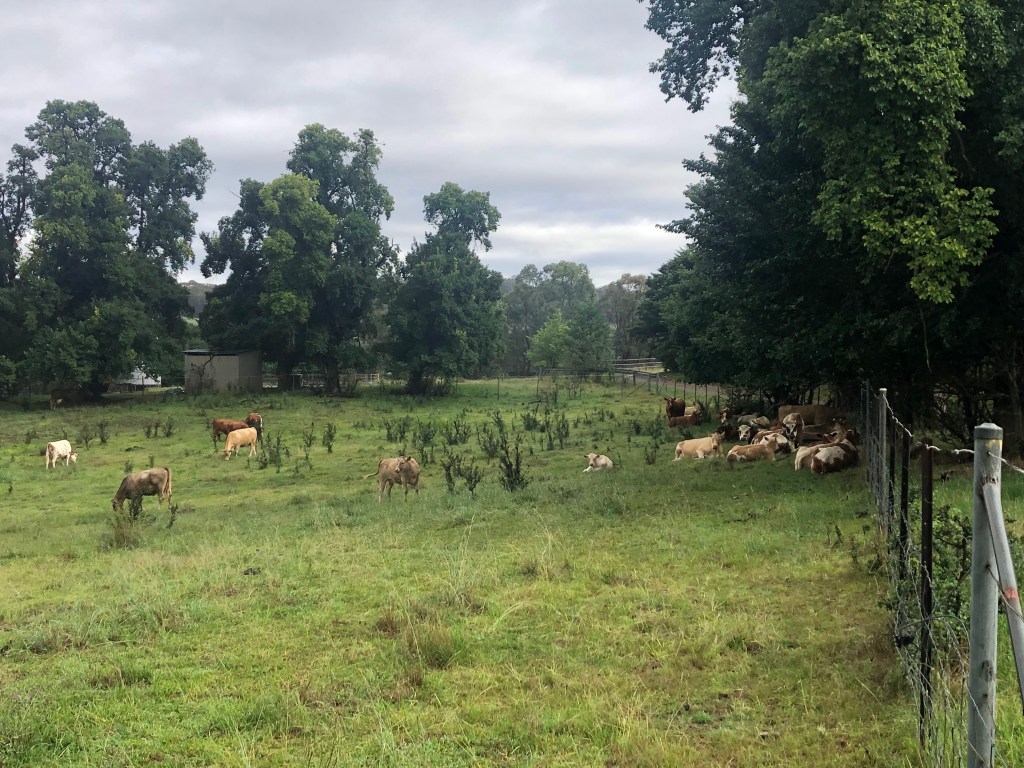
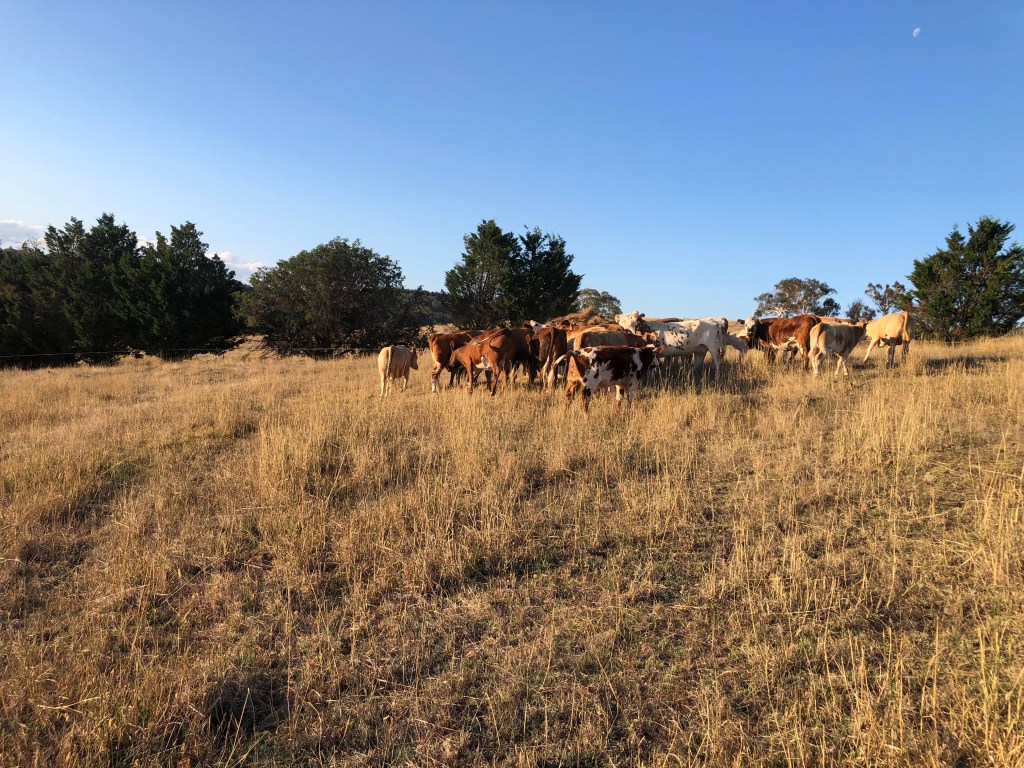
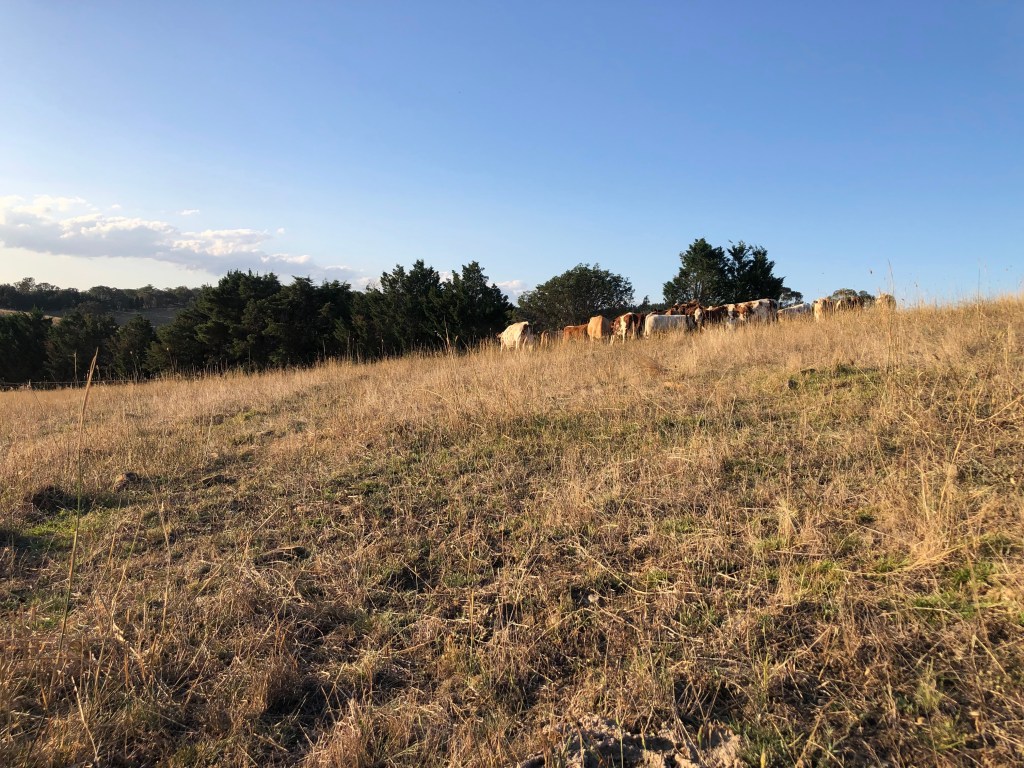
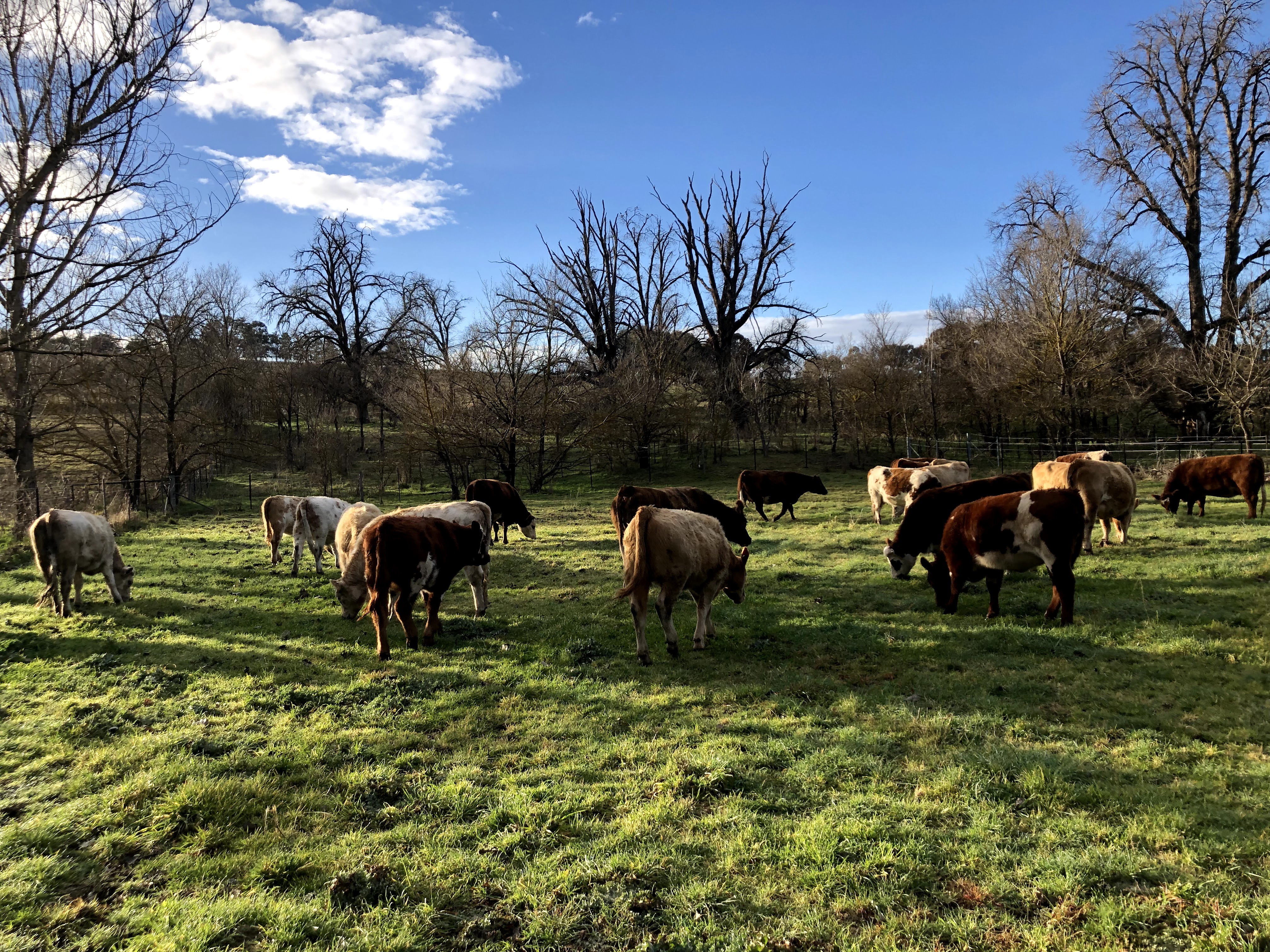
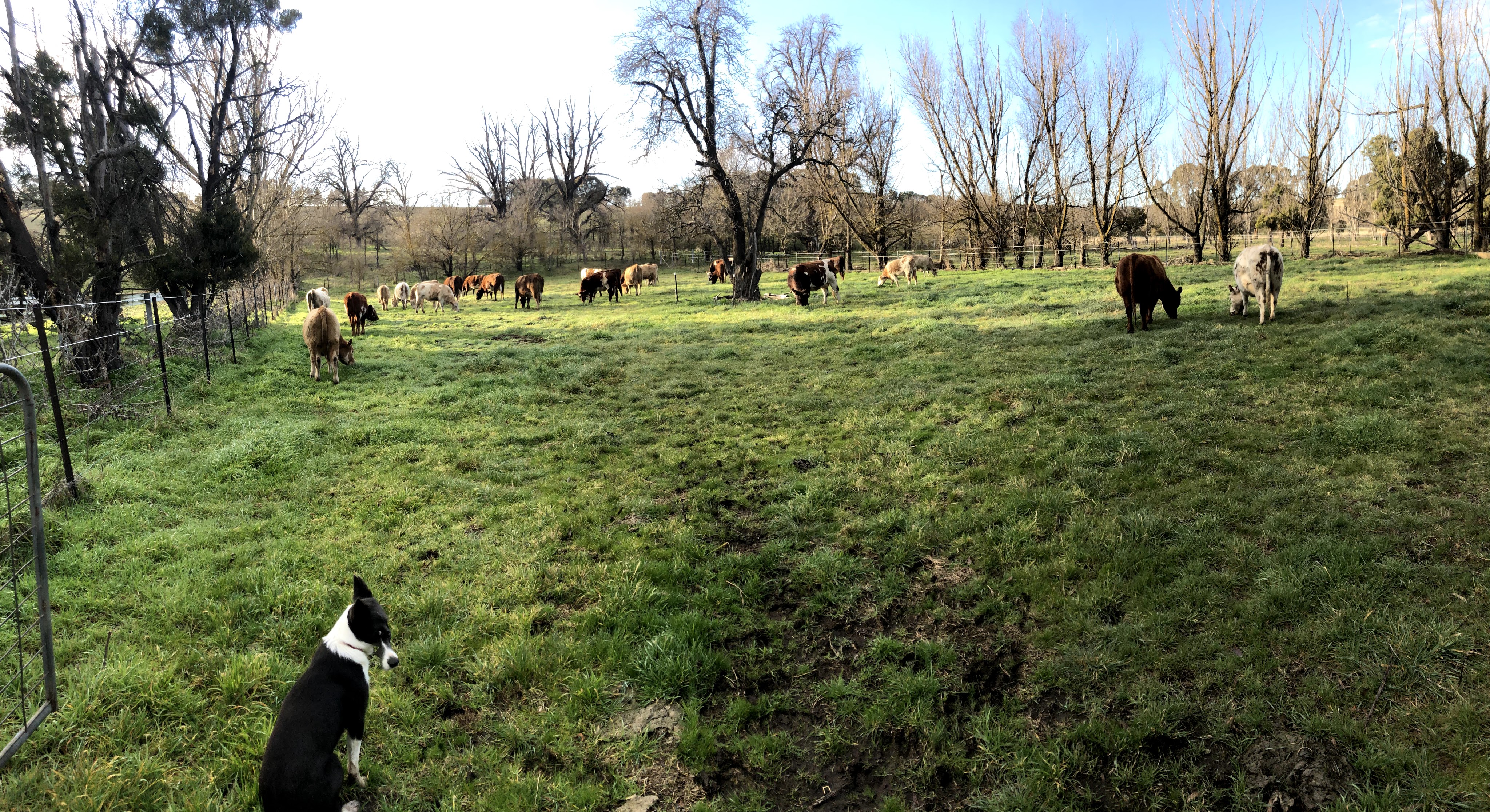
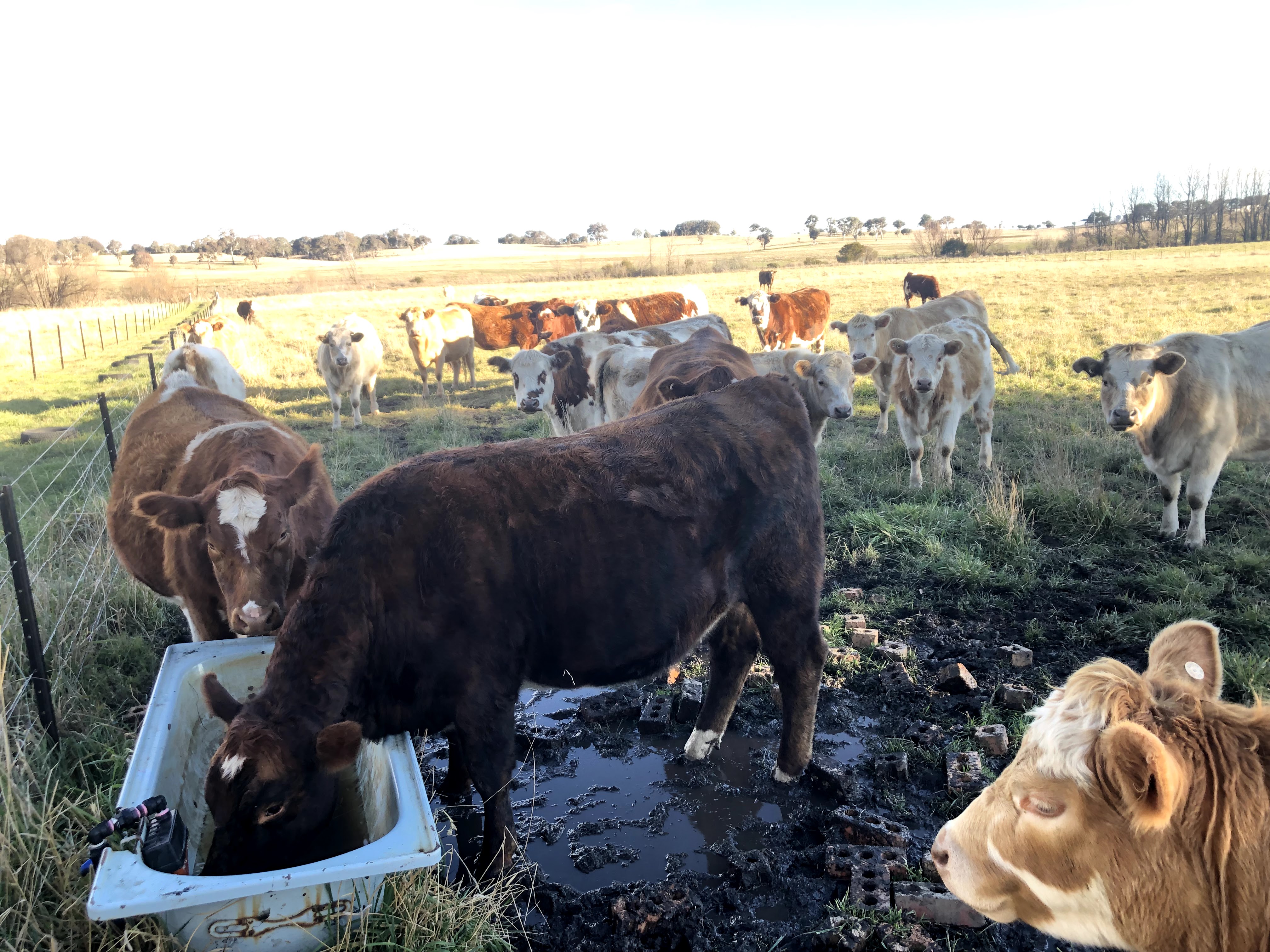
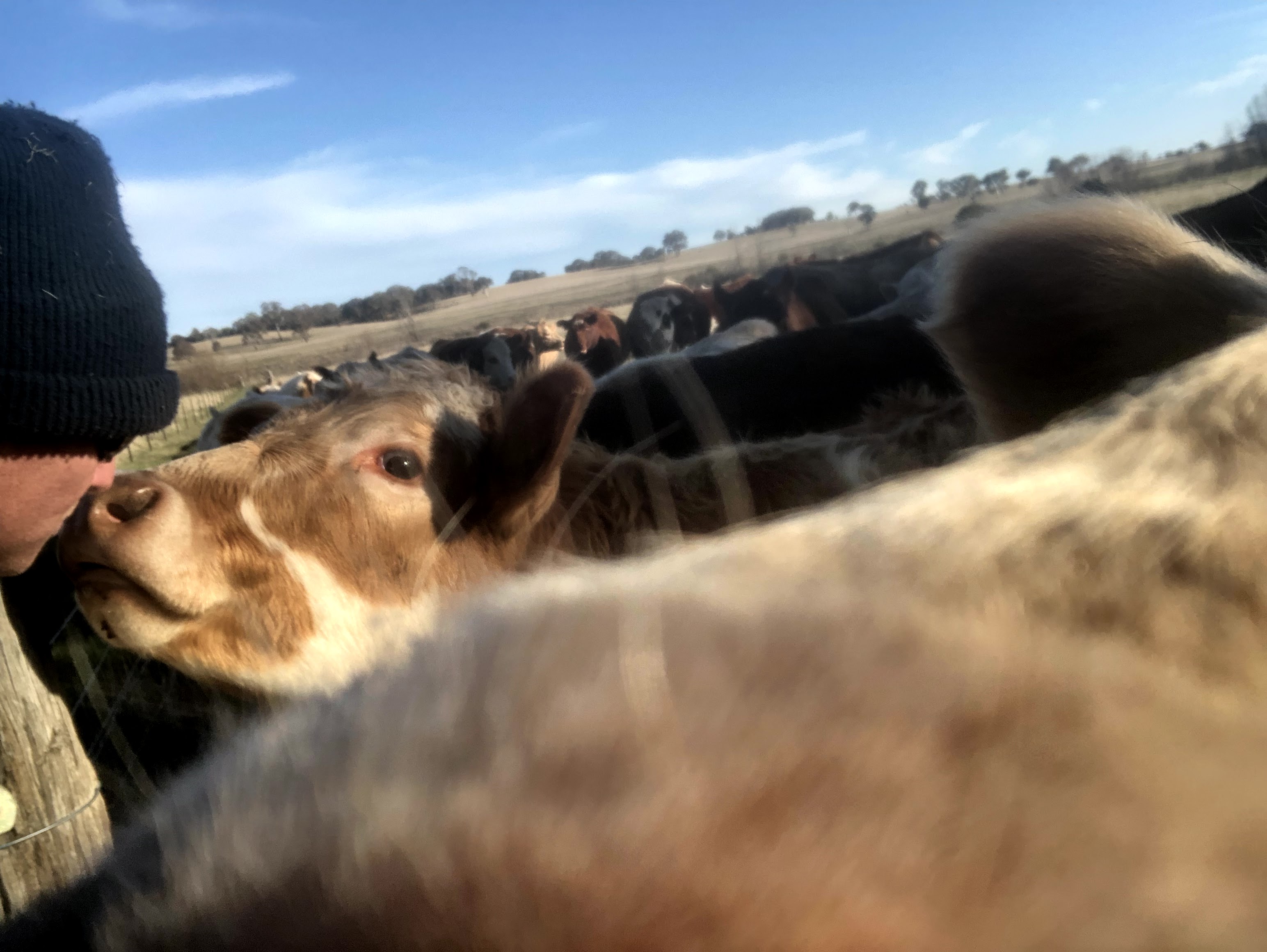
As surely as the sun rises in the morning, spring slips to summer. The flush of green has turned golden, with the grass rapidly setting seed and going off. The paddocks feel different now—still beautiful, but carrying that familiar hint of dryness that reminds us the hot months are here.
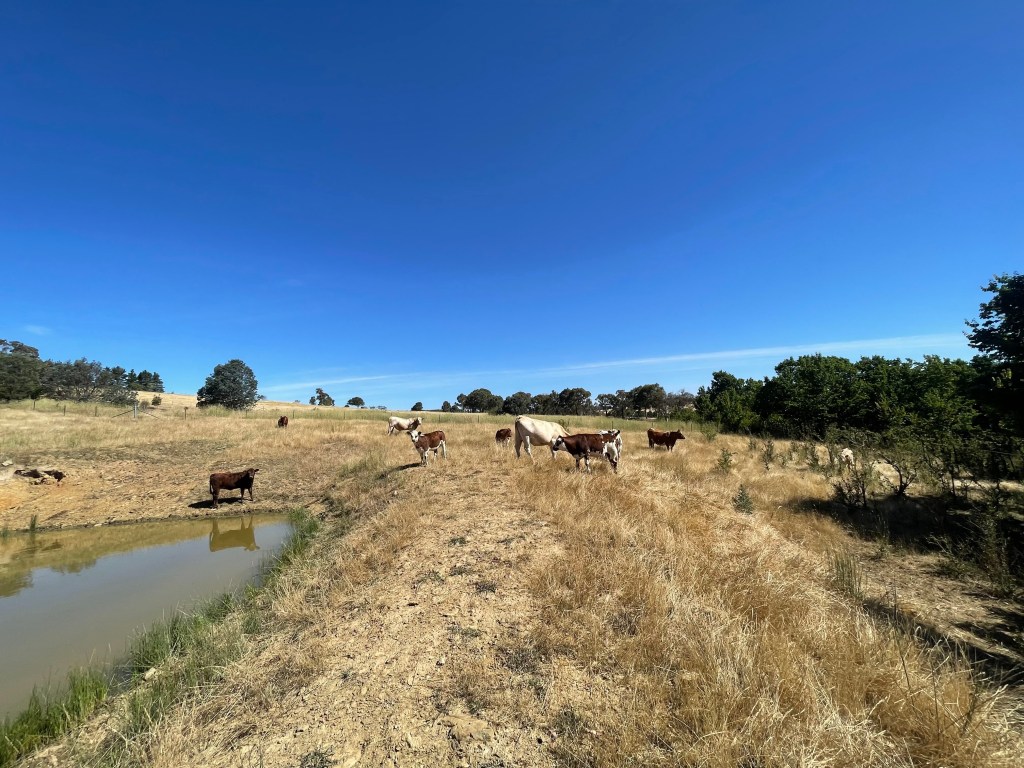
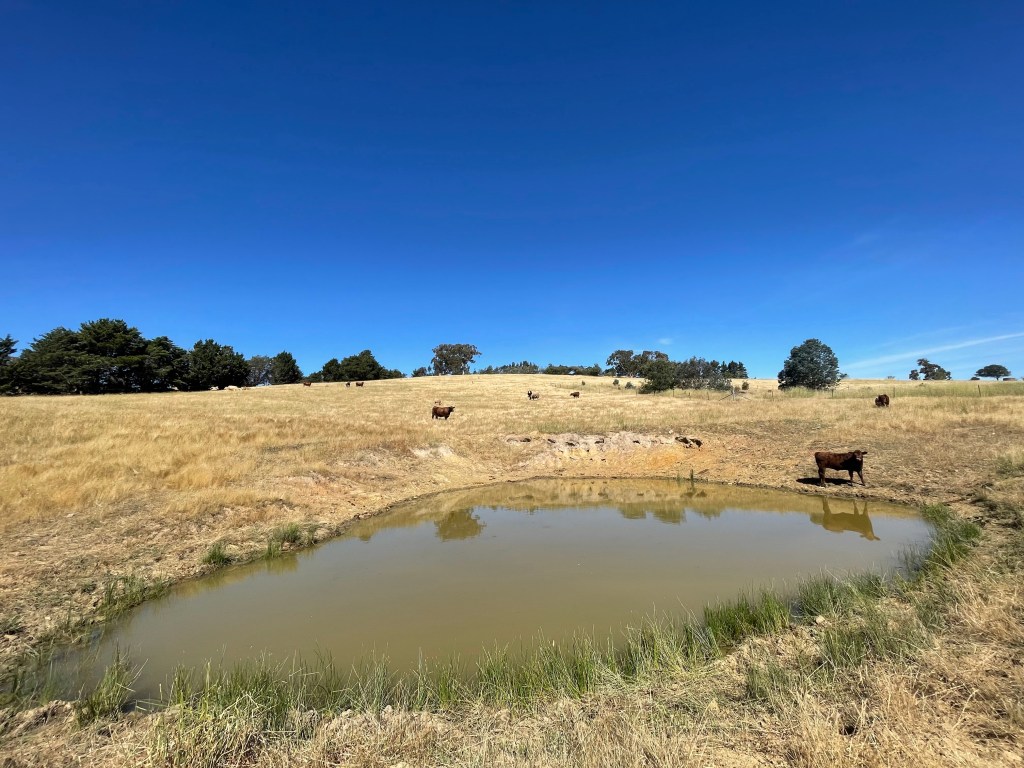
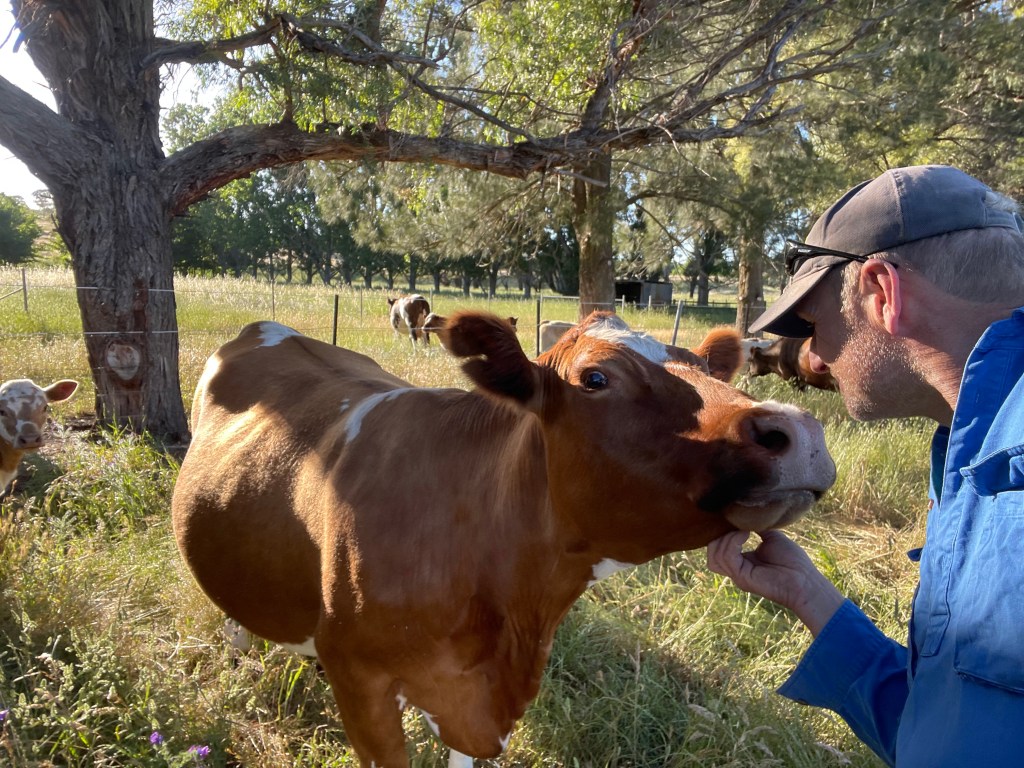
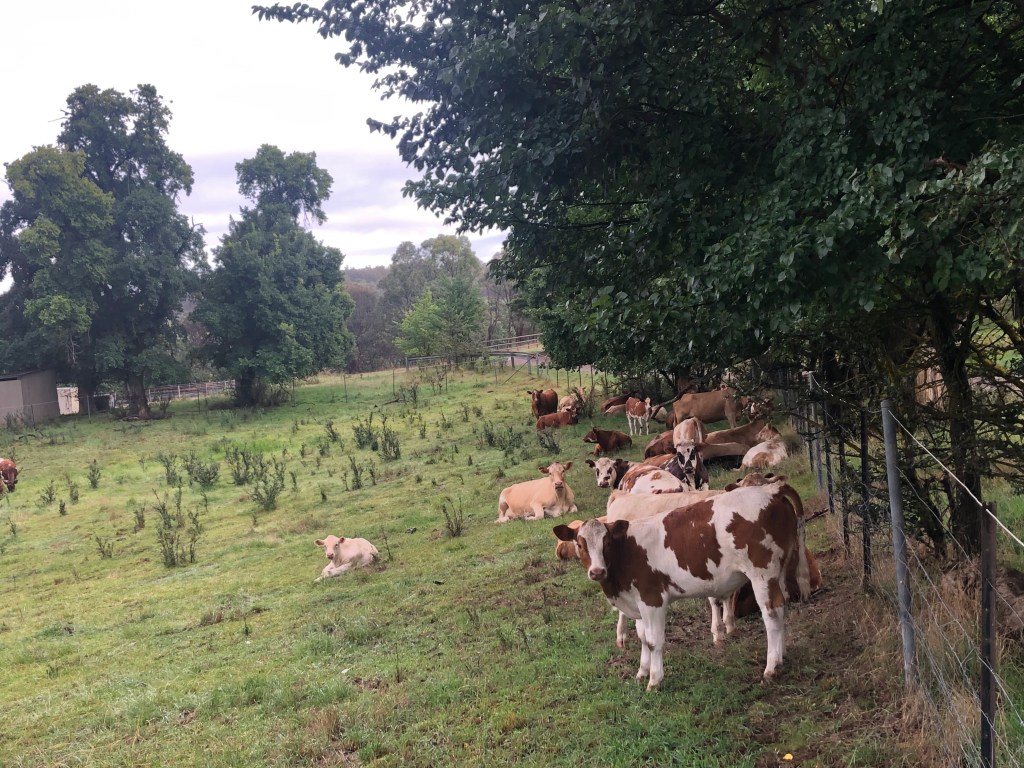
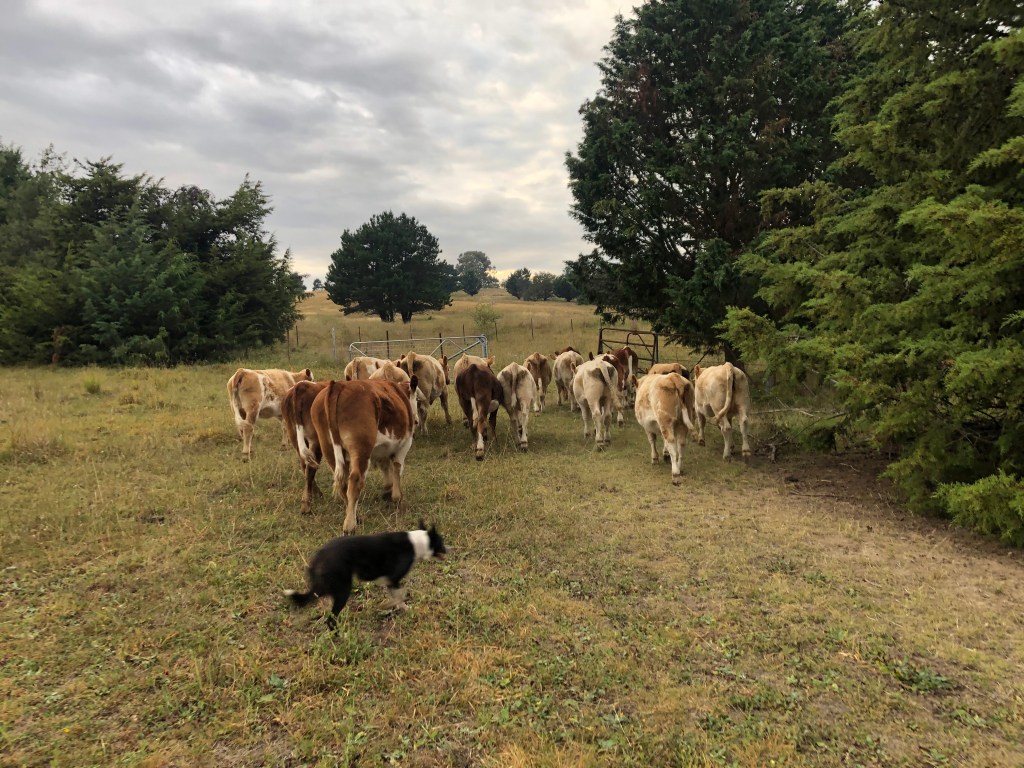
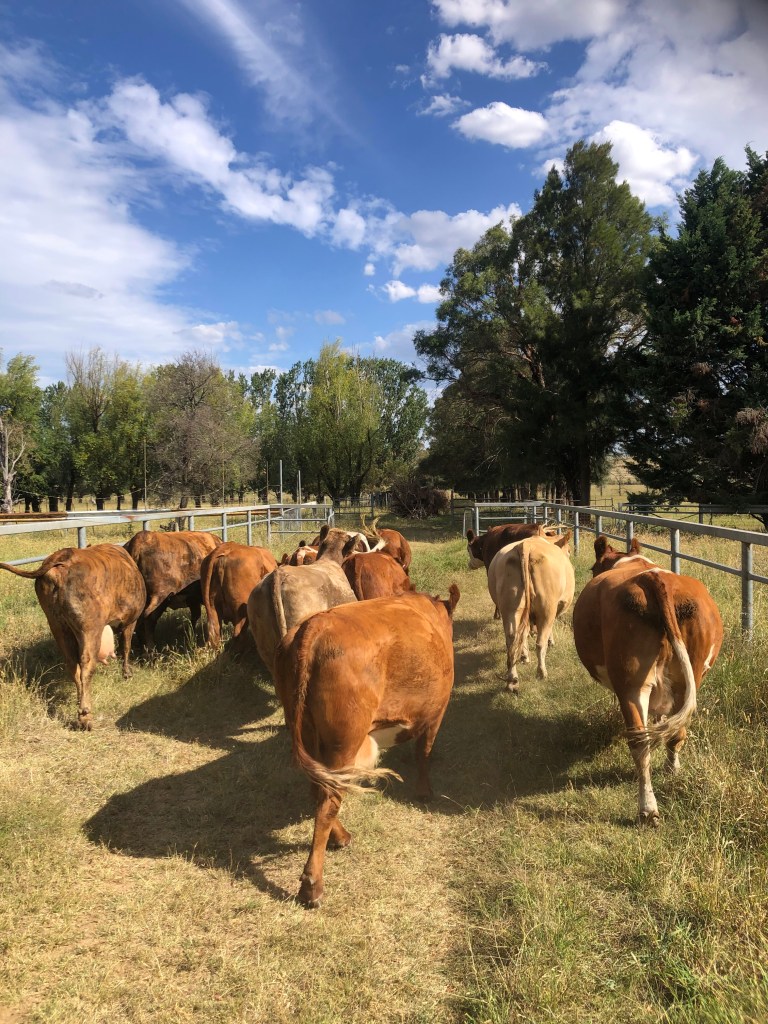
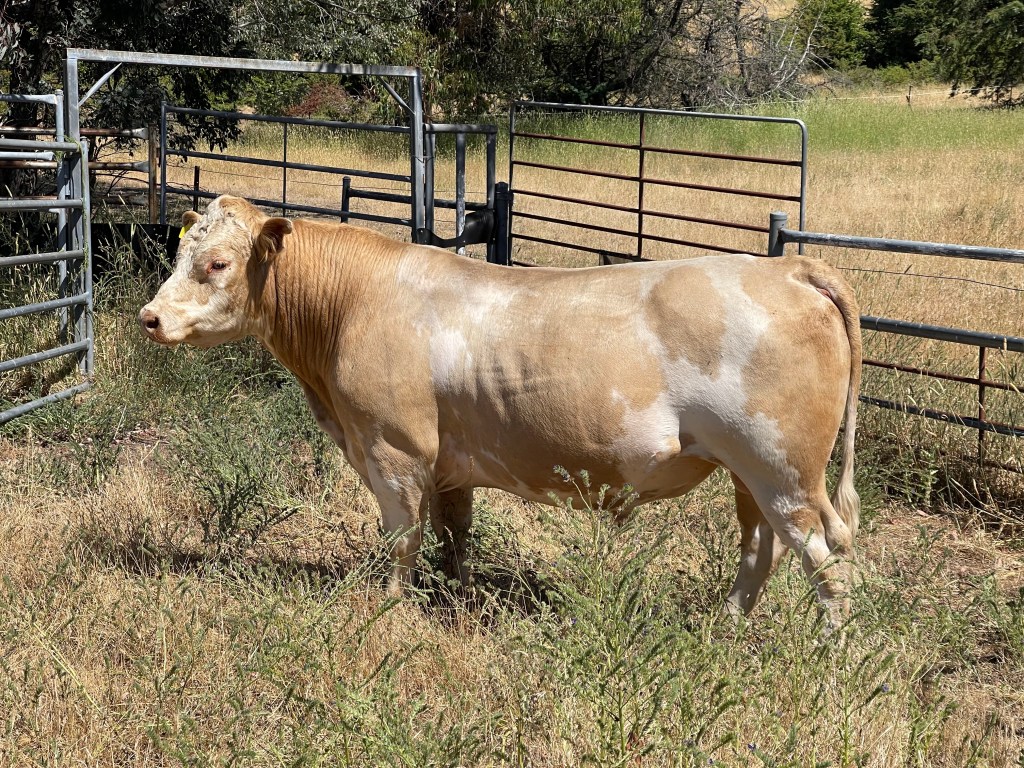
The bull has enjoyed his time on the Rock Farm. He bonded well with the girls, and even though it took him a little while to get used to the layout of the farm, he happily followed the cows through the gates. Watching him settle in has been a quiet pleasure, one of those small farm moments that mark the rhythm of the year.
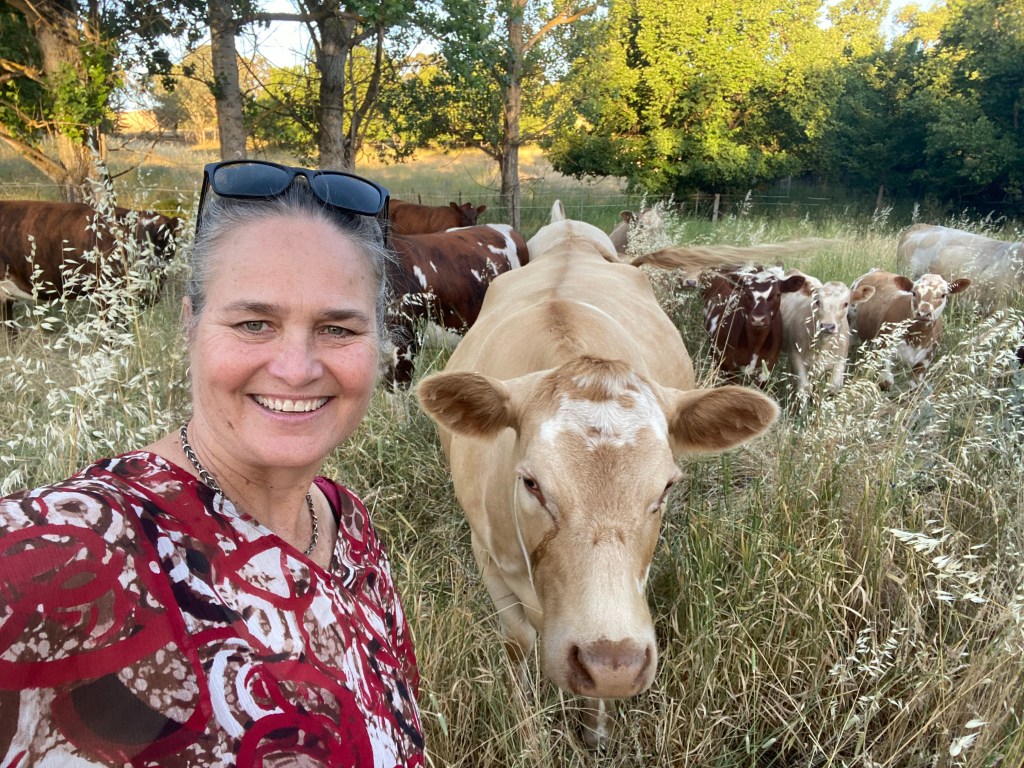
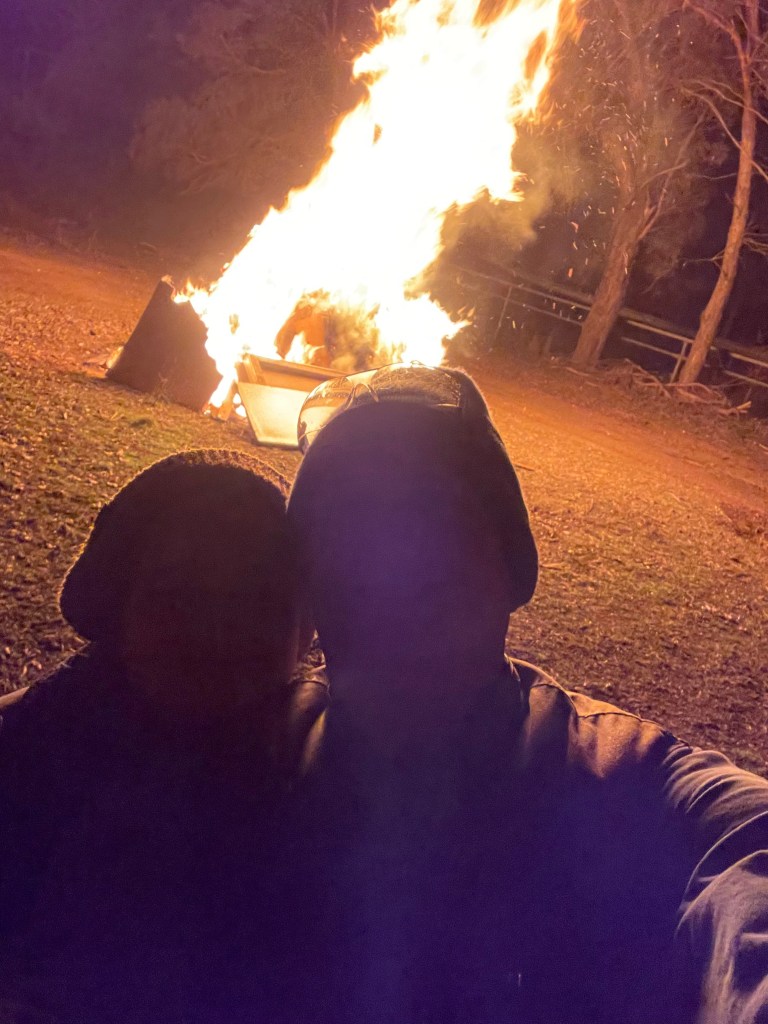
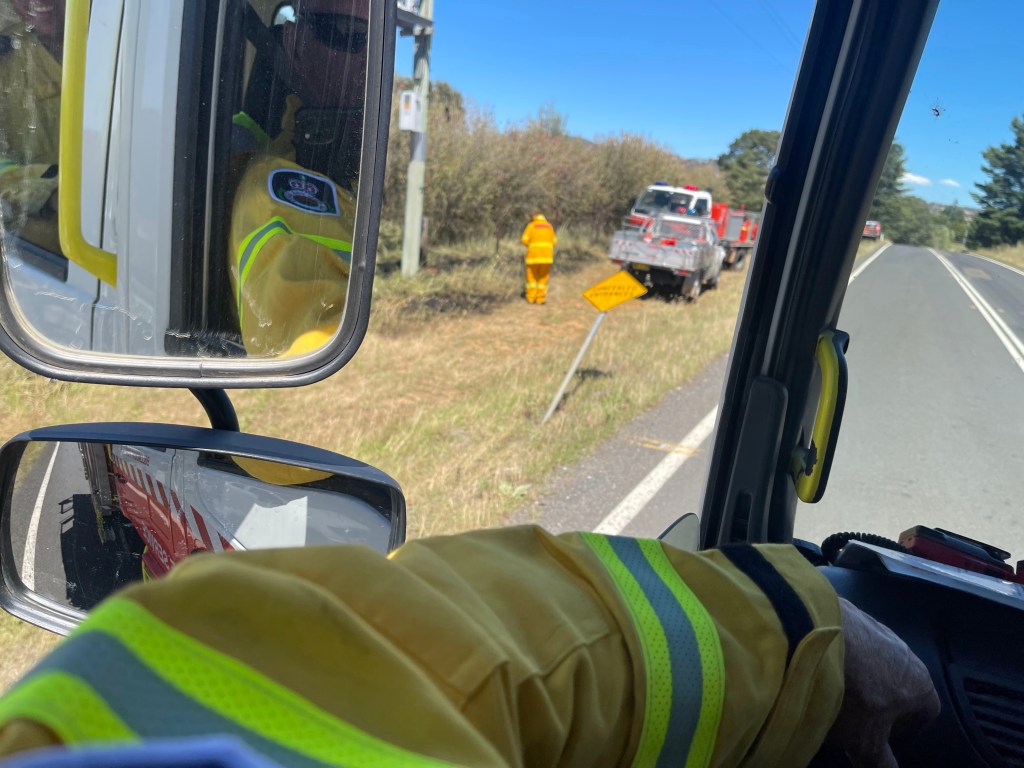
Our minds have now turned to summer preparedness. We’ve tested the fire pumps, refreshed ourselves with training at the RFS, and even attended our first fire of the season. It was a stark reminder that the landscape is shifting quickly. We’ll keep our fingers crossed, stay alert, and hope for a gentle summer. That balance between readiness and optimism is part of life out here, and it shapes our seasonal routines.
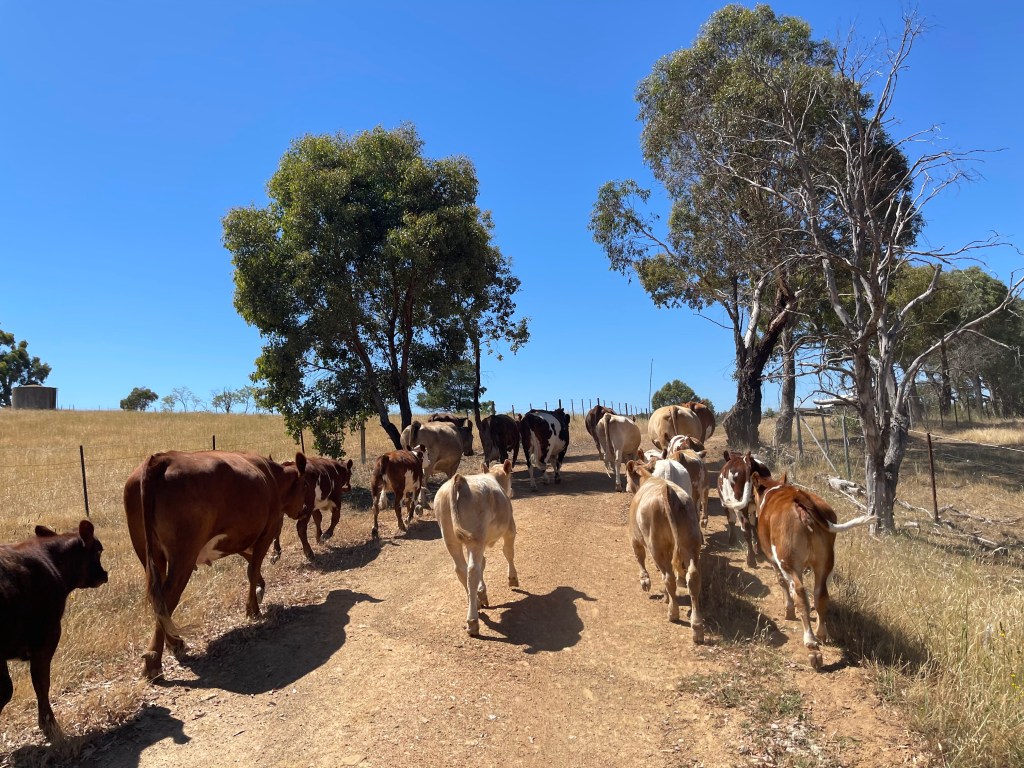
Some genuinely exciting news hit the cattle industry in NSW this week with the approval of virtual fencing technology. Described as a smart watch for cows, it uses GPS and audio cues to guide stock without the need for physical fences. For producers, it opens the door to new grazing strategies, improved pasture management, and far more flexibility in how we move animals across the landscape. It’s early days, but the potential is enormous, and it’s encouraging to see innovation that supports both animal welfare and land stewardship. More details can be found here: https://www.abc.net.au/news/2025-12-14/virtual-fencing-legalised-nsw/106128536

We will be looking at purchasing a virtual fencing system in the new year. Whilst our place has lots of small paddocks, this will allow us to managing our grazing more precisely, establish more trees without the need to construct expensive tree guards, and more effectively manage severe weather events such as flash flooding.

Summer may be settling in, but there’s always something new to learn, something to prepare for, and something to look forward to on the Rock Farm. As we wrap up another busy year on the Rock Farm, we’re grateful for the small wins, the lessons learned, and the steady rhythm of life on the land. From our family to yours, we wish you a peaceful Christmas and a safe, gentle start to the New Year. May the season bring good rain, good company, and plenty of reasons to smile.
Green Shoots and New Calves on the Rock Farm

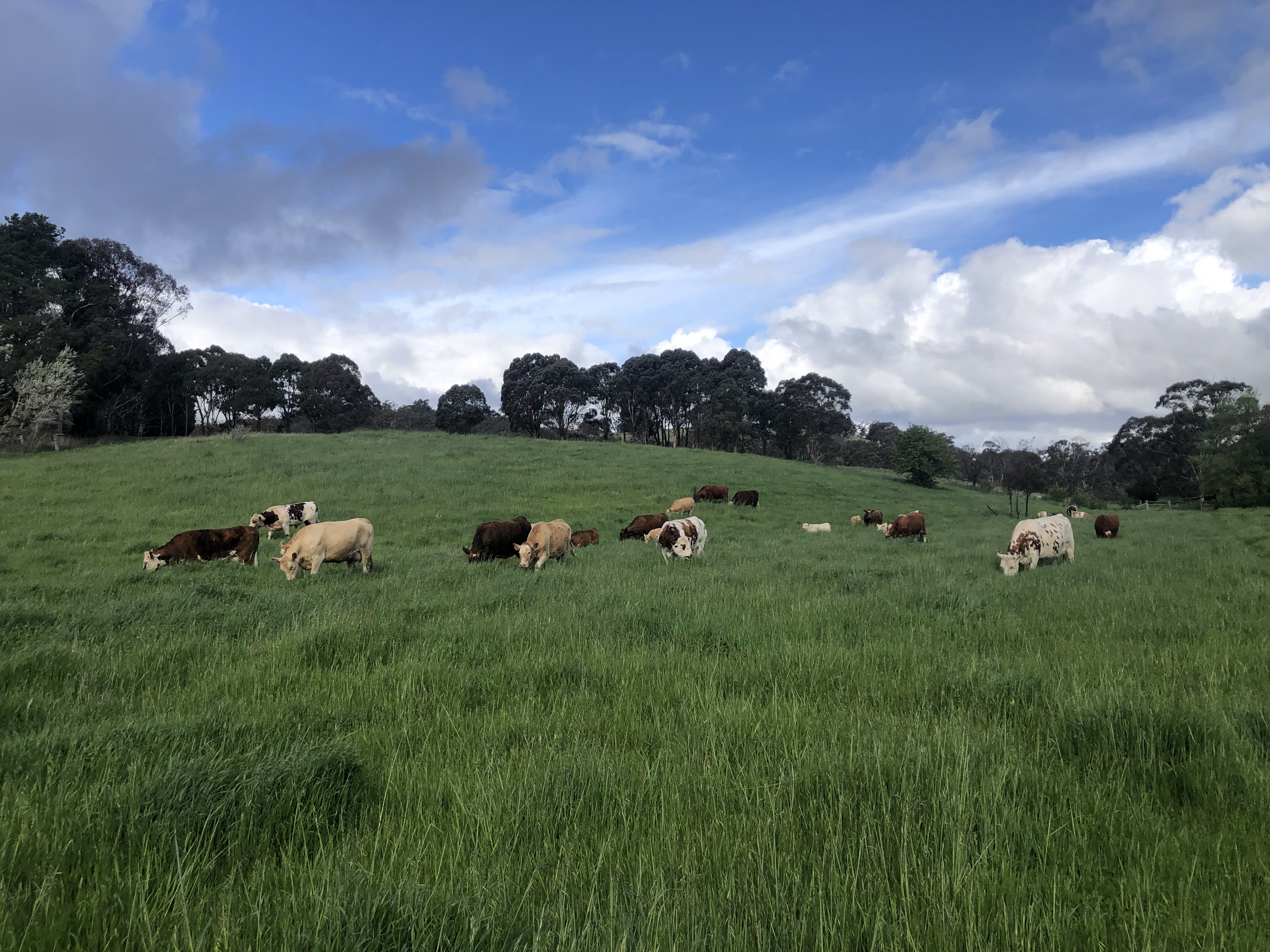
August – usually cold, wet, and miserable – was just cold this year. While the eastern seaboard has been drenched with record-breaking rain, we’ve stayed stubbornly dry. That is, until yesterday, when we were blessed with 20mm of much-needed rain. The paddocks have turned green almost overnight and are poised to really respond once the weather warms up.

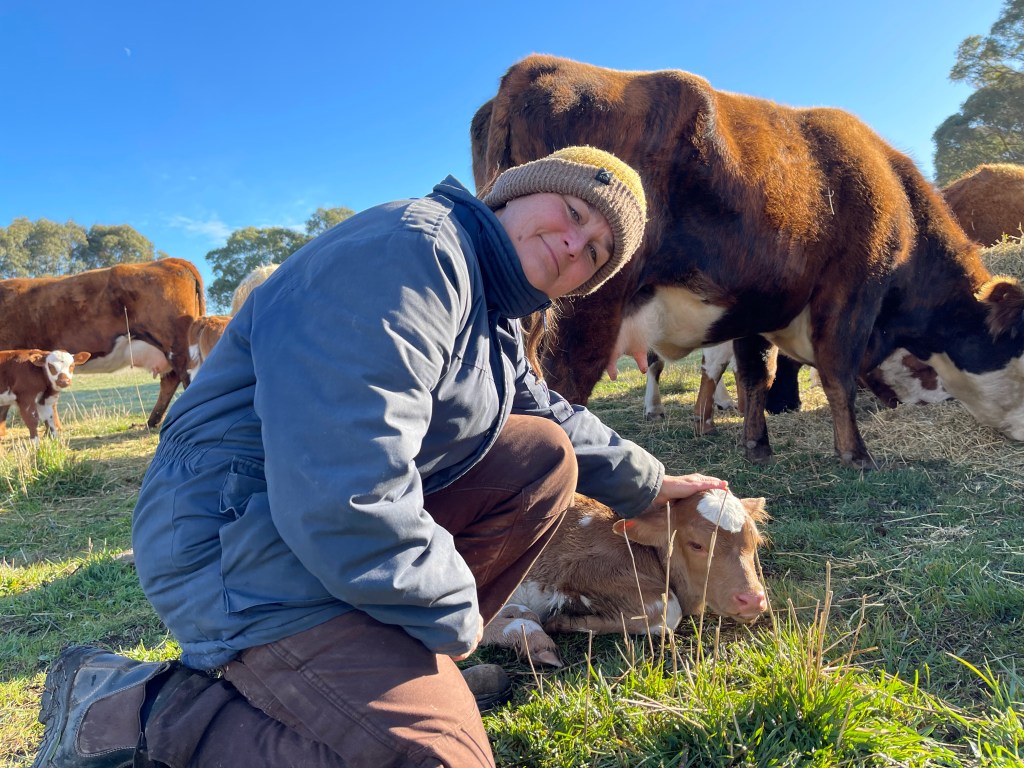
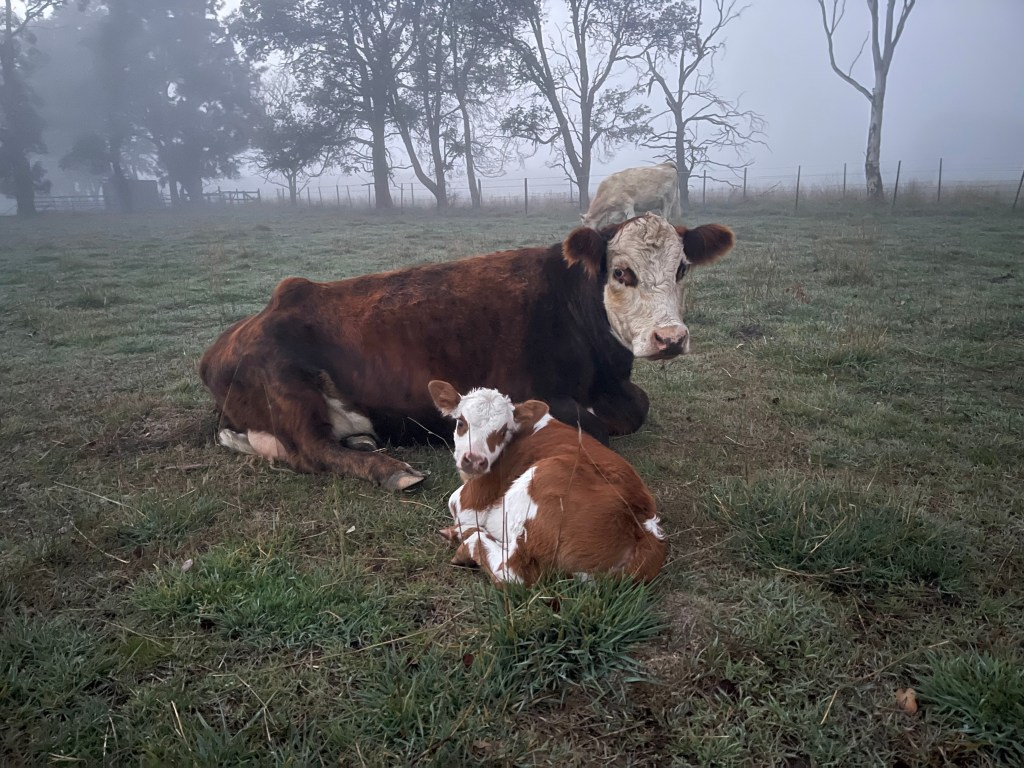
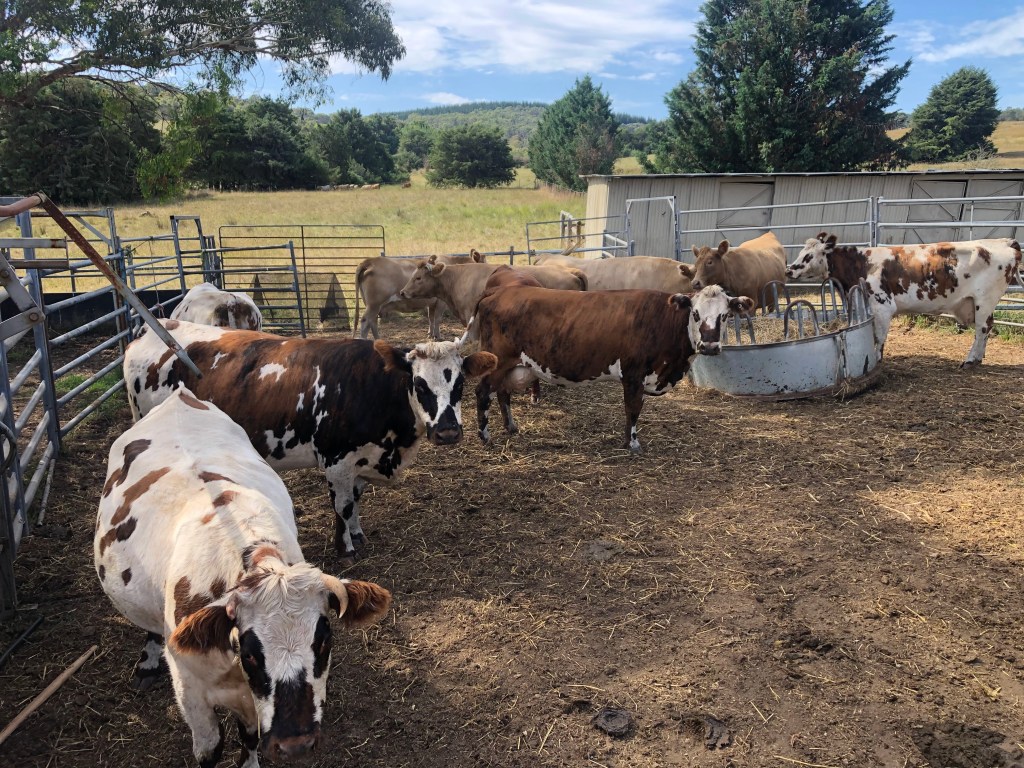
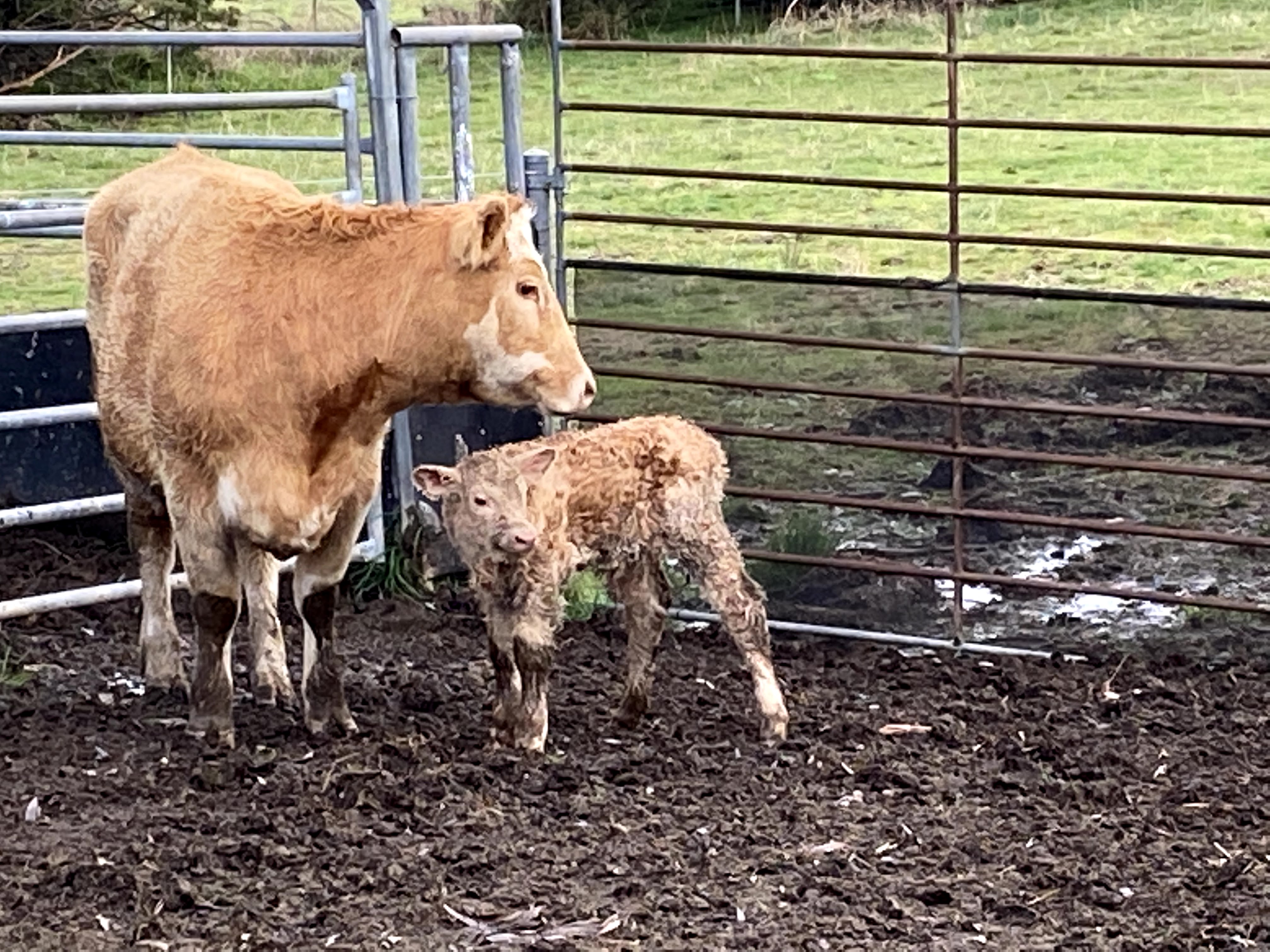
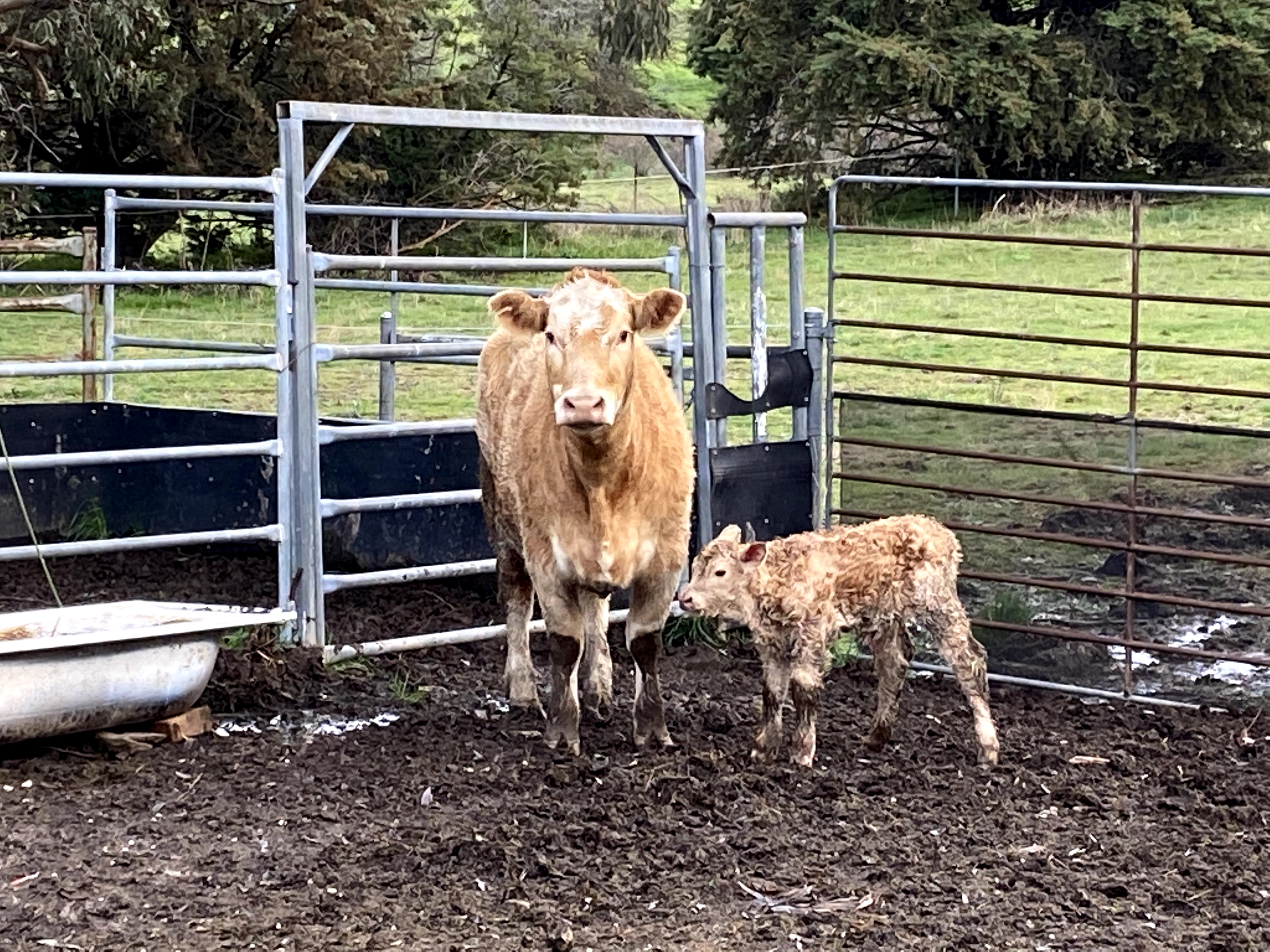
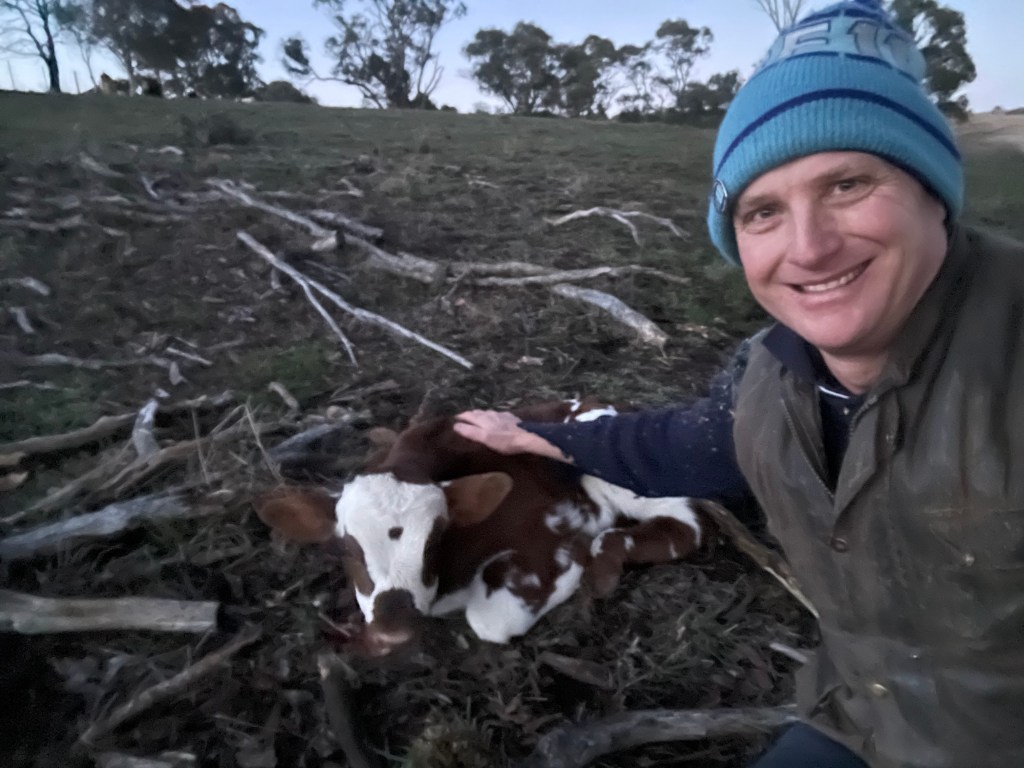
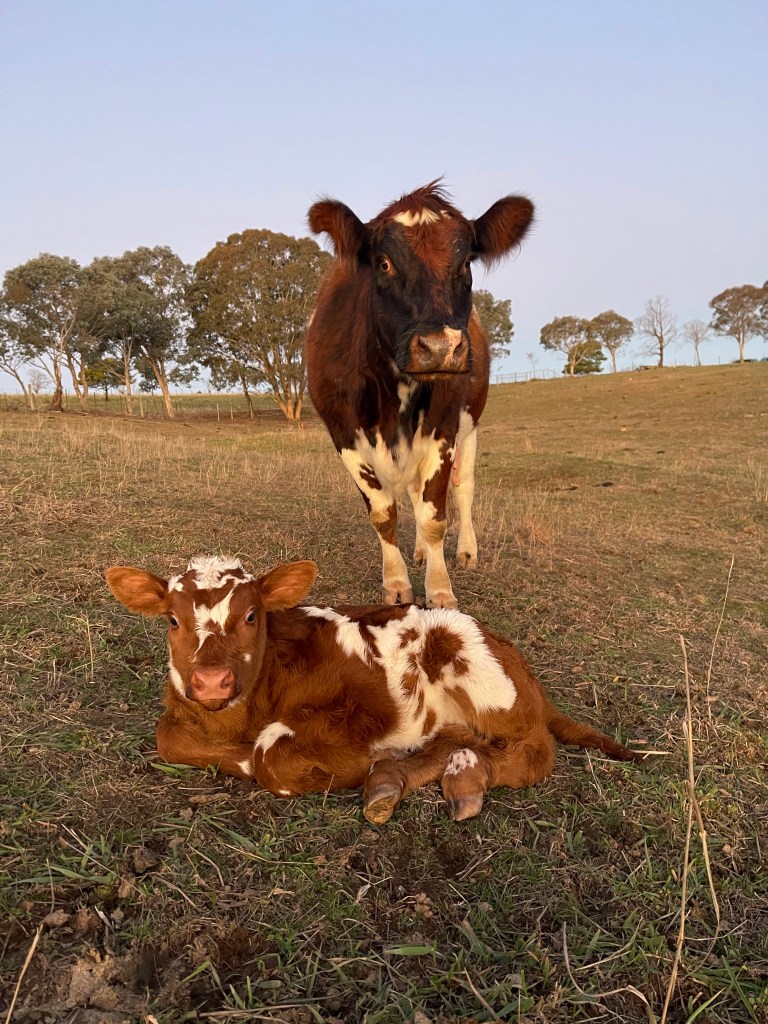
Feeding the cattle each morning has become one of our favourite routines – especially for Sapphire. It’s also given us the chance to welcome our new calves to the Rock Farm. More than once, we’ve found ourselves running late for work because we didn’t want to drag ourselves away.

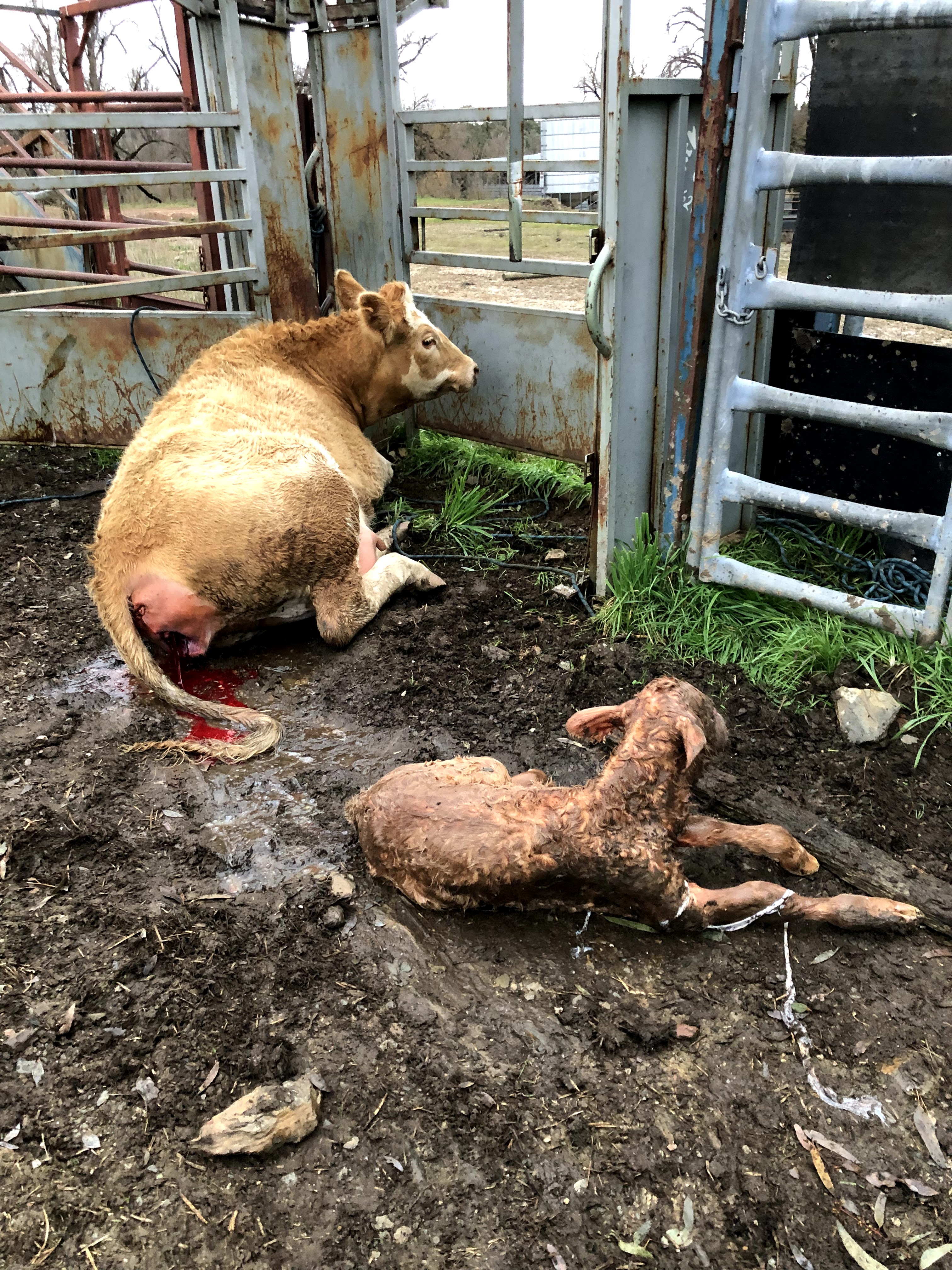
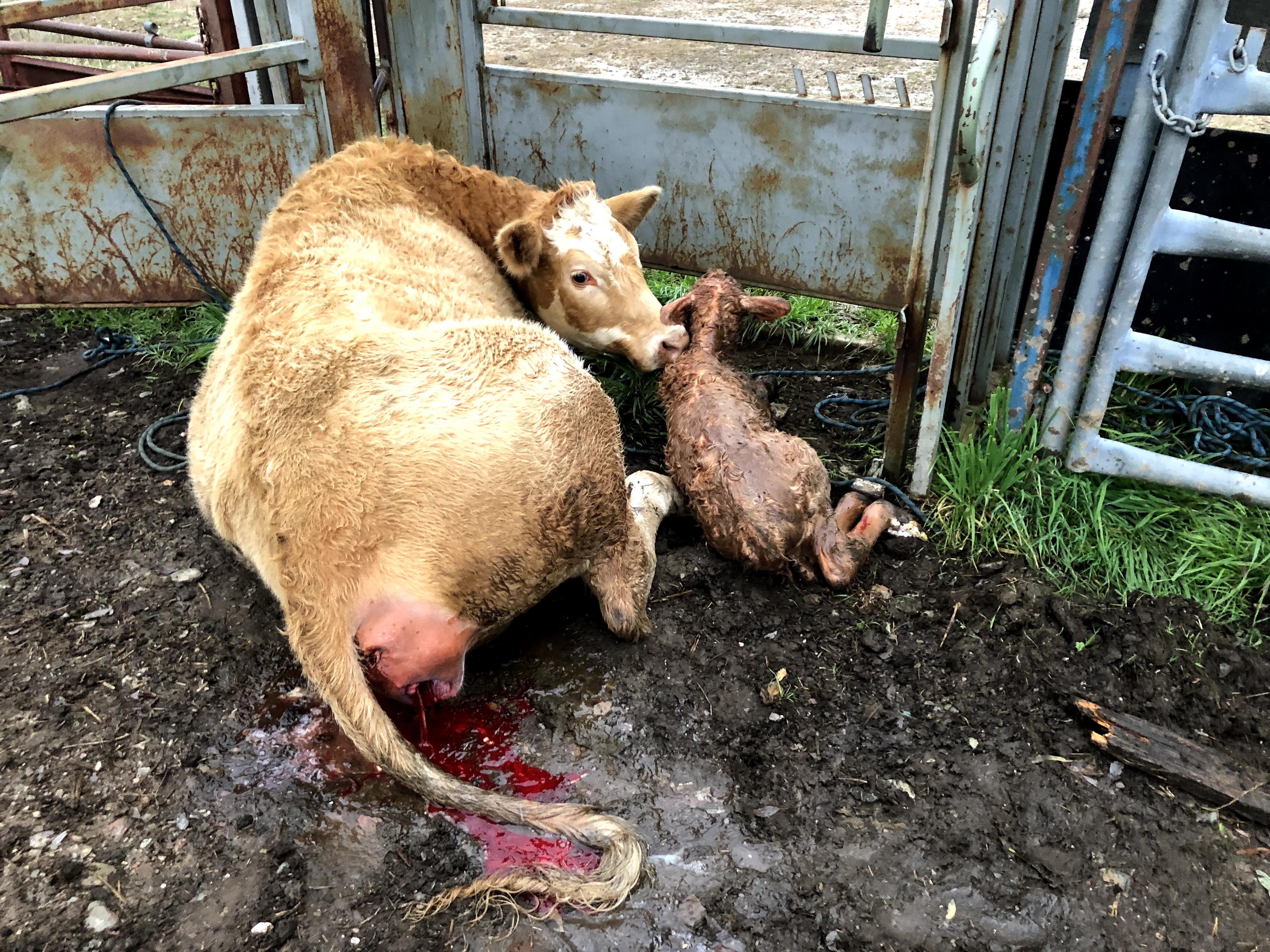
Of course, it hasn’t all been smooth sailing. Checking the herd twice a day still leaves long stretches where things can go wrong. Sadly, for Dozer (Daughter of Zoe), we came home from work on Friday afternoon to find her exhausted and struggling with her first calf. After catching her in the paddock with a makeshift lasso and laying her down, I was able to clear the calf’s legs and head. What should have been a simple heave to deliver the rest of the calf turned into a drawn-out struggle. Despite our best efforts, and some desperate attempts at CPR, the calf passed away shortly after birth. Dozer, Jo and I were all left exhausted.
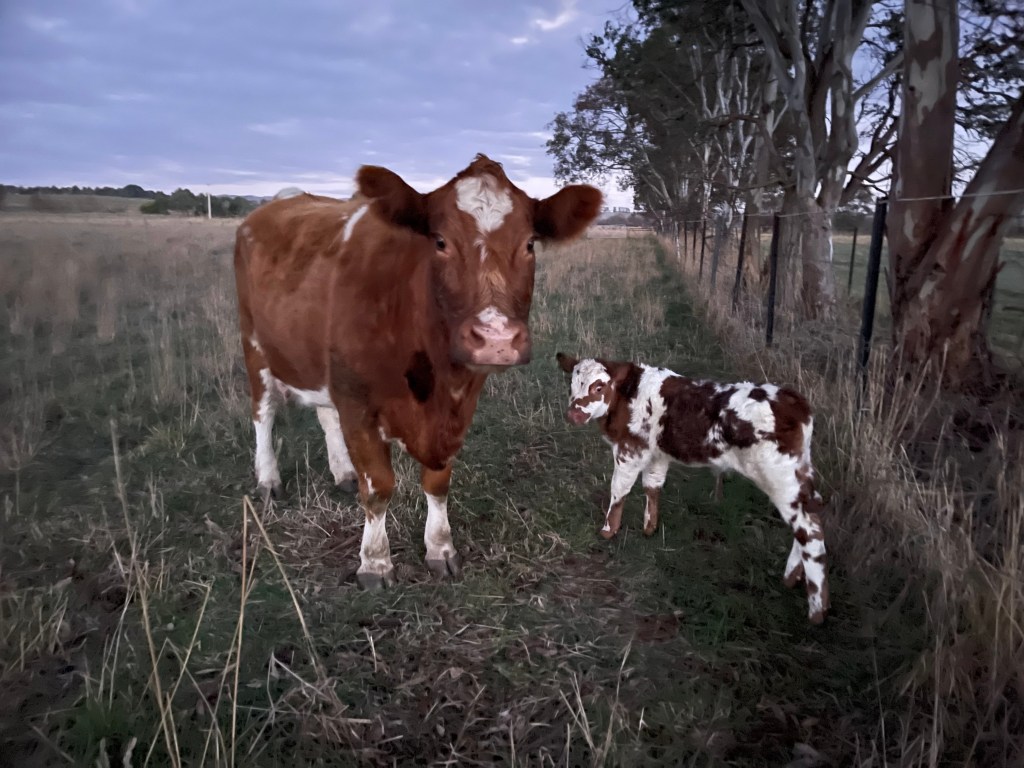
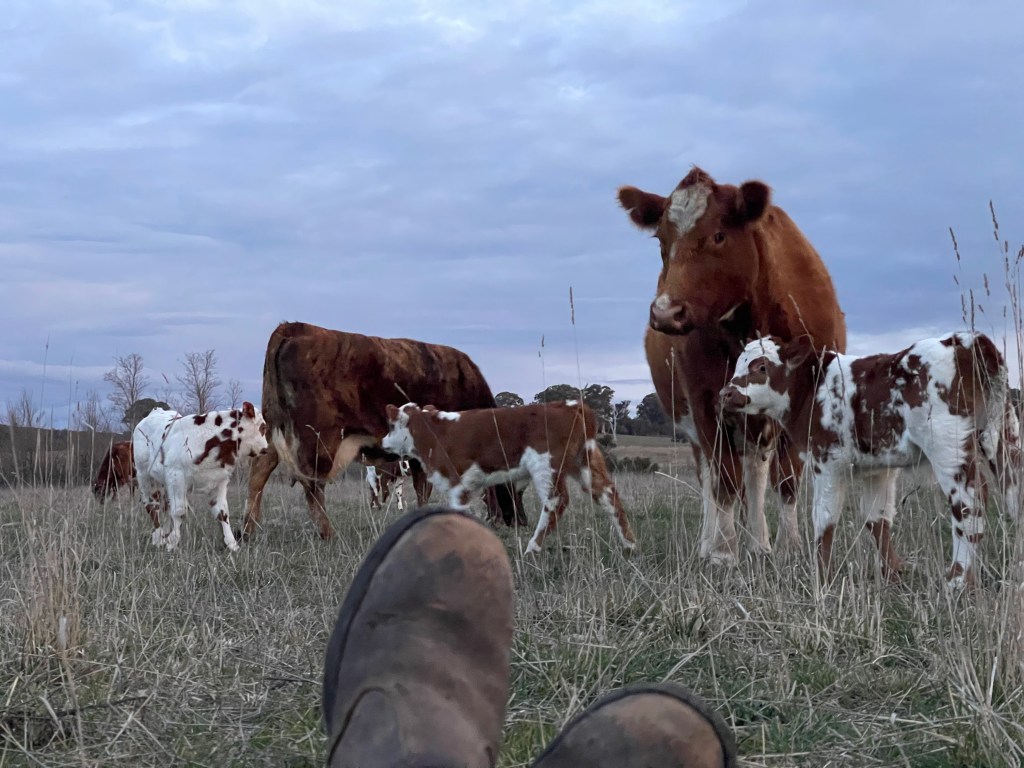
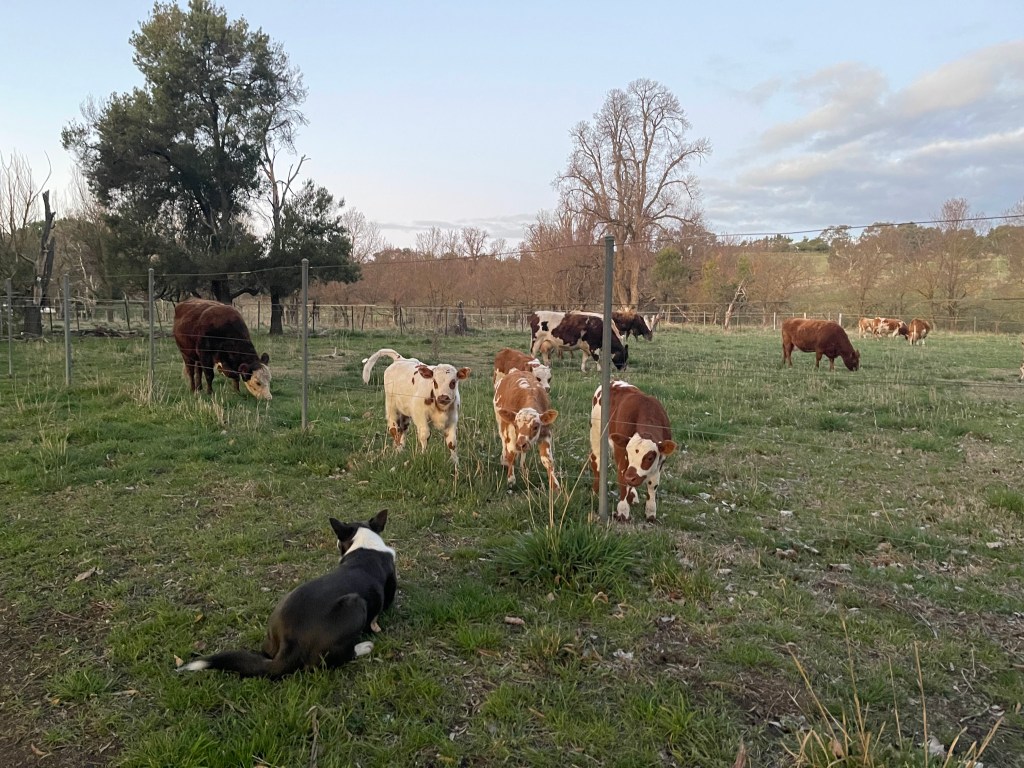
Thankfully, Dozer was up and about the following morning and has since made a full recovery. The rest of the calves have arrived safely, without drama. They’re now a mob of cheeky little boys and girls, and to them, Sapphire is just another big calf. Watching them play is an absolute delight.

Jo and I have also settled into our Monday-to-Friday rhythm. After feeding the cows, we often carpool to work – still a novelty for us. I do feel a little more disconnected from the community while we’re both working full-time, but I know it’s only temporary.

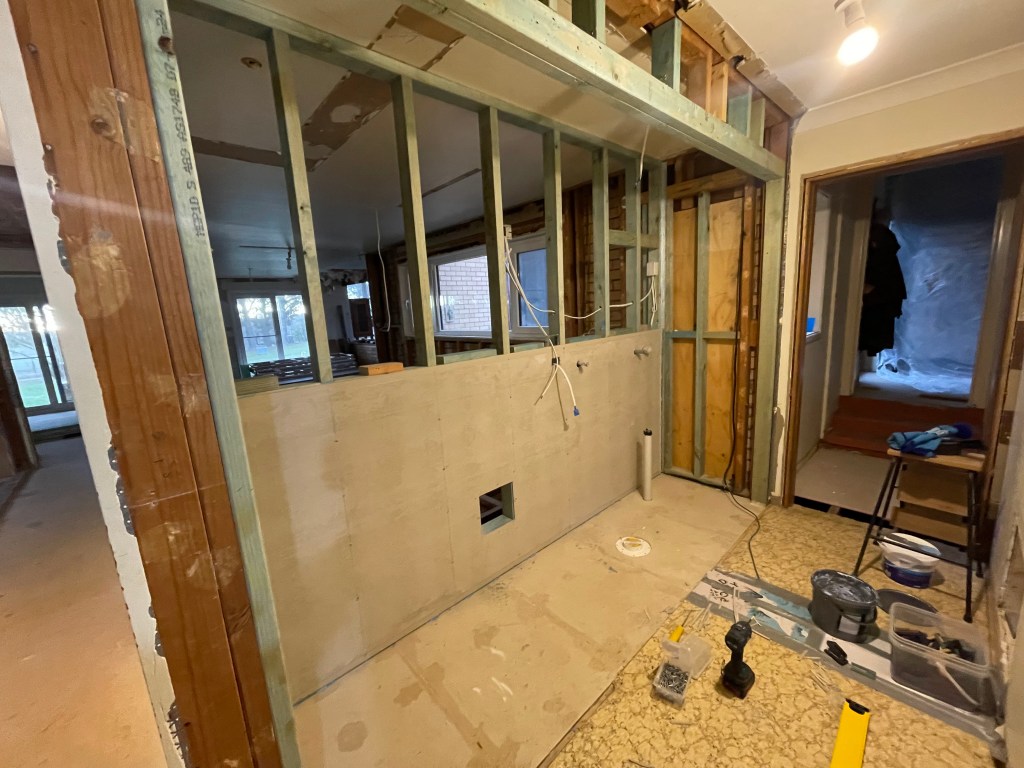
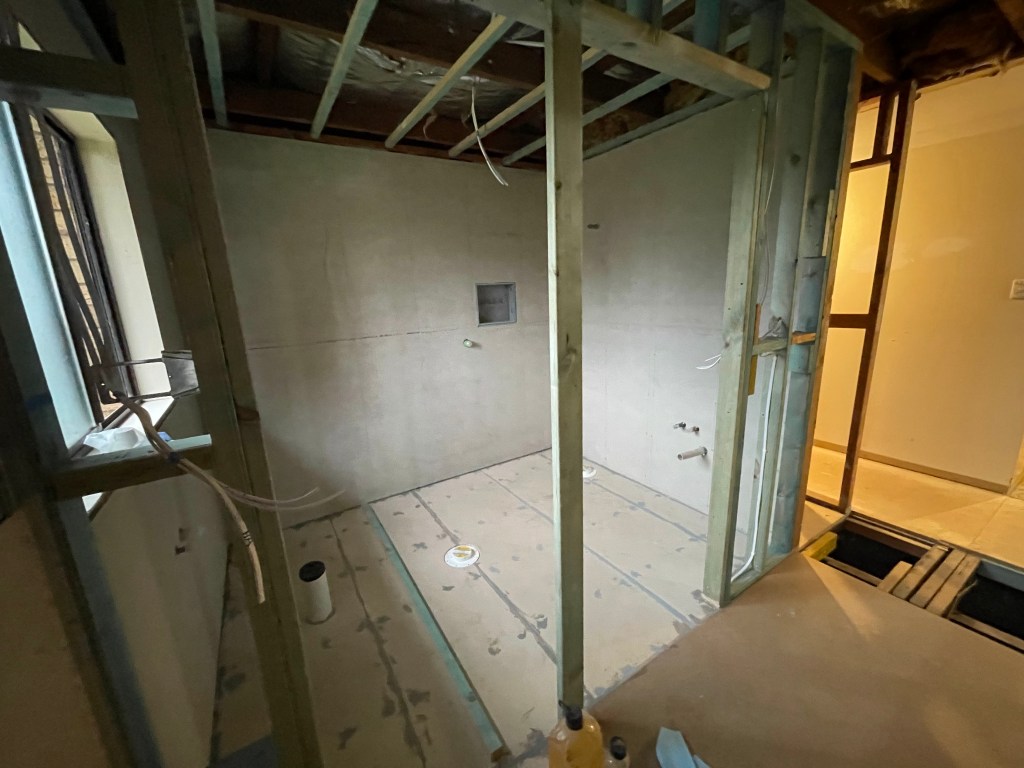
Our weekends are dedicated to the slow but steady renovation project. A special shout-out goes to John and Bradley from J&B Building Supplies, who deliver everything we need straight to the house. Their service is a lifesaver when you live out of town. Not only that, but they’ve also helped me find the best way forward on a few tricky issues. I couldn’t recommend them more highly.
As we head into spring, our focus will shift to keeping pastures healthy, managing the growing calves, and making steady progress on the renovations. The recent rain has given us a good start, and with a bit of sunshine, the paddocks should really come to life. There’s plenty of work ahead, but it’s the kind of work that keeps us grounded and grateful to be here on the Rock Farm.

Why does it rain all at once?

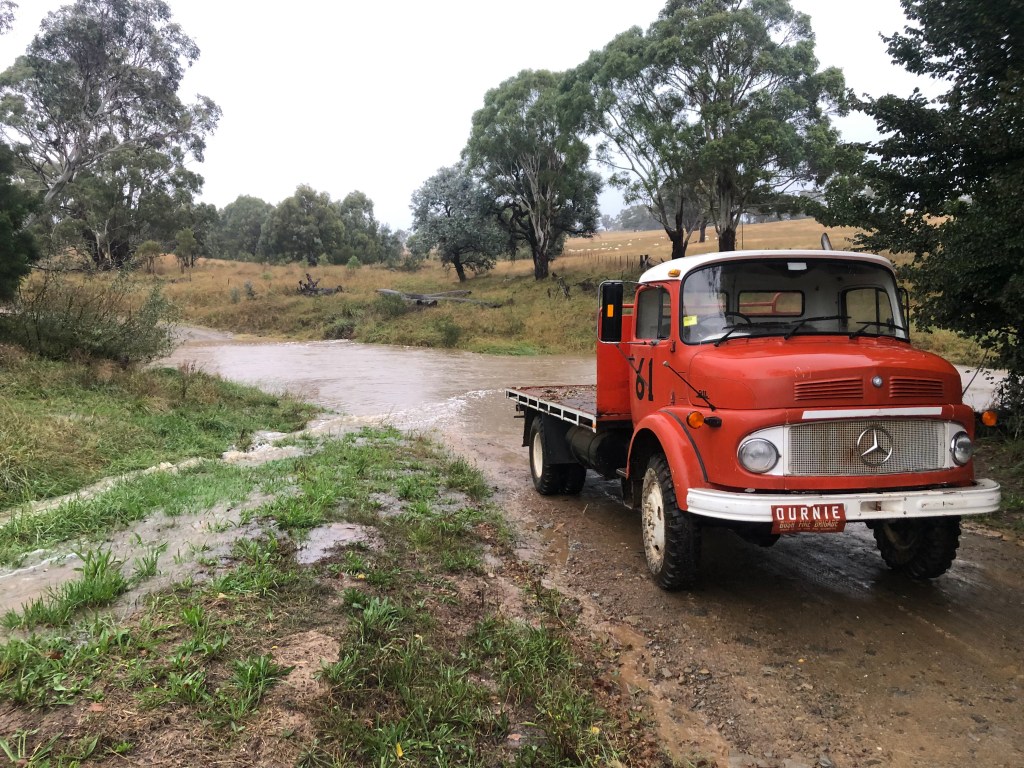
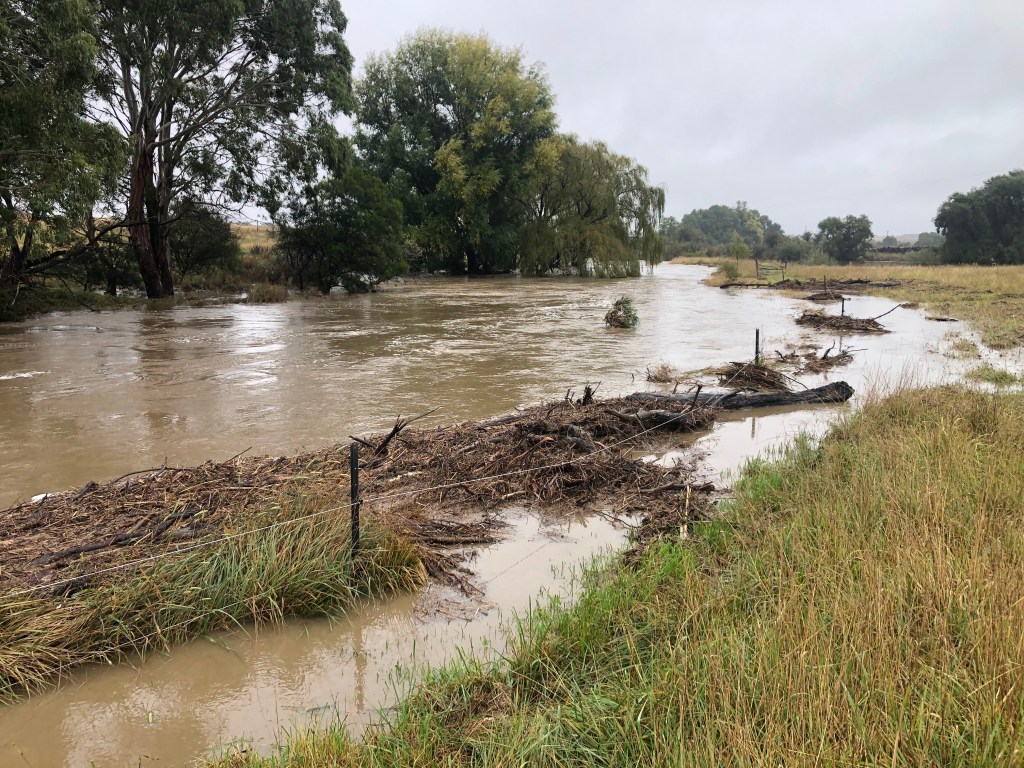
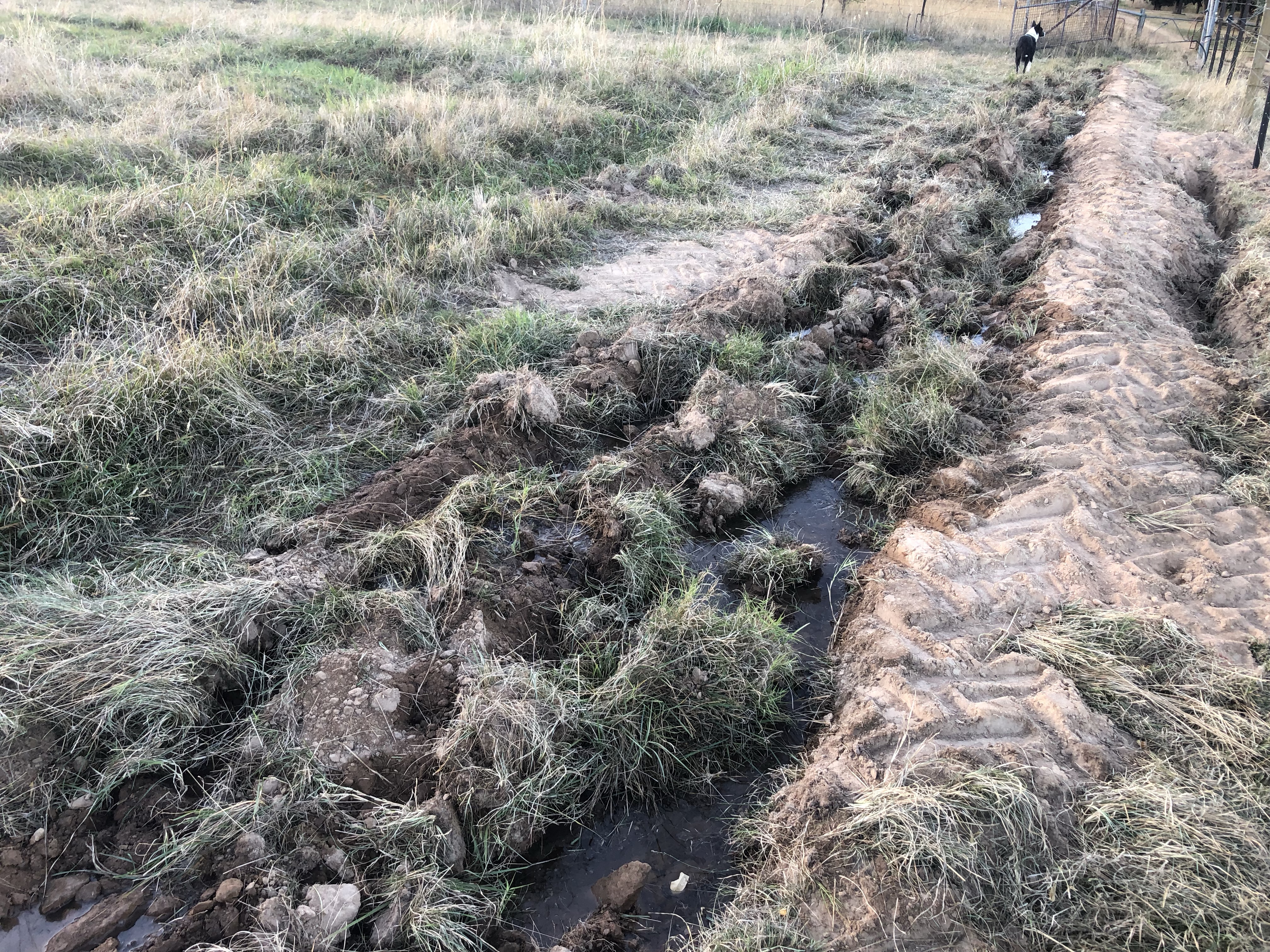
On the law of averages, we have had a good April, with around 100mm of rain falling in the month. Unfortunately it came all at once. The heavy rain caused our creek to flood, blocked our access for a day or so, and caused minor damage to our temporary fence along the creek line. The Red Drawbridge was pressed into service to bring the family safely home – but this kind of work is hard on the machine, and I will need to devote some time maintaining the slave cylinders (part of the brake system) soon.

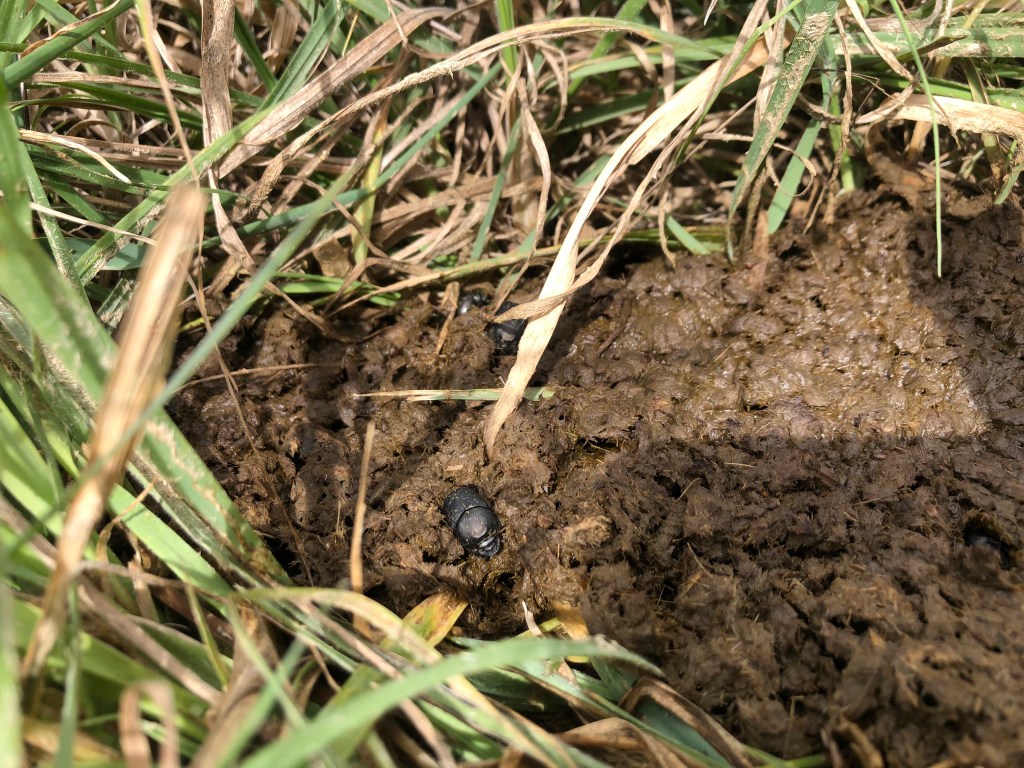
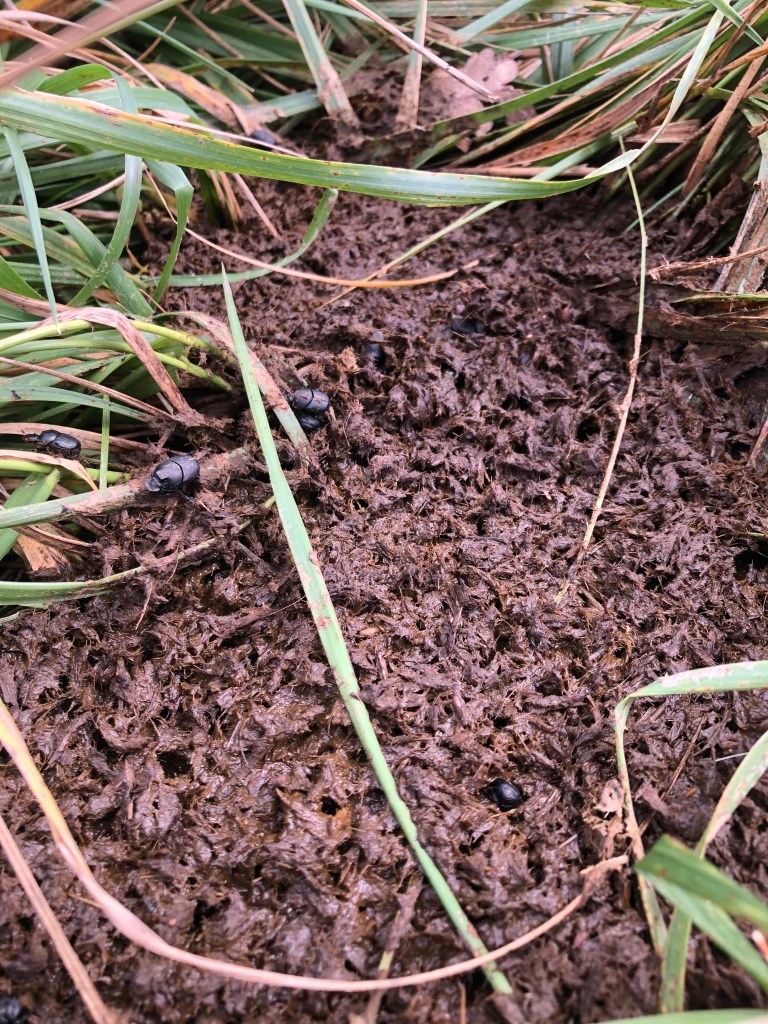
The rain brought some of our hard working little creatures to the surface. A stroll around the paddock after the rain stopped revealed our dung beetles coming up for air from their little burrows beneath the cow pats. These creatures are so important in breaking down manure and turning it into fertilizer – and it was so good to see them working away. Jo is pretty sure these beetles are Onthophasgus Binodis an introduced dung beetle (more info here: https://www.dungbeetles.com.au/species/onthophagus-binodis). Native beetles much prefer the native dung of kangaroos and wombats (of which we have plenty of as well!).

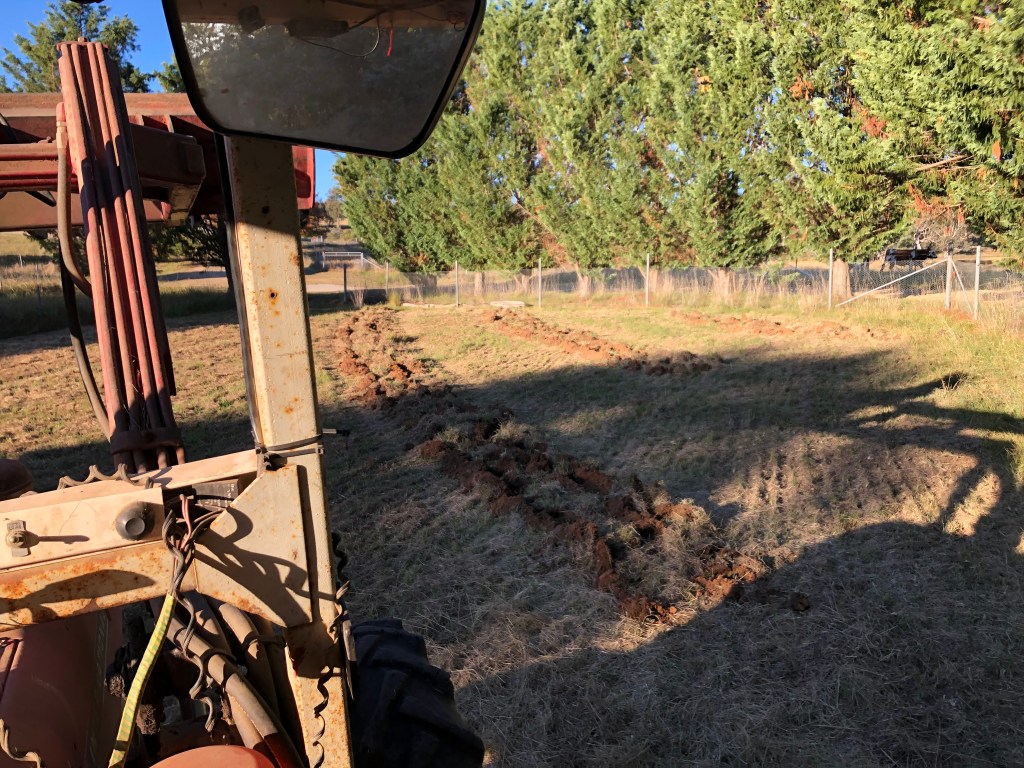
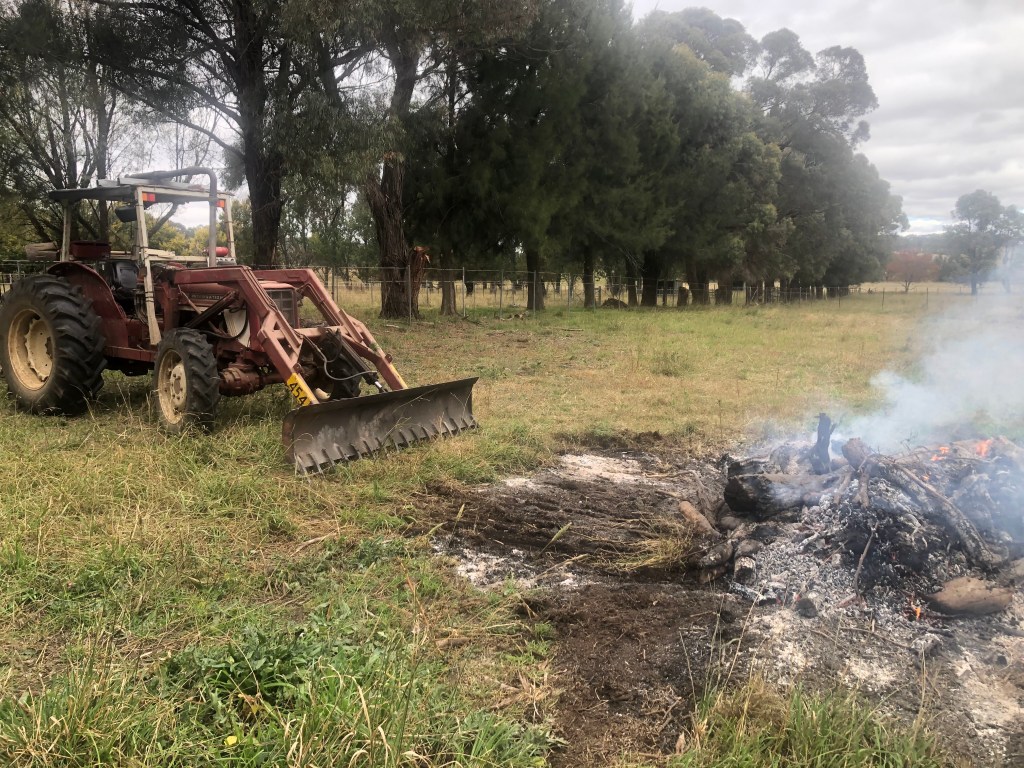
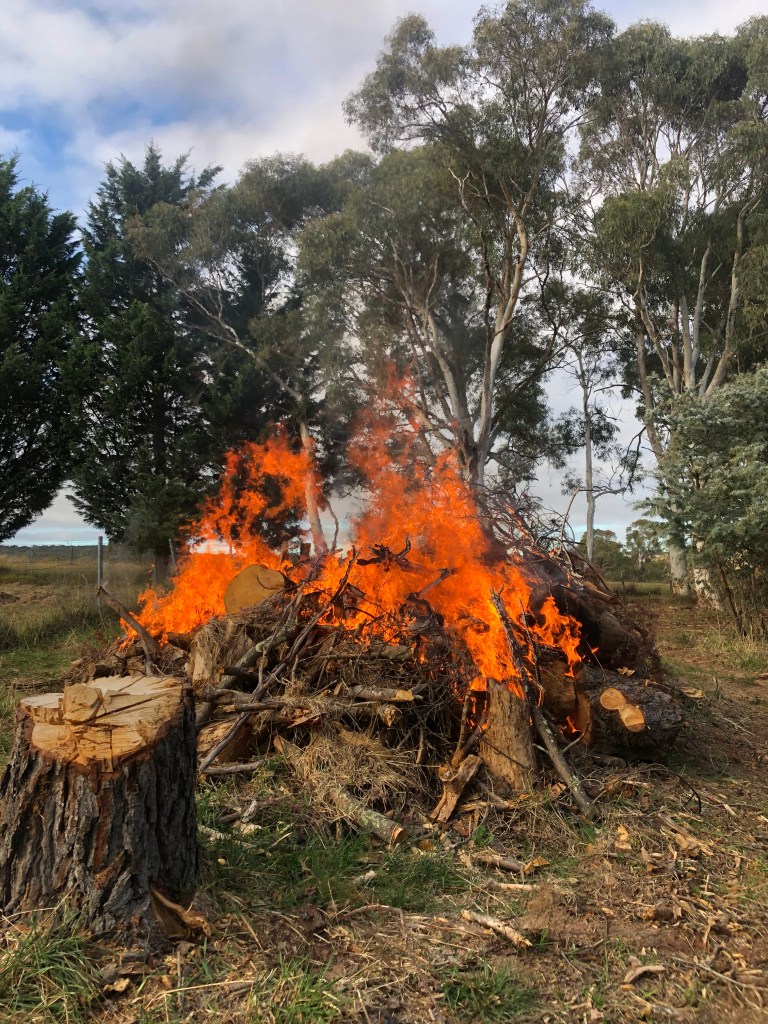
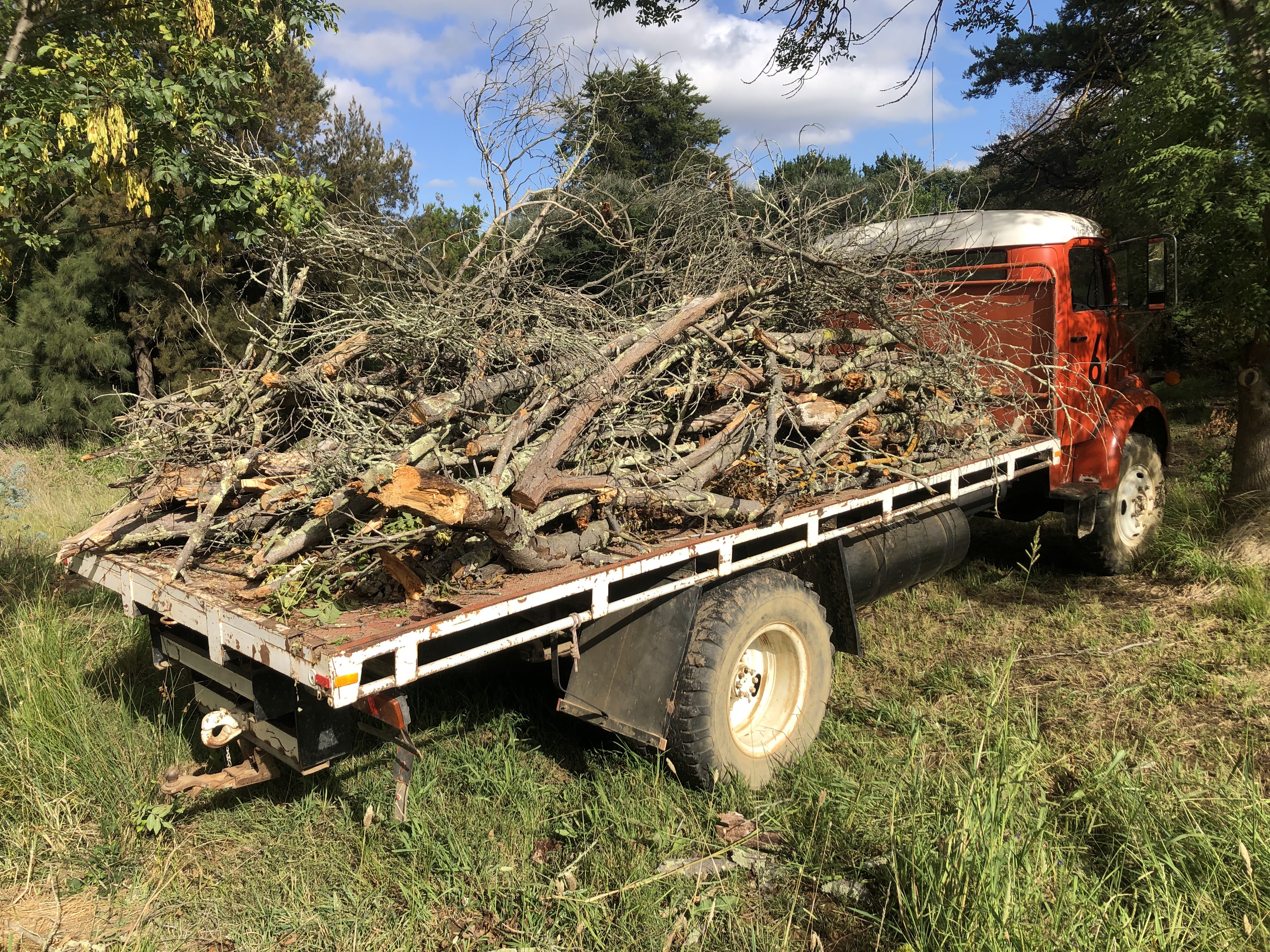
The rain also softened the ground, allowing me to rip contour lines for Jo’s new orchard. We have chosen to re-purpose one of the small foaling paddocks near the house for the orchard. The main reason for this site is that it is close to the house, close to an existing water pipe, and will probably be the easiest place on the farm to net in order to keep birds off the fruit. Of course it is not just simply ‘rip lines and the job is done’. The first thing I had to do was service the tractor. This was complicated by the fact I needed to fit a new fuel cock first to allow me to change the fuel filters first. Then I slashed the paddock, before ripping along the contours. I also needed to fell three nearby pine trees that had died. I removed most of the branches, but I had to wait for appropriate weather window to burn the stumps.

Two months later we are almost ready to plant the trees. I am still to install a new water pipe and watering system with drippers on each line. Whilst a simple tap and hose will be easier to install, we want to make it easy to water the trees in the future. Watch this space for updates as we build the orchard.

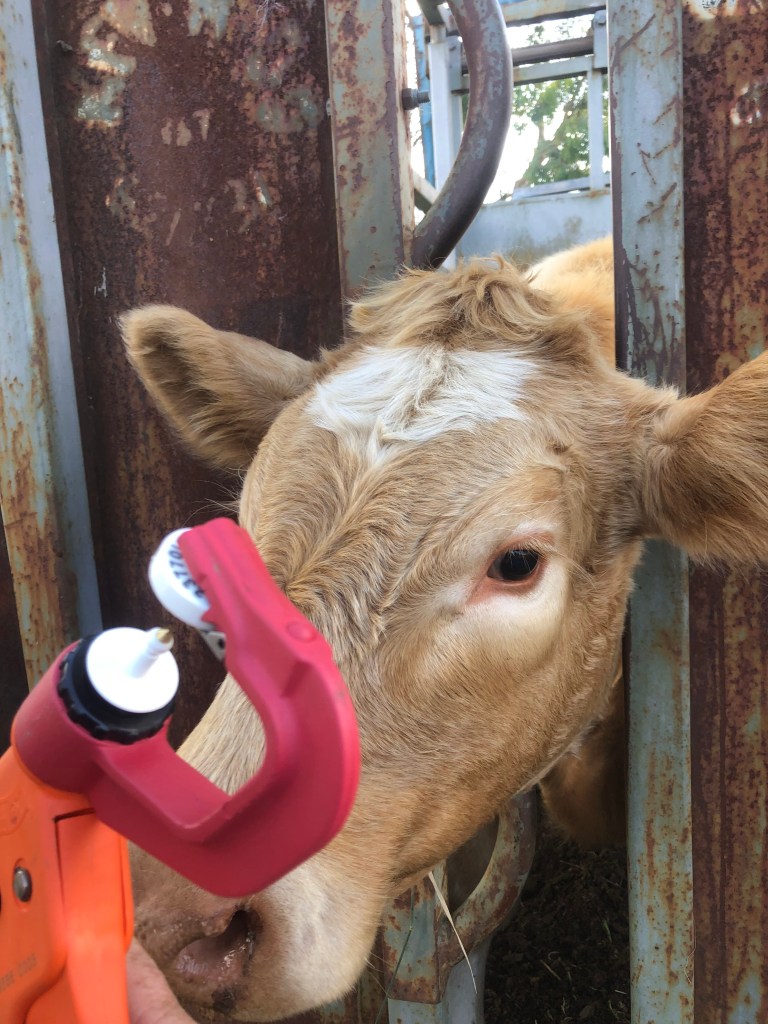
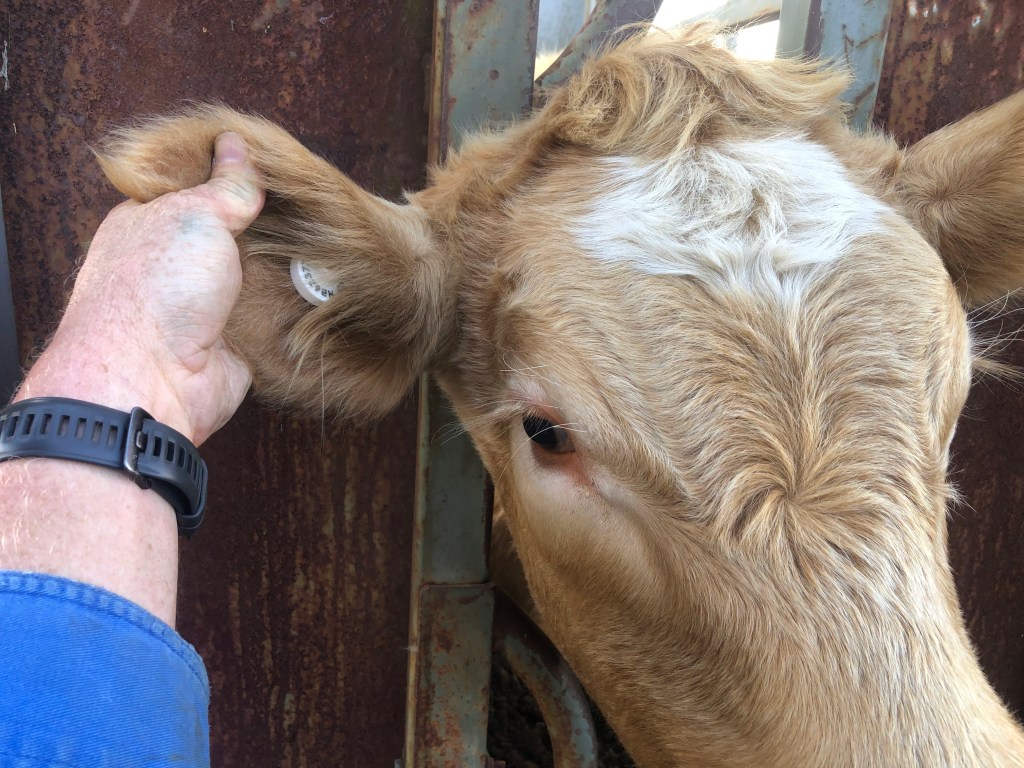
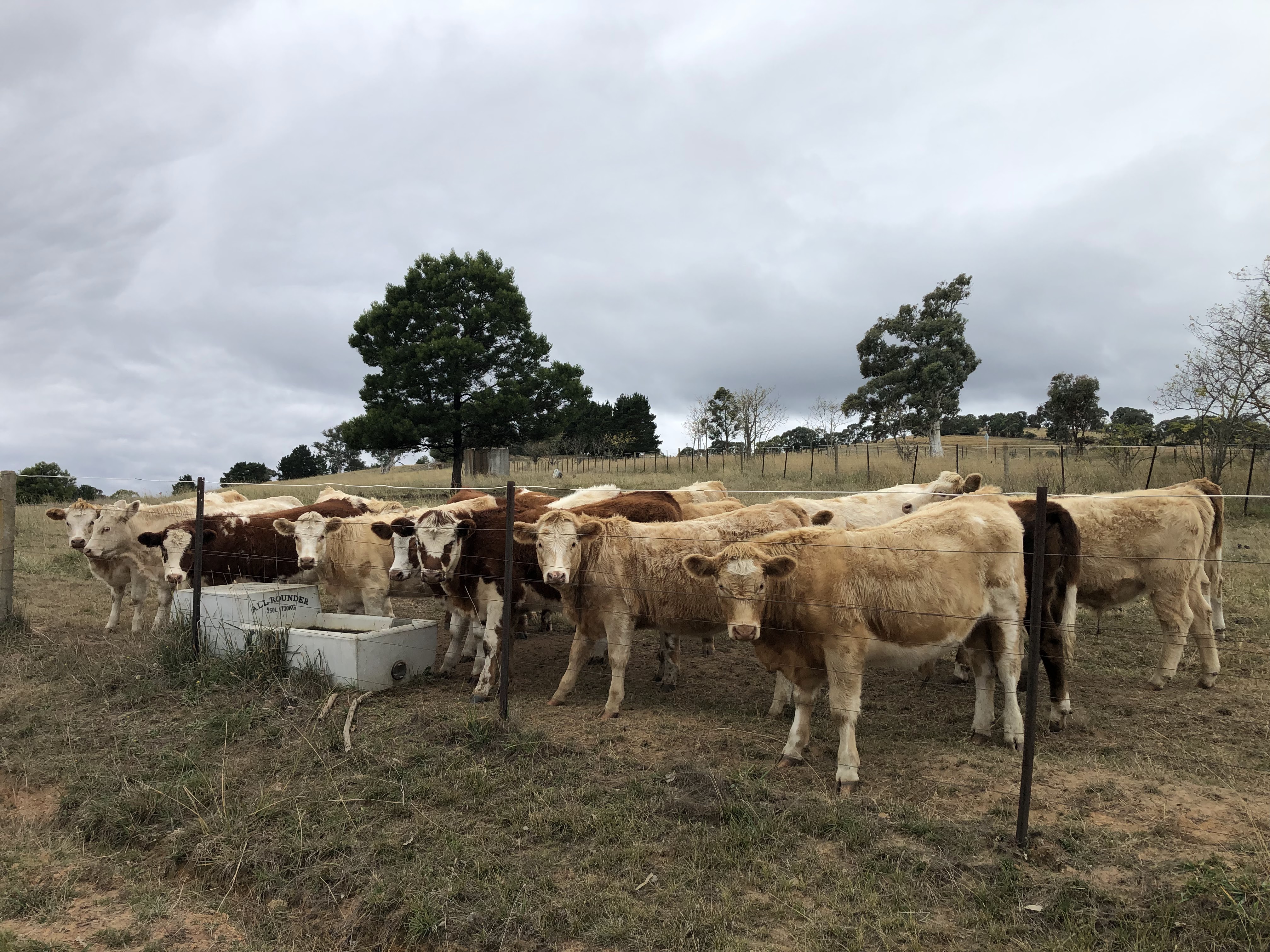
In the meantime our beautiful weaners have continued to grow. Sadly, the irregular rain, and not much grass growth this autumn means we will be unable to feed them over winter. They will be heading to the sale yards later this week. We have decided to keep three heifers, which we will return to the herd of 12 cows. Part of the requirements to sell cattle, is that they must be able to be traced back to the farm of origin. To do this, we fit them with an electronic ear tag with a RFID chip linked to the Rock Farm. They soon all sported the latest fashion accessory, a lovely white ear tag.

The grass situation is a little worrying. We haven’t had much autumn growth, and what little we have had is seeing massive pressure from kangaroos. Our neighbours alarmingly have had feral pigs digging on their property. It is all part of it I guess, but a little frustrating when we try our best to rest paddocks. We have plenty of hay in the shed, which I am happy to feed the cattle (it is after all my method of providing new nutrients onto the farm), but we are delaying feeding as long as possible.

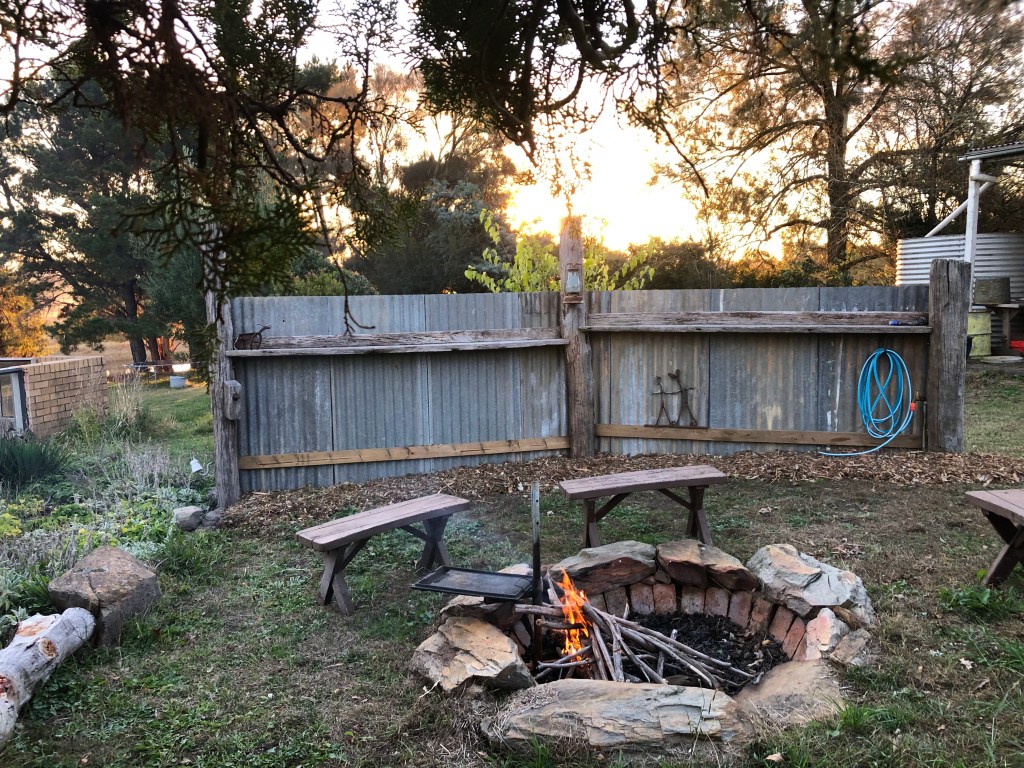
The good news is it hasn’t all been hard work. We did manage a quick night down the coast to make the most of the last warm days of autumn, and have made use of our new wind break around our fire pit, using garden prunings to cook our dinner. We love our little walks around the Rock Farm. Sometimes I can’t see the view for the jobs in front of me, but it doesn’t take much to lift my gaze and pinch myself to realise how lucky I am.

Perhaps our most exciting news relates to our local community. Last weekend we hosted our local Regenerative Land Managers group at the Rock Farm. We have a new direction to take this collection of land managers, and much of our discussion centred on the best structure to move our group to another level. More on that perhaps at my next update.

Comings and goings in an unusual season

Last October you may recall we were making decisions that would affect our production for the next couple of years (see here:https://rockfarming.com/2023/10/19/a-strategy-emerges/). We had tried to arm ourselves with the best information available about the cattle market, soil moisture and predicted dry weather patterns, with the aim of protecting our soil health and welfare of our stock. The end result was a decision that we would not join 10 of our cows, with the aim of reducing our herd size leading into forecast drought conditions.

All through November and into December, I felt that we had made a sound decision. The weather dried out, and we used it to our advantage to de-silt an old dam. Towards the end of December we went away for a fortnight and came back to an entirely different property. The forecast dry summer had turned into something else entirely, and frequent summer rains continued through to February.

We considered our options, which included bringing the bull back for a late summer calving – but ultimately decided to let our decision to cull the cows stand. Come weaning, we would split our herd and cull 10 dry cows, keeping the remainder 10 cows and 2 maiden heifers (hopefully all in calf) on the Rock Farm.

Two weeks ago we weaned.

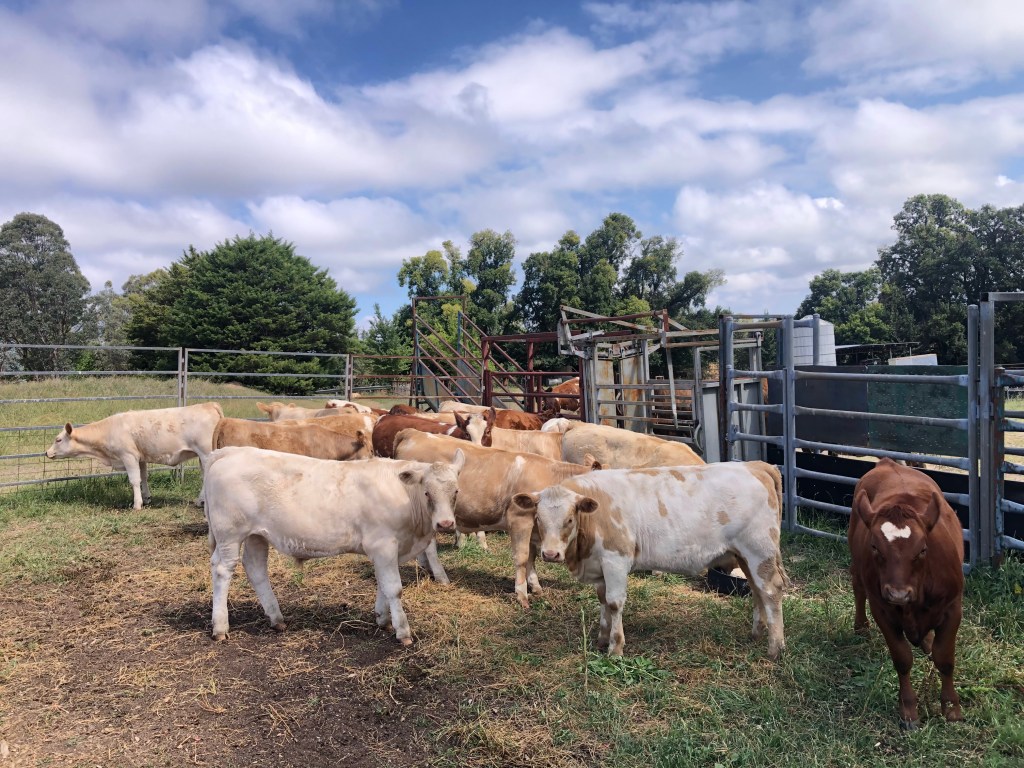
Weaning is always an interesting time. I allow the cows access to the lane leading down to the yards. For the first couple of days, there is lots of bellowing in an evening as the calves call for their supper, and the cows seek relief from full udders. But it doesn’t take long, and the cows are happy to wander off to greener pastures, and the calves settle down and learn that the tractor now brings them supper. Once they are happily independent, I move the cows to the other side of the farm, and let the calves into the paddocks behind the yards, to graze.

I handle the calves frequently during this time. Sapphy and I make it our morning routine to bring the calves into the yards, and as soon as they are there, we take the pressure off and leave them to return to the paddock. Two weeks into weaning, we brought the cows back to the yards, and split them into the two groups, those staying and those going.

We used some simple rules to determine which cows we would cull from the herd.

  • Any cow that had ever tossed or shaken her head at me or anyone else,
  • Any cows who had ever had any difficulty calving, and
  • Any cows with horns.

At the sale yards, our Agent split the cows into five lots. They made between $1.78 and $1.96 per kilogram live weight and weighed between 495kg and 675kg. Transport, agent’s fees and selling fees will take a fair chunk out of the cheque which is part of the cost of doing business, especially as a small producer.

Most importantly though we have removed ten hungry mouths from the Rock Farm, which will allow our wearers more opportunity to put on weight and value here for a few more weeks. With less mouths and more grass (with the possibility of rain in the next few days), we will assess our winter feed and possibly defer selling the wearers until next Spring.

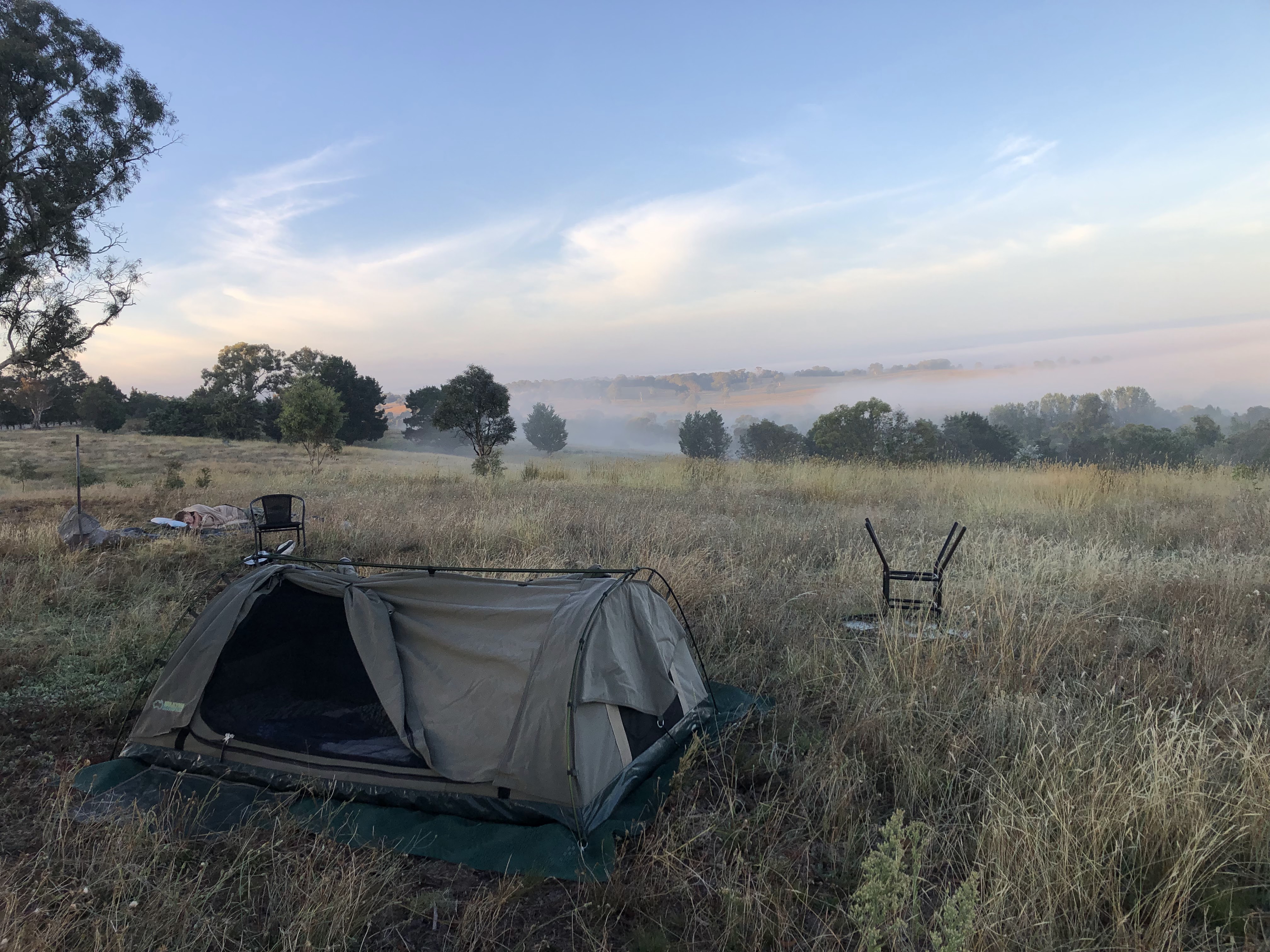
Until then, we will continue to enjoy the cooler evenings and make the most of living (and camping) at our beautiful farm.

Decision Making on the Rock Farm – and a handy tool

One of the most challenging elements of farming – even on a small hobby farm like ours – is decision making. Decisions range in complexity and scope, the outcomes are not always known, and mistakes are a given. The self-help section of any bookstore is full of books that purport to make you a better manager / leader / thinker… but ultimately many are simply helping you become a better decision maker.

Allan Savory developed holistic grazing management. My basic understanding of holistic management is that it is about making decisions. Broadly you need to properly identify the problem. Start taking action towards addressing your intended outcome and then monitor your feedback loops closely to ensure you’re on track. Savory’s holistic principles can be applied to all kinds of decisions. The principles holistic management help guide our decisions on the Rock Farm.

As custodians of the Rock Farm, our aim is to leave the soil of our property in better health than when we arrived. One of the tools we use to do this is our cattle. Our cattle are used to help control our weeds and undesirable grasses, process grass and turn it into fertiliser to feed the microbes in the soil. The past three years of wet years have given us plenty of flexibility, and have been very forgiving if we have made a mistake – especially with our stocking rate. When it is dry – it is critical that we keep making decisions for the health of our soil – and by default our cattle.

So when the long range forecast is for a dry autumn, I knew it was time to have a good look at the tools available to helps us plan our decisions for winter.

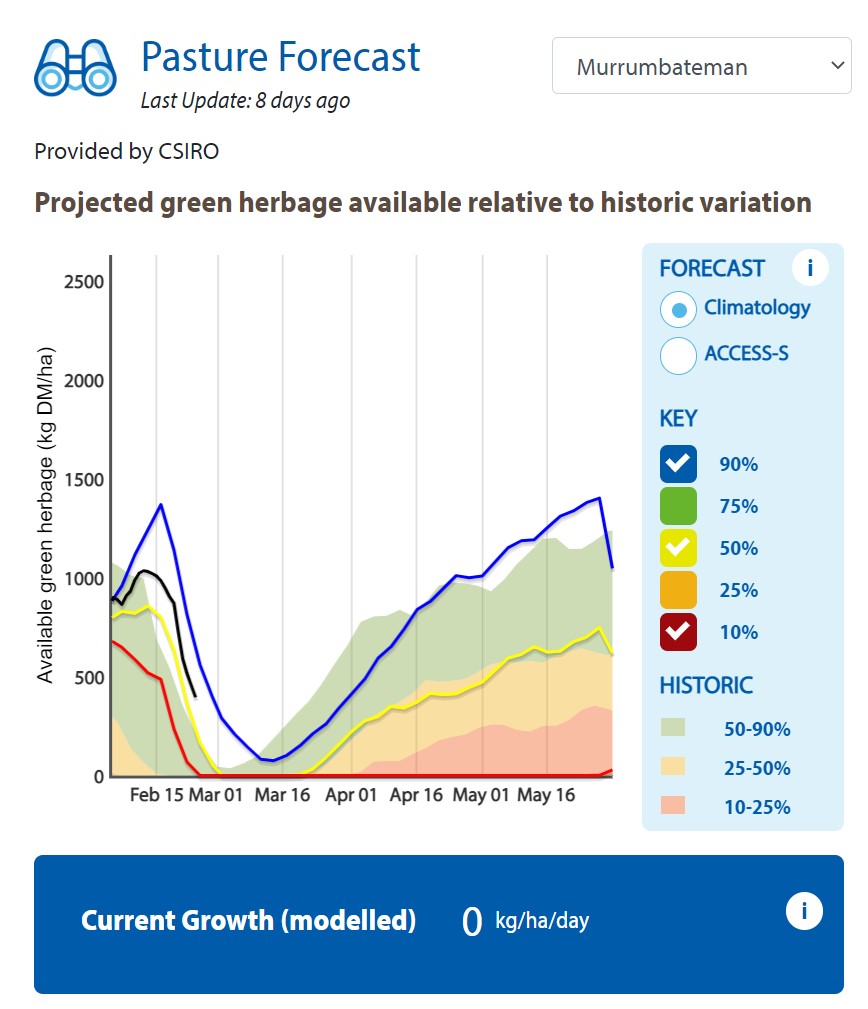
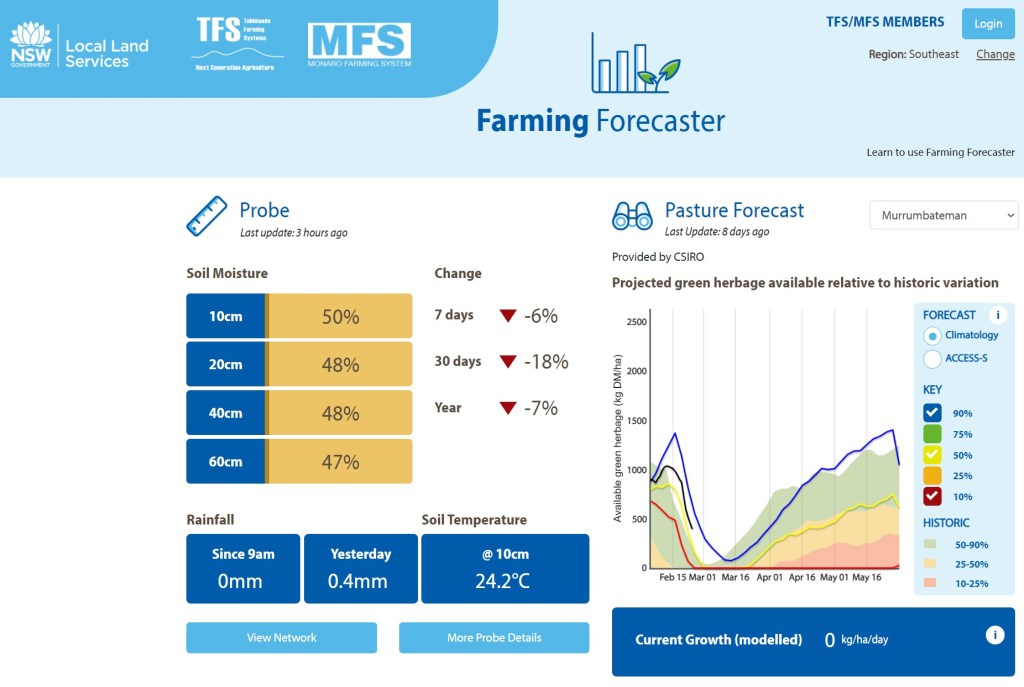
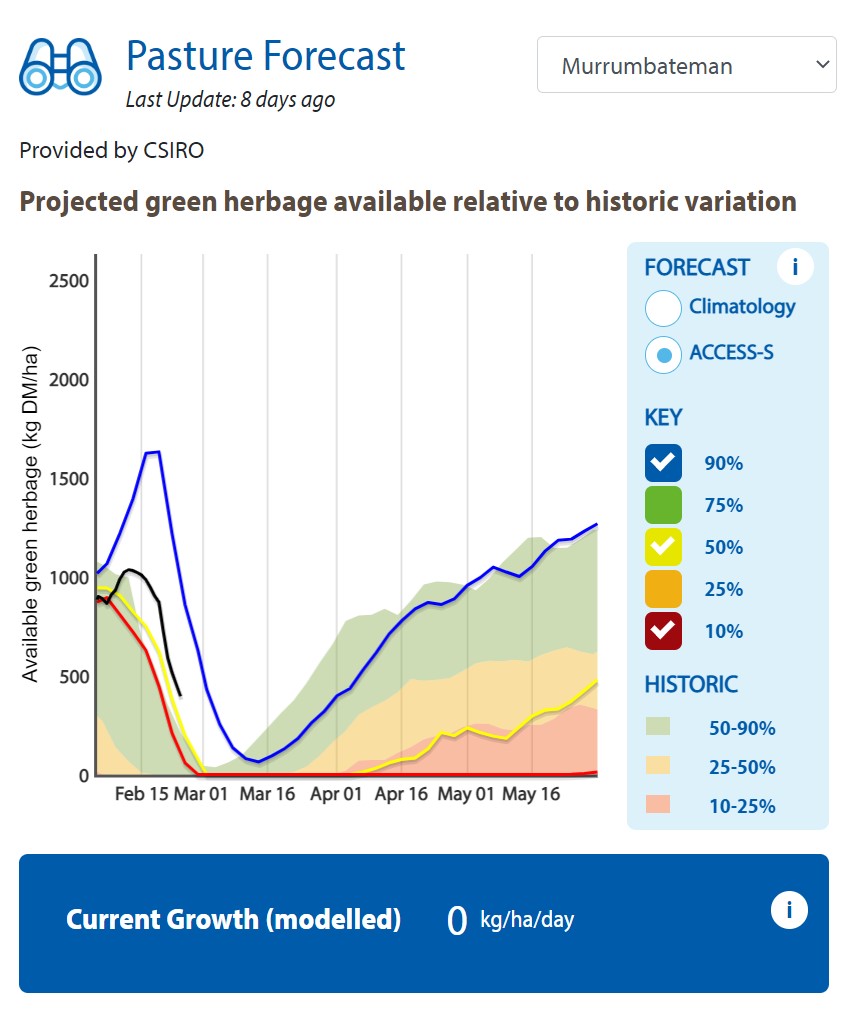
One of the tools I find really useful is Farming Forecaster (https://farmingforecaster.com.au/). It collates 30 years of past soil moisture and helps predict the pasture growth over the next three months. It is really useful for someone like me who doesn’t have a lifetime of accumulated knowledge on seasonal variation on our farm. Below are some screenshots of a nearby soil mositure probe. In reality there are about three probes in our region I look at to help me make a decision on how much pasture I will expect to grow in the next three months.

From the graphs and the long range forecast, we decided we will reduce our stocking pressure this winter. We will make our final decision on numbers based on the pasture growth we will see by 1st of April. This is the logical step of course. The decision process becomes really hard when it comes to deciding which cattle we will sell, especially knowing that we lose all control of their destiny once they are on the truck to the sale yards.

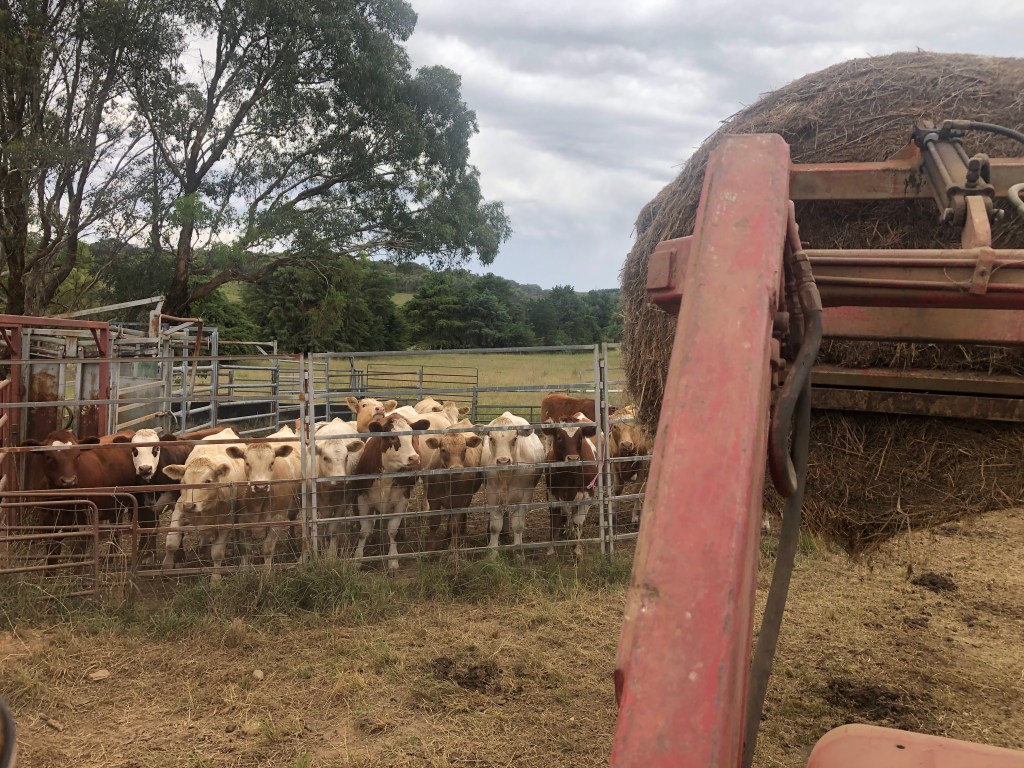
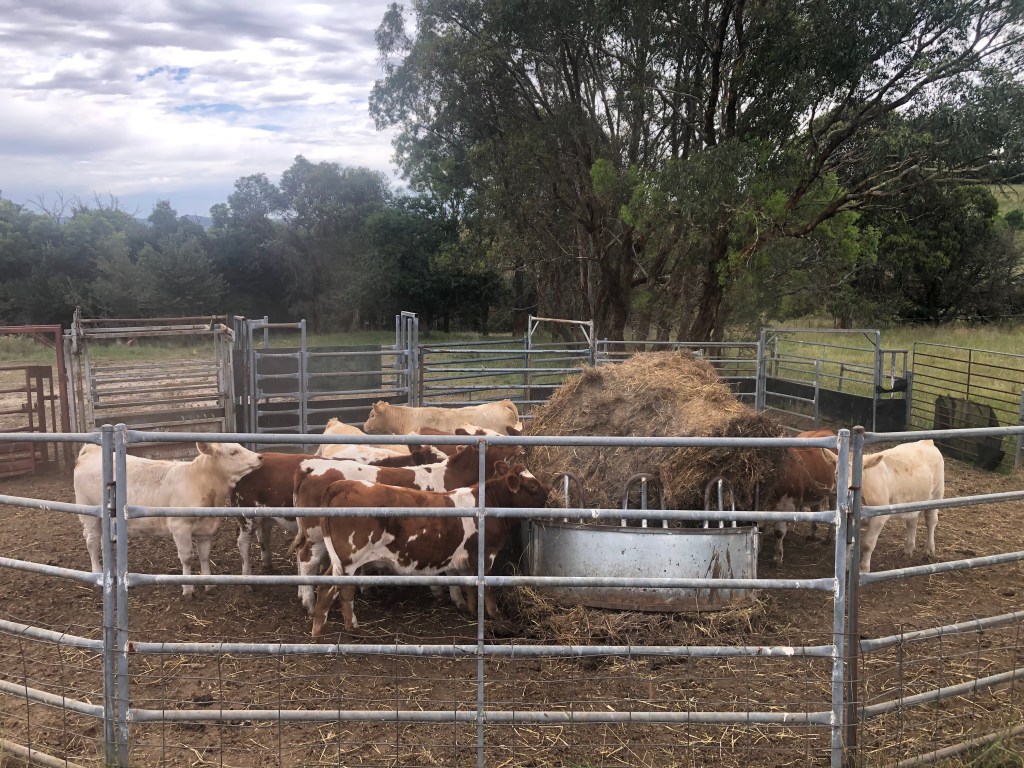
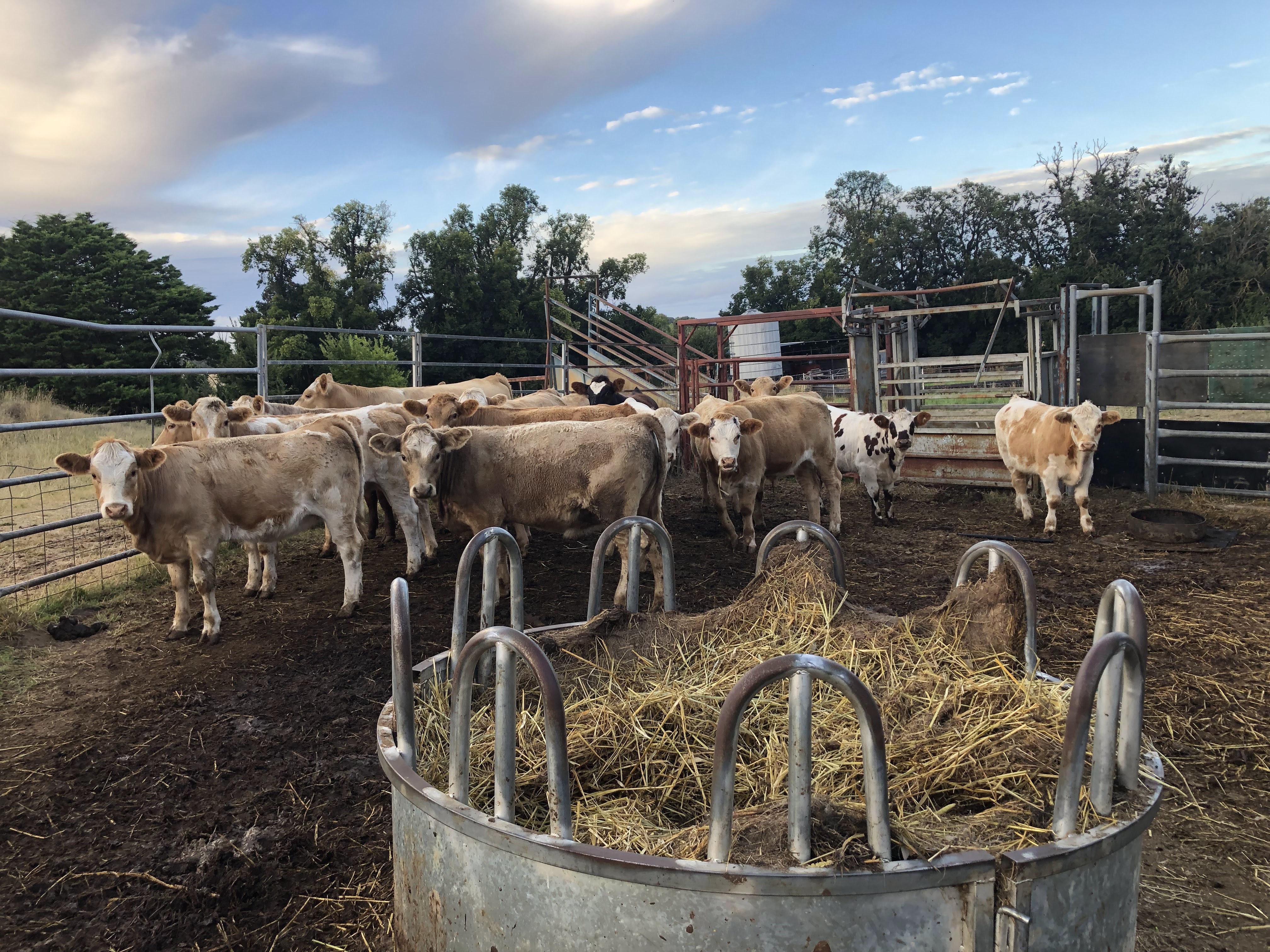
In order to set the calves up for weaning, and to allow other paddocks a longer time to rest before we rotate through the paddocks again, we decided to put some hay out for the cattle. I now know this as a form of bale grazing. Bale grazing is a method of feeding, where hay is fed to stock on the paddock it was cut rather than in a feedlot, thereby keeping nutrients in the system.

We don’t cut hay – and I have long felt that I would rather import fodder (and its nutrient) instead of fertiliser. The cattle and their rumen are the ideal first stage processers to turn fodder into fertiliser for our soil.

We put the bale feeder near the top of a hill, on a patch of wiregrass. Wiregrass is a native grass of little nutritional value – however it is particularly nasty to sheep with seed heads working through the wool and into the skin of the animals. Wiregrass doesn’t like fertile soil, so I hope to improve the soil here and allow other grasses such as microlaena (another native grass) a better chance to grow.

By putting the bale feeder high in the farm, any nutrient that does wash down the hill, remains on the farm and will help feed the soil in the lower slopes.

The other advantage in putting out a couple of bales of hay prior to weaning is that it also will make it less stressful for the calves as they will be comfortable eating hay, and familiar with the feeder. Weaning is always a hard time on the Rock Farm – but it is important. It allows the cows an opportunity to put on some weight before winter. It also familiarises the calves with being handled in yards, being fed and moved around. We will sell our steers and some of our heifers, and this training will help make our cattle quiet and safe for their future owners.

It is always hard selling our cattle, but it is one of the many decisions we have to make in the interests of our soil and farm enterprise. It is part of the responsibility of owning livestock and is inseparable from owning the farm, I generally love it, but it can at times feel overwhelming. As one of the LLS Directors reminded me a few years ago during the height of the last drought. We were talking about some high profile animal welfare cases (with starving stock) in the district. He said it was a mental health issue that led to an animal welfare issue. His words stuck with me, and reminded me how important it is to look after ourselves first, so we are fit and able to make decisions in the best interests of our stock.

If you or someone you care about feels overwhelmed and isn’t making decisions, there are many support options available. The National Centre for Farmer Health is a great place to start: https://farmerhealth.org.au/support

Improving water infrastructure

You may recall that I recently spoke of the difficulties in leaving the Rock Farm for a few days. The preparations to depart on a holiday can be challenging – especially with livestock who have an uncanny ability to know when they’re unsupervised! I won’t continue the similarities with livestock and children, suffice to say they both seem to know when the adults are not around!

In January we managed to get away for a week. Our holiday was wonderful, but it wasn’t all good when we got home. The Cattle had managed to destroy the float valve in the old bathtub water trough in their paddock. Whilst the backup water supply in the dam held water, it was apparent I needed to upgrade the old bath tub to something more substantial.

With another family visit to Queensland on the cards at Easter, I knew it was time to make a significant change to our water situation. It was a two part solution. Reducing demand and improving the infrastructure.

The first stage was to reduce demand through the sale of our weaners. With special weaner sales at our local yards, we sold all our steers and some of our heifers. The young steers weighed a surprising 290kg average – far exceeding my 250kg estimate. We kept four heifers to add to our herd and sold the rest. This takes our breeding cows to 20. This is well within our soil fertility envelope (next blog entry) – but close to my comfortable maximum.

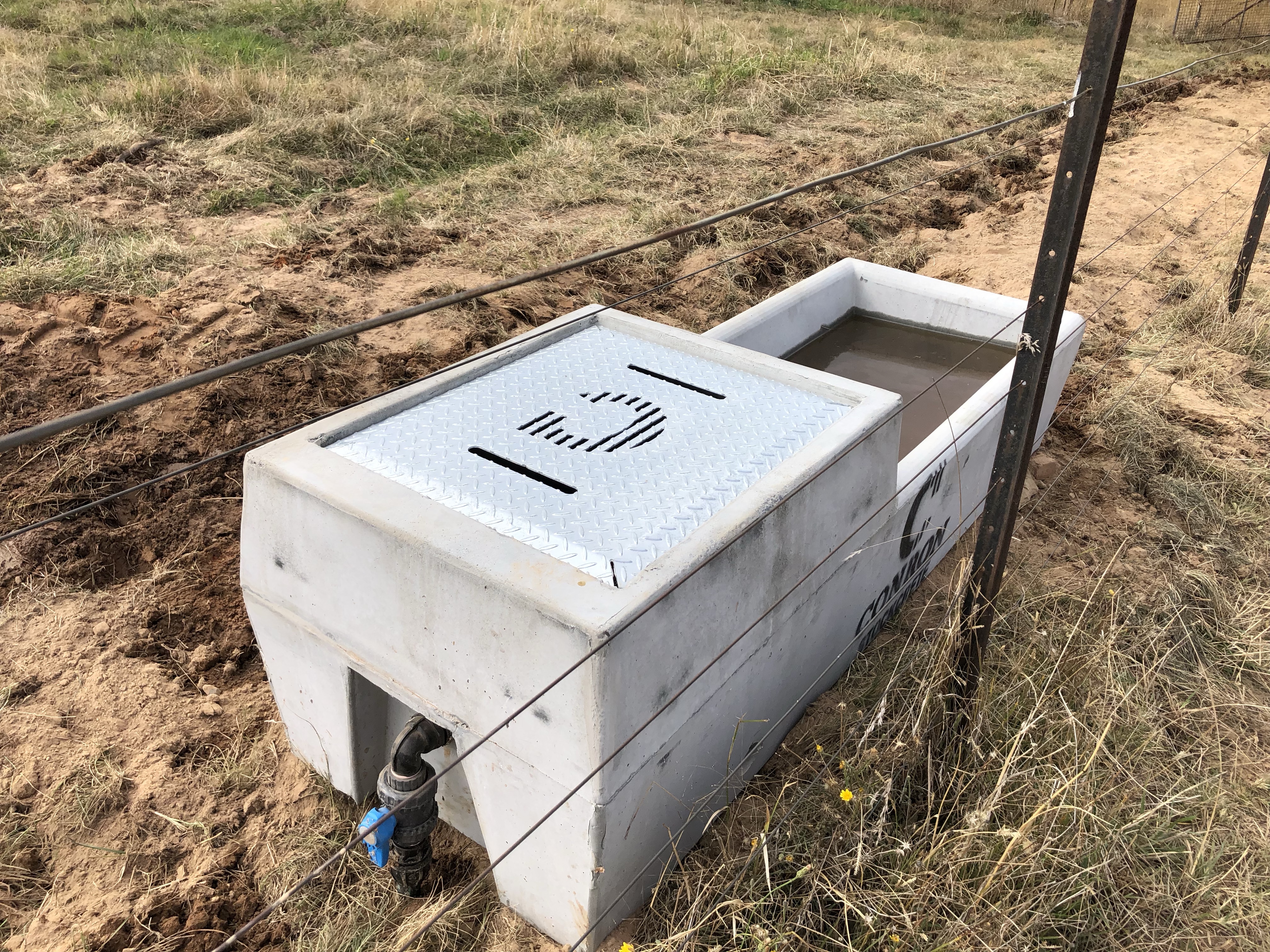
With the proceeds of the sale being, I moved to the second stage, infrastructure upgrade. My plan was to install a new concrete water trough to provide a more reliable water supply. I also wanted to move the trough down hill from the header tank – to provide better water pressure and improve reliability. I figured it would be easy to find the pipe… but how wrong I was.

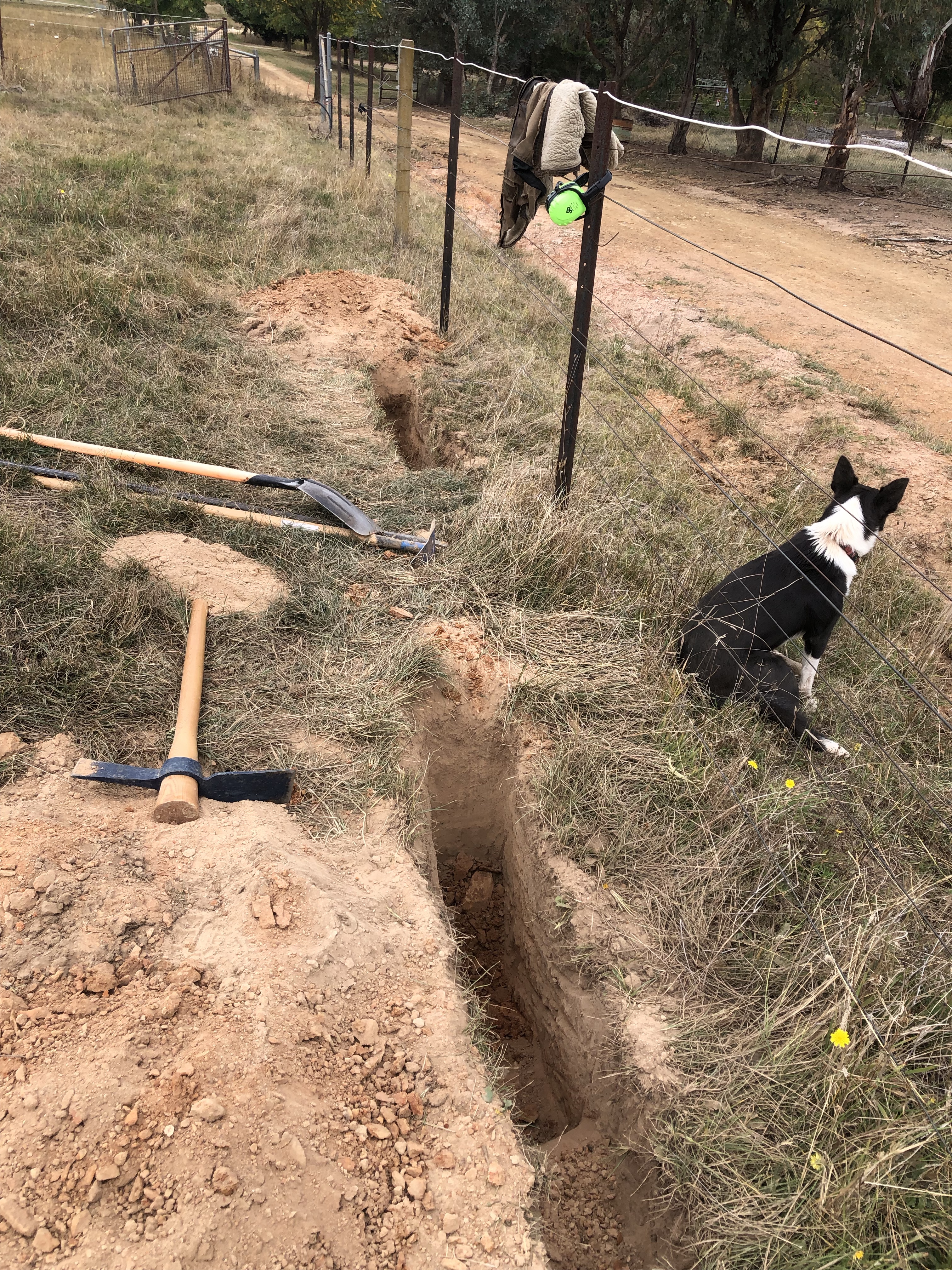
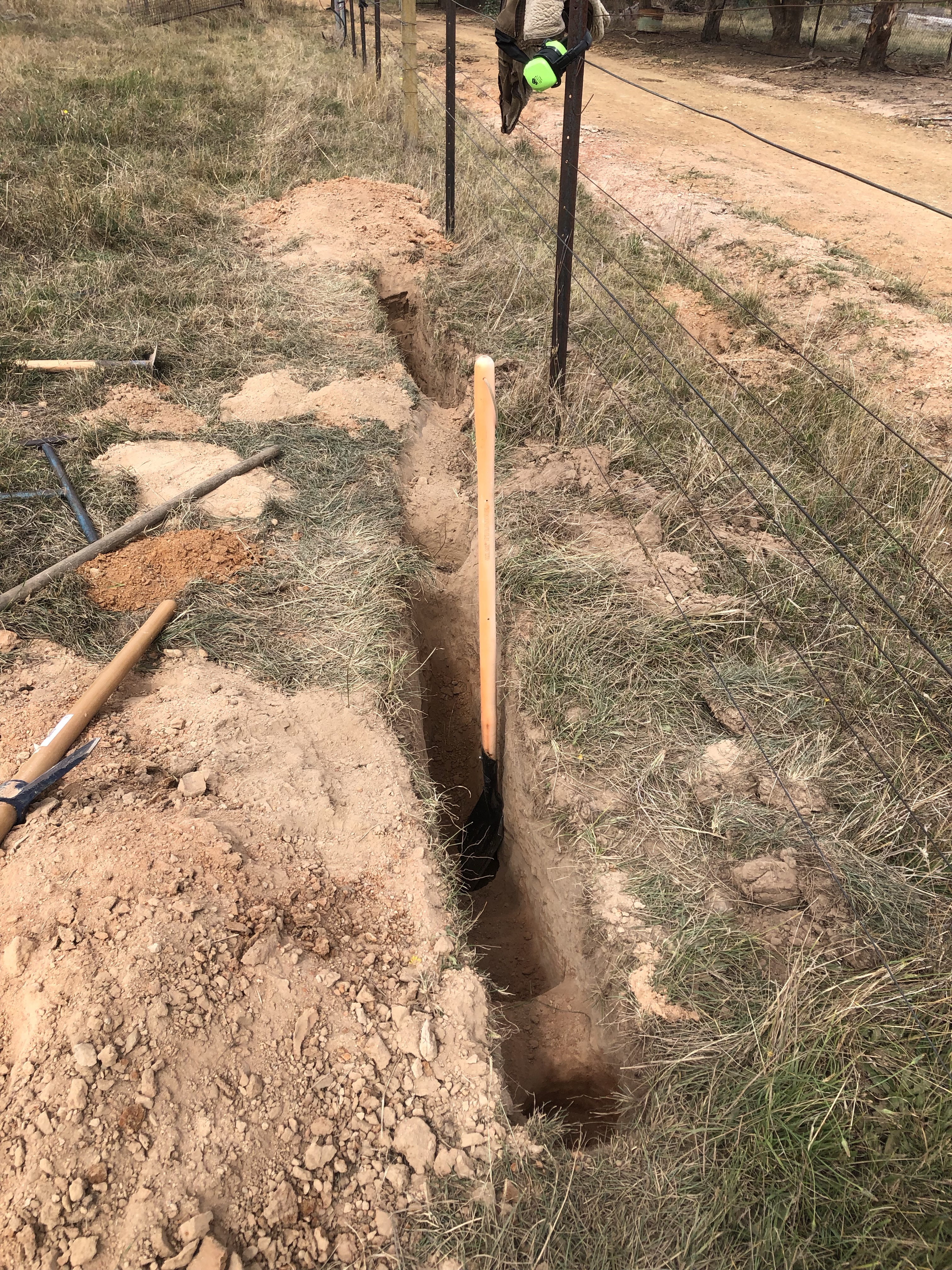
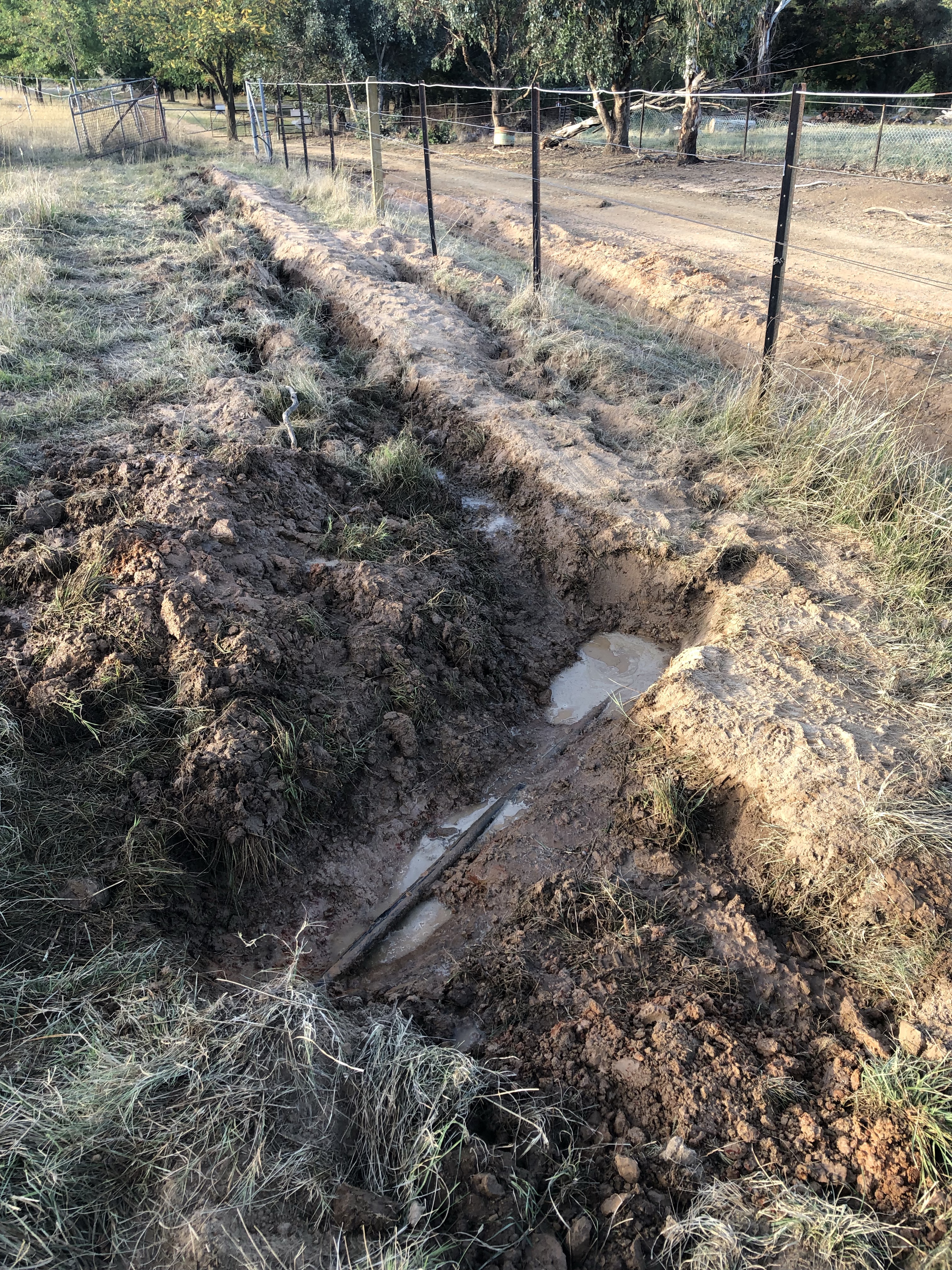
My water divining rods suggested one place to dig… and then another. By the end of it I had followed pipes all over the place and dug trenches all to no avail. I spent nearly all day digging an ever expanding trench. The dog soon realised that to get my attention, she needed to drop her stick in the hole for me to throw it… There was a very dark cloud hanging over The Rock Farm as the shadows lengthened. In desperation I ran the tractor’s ripper back and forth – but it didn’t seem to find the pipe either. In frustration, I called it a night.

The following morning, I reluctantly returned to the scene of my digging to find water everywhere! The rippers had just run across the top of the pipe! I have never been so happy to find a broken pipe. I quickly turned the pump off, and raced to the rural supply shop to pick up the new trough and fittings.

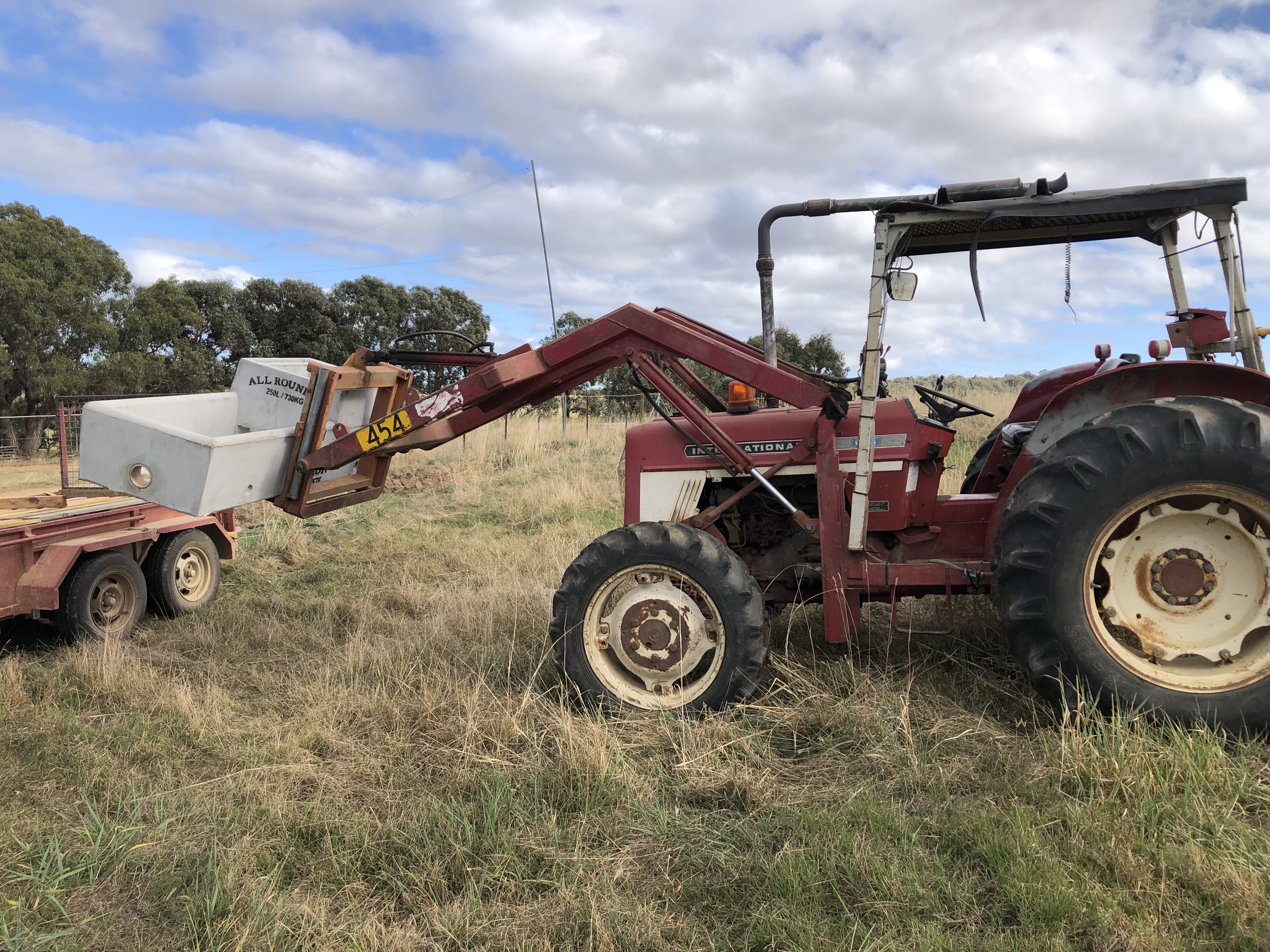
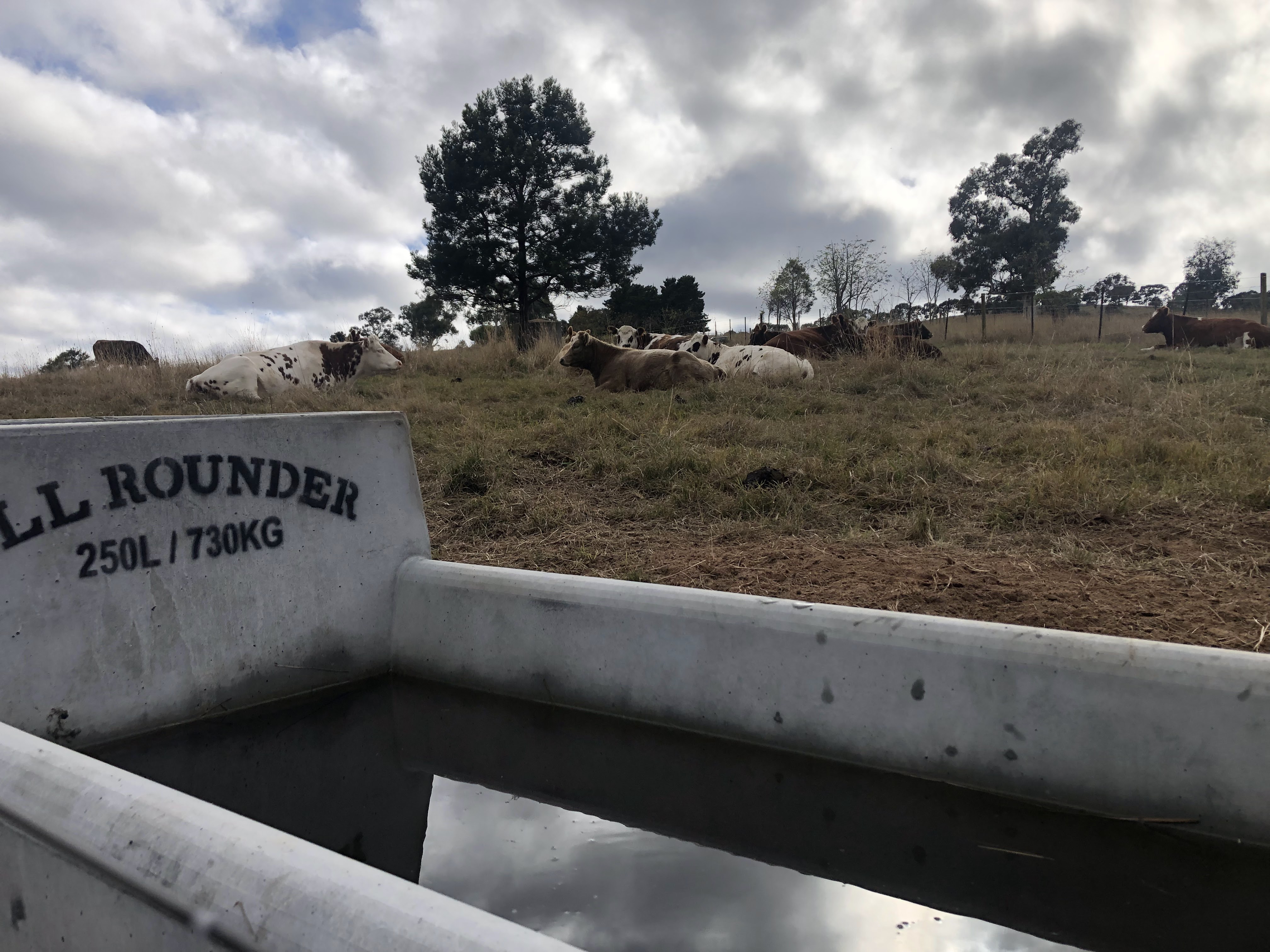
From there it was relatively easy. My biggest worry was that the tractor would struggle to lift the 730kg water trough out of the trailer, but that was no problem at all. After a bit of work with the levels (and the astute eyes will see I still have a little work to do), it was relatively easy to plumb in the new fittings, repair the leak and fill the trough.

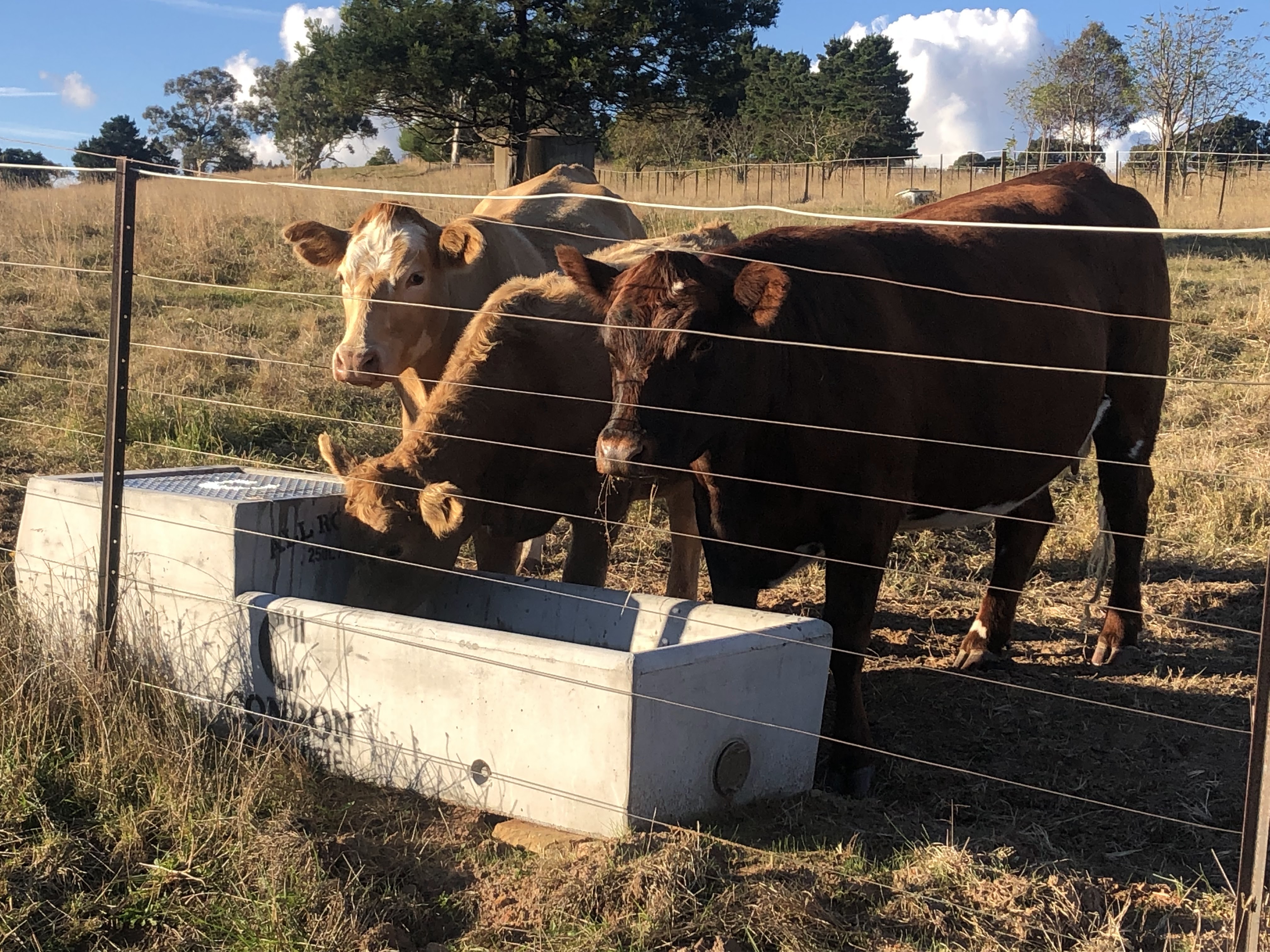
The cattle are happy with the new arrangement. Whilst some studies suggest they perform better on clean trough water instead of water from dams, my main aim was to reduce my maintenance requirements. It was not a cheap investment – but it should last a lifetime.

A wet spring – getting some science on

James Rebanks in English Pastoral described the role of the farmer as one of close observation. Through examination of the interconnectedness of the landscape, Rebanks explains how farmers are able to build an intimate knowledge of every aspect of their farm. It requires farmers to walk their paddocks, getting their hands in the dirt, and examining the second and third order effects from their management decisions. It takes a lifetime to learn.

I don’t have a lifetime of experience behind me, nor do I have the time I would like to devote to unravelling this mystery. So I have to take a slightly different approach, and one method I can use to increase my understanding of my soil health is have soil samples analysed in a scientific laboratory.

I hope the analysis of our soil will answer one of the questions I have from an observation of the cattle’s behaviour. When I move them from a lush grassy paddock to another lush grassy paddock, the cattle seem to have a preference to chew the leaves from young elm suckers if they are present. This could be the cattle seeking roughage, or it could be seeking a mineral that the deep rooted elms have in their leaves that is lacking in the grass. Pat Coleby is a firm believer that the animals know which minerals they need, and their behaviour could be a clue to a mineral deficiency.

We had soil tests conducted not long after we moved to the not-so-rocky Rock Farm (https://rockfarming.com/2018/05/07/soil-analysis-results-are-in/) , so you can imagine when I saw the Local Land Services was offering a soil test program, I leapt at the chance to get onboard. It was three and a half years since our last test was conducted, and I am keen to see if there is a discernible difference in our results since we became custodians of our the 40 hectare Rock Farm.

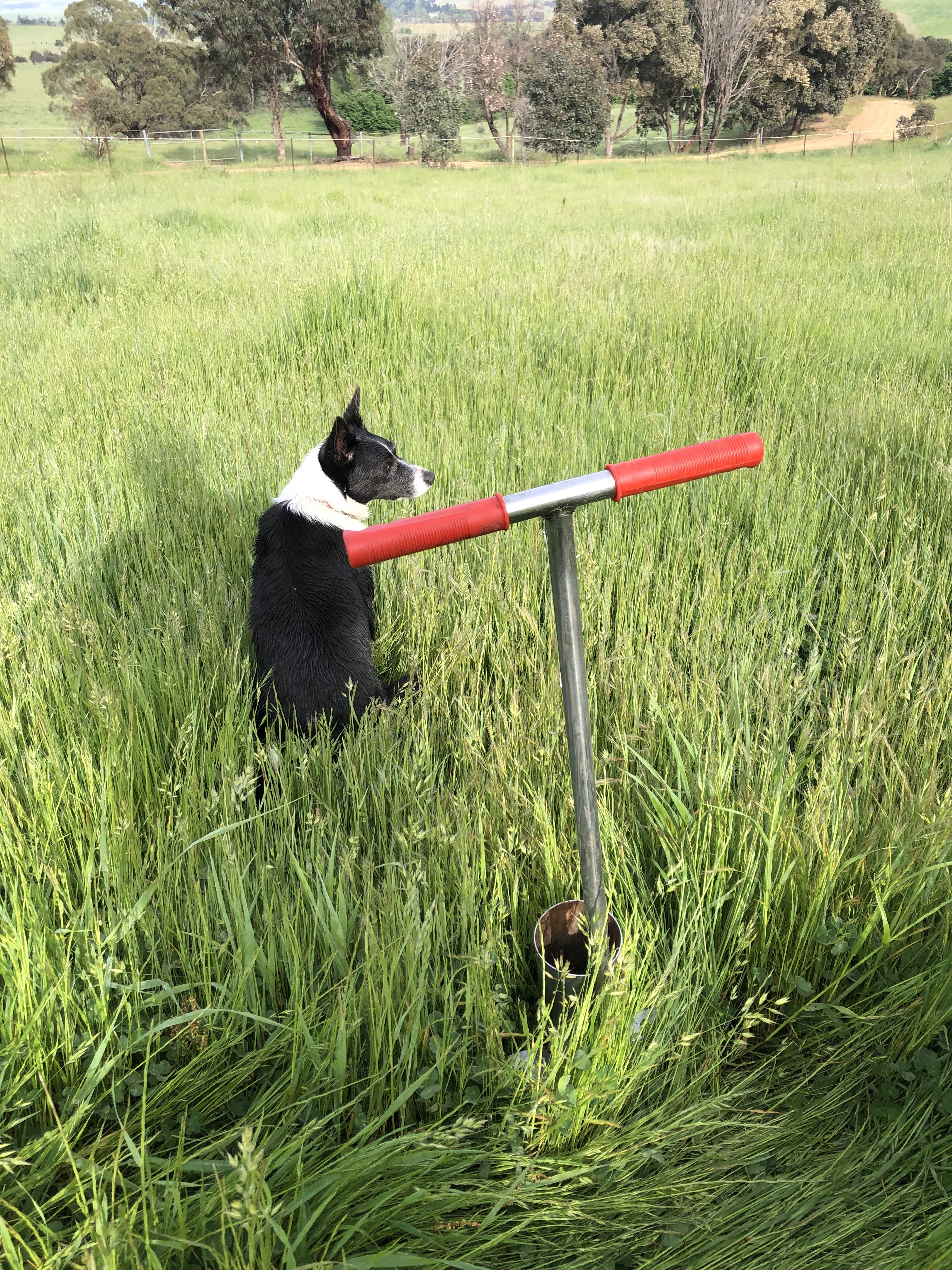
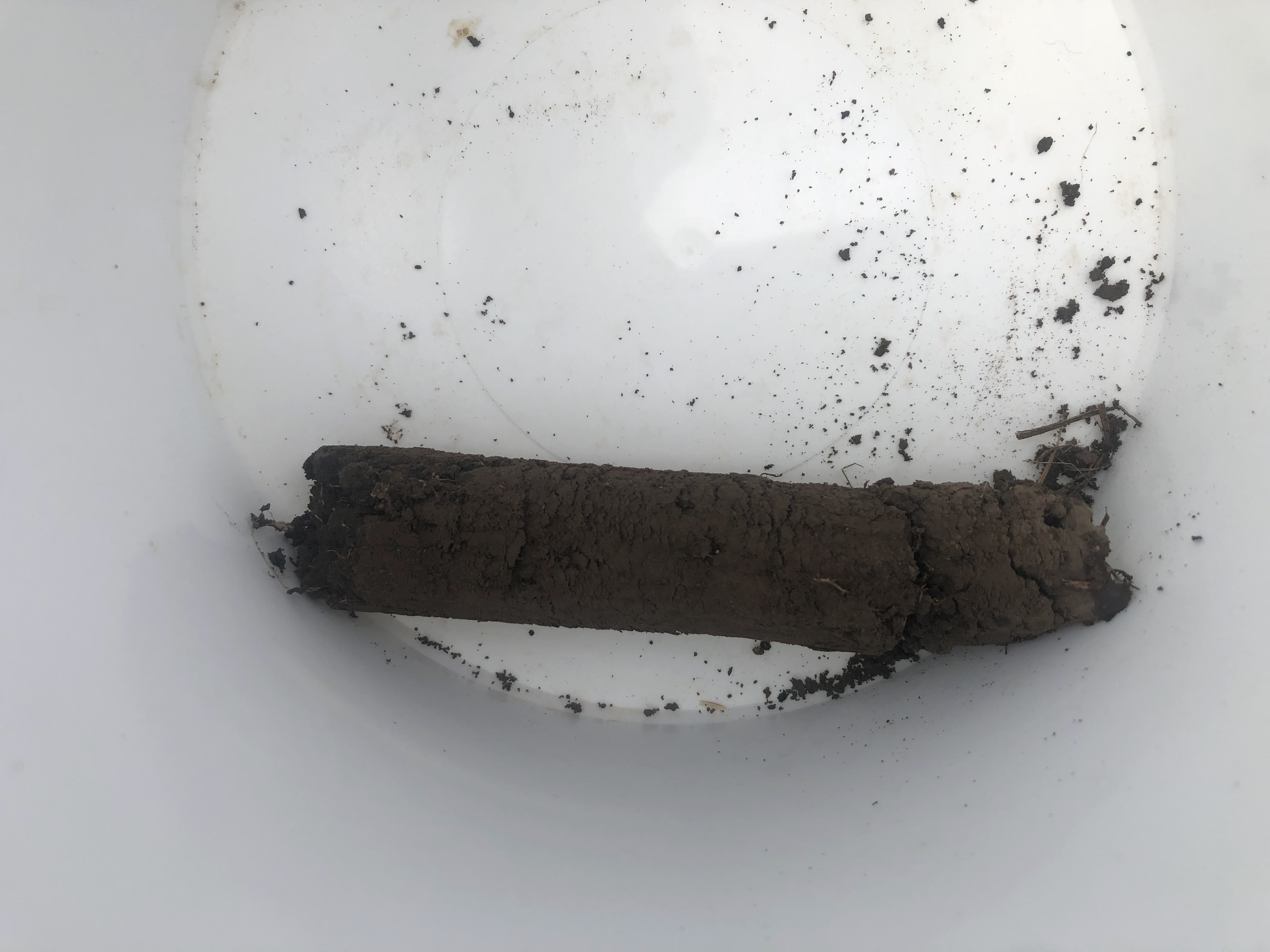
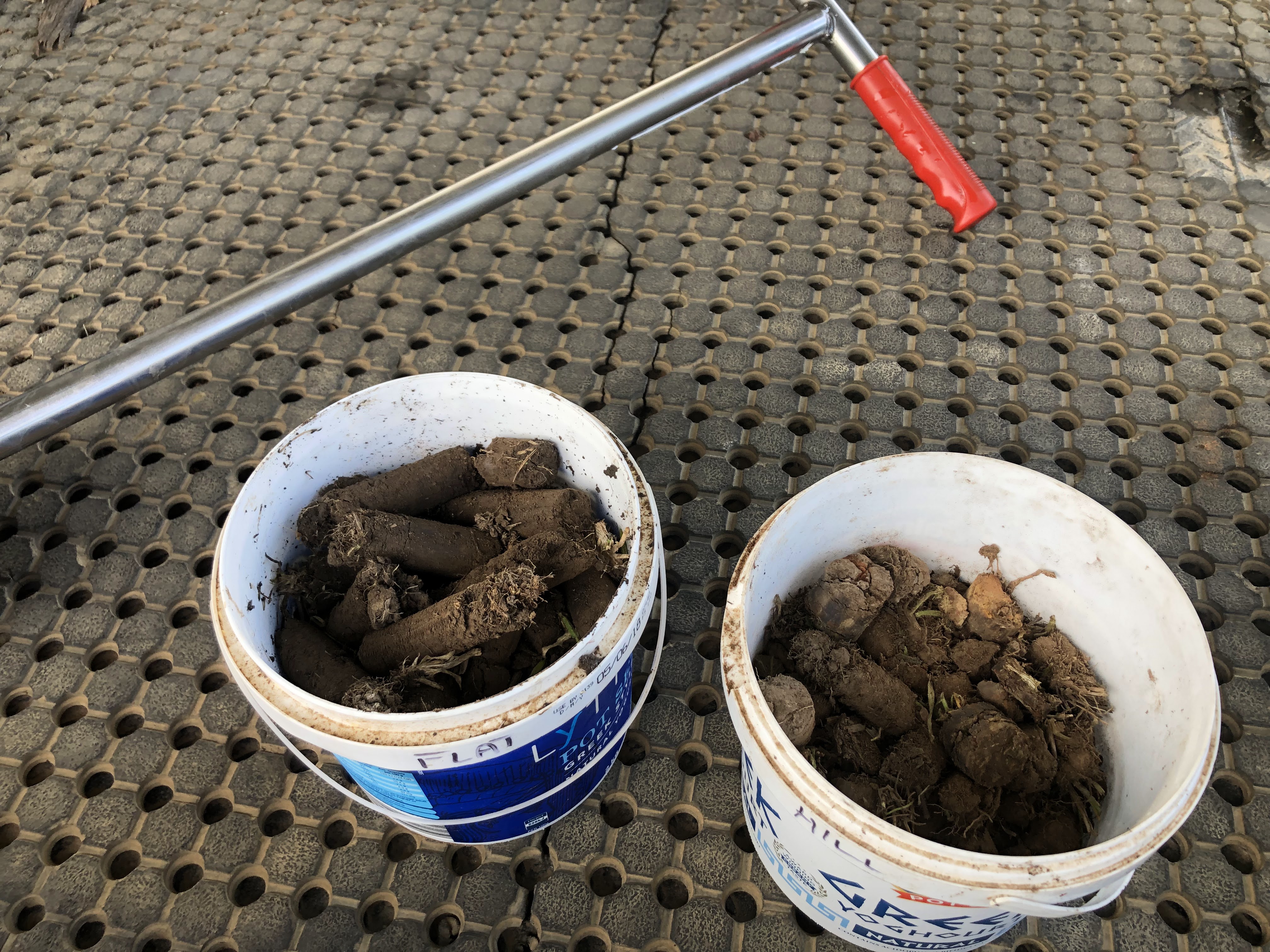
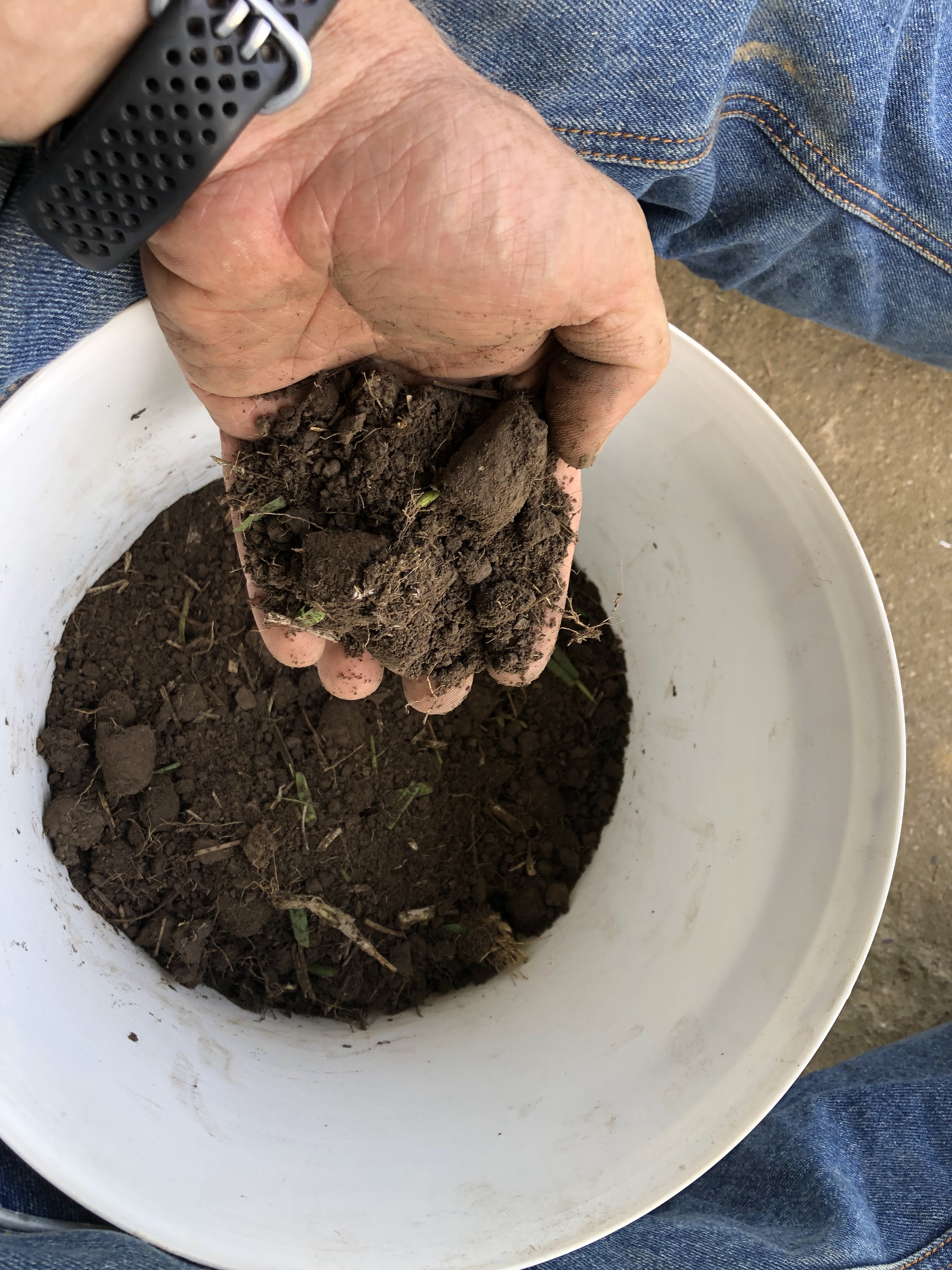
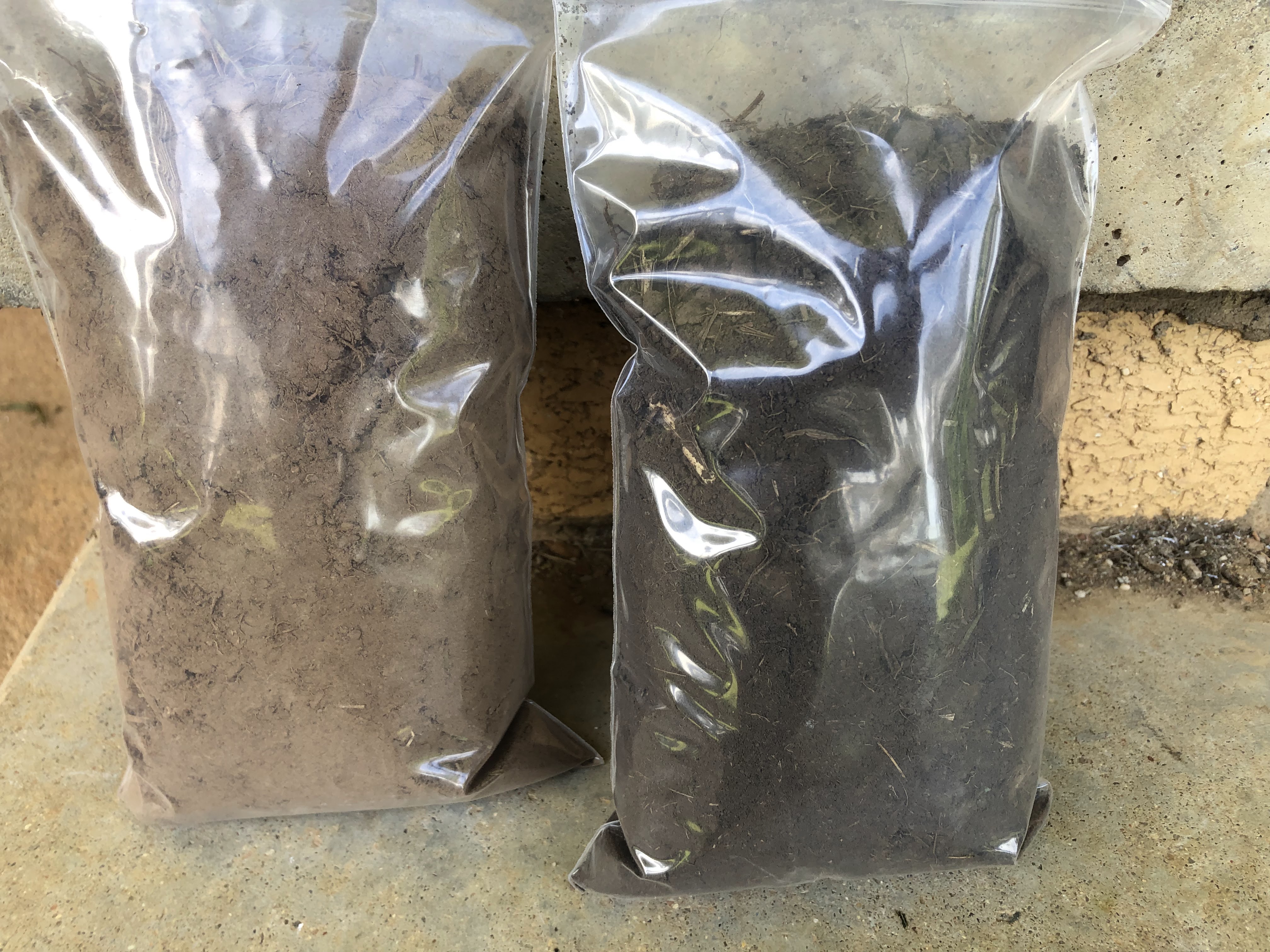
The soil samples require multiple (around 30) 100mm cores to be taken along a transect. I chose two different areas, the first on our river flats, and the second on our shale slopes. Along the flats, the rod was easy to push in the required 100mm. On the slopes, the soil was barely more than 50mm thick, and I had to try really hard to find enough samples that met the 100mm requirement. After I had filled the buckets, I mixed the soil thoroughly, before bagging around 1.5kg of soil for testing. The colour difference in the soil samples was remarkable, but not unsurprising.

Since we bought this Rock Farm, we have not applied fertiliser to these paddocks. Our first two years experienced very low rain fall, and the last 18 months have seen much higher than average rainfall. We initially grazed sheep on the property, before buying our first cattle in May 2018. We sold our last sheep in January 2020 – just before the drought broke.

Instead of purchasing fertiliser, I have been happy to supplement the stock’s feed as required, bringing in hay and other feed as required, using the philosophy “If you want to run ten cows, feed ten cows until you can run ten cows.

We have also practiced cell grazing or rotational grazing. This means we graze a paddock heavily for around a week or so, before resting the paddock for as long as I can. I have around 13 rotations that I cycle the cattle through, meaning each area is only visited every three months or so. It doesn’t always work that way – some sections are significantly larger and have better water supplies, keeping the cattle happy for more than a week, and others they chew out after a couple of days. I also want to keep the grass around the house short in preparation for fire season, meaning this area is eaten out more than the others.

One variable I am not sure how will be reflected in the results is soil carbon. We scored between 3 and 3.6% on our last results, and whilst advocates of rotational grazing claim it increases the amount of organic carbon in the soil, field experience is lacking (https://soe.environment.gov.au/theme/land/topic/soil-carbon-dynamics). Soil carbon does increase the capacity of the soil to store moisture – but the amount of carbon may also be linked to soil moisture meaning rainfall may be the biggest factor in affecting our soil carbon levels. I will be particularly interested in this element of the analysis.

Either way, I am looking forward to the test results. Of course the ones who gain most benefit from healthy nutritious soils are completely oblivious of the science behind their condition.

The good news is they are fat as fools, healthy and happy. They show passing interest in a mineral lick I have available for them, which I take as a good sign. And it is such a pleasure moving them through the farm, especially when the grass reaches their bellies.

The battle for Daisy (again) – Update

Having started work before the sun, I have been eagerly awaiting a phone call from Jo or the kids to give me an update on the condition of Daisy or her calf. I was still processing the events from the previous day, and had woken this morning with sore muscles in all sorts of unexpected places.

Overnight we had conducted a stock-take of our powdered milk supplies, and hunted around for our poddy calf bottle and teat. We were worried that either Daisy or her calf, or both would die overnight. It was a cold and bitter night, with some more rain in the mix. Jo came to the conclusion that it was foolish to name our cattle, and vowed never to name them again. We feared the worst.

It seems no one was keen to make their way to the yards to check on Daisy and her calf the following morning. Jo eventually made her way down, apparently checking everything else on her way to the yards. The rest of the cows had water, check. Their calves were all accounted for, check. The tractor and next bale of hay were ready to go in the shed, check. Finally it was time to check the yards… and initially Jo feared the worst because she couldn’t see Daisy or her calf.

Then she got closer, and found Daisy up and on her feet, with her beautiful heifer suckling at her udder. She called me in delight to give me the good news.

The Vet, Dr Jack from Bungendore arrived a short time later, and gave Daisy and her calf a thorough going over. He gave Daisy a slow acting antibiotic to treat a small tear. He checked out her calf, and gave her a clean bill of health, and a name… Buttercup.

I guess it is all in a name after-all. Welcome to the Rock Farm Buttercup. 🙂

The Battle for Daisy (again)….

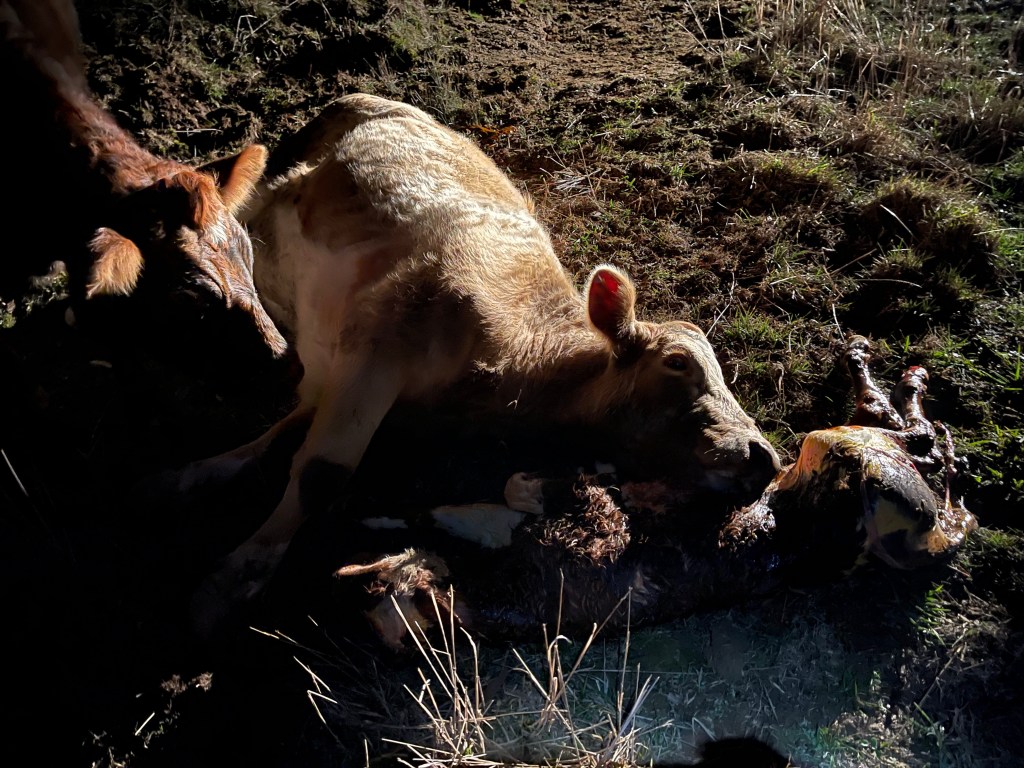
A rainy day is welcome any time on the Rock Farm – especially now the days are noticeably longer and the ground is starting to warm up. We now have 8 beautiful calves on the ground. However the old adage, ‘you don’t have livestock without dead stock’ held true. We lost one calf during a particularly long and difficult labour for my favourite maiden heifer, Uno. The loss of the calf was heart-breaking, and we felt the mournful ‘moo’ from Uno deeply.

A rainy day is good for taking stock of things around the farm, and catching up on my blog. However no sooner had I written the paragraph above and my day turned around. By the end of it we were in a desperate struggle to save one of our beautiful girls.

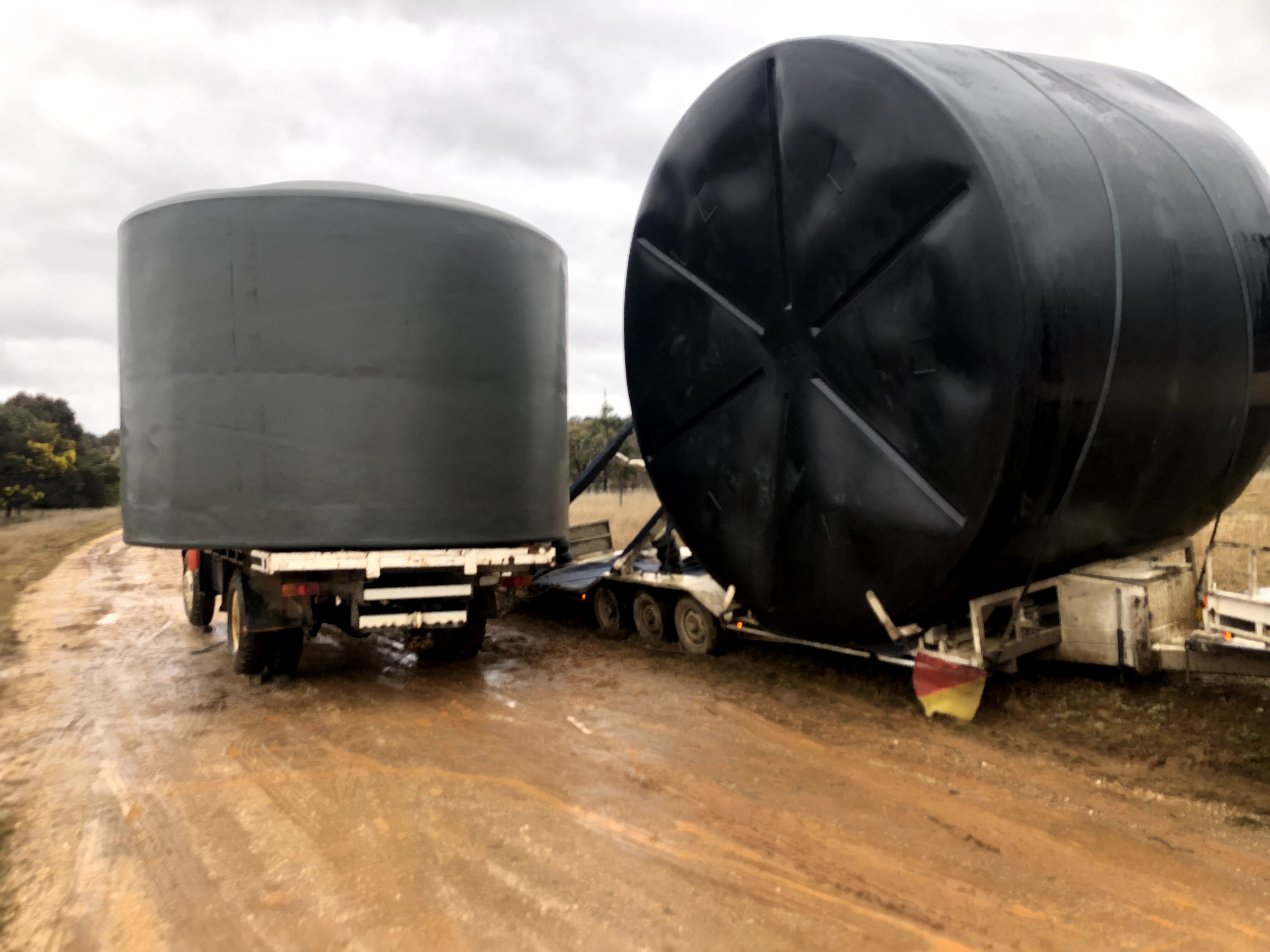
The first event that dragged me outside into the wet was to lend a hand to our neighbour, who needed help with a new water tank delivery. It turned into quite the adventure, with the driveway turned to mush, and the creek (moat?) running deep and fast. The initial plan was to drag the tank delivery truck to the site with the tractor, but when we saw how low his trailer was, we realised it would float downstream on the crossing. Plan B was put into place, which involved rolling the ten thousand gallon, 800kg tank onto the back of Myrtle. This went remarkably well, and we soon had the new tank deposited in our neighbours paddock. Remarkable because no trucks or tractors got bogged during this evolution.

In my dash down to the shed to get the tractor, and then swap it for the truck, I had noticed that Daisy was in labour. When we had done with our unloading, I checked on Daisy again and my heart sank. Daisy somehow managed to beat all the odds when she was born. And despite all my reasoning to sell her, she somehow seemed to have very vocal allies on her side. The whole challenge to save her when she was born can be found here: https://rockfarming.com/2019/09/04/the-battle-for-daisy-rescuing-a-calf-on-the-rock-farm/

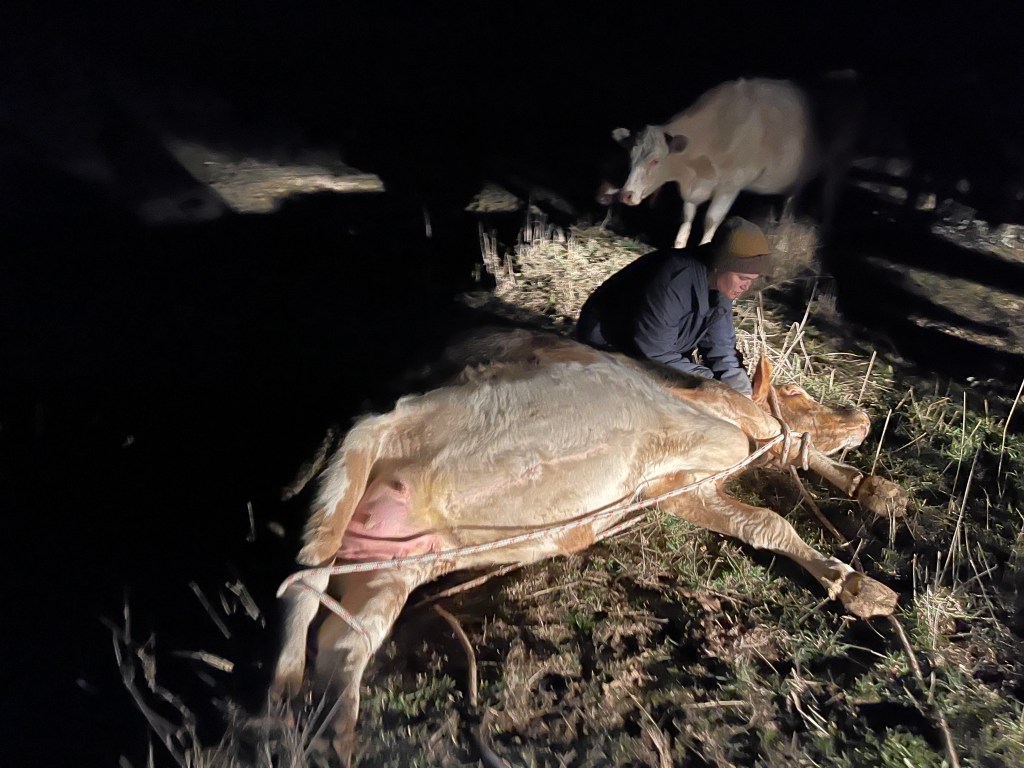
Protruding from Daisy’s rear was one hoof and a calf head, with its tongue hanging out. The calf’s tongue was a blueish colour, and there were no signs of life. I knew we had to get her in the yards, try to pull the calf and see if we could save Daisy. Despite our efforts, Daisy had no desire to leave her friends. It took all of us a lot of initially gentle and then more forceful encouragement to get her in the yards. By the time we got her safely secured in the crush, we were all exhausted.

Once in the yards, the real battle for survival began. We used this rope squeeze technique to lay her down. The reason for laying her down was that she can push a lot harder lying down. The next thing to do was to find out what was wrong. By now the cold was seeping through my wet clothes, and I was acutely aware of how cold it was now the sun was setting. Jo kindly brought down a bucket of warm water from the house, some old towels and some ropes. I tried to recall any snippets of advice from a childhood reading James Herriot, but sadly not much was coming. I figured it must be like helping lambs, but only bigger…

A gentle examination revealed only one leg was showing. The other leg was folded back – meaning the calf would never come. It was time to call an expert. Our first phone call was to our vet. The next was to another expert – my father. His advice was really simple – before you can pull the calf out, you’ve got to push it back in to re-align the leg. So – against nature, and the vice like grip of the contractions, I pushed the calf back into Daisy, and desperately felt around for a leg. I was on the point of giving up when I found it. That was the easy bit. Getting it to point the right direction was not so. Eventually we got there, and with both legs aligned, it took a few more tugs and our calf was born.

I was relieved that we had saved Daisy (again), but feeling sad about the calf when the calf opened its eyes and gave a breath. It was alive! My heart skipped a beat, and we quickly rubbed it down with the towels and put her next to a thoroughly exhausted but interested mum. Daisy had given birth to a beautiful little heifer.

As I write, they are safely tucked out of the wind in the yards. I still don’t know if either Daisy or her calf will survive the night, but we figured it was time to let them work it out by themselves. We called the vet and cancelled the late night call, but arranged for them to come out first thing to check on their progress. Time will tell if we have beaten the odds, or delayed the inevitable. But that is how things go on a farm. Things can turn around so quickly. And as hard as it can be, it helps me feel alive.

Winter Planning on the Rock Farm

Winter on the Rock Farm this year has been remarkable, with steady rain creating a beautiful slushy feel when walking around the paddocks. With the rain has come plenty of cool overcast days, and some thoroughly miserable windy days. But the rain has also kept the frosts mostly at bay, and this means the grass is still growing, albeit slowly. The cattle all seem to have recovered from the curse of Mavis (https://rockfarming.com/2021/07/10/curse-of-mavis-mange-mite/), and the cows are definitely starting to look uncomfortable with their growing bellies.

Regular readers will be aware I decided to hold last spring’s calves over winter. I have been using a couple of tools to help me determine my strategy. The first is Farming Forecaster (https://farmingforecaster.com.au/). This tool, supported by Local Land Services and CSIRO examines soil moisture profiles at numerous sites. All the sites near the Rock Farm show we are in an exceptional season, with unusually high pasture growth forecast for spring. Whilst most of the sites nearby run merino sheep, there are useful graphs on forecast livestock weight. The model predicts steady increases in stock weight until around the first week in August before a steady decline, associated with lambing.

Farming Forecaster estimates our pasture is growing at around 4-5 kg/ha/day – which is not enough to feed all my hungry mouths entirely. To help me determine the balance required, I use the Local Land Services “Drought and Supplementary Feed Calculator“(DAFSC) app (https://www.dpi.nsw.gov.au/animals-and-livestock/nutrition/feeding-practices/drought-and-supplementary-feed-calculator). This app takes into account the amount of pasture I estimate I have, and allows me to develop a ration to meet the nutritional requirements of the cattle. Practically this means it allows me to calculate how much hay I need to feed the cattle for them to maintain condition. My theory is, if I leave it long enough for me to recognise the cows have lost weight, I have left it too late.

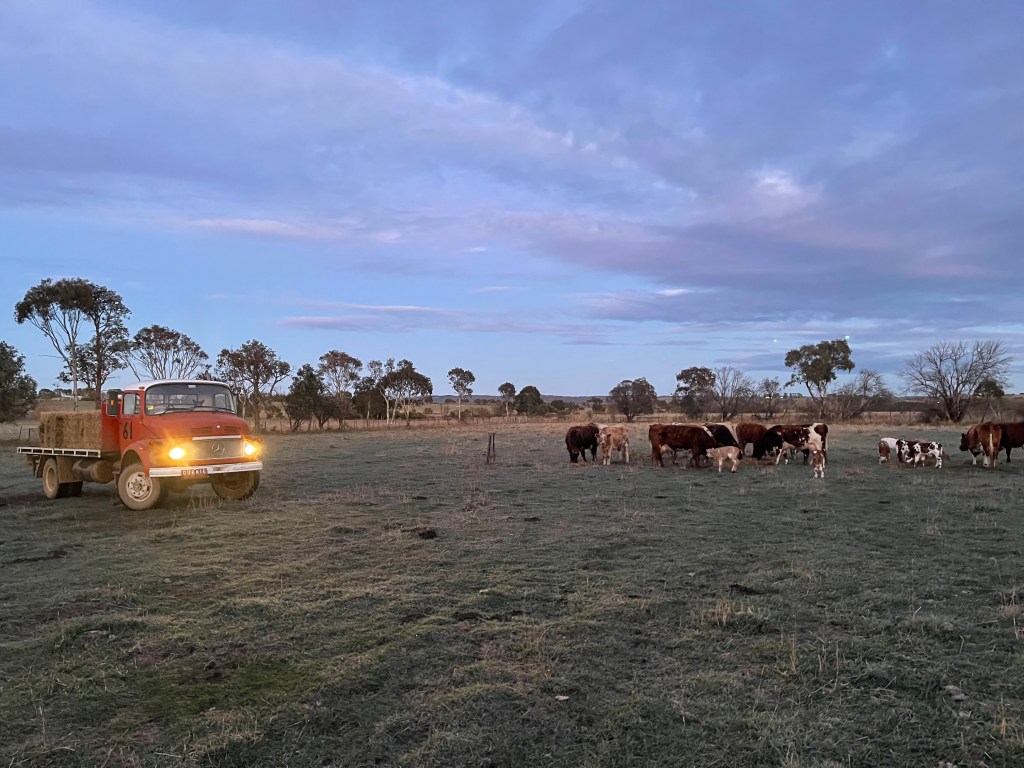
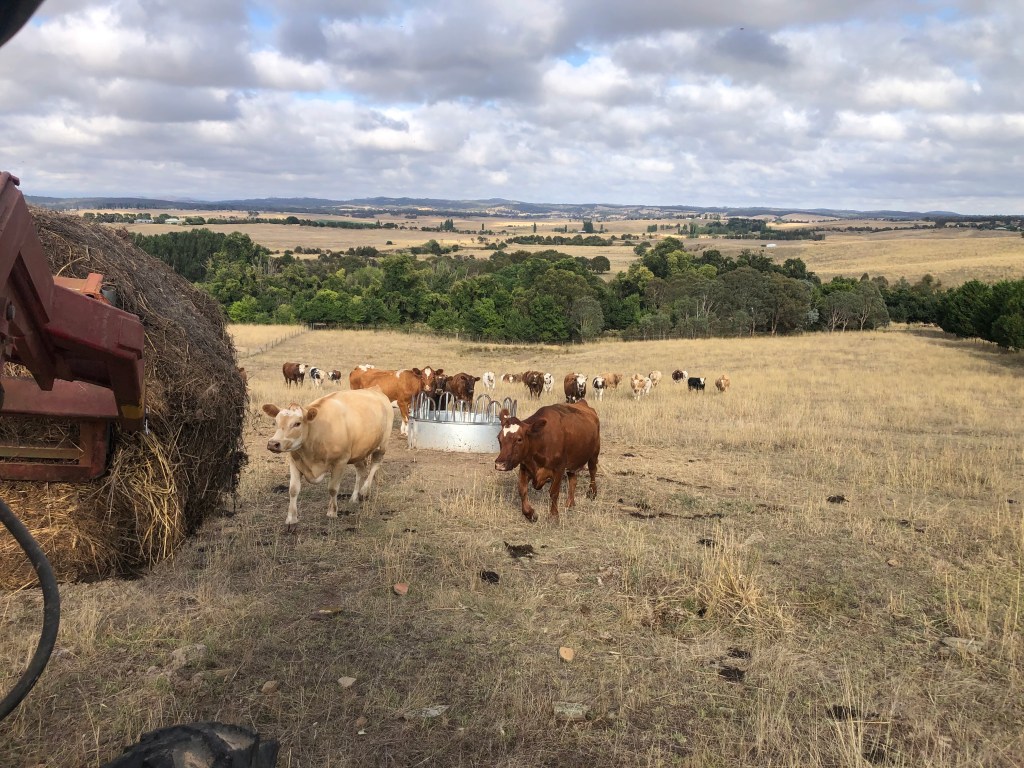
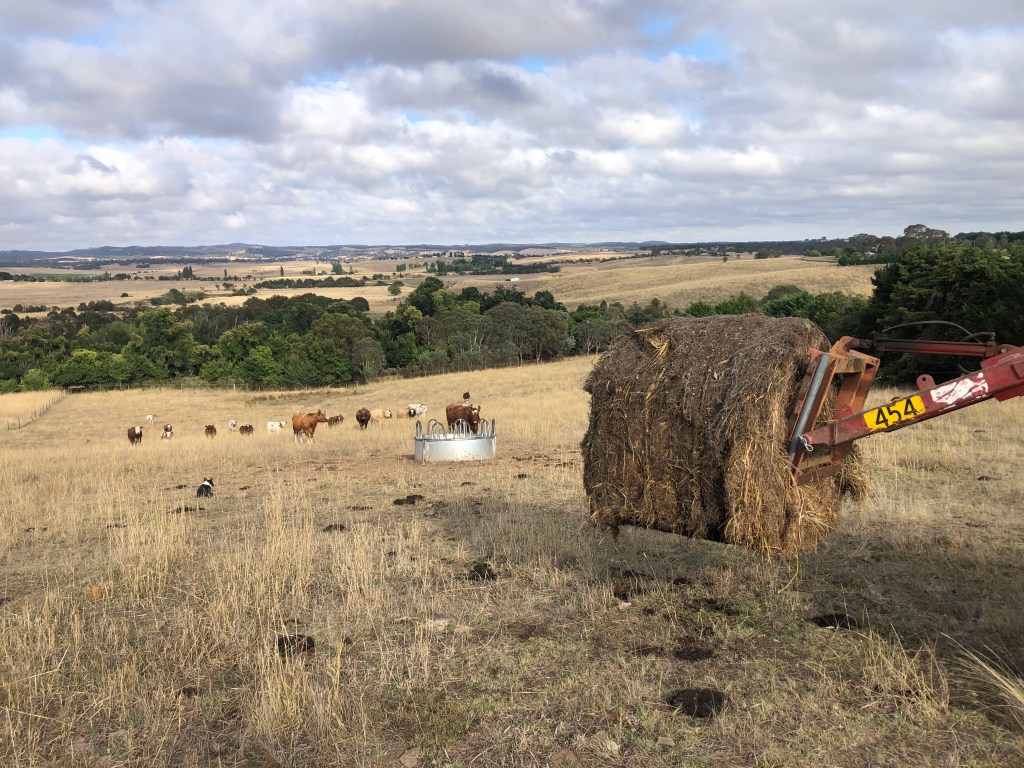
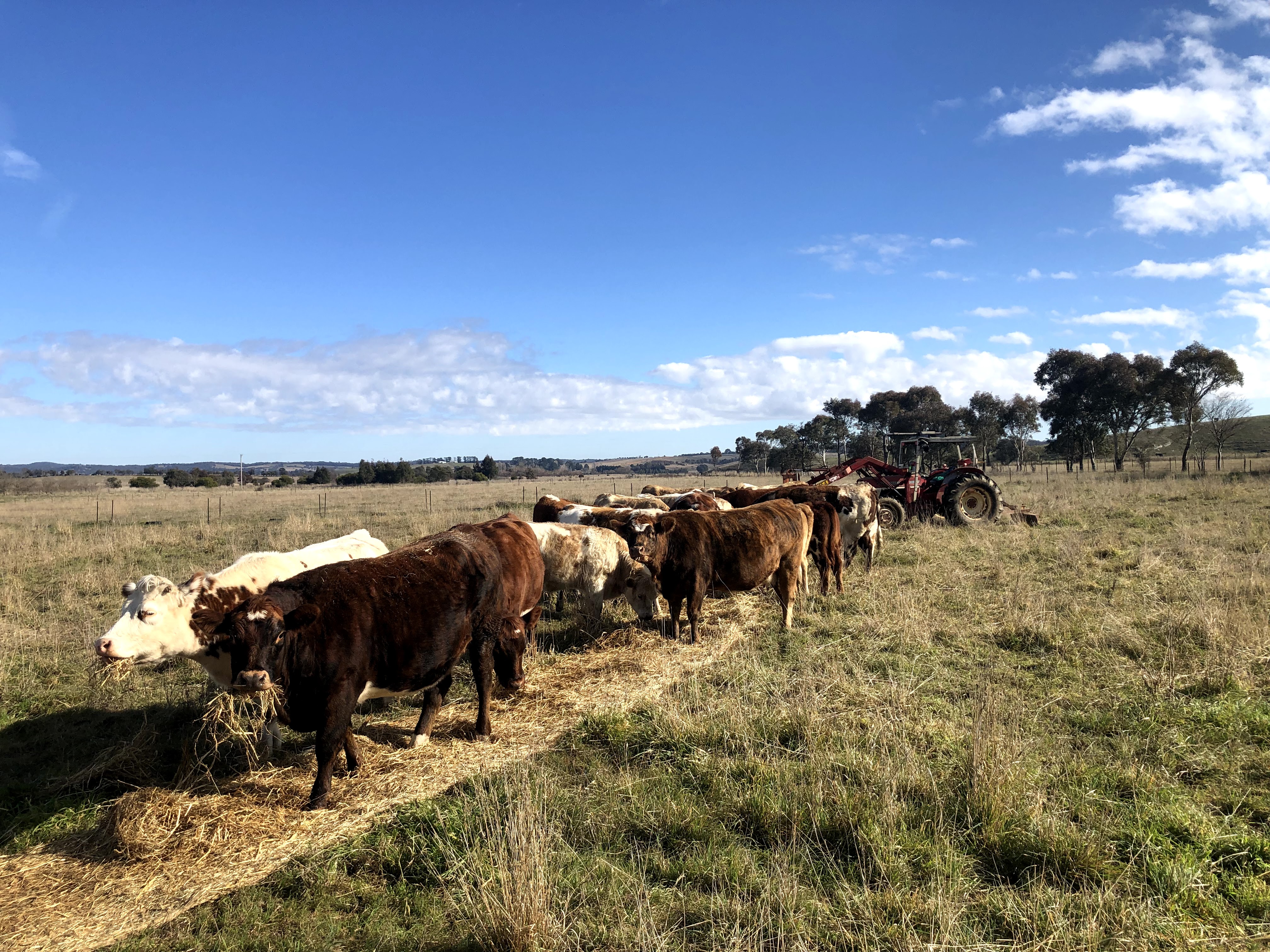
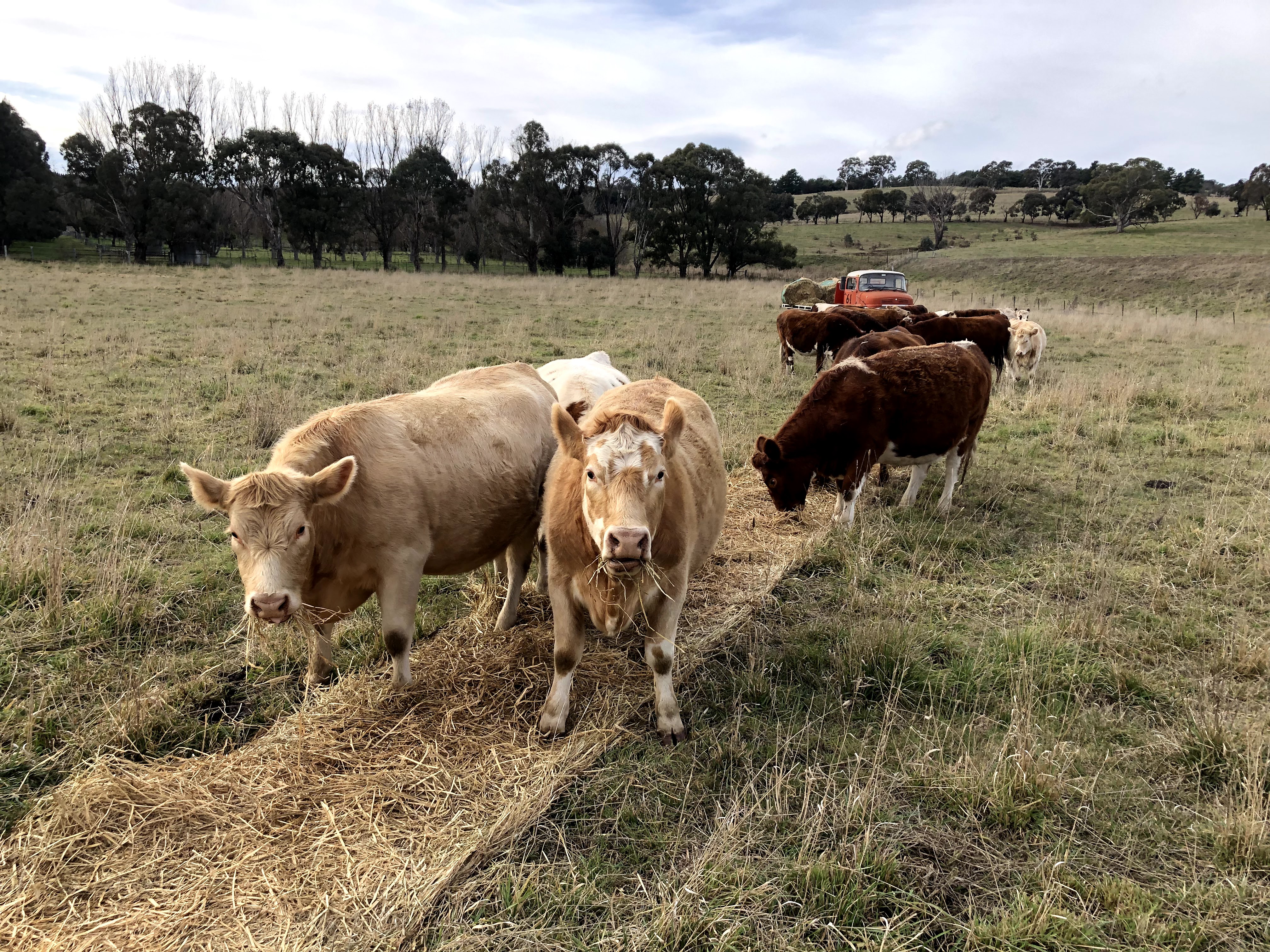
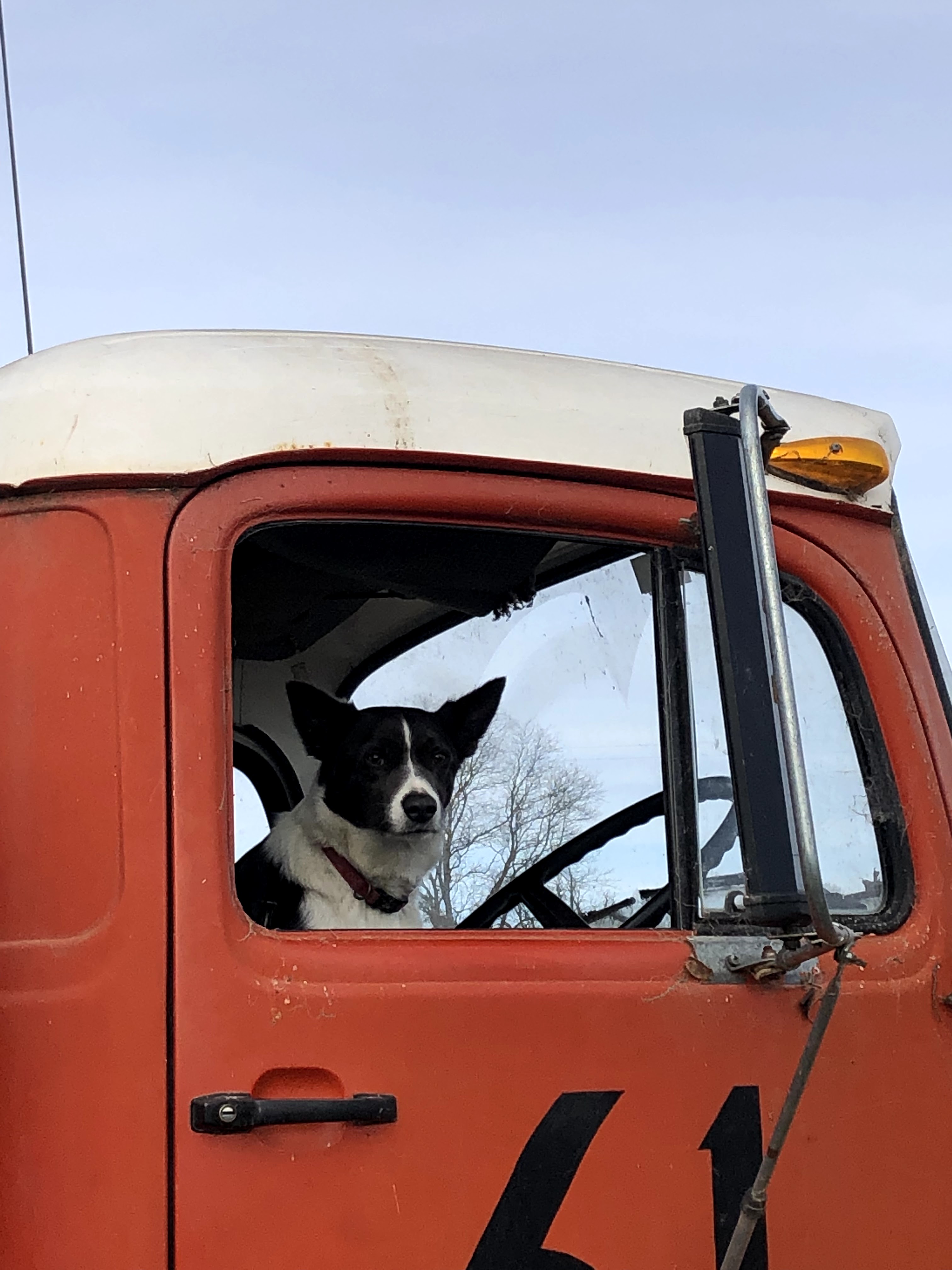
These calculations have allowed me to more accurately determine my supplementary feed requirements. I am feeding out a small round bale of pasture hay to the cattle every couple of days. The cattle love the sound of the tractor starting up. Their antics as I try to work past them into the paddock to unroll the bales make me laugh. I had put a couple of bales on the back of the truck – to allow the family to roll out the hay if I wasn’t there to drive the tractor, but it was more effort than it was worth. Only the hound seemed to think it was a good idea!

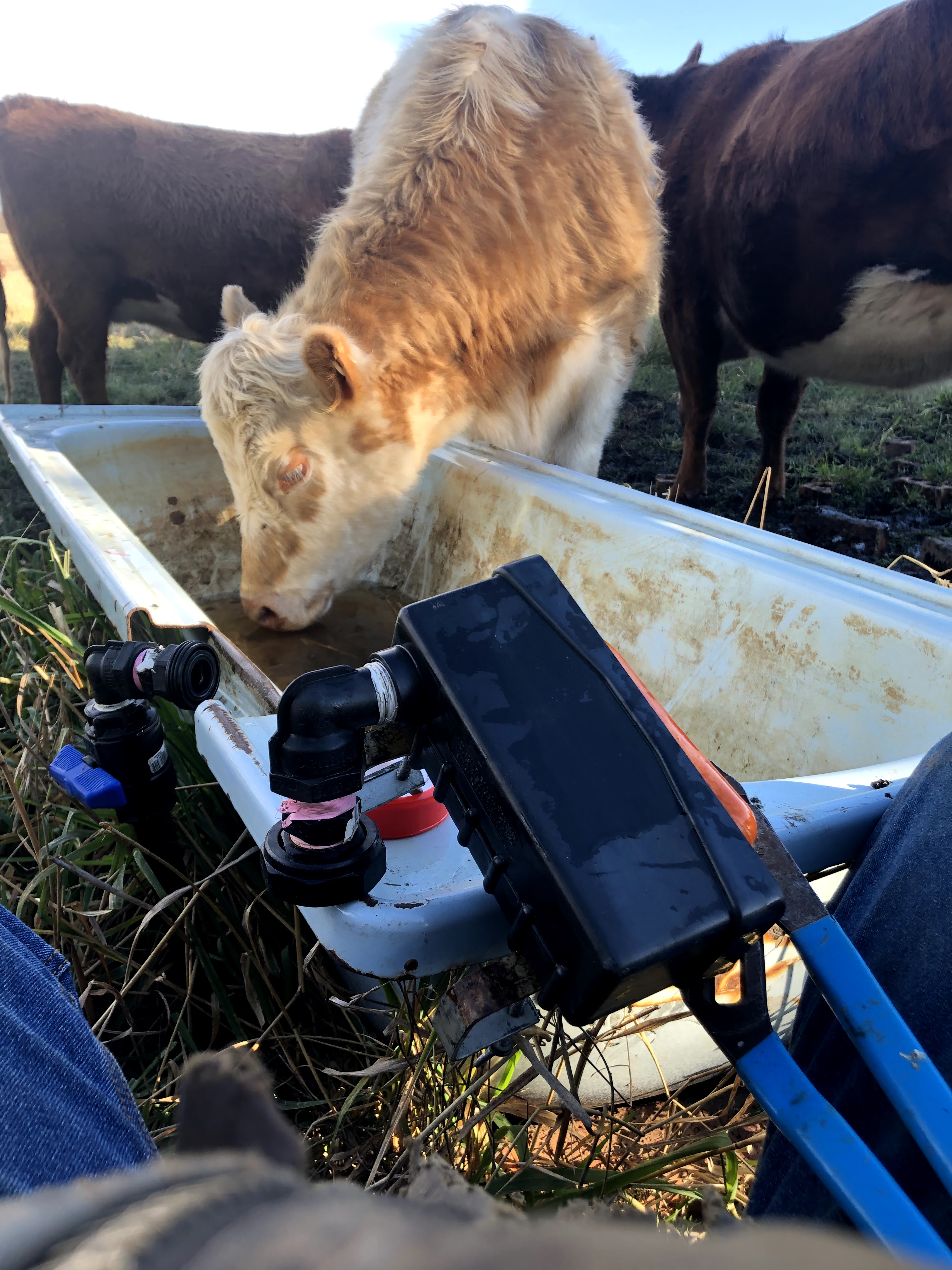
The winter hasn’t been entirely incident free. On one of my daily checks the cattle came running up to me – to let me know the frost (or one of their friends) had knocked the float valve off the trough. Thankfully nothing was broken, and after going and getting a couple of tools and some fresh silicone tape, I was able to get their water flowing.

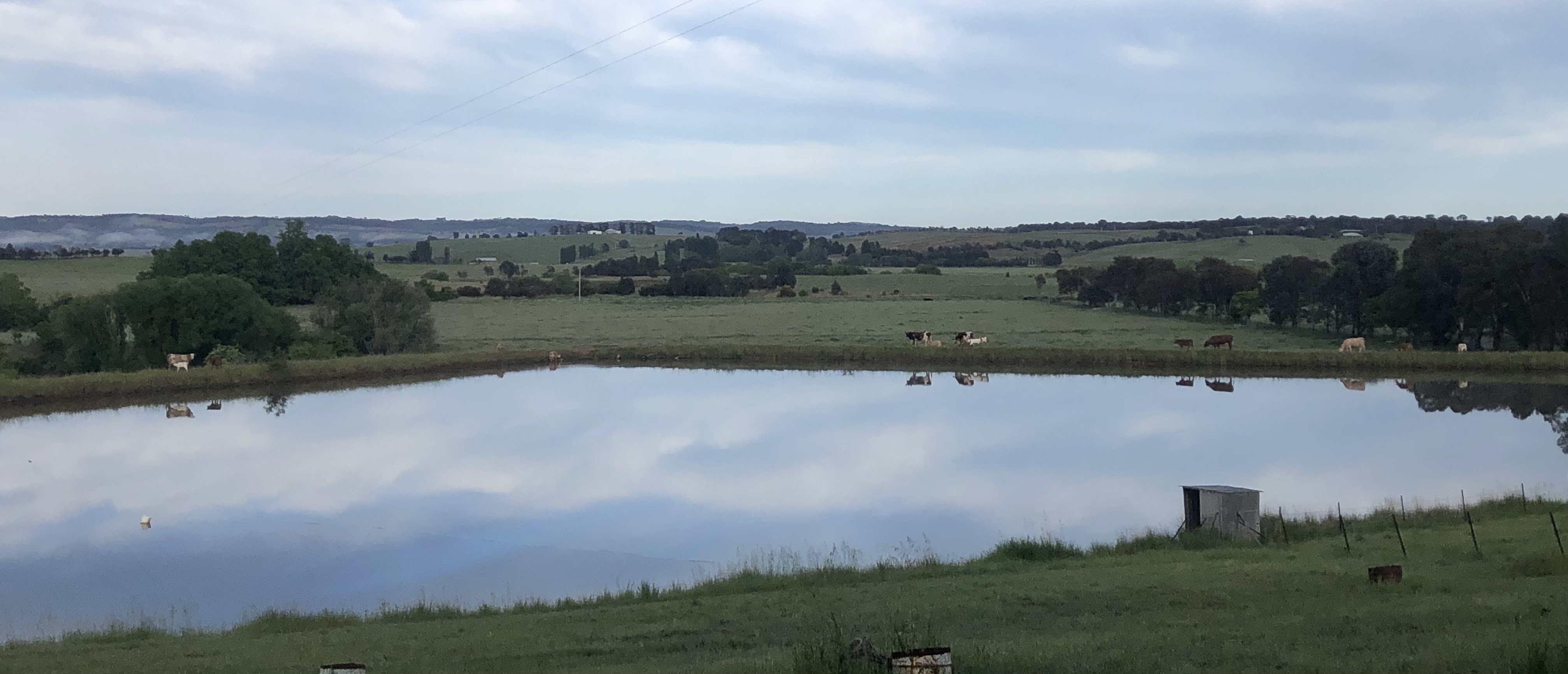
One of my favourite winter past times is the early morning walks on the Rock Farm. In the still morning fog, the dam takes on an other worldly feel. The crisp crunch of the frosty grass underfoot and the silent flight of a barn owl make such moments exhilarating. After checking on the cattle, it is lovely to retreat back to the warmth of the house for a morning cuppa and cuddle on the couch.