A busy lead up to winter

It’s easy to lose sight of our progress when we focus on what we still want to achieve. However, looking back, we’ve made significant strides on a couple of little projects here on the Rock Farm.

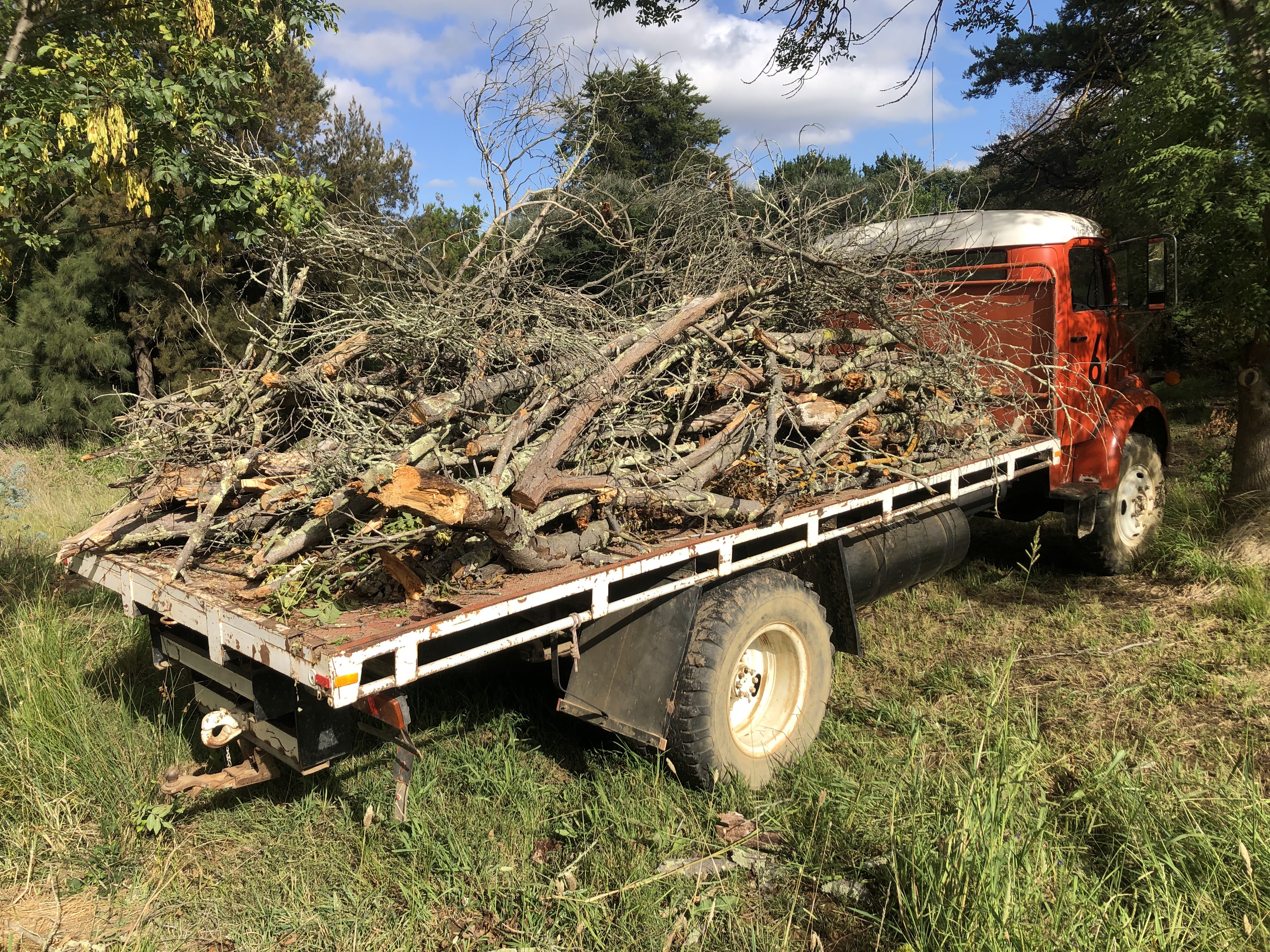
We have been progressing Jo’s orchard in the repurposed foaling paddock. After ripping lines along the contours for fruit trees, we used a leftover length of poly pipe and some new tap fittings to set up irrigation for most of the new lines. This will ensure our new trees receive the water they need. With a pile of mulch from a recent visit by the electricity line tree pruners, our fruit trees are now settling nicely into their new homes.

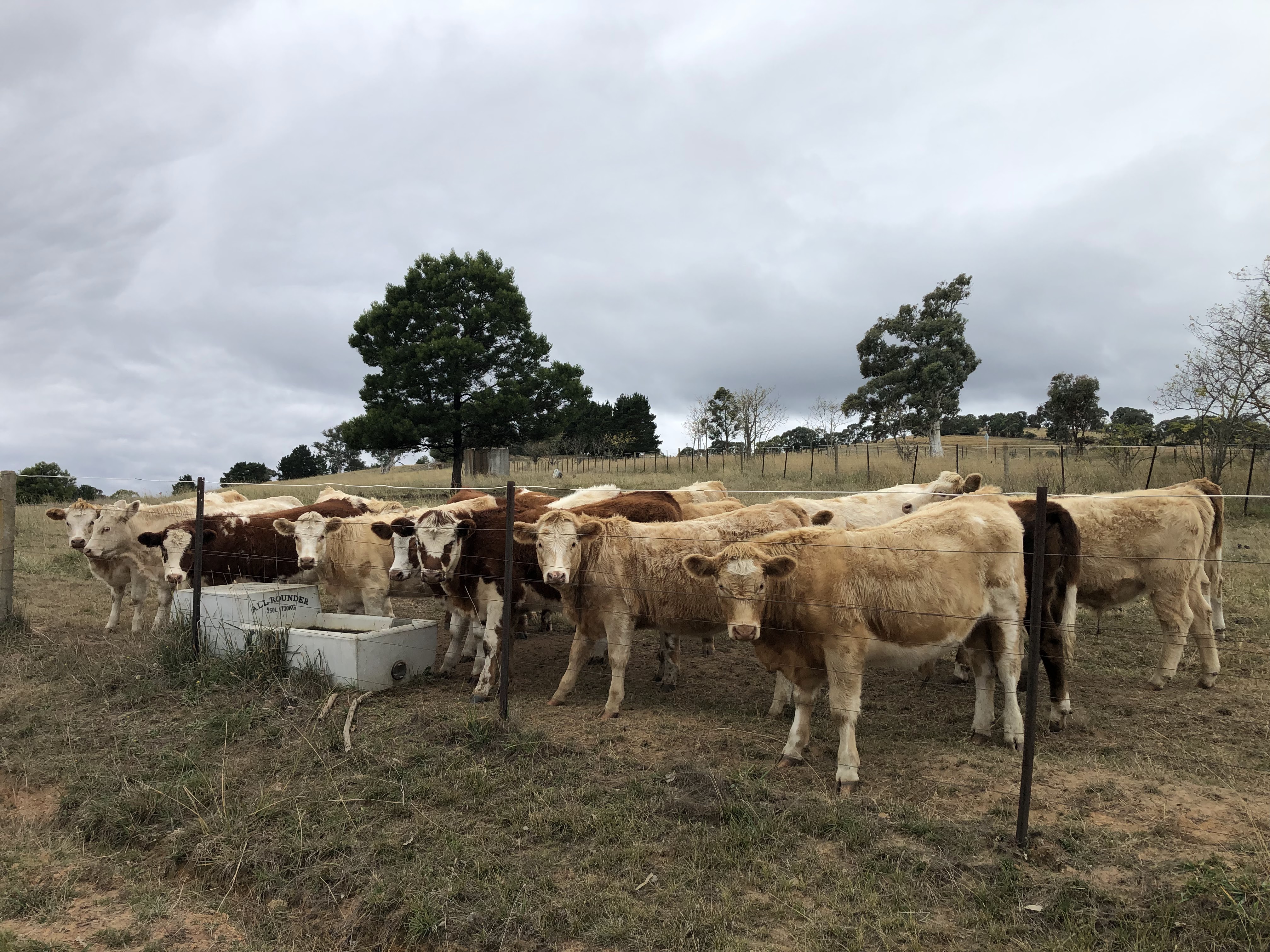
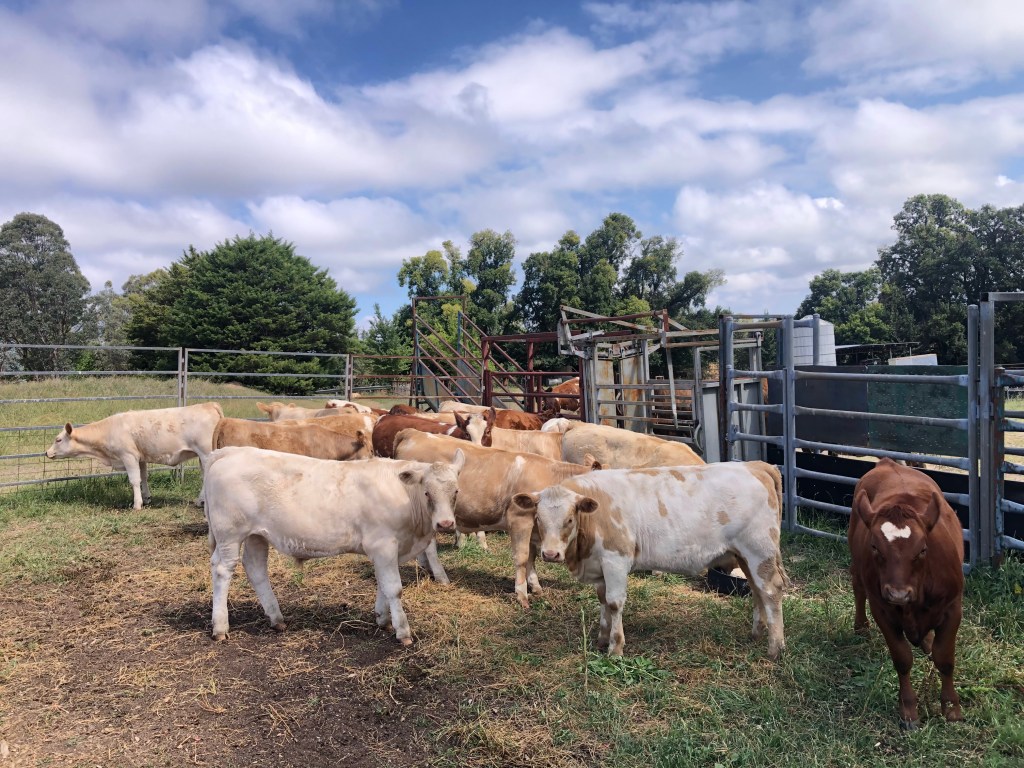
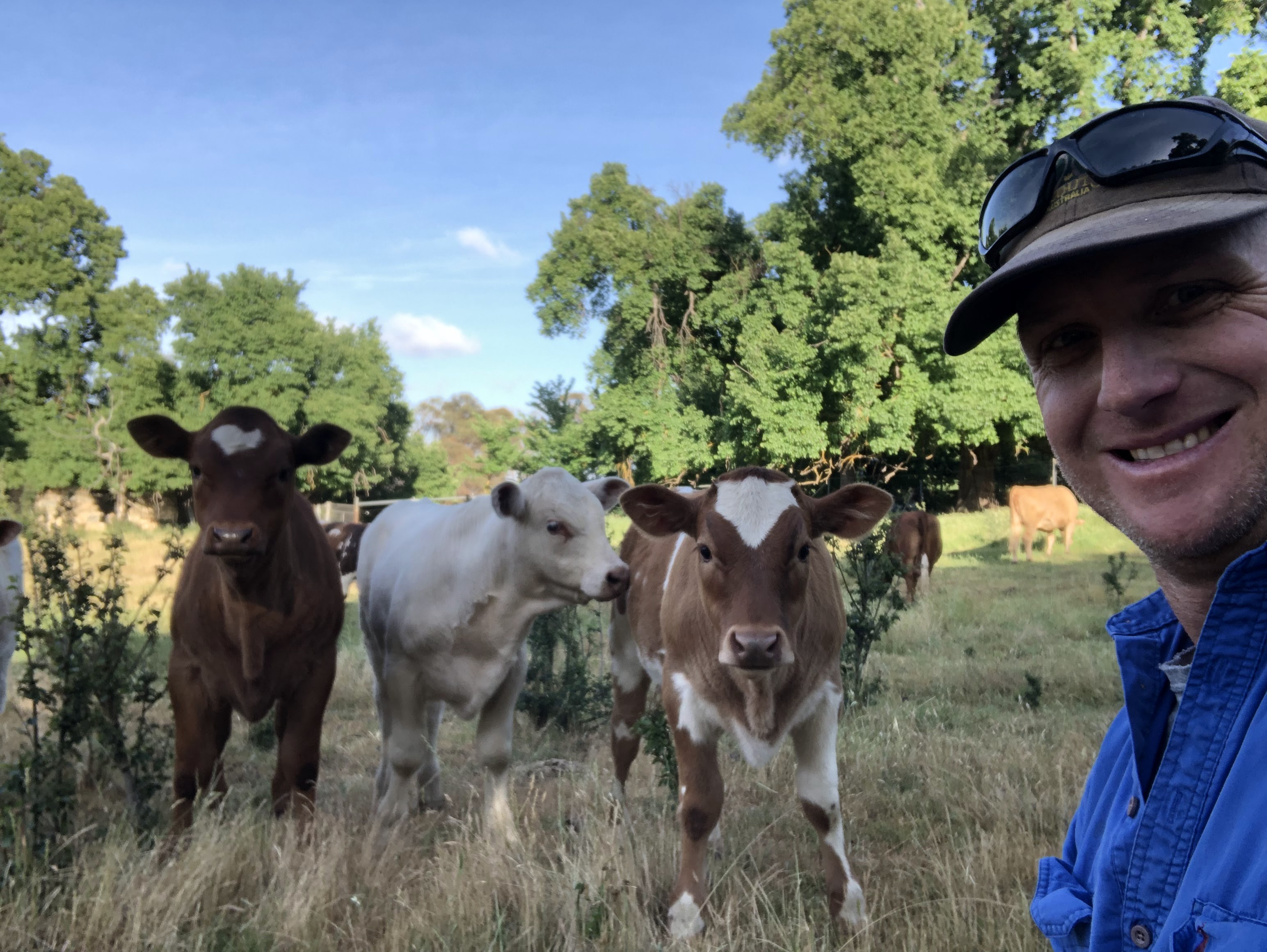
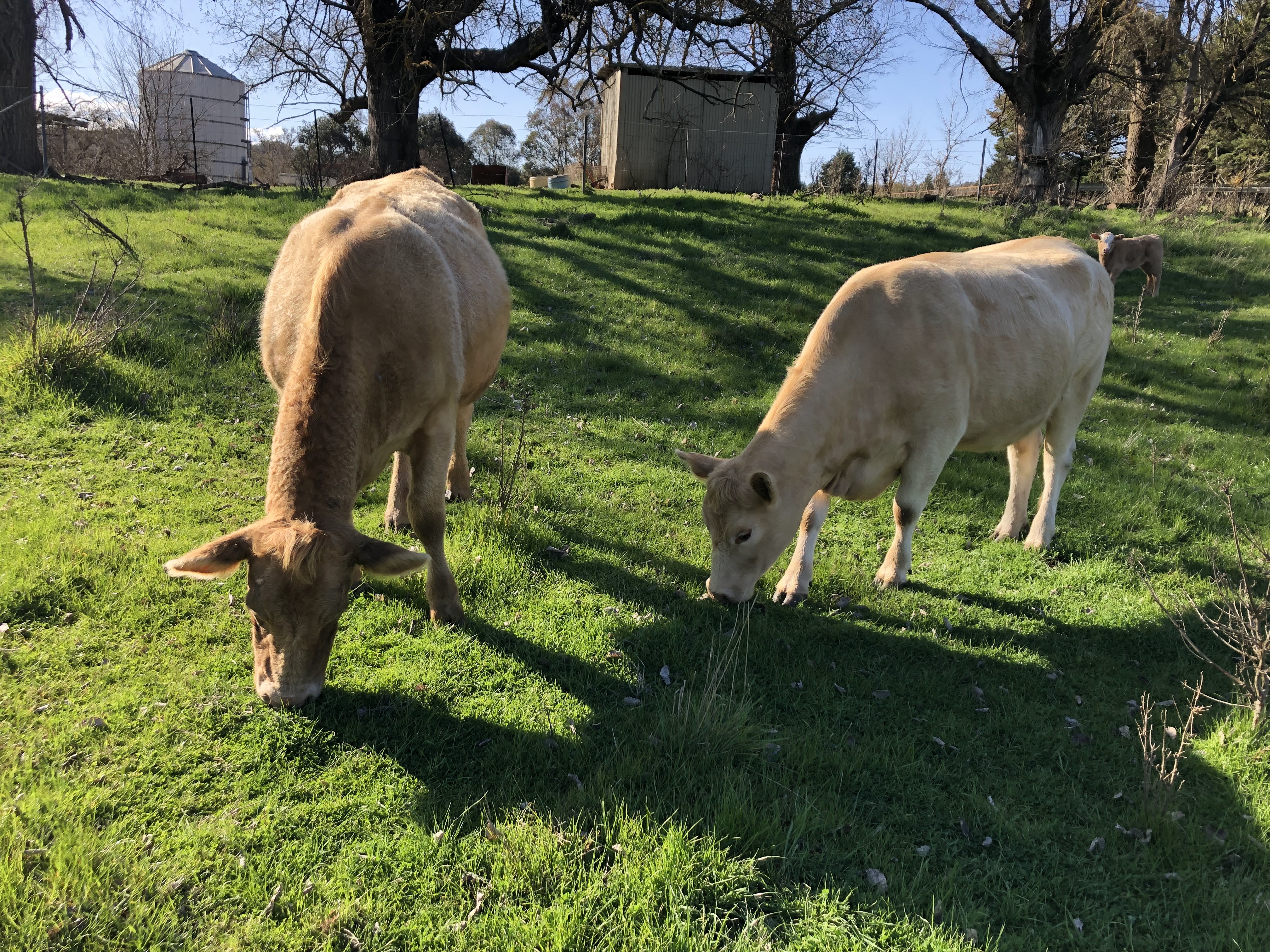
We recently sold all but three of our weaners through the local livestock exchange. The steers and most of the heifers averaged 290kg, while two smaller heifers averaged 255kg. Although prices have recovered from the Christmas lows, they are still significantly lower than the peaks of last year. Nonetheless, we were pleased to secure around 285 cents per weaner, which will help cover hay costs this winter.

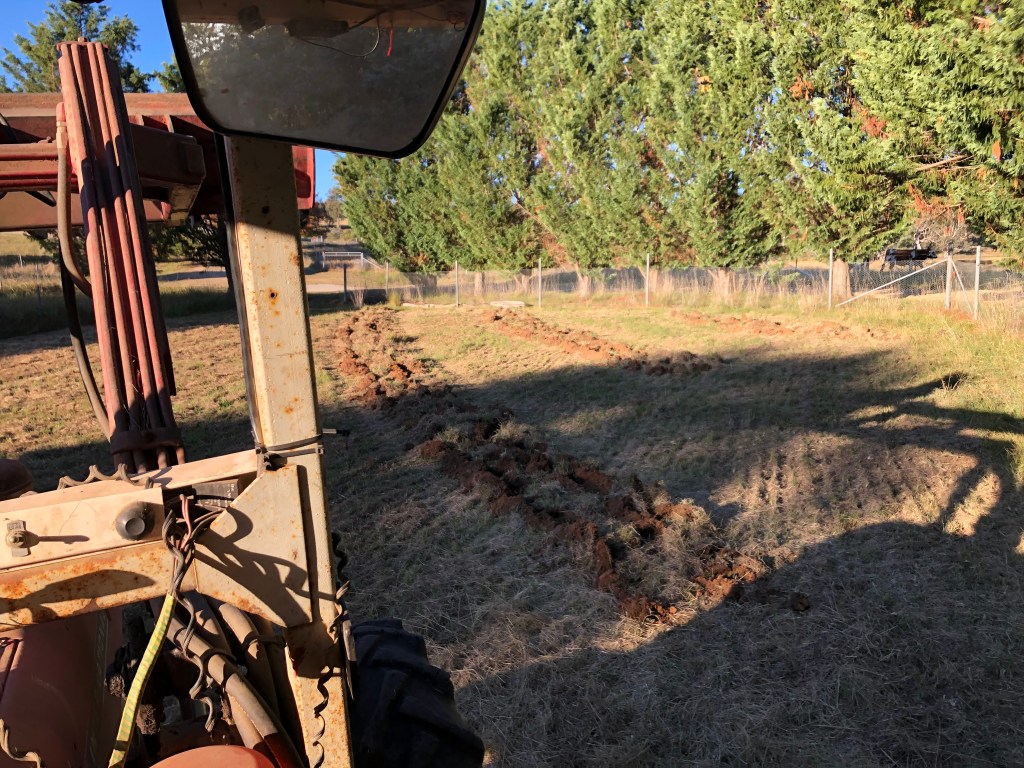
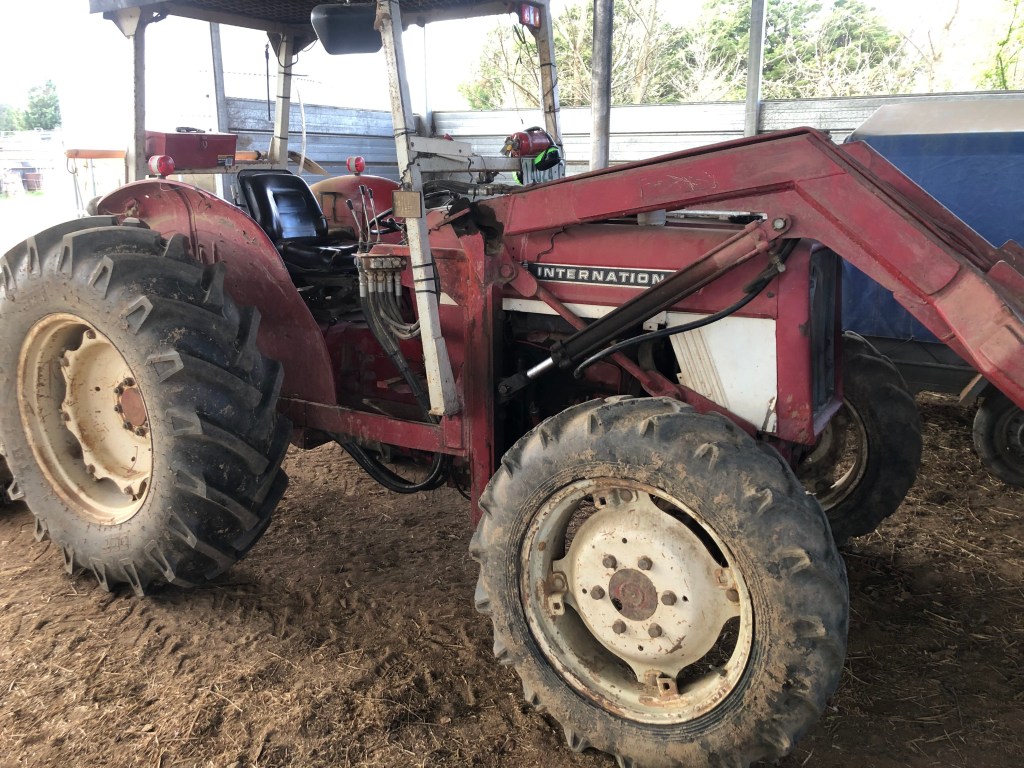
After the one rainfall event in April, and scattered rain in May, I really needed to ensure every drop of rain falling on the place makes its way to the soil. It had been about five years since I last ripped our west-facing slope, so I took the opportunity to re-rip the paddock along the contour before the forecasted wet start to June hit the Rock Farm. The tractor struggled a bit, but I was content to chug along in second gear low range, spending a few hours turning diesel into noise and opening up the soil.

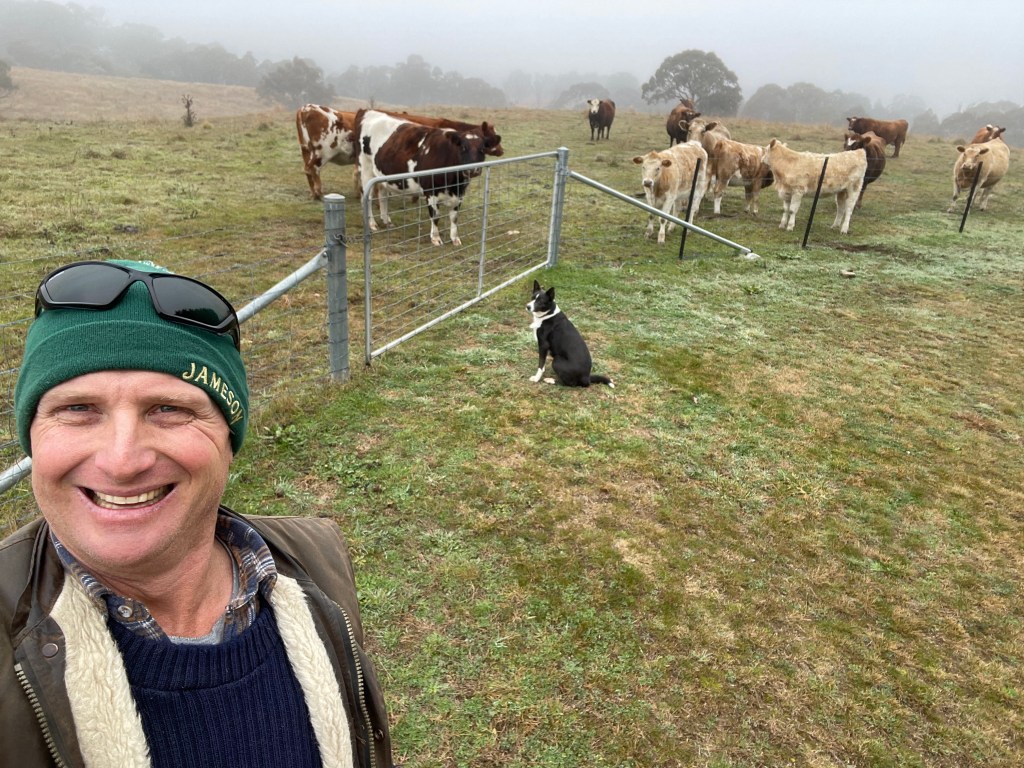
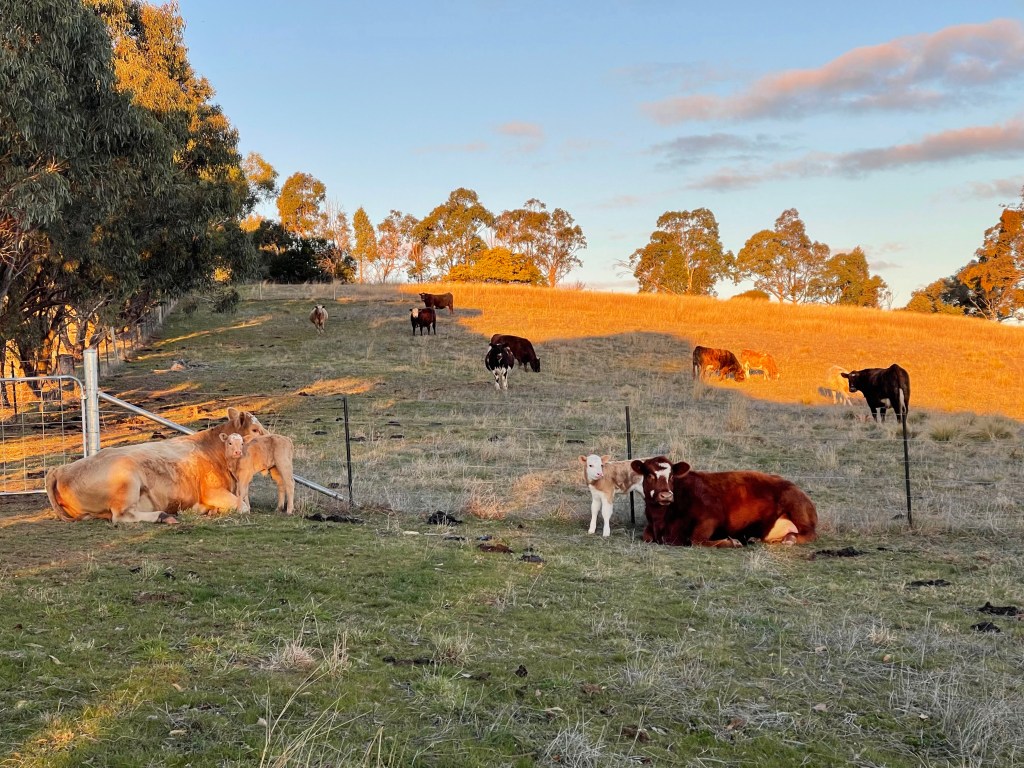
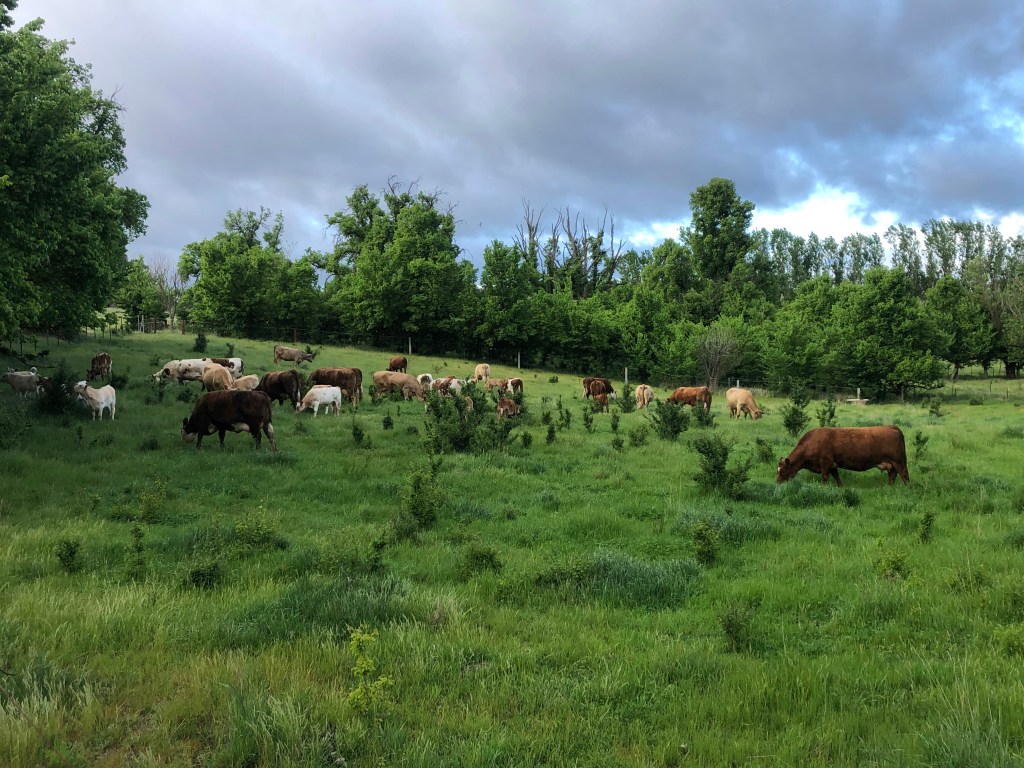
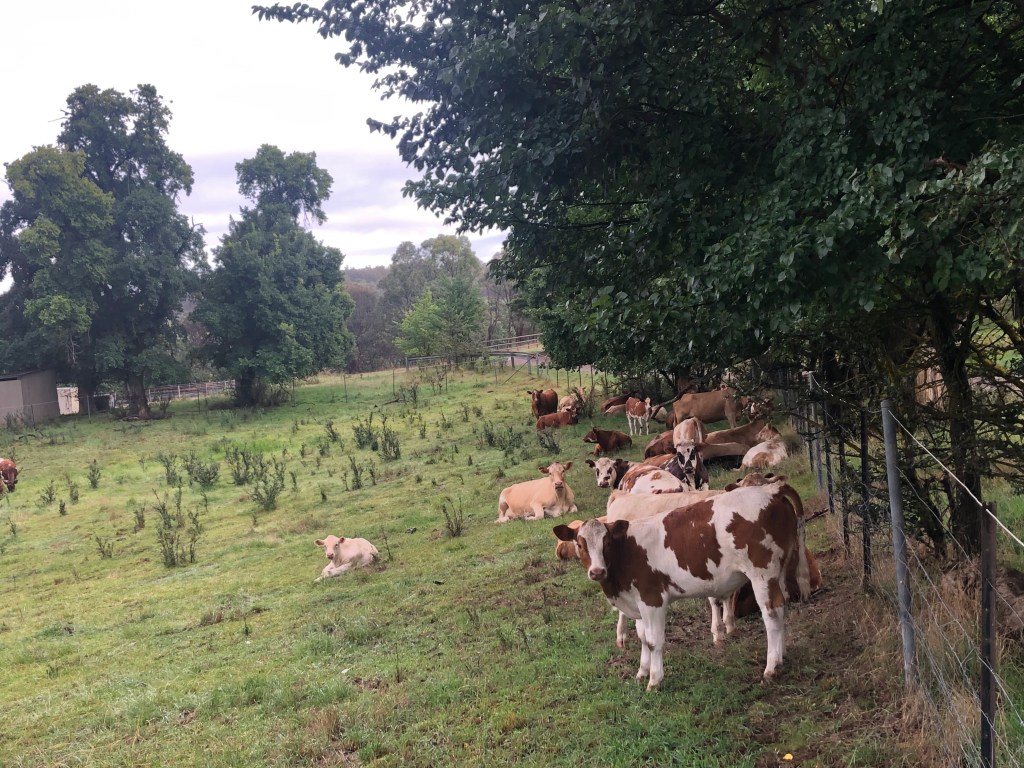
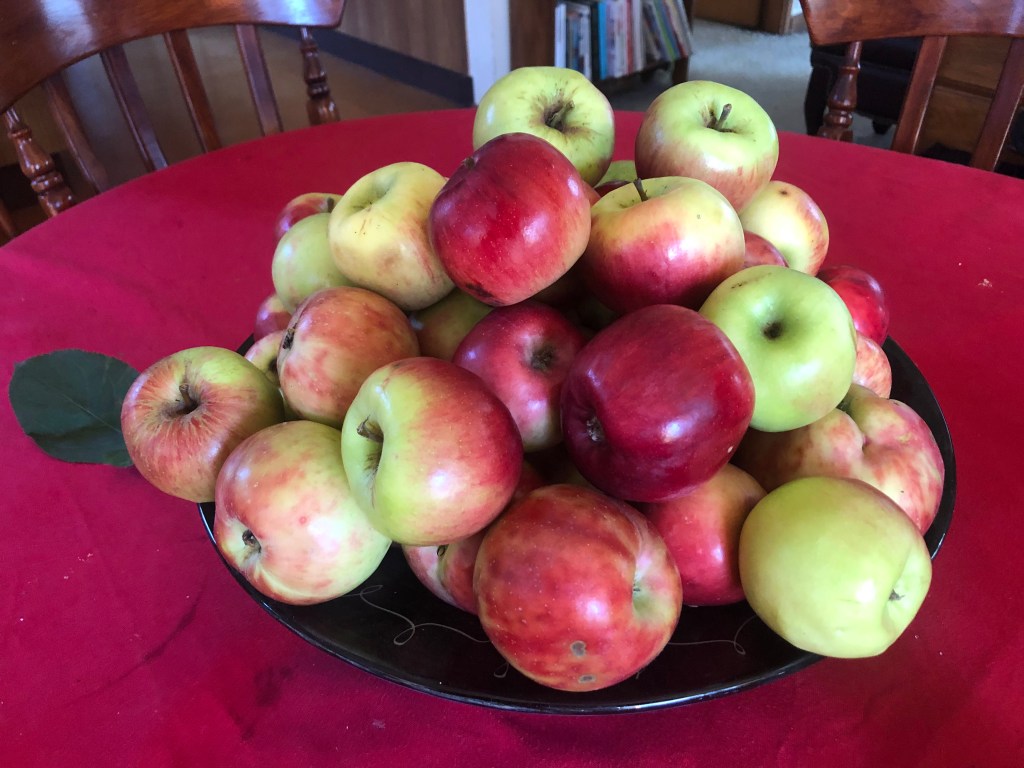
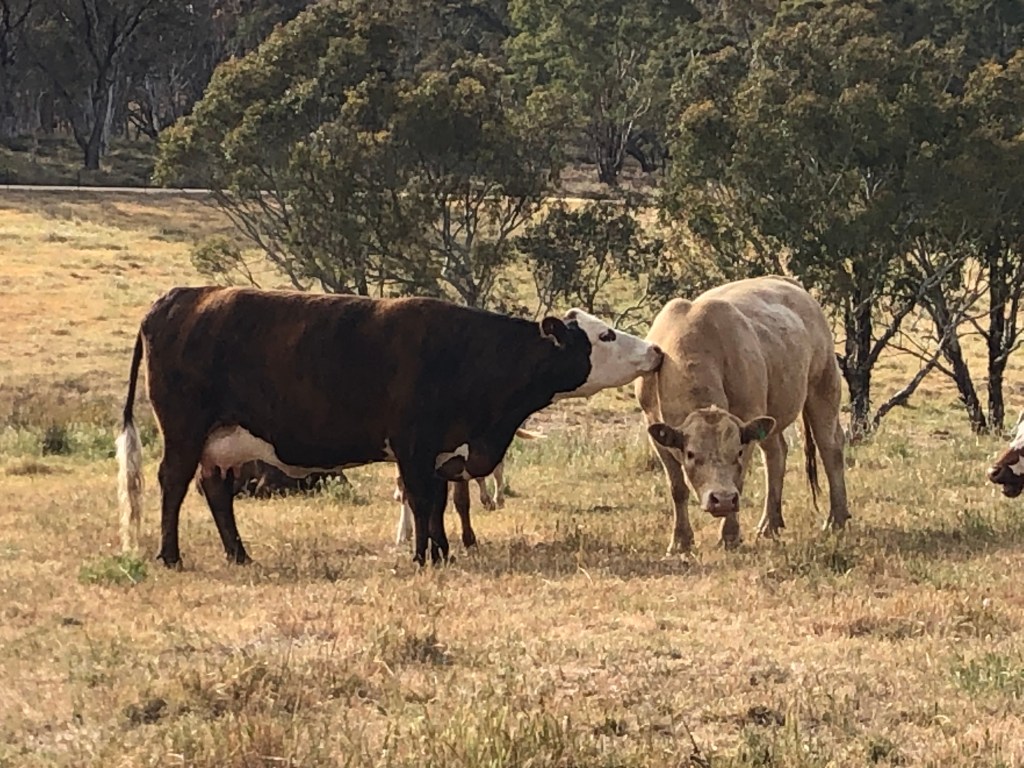
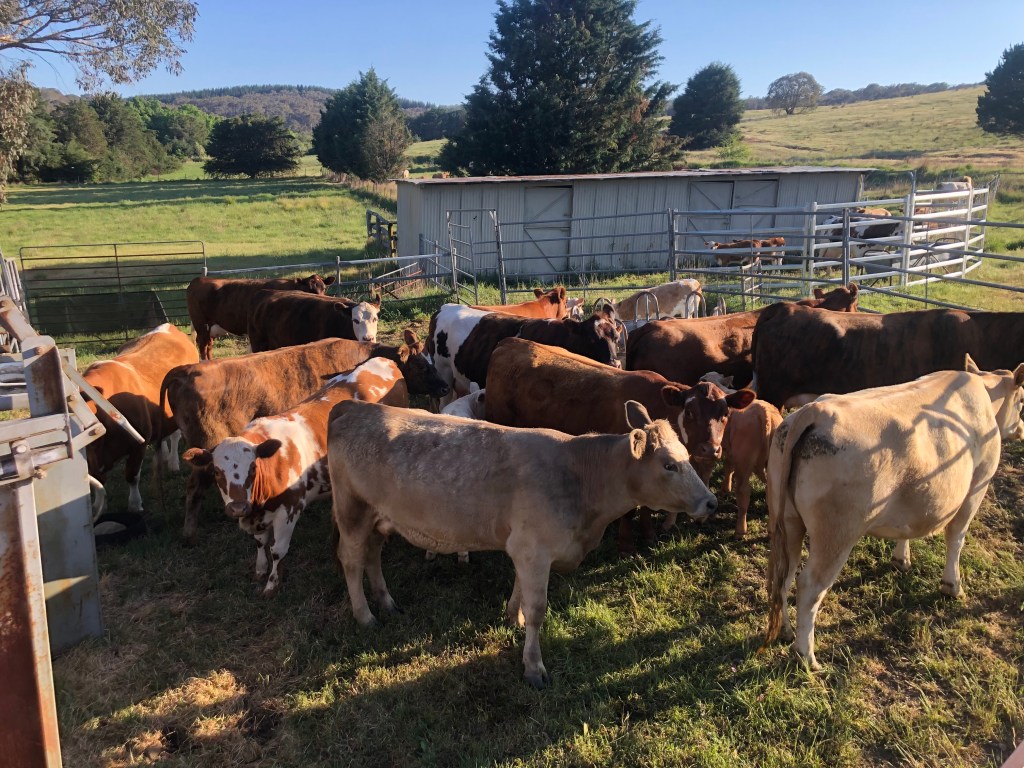
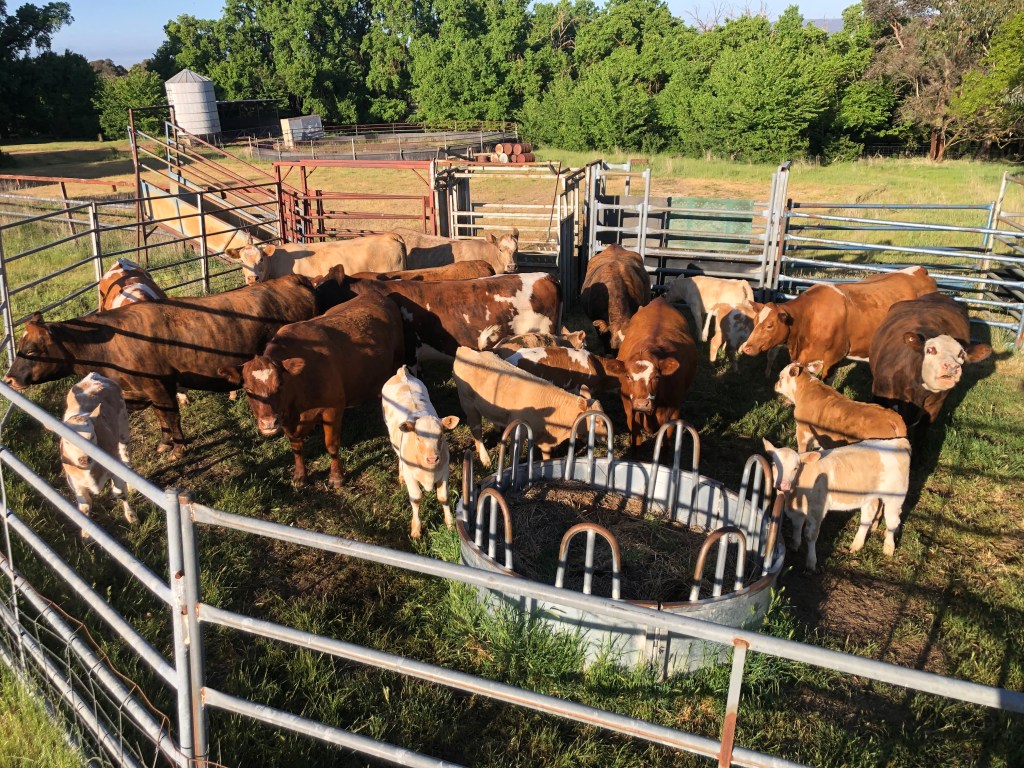
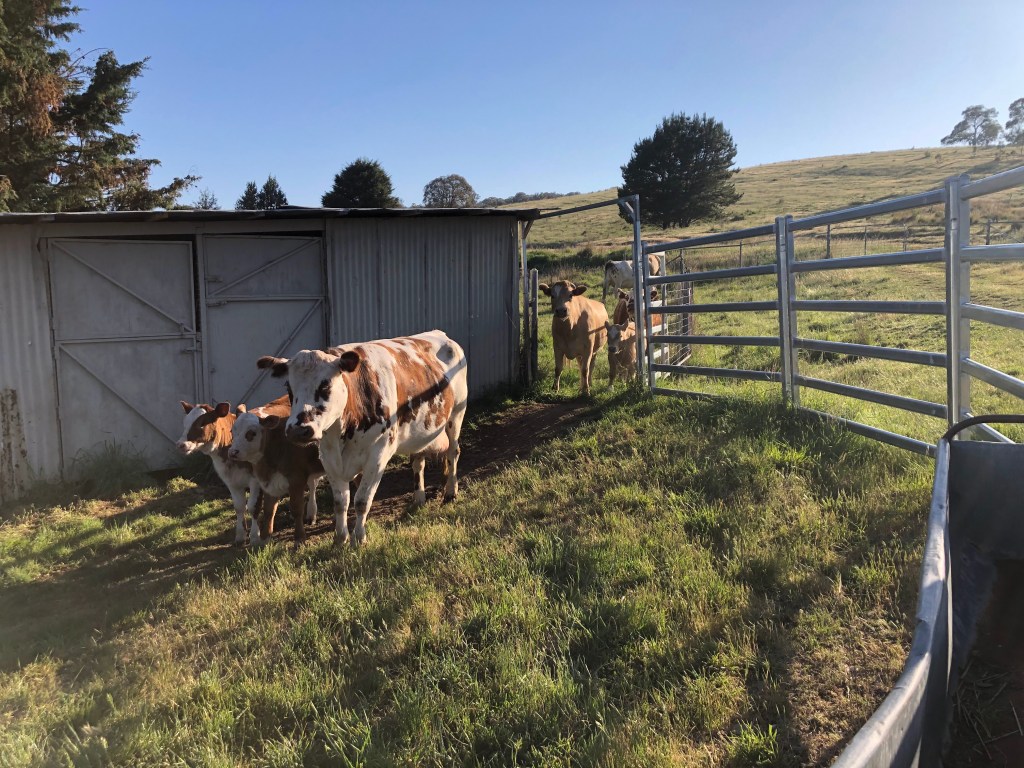
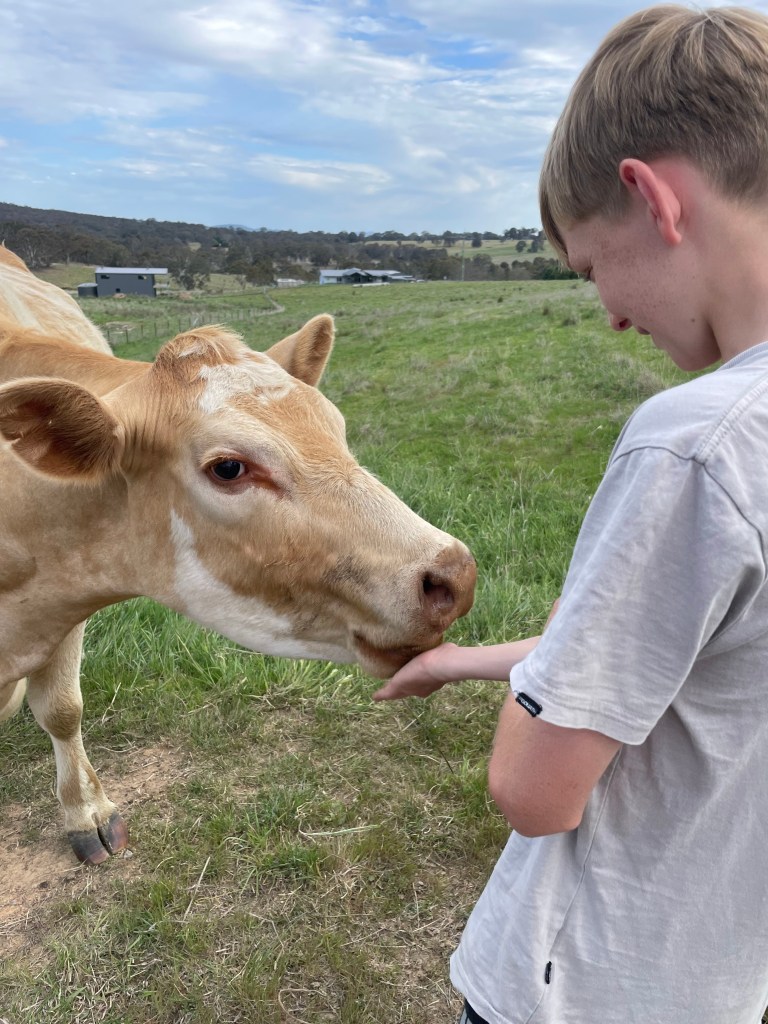
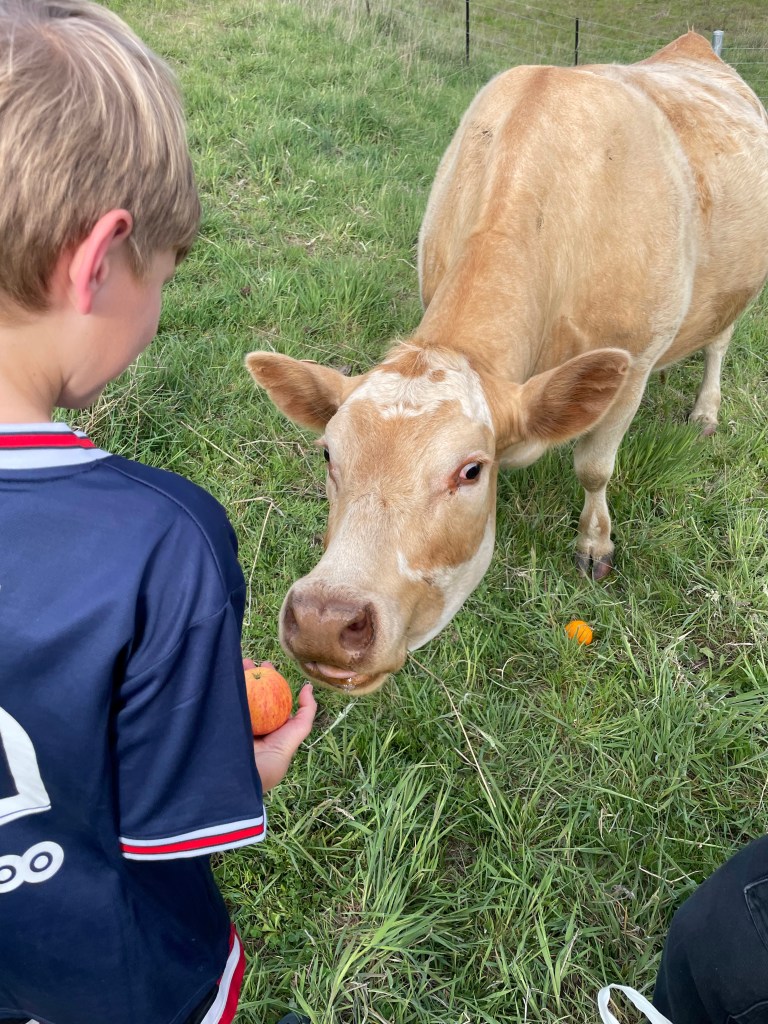
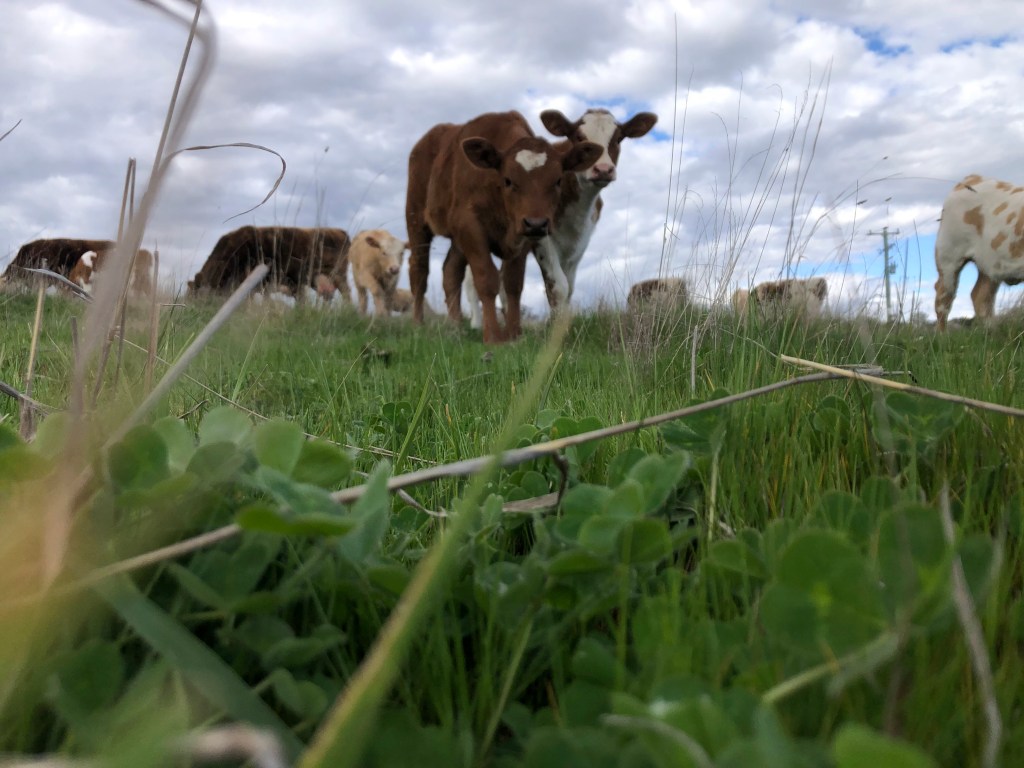
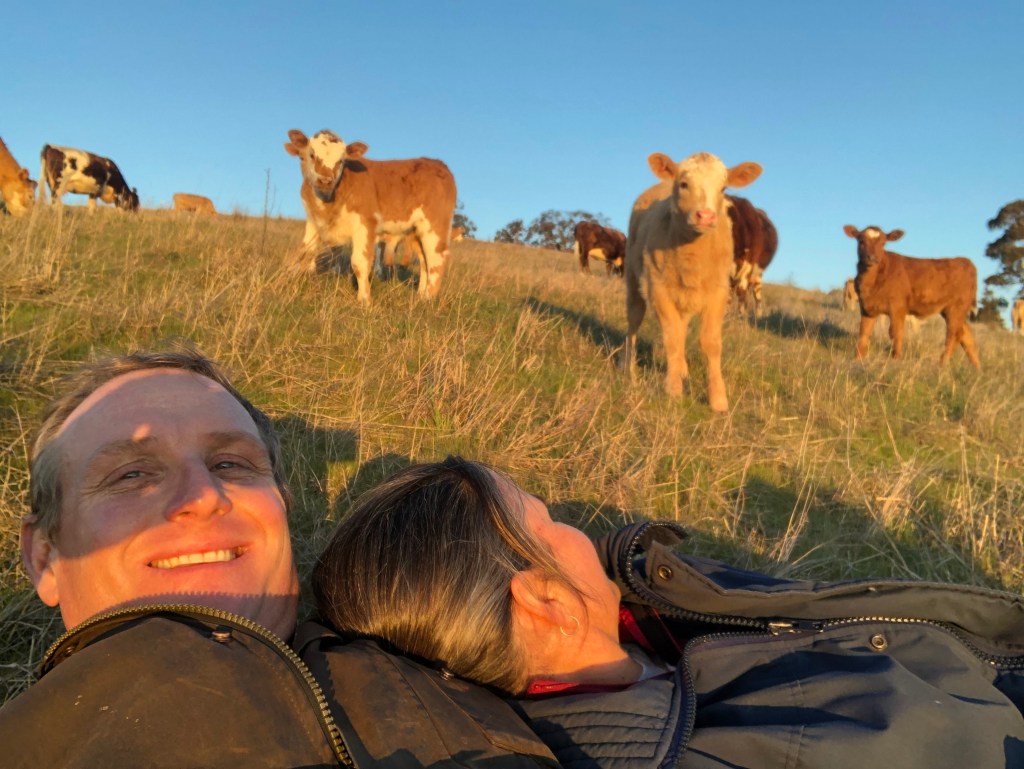
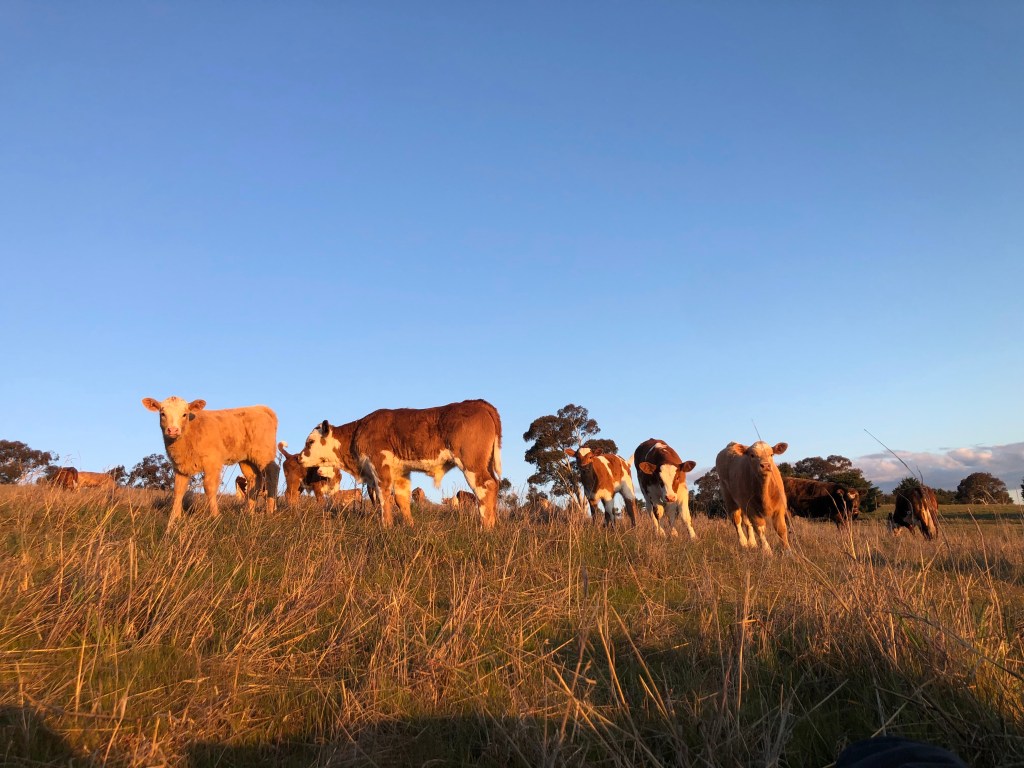
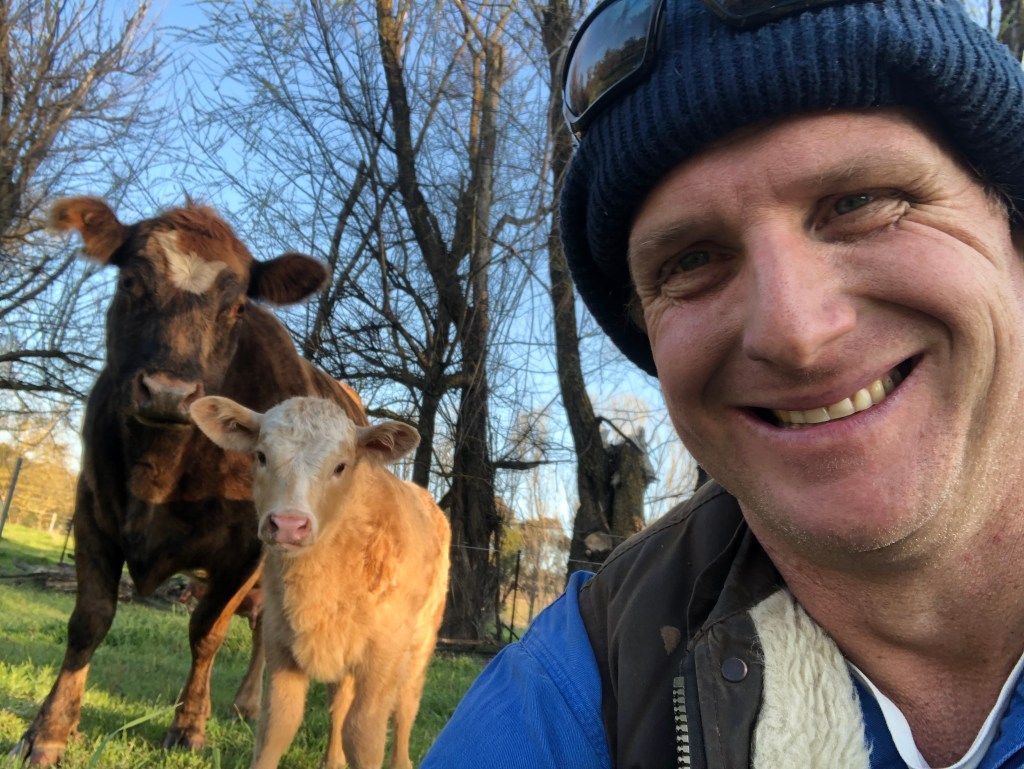
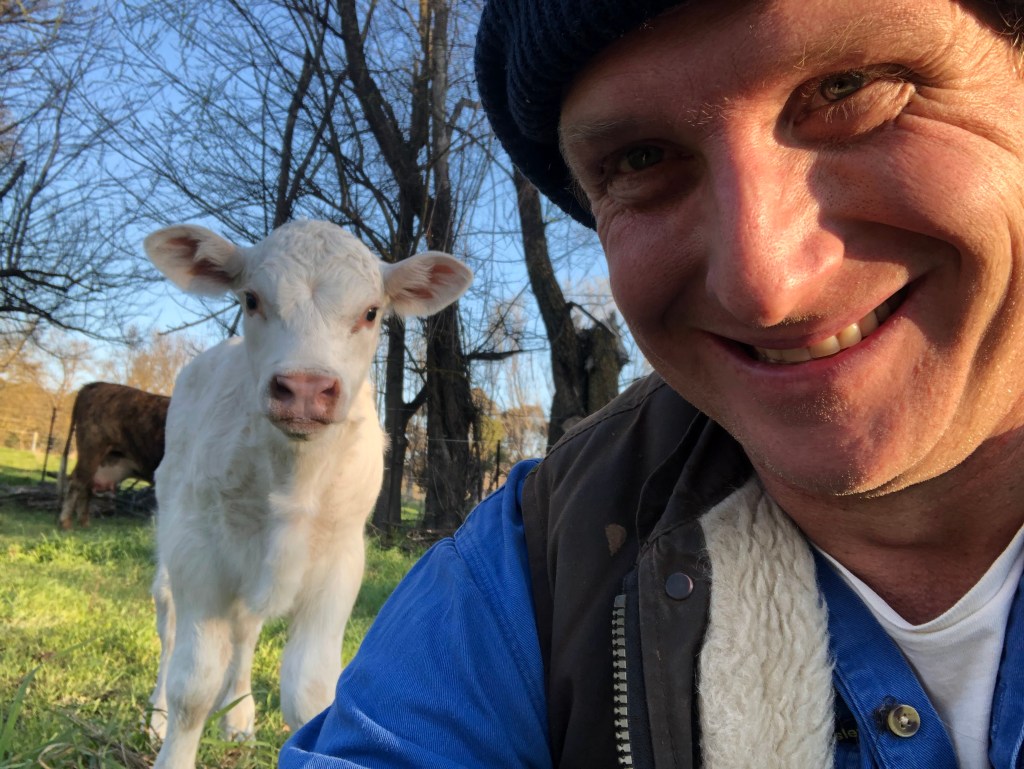
One of the great joys of raising cattle is simply spending time with them in the paddock. They are naturally curious, and we find that spending time with them makes them very calm and easy to move. One way we win their confidence is through old apples, which most of the cows love. However, there’s a risk of feeding whole apples, as one might get stuck in their gullet. Unfortunately, we lost a cow recently in this way, after feeding her an apple.

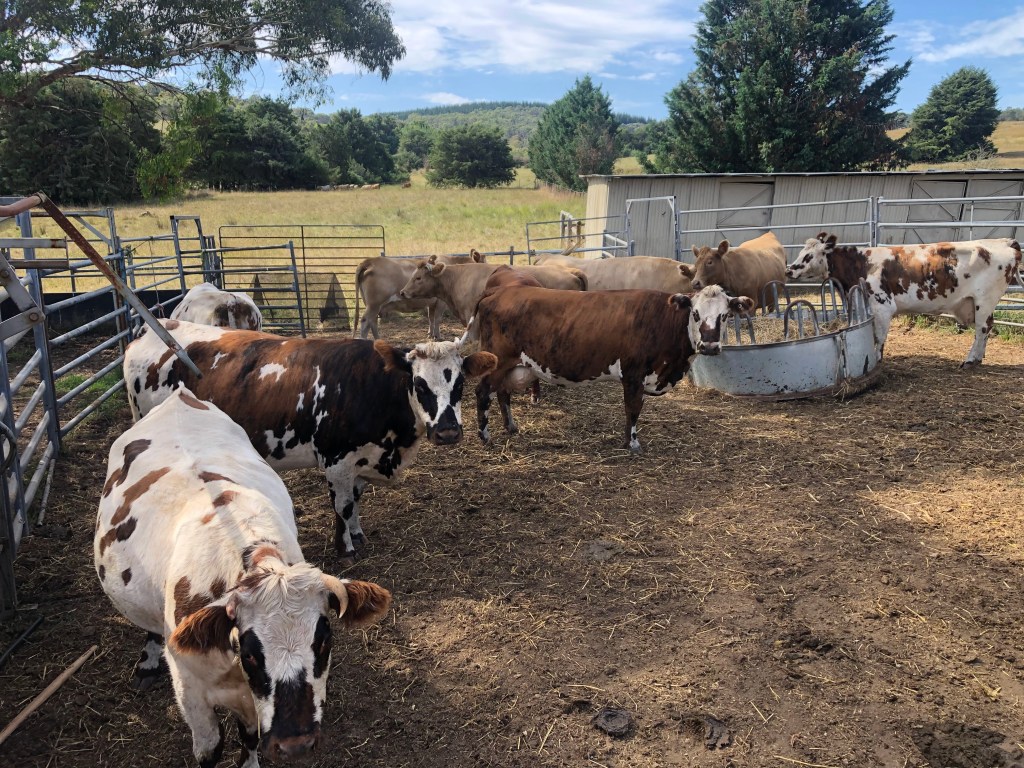
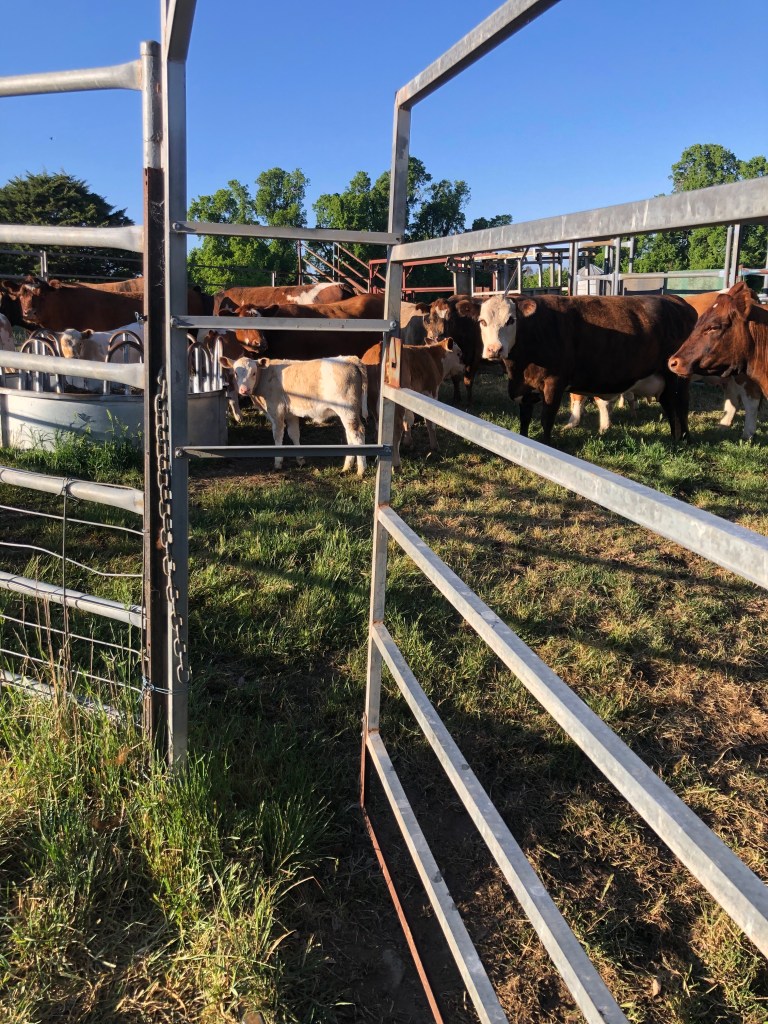
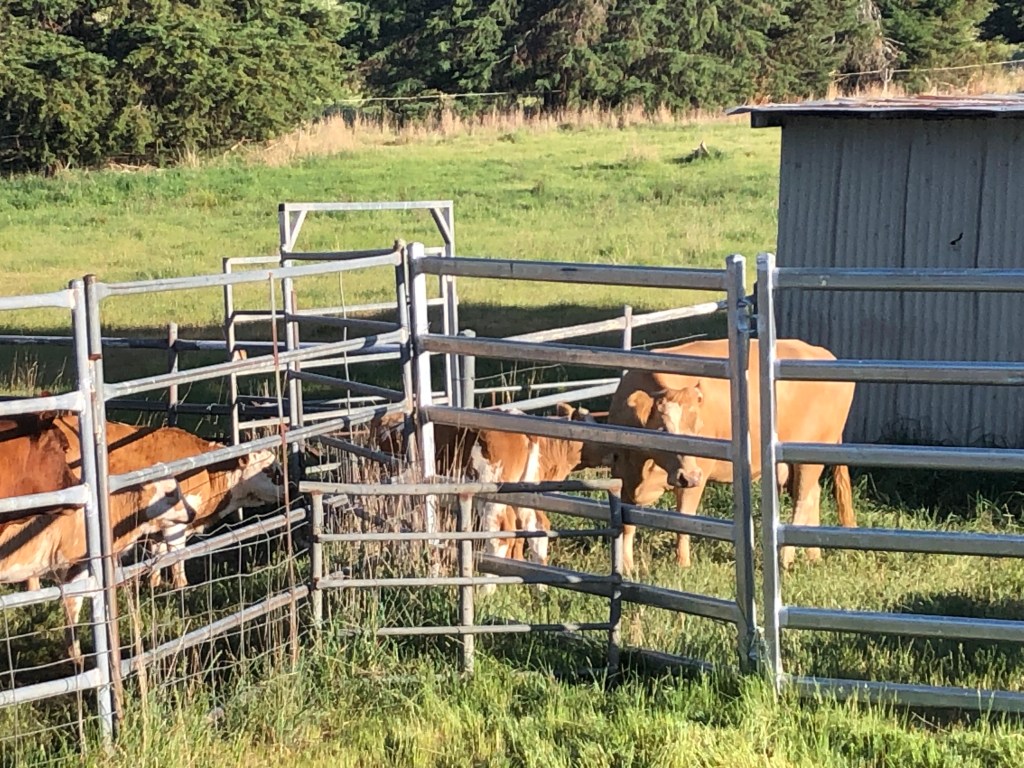
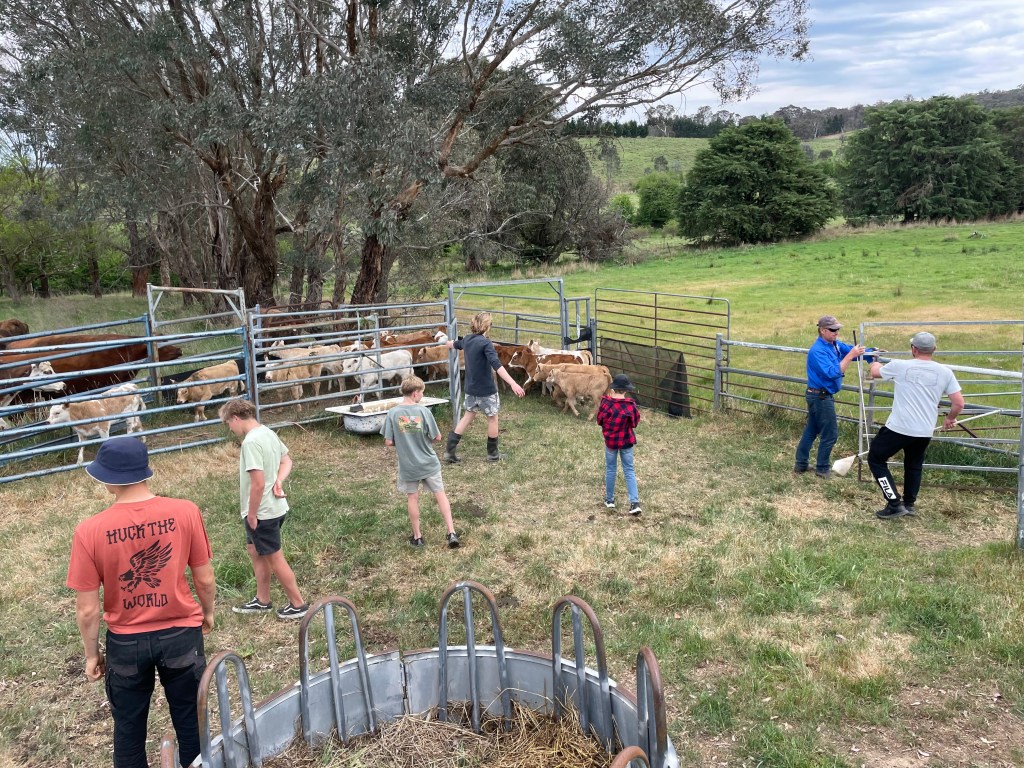
She showed classic signs of bloat, with a distended abdomen on her top left side, and in obvious distress. We moved the herd to the yards and called the weekend on-call vet. Lachie, the vet, arrived and treated her, working in the dark and freezing cold. The first priority was to make her more comfortable and ease her pain. Despite relieving the pressure in her rumen and administering antibiotics, anti-inflammatories, and oil, she sadly passed away the following night. Although we didn’t conduct a post-mortem, her symptoms suggested gas bloat caused by a blockage, likely the apple.

Losing an animal is always sad, but it’s an unfortunate part of raising livestock. In the future, we’ll make sure all apples for the cows are cut in half.

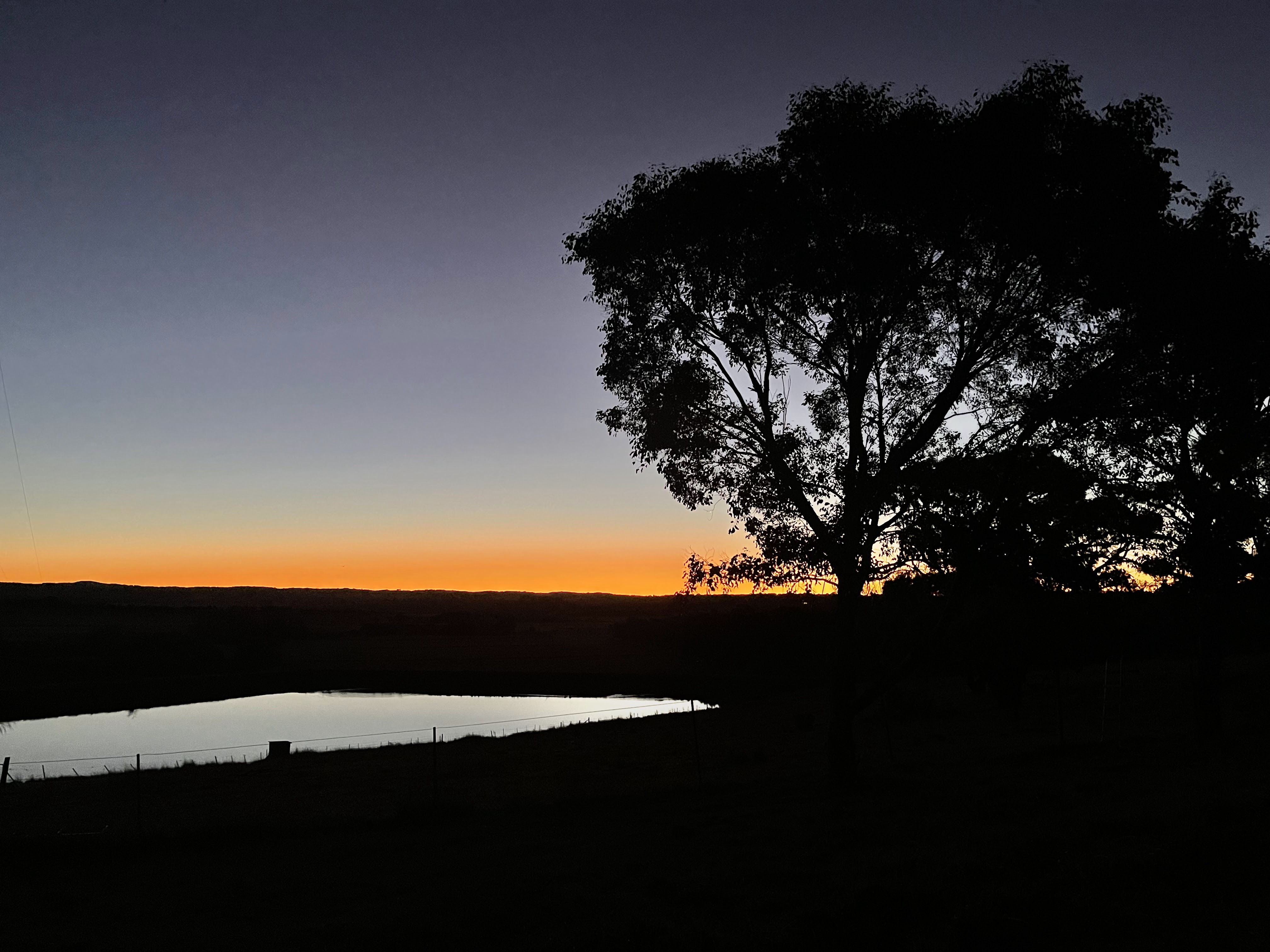
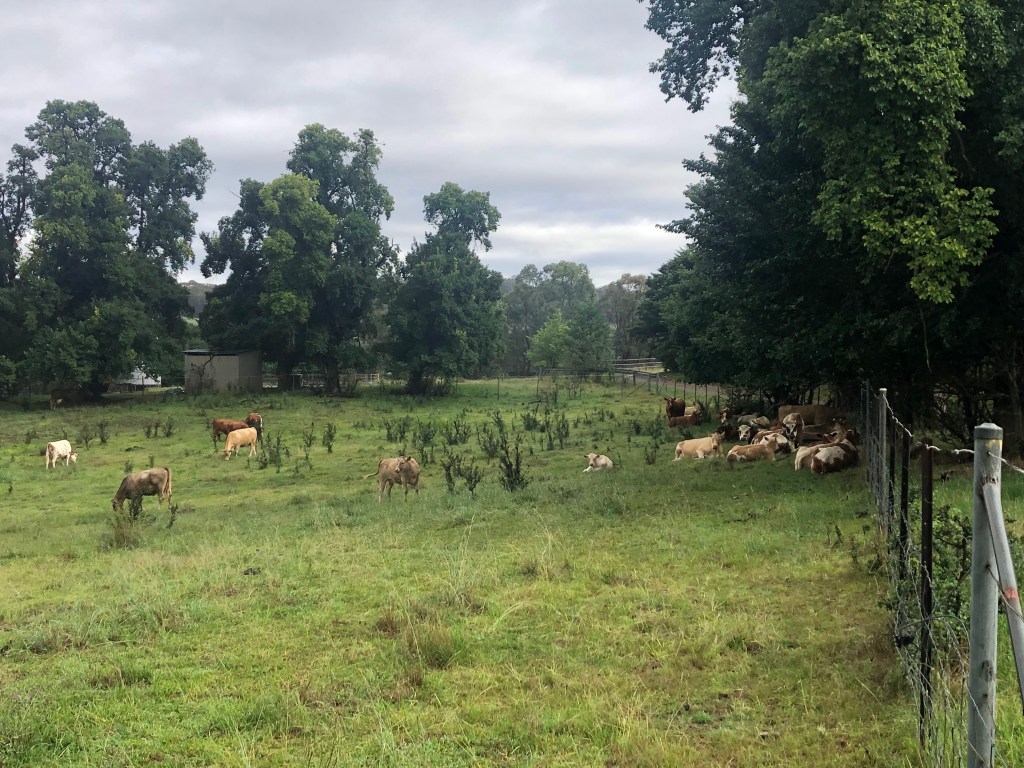
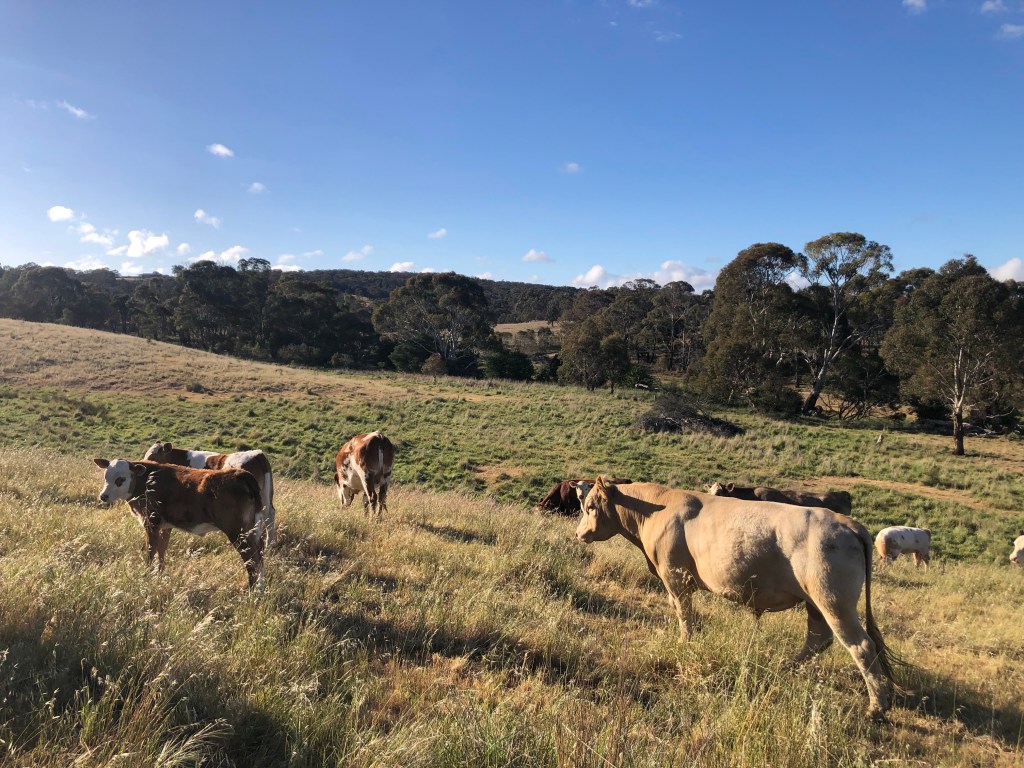
Despite this setback, the Rock Farm remains glorious at this time of year. When the fog lifts in the morning and the frost melts, we’re left with the most wondrous days. There’s nothing better than taking a stroll around the paddocks and savouring these moments.

Why does it rain all at once?

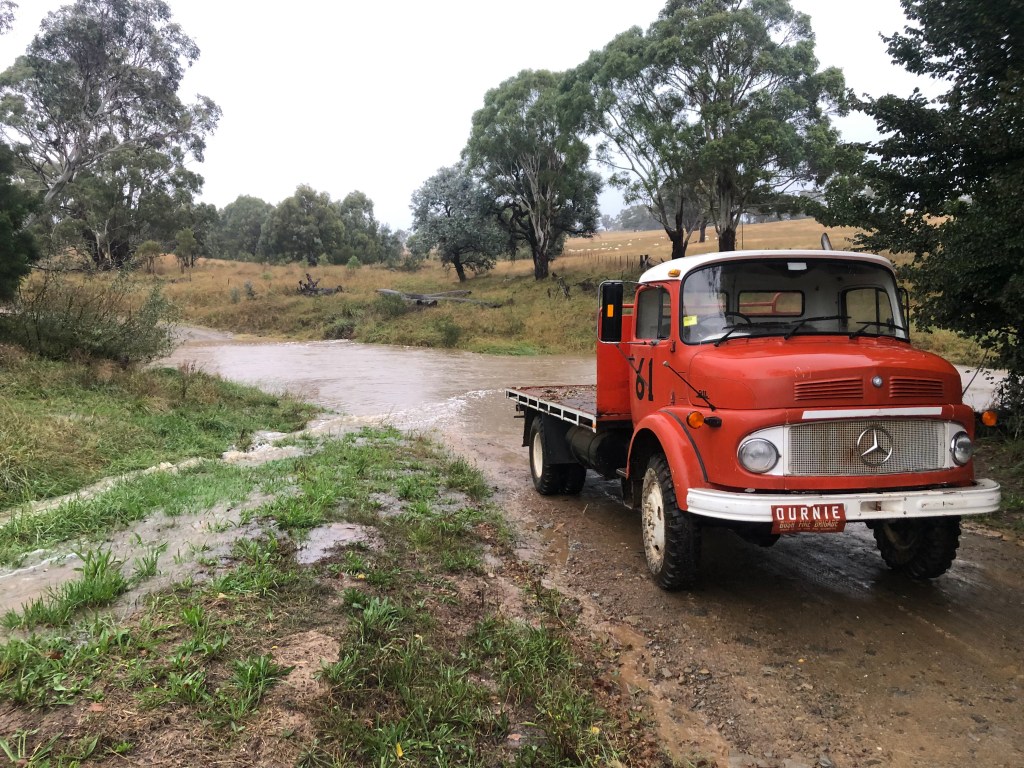
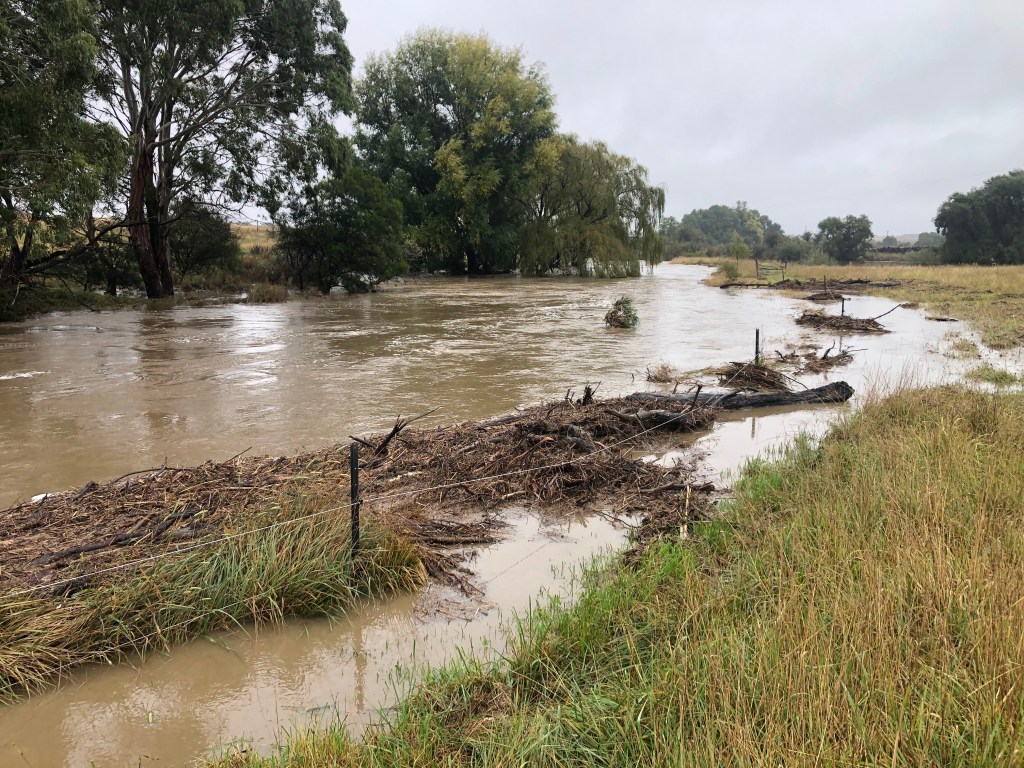
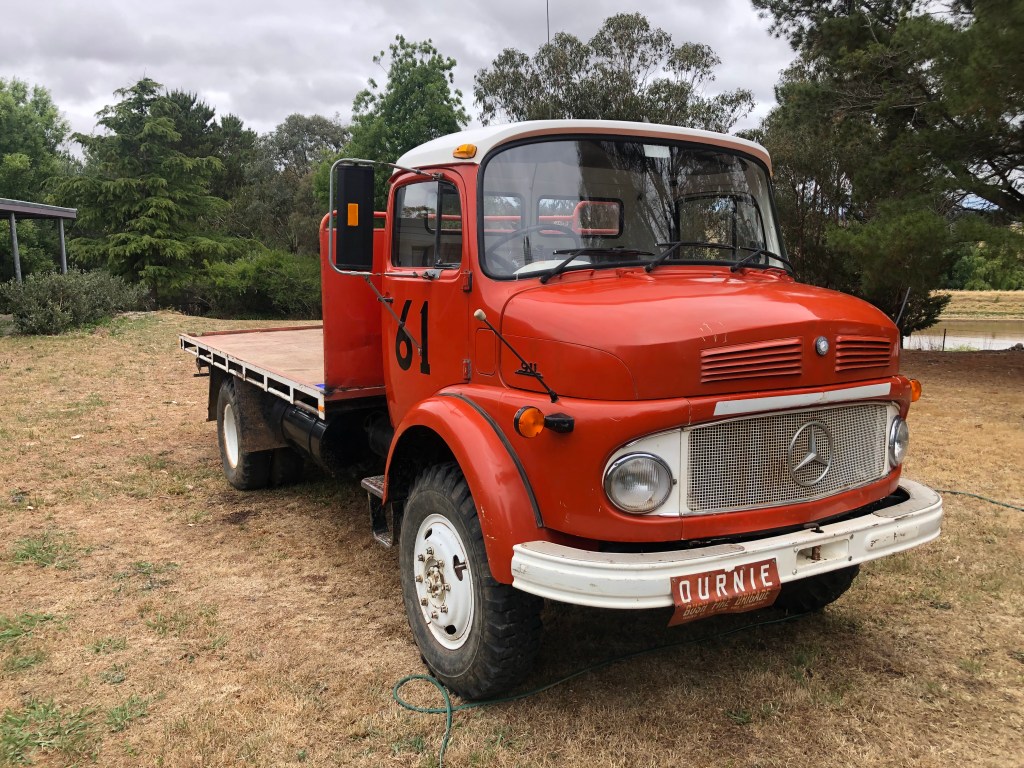
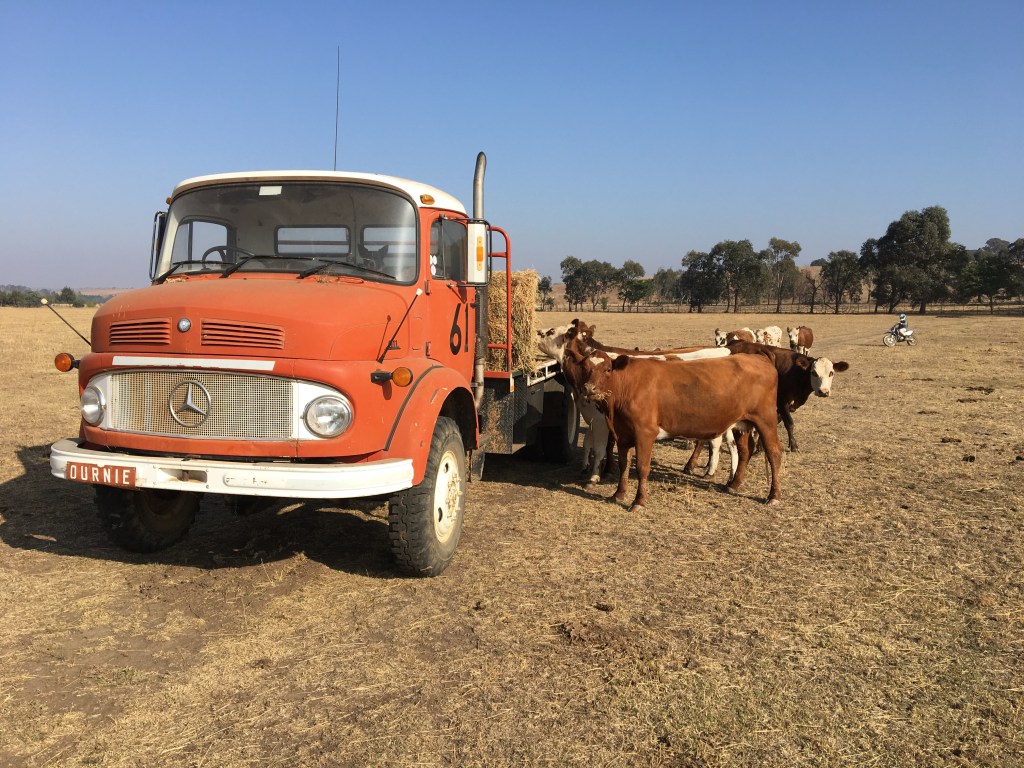
On the law of averages, we have had a good April, with around 100mm of rain falling in the month. Unfortunately it came all at once. The heavy rain caused our creek to flood, blocked our access for a day or so, and caused minor damage to our temporary fence along the creek line. The Red Drawbridge was pressed into service to bring the family safely home – but this kind of work is hard on the machine, and I will need to devote some time maintaining the slave cylinders (part of the brake system) soon.

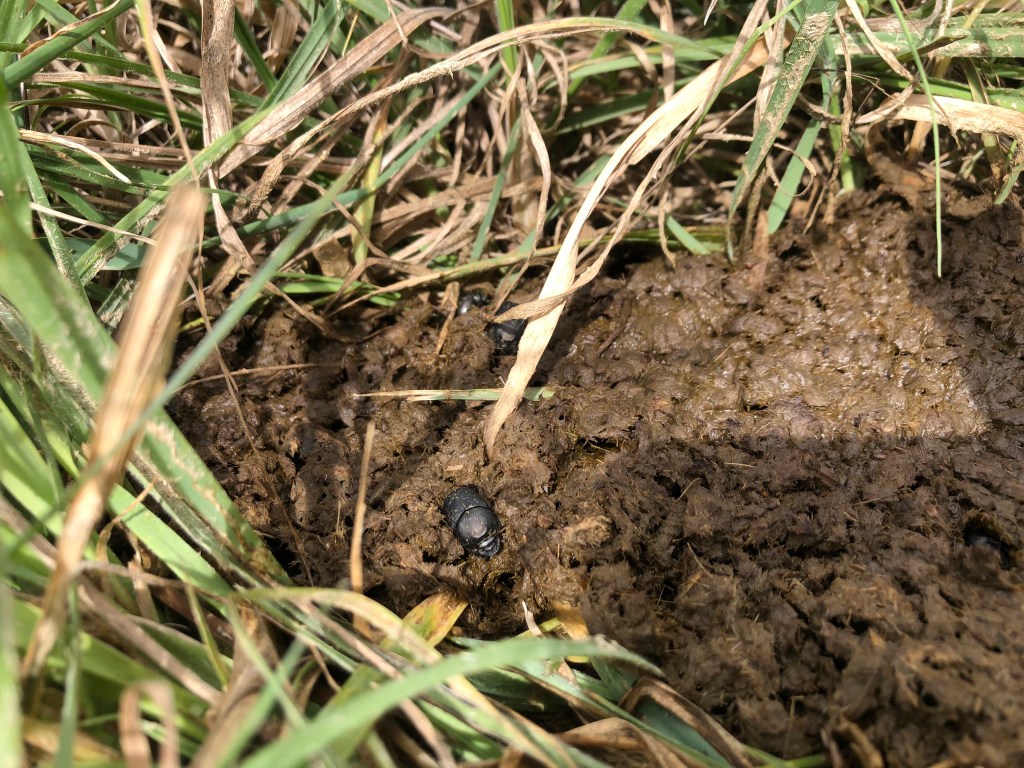
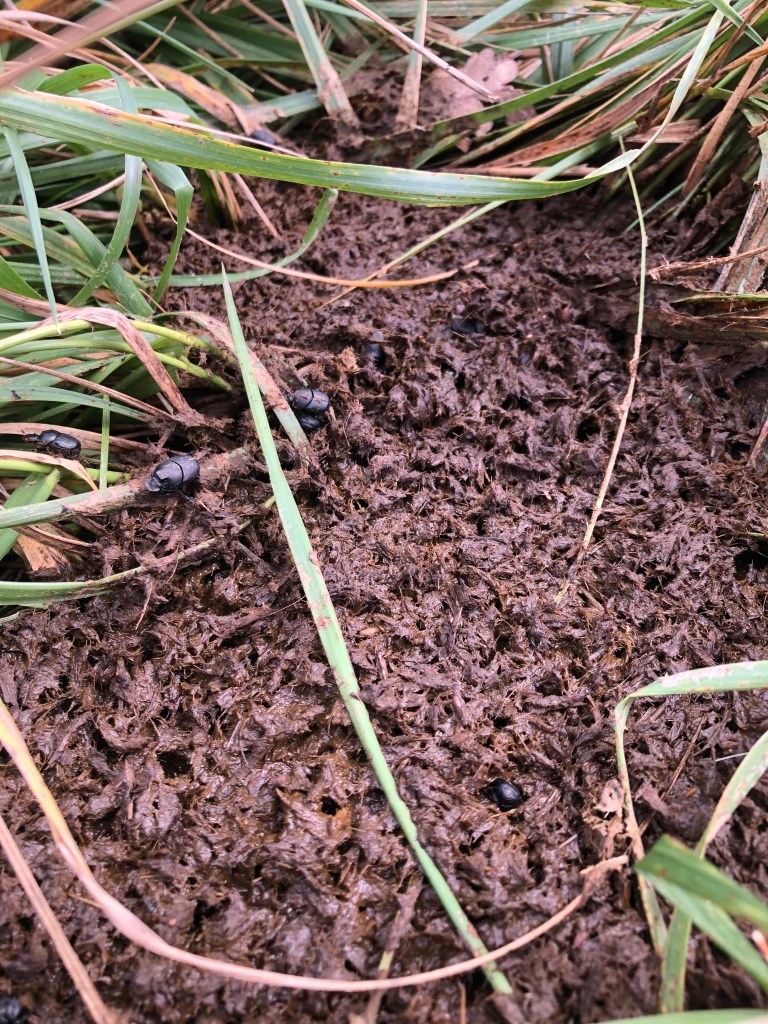
The rain brought some of our hard working little creatures to the surface. A stroll around the paddock after the rain stopped revealed our dung beetles coming up for air from their little burrows beneath the cow pats. These creatures are so important in breaking down manure and turning it into fertilizer – and it was so good to see them working away. Jo is pretty sure these beetles are Onthophasgus Binodis an introduced dung beetle (more info here: https://www.dungbeetles.com.au/species/onthophagus-binodis). Native beetles much prefer the native dung of kangaroos and wombats (of which we have plenty of as well!).

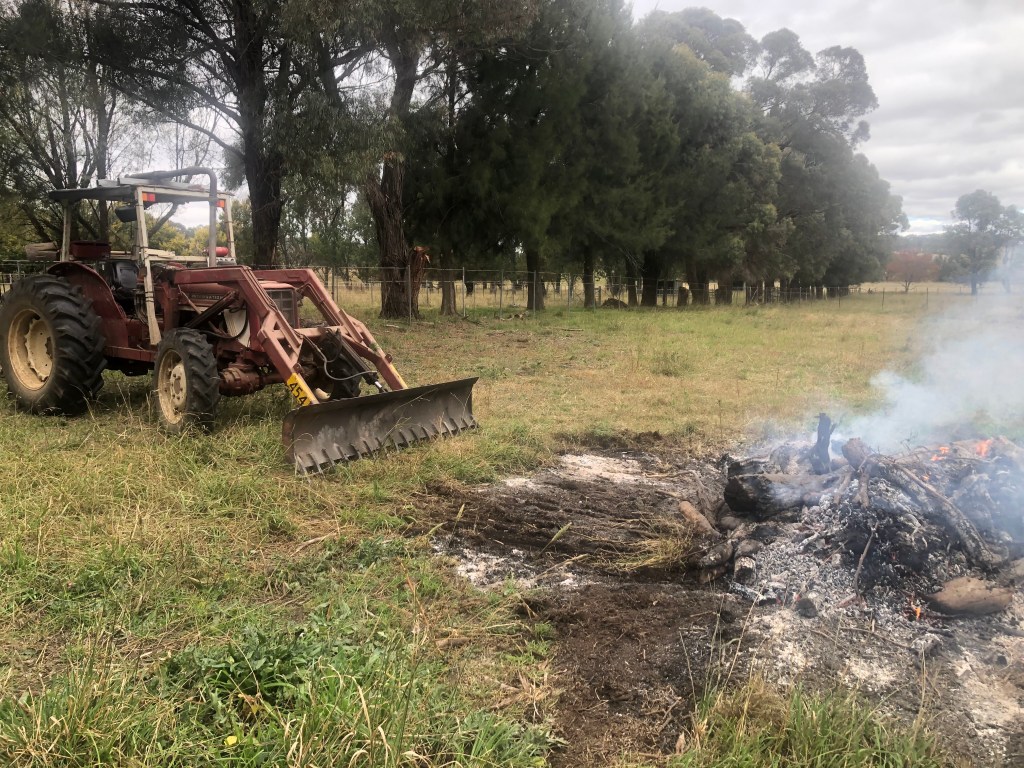
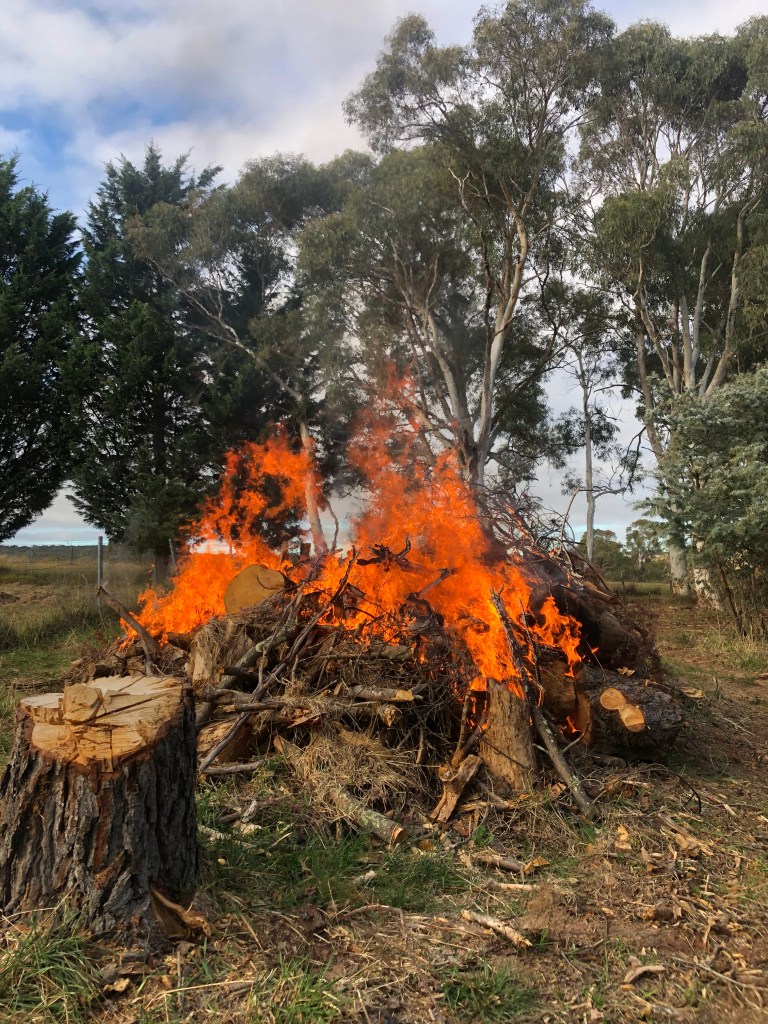
The rain also softened the ground, allowing me to rip contour lines for Jo’s new orchard. We have chosen to re-purpose one of the small foaling paddocks near the house for the orchard. The main reason for this site is that it is close to the house, close to an existing water pipe, and will probably be the easiest place on the farm to net in order to keep birds off the fruit. Of course it is not just simply ‘rip lines and the job is done’. The first thing I had to do was service the tractor. This was complicated by the fact I needed to fit a new fuel cock first to allow me to change the fuel filters first. Then I slashed the paddock, before ripping along the contours. I also needed to fell three nearby pine trees that had died. I removed most of the branches, but I had to wait for appropriate weather window to burn the stumps.

Two months later we are almost ready to plant the trees. I am still to install a new water pipe and watering system with drippers on each line. Whilst a simple tap and hose will be easier to install, we want to make it easy to water the trees in the future. Watch this space for updates as we build the orchard.

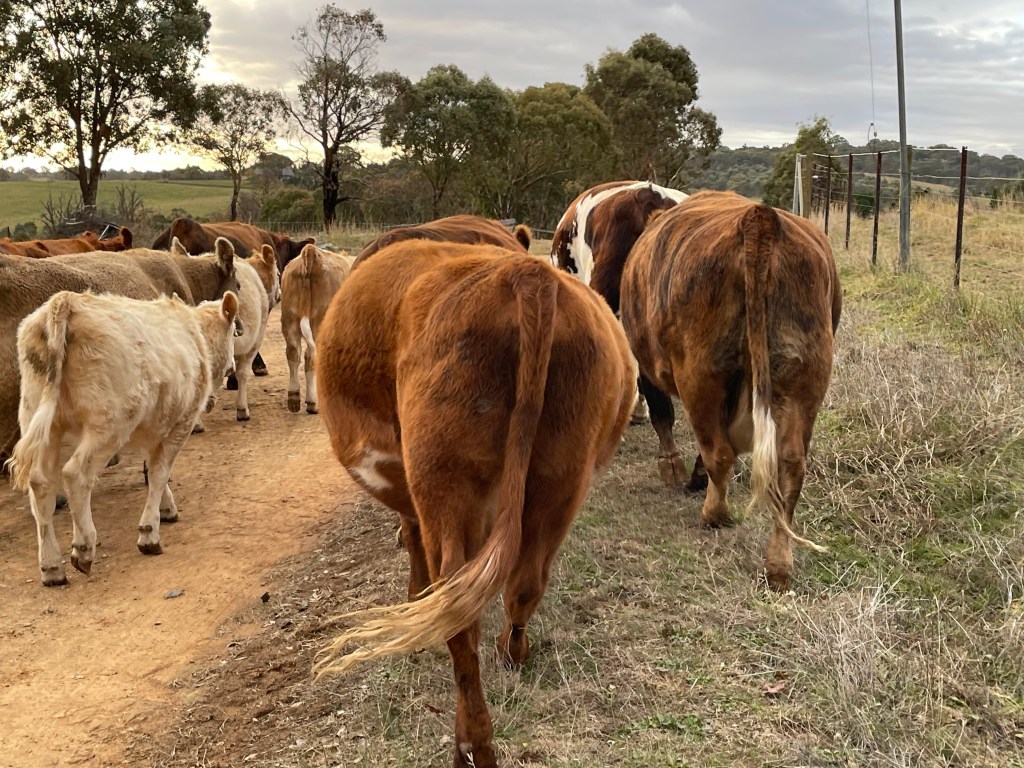
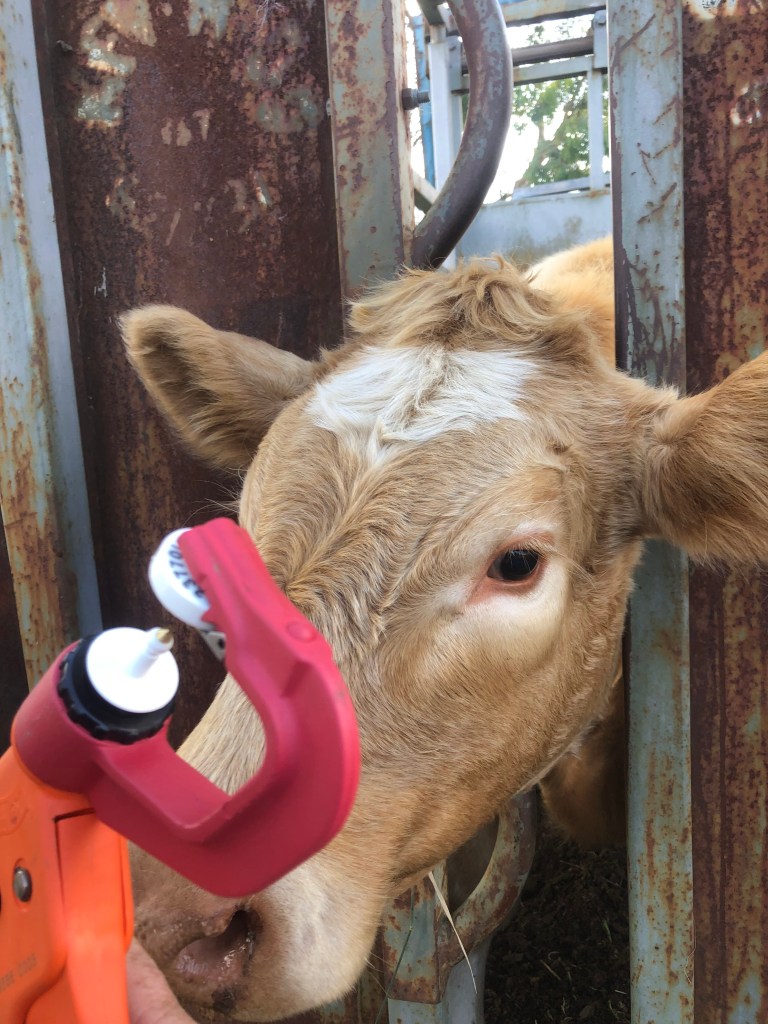
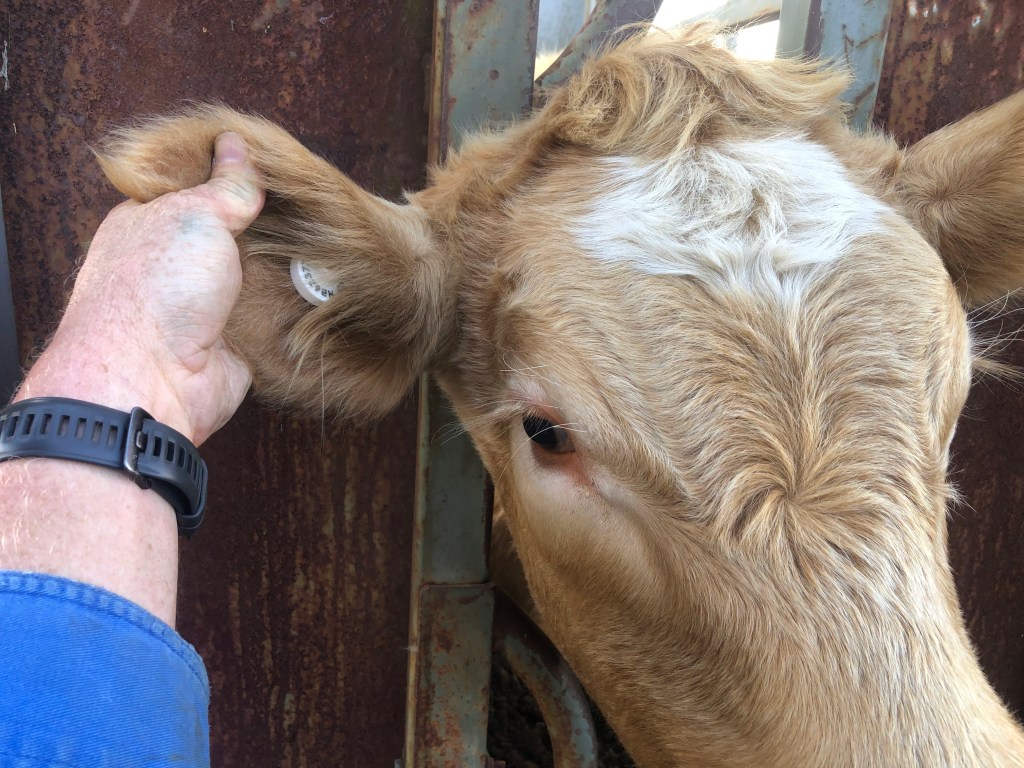
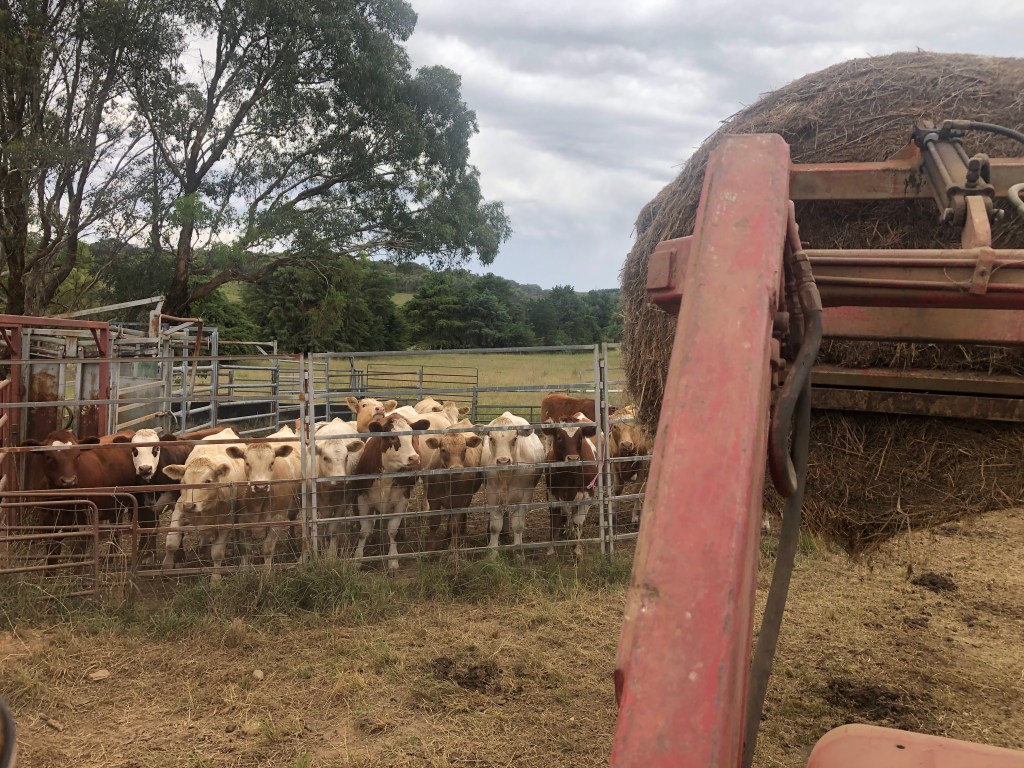
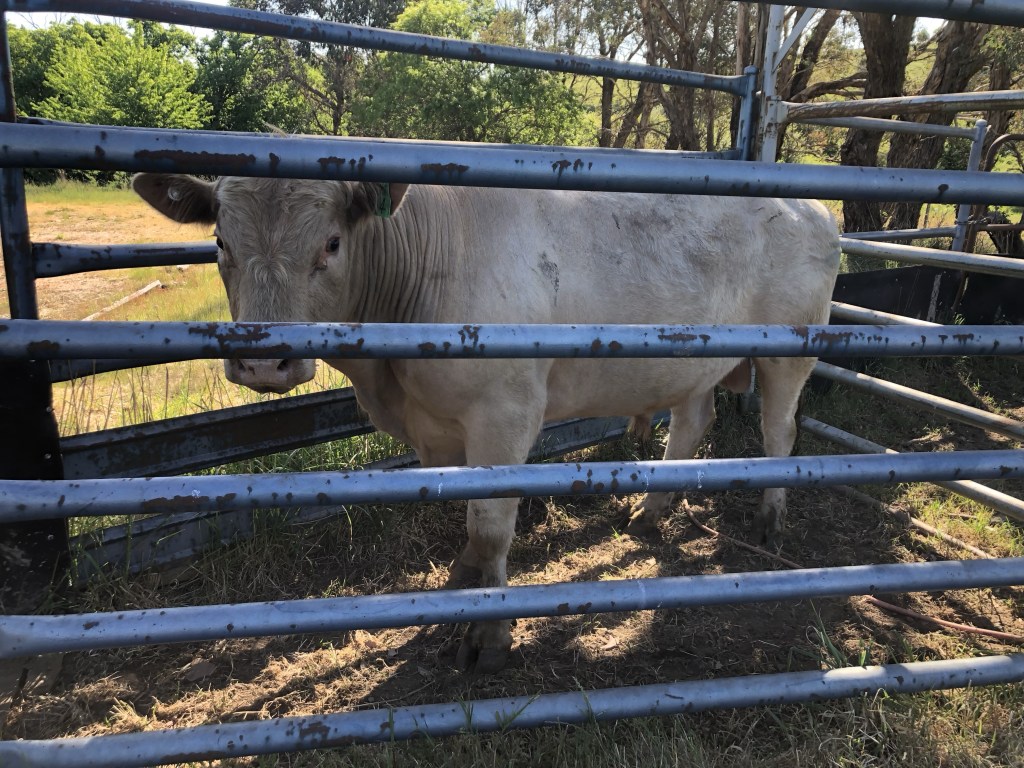
In the meantime our beautiful weaners have continued to grow. Sadly, the irregular rain, and not much grass growth this autumn means we will be unable to feed them over winter. They will be heading to the sale yards later this week. We have decided to keep three heifers, which we will return to the herd of 12 cows. Part of the requirements to sell cattle, is that they must be able to be traced back to the farm of origin. To do this, we fit them with an electronic ear tag with a RFID chip linked to the Rock Farm. They soon all sported the latest fashion accessory, a lovely white ear tag.

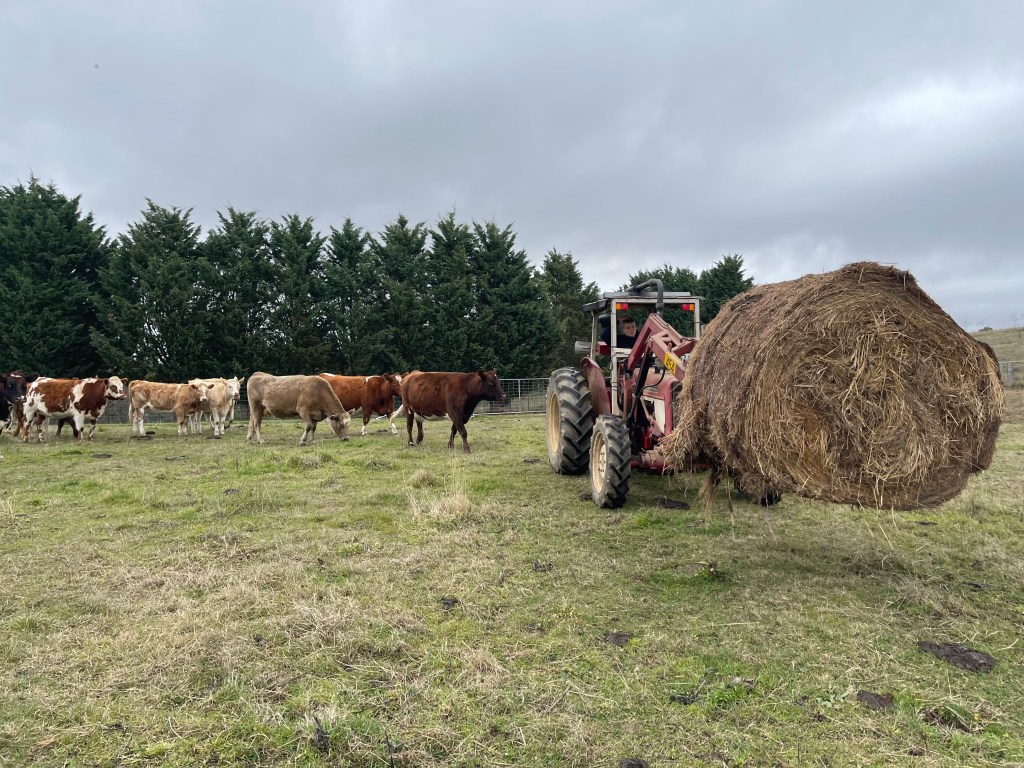
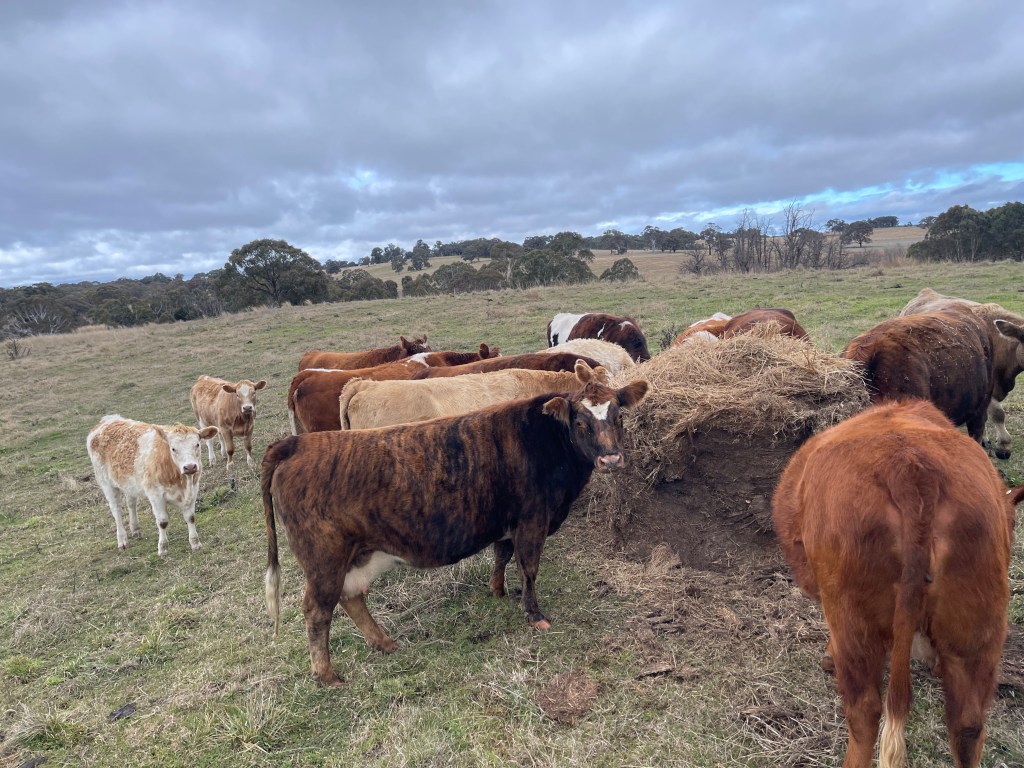
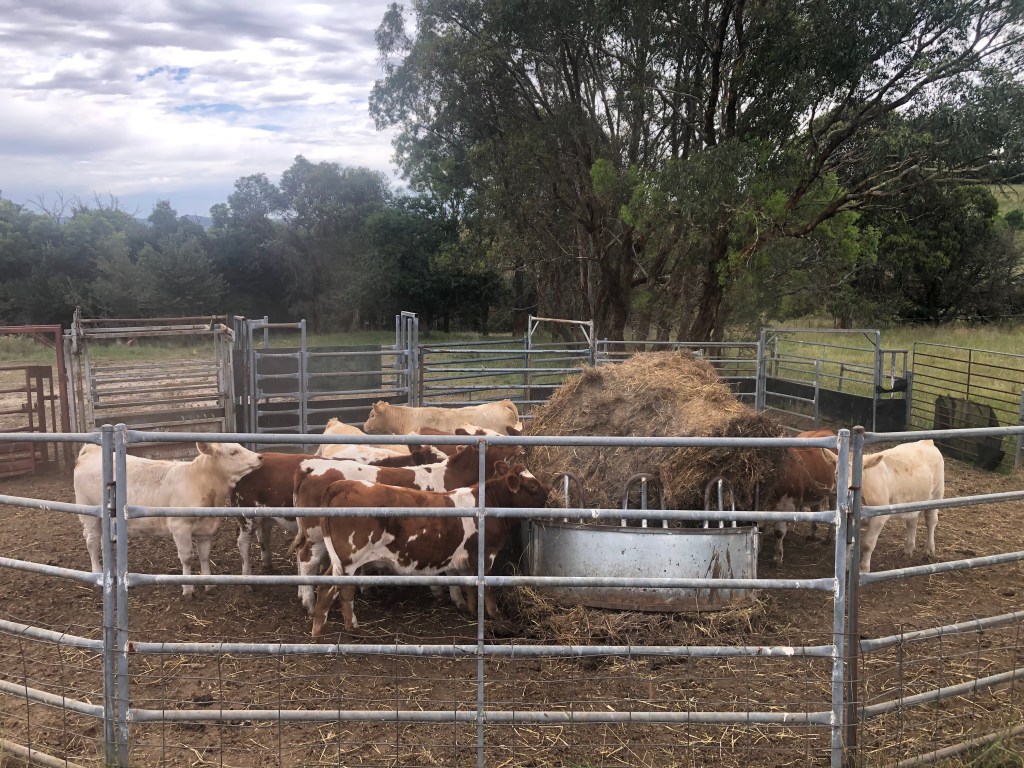
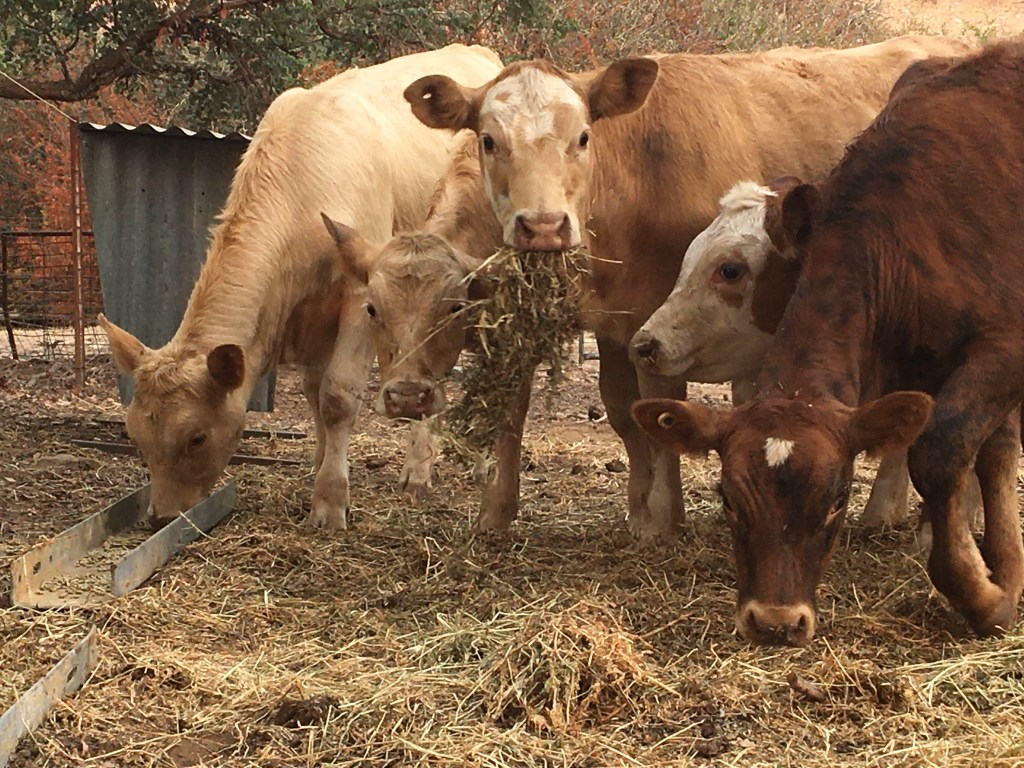
The grass situation is a little worrying. We haven’t had much autumn growth, and what little we have had is seeing massive pressure from kangaroos. Our neighbours alarmingly have had feral pigs digging on their property. It is all part of it I guess, but a little frustrating when we try our best to rest paddocks. We have plenty of hay in the shed, which I am happy to feed the cattle (it is after all my method of providing new nutrients onto the farm), but we are delaying feeding as long as possible.

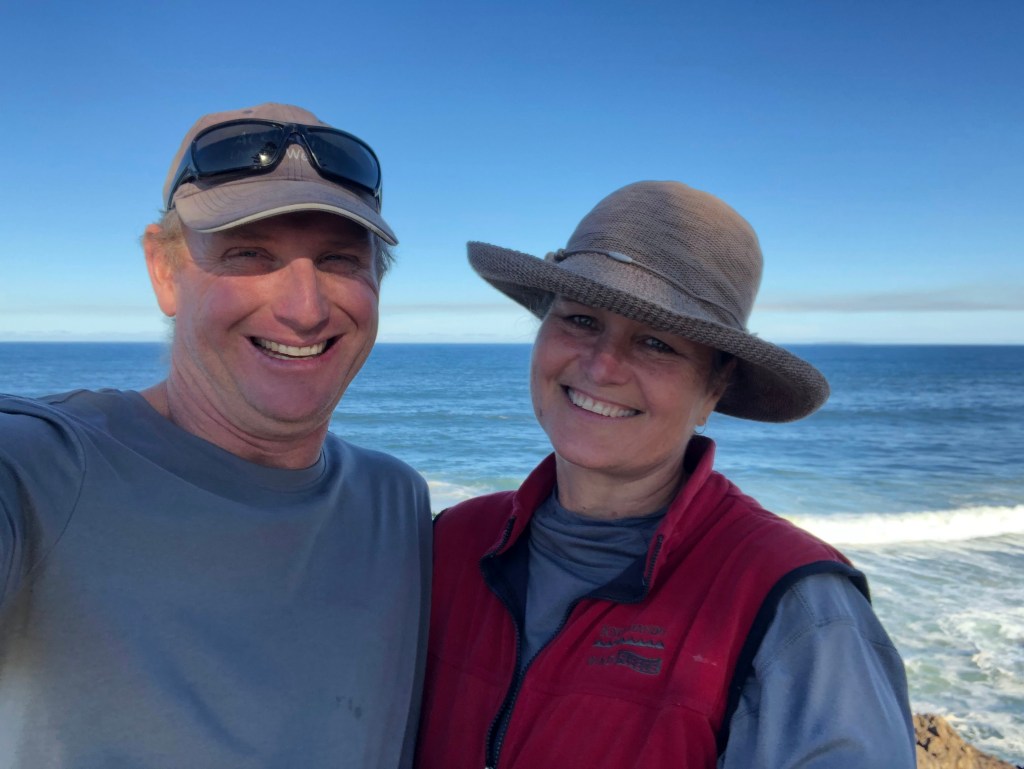
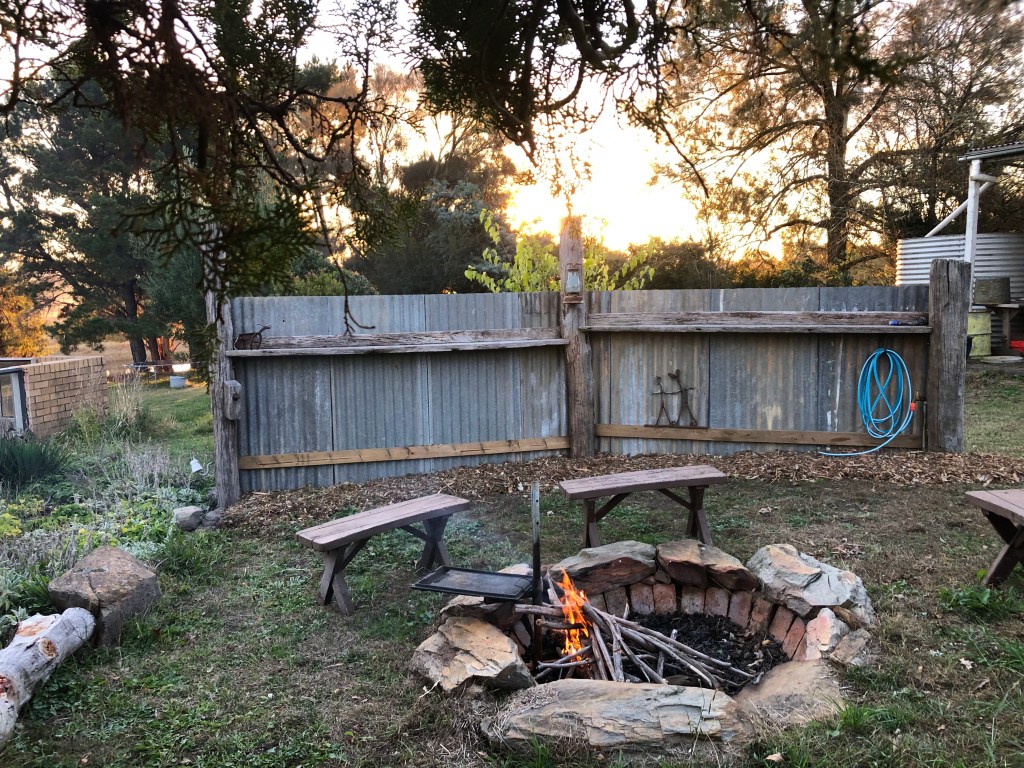
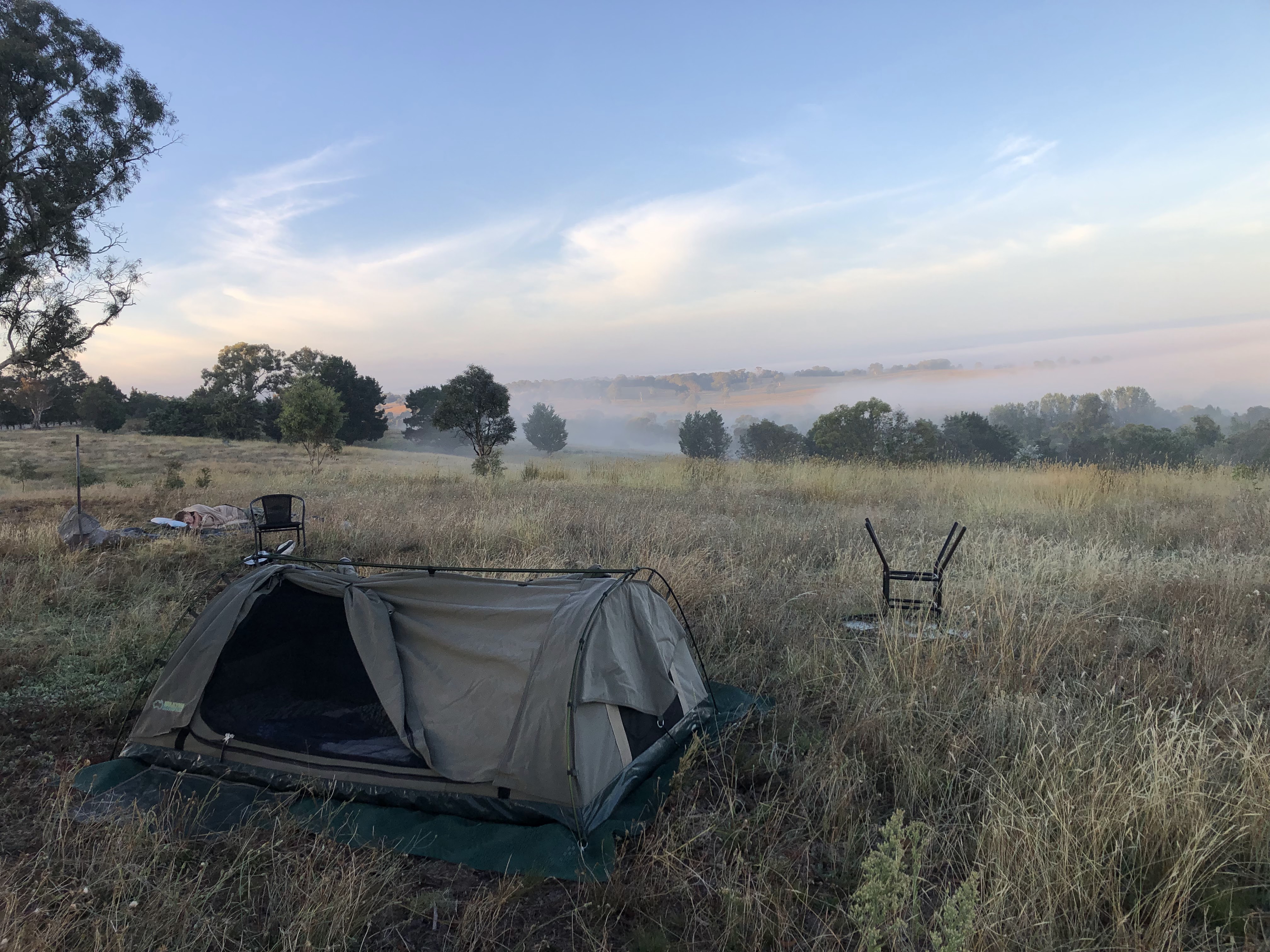
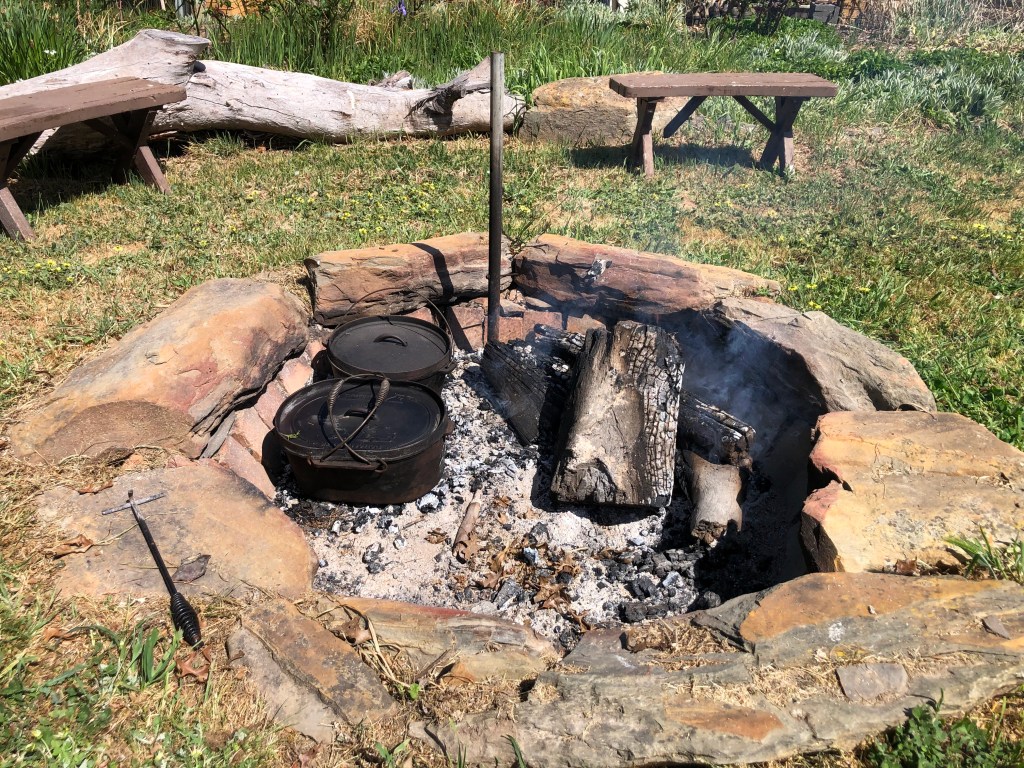
The good news is it hasn’t all been hard work. We did manage a quick night down the coast to make the most of the last warm days of autumn, and have made use of our new wind break around our fire pit, using garden prunings to cook our dinner. We love our little walks around the Rock Farm. Sometimes I can’t see the view for the jobs in front of me, but it doesn’t take much to lift my gaze and pinch myself to realise how lucky I am.

Perhaps our most exciting news relates to our local community. Last weekend we hosted our local Regenerative Land Managers group at the Rock Farm. We have a new direction to take this collection of land managers, and much of our discussion centred on the best structure to move our group to another level. More on that perhaps at my next update.

Comings and goings in an unusual season

Last October you may recall we were making decisions that would affect our production for the next couple of years (see here:https://rockfarming.com/2023/10/19/a-strategy-emerges/). We had tried to arm ourselves with the best information available about the cattle market, soil moisture and predicted dry weather patterns, with the aim of protecting our soil health and welfare of our stock. The end result was a decision that we would not join 10 of our cows, with the aim of reducing our herd size leading into forecast drought conditions.

All through November and into December, I felt that we had made a sound decision. The weather dried out, and we used it to our advantage to de-silt an old dam. Towards the end of December we went away for a fortnight and came back to an entirely different property. The forecast dry summer had turned into something else entirely, and frequent summer rains continued through to February.

We considered our options, which included bringing the bull back for a late summer calving – but ultimately decided to let our decision to cull the cows stand. Come weaning, we would split our herd and cull 10 dry cows, keeping the remainder 10 cows and 2 maiden heifers (hopefully all in calf) on the Rock Farm.

Two weeks ago we weaned.

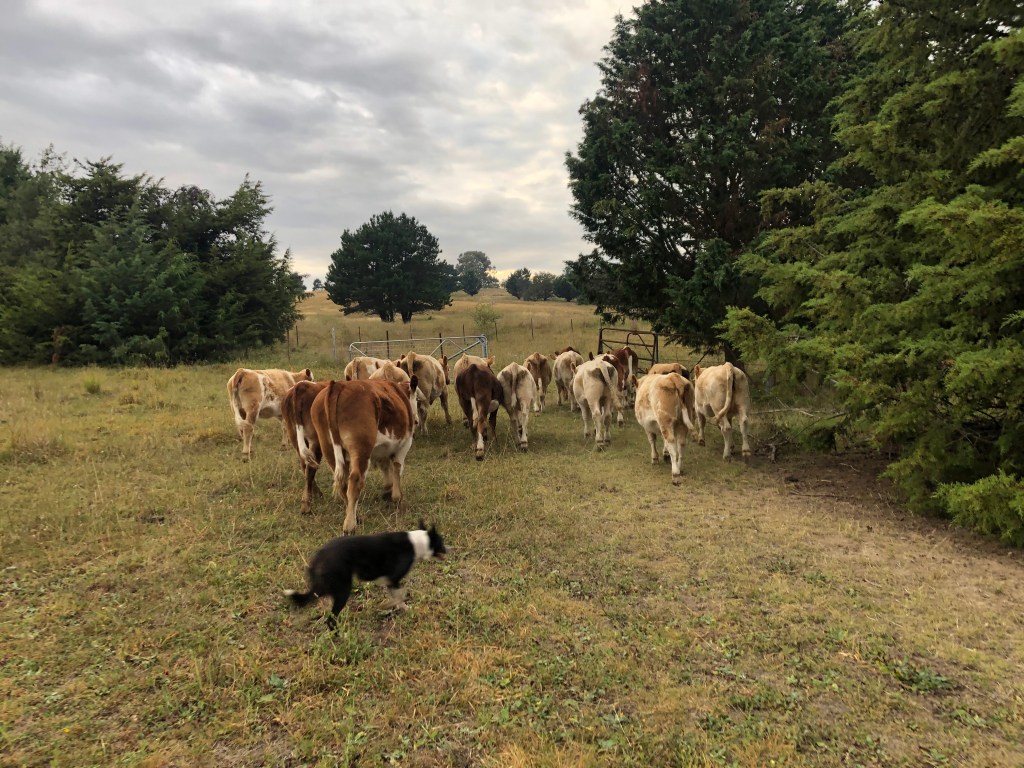
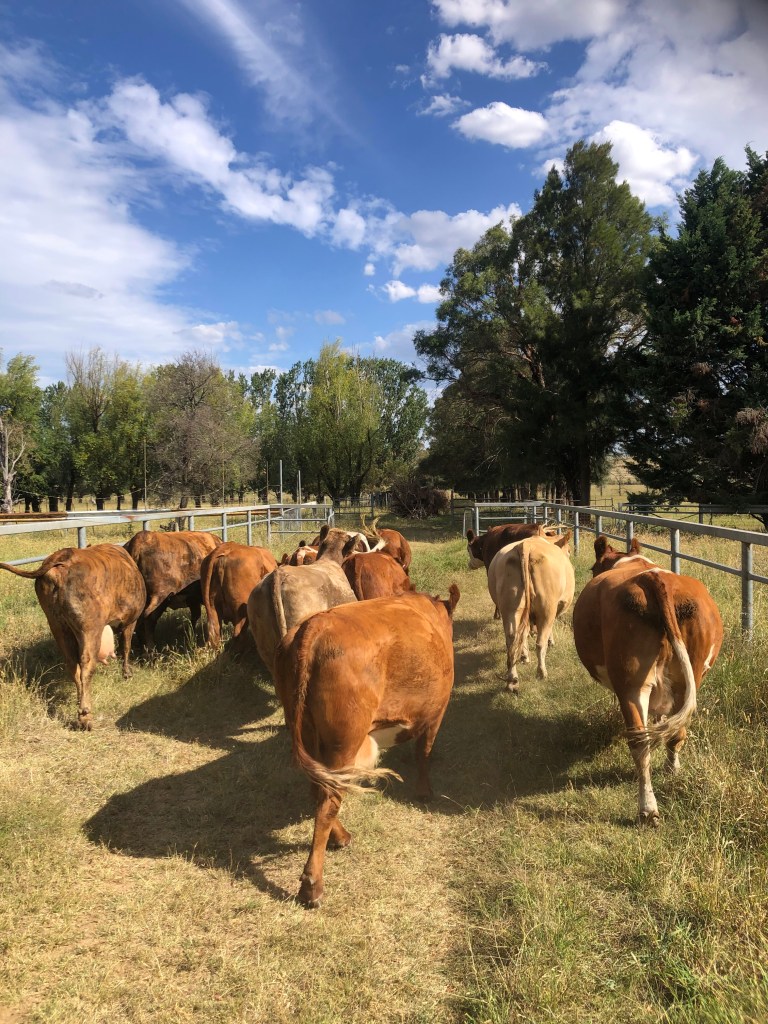
Weaning is always an interesting time. I allow the cows access to the lane leading down to the yards. For the first couple of days, there is lots of bellowing in an evening as the calves call for their supper, and the cows seek relief from full udders. But it doesn’t take long, and the cows are happy to wander off to greener pastures, and the calves settle down and learn that the tractor now brings them supper. Once they are happily independent, I move the cows to the other side of the farm, and let the calves into the paddocks behind the yards, to graze.

I handle the calves frequently during this time. Sapphy and I make it our morning routine to bring the calves into the yards, and as soon as they are there, we take the pressure off and leave them to return to the paddock. Two weeks into weaning, we brought the cows back to the yards, and split them into the two groups, those staying and those going.

We used some simple rules to determine which cows we would cull from the herd.

  • Any cow that had ever tossed or shaken her head at me or anyone else,
  • Any cows who had ever had any difficulty calving, and
  • Any cows with horns.

At the sale yards, our Agent split the cows into five lots. They made between $1.78 and $1.96 per kilogram live weight and weighed between 495kg and 675kg. Transport, agent’s fees and selling fees will take a fair chunk out of the cheque which is part of the cost of doing business, especially as a small producer.

Most importantly though we have removed ten hungry mouths from the Rock Farm, which will allow our wearers more opportunity to put on weight and value here for a few more weeks. With less mouths and more grass (with the possibility of rain in the next few days), we will assess our winter feed and possibly defer selling the wearers until next Spring.

Until then, we will continue to enjoy the cooler evenings and make the most of living (and camping) at our beautiful farm.

The Summer Haul

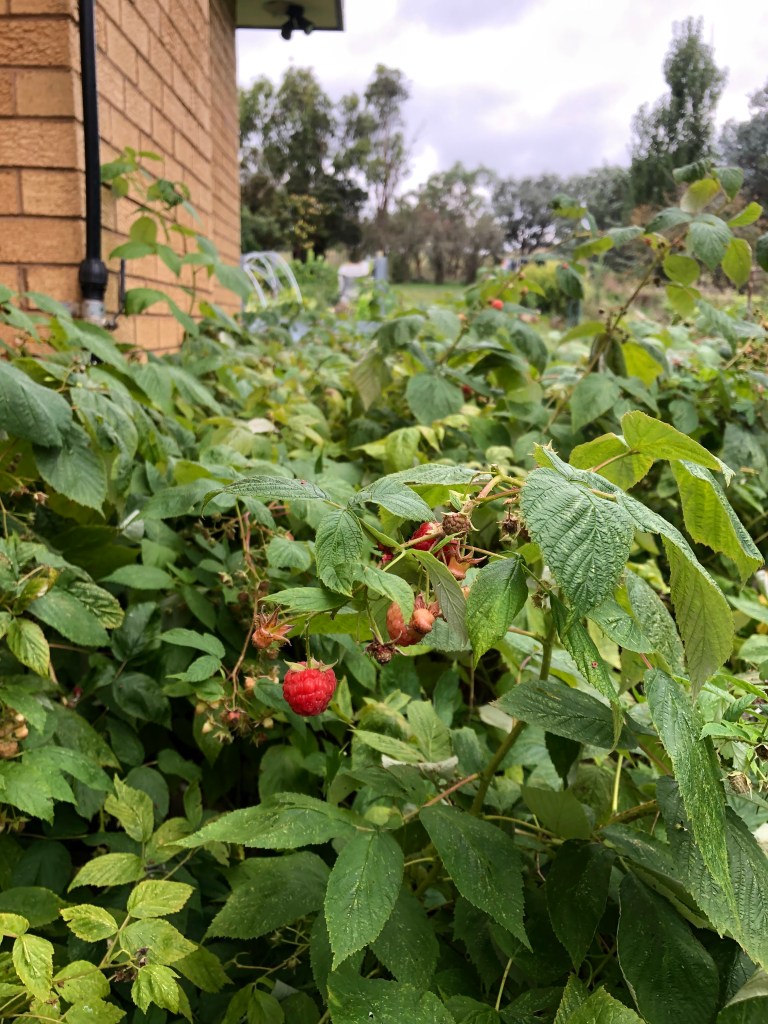
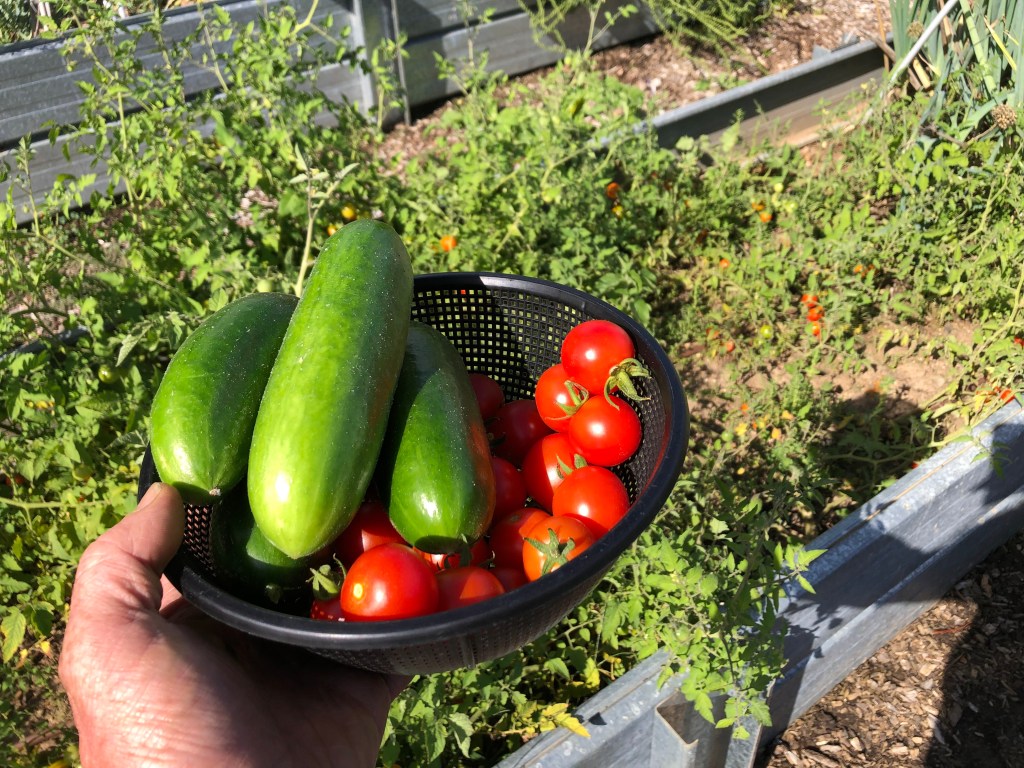
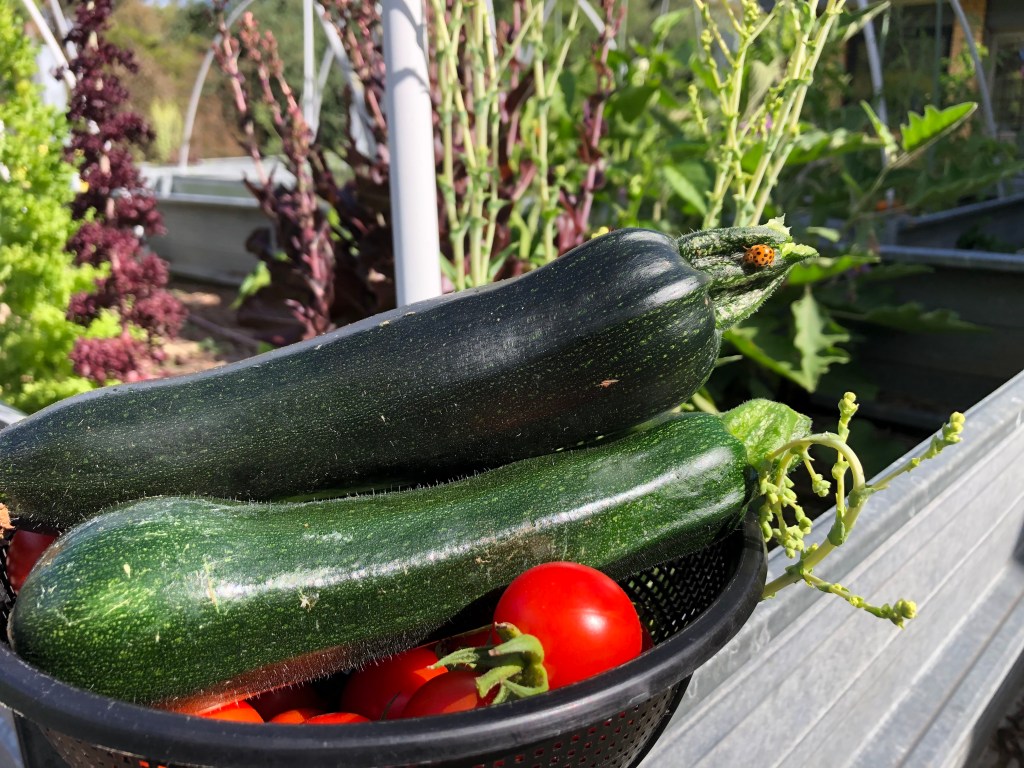
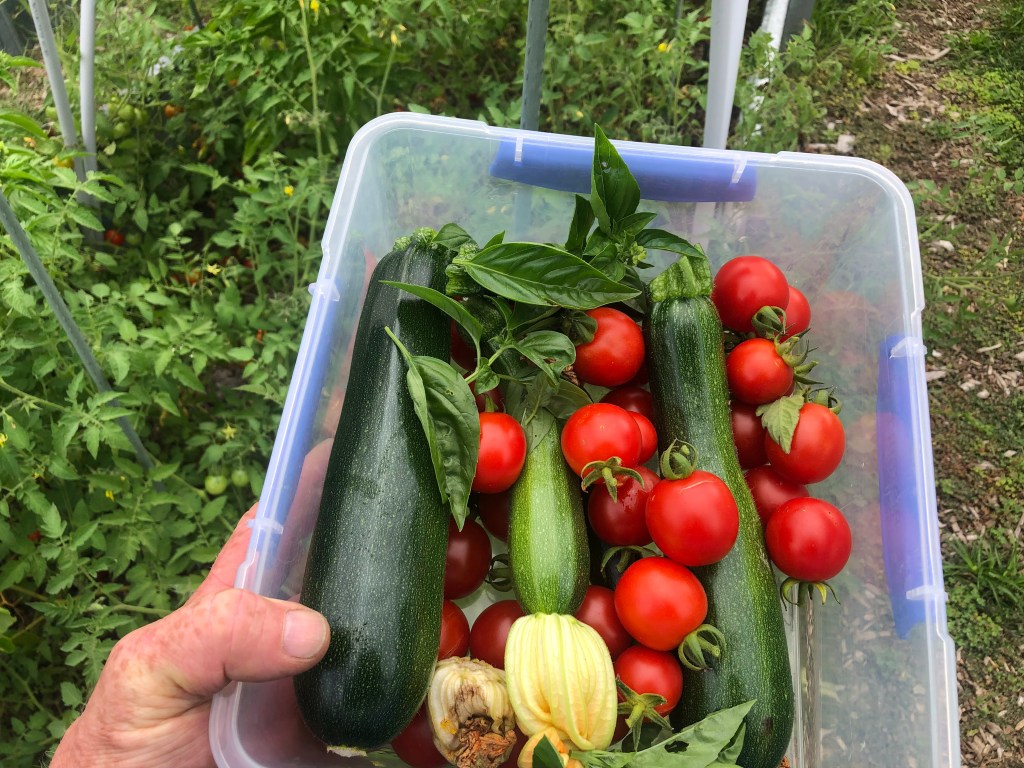
If you thought the Rock Farm was all about our cattle and trees, you’d be perhaps surprised to see some of the other things that we try to grow here. The return of a relatively wet summer has allowed our vegetable garden to thrive, and we have been enjoying regular harvests of cucumber, tomatoes, zucchini eggplant, capsicum, lettuces, and raspberries. There is nothing quite like picking fresh vegetables just before you cook them – the flavours are just so delightful. As my Italian colleague says, you can taste the sunshine 🙂
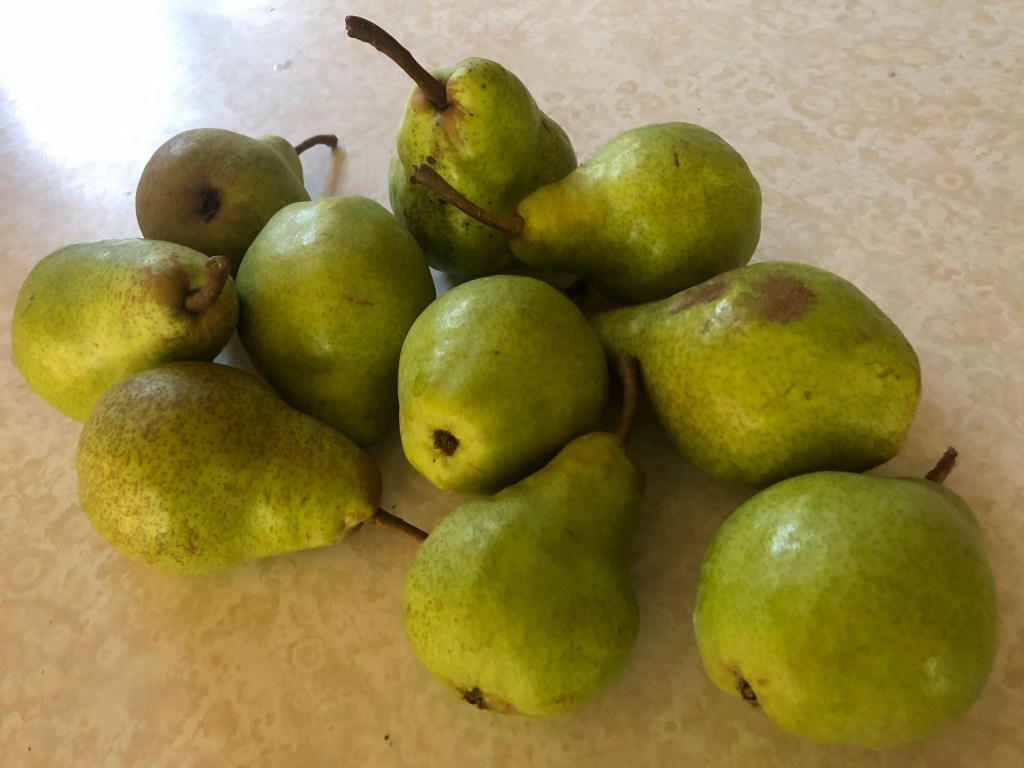
I can’t take any credit for the hard work that established our garden this year – except for hauling up some cow manure from the yards last year. We are even more fortunate to have lovely neighbours who let me pick some apples and pears from their orchid. If you think vegetables taste great just out of the garden, the fruit takes it to another level!

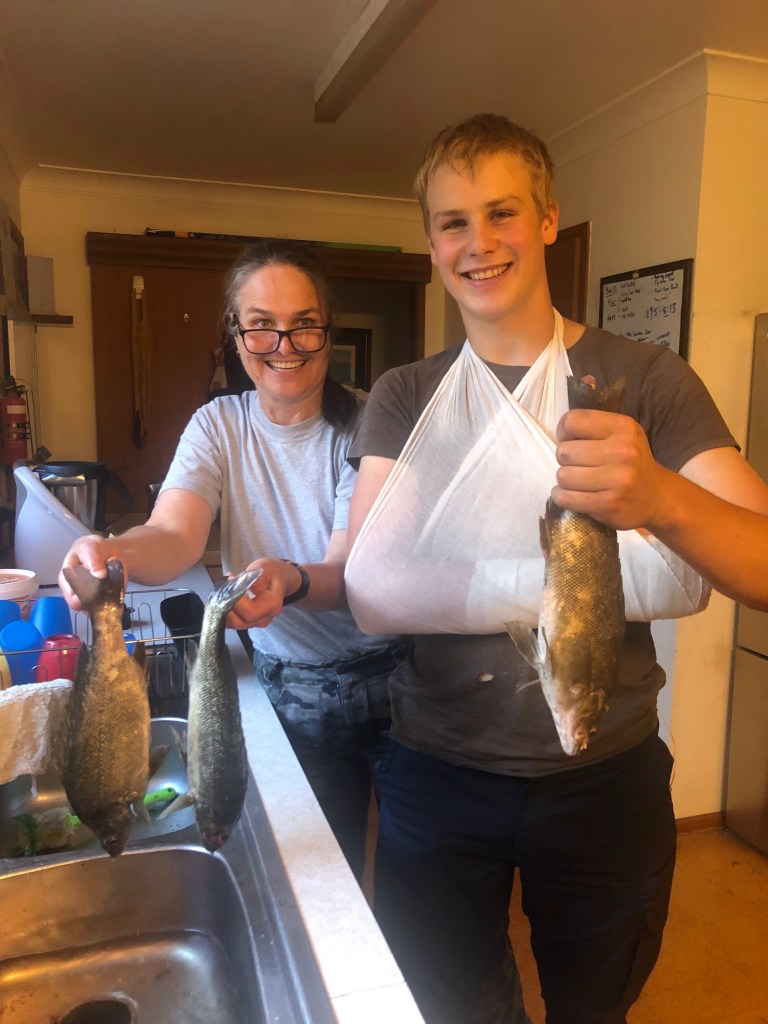
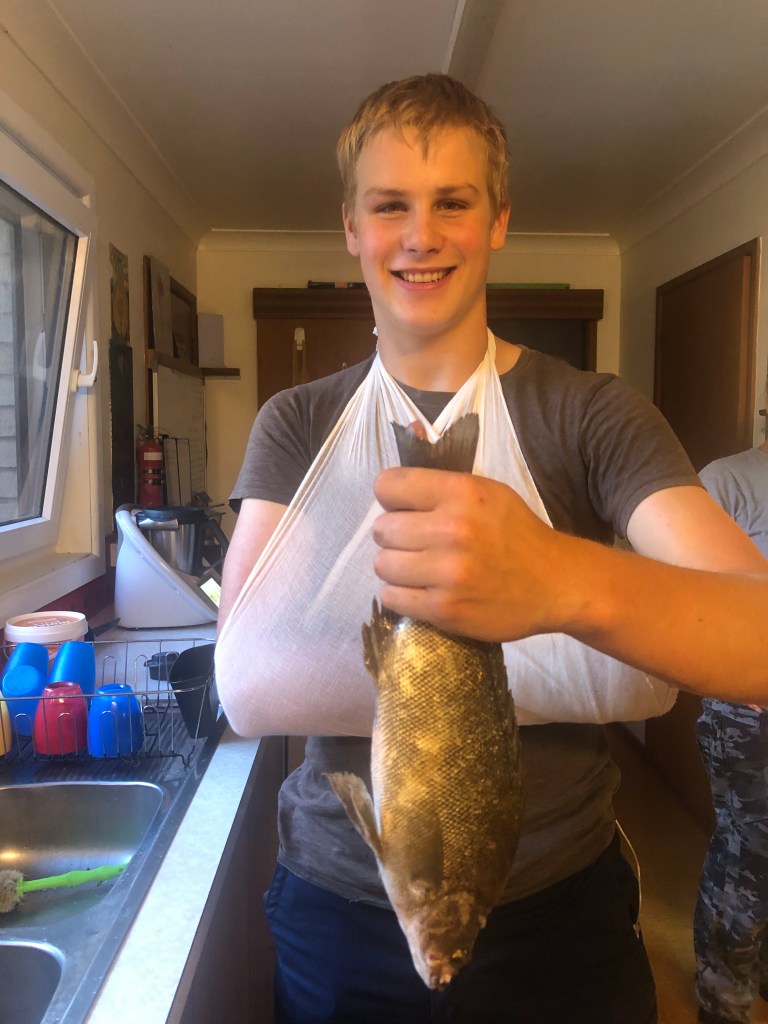
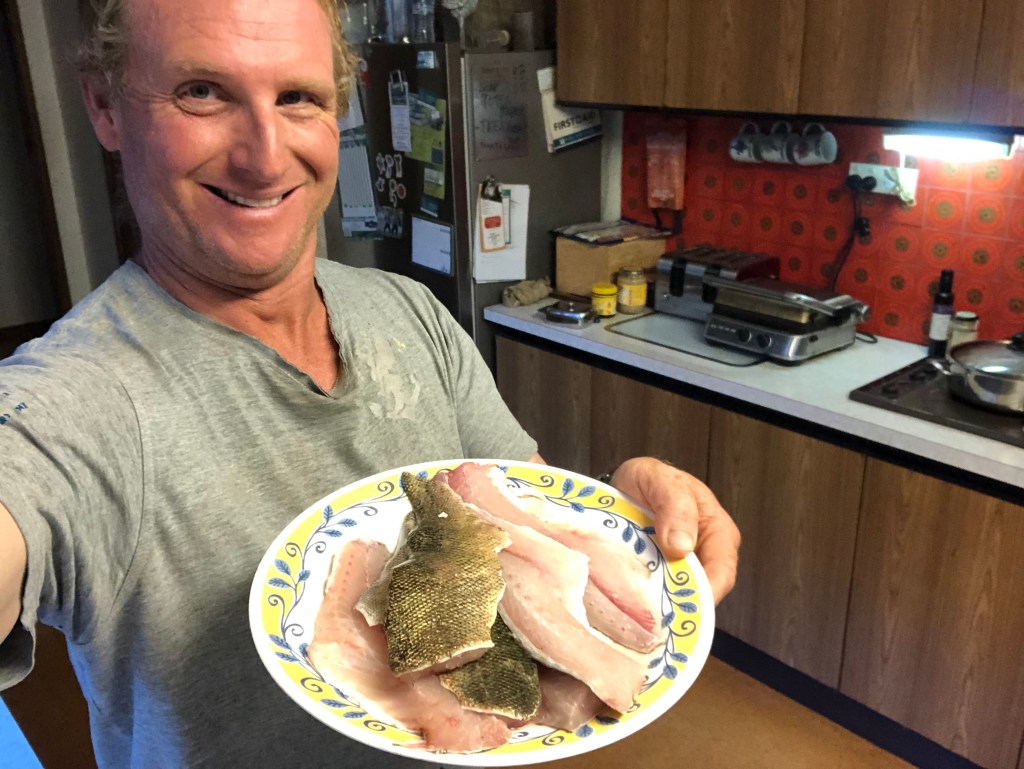
Perhaps the biggest surprise was what we found in our dam. After the crazy mountain-biker managed to crack a finger, he was laid up at home causing as much frustration to himself as the rest of us. In an effort to save all our sanity, I suggested he might try to see if the Silver Perch we had released in the dam as fingerlings in November 2021 had grown (https://rockfarming.com/2021/11/25/making-the-most-of-the-season/). The short answer is they certainly had. After about ten minutes with a rod using nothing but some bread as bait, he returned with three handy sized fish, which we enjoyed for dinner.

It is great to feel the evenings start to cool down, with the last throw of summer upon us. It is time now to start weaning the calves and get the farm ready for winter. There is lots going on, but that is half the adventure!

A most interesting season – Summer… er no Spring again!

On my last Rock Farm update, we were making preparations for drought. We decided not to join half of our cows, had started watering trees and arranged for a local contractor to de-silt a dry dam (https://rockfarming.com/2023/11/21/dry-times-present-a-new-opportunity/. The cattle prices had bottomed out and things were looking pretty grim, but we had a plan.

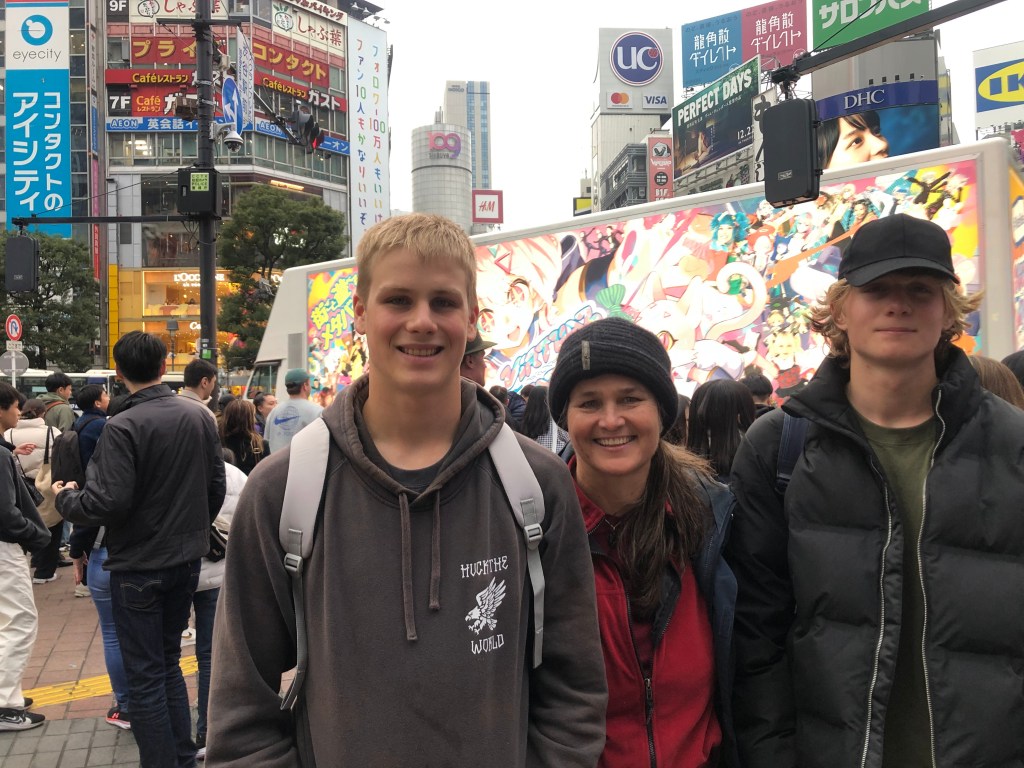
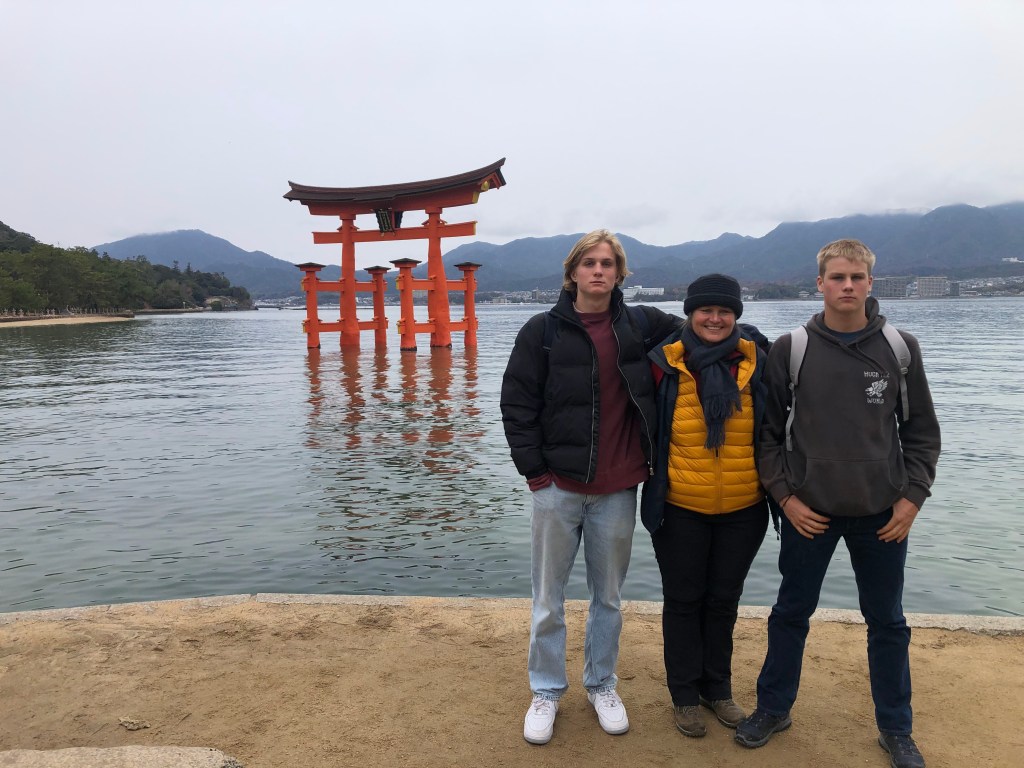
We careered towards the end of the year at a frantic pace. The big red truck was indeed made ready for the school formal (and performed admirably). Tractors, mowers and cars were set to work. School finished for the year and then we took a much anticipated holiday. To Japan.

My parents kindly became caretakers whilst we were away, moving stock, chipping weeds and keeping the place from descending into chaos.  And how lucky we were. The cattle all behaved themselves, the pump provided water to the troughs as designed. There were no catastrophic pipe leaks. But the most amazing thing happened whilst we were away. It rained.
So we left in Summer – and came back from our holiday two weeks later in Spring. The recently dug out dam was full, the grass green and growing and the cattle in excellent condition. Our drought plan has gone out the window…. or has it?

I am still cautious about what our rainfall will be like heading into winter. As such, our plan really won’t change. We will wean the calves in late March or so, and send the unjoined cows into the sale yards, followed by the weaners a few weeks later. This will reduce the feed pressure on the farm over winter – and hopefully make the most of the uptick in cattle prices. The rain has allowed us to delay weaning, but it won’t fundamentally alter our plan.

In the meantime, the weeds have leapt out of the ground. Despite my reluctance to use chemicals, I have relented, and spot sprayed some of our worst weeds – Tree of Heaven, St John’s Wort, Serrated Tussock and two patches of dreaded African Lovegrass. I hope that my small amount of spot spraying this year, will allow me to keep on top of the re-growth with nothing more than my chipper.

It is great to be home. Our family holiday was all the more special now our elder son has finished school and is about to embark on his own journey. It was an amazing gift my parents gave us, the opportunity to have our holiday knowing everything at home was in safe hands. Thank you Mum and Dad!!

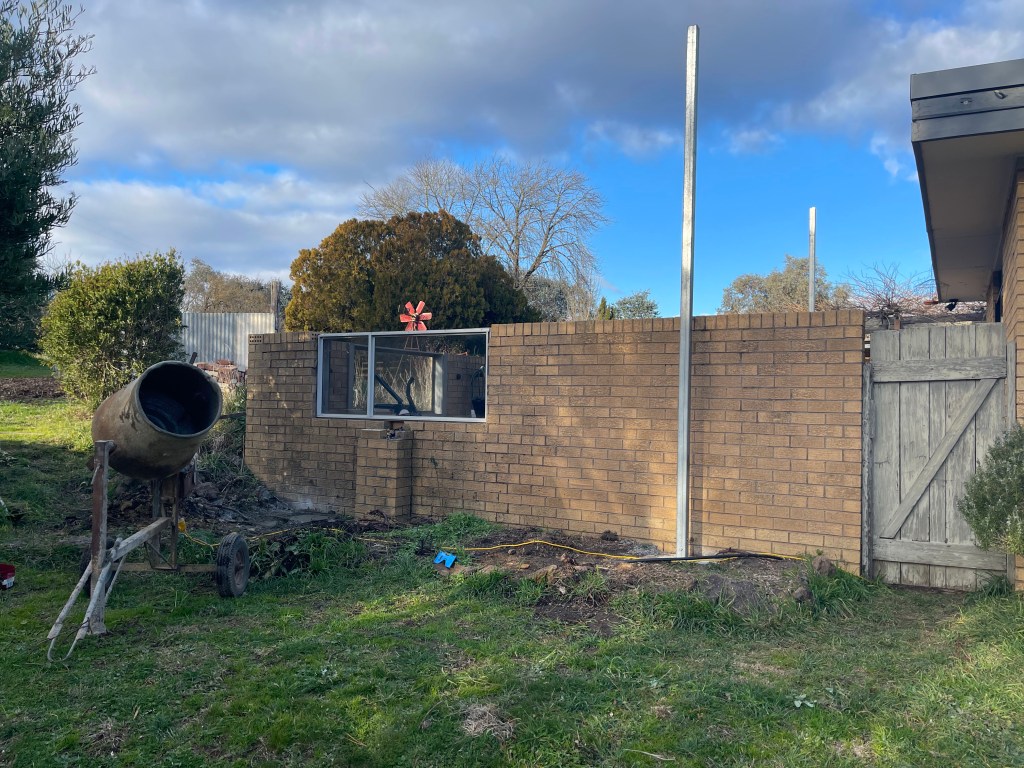
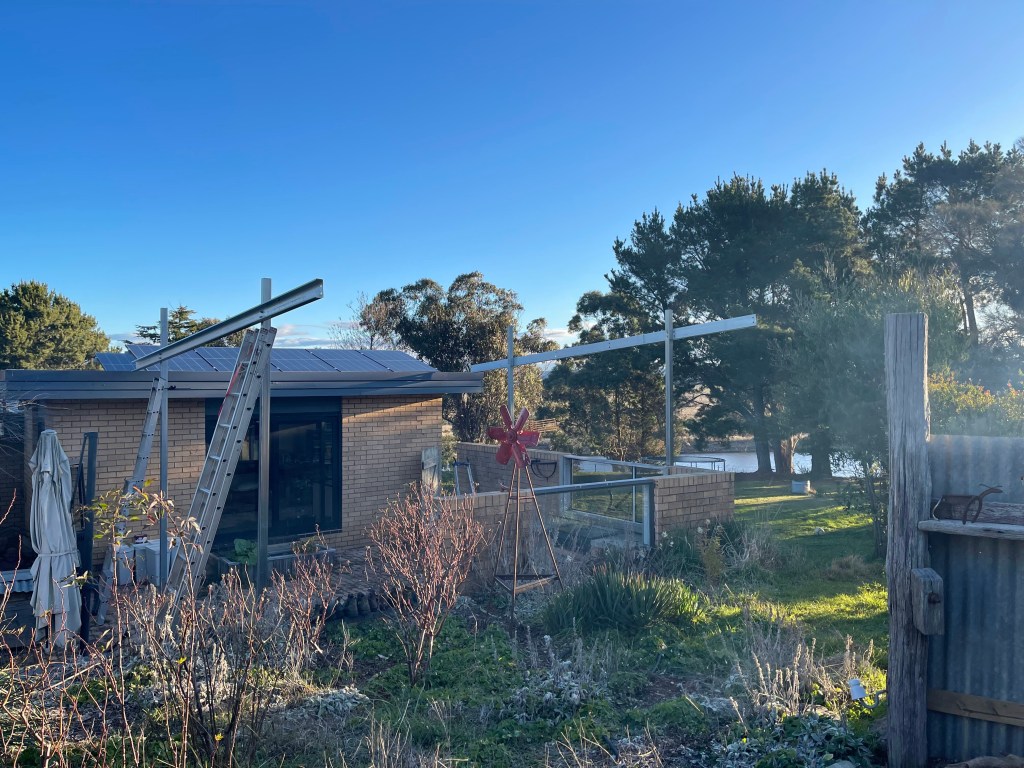
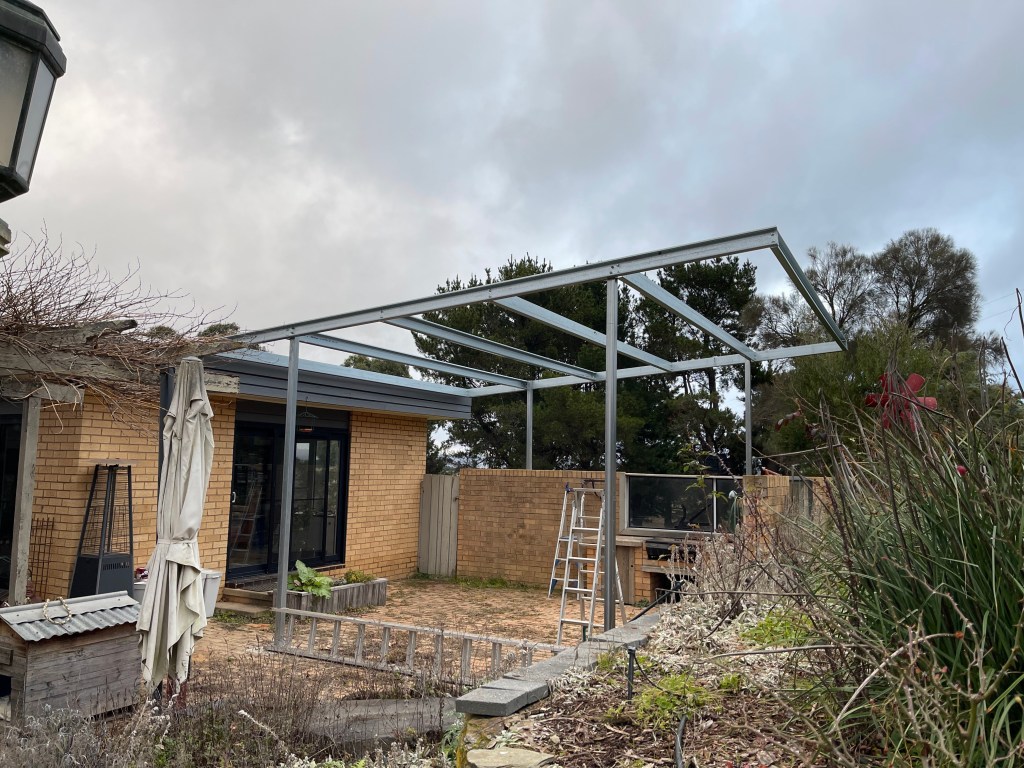
This year will be one of consolidation. We have spent the last six years on the Rock Farm repairing and establishing fences, planting trees and building our herd. This year we will start to turn our attention to our house. We have leaking gutters and an ancient patio that is about to collapse that demand our immediate attention outside. We will also plan a long overdue kitchen and bathroom renovation that we will commence in 2025. 

We hope that wherever you are, you had a lovely break over the silly season and hope that 2024 is a prosperous and happy year for you. 

Dry times present a new opportunity

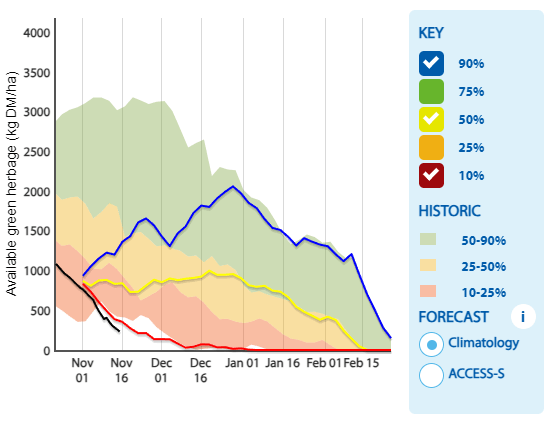
It is amazing how quickly the dry times have returned, with a blistering hot and dry end to spring. The rain literally just stopped coming, and the ground has dried out quickly. The wild oats and barley grass have all set seed, and the landscape is taking on the sunburnt brown hues loved by Dorothea Mackellar. The nearby soil moisture probes at Gunning and Murrumbateman both show a very dry soil profile, with available herbage below the lowest 10th percentile, and based on the graphs, it is unlikely to improve before autumn.

From https://www.farmingforecaster.com.au/index Projected green herbage available relative to historic variation – Murrumbateman. Accessed 21 November 2023

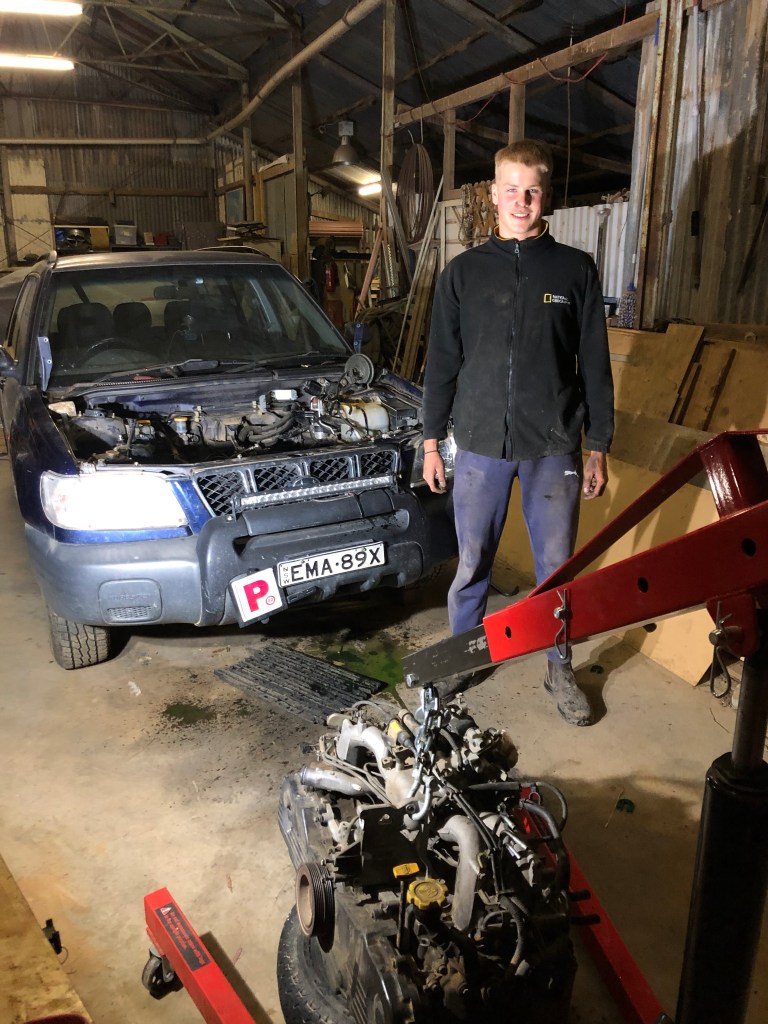
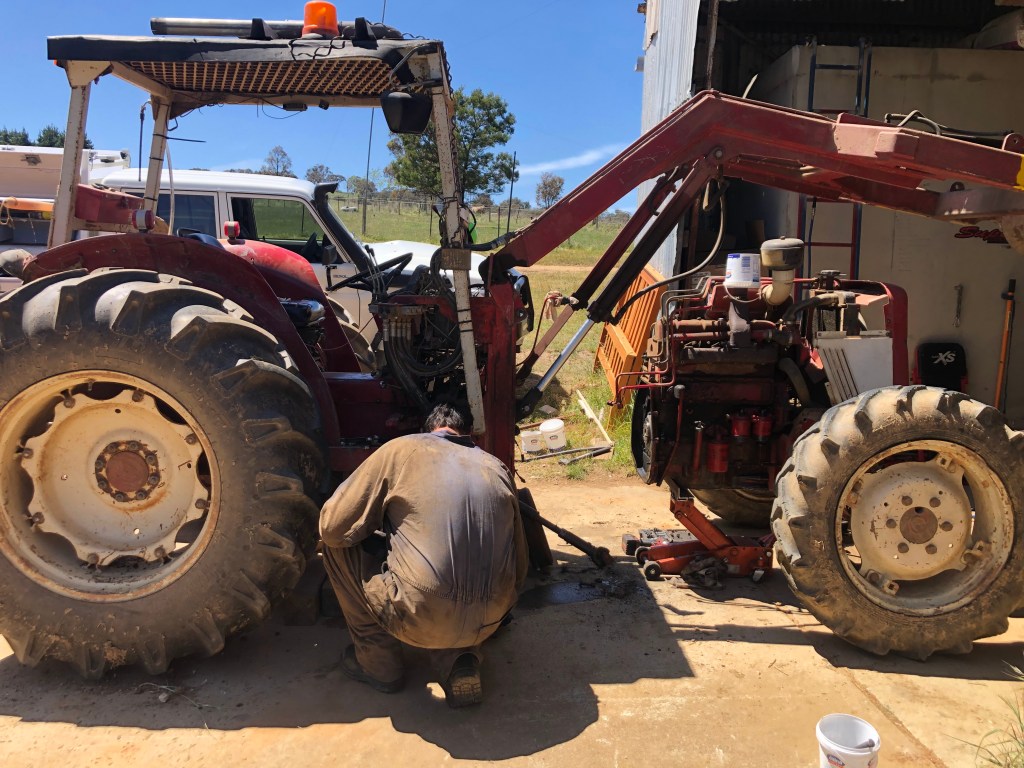
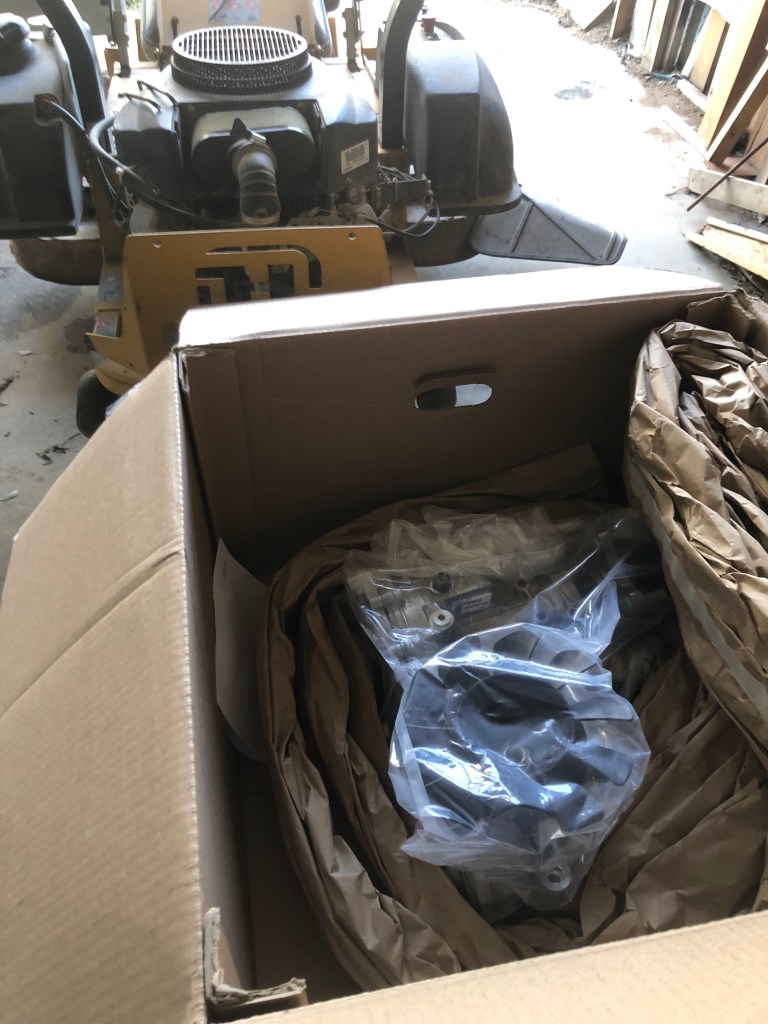
The dry has some advantages, and I have been able to get on top of a few of the mechanical issues we faced a few weeks ago (https://rockfarming.com/2023/10/05/fencing-malfunctions-fires-and-family/). The mower’s transmission units arrived in record time, and in no time I had it back on task knocking the daisy heads off. Local mechanic Dan installed a new clutch in the tractor (so glad he was able to fit me in and get the tractor back on the road in a couple of days). We put a new radiator in the big red truck Myrtle (someone wants to go to his school formal in a certain red, two door Mercedes-Benz) and the same certain someone has managed to replace the head gaskets in his little Subaru, install a new clutch and put the engine back in his car successfully! Talk about a handy run!

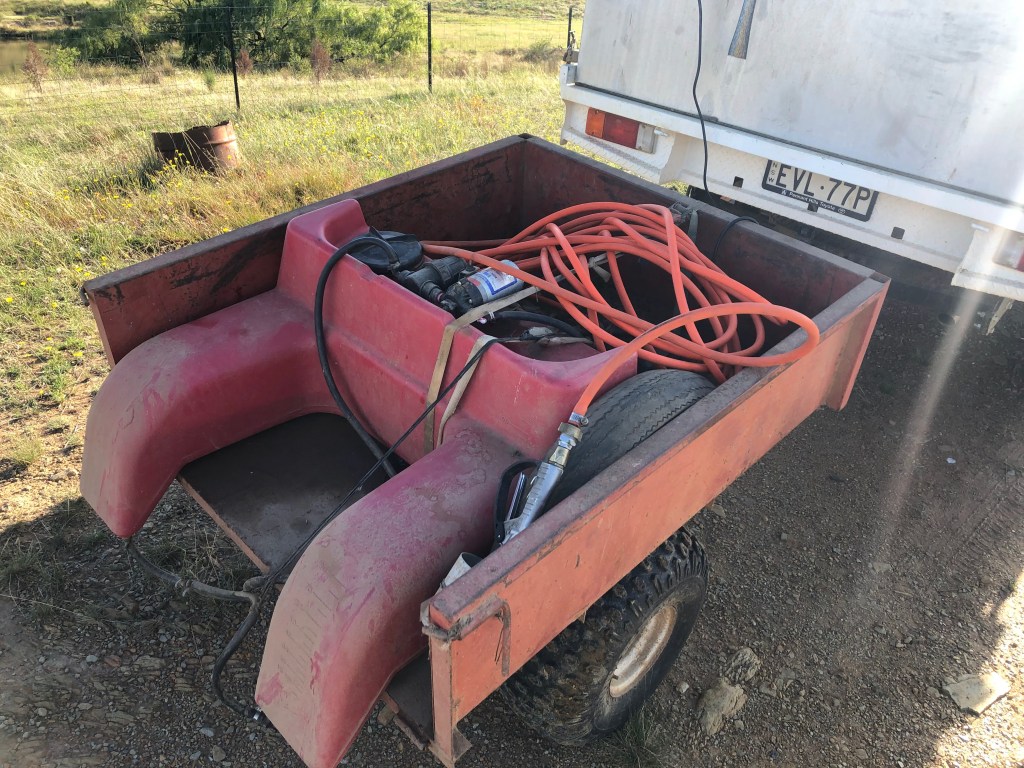
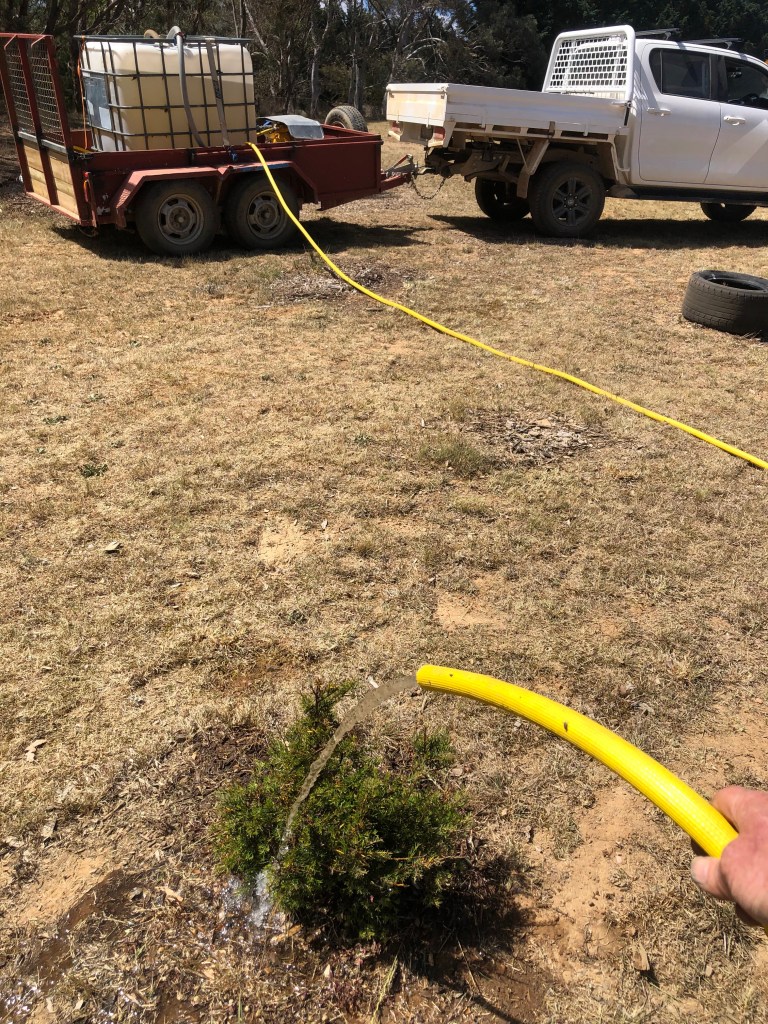
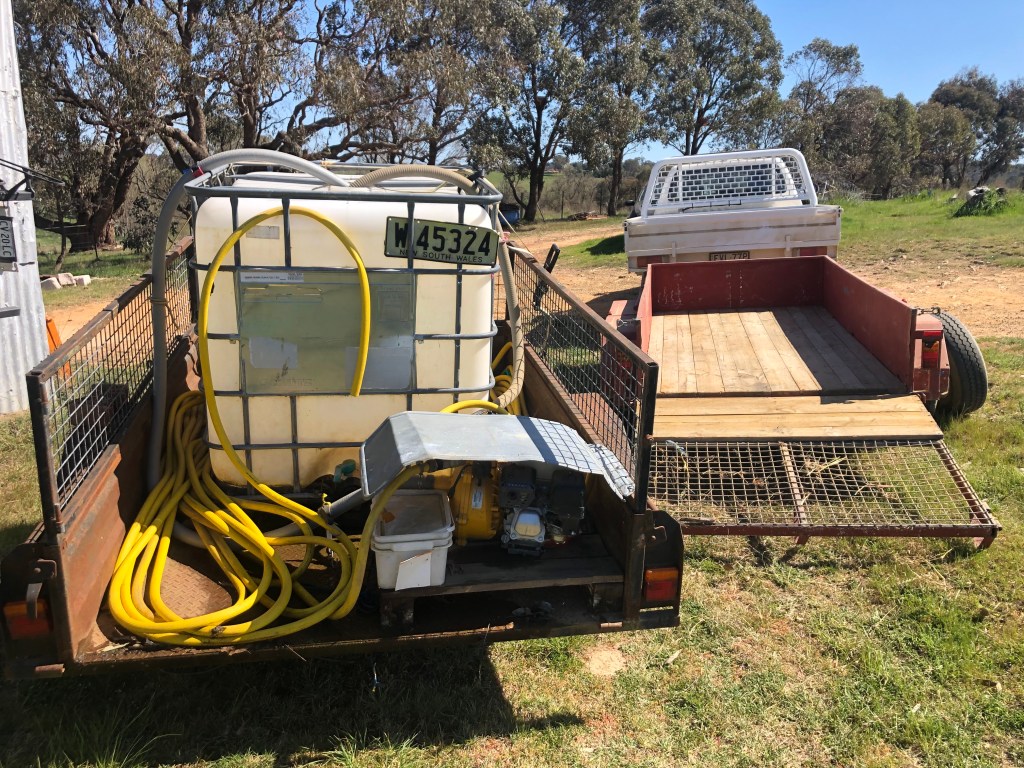
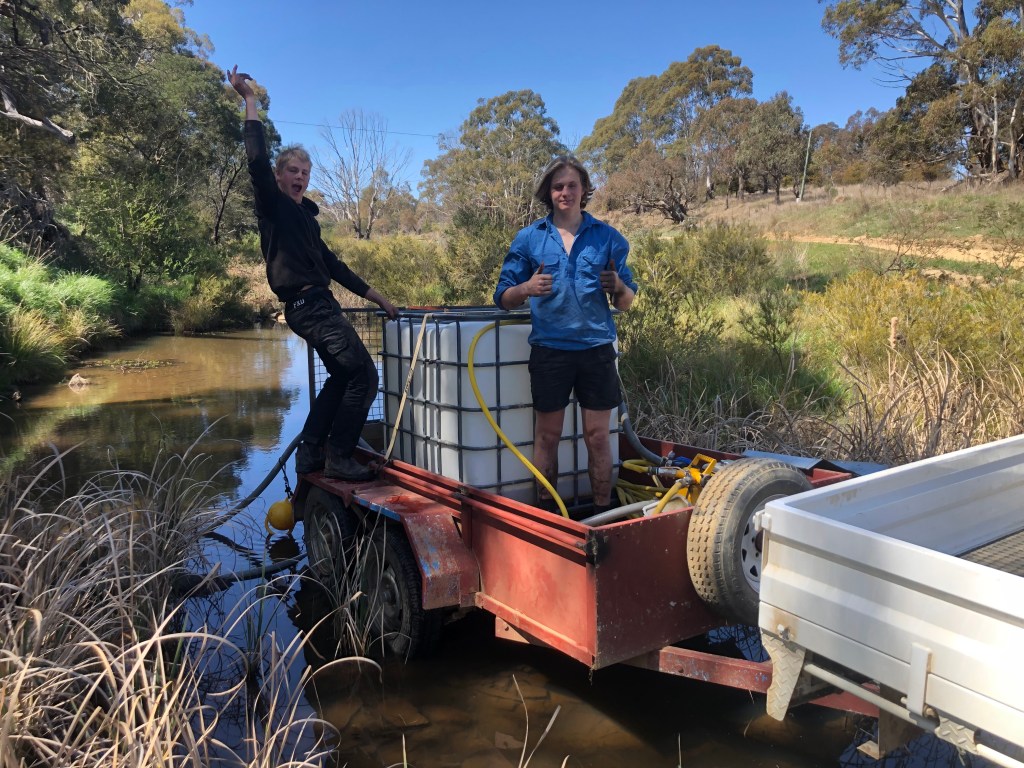
But the dry has also created a couple of other new jobs we need to pay attention to. We have started watering our young trees again – something we haven’t done since January 2020. The old re-purposed horse float is perfectly suited to its new task with the IBC container and fire pump.

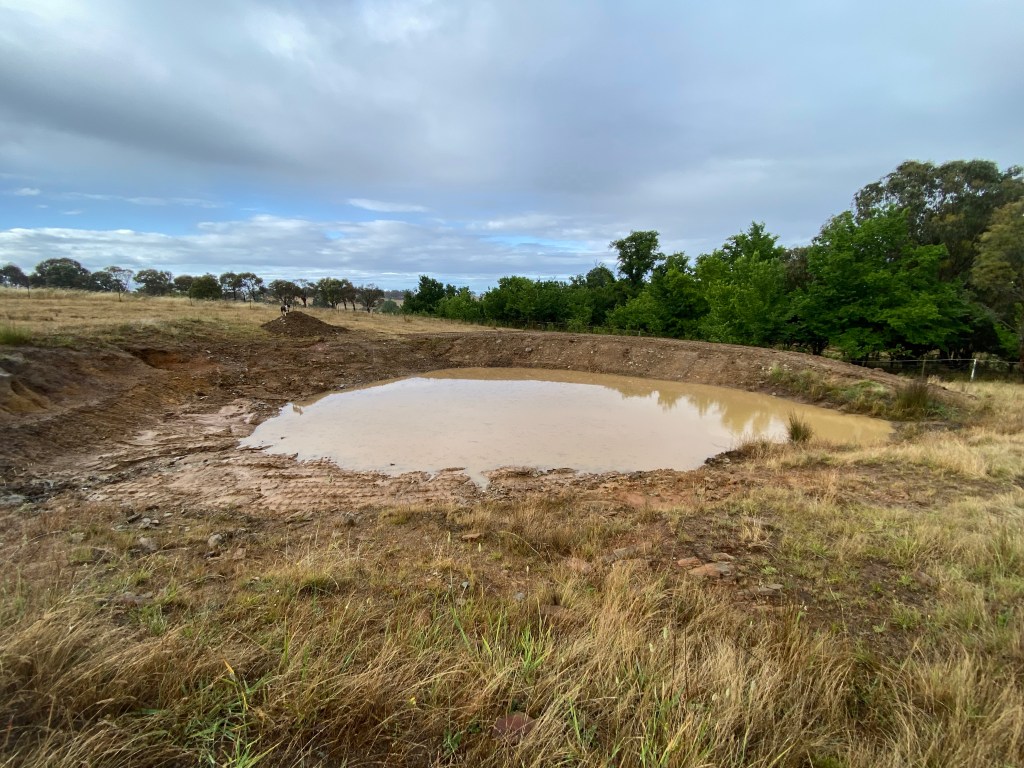
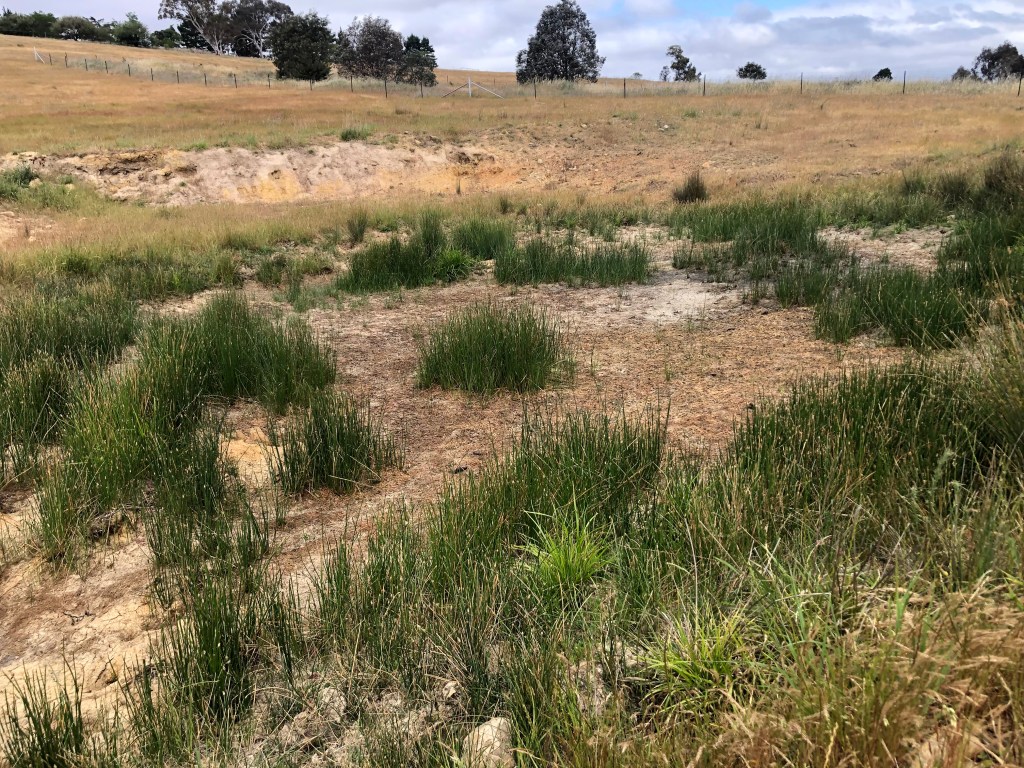
The other main job I have managed to get ticked off is cleaning out one of our small paddock dams. Most of the Rock Farm’s paddocks are watered via troughs, meaning daily inspections of water points are a necessity. Our main large dam is close to our creek which floods, and can take out our flood gates. This means I have nowhere I can leave the cattle for more than a day or two without someone being around to check on them. By cleaning this dam up, hopefully it will hold a little more water a little longer, meaning I have a paddock we can leave the cattle in for up to a week or so at a time, reducing the burden on our neighbours or my parents should we ask for someone to ‘keep an eye on the place’ while we take a break.

Lou and his little digger spent most of the day and made have hopefully our little dam a lot more useful!

Around all these comings and goings, the cattle have steadily munched their way through the standing grass. It has been a bit of a handful running them in two herds, with the bull settling in quickly with his girls in the joining herd.

He is a lovely quiet fellow, and we will be sorry to see him return home in a few weeks as will Spectacle Sue it appears.

We have a good amount of standing feed at the moment which is keeping the cattle in good condition. Recent storms have missed our place, which is a mixed blessing. Storms may fill our newly cleaned dam and our dwindling water tanks, but they will degrade the quality of the standing grass on the Rock Farm.

Should we get a good couple of storms, we will be ok. We have a good store of hay in the shed, and now the tractor is back in working order, we have the means to move the large round hay bales (each weigh around 400-450kg) and supplementary feed the cattle when the time comes.

In the mean time, it is good fun hanging out with this bunch! Big shout out to Dan for his great work on the tractor, Lou for his awesome work on the dam, and Kathie for the loan of her mower whilst we waited for our parts to arrive! We are so lucky to live in such a great community 🙂

A strategy emerges

On The Rock Farm we have been struggling to finalise our strategy for this season. We have been watching the seasonal outlook forecast intense drought and cattle prices fall to extremely low levels . On the Rock Farm, we have been extremely thankful for the odd showers that have kept the grass green in our patch – staving off an immediate requirement to make a hard decision. The crystal ball has been somewhat murky, but thankfully there are some experts out there with some insights available through our the NSW Local Land Services that can help us hopefully make some better decisions.

The grass is still green on the Rock Farm… for now.

We have signed up to a series of webinars that provide specialist advice to producers. We recently joined 400 other producers in a webinar with Simon Quilty from Global Agritrends, who gave some analysis of the the global beef market, global weather patterns and what this means for producers. Some of his information was reported a couple of months ago at online news site Beef Central here: https://www.beefcentral.com/markets/why-simon-quilty-has-a-bullish-five-year-outlook-for-cattle-prices/

The information provided by Simon in the webinar covered a broad range of global issues, such as the chilled and frozen beef stock held in stock in our primary markets, and climatic factors driving foreign herd numbers. Simon’s analysis has allowed us to focus our strategy for this season. Broadly we focused on a couple of takeaways.

  • The beef market in Australia should bottom out in November, and prices will likely plateau for around 12 months before slowly rising to high levels in 2026/27.
  • There is likely to be greater demand from processors for cows instead of young heifers due to the yield from each animal.
  • Processors are operating at historically low levels due to a range of factors, however additional capacity will be in place around the end of the year.

With pages of notes and a whole heap more information, Jo and I sat down and came up with our plan for this season. With the bull arriving the following afternoon, we had to make our minds up quickly. We decided we would split our herd and join 10 cows and the 2 maiden heifers we held in April this year with the bull. We decided we would hold the rest of the herd (other cows with calves at foot) until weaning in March / April. One of the advantages of small numbers is we soon had a list of names of cows to join and those cows we have decided not to join.

This plan will allow us to turn off 10 unjoined and any dry cows in April along with our 6 steers. We would then also be able to make a decision based on how much rainfall we receive as to how many of our 12 heifers we would keep for joining next September.

The following morning, I mustered the cattle and quickly had the cows sorted into their two groups. The cows were easily separated into their groups with little more than a roll call. However the calves were all jumbled up, and I knew I would have a challenge getting the calves to rejoin their mothers, now in seperate groups. I came up with a different plan to join the calves back to their mothers.

I made a little gate that only the calves could get through. After five minutes of watching them, the first calf made its way through the gate to its mother. Success!!! I left them them at it for a few hours and came back to find they had mostly sorted themselves out. Mostly. It was a far simpler and less stressful way to rejoin the calves to their mothers! Well it sounds easy, but the last couple of calves made Sapphire and I earn our stripes.

It was all sorted in time for our handsome fellow to arrive and join his new lady friends.

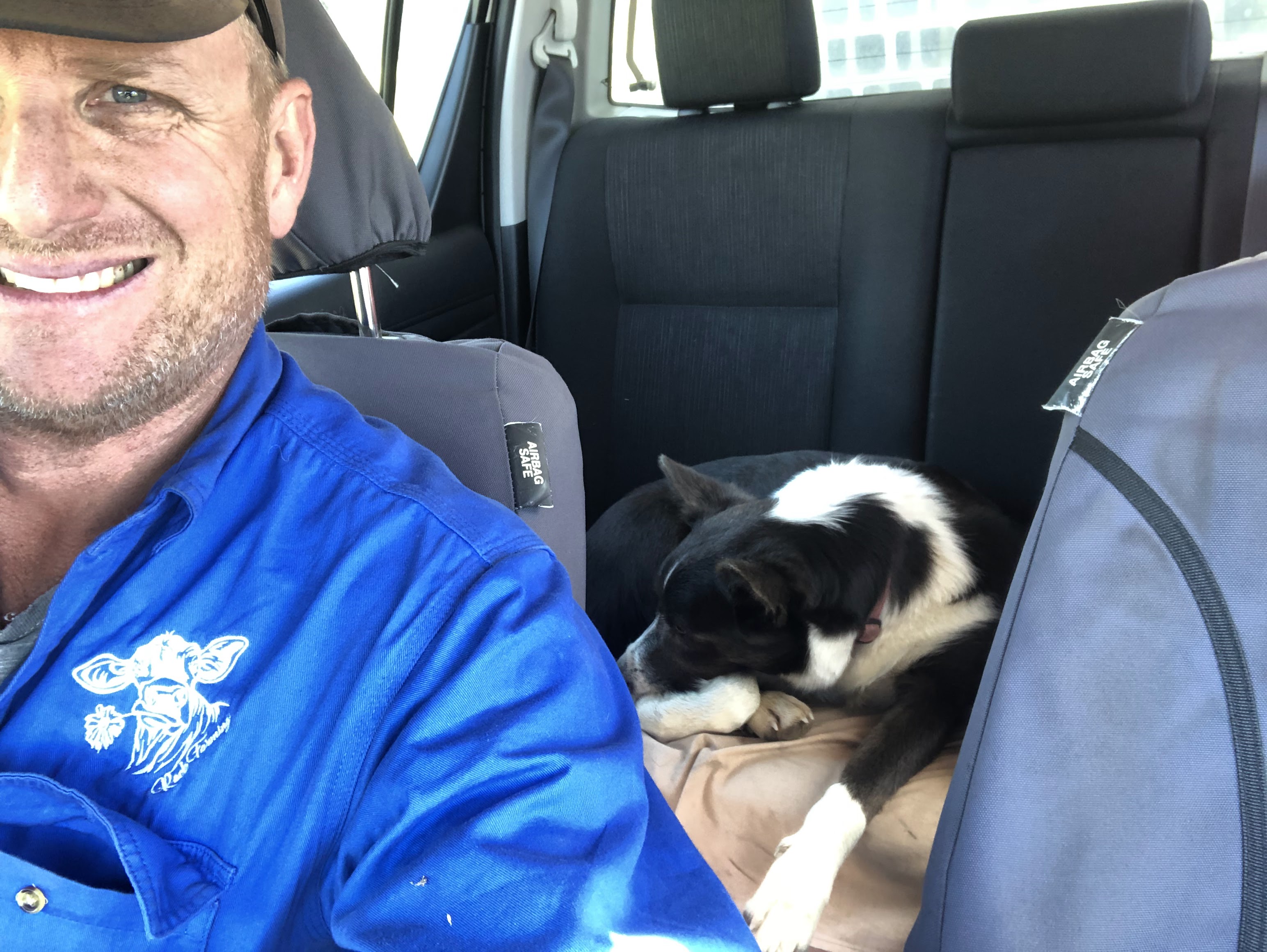
A special thank you to the Local Land Services NSW and Simon Quilty for the information in the webinar. We have signed up the to the series and look forward to learning as much as we can to enhance our decision making on the Rock Farm. And also to Sapphire – who was mostly helpful, and worked so hard she fell asleep on the short drive back home!

Fencing, malFunctions, Fires and Family

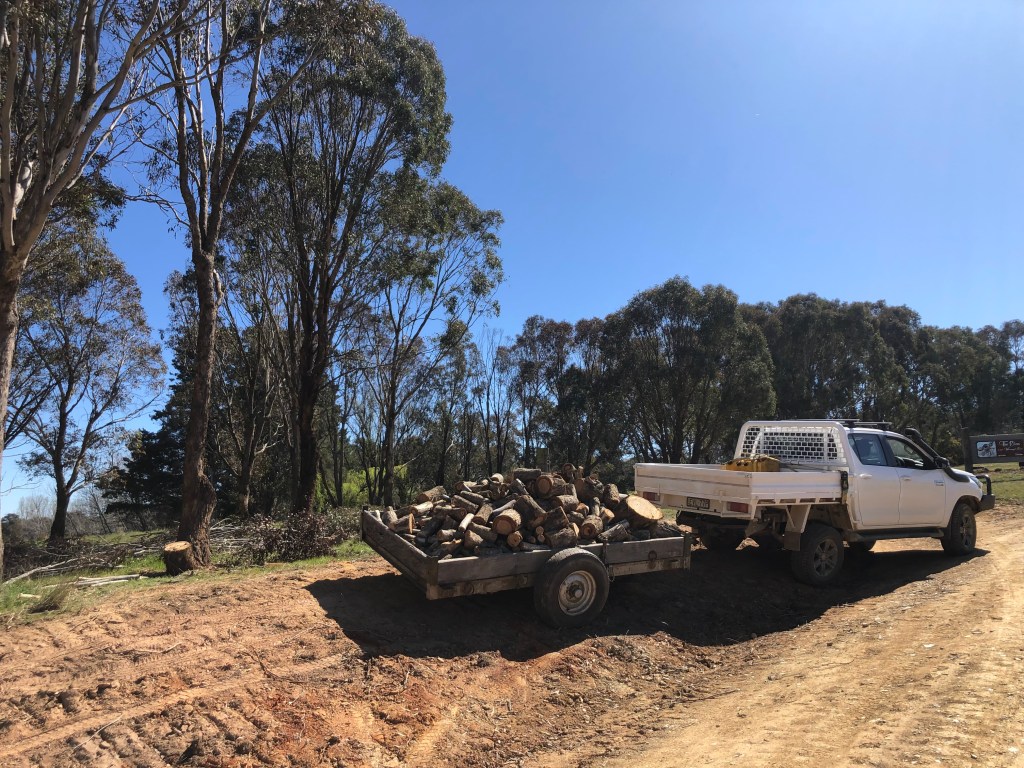
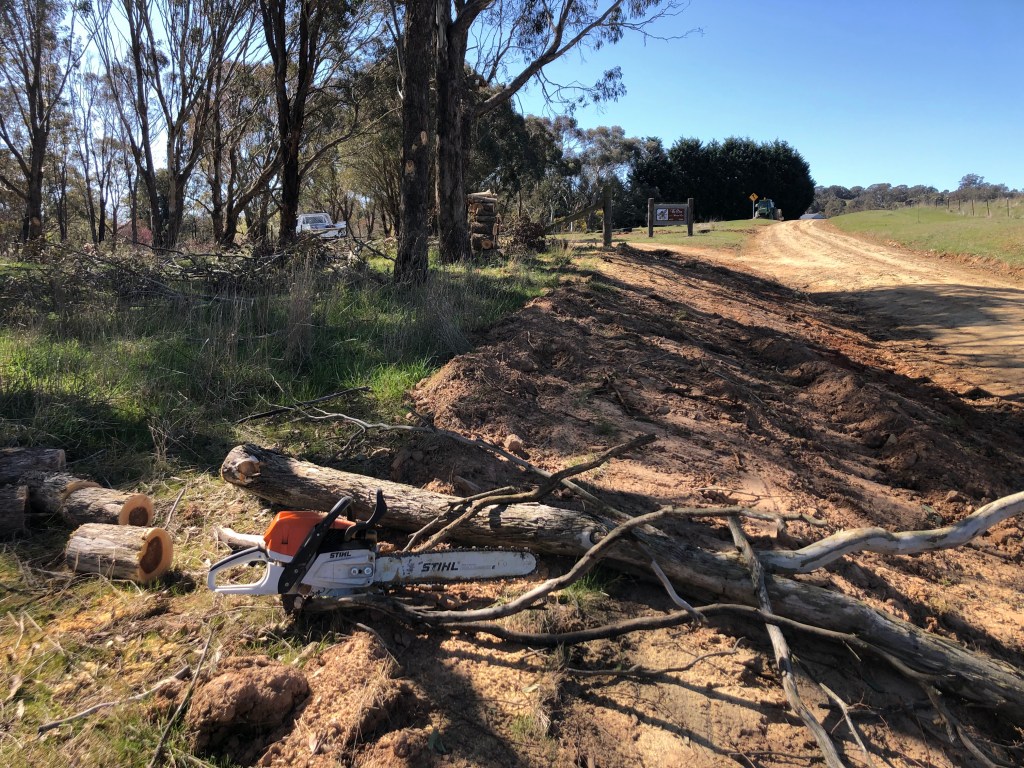
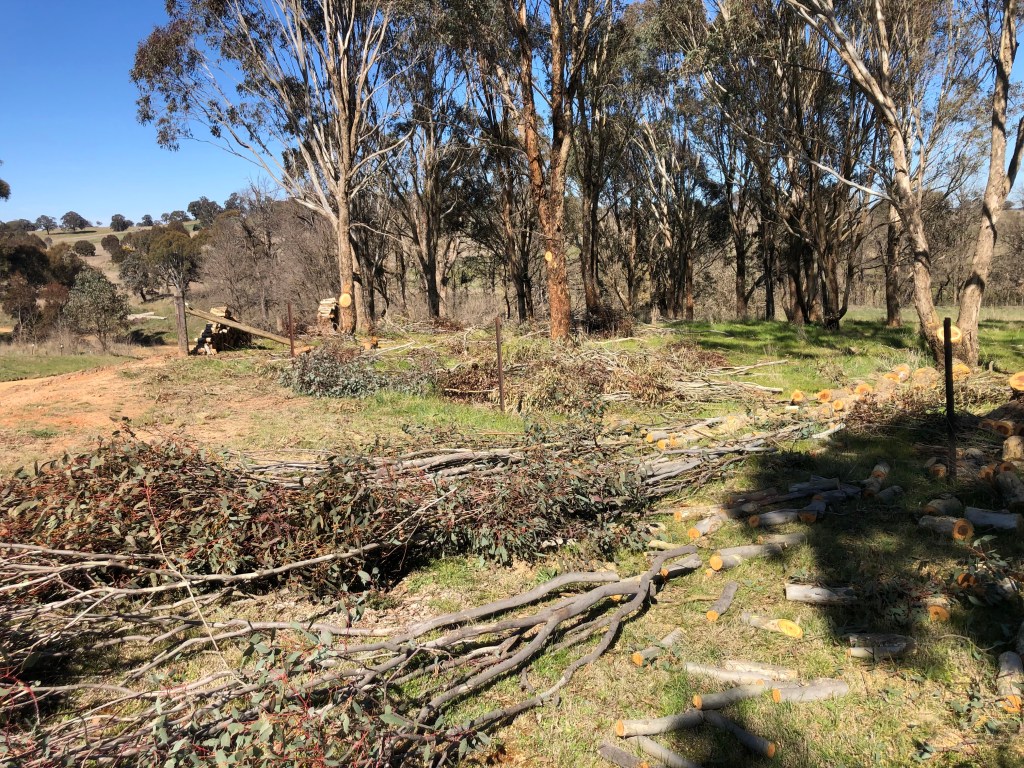
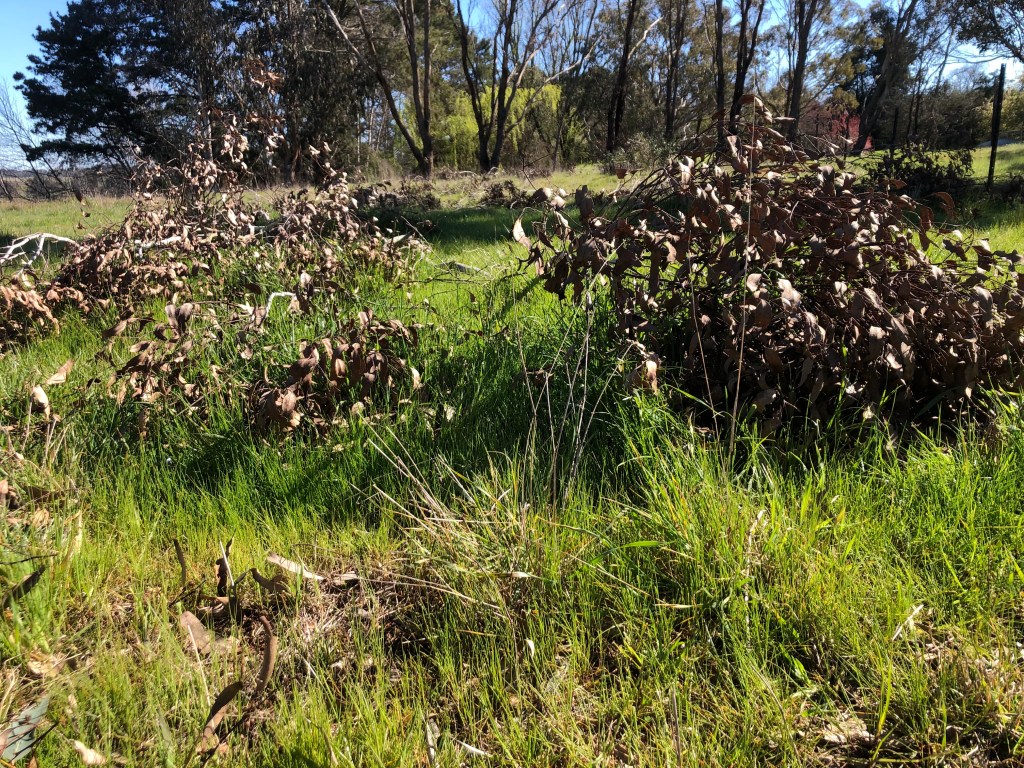
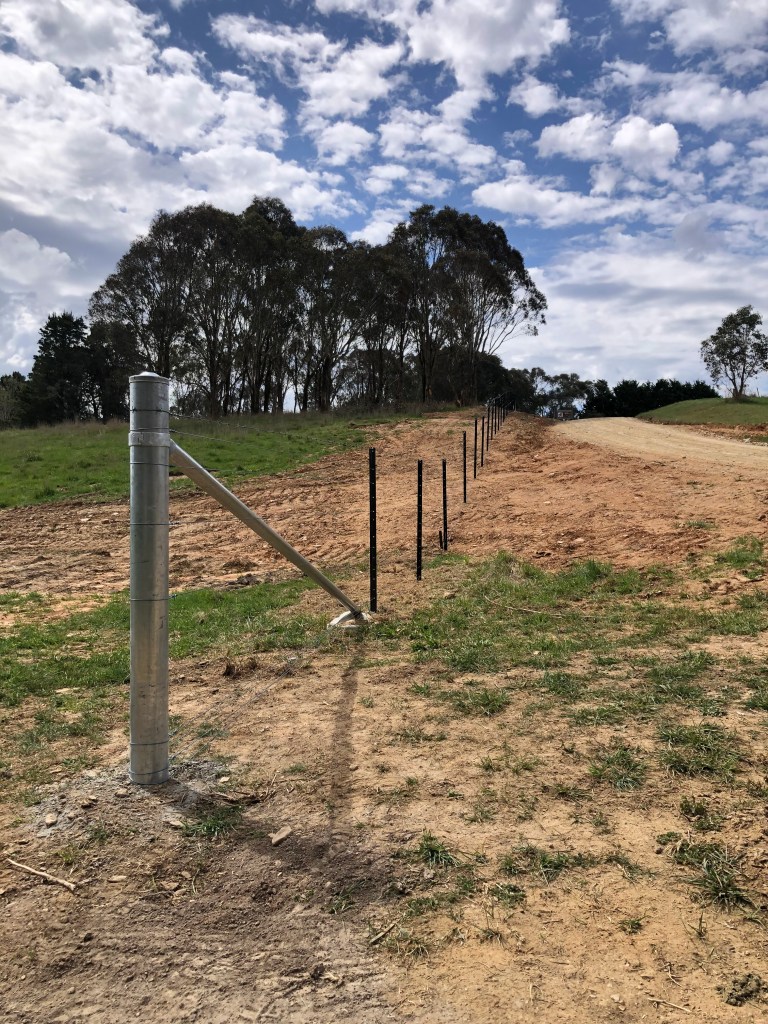
Whilst blog posts have been few and far between, there has been steady progress on the Rock Farm. With a new subdivision going in behind our property, council requested our neighbour upgrade part of the driveway. We were asked to cut our adjoining fence to allow the grader to open the drainage from the road – but I figured it was a good opportunity to pull the old tired fence down and replace the whole section completely. With the fence down, I also had an opportunity to clear overhanging branches with no risk to any fences. This gave me a good load of timber for firewood and mulch to spread around the paddock, and a new fence that should keep the cattle off the lane!

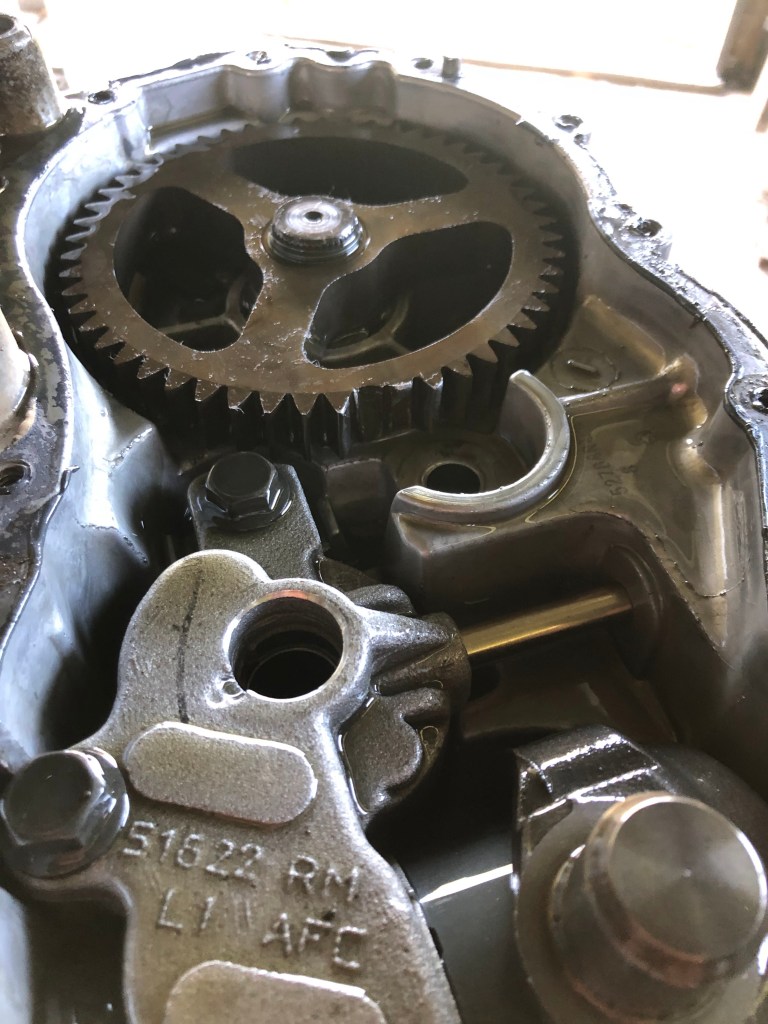
Mechanically things haven’t been going so smoothly on the Rock Farm… malFuncations wasn’t the first word beginning with ‘F’ I considered. Our zero turn mower stripped a couple of teeth from a cog in the transmission. And in the process of draining the oil from the other transmission, I dropped it and cracked the housing. This means I need two new transmissions – both now on back order from the US at great expense.

Lucie The Tractor’s clutch has started slipping badly. I usually can give most things a go, but this is one for the experts. Thankfully a nearby local mechanic will have a look at this for me…. in a month or so (good mechanics being in high demand). I hope to get her back in operation before we start feeding hay to the cattle (expected this summer around Christmas time).

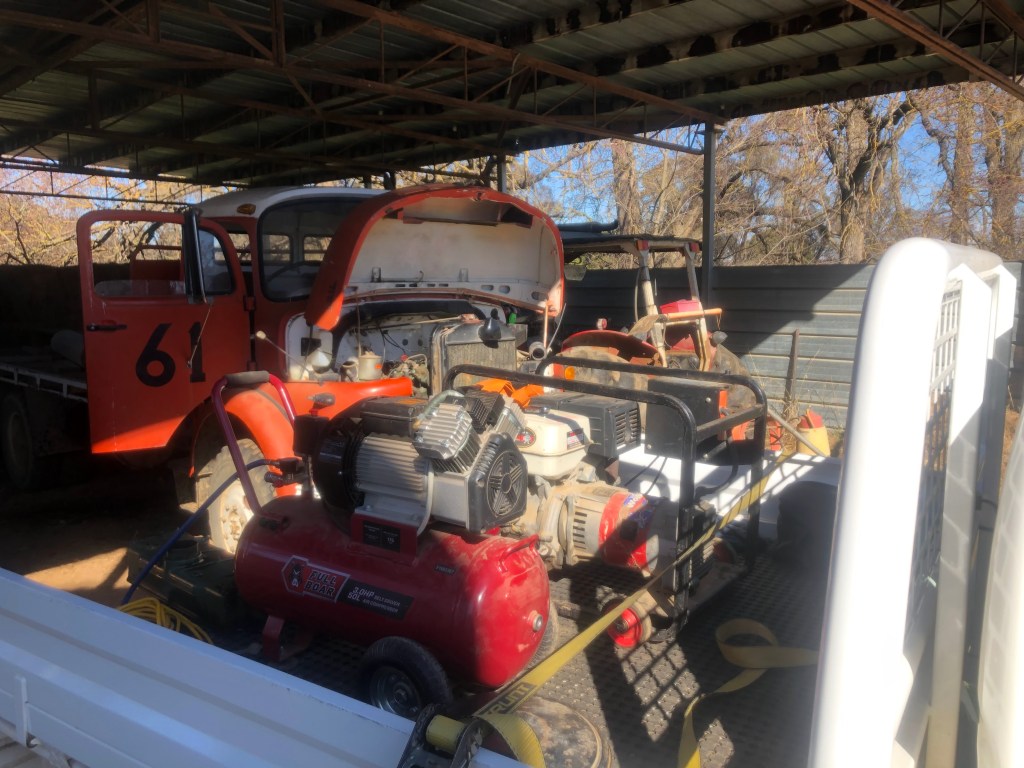
The big red truck Myrtle ran out of fuel – and could I hell as get it going again. I bled the fuel lines, flattened, charged and flattened batteries again trying to get it going to no avail. I figured the fuel line was blocked, and loaded the generator and air compressor into the Hilux to blow back in the line. It worked – and the truck was running again and ready for work on the farm.

The older helper then announced that he would love to arrive at his school formal in a slightly different red two door car than his initial plan (a friend’s red two door Mustang). Now a farm truck is a little different to one on the road, so we are working through the truck to get it ready for a permit to travel. Overall it is in pretty good condition – with a couple of bulbs out, a crack in the exhaust we can weld up and it needs a good clean. The biggest problem is the radiator – some years before we bought it it had been holed, and a solid dab of silicon used to block the leak. No real problem around the farm where it rarely gets hot, and if the repair failed, it wouldn’t be much of a problem, but heading to the big smoke, on a balmy summer’s day, might be beyond it, so we have pulled the radiator out and are getting it recored – thankfully locally.

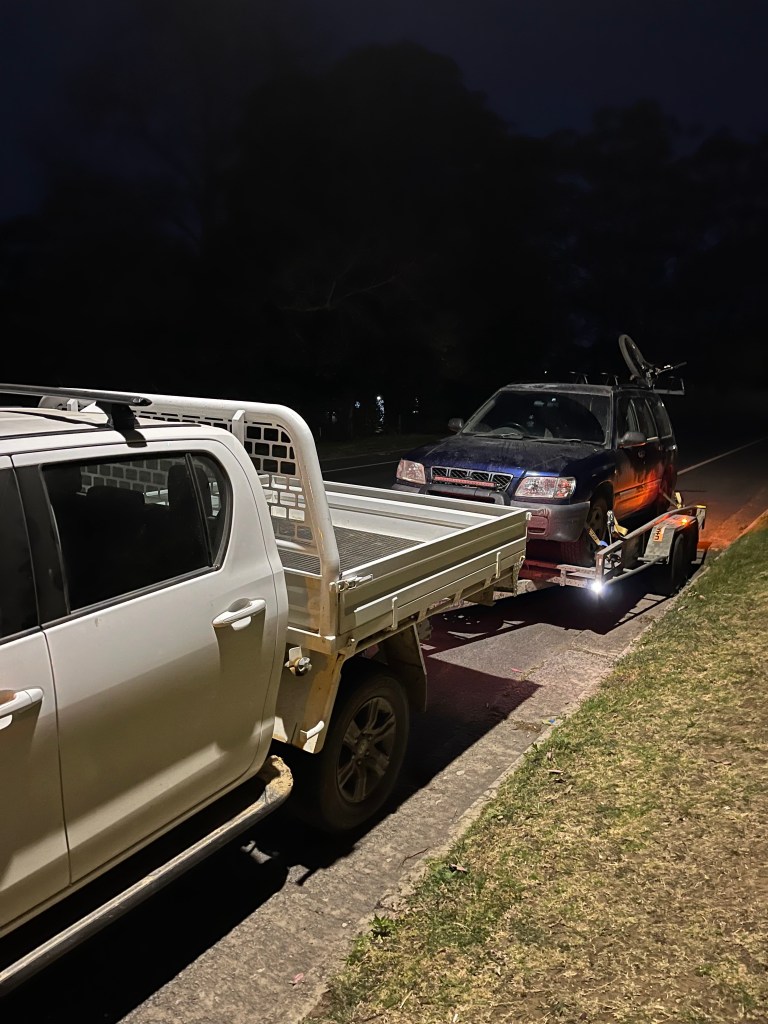
And topping it all off, whilst our little old run around Toyota Camry was in getting some extra attention to it’s cooling system, the older helper called me from the top of Macquarie Pass with a very hot and bothered Subaru Forester. He had been mountain biking and come up the pass nice and gently like all teenage boys drive….. (not). Thankfully he noticed the temperature gauge was well in the red and pulled over in Robertson and let the car cool gently. I hired a car trailer and a many hours later dropped the little Forester beside the Camry for some special attention. The good news is that the head gasket hasn’t seem to have blown (yet), and we may have got away with just a new radiator….

The other mechanical issue we faced was that the old horse float the boys had made into a box trailer was having issues with the brakes. Specifically the left front brake would periodically lock on and not release. We decided to let the rego lapse, and turn the now brakeless trailer into our emergency farm fire trailer… Being a tandem axle, it is far better suited to carry the weight of the IBC container than the old box trailer – and we had a lot of fun running the pumps and checking the system is fully ready for the fire season (did someone say ‘waterfight??’).

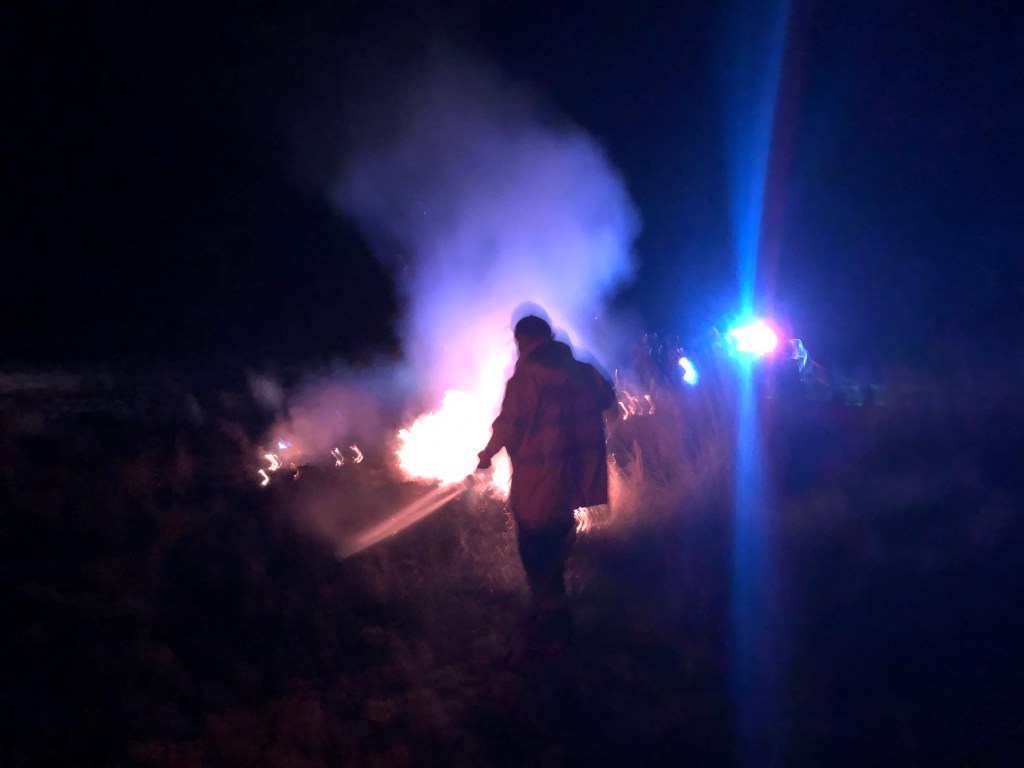
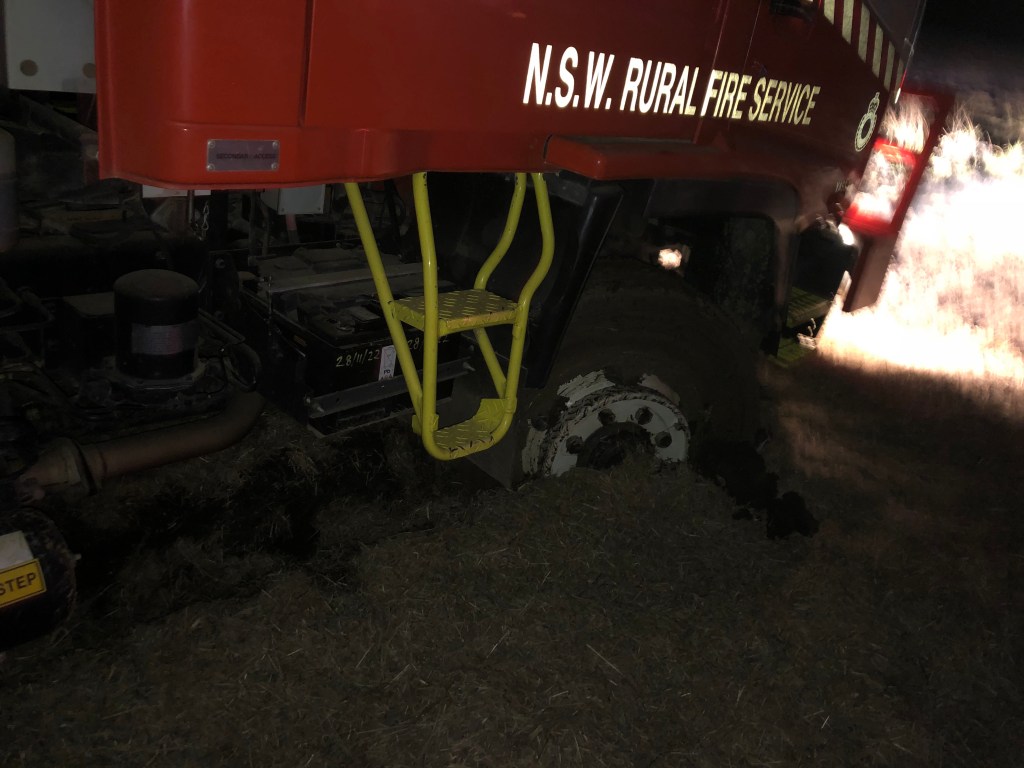
Speaking of the fire season, this year is looking particularly nasty. Our local brigade have already had our first call out for the season. Some dry phalaris stalks had got away from a local landowner. Yours truly at the wheel figured it was a good opportunity to test our grass firefighting skills with the nozzles on the front of the truck- until we got close to the fire and then sank the truck to the axles… It made it a very long night….

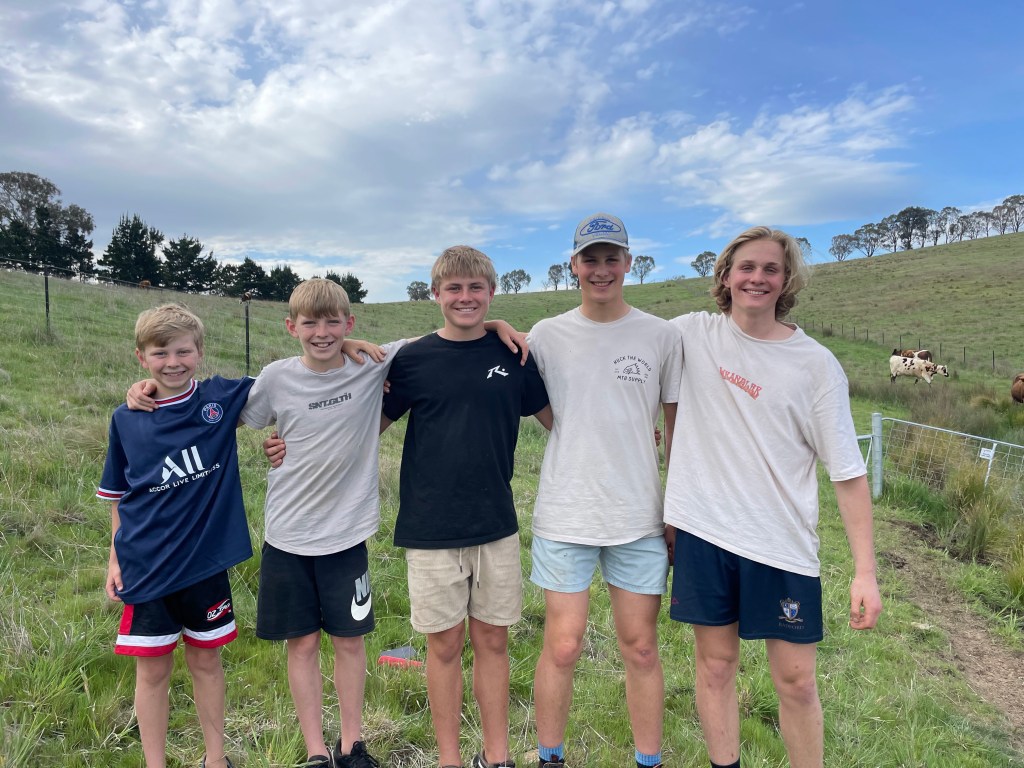
Despite all these distractions, the Rock Farm continues to nurture not just our cattle but also my soul. With my brother and his beautiful family we have marked our calves (12 heifers and 6 steers). The boys had a great time feeding apples and oranges to the cattle, and exploring the farm. One of the highlights was a night walk along the creek spotting possums and wombats doing their thing (quite remarkable considering the noise we were making). And we got to enjoy some slow cooked lamb with very low food miles (perhaps best measured in metres)…

It is wonderful to share the Rock Farm with family. Whilst there is a lot to do, and at times it can feel over-whelming, being able to see the beauty of the landscape through fresh eyes is always a pleasure. We are extremely fortunate to live here surrounded by great family, friends and community.
Calves – beautiful calves – and a lesson

Over the past four weeks we have been welcoming new calves to the Rock Farm. We have now finished calving and have 18 beautiful little calves on the ground. Sadly one died during calving and one cow wasn’t in calf, bringing our calving percentage to 90% from our 20 head. The calves are simply the most delightful creatures, and one of our favourite pastimes is to just sit quietly in the paddock and let them pluck up the courage to sneak up on us.

This is a great outcome, but it has come at the price of a valuable lesson.

You may recall four years ago, we rescued one calf from almost certain death (see here). Somehow Mum (called Bomb) and the new calf Daisy both survived. Daisy has since gone on to became a favourite part of the Rock Farm. However Daisy also had her own challenges when it came to her first calf, Buttercup (see part 1 and part 2 here).

Buttercup has also become a favourite on the Rock Farm – earning her place with gentle nuzzles looking for apples. She is a lovely quiet cow, but sadly she is the one who lost her first calf this spring.

Buttercup has recovered well and his happily grazing (left) alongside the other dry cow. Both will leave us this season.

All this means that we have learnt a harsh reality of running livestock. Sometimes we have to be ruthless in our decision making, especially when it comes to breeding. So this year the family have agreed that we will cull this line of cattle from our herd – something I should have done right at the start.

The hard part now is working on the logistics and timing when we will sell them. The market is looking grim, with a combination of factors seeing a crash in prices at the sale yards. An oversupply and the forecast dry spring and summer have seen prices plummet to between a quarter and a third of what they were 12 months ago, and sheep prices are even worse. At least our spring started relatively well, and our cattle still have feed ahead of them, but I feel conditions are about to dry out quickly.
At the end of the last drought, we were down to 10 breeding cows, and had weaned our calves early. This year we have 20 cows with two maiden heifers ready to join. With our new calves, we have 40 head in total on the Rock Farm. I haven’t made a final decision yet on our numbers, but we will start to reduce numbers soon.

We have been down this path before – a quick look back at our photos from 2019 reminds me how dry it was at the end of three years of very little rain. As we head into this summer, our cattle are in excellent condition, and our hay shed is well stocked. There is still moisture in the soil, but it is fast disappearing and the grass is starting to shoot to seed. If we are fortunate, with a few summer thunderstorms, we may just have enough feed to get through until autumn. Time will tell.

In the meantime, we are enjoying the warm weather… and our beautiful calves 🙂

Rock Farm – Winter 2023

Regular readers will know that my lack of recent updates doesn’t equate with lack of action on the Rock Farm. There have been plenty of activities both on and off the farm with different challenges keeping me away from the blog.

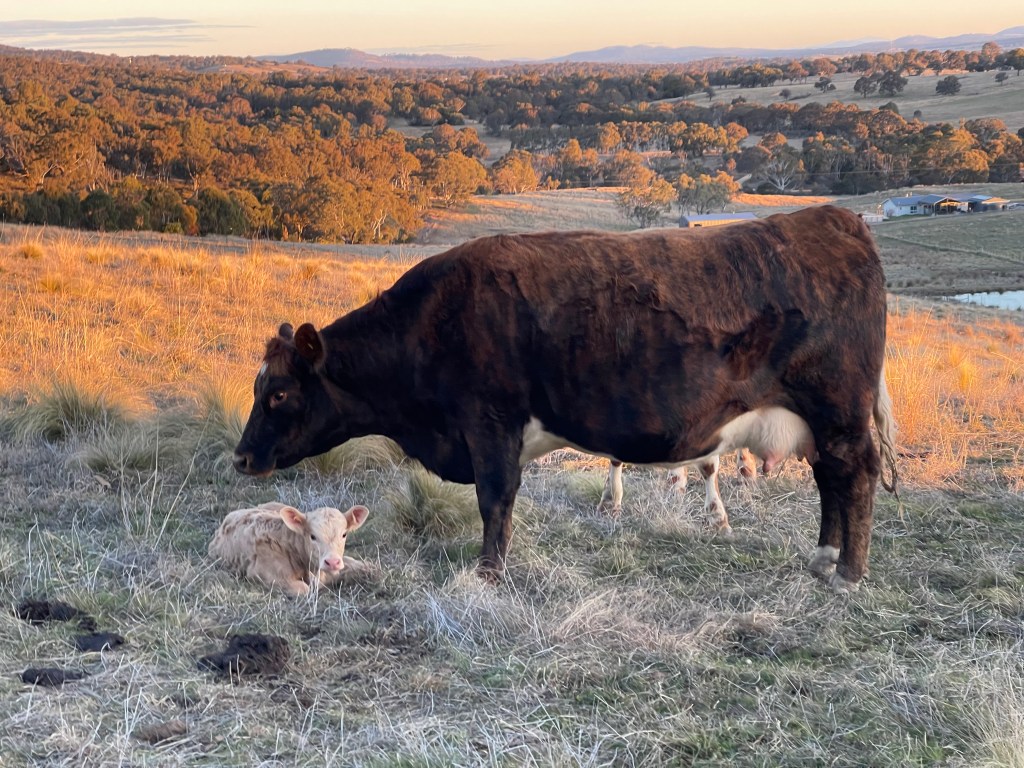
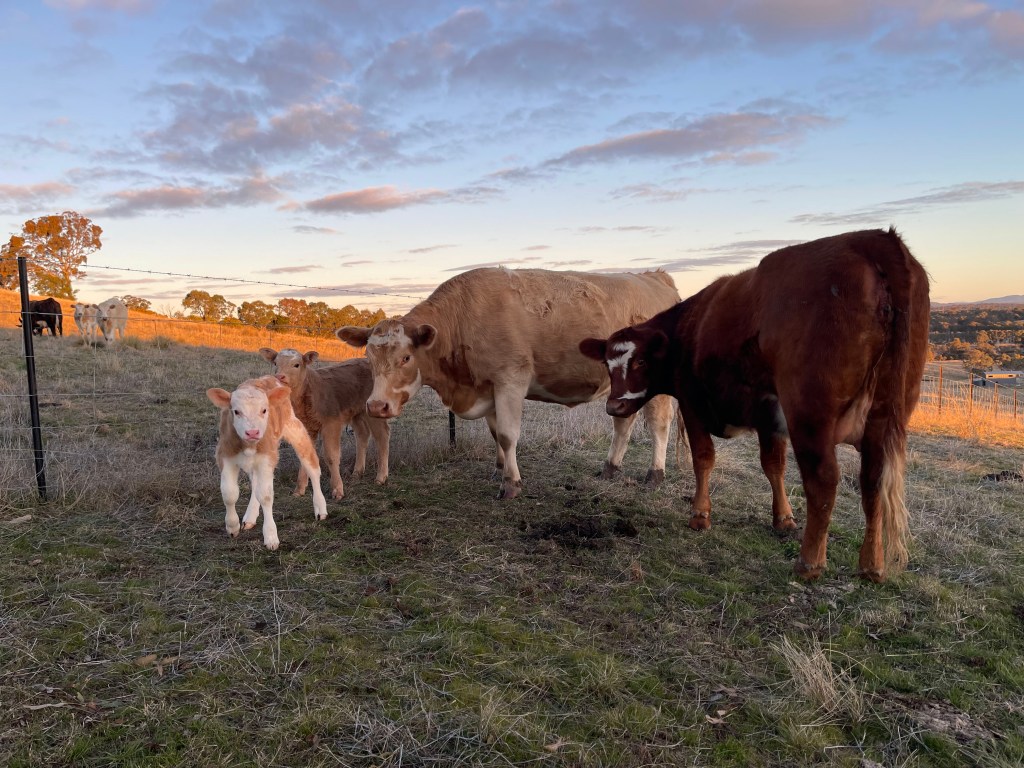
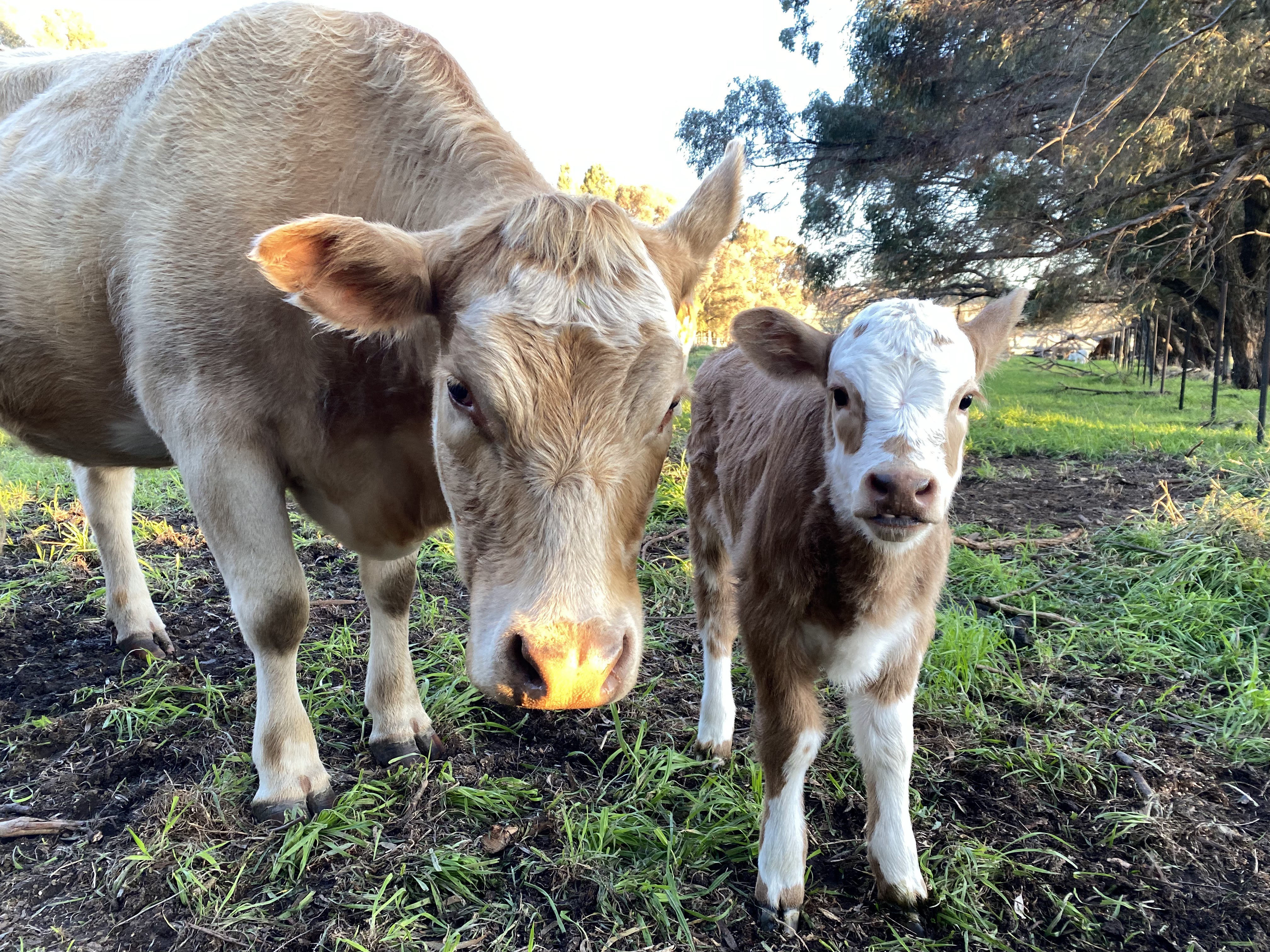
First the most exciting news. Precisely 283 days after the bull joined our cows, we welcomed not one but two calves to the Rock Farm. For the next six weeks or so we will be keeping an extra close eye on the girls, especially the two maiden heifers with the herd, in case there are any difficulties. The little calves are so cute, and it feels extra special that their mothers allow me to get so close to them. Two days later we have four on the ground. It is a magical time indeed.

Our lambs enjoyed their time on the Rock Farm, and I enjoyed having sheep back on the place – albeit for a little while. They reminded me that our fences are not set up for sheep after they moved themselves down to our flat, and then through a tree guard fence where they proceeded to nibble the tops of my two year old oak trees.

We processed the lambs in pairs, and they taste delicious. The combination of healthy pasture coupled with no stress on the animals leading up to slaughter meant there was no lactic acid build up in the meat. We chilled them for a week or more before running them through the band saw and freezing the meat. We averaged 24kg dressed from each lamb, which filled the freezer nicely. Whilst slaughtering the lambs is not a pleasant task, I take comfort in the fact these animals had a good life with us on the farm, and were shot dead in the paddock without the usual stress of being sold through sale yards, taken to an abattior and slaughtered some 48hours after leaving the farm.

The paddock rotation has been going well, and I haven’t needed to put out any feed for the cattle this winter. When I go for my regular walks around the farm, I often pause to pull out serrated tussock (Nassella Trichotoma) underneath which I am pleased to frequently find earth worms. It reaffirms my determination to not use chemicals if at all possible.

Our local Regenerative Agriculture group has continued to meet regularly, and I am continually inspired by the wonderful people who seek to restore the health of the soil and biodiversity of their land. We have been able to help in a small way by storing some native Kangaroo Grass (Themeda Triandra) Hay for the group. The hay was cut with the full seed heads still on the plant. Horses don’t like eating it (the seed head is a little spikey), but it makes excellent seed bound mulch for re-vegetation projects. The hay has been exceptionally popular with Landcare and other restoration projects, and I have been happy to support this project in a little way.

It hasn’t all been about the farm this winter. It is also important to spend time doing other activities that are good for the soul. As the kids get older though, it is harder to pin them down for family activities. We took them skiing at Mount Selwyn which was a heap of fun. The older helper has continued pursuing his love of mountain biking, and spends most weekend carving up the tracks. The younger helper has been tinkering with an old Toyota MR2, which needed a new alternator. Unfortunately we couldn’t get the retaining bolt out, so ended up removing the engine. Thank goodness the tractor could lift the car up, so the engine could come out the bottom!

I returned back to sea for an 11 day voyage in northern waters. The voyage was a heap of fun, with some fantastic and inspirational ship-mates. Being at sea reminds you of the power of nature and can remind you how alive you are. On the way, it was great to make a diversion to catch up with my brothers – an all too infrequent occurrence these days.

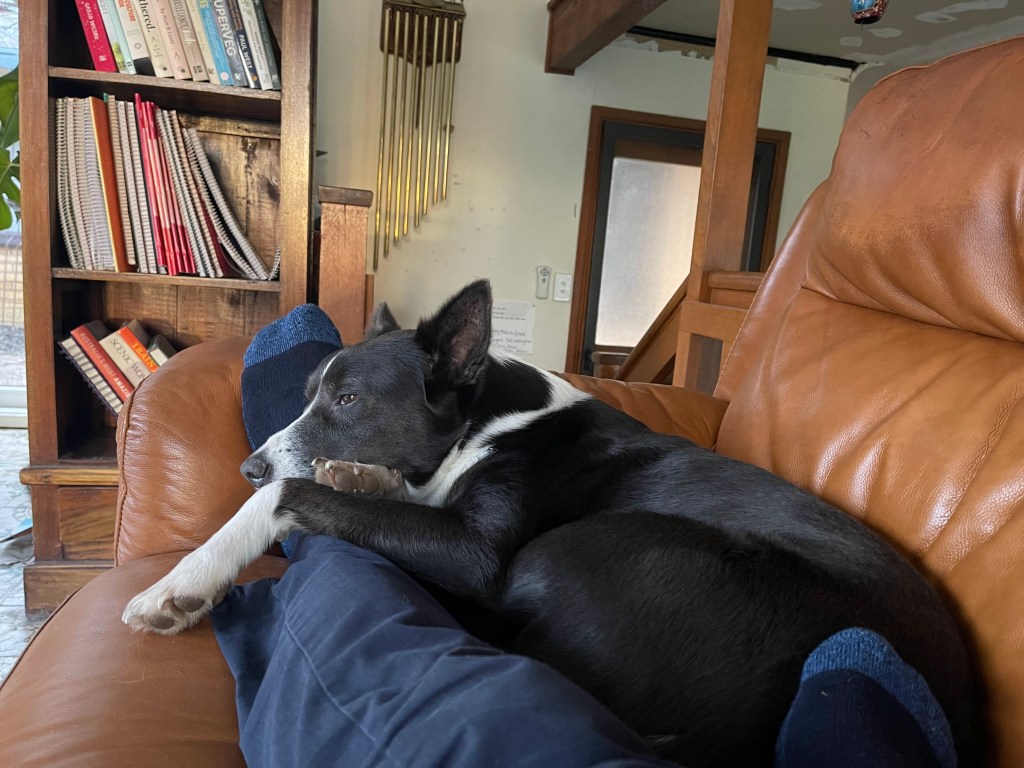
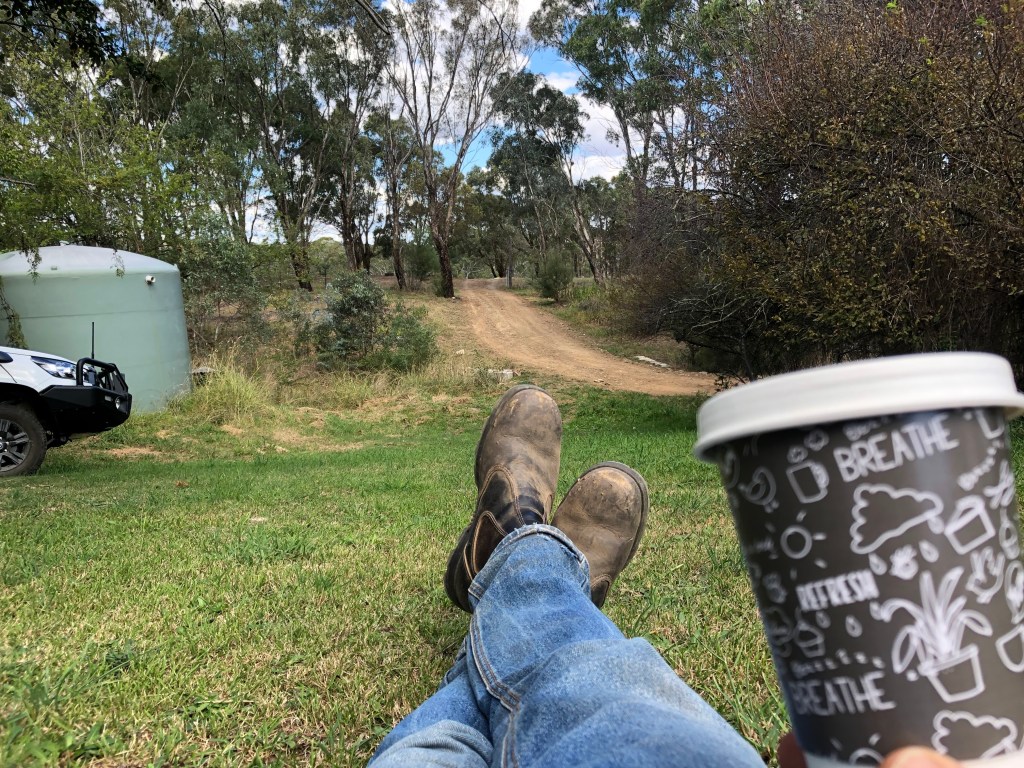
But that is not all. We have been working steadily on another project for the past three years or so. It is nearing completion and I can’t wait to share it with you soon! In the meantime, as it is too miserable and cold to head outside today, it is time to pour a hot cuppa and stick my feet up… I think Sapphire agrees!